


1
CHAPTER 1: GENERAL MANAGER SUCCESSION IN MULTINATIONAL
ENTERPRISE SUBSIDIARIES
INTRODUCTION
The general manager (GM) role in foreign subsidiaries of multinational enterprises
(MNEs) is important to subsidiary-level development and performance (Björkman, Fey, & Park,
2007; Meyer, Li, & Schotter, 2020; O’Brien, Scott, Andersson, Ambos, & Fu, 2019). The
staffing of this position is thus a critical decision in MNEs (Beechler, Bird, & Taylor, 1998;
Dowling, Welch, & Schuler, 1999). A sizeable body of literature on international human
resource management (IHRM) in subsidiaries of MNEs exists (Delios & Björkman, 2000; Fang,
Jiang, Makino, & Beamish, 2010; Gaur, Delios, & Singh, 2007; Gong, 2003; Tarique, Schuler, &
Gong, 2006). However, by mainly adopting a nationality-based view (e.g., Harzing, 2001;
Kessapidou & Varsakelis, 2003; Peng & Beamish, 2007; Schotter & Beamish, 2011; Thompson
& Keating, 2004), these existing studies paint a snapshot of the talent management within
subsidiaries and are overly simplistic (Meyer et al., 2020).
Thus far, there is a paucity of theoretical and empirical research on subsidiary GM
successions (For exceptions, see Bebenroth & Froese, 2020; Pitcher, Chreim, & Kisfalvi, 2000;
Selmer & de Leon, 1997; Selmer & Luk, 1995), despite the fact that IHRM systems are
inherently dynamic (Rees & Smith, 2017; Taylor, Beechler, & Napier, 1996) and that the
replacement of GMs can occur in the history of any organization (Haveman, 1993). There are
two possible reasons for this substantial gap in the literature. First, the theoretical development
on the dynamic relationships between foreign subsidiary-level variables in general is limited
(Riaz, Rowe, & Beamish, 2014). Second, empirically investigating complex issues over time and
data collection in this regard is intricate and challenging (Brewster, Mayrhofer, & Smale, 2016).
The lack of nuanced attention on this topic is unfortunate, because GM succession has the

2
potential to strongly impact a subsidiary outcomes (Colakoglu, Tarique, & Caligiuri, 2009).
Decision makers in many MNEs still do not know how and where to find the best GM
candidates (Collings, Scullion, & Morley, 2007; Tarique & Schuler, 2010), thus failing to
identify, deploy, and manage talent for this position effectively (Mellahi & Collings, 2010). As
the risk of selecting the wrong manager is greater than any time in the past (Donatiello, Larcker,
& Tayan, 2018), there is need for a systematic understanding of subsidiary GM successions. The
task is particularly pressing in this challenging time, given that the COVID-19 pandemic spurs
MNEs’ strategic reorientation (and thus GM change) in many host countries but it also renders
sending managers on international assignments difficult (Caligiuri, De Cieri, Minbaeva,
Verbeke, & Zimmermann, 2020). Meanwhile, the pandemic exposes an old problem, that is,
there are talented managers as well as poor performers in foreign subsidiaries remaining in
“blind spots” (Mellahi & Collings, 2010), which then has pushed many MNE decision makers to
reconsider whether they indeed have the right people in the right places.
In contrast to the limited succession literature within the field of international management
(IM), the managerial succession problem has been studied widely in strategic leadership (Berns
& Klarner, 2017; Bilgili, Calderon, Allen, & Kedia, 2017; Giambatista, Rowe, & Riaz, 2005;
Hutzschenreuter, Kleindienst, & Greger, 2012; Kesner & Sebora, 1994; Schepker, Kim, Patel,
Thatcher, & Campion, 2017). Considerable evidence exists that the characteristics of the
incumbent GM (e.g., tenure, skills, prestige) (Boeker, 1992), the composition of the board of
directors (Shen & Cannella, 2002), the firm’s performance and characteristics (Kesner & Sebora,
1994), and the environmental dynamics (Friedman & Singh, 1989) all affect the change in GMs.
In this parallel domain, three types of models may hold the potential to inform subsidiary
GM change: (I) the longitudinal models, which adopt a dynamic perspective to analyze the

3
(acceleration or deceleration) momentum of repeated GM changes (Amburgey & Miner, 1992;
Beck, Brüderl, & Woywode, 2008); (II) the power model, which is built on the premise that the
existing GM in a poorly performing organization can use strategic configurations to gain power
in order to defer succession (Boeker, 1992; Drazin & Rao, 1999); and (III) the contingency
model, which primarily focuses on whether the new GM is externally or internally appointed,
and when the benefits of each successor type are likely to occur (Finkelstein, Hambrick, &
Cannella, 2009; Georgakakis & Ruigrok, 2017). These models, though insightful, have been
developed in domestic settings. Managing human resources within MNEs, however, is “more
than a matter of scale and presents the field with unique and complex challenges” (Collings,
Scullion, & Curran, 2018: 378). This suggests that insights drawn from the strategic leadership
literature may warrant theoretical adaptations in order to inform subsidiary GM changes.
This dissertation is aimed as a step towards uncovering and explaining these adaptations in
order to inform subsidiary GM successions in a coherent manner. Essay 1 focuses on the
evolution of MNE subsidiaries by exploring how multiple GM changes unfold in the setting of
foreign subsidiaries. By drawing on evolutionary theory (Kogut & Zander, 1993, 1995, 1996,
2003) and empirical observations, I argue that: first, the deceleration and acceleration momentum
for further GM change can take place sequentially; and second, the continual GM change can be
both adaptive and disruptive, depending on the pace and path of change. Essay 2 aims to explore
how each succession event is triggered or impeded by specifying the process through which
MNE attention and subsidiary GM power jointly affect subsidiary GM succession. By
contrasting the MNE attention perspective (Ambos, Andersson, & Birkinshaw, 2010; Bouquet &
Birkinshaw, 2008; Monteiro, 2015) with the strategic contingencies perspective (Drazin & Rao,
1999; Hickson, Hinings, Lee, Schneck, & Pennings, 1971), I argue that strategic configurations,

4
from which GMs of foreign subsidiaries may accrue power to defer succession in a poorly
performing organization (Boeker, 1992), can also enhance MNE monitoring, thereby facilitating
subsidiary GM changes. Essay 3 aims to explore the micro-process through which different types
of subsidiary GM successors are selected and managed, and how these succession decisions link
to subsidiary performance. Through considering the nationality-based strategy and the origin-
based strategy together, this qualitative inquiry reveals that effective GM successors for local-
market-seeking subsidiaries need to be able to simultaneously confront various facets of bounded
reliability (BRel) (Kano & Verbeke, 2015, 2019; Lumineau & Verbeke, 2016; Verbeke &
Greidanus, 2009). Essay 3 delineates several safeguards that can economize on BRel effectively.
In the remainder of this chapter, I first briefly review the managerial succession research.
Next, I discuss how this dissertation addresses the theoretical and empirical gaps in existing
studies on subsidiary GM succession. To that end, I also present a short overview of the afore-
mentioned essays. I then briefly touch upon this dissertation’s contributions.
MANAGERIAL SUCCESSION RESEARCH
The nationality-based view
Existing subsidiary staffing studies mainly argue that subsidiaries can choose between
host-country nationals (HCNs), parent-country nationals (PCNs), and third-country nationals
(TCNs) to staff managerial positions (Gaur et al., 2007; Shin, Hasse, & Schotter, 2017). Each of
these nationality-based staffing choices may serve a unique strategic purpose. PCNs may possess
a greater understanding of the MNE’s culture, and thereby can facilitate communication with the
headquarters and align the subsidiary’s operations with the interests of the MNE (Tarique et al.,
2006). Moreover, the role of PCNs in controlling the subsidiary on behalf of the headquarters is
gaining prominence in the literature (Collings, Scullion, & Dowling, 2009). In contrast,

5
researchers view HCNs as being more familiar with the host-country environment, and thus
being more effective in localizing the subsidiary’s operations (Gupta & Govindarajan, 1991).
More recently, researchers have begun to fine-tune the nationality-based staffing
framework by either expanding the category of subsidiary GMs or bringing to the fore the
importance of organizational and environmental contingencies (for a detailed list, see McNulty
& Brewster, 2017). Examples demonstrating the former endeavor include studies on expatriates
of host-country origin (Thite, Srinivasan, Harvey, & Valk, 2009), the local employment of ex-
HCNs (Tung & Lazarova, 2006), the localization of expatriates (Tharenou & Harvey, 2006), and
the employment of migrants (Ariss, 2010); whereas the latter is mainly manifested in studies on
the moderating effects of institutional distance, cultural difference, headquarters and subsidiary
characteristics, and intraorganizational relationships on the utilization of various nationality-
based staffing strategies (e.g., Boyacigiller, 1990; Gaur et al., 2007; Gong, 2003; Peng &
Beamish, 2014; Rickley & Karim, 2018; Schotter & Beamish, 2011a).
This research agenda has been established as one of the cornerstones of the field of IHRM
(Thomas, Lazarova, & Inkson, 2005) and some studies also began to adopt this nationality-based
view to investigate subsidiary GM successions (e.g., Bebenroth & Froese, 2020). However,
research on subsidiary GM successions is only at a rather nascent stage. In a parallel fashion,
strategic leadership researchers have investigated this topic extensively within a domestic
context and formulated several insightful models, to which I now turn.
The longitudinal model
Key personnel succession is one of the most critical managerial issues for a firm (Schepker
et al., 2017), and often an ongoing concern at the leadership level (Friedman, 2017). Extensive
research has dealt with succession antecedents (for a review, see Berns & Klarner, 2017), among

6
which two competing lines of inquiry have stimulated a fruitful conversation. First, some
researchers argue that organizational change is a self-reinforcing process (Amburgey & Miner,
1992), such that prior change accelerates the momentum of further change (Amburgey, Kelly, &
Barnett, 1993). In the present context, I call it the acceleration model. Second and more recently,
other researchers found that after controlling for firm-level heterogeneity, prior change in GMs
reduces the likelihood of subsequent change such that the multiple changes demonstrate a
deceleration pattern (Beck et al., 2008). Accordingly, I call it the deceleration model.
Because the foregoing acceleration–deceleration models suggest different paces of change,
and the pace of change is found to be a major contingency factor that moderates the succession–
performance relationships (Klarner & Raisch, 2013; Rowe, Cannella, Rankin, & Gorman, 2005),
it follows that the momentum of continual GM changes may have implications for firm
performance. However, theoretical and empirical inconsistencies also exist among the
organizational studies on the consequences of GM change (Giambatista et al., 2005;
Hutzschenreuter et al., 2012; Kesner & Sebora, 1994). Common-sense theory (and the
succession-adaptation model), for example, suggests that managerial successions, as a reflection
of the firm’s adaptive nature, contribute to performance improvement (Grusky, 1963; Huson,
Malatesta, & Parrino, 2004). In contrast, vicious cycle theory argues that successions disrupt
routines (Grusky, 1960; Klarner & Raisch, 2013), thus worsening firm performance.
The power model
Concurrently, the performance–power–succession model has emerged to investigate the
factors contributing to GM change (Boeker, 1992; Fredrickson, Hambrick, & Baumrin, 1988;
Salancik & Pfeffer, 1980). The central premise is that when decision makers do not like a
performance outcome, a frequent response is to replace the individual who is accountable for the

7
outcome (Pfeffer & Salancik, 2003). Thus, poor firm performance, for example, will likely result
in the dismissal of the GM (Boeker, 1992; Boeker & Goodstein, 1993; Kesner & Sebora, 1994;
Wiersema & Bantel, 1993). However, the relationship between performance and succession is
not as direct and simple as it seems (Pfeffer & Salancik, 2003; Salancik & Pfeffer, 1980), given
that a variety of sociopolitical forces may intervene between performance and the change of GM
(Fredrickson et al., 1988). When an incumbent controls critical resources, for example, the GM
in a poorly performing organization can gain power to avert replacement (Boeker, 1992). This
performance–power–succession model has also been applied to the study of other types of
executive roles such as strategic business unit managers (Drazin & Rao, 1999).
The contingency model
A third well-researched topic is GM successor origin. As the selection of a new GM offers
a great opportunity for decision makers to align their organizations with the environment and the
interests of the board of directors (Friedman, 2017; Ocasio, 1999), considerable evidence exists
that decisions on whether the new GM comes from outside or inside the firm can impact firm
performance (Finkelstein et al., 2009). The mechanisms of this impact are threefold. First,
outsiders are normally conceived of as change agents such that external successors tend to pursue
more strategic change (Wiersema, 1992), while internal promotion may indicate the board’s
preference to broadly maintain the current strategic thrust (Finkelstein et al., 2009). Second,
insiders possess more firm-specific knowledge and more established social ties to employees
(Berns & Klarner, 2017) and managerial-level political coalitions (Wiersema, 1992). Third, to
the extent that the organization has more detailed information about insider successors,
information asymmetry is less severe (Zajac, 1990). These mechanisms have also been
successfully applied to the study of other types of executive roles. Of particular interest is the

8
study of DeOrtentiis et al. (2018) on subunit managers in domestic firms. Their results showed
that internal candidates demanded lower starting salaries, even though their performance ratings
were higher and their probability of promotion was lower. Consequently, the authors suggested
that firms staff the subunit manager position with internal candidates whenever possible.
MNE EVOLUTION AND SUBSIDIARY GM SUCCESSION IN CHAPTER 2
Levitt and March (1988) view organizations as a multilevel learning system where
inferences are encoded from history into routines that independently guide future organizational
actions. Within such a framework, researchers have established that repetitive momentum can
occur when firms keep repeating a specific action (Amburgey et al., 1993; Amburgey & Miner,
1992). This is because the efficiency of any particular procedure increases with use, which then
results in the more frequent use of the procedure (Levitt & March, 1988). In this light, Ocasio
(1999) found that as the rules of succession are established, a momentum is created such that
firms likely repeat CEO succession of the same type. Repetitive momentum is also found
elsewhere (Greve, 2013). Within IM, for example, studies have shown that multiple changes
during the evolution of international equity joint ventures (IJVs) can trigger more changes
(Chung & Beamish, 2010). Also, decision makers in MNEs are likely to repeat the mode of
internationalization they have used in the past (Oehme & Bort, 2015).
However, the momentum argument builds on some behavioral assumptions that have been
challenged. Beck et al. (2008) argue that as organizations learn to change by changing over time,
the need to replace GMs again should decline. Through the accumulation of experience in
changing GMs, decision makers can refine their succession routines, aspirations, and search and
attention rules. As such, this argument contrasts squarely with the momentum hypothesis, but
underneath this conceptualization lie some strong assumptions including that information is rich

9
and available and that feedback is prompt and non-random. Realistically, however, when the
organizational structure and environment are complex, key outcome information may remain
unclear (Bazerman, 2006).
In parallel, evolutionary theorists also highlight MNEs’ superior efficacy in learning and
knowledge transfer. But the distinctive features of MNEs and their environments render the
preceding acceleration–deceleration models less applicable to the setting of subsidiaries. First,
the acceleration pattern may prevail because the environment facing MNEs is much more
complex than that facing domestic firms (Kostova, Roth, & Dacin, 2008). As noted by Cooke et
al. (2019), MNEs have to grapple with more complex and challenging contexts within and
outside the organization as well as within and across national borders. Second, the deceleration
pattern may prevail, as MNEs specialize in the creation and internal transfer of knowledge
(Kogut & Zander, 1993; Nohria & Ghoshal, 1997). These features therefore lead to the following
puzzle: Will the complexity of environments impede MNEs from refining their subsidiary GM
succession routines, or will MNEs’ superior efficiency in knowledge creation and transfer
facilitate the refinement of succession routines? Investigating the momentum of GM successions
is important, because it might lead to organizational inertia or lock the subsidiary into continual
GM change, which will in turn affect subsidiary performance and survival.
Essay 1
The first essay (Chapter 2) is entitled “Antecedents and consequences of general manager
successions in foreign subsidiaries”. It examines the longitudinal dynamics of subsidiary GM
succession over the MNE’s evolution process. Specifically, it aims to address whether GM
successions accelerate or decelerate the momentum for further GM change, and improve or
disrupt firm performance. I argue that while MNE managers can learn from prior GM change in
the subsidiary in order to appoint a right candidate, thus improving subsidiary performance and

10
decelerating the momentum for further GM change, the reduced marginal costs of making
succession decisions may increasingly render GM change more likely. The accumulated shocks
with every change may ultimately translate into poor subsidiary performance and lower survival
likelihood. To improve survival, I suggest that the subsidiary can deploy a PCN GM at its
founding, followed by HCN successors, as this sequencing logic maximizes the value of
knowledge recombination.
I develop a mixed-methods approach (Hurmerinta-Peltomäki & Nummela, 2006; Watkins
& Gioia, 2015). In the first stage, I formulate a preliminary analytical framework based on the
existing succession literature. I then collect qualitative data through in-depth, semi-structured
interviews. In total, I have prepared over 550 pages of transcriptions and over 140 pages of
notes. I then constantly go back and forth between theory and data, through systematic
combining (Dubois & Gadde, 2002), to explore which theories can better explain the succession
phenomenon in the setting of foreign subsidiaries. In the second stage of the investigation, I use
quantitative hypothesis testing to better inform the subsidiary GM successions. Fixed effects
logit regression is employed to control for subsidiary heterogeneity in the propensity to change
the GM (Beck et al., 2008). In a similar vein, the performance and survival models also address
firm heterogeneity. The quantitative analysis combines the Toyo Keizai NEEDS Merged
Database (Shin et al., 2017) with the Penn World Table (Feenstra, Inklaar, & Timmer., 2015).
MNE ATTENTION AND SUBSIDIARY GM SUCCESSION IN CHAPTER 3
Rooted in a power-dependence view (Emerson, 1962), Hickson et al. (1971) focused on
structural sources of intra-organizational power and pointed out that the centrality of workflows,
the substitutability of activities, and the ability to cope with critical uncertainties in an integrative
manner determine the variation in interdependence between organizational subunits of domestic

11
firms (hereafter subunits). Building on the ideas advanced by Hickson and his colleagues, Drazin
and Rao (1999) found that the availability of viable candidates and the critical contingencies
(e.g., revenue and market share) controlled by the incumbent subunit manager interact with poor
subunit performance to either increase or decrease succession probability. In parallel with the
development of the interdependence-based approach, more recently, a market dependence-based
approach to identify subunit power has emerged (Xia, Yu, & Lin, 2019). The central thesis of
this new strand of research is that the exchange of resources (Jacobs, 1974) is not viewed as a
necessary condition for subunits to shape their power bases. Instead, the relative importance of
the market in which the subunit operates will suffice to determine its power (Xia et al., 2019).
Drawing on the same structural perspective (Hickson et al., 1971), Bouquet and
Birkinshaw (2008: 582) pointed out that “the more powerful the subsidiary… the greater the
amount of attention… from corporate headquarters.” The structural determinants of power and
thus the MNE’s positive attention to the subsidiary are the subsidiary’s relative strength within
the MNE and its local market significance. As a result, strategically important subsidiaries will
gain more recognition from their headquarters. But the authors also stressed that the attention
from headquarters is not always positive. It may lead to interventions from the MNE and the
replacement of management when subsidiary performance disappoints, which is contrary to the
performance–power–succession model based on domestic subunit studies (Drazin & Rao, 1999).
The foregoing inconsistency suggests that the extant model might need theoretical
extensions in order to account for foreign subsidiary GM successions. However, there is a lack of
international examination of the power–succession link (Pi & Lowe, 2011). To develop a more
predictive theory and better utilize the distinctiveness of the MNE context for theory building, I
contrast the MNE attention perspective (Ambos et al., 2010; Bouquet & Birkinshaw, 2008;

12
Monteiro, 2015) with the strategic contingencies perspective (Drazin & Rao, 1999; Hickson et
al., 1971) to investigate the relationship between foreign subsidiary performance and subsidiary
GM succession. Therefore, the question which guides my research in Essay 2 is: How do
strategic configurations that potentially affect MNE attention and foreign subsidiary GM power
moderate the relationship between poor subsidiary performance and subsidiary GM succession?
Essay 2
Essay 2 (Chapter 3) is entitled “MNE attention and general manager succession in foreign
subsidiaries”. Although the strategic contingencies perspective holds that GMs can accrue power
from strategic configurations to weaken the poor firm performance–GM succession association, I
argue that, in the context of MNEs, when strategic configurations such as the presence of
country-of-origin competitors in the host country and the flows of revenue controlled by the
foreign subsidiary simultaneously enhance subsidiary GM power and MNE monitoring, MNE
managers’ hierarchal power can outweigh subsidiary GM power and strengthen the
performance–succession link. I term this the performance–attention–succession model, which
can also explain why a high expatriate ratio in the subsidiary strengthens the performance–
succession link. Only when structural factors impede MNE monitoring, will the performance–
power–succession model prevail. I also show that changing the GM in a poorly performing
subsidiary can effectively turn around the subsidiary’s performance, but it is contingent upon the
successor’s tenure.
This study employs a mixed-methods approach. Along with the literature review and
deductive theorizing process, I conduct over 45 semi-structured interviews with MNE decision
makers, subsidiary GMs, and the members of the top management who are well-positioned to
offer detailed knowledge of the subsidiary GM successions. The relevant quotes and important
background information collected through the qualitative inquiry in turn enables me to use the

13
deeper understanding of the phenomenon to better inform the hypotheses development. I then
quantitatively test the hypotheses by employing a fixed-effects logit model. Panel data on the
FDI inflows is collected from the Balance of Payments Database (1991–2013) (World Bank,
2019), and merged with a longitudinal dataset of Japanese FDI: the Toyo Keizai NEEDS Merged
Database (Shin et al., 2017).
SUCCESSOR ORIGIN AND SUBSIDIARY GM SUCCESSION IN CHAPTER 4
As mentioned previously, although existing nationality-based studies add greatly to our
knowledge of subsidiary GM staffing, they only tell half of the story. We still know little about
how MNE decision makers choose internal or external subsidiary GM successors (For
exceptions, see Sonkova, 2015). The lack of theoretical arguments and empirical evidence is
surprising, given that whether to fill job openings through internal or external hires “is one of the
most fundamental staffing decisions organizations must make” (DeOrtentiis, Van Iddekinge,
Ployhart, & Heetderks, 2018: 916).
Some scholars within international management argue that HCNs can better respond to
local demands, that PCNs perform better at integration (e.g., Harzing, Pudelko, & Reiche, 2016;
Shin et al., 2017; Tarique et al., 2006). Implicit is the assumption that HCNs generally align
more with the expectations of subsidiaries, and that PCNs tend to be closer to headquarters
(Michailova, Mustaffa, & Barner-Rasmussen, 2016). It therefore seems that the nationality-based
staffing strategy might be used to partly inform the internal–external categorization.
However, in the setting of MNEs, there is a notion of nestedness of agency relationships
(Hoenen & Kostova, 2015) such that there are two types of insider GM successors, one is from
within the subsidiary, and the other expatriated from within the MNE but outside the subsidiary.
Along this line, therefore, PCN GMs do not necessarily identify more with the headquarters

14
(Gregersen & Black, 1992) if they are promoted within the host country (Tharenou & Harvey,
2006) or become localized expatriates or permanent transferees who are directly hired by the
subsidiary and will not return to the MNE’s home country (McNulty & Brewster, 2017; Tait, De
Cieri, & McNulty, 2014). On a similar note, HCNs cannot automatically be equated with
subsidiary insiders either. HCNs might also be expatriates from the headquarters (Thite et al.,
2009) or locally hired from rival firms in the host-country (Morris, Snell, & Björkman, 2016).
The theoretical–empirical divide implies that the nationality-based categorization needs
extension (Meyer et al., 2020). To add to this topic, Essay 3, based on a qualitative research
methodology, seeks to develop a new and enhanced model for subsidiary GM successor origin.
Essay 3
The third essay (Chapter 4) is entitled “General manager successors in local-market-
seeking subsidiaries of MNEs: A multiple-case analysis”. In order to explore how decision
makers of MNEs appoint GM successors in their local-market-seeking foreign subsidiaries and
how these succession decisions link to subsidiary performance, this qualitative inquiry adopts
micro-foundational theorizing (Foss & Pedersen, 2019), and uses BRel as both the micro-
foundation and the theoretical thread throughout the theory elaboration process. Although extant
literature suggests that to better address host country business practices and cultures, it is
sensible to deploy a HCN subsidiary GM, I found that using HCN GM successors is not always
the best strategy. For HCN GM successors promoted from within the subsidiary, ex post
opportunism is likely to arise, which may result in unsatisfactory subsidiary performance.
However, while I concur that agency and transaction costs minimization can play an important
role in influencing the international staffing decision (Tan & Mahoney, 2006), I argue that
opportunism in the present context is only a situational occurrence (Lumineau & Verbeke, 2016).
Appointing HCN GMs from outside the subsidiary may address opportunism, but it may entail

15
divided engagement. Expatriating PCN subsidiary GMs, on the other hand, may also reducing
opportunism, but it may simultaneously lead to over-reliance on existing practices. To
economize on these facets of BRel, Essay 3 reveals several effective managerial safeguards.
Methodologically, I adopt the theory building from cases approach (Eisenhardt, 1989;
Eisenhardt & Graebner, 2007; Gehman et al., 2018). It has a multiple-case design and treats each
case as an experiment (Yin, 1994). I use the series of cases, collected in a theoretical sampling
manner (Eisenhardt, 1989), to test the observations. The unit of analysis is nine wholly-owned
foreign subsidiaries with a local-market-seeking motive. These subsidiaries are from four large,
established manufacturing MNEs that are technical and market leaders. Moreover, I conduct
additional interviews with managers from 11 other foreign subsidiaries to assess the analytical
power and the external validity of the model formulated here (Yin, 1994). The qualitative
analysis, consistent with constant comparison (Eisenhardt, 1989), is based on around 350, 000
words transcriptions of 36 formal one- to two-hour interviews (and nine follow-up interviews),
120 pages of notes, and secondary sources such as published cases, annual financial reports,
media reports, and subsidiary GM resumes from LinkedIn. The results reported in Essay 3 are
six propositions complementing and challenging the traditional views of the nationality-based
staffing decision.
The dissertation overview, shown in Table 1, illustrates the inter-links among these three
integrated essays. Specifically, Essay 1 develops a temporal model that investigates long-term
issues in subsidiary GM staffing and explores the path-dependent nature of continual GM change
within the organization. Thus, the focus of Essay 1 is process. Essay 2 complements Essay 1 by
delving into the individual triggering event that is likely to set the path-building process in
motion, and by showing that both the internal structure of organizations and the external

16
environment can influence organizational decision making in relation to GM successions. The
focus of Essay 2 is therefore the contextualized event. Essay 3 further delves into the micro-
foundations of subsidiary GM successors. It thus complements Essays 1 and 2 by providing
detailed descriptions of succession decision making. The focus of Essay 3 is people.
Table 1: Dissertation Overview
Essay 1
Essay 2
Essay 3
Essay Title
Antecedents and
consequences of
general manager
successions in foreign
subsidiaries: A mixed-
methods approach
MNE attention and
general manager
succession in foreign
subsidiaries
General manager
successors in local-
market-seeking
subsidiaries of MNEs: A
multiple-case analysis
Research
Question
Will multiple
subsidiary GM
successions accelerate
or decelerate the
momentum for further
GM change, and
improve or disrupt
subsidiary
performance?
How do strategic
configurations that
potentially affect MNE
attention and foreign
subsidiary GM power
moderate the relationship
between poor subsidiary
performance and
subsidiary GM change?
How are subsidiary GM
succession decisions
made by MNE decision
makers, and how do the
succession decisions link
to subsidiary
performance?
Theoretical
Foundation(s)
Evolutionary theory of
the MNE
The MNE attention
perspective against the
strategic contingencies
perspective
The micro-foundational
perspective on bounded
reliability
Methodology
Mixed-methods (theory
creation)
Mixed-methods (theory
construction)
Multiple-case approach
(theory justification)
Empirical Setting
Qualitative data based
on 45 interviews with
MNE and subsidiary
managers; Quantitative
data of subsidiary GM
successors of Japanese
MNEs
Qualitative data
(background information
and relevant quotes)
based on interviews with
MNE managers;
Quantitative data of
subsidiary GMs of
Japanese MNEs
Qualitative data regarding
GM succession decision-
making in nine wholly
owned local-market-
seeking subsidiaries of
four large, manufacturing
MNEs
Essay 1: The pace and path of continual GM change
GM # 2 GM # 3
GM # 1 GM # 4 GM # 5 GM # 6
Essay 2: The trigger and consequence of individual GM change
Essay 3: The microfoundations of GM successor

17
CONTRIBUTIONS
This dissertation aims to produce knowledge that can both advance the scientific enterprise
and enlighten a community of practitioners (Van de Ven, 2007).
Essay 1 aims to call attention to the dynamic nature of foreign subsidiary GM staffing
strategies (Belderbos & Heijltjes, 2005; Riaz et al., 2014). To the best of my knowledge this is
among the first to investigate the longitudinal dynamics of subsidiary GM successions, thus
improving our knowledge of the broader succession process (Berns & Klarner, 2017). Essay 1
leverages the distinctiveness of MNEs to address the inconsistencies in the extant succession
literature and provides a more predictive theory of continual subsidiary GM change. Essay 1 also
brings to the fore the parenting role of MNEs, which seems arguably more or less absent in
evolutionary theory (Forsgren, 2017; Foss & Pedersen, 2019).
Essay 2 aims to challenge the performance–power–succession model by demonstrating the
intriguing double effect of strategic configurations, which will lead to disparate succession
consequences. Essay 2 extends the succession theory by using the MNE attention perspective as
an alternative explanatory mechanism (Roth & Kostova, 2003) to explain more fully the
performance–succession association in the unique context of MNEs. Also, Essay 2 addresses the
call to empirically investigate the issue of negative headquarters’ attention (Bouquet &
Birkinshaw, 2008). By using temporal progressions of activities as elements of explanation
(Langley, Smallman, Tsoukas, & Van de Ven, 2013), Essay 2 shows the long-term gains of this
attention.
Essay 3 produces detailed descriptions of succession decision making. Focusing on micro-
processes enables this study to move away from the narrow category of expatriate managers to a
more differentiated categorization (De Cieri, Cox, & Fenwick, 2007) and to re-examine the roles

18
of subsidiary GMs, which are often oversimplified or obscured by GMs’ nationalities (Meyer et
al., 2020). Moreover, Essay 3 addresses the call by Kano and Verbeke (2015) to examine the
various expressions of BRel in large MNEs, focusing on both their antecedents and
consequences. In so doing, Essay 3 corroborates the value of BRel as a standard micro-
foundation in international management research, and makes a strong case for the need to
consider the different facets of BRel in an integrated manner, because the succession strategy to
address one BRel challenge may inadvertently lead to another BRel challenge.

19
REFERENCES
Ambos, T. C., Andersson, U., & Birkinshaw, J. M. 2010. What are the consequences of
initiative-taking in multinational subsidiaries? Journal of International Business Studies,
41(7): 1099–1118.
Amburgey, T. L., Kelly, D., & Barnett, W. P. 1993. Resetting the clock: The dynamics of
organizational change and failure. Administrative Science Quarterly, 38(1): 51–73.
Amburgey, T. L., & Miner, A. S. 1992. Strategic momentum: The effects of repetitive,
positional, and contextual momentum on merger activity. Strategic Management Journal,
13(5): 335–348.
Ariss, A. A. 2010. Modes of engagement: Migration, self-initiated expatriation, and career
development. Career Development International, 15(4): 338–358.
Bazerman, M. H. 2006. Judgment in managerial decision making (6th ed.). Hoboken, NJ: John
Wiley & Sons.
Bebenroth, R., & Froese, F. J. 2020. Consequences of expatriate top manager replacement on
foreign subsidiary performance. Journal of International Management, 26(2): 100730.
Beck, N., Brüderl, J., & Woywode, M. 2008. Momentum or deceleration? Theoretical and
methodological reflections on the analysis of organizational change. Academy of
Management Journal, 51(3): 413–435.
Beechler, S., Bird, A., & Taylor, S. 1998. Organizational learning in Japanese MNCs: Four
affiliate archetypes. In J. Birkinshaw & N. Hood (Eds.), Multinational corporate evolution
and subsidiary development: 333–366. New York: St. Martin’s Press.
Belderbos, R. A., & Heijltjes, M. G. 2005. The determinants of expatriate staffing by Japanese
multinationals in Asia: Control, learning and vertical business groups. Journal of
International Business Studies, 36(3): 341–354.
Berns, K. V. D., & Klarner, P. 2017. A review of the CEO succession literature and a future
research program. Academy of Management Perspectives, 31(2): 83–108.
Bilgili, T. V., Calderon, C. J., Allen, D. G., & Kedia, B. L. 2017. Gone with the wind: A meta-
analytic review of executive turnover, its antecedents, and postacquisition performance.
Journal of Management, 43(6): 1966–1997.
Björkman, I., Fey, C. F., & Park, H. J. 2007. Institutional theory and MNC subsidiary HRM
practices: Evidence from a three-country study. Journal of International Business Studies,
38(3): 430–446.
Boeker, W. 1992. Power and managerial dismissal: Scapegoating at the top. Administrative
Science Quarterly, 37(3): 400–421.
Boeker, W., & Goodstein, J. 1993. Performance and successor choice: The moderating effects of
governance and ownership. Academy of Management Journal, 36(1): 172–186.
Bouquet, C., & Birkinshaw, J. M. 2008. Weight versus voice: How foreign subsidiaries gain
attention from corporate headquarters. Academy of Management Journal, 51(3): 577–601.
Boyacigiller, N. 1990. The role of expatriates in the management of interdependence, complexity
and risk in multinational corporations. Journal of International Business Studies, 21(3):
357–381.
Brewster, C., Mayrhofer, W., & Smale, A. 2016. Crossing the streams: HRM in multinational
enterprises and comparative HRM. Human Resource Management Review, 26(4): 285–
297.
Caligiuri, P., De Cieri, H., Minbaeva, D., Verbeke, A., & Zimmermann, A. 2020. International

20
HRM insights for navigating the COVID-19 pandemic: Implications for future research and
practice. Journal of International Business Studies, 51(5): 697–713.
Chung, C. C., & Beamish, P. W. 2010. The trap of continual ownership change in international
equity joint ventures. Organization Science, 21(5): 995–1015.
Colakoglu, S., Tarique, I., & Caligiuri, P. 2009. Towards a conceptual framework for the
relationship between subsidiary staffing strategy and subsidiary performance. International
Journal of Human Resource Management, 20(6): 1291–1308.
Collings, D. G., Scullion, H., & Curran, D. 2018. International human resource management. In
D. G. Collings, G. T. Wood, & L. T. Szamosi (Eds.), Human resource management: A
critical approach (2nd ed.): 378–395. London: Routledge.
Collings, D. G., Scullion, H., & Dowling, P. J. 2009. Global staffing: A review and thematic
research agenda. International Journal of Human Resource Management, 20(6): 1253–
1272.
Collings, D. G., Scullion, H., & Morley, M. J. 2007. Changing patterns of global staffing in the
multinational enterprise: Challenges to the conventional expatriate assignment and
emerging alternatives. Journal of World Business, 42(2): 198–213.
Cooke, F. L., Wood, G., Wang, M., & Veen, A. 2019. How far has international HRM travelled?
A systematic review of literature on multinational corporations (2000–2014). Human
Resource Management Review, 29(1): 59–75.
De Cieri, H., Cox, J. W., & Fenwick, M. 2007. A review of international human resource
management: Integration, interrogation, imitation. International Journal of Management
Reviews, 9(4): 281–302.
Delios, A., & Björkman, I. 2000. Expatriate staffing in foreign subsidiaries of Japanese
multinational corporations in the PRC and the United States. International Journal of
Human Resource Management, 11(2): 278–293.
DeOrtentiis, P. S., Iddekinge, C. H. Van, Ployhart, R. E., & Heetderks, T. D. 2018. Build or buy?
The individual and unit-level performance of internally versus externally selected managers
over time. Journal of Applied Psychology, 103(8): 916–928.
Donatiello, N. E., Larcker, D. F., & Tayan, B. 2018. CEO talent: A dime a dozen, or worth its
weight in gold? European Financial Management, 24(3): 301–308.
Dowling, P. J., Welch, D. E., & Schuler, R. S. 1999. International human resource
management: Managing people in an international context (3rd ed.). Cincinnati: South-
Western College Publishing.
Drazin, R., & Rao, H. 1999. Managerial power and succession: SBU managers of mutual funds.
Organization Studies, 20(2): 167–196.
Dubois, A., & Gadde, L. E. 2002. Systematic combining: An abductive approach to case
research. Journal of Business Research, 55(7): 553–560.
Eisenhardt, K. M. 1989. Building theories from case study research. Academy of Management
Review, 14(4): 532–550.
Eisenhardt, K. M., & Graebner, M. E. 2007. Theory building from cases: Opportunities and
challenges. Academy of Management Journal, 50(1): 25–32.
Emerson, R. M. 1962. Power-dependence relations. American Sociological Review, 27(1): 31–
41.
Fang, Y., Jiang, G. L. F., Makino, S., & Beamish, P. W. 2010. Multinational firm knowledge,
use of expatriates, and foreign subsidiary performance. Journal of Management Studies,
47(1): 27–54.

21
Feenstra, R. C., Inklaar, R., & Timmer., M. P. 2015. The next generation of the Penn World
Table. American Economic Review, 105(10): 3150–3182.
Finkelstein, S., Hambrick, D. C., & Cannella, A. A. 2009. Strategic leadership: Theory and
research on executives, top management teams, and boards. Oxford, UK: Oxford
University Press.
Forsgren, M. 2017. The Knowing multinational: A tale of value creation. Theories of the
multinational firm: A multidimensional creature in the global economy (3rd ed.): 54–76.
Cheltenham, UK; Northampton, MA: Edward Elgar Publishing.
Foss, N. J., & Pedersen, T. 2019. Microfoundations in international management research: The
case of knowledge sharing in multinational corporations. Journal of International
Business Studies, 50(9): 1594–1621.
Fredrickson, J. W., Hambrick, D. C., & Baumrin, S. 1988. A model of CEO dismissal. Academy
of Management Review, 13(2): 255–270.
Friedman, S. D. 2017. Leadership succession. London: Taylor and Francis.
Friedman, S. D., & Singh, H. 1989. CEO succession and stockholder reaction: The influence of
organizational context and event content. Academy of Management Journal, 32(4): 718–
744.
Gaur, A. S., Delios, A., & Singh, K. 2007. Institutional environments, staffing strategies, and
subsidiary performance. Journal of Management, 33(4): 611–636.
Gehman, J., Glaser, V. L., Eisenhardt, K. M., Gioia, D., Langley, A., & Corley, K. G. 2018.
Finding theory–method fit: A comparison of three qualitative approaches to theory building.
Journal of Management Inquiry, 27(3): 284–300.
Georgakakis, D., & Ruigrok, W. 2017. CEO succession origin and firm performance: A
multilevel study. Journal of Management Studies, 54(1): 58–87.
Giambatista, R. C., Rowe, W. G., & Riaz, S. 2005. Nothing succeeds like succession: A critical
review of leader succession literature since 1994. Leadership Quarterly, 16(6): 963–991.
Gong, Y. 2003. Subsidiary staffing in multinational enterprises: Agency, resources, and
performance. Academy of Management Journal, 46(6): 728–739.
Gregersen, H. B., & Black, J. S. 1992. Antecedents to commitment to a parent company and a
foreign operation. Academy of Management Journal, 35(1): 65–90.
Greve, H. R. 2013. Microfoundations of management: Behavioral strategies and levels of
rationality in organizational action. Academy of Management Perspectives, 27(2): 103–
119.
Grusky, O. 1960. Administrative succession in formal organizations. Social Forces, 39(2): 105–
115.
Grusky, O. 1963. Managerial succession and organizational effectiveness. American Journal of
Sociology, 69(1): 21–31.
Gupta, A. K., & Govindarajan, V. 1991. Knowledge flows and the structure of control within
multinational corporations. Academy of Management Review, 16(4): 768–792.
Harzing, A.-W. 2001. Who’s in charge? An empirical study of executive staffing. Human
Resource Management, 40(2): 139–158.
Harzing, A.-W., Pudelko, M., & Reiche, B. S. 2016. The bridging role of expatriates and
inpatriates in knowledge transfer in multinational corporations. Human Resource
Management, 54(4): 679–695.
Haveman, H. A. 1993. Ghosts of managers past: Managerial succession and organizational
mortality. Academy of Management Journal, 36(4): 864–881.

22
Hickson, D. J., Hinings, C. R., Lee, C. A., Schneck, R. E., & Pennings, J. M. 1971. A strategic
contingencies’ theory of intraorganizational power. Administrative Science Quarterly,
16(2): 216–229.
Hoenen, A. K., & Kostova, T. 2015. Utilizing the broader agency perspective for studying
headquarters-subsidiary relations in multinational companies. Journal of International
Business Studies, 46(1): 104–113.
Hurmerinta-Peltomäki, L., & Nummela, N. 2006. Mixed methods in international business
research. Management International Review, 46(4): 439–459.
Huson, M. R., Malatesta, P. H., & Parrino, R. 2004. Managerial succession and firm
performance. Journal of Financial Economics, 74(2): 237–275.
Hutzschenreuter, T., Kleindienst, I., & Greger, C. 2012. How new leaders affect strategic change
following a succession event: A critical review of the literature. Leadership Quarterly,
23(5): 729–755.
Jacobs, D. 1974. Dependency and vulnerability: An exchange approach to the control of
organizations. Administrative Science Quarterly, 19(1): 45–59.
Kano, L., & Verbeke, A. 2015. The three faces of bounded reliability: Alfred Chandler and the
micro-foundations of management theory. California Management Review, 58(1): 97–122.
Kano, L., & Verbeke, A. 2019. Theories of the multinational firm: A microfoundational
perspective. Global Strategy Journal, 9(1): 117–147.
Kesner, I. F., & Sebora, T. C. 1994. Executive succession: Past, present & future. Journal of
Management, 20(2): 327–372.
Kessapidou, S., & Varsakelis, N. C. 2003. National culture and its impact on the choice of
managing director in international production: The case of foreign firms in Greece.
International Journal of Human Resource Management, 14(2): 285–295.
Klarner, P., & Raisch, S. 2013. Move to the beat—Rhythms of change and firm performance.
Academy of Management Journal, 56(1): 160–184.
Kogut, B., & Zander, U. 1993. Knowledge of the firm and the evolutionary theory of the
multinational corporation. Journal of International Business Studies, 24(4): 625–645.
Kogut, B., & Zander, U. 1995. Knowledge, market failure and the multinational enterprises: A
reply. Journal of International Business Studies, 26(2): 417–426.
Kogut, B., & Zander, U. 1996. What firms do? Coordination, identity, learning. Organization
Science, 7(5): 502–518.
Kogut, B., & Zander, U. 2003. Knowledge of the firm and the evolutionary theory of the
multinational corporation. Journal of International Business Studies, 34(6): 516–529.
Kostova, T., Roth, K., & Dacin, M. T. 2008. Institutional theory in the study of multinational
corporations: A critique and new directions. Academy of Management Review, 33(4): 994–
1006.
Langley, A., Smallman, C., Tsoukas, H., & Van de Ven, A. H. 2013. Process studies of change
in organization and management: Unveiling temporality, activity, and flow. Academy of
Management Journal, 56(1): 1–13.
Levitt, B., & March, J. G. 1988. Organizational learning. Annual Review of Sociology, 14(1):
319–338.
Lumineau, F., & Verbeke, A. 2016. Let’s give opportunism the proper back seat. Academy of
Management Review, 41(4): 739–742.
McNulty, Y., & Brewster, C. 2017. Theorizing the meaning(s) of ‘expatriate’: Establishing
boundary conditions for business expatriates. International Journal of Human Resource

23
Management, 28(1): 27–61.
Mellahi, K., & Collings, D. G. 2010. The barriers to effective global talent management: The
example of corporate élites in MNEs. Journal of World Business, 45(2): 143–149.
Meyer, K. E., Li, C., & Schotter, A. P. J. 2020. Managing the MNE subsidiary: Advancing a
multi-level and dynamic research agenda. Journal of International Business Studies,
51(4): 538–576.
Michailova, S., Mustaffa, Z., & Barner-Rasmussen, W. 2016. Subsidiaries of multinational
corporations: A framework for analyzing employee allegiances. Journal of Leadership and
Organizational Studies, 23(2): 116–127.
Monteiro, L. F. 2015. Selective attention and the initiation of the global knowledge-sourcing
process in multinational corporations. Journal of International Business Studies, 46(5):
505–527.
Morris, S., Snell, S., & Björkman, I. 2016. An architectural framework for global talent
management. Journal of International Business Studies, 47(6): 723–747.
Nohria, N., & Ghoshal, S. 1997. The differentiated network: Organizing multinational
corporations for value creation. San Francisco: Jossey-Bass.
O’Brien, D., Scott, P. S., Andersson, U., Ambos, T., & Fu, N. 2019. The microfoundations of
subsidiary initiatives: How subsidiary manager activities unlock entrepreneurship. Global
Strategy Journal, 9(1): 66–91.
Ocasio, W. 1999. Institutionalized action and corporate governance: The reliance on rules of
CEO succession. Administrative Science Quarterly, 44(2): 384–416.
Oehme, M., & Bort, S. 2015. SME internationalization modes in the German biotechnology
industry: The influence of imitation, network position, and international experience.
Journal of International Business Studies, 46(6): 629–655.
Peng, G. Z., & Beamish, P. W. 2007. Evolving FDI legitimacy and strategic choice of Japanese
subsidiaries in China. Management and Organization Review, 3(3): 373–396.
Peng, G. Z., & Beamish, P. W. 2014. MNC subsidiary size and expatriate control: Resource-
dependence and learning perspectives. Journal of World Business, 49(1): 51–62.
Pfeffer, J., & Salancik, G. R. 2003. The external control of organizations: A resource
dependence perspective. New York: Stanford University Press.
Pi, L., & Lowe, J. 2011. Can a powerful CEO avoid involuntary replacement?—An empirical
study from China. Asia Pacific Journal of Management, 28(4): 775–805.
Pitcher, P., Chreim, S., & Kisfalvi, V. 2000. CEO succession research: Methodological bridges
over troubled waters. Strategic Management Journal, 21(6): 625–648.
Rees, C., & Smith, C. 2017. Applying critical realism to the MNC: Exploring new realities in
staffing and expatriation. In C. Dörrenbächer & M. Geppert (Eds.), Multinational
corporations and organization theory: Post-millennium perspectives, vol. 49: 265–293.
Bingley, UK: Emerald Publishing.
Riaz, S., Rowe, G. W., & Beamish, P. W. 2014. Expatriate-deployment levels and subsidiary
growth: A temporal analysis. Journal of World Business, 49(1): 1–11.
Rickley, M., & Karim, S. 2018. Managing institutional distance: Examining how firm-specific
advantages impact foreign subsidiary CEO staffing. Journal of World Business, 53(5):
740–751.
Roth, K., & Kostova, T. 2003. The use of the multinational corporation as a research context.
Journal of Management, 29(6): 883–902.
Rowe, W. G., Cannella, A. A., Rankin, D., & Gorman, D. 2005. Leader succession and

24
organizational performance: Integrating the common-sense, ritual scapegoating, and
vicious-circle succession theories. Leadership Quarterly, 16(2): 197–219.
Salancik, G. R., & Pfeffer, J. 1980. Effects of ownership and performance on executive tenure.
Academy of Management Journal, 23(4): 653–664.
Schepker, D. J., Kim, Y., Patel, P. C., Thatcher, S. M. B., & Campion, M. C. 2017. CEO
succession, strategic change, and post-succession performance: A meta-analysis.
Leadership Quarterly, 28(6): 701–720.
Schotter, A., & Beamish, P. W. 2011. General manager staffing and performance in transitional
economy subsidiaries. International Studies of Management & Organization, 41(2): 55–
87.
Selmer, J., & de Leon, C. 1997. Succession procedures for expatriate chief executives. Human
Resource Management Journal, 7(3): 80–88.
Selmer, J., & Luk, V. 1995. Expatriate management succession in foreign business subsidiaries.
Asia Pacific Journal of Management, 12(1): 91–100.
Shen, W., & Cannella, A. A. 2002. Power dynamics within top management and their impacts on
CEO dismissal followed by inside succession. Academy of Management Journal, 45(6):
1195–1206.
Shin, D., Hasse, V. C., & Schotter, A. P. J. 2017. Multinational enterprises within cultural space
and place: Integrating cultural distance and tightness-looseness. Academy of Management
Journal, 60(3): 904–921.
Sonkova, M. 2015. Strategic allocation of human capital: Executive appointments in
multinational bank subsidiaries. Unpublished doctoral dissertation, Boston University,
Boston, MA.
Tait, E., De Cieri, H., & McNulty, Y. 2014. The opportunity cost of saving money: An
exploratory study of permanent transfers and localization of expatriates in Singapore.
International Studies of Management and Organization, 44(3): 80–95.
Tan, D., & Mahoney, J. T. 2006. Why a multinational firm chooses expatriates: Integrating
resource-based, agency and transaction costs perspectives. Journal of Management
Studies, 43(3): 457–484.
Tarique, I., Schuler, R., & Gong, Y. 2006. A model of multinational enterprise subsidiary
staffing composition. International Journal of Human Resource Management, 17(2):
207–224.
Tarique, I., & Schuler, R. S. 2010. Global talent management: Literature review, integrative
framework, and suggestions for further research. Journal of World Business, 45(2): 122–
133.
Taylor, S., Beechler, S., & Napier, N. 1996. Toward an integrative model of strategic
international human resource management. Academy of Management Review, 21(4): 959–
985.
Tharenou, P., & Harvey, M. 2006. Examining the overseas staffing options utilized by Australian
headquartered multinational corporations. International Journal of Human Resource
Management, 17(6): 1095–1114.
Thite, M., Srinivasan, V., Harvey, M., & Valk, R. 2009. Expatriates of host-country origin:
‘Coming home to test the waters.’ International Journal of Human Resource
Management, 20(2): 269–285.
Thomas, D. C., Lazarova, M. B., & Inkson, K. 2005. Global careers: New phenomenon or new
perspectives? Journal of World Business, 40(4): 340–347.

25
Thompson, K., & Keating, M. 2004. An empirical study of executive nationality staffing
practices in foreign-owned MNC subsidiaries in Ireland. Thunderbird International
Business Review, 46(6): 771–797.
Tung, R. L., & Lazarova, M. 2006. Brain drain versus brain gain: An exploratory study of ex-
host country nationals in Central and East Europe. International Journal of Human
Resource Management, 17(11): 1853–1872.
Van de Ven, A. H. 2007. Engaged scholarship: A guide for organizational and social research.
Oxford, UK: Oxford University Press.
Verbeke, A., & Greidanus, N. S. 2009. The end of the opportunism vs trust debate: Bounded
reliability as a new envelope concept in research on MNE governance. Journal of
International Business Studies, 40(9): 1471–1495.
Watkins, D., & Gioia, D. 2015. Mixed methods research. New York: Oxford University Press.
Wiersema, M. F. 1992. Strategic consequences of executive succession within diversified firms.
Journal of Management Studies, 29(1): 73–94.
Wiersema, M. F., & Bantel, K. A. 1993. Top management team turnover as an adaptation
mechanism: The role of the environment. Strategic Management Journal, 14(7): 485–504.
World Bank. 2019. World development indicators.
https://data.worldbank.org/indicator/BX.KLT.DINV.CD.WD.
Xia, J., Yu, J., & Lin, Y. 2019. Periphery, overlap, and subunit exit in multiunit firms: A subunit
power perspective. Journal of Management, 45(3): 881–908.
Yin, R. K. 1994. Case study research: Design and methods (2nd ed.). Newbury Park, CA:
SAGE.
Zajac, E. J. 1990. CEO selection, succession, compensation and firm performance: A theoretical
integration and empirical analysis. Strategic Management Journal, 11(3): 217–230.

26
CHAPTER 1: ANTECEDENTS AND CONSEQUENCES OF GENERAL MANAGER
SUCCESSIONS IN FOREIGN SUBSIDIARIES: A MIXED-METHODS APPROACH
(ESSAY 1)
INTRODUCTION
Key personnel succession is a critical managerial issue in a firm’s lifecycle (Friedman,
2017; Schepker, Kim, Patel, Thatcher, & Campion, 2017). Therefore, it has been subjected to
great scrutiny (Berns & Klarner, 2017; Bilgili, Calderon, Allen, & Kedia, 2017; Farah, Elias, De
Clercy, & Rowe, 2020; Giambatista, Rowe, & Riaz, 2005; Kesner & Sebora, 1994). But only
modest attention has been paid to investigating changes in foreign subsidiary GMs of MNEs.
Meanwhile, the theoretical development on the dynamic relationships between foreign
subsidiary-level variables in general is also limited (Riaz, Rowe, & Beamish, 2014). I view it as
a substantial gap in the literature, as the subsidiary GMs are crucial to subsidiary-level
performance (Meyer, Li, & Schotter, 2020; O’Brien, Scott, Andersson, Ambos, & Fu, 2019) and
changing these managers may materially impact subsidiary performance (Bebenroth & Froese,
2020; Beechler, Bird, & Taylor, 1998). The need for a systematic understanding of subsidiary
GM successions is also pressing, given that the COVID-19 pandemic has spurred MNEs’
strategic reorientation in many host countries at a time when sending managers on international
assignments is difficult (Caligiuri, De Cieri, Minbaeva, Verbeke, & Zimmermann, 2020).
Concurrently, two competing lines of inquiry adopting a dynamic perspective have
emerged in the organizational studies literature to investigate the factors contributing to GM
change. First, some researchers highlight the recursive nature of organizational practices by
arguing that organizational change is considered a self-reinforcing process (Amburgey & Miner,
1992), such that prior change reduces the marginal costs of making similar changes and thus

27
accelerates the momentum for further change (Amburgey, Kelly, & Barnett, 1993). In the present
context, I call it the acceleration model. But more recently, other researchers have argued that
organizational practices possess adaptive characteristics, as they are prone to learning and
thereby refinement (Jarzabkowski, 2004). Accordingly, empirical evidence from this line of
inquiry reveals that managers can learn to change by changing, therefore earlier changes in GMs
decelerates the momentum for further change (Beck, Brüderl, & Woywode, 2008). I call it the
deceleration model.
The distinctive features of MNEs, however, may render the preceding acceleration or
deceleration models less directly applicable to the setting of foreign subsidiaries. The
acceleration pattern may prevail because the environment facing MNEs is much more complex
than that facing domestic firms (Cooke, Wood, Wang, & Veen, 2019; Kano & Verbeke, 2019),
rendering bounded-rational senior MNE managers more prone to solutions with lower marginal
costs (i.e., making similar changes). However, the deceleration pattern may also prevail when
considering MNEs’ superior capabilities in the creation and internal transfer of knowledge
(Kogut & Zander, 1993). These brief considerations suggest that the acceleration-deceleration
arguments warrant theoretical adaptations in order to inform subsidiary GM change.
Theoretical and empirical inconsistencies also exist among the organizational studies on
the consequences of GM change (Giambatista et al., 2005; Hutzschenreuter, Kleindienst, &
Greger, 2012; Kesner & Sebora, 1994). Common-sense theory, for example, suggests that
managerial successions, as a reflection of the firm’s adaptive nature, contribute to performance
improvement (Allen, Panian, & Lotz, 1979; Grusky, 1963; Huson, Malatesta, & Parrino, 2004).
In contrast, vicious cycle theory argues that successions disrupt routines (Grusky, 1960; Klarner
& Raisch, 2013), thus worsening firm performance. Similarly, however, directly applying these

28
existing succession-performance theories to the setting of foreign subsidiaries may also present
challenges, because these models were developed within a domestic setting, where no role exists
for the nationality of the GM (Müllner, Klopf, & Nell, 2017). But for MNEs, the nationality of
the subsidiary GM is crucial.
This essay addresses two questions: Will subsidiary GM successions accelerate or
decelerate the momentum for further GM change, and will this improve or disrupt subsidiary
performance? I first draw upon field research to juxtapose my empirical observations against the
extant succession theories. Following the qualitative inquiry, I then ground this study in
evolutionary theory (Kogut & Zander, 1993, 1995, 1996, 2003), central to which is that MNEs
are social communities wherein knowledge can be efficiently created and internally transferred.
It is also inherently dynamic. As the knowledge is routinized from past experiences and can be
recombined with newly acquired knowledge for value maximization (Verbeke, 2003), this theory
enables me to explore long-term issues in subsidiary GM deployment. I finally formulated
hypotheses based on an expanded theory of subsidiary GM successions and draw on Japanese
longitudinal data to test the hypotheses.
I argue that senior MNE managers can draw lessons from past succession experiences to
refine succession routines in order to appoint an appropriate GM successor, thus decelerating the
momentum for further GM change. Concurrently however, with every GM change the marginal
costs of making succession decisions will also decline. This may increasingly result in subsidiary
GM change, as a means of realigning with the external environments and with the interests of the
board of directors (Friedman, 2017; Ocasio, 1999), more attractive (and yet more suboptimal).
From a threshold onward, therefore, prior GM successions can accelerate the momentum for
further subsidiary GM change. Exploring the pace of change then paves the way for a dynamic

29
investigation of the strategic value of subsidiary GM successions. I argue that the number of
successions may show a curvilinear association with firm performance. Also, shocks associated
with each implementation of the GM succession will accumulate and ultimately translate into
lower survival likelihood. I suggest that MNEs can reduce the survival risk by appointing a PCN
GM at subsidiary founding and change to HCN GMs in the later stage, because this specific
sequencing logic maximizes the value creation potential of knowledge recombination.
This study aims to make the following contributions. I call attention to the dynamic nature
of foreign subsidiary GM staffing strategies (Belderbos & Heijltjes, 2005; Riaz et al., 2014). By
exploring the antecedents of subsidiary GM changes, it shows that the deceleration and
acceleration momentum take place sequentially within the organization. By investigating the
consequences of subsidiary GM changes, it shows that subsidiary GM successions can be both
adaptive and disruptive, depending on the number and pattern of change. As such, it leverages
the distinctiveness of MNEs to address the inconsistencies in the extant succession literature and
provides a more predictive theory of foreign subsidiary GM successions. Next, I review the
extant literature on GM successions, and juxtapose empirical observations in the setting of
foreign subsidiaries against the existing succession theories. I then use an international business
(IB) theory to theoretically re-ground this study and develop hypotheses. Following this, the
data, the measures, and the empirical strategy are outlined. Finally, I present my results and their
implications for theory and practice.
BACKGROUND
The managerial succession problem has been studied widely in the organizational studies
literature (Berns & Klarner, 2017; Bilgili, Calderon, Allen, & Kedia, 2017; Giambatista, Rowe,
& Riaz, 2005; Hutzschenreuter, Kleindienst, & Greger, 2012; Kesner & Sebora, 1994; Schepker,

30
Kim, Patel, Thatcher, & Campion, 2017). In this body of work, several dynamic models inform
continual GM change, which I will introduce next.
Succession Antecedent: Acceleration–Deceleration Debate
Levitt and March (1988) conceive of organizations as learning systems where inferences
are encoded from history into routines that independently guide future organizational actions.
Within such a framework, scholars have established that repetitive momentum, defined as the
tendency to adhere to the previous direction of actions in current behaviors (Kelly & Amburgey,
1991), can occur when organizations keep repeating a specific action (Amburgey et al., 1993;
Amburgey & Miner, 1992). One reason for the acceleration tendency is that experiential learning
processes are strongly path-dependent (Baum & Ingram, 2002; Sydow, Schreyögg, & Koch,
2009). The efficiency of any particular procedure increases with use, which then results in the
more frequent use of the procedure, irrespective of whether or not the procedure is inferior
(Levitt & March, 1988). Decisions are repeated simply because they were made before (March,
Sproull, & Tamuz, 1991). As firms become more prone to following their own “wisdom,”
repetitive momentum arises (Dobrev, Kim, & Carroll, 2003).
In support of this view, Ocasio (1999) found that as the rules of succession are established,
momentum is created. As a result, organizations are likely to repeat CEO succession of the same
type. Repetitive momentum also exists elsewhere (Greve, 2013). IB studies, for example, have
shown that MNEs are likely to repeat the internationalization mode they have used previously
(Oehme & Bort, 2015). Research has also revealed that multiple equity ownership structure
changes inside IJVs will trigger more ownership structure changes (Chung & Beamish, 2010).
The key to the acceleration argument lies in the idea that accelerated activities may occur
without considering consequences (Greve, 2013). In an IB context, this tendency might be even

31
stronger, given that some host countries have a legal requirement (e.g., maximum validity of
work permits or intra-company transfer visa) to limit the terms of expatriate managers to three to
five years. If the subsidiary GM is an expatriate, a change is required. However, this acceleration
model builds on some assumptions that have been challenged. Specifically, it assumes away the
facilitating role of the environment and implies the automaticity of learning. But when the
context facilitates or encourages performance feedback and evaluation, learning behavior can
also be “cognitively rich” (Posen, Keil, Kim, & Meissner, 2018).
Rooted in the same Carnegie School tradition (Cyert & March, 1963) as the foregoing
acceleration argument, Beck et al. (2008) pointed out that as organizations learn to change by
changing over time, the need to replace CEOs again should lessen. Therefore, prior changes
decelerate the momentum for further change. Through the accumulation of experience in
changing GMs, firms will refine their succession routines and aspirations, and modify search and
attention rules. Cyert and March (1992) view such dynamics as one of the fundamental
properties of organizations. Thus, this argument contrasts squarely with the acceleration model,
but underneath this argument also lies some strong assumptions: e.g., that information is rich and
available, and feedback is prompt and non-random. Realistically, however, when the
organizational structure and environment are complex or when the decision makers pay only
limited attention to the means-end relationships, key outcome information may remain unclear
(Bazerman, 2006), rendering the refinement of the routines less likely. Within IB, there are also
empirical observations illustrating the boundary conditions of the deceleration argument. For
example, Hébert, Very, and Beamish (2005) argued that theoretically MNEs can learn from past
cross-border merger and acquisition experience to improve their management of similar future
actions (and thus economizing on bounded rationality). But what they found was the opposite.

32
Succession Consequence: Adaptation–Disruption Paradox
The foregoing acceleration–deceleration models suggest different paces of change, and the
pace of change is found to be a major contingency factor that moderates the succession–
performance relationships (Klarner & Raisch, 2013; Rowe, Cannella, Rankin, & Gorman, 2005).
Efforts to address the acceleration–deceleration debate, therefore, can also lay the theoretical and
empirical foundation for examination of the consequence paradox–the intriguing double effect of
GM successions. Results from two recent meta-analyses (Bilgili et al., 2017; Schepker et al.,
2017), for example, primarily support the disruption perspective, which considers managerial
succession as a destabilizing factor and associated with significant disturbances. Other research
(e.g., common-sense theory and the succession-adaptation model), however, characterizes
managerial succession as an adaptation mechanism (e.g., Grusky, 1963; Huson et al., 2004).
There have been efforts to resolve the inconsistency. For instance, Rowe et al. (2005) deal
explicitly with the topic of time. It indicates that due to time compression diseconomies
(Dierickx & Cool, 1989), new leaders will take time to accumulate organization-specific
knowledge before they can take actions that will positively affect performance. Therefore, if
firms give new leaders time to learn, it is more likely to result in a positive succession-
performance relationship. Soebbing and Washington (2011) offered similar theorization and
corroborative findings in the college football context. The authors noted that when new leaders
are given time to turn around the program, performance will increase.
Underpinning this line of inquiry is a notion that too many changes are disruptive
(Amburgey et al., 1993; Giambatista et al., 2005), thus time is primarily an opportunity. Yet time
can also be portrayed as a threat (Berends & Antonacopoulou, 2014). Because changes in the
external environment render the existing knowledge within the organization obsolete or even

33
irrelevant (Berends & Antonacopoulou, 2014), and because managers take time to learn in order
to bring about the “real change” (Mitchell & James, 2001), the depreciation of knowledge may
also ensue. Indeed, over time incumbent GMs might be unwilling or unable to make significant
changes (Barner-Rasmussen, 2003; Shen & Cannella, 2002). Thus, to reduce the organizational
inertia, MNEs may consider the subsidiary GM succession as a possible solution. The question
which still remains, then, is how many successions subsidiaries should undertake. Klarner and
Raisch (2013) conceptualize a curvilinear relationship to answer this question. They argued that
strategic changes are beneficial at first but will become detrimental to the firm performance from
a threshold onward. Their empirical analysis, however, did not support this argument.
Mixed-Methods Approach
The theoretical and empirical inconsistencies indicate that more contingency thinking with
respect to GM successions may be needed (Finkelstein, Hambrick, & Cannella, 2009). Given the
inherent links between the acceleration–deceleration debate with the adaptation–disruption
debate, I investigate these two theoretical inconsistencies simultaneously. However, considering
the current theoretical puzzles, coupled with the complex context of this study, a narrow
methodological approach might only reveal a small slice of the reality. I thus utilize a mixed-
methods approach (Hurmerinta-Peltomäki & Nummela, 2006; Watkins & Gioia, 2015). First, I
formulate a preliminary analytical framework based on the foregoing succession theories. I then
collect qualitative data through interviews, and constantly go back and forth between theory and
data to explore which theories can better explain the succession phenomenon in the setting of
foreign subsidiaries. The goal in this stage of research is to strike a balance between rigor,
creativity, and open-mindedness (Eisenhardt & Graebner, 2007). Through systematic combining
and progressive focusing (Dubois & Gadde, 2002; Sinkovics & Alfoldi, 2012), the initial

34
qualitative inquiry reveals that the antecedents as well as consequences of GM successions
within foreign subsidiaries hinge on the evolution of the MNEs’ knowledge about successions
and the combination of the knowledge brought into the subsidiary by GM predecessors and
successors. In the second stage of the investigation, therefore, I ground the study in an
evolutionary perspective (Kogut & Zander, 1993) and use quantitative hypothesis testing to
better inform the subsidiary GM successions. I introduce the qualitative research first.
STAGE 1: EXPLORATORY STUDY AND QUALITATIVE FINDINGS
Methods
Within IB, while a sizeable body of literature on international human resource management
in subsidiaries of MNEs exists in general (Delios & Björkman, 2000; Fang, Jiang, Makino, &
Beamish, 2010; Gaur, Delios, & Singh, 2007; Gong, 2003; Tarique, Schuler, & Gong, 2006),
little nuanced theoretical attention has been paid to subsidiary GM successions (for exceptions,
see Bebenroth & Froese, 2019; Selmer & de Leon, 1997; Selmer & Luk, 1995; Sonkova, 2015). I
thus first ground this study in emprical observations in the setting of foreign subsidairies.
From a reflexivity perspective (Bansal & Corley, 2011; Van de Ven, 2007), it should be
noted that I used to be a foreign subsidiary GM. I therefore developed the preliminary interview
outline not only based on the extant literatures, but also on my personal experiences. Mentioning
this is important, as I believe that, though grounded in extant theory, what I will observe is also a
function of who I am and what I hope to see (Suddaby, 2006). I conducted 37 formal interviews
(and eight follow-on interviews) with members of the top management team of foreign
subsidiaries and their MNEs. Given my previous subsidiary GM experiences, I intentionally
remained less predetermined during all the interviews in order to come across the “active” data
which is associated with discovery (Dubois & Gadde, 2002). My informants are regional CEOs

35
that are supervising the subsidiary, subsidiary general manager successors, and other members of
the top management team who witnessed the succession process. Similar to prior research (e.g.,
Gilbert, 2005; Schotter & Beamish, 2011b), the rationale to involve multiple informants
(whenever possible) is to triangulate the data (Dubois & Gadde, 2002; Flick, 2014).
To gain access to the MNEs, I relied on my personal network of professionals working in
these MNEs. Due to the COVID-19 pandemic, I was not able to conduct close-up field
observations or to participate in management meetings on site. The main data source was semi-
structured interviews, which are deemed suitable for interviewing managers who cannot be
reached on many separate occasions (Bernard, 2000). The interview format is based on the
foregoing interview outline, in which I have an open-ended sequence of questions. I promised
confidentiality to motivate informants’ accuracy and used the secondary sources such as annual
reports, published cases, media reports, and subsidiary GM resumes from LinkedIn to cross-
check information. I prepared the detailed interview notes after each interview following the “24-
hour rule” (Eisenhardt, 1989). These notes, summarizing the interviews in a logical manner, can
help me to bring the raw data into a manageable form. The length of each note was three to five
pages. I also video- or audio-recorded most of the interviews, the length of which was 30 to 150
minutes. In order to preserve the specificity and meanings, I followed the approach of Caprar
(2011) and transcribed all recorded interviews in the original language with no immediate
translation. In total, I have over 650 pages of transcriptions, of which around one third are
transcribed in English. In addition, I have over 140 pages of notes, which were taken in English.
My theorizing is an example of “disciplined imagination” (Gehman et al., 2018). Before
the field work, I tentatively formulated a set of propositions based on both my emic views on
subsidiary GM successions and the deductive reasoning based on extant literature. However, as

36
the qualitative exploration unfolded, my research questions were refined and I developed a new
set of formally stated observations that were empirically grounded. Along with the continuous
modifying and updating processes, my direction for data collection also evolved accordingly
(Dubois & Gadde, 2002). Table 2 describes these data sources.
Table 2: Summary of the Interviews Conducted and Respondent Characteristics
Respondent Type
Number of
Interviews
Number of
Respondent
Nationalities
Number of
Industries
Mean Interview
Length (Minutes)
Directors
3(1)
3
3
69
Regional CEOs
6(1)
2
2
64
Subsidiary GMs
9(2)
3
4
71
HR Managers
2
1
2
59
Sales Managers
4(2)
1
4
43
CFOs
2(1)
1
2
60
PR Managers
3(1)
1
1
56
Other functions
7
2
6
62
Global Leadership Experts
1
1
1
60
Note: The follow-on interviews are shown in parentheses.
Next, I present these observations, which reveal the inherent links among the extant
literatures. Table 3 provides selective qualitative evidence from the field according to five
themes. I then elaborate each theme respectively.
Table 3: Qualitative Evidence from the Field
Theme
Host
Country
Home
Country
Representative Quotes
Succession is a
learning process
China
The US
HR manager 1: "No MNEs think that it is easy to find an
appropriate GM for their subsidiaries."
Asia
China
Regional CEO 4: "At the beginning, changing GMs is very
difficult. We have very limited experience in doing so, and
often times changing a GM will bring about many other
complex issues."
Asia
Israel
Regional CEO 2: "The succession success ratio is only
50%...I trust my own feelings…every succession is
unique."
APEC
Israel
Regional CEO 6: "I chose many wrong candidates
before…My succession knowledge is improving."

37
China
Singapore
PR manager 1: "Our president definitely thought about the
succession lessons and adjusted his succession strategies
over time."
Succession is a
routinized
practice
China
South
Korea
Sales manager 2: "They changed GMs very frequently.
One-year tenure, a KPI review, and then a succession if
performance is suboptimal."
China
The US
Sales manager 3: "Expatriate GMs normally have a pre-
specified length of stay abroad, for example three
years…So succession occurs when the assignment is due."
Asia
China
Regional CEO 4: "Changing GMs now becomes a quite
routinized process…We purposefully prepared a pool of
internal GM candidates."
Europe
China
Regional CEO 3: "We have a very close cooperation with
executive recruiting companies in the local labor
market...We have a systematic talent training and
development system to prepare the GM candidate
internally."
General
The US
Subsidiary GM 8: "Every year, the HR Global and the
HQs management will evaluate the performance of
succession management by assessing the quality of the
successor candidate and also the motivation of the
candidate to be the subsidiary head in the future...the
succession will occur smoothly."
The nationality of
subsidiary GM
successors matters
to MNEs
China
The US
HR manager 1: "Our MNE managers prefer to use
Americans, who understand the culture in the local market.
They only localize their subsidiary gradually after 2-3
years."
China
Israel
Regional CEO 1: "Before 2008, all GMs were from Israel.
After 2008, all GMs in China were Chinese."
Asia
China
Regional CEO 4: At the outset, we used HCN
GMs…because many PCN managers lacked the
management skills then…Now, all GMs are PCNs.
China
Singapore
PR manager 1: "The two most recent GMs are local, as we
gradually realized the value of using local managers in
business development."
China
The US
Sales manager 3: "Our MNE expatriated GM to lead the
company. But gradually, they started to use local GMs...
The reason for the change is that from the outset, we were
very strong in terms of product and technology...So in the
first period of time, internal control was way more
important ...And localization only gained little attention
then. However, as time went by, Chinese companies began
to catch up. The competition in China became cut-throat. "
China
Singapore
PR manager 3: "We don’t use foreigners now. Only at the
outset, we sent some foreigners from the HQs to establish

38
and stabilize the operation first, and then they went back to
the HQs once the operation was stabilized."
Successions can
influence
subsidiary
performance and
survival
China
South
Korea
Sales manager 1: "Changing subsidiary GMs too quickly
does not help. It may even worsen the problem. Now, the
subsidiary has shrunken a lot. The more often they change
managers, the worse the business becomes."
China
Finland
Service manager 1: "The performance was not very good,
and the GMs’ tenures were too short for them to learn how
to do business in China."
Pakistan
China
Regional CEO 4: "After the first succession…the sales
turnover increased three-fold ...and became
profitable…After the second succession…ten-fold."
China
Israel
Subsidiary GM 3:"My return to Israel accelerated the
whole subsidiary exit process."
The UK
China
Deputy GM 1: "The incumbent subsidiary GM took office
2 years ago, the performance got better now."
China
South
Korea
Sales manager 2: "While poor performance led to the
change of the GM, the new GM made the performance
even worse, and eventually led to the exit of the
subsidiary."
The tenure of the
subsidiary GM
can be both
beneficial and
detrimental.
China
South
Korea
Sales manager 1: "Often times, the manager knows what is
going on and where the problem is, but they don’t have
time to fix the problem. It is a failure trap."
China
Finland
Service manager 1: "At least 5 years tenure is needed for
the GM to really understand how to do business in this
specific context."
China
South
Korea
Sales manager 2: "They gave the general managers too
little time to turn around the performance of the
subsidiary."
China
Israel
Regional CEO 2: "As time went by, the GM also became
difficult to change."
China
US
Sales manager 4: "At the beginning the trust was
good...The relationship with the HQs deteriorated in the
past two years. The GM is building her empire now."
China
Israel
Deputy GM 2: "The GM stayed in China for too long…He
really lost his passion in the market."
China
Switzerland
Expert 1: "Long tenures would lead to fraud issues."
Notes: the full list of quotes is available upon request.
Subsidiary GM Successions as a Learning Process
Managerial successions will occur in the history of about every organization (Haveman,

39
1993). I therefore was not surprised that most respondents in this study have experienced or
witnessed the change of the subsidiary GMs. However, the data confirm that many MNE
decision makers still do not know where to find the best subsidiary GM successor candidates
(Collings, Scullion, & Morley, 2007). Some informants told me that they learned how to manage
subsidiary GM successions in a trial and error manner. When experience is limited, MNE
decision makers rely more on their own feelings, and are concerned about complex issues
associated with the successions. For these MNEs, successions are goal-based behaviors in the
sense that different attempts are made to reach the goal (Rasmussen, 1983).
Subsidiary GM Successions as Routines
Concurrently, however, the data also indicate a contrasting view where subsidiary GM
successions can be best described as “routines” (Ocasio, 1999). In these observations, the change
of subsidiary GMs seems to occur often, easily, and smoothly. One subsidiary has even changed
GMs 17 times in the past 20 years. Successions may also take place for various reasons, such as
when a new assignment is due, the performance is poor, or the GM did not follow the code of
conduct. Some successions even occurred because the subsidiary GMs could not meet the
expectations of the MNE managers, though they did turn around the subsidiary performance.
Successions in these MNEs are rule-based in a sense that they are controlled by a set of stored
rules. As noted by Rasmussen (1983), this kind of human activity will be more likely to occur in
a familiar environment while goal-based behaviors are more likely to be observed in unfamiliar
situations. In combination, therefore, the data sensitize me to maturity effects in social systems
where time as a context can prompt nonlinear effects (Johns, 2006).
Nationality of Subsidiary GM Successors
My data suggest that GM nationality is a crucial aspect of the subsidiary GM succession

40
decision making (Bebenroth & Froese, 2020). The informants see the value in the PCN’s
knowledge about the MNE and products, and the value in the HCN’s local knowledge, but they
do not evaluate the efficacy of each succession event in isolation. Rather, MNE decision makers
also look at the sequencing logics underlying the continual change. In general, these MNEs are
following several specific patterns. There are subsidiaries which never change the staffing
strategies; gradual integrators which use an HCN GM first but change to PCN GMs gradually;
and gradual localizers which employ a PCN GM initially but change to HCN GMs in the later
stage. The implication of these patterns is that effective succession decision making needs to take
into account the path-dependent nature of successions.
Successions and Subsidiary Performance
The data reveal that GM successions will not only greatly influence subsidiary
performance, but also the survival of the subsidiary. The nature of the effect, however, can be
both adaptive and negative. While some informants viewed the continual GM change as a failure
trap, or experienced the closure of the subsidiary after many successions, there are also some
succession-adaptation cases in the data. For example, one subsidiary GM successor not only
increased the sales volume three-fold relative to that of his predecessor, he even managed to
enhance the company’s profitability during the pandemic. However, the succession-adaptation
link was not salient at the outset, as he spent the first one and half years of his tenure getting
familiar with the subsidiary and the business environment.
Tenure of Subsidiary GM Successors
The maximum validity of work permits or intra-company transfer visa seems to play a less
important role here, as many PCN GMs’ tenure in my sample can reach to over 10 years. There
are also localized expatriates (Tharenou & Harvey, 2006). But as shown in Table 2, the interview

41
data include contrasting views on the effect of the subsidiary GM successor’s tenure. Some
informants believe that the subsidiary GM successor should be given enough time to learn. For
them, patience is a virtue (Levitt & March, 1988). But others emphasized the negative impact of
a long tenure, such as inertia, fraud, and loss of passion. Meanwhile, one subsidiary GM told us:
“No matter how long you have been there, you are still a foreigner”, implying the upper bond of
the knowledge acquisition.
In sum, what emerged out of my interview data are two overarching themes: the
knowledge about successions; and the knowledge held by the subsidiary GM predecessors and
successors. Both are path-dependent and evolve over time. To systematically investigate the
inherent links between the foregoing coexisting logics, therefore, I adopt a knowledge-based
view of the MNE. Next, I move to the second stage of the study and ground my work in an IB
theory that informs knowledge transfer and creation.
STAGE 2: EVOLUTIONARY THEORY AND HYPOTHESIS DEVELOPMENT
Evolutionary Theory
The evolutionary theory of the MNE (Kogut & Zander, 1993) is rooted in the behavioral
theory of the firm (Kano & Verbeke, 2019; Verbeke, 2003), sharing the same bounded-
rationality behavioral assumption with the extant succession theories. In this tradition, MNEs are
viewed as a value maximizing social community that serves as an efficient mechanism for
knowledge creation, internal transfer, and recombination. This core theoretical underpinning
suggests that there is a potential to adapt the deceleration model as well as the succession–
adaptation model into the MNE contexts, because the knowledge creation aspect implies the
possibility of routine refinement.
However, the knowledge transfer aspect in this line of inquiry seems to suggest the

42
opposite. Routinization through knowledge codification can lead to a repetitive momentum such
that internal knowledge transfers will encourage more internal knowledge transfers (e.g., Kogut
& Zander, 2003). But often times the knowledge transferred to the host country has been found
to be inappropriate (Zander & Kogut, 1995). In effect, suboptimal knowledge transfer persists in
many organizational practices (Kogut & Zander, 1996). As the value of such repetitive
momentum primarily lies in the economizing on bounded rationality, the inertial qualities of
routines (Nelson & Winter, 1982) are prevalent in this tradition. I extend this theoretical framing
by arguing that prior knowledge, once translated into routines, can not only facilitate knowledge
transfer across subsidiaries within an MNE, but can also facilitate future knowledge application
within the subsidiary. Thus, if developing routines can mitigate bounded rationality problems in
a spatial sense (Kano & Verbeke, 2019), I may presumably see the same effect of routines in a
temporal sense. This implies that the logic of evolutionary theory can also incorporate the
acceleration model as well as the succession–disruption model.
Meanwhile, it is important to note that the development of a path, along which routine is
emerging, is embedded and connected with other developments (Sydow et al., 2009). Therefore,
after exploring the knowledge creation and transfer activities that influence the forgoing
momentum of successions, I will look at the knowledge recombination possibilities that GM
successions can detail. Specifically, I consider the knowledge carried by GM predecessors and
successors, an organic recombination of which will have strategic value. Through the knowledge
recombination, MNEs evolve (Kogut & Zander, 1996). Indeed, the value of the existing
knowledge base in the MNE can be enhanced by recombining it with location-specific factors in
the host country (Verbeke, 2003). However, as I argue, there is also a sequencing logic
underlying the recombination, which is crucial but remains unexplored.

43
The Number of Subsidiary GM Successions and Subsequent GM succession
Beechler et al. (1998) pointed out that one of the most important decisions an MNE’s
decision makers can make is in the selection of subsidiary GMs. Indeed, the role of subsidiary
GMs appears to be more intricate and challenging than the role of managers in a domestic setting
(Bartlett & Beamish, 2018). O’Brien et al. (2019) note that there are at least three types of
responsibilities that subsidiary GMs must assume: enabling embeddedness in the host country,
facilitating adaptability in the subsidiary, and championing alternatives within the MNE. In sum,
subsidiary GMs are at the forefront of many international management challenges (Meyer et al.,
2020).
Therefore, the strategic importance of and challenges imposed on the GM role may also
render GM succession a difficult task to manage. But if the management of MNEs can correctly
draw lessons from past succession experiences in the focal subsidiary, they will be better able to
maintain or modify search and attention rules, and refine aspirations about the availability of
human capital and the needed capabilities of the candidates (Beck et al., 2008). As a result, the
management of MNEs would be better able to find a GM whose skills would be a satisfactory
match with the needs of the subsidiary. Thus, the need to change subsidiary GMs again declines.
In this regard, continual subsidiary GM change can usefully be viewed as a knowledge creation
process (Balogun & Jenkins, 2003; Feldman, 2000) or, in Greve’s (2013) terms, a “feedback
strategy” in that it extends current actions when they are associated with success and looks for
other solutions when the outcomes are unsuccessful.
As already pointed out, to enable the refinement of succession routines requires an
environment where information is rich and available, and feedback is prompt and non-random.
Given that the environments facing MNEs are complex (Cooke et al., 2019; Kostova, Roth, &

44
Dacin, 2008) and the relationships between an MNE and its subsidiaries are characterized by
separation through time, space, culture, and language (Ambos & Ambos, 2009), it follows that
bounded-rational senior MNE managers will not be able to always attend to all GM changes in
their subsidiaries. When there are no succession routines specific to that subsidiary in place yet,
senior MNE managers might have to pay more attention to the choice of the subsidiary GM. In
this stage, new routines are selected and carried out in a trial and error manner until a good
enough solution is found (Rerup & Feldman, 2011). The new routine creation process can be
viewed as a form of higher-level learning (Saka-Helmhout, 2010) because new beginnings are
powerful incentives to establish or change the way work is accomplished (Feldman, 2000), and
because in the beginning the path formation process is flexible (Sydow et al., 2009). When senior
MNE managers attend to the details of the situation, the performative aspect of routines will
prevail (Feldman & Pentland, 2003). Thus, I argue that MNE managers are more likely to
materially refine succession routines based on the first few successions, which in turn will
decelerate the momentum for further subsidiary GM succession events.
But there are also contexts that enhance self-reinforcing dynamics (Sydow et al., 2009).
For instance, if the means-end relationships are ambiguous or the senior MNE managers only
pay limited attention to such relationships, correctly drawing lessons from past succession
activities will be challenging. I argue that this may occur when MNE managers gradually encode
the subsidiary GM succession practices over time into processes and documents of succession
planning and implementation by succession staff (Friedman, 2017) or a standing board
committee (Dimma, 1999), as a means of economizing on the bounded rationality and costs of
change. The routinization may also result in the concrete performance goals of GMs in a specific
subsidiary (Tahvanainen, 2000). The codified processes, goals, documents and other artifacts can

45
then bring about an overarching action pattern, or in Feldman and Pentland’s (2003) term, “an
ostensive form of routines” to guide future subsidiary GM change. From then on, it can be
argued that a lower-level learning (Saka-Helmhout, 2010) will tend to prevail, where routines
will render the GM change easier (Ocasio, 1999).
Indeed, routinization can increase the competence in making specific kinds of changes,
which in turn reduce the marginal costs of making these changes (Amburgey et al., 1993). Chung
and Beamish (2010) argued that the reduction in marginal costs will result in two things. First, it
will make changes with fewer benefits more attractive. Second, it will increase the likelihood
that further, similar changes will be repeatedly enacted. But routinization as such has an inherent
problem. That is, tacit knowledge is context specific (Balogun & Jenkins, 2003) and some of it is
not amenable to systematic codification (Forsgren, 2017; Kogut & Zander, 1992). Thus, the
established succession routines may become less likely to accommodate the current situations.
Instead, self-reinforcing dynamics may lead to increasing simplicity (Sydow et al., 2009). As a
consequence, changing a subsidiary GM may ultimately become an easier decision to make, but
at the same time a less effective means of realigning the subsidiary with the environment and the
MNE. As unsuccessful changes can lead to failure traps, in which failure leads to change, which
leads to failure, which leads to change again (Levinthal & March, 1993), it follows that an
accelerated pace of change may ultimately arise. Based on the “within-theorization” (Haans,
Pieters, & He, 2016), I thus hypothesize:
Hypothesis 1: The number of GM successions in the foreign subsidiary shows a curvilinear
association (U-shape) with the likelihood of subsequent GM succession.
The Number of Subsidiary GM Successions and Subsidiary Performance
Along with the change of the role of succession routines, I expect the consequences of

46
succession activities may also change from functional, implied by the deceleration model, to
dysfunctional, implied by the acceleration model. Specifically, I argue that GM successions can
improve subsidiary performance when the number of GM successions is kept low, as they allow
the MNE to find the appropriate candidate to improve the subsidiary’s adaptability over time.
Moreover, the decelerated momentum for further change can also offer the new GM the
opportunity to incrementally learn suitable ways to “do things here” (Rowe et al., 2005).
Therefore, reducing the number of changes is “often an aid to comprehension” (Levitt & March,
1988) not only to the senior MNE managers who make succession decisions but also to the
newly appointed subsidiary GM who needs time to learn in order to achieve strategic renewal.
This is critical because knowledge dispersion, as a basic attribute of MNEs (Tippmann, Scott, &
Mangematin, 2012), may render the time compression diseconomies a much more serious
problem to managers in MNEs than to managers in a domestic setting.
In contrast, too many GM successions can lead to failure traps as previously mentioned. It
may accelerate the momentum for further change, which then indicates that the time between
changes will become increasingly short for GMs to process information (Hale, Ployhart, &
Shepherd, 2016; Kunisch, Bartunek, Mueller, & Huy, 2017). As a result, information overload
and ineffective decision making may ensue (Klarner & Raisch, 2013). Moreover, given paucity
of time, it is likely that there exists information asymmetry between the firm and the candidate,
which may further lead to a less-than-optimal selection (Zhang, 2008). Consequently, using such
a candidate might be detrimental to the adaptability of the organization. Taken together, I thus
follow Klarner and Raisch (2013) to conceptualize a curvilinear relationship such that continual
subsidiary GM change is beneficial at first but will become detrimental to the subsidiary
performance from a threshold onward. Formally,

47
Hypothesis 2: The number of GM successions in the foreign subsidiary will have a
curvilinear association (inverted U-shape) with the subsidiary performance.
The Number of Subsidiary GM Successions and Subsidiary Survival
As it takes time to transfer learning from individuals to the organization (Crossan, Lane, &
White, 1999), too many GM succession events may render effective actions initiated by new
subsidiary GMs difficult to integrate and institutionalize as formal rules, procedures or routines.
Consequently, the larger part of the firm may remain the same while CEO changes become more
frequent (Elosge, Oesterle, Stein, & Hattula, 2018). More importantly, too many changes can
cause a flux in coordination (Hale et al., 2016). Here, I define flux as “an unstable, unbalanced,
or changing pattern of interaction in a collective” (Summers, Humphrey, & Ferris, 2012: 315).
The flux may take the form of short-term shocks which, through the creation of new routines,
can decline over time. But forming new routines can be costly and time-consuming (Klarner &
Raisch, 2013). Therefore, given too many GM changes, the short-term shocks that arise from
each implementation of GM succession will be less likely to decline. Following the logic of
Chung and Beamish (2010), one possible consequence is that these short-term shocks will
accumulate and ultimately translate into higher likelihood of foreign subsidiary exit. Thus:
Hypothesis 3: The more frequently GM successions have occurred in the foreign
subsidiary, the higher the likelihood of subsidiary exit.
The Pattern of Subsidiary GM Successions and Subsidiary Survival
Tarique et al. (2006) argue that PCNs may know more about the MNE’s culture, and
thereby can more effectively facilitate communication with the headquarters and align the
subsidiary’s operations with the interests of MNE headquarters. They are “value-seeking”
connectors, distilling core knowledge to the subsidiary (Hébert et al., 2005). In contrast, HCNs

48
are viewed as being more familiar with the host-country environment, and hence more effective
in localizing the subsidiary’s operations (Gupta & Govindarajan, 1991). Based on these insights,
I would anticipate that continued deployment of PCN GMs can facilitate knowledge transfer to
the focal subsidiary, and strengthen knowledge exploitation. Yet it may discount the advantage
of localization over time (Bebenroth & Froese, 2020). Continued deployment of HCN GMs, on
the other hand, can help the subsidiary to localize the operation, but it may limit the subsidiary’s
capability to fully exploit the MNEs’ firm specific advantages (FSAs).
Thus, to capture the upside potential of each staffing strategy, MNEs may design their
succession strategies along two distinct trajectories: gradual localization or gradual integration,
as I observed. This is in line with evolutionary theory, which highlights that the knowledge
transfer process within an MNE is itself a learning process in which the MNE’s existing
knowledge base is combined with (host country) location specific factors, as one illustration of
MNE’s combinative capability (Verbeke, 2003). Although some non-location bound (i.e., can be
exploited globally) FSAs can be transferred to the host country market by PCN GMs, without
accessing complementary resources in the host country or without country specific advantages
(CSAs), it is less likely that FSA exploitation leads to superior performance (Rugman, Verbeke,
& Nguyen, 2011). I argue that although both paths appear to be capable of realizing the
knowledge recombination goal, they are not equifinal. There are several reasons for this.
Because the history of a firm’s strategic moves will affect the operational effectiveness of
their subsequent moves (Tan & Mahoney, 2005), I anticipate that the initial conditions
established by the PCN GM at subsidiary founding can work as a blueprint that guides
subsequent actions. Collectively these factors constitute, in Bartlett and Ghoshal’s (1987) terms,
the subsidiary’s administrative heritage. As such, my argument parallels research on the

49
dynamics of expatriate deployment (Riaz et al., 2014), which suggests that a higher proportion of
expatriates deployed at subsidiary founding can enable knowledge transfer, coordination, and
control between the subsidiary and the parent MNE (Belderbos & Heijltjes, 2005). The initial
personnel decisions will then “provide the trigger for the path-building process by developing an
organization’s combination of resources and capabilities” (Riaz et al., 2014: 2). Thus, I concur
that deploying PCN GMs at subsidiary founding suggests a high level of administrative
capacities available for knowledge transfer, control, and coordination (Sekiguchi, Bebenroth, &
Li, 2011).
Administrative heritage can endure long after any structural change has been made and that
over time the employees in the subsidiary will become socialized to the point where PCN GM
control is less needed (Welch, 1994). Thus, I suggest that for gradual localizers, the close
coordination between the subsidiary and the MNE and between the subsidiary and its peers can
be sustained after the PCN GM’s departure. As a result, along with the improvement of the
subsidiary’s local embeddedness facilitated by the HCN GM successor, the MNE can still
leverage the administrative heritage built by the PCN predecessor to transfer knowledge, and
maintain coordination. This succession pattern, therefore, may allow the subsidiary to
simultaneously gain acceptance from the external environment in the local host country and
acceptance from the MNE, both of which are needed for subsidiary survival (Kostova & Zaheer,
1999). As this is an effective way to develop MNEs into a harmonious social community (Kogut
& Zander, 1996), I see gradual localization as a value maximization path.
I argue that this might not be the case with gradual integrators. Prior studies argued that
using HCN GMs at subsidiary founding may reduce the subsidiary’s risks in a new environment
(Delios & Björkman, 2000), thus offering a cost-minimization governance mechanism.

50
Accordingly, I view this succession pattern as a cost-minimization path. However, the critical
distinction made by the evolutionary perspective is that the primary competitive advantage an
MNE can bring to the host country is its possession of superior knowledge (Kogut & Zander,
2003). Here, value creation, not cost efficiency, is the core element (Forsgren, 2017). Employing
an HCN GM at subsidiary founding, however, will be less likely to enable the subsidiary to fully
take advantage of the MNE’s superior knowledge during the HCN GM’s tenure. Moreover, there
are also enduring problems after the HCN GM’s departure, as PCN successors who replace a
HCN GM may encounter subtle and overt resistance by middle and lower HCN managers of the
subsidiary (Bebenroth & Froese, 2020). The rationale is that the “glass-ceiling” may reduce
morale and commitment among these managers (Hitotsuyanagi-Hansel, Froese, & Pak, 2016),
leading to identity-based discordance (Kano & Verbeke, 2019). For gradual integrators, I thereby
argue that the dynamic adjustment costs, incurred when hiring a new manager will disrupt
current operations (Tan & Mahoney, 2005), to a greater extent than other patterns of succession.
This will potentially temper the knowledge transfer benefit that the PCN successors can bring to
the subsidiary. I thus hypothesize:
Hypothesis 4: The exit likelihood of gradual localizers is lower than that of subsidiaries
that only deploy PCN GMs or only use HCN GMs.
QUANTITATIVE HYPOTHESIS TESTING
Data
I use the Toyo Keizai NEEDS Merged Database (1991–2013) to quantitively test my
hypotheses. Toyo Keizai’s overseas Japanese companies’ database is the largest database in
Japan about Japanese companies’ overseas expansion. It is based on an annual questionnaire
survey that Toyo Keizai has carried out for 40 years. Meanwhile, the Nikkei Economic

51
Electronic Databank System (NEEDS) offers over 50 years of financial and operating data on
Japanese parent firms. Hundreds of prior studies have been published using this database (e.g.,
Shin, Hasse, & Schotter, 2017). To ensure the panel data’s consistency, I restrict my attention to
foreign subsidiaries in which there is no change in parent firm and have only one Japanese parent
throughout their development. I do so in order to maintain the consistency of data and to control
for influence due to conflicts within Japanese parent firms. Consistent with FASB protocols, I
define a foreign subsidiary as a firm in which the Japanese parent has at least a 20 percent
ownership stake.
Some of the subsidiaries were started 10 to 15 (or even more) years ago in the host
countries before they were first recorded in the dataset. Obviously, in those subsidiaries I cannot
examine the full process of continual GM change because I have no data about the subsidiaries’
initial development stage. To ensure this study identifies the full process of MNE evolution
(starting from the first possible GM change), I exclude subsidiaries that had already operated for
more than two years in the host countries when they were first recorded in the dataset.
Further, I exclude subsidiaries that have never had more than nine employees to ensure the
database does not include small representative offices or agencies. Ensuring the database does
not include small representative offices or agencies has become a common practice for IB
researchers leveraging this specific dataset (Beamish & Inkpen, 1998; Chakravarty, Hsieh,
Schotter, & Beamish, 2017; Shin et al., 2017). In total, the treatments resulted in a dataset of
1,945 subsidiaries with 7,866 yearly observations.
Variables
Dependent variable. The data-set contains information on the names of subsidiary GMs.
Therefore, for the succession antecedent model, I can use the same method as Beck et al. (2008)

52
to trace the managerial succession events at each observation. I use a binary variable,
Successions, to denote the change in subsidiary GMs; 1 refers to the observation that a subsidiary
GM succession occurs, and 0 means otherwise. Samples at the end of the observation period are
viewed as censored data.
With respect to the consequences of subsidiary GM successions, in the Toyo Keizai
database, there is a categorical variable representing the annual assessment of the subsidiary’s
financial performance, which is argued to be an appropriate measure (Delios & Beamish, 2001;
Isobe, Makino, & Montgomery, 2000). As the measure has ordinal but not ratio-scaled properties
(Dhanaraj, 2000), I recode this profit measure into a binary variable termed Profitability, where 1
is high performance, and 0 means otherwise.
Consistent with previous research (Delios & Beamish, 2001), a subsidiary that ceased to
appear in a particular year’s directory after being listed continuously for years, is regarded as an
exit from the market. I use a dummy variable Exit to refer to a subsidiary’s cessation of
operation. Following Lu and Xu (2006), 0 is a subsidiary that remains in the market in a year,
and 1 is a subsidiary that exits in that year. Subsidiaries that are listed at the end of the
observation period are viewed as censored data. Toyo Keizai dataset also contains the address
information of the subsidiaries. While I have subsidiaries that moved to different locations, the
address change of the subsidiaries will not change the ID code of the subsidiaries. Thus, I do not
code the observations as exit if the subsidiaries only changed the address. Meanwhile, in my
coding process, I make sure that the observations coded as exit are not from those subsidiaries
that ceased to appear but then reappeared in the dataset.
Independent variables. Prior Change denotes a subsidiary’s total number of managerial
succession events up to the observation year. I use 0 to denote an observation that has never

53
changed their GM, 1 for an observation where only one subsidiary GM in previous years is not
the same as the incumbent, 2 for a subsidiary where the GM successions have occurred twice,
and so forth. I use the quadratic term of Prior Change to account for the non-linear effects of
prior succession events on subsequent GM change and subsidiary performance.
I use the subsidiary GM’s name to check for PCN identification (Bebenroth & Froese,
2020). Following prior studies (Bebenroth & Froese, 2020; Schotter & Beamish, 2011b), I use
the classification as non-PCN to measure HCNs because Japanese companies use very few TCNs
(0.5%) in their foreign subsidiaries (Tungli & Peiperl, 2009). On this basis, I create a categorical
variable Succession Patterns to measure the patterns of subsidiary GM changes: Unchanged are
subsidiaries that keep employing HCN GMs or only staff PCN GMs; Gradual Integrators use an
HCN GM at subsidiary founding, but change to PCN GMs gradually; and Gradual Localizers
employ a PCN GM at subsidiary founding, but change to HCN GMs in the later stage. As this
variable is time-invariant, it is only analyzed in the survival model. To make sure that the
survival model estimates the change dynamics, all observations in this particular model have
experienced at least one succession event.
Control variables in the succession antecedent model. First, following Beck et al. (2008),
Tenure is the logarithm of the total number of years the subsidiary GM has been in office. Once
a subsidiary appoints a new GM, it resets the tenure clock.
Second, as larger organizations may experience more succession occasions than smaller
firms (Kesner & Sebora, 1994), I control for Subsidiary Size, which corresponds to the number
of subsidiary employees. As log-transformation cannot be applied to zero values, I take the
square root of this variable to reduce right skewness. I also control for the MNE Size. It is the
logarithm of the total number of MNE employees.

54
Third, I control for the logarithm of Subsidiary Age, because older organizations might be
less likely to engage in change (Mitsuhashi & Greve, 2004). I then use the quadratic term of
Subsidiary Age to control for the non-linear effects of firm age on GM change. This is because at
the start of a new organization, there is a fair degree of good will, resulting in a honeymoon
period. During this period of time, the relationship can be relatively shielded from negative
outcomes (Fichman & Levinthal, 1991).
Fourth, following Beck et al. (2008), I control for the performance of the subsidiary, as
poor performance will likely lead to the change of GMs (Boeker, 1992; Kesner & Sebora, 1994).
Also, because Frazee (1998) argued that with a local partner one may have a better chance of
making the right GM choice in the beginning, I control for the ownership structure of the
subsidiary. Entry Mode is a categorical variable denoting a firm’s mode of entry. I use 1 to
denote a wholly owned subsidiary (WOS), 2 as an MNE Majority Owned IJV, 3 as an Equally
Owned IJV, and 4 as a Minority Owned IJV.
To further account for the effect of host-country attractiveness (Blumentritt & Nigh, 2002)
on the likelihood of subsidiary GM turnover, I utilize GDP Growth data from World Bank
National Accounts data and OECD National Accounts data files (World Bank, 2019). For the
same reason, I use Unemployment Ratio data from the International Labour Organization’s
ILOSTAT database, Human Capital Index data from the Penn World Table (Feenstra, Inklaar, &
Timmer., 2015), and Tax Rate data from TaxFoundation.org (Farah, Elias, Chakravarty, &
Beamish, 2021).
I also account for the effect of competition in the host country on the likelihood of
subsidiary GM change. Competitors is a variable referring to the number of country-of-origin
competitors (with different parent firms) in the host country where the focal subsidiary operates.

55
These country-of-origin competitors share the same four-digit sector code with the focal
subsidiary. This study takes the square root of the number of country-of-origin competitors to
reduce right skewness. Relatedly, I also control for the inflow of foreign direct investment (FDI).
Based on the definition from the World Bank, FDI Inflow refers to direct investment equity
flows in the reporting country. It is the sum of equity capital, reinvestment of earnings, and other
capital, and is reported in current U.S. dollars.
Meanwhile, I use a variable called Expatriate Ratio to represent the expatriate ratio in the
focal subsidiary. This variable is used to control for the MNE’s ability to find a GM candidate
from within the subsidiary, which then potentially affect the probability of further GM change in
the focal subsidiary. Relatedly, I also control for the number of Sister Subsidiaries in the host
country. This is because when the MNE looks for a new subsidiary GM, it might be more willing
and able to first look at whether there are candidates within their sister subsidiaries. This variable
is the square root of the number of sister subsidiaries in the host country where the focal
subsidiary operates. Also, because many PCN GMs are expatriates (Harvey & Moeller, 2009),
who may have a pre-specified length of stay abroad (Takeuchi, Marinova, Lepak, & Liu, 2005), I
control for the effect of the PCN identification on the change of the incumbent GM.
I use a categorical variable called Strategic Motives, which is coded into a series of (16)
dummy variables, to account for the heterogeneous impact of FDI motives on the change
probability of subsidiary GMs. Relatedly, I use a binary variable, Regional HQs, to control for
the impact of being an RHQ on GM succession in the focal subsidiary.
Finally, I control for the period from Year 1991 to 2013. This variable is coded into a series
of dummy variables to partial out the influence of aggregate time series trends on subsidiary GM
succession.

56
Control variables in the succession consequence model. The following control variables
are used in the performance and survival models. I use Subsidiary Age to account for the effect
of subsidiary’s stage of development on its performance and survival probability (Josefy,
Harrison, Sirmon, & Carnes, 2017). Following Bouquet and Birkinshaw (2008), I use the
quadratic term of Subsidiary Age to account for the nonlinear effects of firm age on firm
performance and survival.
Meanwhile, I control for the Tenure of the subsidiary manager, as long-tenured CEOs are
found to be less likely to achieve the match between their organizations and the environment
(Miller, 1991). I also control for the effect of the GM’s PCN identification on subsidiary
performance. Because the pattern of subsidiary GM changes is the key independent variable in
the survival model, I do not control for the PCN identification in the survival model in order to
avoid Type 1 error (Kalnins, 2018).
Furthermore, consistent with prior research on subsidiary performance (e.g., Dhanaraj &
Beamish, 2004; Makino, Chan, Isobe, & Beamish, 2007), I control for the size of the subsidiary
and the MNE. Meanwhile, given the mode of entry may influence the stability and performance
of the subsidiary (Dhanaraj & Beamish, 2004; Murray, Ju, & Gao, 2012), I also control for Entry
Mode.
As RHQs are expected to perform HQs functions (Chakravarty et al., 2017), they may
receive more resources and support from the HQs. I therefore also account for the effect of being
an RHQ on subsidiary performance and survival. Relatedly, I control for Sister Subsidiaries in
the performance and survival models. I expect that the more sister subsidiaries operating in the
host country, the less likely the focal subsidiary will gain the needed resources and support from
the HQs. As a result, the performance of the focal subsidiary might be negatively influenced

57
(Ambos & Birkinshaw, 2010).
Following prior studies (e.g., Chung & Beamish, 2010; Farah et al., 2021), I account for
the macro-level host country variables such as the human resource development, the labor
market environment, and the economic environment by including Unemployment Ratio, GDP
Growth, Human Capital Index, and Tax Rate. Also, I account for the impact of host country
competitions by including FDI inflows and Competitors.
Finally, a series of Year dummy variables are used to partial out time-specific effects on
firm performance and survival, and a series of Strategic Motives to account for the impact of FDI
motives on firm performance and survival. The following descriptive statistics in Table 4 show
the characteristics of these variables.

58
Table 4: Descriptive Statistics
Mean
SD
1
2
3
4
5
6
7
8
9
1.Successions
0.25
0.44
1.00
2.Profitability
0.58
0.49
0.00
1.00
3.Subsidiary Exit
0.06
0.23
n.aa
-0.05
1.00
4.Prior Change
1.20
1.48
0.08
0.11
0.02
1.00
5.Succession Patterns (1=unchanged 2=gradual
localizer, 3=gradual integrator)
1.34
0.66
0.05
-0.01
-0.03
0.16
1.00
6.Entry Mode (1=WOS, 2=majority owned IJV,
3=equally owned IJV, 4=minority owned IJV)
1.64
1.08
-0.04
0.01
0.04
-0.09
0.10
1.00
7.Expatriate Ratio (%)
0.13
0.18
0.02
-0.06
-0.04
-0.03
-0.08
-0.21
1.00
8.MNE Size (log)
7.82
2.38
0.04
0.09
0.04
0.19
0.07
0.05
-0.11
1.00
9.Subsidiary Size (sqrt)
9.47
10.20
0.02
0.10
0.00
0.11
0.02
0.06
-0.36
0.29
1.00
10.Tenure (log)
0.91
0.74
0.04
0.08
0.04
-0.15
-0.05
0.04
-0.12
-0.13
0.05
11.Subsidary Age (log)
1.91
0.70
0.07
0.20
0.05
0.64
0.09
-0.05
-0.16
0.07
0.18
12.Competitors (sqrt)
5.09
3.12
0.01
0.03
-0.02
0.03
-0.03
-0.07
-0.07
-0.03
0.18
13.FDI Inflow (10 billion)
8.18
9.69
-0.01
-0.01
0.03
0.11
-0.02
-0.13
0.05
-0.04
0.00
14.GDP Growth (%)
5.75
4.11
-0.01
0.01
-0.01
-0.11
-0.02
0.07
-0.13
-0.05
0.09
15.Human Capital Index
2.75
0.54
0.03
-0.02
0.03
0.19
0.04
-0.20
0.20
0.03
-0.16
16.Unemployment (%)
4.88
2.46
0.01
-0.05
0.02
0.01
0.03
-0.14
0.08
0.06
-0.11
17.PCN
0.78
0.41
0.06
-0.01
-0.04
0.09
-0.26
-0.41
0.20
-0.03
-0.02
18.Tax Rate (%)
29.57
7.20
-0.07
-0.13
0.02
-0.15
0.03
0.01
0.05
0.02
0.00
19.Regional HQs
0.04
0.19
0.03
-0.01
-0.01
0.08
0.01
-0.09
0.19
0.14
-0.04
20.Sister Subsidiaries (sqrt)
1.35
0.66
0.06
0.01
0.06
0.07
0.06
0.14
-0.07
0.40
0.10
10
11
12
13
14
15
16
17
18
19
20
10.Tenure (log)
1.00
11.Subsidary Age (log)
0.44
1.00
12.Competitors (sqrt)
0.06
0.06
1.00
13.FDI Inflow (10 billion)
0.08
0.14
0.45
1.00
14.GDP Growth (%)
-0.02
-0.14
0.37
0.20
1.00
15.Human Capital Index
0.05
0.23
-0.16
0.14
-0.57
1.00
16.Unemployment (%)
-0.01
0.01
-0.19
0.01
-0.33
0.36
1.00
17.PCN
-0.08
0.02
0.10
0.06
0.03
-0.03
-0.05
1.00
18.Tax Rate (%)
-0.07
-0.17
-0.03
0.04
-0.15
0.21
0.33
-0.05
1.00
19.Regional HQs
-0.04
0.02
0.00
0.07
-0.05
0.11
0.04
0.05
0.03
1.00
20.Sister Subsidiaries (sqrt)
-0.09
-0.03
0.19
0.21
0.17
-0.08
-0.04
-0.04
0.08
0.05
1.00
Notes: a. When an observation exits, GM Change is viewed as censored data. Therefore, no correlation between Successions and Exit is calculated; b. Year Dummies and Strategic
Motive Dummies are not included in Table 4

59
Model
In line with Beck et al. (2008), I do not assume that recurrence times within each
subsidiary are independent. To control for firm heterogeneity in the propensity to change (Haans
et al., 2016), this essay employs the following fixed-effects logit regression to explore the
antecedents of subsidiary GM succession (Allison, 2009):
Pr
(
$!" = 1'|')!",+,,!
)
=1
1+/#$!"%#&!'''''with'''''''''$!" = 1[)!"+ +,!+5!" > 0]
where
9
denotes a subsidiary and
:
denotes time,
;!"
is a change of subsidiary GM at each
observation,
)!"
refers to the vector of independent variables and control variables, and
+'
represents the coefficients associated with these variables. In the fixed effects model, the errors
5!"
are assumed to be exogenous to all independent variables, whereas
,!
is the time-invariant
unobserved firm-specific variance (i.e., incidental parameter) that is assumed to be correlated to
the independent variables. As I condition the density of
;!"
on
∑";!"
(which is a sufficient
statistic for the fixed effects) to derive the objective function of the estimator, I can eliminate the
incidental parameters, thus yielding consistent estimators (Chamberlain, 1980).
Also, to control for the unobserved firm-specific variance in order to get consistent
estimators, this study employs fixed-effects logit regression to explore the performance
consequences of continual subsidiary GM change. Finally, with respect to the relationship
between subsidiary survival and subsidiary GM succession, as the predictors were recorded
annually, I can only assess exit on an annual basis. Therefore, continuous-time Cox models are
not applicable. Furthermore, I cannot use the foregoing fixed-effects model due to the “complete
separation” issue (Allison, 2009: 81). To calculate the continuous-time hazard rate, I apply a
discrete-time event history model (Stern, Dukerich, & Zajac, 2014). Such model uses a
complementary log-log function, which will allow me to account for both the continuous nature

60
of actual exit processes and the discrete nature of the data (Allison, 1995). In this model, I cluster
the standard errors at the subsidiary level and use robust variances to address heteroscedasticity.
RESULTS AND ROBUSTNESS CHECK
Table 5: Empirical Results for Hypothesis 1
Model 1
Model 2
Model 3
Dependent Variable:
Successions
Regressors:
Prior Change
-1.95
(0.000)
-3.63
(0.000)
Prior Change Squared
0.27
(0.000)
PCN
0.29
(0.043)
0.32
(0.034)
0.32
(0.034)
WOS
Reference category
Majority Owned IJV
-0.02
(0.921)
-0.03
(0.902)
-0.06
(0.794)
Equally Owned IJV
0.25
(0.526)
0.20
(0.643)
0.23
(0.607)
Minority Owned IJV
0.70
(0.023)
0.48
(0.138)
0.39
(0.231)
Expatriate Ratio
0.07
(0.835)
-0.24
(0.485)
-0.01
(0.979)
MNE Size
0.08
(0.225)
-0.04
(0.599)
-0.03
(0.684)
Subsidiary Size
0.01
(0.259)
-0.00
(0.990)
0.00
(0.785)
Tenure
1.38
(0.000)
0.27
(0.000)
-0.24
(0.002)
Profitability
-0.05
(0.595)
-0.10
(0.255)
-0.09
(0.358)
Subsidiary Age
-0.72
(0.247)
0.77
(0.295)
1.07
(0.186)
Subsidiary Age Squared
-0.03
(0.930)
0.06
(0.883)
1.15
(0.008)
Competitors
-0.02
(0.542)
0.02
(0.622)
-0.00
(0.938)
FDI Inflow
-0.01
(0.338)
-0.00
(0.893)
-0.00
(0.870)
GDP Growth
0.01
(0.334)
0.02
(0.124)
0.01
(0.257)
Human Capital Index
0.38
(0.535)
1.55
(0.027)
0.79
(0.263)
Unemployment
-0.05
(0.120)
-0.05
(0.133)
-0.04
(0.176)
Regional HQs
-0.87
(0.086)
-1.22
(0.044)
-1.00
(0.087)
Tax Rate
0.02
(0.215)
-0.01
(0.480)
-0.01
(0.697)
Sister Subsidiaries
0.07
(0.762)
0.01
(0.964)
0.11
(0.678)
Strategic Motives
Yes
Yes
Yes
Year Dummies
Yes
Yes
Yes
Observations
8,864
8,864
8,864
Number of subsidiaries
1,328
1,328
1,328
Chi-squared
800.77
1412.72
1612.72
McFadden’s pseudo-R2
.122
.214
.245
Notes: P-values in parentheses of coefficients; Meanwhile, it is important to note that the fixed-effects logit
model is a conditional logit, thus estimating the marginal effects is not meaningful (because the marginal
effects depend on the value of the fixed effects) (Allison, 2009). This suggests that I cannot simply follow
the existing approach (e.g., Wiersema & Bowen, 2009) to graphically demonstrate the result, though the
marginal plot in STATA did show a clear U-curve here. Based on Model 3, I also plotted the fitted values of
the predicted probabilities of GM successions, where the predicted probability of GM change is conditional
on one positive outcome (i.e., one succession event) within a subsidiary. I found a clear U-curve again,
where the predicted probability of further GM change will decline by around 8% after the first succession
and will further decline by another 5% after the second succession. The effect continues to decline along
with every GM change and eventually the sign is shifted from the sixth succession onward. These plots are
available upon request. Nonetheless, I can use a method to calculate the average elasticity using the
consistent estimator of the parameter of interest and the average of binary dependent variable (Hoetker,
2007). This method was first brought to light mathematically by Kitazawa (2012). To apply this method, I
applied the analytical program written by Kemp and Silva (2016) and found that the “turning point” (Haans
et al., 2016) in this case is the global extremum at −"!/2"" where "" is 0.22 and highly significant while "!
is -2.96 and highly significant. Thus, the results suggest that after the sixth successions, the momentum will
shift from deceleration to acceleration. In a separate analysis, I did not transform Tenure, Competitors, Sister
Subsidiaries, Subsidiary Size, and MNE Size in Model 3. Hypothesis 1 remained supported.

61
Models 1 to 4 in Table 5 examine the antecedents of subsidiary GM successions. Model 1
only uses control variables, where the McFadden’s pseudo-R2 is .122. In model 2, I added Prior
Change into the regression and found that the McFadden’s pseudo-R2 went up to .214. Relative
to the controls-only model, therefore, Model 2 represents a substantial improvement (Hoetker,
2007). Meanwhile, in Model 2, the coefficient of Prior Change is negative (Beta = -1.95) and
highly significant (p-value < .001), supporting the deceleration argument that prior GM
successions in the focal subsidiary reduce the likelihood of subsequent succession. In Model 3,
however, I found that the coefficient of the quadratic term (i.e., Prior Change Squared) is
positive (Beta = 0.27) and highly significant with a p-value below .001. Also, in Model 3, the
McFadden’s pseudo-R2 went up to .245. The results lend strong support to the argument that
from a threshold onward, prior subsidiary GM successions in the focal subsidiary operations will
increase the likelihood of subsequent succession in the subsidiary, accelerating the momentum
for further change. Taken together, Hypothesis 1 is supported.
Model 4 examines the performance consequence of subsidiary GM successions, and Model
5 tests the effects of subsidiary changes on the likelihood of subsidiary exit. Table 6 reports the
results.

62
In Model 4, I found that the coefficient of Prior Change is positive and significant (p-value
= .017) while its quadratic term is negative and highly significant (p-value = .017). This pattern
supports Hypothesis 2. Based on the coefficients in Model 4, for example, the turning point
suggests that from the fifth subsidiary GM onward, the subsidiary performance will be more
Table 6: Empirical Results for Hypotheses 2-4
Model 4
(Fixed-Effects Logit)
Model 5
(Log-Logistic)
Dependent Variable:
Profitability
Subsidiary Exit
Regressors:
Prior Change
0.34
(0.017)
0.42
(0.018)
Prior Change Squared
-0.05
(0.017)
-0.04
(0.189)
Gradual Localizer
-0.59
(0.003)
Gradual Integrator
-0.30
(0.085)
WOS
Reference category
Majority Owned IJV
0.19
(0.456)
0.30
(0.129)
Equally Owned IJV
0.46
(0.332)
0.48
(0.062)
Minority Owned IJV
0.24
(0.513)
0.74
(0.000)
Expatriate Ratio
-1.05
(0.009)
-0.31
(0.456)
MNE Size
0.03
(0.661)
-0.07
(0.026)
Subsidiary Size
0.08
(0.000)
-0.01
(0.526)
Tenure
0.15
(0.068)
0.19
(0.058)
Subsidiary Age
1.75
(0.001)
-0.02
(0.985)
Subsidiary Age Squared
-0.16
(0.615)
-0.02
(0.953)
Competitors
0.01
(0.720)
-0.07
(0.007)
FDI Inflow
0.02
(0.015)
0.02
(0.105)
GDP Growth
0.04
(0.004)
0.00
(0.961)
Human Capital Index
0.34
(0.626)
0.20
(0.217)
Unemployment
-0.04
(0.303)
0.07
(0.033)
Tax Rate
0.04
(0.007)
0.00
(0.873)
Regional HQs
2.19
(0.005)
-0.20
(0.745)
Sister Subsidiaries
-0.18
(0.493)
0.54
(0.000)
PCN
0.16
(0.357)
Profitability
-0.47
(0.000)
Strategic Motives
Yes
Yes
Year Dummies
Yes
Yes
Observations
5,836
7,866
Number of subsidiaries
833
1,945
Chi-squared
516.23
238.95
McFadden’s pseudo-R2
.110
n.a.
Notes: P values in parentheses of coefficients; I led with the dependent variable
Profitability in Model 4 by one year (the results remained consistent when all
independent variables in Model 4 were lagged by one year). For ease of
interpretation, I then used a linear probability model to test Model 4. The coefficient
of Prior Change is 0.045 (p-value = 0.002) and the coefficient of Prior Change
Squared is -0.006 (p-value = 0.003). Therefore, the findings remained consistent. In
particular, the first succession event increases the subsidiary’s probability of being
profitable by 4% and the second succession event increases the subsidiary’s
probability of being profitable by 3%. The effect with every succession continues to
decline and eventually its sign is shifted from positive to negative.

63
likely to disappoint. Meanwhile, the positive (Beta = 0.42) and significant (p-value = .018)
coefficient of Prior Change in Model 5 lends a strong support to Hypothesis 3. In this case, by
calculating the odds ratio, I found that the odds of subsidiary exit with every GM change will
increase by a factor of 1.52. Taken together, I can conclude that the continual subsidiary GM
change can improve subsidiary performance in the short term, but will be detrimental to firm
performance and survival in the long term.
With respect to the strategic value of succession patterns, I found that the coefficient of
Gradual Localizers is negative (Beta = -0.59) and significant (p-value = .003) in Model 5,
lending support to Hypothesis 4 that the exit likelihood of gradual localizers is lower than that of
subsidiaries only deploying HCN GMs or only using PCN GMs. Specifically, by calculating the
odds ratio, the result shows that there is a 45 percent decrease in the odds of subsidiary exit with
this specific succession pattern. Gradual integration does not provide the same result in terms of
the effect size and t statistics, though it is still marginally meaningful in a statistical sense. To
test the effect of succession patterns on subsidiary profitability, I changed Model 4 into a
random-effects model and replaced PCN with Succession Patterns. The separate analysis showed
that the coefficient of Gradual Integrators is negative (Beta = -0.50) and significant (p-value
= .056). Taken together, these findings support that gradual integration and gradual localization
are not equifinal.
DISCUSSION
My analysis showed that the evolutionary perspective can be usefully extended to the
subsidiary GM’s value creation potential through a focus on the GM succession dynamics. In so
doing, I develop a temporal model
1
that investigates long-term issues in subsidiary GM staffing.
1
Although this study primarily investigates the temporal issue of knowledge activities within MNEs, I recognize the

64
I therefore extend the extant research on foreign subsidiary GM staffing (e.g., Harzing, 2001;
Peng & Beamish, 2007; Schotter & Beamish, 2011b) towards a dynamic perspective.
Concurrently, I also bring to the fore the parenting role of MNEs, which seems more or less
absent in evolutionary theory (Forsgren, 2017; Foss & Pedersen, 2019), thus further enhancing
evolutionary theory’s relevance to practice.
I address two theoretical inconsistencies in current succession research and bring to light
the intrinsic compatibility among them. The results showed that as decision makers in MNEs
accumulate succession experience within a subsidiary, the probability of further GM change
decreases. This empirically confirms that MNEs are adaptive and learning institutions, where
changes initiate learning (Balogun & Jenkins, 2003) and (higher-level) learning in turn reduces
the need for further changes (Cook & Yanow, 1993). But at the same time, the findings also
showed the dynamic nature of learning within MNEs. As prior change within a subsidiary
concurrently reduces the marginal costs of making similar change decisions, organizational
learning can shift from higher-level to lower-level. As a result, the momentum for further change
will be accelerated. Taken together, the results enabled me to address the call to investigate the
direction of endogenous change (Feldman & Pentland, 2003), and empirically corroborate the
supposition that as path dependence evolves, the positive dynamics continue until self-
reinforcing process winds up in a lock-in trap (Sydow, Schreyögg, & Koch, 2020).
Meanwhile, my analysis links organizational learning and strategy research (Crossan &
Berdrow, 2003) and provides a step forward in resolving the succession adaptation-disruption
importance of the role of spatial dimension in knowledge creation and transfer (Kogut & Zander, 1995) and the
behavioral implications (Foss & Pedersen, 2019). Empirically, I found that general succession experience
accumulated outside the subsidiary but within the MNE will also accelerate the momentum for further GM change
in the focal subsidiary. This further corroborates the notion that an integration scheme that overlooks context can be
detrimental (Hébert et al., 2005).

65
paradox. On one hand, the results demonstrated that replicating a behavioral pattern can damage
the organization in the future (Sydow et al., 2009) and continual GM change has a disruptive
nature (Schepker et al., 2017). But I do not take an overly-negative stance here. Instead, the
longitudinal analysis showed that there exists a middle ground where inertia is countered and
learning is sustained.
The results also highlighted the importance of succession patterns. The findings revealed
that the localization of an integrated subsidiary and the integration of a localized subsidiary are
not equifinal. My theory is that the administrative heritage formed at subsidiary founding can be
either a great asset or a significant liability, depending on both the initial subsidiary GM staffing
decision and subsequent adjustments. In so doing, the analysis can simultaneously extend the
study of Beamish and Inkpen (1998) by investigating “when” deploying HCN GMs is
beneficial
2
; the work of Hébert et al. (2005) by furthering the contingency thinking on “when”
using PCN managers can enhance subsidiary survival; the work of Sekiguchi et al. (2011) by
providing longitudinal evidence for the advantage of using PCN GMs at subsidiary founding;
and the work of Riaz et al. (2014) by differentiating the role of dynamically deploying high-level
managers from that of other subsidiary employees in organizational performance.
Managerial Implications
This study has several ramifications for practitioners. Increasingly, some new narratives
seem to support the notion of boss-less organization (e.g., Hamel, 2011). To answer the question
about whether leaders matter (Friedman, 2017), my answer is yes. However, in an era when the
risk of selecting the wrong candidate is greater than any time in the past (Donatiello, Larcker, &
2
I concur that opportunism of HCN GMs is an important micro-foundational assumption (Müllner et al., 2017). But
underpinning my theorizing is a premise that identity building can ultimately address it.

66
Tayan, 2018), overly relying on GM succession routines, though enabling MNE managers to
economize on the costs of change, can be problematic. They may ultimately lock the focal
subsidiary into a continual GM change process. MNEs thus need to know when associated
problems will outweigh the benefits of relying on succession routines.
Understanding the succession momentum issue is crucial, as continual GM change can
harm subsidiary performance and reduce the likelihood of subsidiary survival. To avoid the
downside risk and capture the upside potential of successions, there are two possible solutions:
keeping the number of succession events in the focal subsidiary low; or, following the gradual
localization trajectory. Such a succession strategy is also timely, given that the COVID-19
pandemic renders the idea of an upward trajectory of international assignments highly unlikely
(Caligiuri et al., 2020). Therefore, gradually shifting to HCN GMs makes good business sense.
Limitations and Future Research Opportunities
This study is not without limitations, and therefore raises many new research issues. First,
due to the COVID-19 pandemic, I am not able to conduct close-up field observations or to
participate in management meetings on site. Future research may apply more refined and
contextualized qualitative research methods to depict a fuller picture of succession decision
making. Meanwhile, to continue with this line of inquiry quantitively, I suggest that researchers
could test how other contingencies moderate the factors underlying my conceptualization.
Contingent factors, for example, might include the subsidiary GM’s turnover reason, time
horizon, entrepreneurial leadership, managerial discretion, and compatibility (Chen & Hambrick,
2012; Georgakakis & Ruigrok, 2017; Juravich, Salaga, & Babiak, 2017; Karaevli, 2007; Matta &
Beamish, 2008; Sarabi, Froese, Chng, & Meyer, 2020). All of these are useful to address the
limit of coarse-grained individual characteristics such as nationality which I used here in the

67
quantitative inquiry (Meyer et al., 2020). At a more macro level, future work can incorporate
power and attention dynamics, the subsidiary’s network structure and its content. All of these
factors can facilitate or impede learning, and thus influence the change in routines (Bouquet &
Birkinshaw, 2008; Gavetti, Greve, Levinthal, & Ocasio, 2012; Reagans & McEvily, 2003).
Second, this study assumes that exit from a foreign market is a manifestation of firm
instability, as exit usually indicates a failure in achieving management’s original goal for the
business (Murray et al., 2012), where almost 90% of exits are unplanned (Makino et al., 2007).
In some cases, however, non-survival does not indicate failure (Mata & Portugal, 2015).
Therefore, it would be fruitful for future studies on this topic to investigate the micro-
foundations underlying subsidiary exit and failure.
Third, the large-sample quantitative analysis only focused on a single home country, Japan.
Similar to previous studies (Delios & Makino, 2003), the use of a single-nation sample may limit
the generalizability of the findings. As a country with one of the oldest populations in the world,
Japan is struggling with its ability to find sufficient numbers of expatriates (Beamish & Inkpen,
1998; Briscoe, Schuler, & Claus, 2009) and is reluctant to use TCNs (Tungli & Peiperl, 2009).
Also, for some Japanese employees, the intended length of stay abroad can be longer than most
expatriates stay abroad (McNulty & Brewster, 2017). Meanwhile, the nature of the employment
relationship and the collectivist sociocultural orientation all result in much more incremental
evolutionary changes within Japanese organizations (Beechler et al., 1998; Sakano & Lewin,
1999). This implies that the influence of previous GM successions may not be as strongly
manifest as otherwise expected in the change of incumbent GMs.
CONCLUSION
The need for a systematic understanding of subsidiary GM successions is pressing. In line

68
with Schepker et al. (2017), I concur that the theoretical fragmentation in current succession
research is not problematic but an opportunity. In this spirit, I leveraged the distinctiveness of
MNEs and a micro-foundational mixed-methods approach to address inconsistencies in the
extant GM succession literature. I then took an evolutionary perspective to extend the theory of
subsidiary GM successions and develop a process-based theoretical argument that links
individuals in leadership with various subsidiary-level outcomes (Meyer et al., 2020). I found,
first, the deceleration and acceleration momentum for further GM change can take place
sequentially; and second, the continual GM change can be both adaptive and disruptive. The
central message from these higher-order relationships is that the pace and path of foreign
subsidiary GM successions matter, as they can affect the future succession dynamics in the
subsidiary on one hand, and the subsidiary performance and survival on the other.

69
REFERENCES
Allen, M. P., Panian, S. K., & Lotz, R. E. 1979. Managerial succession and organizational
performance: A recalcitrant problem revisited. Administrative Science Quarterly, 24(2):
167–180.
Allison, P. D. 1995. Survival analysis using the SAS system. Cary, NC: SAS Institute.
Allison, P. D. 2009. Fixed effects regression models. Los Angeles: SAGE publications.
Ambos, T. C., & Ambos, B. 2009. The impact of distance on knowledge transfer effectiveness in
multinational corporations. Journal of International Management, 15(1): 1–14.
Ambos, T. C., & Birkinshaw, J. M. 2010. Headquarters’ attention and its effect on subsidiary
performance. Management International Review, 50(4): 449–469.
Amburgey, T. L., Kelly, D., & Barnett, W. P. 1993. Resetting the clock: The dynamics of
organizational change and failure. Administrative Science Quarterly, 38(1): 51–73.
Amburgey, T. L., & Miner, A. S. 1992. Strategic momentum: The effects of repetitive,
positional, and contextual momentum on merger activity. Strategic Management Journal,
13(5): 335–348.
Balogun, J., & Jenkins, M. 2003. Re-conceiving change management: A knowledge-based
perspective. European Management Journal, 21(2): 247–257.
Bansal, P., & Corley, K. 2011. The coming of age for qualitative research: Embracing the
diversity of qualtitative methods. Academy of Management Journal, 54(2): 233–237.
Barner-Rasmussen, W. 2003. Determinants of the feedback-seeking behaviour of subsidiary top
managers in multinational corporations. International Business Review, 12(1): 41–60.
Bartlett, C. A., & Beamish, P. W. 2018. Transnational management: Text and cases in cross-
border management (8th ed.). Cambridge, UK: Cambridge University Press.
Baum, J. A. C., & Ingram, P. 2002. Interorganizational learning and network organization:
Toward a behavioral theory of the “interfirm.” In M. Augier & J. G. March (Eds.), The
economic change, choice, and structure: Essays in memory of Richard M. Cyert: 191–
218. Cheltenham, UK: Edward Elgar.
Bazerman, M. H. 2006. Judgment in managerial decision making (6th ed.). Hoboken, NJ: John
Wiley & Sons.
Beamish, P. W., & Inkpen, A. C. 1998. Japanese firms and the decline of the Japanese expatriate.
Journal of World Business, 33(1): 35–50.
Bebenroth, R., & Froese, F. J. 2020. Consequences of expatriate top manager replacement on
foreign subsidiary performance. Journal of International Management, 26(2): 100730.
Beck, N., Brüderl, J., & Woywode, M. 2008. Momentum or deceleration? Theoretical and
methodological reflections on the analysis of organizational change. Academy of
Management Journal, 51(3): 413–435.
Beechler, S., Bird, A., & Taylor, S. 1998. Organizational learning in Japanese MNCs: Four
affiliate archetypes. In J. Birkinshaw & N. Hood (Eds.), Multinational corporate evolution
and subsidiary development: 333–366. New York: St. Martin’s Press.
Belderbos, R. A., & Heijltjes, M. G. 2005. The determinants of expatriate staffing by Japanese
multinationals in Asia: Control, learning and vertical business groups. Journal of
International Business Studies, 36(3): 341–354.
Berends, H., & Antonacopoulou, E. 2014. Time and organizational learning: A review and
agenda for future research. International Journal of Management Reviews, 16(4): 437–
453.

70
Bernard, H. R. 2000. Social research methods: Qualitative and quantitative approaches.
Thousand Oaks, CA: SAGE Publications.
Berns, K. V. D., & Klarner, P. 2017. A review of the CEO succession literature and a future
research program. Academy of Management Perspectives, 31(2): 83–108.
Bilgili, T. V., Calderon, C. J., Allen, D. G., & Kedia, B. L. 2017. Gone with the wind: A meta-
analytic review of executive turnover, its antecedents, and postacquisition performance.
Journal of Management, 43(6): 1966–1997.
Blumentritt, T. P., & Nigh, D. 2002. The integration of subsidiary political activities in
multinational corporations. Journal of International Business Studies, 33(1): 57–77.
Boeker, W. 1992. Power and managerial dismissal: Scapegoating at the top. Administrative
Science Quarterly, 37(3): 400–421.
Bouquet, C., & Birkinshaw, J. M. 2008. Weight versus voice: How foreign subsidiaries gain
attention from corporate headquarters. Academy of Management Journal, 51(3): 577–601.
Briscoe, D. R., Schuler, R. S., & Claus, L. M. 2009. International human resource
management: Policies and practices for multinational enterprises. New York: Routledge.
Caligiuri, P., De Cieri, H., Minbaeva, D., Verbeke, A., & Zimmermann, A. 2020. International
HRM insights for navigating the COVID-19 pandemic: Implications for future research and
practice. Journal of International Business Studies, 51(5): 697–713.
Caprar, D. V. 2011. Foreign locals: A cautionary tale on the culture of MNC local employees.
Journal of International Business Studies, 42(5): 608–628.
Chakravarty, D., Hsieh, Y. Y., Schotter, A., & Beamish, P. W. 2017. Multinational enterprise
regional management centres: Characteristics and performance. Journal of World
Business, 52(2): 296–311.
Chamberlain, G. 1980. Analysis of covariance with qualitative data. Review of Economic
Studies, 47(1): 225–238.
Chen, G., & Hambrick, D. C. 2012. CEO replacement in turnaround situations: Executive
(mis)fit and its performance implications. Organization Science, 23(1): 225–243.
Chung, C. C., & Beamish, P. W. 2010. The trap of continual ownership change in international
equity joint ventures. Organization Science, 21(5): 995–1015.
Collings, D. G., Scullion, H., & Morley, M. J. 2007. Changing patterns of global staffing in the
multinational enterprise: Challenges to the conventional expatriate assignment and
emerging alternatives. Journal of World Business, 42(2): 198–213.
Cook, S. D. N., & Yanow, D. 1993. Culture and organizational learning. Journal of
Management Inquiry, 2(4): 373–390.
Cooke, F. L., Wood, G., Wang, M., & Veen, A. 2019. How far has international HRM travelled?
A systematic review of literature on multinational corporations (2000–2014). Human
Resource Management Review, 29(1): 59–75.
Crossan, M. M., & Berdrow, I. 2003. Organizational learning and strategic renewal. Strategic
Management Journal, 24(11): 1087–1105.
Crossan, M. M., Lane, H., & White, R. E. 1999. An organizational learning framework: From
intuition to institution. Academy of Management Review, 24(3): 522–537.
Cyert, R. M., & March, J. G. 1963. A behavioral theory of the firm. Englewood Cliffs, NJ:
Prentice-Hall.
Cyert, R. M., & March, J. G. 1992. A behavioral theory of the firm (2nd ed.). Cambridge, MA:
Blackwell Publishing.
Delios, A., & Beamish, P. W. 2001. Survival and profitability: The roles of experience and

71
intangible assets in foreign subsidiary performance. Academy of Management Journal,
44(5): 1028–1038.
Delios, A., & Björkman, I. 2000. Expatriate staffing in foreign subsidiaries of Japanese
multinational corporations in the PRC and the United States. International Journal of
Human Resource Management, 11(2): 278–293.
Delios, A., & Makino, S. 2003. Timing of entry and the foreign subsidiary performance of
Japanese firms. Journal of International Marketing, 11(3): 83–105.
Dhanaraj, C. 2000. Legitimacy and stability of Japanese overseas subsidiaries. Unpublished
doctoral dissertation, Western University, London, ON.
Dhanaraj, C., & Beamish, P. W. 2004. Effect of equity ownership on the survival of international
joint ventures. Strategic Management Journal, 25(3): 295–305.
Dierickx, I., & Cool, K. 1989. Asset stock accumulation and the sustainability of competitive
advantage. Management Science, 35(12): 1504–1511.
Dimma, W. A. 1999. Doing it right: Senior executive management succession. Ivey Business
Journal, 63(3): 55–59.
Dobrev, S. D., Kim, T., & Carroll, G. R. 2003. Shifting gears, shifting niches: Organizational
inertia and change in the evolution of the U.S. automobile industry, 1885-1981.
Organization Science, 14(3): 264–282.
Donatiello, N. E., Larcker, D. F., & Tayan, B. 2018. CEO talent: A dime a dozen, or worth its
weight in gold? European Financial Management, 24(3): 301–308.
Dubois, A., & Gadde, L. E. 2002. Systematic combining: An abductive approach to case
research. Journal of Business Research, 55(7): 553–560.
Eisenhardt, K. M. 1989. Making fast strategic decisions in high-velocity environments. Academy
of Management Journal, 32(3): 543–576.
Eisenhardt, K. M., & Graebner, M. E. 2007. Theory building from cases: Opportunities and
challenges. Academy of Management Journal, 50(1): 25–32.
Elosge, C., Oesterle, M. J., Stein, C. M., & Hattula, S. 2018. CEO succession and firms’
internationalization processes: Insights from German companies. International Business
Review, 27(2): 367–379.
Fang, Y., Jiang, G. L. F., Makino, S., & Beamish, P. W. 2010. Multinational firm knowledge,
use of expatriates, and foreign subsidiary performance. Journal of Management Studies,
47(1): 27–54.
Farah, B., Elias, R., Chakravarty, D., & Beamish, P. 2021. Host country corporate income tax
rate and foreign subsidiary survival. Journal of World Business, 56(2): 101186.
Farah, B., Elias, R., De Clercy, C., & Rowe, G. 2020. Leadership succession in different types of
organizations: What business and political successions may learn from each other.
Leadership Quarterly, 31(1): 101289.
Feenstra, R. C., Inklaar, R., & Timmer., M. P. 2015. The next generation of the Penn World
Table. American Economic Review, 105(10): 3150–3182.
Feldman, M. S. 2000. Organizational routines as a source of continuous change. Organization
Science, 11(6): 611–629.
Feldman, M. S., & Pentland, B. T. 2003. Reconceptualizing organizational routines as a source
of flexibility and change. Administrative Science Quarterly, 48(1): 94–118.
Fichman, M., & Levinthal, D. A. 1991. Honeymoons and the liability of adolescence: A new
perspective on duration dependence in social and organizational relationships. Academy of
Management Review, 16(2): 442–468.

72
Finkelstein, S., Hambrick, D. C., & Cannella, A. A. 2009. Strategic leadership: Theory and
research on executives, top management teams, and boards. Oxford, UK: Oxford
University Press.
Flick, U. 2014. An introduction to qualitative research (5th ed.). London: SAGE Publications.
Forsgren, M. 2017. The Knowing multinational: A tale of value creation. Theories of the
multinational firm: A multidimensional creature in the global economy (3rd ed.): 54–76.
Cheltenham, UK; Northampton, MA: Edward Elgar Publishing.
Foss, N. J., & Pedersen, T. 2019. Microfoundations in international management research: The
case of knowledge sharing in multinational corporations. Journal of International
Business Studies, 50(9): 1594–1621.
Frazee, V. 1998. How to hire locally. Global Workforce, 3(4): 19–23.
Friedman, S. D. 2017. Leadership succession. London: Taylor and Francis.
Gaur, A. S., Delios, A., & Singh, K. 2007. Institutional environments, staffing strategies, and
subsidiary performance. Journal of Management, 33(4): 611–636.
Gavetti, G., Greve, H. R., Levinthal, D. A., & Ocasio, W. 2012. The behavioral theory of the
firm: Assessment and prospects. Academy of Management Annals, 6(1): 1–40.
Gehman, J., Glaser, V. L., Eisenhardt, K. M., Gioia, D., Langley, A., & Corley, K. G. 2018.
Finding theory–method fit: A comparison of three qualitative approaches to theory building.
Journal of Management Inquiry, 27(3): 284–300.
Georgakakis, D., & Ruigrok, W. 2017. CEO succession origin and firm performance: A
multilevel study. Journal of Management Studies, 54(1): 58–87.
Giambatista, R. C., Rowe, W. G., & Riaz, S. 2005. Nothing succeeds like succession: A critical
review of leader succession literature since 1994. Leadership Quarterly, 16(6): 963–991.
Gilbert, C. G. 2005. Unbundling the structure of inertia: Resource versus routine rigidity.
Academy of Management Journal, 48(5): 741–763.
Gong, Y. 2003. Subsidiary staffing in multinational enterprises: Agency, resources, and
performance. Academy of Management Journal, 46(6): 728–739.
Greve, H. R. 2013. Microfoundations of management: Behavioral strategies and levels of
rationality in organizational action. Academy of Management Perspectives, 27(2): 103–
119.
Grusky, O. 1960. Administrative succession in formal organizations. Social Forces, 39(2): 105–
115.
Grusky, O. 1963. Managerial succession and organizational effectiveness. American Journal of
Sociology, 69(1): 21–31.
Gupta, A. K., & Govindarajan, V. 1991. Knowledge flows and the structure of control within
multinational corporations. Academy of Management Review, 16(4): 768–792.
Haans, R. F. J., Pieters, C., & He, Z. 2016. Thinking about U: Theorizing and testing U- and
inverted U-shaped relationships in strategy research. Strategic Management Journal,
37(7): 1177–1195.
Hale, D., Ployhart, R. E., & Shepherd, W. 2016. A two-phase longitudinal model of a turnover
event: Disruption, recovery rates, and moderators of collective performance. Academy of
Management Journal, 59(3): 906–929.
Hamel, G. 2011. First, let’s fire all the managers. Harvard Business Review, 89(12): 48–60.
Harvey, M., & Moeller, M. 2009. Expatriate managers: A historical review. International
Journal of Management Reviews, 11(3): 275–296.
Harzing, A.-W. 2001. Who’s in charge? An empirical study of executive staffing. Human

73
Resource Management, 40(2): 139–158.
Haveman, H. A. 1993. Ghosts of managers past: Managerial succession and organizational
mortality. Academy of Management Journal, 36(4): 864–881.
Hébert, L., Very, P., & Beamish, P. W. 2005. Expatriation as a bridge over troubled water: A
knowledge-based perspective applied to cross-border acquisitions. Organization Studies,
26(10): 1455–1476.
Hitotsuyanagi-Hansel, A., Froese, F. J., & Pak, Y. S. 2016. Lessening the divide in foreign
subsidiaries: The influence of localization on the organizational commitment and turnover
intention of host country nationals. International Business Review, 25(2): 569–578.
Hoetker, G. 2007. The use of logit and probit models in strategic management research: Critical
issues. Strategic Management Journal, 28(4): 331–343.
Hurmerinta-Peltomäki, L., & Nummela, N. 2006. Mixed methods in international business
research. Management International Review, 46(4): 439–459.
Huson, M. R., Malatesta, P. H., & Parrino, R. 2004. Managerial succession and firm
performance. Journal of Financial Economics, 74(2): 237–275.
Hutzschenreuter, T., Kleindienst, I., & Greger, C. 2012. How new leaders affect strategic change
following a succession event: A critical review of the literature. Leadership Quarterly,
23(5): 729–755.
Isobe, T., Makino, S., & Montgomery, D. B. 2000. Resource commitment, entry timing, and
market performance of foreign direct investment. Academy of Management Journal, 43(3):
468–484.
Jarzabkowski, P. 2004. Strategy as practice: Recursiveness, adaptation, and practices-in-use.
Organization Studies, 25(4): 529–560.
Johns, G. 2006. The essential impact of context on organizational behavior. Academy of
Management Review, 31(2): 386–408.
Josefy, M. A., Harrison, J. S., Sirmon, D. G., & Carnes, C. 2017. Living and dying: Synthesizing
the literature on firm survival and failure across stages of development. Academy of
Management Annals, 11(2): 770–799.
Juravich, M., Salaga, S., & Babiak, K. 2017. Upper echelons in professional sport: The impact of
NBA general managers on team performance. Journal of Sport Management, 31(5): 466–
479.
Kalnins, A. 2018. Multicollinearity: How common factors cause Type 1 errors in multivariate
regression. Strategic Management Journal, 39(8): 2362–2385.
Kano, L., & Verbeke, A. 2019. Theories of the multinational firm: A microfoundational
perspective. Global Strategy Journal, 9(1): 117–147.
Karaevli, A. 2007. Performance consequences of new CEO “outsiderness”: Moderating effects
of pre‐ and post‐succession contexts. Strategic Management Journal, 20(1): 397–403.
Kelly, D., & Amburgey, T. L. 1991. Organizational inertia and momentum: A dynamic model of
strategic change. Academy of Management Journal, 34(3): 591–613.
Kemp, C. R. G., & Silva, J. M. C. S. 2016. Partial effects in fixed-effects models. United
Kingdom Stata Users’ Group Meetings 2016. Stata Users Group.
https://econpapers.repec.org/RePEc:boc:usug16:06.
Kesner, I. F., & Sebora, T. C. 1994. Executive succession: Past, present & future. Journal of
Management, 20(2): 327–372.
Kitazawa, Y. 2012. Hyperbolic transformation and average elasticity in the framework of the
fixed effects logit model. Theoretical Economics Letters, 02(2): 192–199.

74
Klarner, P., & Raisch, S. 2013. Move to the beat—Rhythms of change and firm performance.
Academy of Management Journal, 56(1): 160–184.
Kogut, B., & Zander, U. 1992. Knowledge of the firm, combinative capabilities, and the
replication of technology. Organization Science, 3(3): 383–397.
Kogut, B., & Zander, U. 1993. Knowledge of the firm and the evolutionary theory of the
multinational corporation. Journal of International Business Studies, 24(4): 625–645.
Kogut, B., & Zander, U. 1995. Knowledge, market failure and the multinational enterprises: A
reply. Journal of International Business Studies, 26(2): 417–426.
Kogut, B., & Zander, U. 1996. What firms do? Coordination, identity, learning. Organization
Science, 7(5): 502–518.
Kogut, B., & Zander, U. 2003. Knowledge of the firm and the evolutionary theory of the
multinational corporation. Journal of International Business Studies, 34(6): 516–529.
Kostova, T., Roth, K., & Dacin, M. T. 2008. Institutional theory in the study of multinational
corporations: A critique and new directions. Academy of Management Review, 33(4): 994–
1006.
Kostova, T., & Zaheer, S. 1999. Organizational legitimacy under conditions of complexity: The
case of the multinational enterprise. Academy of Management Review, 24(1): 64–81.
Kunisch, S., Bartunek, J. M., Mueller, J., & Huy, Q. N. 2017. Time in strategic change research.
Academy of Management Annals, 11(2): 1005–1064.
Levinthal, D. A., & March, J. G. 1993. The myopia of learning. Strategic Management Journal,
14(S2): 95–112.
Levitt, B., & March, J. G. 1988. Organizational learning. Annual Review of Sociology, 14(1):
319–338.
Lu, J. W., & Xu, D. 2006. Growth and survival of international joint ventures: An external-
internal legitimacy perspective. Journal of Management, 32(3): 426–448.
Makino, S., Chan, C., Isobe, T., & Beamish, P. W. 2007. Intended and unintended termination of
international joint ventures. Strategic Management Journal, 28(11): 1113–1132.
March, J. G., Sproull, L. S., & Tamuz, M. 1991. Learning from samples of one or fewer.
Organization Science, 2(1): 1–13.
Mata, J., & Portugal, P. 2015. The termination of international joint ventures: Closure and
acquisition by domestic and foreign partners. International Business Review, 24(4): 677–
689.
Matta, E., & Beamish, P. W. 2008. The accentuated CEO career horizon problem: Evidence
from international acquisitions. Strategic Management Journal, 29(7): 683–700.
McNulty, Y., & Brewster, C. 2017. Theorizing the meaning(s) of ‘expatriate’: Establishing
boundary conditions for business expatriates. International Journal of Human Resource
Management, 28(1): 27–61.
Meyer, K. E., Li, C., & Schotter, A. P. J. 2020. Managing the MNE subsidiary: Advancing a
multi-level and dynamic research agenda. Journal of International Business Studies,
51(4): 538–576.
Miller, D. 1991. Stale in the saddle: CEO tenure and the match between organization and
environment. Management Science, 37(1): 34–52.
Mitchell, T. R., & James, L. R. 2001. Building better theory: Time and the specification of when
things happen. Academy of Management Review, 26(4): 530–547.
Mitsuhashi, H., & Greve, H. R. 2004. Powerful and free: Intraorganizational power and the
dynamics of corporate strategy. Strategic Organization, 2(2): 107–132.

75
Müllner, J., Klopf, P., & Nell, P. C. 2017. Trojan horses or local allies: Host-country national
managers in developing market subsidiaries. Journal of International Management, 23(3):
305–325.
Murray, J. Y., Ju, M., & Gao, G. Y. 2012. Foreign market entry timing revisited: Trade-off
between market share performance and firm survival. Journal of International Marketing,
20(3): 50–64.
Nelson, R., & Winter, S. G. 1982. An evolutionary theory of economic change. Cambridge,
MA: Belknap Press.
O’Brien, D., Scott, P. S., Andersson, U., Ambos, T., & Fu, N. 2019. The microfoundations of
subsidiary initiatives: How subsidiary manager activities unlock entrepreneurship. Global
Strategy Journal, 9(1): 66–91.
Ocasio, W. 1999. Institutionalized action and corporate governance: The reliance on rules of
CEO succession. Administrative Science Quarterly, 44(2): 384–416.
Oehme, M., & Bort, S. 2015. SME internationalization modes in the German biotechnology
industry: The influence of imitation, network position, and international experience.
Journal of International Business Studies, 46(6): 629–655.
Peng, G. Z., & Beamish, P. W. 2007. Evolving FDI legitimacy and strategic choice of Japanese
subsidiaries in China. Management and Organization Review, 3(3): 373–396.
Posen, H., Keil, T., Kim, S., & Meissner, F. 2018. Renewing research on problemistic search—A
review and research agenda. Academy of Management Annals, 12(1): 208–251.
Rasmussen, J. 1983. Skill, rules, and knowledge; Signals, signs, and symbols, and other
distinctions in human performance models. IEEE Transactions on Systems, Man, and
Cybernetics, 13(3): 257–266.
Reagans, R., & McEvily, B. 2003. Network structure and knowledge transfer: The effects of
cohesion and range. Administrative Science Quarterly, 48(2): 240–267.
Rerup, C., & Feldman, M. S. 2011. Routines as a source of change in organizational schemata:
The role of trial-and-error learning. Academy of Management Journal, 54(3): 577–610.
Riaz, S., Rowe, G. W., & Beamish, P. W. 2014. Expatriate-deployment levels and subsidiary
growth: A temporal analysis. Journal of World Business, 49(1): 1–11.
Rowe, W. G., Cannella, A. A., Rankin, D., & Gorman, D. 2005. Leader succession and
organizational performance: Integrating the common-sense, ritual scapegoating, and
vicious-circle succession theories. Leadership Quarterly, 16(2): 197–219.
Rugman, A. M., Verbeke, A., & Nguyen, Q. T. K. 2011. Fifty years of international business
theory and beyond. Management International Review, 51(6): 755–786.
Saka-Helmhout, A. 2010. Organizational learning as a situated routine-based activity in
international settings. Journal of World Business, 45(1): 41–48.
Sakano, T., & Lewin, A. Y. 1999. Impact of CEO succession in Japanese companies: A
coevolutionary perspective. Organization Science, 10(5): 654–671.
Sarabi, A., Froese, F. J., Chng, D. H. M., & Meyer, K. E. 2020. Entrepreneurial leadership and
MNE subsidiary performance: The moderating role of subsidiary context. International
Business Review, 29(3): 101672.
Schepker, D. J., Kim, Y., Patel, P. C., Thatcher, S. M. B., & Campion, M. C. 2017. CEO
succession, strategic change, and post-succession performance: A meta-analysis.
Leadership Quarterly, 28(6): 701–720.
Schotter, A., & Beamish, P. W. 2011a. Performance effects of MNC headquarters–subsidiary
conflict and the role of boundary spanners: The case of headquarter initiative rejection.

76
Journal of International Management, 17(3): 243–259.
Schotter, A., & Beamish, P. W. 2011b. General manager staffing and performance in transitional
economy subsidiaries. International Studies of Management & Organization, 41(2): 55–
87.
Sekiguchi, T., Bebenroth, R., & Li, D. 2011. Nationality background of MNC affiliates’ top
management and affiliate performance in Japan: Knowledge-based and upper echelons
perspectives. International Journal of Human Resource Management, 22(5): 999–1016.
Selmer, J., & de Leon, C. 1997. Succession procedures for expatriate chief executives. Human
Resource Management Journal, 7(3): 80–88.
Selmer, J., & Luk, V. 1995. Expatriate management succession in foreign business subsidiaries.
Asia Pacific Journal of Management, 12(1): 91–100.
Shen, W., & Cannella, A. A. 2002. Revisiting the performance consequences of CEO succession:
The impacts of successor type, postsuccession senior executive turnover, and departing
CEO tenure. Academy of Management Journal, 45(4): 717–733.
Shin, D., Hasse, V. C., & Schotter, A. P. J. 2017. Multinational enterprises within cultural space
and place: Integrating cultural distance and tightness-looseness. Academy of Management
Journal, 60(3): 904–921.
Sinkovics, R. R., & Alfoldi, E. A. 2012. Progressive focusing and trustworthiness in qualitative
research. Management International Review, 52: 817–845.
Soebbing, B. P., & Washington, M. 2011. Leadership succession and organizational
performance: Football coaches and organizational issues. Journal of Sport Management,
25(6): 550–561.
Sonkova, M. 2015. Strategic allocation of human capital: Executive appointments in
multinational bank subsidiaries. Unpublished doctoral dissertation, Boston University,
Boston, MA.
Stern, I., Dukerich, J. M., & Zajac, E. J. 2014. Unmixed signals: How reputation and status affect
alliance formation. Strategic Management Journal, 35(4): 512–531.
Suddaby, R. 2006. From the editors: What grounded theory is not. Academy of Management
Journal, 49(4): 633–642.
Summers, J. K., Humphrey, S. E., & Ferris, G. R. 2012. Team member change, flux in
coordination, and performance: Effects of strategic core roles, information transfer, and
cognitive ability. Academy of Management Journal, 55(2): 314–338.
Sydow, J., Schreyögg, G., & Koch, J. 2009. Organizational path dependence: Opening the black
box. Academy of Management Review, 34(4): 689–709.
Sydow, J., Schreyögg, G., & Koch, J. 2020. On the theory of organizational path dependence:
Clarifications, replies to objections, and extensions. Academy of Management Review.
https://doi.org/https://doi.org/10.5465/amr.2020.0163.
Tahvanainen, M. 2000. Expatriate performance management: The case of Nokia
Telecommunications. Human Resource Management, 39(2–3): 267–275.
Tan, D., & Mahoney, J. T. 2005. Examining the Penrose effect in an international business
context: The dynamics of Japanese firm growth in US industries. Managerial and Decision
Economics, 26(2): 113–127.
Tarique, I., Schuler, R., & Gong, Y. 2006. A model of multinational enterprise subsidiary
staffing composition. International Journal of Human Resource Management, 17(2):
207–224.
Tharenou, P., & Harvey, M. 2006. Examining the overseas staffing options utilized by Australian

77
headquartered multinational corporations. International Journal of Human Resource
Management, 17(6): 1095–1114.
Tippmann, E., Scott, P. S., & Mangematin, V. 2012. Problem solving in MNCs: How local and
global solutions are (and are not) created. Journal of International Business Studies,
43(8): 746–771.
Tungli, Z., & Peiperl, M. 2009. Expatriate practices in German, Japanese, U.K., and U.S.
multinational companies: A comparative survey of changes. Human Resource
Management, 48(1): 153–171.
Van de Ven, A. H. 2007. Engaged scholarship: A guide for organizational and social research.
Oxford, UK: Oxford University Press.
Verbeke, A. 2003. The evolutionary view of the MNE and the future of internalization theory.
Journal of International Business Studies, 34(6): 498–504.
Watkins, D., & Gioia, D. 2015. Mixed methods research. New York: Oxford University Press.
Welch, D. E. 1994. Determinants of international human resource management approaches and
activities: A suggested framework. Journal of Management Studies, 31(2): 139–164.
Wiersema, M. F., & Bowen, H. P. 2009. The use of limited dependent variable techniques in
strategy research: Issues and methods. Strategic Management Journal, 30(6): 679–692.
World Bank. 2019. World development indicators.
https://data.worldbank.org/indicator/BX.KLT.DINV.CD.WD.
Zander, U., & Kogut, B. 1995. Knowledge and the speed of the transfer and imitation of
organizational capabilities: An empirical test. Organization Science, 6(1): 76–92.
Zhang, Y. 2008. Information asymmetry and the dismissal of newly appointed CEOs: An
empirical investigation. Strategic Management Journal, 29(8): 859–872.

78
CHAPTER 3: MNE ATTENTION AND GENERAL MANAGER SUCCESSION IN
FOREIGN SUBSIDIARIES (ESSAY 2)
INTRODUCTION
The COVID-19 crisis has pushed senior managers in multinational enterprises (MNEs) to
reconsider the key questions as to whether they have the right people in the right places
(Caligiuri, De Cieri, Minbaeva, Verbeke, & Zimmermann, 2020). The pandemic exposed an old
problem, that is, there are talented managers as well as poor performers in foreign subsidiaries
remaining in “blind spots” (Mellahi & Collings, 2010), which in turn impacts the subsidiary
competitive advantages (Meyer, Li, & Schotter, 2020; O’Brien, Scott, Andersson, Ambos, & Fu,
2019). One underlying cause of this problem is that an MNE is usually unable to attend to all of
its foreign subsidiaries (Belenzon, Hashai, & Patacconi, 2019; Bouquet & Birkinshaw, 2008a),
as the intra-organizational networks of the MNE are characterized by separation through time,
space, culture, and language (Ambos & Ambos, 2009).
Gaining MNE attention, which is a reflection of foreign subsidiaries’ power (Bouquet &
Birkinshaw, 2008a, 2008b) and more expansive roles (Ambos & Birkinshaw, 2010), enables
foreign subsidiaries to obtain more resources (Andersson & Forsgren, 2000). On the other hand,
however, gaining MNE attention may also increase headquarters’ monitoring (Andersson,
Forsgren, & Holm, 2007; Mudambi & Pedersen, 2007). Here, monitoring refers to the
implementation of routinized control mechanisms, such as replacing managers (Ambos,
Andersson, & Birkinshaw, 2010) who are viewed as important attentional carriers (Ocasio,
2011). Indeed, anecdotal evidence indicates that the efforts of the foreign subsidiary to gain
power and attention may lead to MNE intervention and the replacement of management when
subsidiary performance is poor (Bouquet & Birkinshaw, 2008a).

79
Concurrently, however, considerable evidence in the strategic management literature exists
that managerial power is one of the central elements in the succession decision-making process
(Finkelstein, 1992). Specifically, researchers have shown that a downturn in performance may
trigger GM turnover in domestic subsidiaries (Blackwell, Brickley, & Weisbach, 1994; McNeil,
Niehaus, & Powers, 2004) and that power-dependence is a major source of indeterminacy that
affects the performance–succession link (Boeker, 1992; Fredrickson, Hambrick, & Baumrin,
1988; Pfeffer & Salancik, 2003; Salancik & Pfeffer, 1980). The central argument in this line of
research is that the existing GM in a poorly performing organization in a domestic setting can
leverage strategic configurations in order to defer succession. Rooted in the strategic
contingencies perspective of subunit
3
power (Hickson, Hinings, Lee, Schneck, & Pennings,
1971), Drazin and Rao (1999) term this the performance–power–succession model.
The foregoing inconsistency suggests that the extant models based on single-country
studies may need adaptation in order to inform foreign subsidiary GM succession (Müllner,
Klopf, & Nell, 2017). However, there is a lack of international examination of the power–
succession link (Pi & Lowe, 2011). To develop a more predictive theory and better utilize the
distinctiveness of the MNE context for theory building, I use a pluralistic methodology (Van de
Ven, 2007) to contrast the MNE attention perspective (Ambos et al., 2010; Bouquet &
Birkinshaw, 2008a; Monteiro, 2015) with the strategic contingencies perspective (Drazin & Rao,
1999; Hickson et al., 1971) to investigate the relationship between foreign subsidiary
performance and subsidiary GM succession. Therefore, the question which guides this research
is: How do strategic configurations that potentially affect MNE attention and foreign subsidiary
3
Subunit in this study refers to functional divisions, SBUs, and subsidiaries of purely domestic organizations.

80
GM power moderate the relationship between poor subsidiary performance and subsidiary GM
succession?
International business (IB) scholars have stressed that one advantage that MNEs have over
single country firms is that they can tap into a globally diverse pool of talent (Mellahi &
Collings, 2010). This defining feature implies that the substitutability of incumbent subsidiary
GMs is higher than that of general managers in a domestic setting. In actuality, however, not all
senior MNE managers can leverage such substitutability advantage to facilitate GM successions
in their foreign subsidiaries. Premised on the notion that knowledge is crucial for the exercise of
power (Forsgren, Holm, & Johanson, 2005), I suggest that only MNEs that have effective
monitoring channels may better exploit their hierarchical power to outweigh the moderation
effect of subsidiary GM power on the performance–succession link. Following prior research
(Bouquet & Birkinshaw, 2008a; Monteiro, 2015), I adopted a mixed-methods approach. In
parallel with the literature review and deductive theorizing process, I conducted 39 formal
interviews (and six follow-up interviews) with MNE decision makers, subsidiary GMs, and the
members of the top management. This qualitative inquiry (described in Appendix) enabled me to
use the deeper understanding of the phenomenon to better inform my hypotheses development.
I argue that while GMs of foreign subsidiaries may accrue power from their subsidiaries’
relative strength within MNEs and the strategic significance of the host country market, the
strong strategic position of the foreign subsidiary may also enhance MNE monitoring, which in
turn facilitates subsidiary GM changes. I term this the performance–attention–succession model.
This model can also be used to explain why the high expatriate ratio in a subsidiary strengthens
the link between poor subsidiary performance and GM change. I show that only when there are
conditions under which MNE monitoring proves challenging (O’Donnell, 2000), will the

81
performance–power–succession model work (but the effect size here appears to be small). I test
the hypotheses, which are both theoretically derived and empirically informed, by using a fixed-
effects longitudinal analysis of 1,153 Japanese subsidiary firms between 1991 and 2013. I also
show that changing the GM in a poorly performing subsidiary can effectively turn around the
subsidiary’s performance.
This study aims to make the following contributions to research and practice. First, it
challenges the performance–power–succession model by demonstrating the intriguing double
effect of strategic configurations, which can lead to disparate succession consequences. Thus, it
enables me to advance the theory by using an alternative explanatory mechanism (Roth &
Kostova, 2003) to explain more fully the performance–succession association in the unique
context of MNEs. Second, it addresses the call to theoretically and empirically investigate the
issue of negative headquarters attention (Bouquet & Birkinshaw, 2008a). Also, by using
temporal progressions of activities as elements of explanation (Langley, Smallman, Tsoukas, &
Van de Ven, 2013), I show the long-term gains of this negative intervention.
Next, I first review the literature on GM succession. I then present my framework and
hypotheses. After discussing the quantitative data, the measures, and the model, I present my
quantitative analysis results and their implications for theory and practice.
THEORY BACKGROUND
Performance–Power–Succession Model
Poor organizational performance will likely lead to a change in corporate GMs (Boeker,
1992; Boeker & Goodstein, 1993; Kesner & Sebora, 1994; Li, 2018; Wiersema & Bantel, 1993)
and to a change in GMs in domestic subsidiaries (Blackwell et al., 1994; McNeil et al., 2004).
The research on this matter has been abundantly clear (Finkelstein, Hambrick, & Cannella,

82
2009), and firm performance maintains its heritage as a critical succession antecedent
(Giambatista, Rowe, & Riaz, 2005).
However, the relationship between performance and succession is not as direct as it seems
(Pfeffer & Salancik, 2003; Salancik & Pfeffer, 1980). The source of indeterminacy derives from
a variety of sociopolitical forces that intervene between performance and the change of GM
(Flickinger, Wrage, Tuschke, & Bresser, 2016; Fredrickson et al., 1988). Examples in this regard
may include the entrenchment of the incumbent and the availability of candidates. In brief, when
an incumbent controls critical resources, or candidates are not readily available, the GM can
proactively accrue power in order to defer succession in a poorly performing organization
(Boeker, 1992).
This performance–power–succession model has also been applied to the study of other
types of executive roles. For example, Drazin and Rao (1999) explored the power bases of
strategic business unit (SBU) managers. Specifically, the authors built their model around the
strategic contingencies perspective of subunit power to highlight the implications for succession
research at a subunit level (Hickson et al., 1971).
Strategic Contingencies Perspective Versus MNE Attention Perspective
Hickson et al. (1971) focused on structural sources of intra-organizational power.
Grounded in a power-dependence view (Emerson, 1962), the authors argued that the centrality of
workflows, the substantiality of activities, and the ability to cope with critical uncertainties
determine the variation in interdependence between subunits. In a sense, power is the ability of
one subunit to affect organizational decisions in ways that lead to outcomes favorable to the
subunit (Pfeffer & Salancik, 2003). Such subunit power can also result in more conservative
behaviors (e.g., avoiding organizational changes) (Mitsuhashi & Greve, 2004). Building on the

83
ideas advanced by Hickson and his colleagues, Drazin and Rao (1999) found that the critical
contingencies (e.g., revenue or market share) controlled by the incumbent SBU manager interact
with poor subunit performance to either increase or decrease the probability of GM succession.
The similar power bases have also been tested in studies of other political dynamics inside
multiunit firms, such as the divestiture of formerly acquired subunits (Xia & Li, 2013). Along
with the development of the interdependence-based approach, a market-dependence-based
approach to identifying subunit power has begun to gain momentum (e.g., Xia, Yu, & Lin,
2019). In this new strand of research, the exchange of resources (Jacobs, 1974) is no longer
viewed as a necessary condition for a subunit to shape its power base. Instead, the relative
importance of the market in which the subunit operates suffices to determine its power (Xia et
al., 2019).
Integrating the foregoing two approaches and in the setting of MNEs, Bouquet and
Birkinshaw (2008a) pointed out that both the host-country market significance and the
subsidiary’s relative strength within the MNE can confer power to the subsidiary. In turn, this
power can enable the subsidiary to gain parental attention. However, the authors also used the
example of 3M Canada to stress that attention from headquarters is not always positive, as it may
lead to drastic interventions from MNEs such as the replacement of management when a
subsidiary’s performance disappoints. Subsidiaries can also gain power and thus attention by
taking initiatives (Bouquet & Birkinshaw, 2008b; Delany, 2000). But Ambos et al. (2010)
stressed that MNEs might also be more likely to replace managers in the subsidiaries that took
initiatives (and therefore are closely monitored by their MNEs). These arguments stand in sharp
contrast with the predictions based on the performance–power–succession model. As I discuss in
greater depth in the next section, one cause of this inconsistency may lie in the multi-faceted

84
influences of structural determinants, which will lead MNE attention and subsidiary GM power
to co-vary. However, MNE attention and subsidiary GM power will result in different GM
succession consequences in poorly performing foreign subsidiaries. To gain a more complete and
accurate understanding of the performance–succession relationship in the setting of foreign
subsidiaries, this study theorizes about these opposing mechanisms simultaneously. These two
mechanisms share a same baseline, which I will introduce in the next section.
Foreign Subsidiary Performance and Subsidiary GM Succession
IB scholars argue that the role of foreign subsidiary GMs is intricate and challenging
(Bartlett & Beamish, 2018). To form routines that are the crucial determinant of firms aligning
with a new environment, foreign subsidiary GMs should simultaneously understand the MNE’s
agenda in the host country and the local business culture (Elg, Ghauri, Child, & Collinson,
2017). The strategic value of foreign subsidiary GMs, coupled with the challenges imposed on
the subsidiary GM role, may subject the performance of foreign subsidiary GMs to great
scrutiny by MNEs. Indeed, decision makers at the headquarters are found to be more sensitive
to subsidiary GM performance than board members are to CEO performance in standalone
firms (McNeil et al., 2004).
When the performance turns subpar, foreign subsidiary GM succession will offer the
MNE a great opportunity to regain fit between the environment and the subsidiary and between
the MNE and the subsidiary (Friedman, 2017; O’Brien et al., 2019; Ocasio, 1999). As regional
CEO 2 of a large Israeli MNE explained: “I use subsidiary GM successions as a way to grow.”
At the same time the poorly performing subsidiary will be more vulnerable to pressure from the
MNE to conform (Ferner, Edwards, & Tempel, 2012). Therefore, GM succession is found to be
more likely to occur in a poorly performing foreign subsidiary (Sonkova, 2015). My interviews

85
reveal that poor subsidiary performance did lead to the change of the subsidiary GM in MNEs
from Finland, Sweden, South Korea, The US, China, Israel, and Singapore. The director of the
Singapore MNE said: “The poor performance is the top reason to change the subsidiary GM.”
Also, the subsidiary HR manager from a US MNE told us: “When performance was poor…it is
normal that the GM would be changed.” Taking previous empirical findings and the qualitative
data as the starting point, therefore, I treat the higher GM succession probability in poorly
performing foreign subsidiaries as the baseline going forward.
HYPOTHESIS DEVELOPMENT
Following Bouquet and Birkinshaw (2008a), I integrate the market-based approach with
the interdependence-based approach to argue that two types of structural factors may impact
MNEs’ attention and subsidiary GM power, which will in turn affect subsidiary GM succession.
They are the structure of the host-country market in which the subsidiary operates (hereafter, the
external structure) and the structure of the MNE’s intra-organizational network (hereafter, the
internal structure). Figure 1 demonstrates the organizing framework of this essay. Through a
market-based lens, I investigate the external structure first.
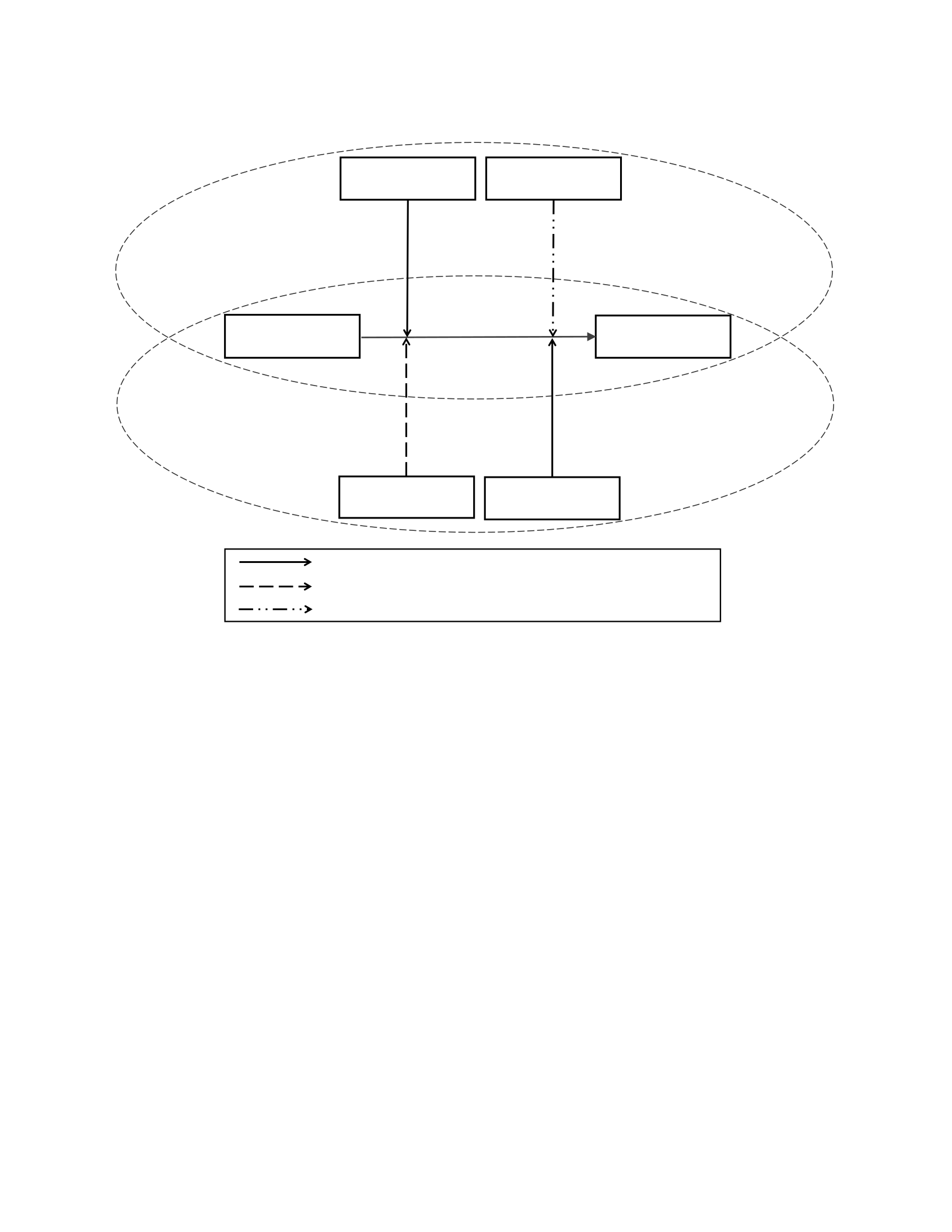
86
Figure 1: Organizing Framework
The external part of the subsidiary network can be used to form the base for the
subsidiary’s influence within the MNE (Andersson & Forsgren, 2000; Andersson et al., 2007).
By definition, an MNE “is an enterprise that engages in foreign direct investment (FDI) and
owns or, in some way, controls value-added activities in more than one country” (Dunning &
Lundan, 2008: 3). It has been established that FDI will be directed to host countries where the
market is large, resources are rich, or assets are strategically important (Cuervo-Cazurra &
Narula, 2015). The extent of capital flows from the MNE tend to be greater for subsidiaries
operating in larger national markets (Gupta & Govindarajan, 1991), for which the MNE may
have high hopes (Ambos & Birkinshaw, 2010). As criticality measures the organization’s ability
to continue functioning in the absence of the market (Pfeffer & Salancik, 2003), I would expect
that host countries that have received the most FDI inflows are or will be a critical market for
1
Poor subsidiary
performance
Subsidiary GM
succession
Flows of revenue
Host country FDI
inflows
Country-of-origin
competitors
Baseline (+)
H3(+)
H1(-) H2(+)
Internal Structure
(Interdependence Based Approach)
External Structure
(Market-dependence Based Approach)
Expatriate Ratio
H4(+)
Enhancing both subsidiary GM power and MNE monitoring
Mainly enhancing subsidiary GM power
Mainly enhancing MNE monitoring

87
MNEs. I concur that the MNE is likely to put more weight on subsidiaries that are currently
operating in the most important markets (Xia et al., 2019), but this does not preclude the
possibility that the MNE will keep a close eye on those subsidiaries operating in high-FDI
countries, which hold great potential to develop into the new core of the MNE’s portfolio.
Bouquet and Birkinshaw (2008a) suggest that the presence of other foreign MNEs may signal an
agglomeration effect that can enhance the MNE’s competitiveness in the future or may signal the
availability of critical location-specific advantages. On this basis, the strategic contingencies
perspective may thus posit that a subsidiary GM can accrue power from the market criticality
and thus be more likely to remain in office when the subsidiary performance disappoints.
At the same time, however, some MNEs in my data have developed a pool of subsidiary
GM candidates over time. For example, subsidiary GM 8 said, “When the next succession is
needed and when we do have available and qualified candidates on hand, the succession will
occur smoothly.” Occasionally MNEs also expatriate GM candidates internally. As Regional
GM 3 noted, “When internal candidates within the subsidiary are not readily available, we will
transfer some GM candidates from other subsidiaries to the focal subsidiary.” Therefore, given
the MNE’s inherent advantage in tapping into a globally diverse pool of talent (Mellahi &
Collings, 2010), the higher substitutability of the incumbent subsidiary GM relative to general
managers in a domestic setting suggests that MNEs may possess the hierarchical power or a
“parenting advantage” which outweighs the power of the subsidiary GM, facilitating subsidiary
GM succession when the subsidiary performance disappoints. To successfully exercise such
power, however, I argue that the means-end relationship needs to be clear and unambiguous.
But an MNE may encounter difficulties in monitoring the subsidiary’s operation in a high-
FDI country. If the MNE lacks a direct linkage with the host-country environment (Asakawa,

88
2001; Kano & Verbeke, 2019), the subsidiary as a knowledge broker can sustain its power by
leveraging the market knowledge gap (Griffith & Harvey, 2001; Holm, Johanson, & Thilenius,
1995). This gap refers to the knowledge difference between the subsidiary and the MNE in
relation to the host-country market and local business networks. As HR manager 1 explained: “It
is natural that GMs who have power, can prolong their tenures…The GM in China, though
disengaged for quite a while, can still remain in office…because he has channel information that
the HQs has no clue about.” When MNE managers know little about the subsidiary’s local
networks and its business environment, the MNE is not in a strong position to act hierarchically
(Andersson et al., 2007; Vahlne, Schweizer, & Johanson, 2012). I therefore argue that when a
subsidiary performs poorly in a host-country market that attracts a large amount of FDI, the
existing subsidiary GM is less likely to be replaced and the MNE is more likely to attribute the
subsidiary’s problems to market conditions. This is because high FDI inflows into a host country
stimulate competition (Blomström & Kokko, 1998; Caves, 1971), which may result in three
outcomes: the complexity of the host-country environment will increase, rendering local
knowledge even more critical (Nohria & Ghoshal, 1994, 1997); the MNE will be more likely to
receive noisy information, thus the ambiguity of the means–ends relationship will be greater; and
more spaces are left for “skillful interpretations” by subsidiary GMs. Therefore:
Hypothesis 1: Host country FDI inflows will moderate (decrease) the performance–
succession relationship such that GM succession is less likely to occur in the poorly performing
subsidiary when the host country receives high FDI inflows.
Implicit in the above theorizing is an assumption that decision makers with bounded
rationality and limited attentional capacity may only be able to closely monitor a specific
sub-environment (Birkinshaw, Bouquet, & Ambos, 2007; Porac, Thomas, & Baden‐Fuller,

89
1989). Indeed, in the host country context, an MNE may pay more attention to the actions of
other MNEs from the same nation (Chang & Park, 2005). MNEs from the same home
country represent a distinct organizational population (i.e., country-of-origin
agglomeration), as they share the same language, culture, and institutional background. The
linkages lead to interorganizational effects, encouraging imitative behavior (Guillén, 2002)
and inferential (or vicarious) learning (Jiang, Holburn, & Beamish, 2014; Yang, Li, &
Delios, 2015). To illustrate how MNEs scan the host-country environment, Tan and Meyer
(2011) found that the country-of-origin agglomeration, relative to the industry
agglomeration, is more likely to provide an effective channel for the sharing of knowledge.
Similarly, co-ethnic support (i.e., support from country-of-origin MNEs that operate in the
same host country) is found to significantly affect MNEs’ location choices, expansion speed,
and survival (Kalnins & Chung, 2006; Stallkamp, Pinkham, Schotter, & Buchel, 2017). At a
micro level, research has also shown that the concentration of same-nationality immigrants
can influence an MNE’s operations (Hernandez, 2014). The underlying mechanism shared
by these studies is that homophily or affiliation ties resulting from a common nationality can
facilitate knowledge exchanges (Lawrence & Shah, 2020; McPherson, Smith-Lovin, &
Cook, 2001).
Meanwhile, many studies have found that the industrial background is the defining
feature of reference groups in the business world (e.g., Chang & Park, 2005; Chen & Miller,
2007; Greve, 1998; Posen, Keil, Kim, & Meissner, 2018). Similarities in the industrial
knowledge base can help the focal organization measure and value knowledge from other
companies more effectively (Lane & Lubatkin, 1998). Combining this argument with the
homophily mechanism, I thus argue that the number of country-of-origin competitors in the

90
host country (i.e., competitors sharing the same industry background and country of origin
as the focal subsidiary) positively influences the MNE’s ability to acquire critical knowledge
about the host-country market situation and the relevant business networks (customers or
suppliers). The reason is that the activities of these competitors collectively provide detailed
information about the underlying reality. As supply chain manager 1 of a US MNE noted:
“Our MNE mainly competes in China with other US companies. AD, TX…So, telling a false
story about the China market is very difficult (for the subsidiary managers).”
HR manager 2 also told me that her MNE focuses more on the country-of-origin
competitors, because “the technology started from the US…So there are similarities
between us… Our (country-of-origin) competitor is number one in this field...and we are
number two.” Similarly, the interview data show that an Israeli irrigation MNE chooses
other Israeli companies to compare in the host country “because Israeli products have high
quality, we focus more on Israeli competitors, and then local ones.”
As a result, while the presence of country-of-origin competitors might also signal the
criticality of the host country market from which the subsidiary GM can accrue power, it can
simultaneously broaden the MNE’s information channel that is used to monitor the
subsidiary. This theoretically derived and empirically grounded argument is consistent with
Foss and Pedersen’s (2019) micro-foundational theorizing that stimuli embedded in the
more proximal context have stronger behavioral implications. The second hypothesis reads,
Hypothesis 2: The country-of-origin competitors in the host country will moderate
(increase) the performance–succession relationship such that GM succession is more likely to
occur in the poorly performing subsidiary when the number of country-of-origin competitors in
the host country is high.

91
I turn my attention now to the internal structure of MNEs by adopting an interdependence-
based approach. The relative strength of the foreign subsidiary compared to the rest of the MNE
positively affects the subsidiary’s ability to obtain resources from the environment (Andersson &
Forsgren, 2000), as it increases the amount of the MNE’s positive attention that follows in its
direction (Bouquet & Birkinshaw, 2008a; Collings, Mellahi, & Cascio, 2019). As the stock of
distinctive resources increases in the subsidiary, the relative power of the subsidiary further
increases (Birkinshaw & Hood, 1998; Nohria & Ghoshal, 1997). In this regard, if I follow the
logic of strategic contingencies perspective, I can then posit that the relative strength of the
subsidiary in the form of revenue controlled by the subsidiary can be leveraged by the subsidiary
GM to gain power in order to mitigate the turnover risks when the subsidiary performance
becomes poor (Drazin & Rao, 1999).
However, my empirical observations suggest a different view. As subsidiary PR manager 1
of the Singapore MNE noted: “Due to the importance of the market (because of the high
revenue) and the company’s role inside (the MNE)…our subsidiary’s performance is under great
scrutiny from HQs…The financial reports are reviewed (by the HQs) on a daily basis…We have
changed 16-17 subsidiary GMs in the past 17 years.”
Indeed, prior studies have also shown that a large operation might increase the parent’s
influence over the subsidiary’s personnel policies (e.g., Youssef, 1973). Given the
interdependencies between powerful subsidiaries and MNEs (Gupta & Govindarajan, 1991), it
seems likely that the flipside of possessing a conspicuous position within an MNE is that when
the performance of the important subsidiary is poor, the MNE will also have a great deal at stake.
Meanwhile, as powerful subsidiaries may engage in rent-seeking behaviors (Mudambi &
Navarra, 2004), MNEs might be willing to increase monitoring of important subsidiaries in order

92
to undermine such subsidiaries’ influence (Andersson et al., 2007), or to tap into the subsidiaries’
store of specialized knowledge (O’Donnell, 2000). Also, it seems likely that the relative strength
of the subsidiary will render its operations more observable, which will in turn facilitate the
MNE’s scrutiny. This suggests that subsidiary visibility has a double-edged nature (Yamin &
Andersson, 2011). In contrast with Drazin and Rao (1999), I therefore argue that when the poorly
performing subsidiary controls a high portion of the MNE revenue, the MNE will be more likely
to replace the subsidiary GM in order to turn the subsidiary’s performance around. Formally:
Hypothesis 3: The foreign subsidiary revenue will moderate (increase) the performance–
succession relationship such that GM succession is more likely to occur in the poorly performing
subsidiary when the subsidiary controls a high portion of MNE revenue.
The second factor in the internal structure dimension is the deployment of expatriate in
the foreign subsidiary. Considering the role of expatriates in controlling the subsidiary on
behalf of MNE headquarters (Collings, Scullion, & Dowling, 2009; Shin, Hasse, & Schotter,
2017), the relative use of expatriates might also indicate the importance of the subsidiary. As
sales manager 1 explained: “(The host country) is the largest overseas market for our T
product... Expatriates can make up to 70 % of the staff.” In contrast, the deputy GM based in
the UK noted, “This subsidiary used to be a small subsidiary (and thus had very few
expatriates), so we just let it grow freely. We didn’t have any requirements.” In this case, then,
the strategic contingencies perspective may posit that the power of the GM when the subsidiary
has more expatriates might be higher than that of GMs when the subsidiary has fewer
expatriates, thus potentially weakening the poor performance–succession link.
However, the deployment of expatriates can also directly strengthen MNE monitoring
(O’Donnell, 2000; Plourde, Parker, & Schaan, 2014). Tarique et al. (2006) suggest that

93
expatriates may know more about the MNE’s culture, and thereby can more effectively
facilitate communication with the headquarters and align the subsidiary’s operations with the
interests of the MNE. Relatedly, prior studies have shown that expatriates as trusted informants
can enable the MNEs’ gathering of information and active learning (e.g., Plourde et al., 2014).
My empirical observations support this view. As an expatriate explained, “The subsidiary GM
got involved in many fraud issues, which remained unnoticed until I was expatriated to the UK
office.” Similarly, as sales manager 1 of a Korean MNE noted, “expatriates have direct
communications with the HQs”, indicating the smooth flow of information. More than that, the
accuracy of information is also enhanced with the use of expatriates. As Regional CEO 3 noted:
“If the outcome is poor, then the deputy GM (who is an expatriate) will check with the
subsidiary CEO about whether the process follows the HQs’ guidelines.” Based on extant
literature as well as my empirical data, therefore, I anticipate that the higher the expatriate ratio
in the foreign subsidiary, the more effective the MNE monitoring can be. Derived from the
MNE attention perspective, I hypothesize:
Hypothesis 4: The expatriate ratio in the foreign subsidiary will moderate (increase) the
performance–succession relationship such that GM succession is more likely to occur in the
poorly performing subsidiary when the subsidiary’s expatriate ratio is high.
QUANTITATIVE HYPOTHESIS TESTING
Data
For the quantitative analysis, I use the Toyo Keizai NEEDS Merged Database (1991–
2013). Same as in Essay 1, to maintain the consistency of data and to control for influences due
to conflicts within Japanese parent firms, I only study foreign subsidiaries in which there is no
change in parent firm and have had only one Japanese parent throughout their development.

94
Consistent with FASB protocols, a foreign subsidiary here refers to a company in which the
Japanese MNE has at least a 20 percent ownership stake. Some subsidiaries have operated in the
host countries for many years before they first appeared in the dataset. Same as in Essay 1, I drop
subsidiaries that had already operated in the host countries for more than two years when they
first appeared in the dataset. Finally, I remove subsidiaries in which the number of employees
has never exceeded nine to ensure the database does not include small representative offices or
agencies.
Model
Because recurrence times within each subsidiary should not be modelled as independent
(Beck, Brüderl, & Woywode, 2008), I use a fixed-effects logit model
4
to partial out the
unobserved subsidiary heterogeneity in the propensity to change the GMs. The succession of
each subsidiary GM is assumed to follow the function below:
=($!"
|
)!"',+,>!
)
=1
1+/#$!"%#(!
)!"
?
1− 1
1+/#$!"%#(!
A
*#)!"
with
'$!" = 1[)!"+ +>!+5!" > 0]
In the foregoing function,
9
represents a subsidiary,
:
refers to time. I use
;!"
to mean a
succession event in the subsidiary,
)!"
as the vector of independent variables and control
variables, and
+'
as the coefficients associated with these variables. In this model, the errors
5!"
are assumed to be exogenous to all independent variables and
>!
is the time-invariant unobserved
firm-specific variance that can be correlated to the independent variables, i.e.,
Cov'
(
>!,)!"
)
≠ 0
.
By using a fixed-effects model, I can partial out the unobservable variance
>!
(Allison, 2009).
4
The results from Hausmann test also support the choice of fixed effects model.

95
Variables
Dependent variable. Same as in Essay 1, I follow the approach of Beck et al. (2008) to
identify the successions at each observation. The binary variable, Succession, represents the
change of subsidiary GMs. 1 means that a GM change takes place, and 0 otherwise.
Independent variables. The annual assessment of the subsidiary’s financial performance is
from Kaigai Shinshutsu Kigyou Souran. This variable is argued to be an appropriate performance
indicator (Isobe, Makino, & Montgomery, 2000). I recode this profit measure into a binary
variable termed Subpar Performance, where 1 means low performance, and 0 means otherwise.
Competitors is a discrete variable referring to the number of country-of-origin competitors
(i.e., Japanese subsidiaries with different parents) in the host country where the focal subsidiary
operates. These country-of-origin competitors use the same industry (four-digit) code as that of
the focal subsidiary. Because log transformation cannot be applied to zero values this essay takes
the square root of the number of country-of-origin competitors to reduce right skewness.
Following prior studies (e.g., Shin et al., 2017) and same as in Essay 1, Expatriate Ratio is
the number of expatriates in a subsidiary divided by the total number of employees in the
subsidiary. 0 means there is no expatriate in the subsidiary while 1 suggests that all employees in
the subsidiary are expatriates.
I use the intensity of FDI Inflow as a proxy for the market dynamism in a host country. I
utilize panel data on FDI inflows from the Balance of Payments Database (1991–2013) reported
by the International Monetary Fund (IMF). This data has been supplemented by data from the
United Nations Conference on Trade and Development and official national sources. The World
Bank defines FDI inflow as direct investment equity flow in the reporting country. Specifically,
FDI inflow (reported in current U.S. dollars) is the sum of reinvestment of earnings, equity

96
capital, and other capital. In order to provide a more straightforward interpretation, I divide the
value of this variable by 10 billion.
Similar to the approach of Drazin and Rao (1999), the relative Revenue Flows controlled
by the subsidiary is the revenue of the focal subsidiary divided by the total revenue received by
all subsidiaries of the MNE. This measure denotes the strategic importance of the subsidiary
within the MNE. The higher the value, the more important the subsidiary is deemed to be.
Control variables. First and as mentioned earlier, when given alternatives, an MNE can
undercut the unique value of the subsidiary GM, and thus reduce the power of the subsidiary GM
(Salancik & Pfeffer, 1977). The power of the incumbent will in part depend on the availability of
suitable substitutes (Drazin & Rao, 1999), as power will not organize around abundant resources
(Pfeffer & Salancik, 2003). Therefore, when there is a lack of supply of GM candidates, it is
expected that incumbents will be less likely to leave office (Fredrickson et al., 1988; Pfeffer &
Moore, 1980). Because MNEs may prefer to internally transfer rather than newly hire a
subsidiary GM for the focal subsidiary (Kopp, 1994), and internal turnover is apparently more
common in MNEs than in domestic firms (Naumann, 1992), I would expect that the number of
subsidiaries belonging to the same MNE in a host country will influence the substitutability of
the subsidiary GM. When the MNE looks for a new subsidiary GM to turn a poorly performing
subsidiary around, it might be more willing and able to first look at whether there are candidates
within the intra-firm subsidiary grouping. Logically, the larger the intra-firm subsidiary
grouping, the more likely the MNE will find an internal successor. To measure the size of the
intra-firm subsidiary grouping, I create a variable called Sister Subsidiaries, which is a discrete
variable denoting the number of sister subsidiaries in the host country where the focal subsidiary
operates. I take the square root of this variable to reduce right skewness.

97
Second, in line with Drazin and Rao (1999), I control for subsidiary GM’s Tenure. It refers
to how many years the subsidiary GM has been in office. I use this variable to control for the
subsidiary GM’s entrenchment, because new subsidiary GMs may face a higher risk of power
contests in the early years of their tenure (Pi & Lowe, 2011; Shen & Cannella, 2002a), thus being
more likely to leave office. In this essay, this variable is log-transformed.
Third, as mentioned in Essay 1, the mode of entry may affect the availability of GM
candidates, and thus affecting GM succession. I control for Entry Mode which is a categorical
variable denoting a firm’s mode of entry. Same as in Essay 1, 1 here denotes a WOS, 2 is a
Majority Owned IJV (i.e., MNE dominated IJV), 3 means an Equally Owned IJV, and 4 a
Minority Owned IJV. I define a subsidiary as a majority owned IJV when the Japanese partner
holds more than 50 percent of the IJV’s equity ownership while the local partner holds more than
20 percent of the IJV’s equity ownership. Consistent with FASB protocols, I define a subsidiary
as a WOS when the MNE holds more than 80 percent of the subsidiary’s equity ownership.
Fourth, the origin of the existing GM may influence the succession probability because the
length of stay abroad of many expatriates has been specified a priori (Harvey & Moeller, 2009;
Mesmer-Magnus & Viswesvaran, 2008). Therefore, I control for the subsidiary GM’s origin.
PCN GM is a binary variable, where 1 refers to a GM who is a Japanese, and 0 means otherwise.
Fifth, prior studies showed that the number of subsidiary employees might also influence
the importance of the subsidiary (e.g., Birkinshaw & Hood, 1998). I thus use the number of
subsidiary employees as a proxy for Subsidiary Size and take the square root of the variable to
reduce right skewness. Similarly, I control for the size of the MNE. Based on the European
Commission’s definition, I regard a firm as a Large MNE if it has more than 500 employees.
Because older organizations might be less likely to engage in change (Mitsuhashi & Greve,

98
2004), I control for the logarithm of Subsidiary Age. Meanwhile the quadratic term Subsidiary
Age Squared is added here in order to identify the potential curvilinear relationship between
subsidiary age and subsidiary GM change. As mentioned in Essay 1, both younger and older
subsidiaries, albeit for different reasons, might be less likely to change the GMs. I also control
for the period from Year 1991 to 2013. I code this variable into a series of dummy variables to
account for the influence of aggregate time series trends.
I then use the categorical variable Strategic Motives to account for the heterogeneous
impact of FDI motives on the change of subsidiary GMs. This variable is coded into 16 dummy
variables. Relatedly, given that dedicated regional headquarters (RHQs) are also expected to
perform HQ functions while exercising more extensive mandates (Chakravarty, Hsieh, Schotter,
& Beamish, 2017), I anticipate that they would gain more attention from the MNE (Belenzon,
Hashai, et al., 2019). I use a binary variable, Regional HQs, to control for the impact of being an
RHQ on subsidiary GM succession.
Finally, to account for other macro-level factors of the host country, I utilize
Unemployment Ratio data from the International Labour Organization’s ILOSTAT database, the
Human Capital Index data from the Penn World Table (1991-2013) (Feenstra, Inklaar, &
Timmer., 2015), and GDP Growth data from World Bank national accounts data and OECD
National Accounts data files (World Bank, 2019). Also, given that MNEs may shift profit from
one subsidiary to another in order to reduce their overall tax burden, I account for the effect of
host country corporate income tax on the subsidiary GM succession activities. Thus, I utilize the
Tax Rate data from TaxFoundation.org (Farah, Elias, Chakravarty, & Beamish, 2021). Table 7
summarizes the characteristics of these variables.

99
Table 7: Descriptive Statistics
Variable
Mean
SD
1
2
3
4
5
6
7
8
9
10
1.Successions
0.25
0.43
1.00
2.Subpar Performance
0.19
0.39
0.01
1.00
3.FDI Inflow (10 billion)
6.10
8.43
0.02
0.01
1.00
4.Competitors (sqrt)
4.98
2.80
0.01
-0.01
0.39
1.00
5.Revenue Flows
0.21
0.31
-0.03
0.02
0.08
0.09
1.00
6.Expatriate Ratio
0.14
0.19
0.03
-0.02
0.08
-0.03
-0.01
1.00
7.WOS
0.71
0.46
0.00
0.01
0.17
0.07
0.08
0.27
1.00
8.Majority Owned IJV
0.11
0.31
0.00
0.01
-0.09
0.00
-0.05
-0.14
-0.55
1.00
9.Equally Owned IJV
0.04
0.20
0.00
-0.01
-0.01
0.02
-0.02
-0.10
-0.33
-0.08
1.00
10.Minority Owned IJV
0.14
0.35
-0.01
-0.02
-0.14
-0.10
-0.04
-0.17
-0.62
-0.14
-0.09
1.00
11.PCN GM
0.81
0.40
0.02
0.00
0.06
0.09
0.06
0.21
0.38
-0.01
-0.17
-0.39
12.Tenure (log)
0.90
0.69
0.13
-0.07
0.03
0.02
0.04
-0.09
-0.03
0.01
0.00
0.03
13.Subsidiary Age (log)
4.48
0.53
-0.03
-0.23
0.17
0.06
0.04
-0.13
0.03
-0.02
-0.02
-0.01
14.Subsidiary Size (sqrt)
10.05
10.51
-0.01
-0.02
-0.06
0.13
0.03
-0.40
-0.10
0.04
0.07
0.04
15.Large MNE
0.75
0.43
0.01
-0.06
0.00
0.04
-0.61
-0.11
-0.05
0.03
0.03
0.02
16.GDP Growth (%)
5.00
3.96
0.01
-0.01
0.07
0.25
-0.03
-0.15
-0.12
0.10
0.07
0.04
17.Unemployment Rate (%)
5.03
2.49
0.01
0.07
-0.02
-0.21
-0.06
0.09
0.14
-0.04
0.02
-0.17
18.Human Capital Index
2.80
0.56
0.00
0.03
0.36
-0.04
0.06
0.24
0.31
-0.17
-0.05
-0.22
19.Sister Subsidiaries (sqrt)
1.17
0.35
0.03
0.00
0.18
0.16
-0.19
-0.10
-0.13
0.06
0.10
0.06
20.Regional HQs
0.03
0.17
0.00
-0.02
0.10
0.03
-0.05
0.16
0.10
-0.06
-0.04
-0.05
21.Tax Rate
31.82
7.16
-0.02
0.13
0.22
-0.03
0.06
0.01
0.03
-0.04
0.04
-0.02
11
12
13
14
15
16
17
18
19
20
21
11.PCN GM
1.00
12.Tenure (log)
-0.08
1.00
13.Subsidiary Age (log)
0.02
0.27
1.00
14.Subsidiary Size (sqrt)
-0.04
0.07
0.15
1.00
15.Large MNE
-0.05
0.03
0.10
0.22
1.00
16.GDP Growth
-0.02
-0.02
-0.10
0.12
0.02
1.00
17.Unemployment Rate (%)
-0.06
-0.01
-0.03
-0.11
0.03
-0.28
1.00
18.Human Capital Index
0.03
0.02
0.19
-0.23
-0.01
-0.46
0.39
1.00
19.Sister Subsidiaries (sqrt)
-0.07
-0.04
0.02
0.16
0.17
0.18
-0.04
-0.06
1.00
20.Regional HQs
0.04
-0.02
0.02
-0.06
0.07
-0.05
0.00
0.12
0.02
1.00
21.Tax Rate
-0.07
0.00
-0.12
-0.02
-0.03
-0.14
0.34
0.39
0.08
0.04
1.00
Notes: Based on observations in Model 1; Year Dummies and Strategic Motive Dummies are not included in Table 7

100
RESULTS AND ROBUSTNESS CHECK
To detect Type 1 errors (Kalnins, 2018), I reran Models 2 to 5 by excluding the
Competitors variable. The sign and magnitude of the interaction term between Subpar
Performance and FDI Inflow remained consistent. It is thus unlikely that multicollinearity is
distorting results.
As the key independent variables are introduced into the models hierarchically, I found
consistent empirical supports to my Hypotheses. Table 8 shows the regression results. In models
1 to 5, all beta coefficients are odds ratios. An odds ratio of 1 means there is no increase in the
odds of an outcome with a given exposure, 2 means there is a 100 percent increase in the odds of
an outcome with a given exposure, and 0.8 means there is a 20 percent decrease in the odds of an
outcome with a given exposure.

101
Table 8: Empirical Results for Hypotheses 1–4 (odds ratio)
Model 1
(Baseline)
Model 2
(H1)
Model 3
(H2)
Model 4
(H3)
Model 5
(H4)
Dependent Variable: Successions
Regressors:
Control Variables:
WOS
Reference category
Majority Owned IJV
1.07
(0.755)
1.00
(0.990)
0.99
(0.970)
0.99
(0.973)
0.99
(0.982)
Equally Owned IJV
1.45
(0.329)
1.47
(0.368)
1.49
(0.357)
1.50
(0.342)
1.53
(0.325)
Minority Owned IJV
2.10
(0.015)
2.26
(0.022)
2.26
(0.023)
2.31
(0.019)
2.34
(0.017)
PCN GM
1.26
(0.100)
1.24
(0.170)
1.23
(0.195)
1.24
(0.175)
1.24
(0.165)
Tenure
4.01
(0.000)
3.98
(0.000)
3.99
(0.000)
4.00
(0.000)
4.00
(0.000)
Subsidiary Age
0.70
(0.873)
0.01
(0.091)
0.01
(0.096)
0.00
(0.086)
0.01
(0.108)
Subsidiary Age Squared
0.93
(0.828)
1.92
(0.148)
1.90
(0.155)
1.93
(0.143)
1.84
(0.175)
Subsidiary Size
1.01
(0.218)
1.00
(0.676)
1.00
(0.669)
1.00
(0.637)
1.00
(0.655)
Large MNE
1.13
(0.474)
1.26
(0.234)
1.26
(0.227)
1.29
(0.192)
1.29
(0.194)
GDP Growth
1.01
(0.472)
1.02
(0.172)
1.02
(0.163)
1.02
(0.164)
1.02
(0.156)
Unemployment Rate
0.95
(0.080)
0.95
(0.098)
0.95
(0.114)
0.95
(0.110)
0.95
(0.121)
Human Capital Index
1.74
(0.342)
0.94
(0.928)
0.93
(0.912)
0.91
(0.892)
0.94
(0.924)
Sister Subsidiaries
1.21
(0.396)
1.33
(0.275)
1.36
(0.241)
1.35
(0.241)
1.34
(0.258)
Regional HQs
0.43
(0.080)
0.34
(0.053)
0.32
(0.042)
0.31
(0.037)
0.30
(0.035)
Tax Rate
1.01
(0.275)
1.01
(0.391)
1.01
(0.389)
1.01
(0.372)
1.01
(0.411)
Key Predictors:
Subpar Performance
1.21
(0.049)
1.31
(0.037)
0.90
(0.624)
0.80
(0.301)
0.70
(0.112)
FDI Inflows
1.00
(0.712)
1.01
(0.472)
1.01
(0.472)
1.01
(0.470)
Competitors
0.95
(0.220)
0.94
(0.158)
0.94
(0.156)
0.94
(0.139)
Revenue Flows
1.58
(0.153)
1.61
(0.133)
1.31
(0.410)
1.29
(0.434)
Expatriate Ratio
0.95
(0.886)
0.93
(0.848)
0.94
(0.870)
0.64
(0.253)
Sub Performance × FDI Inflows
0.97
(0.025)
0.97
(0.004)
0.96
(0.003)
0.97
(0.004)
Sub Performance × Competitors
1.09
(0.025)
1.08
(0.040)
1.07
(0.067)
Sub Performance × Rev Flows
2.31
(0.011)
2.35
(0.009)
Sub Performance × Expat Ratio
3.83
(0.015)
Strategic Motives
Yes
Yes
Yes
Yes
Yes
Year Dummies
Yes
Yes
Yes
Yes
Yes
Observations
9428
7412
7412
7412
7412
Number of Subsidiaries
1,386
1,153
1,153
1,153
1,153
Chi-squared
849.86
673.61
678.69
685.12
691.00
Notes: All coefficients are odds ratios; P values in parentheses; Sub Performance refers to Subpar performance; Rev Flows refers
to Revenue Flows; Expat Ratio refers to Expatriate Ratio

102
In Model 1, the coefficient of the Subpar Performance variable is 1.21 and significant (p-
value = .049), supporting the baseline that when the subsidiary’s performance disappoints, the
probability of changing the subsidiary GM will increase. In this case, the odds of GM succession
will increase by a factor of 1.21. From Model 2 onward, the interaction term between Subpar
Performance and the FDI Inflow remains below 1 and highly significant, supporting Hypothesis
1—that GM successions becomes less likely to occur in the poorly performing subsidiary when
the host country receives high FDI inflows. Taking Model 2 as an example, the beta coefficient
of the interaction effect is 0.97 (p-value = .025), suggesting that there will be a three percent
decrease in the odds of subsidiary GM succession with every US$ 10 Billion increase in FDI
inflows. However, findings from Model 3 onward show that when there are many country-of-
origin competitors in the host country, subsidiary GM succession becomes more likely in the
poorly performing subsidiary. In Model 3, for example, the interaction term between Subpar
Performance and Competitors is above 1.09 and highly significant (p-value = .025), suggesting
that even if there was only one country-of-origin competitor in the host country, the odds of GM
succession in the poorly performing subsidiary would increase by a factor of 1.09, strongly
supporting Hypothesis 2.
With respect to the moderation effect of Revenue Flows, I found consistent support for
Hypothesis 3—that GM succession is more likely to occur in the poorly performing subsidiary
when it controls a high portion of MNE revenue. The beta coefficient of the interaction term
between Subpar Performance and Revenue Flows in Model 4 is 2.31 and highly significant (p-
value = .011). In Model 5, the effect is even more significant and the effect size becomes slightly
larger.
Finally, I tested the moderation effect of Expatriate Ratio. The beta coefficient of the

103
interaction term between Subpar Performance and Revenue Flows in Model 5 is 3.83 and highly
significant (p-value = .015), lending strong support to Hypothesis 4—that the higher the
expatriate ratio, the more likely the subsidiary GM succession will occur in the poorly
performing subsidiary
5
. However, in Model 5, the interaction effect between Subpar
Performance and Competitors is only marginally meaningful in a statistical sense (p-value
= .067)
6
.
It is important to note that I cannot use the method of Flickinger et al (2016) or of Huang
and Shields (2000) to evaluate the interaction terms as my model is a conditional logit (thus
estimating the marginal effects is not meaningful here as the marginal effects depend on the
value of the fixed effects) (Allison, 2009). However, I can use a recentering approach (Jeong,
Siegel, Chen, & Newey, 2020) by subtracting from every value of Subpar Performance the data
point of interest (i.e., 1 in this case). I then reran Model 5 and found that the coefficient of FDI
Inflow is 0.97 (p-value = .020), the coefficient of Revenue Flows is 2.35 (p-value = .009), and the
coefficient of Expatriate Ratio is 2.43 (p-value = .089). The coefficient of Competitors, however,
was statistically insignificant.
Replacing foreign subsidiary GMs potentially impacts subsidiary performance (Bebenroth
& Froese, 2020; Beechler, Bird, & Taylor, 1998). My qualitative data support this view, as
regional CEO 4 told us: “The sales turnover has increased three-fold after 3 years (since the
change of the subsidiary GM)…and has become profitable.” Also, subsidiaries that receive MNE
5
As the cultural distance may also influence the staffing strategy of MNEs (Shin et al., 2017), I follow Kogut and
Singh (1988) to calculate the cultural distance between Japan and other host countries by using Hofstede’s indices.
However, my fixed-effects model will drop this variable due to the variable’s time-invariant nature. I thus reran
Model 5 by excluding host countries, of which the cultural distance from Japan is one standard deviation (4.03)
above the mean (12.82). The results of the analysis support all my Hypotheses and are available upon request.
6
I used non-parametric bootstrapping (100 times) to estimate the standard errors in Model 5, the p-value of the
interaction effect between Subpar Performance and Competitors is .058.

104
attention are found to perform better than their peers (Ambos & Birkinshaw, 2010). To explore
whether changing the GM in a poorly performing foreign subsidiary can turn around the
subsidiary’s subpar performance, I trace the performance of the focal foreign subsidiary during
the successor’s tenure. I do so by employing a fixed-effects logit model based on the same model
structure as the full model used in Table 8. Specifically, I tested two dependent variables. The
regression results are reported in Table 9.
Table 9: Empirical Results of the Performance Model
Model 6
(Turnaround)
Model 7
(Continual Profitability)
Dependent Variable:
Subpar Performance
Two-Year Consecutive Gain
Regressors:
Control Variables:
WOS
Reference category
Majority Owned IJV
-2.11
(0.032)
0.92
(0.169)
Equally Owned IJV
-2.65
(0.013)
0.02
(0.985)
Minority Owned IJV
-2.91
(0.049)
1.29
(0.187)
PCN GM
0.91
(0.046)
-0.49
(0.299)
Subsidiary Age
14.76
(0.375)
-12.41
(0.399)
Subsidiary Age Squared
-2.50
(0.273)
2.12
(0.291)
Subsidiary Size
-0.15
(0.000)
0.12
(0.000)
Large MNE
-0.28
(0.591)
-0.50
(0.231)
GDP Growth
0.01
(0.885)
-0.02
(0.551)
Unemployment Rate
0.04
(0.588)
0.12
(0.100)
Human Capital Index
-1.44
(0.439)
0.04
(0.980)
Sister Subsidiaries
0.90
(0.208)
0.25
(0.677)
Regional HQs
0.65
(0.629)
4.20
(0.003)
Tax Rate
-0.02
(0.663)
-0.07
(0.045)
FDI Inflows
-0.05
(0.005)
0.02
(0.264)
Competitors
0.22
(0.119)
-0.22
(0.013)
Revenue Flows
0.29
(0.745)
2.58
(0.001)
Expatriate Ratio
-0.30
(0.709)
-0.79
(0.440)
Key Predictors:
Successor
1.66
(0.000)
-4.26
(0.000)
Successor’s Tenure
-0.03
(0.651)
-0.07
(0.144)
Successor × Successor’s Tenure
-0.45
(0.000)
0.57
(0.000)
Strategic Motives
Yes
Yes
Year Dummies
Yes
Yes
Observations
1,334
1,882
Number of Subsidiaries
206
276
Chi-squared
224.81
421.03
Notes: P values in the parentheses.
In Model 6, the dependent variable is Subpar Performance and the key independent

105
variable is Successor, which is a binary variable, where 1 refers to a successor whose
predecessor left office when the subsidiary performance was poor, and 0 means otherwise. Prior
studies (e.g., Ma & Seidl, 2018; Rowe, Cannella, Rankin, & Gorman, 2005) showed that due to
time compressession diseconomies (Dierickx & Cool, 1989), new leaders need time to make
sense of the problem, develop organization-specific knowledge, configure the executive team,
and take charge. My empirical observations also indicate the importance of time. As noted by
Service manager 1, “At least five years tenure… is a precondition for the GM to really
understand how to do business in this specific context.” When the tenure is too short, it is likely
that I may not observe the performance turn-around. As Sales manager 2 explained: “They gave
the subsidiary general managers too little time to turn around the performance of the
subsidiary.” I therefore investigate the interaction effect between Successor and the Successor’s
Tenure. In Models 7, I change the dependent variable to the consecutive years of gain. It is coded
as a binary variable. If the annual assessment of the subsidiary’s financial performance has
shown a gain for two consecutive years, I code it as 1. I use 0 otherwise.
The interaction term between Successor and the Successor’s Tenure in Model 6 has a beta
coefficient -0.45 and is highly significant (p-value < .001) while the main effect of Successor is
1.66 and highly significant (p-value < .001). The results suggest that new subsidiary GMs whose
predecessor left office when the performance was subpar will likely experience a similar
downturn in subsidiary performance initially. Two mechanisms can explain this phenomenon.
First, given the strong organizational inertia developed during the predecessors’ time in the
subsidiary (Shen & Cannella, 2002b), organizational change would not take place easily in this
case (Hambrick, 2007). Second, if I observe performance too quickly after a succession event, I
am also likely to see a performance downturn (Rowe et al., 2005), as vicious cycle theory holds

106
that successions disrupt routines, thus worsening firm performance (Grusky, 1960).
Nevertheless, the results showed that new GMs, when given time, can turn around the poorly
performing subsidiaries. For ease of interpretation of the estimated interaction effects, I reran
Model 6 by using a fixed-effects linear probability model (LPM) while trimming the
observations that violate the rule
!"
#
!" ∈ [0,1]
(Damaraju & Makhija, 2018; Horrace & Oaxaca,
2006; Wooldridge, 2016). The results show that new GMs can turn around the poorly performing
subsidiaries after the third year of their tenure. I then reran Model 7 by using LPM and found
that the foreign subsidiaries can even make consecutive years of gain after seven years since the
successors took office.
DISCUSSION
By adopting a mixed-methods methodology, this study develops a more elaborated
framework to systematically explain how strategic contingencies in the context of MNEs
moderate the relationships between poor foreign subsidiary performance and subsidiary GM
change. By integrating a market-based approach with an interdependence-based approach, my
analysis, rooted in a critical realism view (Van de Ven, 2007), showed that the link between
subpar subsidiary performance and subsidiary GM turnover is indeed not as direct as it seems,
but it does not follow the predictions of the performance–power–succession model (Drazin &
Rao, 1999). I found that in the presence of structural factors that can increase the level of MNE
monitoring, the poor performance–GM succession relationship will be strengthened (though
Competitors became only marginally significant in Model 5). In the presence of structural factors
that can enhance the subsidiary GM power, however, the performance-succession relationship
will not be necessarily decreased. Therefore, by examining the roles of MNE attention in the
subsidiary GM changes, my theory, relative to the strategic contingencies perspective, provides a

107
more cohesive understanding of GM successions in the setting of foreign subsidiaries.
Meanwhile, this study improves our knowledge of the broader succession process. Extant
studies tend to use longitudinal models to explore the continual GM change from within the
organization (e.g., Amburgey, Kelly, & Barnett, 1993; Amburgey & Miner, 1992; Beck et al.,
2008). My analysis complements these works, firstly, by accounting for the triggering event that
is likely to set the path-building process in motion (Sydow, Schreyögg, & Koch, 2009); and
secondly, by showing that both the internal structure of organizations and the external
environment can influence organizational decision making (Argote & Greve, 2007) in relation to
GM successions.
Also, I address the call by Bouquet and Birkinshaw (2008a) to explore the issue of
negative headquarters’ attention. Although occasional anecdotal evidence has suggested that
MNE attention may lead to an adverse effect for the subsidiary GM, to the best of my
knowledge, the analysis is among the first to provide a theoretical angle on this issue. To develop
the proper analytic tools, this study utilizes the distinctive MNE context and provides a more
nuanced contextualization (Roth & Kostova, 2003). Although the level of FDI into a host
country may correlate with the presence of country-of-origin competitors in the host country
with respect to subsidiary GM power, the findings showed that these factors can produce
opposite effects on subsidiary GM changes. My empirical observations and theory revealed that
the former can impede MNE monitoring while the latter facilitates MNE monitoring, which then
influence MNEs’ exploitation of hierarchical power.
Furthermore, I theoretically and empirically contribute to the literature on the role of
expatriate deployment in affecting MNEs’ attention. Plourde et al. (2014) found that expatriates
can bring signs of subsidiary growth to the (positive) attention of headquarters. My analysis

108
extends their work by accounting for instances where expatriates can also enable the negative
MNE attention in the subsidiary when the subsidiary encounters difficulties in sustaining a high
subsidiary performance.
At the same time, this study, based on two separate performance measures, presents a more
promising picture of the role of subsidiary GM successors in turning around the poor
performance of an ailing subsidiary. Changing subsidiary GMs is a strong form of managerial
intervention, but the findings here showed the positive economic significance for this kind of
intervention. Therefore, my analysis extends the line of inquiry on the benefit of headquarters’
involvement in general (e.g., Tran, Mahnke, & Ambos, 2010) and the benefit of gaining MNE
attention (from the subsidiary’s perspective) in particular (e.g., Ambos & Birkinshaw, 2010).
Managerial Implications
This study offers several implications relevant to practitioners. First, in an era when the
risk of selecting the wrong candidate is greater than any time in the past (Donatiello, Larcker, &
Tayan, 2018), lack of sufficient information on what the subsidiary is doing may introduce
additional complexities into GM succession processes. As one informant from a large
manufacturing MNE emphasized, “A lot of information we collected (from the subsidiary GM in
the UK) might be wrong, so we have to ensure we have multiple sources of information.” I
therefore suggest that senior MNE managers should be acutely aware of succession resistance.
Two richer sources of information for MNE managers include the country-of-origin competitors
in the host country and the expatriates within the subsidiary.
Second, changing the GM in a poorly performing subsidiary can be an effective turnaround
strategy. However, the successor needs time to take charge. MNE managers can thus be more
confident in using subsidiary GM succession to improve subsidiary performance on one hand,

109
but they also need to be patient on the other because managerial interventions as such will not
lead to immediate payoffs. One informant (i.e., Director 3) told me that they normally give a
“honeymoon period” (which is not simply a probation period) to the subsidiary GM successors.
But many MNEs do not give subsidiary GMs more than three years to turn around their
subsidiaries, as evidenced by the informants from several South Korean MNEs. One informant
used the term “failure trap” to express his dissatisfaction with the HQs’ impatience. A sales
manager from a US MNE similarly noted, “The subsidiary GMs here are only given two to three
years…Immediately upon getting aboard they started to make strategic plans… and then they
spent the other half of the time in planning to return home…This will never work.”
Third and from the subsidiary GM’s perspective, receiving attention from HQs is not
always desirable. To capture the upside potential of gaining MNE attention (Ambos &
Birkinshaw, 2010; Bouquet & Birkinshaw, 2008a), it is critical that subsidiary GMs should also
find ways to avoid the downside risk associated with MNE attention. One possible way to do so,
as suggested by subsidiary GM 6 in Brazil and subsidiary GM 7 in China, is that they should
never “cover up problems” and communicate with the HQs frequently, transparently, and
honestly.
Limitations and Future Research Opportunities
While this study identifies the performance–succession link unique to foreign subsidiary
GMs, it clearly needs further exploration and validation. First, due to the COVID-19 pandemic, I
am not able to have close-up observations on site. I thus hope future work can utilize more
refined qualitative approaches to produce more contextualized descriptions of succession
decision making. Also, as headquarters may increase their monitoring efficacy through
coordination and control (Andersson & Holm, 2010) or by being active in host countries (Vahlne

110
et al., 2012), it would be interesting to delineate how these monitoring mechanisms influence the
process of changing subsidiary GMs. Future studies could also draw on the upper echelons
perspective to explore how other micro-level conditions moderate the factors underlying my
conceptualization. These conditions may include the predecessor and/or the successor’s human
capital, religion, age, time horizon, social status, and origin (Belenzon, Shamshur, & Zarutskie,
2019; Chen & Hambrick, 2012; Damaraju & Makhija, 2018; Flickinger et al., 2016; Georgakakis
& Ruigrok, 2017; Karaevli, 2007; Matta & Beamish, 2008).
Meanwhile, researchers should engage in more comparative cross-cultural studies of this
topic (Bettis, Helfat, & Shaver, 2016). Although my qualitative inquiry probed into the process
of subsidiary GM succession decision making in multiple home and host countries, the
quantitative analysis only focused on a single home country, which may limit the generalizability
of the findings. For example, as the Japanese firms have a preference for group structures both at
home and abroad (Xu, Huang, & Pan, 2019), the effect of country-of-origin competitors on MNE
monitoring might be stronger than that of MNEs from other home countries. But this speculation
might be questionable, because some studies also pointed out that Japanese MNEs are not
necessarily a passive recipient of the home-country “management practice model” (Meardi &
Tóth, 2006; Milkman, 1991). Another limitation is that due to aging populations, finding
sufficient numbers of expatriates is difficult for Japanese MNEs (Beamish & Inkpen, 1998;
Briscoe, Schuler, & Claus, 2009), which may render the change of subsidiary GMs less likely.
Finally, the nature of the employment relationship in Japan (Sakano & Lewin, 1999), the
deinstitutionalization tendency of permanent employment in Japanese companies (Ahmadjian &
Robinson, 2001), and the lack of independent boards (Nakauchi & Wiersema, 2015) may further
complicate the picture.

111
CONCLUSION
There is need for a more cohesive and contextualized theory to inform the change of
subsidiary GMs. During challenging times (e.g., the COVID-19 Pandemic), the need becomes
even more pressing. Adopting a multi-lens approach, this study provided a fresh look at the
relationship between subsidiary performance and subsidiary GM succession. I juxtapose the
empirical evidence and the MNE attention perspective against the strategic contingencies
perspective to demonstrate how the MNE context necessitated a change in the underlying
explanatory mechanism (Roth & Kostova, 2003). While extant literature has held that subsidiary
GMs can accrue power from some strategic configurations to weaken the performance–
succession link, my framework, which is theoretically derived and empirically informed,
demonstrated that senior MNE managers can also exploit the strategic configurations to
strengthen the performance–succession link, which then results in the subsidiary’s positive
economic significances. I conceptualize this as the performance–attention–succession model,
which has the potential to provide a more complete and accurate account of subsidiary GM
successions when subsidiary performance disappoints.

112
APPENDIX
Field Research
Along with the literature review and hypotheses formulation process, I conducted semi-
structured interviews with members of the top management team of each subsidiary. In this
process, I adopted a participant frame of reference in order to gain a better understanding of the
underlying reality through discourse with various stakeholders (Van de Ven, 2007). I remained
less predetermined during all the interviews. The aim is to get the more active data which are
associated with discovery (Dubois & Gadde, 2002). The goal is to strike a balance between rigor,
creativity, and open-mindedness (Eisenhardt & Graebner, 2007). Same as in Essay 1, the
informants are regional CEOs that supervise the subsidiaries, subsidiary general manager
successors, and other members of the top management team who witnessed the succession
process such as director corporate marketing from the HQs, corporate affairs managers based in
the foreign subsidiaries. The reason to have interviews with multiple informants whenever
possible is to triangulate the data (Dubois & Gadde, 2002; Flick, 2014; Schotter & Beamish,
2011). I developed the interview outline based on both the extant succession theories and my
own experience, as I previously worked as a subsidiary GM. Bringing to light this point is
important, as I believe that it is impossible to conceal the researcher’s voice (Suddaby, 2006).
Interviews with members of the top management team of each subsidiary are the main data
source. My secondary data sources, for the purpose of cross-checking information (Yin, 1994),
were GMs’ resumes from LinkedIn, published cases, annual financial reports and media reports.
Immediately after each interview, I prepared the extensive interview notes (Eisenhardt, 1989),
the length of which was three to five pages. Following the approach of Caprar (2011), I
transcribed all recorded interviews in the original language with no immediate translation (if it

113
was not in English) in order to preserve the specificity and meanings. Most of the interviews
were video- or audio-recorded. The length of the recordings was 40 to 150 minutes.
As the exploration unfolds, I gained critical background information and relevant quotes
with respect to the subsidiary GM succession phenomenon. As a result, I believe this better
informed the hypotheses development.

114
REFERENCES
Ahmadjian, C. L., & Robinson, P. 2001. Safety in numbers: Downsizing and the
deinstitutionalization of permanent employment in Japan. Administrative Science
Quarterly, 46(4): 622–654.
Allison, P. D. 2009. Fixed effects regression models. Los Angeles: SAGE publications.
Ambos, T. C., & Ambos, B. 2009. The impact of distance on knowledge transfer effectiveness in
multinational corporations. Journal of International Management, 15(1): 1–14.
Ambos, T. C., Andersson, U., & Birkinshaw, J. M. 2010. What are the consequences of
initiative-taking in multinational subsidiaries? Journal of International Business Studies,
41(7): 1099–1118.
Ambos, T. C., & Birkinshaw, J. M. 2010. Headquarters’ attention and its effect on subsidiary
performance. Management International Review, 50(4): 449–469.
Amburgey, T. L., Kelly, D., & Barnett, W. P. 1993. Resetting the clock: The dynamics of
organizational change and failure. Administrative Science Quarterly, 38(1): 51–73.
Amburgey, T. L., & Miner, A. S. 1992. Strategic momentum: The effects of repetitive,
positional, and contextual momentum on merger activity. Strategic Management Journal,
13(5): 335–348.
Andersson, U., & Forsgren, M. 2000. In search of centre of excellence: Network embeddedness
and subsidiary roles in multinational corporations. Management International Review,
40(4): 329–350.
Andersson, U., Forsgren, M., & Holm, U. 2007. Balancing subsidiary influence in the federative
MNC: A business network view. Journal of International Business Studies, 38(5): 802–
818.
Andersson, U., & Holm, U. 2010. Managing the contemporary multinational: The role of
headquarters. Cheltenham, UK: Edward Elgar Publishing.
Argote, L., & Greve, H. R. 2007. A behavioral theory of the firm—40 years and counting:
Introduction and impact. Organization Science, 18(3): 337–349.
Asakawa, K. 2001. Organizational tension in international R&D management: The case of
Japanese firms. Research Policy, 30(5): 735–757.
Bartlett, C. A., & Beamish, P. W. 2018. Transnational management: Text and cases in cross-
border management (8th ed.). Cambridge, UK: Cambridge University Press.
Beamish, P. W., & Inkpen, A. C. 1998. Japanese firms and the decline of the Japanese expatriate.
Journal of World Business, 33(1): 35–50.
Bebenroth, R., & Froese, F. J. 2020. Consequences of expatriate top manager replacement on
foreign subsidiary performance. Journal of International Management, 26(2): 100730.
Beck, N., Brüderl, J., & Woywode, M. 2008. Momentum or deceleration? Theoretical and
methodological reflections on the analysis of organizational change. Academy of
Management Journal, 51(3): 413–435.
Beechler, S., Bird, A., & Taylor, S. 1998. Organizational learning in Japanese MNCs: Four
affiliate archetypes. In J. Birkinshaw & N. Hood (Eds.), Multinational corporate evolution
and subsidiary development: 333–366. New York: St. Martin’s Press.
Belenzon, S., Hashai, N., & Patacconi, A. 2019. The architecture of attention: Group structure
and subsidiary autonomy. Strategic Management Journal, 40(10): 1610–1643.
Belenzon, S., Shamshur, A., & Zarutskie, R. 2019. CEO’s age and the performance of closely
held firms. Strategic Management Journal, 40(6): 917–944.

115
Bettis, R. A., Helfat, C. E., & Shaver, J. M. 2016. The necessity, logic, and forms of replication.
Strategic Management Journal, 37(11): 2193–2203.
Birkinshaw, J. M., Bouquet, C., & Ambos, T. C. 2007. Managing executive attention in the
global company. MIT Sloan Management Review, 48(4): 39–45.
Birkinshaw, J. M., & Hood, N. 1998. Multinational subsidiary evolution: Capability and charter
change in foreign-owned subsidiary companies. Academy of Management Review, 23(4):
773–795.
Blackwell, D. W., Brickley, J. A., & Weisbach, M. S. 1994. Accounting information and internal
performance evaluation. Evidence from Texas banks. Journal of Accounting and
Economics, 17(3): 331–358.
Blomström, M., & Kokko, A. 1998. Multinational corporations and spillovers. Journal of
Economic Surveys, 12(2): 1–31.
Boeker, W. 1992. Power and managerial dismissal: Scapegoating at the top. Administrative
Science Quarterly, 37(3): 400–421.
Boeker, W., & Goodstein, J. 1993. Performance and successor choice: The moderating effects of
governance and ownership. Academy of Management Journal, 36(1): 172–186.
Bouquet, C., & Birkinshaw, J. M. 2008a. Weight versus voice: How foreign subsidiaries gain
attention from corporate headquarters. Academy of Management Journal, 51(3): 577–601.
Bouquet, C., & Birkinshaw, J. M. 2008b. Managing power in the multinational corporation: How
low-power actors gain influence. Journal of Management, 34(3): 477–508.
Briscoe, D. R., Schuler, R. S., & Claus, L. M. 2009. International human resource
management: Policies and practices for multinational enterprises. New York: Routledge.
Caligiuri, P., De Cieri, H., Minbaeva, D., Verbeke, A., & Zimmermann, A. 2020. International
HRM insights for navigating the COVID-19 pandemic: Implications for future research and
practice. Journal of International Business Studies, 51(5): 697–713.
Caprar, D. V. 2011. Foreign locals: A cautionary tale on the culture of MNC local employees.
Journal of International Business Studies, 42(5): 608–628.
Caves, R. E. 1971. International corporations: The industrial economics of foreign investment.
Economica, 38(149): 1–27.
Chakravarty, D., Hsieh, Y. Y., Schotter, A., & Beamish, P. W. 2017. Multinational enterprise
regional management centres: Characteristics and performance. Journal of World
Business, 52(2): 296–311.
Chang, S. J., & Park, S. 2005. Types of firms generating network externalities and MNCs’ co-
location decisions. Strategic Management Journal, 26(7): 595–615.
Chen, G., & Hambrick, D. C. 2012. CEO replacement in turnaround situations: Executive
(mis)fit and its performance implications. Organization Science, 23(1): 225–243.
Chen, W.-R., & Miller, K. D. 2007. Situational and institutional determinants of firms’ R&D
search intensity. Strategic Management Journal, 28(4): 369–381.
Collings, D. G., Mellahi, K., & Cascio, W. F. 2019. Global talent management and performance
in multinational enterprises: A multilevel perspective. Journal of Management, 45(2):
540–566.
Collings, D. G., Scullion, H., & Dowling, P. J. 2009. Global staffing: A review and thematic
research agenda. International Journal of Human Resource Management, 20(6): 1253–
1272.
Cuervo-Cazurra, A., & Narula, R. 2015. A set of motives to unite them all? Multinational
Business Review, 23(1): 2–14.

116
Damaraju, N. L., & Makhija, A. K. 2018. The role of social proximity in professional CEO
appointments: Evidence from caste/religion-based hiring of CEOs in India. Strategic
Management Journal, 39(7): 2051–2074.
Delany, E. 2000. Strategic development of the multinational subsidiary through subsidiary
initiative-taking. Long Range Planning, 33(2): 220–244.
Dierickx, I., & Cool, K. 1989. Asset stock accumulation and the sustainability of competitive
advantage. Management Science, 35(12): 1504–1511.
Donatiello, N. E., Larcker, D. F., & Tayan, B. 2018. CEO talent: A dime a dozen, or worth its
weight in gold? European Financial Management, 24(3): 301–308.
Drazin, R., & Rao, H. 1999. Managerial power and succession: SBU managers of mutual funds.
Organization Studies, 20(2): 167–196.
Dubois, A., & Gadde, L. E. 2002. Systematic combining: An abductive approach to case
research. Journal of Business Research, 55(7): 553–560.
Dunning, J. H., & Lundan, S. M. 2008. Multinational enterprises and the global economy (2nd
ed.). Cheltenham: Edward Elgar Publishing.
Eisenhardt, K. M. 1989. Making fast strategic decisions in high-velocity environments. Academy
of Management Journal, 32(3): 543–576.
Eisenhardt, K. M., & Graebner, M. E. 2007. Theory building from cases: Opportunities and
challenges. Academy of Management Journal, 50(1): 25–32.
Elg, U., Ghauri, P. N., Child, J., & Collinson, S. 2017. MNE microfoundations and routines for
building a legitimate and sustainable position in emerging markets. Journal of
Organizational Behavior, 38(9): 1320–1337.
Emerson, R. M. 1962. Power-dependence relations. American Sociological Review, 27(1): 31–
41.
Farah, B., Elias, R., Chakravarty, D., & Beamish, P. 2021. Host country corporate income tax
rate and foreign subsidiary survival. Journal of World Business, 56(2): 101186.
Feenstra, R. C., Inklaar, R., & Timmer., M. P. 2015. The next generation of the Penn World
Table. American Economic Review, 105(10): 3150–3182.
Ferner, A., Edwards, T., & Tempel, A. 2012. Power, institutions and the crossnational transfer of
employment practices in multinationals. Human Relations, 65(2): 163–187.
Finkelstein, S. 1992. Power in top management teams: Dimensions, measurement, and
validation. Academy of Management Journal, 35(3): 505–538.
Finkelstein, S., Hambrick, D. C., & Cannella, A. A. 2009. Strategic leadership: Theory and
research on executives, top management teams, and boards. Oxford, UK: Oxford
University Press.
Flick, U. 2014. An introduction to qualitative research (5th ed.). London: SAGE Publications.
Flickinger, M., Wrage, M., Tuschke, A., & Bresser, R. 2016. How CEOs protect themselves
aganist dismissal: A social status perspective. Strategic Management Journal, 37(6):
1107–1117.
Forsgren, M., Holm, U., & Johanson, J. 2005. Managing the embedded multinational: A
business network view. Cheltenham, UK: Edward Elgar Publishing.
Foss, N. J., & Pedersen, T. 2019. Microfoundations in international management research: The
case of knowledge sharing in multinational corporations. Journal of International
Business Studies, 50(9): 1594–1621.
Fredrickson, J. W., Hambrick, D. C., & Baumrin, S. 1988. A model of CEO dismissal. Academy
of Management Review, 13(2): 255–270.

117
Friedman, S. D. 2017. Leadership succession. London: Taylor and Francis.
Georgakakis, D., & Ruigrok, W. 2017. CEO succession origin and firm performance: A
multilevel study. Journal of Management Studies, 54(1): 58–87.
Giambatista, R. C., Rowe, W. G., & Riaz, S. 2005. Nothing succeeds like succession: A critical
review of leader succession literature since 1994. Leadership Quarterly, 16(6): 963–991.
Greve, H. R. 1998. Performance, aspirations, and risky organizational change. Administrative
Science Quarterly, 43(1): 58–86.
Griffith, D. A., & Harvey, M. G. 2001. Perspective of global dynamic capabilities. Journal of
International Business Studies, 32(3): 597–606.
Grusky, O. 1960. Administrative succession in formal organizations. Social Forces, 39(2): 105–
115.
Guillén, M. F. 2002. Structural inertia, imitation, and foreign expansion: South Korean firms and
business groups in China, 1987-1995. Academy of Management Journal, 45(3): 509–525.
Gupta, A. K., & Govindarajan, V. 1991. Knowledge flows and the structure of control within
multinational corporations. Academy of Management Review, 16(4): 768–792.
Hambrick, D. C. 2007. Upper echelons theory: An update. Academy of Management Review,
32(2): 334–343.
Harvey, M., & Moeller, M. 2009. Expatriate managers: A historical review. International
Journal of Management Reviews, 11(3): 275–296.
Hernandez, E. 2014. Finding a home away from home: Effects of immigrants on firms’ foreign
location choice and performance. Administrative Science Quarterly, 59(1): 73–108.
Hickson, D. J., Hinings, C. R., Lee, C. A., Schneck, R. E., & Pennings, J. M. 1971. A strategic
contingencies’ theory of intraorganizational power. Administrative Science Quarterly,
16(2): 216–229.
Holm, U., Johanson, J., & Thilenius, P. 1995. Headquarters’ knowledge of subsidiary network
contexts in the multinational corporation. International Studies of Management &
Organization, 25(1–2): 97–119.
Horrace, W. C., & Oaxaca, R. L. 2006. Results on the bias and inconsistency of ordinary least
squares for the linear probability model. Economics Letters, 90(3): 321–327.
Huang, C., & Shields, T. G. 2000. Interpretation of interaction effects in logit and probit
analyses: Reconsidering the relationship between registration laws, education, and voter
turnout. American Politics Research, 28(1): 80–95.
Isobe, T., Makino, S., & Montgomery, D. B. 2000. Resource commitment, entry timing, and
market performance of foreign direct investments in emerging economies: The case of
Japanese international joint ventures in China. Academy of Management Journal, 43(3):
468–484.
Jacobs, D. 1974. Dependency and vulnerability: An exchange approach to the control of
organizations. Administrative Science Quarterly, 19(1): 45–59.
Jeong, Y., Siegel, J. I., Chen, S. Y.-P., & Newey, W. K. 2020. A recentering approach for
interpreting interaction effects from logit, probit, and other nonlinear models. Strategic
Management Journal, 41(11): 2072–2091.
Jiang, G. F., Holburn, G. L. F., & Beamish, P. W. 2014. The impact of vicarious experience on
foreign location strategy. Journal of International Management, 20(3): 345–358.
Kalnins, A. 2018. Multicollinearity: How common factors cause Type 1 errors in multivariate
regression. Strategic Management Journal, 39(8): 2362–2385.
Kalnins, A., & Chung, W. 2006. Social capital, geography, and survival: Gujarati immigrant

118
entrepreneurs in the U.S. lodging industry. Management Science, 52(2): 233–247.
Kano, L., & Verbeke, A. 2019. Theories of the multinational firm: A microfoundational
perspective. Global Strategy Journal, 9(1): 117–147.
Karaevli, A. 2007. Performance consequences of new CEO “outsiderness”: Moderating effects
of pre‐ and post‐succession contexts. Strategic Management Journal, 20(1): 397–403.
Kesner, I. F., & Sebora, T. C. 1994. Executive succession: Past, present & future. Journal of
Management, 20(2): 327–372.
Kogut, B., & Singh, H. 1988. The effect of national culture on the choice of entry mode. Journal
of International Business Studies, 19(3): 411–432.
Kopp, R. 1994. International human resource policies and practices in Japanese, European, and
United States multinationals. Human Resource Managaement, 33(4): 581–599.
Lane, P. J., & Lubatkin, M. 1998. Relative absorptive capacity and interorganizational learning.
Strategic Management Journal, 19(5): 461–477.
Langley, A., Smallman, C., Tsoukas, H., & Van de Ven, A. H. 2013. Process studies of change
in organization and management: Unveiling temporality, activity, and flow. Academy of
Management Journal, 56(1): 1–13.
Lawrence, B., & Shah, N. 2020. Homophily: Measures and meaning. Academy of Management
Annals, 14(2): 513–597.
Li, S. 2018. Increased non-family ownership in family-owned firms: How does it affect CEO
turnover-performance sensitivity? Strategic Management Journal, 39(13): 3434–3457.
Ma, S., & Seidl, D. 2018. New CEOs and their collaborators: Divergence and convergence
between the strategic leadership constellation and the top management team. Strategic
Management Journal, 39(3): 606–638.
Matta, E., & Beamish, P. W. 2008. The accentuated CEO career horizon problem: Evidence
from international acquisitions. Strategic Management Journal, 29(7): 683–700.
McNeil, C., Niehaus, G., & Powers, E. 2004. Management turnover in subsidiaries of
conglomerates versus stand-alone firms. Journal of Financial Economics, 72(1): 63–96.
McPherson, M., Smith-Lovin, L., & Cook, J. M. 2001. Birds of a feather: Homophily in social
networks. Annual Review of Sociology, 27(1): 415–444.
Meardi, G., & Tóth, A. 2006. Who is hybridizing what? Insights on MNCs’ employment
practices in Central Europe. In A. Ferner, J. Quintanilla, & C. Sánchez-Runde (Eds.),
Multinationals, institutions and the construction of transnational practices: 155–183.
London: Palgrave Macmillan.
Mellahi, K., & Collings, D. G. 2010. The barriers to effective global talent management: The
example of corporate élites in MNEs. Journal of World Business, 45(2): 143–149.
Mesmer-Magnus, J. R., & Viswesvaran, C. 2008. Expatriate management: A review and
directions for research in expatriate selection, training, and repatriation. In M. M. Harris
(Ed.), Handbook of research in international human resource management: 183–206.
New York: Taylor & Francis.
Meyer, K. E., Li, C., & Schotter, A. P. J. 2020. Managing the MNE subsidiary: Advancing a
multi-level and dynamic research agenda. Journal of International Business Studies,
51(4): 538–576.
Milkman, R. 1991. Japan’s California factories: Labor relations and economic globalization.
Los Angeles: UCLA Institute of Industrial Relations.
Mitsuhashi, H., & Greve, H. R. 2004. Powerful and free: Intraorganizational power and the
dynamics of corporate strategy. Strategic Organization, 2(2): 107–132.

119
Monteiro, L. F. 2015. Selective attention and the initiation of the global knowledge-sourcing
process in multinational corporations. Journal of International Business Studies, 46(5):
505–527.
Mudambi, R., & Navarra, P. 2004. Divisional power, intra-firm bargaining and rent-seeking
behavior in multidivisional corporations. Economics Bulletin, 4(13): 1–10.
Mudambi, R., & Pedersen, T. 2007. Agency theory and resource dependency theory:
Complementary explanations for subsidiary power in multinational corporations. In T.
Pedersen & H. W. Volberda (Eds.), Bridging IB theories, constructs, and methods across
cultures and social science: 1–16. Basingstoke, UK: Palgave Macmillan.
Müllner, J., Klopf, P., & Nell, P. C. 2017. Trojan horses or local allies: Host-country national
managers in developing market subsidiaries. Journal of International Management, 23(3):
305–325.
Nakauchi, M., & Wiersema, M. F. 2015. Executive succession and strategic change in Japan.
Strategic Management Journal, 36(2): 298–306.
Naumann, E. 1992. A conceptual model of expatriate turnover. Journal of International
Business Studies, 23(3): 499–531.
Nohria, N., & Ghoshal, S. 1994. Differentiated fit and shared values: Alternatives for managing
headquarters-subsidiary relations. Strategic Management Journal, 15(6): 491–502.
Nohria, N., & Ghoshal, S. 1997. The differentiated network: Organizing multinational
corporations for value creation. San Francisco: Jossey-Bass.
O’Brien, D., Scott, P. S., Andersson, U., Ambos, T., & Fu, N. 2019. The microfoundations of
subsidiary initiatives: How subsidiary manager activities unlock entrepreneurship. Global
Strategy Journal, 9(1): 66–91.
O’Donnell, S. W. 2000. Managing foreign subsidiaries: Agents of headquarters, or an
interdependent network? Strategic Management Journal, 21(5): 525–548.
Ocasio, W. 1999. Institutionalized action and corporate governance: The reliance on rules of
CEO succession. Administrative Science Quarterly, 44(2): 384–416.
Ocasio, W. 2011. Attention to attention. Organization Science, 22(5): 1286–1296.
Pfeffer, J., & Moore, W. L. 1980. Power in university budgeting: A replication and extension.
Administrative Science Quarterly, 25(4): 637–653.
Pfeffer, J., & Salancik, G. R. 2003. The external control of organizations: A resource
dependence perspective. New York: Stanford University Press.
Pi, L., & Lowe, J. 2011. Can a powerful CEO avoid involuntary replacement?—An empirical
study from China. Asia Pacific Journal of Management, 28(4): 775–805.
Plourde, Y., Parker, S. C., & Schaan, J.-L. 2014. Expatriation and its effect on headquarters’
attention in the multinational enterprise. Strategic Management Journal, 35(6): 938–947.
Porac, J. F., Thomas, H., & Baden‐Fuller, C. 1989. Competitive groups as cognitive
communities: The case of Scottish knitwear manufacturers. Journal of Management
Studies, 26(4): 397–416.
Posen, H., Keil, T., Kim, S., & Meissner, F. 2018. Renewing research on problemistic search—A
review and research agenda. Academy of Management Annals, 12(1): 208–251.
Roth, K., & Kostova, T. 2003. The use of the multinational corporation as a research context.
Journal of Management, 29(6): 883–902.
Rowe, W. G., Cannella, A. A., Rankin, D., & Gorman, D. 2005. Leader succession and
organizational performance: Integrating the common-sense, ritual scapegoating, and
vicious-circle succession theories. Leadership Quarterly, 16(2): 197–219.

120
Sakano, T., & Lewin, A. Y. 1999. Impact of CEO succession in Japanese companies: A
coevolutionary perspective. Organization Science, 10(5): 654–671.
Salancik, G. R., & Pfeffer, J. 1977. Who gets power—and how they hold on to it: A strategic-
contingency model of power. Organizational Dynamics, 5(3): 3–21.
Salancik, G. R., & Pfeffer, J. 1980. Effects of ownership and performance on executive tenure.
Academy of Management Journal, 23(4): 653–664.
Schotter, A., & Beamish, P. W. 2011. Performance effects of MNC headquarters–subsidiary
conflict and the role of boundary spanners: The case of headquarter initiative rejection.
Journal of International Management, 17(3): 243–259.
Shen, W., & Cannella, A. A. 2002a. Power dynamics within top management and their impacts
on CEO dismissal followed by inside succession. Academy of Management Journal, 45(6):
1195–1206.
Shen, W., & Cannella, A. A. 2002b. Revisiting the performance consequences of CEO
succession: The impacts of successor type, postsuccession senior executive turnover, and
departing CEO tenure. Academy of Management Journal, 45(4): 717–733.
Shin, D., Hasse, V. C., & Schotter, A. P. J. 2017. Multinational enterprises within cultural space
and place: Integrating cultural distance and tightness-looseness. Academy of Management
Journal, 60(3): 904–921.
Sonkova, M. 2015. Strategic allocation of human capital: Executive appointments in
multinational bank subsidiaries. Unpublished doctoral dissertation, Boston University,
Boston, MA.
Stallkamp, M., Pinkham, B. C., Schotter, A., & Buchel, O. 2017. Core or periphery? The effects
of country-of-origin agglomerations on the within-country expansion of MNEs. Journal of
International Business Studies, 49(8): 942–966.
Suddaby, R. 2006. From the editors: What grounded theory is not. Academy of Management
Journal, 49(4): 633–642.
Sydow, J., Schreyögg, G., & Koch, J. 2009. Organizational path dependence: Opening the black
box. Academy of Management Review, 34(4): 689–709.
Tan, D., & Meyer, K. E. 2011. Country-of-origin and industry FDI agglomeration of foreign
investors in an emerging economy. Journal of International Business Studies, 42(4): 504–
520.
Tarique, I., Schuler, R., & Gong, Y. 2006. A model of multinational enterprise subsidiary
staffing composition. International Journal of Human Resource Management, 17(2):
207–224.
Tran, Y., Mahnke, V., & Ambos, B. 2010. The effect of quantity, quality and timing of
headquarters-initiated knowledge flows on subsidiary performance. Management
International Review, 50(4): 493–511.
Vahlne, J.-E., Schweizer, R., & Johanson, J. 2012. Overcoming the liability of outsidership—
The challenge of HQ of the global firm. Journal of International Management, 18(3):
224–232.
Van de Ven, A. H. 2007. Engaged scholarship: A guide for organizational and social research.
Oxford, UK: Oxford University Press.
Wiersema, M. F., & Bantel, K. A. 1993. Top management team turnover as an adaptation
mechanism: The role of the environment. Strategic Management Journal, 14(7): 485–504.
Wooldridge, J. M. 2016. Introductory econometrics: A modern approach (6th ed.). Boston,
MA: Cengage Learning.

121
World Bank. 2019. World development indicators.
https://data.worldbank.org/indicator/BX.KLT.DINV.CD.WD.
Xia, J., & Li, S. 2013. The divestiture of acquired subunits: A resource dependence approach.
Strategic Management Journal, 34(2): 131–148.
Xia, J., Yu, J., & Lin, Y. 2019. Periphery, overlap, and subunit exit in multiunit firms: A subunit
power perspective. Journal of Management, 45(3): 881–908.
Xu, J., Huang, D., & Pan, Y. 2019. Intra-firm subsidiary grouping and MNC subsidiary
performance in China. Journal of International Management, 25(2): 1–16.
Yamin, M., & Andersson, U. 2011. Subsidiary importance in the MNC: What role does internal
embeddedness play? International Business Review, 20(2): 151–162.
Yang, J. Y., Li, J., & Delios, A. 2015. Will a second mouse get the cheese? Learning from early
entrants’ failures in a foreign market. Organization Science, 26(3): 908–922.
Yin, R. K. 1994. Case study research: Design and methods (2nd ed.). Newbury Park, CA:
SAGE.
Youssef, S. M. 1973. The integration of local nationals into the managerial hierarchy of
American overseas subsidiaries: An exploratory study. Academy of Management Journal,
16(1): 24–34.

122
CHAPTER 4: GENERAL MANAGER SUCCESSORS IN LOCAL-MARKET-SEEKING
SUBSIDIARIES OF MNES: A MULTIPLE-CASE ANALYSIS
(ESSAY 3)
INTRODUCTION
Multinational enterprises (MNEs) that excel in managing talent are likely to retain a
competitive edge (Stahl et al., 2012). Yet understanding how to manage employees in foreign
subsidiaries of MNEs has become increasingly critical (Björkman, Fey, & Park, 2007; Collings,
Mellahi, & Cascio, 2019). Among foreign subsidiaries’ human assets, subsidiary general
managers (GMs), whose role is intricate and challenging (Bartlett & Beamish, 2018), are
growing in importance (e.g., Beechler, Bird, & Taylor, 1998; Dowling, Welch, & Schuler, 1999;
O’Brien, Scott, Andersson, Ambos, & Fu, 2019; Schotter & Beamish, 2011). However, despite
the fact that changing key managers will occur at some point within every organization
(Haveman, 1993), decision makers in many MNEs do not know where and how to find the best
subsidiary GM successors (Collings, Scullion, & Morley, 2007). The need for a better
understanding of subsidiary GM change is pressing in this ever-changing climate.
Although a substantial body of literature on international human resource management
(IHRM) exists in general (for a review, see Collings, Scullion, & Dowling, 2009; see also Cooke
et al., 2019), the topic of subsidiary GM succession has only received modest attention (For
exceptions, see Bebenroth & Froese, 2019; Pitcher, Chreim, & Kisfalvi, 2000; Selmer & de
Leon, 1997; Selmer & Luk, 1995). One thematic focus in the existing IHRM literature is the
critical issues faced by MNEs with regard to the employment of parent-country nationals
(PCNs), third-country nationals (TCNs), and host-country nationals (HCNs) in filling key
positions in their subsidiary operations (Colakoglu, Tarique, & Caligiuri, 2009; Scullion &

123
Collings, 2006). Arguably, nationality-based staffing decisions mainly reflect the attitude of
MNE decision makers on subsidiary control and coordination (Harzing, 2001) and towards
knowledge creation and transfer (Belderbos & Heijltjes, 2005). For example, researchers argue
that HCNs can better respond to local demands and PCNs are better at integration (Harzing,
2001; Harzing, Pudelko, & Reiche, 2016; O’Donnell, 2000; Tarique, Schuler, & Gong, 2006).
Based on the broader IHRM literature, it thus follows that for foreign subsidiaries with a local-
market-seeking motive (Dunning & Lundan, 2008), an essential succession strategy would be to
use an HCN GM to deal with host country business practices and cultures that may contrast
markedly with those of the home country.
However, the nationality-based terminology may be overly simplistic (Meyer, Li, &
Schotter, 2020; Meyer & Xin, 2018; Rickley, 2019). An HCN GM successor can be either
internally promoted from within the subsidiary, expatriated from the headquarters/other peer
subsidiaries (Thite, Srinivasan, Harvey, & Valk, 2009), or externally hired (Morris, Snell, &
Björkman, 2016). Their capabilities to respond to local market demands and their identifications
with the MNE and the subsidiary may thus vary. Along this line, subsidiary GM succession
decisions might not be only about the candidate’s nationality but also about whether the
candidate comes from outside or inside the organization. However, we still know little about how
MNE decision makers choose internal or external subsidiary GM successors. The lack of
theoretical arguments and empirical evidence is surprising, given that whether to fill job
openings through internal or external hires “is one of the most fundamental staffing decisions
organizations must make” (DeOrtentiis, Van Iddekinge, Ployhart, & Heetderks, 2018: 916).
As “the risk of selecting the wrong candidate is greater than any time in the past”
(Donatiello, Larcker, & Tayan, 2018: 303), potentially putting subsidiary performance and even

124
subsidiary survival at stake, there is need for a more granular theory to inform the choice of
subsidiary GM successors. In this paper, I adopt the theory building from cases approach
7
(Eisenhardt, 1989a; Eisenhardt & Graebner, 2007; Gehman et al., 2018) to address two
questions. First, how are subsidiary GM succession decisions made by MNE decision makers?
Second, how do the succession decisions link to subsidiary performance? By considering the
nationality-based strategy and the origin-based strategy together, this paper aims to yield a more
interpretable and theoretically intriguing pattern than either strategy would show us in isolation
(Johns, 2006; Rousseau & Fried, 2001). To that end, I draw upon bounded reliability (BRel)
(Kano & Verbeke, 2015, 2019; Lumineau & Verbeke, 2016; Verbeke & Greidanus, 2009) as
both the micro-foundation and the theoretical thread throughout the theory elaboration process.
Here BRel refers to economic actors being reliable, but only boundedly so.
Based on theoretical sampling (Eisenhardt, 1989a), the setting is nine wholly owned local-
marketing-seeking foreign subsidiaries of four large manufacturing MNEs. Selecting cases with
the same strategic motive allows me to control for the rival explanations (Luo, 2003) and better
focus on the less-explored succession decision-making process. More importantly, I treat a local-
market-seeking motive as the context analytically rather than descriptively. The underlying logic
is that because human capital is strategic only when it provides value to the firm and does so in a
unique way (i.e., what makes human capital valuable for the firm is its alignment with strategic
orientation) (Chung, Park, Lee, & Kim, 2015; Wright, Coff, & Moliterno, 2014), the findings
7
To avoid confusion and philosophical pitfalls, it is noteworthy that when inducting theory from cases, I subject
them to critical realist assumptions and take a more pluralist stance. I am aware of the objective and positivist stance
of the approach of Eisenhardt and colleagues (Eisenhardt & Graebner, 2007; Gehman et al., 2018), which is
different from the grounded theory building stemming from the treatises of Glaser and Strauss. But I don’t think that
total objectivity on the part of the researcher is possible. Therefore, I do not conceal the role of the researcher (and
my emic view) and the context (i.e., the strategic motive of the subsidiary in the host country).

125
here can be best described as a contextualised explanation. To test the analytical generalizability
of the findings based on the selected cases, I proceeded to interview managers from another 11
foreign subsidiaries, following both the theoretical and literal replication logic (Yin, 1994).
The results reported here are six propositions complementing and challenging the
traditional views of the nationality-based staffing decision. Moderated by the internal-external
origin of the subsidiary GM successor, the empirical evidence shows that using HCN GMs is not
always the best strategy for local-market-seeking subsidiaries. When the HCN GMs are hired
from within the subsidiary, they are more likely to be given to opportunism which makes
provision for self-interest seeking with guile (Williamson, 1981), thus worsening subsidiary
performance. But this is not opportunism ex ante. Rather, it emerges gradually due to the joint
effects of the HCN GMs’ deep understanding of the local business practices, the dual
identification challenge, and the dark side of trust (Anderson & Jap, 2005). I follow Kano and
Verbeke (2015) to call it ex post opportunism as intentional deceit, which is viewed in the
present context as relevant in only well-defined circumstances.
To economize on ex post opportunism, the empirical observations show that MNE decision
makers usually appoint an HCN GM from outside the local-market-seeking subsidiary or
expatriate a PCN subsidiary GM. These solutions, however, may give rise to other facets of
BRel: i.e., divided engagement resulting from the identity-based discordance; and right-minded
regression, i.e., a strong attachment to existing practices due to the force of old habit (Kano &
Verbeke, 2015). The data uncovered that these two BRel facets, rather than ex post opportunism,
are more common reasons for the succession failure, but there exist effective managerial tools to
manage these challenges. Specifically, MNE decision makers use ex ante socialization to ensure
the common goals are in place when the successor takes office, thus economizing on divided

126
engagement. To address the challenges posted by right-minded regression, subsidiary GM
successors are encouraged to use balanced local empowerment to motivate local managers in
order to better harness market-seeking opportunities. These safeguards enable MNEs to leverage
the human ability to take initiative and to cooperate, leading to good subsidiary performance.
THEORETICAL BACKGROUND
Nationality-Based Staffing Strategy
Some scholars suggest that when staffing managerial positions in foreign subsidiaries,
MNEs can choose between HCNs, PCNs, and TCNs (Gaur, Delios, & Singh, 2007). Each of
these nationality-based staffing strategies is argued to be associated with a unique set of strategic
purposes (Belderbos & Heijltjes, 2005). Tarique et al. (2006), for example, argue that PCNs may
know more about the MNE’s culture, and thereby can facilitate communication with the
headquarters and align the subsidiary’s operations with the interests of the MNE. The role of
PCNs in controlling the subsidiary on behalf of the headquarters is also gaining increasing
prominence in the literature (Collings et al., 2009; Shin, Hasse, & Schotter, 2017). In contrast,
HCNs are viewed as being more familiar with the host-country environment, and being more
effective in localizing the subsidiary’s operations (Gupta & Govindarajan, 1991).
More recently, researchers have begun to fine-tune the nationality-based staffing
framework by either expanding the category of subsidiary GMs or bringing to the fore the
importance of organizational and environmental contingencies (for a detailed list, see McNulty
& Brewster, 2017). Examples demonstrating the former endeavor include studies on expatriates
of host-country origin (Thite et al., 2009), the local employment of ex-HCNs (Tung & Lazarova,
2006), the localization of expatriates (Tharenou & Harvey, 2006), and the employment of
migrants (Ariss, 2010); whereas the latter is mainly manifested in studies on the moderating

127
effects of institutional distance, cultural difference, headquarters and subsidiary characteristics,
and intraorganizational relationships on the utilization of various nationality-based staffing
strategies (e.g., Gaur et al., 2007; Gong, 2003; Peng & Beamish, 2014; Rickley & Karim, 2018;
Schotter & Beamish, 2011a). There are also some studies undertaking these two tasks
simultaneously (e.g., Tarique et al., 2006). Of particular relevance to this study is the work of
Chung et al. (2015), which proposes a strategic human resource alignment framework. The
authors found that HCNs can more effectively maximize the performance-enhancing potential of
a local-market-seeking strategy, while also finding positive utility functions of PCNs in export-
oriented subsidiaries.
This research agenda has been established as one of the cornerstones of the field of IHRM
(Thomas, Lazarova, & Inkson, 2005). But as noted earlier, the subsidiary GM successors’
nationality only tells half of the story, and the internal-external origin of GM successors has been
largely neglected in IHRM. In contrast, the origin-based succession strategy has become a
prominent issue on the agenda in strategic leadership research. A brief overview of this body of
work follows.
Internal Versus External Successor Type
As the selection of a new GM offers a great opportunity for decision makers to align their
organization with the environment and with the interests of the board of directors (Friedman,
2017; O’Brien et al., 2019; Ocasio, 1999), GM successor origin represents a well-researched
topic in the field of strategic leadership. Considerable evidence exists that decisions on whether
the new GM comes from outside or inside the organization can impact organizational
performance significantly (Finkelstein, Hambrick, & Cannella, 2009). The underlying
mechanisms of this impact are threefold. First, outsiders are normally viewed as change agents

128
such that external successors tend to pursue paths of strategic change (Wiersema, 1992). They
bring new ties to the environment, new competencies and skills, and fresh strategic perspectives
(Kesner & Sebora, 1994; Schepker, Kim, Patel, Thatcher, & Campion, 2017). But at the same
time, outsiders often find it harder to get support from other executives within organizations
(Zhang & Rajagopalan, 2004). In contrast, internal promotion may indicate the board’s desire to
maintain the current strategic thrust (Finkelstein et al., 2009). Second, insiders have more
established social ties to employees (Berns & Klarner, 2017) and have successfully managed
political coalitions (Wiersema, 1992). Insiders possess more firm-specific knowledge and are
more socialized into the organization’s culture (Schepker et al., 2017). These superior
relationships, information, and power bases imply that insiders, relative to external successors,
can leverage organizational resources more effectively. Third, to the extent that the board has
more detailed information about insider successors, information asymmetry—and thereby the
principal–agent problem—will be less severe (Zajac, 1990).
These mechanisms have also been successfully applied to the study of other types of
executive roles. Of particular interest is the study of DeOrtentiis et al. (2018) on subunit
managers in domestic firms. Their results showed that internal candidates demanded lower
starting salaries, even though their performance ratings were higher and their probability of
promotion was lower. Consequently, the authors suggested that firms staff the subunit manager
position with internal candidates whenever possible.
These and related studies add greatly to our knowledge of GM successor’s origin.
However, insights from this body of work might be too coarse to be directly applicable to foreign
subsidiary GM successions in that the role of foreign subsidiary GMs is more intricate than the
role of managers in a domestic setting (Bartlett & Beamish, 2018). O’Brien et al. (2019) note

129
that there are at least three types of responsibilities that foreign subsidiary GMs must assume:
enabling embeddedness in the host country, facilitating adaptability in the subsidiary, and
championing alternatives within the MNE. Meanwhile, in the setting of MNEs there is a notion
of nestedness of agency relationships (Hoenen & Kostova, 2015). There are two types of insider
GM successors, one is from within the subsidiary and the other expatriated from within the MNE
but outside the subsidiary. Therefore, the subsidiary GM successors might be closer to the
subsidiary or closer to the HQs depending on where they are from.
METHODS
The foregoing elaboration of theoretical underpinnings enabled me to formulate a
preliminary analytical framework. But this framework was not fully stipulated and was subject to
future refinement. The initial process can be best described as “abductive” (Gehman et al., 2018)
because the propositions formulated then were primarily based on both my subjective view on
subsidiary GM successions and were derived from the prior literature. Given the iterative nature
of explanation-building (Yin, 1994), I constantly went back and forth between theory and data.
As a result, the propositions evolved, which, in turn, directed my search for new theories as well
as new empirical observations. In this continuous process of systematic combining (Dubois &
Gadde, 2002) or progressive focusing (Sinkovics & Alfoldi, 2012), I developed theoretical
arguments from cases (Eisenhardt, 1989a; Eisenhardt & Graebner, 2007).
Research Setting
I adopt a multiple-case design and treat each case as an experiment (Yin, 1994). I then use
the series of cases, collected in a theoretical sampling manner (Eisenhardt, 1989a), to test the
observations. The underlying logic, therefore, is literal replication within groups of cases and
theoretical replication across groups of cases (Yin, 1994). The core interest of this approach, as

130
noted by Eisenhardt et al. (2016), is to enable meaningful comparisons. My unit of analysis is
nine wholly-owned foreign subsidiaries with a local-market-seeking motive. These subsidiaries
are from four large, established manufacturing MNEs that are technical and market leaders. I
named these subsidiaries and their MNEs for their primary technological area (e.g., Electronics).
The characteristics of these foreign subsidiaries and the MNEs are shown in Table 10.
TABLE 10: Descriptions of Manufacturing MNEs
Subsidiary
MNE
Home
Country
Host
Country
Number of
Employees
(MNE)
Number of
Employees
(Subsidiary)
Number of
Informants
Water A
Water
Israel
China
>500
~100
3
Water B
Water
Israel
India
>500
~30
2
Water C
Water
Israel
Brazil
>500
~90
2
Agriculture A
Agriculture
Israel
China
>500
~200
4
Agriculture B
Agriculture
Israel
Brazil
>500
~150
3
Paper A
Paper
Singapore
China
>500
>500
4
Paper B
Paper
Singapore
China
>500
>500
4
Electronics A
Electronics
China
UK
>500
~600
2
Electronics B
Electronics
China
Pakistan
>500
>500
2
Note: In line with the Letter of Information, the number of employees illustrated in this table is intended to be vague in
order to keep the MNEs unidentifiable.
I chose these foreign subsidiaries for three reasons. First, for foreign subsidiaries whose
mandate portfolios are primarily local-market-seeking, the need to be responsive to local
demands will be higher (Benito, 2015; Dunning & Lundan, 2008), which may increase the
importance of subsidiary GM successors’ local knowledge and networks. Yet, for these same
subsidiaries, their dependency upon resource support from the MNEs may also increase in order
to overcome the liability of foreignness (Lee, Chung, & Beamish, 2019). This suggests that the
subsidiary GM successors’ internal relationship with the MNEs will also be critical. Therefore,
these are precisely the research conditions that may hinge on both the nationality-based staffing
strategy and the origin-based succession strategy. Second, as the strategic motives contextualize

131
the role of subsidiary GM successors
8
, singling out one motive enables me to partial out
variations that are nonessential to this inquiry and consequently to focus attention on the
variation of interest (Gehman et al., 2018; Luo, 2003). Third, given the multiple sources of
identity in the context of international joint ventures (IJVs) (Salk & Shenkar, 2001), the
organizational culture and the succession decisions may emerge differently in IJVs vis-à-vis in
wholly owned subsidiaries. The unique IJV microprocesses, albeit intriguing, is not essential to
my inquiry here and thus should be patriated out.
Data Sources and Analysis Process
Because I collected and analyzed data simultaneously (i.e., constant comparison)
(Eisenhardt, 1989a), I report data sources and the data analysis process in the same subsection as
well. But I present them in a sequential manner here only for the sake of clarity. Meanwhile, to
make the researcher voice more explicit here (Bansal & Corley, 2011), it should be noted that I
previously worked as a foreign subsidiary GM (an HCN GM who was internally promoted from
within the subsidiary). I therefore developed the preliminary interview outline not only based on
the prior literature, but also on my personal experiences (i.e., subjectivist worldview).
Mentioning this is important, as I believe that, though grounded in extant theory, what I will
observe is also a function of who I am and what I hope to see (Suddaby, 2006). In this sense,
therefore, the philosophical underpinning of my methodology is not positivism, but critical
realism (Van de Ven, 2007; Welch, Piekkari, Plakoyiannaki, & Paavilainen-Mäntymäki, 2011).
8
As this essay is part of a larger research program on foreign subsidiary GM successions, it should be noted that I
conducted many other interviews with subsidiaries that are not local-market-seeking. Compared with those
interviews that are excluded from this study, I can conclude that the strategic motive can significantly influence the
succession decision making. Therefore, controlling for this extraneous variation is warranted. Nevertheless, I also
acknowledge that the local embeddedness can be critical to some subsidiaries with other strategic motives.
Therefore, I encourage future research to test the analytical power of my model in the settings other than local-
market-seeking subsidiaries.

132
To gain access to the MNEs, I relied on my personal network of professionals working in
these MNEs. I conducted interviews with members of the top management team of each
subsidiary and the HQs. Given my decade long subsidiary GM experiences, I intentionally
remained passive and less predetermined during all the interviews in order to come across the
“active” data which is associated with discovery (Dubois & Gadde, 2002). My informants are
Vice Presidents, Regional CEOs, subsidiary GMs, and other members of the top management
team who were well-positioned to offer detailed knowledge of the succession process such as
director corporate marketing from the HQs, sales manager and corporate affairs managers in the
foreign subsidiaries. Following prior research (e.g., Gilbert, 2005; Schotter & Beamish, 2011b),
the rationale to involve multiple informants is to triangulate the interview data (Dubois & Gadde,
2002; Flick, 2014). Meanwhile, to motivate informants’ accuracy, I promised confidentiality.
Same as in the previous essays, the main data source is semi-structured interviews, which
are deemed suitable for interviewing managers who cannot be reached on many separate
occasions (Bernard, 2000). I used the secondary sources such as annual reports, published cases,
media reports, and subsidiary GM resumes from LinkedIn to cross-check information. The
information about subsidiary performance is based on the informants’ subjective assessments
(i.e., comparing the post-succession performance to their expectations) (Slangen & Hennart,
2008). I do so in order to ensure the dependent variable is contextually sensitive (Johns, 2006),
as different informants define unsatisfactory subsidiary performance differently and these
managers (e.g., Regional CEOs of Electronics, Water, and Agriculture; Directors of Paper and
Agriculture, among others) told me that they have to tease out the factors (e.g., time trend,
macro-economy, political changes) that influence subsidiary performance but have nothing to do
with the succession events. Also, where possible, I use the secondary sources to verify the

133
performance information. I also had one interview with a global leadership expert in order to
investigate the subsidiary GM succession issues from the outsider perspective.
I took copious notes during the interviews. Immediately after each interview, I then
prepared the detailed and extensive interview notes in the form of an electronic document,
following the “24-hour rule” (Eisenhardt, 1989b). The length of each final note was three to five
pages. I also video- or audio-recorded most of the interviews, the length of which was 40 to 150
minutes. Following the approach of Caprar (2011), I transcribed all recorded interviews in the
original language with no immediate translation (if it was not in English) in order to preserve the
specificity and meanings. In total, I have prepared over 400 pages of transcriptions, and over 110
pages of notes in the form of an electric document. Similar to prior research (e.g., Gilbert, 2005),
I also conducted nine follow-on telephone interviews (20-40 minutes each) to further expand on
the specific research questions that were not completely emerged during the initial interviews.
The purpose of this interview data collection stage is to generate a more parsimonious theory.
Along with the fluid and nonlinear process, I conducted additional interviews with
managers from 11 other subsidiaries to assess the analytical power and the external validity of
my model (Yin, 1994). Table 11 describes the data sources. Finally, as a validating procedure, I
discussed the initial findings with my informants to evaluate the accuracy of the study (i.e.,
member checking) (Yin, 1994). More than 90 percent of informants during the follow-on
interviews told me that my conclusions were entirely accurate. For instance, the Regional CEO
of Agriculture responded, “I must tell you that from my experience, all the points that you
mentioned, I really connected.”

134
Table 11: Sources of Data
Interviews
Secondary Documents
Successions
Subsidiary
MNE
Subsidiary
Total
Number
Examples
Number
Water A
1
1
2
1
Resumes on
LinkedIn
2
Water B
1
1(1)
2(1)
2
Resumes on
LinkedIn; D&B
Reports
3
Water C
1
1
2
2
Resumes on
LinkedIn; D&B
Reports
3
Agriculture A
3(1)
1
3(1)
1
Resumes on
LinkedIn
4
Agriculture B
2(1)
1
2(1)
2
Resumes on
LinkedIn; D&B
Reports
3
Paper A
3(1)
1
4(1)
2
Resumes on
LinkedIn; Media
Reports
5
Paper B
3
1
4
3
Resumes on
LinkedIn; Media
Reports
3
Electronics A
1
1(1)
2(1)
4
Resumes on
LinkedIn; Annual
Reports
5
Electronics B
1
1(1)
2(1)
4
Resumes on
LinkedIn; Annual
Reports
5
Compared
Subsidiary
0
11(3)
11(3)
13
Media reports;
Resumes on
LinkedIn;
Published Cases
14
Global
Leadership
Expert
n.a.
n.a.
1
n.a.
n.a.
n.a.
Total
16(3)
20(6)
36(9)
32
47
Note: The follow-on interviews are shown in parentheses; The follow-on interview with Agriculture B is done
through E-email instead of virtual meeting; The number of successions is the number of events the informants
discussed about in details during the interviews.
Following the coding approach of Maznevski and Chudoba (2000), I have, in a manner of
“analytic induction” (Suddaby, 2006), tentatively coded the categories of variables according to
the research template. I do so in order to frame the study within the context of the extant theories

135
(Eisenhardt & Graebner, 2007), as a preparation for reconceptualization. This initial template
was largely guided by the micro-foundations underpinning the issue of agency problems within
MNEs (Hoenen & Kostova, 2015), i.e., bounded rationality and opportunism. However, my data
gradually showed that the assumption of opportunism is only a situational occurrence. Instead, I
found the emergence of various facets of BRel (Kano & Verbeke, 2015), which turned out to be
the “central characters” cohering into the story (Pratt, 2009). This then inspired a new round of
literature review.
Subsequently, following the iterative and dynamic approach (Gehman et al., 2018), my
research questions were refined and I developed a new set of formally stated observations.
Grounding the research question in reality is a crucial step of problem formulation process (Van
de Ven, 2007). Along with the continuous modifying and updating processes, my direction for
data collection also changed accordingly (Dubois & Gadde, 2002). As the study progressed, I
redirected my focus to the subtleties of BRel expressions so as to draw on the complete sources
of data and encompass all nuances. In this process, I found three particular facets of BRel
informed by the qualitative data
9
. I also discerned surprising relationships among these facets of
BRel, which are not addressed by existing theoretical and empirical work. I then reduced fuzzy
categories into fewer and clearer structures, and wove into the model an emergent category of
variables I call economizing mechanisms. The revealed BRel (and the inter-links) and the
economizing mechanisms (or lack thereof) jointly inform succession decision making and link to
subsidiary performance. These larger patterns unveil complex social processes, thus enabling the
theory elaboration.
In the next section, I present these formal observations in the form of propositions and
9
While Kano and Verbeke (2015) also discussed about other dimensions of BRel, my data did not reveal ex-ante
opportunism and benevolent preference reversal.

136
incorporate a set of relevant literatures (Eisenhardt, 1989a). Consistent with critical realism, I
adopt the process tracing technique to formulate the propositions (Welch et al., 2011), which
involves a careful construction of causal chains of events. Each chain of causal events is
regarded as a unique causal pathway.
RESULTS
Insider HCNs and Ex Post Opportunism
As mentioned previously, extant research on the nationality of subsidiary managers has
held that HCNs are more familiar with the host-country environment and can more effectively
maximize the performance-enhancing potential of a local-market-seeking strategy (Chung et al.,
2015; Gupta & Govindarajan, 1991). Meanwhile in the field of strategic leadership, recent works
on the origin of subunit manager successors showed that as internal candidates have higher
performance ratings, it is sensible to staff the subunit manager position with internal candidates
(DeOrtentiis et al., 2018). Based on these parallel literatures, therefore, it follows that for local-
market-seeking subsidiaries, the logical succession strategy is to appoint an HCN GM who is
promoted from within the subsidiary (hereafter insider HCN GMs). This is also the preliminary
proposition I tentatively formulated before data collection.
My empirical observations, however, indicate a contrasting view. Given that the HCN
perspective is not homogenous (Caligiuri & Bonache, 2016), and agency relationships inside
MNEs are multi-tiered (Ambos, Kunisch, Leicht-Deobald, & Steinberg, 2019), on certain
occasions, the use of HCN subsidiary GM successors was actually regarded by MNE decision
makers as the worst succession strategy. Although HCN subsidiary GM successors are familiar
with the host country environment, it does not ensure that these successors will necessarily align
the subsidiary’s operations with the MNE’s best interest. When the HCN subsidiary GM

137
successor is from within the subsidiary, the successor’s familiarity with the local market and
with the subsidiary operations, coupled with the role stress in the face of conflicting goals, and
the reduced alertness of the MNE decision makers, can lead to ex post opportunism. As a result,
the subsidiary performance is less likely to be satisfactory. In formal terms,
Proposition 1: Internally promoting an HCN GM successor from within the local-market-
seeking subsidiary may lead to ex post opportunism that renders subsidiary performance
unsatisfactory.
The empirical evidence is shown in Table 12. Some subsidiaries in my observations have
never used this specific type of candidates for the reasons such as “lack of trust” or “lack of
qualified international managers”. I thus corroborated the qualitative assessments with
additional interviews with managers that have worked with insider HCN subsidiary GM
successors (from the group I call compared subsidiaries). I also included the opinion from a
global leadership expert.

138
Table 12: Insider HCN GMs and Ex Post Opportunism
Subsidiary
Successor
Replication
Deployed
Insider
HCN GMs
Ex Post
Opportunism is
the Concern
Subsidiary
Performance
Examples
Water A
n.a.
Theoretical
No
Yes
n.a.
Regional CEO: "If possible, I would prefer to
use local GMs…But it takes time to know the
local GM…And we had problems in Peru
before, luckily we found the (insider HCN)
GM's fraud issue at the last minute."
Water B
n.a.
Theoretical
No
Yes
n.a.
Subsidiary GM: "People here are not very
trustworthy...I fired the (HCN) business
manager 3 years ago though he was very
capable."
Water C
n.a.
n.a.
No
n.a.
n.a.
n.a.
Agriculture A
GM 2
Literal
Yes
Yes
Unsatisfactory
Subsidiary GM: "Here is a code of conduct
issue, regardless of his capability. The
predecessor opened his own company while
working as the GM here. He then used his
local networks and teamed up with several of
our employees to develop business for his
own company and then sold products to our
subsidiary."
Regional CEO: "We had 42 people in the
subsidiary…We had to replace 35 people
there."
Agriculture B
n.a.
Theoretical
No
No
n.a.
Director: "The predecessor and successor are
both external hires…I haven’t seen
disloyalties."
Paper A
n.a.
Theoretical
no
Yes
n.a.
Corporate Affairs Manager: "We don’t
appoint (HCN) subsidiary GMs from within
the factory nowadays, because we are
concerned about the entrenchment and office
politics the internal candidate might create."
Paper B
n.a.
n.a.
No
n.a.
n.a.
n.a.

139
Electronics A
GM2
Literal
Yes
Yes
Unsatisfactory
Deputy GM: "The (insider HCN) predecessor
didn’t go to the office often, and was involved
in many fraud issues, which remained
unnoticed until I was expatriated to the
subsidiary."
Electronics B
n.a.
Theoretical
No
Yes
n.a.
Regional CEO: "We don’t have many
qualified international managers."
Compared
Subsidiary 1
GM 1
Literal
Yes
Yes
Unsatisfactory
HR: "The (insider HCN) predecessor GM is
too local, he had some under the table deals
that the HQs suspected but had no proof."
Compared
Subsidiary 2
The most
recent
predecessor
Literal
Yes
Yes
Unsatisfactory
Sales Manager: "At the beginning, the
performance was good. But the (insider HCN)
GM started to make the same problems…He
left the subsidiary prematurely, leaving again
a huge amount of inventories in the
distributors’ warehouse...Even worse than the
predecessor."
Compared
Subsidiary 4
GM 3
Literal
Yes
No
Satisfactory
Subsidiary GM: "I was then ‘informally’
trained by the HQs (for two years) to become
the GM successor candidate."
Compared
Subsidiary 8
GM 1
Literal
Yes
Yes
Unsatisfactory
Sales Director: "At the outset, the GM was
very trustworthy. But over time, as the
business grew very quickly, the GM started to
build his empire and began to fight against the
requirement from the HQs…It is a trust decay
process."
Expert
n.a.
Theoretical
No
Yes
n.a.
Expert: "According to my experiences, MNEs
nowadays still prefer to use expatriate GMs in
China as they still don’t trust HCNs."

140
Surprisingly, I found that in most subsidiaries that have previously ever used insider HCN
GMs, the subsidiary performance deteriorated during the tenure of the GMs. Why does the use of
insider HCN GM successors lead to unsatisfactory subsidiary performance? I concluded that
there are three reasons
10
. First, the primary location of employment may explain the differences
in organizational commitment (cf. Banai & Reisel, 1993). The organizational commitment here
refers to the psychological identification with the organization (Roth & O’Donnell, 1996). But
along with the internal selection and promotion process, the subsidiary GM may gradually
develop dual identifications with both the subsidiary and the MNE (Vora & Kostova, 2007), as
these GMs are chosen by and get closer to the MNE decision makers during the promotion
process. But for these insider GM successors, a sense of internal conflict may arise in the face of
conflicting goals. One dysfunctional effect of the role stress is that these GMs may lose a sense
of affiliation with both entities (Gregersen & Black, 1992; Vora, Kostova, & Roth, 2007). Thus,
agency issues may loom large. The insider HCN GMs are also more able to behave
opportunistically given their entrenchment in the subsidiary. Therefore, as the informant from
Paper A explained, “We don’t appoint (HCN) subsidiary GM from within the factory nowadays,
because we are concerned about the entrenchment and office politics the internal candidate
might create.” By politics, I believe that he meant the “activities taken within organizations to
acquire, develop, and use power and other resources to obtain one’s preferred outcomes”
(Pfeffer, 1981: 7). These outcomes, however, might not necessarily comply with directives of the
10
Given the small sample, I concur that what I have observed here might not be perceived as a solid relationship.
However, the “statistical” power argument does not apply to the methodology and the nature of the data in the
present context (Yin, 1994). Although I stopped collecting interview data when I believe that the “category
saturation” was achieved (when new interviews yielded little new information), I can still make some tentative
inferences, and my goal is to ensure the “analytical” power. This orienting principle underlies the whole theory
elaboration process.

141
MNE.
Second, being successfully promoted from within the subsidiary may indicate that the new
subsidiary GM has proven capabilities in dealing with environmental contingencies, which has
enabled the GM to gain trust from the MNE decision makers (Mayer, Davis, & Schoorman,
1995). Here, trust refers to the trustor’s (i.e., MNE decision maker’s) psychological state
comprising the willingness to be vulnerable based on positive expectations of the behavior of the
trustee (i.e., subsidiary GM successor) (Rousseau, Sitkin, Burt, & Camerer, 1998). However,
there is a dark side of trust (Kano & Verbeke, 2015). As the deputy manager of Electronics A
stressed, the “fraud issue” remained unnoticed for years. In retrospect after several succession
failures, the Regional CEO of Agriculture told us, “Even though the GMs are very capable in
terms of experience (in the field), they will not be fully loyal to you.” In a follow-on interview,
this Regional CEO further noted, “The (promoted) GM was a great salesman, bright, very very
good, but when he became a manager, because I cannot control him 24 hours a day, seven days
a week, then he made me disappointed…He didn’t expand his mind to the managerial level.”
This suggests that: first, the initial trust given to the insider successor can reduce the alertness
needed (Verbeke & Greidanus, 2009); second, when a breach in trust is suspected, it is hard to
prove (Anderson & Jap, 2005); and third, the trust dynamic has potential for contraction
(Rousseau et al., 1998).
Furthermore, deep understanding of the local practices and the subsidiary operations is a
double-edged sword in a sense that, as suggested by extant literature, it can enable the GM to
bolster subsidiary performance, but as suggested by the data, it can also paradoxically enable the
subsidiary GM to better pursue self-interest with deceitfulness. A telling example is given by the
informant from Agriculture A, who noted, “Here is a code of conduct issue. The (insider HCN)

142
predecessor established his own company while working as the GM here. He then used his local
networks and teamed up with several of our employees to develop business for his own company
and then sold products to our subsidiary.” I summarized that the successor has the needed
embeddedness to do so given his local knowledge and networks; the authority to do so given his
rank in the hierarchy; and the latitude to do so given his established social ties to local
employees (Berns & Klarner, 2017).
I proceeded to assess the validity of the proposition by interviewing informants from other
local-market-seeking subsidiaries. The foregoing behavioral pattern was found in most cases. In
the compared subsidiary 1, for example, there were “under the table deals (by GM 1), which the
HQs suspected but had no proof.” I then asked the HR manager why GM 1 did that. She
explained: “He actually did not want to be the GM.” I concluded that this attitude is clearly
symptomatic of the role stress. Similarly, as witnessed by the informants from the compared
subsidiaries 2 and 8, the “trust decay” only became recognizable gradually. The only exception I
found is the insider GM 3 of the compared subsidiary 4, who did not demonstrate ex post
opportunism. He successfully turned around the subsidiary performance. The GM did not
experience the role stress because the decision makers in the HQs had spent two years in the
candidate’s leadership development (albeit informally) prior to his promotion, in order to elicit
the GM’s dual organizational identifications.
Expatriated HCNs and Economizing on Opportunism
The above findings thus lead to the next question, how do MNE decision makers impose
limits that assure localization of the operations by the HCN subsidiary GM is consistent with the
MNE’s best interests? Prior research argued that succession decisions that are based on utilizing
the most capable managers are different from the choices based on reducing transaction costs

143
(Tan & Mahoney, 2006). Then, could the MNE decision makers find the most capable subsidiary
GMs who can also behave less opportunistically? I found that to achieve this goal, some MNEs
expatriated HCN GMs from within the MNE but outside the subsidiary.
Although the IHRM literature suggested that establishing criteria for expatriate selection
remains problematic (Dowling et al., 1999), and strategic leadership research reminded us that
the choice of an outsider as a new leader is a highly charged decision, as it may violate implicit
deals with some internal movers (Finkelstein et al., 2009), the empirical observations indicated
that the expatriated HCN subsidiary GMs’ strong identification with the MNE significantly
reduced their willingness to engage in ex post opportunism. As a result, these GMs’ stock of
local knowledge was mainly used to find opportunities for increased local embeddedness rather
than to serve the GMs’ self-interest. Formally,
Proposition 2: Expatriating an HCN GM successor from within the MNE to the local-
market-seeking subsidiary reduces ex post opportunism.
The data indicated that the expatriated HCN GMs, such as those in Paper A and B, are
close to MNE decision makers, which is consistent with prior studies on expatriation (e.g., Ishii,
2012; Michailova et al., 2016; Williams, Colovic, & Zhu, 2017). They have worked for the MNE
for many years in various subsidiaries and business sectors. This pattern shows that they have
strong desire to maintain membership and continue affiliation in the MNE, which is an
embodiment of loyalty (Banai & Reisel, 1993). Both the director and the corporate
communication manager of Paper call these expatriated HCN GMs “old boys” and “fire
captains”, implying that these GMs are not only trustworthy but also capable of taking risks in
confronting unanticipated environmental challenges. The corporate affairs manager from Paper
B brought to light the underlying reason, “The expatriated HCN GM can take some risks,

144
because he knows that even if he makes some mistakes in this process, the president will
understand him.” Moreover, these subsidiary GMs are very committed, as pointed out by the
corporate communication manager of Paper, “The GM (16) is always the last one to leave the
subsidiary.”
Meanwhile, the data indicated that these HCN expatriates do not necessarily divorce
themselves socially from local people in the subsidiary, which seems inconsistent with many
writings on the “expatriate syndromes” (Harvey & Moeller, 2009; March, 1992; Mesmer-
Magnus & Viswesvaran, 2008). As suggested by the following quote from the informant in
Paper B, “The GM (16) always likes to communicate with all levels of employees.” Similarly, the
corporate communication manager of Paper told us, “The GM (15) in Paper A proposed the
‘care and love of the employees’ initiative… greatly improved the employees’ morale and the
GM’s credibility.” My explanation is that both the “linguistic ability” and the deep appreciation
of the host country culture can render these expatriated HCN GMs very capable of effective
communication with local people, fostering organizational identification (Ishii, 2012) and in-
group favoritism (Olsen & Martins, 2009). Meanwhile, because effective communication with
the subsidiary is instrumental in ensuring the implementation of the local-market-seeking
strategy, getting socially closer to the subsidiary can in effect allow the expatriated HCN GMs to
better fulfill their commitment to the MNE. In this sense, the subsidiary identification can be best
described as nested within the MNE. As a result, the risk of role conflict will be low (Vora &
Kostova, 2007).
Therefore, these expatriated HCN subsidiary GMs can overcome the dual identification
challenge, effectively address ex post opportunism, and thus render the unsatisfactory subsidiary
performance as less likely. However, resource constraints clearly come into play here (Sonkova,

145
2015). Indeed, expatriates are often in short supply (Beamish & Inkpen, 1998; Collings,
Scullion, & Morley, 2007), let alone the HCN expatriates who have prolonged exposure to the
particular MNE’s setting. Thus, I found that a more common approach adopted by the MNEs is
to externally hire HCN subsidiary GM successors, the strategy to which I now turn.
Outsider HCNs and Divided Engagement
As mentioned earlier, an outsider may lack firm-specific human capital (Chan, 2006).
Moreover, it is likely that there exists information asymmetry between the firm and the outsider
candidate, which may lead to a less-than-optimal selection (i.e., adverse selection) (Zhang,
2008). Similarly, as noted by DeOrtentiis et al. (2018), using external hires at the sub-unit level
may lead to poor person-job/organization fit with respect to skills and abilities. My empirical
observations, however, are startling in that adverse selection was not a major concern for MNE
decision makers when deploying outsider HCNs. There was only one exception that
demonstrated the adverse selection problem, that is, the predecessor GM of the compared
subsidiary 6. However, due to the saliency of the GM role, it seems relatively easier for MNE
decision makers to identify the GM’s lack of needed skills and abilities, and thus quickly fix it.
In the case of the compared subsidiary 6, for instance, the predecessor had a very short tenure
and was fired immediately after a more appropriate candidate was found. Furthermore, because
the outsider HCN GMs do not have the entrenchment problem and their activities are under
scrutiny of the MNE decision makers and the subordinates, I found that they are also less likely
to engage in ex post opportunism in the form of moral hazards. But some other behavioral
problems emerged, to which I now turn.
After the new comers take office, their managerial attention is primarily focused on
subsidiary-level goals that are spelled out by formal managerial roles, well-established job

146
descriptions, or provisions in the contractual agreement. As time goes by, the outsider HCN
subsidiary GMs started to gain some exposure to the MNE’s overall mission and goals which are
often embedded (implicitly) in the corporate culture, i.e., the pattern of beliefs and expectations
shared by the members of the MNEs (Stahl & Tung, 2015). But some of these GMs took issue
with the mission and goals. This is evidenced by the following quote from the corporate
communication manager of Paper, “We have well-established managerial procedures, and the
external candidate thought, OK, let me just follow them. But in fact, we have a set of implicit
rules to follow...It is frustrating.” The same frustration is found in the case of Agriculture B,
“The GM used to be an important manager of ST (a related MNE, so the GM believes that he fits
with the job description). But we need to be hands-on. Different from an exact job description
that tells you need to do just this and that here, we need to do lots of things.” This is
problematic, because subsidiary GMs, by virtue of this position, hold multiple roles (Vora et al.,
2007). Some expectations do come from the subsidiary, but there are also expectations from the
MNE as a whole. Failing to fulfill the MNEs’ expectations will lead to what Kano and Verbeke
(2015) termed divided engagement. In formal terms,
Proposition 3: Externally hiring an HCN GM successor for the local-market-seeking
subsidiary may lead to divided engagement that renders subsidiary performance unsatisfactory.
As just mentioned, while I concur the development of the overall commitment to the MNE
can be difficult (García-Cabrera & García-Soto, 2012), the opportunism assumption is not
necessary here. I found that the use of external hires, due to its high charged nature (Finkelstein
et al., 2009), can increase, not decrease, the vigilance of the MNE decision makers. Because new
beginnings are powerful incentives to establish or change the way work is accomplished
(Feldman, 2000), MNE decision makers tend to pay more attention to the new-comer, which

147
have a characteristic of higher-level learning (Saka-Helmhout, 2010). For instance, as noted by
the corporate affairs manager of Paper B: “The predecessor had a huge pressure to deliver the
budget under the (daily) supervision of the president.” At the same time, without local political
coalitions in place, the subsidiary employees would also function as monitoring apparatus,
providing “credible information” about the new-comer (Rousseau et al., 1998). As the corporate
communication manager of Paper explained, “There are many monitoring apparatuses around
the external hire. Sometimes, when the GM said something to his subordinates, the subordinates
would immediately send emails to the president…Even the secretary is not his guy.” In this case,
therefore, pursuing self-interest with guile is hard for the outsider HCN GM (Eisenhardt, 1989c).
Although the opportunism here is curbed, however, some outsider HCN GMs still do not
always perform to the expectations of the MNEs due to role ambiguity. For example, the
corporate affairs manager of Paper B noted: “The predecessor was focused too much on
financial numbers, resulting in problems on customers’ end and on our ends…Although the
company only started operation since 2012, and it started to be profitable since 2013. The
president’s expectation was higher than the real performance...This is an important market.”
The director of Paper explained the president’s expectation to us, “Our president hopes they
exhausted all possible paths to grow...This is our culture.” Somewhat similar evidence was given
by the deputy GM of Electronics A: “The GM is too much detail-oriented, which inevitability
hinders him to engage in holistic strategic thinking. He is from a very centralized MNE, which is
different from ours…I hope he can be a business owner, not a manager.” The interview data
showed that these outsider HCN subsidiary GMs kept following the contractual norms to
develop local business, and both Paper B and Electronics A returned to profitability, which
demonstrated the GMs’ proven capabilities (and thus no adverse selection). But role ambiguity

148
can eventually lead to the subsidiary GMs’ unilateral commitment to the subsidiary and lack of
commitment to the MNE as a whole (Gregersen & Black, 1992). As a result, though absent
opportunism, their efforts may gradually deviate from the MNEs’ overall goals. Along with a
prolonged exposure to the MNE’s overall setting, a poor person–organization fit would start to
surface.
Economizing Mechanism: Ex Ante Socialization
Meanwhile, there are some externally hired HCN GMs in the data striving to resolve the
divided engagement issue. Taking GM 2 of Water C as an example, he told me, “As a GM,
sometimes you have to make a decision that might not be the best for your subsidiary. It’s a
decision made by the HQs. You have to balance that.” I found that the divided engagement issue
is effectively addressed in MNEs where both the MNE decision markers make an effort to
socialize ex ante the appropriate HCN candidate into the corporate culture
11
, and the subsidiary
GM candidate also mindfully searched for the person-organization fit before joining the
subsidiary. As noted by DeOrtentiis et al. (2018), in addition to skills and abilities, the person–
organization fit is also based on the match between what the candidate values and what the
values of the organization are perceived to be. My data mirror the value-match supposition here.
For example, GM 4 in Agriculture A pointed out that the specific values of the organization he
was looking for prior to joining the subsidiary include “integrity”, “customer centricity”, and
“partnership”. The data, therefore, suggest that effective socialization can take place prior to
successions, which is inconsistent with the assumption that it only marks the beginning of
socialization when the subsidiary GM is hired (Moreland & Levine, 2002). I call this BRel
11
In this essay, the meaning of the term corporate culture includes both organizational climate and organizational
culture, given that the differences between these two constructs are quite small (Fey & Beamish, 2000). Therefore,
corporate culture here is both value-oriented and practice oriented. This is also consistent with how the informants in
this study use the term corporate culture.

149
economizing mechanism ex ante socialization. In formal terms,
Proposition 4: Ex ante socialization enables the externally hired HCN GM successors in
local-market-seeking subsidiaries to reduce the likelihood of divided engagement.
Table 13 summarizes this study’s evidence on the link between ex ante socialization (or
lack thereof) and the outsider HCN subsidiary GM successor’s divided engagement.

150
Table 13: External HCNs, Divided Engagement, and Ex Ante Socialization
Subsidiary
Successor
Replication
Successor
Type
Subsidiary
Performance
Divided
Engagement
Economizing
Mechanism
Examples
Water C
GM 2
Theoretical
Outsider
HCN
Satisfactory
No
Ex Ante
Socialization
Subsidiary GM: "I worked as a customer
of this company for many years, so I
know them...I had several conversations
with those who work in this company in
order to gain more insiders’ views. The
company then flew me to Israel. I spent
almost three full days being interviewed."
Regional CEO: “Socialization is
important because of trust. Teaching him
about the company (ex post) is hard.”
Agriculture A
GM 3
Literal
Outsider
HCN
Not
Satisfactory
Yes
Ex Ante
Socialization
Subsidiary GM: "Israeli companies are
innovative... entrepreneurial…Her
strategy is to stabilize the business
only…Our new Regional CEO thought
she couldn’t make any changes."
Previous Regional CEO: “She did not
have much experience in (this field). But
she had worked for me for some time in
another firm and was familiar with the
culture.”
GM 4
Theoretical
Outsider
HCN
Satisfactory
No
Ex Ante
Socialization
Subsidiary GM: "My boss who used to be
the GM of (another MNE) joined this
MNE as the VP International and then
Asian Region President. I identified with
him a lot as we worked together for many
years. He invited me to join this
subsidiary...The MNE's culture is similar
to that of MNEs where I worked before."
Agriculture B
GM 5
Theoretical
Outsider
HCN
Satisfactory
No
Ex Ante
Socialization
Director: "Many people know who you
are today, you cannot make up a story."

151
Paper A
GM 13
Literal
Outsider
HCN
Not
satisfactory
Yes
None
Corporate Communication Manager: "He
has a great ambition…But nothing has
been changed, we have our own ways of
doing things...After two months, he was
fired."
Paper B
GM 1
Literal
Outsider
HCN
Not
satisfactory
Yes
None
Corporate Affairs Manager: "The
predecessor was focused too much on
numbers, leading to problems on both
customers’ end and our end. He had a
huge pressure to deliver the budget under
the supervision of the president, and thus
being very risk-averse...Although the
company only started operation since
2012, and it started to be profitable since
2013, the president’s expectation was
higher than the real performance…This is
an important market."
Director: "Only profitability is not
enough, sometimes 50% profit margin is
not good enough…Our president wants to
know whether you have tired all possible
solutions and exhausted all possible paths
to grow."
Electronics A
GM 4
Literal
Outsider
HCN
Not
satisfactory
Yes
Acculturation
Deputy GM: "The incumbent GM worked
in the previous company for over 30
years…He said that he had difficulties in
adjusting his mindset to suit our culture."
Compared
Subsidiary 1
GM 2
Theoretical
Outsider
HCN
Satisfactory
No
Ex Ante
Socialization
HR Manager: "We did lots of evaluations
regarding the person-organization fit,
especially the match of values, such as
integrity and corporate culture…Our
MNE has many things similar to the
MNE for which he has worked since
graduation."

152
As shown in Table 13, I found that most of the subsidiary successors can avoid the divided
engagement problem if they have gone through an ex ante socialization process before joining
the subsidiary. As GM 2 of Water C noted, “Don’t marry right away…I worked as a customer of
this company for many years, so I know them...Before joining (Water) I had several
conversations with those who work in this company in order to gain more insider views. The
company then flew me to Israel. I spent almost three full days being interviewed.” The same
“deep interview” is also found in Agriculture B’s hiring process of GM 5. I thus concluded that
economizing on this facet of BRel leads to the alignment of expectations and in turn, increases
goal clarity and buy-in from the parties involved (Verbeke & Greidanus, 2009). As noted by
Kano and Verbeke (2015), the clear perceptions of “who they are and what they stand for” are a
strong factor in the managers’ commitment to organizational action.
Moreover, once the relational foundation is in place, the open and transparent
communications between the outsider HCN subsidiary GM and the MNE decision makers will
be more likely to occur, when can in turn reduce the uncertainty about the way in which future
contingencies will be addressed. O'Donnell (2000) viewed this as a vertical integrating
mechanism. As GM 2 of Water C noted, “I communicate everything in a very transparent
manner to the HQs… Informing doesn’t mean you are controlling…Don’t call only when you
have a problem, but inform when you have good news.” Somewhat similar evidence was given
by the informant from Agriculture A, “I develop sales according to the corporate’s overall goal.
I maintain this good relationship through open and honest communications with the HQs… and
never cover up problems. My boss also tells me every day what he heard. Trust and confidence
are the foundation here.” On this basis, I see ex ante socialization as an antecedent of the
effective vertical integration, leading to satisfactory subsidiary performance.

153
Only one GM successor in my data (i.e., GM 4 in Electronics A) went through an ex post
acculturation process through cultural conflict management training. However, although the
Regional CEO thought the acculturation process works, the deputy GM who works closely with
the successor told us: “It is difficult to change his mindset.” In the follow-on interview, this
informant further noted, “The on-the-job training doesn’t work.” I view this as symptomatic of
genuine difficulties in culture unlearning (Kano & Verbeke, 2015). In combination, the
foregoing discussion thus suggests that organizational cultures are not only shaped essentially
through an internal process (Johns, 2006), they can also be similar across MNEs. Therefore,
subsidiary GM candidates can proactively choose the one which suits them the best, and thus
avoiding the tenuous cultural unlearning process. It also allows the MNE to choose the
candidates who are “hyper-normal” towards its organizational culture (Caprar, 2011).
One exception is the GM 3 of Agriculture A. She had gone through an ex ante socialization
process and developed close social ties to the previous Regional CEO before working for
Agriculture A. In the first several years, her performance was also fairly satisfactory. However,
after the new Regional CEO took office, the organizational culture changed significantly. The
incumbent subsidiary GM from Agriculture A said: “Israeli companies are innovative and
entrepreneurial…Her strategy, however, is to stabilize the subsidiary business only…Our new
Regional CEO thought she could not make any changes.” Based on this anomaly, I can conclude
that: first, culture unlearning is indeed difficult; and second, a boundary condition of my theory
is that ex ante socialization may only work when the corporate culture itself is relatively stable.
The HR manager of the compared subsidiary 1 told me the similar strategy her company
adopted, further corroborating the validity of Proposition 4. Specifically, she emphasized the
importance of culture fit, and told me that the candidate also indicated that the company’s culture

154
is very similar to that of his previous employer.
Expatriated PCNs and Right-Minded Regression
Many MNEs tend to expatriate PCN GMs to manage their foreign subsidiaries (Tungli &
Peiperl, 2009), and it seems to still be the case today, as evidenced by the informant who was a
global leadership expert. Indeed, there exist some advantages of appointing PCN subsidiary
GMs. As mentioned earlier, PCNs might be closer to headquarters (Michailova et al., 2016), and
know more about the MNE’s culture (Tarique et al., 2006). Their identification with the MNE
decision makers can therefore be stronger, reducing their willingness to engage in ex post
opportunism. Also, given that local-market-seeking-subsidiaries need more resource support
from the MNEs to overcome the liabilities of foreignness (Lee, Chung, & Beamish, 2019), using
PCN GMs would allow the subsidiary to better access the needed resources to further capitalize
on the performance-enhancing potential of the market-seeking strategy.
But existing studies also hold that PCNs are associated with a higher failure rate (Harvey &
Moeller, 2009). When using PCNs, strategic planning often fails at the operational level
(Collings et al., 2007). To add another level of uncertainty, my data showed that while
expatriating PCN subsidiary GMs can curb ex post opportunism, this strategy may beget a new
facet of BRel, which can ultimately reduce the subsidiary GM’s local market expansion
capabilities. Specifically, I found that some PCN subsidiary GMs, albeit well-intentioned, have a
strong attachment to existing practices. As a result, they tend to not delegate authority to the
local managers, hindering market knowledge acquisition which is the corner stone of successful
internationalization, and leading to unsatisfactory subsidiary performance. Neeley and Reiche
(2020) revealed a somewhat similar case that some global leaders from HQs are directive such
that they tend to apply a standard approach and maintain a previously proven leadership style.

155
Kano and Verbeke (2015) term this expression of BRel right-minded regression (i.e., the
tendency to surrender to the force of old habit). In formal terms,
Proposition 5: Expatriating a PCN subsidiary GM successor to the local-market-seeking
subsidiary may lead to right-minded regression that renders subsidiary performance
unsatisfactory.
For example, in Water A, the Regional CEO said: “I had to ask the GM to dedicate
authority to segment managers, but it took three years for him to realize the change.” This
Regional CEO thought the subsidiary GM was not “confident enough” (though in good faith) in
making changes. Similarly, as the corporate communication manager of Paper noted, “When the
local guy tried to explain it to them, the GMs only used their own way of thinking to understand
the local situation.” Somewhat similar evidence is found in Agriculture B, as the informant
explained, “The (PCN) GM was dreaming crazy…I didn’t get access to this guy…He was
thinking at a very high level, he was not moving down.”
An alternative explanation is that the foregoing behaviors of the PCN subsidiary GMs
might be conceived of as moral hazard due to the different goals in the pursuit of self-interests
and the information asymmetry (Hölmstrom, 1979). Thus opportunism might be the underlying
micro-foundation. I was also told by the informant from one compared subsidiary (of a US
MNE) that some PCN GMs in his subsidiary did behave opportunistically, because the length of
their assignment was only two to three years, so they spent “half of the time in planning to return
home.” This seems in line with Tung’s (1988) observations on some US MNEs. Most of my
observations here, however, suggest that the PCN subsidiary GMs, on the contrary, are fully
committed to their work in the subsidiary, challenging the moral hazard assumption. It thus
seems that the GMs’ subsidiary identification in the present context, same as that of expatriated

156
HCNs, is nested within the MNE, rendering role conflicts (and thus opportunism) less likely. But
the right-minded regression still renders these GMs ill-equipped to make accurate
implementation plans that fit the host country specificities, despite the fact that their business
strategy might be appropriate (Vance, Vaiman, & Andersen, 2009). Bringing to light the accurate
micro-foundation is important in that opportunism and right-minded regression would need
different remedies.
The evidence I collected from the additional interviews with the informants of the
compared subsidiaries further bolstered the inference. For example, the sales manager from the
compared subsidiary 3 said: “(PCN) GMs don’t listen, they put the requests from the HQs to the
local team...They do not take the local situation into consideration…There are seemingly two
systems running in parallel, the Chinese versus the Korean.” Regression may also lead to a slow
decision-making process. As the sales manager of the compared subsidiary 11 explained, “(The
PCN GM) lacks the sense of safety and intervenes too much and the result is that no one in the
subsidiary would like to make decisions, because they know it is only the boss who makes the
decision, it is too inefficient.”
Economizing Mechanism: Balanced Local Empowerment
At the same time, however, the interviews showed that there are also PCN subsidiary GMs
who effectively turned around the subsidiary’s poor performance (e.g., GM 2 of Electronics B
and GM 2 of Water B) and who achieved a fast growth in local sales (GM 3 of Electronics B). I
concluded, as the data suggested, that a universal safeguard enacted by these GMs to address
right-minded regression was that these PCN subsidiary GMs were willing to delegate power to
local managers to develop business while balancing hierarchy and flexibility. Here, delegation is
a process whereby the PCN GM transfers the decision-making authority to the subordinates in

157
the subsidiary (Leana, 1987), but in a controlled and dynamic manner. Indeed, the downward
deference model formulated by Neely and Reiche (2020) suggested that novelty and
unfamiliarity of the host country context can motivate people with hierarchical power to improve
their perception of those in lower ranks to lead the charge locally. However, as the deputy GM
(who is a PCN) of Electronics A summarized, “After you immersed yourself into the local
context for a while, you would then know that not everything the local team said is correct.”
Given that the inherent function of the expatriated GM is to give strategic direction on behalf of
the HQs, therefore, one Regional CEO of Electronics told us, “The level of delegation has to be
appropriate.” As such, my model departs from the downward deference model by accounting
for the effect of the dynamic change of the PCN GM’s local-knowledge base on the level of
delegation. I call this BRel economizing mechanism balanced local empowerment. Formally,
Proposition 6: Balanced local empowerment enables the PCN subsidiary GM successors
in local-market-seeking subsidiaries to reduce the likelihood of right-minded regression.
Table 14 shows this study’s evidence on the link between balanced local empowerment (or
lack thereof) and the PCN subsidiary GM successor’s ability to economize on right-minded
regression.

158
Table 14: PCNs, Right-Minded Regression, and Balanced Local Empowerment
Subsidiary
Successor
Replication
Successor
Type
Subsidiary
Performance
Right-
Minded
Regression
Economizing
Mechanism
Examples
Water A
GM 1
Literal
PCNs
Not satisfactory
Yes
None
Regional CEO: "The subsidiary in
China was very slow…I had to ask
the GM to dedicate authority to
segment managers, but it took three
years for him to realize the change."
GM 2
Theoretical
PCNs
Satisfactory
No
Empowerment
Subsidiary GM: "I promoted synergy
among different segments...you
should have people in place and give
them more autonomy. I have a
different perception about how the
firm works from the predecessor."
Water B
GM 2
Theoretical
PCNs
Satisfactory
No
Empowerment
Subsidiary GM: "I need someone
who really knows the market...I plan
to appoint my subordinate (an India)
to be my successor."
Electronics B
GM 3
Theoretical
PCNs
Satisfactory
No
Empowerment
Regional CEO: "At the end of day, it
is a team work...we have strong
incentives to motivate the local
people…Don’t doubt the man you
use."
Compared Subsidiary 3
n.a.
Literal
PCNs
Not satisfactory
Yes
None
Sales Manager: "Sometimes the
(PCN) GMs don’t listen, they only
put the requests from HQs to the
local team...Sometimes expatriate
GMs do not take the local situation
into consideration…There are
seemingly two systems running in
parallel, the Chinese versus the
Korean."

159
Compared Subsidiary 4
GM 2
Literal
PCNs
Not satisfactory
Yes
None
Incumbent Subsidiary GM: "He was
hard to read... He chose not to side
with the Chinese team."
Compared Subsidiary 9
GM 2
Theoretical
PCNs
Satisfactory
No
Empowerment
Subsidiary CFO: "In order to achieve
localization, we use a local sales
manager who report to the GM."
Compared Subsidiary
10
GM 1
Theoretical
PCNs
Satisfactory
No
Empowerment
Subsidiary GM: "My solution is to
rely on my ‘right’ hand, Yu (local
employee), to bridge the (cultural)
gap."

160
It is straightforward that the HCN employees are more locally embedded. Relative to the
PCN subsidiary GMs, they have spent more time in the host country and know the language and
culture. Therefore, they have more accurate information upon which to base sound business
decisions and are more able to harnesses local-market-seeking opportunities (Chung et al., 2015).
In support of this view, the subsidiary GM of Water B who is an Israeli told us: “I cannot say
that I knew everything…We are an ‘Indian’ Company...We are taking projects in a way that is
not common in Israel…So you cannot 100% control. You only need to control the bigger
picture.” More importantly, this approach also motivated local managers to put in effort to
localize the operations. Tight control normally signals a lack of adequate trust (Inkpen & Currall,
2004; Rousseau et al., 1998). In contrast, delegating the authority to the employees demonstrates
the PCN GM’s belief in the positive intensions and trustworthiness of these employees (Leana,
1987), which will in turn enhance the employees’ commitment to the subsidiary. This is
consistent with the basic thesis of Vroom and Jago (1988) that under certain circumstances
delegation will allow managers to gain both more information and increased support from the
subordinates.
Indeed, Luo (2003) stressed that in market-seeking subsidiaries, local managers do not
want unnecessary levels of control. To be innovative, adaptive, and entrepreneurial, local
managers need to be motivated. This also explains why GM 3 of Electronics B relies heavily on
incentives to motivate the local managers in order to nourish operations in the host country.
Empowerment here is conceived of as an incentive. The informant noted: “At the end of the day,
it is a team work…Don’t doubt the man you use.” This point is also corroborated by the GM
successor of the informant. “Empowerment will motivate them. This is very critical, because they
do not want to be a passive implementor. They want to have a bit of creativity…If I tightly

161
control everything, I will be worn out. They will be worn out as well (laugh).” In this regard,
then, the local empowerment should not be simply viewed as (normative and structural) means
of allocating jobs. It is a trust building and motivating process based on interactive dynamics.
This mechanism is, to a certain extent, personal and informal. Furthermore, Gregersen and Black
(1992) found that such interactive dynamics can then further increase the PCN managers’ sense
of dual citizenship. The interview data echo this argument.
However, local empowerment in the present context does not suggest that the flexibility is
unchecked and the general usefulness of a hierarchy is dismissed (cf. Neeley & Reiche, 2020).
On the surface, control and empowerment might seem to conflict. But the interview data show
that the PCN subsidiary GMs take efforts to ensure that the local team’s work accord with the
organizational requirement. As evidenced by the following quote from the GM of Water B, “We
need to put some limitations and follow some corporate standards…We need to show our
management that we are able to collect the money back. It is an accumulated experience. We
made some mistakes in the beginning.” The incumbent GM of Electronics B (who was
expatriated to the host country since 2007) put it this way, “Empowerment only occurs within the
established rules, which I established together with the local team. For example, before signing
a contract with distributor, we have to communicate thoroughly internally what the targeted goal
and the rebate level are. Within this frame then, I just let them have the power to make their own
decisions.” In this sense, local empowerment here mirrors the notion of dynamic delegation such
that GMs relinquish possession of the baton to the subordinates, but they are likely to stay at
arm’s length from possession of the baton (Klein, Ziegert, Knight, & Xiao, 2006). Indeed, in
Electronics A, the deputy GM told us, “We use to have full delegation here in Europe, but now
we are taking back some control.” But different from dynamic delegation where leaders

162
withdraw delegation when based on their expertise, they perceive the magnitude of errors that
the subordinates might commit is too great, my interview data suggest that PCN subsidiary GMs
take back some control when their understanding of the local situation improves.
In my interview data, there is only one PCN (i.e., GM 2 of Water A) who is not an
expatriate (as he was hired in the host country labor market). This GM, however, also
emphasized the importance of local empowerment, even though he has been in China for 12
years. This GM summarized: “I never say I know everything about China. Every day you
encounter something new.” I also found the similar local empowerment mechanism adopted in
the compared subsidiaries 9 and 10. Specifically, the PCN GM of the subsidiary 10 who had
stayed in China for over nine years told us, “I will always be a foreigner there and I know it.”
This mind-set explains why he would be willing to rely on his local subordinate to enhance the
subsidiary’s responsiveness, and thus further bolstering the inference.
DISCUSSION
I re-examined the roles of subsidiary GMs, which are often oversimplified or obscured by
GMs’ nationalities (Meyer et al., 2020). In-depth queries of rich data afforded me a well-
integrated understanding of how subsidiary GM succession decision making unfolds within a set
of MNEs. In this process, to use McNulty and Brewster’s (2017) phrasing, I disrupted the
assumptions of the “nationality” paradigm by elaborating a nuanced categorization of subsidiary
GM successors. The essential point made in this paper is that the origin of the subsidiary GM
successors has both subtle and powerful effects on the efficacy of the nationality-based strategy.
This paper contributes to the strategic leadership literature as well. Anchoring the origin-
based succession strategy in the setting of foreign subsidiaries enabled me to shed additional
lights on the nature and the consequences of successor origin. The insider/outsider terminology

163
alone is overly simplistic to inform subsidiary GM successions. When lacking theoretical
nuances, they may yield misleading prescriptions for behavioral strategy in specific contexts. I
offered alternative ways of looking at the successor origin issue and provided unexpected
insights. Promoting from within the subsidiary does not strictly determine a priori whether the
new GM will act in the best interests of the subsidiary or the MNE as a whole. On the other
hand, using outsider candidates does not necessarily lead to information asymmetry and agency
problem. I thus conclude that to more fully explain the implications of successor origin, a
dynamic and integrative perspective is warranted.
As illustrated in Figure 2, I used the empirical observations, formulated as Propositions 1
to 6, to develop a micro-foundational model that maps how the BRel and the economizing
mechanisms link the subsidiary GM succession strategies to subsidiary performance. By using an
improved categorization scheme, this model can account for both the empirical anomalies
identified here and the prior associations of attributes (i.e., successor nationality or origin) and
organizational outcomes. As a result, it can thus augment theoretical predictions and pluralism.
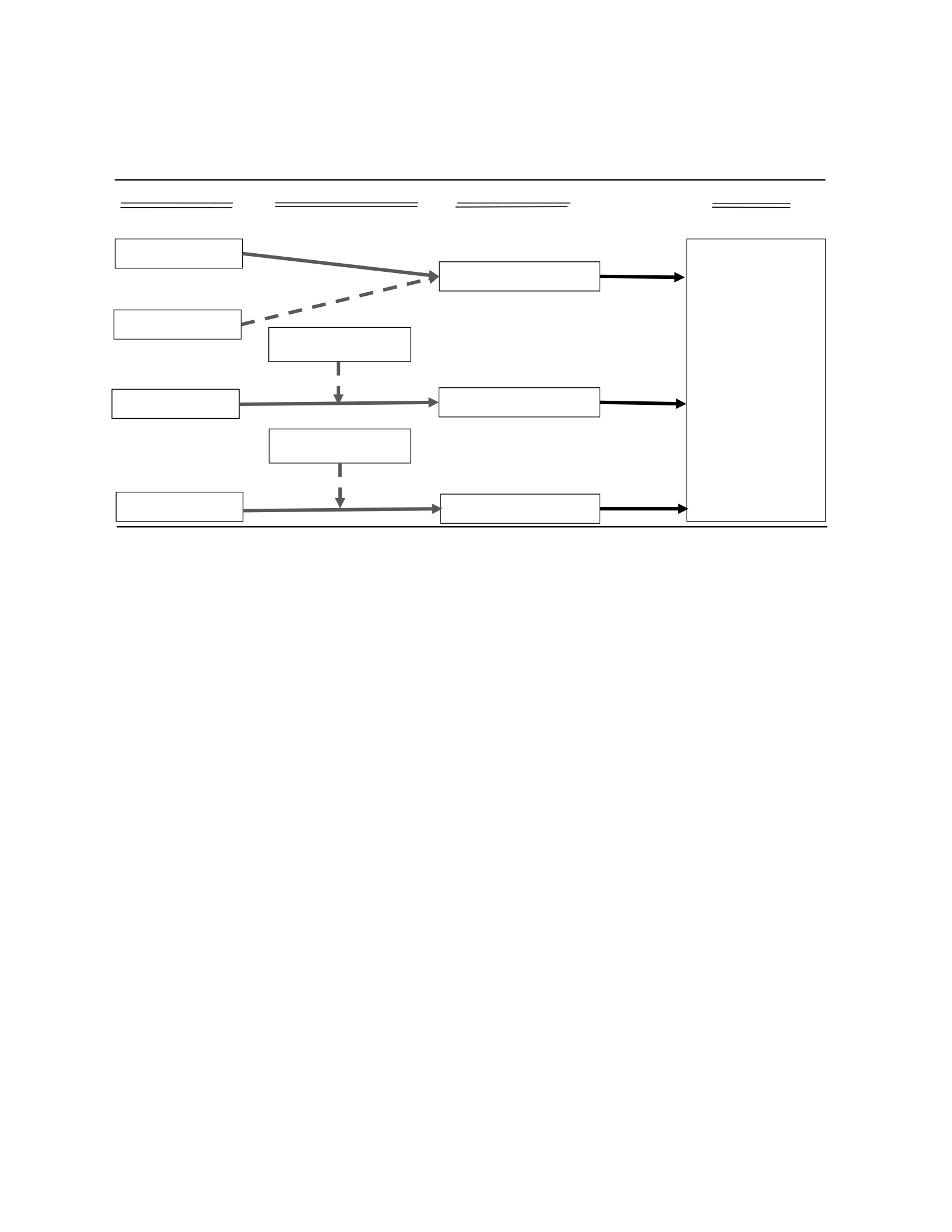
164
Figure 2: The Model of Subsidiary GM Successions and Effectiveness
This study responds to the calls for incorporating the nationality of the subsidiary GM into
the conceptualization of dual identification and the calls for exploring the negative consequences
of dual identification (Vora et al., 2007). In contrast with generally tenable inferences, my data
“reversed the signs” (Johns, 2006) and demonstrated that appointing HCN GM successors is not
always the best strategy for local-market-seeking subsidiaries. Because trust can have a dark
side, which will reduce the alertness needed (Anderson & Jap, 2005), and because dual
identification may open up opportunities for role stress in the face of conflicting goals, which can
in turn reduce the subsidiary GMs’ sense of affiliation to both the MNE and the subsidiary (Vora
et al., 2007), it is likely that some insider HCN subsidiary GM successors are both able and
willing to leverage their local knowledge and social ties to pursue self-interest with deceitfulness
after they take office. Ex post opportunism, therefore, may ultimately arise and lead to
unsatisfactory subsidiary performance.
Meanwhile, while I concur that agency and transaction costs minimization can play an
Unsatisfactory
Subsidiary
Performance
Insider HCN
Expatriated HCN
Outsider HCN
Expatriated PCN
Bounded ReliabilitySuccession Strategy Consequence
Ex Post Opportunism
Divided Engagement
Right-Minded Regression
Economizing Mechanism
Ex Ante Socialization
Balanced Local
Empowerment
P5 (+)
P2 (-)
P3 (+)
P4 (-)
P1 (+)
P6 (-)

165
important role in influencing the international staffing decision (Tan & Mahoney, 2006), I found
that opportunism in the present context is a situational occurrence (Lumineau & Verbeke, 2016).
To economize on opportunism, some MNE decision makers expatriated HCN subsidiary GMs
from within the MNE but outside the subsidiary. These expatriated GMs did not tend to spend
less time with local people (c.f March, 1992). In contrast, they can simultaneously realize dual
identification while being equipped with a sufficient level of local knowledge to improve the
subsidiary’s local responsiveness. This finding thus calls into the question the argument that
those GMs whose talent most fits the position might also be the ones that the MNE will incur
substantial costs in controlling their behaviour (Tan & Mahoney, 2006).
But expatriated HCN GM candidates as such are not always readily available. The more
common approaches identified here are that MNE decision makers deploy outsider HCN
subsidiary GMs or use PCN subsidiary GMs, both of which can also effectively limit ex post
opportunism. However, the interview data revealed that these succession strategies would entail
new facets of BRel. To address divided the engagement problem, Proposition 5 suggests the use
of ex ante socialization. Although prior studies showed that ex post acculturation may also
nurture common identity, the empirical reality here suggested a dynamic view, highlighting the
importance of socialization timing, inter alia, in the face of difficulties in cultural unlearning. I
thus extend the work of Caprar (2011) by adding that cultural alteration of the HCNs can occur
prior to the successions.
To economize on right-minded regression, on the other hand, Proposition 6 suggests the
use of balanced local empowerment. This is consistent with the instrumental understanding of
downward deference (Neeley & Reiche, 2020) and underscores the notion that local flexibility is
needed in order to motivate local managers to harnesses local-market-seeking opportunities

166
(Luo, 2003). But I add to these views by revealing that, at least for PCN GMs in local-market-
subsidiaries of manufacturing MNEs, local empowerment does not suggest that the flexibility is
unconstrained and hierarchy is disregarded. The expatriated PCN GMs, due to their lack of local
knowledge, tend to rely on the local team. However, they also need to ensure that the local
operation is in line with the MNE’s overall goal. The effective solution, thus, seems to be a
hybrid mechanism consisting of both delegation and control, which enhances flexibility, allows
for small errors, while providing sufficient order.
In sum, both safeguards mentioned above are interpersonal processes, facilitating
cooperative and open relationships. These revealed safeguards comply with the core tenet of
evolutionary theory that the goal of the MNE is to develop a harmonious social community
(Kogut & Zander, 1993). By showing a positive strategic value derived from dual commitments
(Gregersen & Black, 1992), we empirically corroborate the argument of O’Donnell (2000) that
the design of organizational control system should be more involved than the limited solutions
prescribed by agency theory.
The foregoing efforts to equip theory with managerial relevance also allow me to address
the call by Kano and Verbeke (2015) to examine the various expressions of BRel in large MNEs,
focusing on both their antecedents and consequences. In so doing, I corroborated the value of
BRel as a standard micro-foundation in international management research. More deeply, the
analysis made a strong case for the need to consider the different facets of BRel in an integrated
manner, because the strategy to address one BRel challenge may inadvertently lead to another
BRel challenge.
Limitations and Future Research Opportunities
To continue this endeavor of micro-foundational theorizing (Foss & Pedersen, 2019), it

167
would be fruitful to further add nuance to the model formulated here. One possible direction is to
draw a clear distinction between relay and non-relay succession (Zhang & Rajagopalan, 2004),
as it may engender different bases of subsidiary GM power, and different social ties of the
subsidiary GM. Also, future research could incorporate the missions of the expatriated subsidiary
GMs. Not all expatriate assignments are the same (Caligiuri & Bonache, 2016). Some expatriates
represent the long arm of the headquarters, whereas others build informal communication
networks or transfer organizational culture (Harzing, 2001; Nohria & Ghoshal, 1997). Some
expatriates are selected for postings, while others are self-initiated (Cerdin & Selmer, 2014;
Suutari & Brewster, 2000). The duration of international assignments can also vary (Starr &
Currie, 2009), which may influence the BRel of the subsidiary GMs. Relatedly, future research
can also investigate other facets of BRel, thus extending the model formulated here.
Given the absence of inpatriates in the data, another promising research avenue would be
to investigate whether being an inpatriate can moderate the effect of being an insider HCN
subsidiary GM on subsidiary performance. As inpatriates are more likely to develop a global
mindset (Harvey, Speier, & Novicevic, 1999), and some MNEs use inpatriation to develop
subsidiary managers (Tharenou & Harvey, 2006), it seems likely that when inpatriates return to
the host country, they can undertake both localization and integration more effectively (Sarabi,
Froese, & Hamori, 2017) and develop the strong sense of dual identification quickly (Vora et al.,
2007). This line of reasoning may also apply to returnees, who have gone abroad to study or
work, then return to their home country (Roberts & Beamish, 2017). Therefore, I hope future
research can add meaningful observations to our model by exploring whether ex post
opportunism would still arise in those cases. Also, it would be fruitful to further explore the
specific economizing mechanisms applied by outsider HCNs.

168
Meanwhile, as the subsidiary GM successor’ personality characteristics, can also affect the
MNE’s decision to “buy versus make” global leaders (Caligiuri, 2006), future research on this
topic could explore how successors’ personality traits moderate the relationships I formulated.
Finally, and at a more macro-level, for a better alignment between management practices and
academic descriptions, future studies can account for the environmental forces that moderate the
factors underlying my model. Contingencies in this regard may include national cultures (Toh &
DeNisi, 2003), institutions (Tao, Liu, Gao, & Xia, 2018), economy (Sonkova, 2015), and
environmental turbulence (Williams et al., 2017).
Managerial Implications
This study provides several implications for practitioners. First, although it seems unwise
to play down the talents of insiders (Mellahi & Collings, 2010), I caution against the use of
insider HCN subsidiary GM successors as a way of fully achieving the subsidiary’s local-
market-seeking role. In the middle of the dual identification development process, the insider
HCN subsidiary GM successors may be pulled in two directions, thus losing the sense of
affiliation to both entities. This can be problematic. A remedy is to expatriate an HCN GM, who
is equally capable yet may behave less opportunistically. The challenge for MNE decision
makers then becomes building a cadre of such competent talents. This is exactly what Water is
doing nowadays.
Second, given that “competition for global leaders to manage overseas operations will
steadily intensify” (Collings et al., 2007: 201), and that individuals are often reluctant to relocate
internationally (Minbaeva & Collings, 2013), spotting external talent in the host country makes
good business sense. This is also a timely solution, considering that the COVID-19 pandemic
renders sending managers on international assignments even more difficult (Caligiuri, De Cieri,

169
Minbaeva, Verbeke, & Zimmermann, 2020). However, it is critical to ensure the common goals
that chart the course have already been in place when the outsider HCN GM takes office. Such
appropriate antecedent conditions, enabled by trusting, prior interactions, seem more germane
than on-the-job acculturation. To that end, patience is crucial, as stressed by two Regional CEOs
in the interview data, “Don’t make the choice under pressure.”
Third, while I concur that PCN assignment contains control elements (Collings et al., 2009;
Harzing, 2001), these managers might, though absent opportunism, surrender to the force of their
old habit, thus exerting unnecessary levels of control or even interference to local managers. This
approach can generate rigidity (García-Cabrera & García-Soto, 2012). In contrast, encouraging
the PCN GMs in a hierarchical bureaucracy to proactively delegate authority to the local
managers will have a profound effect on motivating the local managers.
CONCLUSION
Grounded in both the extant literature and a qualitative inquiry, this essay developed a
model of local-market-seeking subsidiary GM successions and effectiveness. The central
message from my study is that we need to consider in an integrated way the choice of GM
successors which has been studied by separate paradigms. The results underscored the
continuing relevance of contingency models of GM successions. Delving into the micro-
foundations, I concluded that effective GM successors for local-market-seeking subsidiaries need
to be able to simultaneously address various facets of BRel. I delineated several safeguards that
can enable these subsidiary GM successors to reduce BRel. If the propositions formulated in this
study can survive future empirical tests, they can be viewed as a major step forward in our
understanding of the choices of subsidiary GM successors.

