4/30/23, 12:35 PM
Quiz: Crime Mapping, Crime Patterns, and Policy Analysis: CJUS601: Criminal Justice Program Evaluation (D01)
Skip to Main Content
* Some questions not yet graded
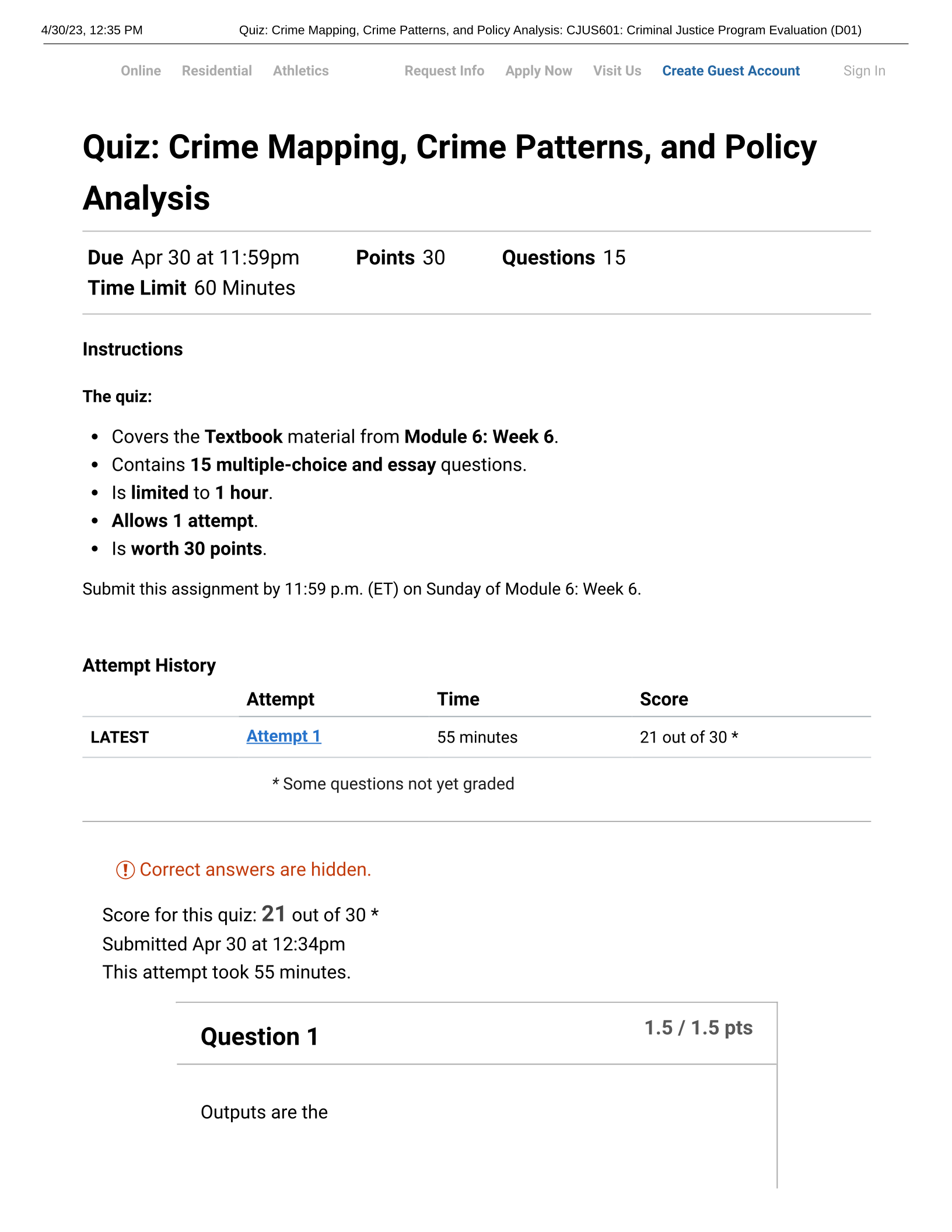
Quiz: Crime Mapping, Crime Patterns, and Policy
Analysis
Due Apr 30 at 11:59pm Points 30 Questions 15
Time Limit 60 Minutes
Instructions
Attempt History
Attempt Time Score
LATEST Attempt 1 55 minutes 21 out of 30 *
Correct answers are hidden.
Score for this quiz: 21 out of 30 *
Submitted Apr 30 at 12:34pm
This attempt took 55 minutes.
The quiz:
Covers theTextbookmaterial fromModule 6: Week 6.
Contains15 multiple-choice and essayquestions.
Islimitedto1hour.
Allows1 attempt.
Isworth 30 points.
Submit this assignment by 11:59 p.m. (ET) on Sunday of Module 6: Week 6.
1.5 / 1.5 pts
Question 1
Outputs are the
Online
Residential
Athletics
Sign InRequest Info Apply Now Visit Us Create Guest Account
4/30/23, 12:35 PM
Quiz: Crime Mapping, Crime Patterns, and Policy Analysis: CJUS601: Criminal Justice Program Evaluation (D01)
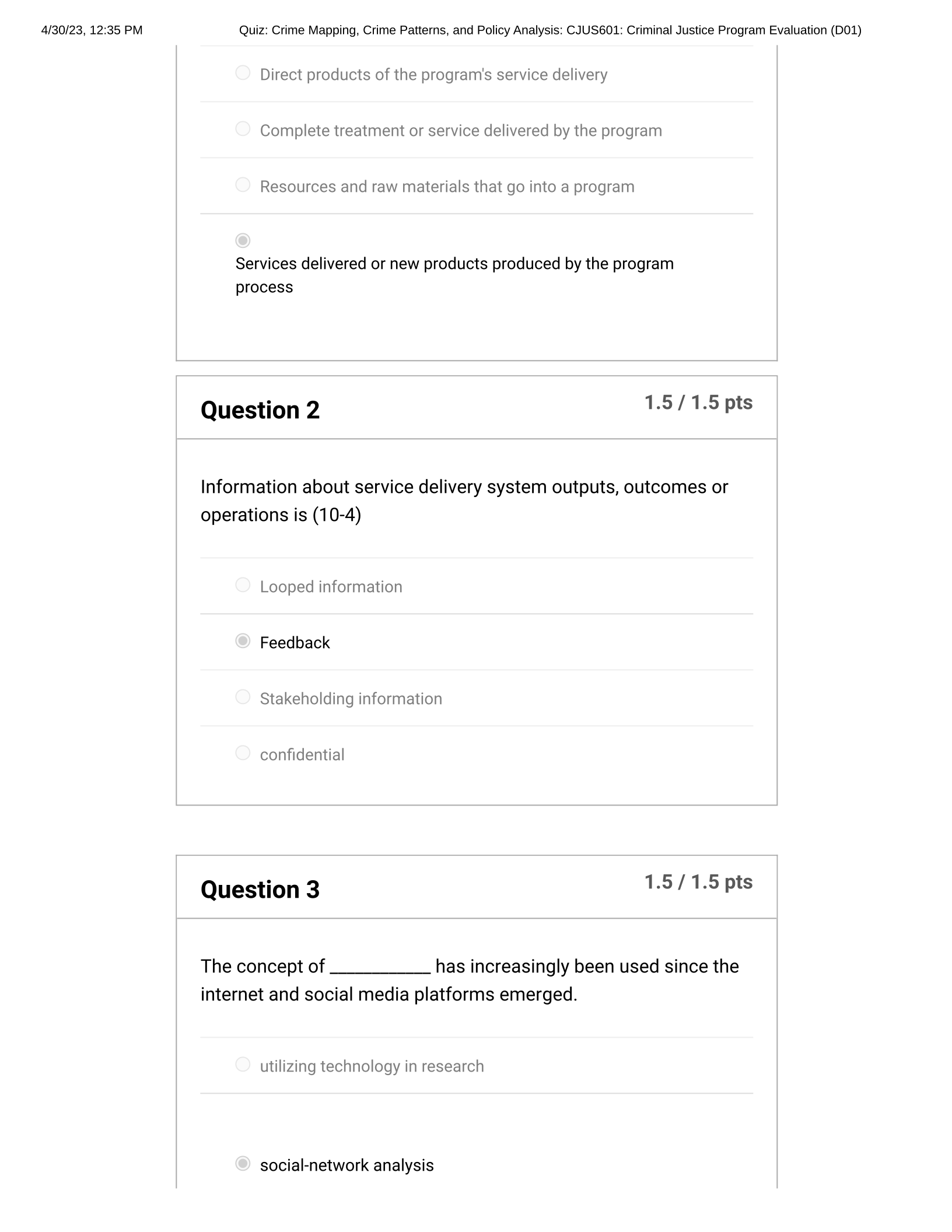
Direct products of the program's service delivery
Complete treatment or service delivered by the program
Resources and raw materials that go into a program
Services delivered or new products produced by the program
process
1.5 / 1.5 pts
Question 2
Information about service delivery system outputs, outcomes or
operations is (10-4)
Looped information
Feedback
Stakeholding information
condential
1.5 / 1.5 pts
Question 3
The concept of ____________has increasingly been used since the
internetand social media platforms emerged.
utilizing technology in research
social-network analysis
4/30/23, 12:35 PM
Quiz: Crime Mapping, Crime Patterns, and Policy Analysis: CJUS601: Criminal Justice Program Evaluation (D01)
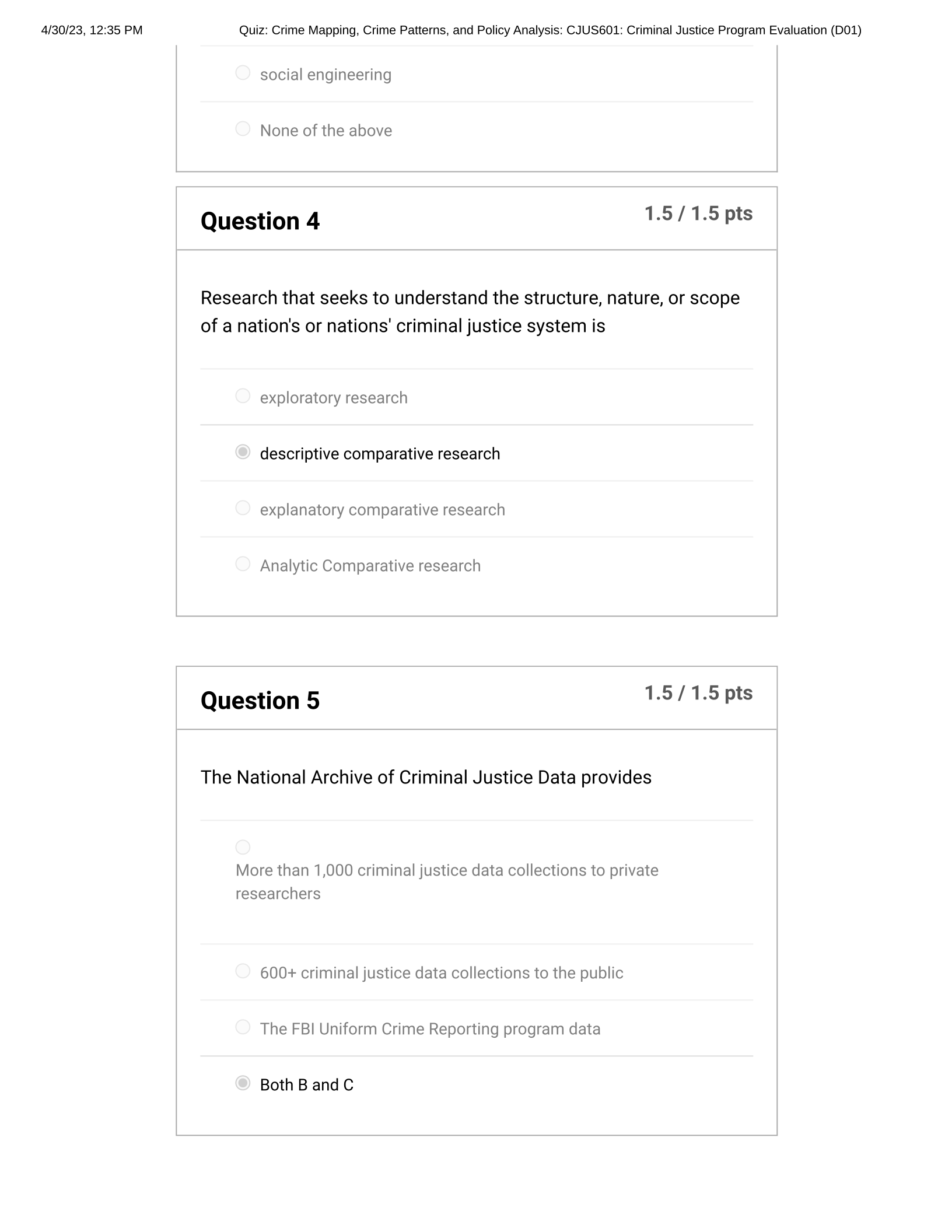
social engineering
None of the above
1.5 / 1.5 pts
Question 4
Research that seeks to understand the structure, nature, or scope
of a nation's or nations' criminal justice system is
exploratory research
descriptive comparative research
explanatory comparative research
Analytic Comparative research
1.5 / 1.5 pts
Question 5
The National Archive of Criminal Justice Data provides
More than 1,000 criminal justice data collections to private
researchers
600+ criminal justice data collections to the public
The FBI Uniform Crime Reporting program data
Both B and C
4/30/23, 12:35 PM
Quiz: Crime Mapping, Crime Patterns, and Policy Analysis: CJUS601: Criminal Justice Program Evaluation (D01)
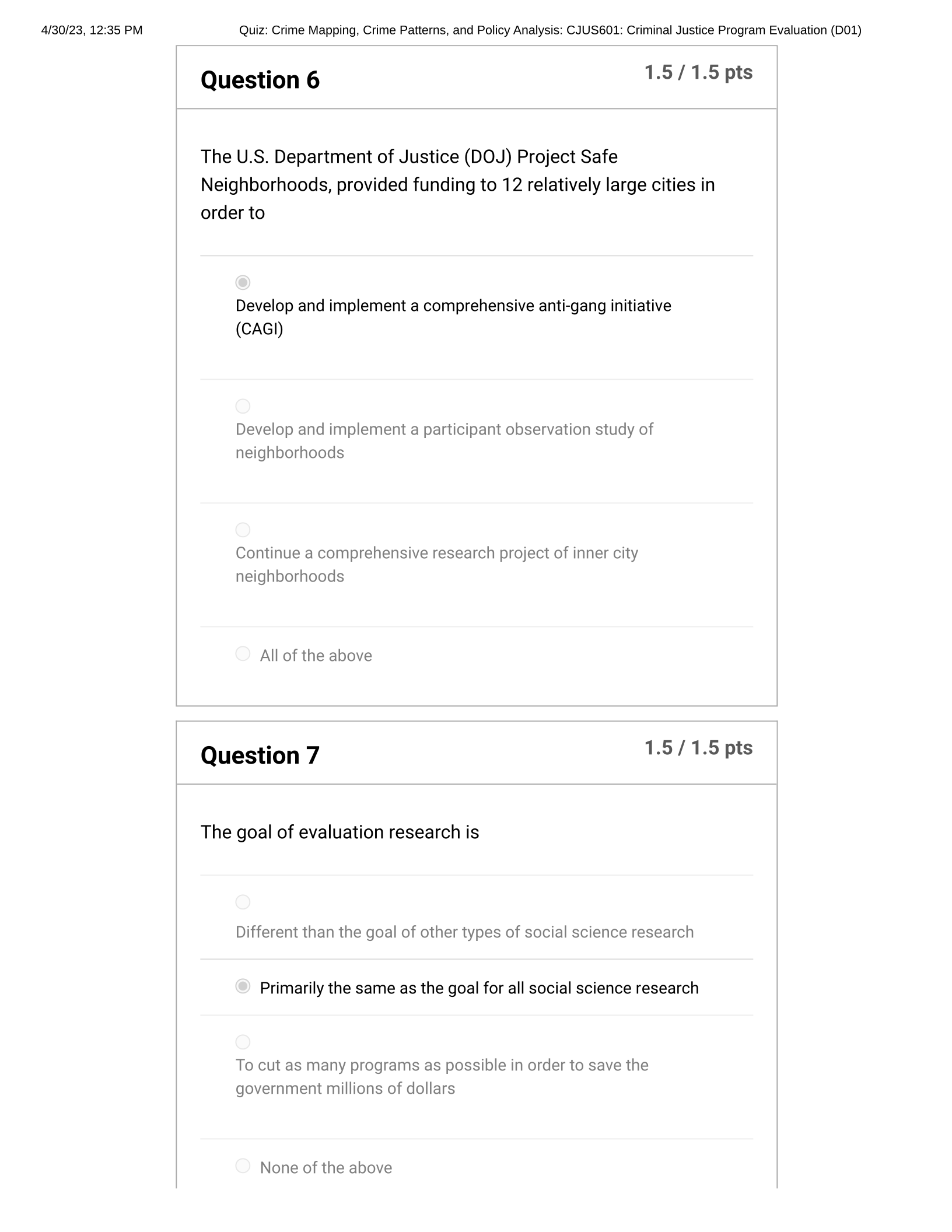
1.5 / 1.5 pts
Question 6
The U.S. Department of Justice (DOJ) Project Safe
Neighborhoods, provided funding to 12 relatively large cities in
order to
Develop and implement a comprehensive anti-gang initiative
(CAGI)
Develop and implement a participant observation study of
neighborhoods
Continue a comprehensive research project of inner city
neighborhoods
All of the above
1.5 / 1.5 pts
Question 7
The goal of evaluation research is
Different than the goal of other types of social science research
Primarily the same as the goal for all social science research
To cut as many programs as possible in order to save the
government millions of dollars
None of the above
4/30/23, 12:35 PM
Quiz: Crime Mapping, Crime Patterns, and Policy Analysis: CJUS601: Criminal Justice Program Evaluation (D01)
1.5 / 1.5 pts
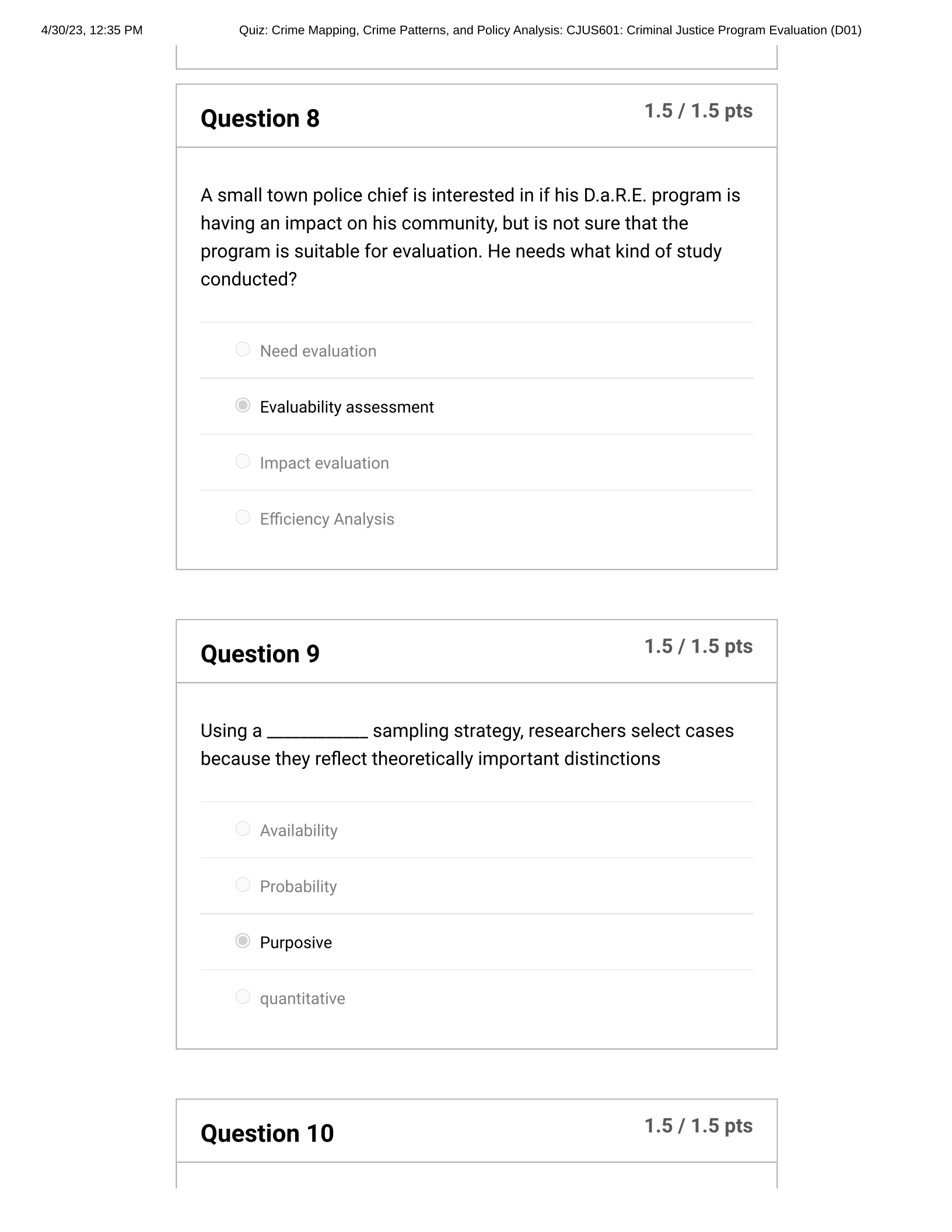
Question 8
A small town police chief is interested in if his D.a.R.E. program is
having an impact on his community, but is not sure that the
program is suitable for evaluation. He needs what kind of study
conducted?
Need evaluation
Evaluability assessment
Impact evaluation
Eciency Analysis
1.5 / 1.5 pts
Question 9
Using a ____________ sampling strategy, researchers select cases
because they reect theoretically important distinctions
Availability
Probability
Purposive
quantitative
1.5 / 1.5 pts
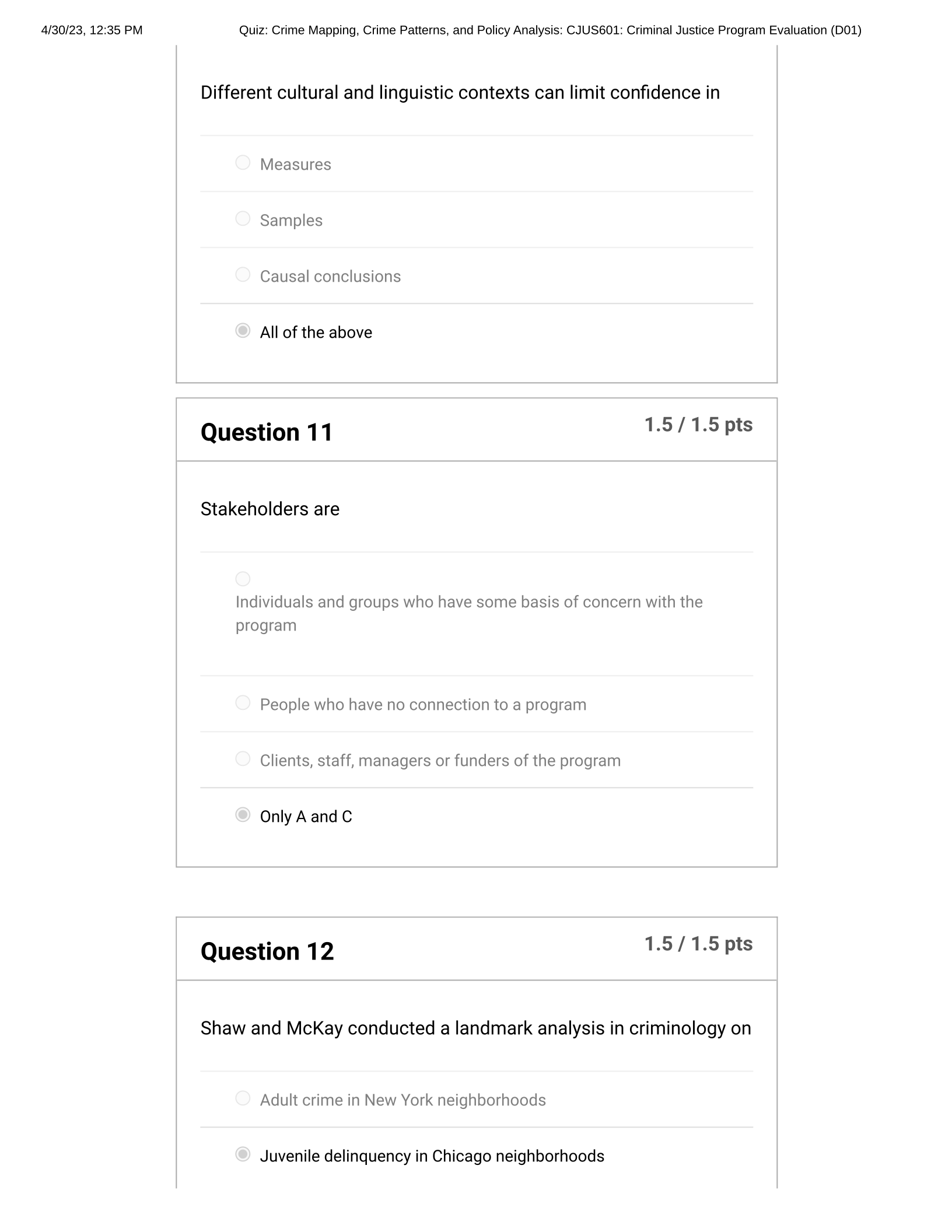
Question 10
4/30/23, 12:35 PM
Quiz: Crime Mapping, Crime Patterns, and Policy Analysis: CJUS601: Criminal Justice Program Evaluation (D01)
Different cultural and linguistic contexts can limit condence in
Measures
Samples
Causal conclusions
All of the above
1.5 / 1.5 pts
Question 11
Stakeholders are
Individuals and groups who have some basis of concern with the
program
People who have no connection to a program
Clients, staff, managers or funders of the program
Only A and C
1.5 / 1.5 pts
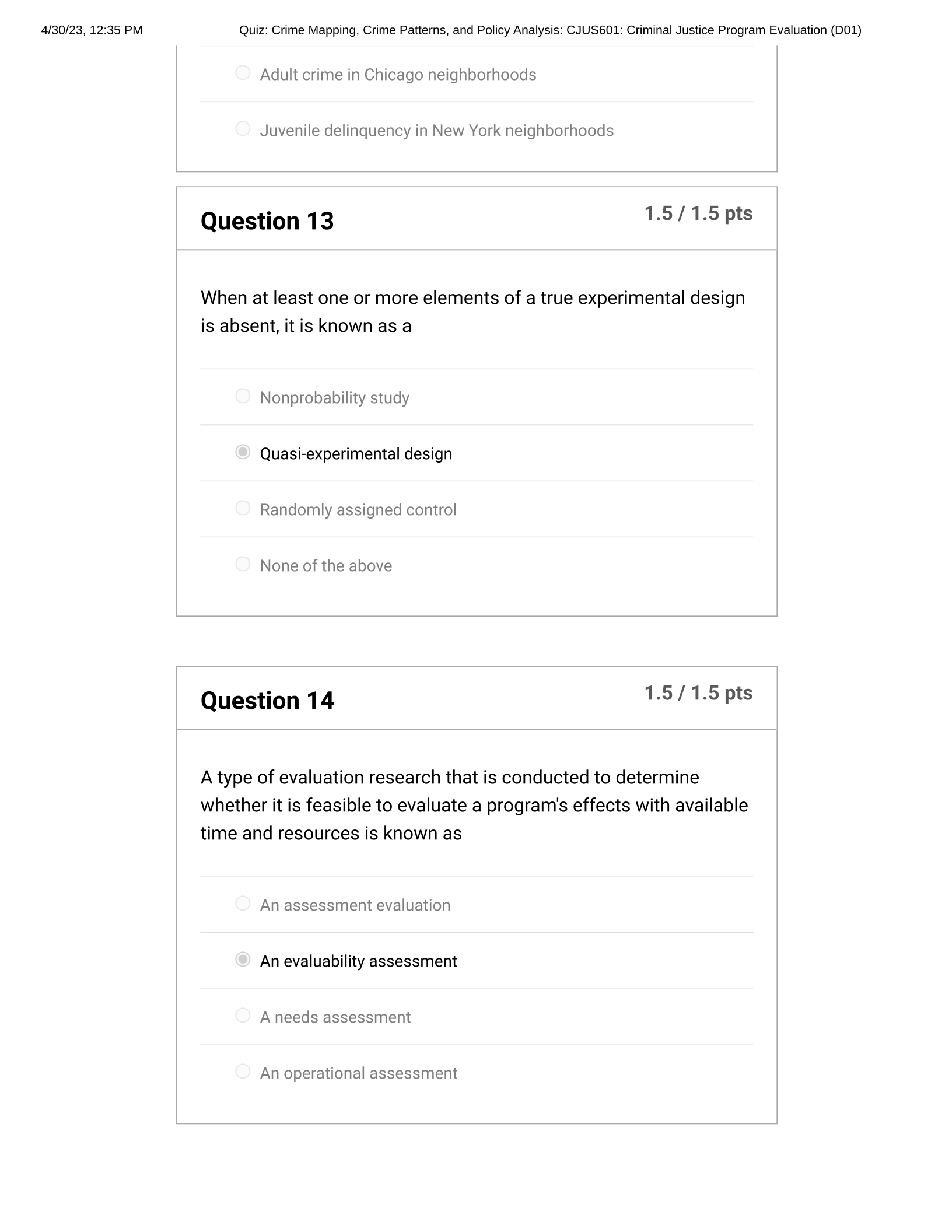
Question 12
Shaw and McKay conducted a landmark analysis in criminology on
Adult crime in New York neighborhoods
Juvenile delinquency in Chicago neighborhoods
4/30/23, 12:35 PM
Quiz: Crime Mapping, Crime Patterns, and Policy Analysis: CJUS601: Criminal Justice Program Evaluation (D01)
Adult crime in Chicago neighborhoods
Juvenile delinquency in New York neighborhoods
1.5 / 1.5 pts
Question 13
When at least one or more elements of a true experimental design
is absent, it is known as a
Nonprobability study
Quasi-experimental design
Randomly assigned control
None of the above
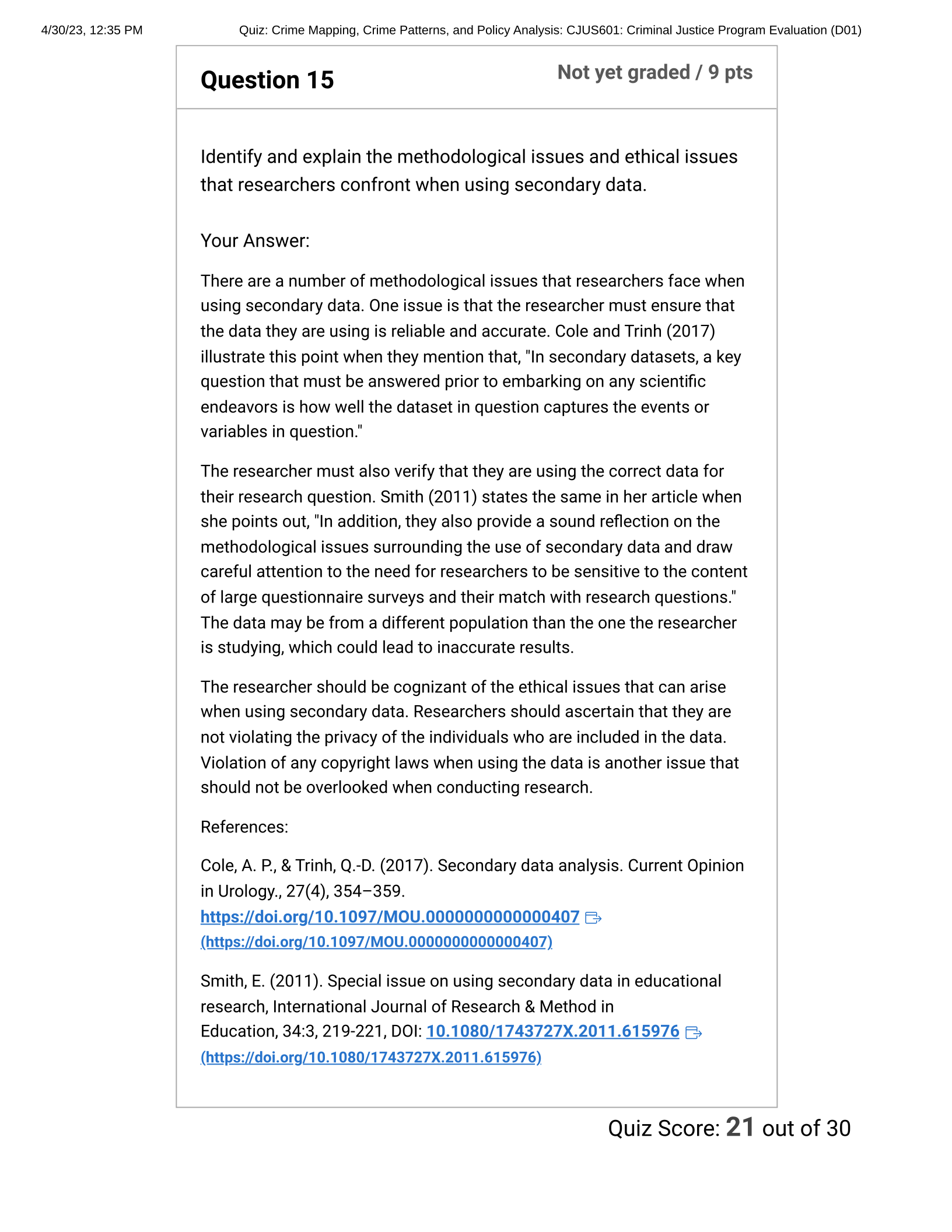
1.5 / 1.5 pts
Question 14
A type of evaluation research that is conducted to determine
whether it is feasible to evaluate a program's effects with available
time and resources is known as
An assessment evaluation
An evaluability assessment
A needs assessment
An operational assessment
4/30/23, 12:35 PM
Quiz: Crime Mapping, Crime Patterns, and Policy Analysis: CJUS601: Criminal Justice Program Evaluation (D01)
Not yet graded / 9 pts
Question 15
Your Answer:
Identify and explain the methodological issues and ethical issues
that researchers confront when using secondary data.
There are a number of methodological issues that researchers face when
using secondary data. One issue is that the researcher must ensure that
the data they are using is reliable and accurate. Cole and Trinh (2017)
illustrate this point when they mention that, "In secondary datasets, a key
question that must be answered prior to embarking on any scientic
endeavors is how well the dataset in question captures the events or
variables in question."
The researcher must also verify that they are using the correct data for
their research question. Smith (2011) states the same in her article when
she points out, "In addition, they also provide a sound reection on the
methodologicalissuessurrounding the use of secondary data and draw
careful attention to the need for researchers to be sensitive to the content
of large questionnaire surveys and their match with research questions."
The data may be from a different population than the one the researcher
is studying, which could lead to inaccurate results.
The researcher should be cognizant of the ethical issues that can arise
when using secondary data. Researchers should ascertain that they are
not violating the privacy of the individuals who are included in the data.
Violation of any copyright laws when using the data is another issue that
should not be overlooked when conducting research.
References:
Cole, A. P., & Trinh, Q.-D. (2017). Secondary data analysis. Current Opinion
in Urology., 27(4), 354–359.
https://doi.org/10.1097/MOU.0000000000000407
(https://doi.org/10.1097/MOU.0000000000000407)
Smith, E.(2011).Special issue on using secondary data in educational
research,International Journal of Research & Method in
Education,34:3,219-221,DOI:10.1080/1743727X.2011.615976
(https://doi.org/10.1080/1743727X.2011.615976)
Quiz Score: 21 out of 30