


1
Analyzing labor in Tokyo with reference to the film Street of shame and Tatsumi’s text,
Beloved Monkey.
Introduction
The concept of labor is quite intricate especially when one considers the resulting benefit,
impact on the worker, health and remuneration. Labor is defined as work and more so when it
entails hard physical effort. Work on the other hand is defined as an activity undertaken
through physical or mental effort to achieve a desired result. By this definition alone, one
could argue that activities such as robbery and deceiving people for money constitutes work.
however, the aspect of ethics, right and wrong, comes into play in a bid to control and
determine what constitutes honest work and dishonest work. to a large extent most people
engage in labor for survival reasons considering the constant need to replenish one’s basic
needs while still hoping to achieve self-actualization needs. This analysis explores labor in
Tokyo with reference to Street of Shame and Beloved Monkey and asserts that labor is largely
a means of survival and not a reflection of one’s identity.
What is labor for these characters?
One of the most profound aspects in the film and in the Tatsumi’s text is that the characters
depicted in both work for survival. It is interesting to note that while the film dates back to
1956, the aspect of working for survival depicted in the film resounds even in the modern
labor system. Needless to mention, this is quite an unfortunate realization in the sense that it
indicates that for nearly a century now, workers continue to toil in various sectors for meager
wages. The strife of the workers in modern day economies is often illustrated through riots by
workers who continue to bear the blunt of high costs of living even in the presence of labor
unions. In one of the scenes from Street of Shame, a man is seen carrying a baby on his back
outside a brothel as he waits for his wife, Hanae, to exit so they can go home (Mizoguchi
1956). Notably, the man is unemployed so his wife provides for the family and in that
particular scene she takes her husband to a restaurant so they can enjoy a warm meal.
It is imperative to state that the film Street of Shame largely illustrates the resilience of
women who amidst unfavorable odds are forced to sex work through which they provide for
their families (Mizoguchi 1956). The same resilience is depicted by Tatsumi in Beloved
Monkey, where the main character toils as a factory worker just to survive. some factories
even in modern day set ups constitute large groups of people working under the same roof.
However, through the main character, Tatsumi notes that ‘the more people flock together the
more alienated they become.’ (Tatsumi n.d) Bearing this in mind, one could argue that it is
for these reason that cases of depression seem to be on the rise including extremities such as
death by overwork (karoshi).
Summary of Street of Shame
Street of Shame is mainly set around a brothel, featuring characters such as Yumeko, Yasumi
and Hanae among others (Mizoguchi 1956). Notably, the film was released just before the
government of japan banned prostitution which was previously considered to be honest.
Throughout the film, various clients including government officials are seen in the brothel
which signifies the legality of sex work at that time. Furthermore, at the beginning of the
film, two women are asked of their opinion regarding prostitution and they show no ill
attitude towards the practice noting that the sex workers are good people (Mizoguchi 1956).
2
However, it is important to note that the sex workers do no particularly enjoy the work but
rather do it for survival. Hanae, for instance breaks down at one point after her husband
regards the brothel as a trashy place and she is frequently seen patting her back indicating that
she is fatigued (Mizoguchi 1956).
Are people defined by what they do?
To a large extent, people are often defined by the work they do and this often determines how
others perceived them and relate with them. Lawyers, for instance, are often considered liars
given the nature of their work but they are also considered to be wealthy. Doctors are
considered to be knowledgeable even on matters that do not pertain to medicine simply
because of the weight that the medicine profession has. The same attribution and definition is
evidenced in Tatsumi’s text Beloved Monkey and in the film Street of Shame. Notably, being
defined by one’s work extends even to what one eats, what one drives and ones means of
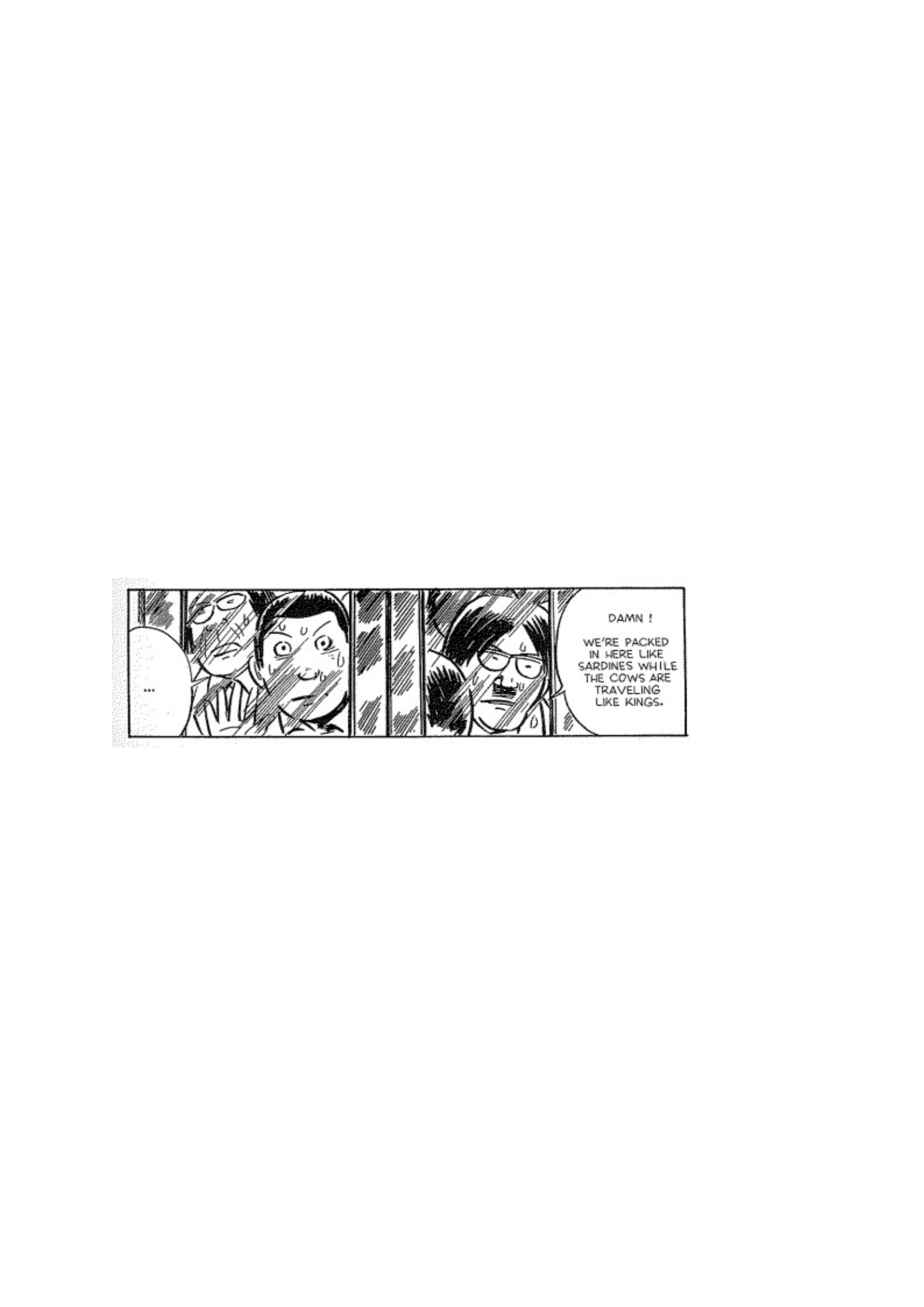
transport. Low level workers for instance have to contend with crowded vehicles and long
waiting queues. In Tatsumi’s text a man exclaims ‘Damn! Were packed in here like sardines
while the cows are travelling like kings’ (Tatsumi n.d). It is interesting to note that in japan,
there is a labor niche title professional pushers which refers to people hired to push and shove
passengers in trains.
Image 1.
Source: (Tatsumi n.d)
Being defined by one’s work is further seen at the zoo, when the main character is invited to
Bar Suzu by a friend. She notes, ‘you must be loaded, I hear factory workers make tons of
cash’ (Tatsumi n.d). The main character is shocked is considering that despite earning meager
wages at the factory, he had lost his arm from a factory accident. This accident amplifies how
one is defined by their work and how one’s usefulness is largely attached to their contribution
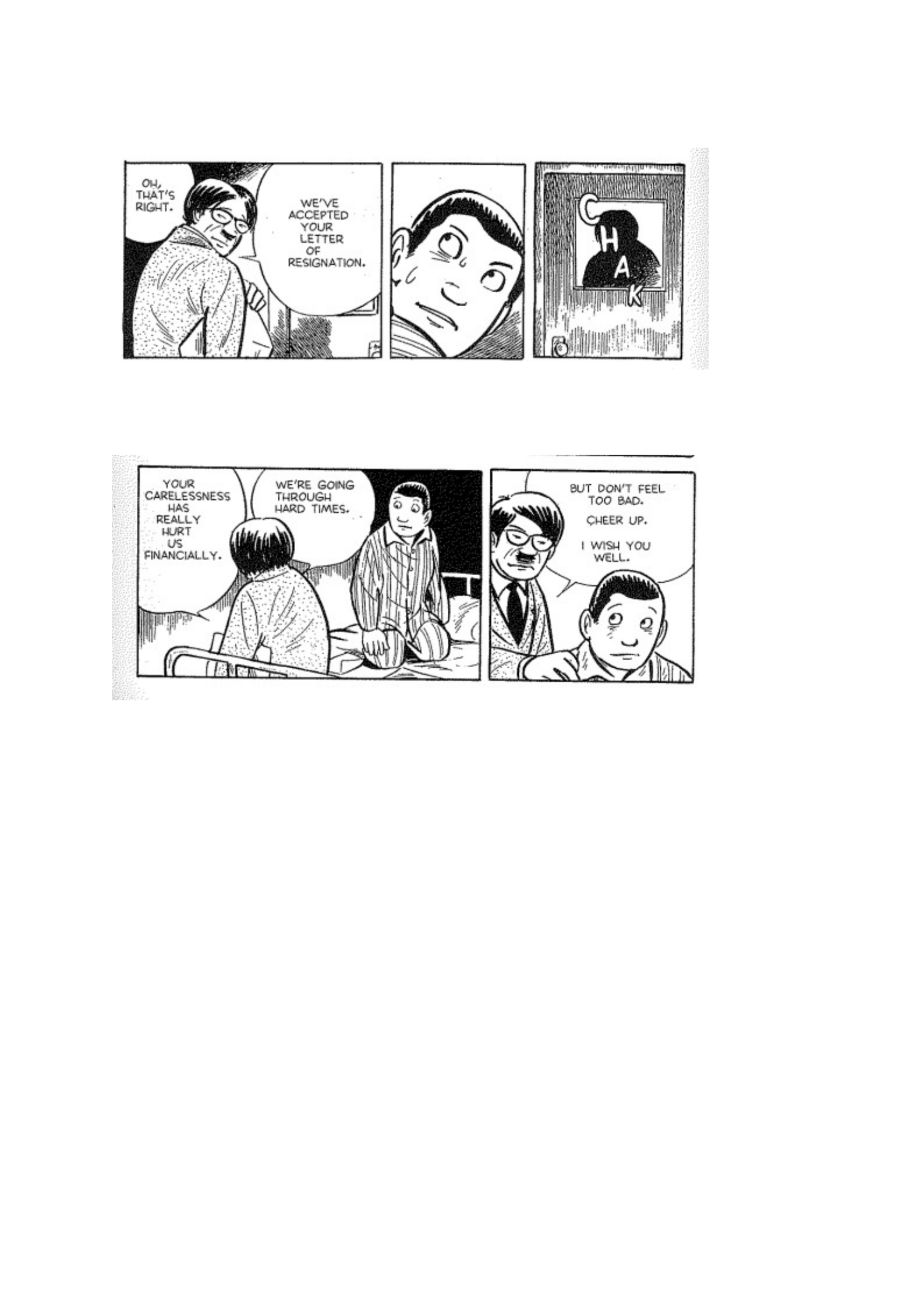
at work. while still at the hospital, the factory manager considers the factory worker as having
resigned simply because he can no longer work effectively, ‘oh that’s right. We’ve accepted
your letter of resignation.’ ‘Your carelessness has really hurt us financially’ (Tatsumi n.d).
Unfortunately, this loss of the arm deems this worker incapable even in the eyes of other
potential employers, ‘sorry…not with that arm’ (Tatsumi n.d).
3
Image 2.
Source: (Tatsumi n.d)
Image 3.
Source: (Tatsumi n.d)
Summary of Tatsumi’s Beloved Monkey
Beloved Monkey is designed as a comic depicting a factory worker living with is monkey.
While it is designed as a comic, the text depicts problems that are quite prevalent for the
factory workers. The factory worker is only paid enough to afford a single room house in
which he lives with his monkey pet. Seeing that his earnings cannot afford him a car, he takes
a train every morning to work in a noisy crowded factory yet he feels alone while in the
crowds of people he travels and works with. Unfortunately, following an accident at work
which causes him to lose his arm, he is fired unceremoniously and is left looking for a new
job yet no employer offers him a chance pointing out that his handicap makes him
inadequate.
Superficial analysis
Prostitution is largely shunned as being a degrading practice that does not even accord one a
decent life in any way. One the hand, factory work is considered as honest work and factory
workers for one reason or another are considered to be wealthy to some degree. However,
one commonality that can be drawn from Street of Shame and Beloved Monkey is the fact that
the sex works and the factory worker all live in impoverished conditions. This beats logic as
to what the purposes of labor is but on the other hand it amplifies the adverse effects of

4
capitalist economies. For decades now, efforts to foster equality by ensuring that workers
earn enough to cope with rising costs of living have proven futile. That notwithstanding,
working is inevitable since one has to survive and it is for this reason that most people toil in
jobs they do love for ages while some opt for the less glamorous work such as prostitution.
While looking at sex work and factory based on the simple definition of labor, one could
conclude that sex work is work like any other especially considering that physical effort in
involved and the goal, as is the case with factory work, is to earn a living. However, ethical
considerations diminish such an assertion citing the ripple effect that legalizing sex work
could have on the moral fabric of society.
Conclusion
The film street of shame and the text Beloved Monkey give different yet similar perspectives
on labor in Tokyo, perspectives that date back to the 50’s but which resound to date. The film
street of shame presents different opinions that society has on prostitution, some that consider
prostitution as allowed work since the practitioners are good people and some that consider
prostitution as being morally degrading. The second viewpoint is effectively illustrated by
Hanae’s husband despite that she is the breadwinner in the family through that practice.
Tatsumi on the other hand explores factory work and while it is considered ethical and legal,
the factory worker suffers similar difficulties as the sex workers. In both cases, the workers
suffer poor wages, impoverished lifestyles and loss for instance when the factory worker is
forced to give up his monkey. Tokyo like most cities continues to grapple with the concept of
labor. Despite the illegalization of prostitution, some still practice it largely to earn a living.
on the hand despite its legality, factory workers continue to fight for better pay. Regardless,
the above analyzed text and film portray labor as a means of survival and not a reflection of
one’s identity.
References
Tatsumi Y. n.d. Beloved monkey.
Mizoguchi K. 1956. Street of shame. https://www.youtube.com/watch?v=YHfn8Didnw0

