



CRJ310
Preview: CRJ310 : Law Enforcement Operations and Management
Course Guide
Prerequisites
Course Description
Instructional Materials
CRJ105
This course gives students an overview of the police and their mission in contemporary society. It
examines typical police operations, the management of police organizations, and some of the
challenges facing policing today. The course also looks at technology in the service of law
enforcement and explores the future of policing.
Required Resources
Kenneth J. Peak. 2018. Policing America: Challenges and Best Practices. CRJ310 Pearson 9th
edition textbook available at https://www.strayerbookstore.com
Police1. October 14, 2011. Illustrated Timeline: Policing in the US. https://www.police1.com/misc-
law-enforcement-topics/articles/illustrated-timeline-policing-in-the-us-DYnO0qYNazuOXtgB/
Jarrod Sadulski. March 17, 2017. Managing Police Stress to Strengthen Relationships at
Home. https://www.police1.com/american-military-university/articles/managing-police-stress-to-
strengthen-relationships-at-home-EZsGK2lQ4uxdcWH1/
WELCOMEtotheLAW. July 1, 2010. 006 Structure of Law
Enforcement. https://www.youtube.com/watch?v=zpOWbjWTMSk
Ⓒ 2020 Strayer University. All Rights Reserved. This document contains Strayer University Confidential and Proprietary
information and may not be copied, further distributed, or otherwise disclosed in whole or in part, without the expressed
written permission of Strayer University.

Course Learning Outcomes
Weekly Course Schedule
Week 1 - To Do List
Learn: Read Chapter 1 from Policing
America:
Challenges
and
Best
Practices.
Learn: Watch the Week 1 Lecture.
Prepare: Review the website information in preparation for this week's discussion.
Discuss: Introduce yourself and complete the discussion, Eras and History of Policing.
Quiz: Complete the Chapter 1 Quiz.
Week 2 - To Do List
Supplemental Resources
Karen Hess. 2012. Introduction to Law Enforcement and Criminal Justice. Cengage Learning.
Review the factors that influence discretionary use of authority.
1
Examine management of front-line police officers, including hiring, training,
and accountability.
2
Examine the role of law enforcement agencies in handling modern
challenges such as terrorism and hate crimes.
3
Ⓒ 2020 Strayer University. All Rights Reserved. This document contains Strayer University Confidential and Proprietary
information and may not be copied, further distributed, or otherwise disclosed in whole or in part, without the expressed
written permission of Strayer University.

Week 2 - To Do List
Learn: Read Chapters 2 and 3 from Policing
America:
Challenges
and
Best
Practices.
Learn: Watch the Week 2 Lectures 1 and 2.
Discuss: Complete the discussion, Recruitment, Training, and Socialization.
Quiz: Complete the Chapters 2 and 3 Quiz.
Week 3 - To Do List
Learn: Read Chapters 4 and 5 from Policing
America:
Challenges
and
Best
Practices.
Learn: Watch the Week 3 Lectures 1 and 2.
Discuss: Complete the discussion, Community Policing in Today's World.
Prepare: Review the requirements for the assignment due in Week 4.
Quiz: Complete the Chapters 4 and 5 Quiz.
Week 4 - To Do List
Learn: Read Chapter 6 in Policing
America:
Challenges
and
Best
Practices.
Ⓒ 2020 Strayer University. All Rights Reserved. This document contains Strayer University Confidential and Proprietary
information and may not be copied, further distributed, or otherwise disclosed in whole or in part, without the expressed
written permission of Strayer University.

Week 4 - To Do List
Learn: Watch the Week 4 Lecture.
Prepare: Read an article in preparation for this week's discussion.
Discuss: Complete the discussion, Stress in the Law Enforcement Profession.
Assignment: Complete the Discretionary Use of Authority: Scenarios assignment.
Quiz: Complete the Chapter 6 Quiz.
Week 5 - To Do List
Learn: Read Chapters 7 and 8 from Policing
America:
Challenges
and
Best
Practices.
Learn: Watch the Week 5 Lectures 1 and 2.
Discuss: Complete the discussion, Bureaucratic Structure of Police Agencies.
Quiz: Complete the Chapters 7 and 8 Quiz.
Week 6 - To Do List
Learn: Read Chapter 9 from Policing
America:
Challenges
and
Best
Practices.
Ⓒ 2020 Strayer University. All Rights Reserved. This document contains Strayer University Confidential and Proprietary
information and may not be copied, further distributed, or otherwise disclosed in whole or in part, without the expressed
written permission of Strayer University.

Week 6 - To Do List
Learn: Watch the Week 6 Lecture.
Discuss: Complete the discussion, Constraints Placed on Law Enforcement Personnel.
Quiz: Complete the Chapter 9 Quiz.
Week 7 - To Do List
Learn: Read Chapters 10 and 11 from Policing
America:
Challenges
and
Best
Practices.
Learn: Watch the Week 7 Lectures 1 and 2.
Prepare: Watch a video in preparation for the discussion this week.
Discuss: Complete the discussion, Law Enforcement Structure in the United States.
Prepare: Review the requirements for the assignment due in Week 8.
Quiz: Complete the Chapters 10 and 11 Quiz.
Week 8 - To Do List
Learn: Read Chapter 12 from Policing
America:
Challenges
and
Best
Practices.
Ⓒ 2020 Strayer University. All Rights Reserved. This document contains Strayer University Confidential and Proprietary
information and may not be copied, further distributed, or otherwise disclosed in whole or in part, without the expressed
written permission of Strayer University.

Week 8 - To Do List
Learn: Watch the Week 8 Lecture.
Discuss: Complete the discussion, Gangs and Organized Crime.
Assignment: Complete the Leadership Personnel Issues and the Rules of Law assignment
Quiz: Complete the Chapter 12 Quiz.
Week 9 - To Do List
Learn: Read Chapter 13 from Policing
America:
Challenges
and
Best
Practices.
Learn: Watch the Week 9 Lecture.
Discuss: Complete the discussion, Youth Violence and Crime.
Prepare: Review the requirements for the assignment due in Week 10.
Quiz: Complete the Chapter 13 Quiz.
Week 10 - To Do List
Learn: Read Chapter 14 from Policing
America:
Challenges
and
Best
Practices.
Ⓒ 2020 Strayer University. All Rights Reserved. This document contains Strayer University Confidential and Proprietary
information and may not be copied, further distributed, or otherwise disclosed in whole or in part, without the expressed
written permission of Strayer University.
Week 10 - To Do List
Learn: Watch the Week 10 Lecture.
Discuss: Complete the discussion, Technology and Criminal Justice: A New Reality.
Assignment: Complete the Special Problems and Challenges, and the Future of Policing in
America assignment.
Quiz: Complete the Chapter 14 Quiz.
Week 11 - To Do List
Discuss: Complete the discussion, Looking Back.
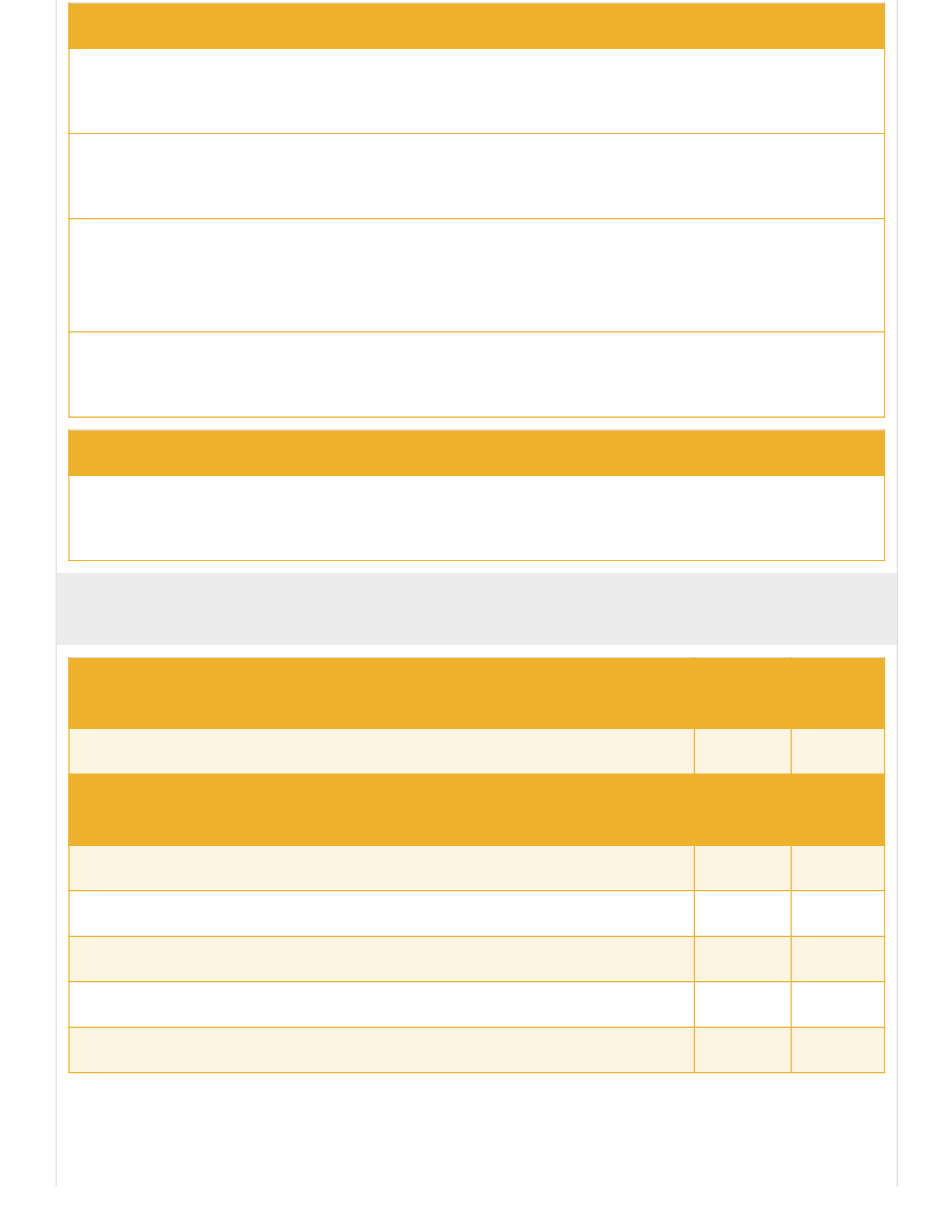
Grading Scale
Participation Total
Points
% of
Grade
Discussion Participation 200 20%
Assignment Total
Points
% of
Grade
Week 1 Quiz - Chapter 1 Quiz 35 3.5%
Week 2 Quiz - Chapters 2 and 3 Quiz 35 3.5%
Week 3 Quiz - Chapters 4 and 5 Quiz 35 3.5%
Week 4 Assignment - Discretionary Use of Authority: Scenarios 150 15%
Week 4 Quiz - Chapter 6 Quiz 35 3.5%
Ⓒ 2020 Strayer University. All Rights Reserved. This document contains Strayer University Confidential and Proprietary
information and may not be copied, further distributed, or otherwise disclosed in whole or in part, without the expressed
written permission of Strayer University.

Participation Total
Points
% of
Grade
Week 5 Quiz - Chapters 7 and 8 Quiz 35 3.5%
Week 6 Quiz - Chapter 9 Quiz 35 3.5%
Week 7 Quiz - Chapters 10 and 11 Quiz 35 3.5%
Week 8 Assignment - Leadership Personnel Issues and the Rules of Law 150 15%
Week 8 Quiz - Chapter 12 Quiz 35 3.5%
Week 9 Quiz - Chapter 13 Quiz 35 3.5%
Week 10 Assignment - Special Problems and Challenges, and the Future
of Policing in America
150 15%
Week 10 Quiz - Chapter 14 Quiz 35 3.5%
Totals 1000 100%
Final Course Grade
Points Percentage Grade
900 - 1000 90% - 100% A
800 - 899 80% - 89% B
700 - 799 70% - 79% C
600 - 699 60% - 69% D
0 - 599 59% and below F
Unique Course Features
Grading Scale Notation
Ⓒ 2020 Strayer University. All Rights Reserved. This document contains Strayer University Confidential and Proprietary
information and may not be copied, further distributed, or otherwise disclosed in whole or in part, without the expressed
written permission of Strayer University.

Please consult the University Catalog and your academic advisor to determine the final grade
needed in this class to satisfy your specific degree conferral requirements.
Assignments
Week 4 Assignment - Discretionary Use of Authority: Scenarios
Summary
Click the linked activity title to access this assignment.
Text
Because of the nature of law enforcement work, police officers have always maintained a certain
amount of discretion. Due to the amount of interaction that officers have with members of the
public, this discretion must be fair, equal, impartial, and legal. As such, the use of discretion by
officers is both a foundation of police work and a component of community policing.
Review the below scenarios. For each scenario, provide a justification for every possible response
(Part A). In your justification, include the factors that support or influence each response. In Part
B, choose how you personally would respond, provide a rationale for why you feel it is the most
appropriate response for the scenario, and explain the role that discretion played in your decision.
Using Microsoft Word, copy the scenarios, and provide your answers directly in Parts A and B
under each question.
Scenario 1: You respond to a call of a theft. Upon arrival, you find that an 18-year-old female has
stolen baby formula and diapers by exiting the store without paying. You speak with her and find
that she has a newborn baby, does not have any source of income, and needed the formula and
diapers for the baby. As such, theft is still a crime. Do you arrest the woman or not? Why?
Part A.
Scenario 1
Possible Response Justification for This Response
I choose to arrest the woman.
I choose not to arrest the woman.
Ⓒ 2020 Strayer University. All Rights Reserved. This document contains Strayer University Confidential and Proprietary
information and may not be copied, further distributed, or otherwise disclosed in whole or in part, without the expressed
written permission of Strayer University.

Part B.
Which response would you choose and why? Also, explain the role of discretion in
your response.
Scenario 2: You respond to an armed robbery. You notice an individual matching the description
of the offender. As you approach him, you observe what appears to be a gun in his waistband. Do
you immediately attempt to stop him? Or do you wait for backup? Why?
Part A.
Scenario 2
Possible Response Justification for This Response
I immediately attempt to stop him.
I wait for backup.
Part B.
Which response would you choose and why? Also, explain the role of discretion in
your response.
Scenario 3: You stop a 16-year-old for going through a red light. He explains to you that he is late
for work. Do you give him a ticket?
Part A.
Scenario 3
Possible Response Justification for This Response
I write the juvenile a ticket.
I choose not to write the juvenile a ticket.
Part B.
Which response would you choose and why? Also, explain the role of discretion in
your response.
Scenario 4: You arrest a male individual. Just as you place the handcuffs on him, he breaks free
and jumps into a nearby contaminated lake in order to avoid arrest. What actions do you take?
Who do you notify? Do you jump in the lake?
Ⓒ 2020 Strayer University. All Rights Reserved. This document contains Strayer University Confidential and Proprietary
information and may not be copied, further distributed, or otherwise disclosed in whole or in part, without the expressed
written permission of Strayer University.
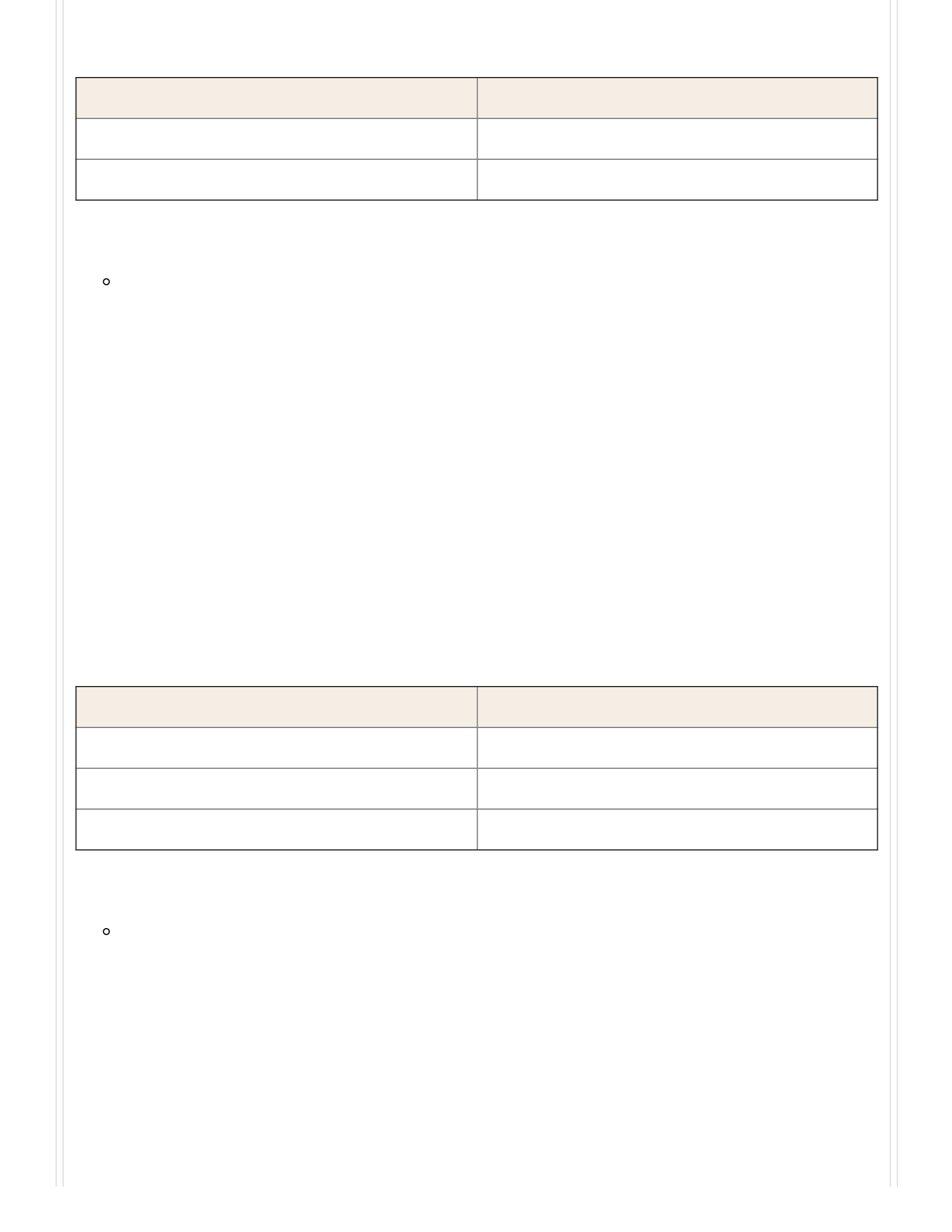
Part A.
Scenario 4
Possible Response Justification for This Response
I choose to jump in the lake.
I choose not to jump in the lake.
Part B.
Which response would you choose and why? Explain the role of discretion in your
response. Also, explain the legal and moral considerations affecting your decision.
Scenario 5: As a police officer, you are assigned to the same location every day. You become
very familiar with the crime that takes place, specifically drug sales, robberies, and shootings. You
are aware that a specific gang is responsible for the majority of the crimes. The gang members
are all male, are of the same race, wear the same colors of clothing, and populate the exact area
that you are assigned to during the time that these crimes take place. While on patrol, you
observe the individuals matching the description of the gang members committing all of these
crimes. The citizens are calling for the police to take action. What behaviors raise your suspicion?
What action do you take? Do you stop these individuals? Do you search these individuals? How
do you go about investigating these individuals?
Part A.
Scenario 5
Possible Response Justification for This Response
I choose to take action against the gang.
I choose to take some action.
I choose to take no action.
Part B.
Which response would you choose and why? Explain the role of discretion in your
response. Also, explain any Supreme Court cases affecting your decision.
Your assignment must follow these formatting requirements:
Ⓒ 2020 Strayer University. All Rights Reserved. This document contains Strayer University Confidential and Proprietary
information and may not be copied, further distributed, or otherwise disclosed in whole or in part, without the expressed
written permission of Strayer University.

Be typed, double-spaced, using Times New Roman font (size 12), with one-inch margins on
all sides; citations and references should follow the Strayer Writing Standards (SWS).
Include a cover page containing the title of the assignment, the student's name, the
professor's name, the course title, and the date. The cover page and the reference page are
not included in the required assignment page length.
This course requires the use of Strayer Writing Standards. For assistance and information, please
refer to the Strayer Writing Standards link in the left-hand menu of your course. Check with your
professor for any additional instructions.
The specific course learning outcome associated with this assignment is:
Review the factors that influence discretionary use of authority.
Scoring Guide
For each scenario, provide a justification for
every possible response (Part A). 47 %
Unacceptable
Did not submit or
incompletely
provided a
justification for
every possible
response (Part
A).
Needs
Improvement
Insufficiently
provided a
justification for
every possible
response (Part
A).
Satisfactory
Partially
provided a
justification for
every possible
response (Part
A).
Competent
Satisfactorily
provided a
justification for
every possible
response (Part
A).
Exemplary
Thoroughly
provided a
justification for
every possible
response (Part
A).
Choose how you personally would respond,
your rationale for why you feel that is the most
appropriate response for the scenario, and
explain the role that discretion played in your
decision (Part B). 47 %
Ⓒ 2020 Strayer University. All Rights Reserved. This document contains Strayer University Confidential and Proprietary
information and may not be copied, further distributed, or otherwise disclosed in whole or in part, without the expressed
written permission of Strayer University.

Unacceptable
Did not submit or
incompletely
chose how you
personally would
respond and
your rationale for
why you feel that
is the most
appropriate
response for the
scenario. Did not
submit or
incompletely
explained the
role that
discretion
played in your
decision (Part
B).
Needs
Improvement
Insufficiently
chose how you
personally would
respond, your
rationale for why
you feel that is
the most
appropriate
response for the
scenario, and
insufficiently
explained the
role that
discretion
played in your
decision (Part
B).
Satisfactory
Partially chose
how you
personally would
respond, your
rationale for why
you feel that is
the most
appropriate
response for the
scenario, and
partially
explained the
role that
discretion
played in your
decision (Part
B).
Competent
Satisfactorily
chose how you
personally would
respond, your
rationale for why
you feel that is
the most
appropriate
response for the
scenario, and
satisfactorily
explained the
role that
discretion
played in your
decision (Part
B).
Exemplary
Thoroughly
chose how you
personally would
respond, your
rationale for why
you feel that is
the most
appropriate
response for the
scenario, and
thoroughly
explained the
role that
discretion
played in your
decision (Part
B).
Clarity, writing mechanics, and formatting
requirements. 6 %
Unacceptable
More than 8
errors present.
Needs
Improvement
7–8 errors
present.
Satisfactory
5–6 errors
present.
Competent
3–4 errors
present.
Exemplary
0–2 errors
present.
Week 8 Assignment - Leadership Personnel Issues and the Rules of Law
Summary
Click the linked activity title to access this assignment.
Text
Ⓒ 2020 Strayer University. All Rights Reserved. This document contains Strayer University Confidential and Proprietary
information and may not be copied, further distributed, or otherwise disclosed in whole or in part, without the expressed
written permission of Strayer University.

For this assignment, keep in mind that for law enforcement agencies to be successful in the
future, it is more important than ever for municipalities and departments to identify, recruit, and
employ a well-trained and professional police force. From making arrests, to using proper force, to
understanding technological devices, to dealing with individuals with mental issues, police officers
are increasingly performing many different roles. And in their efforts to provide its citizens with a
properly trained and professional police force, municipalities need to know that officers are
adhering to their training and operating under established policies and procedures.
Write a 6–8 page paper in which you answer the following questions:
1. Identify the best practices being employed by law enforcement agencies in the United States to
attract and hire those candidates who will be successful in meeting the demands of police
officers in the changing future.
2. Identify the skills that need to be imparted upon recruits during their training in order for them to
be successful in all roles of law enforcement. What additional training and/or changes would
you recommend?
3. Identify how police academies are preparing police recruits for the various duties and
assignments that they will be responsible for in turbulent and changing conditions.
4. Identify five constraints placed on police officers and examine how these constraints affect how
officers conduct their operations and perform their duties.
5. Identify best practices used by police supervisors to ensure that officers are performing
professionally and within department guidelines. Also identify best practices utilized by
supervisors when officers are found to be in violation of their oath, training, and
organizational rules.
6. Go to Basic Search: Strayer University Online Library to locate and use at least four quality
sources for this assignment.
Your assignment must follow these formatting requirements:
Be typed, double-spaced, using Times New Roman font (size 12), with one-inch margins on
all sides; citations and references should follow the Strayer Writing Standards (SWS).
Include a cover page containing the title of the assignment, the student's name, the
professor's name, the course title, and the date. The cover page and the reference page are
not included in the required assignment page length.
This course requires the use of Strayer Writing Standards. For assistance and information, please
refer to the Strayer Writing Standards link in the left-hand menu of your course. Check with your
professor for any additional instructions.
Ⓒ 2020 Strayer University. All Rights Reserved. This document contains Strayer University Confidential and Proprietary
information and may not be copied, further distributed, or otherwise disclosed in whole or in part, without the expressed
written permission of Strayer University.

The specific course learning outcome associated with this assignment is:
Examine management of front-line police officers, including hiring, training, and
accountability.
Scoring Guide
Identify the best practices being employed by
law enforcement agencies in the United States
to attract and hire those candidates who will be
successful in meeting the demands of police
officers in the changing future. 18 %
Unacceptable
Did not submit or
incompletely
identified the
best practices
being employed
by law
enforcement
agencies in the
United States to
attract and hire
those
candidates who
will be
successful in
meeting the
demands of
police officers in
the changing
future.
Needs
Improvement
Insufficiently
identified the
best practices
being employed
by law
enforcement
agencies in the
United States to
attract and hire
those
candidates who
will be
successful in
meeting the
demands of
police officers in
the changing
future.
Satisfactory
Partially
identified the
best practices
being employed
by law
enforcement
agencies in the
United States to
attract and hire
those
candidates who
will be
successful in
meeting the
demands of
police officers in
the changing
future.
Competent
Satisfactorily
identified the
best practices
being employed
by law
enforcement
agencies in the
United States to
attract and hire
those
candidates who
will be
successful in
meeting the
demands of
police officers in
the changing
future.
Exemplary
Thoroughly
identified the
best practices
being employed
by law
enforcement
agencies in the
United States to
attract and hire
those
candidates who
will be
successful in
meeting the
demands of
police officers in
the changing
future.
Identify the skills that need to be imparted upon
recruits during their training in order for them to
be successful in all roles of law enforcement. 18
%
Ⓒ 2020 Strayer University. All Rights Reserved. This document contains Strayer University Confidential and Proprietary
information and may not be copied, further distributed, or otherwise disclosed in whole or in part, without the expressed
written permission of Strayer University.

Unacceptable
Did not submit or
incompletely
identified the
skills that need
to be imparted
upon recruits
during their
training in order
for them to be
successful in all
roles of law
enforcement.
Needs
Improvement
Insufficiently
identified the
skills that need
to be imparted
upon recruits
during their
training in order
for them to be
successful in all
roles of law
enforcement.
Satisfactory
Partially
identified the
skills that need
to be imparted
upon recruits
during their
training in order
for them to be
successful in all
roles of law
enforcement.
Competent
Satisfactorily
identified the
skills that need
to be imparted
upon recruits
during their
training in order
for them to be
successful in all
roles of law
enforcement.
Exemplary
Thoroughly
identified the
skills that need
to be imparted
upon recruits
during their
training in order
for them to be
successful in all
roles of law
enforcement.
Identify how police academies are preparing
police recruits for the various duties and
assignments that they will be responsible for
during chaotic or challenging conditions. 18 %
Unacceptable
Did not submit or
incompletely
identified how
police
academies are
preparing police
recruits for the
various duties
and
assignments
that they will be
responsible for
during chaotic or
challenging
conditions.
Needs
Improvement
Insufficiently
identified how
police
academies are
preparing police
recruits for the
various duties
and
assignments
that they will be
responsible for
during chaotic or
challenging
conditions.
Satisfactory
Partially
identified how
police
academies are
preparing police
recruits for the
various duties
and
assignments
that they will be
responsible for
during chaotic or
challenging
conditions.
Competent
Satisfactorily
identified how
police
academies are
preparing police
recruits for the
various duties
and
assignments
that they will be
responsible for
during chaotic or
challenging
conditions.
Exemplary
Thoroughly
identified how
police
academies are
preparing police
recruits for the
various duties
and
assignments
that they will be
responsible for
during chaotic or
challenging
conditions.
Identify five constraints placed on police
officers and examine how these constraints
Ⓒ 2020 Strayer University. All Rights Reserved. This document contains Strayer University Confidential and Proprietary
information and may not be copied, further distributed, or otherwise disclosed in whole or in part, without the expressed
written permission of Strayer University.

affect how officers conduct their operations and
perform their duties. 18 %
Unacceptable
Did not submit or
incompletely
identified five
constraints
placed on police
officers and did
not submit or
incompletely
examined how
these
constraints
affect how
officers conduct
their operations
and perform
their duties.
Needs
Improvement
Insufficiently
identified five
constraints
placed on police
officers and
insufficiently
examined how
these
constraints
affect how
officers conduct
their operations
and perform
their duties.
Satisfactory
Partially
identified five
constraints
placed on police
officers and
partially
examined how
these
constraints
affect how
officers conduct
their operations
and perform
their duties.
Competent
Satisfactorily
identified five
constraints
placed on police
officers and
satisfactorily
examined how
these
constraints
affect how
officers conduct
their operations
and perform
their duties.
Exemplary
Thoroughly
identified five
constraints
placed on police
officers and
thoroughly
examined how
these
constraints
affect how
officers conduct
their operations
and perform
their duties.
Identify best practices used by police
supervisors to ensure that officers are
performing professionally and within
department guidelines. Also identify best
practices utilized by supervisors when officers
are found to be in violation of their oath,
training, and organizational rules. 18 %
Ⓒ 2020 Strayer University. All Rights Reserved. This document contains Strayer University Confidential and Proprietary
information and may not be copied, further distributed, or otherwise disclosed in whole or in part, without the expressed
written permission of Strayer University.

Unacceptable
Did not submit or
incompletely
identified best
practices used
by police
supervisors to
ensure that
officers are
performing
professionally
and within
department
guidelines. Also
did not submit or
incompletely
identified best
practices utilized
by supervisors
when officers
are found to be
in violation of
their oath,
training, and
organizational
rules.
Needs
Improvement
Insufficiently
identified best
practices used
by police
supervisors to
ensure that
officers are
performing
professionally
and within
department
guidelines. Also
Insufficiently
identified best
practices utilized
by supervisors
when officers
are found to be
in violation of
their oath,
training, and
organizational
rules
Satisfactory
Partially
identified best
practices used
by police
supervisors to
ensure that
officers are
performing
professionally
and within
department
guidelines. Also
partially
identified best
practices utilized
by supervisors
when officers
are found to be
in violation of
their oath,
training, and
organizational
rules
Competent
Satisfactorily
identified best
practices used
by police
supervisors to
ensure that
officers are
performing
professionally
and within
department
guidelines. Also
satisfactorily
identified best
practices utilized
by supervisors
when officers
are found to be
in violation of
their oath,
training, and
organizational
rules.
Exemplary
Thoroughly
identified best
practices used
by police
supervisors to
ensure that
officers are
performing
professionally
and within
department
guidelines. Also
thoroughly
identified best
practices utilized
by supervisors
when officers
are found to be
in violation of
their oath,
training, and
organizational
rules.
Cite four references. 5 %
Unacceptable
No references
provided.
Needs
Improvement
Does not meet
the required
number of
references; all
references are
poor-quality
choices.
Satisfactory
Does not meet
the required
number of
references;
some references
are poor-quality
choices.
Competent
Meets number of
required
references; all
references are
high-quality
choices.
Exemplary
Exceeds number
of required
references; all
references are
high-quality
choices.
Ⓒ 2020 Strayer University. All Rights Reserved. This document contains Strayer University Confidential and Proprietary
information and may not be copied, further distributed, or otherwise disclosed in whole or in part, without the expressed
written permission of Strayer University.

Clarity, writing mechanics, and formatting
requirements. 5 %
Unacceptable
More than 8
errors present.
Needs
Improvement
7–8 errors
present.
Satisfactory
5–6 errors
present.
Competent
3–4 errors
present.
Exemplary
0–2 errors
present.
Week 10 Assignment - Special Problems and Challenges, and the Future of Policing in
America
Summary
Click the linked activity title to access this assignment.
Text
Law enforcement operations and strategies were historically driven by proven best practices.
Current and future challenges now require a new approach combined with the responsiveness
and comprehension of officers using a different thought process and judgment. These challenges
require a fundamental transformation inclusive of new tools, new strategies, and new approaches.
Use your textbook, the Internet, and/or the Strayer Library to research credible sources on the
aforementioned issues as they relate to law enforcement operations and management and the
social aspect of policing.
Write a 6–8 page paper in which you answer the following questions:
1. Identify the best practices being used by law enforcement agencies to ensure that officers are
trained in all aspects of understanding and manipulating technology and technological
devices in their attempts to keep up with the rapidly changing technological environment.
2. Identify the ways in which police officers are responding to a changing and diverse community.
What can police agencies do to improve the trust between diverse members of the
community?
3. Identify the agencies involved in investigating hate crimes. Identify the challenges involved in
investigating hate crimes. Analyze the problems related to determining the actual number of
hate crimes and what makes a hate crime different from other crimes. Describe how domestic
terrorism and hate crimes are similar in nature.
4. What does the future of policing look like in America? Identify the myriad of challenges that
those in the law enforcement community are currently facing, and will face in the future.
Ⓒ 2020 Strayer University. All Rights Reserved. This document contains Strayer University Confidential and Proprietary
information and may not be copied, further distributed, or otherwise disclosed in whole or in part, without the expressed
written permission of Strayer University.

5. Go to Basic Search: Strayer University Online Library to locate and use at least four quality
sources in this assignment.
Your assignment must follow these formatting requirements:
Be typed, double-spaced, using Times New Roman font (size 12), with one-inch margins on
all sides; citations and references should follow the Strayer Writing Standards (SWS).
Include a cover page containing the title of the assignment, the student's name, the
professor's name, the course title, and the date. The cover page and the reference page are
not included in the required assignment page length.
This course requires the use of Strayer Writing Standards. For assistance and information, please
refer to the Strayer Writing Standards link in the left-hand menu of your course. Check with your
professor for any additional instructions.
The specific course learning outcome associated with this assignment is:
Examine the role of law enforcement agencies in handling modern challenges such as
terrorism and hate crimes.
Scoring Guide
Identify the best practices being used by law
enforcement agencies to ensure that officers are
trained in all aspects of understanding and
manipulating technology and technological
devices in their attempts to keep up with the
rapidly changing technological environment. 22
%
Ⓒ 2020 Strayer University. All Rights Reserved. This document contains Strayer University Confidential and Proprietary
information and may not be copied, further distributed, or otherwise disclosed in whole or in part, without the expressed
written permission of Strayer University.

Unacceptable
Did not submit or
incompletely
identified the
best practices
being used by
law enforcement
agencies to
ensure that
officers are
trained in all
aspects of
understanding
and
manipulating
technology and
technological
devices in their
attempts to keep
up with the
rapidly changing
technological
environment.
Needs
Improvement
Insufficiently
identified the
best practices
being used by
law enforcement
agencies to
ensure that
officers are
trained in all
aspects of
understanding
and
manipulating
technology and
technological
devices in their
attempts to keep
up with the
rapidly changing
technological
environment.
Satisfactory
Partially
identified the
best practices
being used by
law enforcement
agencies to
ensure that
officers are
trained in all
aspects of
understanding
and
manipulating
technology and
technological
devices in their
attempts to keep
up with the
rapidly changing
technological
environment.
Competent
Satisfactorily
identified the
best practices
being used by
law enforcement
agencies to
ensure that
officers are
trained in all
aspects of
understanding
and
manipulating
technology and
technological
devices in their
attempts to keep
up with the
rapidly changing
technological
environment.
Exemplary
Thoroughly
identified the
best practices
being used by
law enforcement
agencies to
ensure that
officers are
trained in all
aspects of
understanding
and
manipulating
technology and
technological
devices in their
attempts to keep
up with the
rapidly changing
technological
environment.
Identify the ways in which police officers are
responding to a changing and diverse
community. 22 %
Unacceptable
Did not submit or
incompletely
identified the
ways in which
police officers
are responding
to a changing
and diverse
community.
Needs
Improvement
Insufficiently
identified the
ways in which
police officers
are responding
to a changing
and diverse
community.
Satisfactory
Partially
identified the
ways in which
police officers
are responding
to a changing
and diverse
community.
Competent
Satisfactorily
identified the
ways in which
police officers
are responding
to a changing
and diverse
community.
Exemplary
Thoroughly
identified the
ways in which
police officers
are responding
to a changing
and diverse
community.
Ⓒ 2020 Strayer University. All Rights Reserved. This document contains Strayer University Confidential and Proprietary
information and may not be copied, further distributed, or otherwise disclosed in whole or in part, without the expressed
written permission of Strayer University.

Identify the agencies involved in investigating
hate crimes. Identify the challenges involved in
investigating terrorism crimes. Analyze the
problems related to determining the actual
number of hate crimes and what makes a hate
crime different from other crimes. Describe how
domestic terrorism and hate crimes are similar
in nature. 22 %
Ⓒ 2020 Strayer University. All Rights Reserved. This document contains Strayer University Confidential and Proprietary
information and may not be copied, further distributed, or otherwise disclosed in whole or in part, without the expressed
written permission of Strayer University.

Unacceptable
Did not submit or
incompletely
identified the
units or
agencies
involved in
investigating
hate crimes. Did
not submit or
incompletely
identified the
challenges
involved in
investigating
hate crimes. Did
not submit or
incompletely
analyzed the
problems related
to determining
the actual
number of hate
crimes and what
makes a hate
crime different
from other
crimes. Did not
submit or
incompletely
described how
domestic
terrorism and
hate crimes are
similar in
nature.
Needs
Improvement
Insufficiently
identified the
units or
agencies
involved in
investigating
hate crimes.
Insufficiently
identified the
challenges
involved in
investigating
hate crimes.
Insufficiently
analyzed the
problems related
to determining
the actual
number of hate
crimes and what
makes a hate
crime different
from other
crimes.
Insufficiently
described how
domestic
terrorism and
hate crimes are
similar in
nature.
Satisfactory
Partially
identified the
units or
agencies
involved in
investigating
hate crimes.
Partially
identified the
challenges
involved in
investigating
hate crimes.
Partially
analyzed the
problems related
to determining
the actual
number of hate
crimes and what
makes a hate
crime different
from other
crimes. Partially
described how
domestic
terrorism and
hate crimes are
similar in
nature.
Competent
Satisfactorily
identified the
units or
agencies
involved in
investigating
hate crimes.
Satisfactorily
identified the
challenges
involved in
investigating
hate crimes.
Satisfactorily
analyzed the
problems related
to determining
the actual
number of hate
crimes and what
makes a hate
crime different
from other
crimes.
Satisfactorily
described how
domestic
terrorism and
hate crimes are
similar in
nature.
Exemplary
Thoroughly
identified the
units or
agencies
involved in
investigating
hate crimes.
Thoroughly
identified the
challenges
involved in
investigating
hate crimes.
Thoroughly
analyzed the
problems related
to determining
the actual
number of hate
crimes and what
makes a hate
crime different
from other
crimes.
Thoroughly
described how
domestic
terrorism and
hate crimes are
similar in
nature.
Identify the myriad of challenges that those in
Ⓒ 2020 Strayer University. All Rights Reserved. This document contains Strayer University Confidential and Proprietary
information and may not be copied, further distributed, or otherwise disclosed in whole or in part, without the expressed
written permission of Strayer University.

© 2020 Strategic Education, Inc.
the law enforcement community are currently
facing, and will face in the future. 22 %
Unacceptable
Did not submit or
incompletely
identified the
myriad of
challenges that
those in the law
enforcement
community are
currently facing,
and will face in
the future.
Needs
Improvement
Insufficiently
identified the
myriad of
challenges that
those in the law
enforcement
community are
currently facing,
and will face in
the future.
Satisfactory
Partially
identified the
myriad of
challenges that
those in the law
enforcement
community are
currently facing,
and will face in
the future.
Competent
Satisfactorily
identified the
myriad of
challenges that
those in the law
enforcement
community are
currently facing,
and will face in
the future.
Exemplary
Thoroughly
identified the
myriad of
challenges that
those in the law
enforcement
community are
currently facing,
and will face in
the future.
Cite four references. 6 %
Unacceptable
No references
provided.
Needs
Improvement
Does not meet
the required
number of
references; all
references are
poor-quality
choices.
Satisfactory
Does not meet
the required
number of
references;
some references
are poor-quality
choices.
Competent
Meets number of
required
references; all
references are
high-quality
choices.
Exemplary
Exceeds number
of required
references; all
references are
high-quality
choices.
Clarity, writing mechanics, and formatting
requirements. 6 %
Unacceptable
More than 8
errors present.
Needs
Improvement
7–8 errors
present.
Satisfactory
5–6 errors
present.
Competent
3–4 errors
present.
Exemplary
0–2 errors
present.
Ⓒ 2020 Strayer University. All Rights Reserved. This document contains Strayer University Confidential and Proprietary
information and may not be copied, further distributed, or otherwise disclosed in whole or in part, without the expressed
written permission of Strayer University.


