


In using AutoML, the dataset can be explored from the motivated
observation mentioned in the research study. The model-based
features selected is appropriate to the various conditions regarding
transition, approach, and phase environments. As the target class will
remain to explore the transition (yes and no) search strategy, this is
according to notable performances. The development to layer
datasets with manually predefined objectives were included in the
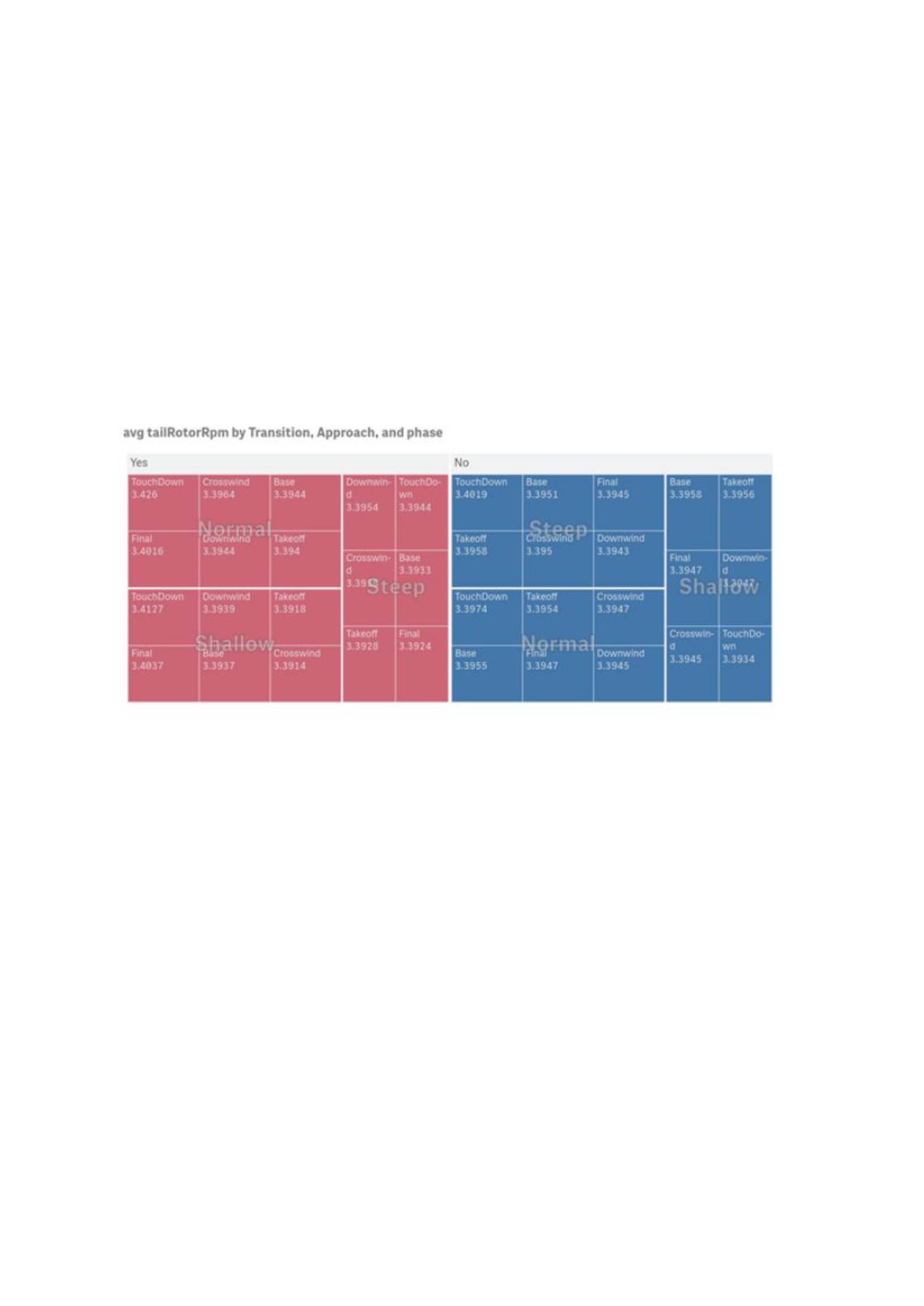
machine learning algorithms. For example, the average tail rotor RPM
by transition, approach, and phase (see figure below).
Figure
. AutoML Visualization of Average Tail Rotor RPM by
Transition, Approach, and Phase.
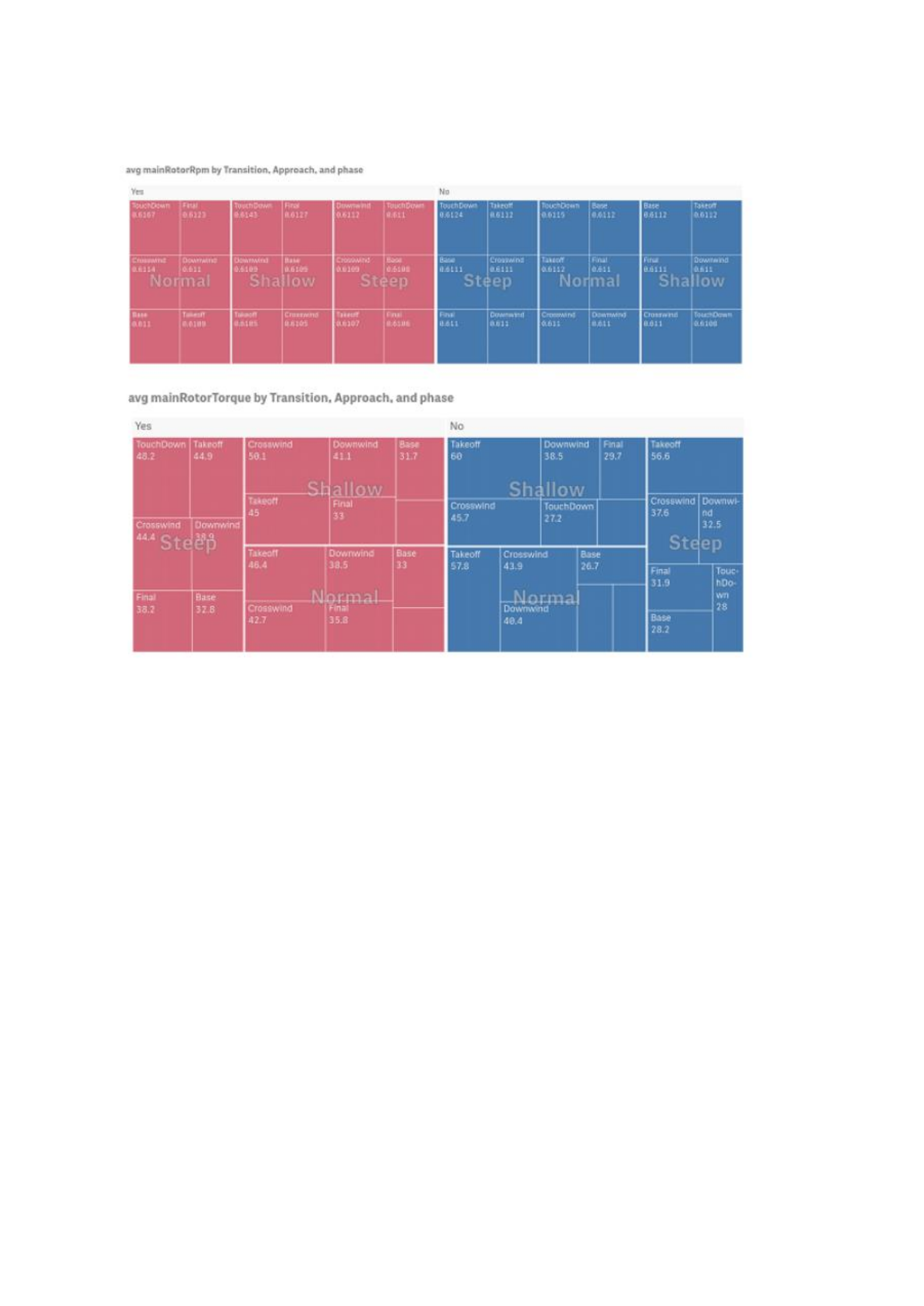
In comparison, the average main rotor RPM versus the average man
rotor torque can also be examined in this study. The examination
consideration all three elements using machine learning to extract the
main rotor conditions in comparison. The parameters to perform the
measures specifically to the traffic pattern environments allow for the
investigation of major contributing factors and the data mining
measures. j The data availability to address the machine learning
contributions can be suitable to use as a methodology to enhance
experimental comparisons. The ability to introduce a experimental
benchmark reveals how a domain-focused AutoML method can
explore the various elements aim to enhance model selection and
techniques. The deployed approach of the AutoML demonstrated the
how this practical experimentation can be model (see figure below).
Figure
. AutoML Visualization with Comparison of Average Main Rotor
RPM and Avg Main Rotor Torque by Transition, Approach, and Phase.
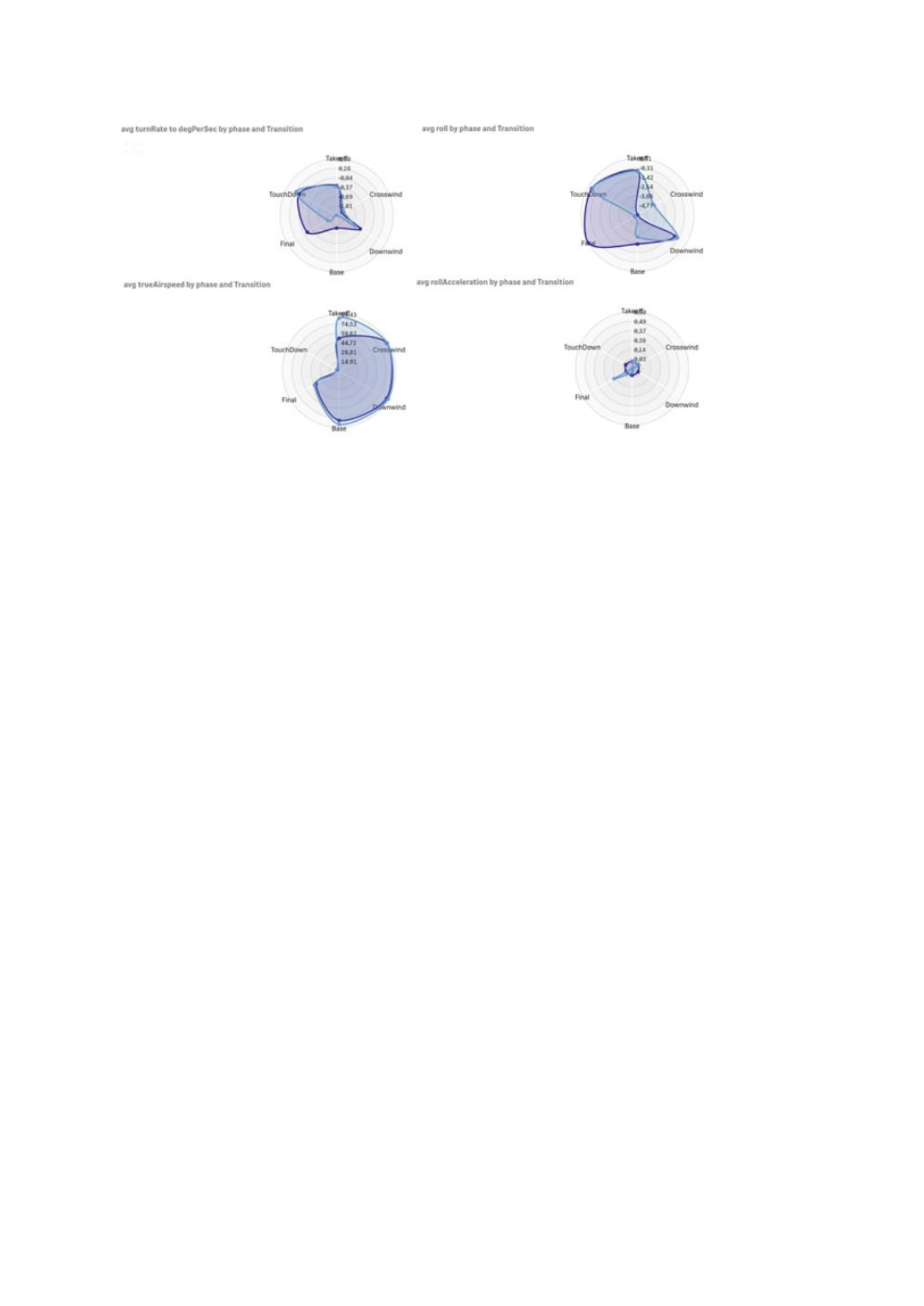
Furthermore, the averages of the turn rate, true airspeed, roll, roll
acceleration by phase and transition includes a
no
(purple) and
yes
(blue) target class. The machine learning methods used to extract
features are achieved a given search according to the algorithm and
the trained designed. The obtained searched was developed to
evaluate the actual performance and the difference between the
proposed outputs. The output probability and the target class of
performance transition has been evaluated according to the number of
experiments in the visualization. The performance varied between
obtained parameters with a solution to optimize performance and the
conditions. The figure below is an evaluation of the performance
conditions associated with each environment.
Figure
. AutoML Visualization with Comparison of Averages – Turn
Rate, Ture Airspeed, Roll, Roll Acceleration by Phase and transition
Main Rotor RPM and Avg Main Rotor Torque by Transition, Approach,
and Phase.
In this evaluation, the ability to explore the attributes as a domain
specific data set has defines the predictability problems for suitable
training. Previously discovered, the new classification of a scheme
associated with the level of autonomy describes the end-to-end
support of the possibilities of AutoML. The understanding of specific
attributes alike creates a demand to improve the efficiency of machine
learning research. Not only the dataset selection generated
pinpointing performances of aspired data, but also the target class had
lay out a roadmap according to association. The experimental setup
was designed to carry-out these methods while simplifying the
modeling process to broadening the application scenarios as original
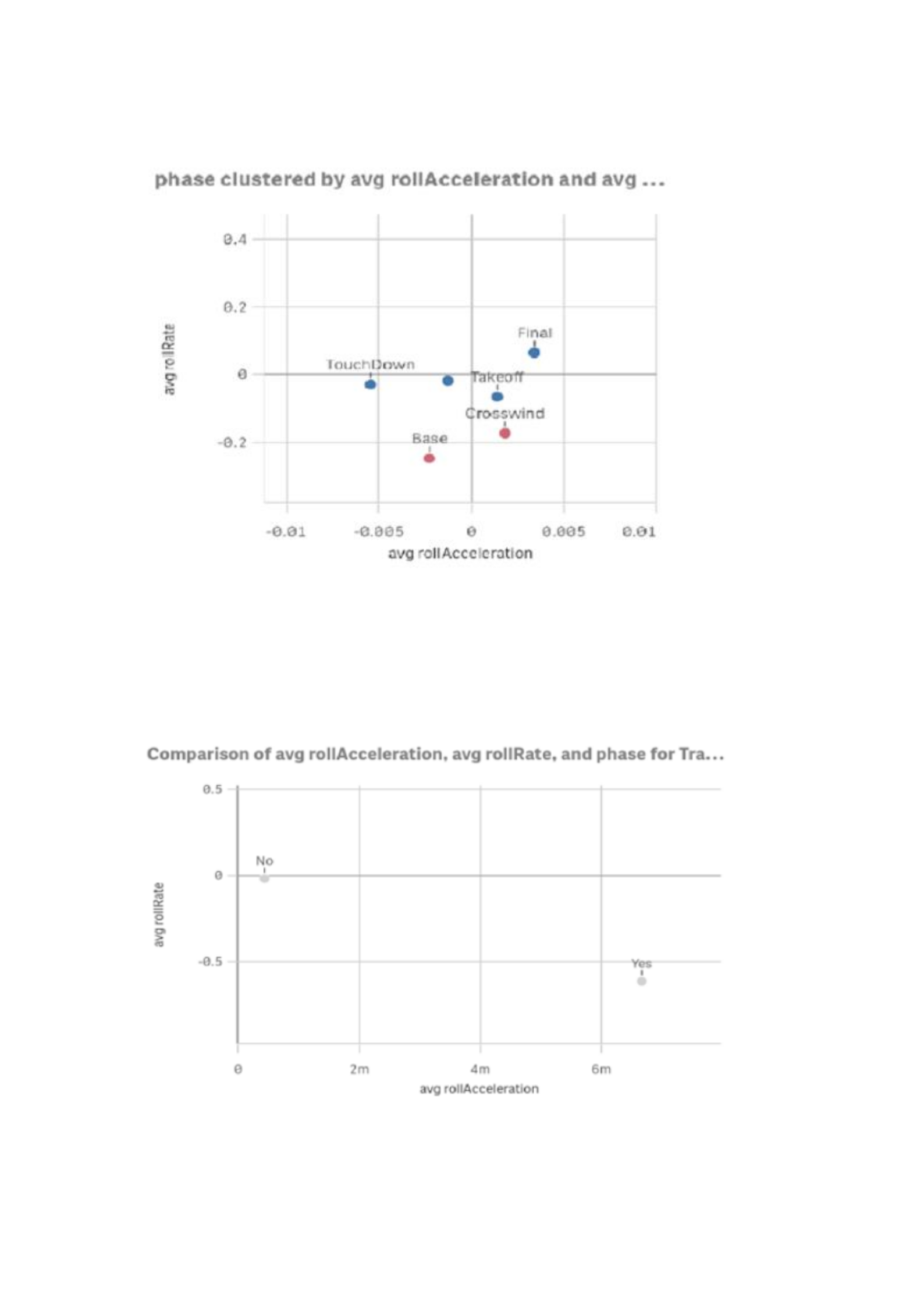
mentioned. The figures below are features according to the selection
based on achievability and combination of samples using AutoML
algorithms.
Figure
. AutoML Visualization with phase clustered according to the
combination of samples.
Figure
. AutoML Visualization with a comparison of the phase
according to the transition segment combination of samples.

