


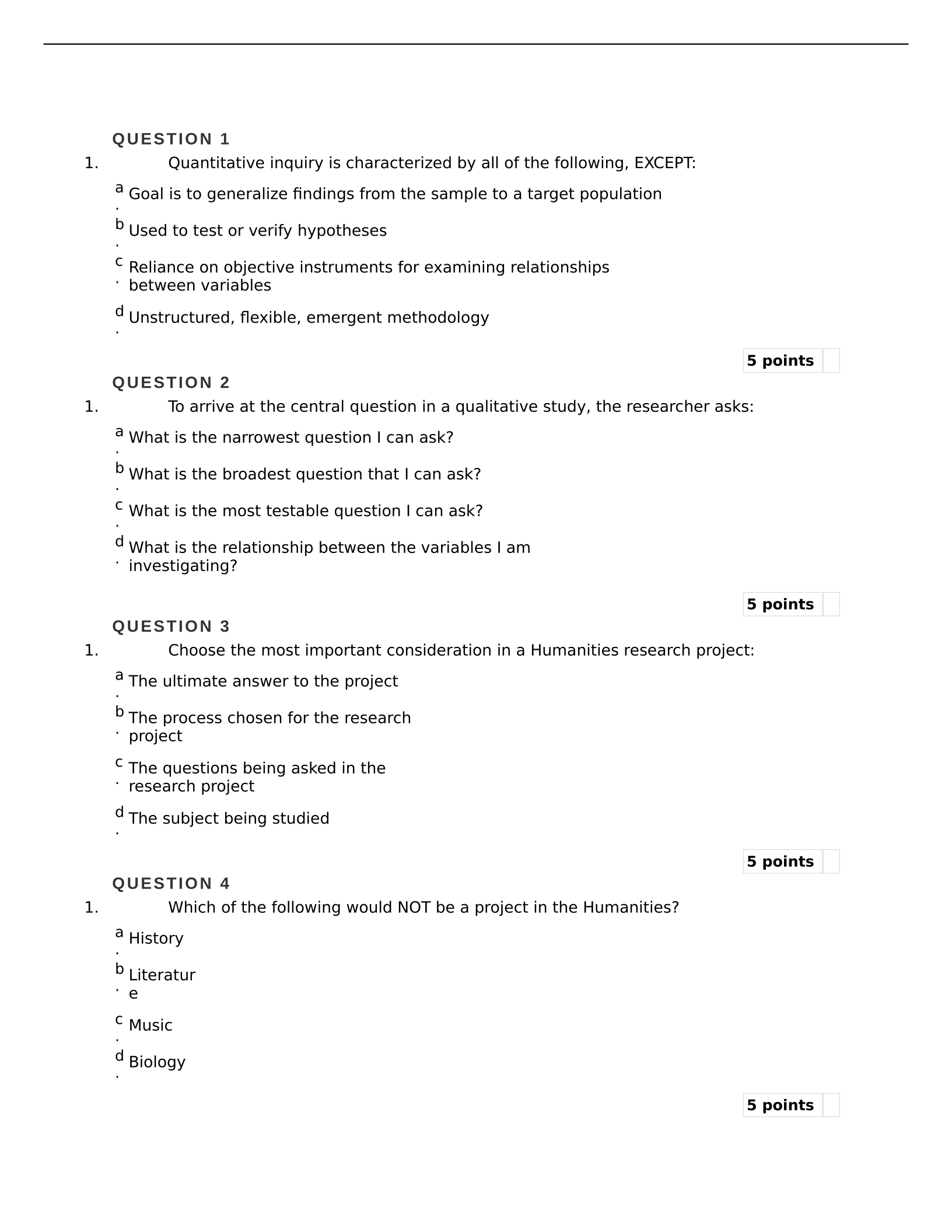
Q U E S T ION 1
1. Quantitative inquiry is characterized by all of the following, EXCEPT:
a
.Goal is to generalize findings from the sample to a target population
b
.Used to test or verify hypotheses
c
.Reliance on objective instruments for examining relationships
between variables
d
.Unstructured, flexible, emergent methodology
5 points
Q U E S T I O N 2
1. To arrive at the central question in a qualitative study, the researcher asks:
a
.What is the narrowest question I can ask?
b
.What is the broadest question that I can ask?
c
.What is the most testable question I can ask?
d
.What is the relationship between the variables I am
investigating?
5 points
Q U E S T I O N 3
1. Choose the most important consideration in a Humanities research project:
a
.The ultimate answer to the project
b
.The process chosen for the research
project
c
.The questions being asked in the
research project
d
.The subject being studied
5 points
Q U E S T I O N 4
1. Which of the following would NOT be a project in the Humanities?
a
.History
b
.Literatur
e
c
.Music
d
.Biology
5 points
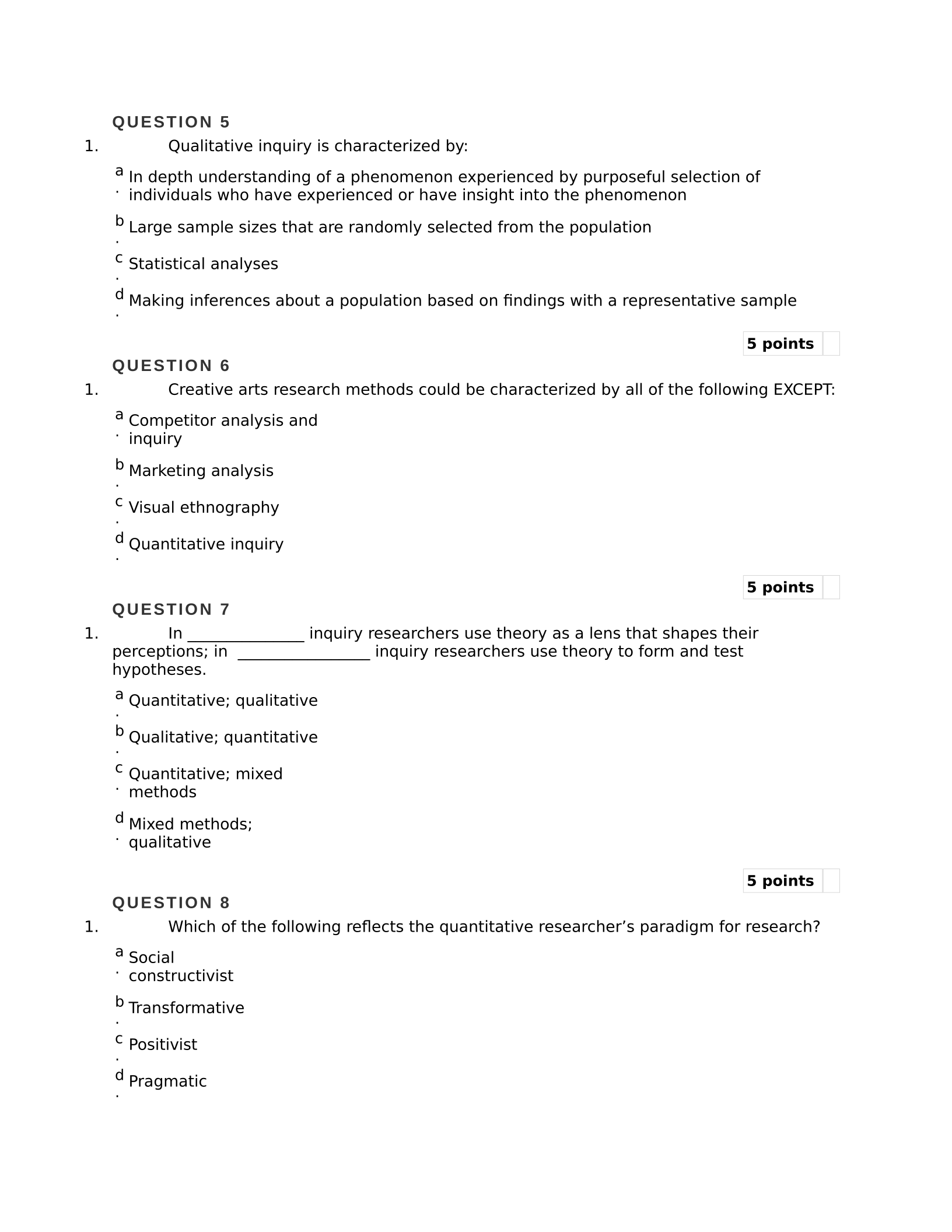
Q U E S T I O N 5
1. Qualitative inquiry is characterized by:
a
.In depth understanding of a phenomenon experienced by purposeful selection of
individuals who have experienced or have insight into the phenomenon
b
.Large sample sizes that are randomly selected from the population
c
.Statistical analyses
d
.Making inferences about a population based on findings with a representative sample
5 points
Q U E S T I O N 6
1. Creative arts research methods could be characterized by all of the following EXCEPT:
a
.Competitor analysis and
inquiry
b
.Marketing analysis
c
.Visual ethnography
d
.Quantitative inquiry
5 points
Q U E S T I O N 7
1. In _______________ inquiry researchers use theory as a lens that shapes their
perceptions; in _________________ inquiry researchers use theory to form and test
hypotheses.
a
.Quantitative; qualitative
b
.Qualitative; quantitative
c
.Quantitative; mixed
methods
d
.Mixed methods;
qualitative
5 points
Q U E S T I O N 8
1. Which of the following reflects the quantitative researcher’s paradigm for research?
a
.Social
constructivist
b
.Transformative
c
.Positivist
d
.Pragmatic
5 points
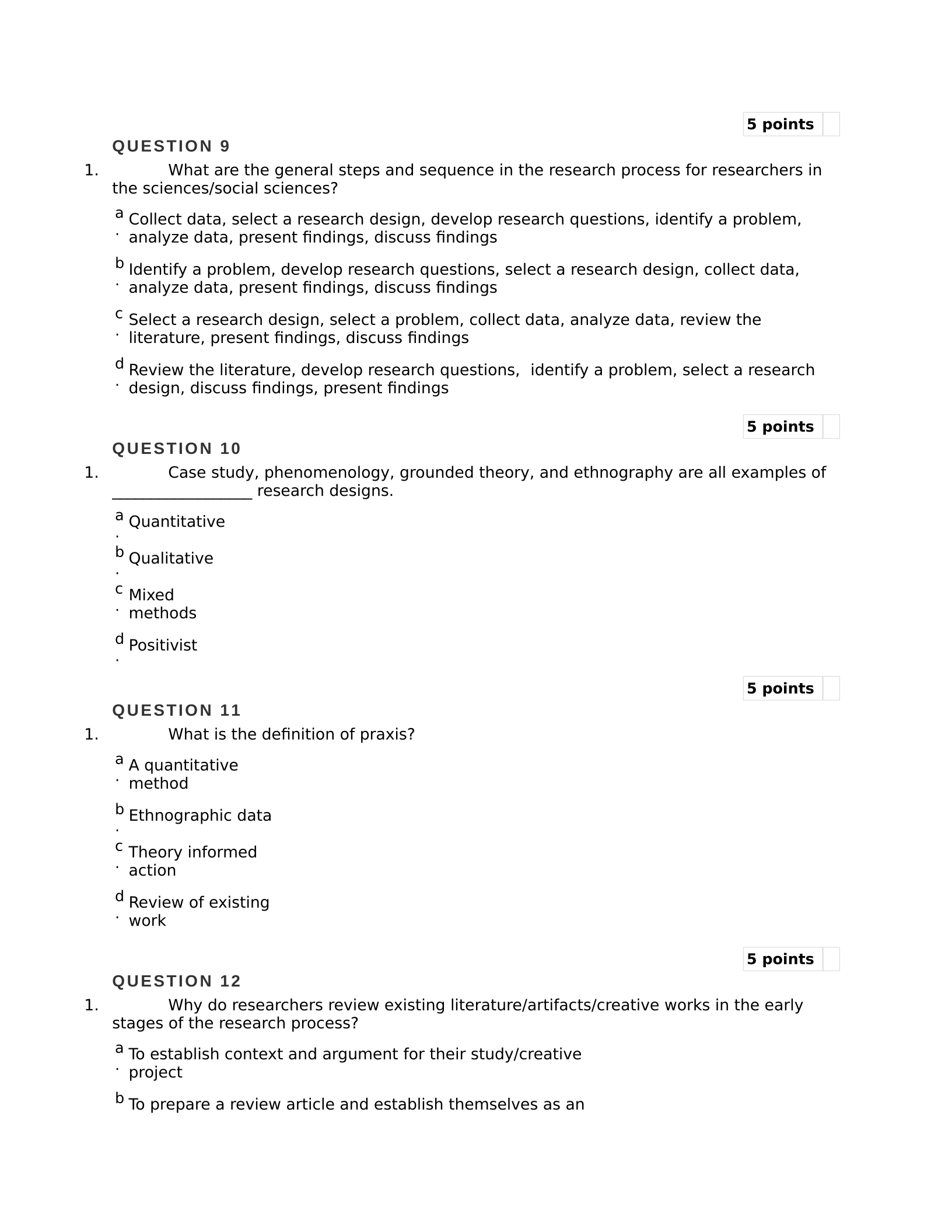
Q U E S T I O N 9
1. What are the general steps and sequence in the research process for researchers in
the sciences/social sciences?
a
.Collect data, select a research design, develop research questions, identify a problem,
analyze data, present findings, discuss findings
b
.Identify a problem, develop research questions, select a research design, collect data,
analyze data, present findings, discuss findings
c
.Select a research design, select a problem, collect data, analyze data, review the
literature, present findings, discuss findings
d
.Review the literature, develop research questions, identify a problem, select a research
design, discuss findings, present findings
5 points
Q U E S T I O N 1 0
1. Case study, phenomenology, grounded theory, and ethnography are all examples of
__________________ research designs.
a
.Quantitative
b
.Qualitative
c
.Mixed
methods
d
.Positivist
5 points
Q U E S T I O N 1 1
1. What is the definition of praxis?
a
.A quantitative
method
b
.Ethnographic data
c
.Theory informed
action
d
.Review of existing
work
5 points
Q U E S T I O N 1 2
1. Why do researchers review existing literature/artifacts/creative works in the early
stages of the research process?
a
.To establish context and argument for their study/creative
project
bTo prepare a review article and establish themselves as an
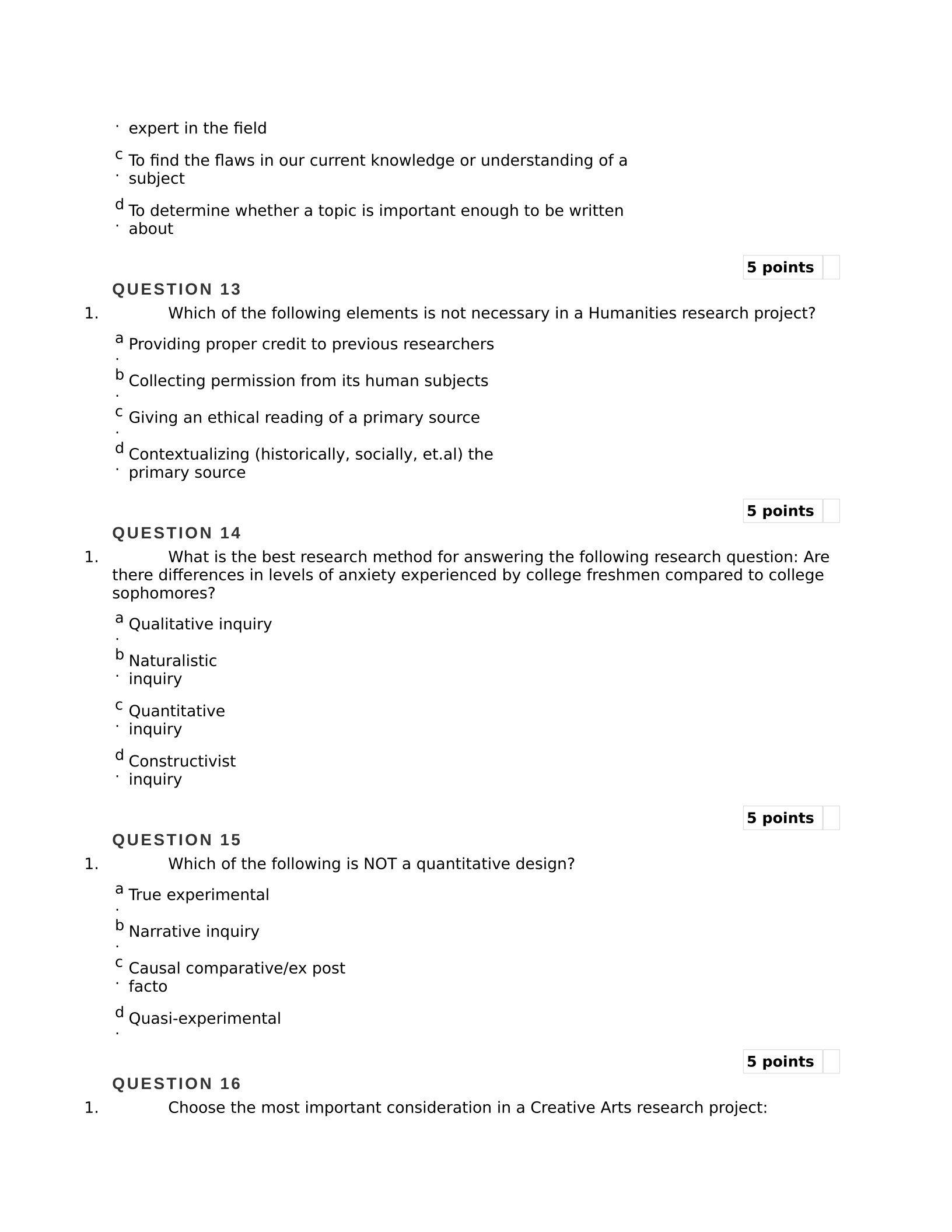
.expert in the field
c
.To find the flaws in our current knowledge or understanding of a
subject
d
.To determine whether a topic is important enough to be written
about
5 points
Q U E S T I O N 1 3
1. Which of the following elements is not necessary in a Humanities research project?
a
.Providing proper credit to previous researchers
b
.Collecting permission from its human subjects
c
.Giving an ethical reading of a primary source
d
.Contextualizing (historically, socially, et.al) the
primary source
5 points
Q U E S T I O N 1 4
1. What is the best research method for answering the following research question: Are
there differences in levels of anxiety experienced by college freshmen compared to college
sophomores?
a
.Qualitative inquiry
b
.Naturalistic
inquiry
c
.Quantitative
inquiry
d
.Constructivist
inquiry
5 points
Q U E S T I O N 1 5
1. Which of the following is NOT a quantitative design?
a
.True experimental
b
.Narrative inquiry
c
.Causal comparative/ex post
facto
d
.Quasi-experimental
5 points
Q U E S T I O N 1 6
1. Choose the most important consideration in a Creative Arts research project:
a
.Creative process
b
.Iterative design
c
.Reflective practice
d
.Interdisciplinary
approach
5 points
Q U E S T I O N 1 7
1. Formal review of the literature/existing works on the topic includes all of the
following, except:
a
.Summarizing and synthesizing the related literature
b
.Developing context for the proposed research
c
.Describing the procedures and methods for the proposed research
study/creative project
d
.Framing the problem and/or gap in the literature on the proposed topic of
study
5 points
Q U E S T I O N 1 8
1. Why do researchers need to consider the philosophical worldview assumptions they
bring to their research?
a
.Because an Institutional Review Board will consider the worldview of the researcher when
reviewing research applications.
b
.Because worldviews shape approaches to research, the questions asked, and the methods
used
c
.Because a researcher’s worldview will always affect the outcomes of their research
d
.Because reviewers consider the worldview of the researcher when evaluating the quality
of the research
5 points
Q U E S T I O N 1 9
1. What is the purpose of the Institutional Review Board (IRB)?
a
.To ensure you selected a research topic that is contextualized in the
existing literature
b
.To ensure your proposed research is ethical and protects human subjects
or animals
c
.To ensure your proposed research has practical significance
d
.To ensure your proposed research can be completed before you
graduate
5 points
Q U E S T I O N 2 0
1. What are the general steps and sequence in the design process for researchers in the
Creative Arts?
a
.Analyze a research design, select a problem, collect data, analyze data, review the
literature, present findings, discuss findings
b
.Review the literature, identify a problem, select a research design, discuss
implementation, present final project
c
.Analysis, discussion, design, concept development, prototype, implementation, delivery
d
.Identify a problem, develop research questions, select a research design, collect data,
analyze data, present findings, discuss findings
Powered by TCPDF (www.tcpdf.org)

