


RUNNING HEAD: Development of a PICO Question 1
Development of a PICO Question
Liberty University
NURS 500
Development of a PICO Question 2
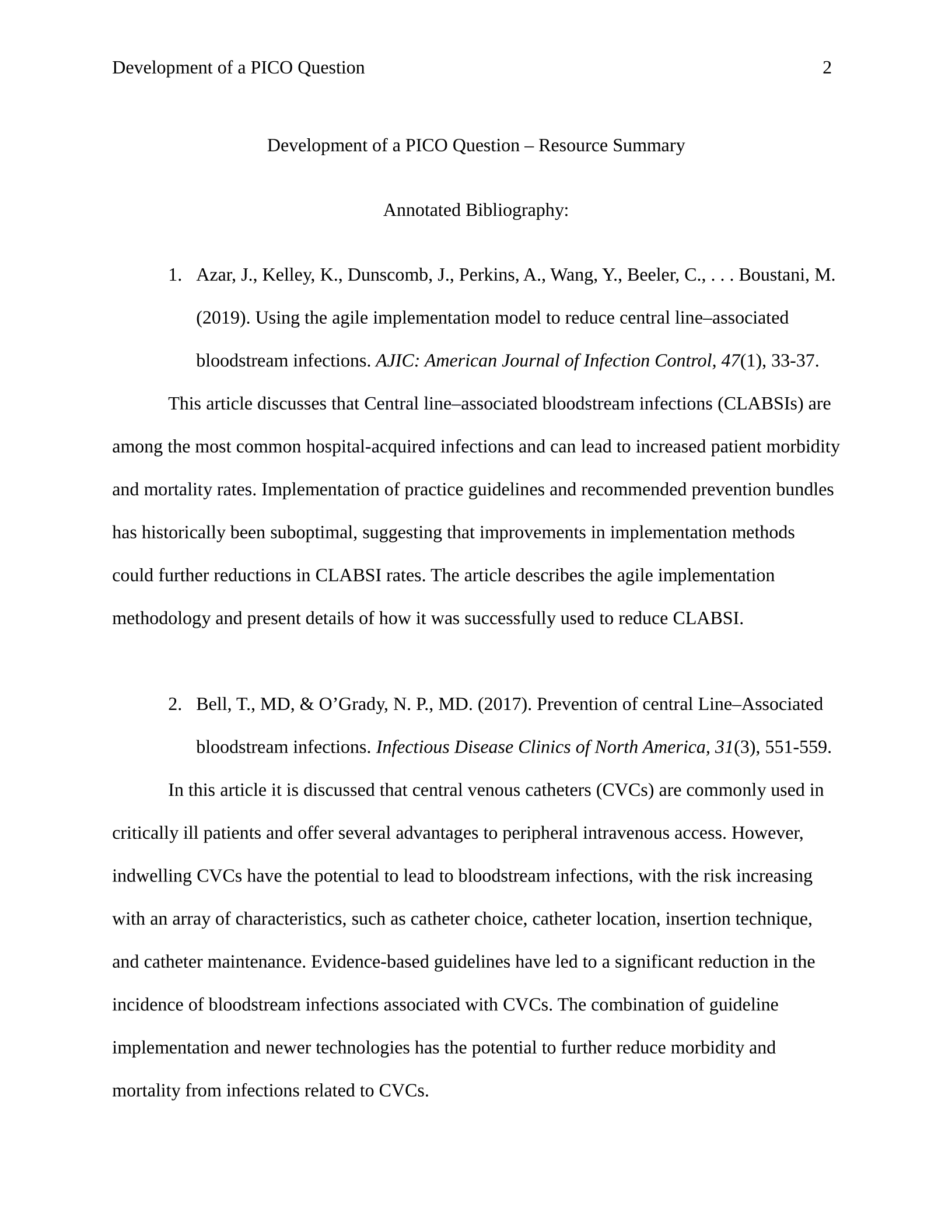
Development of a PICO Question – Resource Summary
Annotated Bibliography:
1. Azar, J., Kelley, K., Dunscomb, J., Perkins, A., Wang, Y., Beeler, C., . . . Boustani, M.
(2019). Using the agile implementation model to reduce central line–associated
bloodstream infections. AJIC: American Journal of Infection Control, 47(1), 33-37.
This article discusses that Central line–associated bloodstream infections (CLABSIs) are
among the most common hospital-acquired infections and can lead to increased patient morbidity
and mortality rates. Implementation of practice guidelines and recommended prevention bundles
has historically been suboptimal, suggesting that improvements in implementation methods
could further reductions in CLABSI rates. The article describes the agile implementation
methodology and present details of how it was successfully used to reduce CLABSI.
2. Bell, T., MD, & O’Grady, N. P., MD. (2017). Prevention of central Line–Associated
bloodstream infections. Infectious Disease Clinics of North America, 31(3), 551-559.
In this article it is discussed that central venous catheters (CVCs) are commonly used in
critically ill patients and offer several advantages to peripheral intravenous access. However,
indwelling CVCs have the potential to lead to bloodstream infections, with the risk increasing
with an array of characteristics, such as catheter choice, catheter location, insertion technique,
and catheter maintenance. Evidence-based guidelines have led to a significant reduction in the
incidence of bloodstream infections associated with CVCs. The combination of guideline
implementation and newer technologies has the potential to further reduce morbidity and
mortality from infections related to CVCs.
Development of a PICO Question 3
3. Pronovost, P. J., Watson, S. R., Goeschel, C. A., Hyzy, R. C., & Berenholtz, S. M.
(2016). Sustaining reductions in central Line–Associated bloodstream infections in
michigan intensive care units: A 10-year analysis. American Journal of Medical
Quality, 31(3), 197-202.
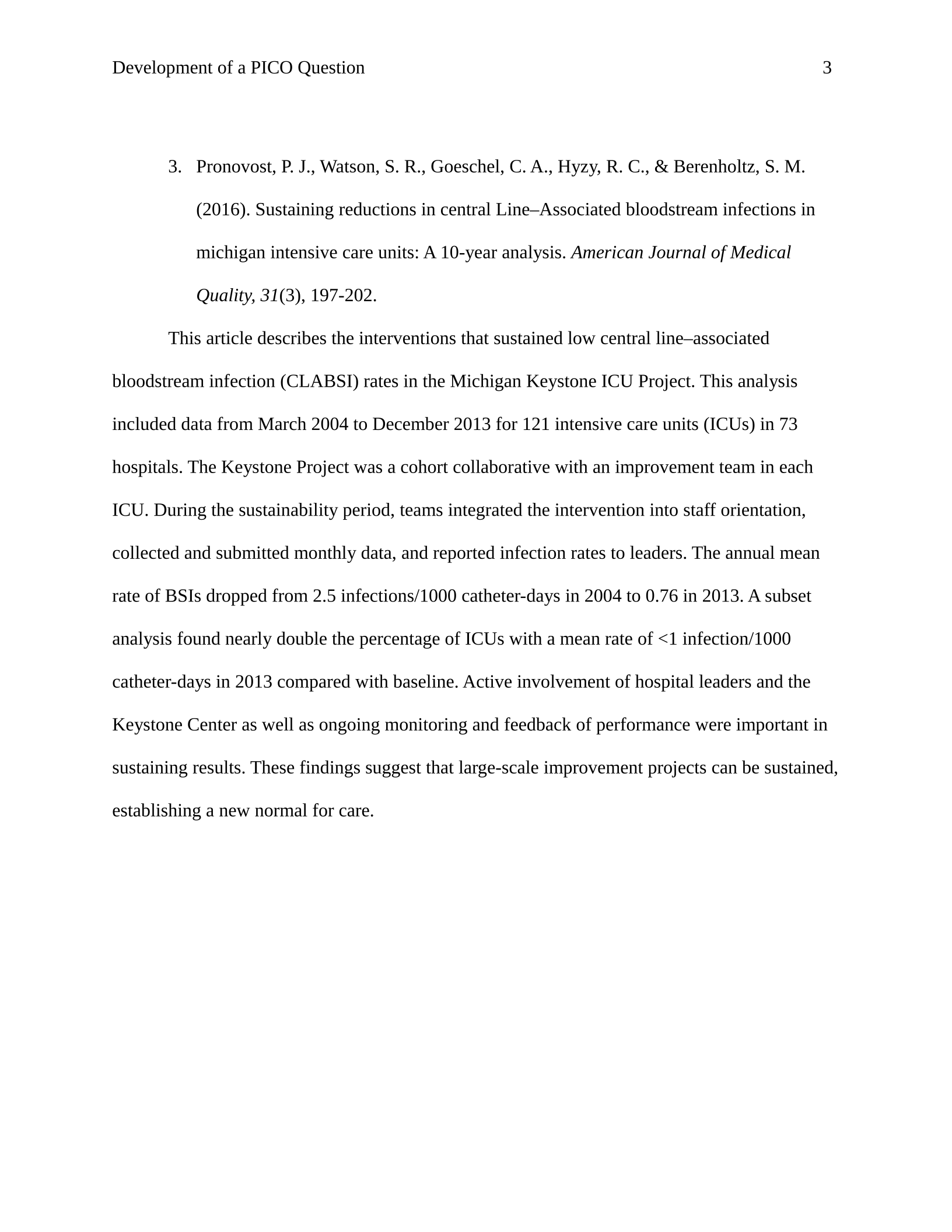
This article describes the interventions that sustained low central line–associated
bloodstream infection (CLABSI) rates in the Michigan Keystone ICU Project. This analysis
included data from March 2004 to December 2013 for 121 intensive care units (ICUs) in 73
hospitals. The Keystone Project was a cohort collaborative with an improvement team in each
ICU. During the sustainability period, teams integrated the intervention into staff orientation,
collected and submitted monthly data, and reported infection rates to leaders. The annual mean
rate of BSIs dropped from 2.5 infections/1000 catheter-days in 2004 to 0.76 in 2013. A subset
analysis found nearly double the percentage of ICUs with a mean rate of <1 infection/1000
catheter-days in 2013 compared with baseline. Active involvement of hospital leaders and the
Keystone Center as well as ongoing monitoring and feedback of performance were important in
sustaining results. These findings suggest that large-scale improvement projects can be sustained,
establishing a new normal for care.
Development of a PICO Question 4
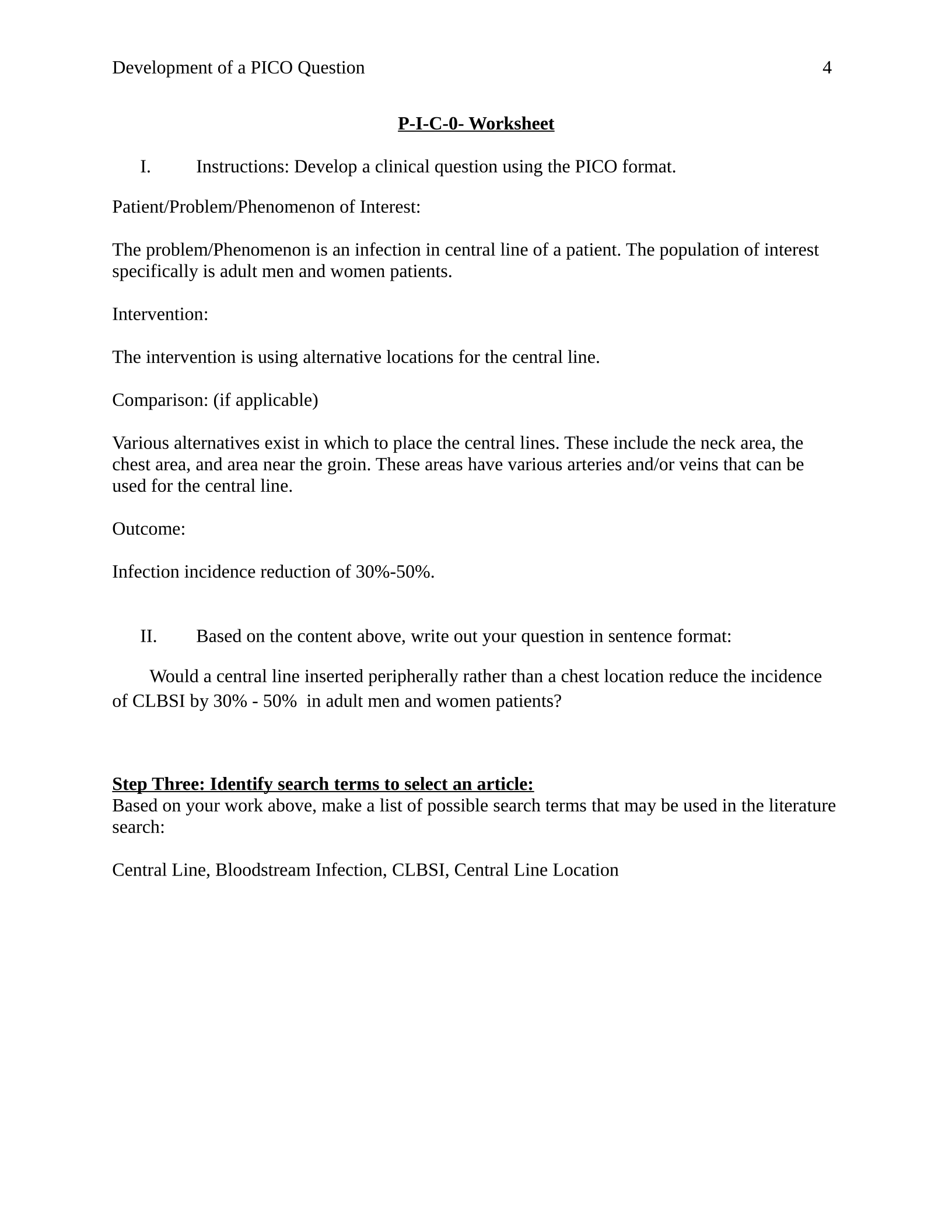
P-I-C-0- Worksheet
I. Instructions: Develop a clinical question using the PICO format.
Patient/Problem/Phenomenon of Interest:
The problem/Phenomenon is an infection in central line of a patient. The population of interest
specifically is adult men and women patients.
Intervention:
The intervention is using alternative locations for the central line.
Comparison: (if applicable)
Various alternatives exist in which to place the central lines. These include the neck area, the
chest area, and area near the groin. These areas have various arteries and/or veins that can be
used for the central line.
Outcome:
Infection incidence reduction of 30%-50%.
II. Based on the content above, write out your question in sentence format:
Would a central line inserted peripherally rather than a chest location reduce the incidence
of CLBSI by 30% - 50% in adult men and women patients?
Step Three: Identify search terms to select an article:
Based on your work above, make a list of possible search terms that may be used in the literature
search:
Central Line, Bloodstream Infection, CLBSI, Central Line Location
Powered by TCPDF (www.tcpdf.org)

