


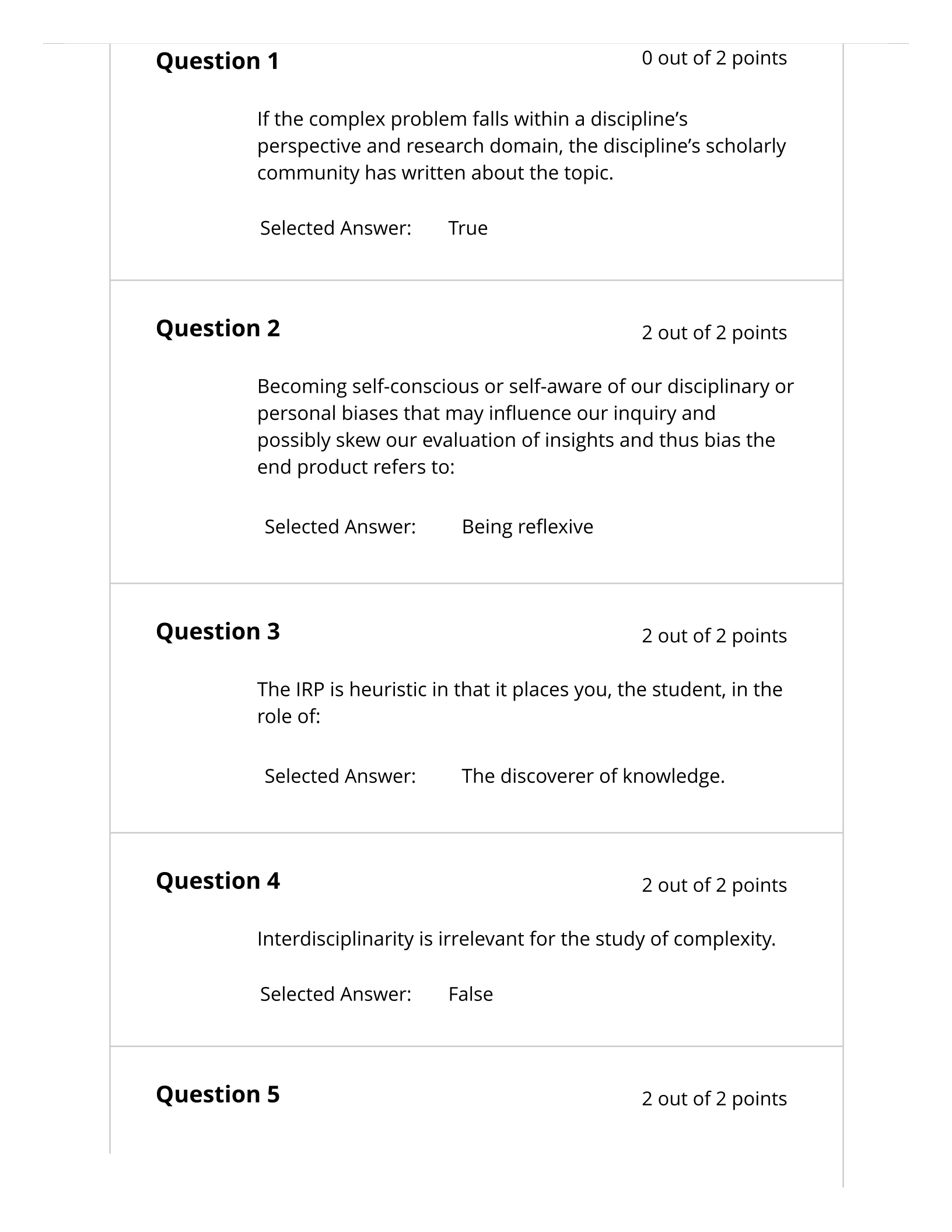
Question 1
Selected Answer: True
If the complex problem falls within a discipline’s
perspective and research domain, the discipline’s scholarly
community has written about the topic.
Question 2
Selected Answer:
Becoming self-conscious or self-aware of our disciplinary or
personal biases that may inuence our inquiry and
possibly skew our evaluation of insights and thus bias the
end product refers to:
Being reexive
Question 3
Selected Answer:
The IRP is heuristic in that it places you, the student, in the
role of:
The discoverer of knowledge.
Question 4
Selected Answer: False
Interdisciplinarity is irrelevant for the study of complexity.
Question 5
0 out of 2 points
2 out of 2 points
2 out of 2 points
2 out of 2 points
2 out of 2 points

Selected
Answer:
There are four practical benets from using systems
thinking and drawing a system map, which of these should
not be included.
Drawing a system map helps the researcher
understand how the system operates the way it
does, not why the system behaves the way it
does.
Question 6
Selected
Answer:
Systems thinking is a method of visualizing
interrelationships within a complex problem or system by
doing all the following except:
Identifying which parts similar disciplines
address
Question 7
Selected Answer: True
Scope refers to the parameters of what you intend to
include and exclude from consideration.
Question 8
Selected
Answer:
Systems maps have two key elements which are:
The phenomena relevant to a complex problem
and the arrows that indicate visually how these
2 out of 2 points
2 out of 2 points
2 out of 2 points
Saturday, November 6, 2021 1:35:59 PM EDT
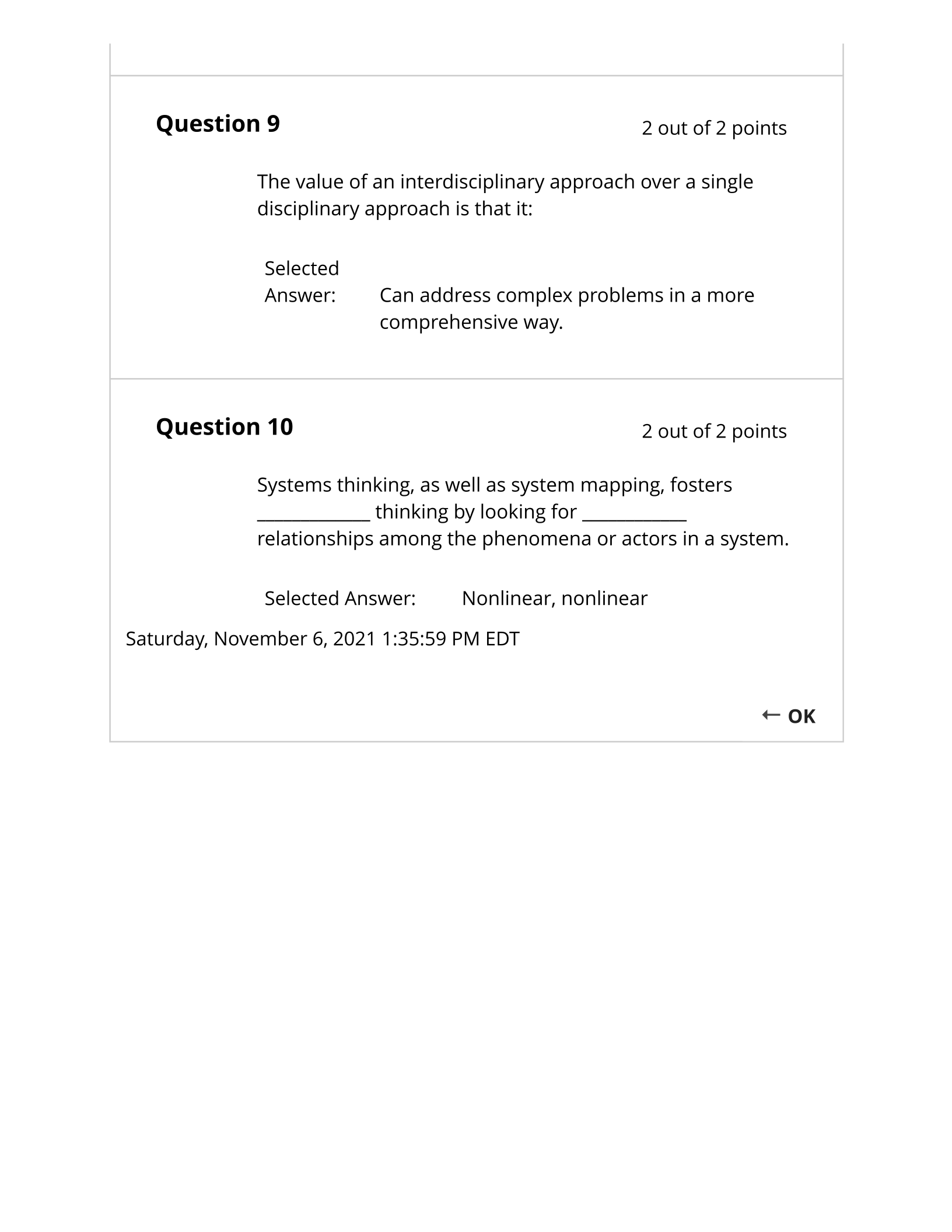
Question 9
Selected
Answer:
The value of an interdisciplinary approach over a single
disciplinary approach is that it:
Can address complex problems in a more
comprehensive way.
Question 10
Selected Answer:
Systems thinking, as well as system mapping, fosters
_____________ thinking by looking for ____________
relationships among the phenomena or actors in a system.
Nonlinear, nonlinear
← OK
2 out of 2 points
2 out of 2 points
Powered by TCPDF (www.tcpdf.org)

