
GLST 220 QUIZ 7
Question 1
2 out of 6 points
Match each part of the story to the statement that shows how God is concerned for all
nations:
o
Question Selected Match
The Partial
Kingdom
F.
God's family in heaven will include representatives "from every
nation, tribe, people and language" (Revelation 7:9).
The
Promised
Kingdom
C.
God promised Abraham, "...all peoples on earth will be blessed
through you" (Genesis 12:3). He will be a "father of many nations"
(17:5).
The
Prophesied
Kingdom
B.
God's servant will be "a light for the Gentiles" and "all the ends of
the earth will see the salvation of our God" (Isaiah 42:6; 52:10).
The
Perfected
Kingdom
E.
Jesus' earthly ministry was focused on the Jews (Matthew 15:24),
but he did bring salvation to Gentiles too (e.g. Matthew 8:5-13;
15:21-28). He taught that Israel's rejection of him would lead to
God's judgment on her. Then the gospel would be proclaimed to all
nations (Matthew 21:43; 24:14).
The
Proclaimed
Kingdom
D.
Israel was meant to be a "kingdom of priests" (Exodus 19), acting
as a mediator between God and the nations. Some foreigners
share in God's blessing to them: for example, Rahab (Joshua 6),
the Queen of Sheba (1 Kings 10) and Naaman (2 Kings 5).
The Present
Kingdom
A.
Christian believers have been given the Spirit to equip us to take
the gospel to all people. Mission is not an option for the keen few;
it is an obligation for us all. Jesus commands us to "go and make
disciples of all nations" (Matthew 28:19).
Question 2
1 out of 1 points
True/False: The Bible uses three different tenses to speak of our salvation.
Selected
Answer:
Tru
e
Question 3
1 out of 1 points
Leaders with higher CQ are less likely to build trusting relationships with culturally diverse colleagues,
clients, and constituents.
Selected
Answer:
Fals
e
Question 4
1 out of 1 points
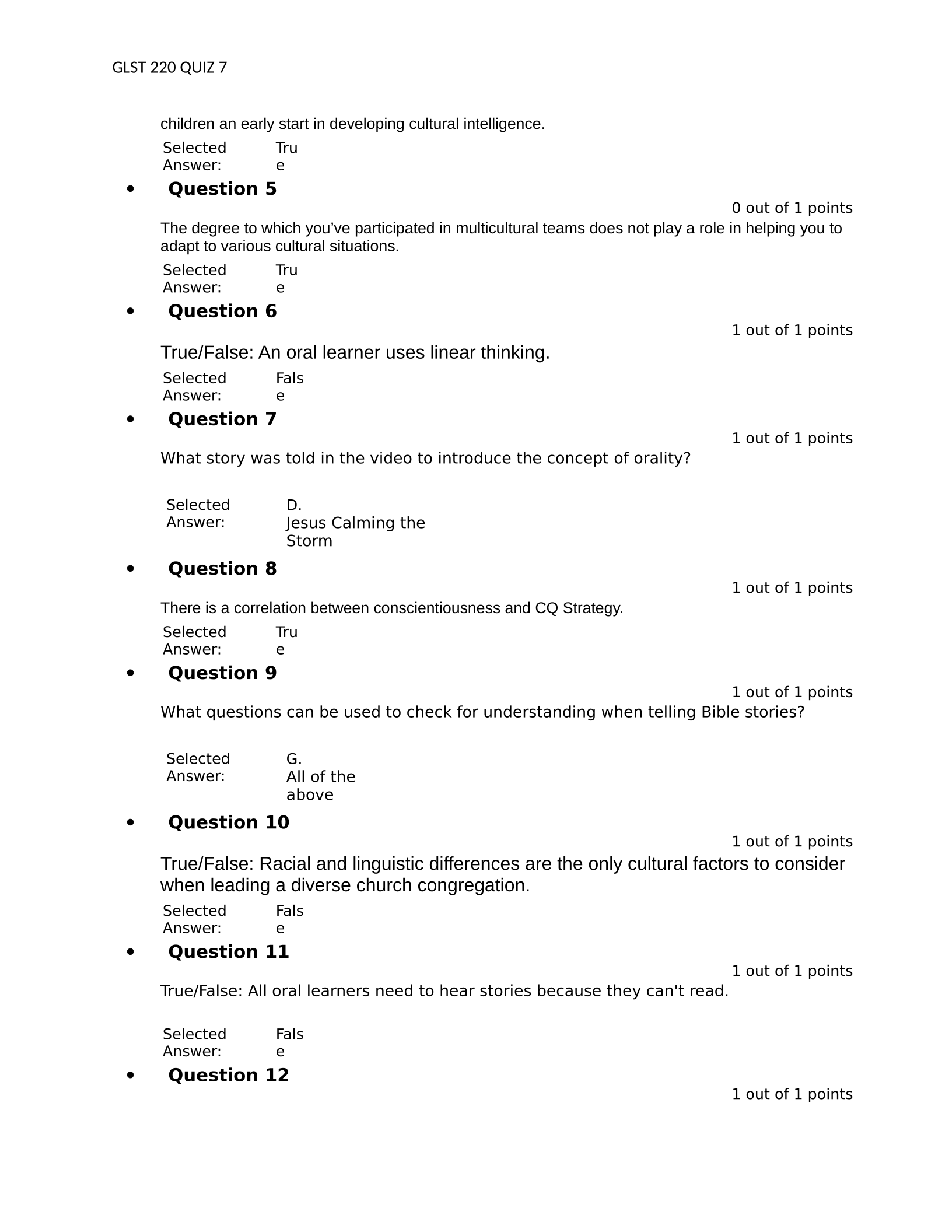
Parents who immerse their kids in other cultures and help them see all the differences can give their
GLST 220 QUIZ 7
children an early start in developing cultural intelligence.
Selected
Answer:
Tru
e
Question 5
0 out of 1 points
The degree to which you’ve participated in multicultural teams does not play a role in helping you to
adapt to various cultural situations.
Selected
Answer:
Tru
e
Question 6
1 out of 1 points
True/False: An oral learner uses linear thinking.
Selected
Answer:
Fals
e
Question 7
1 out of 1 points
What story was told in the video to introduce the concept of orality?
Selected
Answer:
D.
Jesus Calming the
Storm
Question 8
1 out of 1 points
There is a correlation between conscientiousness and CQ Strategy.
Selected
Answer:
Tru
e
Question 9
1 out of 1 points
What questions can be used to check for understanding when telling Bible stories?
Selected
Answer:
G.
All of the
above
Question 10
1 out of 1 points
True/False: Racial and linguistic differences are the only cultural factors to consider
when leading a diverse church congregation.
Selected
Answer:
Fals
e
Question 11
1 out of 1 points
True/False: All oral learners need to hear stories because they can't read.
Selected
Answer:
Fals
e
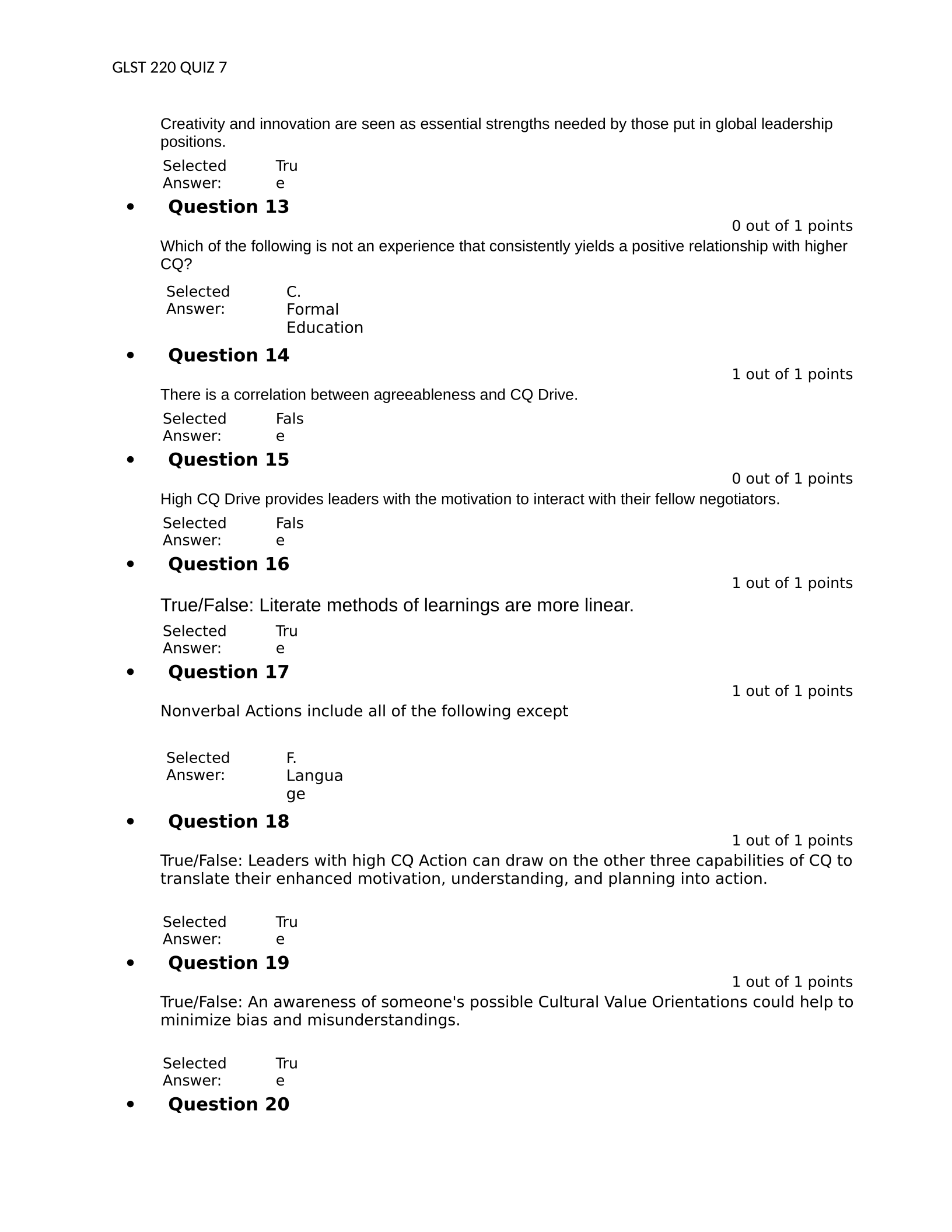
Question 12
1 out of 1 points
GLST 220 QUIZ 7
Creativity and innovation are seen as essential strengths needed by those put in global leadership
positions.
Selected
Answer:
Tru
e
Question 13
0 out of 1 points
Which of the following is not an experience that consistently yields a positive relationship with higher
CQ?
Selected
Answer:
C.
Formal
Education
Question 14
1 out of 1 points
There is a correlation between agreeableness and CQ Drive.
Selected
Answer:
Fals
e
Question 15
0 out of 1 points
High CQ Drive provides leaders with the motivation to interact with their fellow negotiators.
Selected
Answer:
Fals
e
Question 16
1 out of 1 points
True/False: Literate methods of learnings are more linear.
Selected
Answer:
Tru
e
Question 17
1 out of 1 points
Nonverbal Actions include all of the following except
Selected
Answer:
F.
Langua
ge
Question 18
1 out of 1 points
True/False: Leaders with high CQ Action can draw on the other three capabilities of CQ to
translate their enhanced motivation, understanding, and planning into action.
Selected
Answer:
Tru
e
Question 19
1 out of 1 points
True/False: An awareness of someone's possible Cultural Value Orientations could help to
minimize bias and misunderstandings.
Selected
Answer:
Tru
e
Question 20