



Physical Development and Nutrition Needs
Early Childhood: Ages 3-5
By: Latisha Grant

Introduction
Physical development is one of the most critical domains that plays a vital role in children's
development. This presentation will explore a variety of topics that will serve
as the foundation for facilitating young children in meeting their developmental milestones and
nutritional needs in Early Childhood Education for ages 3-5 years old. This presentation will
also serve as a guide to help parents in meeting these their developmental and nutritional
needs. Topics will include:
Introduction
Physical Growth
Gross Motor Development
Fine Motor Development
Brain Development
Nutrition Needs
Obesity/Eating Disorders
Physical Activity
Sleep
Biblical Integration
References

•Growth is the height, weight and body composition of an individual (Bergin & Bergin, 2018, sec 2-2a).
•Children in this age group typically, their growth slows down 2 to 3 inches in height and 5 pounds every year
(Bergin & Bergin, 2018, sec 2-2a).
•Young children in this age group can also double their birth height by 3 to 4 years old (Bergin & Bergin,
2018, sec 2-2a).
•Children also have coordinated and smooth movement as an adult (Bergin & Bergin, 2018, sec 2-2a).
•Girl approximate average height 37.1 inches and average weight 30.7lbs for preschoolers
•Boy approximate average height 37.5 inches and average weight 31.8lbs for preschoolers
Physical Growth in Early Childhood
(Bergin & Bergin, 2018, sec 2-2a; Center for Disease Control [CDC], 2023)

Typical Physical Growth Milestones for ages 3 to 5 years old
Children can build with blocks, cubes and Legos
Throw, roll, and catch ball
Serves food, pours beverage with adult supervision
Washes hands
Buttons, unbuttons and dresses him/herself
Movements are steady and coordinated as they walk and run
Holds writing materials (pencils and crayons) between fingers
Clean up after themselves
Ties shoes
( CDC, 2023)
Gross Motor Development
•Large muscle movement of the legs, arms
and feet
•Vigorous exercise should be implemented
to help improve skills at home and in
school
•Children should be given access to multiple
physical activities daily
•Children develop these skills during their
development and with practice daily
Jumping
Stacking
and
Building
with Blocks
Walking
and
Running
Riding a
bike
Throwing
a ball
Climbing
(Bergin & Bergin, 2018)

Fine Motor Development
Picking up
a toy
Eating with
fork and
spoon
Writing and
drawing
(Bergin & Bergin, 2018)
Cutting
Paper using
scissors
Brush
teeth
Tying Shoe
•Small muscle movement of the fingers,
hands and wrist
•Requires dexterity
•Skills should already exist at the age of 3
to 5 years and should have access to
activities daily
•Gradually improves with more practice
and activities incorporated at home and
at school
The Brain
Why Is It Important?
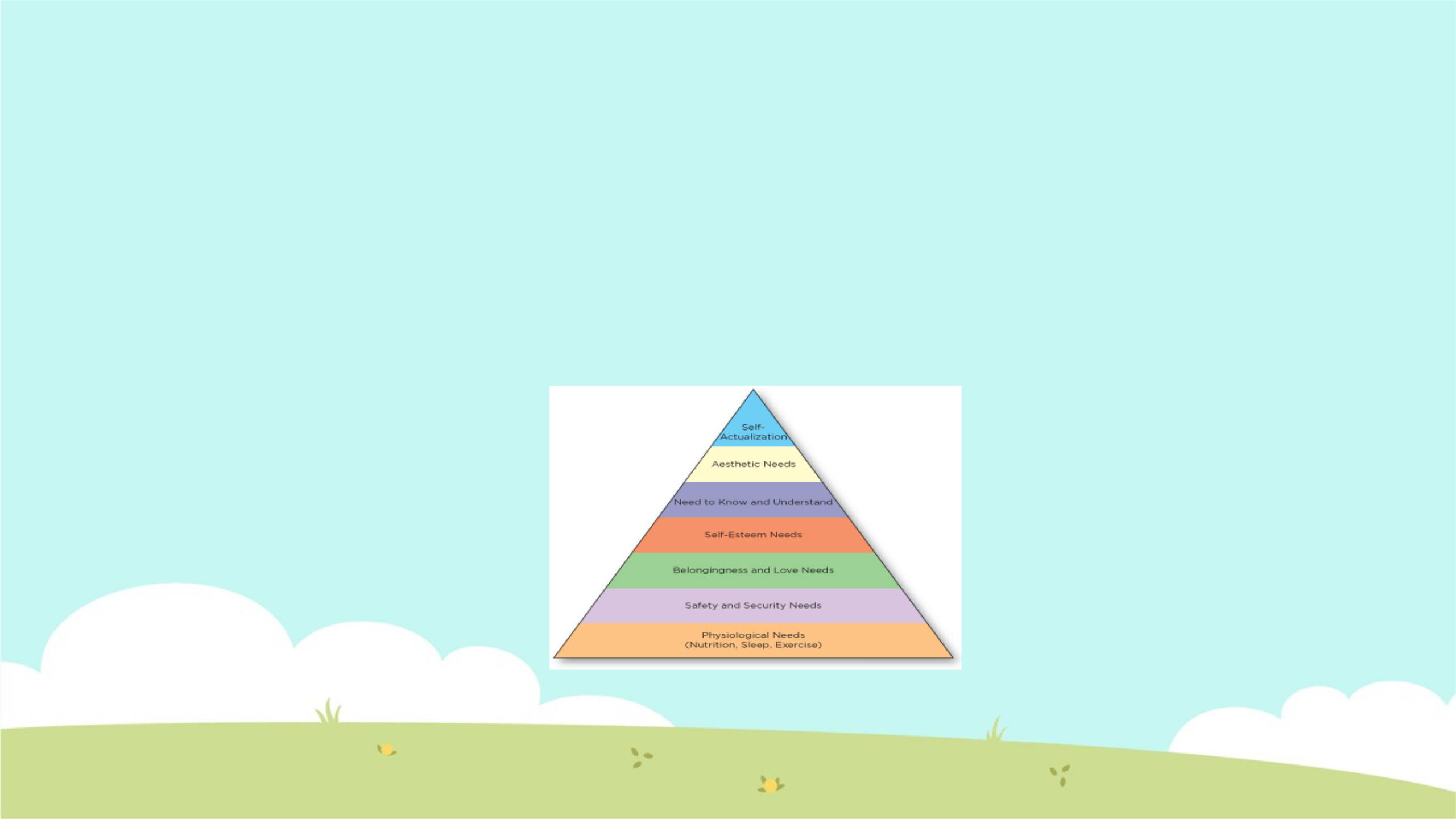
Renowned psychologist Abraham Maslow, believed that children could not attend to classroom tasks unless their basic needs were taken care of first (Bergin & Bergin, 2018, sec 2-
1).
Based on this pyramid model of Hierarchy of Needs there are levels in which the human needs such as the physical (physiological) needs should be met first. This starts from the
very bottom and goes up to self-actualization (Bergin & Bergin, 2018, sec 2-1).
Meeting and ensuring the needs of the body is met, which is the brain, is critical as it regulates learning, behavior, and other physical functions (Bergin & Bergin, 2018, sec 2-1d).
(Bergin & Bergin, 2018, sec 2-1)

Brain Development in Early Childhood
The first 10 years of an individual’s life are a sensitive period in brain development
(Bergin & Bergin, 2018, sec 2-1d).
Teachers and parents interactions are always crucial during brain development
The brain is constructed by interactive influences and experiences (Bergin & Bergin,
2018, sec 2-1d).
Teachers should create a stimulating environment that fosters the physical well-being
to promote brain development (Bergin & Bergin, 2018, sec 2-1d).
-Allow kids to take breaks between lessons by stretching
-Allow kids to eat a small healthy snack
-Reduce the number of distraction in the environment
-Reduce stress in the environment
(Bergin & Bergin, 2018, sec 2-1d)
Functions and Parts of the Brain in Early Childhood
By age 4 years old glucose continues to
increase. Glucose rate and blood flow
to cortex in the brain is twice the
amount as adults (Bergin & Bergin,
2018, sec 2-1b).
Prefrontal cortex are linked to young
children’s ability to (Bergin & Bergin,
2018, sec 2-1b).
-Follow classroom rules
-Sit still
-Raise hands
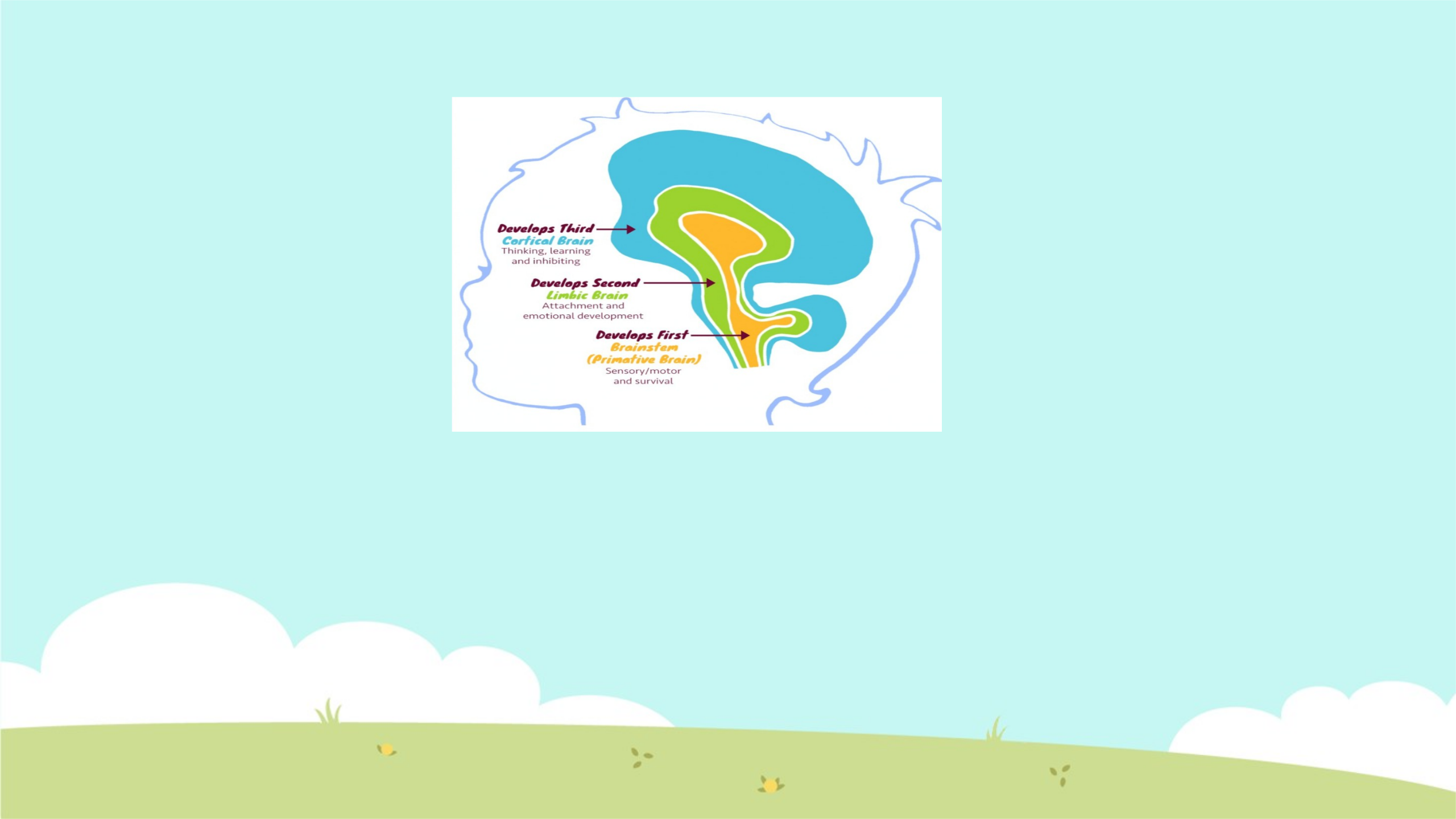
Areas that are mature at the
beginning are the sensory/motor
skills (Meredith, 2019).
Second area to develop is the
limbic brain responsible for
attachment and emotional
development (Meredith, 2019).
Third area to develop is the cortical
brain, responsible for thinking and
learning (Meredith, 2019).
(Bergin & Bergin, 2018, sec 2-1b)
Brainstem is stable in glucose and part
of the lower the brain. Responsible for
sleep-wake cycles (Bergin & Bergin,
2018, sec 2-1b).
Synapse is part of the brains function on
how neurons communicate or are linked with
each other by kindergarten more synapses is
present (Bergin & Bergin, 2018, sec 2-1b).

•C ages 3-5 ha at lea 1200-1400 a day
•T and pa should inco vari of nutri f into m dai
•E a nutri breakfas daily
•E heal snacks
•D and increase wa intake daily
•E healt eating t the day
•H wil provide ener and boos the immune s
Balanced diet to function should include:
-Proteins
-Simple Carbohydrates
-Fruits
-Grains
-Vegetables
-Vitamins
-Fats
-Fiber
Nutrition Needs
(Bergin & Bergin, 2018)
My Plate and Serving Sizes
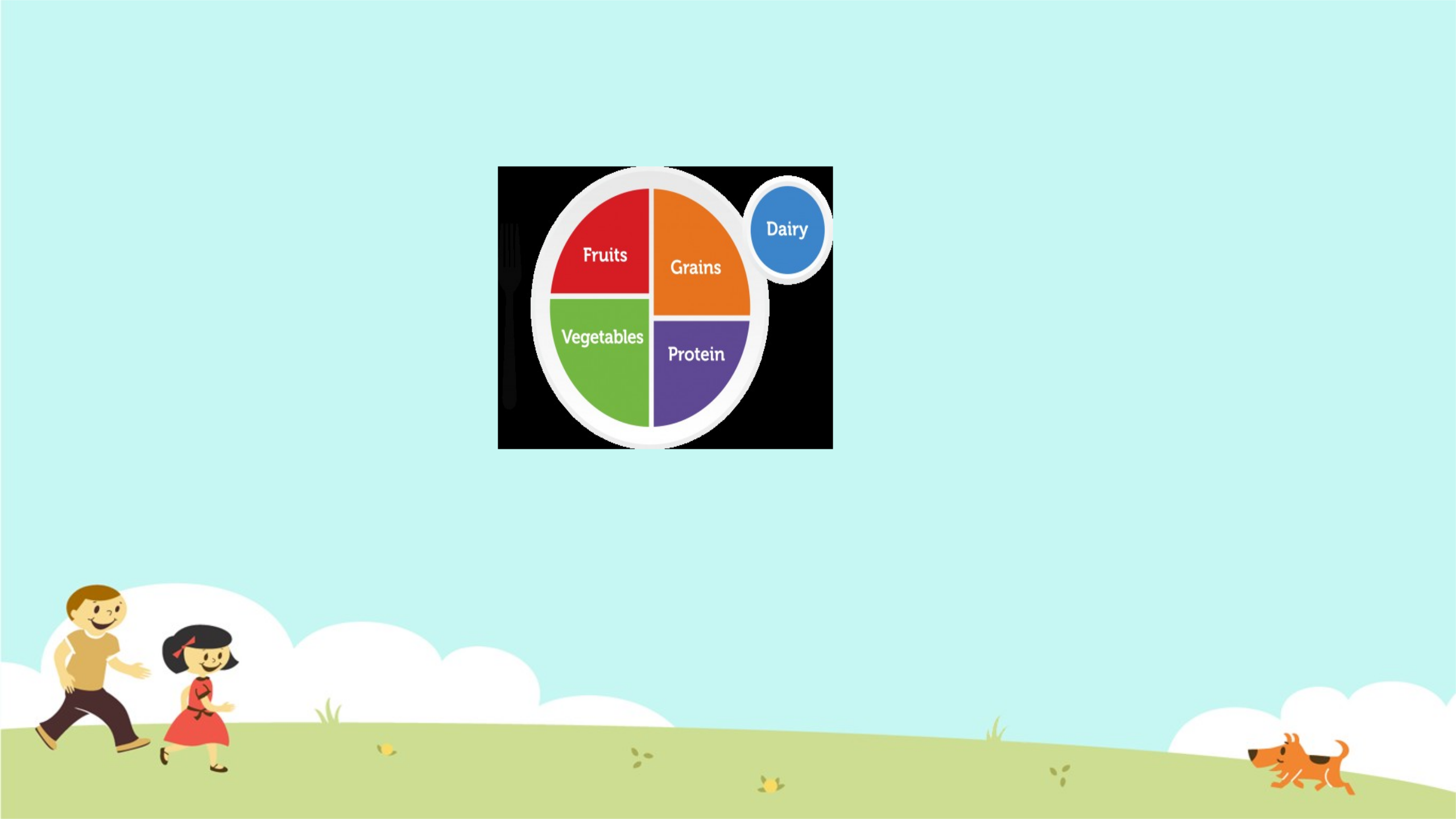
Fruits
•1 cup of fruit (fresh,
canned or dried)
•1 cup of juice
Grains
•1 slice of bread
•½ cup of cooked rice,
pasta, or cereal
Vegetables
•1-1 ½ cups of raw or
cooked vegetables
•2 cups of leafy greens Protein
•1 oz of meat
•¼ cup cooked beans,
peas, or lentils
•1 egg
Dairy
•1 cup of low-fat milk
•1 cup of yogurt
(U.S. Department of Agriculture, 2023)

Obesity
Health Problems Solutions
Lead to serious health problems/complications
•Type 2 Diabetes
•Kidney Problems
•Sleep Apnea
•Asthma
•Childhood obesity
Achievement Problems
•Poor working Memory
•Low math and reading scores
Social/Emotional Problems
•Lonely, depressed, and anxious
•Less self-control
•Less likeable by peers
Healthier Diet
•Increase intake in nutrient-rich foods (i.e., fruits
and veggies)
•Eat in moderation with appropriate portion size
Exercise
•Extend recess time
•Walk
•Run
•Incorporate a variety of activities
(Bergin & Bergin, 2018)

Eating Disorders
Warning Signs/Disorders
Treatments
•Can occur as early as 4 to 5 years old
•At this age children are referred as
picky/selective eaters and results in:
-Excessive weight gain
-Delayed development
-Anorexia/Underweight
-Selective/picky eating
-Nutrient deficiency
-Bulimia Nervosa
•Requires early intervention with
appropriate treatment plan
-Change in diet
-Incorporate variety of fruit and
vegetables
-Therapy
-Some cases may require hospitalization
(Sirob et al,. 2019)

Physical Activity
Active participation in any indoor or outdoor activities where
activities can be in the form of
-Structured physical play activities at home and at school
-Unstructured physical play activities at home and at school
Children should be physically active 50% of the time daily
Physical activities can range in a wide variety of activities
Includes the gross and fine motor skills
Physical activities should be vigorous and implemented into the
lessons daily
(Bergin & Bergin, 2018)

Exercising
Nature Walk Hula Hoop
Running around
the playground
Extended Recess PE
Riding Bike Dancing
Skipping
Physical Activities
Parachute
Outdoor Activities Indoor Activities
Sleep
Some normal sleep patterns and behaviors that typically occur in children ages 3 to 5 years
Lack of Adequate Sleep
Sleep Solutions/Benefits
•Poor sleep habits persists into
extended periods of life
•Feeling tired during the day
•Safety problems that cause injuries
•Poor functioning and academic
performance in school
•Poor impulse control or lack of self-
control
•Induces sleep problems/disorders
-Sleep apnea (shortness of breath,
snoring, irritability, gasping for air)
-Nightmares
-Talking and walking in sleep
-Refusal to sleep alone
(Wu et al., 2022, p.116).
•Children ages 3-5 need on average a
total of 9-13 hours of sleep per day
•Alter bedtime into increments of 30
minutes
•Maintain healthy sleep patterns
•Improves:
-Brain functions
-Physical development
-Working memory
-Emotion regulation
(Wu et al., 2022, p. 116).

Biblical Integration
Do you not know that your body is a temple of the Holy Spirit within you, who is in whom you have received from
God? You are not your own, you were bought at a price. Therefore, honor God with your bodies (KingJamesVersion,
1979/2023, 1 Corinthians 6:19-20).
As Christians we are to:
•Take care of our body and we can do this by eating healthy and exercising frequently
•Make healthy choices in life and refrain from using things that could potentially harm our bodies (i.e., body art such
as tattoos, piercings, drugs, tobacco products and alcohol)
•Be an exemplary role model
(KingJamesVersion, 1979/2023, 1 Corinthians 6:19-20)

Bergin, C. & Bergin, D. (2018).Child&adolescentdevelopmentinyourclassroom(3rd ed.). Cengage Learning.
Center for Disease Control and Prevention. (2023). Milestones.CenterforDiseaseControlandPrevention[CDC]. Retrieved May 26, 2023, from
https://www.cdc.gov/ncbddd/actearly/milestones/milstones-4yr.html
King James Bible. (2023). KingJamesBibleOnline.https://www.kingjamesbibleonline.org/
(Original work published 1769).
Meredith, M. (2019). Compassionate pedagogy in practice. [Image]. Retrieved May 26, 2023, from
https://marymered.files.wordpress.com/2019/02/screen-shot-2019-02-01-at-15.47.56.png
Sirob, K., Qazaryan, Y. & Karim, K. (2019). The clinical link of preschoolers’ picky eating behavior with their growth, development,
nutritional status, and physical activity in Iraq/Kurdistan region. NeurologyandNeuroscienceReports, 2, 1-8.
doi: 10.15761/NNR.1000115
U.S. Department of Agriculture. (2023). My Plate.UnitedStatesDepartmentofAgriculture[USDA].Retrieved May 25, 2023, from
https://www.myplate.gov/life-stages/preschoolers
Wu. L., Hattangadi, N., Stoneman, C., Maguire, J., Birken, C., Stremler, R., Constantin, E., & Charach, A. (2022). Sleep duration and
internalizing symptoms in children. JournaloftheCanadianAcademyofChildandAdolescentPsychiatry, 31(3), 115-121.
https://www.ncbi.nlm.nih.gov/pmc/articles/PMC92753369/pdf/ccap_p0115.pdf
References

