


READING STRATEGY PRESENTATION AND REFLECTION
Part 1 - Reading Strategy Research
Reading Strategy
Shared Reading
Journal Article 1
Title of Article: Using Content Area Literacy Strategies during Shared
Reading to Increase Comprehension of High School Students with
Moderate Intellectual Disability on Adapted Science Text
APA Reference:
Roberts, C. A., Tandy, J., Kim, S., & Meyer, N. (2019). Using Content
Area Literacy Strategies during Shared Reading to Increase
Comprehension of High School Students with Moderate
Intellectual Disability on Adapted Science Text. Education and
Training in Autism and Developmental Disabilities, 54(2),
147-160.
https://go.openathens.net/redirector/liberty.edu?url=https://www.p
roquest.com/scholarly-journals/using-content-area-literacy-strate
gies-during/docview/2323049802/se-2
Journal Article 2
Title of Article: Embedded Shared Reading to Increase Literacy in an
Inclusive English/Language Arts Class: Preliminary Efficacy and
Ecological Validity
APA Reference:
Ruppar, A. L., Afacan, K., Yang, Y.-L. (Ray), & Pickett, K. J. (2017).
Embedded Shared Reading to Increase Literacy in an Inclusive
English/Language Arts Class: Preliminary Efficacy and
Ecological Validity. Education and Training in Autism and
Developmental Disabilities, 52(1), 51–63.
https://www.jstor.org/stable/26420375
Reading Strategy Research Reflection
Explanation and Support
The reading strategy, shared reading, is “the practice of reading collaboratively with
students” (Fisher, Frey, 2020, pg. 53). A key difference between shared reading compared to
other reading strategies is the students have access to the text while they are being read to
(Fisher, Frey, 2020, pg. 53). Additionally, there are intentional times created to discuss what the
text is about, building on the skill of comprehension with students. Students being provided the
text can increase their involvement, as it gives them a guide to follow. This strategy is
interactive, it keeps the student engaged in the reading. This particular strategy is known to
improve literacy, comprehension, and engagement skills (Ruppar, Afacan, Yang, Pickett, 2017,
pg. 53).
Integration in Self-Contained Mathematics Content Area
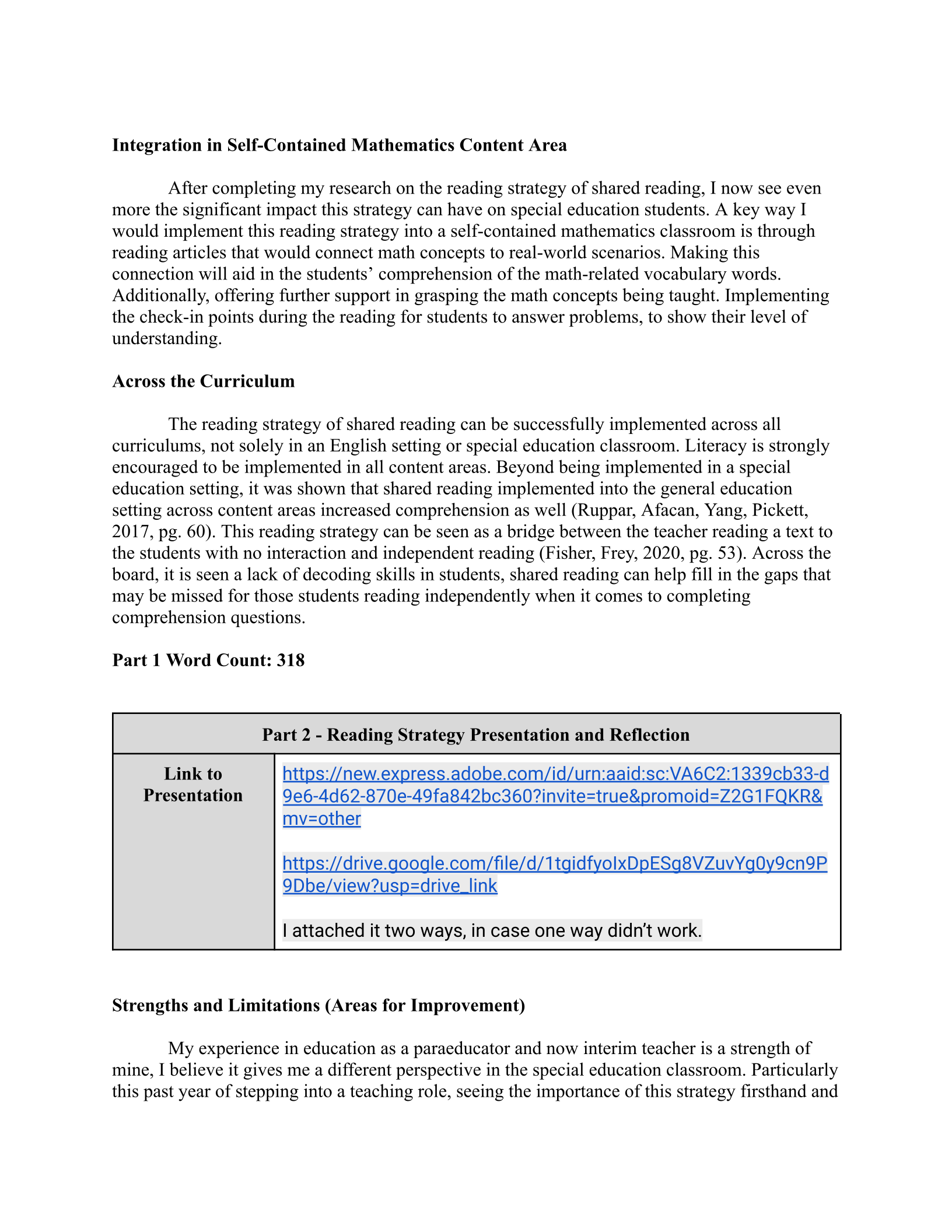
After completing my research on the reading strategy of shared reading, I now see even
more the significant impact this strategy can have on special education students. A key way I
would implement this reading strategy into a self-contained mathematics classroom is through
reading articles that would connect math concepts to real-world scenarios. Making this
connection will aid in the students’ comprehension of the math-related vocabulary words.
Additionally, offering further support in grasping the math concepts being taught. Implementing
the check-in points during the reading for students to answer problems, to show their level of
understanding.
Across the Curriculum
The reading strategy of shared reading can be successfully implemented across all
curriculums, not solely in an English setting or special education classroom. Literacy is strongly
encouraged to be implemented in all content areas. Beyond being implemented in a special
education setting, it was shown that shared reading implemented into the general education
setting across content areas increased comprehension as well (Ruppar, Afacan, Yang, Pickett,
2017, pg. 60). This reading strategy can be seen as a bridge between the teacher reading a text to
the students with no interaction and independent reading (Fisher, Frey, 2020, pg. 53). Across the
board, it is seen a lack of decoding skills in students, shared reading can help fill in the gaps that
may be missed for those students reading independently when it comes to completing
comprehension questions.
Part 1 Word Count: 318
Part 2 - Reading Strategy Presentation and Reflection
Link to
Presentation
https://new.express.adobe.com/id/urn:aaid:sc:VA6C2:1339cb33-d
9e6-4d62-870e-49fa842bc360?invite=true&promoid=Z2G1FQKR&
mv=other
https://drive.google.com/file/d/1tgidfyoIxDpESg8VZuvYg0y9cn9P
9Dbe/view?usp=drive_link
I attached it two ways, in case one way didn’t work.
Strengths and Limitations (Areas for Improvement)
My experience in education as a paraeducator and now interim teacher is a strength of
mine, I believe it gives me a different perspective in the special education classroom. Particularly
this past year of stepping into a teaching role, seeing the importance of this strategy firsthand and
the success it can produce in students. In the area of presenting a professional presentation, this
was my first one. I have been to in-person and virtual professional developments, often virtual
ones can easily lose the audience’s attention. Considering this, I feel that I could have
implemented different things to further grasp the audience's attention.
Insight Gained
Through researching the reading strategy of shared reading and then completing a
professional presentation on the topic I gained a lot of insight. I now have a different perspective
on professional development after seeing the behind-the-scenes work that goes into putting one
together. While I have implemented the reading strategy of shared reading in my classroom, I
now feel like I have a better understanding of the strategy and ways to effectively implement it.
Additionally, I feel more confident in accurately utilizing this reading strategy to best support my
students now and in the future.
Changes
If I am tasked with the opportunity to create another professional presentation, something
I would do differently is take more time in creating the presentation to show additional avenues
to implement the strategy presented. Also implementing more outside sources that the audience
can further look into concepts being presented to them.
Part 2 Word Count: 248

References
Fisher, D., & Frey, N. (2020). Improving adolescent literacy: Content area strategies at work.
(5th ed.). Boston, MA: Pearson Education. ISBN: 9780135185865
Roberts, C. A., Tandy, J., Kim, S., & Meyer, N. (2019). Using Content Area Literacy Strategies
during Shared Reading to Increase Comprehension of High School Students with
Moderate Intellectual Disability on Adapted Science Text. Education and Training in
Autism and Developmental Disabilities, 54(2), 147-160.
https://go.openathens.net/redirector/liberty.edu?url=https://www.proquest.com/scholarly-j
ournals/using-content-area-literacy-strategies-during/docview/2323049802/se-2
Ruppar, A. L., Afacan, K., Yang, Y.-L. (Ray), & Pickett, K. J. (2017). Embedded Shared Reading
to Increase Literacy in an Inclusive English/Language Arts Class: Preliminary Efficacy
and Ecological Validity. Education and Training in Autism and Developmental
Disabilities, 52(1), 51–63. https://www.jstor.org/stable/26420375
Powered by TCPDF (www.tcpdf.org)

