COUC 546
Basic Case Summary
Identifying Information
Date of initial assessment: 8/10/2023
Client’s Name: Tiffany Smith
Employment Status: Marketing Professional
School Status: Bachelor’s degree
Age: 25
Gender: Female
Race/ Ethnicity: Caucasian
Marital Status: Single
Reason for Referral/Presenting Concern
Tiffany, a 25-year-old Caucasian female, sought counseling due to the escalating distress
caused by her struggles with Obsessive-Compulsive Disorder (OCD). She expressed significant
anxiety and emotional anguish stemming from intrusive thoughts that invade her mind, leading
to the development of distressing rituals aimed at alleviating her fears. These obsessions and
compulsions have been intensifying over time, impairing her daily life and causing disruptions in
her relationships and employment. Tiffany's concern, as she articulated it, centers around her
inability to control these distressing thoughts, leading to compulsive behaviors she feels she must
perform to prevent potential disasters or harm to herself and her loved ones.
She shared, "I'm constantly trapped in these terrifying thoughts, and I have to do these
rituals to feel safe. It's exhausting, and I'm starting to feel like I'll never escape this cycle."
Tiffany described how these obsessions and compulsions were interfering with her ability to
function normally in various aspects of her life, causing her distress, guilt, and a sense of
helplessness.
Tiffany's presentation clearly underscores the distressing impact of her OCD symptoms
on her emotional well-being, daily functioning, and relationships. Her description aligns with the
Page 1 of 9
COUC 546
core features of OCD, and her urgency in seeking help indicates the severity of her condition. It
is essential to address these symptoms to alleviate her distress, improve her overall functioning,
and empower her to regain control over her life.
History (approximately 2 pages)
Family and Home/Religious Background
Tiffany grew up in a supportive, middle-class family. Her parents, both successful
professionals, provided her with a stable home environment. There was no history of mental
health issues in her immediate family. While they were not particularly religious, her family
respected various spiritual beliefs. She was the youngest of 3 siblings and none of them have
reported mental health diagnoses.
Tiffany's relationship with her parents has generally been positive, but she has
occasionally struggled with feeling understood, especially when it comes to her mental health
challenges. Her parents, being from a generation less familiar with mental health issues, have
sometimes found it difficult to grasp the intensity of her OCD symptoms.
Educational History
Tiffany excelled academically, graduating from a reputable university with a degree in
marketing. She has always been intellectually curious and actively engaged in her studies.
However, her OCD symptoms began to escalate during her college years, which impacted her
concentration and overall educational experience.
Mental Health
Tiffany's struggle with OCD became noticeable during her late teenage years. She
experienced intermittent episodes of anxiety, which initially went unrecognized as symptoms of
OCD. These manifestations were not addressed promptly, leading to increased severity over
Page 2 of 9

COUC 546
time. She experiences recurrent, distressing, and intrusive thoughts that give rise to severe
anxiety. These thoughts often revolve around themes of potential harm to herself or her loved
ones, contamination fears, and concerns about order and symmetry. Tiffany's inability to control
these intrusive thoughts has led her to develop ritualistic behaviors aimed at reducing the anxiety
and discomfort caused by the obsessions. Tiffany frequently engages in time-consuming and
repetitive compulsions, such as washing her hands excessively to prevent contamination,
arranging objects symmetrically to avert potential harm, and mentally repeating specific phrases
to ward off imagined disasters. These compulsive behaviors provide temporary relief from the
distress triggered by her obsessive thoughts, but they quickly return, leading to a cycle of anxiety
and compulsions that affects her daily life. She reports feelings of intense anxiety, frustration,
and a sense of being overwhelmed by the constant need to perform these rituals. She often
experiences guilt and embarrassment due to the irrational nature of her compulsions, especially
when they occur in public settings. These emotions contribute to a diminished sense of self-
esteem and hinder her ability to engage fully in social activities, maintaining relationships, and
pursuing professional goals. Tiffany recognizes the impact of her OCD on her well-being and is
determined to seek help. She acknowledges that her mental health struggles are affecting her
quality of life and is motivated to find effective strategies to manage her symptoms, reduce the
distress, and regain control over her thoughts and behaviors.
Client’s Physical Health
Physically, Tiffany is in good health. She maintains a regular exercise routine and
follows a balanced diet. However, the toll of constant anxiety and ritualistic behaviors have taken
a toll on her overall energy levels.
Occupational History
Page 3 of 9
COUC 546
Tiffany currently works as at a marketing firm. While she is passionate about her work,
her OCD symptoms have occasionally affected her performance. The need to repeatedly check
her work for mistakes and the time-consuming nature of her compulsions have sometimes
hindered her productivity.
Sexual Adjustment
Tiffany identifies as heterosexual and has had a few short-lived relationships in the past.
However, her OCD symptoms have created significant barriers in her ability to establish and
maintain romantic relationships. She often fears that her condition will drive potential partners
away.
Substance Use History
She reports no significant alcohol or drug use in her past. Her substance use can be
characterized as non-existent, with no patterns of use or reported instances of alcohol or drug
consumption. Throughout our discussions, Tiffany has consistently conveyed her aversion to
substances, stating that she has never been tempted to experiment with drugs or alcohol. Her
primary focus has been on her academic pursuits, career goals, and managing her obsessive-
compulsive disorder (OCD) symptoms. She expressed concern that substance use might
exacerbate her anxiety or interfere with her ability to manage her OCD effectively.
Spiritual Assessment
Despite not having a strong religious affiliation, spirituality plays a subtle yet important
role in Tiffany's life. She believes in the existence of something greater than herself and often
finds solace in nature, art, and philosophical contemplation. Her spiritual outlook serves as a
coping mechanism during times of distress, offering a source of comfort and hope. Tiffany does
Page 4 of 9
COUC 546
not actively practice a specific religion but believes in the importance of spirituality in finding
purpose and meaning in life.
Cultural/ Social Justice Factors
Tiffany is aware of cultural diversity and social justice issues, and she is actively
involved in volunteer work aimed at addressing mental health disparities in underserved
communities.
Barriers to Treatment/Success
Tiffany has shown a strong desire to overcome her OCD symptoms. However, financial
constraints have been a barrier to consistent treatment. Additionally, stigma surrounding mental
health issues in her workplace has made her hesitant to disclose her condition to her colleagues.
Other Pertinent Data (if relevant)
Tiffany is a highly motivated individual with a strong support network of friends who are
aware of her struggles with OCD. She is open to therapy and is interested in exploring cognitive-
behavioral interventions to manage her symptoms.
Mental Status Exam (approximately 1 page)
Tiffany, a 25-year-old Caucasian female, presents with a calm demeanor upon entering
the session. She appears well-groomed and appropriately dressed. Her posture suggests a level of
nervousness, with slightly fidgety movements. Tiffany maintains a polite and respectful
approach during the evaluation. She appears moderately cooperative and willing to engage in
conversation. Eye contact is somewhat intermittent, possibly indicating a level of discomfort.
Tiffany presents as a young woman dressed in casual attire. Her overall appearance reflects basic
grooming and hygiene standards, indicating that she pays attention to self-care. Tiffany displays
a cautious yet cooperative demeanor. She answers questions thoughtfully, showing a willingness
Page 5 of 9
COUC 546
to participate in the evaluation. Her interpersonal skills appear intact, though she occasionally
exhibits signs of anxiety through fidgeting and moments of hesitation. Tiffany's speech is clear,
coherent, and at a moderate pace. There are no signs of pressured speech or noticeable speech
abnormalities. Tiffany's eye contact is variable, at times meeting the evaluator's gaze, but
occasionally shifting her focus away, which could be indicative of underlying anxiety or
discomfort. Tiffany demonstrates adequate expressive language skills, able to articulate her
thoughts and emotions.
She is able to provide detailed descriptions when discussing her experiences and
symptoms. Tiffany displays no apparent difficulties in understanding or following the evaluator's
questions and instructions. Tiffany is oriented to time, place, and person. She accurately
identifies the current date, location, and her own identity. Tiffany is fully alert and attentive
throughout the evaluation, demonstrating no signs of drowsiness or diminished awareness.
Tiffany's responses are generally coherent, although there are moments of heightened anxiety
that may lead to minor interruptions in her train of thought. Tiffany appears to have reasonable
concentration and attention abilities. She can engage in conversation without significant
difficulties. Tiffany's thought processes are logical, and there are no obvious signs of thought
disorder, tangentiality, or loose associations. There is no evidence of hallucinations or delusions
during the evaluation. Tiffany does not report any perceptual disturbances. Tiffany displays a
reasonable level of insight into her condition. She acknowledges the impact of her OCD
symptoms on her daily life and recognizes the need for treatment. Tiffany's intellectual
functioning appears within the normal range. She communicates clearly and demonstrates an
understanding of complex topics. Tiffany's mood is predominantly anxious. She expresses
concerns about her intrusive thoughts and the distress they cause. Her mood is consistent with
Page 6 of 9
COUC 546
anxiety-related symptoms. Tiffany's affect is somewhat subdued, reflecting her underlying
anxiety. There are moments when she appears more animated, particularly when discussing the
impact of her OCD symptoms. Tiffany does not express any current suicidal or homicidal
thoughts or intentions. There are no indications of imminent risk to herself or others during the
evaluation.
This initial mental status exam suggests that Tiffany is experiencing significant anxiety,
which is likely related to her OCD symptoms. Her willingness to participate and her insight into
her condition provide a strong foundation for further assessment and treatment planning.
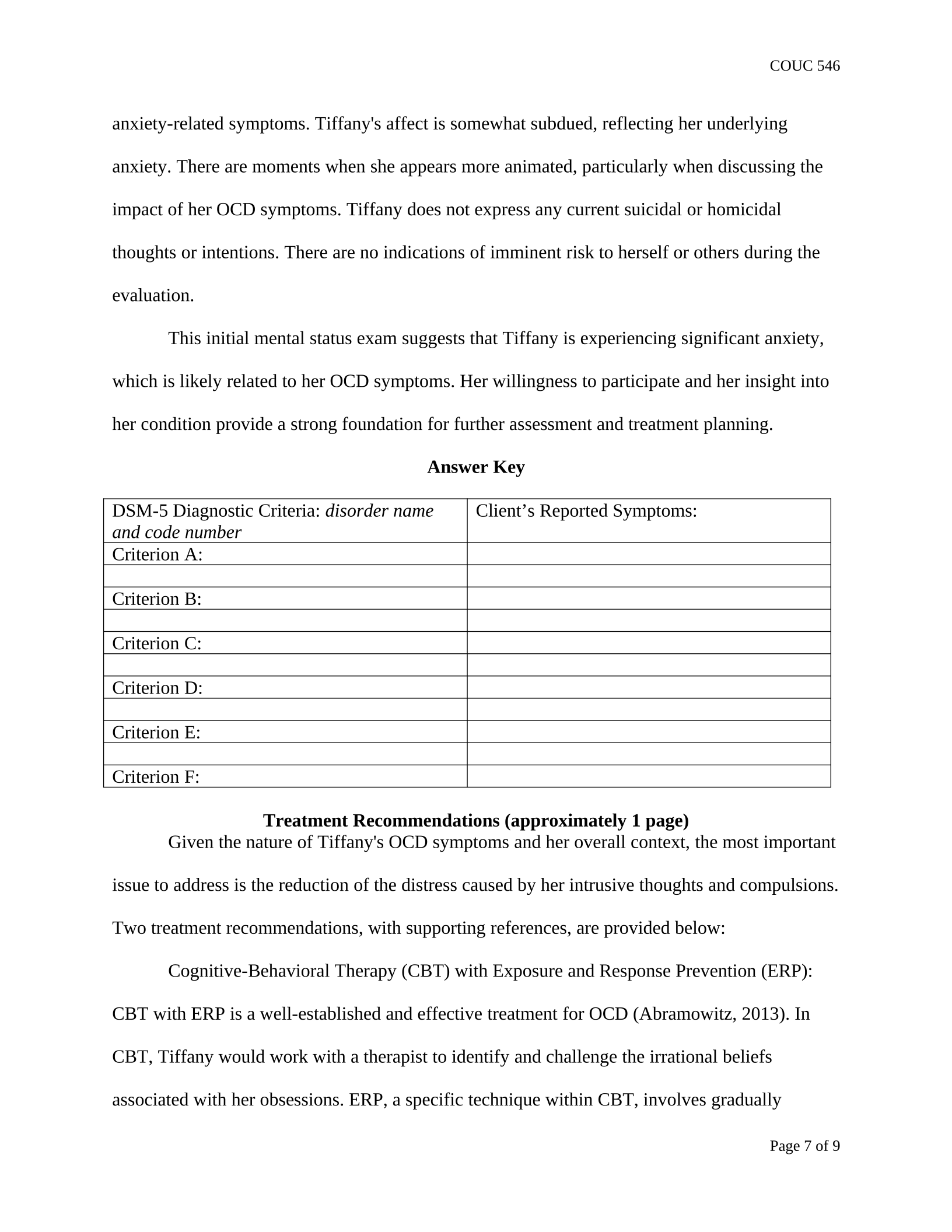
Answer Key
DSM-5 Diagnostic Criteria: disorder name
and code number
Client’s Reported Symptoms:
Criterion A:
Criterion B:
Criterion C:
Criterion D:
Criterion E:
Criterion F:
Treatment Recommendations (approximately 1 page)
Given the nature of Tiffany's OCD symptoms and her overall context, the most important
issue to address is the reduction of the distress caused by her intrusive thoughts and compulsions.
Two treatment recommendations, with supporting references, are provided below:
Cognitive-Behavioral Therapy (CBT) with Exposure and Response Prevention (ERP):
CBT with ERP is a well-established and effective treatment for OCD (Abramowitz, 2013). In
CBT, Tiffany would work with a therapist to identify and challenge the irrational beliefs
associated with her obsessions. ERP, a specific technique within CBT, involves gradually
Page 7 of 9
COUC 546
exposing Tiffany to her distressing thoughts without engaging in the compulsive behaviors that
usually follow (Foa et al., 2010). This approach helps break the cycle of anxiety and compulsion,
allowing her to learn that the anxiety will decrease over time without the need for ritualistic
behaviors.
Mindfulness-Based Cognitive Therapy (MBCT):
MBCT has shown promise in reducing symptoms of OCD (Hertenstein et al., 2012).
MBCT combines traditional CBT techniques with mindfulness strategies, helping clients become
more aware of their thoughts and feelings without judgment. It can be particularly helpful for
clients like Tiffany, as it provides tools to manage the distressing thoughts and emotions
associated with OCD. Both CBT with ERP and MBCT have empirical support in treating OCD
symptoms. CBT with ERP targets the core mechanisms that maintain OCD, while MBCT offers
a holistic approach that enhances emotional regulation and reduces reactivity to distressing
thoughts.
Given the severity of Tiffany's symptoms and the impact on her daily life, a referral for a
medication evaluation is warranted. SSRIs (Selective Serotonin Reuptake Inhibitors) are often
considered the first-line pharmacological treatment for OCD (Koran et al., 2007). SSRIs can help
reduce the intensity and frequency of intrusive thoughts and may also alleviate anxiety. A
collaborative approach between therapy and medication may offer Tiffany the best chance for
significant symptom reduction and improved functioning.
This Case Presentation Paper Assignment requires a minimum of 4 resources (the DSM-5-TR
included as one of the four) from peer reviewed journals that are less than 10 years old. You may
use textbooks, but they will not count towards the required resources. You may not use web site
or other non-professional literature.
Page 8 of 9