


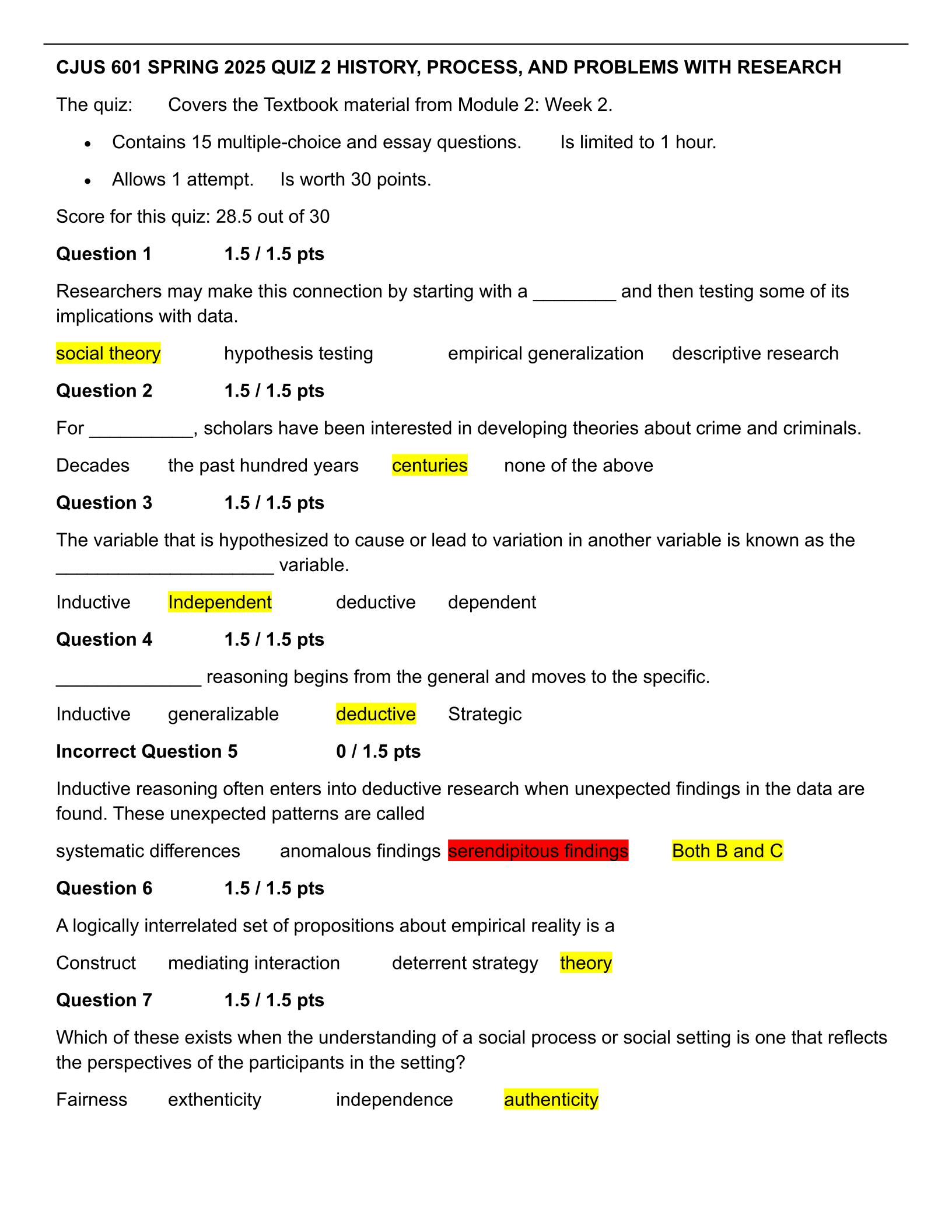
CJUS 601 SPRING 2025 QUIZ 2 HISTORY, PROCESS, AND PROBLEMS WITH RESEARCH
The quiz: Covers the Textbook material from Module 2: Week 2.
•Contains 15 multiple-choice and essay questions. Is limited to 1 hour.
• Allows 1 attempt. Is worth 30 points.
Score for this quiz: 28.5 out of 30
Question 1 1.5 / 1.5 pts
Researchers may make this connection by starting with a ________ and then testing some of its
implications with data.
social theory hypothesis testing empirical generalization descriptive research
Question 2 1.5 / 1.5 pts
For __________, scholars have been interested in developing theories about crime and criminals.
Decades the past hundred years centuries none of the above
Question 3 1.5 / 1.5 pts
The variable that is hypothesized to cause or lead to variation in another variable is known as the
_____________________ variable.
Inductive Independent deductive dependent
Question 4 1.5 / 1.5 pts
______________ reasoning begins from the general and moves to the specific.
Inductive generalizable deductive Strategic
Incorrect Question 5 0 / 1.5 pts
Inductive reasoning often enters into deductive research when unexpected findings in the data are
found. These unexpected patterns are called
systematic differences anomalous findings serendipitous findings Both B and C
Question 6 1.5 / 1.5 pts
A logically interrelated set of propositions about empirical reality is a
Construct mediating interaction deterrent strategy theory
Question 7 1.5 / 1.5 pts
Which of these exists when the understanding of a social process or social setting is one that reflects
the perspectives of the participants in the setting?
Fairness exthenticity independence authenticity
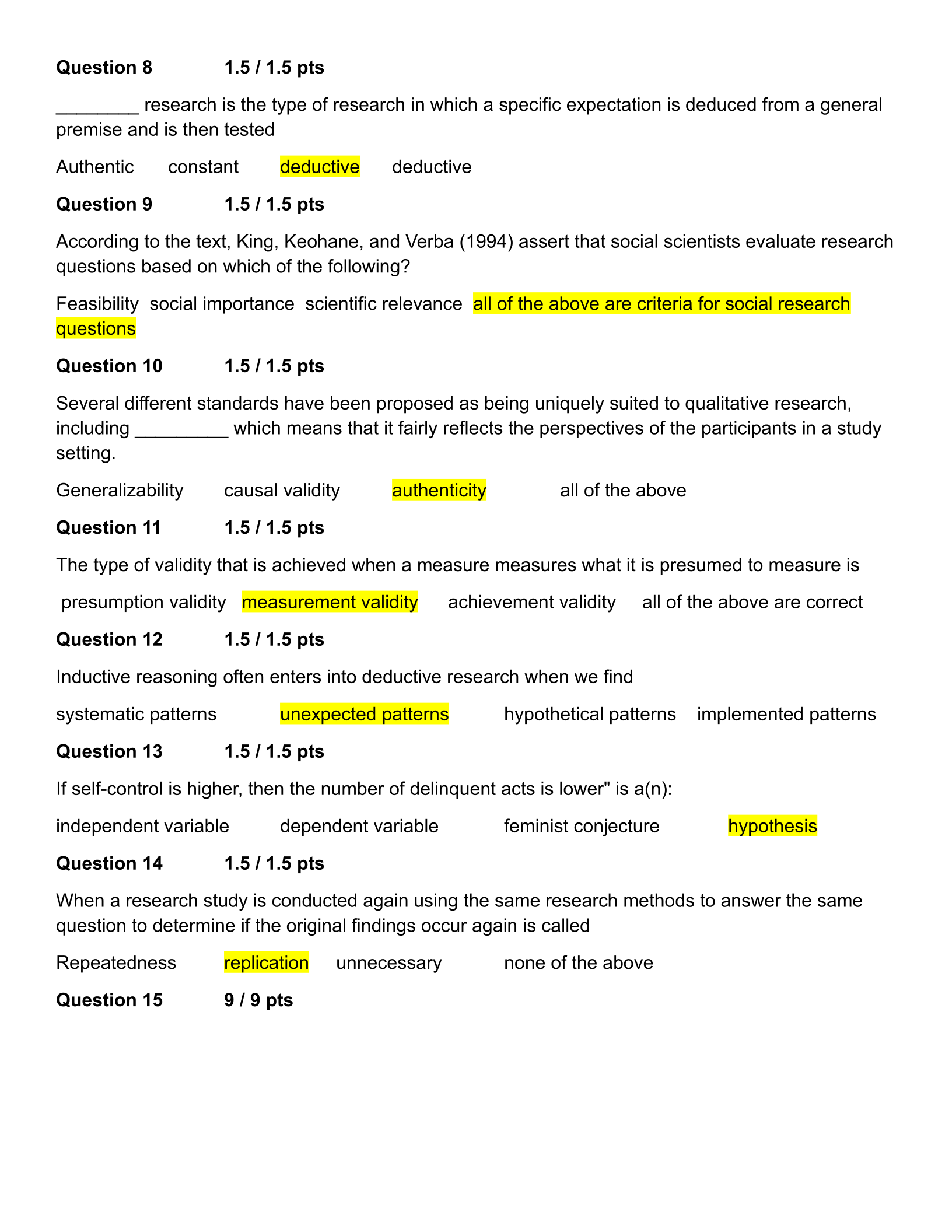
Question 8 1.5 / 1.5 pts
________ research is the type of research in which a specific expectation is deduced from a general
premise and is then tested
Authentic constant deductive deductive
Question 9 1.5 / 1.5 pts
According to the text, King, Keohane, and Verba (1994) assert that social scientists evaluate research
questions based on which of the following?
Feasibility social importance scientific relevance all of the above are criteria for social research
questions
Question 10 1.5 / 1.5 pts
Several different standards have been proposed as being uniquely suited to qualitative research,
including _________ which means that it fairly reflects the perspectives of the participants in a study
setting.
Generalizability causal validity authenticity all of the above
Question 11 1.5 / 1.5 pts
The type of validity that is achieved when a measure measures what it is presumed to measure is
presumption validity measurement validity achievement validity all of the above are correct
Question 12 1.5 / 1.5 pts
Inductive reasoning often enters into deductive research when we find
systematic patterns unexpected patterns hypothetical patterns implemented patterns
Question 13 1.5 / 1.5 pts
If self-control is higher, then the number of delinquent acts is lower" is a(n):
independent variable dependent variable feminist conjecture hypothesis
Question 14 1.5 / 1.5 pts
When a research study is conducted again using the same research methods to answer the same
question to determine if the original findings occur again is called
Repeatedness replication unnecessary none of the above
Question 15 9 / 9 pts
Suppose you are interested in the effect of technology on policing. Develop a research question
based on this interest and then evaluate your question based on the three criteria for research
question evaluation discussed in your textbook.
Your Answer:
:Research Question
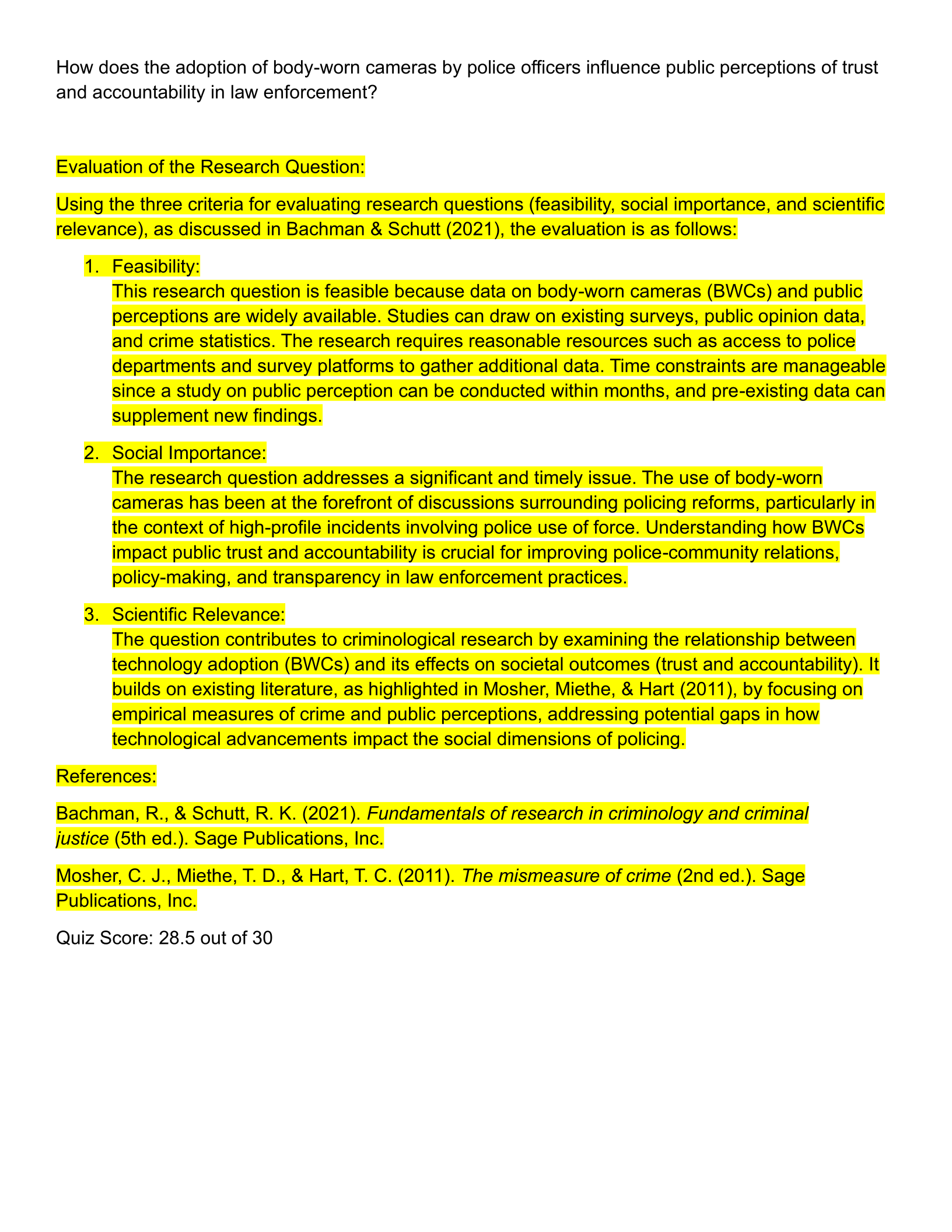
How does the adoption of body-worn cameras by police officers influence public perceptions of trust
and accountability in law enforcement?
Evaluation of the Research Question:
Using the three criteria for evaluating research questions (feasibility, social importance, and scientific
relevance), as discussed in Bachman & Schutt (2021), the evaluation is as follows:
1. Feasibility:
This research question is feasible because data on body-worn cameras (BWCs) and public
perceptions are widely available. Studies can draw on existing surveys, public opinion data,
and crime statistics. The research requires reasonable resources such as access to police
departments and survey platforms to gather additional data. Time constraints are manageable
since a study on public perception can be conducted within months, and pre-existing data can
supplement new findings.
2. Social Importance:
The research question addresses a significant and timely issue. The use of body-worn
cameras has been at the forefront of discussions surrounding policing reforms, particularly in
the context of high-profile incidents involving police use of force. Understanding how BWCs
impact public trust and accountability is crucial for improving police-community relations,
policy-making, and transparency in law enforcement practices.
3. Scientific Relevance:
The question contributes to criminological research by examining the relationship between
technology adoption (BWCs) and its effects on societal outcomes (trust and accountability). It
builds on existing literature, as highlighted in Mosher, Miethe, & Hart (2011), by focusing on
empirical measures of crime and public perceptions, addressing potential gaps in how
technological advancements impact the social dimensions of policing.
References:
Bachman, R., & Schutt, R. K. (2021). Fundamentals of research in criminology and criminal
justice (5th ed.). Sage Publications, Inc.
Mosher, C. J., Miethe, T. D., & Hart, T. C. (2011). The mismeasure of crime (2nd ed.). Sage
Publications, Inc.
Quiz Score: 28.5 out of 30
Powered by TCPDF (www.tcpdf.org)

