


ILP – TESLA, INC 2
Table of Contents
Abstract............................................................................................................................................4
Integrative Learning Project: Tesla, Inc..........................................................................................5
Overview..........................................................................................................................................5
Mission........................................................................................................................................6
Customers....................................................................................................................................7
Value............................................................................................................................................9
Role of Christianity....................................................................................................................10
Integration of Chapter Concepts....................................................................................................11
The Balanced Scorecard............................................................................................................11
Description.............................................................................................................................11
Benefits..................................................................................................................................12
Implementation......................................................................................................................13
Biblical Integration................................................................................................................13
Customer Value.........................................................................................................................14
Description.............................................................................................................................14
Benefits..................................................................................................................................14
Implementation......................................................................................................................15
Biblical Integration................................................................................................................16
Benchmarking............................................................................................................................16
Description.............................................................................................................................16
Benefits..................................................................................................................................17
Implementation......................................................................................................................18
Biblical Integration................................................................................................................19
Lean Manufacturing...................................................................................................................19
Description.............................................................................................................................19
Benefits..................................................................................................................................20
Implementation......................................................................................................................21
Biblical Integration................................................................................................................22
Demand Planning.......................................................................................................................22
Description.............................................................................................................................22
Benefits..................................................................................................................................23
Implementation......................................................................................................................24
Biblical Integration................................................................................................................25

ILP – TESLA, INC 3
Total Quality Management........................................................................................................25
Description.............................................................................................................................25
Benefits..................................................................................................................................26
Implementation......................................................................................................................27
Biblical Integration................................................................................................................28
Capacity Planning......................................................................................................................28
Description.............................................................................................................................28
Benefits..................................................................................................................................29
Implementation......................................................................................................................30
Biblical Integration................................................................................................................30
Enterprise Resource Planning....................................................................................................31
Description.............................................................................................................................31
Benefits..................................................................................................................................31
Implementation......................................................................................................................32
Biblical Integration................................................................................................................33
Conclusion.....................................................................................................................................34
References......................................................................................................................................35
Appendix A....................................................................................................................................44
Appendix B....................................................................................................................................44
Appendix C....................................................................................................................................45
Appendix D....................................................................................................................................46
Appendix E....................................................................................................................................47
Appendix F....................................................................................................................................48
Appendix G....................................................................................................................................50
Appendix H....................................................................................................................................52

ILP – TESLA, INC 4
Abstract
Founded in 2003, Tesla is a prominent American automotive and clean energy
manufacturer headquartered in Austin, Texas. Renowned for its expertise in crafting electric
vehicles, clean energy innovations, and battery storage solutions, Tesla caters to diverse
consumers worldwide. Since the company's inception, the founders have been driven by a
mission to revolutionize the automotive sector, redirecting focus from conventional gas-powered
vehicles to sustainable alternatives and shaping a future where eco-conscious consumers
embrace sustainable mobility. This paper analyzes eight key operational management concepts
applicable to Tesla: the balanced scorecard, customer value, benchmarking, lean manufacturing,
demand planning, total quality management, capacity planning, and enterprise resource planning.
Each topic will be thoroughly examined by looking at its core definition, benefits, and
implementation. Additionally, this paper will explore how each topic has potential advantages
for Tesla, should the company choose to adopt them. Lastly, the paper will examine the
alignment of these principles to various Biblical teachings.
Keywords: Tesla, electric vehicles, operation management, customer value, total quality,
lean manufacturing, the balanced scorecard, benchmarking

ILP – TESLA, INC 5
Integrative Learning Project: Tesla, Inc
As a leading American automotive and clean energy manufacturer based in Austin,
Texas, Tesla excels in designing, producing, and delivering electric vehicles, clean energy
solutions, and battery storage to various consumers across the globe. Tesla holds a significant
position in the U.S. market, demonstrated by its dominance in electric vehicle sales, holding an
impressive 65.4% market share in 2023 (McLain, 2024). By 2020, Tesla had become the most
valuable automaker worldwide, underscoring its unrivaled success and influence in the
automotive industry (Stevenson, 2020). Tesla's founders sought to transform the automotive
industry by steering it from reliance on traditional gas-powered cars towards a future where
consumers embrace sustainable transportation. It is clear from Tesla's remarkable achievements
that the company has significantly changed the automotive sector by popularizing electric
vehicles and inspiring other manufacturers to invest heavily in sustainable technology. This
paper will examine Tesla's mission, customers, and company values to understand the
organization's setting. In addition, this research paper will examine operations management
concepts most applicable to Tesla, such as customer value, lean manufacturing, demand
planning, and more. Each operations management concept discussed will cover its definition,
benefits, implementation, and how it can be applied to Tesla, along with how the key concepts
relate to Biblical teachings and messages.
Overview
Tesla, Inc. is an American electric vehicle and clean energy innovator and manufacturer
founded by Elon Musk, Martin Eberhard, Marc Tarpenning, JB Straubel, and Ian Wright
(Thompson et al., 2023). Established in 2003, Tesla is named after physicist Nikola Tesla, is
headquartered in Palo Alto, California, and has redefined automobiles while championing

ILP – TESLA, INC 6
sustainable transportation globally (Maradin et al., 2022). Tesla introduced its first electric
vehicle (EV), the Roadster, in 2008, which demolished the common belief that EVs were
incorrect. Tesla showed the world that EVs are neither slow nor have limited range (Gregersen &
Schreiber, 2023). With the release of the Roadster, Tesla embarked on a mission to accelerate the
world's transition to sustainable energy (Lobo, 2020).
A short year later, in 2009, Tesla unveiled the Model S, which resulted in Tesla receiving
over 1,000 reservations and $40 million in financing, allowing Tesla to develop and expand the
company’s battery technology (Thompson et al., 2023). One short year later, in 2010, Tesla went
public, where its stock reached a value of $2.2 billion. Throughout the 2010s, Tesla continued to
innovate and bring EVs to the commercial market with the release of the Model S, Model 3, and
Model Y (Thompson et al., 2023). With each new model release, Tesla offered clients EVs with
impressive acceleration, extended range, and better pricing. Beyond automobiles, Tesla is an
energy innovator, offering Solar Roof and energy storage solutions like the Powerwall and
Powerpack (Tesla, 2024; Tesla, 2024a). Through continuous innovation, Tesla continues to lead
the global movement toward sustainable energy and transportation.
Mission
According to Tesla's 10-K filing for 2022, the company’s mission is " to accelerate the
world’s transition to sustainable energy. We believe that this mission, along with our engineering
expertise, vertically integrated business model and focus on user experience differentiate us from
other companies” (Tesla, 2023). Tesla’s mission demonstrates the company's commitment to
addressing environmental concerns and promoting the adoption of renewable energy sources.
Tesla is committed to leading global efforts towards sustainable transportation and energy
solutions.

ILP – TESLA, INC 7
Tesla primarily provides EVs, energy generation, and energy storage products (Tesla,
2024b). Tesla's EVs are renowned for their high-performance capabilities, cutting-edge
technology, and extended range. Additionally, Tesla offers energy solutions, including solar
panels and the Powerwall energy storage system, contributing to a comprehensive eco-friendly
product lineup (Tesla, 2024b). With its expansive product lines, Tesla targets a broad spectrum
of markets, including individuals seeking electric vehicles for personal use, businesses
integrating sustainable energy solutions, and regions transitioning towards greener practices
(Tesla, 2023). Their products cater to both the automotive and energy sectors, with a global reach
extending to countries where sustainable transportation and renewable energy adoption are
priorities
Tesla distinguishes itself from competitors through several key elements. First, Tesla is
dedicated solely to electric vehicles and sustainable energy solutions, setting itself apart from
conventional automakers, who are heavily dependent on internal combustion engines (Maradin et
al., 2022). Tesla's vehicles are renowned for their advanced autopilot capabilities, regular over-
the-air software updates, and cutting-edge battery technology, positioning them uniquely in the
automotive and electric vehicle sectors (Chen & Mao, 2022). Additionally, integrating solar
panels with energy storage solutions offers customers a comprehensive solution for reducing
their environmental impact. This all-encompassing strategy and constant commitment to
innovation and sustainability emphasize Tesla's distinctive market position, allowing it to stand
apart from its competitors.
Customers
Internal customers refer to individuals or departments within an organization that rely on
the products, services, or information provided by other teams or departments within the same

ILP – TESLA, INC 8
organization (Goetsch & Davis, 2021). Internal customs emphasize the connection of different
units within a company by treating each department as a customer of the others. According to
Goetsch & Davis, internal customers can be employees, subcontractors, business owners, and
even suppliers who depend on the output of another department to fulfill their roles effectively.
External customers are individuals or entities outside the organization who purchase or use the
products or services offered by the company (Goetsch & Davis, 2021). They are the end-users of
the company's goods or services and are crucial in determining the business's success. According
to Goetsch & Davis, external customers can include individual consumers, businesses, or other
organizations that engage in transactions with the company for mutual benefit.
Tesla's internal customers encompass various departments within the organization, such
as manufacturing, research and development, marketing, accounting, sales personnel, department
heads, upper management, and suppliers. For example, the manufacturing team relies on
procurement staff to ensure enough components and raw goods to continuously produce
products. The sales department relies on research and development to provide innovative and
new product offerings. Marketing relies on manufacturing to deliver products to promote.
Accounting relies on accurate data from each department to generate accurate financials. Tesla
relies on diverse skilled professionals across every department because each plays a vital role in
Tesla's success.
Tesla's external customers encompass a broad spectrum of individuals and organizations.
Tesla's external customers include consumers, businesses, and government entities purchasing
electric vehicles and energy products. The end-users who buy Tesla vehicles and energy
solutions represent Tesla's external customers. These customers drive demand for Tesla's
products, influencing the company's market position and success. New external customers

ILP – TESLA, INC 9
emerge as Tesla expands its product line to include solar panels, energy storage solutions, and
other sustainable technologies. Lastly, investors and shareholders are another crucial category of
external customers for Tesla. Their confidence in the company's vision and financial
performance influences Tesla's access to capital, which is essential for research, development,
and expansion initiatives.
Value
As an accountant and MBA student, I bring a unique skill set that can contribute to
Tesla's mission. By leveraging my accounting expertise, I can contribute to the accurate and
timely preparation of financial statements, ensuring compliance with regulatory requirements.
Tesla must ensure transparent financial reporting because it helps build trust with stakeholders,
including investors, customers, and regulators. I can also contribute to budgeting and forecasting,
ensuring financial plans align with Tesla's mission and goals. Accurate forecasting is needed as it
helps allocate resources and plan for future initiatives. My understanding of financial risks also
allows me to contribute to risk management strategies. Identifying, assessing, and mitigating
financial risks is vital for Tesla's long-term success and mission fulfillment. Lastly, my ability to
communicate financial information effectively is valuable. Clear and concise communication
with stakeholders helps them understand Tesla's financial health, progress, and commitment to
its mission. As an MBA student, my coursework allows me to participate in strategic planning
discussions, helping to align financial strategies with broader organizational goals. Being an
MBA student reflects my commitment to continuous learning and adaptability. In a dynamic
business environment like Tesla, my ability to stay updated on industry trends and apply new
knowledge can contribute to Tesla's agility in pursuing its mission. My background in
accounting and MBA studies equips me to promote and maintain ethical financial practices

ILP – TESLA, INC 10
within Tesla. Upholding ethical standards is crucial for the organization's reputation and mission
alignment. My combined accounting and business administration skills make me a valuable asset
to Tesla as it works towards its mission in the electric vehicle and clean energy space.
Role of Christianity
There is no evidence to suggest that Christianity plays a significant role in Tesla's
organizational values. Based on Tesla’s mission statement, the company emphasizes innovation
and sustainability rather than religious affiliations, but this does not mean that the teachings of
the Bible are not present within the company's mission. Galatians 6:9 of the Bible states, "And
let us not grow weary of doing good, for in due season we will reap, if we do not give up"
(English Standard Version Bible, 2001). The passage advises God’s followers to avoid becoming
tired and discouraged when doing good deeds. God teaches us that we must endure despite
challenges or obstacles. In addition, this passage suggests that when we persevere, we will
experience positive outcomes. It is important to note that God teaches us that the rewards may
take time but will come at the right time. This teaching is relevant to Tesla as it describes the
type of leader Elon Musk and the rest of Tesla's founders are. In the beginning, when money
could be hard to come by, and many doubted the company's vision, the founders continued to
work hard to bring their vision of EVs for all to the market. The work Tesla does is doing good
for the citizens of the world. This is because Tesla's primary goal is to contribute to
environmental sustainability by reducing dependence on fossil fuels, which can help ensure that
our earth and its resources are here for generations to come. By continuing to work towards this
goal, Tesla has become a major automotive manufacturer offering environmentally friendly
products, which has rewarded the company with vast resources to continue their mission.

ILP – TESLA, INC 11
Integration of Chapter Concepts
The Balanced Scorecard
Description
The balanced scorecard, developed by Robert Kaplan and David Norton in the early
1990s, offers a comprehensive approach to evaluating organizational performance beyond
traditional financial metrics (Pierce, 2022). The balanced scorecard incorporates four key
perspectives: financial, customer, internal processes, and learning and growth (Meredith &
Shafer, 2023). The four perspectives of the balanced scorecard are interconnected, emphasizing
the cause-and-effect relationships between different aspects of the organization's operations
(Kopecka, 2015). Kopecka explained that the financial perspective assesses conventional
financial metrics like revenue, profitability, and shareholder value. The financial perspective
viewpoint empowers organizations to assess their fiscal health and analyze the effectiveness of
their strategies in generating profits. The customer perspective evaluates the organization's
performance from the viewpoint of its customers. As Kopecka explained, this perspective
focuses on customer satisfaction, retention, and market share. The internal business processes
perspective looks at the efficiency and effectiveness of a company's internal operations. This
analysis allows organizations to pinpoint bottlenecks, streamline operations, and enhance overall
efficiency. Finally, Kopecka explained that the learning and growth perspective evaluates
employee development and innovation. This perspective acknowledges that employees are
pivotal to organizational success and highlights the significance of ongoing learning and
enhancement. According to Meredith and Shafer (2023), by integrating and evaluating these
additional factors over simple traditional financial performances, organizations can enhance their

ILP – TESLA, INC 12
overall effectiveness from multiple perspectives, ensuring the alignment of activities with
strategic objectives.
Benefits
Adopting and implementing the balanced scorecard has several advantages for
organizations in today's complex business environment. Because the balanced scorecard
evaluates more than simple traditional financial performance metrics, it can benefit small and
large organizations. According to Tawse and Tabesh (2023), one of the most significant benefits
of utilizing the balanced scorecard is that it attempts to overcome the shortcomings of
exclusively depending on financial metrics by incorporating non-financial viewpoints. The
balanced scorecard enhances performance measurement by transcending traditional financial
metrics and incorporating qualitative and quantitative measures (Kaplan & Norton, 2021). This
thorough performance assessment offers a more comprehensive vision of organizational
effectiveness, facilitating better-informed decision-making. Secondly, the balanced scorecard
facilitates the alignment of objectives throughout the organization by connecting operational
activities with strategic goals across multiple factors. This alignment ensures that all departments
and teams work towards common objectives, fostering cooperation and coherence in
organizational efforts (Tawse & Tabesh, 2023). Additionally, the balanced scorecard promotes
continuous improvement by encouraging performance monitoring across various dimensions.
This fosters a culture of learning and adaptation within the organization, enabling the
organization to respond effectively to changing market conditions and emerging opportunities
(Kopecka, 2015). The balanced scorecard offers organizations a strategic framework that aligns
objectives, enhances performance measurement, improves decision-making, and promotes
continuous improvement, ultimately driving sustainable growth and competitive advantage.

ILP – TESLA, INC 13
Implementation
Should Tesla decide to implement the balanced scorecard, it would do so through a
structured process that involves several key steps. First, Telsa would formulate its strategic
objectives, encompassing its vision, mission, and goals across various perspectives (Rababah &
Bataineh, 2016). Next, according to Rababah & Bataineh, the company identifies relevant key
performance indicators (KPIs) for each perspective, ensuring they are measurable, actionable,
and aligned with strategic objectives. These KPIs are tools for measuring performance and
progress toward achieving strategic goals. Afterward, the organization communicates these
strategic objectives and KPIs across all levels of the organization. At the next stage, a
performance measurement system that allows the organization to collect, analyze, and report
performance data effectively needs to be implemented (Rababah & Bataineh, 2016). This step of
the implementation improves decision-making and fosters accountability. Finally, organizations
implementing the balanced scorecard must continuously monitor performance against objectives
and targets. This will allow them to continually identify areas for improvement and adapt
strategies as necessary to maintain alignment with organizational goals (Lueg & Vu, 2015). By
executing these steps, Tesla can leverage the balanced scorecard to enhance strategic alignment,
optimize performance measurement, and drive sustainable growth in its innovative endeavors.
Biblical Integration
Proverbs 4:7 in the Bible states, “The beginning of wisdom is this: Get wisdom, and
whatever you get, get insight” (English Standard Version Bible, 2001). This verse emphasizes
the importance of wisdom and understanding in life. This scripture suggests that wisdom should
be prioritized above all else, as it is fundamental and essential. One gains insight and the ability
to make wise decisions by acquiring knowledge. Proverbs 4:7 parallels the need for

ILP – TESLA, INC 14
organizational leaders to continuously analyze performance data, gain insights, and adapt
strategies accordingly, which is essential for effectively implementing the balanced scorecard.
Customer Value
Description
In today's intensely competitive business landscape, providing customer value is
imperative for an organization's success. Customer value refers to the perceived benefit or worth
that a product or service provides to a customer in relation to the cost of acquiring and using it
(Gallarza & Sánchez-Fernández, 2023). As Kumar & Reinartz (2016) express, customer value is
a complex concept that goes beyond the basic exchange of goods or services for money.
Considering both tangible and intangible factors, it encompasses the overall satisfaction and
utility customers gain from a product or service. Additionally, as Holbrook (2006) explained,
customer value is subjective and can vary based on individual preferences, needs, and
experiences. Essentially, customer value signifies the advantages customers derive from utilizing
a product or service relative to their efforts to obtain it. Understanding and delivering customer
value is essential for businesses to attract and retain customers, differentiate themselves from
competitors, and sustain long-term profitability (Anderson & Narus, 2024).
Benefits
When businesses prioritize customer value, they focus on understanding and meeting
customer needs and preferences (Fan & Dong, 2021). Businesses can enhance customer
satisfaction by delivering products or services that align with customer expectations, resulting in
increased loyalty and repeat purchases. According to Fan & Dong, satisfied customers are
inclined to share positive recommendations, which can attract new customers and improve the
business's outlook. A second benefit when businesses prioritize customer value is enhanced

ILP – TESLA, INC 15
brand reputation. Businesses that consistently deliver high customer value can build a positive
reputation more quickly in the marketplace (Rane et al., 2023). A strong brand reputation attracts
new customers and helps retain existing ones. Consumers tend to trust and maintain loyalty
toward brands that consistently deliver value and fulfill their needs. Additionally, customer value
has the potential to act as a significant factor in competitive markets. Businesses that excel in
delivering value to customers stand out from competitors and are better positioned to capture
market share (Weinstein, 2020). As Weinstein explained, businesses can gain a competitive edge
and thrive in their respective industries by offering unique value propositions and satisfying
customer needs more effectively. Lastly, investing in customer value can improve businesses'
financial performance. Satisfied customers tend to repeat purchases, increase their spending per
transaction, and recommend the business to others, leading to higher revenue and profitability
(Rane et al., 2023).
Implementation
One key aspect of implementing customer value at Tesla is to gain a deep understanding
of its target customers and their preferences, behaviors, and needs (Rintamäki & Saarijärvi,
2021). As Rintamäki & Saarijärvi outline, this involves conducting market research, collecting
customer feedback, and analyzing data to identify key insights and trends that drive customer
satisfaction and loyalty. By gaining insights into customer preferences, Tesla can customize its
products, services, and experiences to fulfill its target audience's specific needs and expectations,
enhancing the customers' overall value. Additionally, Tesla can implement customer value by
focusing on product innovation and continuous improvement to deliver best-in-class products
that exceed customer expectations (Rintamäki & Saarijärvi, 2021). This involves investing in
research and development to develop new technologies and features that address customer needs

ILP – TESLA, INC 16
and preferences. In addition, Tesla can leverage customer feedback to identify product
improvements and update opportunities, ensuring its products remain relevant and competitive in
the rapidly evolving EV market. Lastly, Tesla can implement customer value by prioritizing
customer service to provide customers with a seamless and personalized experience (Rintamäki
& Saarijärvi, 2021). This involves investing in customer service infrastructure, training, and
technology to ensure customers receive timely and effective support whenever they have
questions, issues, or concerns.
Biblical Integration
Ephesians 4:25 of the Bible states, “Therefore, having put away falsehood, let each one
of youQspeak the truth with his neighbor, forQwe are members one of another” (English Standard
Version Bible, 2001). This verse advises believers to abandon deceit and instead communicate
truthfully with others. The Bible emphasizes the importance of honesty and integrity in
interpersonal relationships. When businesses are transparent and truthful in their interactions
with customers, they can build trust and credibility, which are essential for creating value and
fostering long-term relationships.
Benchmarking
Description
Benchmarking is a strategic operational management concept utilized to evaluate and
improve organizational performance by comparing processes, practices, and outcomes against
industry best practices or standards (Passos & Haddad, 2013). Passos & Haddad explained that
this process involves identifying areas for improvement within an organization, determining key
performance indicators (KPIs), and then measuring these KPIs against those of top-performing
organizations or industry benchmarks. The primary objective of benchmarking is to identify

ILP – TESLA, INC 17
opportunities for improvement and implement strategies to enhance operational efficiency,
effectiveness, and competitiveness (Goetsch & Davis, 2021). Through benchmarking
performance metrics against industry leaders or competitors, organizations can glean insights
into their strengths and weaknesses, pinpoint performance gaps, and formulate action plans to
address these deficiencies. As Ettorchi-Tardy et al. (2012) described, benchmarking is joining
with others in a given industry to search for best practices to ensure superiority. According to
Lankford (2022), organizations that partake in benchmarking will gain from the trade of
information, but neither party is expected to share proprietary information. Lankford further
emphasized the benefits of benchmarking for organizations, highlighting its efficiency in driving
improvement. Ultimately, the exchange of information enables organizations to enact changes
more quickly. Benchmarking is a valuable tool for organizations seeking to enhance their
competitive advantage and achieve superior performance by learning from the best practices of
others in the industry.
Benefits
Benchmarking offers numerous benefits to organizations that choose to utilize it. One of
its primary advantages is performance improvement (Horváthová et al., 2021). By examining
their processes, products, and practices alongside industry leaders or competitors, organizations
can pinpoint areas for enhancement and implement strategies to boost their performance.
Benchmarking also provides organizations with a clearer understanding of their competitive
position and industry standards, facilitating the attainment of a competitive advantage (Sutia et
al., 2020). This allows organizations to be exposed to new ideas, technologies, and processes that
only benchmarking affords, which can lead to innovation and creativity within the organization.
Additionally, identifying and implementing best practices through benchmarking can lead to

ILP – TESLA, INC 18
more efficient processes, translating into tangible cost reductions for the organization
(Horváthová et al., 2021). Benchmarking also aids in understanding customer expectations and
preferences, enabling organizations to make improvements that enhance customer satisfaction
and loyalty (Ettorchi-Tardy et al., 2012). While sharing best practices is valuable, it is important
to recognize that not all practices will best fit every organization. As Lankford (2022) observes,
constantly comparing one's organization to others can create a fixation on competitors' actions,
successes, and strategies, potentially leading to a narrow perspective within management. This
tunnel vision can ultimately harm the organization, hindering innovation and the ability to adapt
effectively to unique challenges and opportunities. Regardless of possible drawbacks,
benchmarking is an invaluable tool for organizations seeking to optimize performance and
maintain a competitive edge.
Implementation
Even though Tesla is already a leading manufacturer of electric vehicles and renewable
energy solutions, it can still derive several benefits from the operational management concept of
benchmarking. Benchmarking allows Tesla to compare its product design, technology, and
performance against industry standards and competitors. By identifying best practices and
emerging trends in vehicle technology, Tesla can innovate and enhance its products to maintain a
competitive edge in the market. While Tesla might not need help manufacturing batteries for
electric vehicles, they could still gain valuable knowledge from gas vehicle manufacturers
regarding such items as airbags or crash technology. Additionally, Tesla can utilize
benchmarking as a tool to aid in the optimization of its supply chain. By working with other
industry leaders, Tesla can scrutinize its sourcing, logistics, and inventory management practices,
allowing it to identify areas for enhancements, streamline operations, decrease lead times, and

ILP – TESLA, INC 19
mitigate supply chain risks. By leveraging benchmarking effectively, Tesla can enhance its
competitive advantage and achieve long-term success in the rapidly evolving automotive and
renewable energy markets.
Biblical Integration
Proverbs 27:17 states, “Iron sharpens iron, and one man sharpens another” (English
Standard Version Bible, 2001). This proverb conveys that interactions with others can help
individuals improve and grow, just as iron is sharpened by contact with another piece of iron.
This Proverbs emphasizes the importance of positive relationships, mutual encouragement, and
constructive criticism in personal development and growth. God calls on us to understand that
we are not alone. To make ourselves better, there is a benefit in helping make others better.
Benchmarking can be viewed as mentorship or followership, where those with years of success
share the information they have learned. When this happens, we work together as God intended
to improve each other. It is better to share knowledge rather than keep it within if we have the
knowledge to share. This way, future generations can learn from those that came before.
Lean Manufacturing
Description
Lean manufacturing aims to optimize efficiency, eliminate waste, and improve quality in
manufacturing processes (Sundar et al., 2014). Created from the Toyota Production System of
the 1950s, lean manufacturing has since evolved into a widely adopted philosophy and principles
embraced by organizations worldwide across various industries (Meredith & Shafer, 2023).
According to Sundar et al. (2014), lean manufacturing aims to deliver greater customer value
using fewer resources by consistently refining processes and minimizing waste. Waste can exist
in various forms, including overproduction, excess inventory, defects, waiting time, unnecessary

ILP – TESLA, INC 20
transportation, overprocessing, and underutilized talent. Additionally, lean manufacturing
encourages organizations to focus on value-added activities that directly contribute to meeting
customer needs and requirements (Huang et al., 2022). According to Huang et al., organizations
can improve efficiency and productivity by eliminating non-value-added activities and
minimizing the burden on workers and equipment. One of the fundamental principles of lean
manufacturing is customer focus, which emphasizes understanding and meeting customer needs
and expectations (Sundar et al., 2014). Organizations can reduce waste by aligning production
processes with customer demand and preferences and offering products and services that
optimize customer value. Another vital aspect of lean manufacturing is the significance of
employee engagement and empowerment (Azevedo et al., 2019). Organizations can leverage
their creativity, expertise, and insights to recognize improvement opportunities and enact
solutions by involving frontline workers in problem-solving and decision-making endeavors.
Benefits
Lean manufacturing offers manufacturers various benefits. One of the primary benefits of
lean manufacturing is increased efficiency (Abdulmalek & Rajgopal, 2007). By streamlining
production processes and minimizing waste, organizations can achieve higher levels of
productivity and output with the same or fewer resources. According to Abdulmalek & Rajgopal,
this also reduces costs and allows organizations to respond more quickly to changes in customer
demand and market conditions. Additionally, lean manufacturing enables organizations to reduce
waste across all aspects of their operations (Sundar et al., 2014). This includes physical waste
such as excess inventory, defects, overproduction, and waste of time, talent, and resources.
Through waste elimination, organizations can allocate resources to value-added activities that
directly enhance customer satisfaction and organizational success. Additionally, organizations

ILP – TESLA, INC 21
can lower operating costs and improve profitability by optimizing resource utilization. This
allows organizations to reinvest savings into growth initiatives, innovation, and value-added
activities that drive long-term success (Abdulmalek & Rajgopal, 2007). Additionally, lean
manufacturing promotes sustainability and environmental responsibility (Bai et al., 2018). Bai et
al. explained that organizations can minimize their environmental impact by reducing waste and
conserving resources to contribute to a more sustainable future. This includes reducing energy
consumption and emissions, as well as waste generation, water usage, and pollution.
Implementation
As a leader in the electric vehicle industry, Tesla could benefit significantly from
adopting lean manufacturing principles. To begin with, Tesla could conduct a comprehensive
assessment of its current manufacturing processes to identify areas for improvement and
determine the key areas where lean principles could be applied (Mostafa et al., 2013). According
to Mostafa et al., this would involve analyzing each step of the production process, from
procurement to final assembly, to identify inefficiencies, bottlenecks, and sources of waste. By
thoroughly understanding its current state, Tesla can develop a roadmap for implementing lean
manufacturing principles that align with its strategic objectives and support long-term growth.
Additionally, Tesla could adopt key lean manufacturing principles such as just-in-time (JIT)
production. JIT production involves producing goods only as they are needed, minimizing
inventory levels, and reducing waste associated with overproduction and excess inventory (Canel
et al., 2000). By implementing JIT production, Tesla can reduce lead times, improve
responsiveness to customer demand, and lower carrying costs associated with excess inventory.

ILP – TESLA, INC 22
Biblical Integration
Ecclesiastes 4:9-10 of the Bible states, "Two are better than one, because they have a
good reward for their toil. For if they fall, one will lift up his fellow. But woe to him who is
alone when he falls and has not another to lift him up!" (English Standard Version Bible, 2001).
This passage from the Book of Ecclesiastes highlights the value of companionship and
cooperation. It emphasizes that having a partner or companion can benefit various aspects of life,
particularly in accomplishing tasks and overcoming challenges. God's message suggests that
collaboration among individuals leads to more significant achievements and enjoyment of their
work outcomes. Lean manufacturing principles encourage organizations to foster a culture of
collaboration and teamwork. Employees should work together to identify opportunities for
improvement, share best practices, and implement solutions to address business challenges.
Organizations can drive continuous improvement and achieve greater success in lean
manufacturing efforts by harnessing their workforce's collective knowledge, skills, and expertise.
Demand Planning
Description
Demand planning is crucial in supply chain management, concentrating on forecasting
future demand for products or services to uphold optimal inventory levels (Babai et al., 2021). It
aims to fulfill customer requirements while minimizing surplus inventory and related expenses.
According to Babai et al., organizations can streamline operations by precisely predicting
demand, improving customer satisfaction, and mitigating inventory management risks. The
demand planning process typically begins with collecting historical sales data, market trends, and
relevant information to establish a foundational forecast of future demand (Croxton et al., 2002).
This is a starting point for further analysis, considering various factors such as seasonality,

ILP – TESLA, INC 23
promotions, economic conditions, and external events that may impact demand. Additionally,
effective demand planning relies on collaboration among different departments within the
organization, including sales, marketing, finance, and operations. As Croxton et al. explained,
integrating input from different departments facilitates a comprehensive gathering of insights,
resulting in improved accuracy and reliability of the demand forecast. Croxton et al. continued to
explain that after creating the initial demand forecast, organizations employ various statistical
forecasting techniques to refine it further and produce more precise predictions. Once the
demand forecast is finalized, organizations utilize this information to make informed decisions
regarding production planning, inventory management, procurement, and resource allocation. By
aligning supply with forecasted demand, organizations can minimize stockouts, reduce excess
inventory, and optimize inventory turnover, leading to cost savings and improved profitability.
Demand planning is an ongoing process that requires continuous monitoring and adjustment to
reflect changes in the market, customer preferences, and other relevant factors (Babai et al.,
2021).
Benefits
Demand planning offers a multitude of benefits to organizations. One of the primary
benefits of demand planning is improved inventory management (Hamiche et al., 2018). By
making precise predictions of future demand, organizations can fine-tune inventory levels to
ensure they have the right products available at the right time and in the right quantities.
According to Hamiche et al., this reduces the risk of stockouts, minimizes excess inventory
carrying costs, and enhances overall inventory turnover, leading to improved profitability and
cash flow. Another benefit is that demand planning enables organizations to enhance customer
satisfaction by consistently meeting customer demand. (Rajani et al., 2022). By precisely

ILP – TESLA, INC 24
forecasting future demand, organizations can mitigate the risk of stockouts and backorders,
preventing potential customer disruptions and ensuring timely order fulfillment. Consequently,
Rajani et al. explained that this results in elevated customer satisfaction, loyalty, and retention
levels, as customers can depend on the organization to deliver products or services promptly and
reliably. Another advantage of demand planning is the ability to have enhanced resource
allocation and utilization. When organizations precisely forecast future demand, they can
optimize their production schedules, procurement activities, and resource allocation to match
anticipated customer needs (Babai et al., 2021). This enables organizations to allocate resources
more efficiently, shorten production lead times, and reduce waste, leading to cost savings and
enhanced operational efficiency.
Implementation
Introducing demand planning at Tesla would entail a comprehensive strategy to forecast
future demand for its electric vehicles accurately. Initially, Tesla could utilize advanced analytics
and data-driven forecasting techniques to develop precise demand forecasts for its electric
vehicles (Gupta et al., 2021). To do this, Tesla would need to analyze historical sales data,
market trends, customer preferences, and other relevant factors to develop a baseline forecast of
future demand. To enhance its demand planning, Telsa should consider combining quantitative
analysis with qualitative insights (Gupta et al., 2021). This includes gathering input from sales
teams, customer feedback, market research, and industry experts. By incorporating both types of
data, Tesla can develop more accurate demand forecasts that better capture the complexities of
the EV market.

ILP – TESLA, INC 25
Biblical Integration
Luke 14:28-30 of the Bible states, "For which of you, desiring to build a tower, does not
first sit down and count the cost, whether he has enough to complete it? Otherwise, when he has
laid a foundation and cannot finish, all who see it begin to mock him, saying, 'This man began to
build and was not able to finish" (English Standard Version Bible, 2001). This passage is a story
told by Jesus, illustrating the importance of careful planning and consideration before
committing to a task or endeavor. The metaphorical tower represents any significant undertaking
or goal in life. Jesus advises his followers to assess the resources and requirements necessary for
completing their goals before embarking on them. He emphasizes the consequences of starting
something without the ability to finish it, which may lead to ridicule or embarrassment. This
advice parallels the approach taken in demand planning. Just as one must estimate the cost of
building a tower to ensure its completion, businesses must forecast demand to meet customer
needs effectively while minimizing excess inventory and associated costs. Failure to accurately
anticipate demand or insufficient resources can adversely affect an organization.
Total Quality Management
Description
Total Quality Management (TQM) is an operational management strategy centered on
continuous improvement, customer satisfaction, and organizational excellence, achieved through
the active participation of all employees in quality enhancement (Toke & Kalpande, 2020).
Initially developed in manufacturing, TQM has been widely adopted across diverse industries,
encompassing service, healthcare, and education. TQM underscores the significance of quality
across every facet of organizational operations, from product design and manufacturing to
customer service and support. The fundamental principles of TQM are rooted in the belief that

ILP – TESLA, INC 26
quality is everyone's responsibility and that continuous improvement is essential for long-term
success (Goetsch & Davis, 2021). As explained by Goetsch & Davis, the key components of
TQM include customer-focused, continuous improvement, employee involvement, process
management, data-driven decision-making, supplier relationships, and leadership commitment.
In essence, TQM is a comprehensive and structured method for overseeing quality throughout all
facets of organizational operations. By adopting TQM principles, organizations can attain
heightened levels of customer satisfaction, operational efficiency, and competitiveness within
today's ever-changing business landscape.
Benefits
Implementing TQM provides numerous benefits for organizations. One primary benefit
of TQM is its relentless pursuit of improved product quality (Punnakitikashem et al., 2010). By
fostering a culture of continuous improvement, TQM guarantees that products and services will
continuously evolve to better align with customers' changing needs and expectations. According
to García-Alcaraz et al. (2019), implementing TQM fosters a customer-centric attitude that
drives long-term success and market competitiveness. Organizations can establish strong
relationships with their customer base by emphasizing meeting and exceeding customer
expectations. As García-Alcaraz et al. explained, when customers observe the organization's
commitment to quality and customer satisfaction, they are more likely to recommend the
products or services to others, further enhancing their reputation and market presence. In
addition, when TQM is implemented, the ongoing improvement cycle enables organizations to
respond promptly to changing customer preferences and demands, thus ensuring that their
products and services remain relevant and appealing (Topalović, 2015). By embracing TQM,
organizations can stay ahead of the curve and proactively adjust their offerings to align with

ILP – TESLA, INC 27
changing market trends and customer expectations. An often-overlooked benefit of TQM is its
emphasis on empowering employees (Vihari et al., 2021). As Vihari et al. explained, TQM
actively involves employees at all levels in decision-making and empowers them to take
ownership of their responsibilities. In doing this, TQM fosters a culture of accountability and
engagement. By empowering employees, they are more likely to take pride in their work, go the
extra mile to delight customers, and proactively identify opportunities for improvement.
Implementation
Introducing TQM at Tesla would be a multiphase process involving careful planning,
organizational alignment, and ongoing monitoring and improvement. Tesla could initiate this
process by establishing a clear vision and commitment to TQM at the highest levels of
leadership, ensuring that all employees understand and embrace the principles and objectives of
TQM. Tesla could initiate this process by establishing a clear vision and commitment to Total
Quality Management (TQM) at the highest levels of leadership, ensuring that all employees
understand and embrace the principles and objectives of TQM. As emphasized by Prakash et al.
(2023), one of the most critical factors influencing the success of TQM is the acknowledgment
and support it receives from upper management. The commitment and active involvement of
senior executives in championing TQM principles set the tone for its implementation and success
across the organization. When top-level management fully embraces TQM, it signals to
employees at all levels the significance of TQM principles and encourages their enthusiastic
participation in the process (Prakash et al., 2023). Another approach Tesla could adopt to
implement TQM is by integrating strict quality control measures across all stages of the
manufacturing process. By emphasizing quality assurance throughout manufacturing, Tesla
could ensure its vehicles meet rigorous safety, reliability, and performance standards.

ILP – TESLA, INC 28
Additionally, Tesla could apply TQM principles to enhance customer satisfaction and loyalty.
This may involve actively seeking customer feedback via surveys, social media platforms, and
other channels to pinpoint areas for improvement and promptly address any concerns.
Biblical Integration
Colossians 3:23-24 of the Bible states, “Whatever you do, work heartily, as for the Lord
and not for men, knowing that from the Lord you will receive the inheritance as your reward.
You are serving the Lord Christ” (English Standard Version Bible, 2001). In this passage from
the New Testament of the Bible, God emphasizes the importance of dedicating oneself to work
with excellence and integrity. It stresses that our work should be done with integrity and
wholehearted effort, recognizing that we ultimately serve God through our work. In TQM, the
focus is on delivering high-quality products or services that meet or exceed customer
expectations. This passage reminds practitioners to pursue quality with diligence, integrity, and a
commitment to excellence.
Capacity Planning
Description
Capacity planning involves identifying the ideal production or service capacity necessary
to efficiently meet present and future demand (Zijm & Buitenhek, 1996). According to Temur et
al. (2019), capacity planning is fundamental in strategic decision-making, enabling organizations
to optimize operations, allocate resources effectively, and achieve business objectives. Capacity
planning entails projecting future demand for products or services by analyzing historical data,
market trends, customer preferences, and other pertinent factors (Yao et al., 2022). Organizations
can proactively identify potential capacity constraints or bottlenecks by anticipating future
demand and devise strategies to mitigate them. Once future demand is forecasted, organizations

ILP – TESLA, INC 29
assess their existing capacity to determine its adequacy in meeting projected demand levels (Yao
et al., 2022). Additionally, Yao et al. explain that capacity planning involves recognizing and
resolving capacity gaps between supply and demand. By addressing capacity constraints,
organizations can reduce the likelihood of stockouts, delays, or disruptions for consumers,
thereby ensuring effective fulfillment of customer needs. Furthermore, capacity planning
empowers organizations to streamline their production or service delivery processes, maximizing
efficiency and minimizing costs.
Benefits
Capacity planning offers numerous benefits to an organization. One of the primary
benefits of capacity planning is improved resource utilization (Occhino, 2000). According to
Occhino, by accurately forecasting future demand and evaluating existing capacity, organizations
can optimize the allocation of resources such as labor, equipment, facilities, and technology to
maximize efficiency and minimize waste. As a result, this contributes to increased productivity,
lowered production expenses, and enhanced overall profitability. Organizations can optimize
resource allocation and streamline operations by pinpointing areas of underutilization or
overutilization, fostering enhanced efficiency and competitiveness (Occhino, 2000). A second
benefit of capacity planning is that it enables organizations to enhance customer satisfaction by
efficiently meeting customer demand (Ivert & Jonsson, 2010). By aligning production or service
capacity with anticipated demand levels, organizations can mitigate the risk of stockouts, delays,
or disruptions in customer service, thereby enhancing customer satisfaction, loyalty, and
retention rates. A final benefit of capacity planning is improved decision-making and strategic
planning (Occhino, 2000). As Occhino explained, capacity planning enables organizations to
make informed decisions about resource allocation, investment, and expansion strategies by

ILP – TESLA, INC 30
providing insight into future demand trends. This enables organizations to adjust to evolving
market conditions, seize emerging opportunities, and mitigate risks associated with fluctuations
in demand or economic uncertainty.
Implementation
Given Tesla's position as a leader in the automotive industry and its commitment to
innovation and sustainability, capacity planning plays a critical role in ensuring the company's
continued success and growth. Tesla could utilize advanced analytics and data-driven forecasting
methods to create precise demand forecasts for its electric vehicles. Alongside predicting future
demand, Tesla could assess its current production capacity to ascertain if it aligns with projected
demand levels. This entails evaluating the availability of labor, equipment, facilities, and
technology and assessing the organization's production capabilities, constraints, and limitations.
By analyzing current capacity, Tesla can pinpoint areas of overutilization or underutilization and
make informed decisions regarding resource allocation and investment. During this assessment,
Tesla can proactively identify and resolve capacity constraints or bottlenecks to guarantee
effective and efficient meeting of future demand.
Biblical Integration
Proverbs 21:5 of the Bible states, “The plans of the diligent lead surely to abundance, but
everyone who is hasty comes only to poverty” (English Standard Version Bible, 2001). The
lesson presented here is about the importance of diligence and careful planning. This passage
highlights that individuals who are diligent and deliberate in their planning are more likely to
attain success and prosperity. Conversely, acting hastily without proper planning can lead to
negative consequences, such as poverty or failure. God encourages us to be deliberate and
thorough in our actions, particularly when making plans and decisions. Just as diligent planning

ILP – TESLA, INC 31
in the verse leads to profit, effective capacity planning in organizations can improve efficiency,
productivity, and, ultimately, success. By carefully assessing current capacities and forecasting
future demands, organizations can make informed decisions about resource allocation to ensure
they adequately meet the needs of their stakeholders.Q
Enterprise Resource Planning
Description
Enterprise Resource Planning (ERP) is a software system that integrates and streames
core business processes and functions across an organization (Chopra et al., 2022). ERP software
enables users to oversee and automate various business functions, such as finance, human
resources, supply chain management, manufacturing, customer relationship management, and
more. As explained by Chopra et al., ERP systems facilitate real-time data sharing, collaboration,
and decision-making across different departments and functional areas within an organization.
Due to the smooth flow of information, ERP systems offer robust reporting and analytics
capabilities, enabling companies to analyze data from various sources and make informed
decisions based on real-time information (Chopra et al., 2022). Whether managing financial
resources, human resources, inventory, or production capacity, ERP systems help companies
optimize resource utilization, minimize waste, and maximize productivity and profitability
(Nawaz & Channakeshavalu, 2013).
Benefits
One of the primary benefits of ERP is improved operational efficiency (Madanhire &
Mbohwa, 2016). By centralizing data and automating manual processes, ERP systems eliminate
redundant tasks, reduce errors, and streamline workflows across the organization. According to
Madanhire & Mbohwa, this enables employees to focus on value-added activities rather than

ILP – TESLA, INC 32
administrative tasks. Additionally, ERP systems provide real-time access to accurate and up-to-
date information, allowing employees to make faster and more informed decisions (Nawaz &
Channakeshavalu, 2013). ERP systems also enhance collaboration and communication between
organizational departments and functions (O'Leary, 2004). By offering a centralized platform for
information sharing and project collaboration, ERP systems empower employees to collaborate
more efficiently. This facilitates sharing knowledge and best practices, enabling coordinated
efforts towards achieving shared objectives. Additionally, ERP systems support business growth
and scalability by offering a platform capable of adjusting to evolving business needs and
requirements (Ali & Miller, 2017). As organizations expand into new markets, introduce new
products or services, or undergo mergers and acquisitions, ERP systems can easily accommodate
growth and change without disrupting operations. This enables organizations to scale their
operations more efficiently.
Implementation
The implementation process of an ERP system is complex and can span multiple years.
Regardless, Tesla would want to ensure that a few key points are part of its implementation
process. First, Tesla would want to evaluate its existing business processes and systems to
identify areas for improvement and determine the requirements for a new ERP system (Nawaz &
Channakeshavalu, 2013). As Nawaz & Channakeshavalu outline, this would involve conducting
a thorough analysis of key functional areas such as finance, supply chain, manufacturing, sales,
and customer service to understand the current state, identify inefficiencies, and identify
opportunities for optimization. By understanding its business needs and objectives, Tesla can
develop a clear roadmap for implementing ERP that aligns with its strategic priorities and
supports its long-term growth. While Tesla could select an ERP system from a software

ILP – TESLA, INC 33
developer tailored to the automotive industry's unique requirements, it would more likely choose
to design and develop its own custom ERP system to align with its unique business processes
and requirements. Developing a custom ERP system would allow Tesla to ensure that the system
could fully integrate with other critical business systems and applications, such as product
lifecycle management, customer relationship management, supply chain management systems,
and financial systems to ensure seamless data exchange across the organization (Matende &
Ogao, 2013). Lastly, empowering employees with training, resources, and support is one of the
most significant factors for success when implementing an ERP system (Bradley & Lee, 2007).
Tesla would need to create and offer comprehensive training programs and continuous support to
ensure employees are proficient in utilizing the ERP system. These initiatives would aid
employees in understanding how to effectively use the ERP system and harness its capabilities to
enhance their productivity and performance.
Biblical Integration
Proverbs 11:3 of the Bible states, “The integrity of the upright guides them, but the
crookedness of the treacherous destroys them” (English Standard Version Bible, 2001). This
verse emphasizes the importance of integrity and truthfulness. It suggests that those who
maintain integrity and truthfulness are guided and directed by these principles, leading them on a
righteous path. ERP systems rely on accurate and reliable data to support decision-making and
drive business processes. Because of this, organizations must prioritize integrity in data
management, ensuring that data is accurate, complete, and trustworthy. By upholding principles
of integrity and honesty, organizations can build trust with stakeholders and ensure the success
and effectiveness of ERP initiatives.

ILP – TESLA, INC 34
Conclusion
This analysis emphasizes the importance of the eight operational management concepts
investigated in this study, showcasing their significance and distinct advantages. While each
concept uniquely drives specific types of success for a company like Tesla, they collectively
strive towards a common objective of fostering organizational success. However, relying solely
on any single concept may not be adequate for the long-term sustainability of an organization.
Instead, the seamless integration of these diverse concepts lays the foundation for building an
effective and efficiently managed organization. By strategically intertwining these concepts,
Tesla can unlock its full potential and deliver unparalleled value to its customers. A balanced
implementation of these principles can empower Tesla to optimize its operations, thereby
enhancing customer satisfaction and loyalty. This strategic approach positions Tesla as an
industry leader and ensures its continued success and competitiveness in the automotive market.
Additionally, integrating these operational management concepts enables Tesla to remain agile
and adaptable in response to dynamic market conditions. This flexibility allows Tesla to
capitalize on emerging opportunities while mitigating risks effectively. Ultimately, by embracing
a holistic approach to operational management, Tesla can solidify its position as a pioneer in
sustainable mobility and drive innovation in the automotive industry for years to come.

ILP – TESLA, INC 35
References
Abdulmalek, F., & Rajgopal, J. (2007). Analyzing the benefits of lean manufacturing and value
stream mapping via simulation: A process sector case study. International Journal of
Production Economics, 107(1), 223–236. https://doi.org/10.1016/j.ijpe.2006.09.009
Ali, M., & Miller, L. (2017). Erp system implementation in large enterprises: A systematic
literature review. Journal of Enterprise Information Management, 30(4), 666–692.
https://doi.org/10.1108/jeim-07-2014-0071
Anderson, J., & Narus, J. (2024). Business marketing: Understand what customers value.
Harvard Business Review. https://hbr.org/1998/11/business-marketing-understand-what-
customers-value
Azevedo, J., Sá, J. C., Ferreira, L. P., Santos, G., Cruz, F. M., Jimenez, G., & Silva, F. J. G.
(2019). Improvement of production line in the automotive industry through lean
philosophy. Procedia Manufacturing, 41, 1023–1030.
https://doi.org/10.1016/j.promfg.2019.10.029
Babai, M. Z., Boylan, J. E., & Rostami-Tabar, B. (2021). Demand forecasting in supply chains:
A review of aggregation and hierarchical approaches. International Journal of Production
Research, 60(1), 324–348. https://doi.org/10.1080/00207543.2021.2005268
Bai, C., Satir, A., & Sarkis, J. (2018). Investing in lean manufacturing practices: An
environmental and operational perspective. International Journal of Production Research,
57(4), 1037–1051. https://doi.org/10.1080/00207543.2018.1498986
Bradley, J., & Lee, C. C. (2007). Erp training and user satisfaction: A case study.QInternational
Journal of Enterprise Information Systems (IJEIS),Q3(4), 33-50.
https://www.researchgate.net/profile/C-Lee-8/publication/220527078_ERP_Training_and

ILP – TESLA, INC 36
_User_Satisfaction_A_Case_Study/links/5cdd0c40458515712eadf56a/ERP-Training-
and-User-Satisfaction-A-Case-Study.pdf
Canel, C., Rosen, D., & Anderson, E. A. (2000). Just‐in‐time is not just for manufacturing: A
service perspective. Industrial Management & Data Systems, 100(2), 51–60.
https://doi.org/10.1108/02635570010286104
Chen, R., & Mao, H. (2022). The impact of autopilot on Tesla. BCP Business & Management,
31, 89–95. https://doi.org/10.54691/bcpbm.v31i.2540
Chopra, R., Sawant, L., Kodi, D., & Terkar, R. (2022). Utilization of erp systems in
manufacturing industry for productivity improvement. Materials Today: Proceedings, 62,
1238–1245. https://doi.org/10.1016/j.matpr.2022.04.529
Croxton, K. L., Lambert, D. M., García‐Dastugue, S. J., & Rogers, D. S. (2002). The demand
management process. The International Journal of Logistics Management, 13(2), 51–66.
https://doi.org/10.1108/09574090210806423
English Standard Version Bible. (2001). ESV Online. https://esv.literalword.com
Ettorchi-Tardy, A., Levif, M., & Michel, P. (2012). Benchmarking: A method for continuous
quality improvement in health. Healthcare Policy | Politiques de Santé, 7(4).
https://doi.org/10.12927/hcpol.2012.22872
Fan, J., & Dong, L. (2021). A study on improving customer value based on the effect of word of
mouth. Frontiers in Psychology, 12. https://doi.org/10.3389/fpsyg.2021.628665
Gallarza, M. G., & Sánchez-Fernández, R. (2023). Defining and measuring customer value:
Some reflections and new perspectives. Journal of Creating Value, 9(1), 27–45.
https://doi.org/10.1177/23949643231163091

ILP – TESLA, INC 37
García-Alcaraz, J. L., Montalvo, F. J., Sánchez-Ramírez, C., Avelar-Sosa, L., Saucedo, J. A., &
Alor-Hernández, G. (2019). Importance of organizational structure for tqm success and
customer satisfaction. Wireless Networks, 27(3), 1601–1614.
https://doi.org/10.1007/s11276-019-02158-5
Goetsch, D. L., & Davis, S. B. (2021). Quality management for organizational excellence
introduction to total quality (9th ed.). Pearson.
Gregersen, E. & Schreiber, B.A. (2023, October 24). Tesla, Inc. Encyclopedia Britannica.
https://www.britannica.com/topic/Tesla-Motors
Gupta, P., Ladia, H., Kakkar, K., Rai, K., Agrawal, Y., Mamgain, R., & Gaur, N. (2021).
Implementation of demand forecasting: A comparative approach. Journal of Physics:
Conference Series, 1714(1). https://doi.org/10.1088/1742-6596/1714/1/012003
Hamiche, K., Abouaïssa, H., Goncalves, G., & Hsu, T. (2018). A robust and easy approach for
demand forecasting in supply chains. IFAC-PapersOnLine, 51(11), 1732–1737.
https://doi.org/10.1016/j.ifacol.2018.08.206
Holbrook, M. B. (2006). Consumption experience, customer value, and subjective personal
introspection: An illustrative photographic essay. Journal of Business Research, 59(6),
714–725. https://doi.org/10.1016/j.jbusres.2006.01.008
Horváthová, J., Mokrišová, M., & Vrábliková, M. (2021). Benchmarking: A way of finding risk
factors in business performance. Journal of Risk and Financial Management, 14(5).
https://doi.org/10.3390/jrfm14050221
Huang, C.-Y., Lee, D., Chen, S.-C., & Tang, W. (2022). A lean manufacturing progress model
and implementation for smes in the metal products industry. Processes, 10(5).
https://doi.org/10.3390/pr10050835

ILP – TESLA, INC 38
Ivert, L., & Jonsson, P. (2010). The potential benefits of advanced planning and scheduling
systems in sales and operations planning. Industrial Management & Data Systems, 110(5),
659–681. https://doi.org/10.1108/02635571011044713
Kaplan, R. S., & Norton, D. P. (2021, November 22). The balanced scorecard-measures that
drive performance. Harvard Business Review. https://hbr.org/1992/01/the-balanced-
scorecard-measures-that-drive-performance-2
Kopecka, N. (2015). The balanced scorecard implementation, integrated approach and the
quality of its measurement. Procedia Economics and Finance, 25, 59–69.
https://doi.org/10.1016/s2212-5671(15)00713-3
Kumar, V., & Reinartz, W. (2016). Creating enduring customer value. Journal of Marketing,
80(6), 36–68. https://doi.org/10.1509/jm.15.0414
Lankford, W. M. (2022). Benchmarking: Understanding the basics. The Coastal Business
Journal, 1(1), 57–62.
https://doi.org/https://digitalcommons.coastal.edu/cgi/viewcontent.cgi?
article=1007&context=cbj
Lobo, A. (2020, March 25). A case study on Tesla: The world’s most exciting automobile
company. Medium. https://medium.com/@ashleylobo98/a-case-study-on-tesla-the-
worlds-most-exciting-automobile-company-535fe9dafd30
Lueg, R., & Vu, L. (2015). Success factors in balanced scorecard implementations: A literature
review. Management Revue, 26(4), 306–327. https://doi.org/10.5771/0935-9915-2015-4-
306

ILP – TESLA, INC 39
Madanhire, I., & Mbohwa, C. (2016). Enterprise resource planning (erp) in improving
operational efficiency: Case study. Procedia CIRP, 40, 225–229.
https://doi.org/10.1016/j.procir.2016.01.108
Maradin, D., Malnar, A., & Kaštelan, A. (2022). Sustainable and clean energy: The case of Tesla
company. Journal of Economics, Finance and Management Studies, 05(12), 3531–3542.
https://doi.org/10.47191/jefms/v5-i12-10
Matende, S., & Ogao, P. (2013). Enterprise resource planning (erp) system implementation: A
case for user participation. Procedia Technology, 9, 518–526.
https://doi.org/10.1016/j.protcy.2013.12.058
McLain, S. (2024). Hyundai, Kia emerge as Tesla’s biggest U.S. rivals on evs. Wall Street
Journal. https://www.wsj.com/business/autos/hyundai-and-kia-emerge-as-teslas-biggest-
u-s-rivals-bc610384
Meredith, J. R., & Shafer, S. M. (2023). Operations and supply chain management for mbas (8th
ed.). John Wiley & Sons, Inc.
Mostafa, S., Dumrak, J., & Soltan, H. (2013). A framework for lean manufacturing
implementation. Production & Manufacturing Research, 1(1), 44–64.
https://doi.org/10.1080/21693277.2013.862159
Nawaz, N., & Channakeshavalu, K. (2013). The impact of enterprise resource planning (erp)
systems implementation on business performance. SSRN Electronic Journal, 2(4), 30–47.
https://doi.org/10.2139/ssrn.3525298
O’Leary, D. E. (2004). Enterprise resource planning (erp) systems: An empirical analysis of
benefits. Journal of Emerging Technologies in Accounting, 1(1), 63–72.
https://doi.org/10.2308/jeta.2004.1.1.63

ILP – TESLA, INC 40
Occhino, T. J. (2000). Capacity planning model: The important inputs, formulas, and benefits.
2000 IEEE/SEMI Advanced Semiconductor Manufacturing Conference and Workshop.
ASMC 2000 (Cat. No.00CH37072). https://doi.org/10.1109/asmc.2000.902628
Prakash, N., Sharma, S., & Cacal, D. (2023). Role of total quality management and six sigma in
manufacturing industry. Journal of Informatics Education and Research, 3(2).
https://doi.org/10.52783/jier.v3i2.70
Passos, C. A. S., & Haddad, R. B. B. (2013). Benchmarking: A tool for the improvement of
production management. IFAC Proceedings Volumes, 46(24), 577–581.
https://doi.org/10.3182/20130911-3-br-3021.00003
Pierce, E. (2022). A balanced scorecard for maximizing data performance. Frontiers in Big Data,
5. https://doi.org/10.3389/fdata.2022.821103
Punnakitikashem, P., Laosirihongthong, T., Adebanjo, D., & McLean, M. W. (2010). A study of
quality management practices in TQM and non‐tqm firms. International Journal of
Quality & Reliability Management, 27(9), 1021–1035.
https://doi.org/10.1108/02656711011084819
Rababah, A., & Bataineh, A. (2016). Factors influencing balanced scorecard implementation.
Research Journal of Finance and Accounting, 7(2).
https://www.researchgate.net/publication/292982465_Factors_Influencing_Balanced_Sco
recard_Implementation#:~:text=respect%2C%20outcome%20orientation%2C
%20stability%2C,details%2C%20aggressiveness%2C%20and
%20innovation.&text=organizational%20culture.,-The%20correlation
%20between&text=processes%2C%20and%20functional
%20enhancements.&text=balanced%20scorecard%20(BSC)%20method.

ILP – TESLA, INC 41
Rajani, R. L., Heggde, G. S., Kumar, R., & Bangwal, D. (2022). Demand management
approaches in services sector and influence on company performance. International
Journal of Productivity and Performance Management, 72(10), 2808–2837.
https://doi.org/10.1108/ijppm-02-2022-0080
Rane, N., Achari, A., & Choudhary, S. (2023). Enhancing customer loyalty through quality of
service: Effective strategies to improve customer satisfaction, experience, relationship,
and engagement. International Research Journal of Modernization in Engineering
Technology and Science, 5(5). https://doi.org/10.56726/irjmets38104
Rintamäki, T., & Saarijärvi, H. (2021). An integrative framework for managing customer value
propositions. Journal of Business Research, 134(134), 754–764.
https://doi.org/10.1016/j.jbusres.2021.05.030
Stevenson, R. (2020). Tesla overtakes Toyota as the world’s most valuable automaker.
Bloomberg. https://www.bloomberg.com/news/articles/2020-07-01/tesla-overtakes-
toyota-as-the-world-s-most-valuable-automaker
Sundar, R., Balaji, A. N., & Kumar, R. M. S. (2014). A review on lean manufacturing
implementation techniques. Procedia Engineering, 97, 1875–1885.
https://doi.org/10.1016/j.proeng.2014.12.341
Sutia, S., Riadi, R., Fahlevi, M., Istan, M., Juhara, S., Pramono, R., & Munthe, A. P. (2020).
Benefit of benchmarking methods in several industries: A systematic literature review.
Systematic Reviews in Pharmacy, 11(8), 508–518.
https://www.sysrevpharm.org/articles/benefit-of-benchmarking-methods-in-several-
industries-a-systematic-literature-review.pdf

ILP – TESLA, INC 42
Tawse, A., & Tabesh, P. (2023). Thirty years with the balanced scorecard: What we have
learned. Business Horizons, 66(1), 123–132. https://doi.org/10.1016/j.bushor.2022.03.005
Temur, L., Fruhner, D., & Klingebiel, K. (2019). Proactive demand and capacity management
for automotive logistics using an efficient information model. The European Modeling
and Simulation Symposium. https://doi.org/10.46354/i3m.2019.emss.020
Tesla. (2024). Solar roof. https://www.tesla.com/solarroof
Tesla. (2024a). Powerwall. https://www.tesla.com/powerwall
Tesla. (2024b). About. https://www.tesla.com/about
Tesla. (2024c).QQ4 and FY 2023 Update. Tesla, Inc.
chrome-extension://efaidnbmnnnibpcajpcglclefindmkaj/https://digitalassets.tesla.com/
tesla-contents/image/upload/IR/TSLA-Q4-2023-Update.pdf
Tesla. (2024d). Annual report 2023. Tesla.
https://ir.tesla.com/_flysystem/s3/sec/000162828024002390/tsla-20231231-gen.pdf
Tesla. (2023). Annual report 2022. SEC.
https://www.sec.gov/Archives/edgar/data/1318605/000119312523094100/
d440358dars.pdf
Thompson, C., Lee, K., & Levin , T. (2023, June 22). Tesla history’s most important moments,
from its founders’ launch to bringing EVs mainstream. Business Insider.
https://www.businessinsider.com/tesla-history-founders#2003-1
Toke, L. K., & Kalpande, S. D. (2020). Total quality management in small and medium
enterprises: An overview in Indian context. Quality Management Journal, 27(3), 159–
175. https://doi.org/10.1080/10686967.2020.1767008

ILP – TESLA, INC 43
Topalović, S. (2015). The implementation of total quality management in order to improve
production performance and enhancing the level of customer satisfaction. Procedia
Technology, 19, 1016–1022. https://doi.org/10.1016/j.protcy.2015.02.145
Vihari, N. S., Yadav, M., & Panda, T. K. (2021). Impact of soft tqm practices on employee work
role performance: Role of innovative work behavior and initiative climate. The TQM
Journal, 34(1), 160–177. https://doi.org/10.1108/tqm-03-2021-0092
Weinstein, A. (2020). Creating superior customer value in the now economy. Journal of
Creating Value, 6(1), 20–33. https://doi.org/10.1177/2394964319898962
Yao, X., Almatooq, N., Askin, R. G., & Gruber, G. (2022). Capacity planning and production
scheduling integration: Improving operational efficiency via detailed modeling.
International Journal of Production Research, 60(24), 7239–7261.
https://doi.org/10.1080/00207543.2022.2028031
Zijm, W. H. M., & Buitenhek, R. (1996). Capacity Planning and lead time management.
International Journal of Production Economics, 46–47, 165–179.
https://doi.org/10.1016/0925-5273(95)00161-1
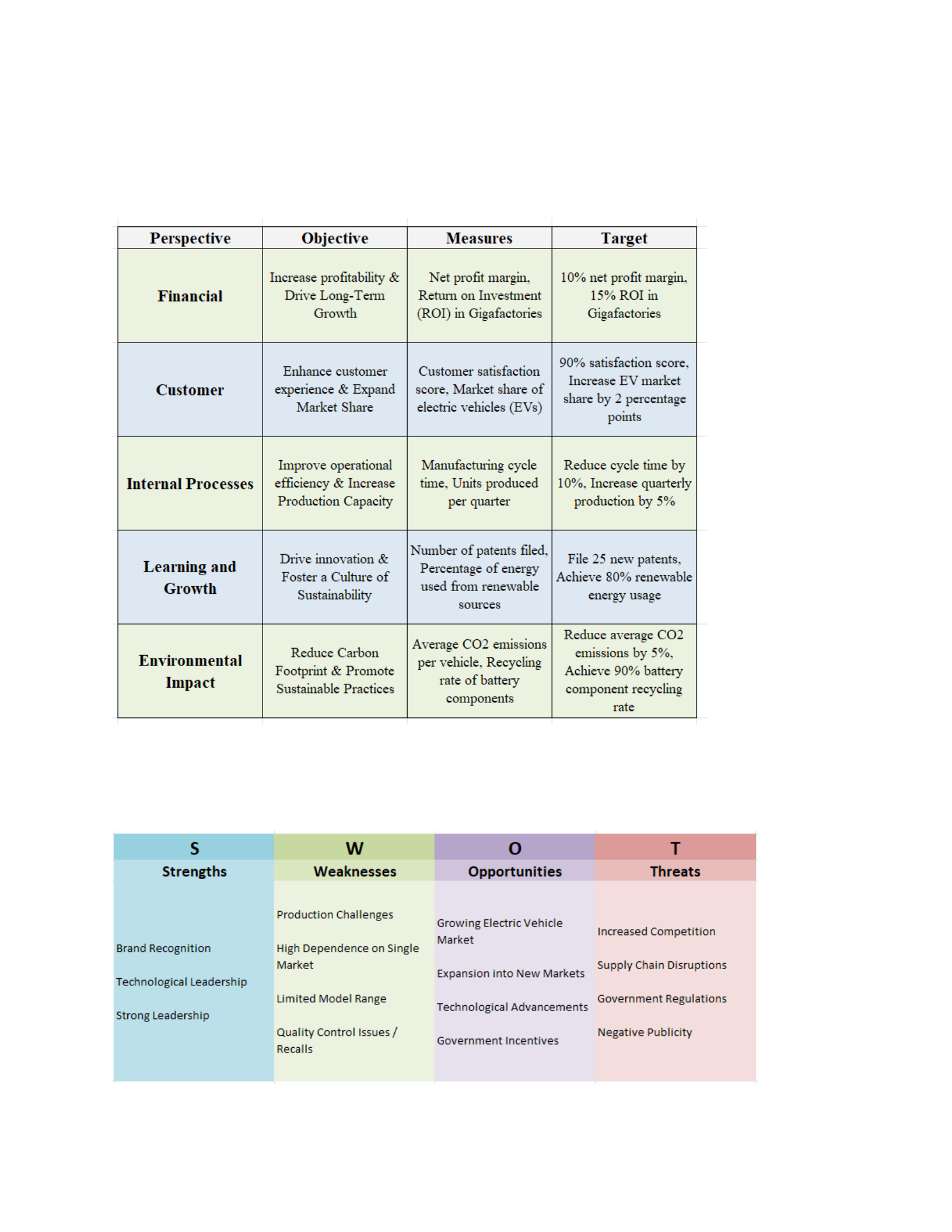
ILP – TESLA, INC 44
Appendix A
Tesla, Inc. – Balanced Scorecard
Appendix B
Tesla, Inc. – SWOT Analysis
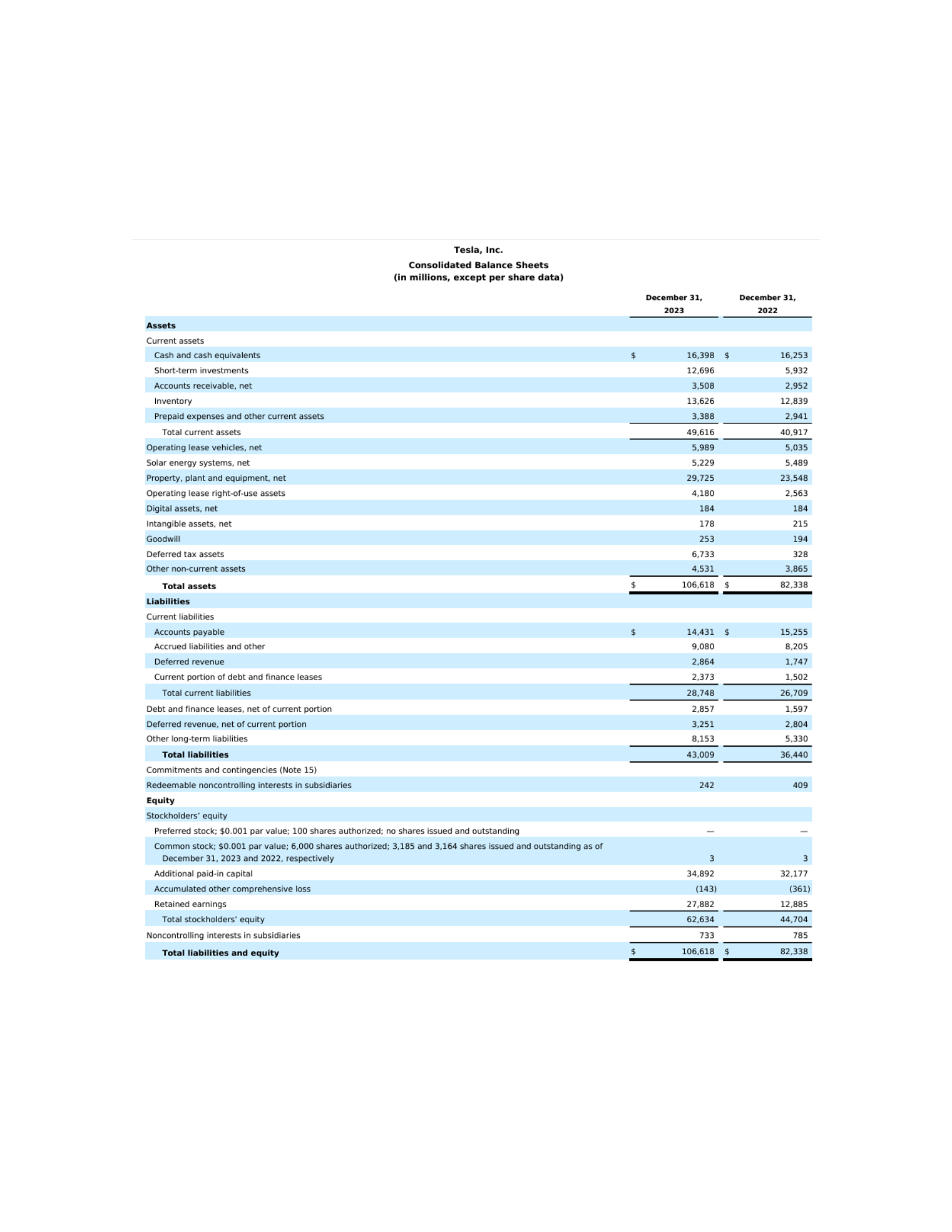
ILP – TESLA, INC 45
Appendix C
Tesla, Inc. - Consolidated Balance Sheets for the fiscal year ended December 31, 2023 (Tesla,
2024d).
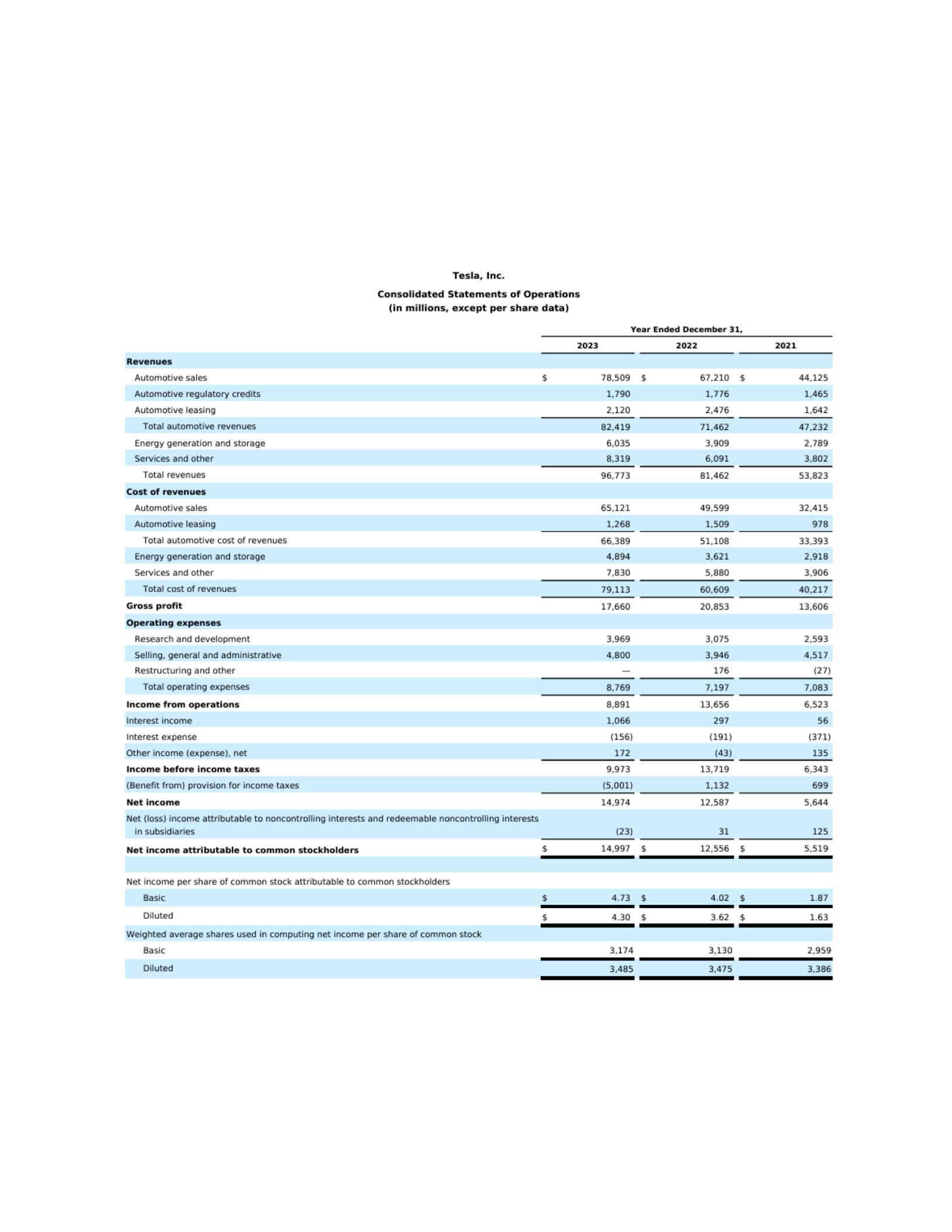
ILP – TESLA, INC 46
Appendix D
Tesla, Inc. - Consolidated Statements of Operations for the fiscal year ended December 31, 2023
(Tesla, 2024d).
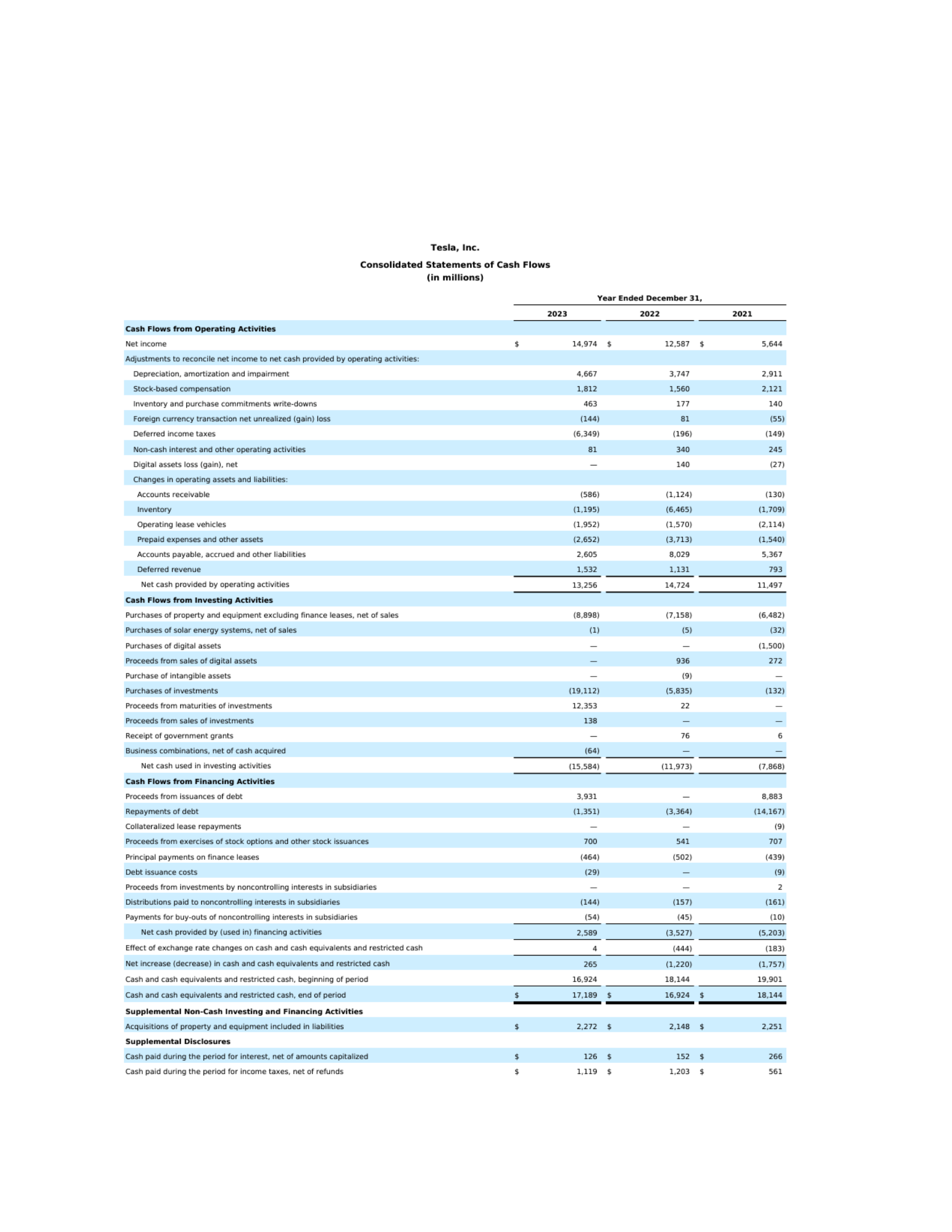
ILP – TESLA, INC 47
Appendix E
Tesla, Inc. - Consolidated Statements of Cash Flows for the fiscal year ended December 31, 2023
(Tesla, 2024d).

ILP – TESLA, INC 48
Appendix F
Tesla, Inc. - Q4 and Full Year 2023 Financial Results – Financial Summary (Tesla, 2024c).
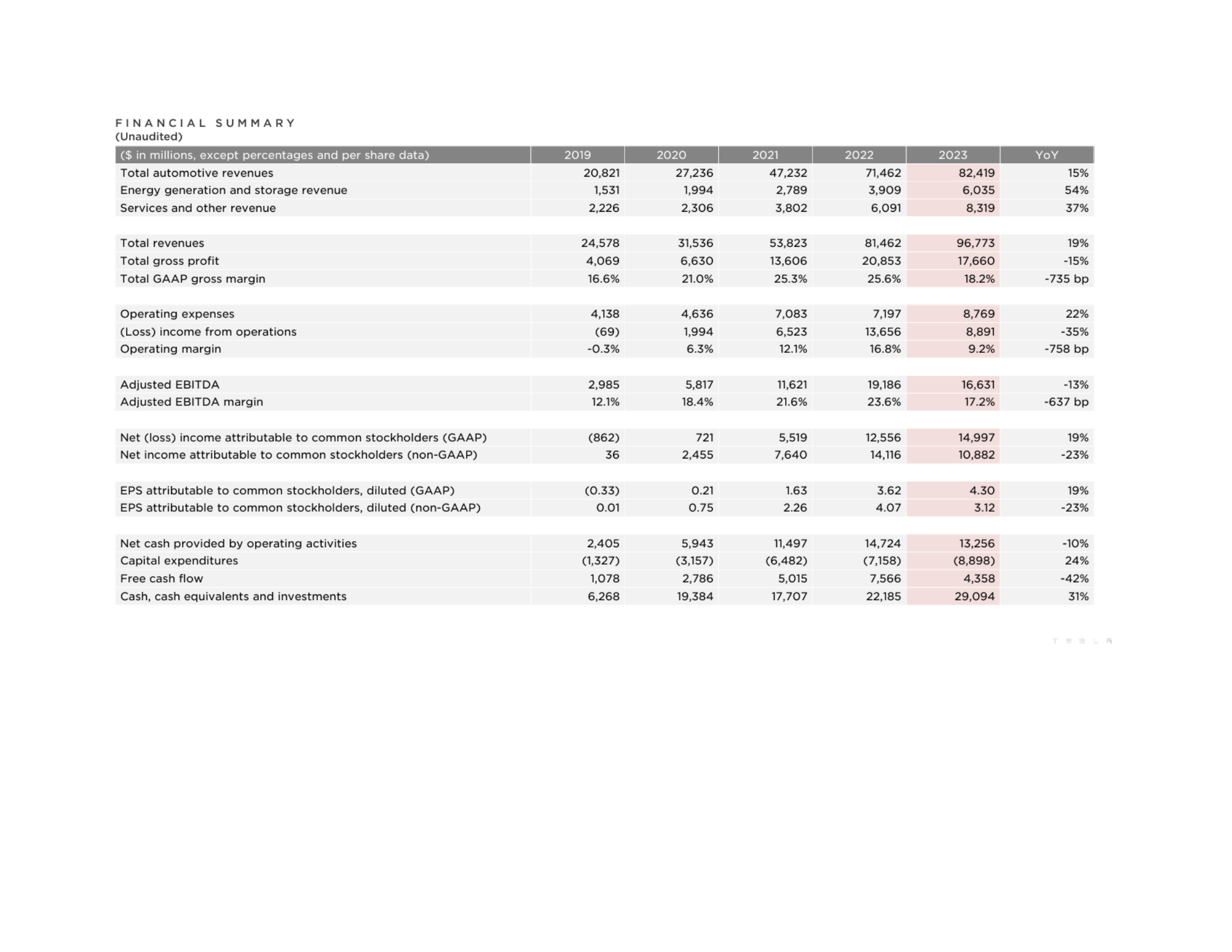
FINANCIAL
SUMMARY
(orcusos
Pees
see
eeu
een)
Or)
Ey
yoy
Err
errs
a
automotive
revenues
20,821
27,236
47,232
71,462
82,419
Energy
generation
and
storage
revenue
1,531
1,994
2,789
3,909 6,035
54%
Services
and
other
revenue
2,226
2,306 3,802
6,091 8,319
37%
Total
revenues
24,578
31,536
53,823
81,462
96,773
19%
Total
gross
profit
4,069
6,630
13,606
20,853
17,660
-15%
Total
GAAP
gross
margin
16.6%
21.0%
25.3%
25.6%
18.2% -735
bp
Operating
expenses
4,138
4,636 7,083
7197
8,769
22%
(Loss)
income
from
operations (69)
1994
6,523
13,656
8,891
-35%
Operating
margin
-0.3%
6.3%
12.1%
16.8%
9.2%
-758
bp
Adjusted
EBITDA
2,985
5,817
11,621
19,186
16,631
13%
Adjusted
EBITDA
margin
12.1%
18.4%
21.6%
23.6%
17.2%
-637
bp
Net
(loss)
income
attributable
to
common
stockholders
(GAAP)
(862)
721
5,519
12,556
14,997
19%
Net
income
attributable
to
common
stockholders
(non-GAAP)
36
2,455
7,640
14,16 10,882
-23%
EPS
attributable
to
common
stockholders,
diluted
(GAAP)
(0.33)
0.21 1.63
3.62
4.30
19%
EPS
attributable
to
common
stockholders,
diluted
(non-GAAP)
0.01
0.75
226
4.07
3.12
-23%
Net
cash
provided by
operating
activities
2,405
5,943
11,497
14,724 13,256
10%
Capital
expenditures
1,327)
3157)
(6,482)
(7,158)
(8,898)
24%
Free
cash
flow
1078
2,786
5,015
7,566 4,358
-42%
Cash,
cash
equivalents
and
investments
6,268
19,384
17,707
22,185
29,094
31%
ILP – TESLA, INC 49
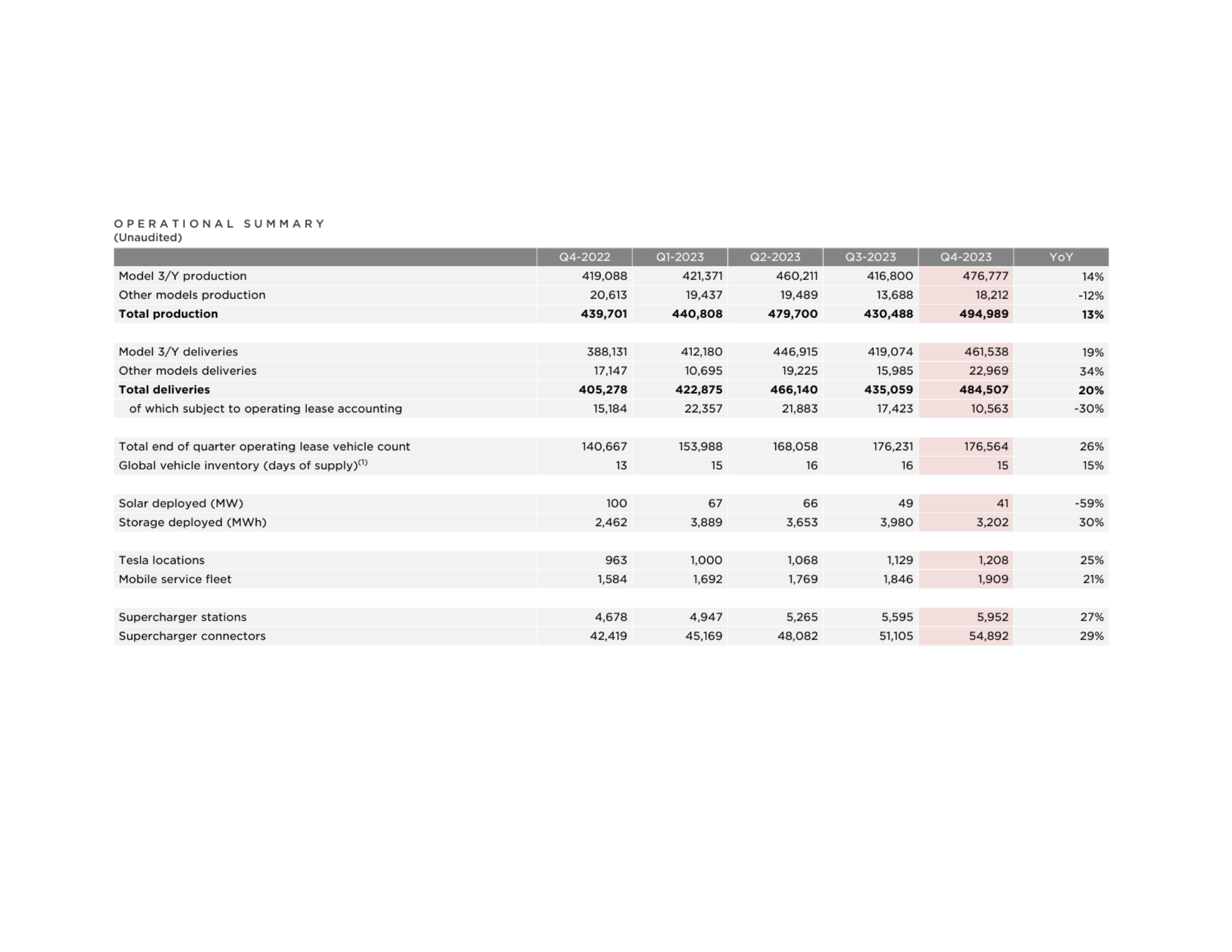
ILP – TESLA, INC 50
Appendix G
Tesla, Inc. - Q4 and Full Year 2023 Financial Results – Operational Summary (Tesla, 2024c).

OPERATIONAL
SUMMARY
(Unaudited)
Model
3/Y
production
302,301
454,932
906,032
1,298,434
1,775,159
Other
models
production
62,931
54,805
24,390
na77
70,826
0%
Total
production
365,252
509,737
930,422
1,369,611
1,845,985
35%
Model
3/Y
deliveries
300,885
442,562
911,242
1,247,146
1,739,707
39%
Other
models
deliveries
66,771
57,085
24,980
66,705 68,874
3%
Total
deliveries
367,656
499,647
936,222
1,313,851
1,808,581
38%
of
which
subject
to
operating
lease
accounting
25,439
34,470
60,912
47,582
72,226
52%
Total
end
of
year
operating
lease
vehicle
count
49,901
72,089
120,342
140,667
176,564
26%
Global
vehicle
inventory
(days
of
supply)”
3
15
6
16 16
0%
Solar
deployed
(MW)
73
205 345 348
223
-36%
Storage
deployed
(MWh)
1,651
3,022 3,992
6,541
14,724
125%
Tesla
locations”
433
523
644
963
1,208
25%
Mobile
service
fleet
758
894
1,281
1,584
1,909
21%
Supercharger
stations
1,821
2,564 3,476
4,678
5,952
27%
Supercharger connectors
16,104
23,277
31,498
42,419
54,892
29%
ILP – TESLA, INC 51
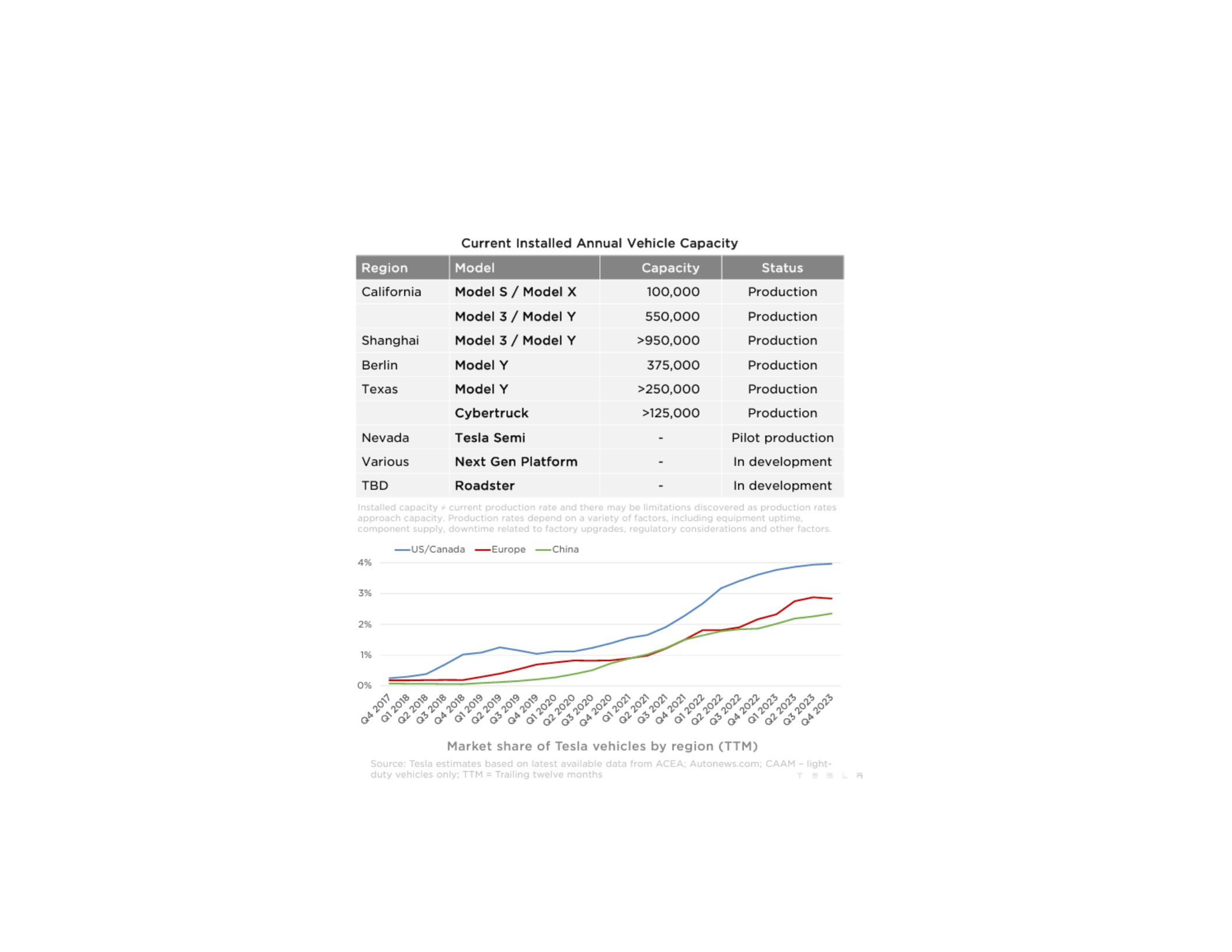
ILP – TESLA, INC 52
Appendix H
Tesla, Inc. - Q4 and Full Year 2023 Financial Results – Vehicle Capacity (Tesla, 2024c).

