


STUDY GUIDE
EXAM 2
BIOL 203
Chapter 6
1. What are the physical and chemical requirements for microbial growth?
The Physical requirements for microbial growth
-grow well at the temperatures that humans favor.
-psychrophiles: can grow at 0 C, optimum is 15 c
-mesophiles: 25-40 C optimum
-Thermophiles: 50-60 C
-pH: 6.5 to 7.5
-osmotic pressure: require water for growth which is between 80-90%. High
osmotic pressures have the effect of removing necessary water from a cell.
The Chemical requirements for microbial growth
-carbon: structural backbone of living matter, needed for all organic compounds
that make up a living cell.
-nitrogen, sulfer and phosphorus: synthesize cellular material
-trace elements: iron, copper, molybdenum, and zinc. Essential for functions of
certain enzymes.
-oxygen: extract more energy form nutrients than microbes that do not use
oxygen.
2. What are psychrotrophs? What are typical growth rates and temperature ranges
for microbial growth?
-can grow at 0 C has higher optimum temperatures of 20-30 C and cannot grow
above 40 C.
-Most likely to be encountered in low-temperature food spoilage because they
grow fairly well at refrigerator temperatures.
-Spoilage microorganisms.
3. Why is food stored at 4C?
-Low temperatures decrease microbial reproduction rates.
4. With respect to chemical requirements what is the function of the various
elements?
-Carbon: structural backbone of living matter, needed for all the organic
compounds that make up a living cell.
-Nitrogen: form the amino group of the amino acids of proteins. Many bacteria
meet this requirement by decomposing protein-containing material and
reincorporating the amino acids into newly synthesized proteins and other
nitrogen-containing compounds.
-Sulfur: synthesize sulfur-containing amino acids and vitamins such as thiamine
and biotin.
-Phosphorus: essential for the synthesis of nucleic acids and the phospholipids of
cell membranes. Found in the energy bonds of ATP.
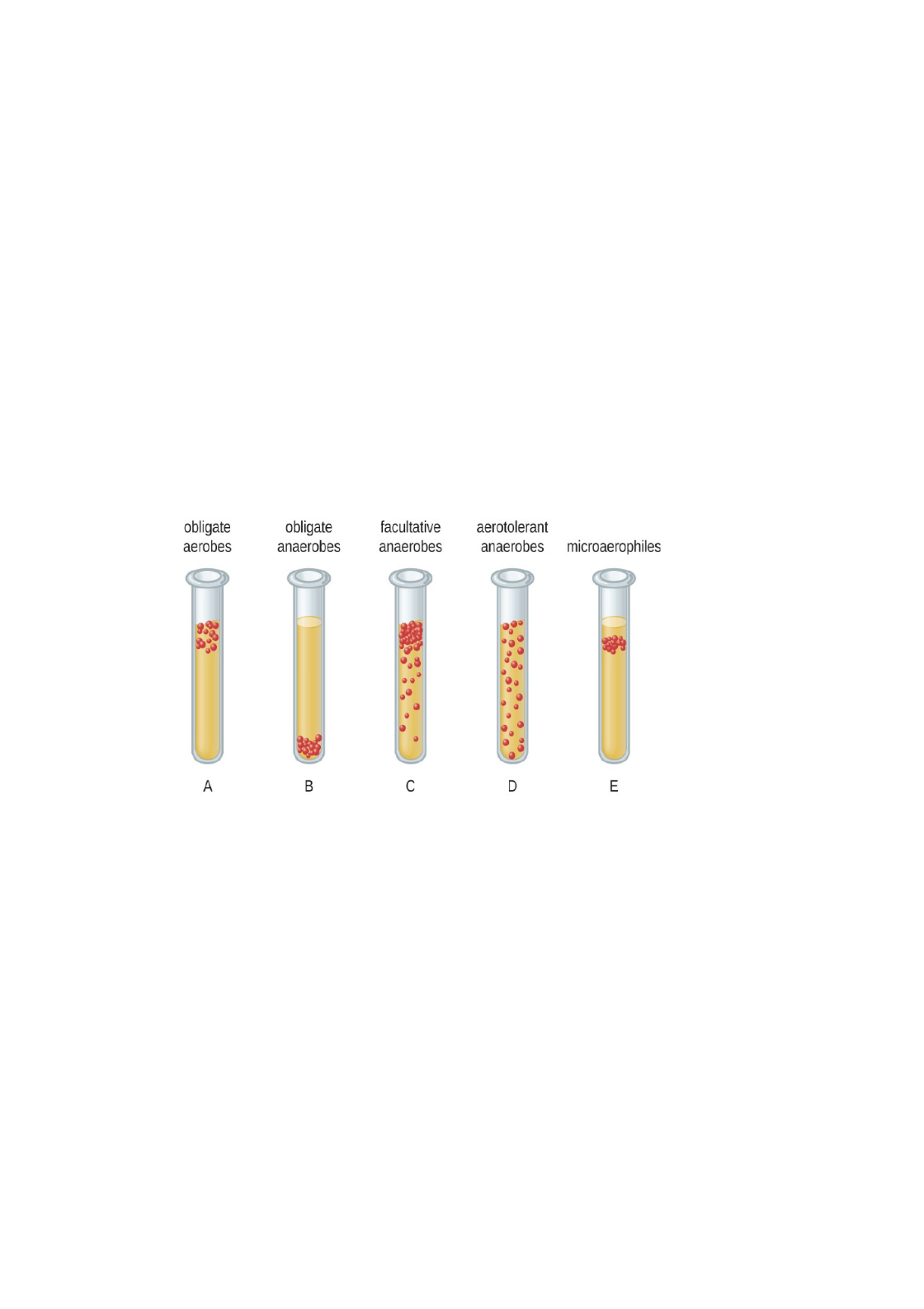
5. What are the various O requirements for microorganisms? Draw and label the
2
various types of O growth patterns.
2
-Obligate Aerobes: presence of enzymes catalase and superoxide dismutase
allows toxic forms of oxygen to be neutralized, can use oxygen.
-Facultative Anaerobes: Presence of enzymes catalase and SOD allows toxic
forms of oxygen to be neutralized; can use oxygen.
-Obligate Anaerobes: Lacks enzymes to neutralize harmful forms of oxygen
cannot tolerate oxygen.
-Aerotolerant Anaerobes: Presence of one enzyme, SOD, allows harmful forms of
oxygen to be partially neutralize; tolerates oxygen.
-Microaerophiles: Produce lethal amounts of toxic forms of oxygen if exposed to
normal atmospheric oxygen.
6. Name several organic growth factors and why are these factors necessary for
microbial growth?
-Vitamins: function as coenzymes, the organic cofactors required by certain
enzymes in order to function.
-Amino acids
-Purines
-Pyrimidines
Essential organic compounds an organism is unable to synthesize are known as
organic growth factors, they must be directly obtained from the environment.

7. What are biofilms?
-They are a thin, slimy layer encasing bacterium that adheres to a surface.
-They can be considered a hydrogel which is a complex polymer containing many
times its dry weight in water.
8. Compare and contrast complex and chemically defined media.
-Chemically defined media is one whose exact chemical composition is known.
Chemically defined medium must contain organic compounds that serve as a
source of carbon and energy. Usually reserved for laboratory experimental work
or for the growth of autotrophic bacteria. Chemically defined media is one in
which the exact chemical composition is known.
-Complex media are made up of nutrients including extracts from yeasts, meat,
or plants, or digests of proteins from these and other sources. The exact chemical
constitution of the medium is not known. Usually provide the full range of
growth factors that may be required by an organism so they may be more
handily used to cultivate unknown bacteria or bacteria whose nutritional
requirements are complex.
9. What is agar?
-Agar is a common solidifying agent for a culture medium. It helps feed and grow
bacteria and other microorganisms. It acts as a culture that provides nutrients
and a place for these items to grow, but since it is indigestible to the
microorganisms, they cannot eat and destroy it.
-Agar has some very important properties that make it valuable to microbiology.
-it liquefies at about 100 C
10. What are the various ways to propagate anaerobes?
11. Define BSLs and how are they used?
1. No special precautions
a. E. coli K-12
2. Lab coat, gloves, eye protection
a. spp.E. coli Salmonella O157:H7,
3. Biosafety cabinets to prevent airborne transmission
a. M. tuberculosis Y. pestis,
4. Sealed, negative pressure
a. Exhaust air is filtered twice
b. Ebola
-
12. Compare and contrast selective and differential media.
-Selective media is designed to suppress the growth of unwanted bacteria and
encourage the growth of the desired microbes. Differential media make it easier

to distinguish colonies of the desired organisms from other colonies growing on
the same plate.
13. How does a microbiologist obtain a pure bacterial culture?
-The isolation method most commonly used to get pure cultures is the streak
plate method. A sterile inoculating loop is dipped into a mixed culture that
contains more than one type of microbe and is streaked in a pattern over the
surface of the nutrient medium. As the pattern is traced, bacteria are rubbed off
the loop onto the medium.
How are bacterial cultures stored?
- Refrigeration can be used for the short-term storage of bacterial cultures, Two
common methods of preserving microbial cultures for long periods are deep-
freezing and lyopilization.
14. Define generation time in bacteria.
- The time required for a cell to divide. It varies considerably among organisms and
with environmental conditions, such as temperature.
15. What are the various methods used by microbiologists to count bacteria?
-colony forming units.
It is important that a limited number of colonies develop in the plate.
Chapter 7
1. Define sepsis and aseptic.
-Sepsis indicates bacterial contamination
-Aseptic is the absence of significant contamination.
2. With respect to microbial control, define sterilization and disinfecting.
-Sterilization: the removal or destruction of all living microorganisms.
-Disinfection: removing pathogens
3. How is the efficacy or effectiveness of a microbial control agent determined?
How is cell death measured?
Efficacy
-Time of exposure: Chemical antimicrobials often require extended exposure to
affect more-resistant microbes or endospores.
-Microbial characteristics
Effectiveness
-The number of microbes: The more microbes there are to begin with, the longer
it takes to eliminate the entire population.
-Environmental influences: Most disinfectants work somewhat better in warm
solutions.

-For each minute the treatment is applied, 90% of the remaining population is
killed.
4. How do microbial control agents work? In other words, what is their mode of
action? by killing microorganisms or by inhihbiting the growth of microorganisms.
Control of growth usually involves the use of physical or chemical agents which
either kill or prevent the growth of microorganisms. Agents which kill cells are
called cidal agents; agents which inhibit the growth of cells (without killing them)
are referred to as static agents.
-Alteration of membrane permeability
-Damage to proteins
-Damage to nucleic acids
5. How is sterilization achieved with an autoclave?
-Reliable sterilization with moist heat requires temperatures above that of boiling
water. These high temperatures are most commonly achieved by steam under
pressure in an autoclave. The higher the pressure, the higher the temperature.
6. Compare and contrast pasteurization and filtration.
-Pasteurization was to eliminate pathogenic microbes. It also lowers microbial
numbers.
-Filtration is the passage of a liquid or gas through a screenlike material with
pores small enough to retain microorganisms.
7. Name several physical and chemical microbial control agents? How do they
work?
Physical methods:
-Low temperature: inhibits microbial growth
-Refrigeration
-Deep-freezing
-Lyophilization
-High pressure denatures proteins
-Desiccation prevents metabolism but bacteria remain viable
-Osmotic pressure causes plasmolysis
Chemical method:
- Organic acids
-Inhibit bacterial metabolism
-Sorbic acid, benzoic acid, and calcium propionate
-GRAS by FDA
-Control molds and bacteria in foods and cosmetics by lowering pH
- Sodium nitrite prevents endospore germination and preserves the “redness” in
meat
-Antibiotics

-Nisin and natamycin prevent spoilage of cheese
8. What are heavy metals and how are they effective in microbial control?
- Refers to any metallic chemical element that has a relatively high density and is
toxic or poisonous at low concentrations.
- Silver nitrate may be used to prevent gonorrheal ophthalmia neonatorum in
newborns
- Silver sulfadiazine used as a topical cream on burns
- Oligodynamic action denture proteins
9. What are supercritical fluids and how are they used?
- Any substance at a temperature and pressure above its critical point, where
distinct liquid and gas phases do not exist, but below the pressure required to
compress it into a solid.
- Combines chemical and physical methods
- CO2 is compressed into a “state” it has gaseous and liquid properties
- Use: Decontaminates medical implants from donor patients
Chapter 8
1. Define (and know) the various terms used in microbial genetics.
- Genetics: The study of what genes are, how they carry information, how
information is expressed, and how genes are applied
- Gene: A segment of DNA that encodes a functional product, usually a protein
- Chromosome: Structure containing DNA that physically carries hereditary
information; the chromosome contains the genes
- Genome: All the genetic information in a cell
- Genomics: The molecular study of genomes
- Genotype: The genes of an organism
- Phenotype: Expression of the genes
2. Define/compare/contrast genotype and phenotype.
- Genotype: The genes of an organism
- Phenotype: The expression of the genes
3. What is a genetic map? Does the map give directions?
- It is a type of chromosome map that shows the relative locations of genes and
other important features. The map is based on the idea of linkage, which means
that the closer two genes are to each other on the chromosome, the greater the
probability that they will be inherited together.
- It shows the relative location of two genetic traits. The way to do this is to use
the offspring of an organism and track how many times two given genetic traits
are inherited together; for instance, hair color and eye color. The higher the

percentage of descendants that have both traits together, the closer on the
chromosome the genes are responsible for the traits will be.
4. Describe the semiconservative mode of replication.
- The process of replication, each new double-stranded DNA molecule contains
one original strand and one new strand.
5. Name the components in DNA synthesis and describe the process. It involves
separation of the DNA double helix and subsequent synthesis of complementary
DNA strand, using the parent DNA chain as a template. The other strand (lagging)
has to be synthesized in segments.
6. Name the components in RNA transcription and describe the process.
- During transcription, a strand of mRNA is synthesized using a specific portion of
the cell’s DNA as a template. The genetic information stored in the sequence of
nucleobases of DNA is rewritten so that the same information appears in the
base sequence of mRNA.
7. Name the components in protein synthesis (translation) and describe the
process.
- It involves decoding the “language” of nucleic acids and converting it into the
“language” of proteins.
8. What is the genetic code? Do all life forms have a genetic code?
- The nucleotide triplets of DNA and RNA molecules that carry genetic information
in living cells. Adenine, cytosine, guanine and thymine. Genetic code is the term
we use for the way that the four bases of DNA are strung together in a way that
the cellular machinery, the ribosome, can read them and turn them into a
protein.
9. What is a codon?
- A sequence of three nucleotides which together form a unit of genetic code in a
DNA or RNA molecule
10. Describe how a bacterial cell is regulated? Use the operon as an example.
- Bacterial genes are often found in operons. Genes in an operon are transcribed
as. Group and have a single promoter. Each operon contains regulatory DNA
sequences, which act as binding sites for regulatory proteins that promote or
inhibit transcription. Some operons are inducible, meaning that they can be
turned on by the presence of a particular small molecule.
- In bacteria, related genes are often found in a cluster on the chromosome, where
they are transcribed from one promoter as a single unit. Such a cluster of genes

under control of a single promoter is known as an operon. Operons are common
in bacteria. An operon will contain genes that function in the same process.
Operons allow the cell to efficiently express sets of genes whose products are
needed at the same time.
11. Describe the z, y, and a genes in the lac operon.
- Lac operon contains genes that encode proteins involved in uptake and
metabolism of a particular sugar, lactose. The lac operon contains three genes
that encode proteins involved in lactose metabolism.
- Lac z gene encodes beta-galactosidase, encodes enzyme that splits lactose into
monosaccharides that can be fed into glycolysis.
- Lac y gene encodes a permease, encodes a membrane-embedded transporter
that helps bring lactose into a cell.
- Lac a gene encodes a transacetylase enzyme
- Together these gene products act to import lactose into cells and break it down
for use as a food source.
12. Define a mutation. What are the various “types” of mutations?
- A mutation is a permanent alteration in the DNA sequence that makes up a gene,
such that the sequence differs from what is found in most people.
- Missense mutation: a change in one DNA base pair that results in the
substitution of an amino acid for another in the protein made by a gene.
- Nonsense mutation: change in one DNA base pair. Instead of substituting one
amino acid for another, the altered DNA sequence prematurely signals the cell to
stop building a protein. This type of mutation results in a shortened protein that
may function improperly or not at all.
Insertion: changes the number of DNA bases in a gene by adding a piece of DNA
- Deletion: changes the number of DNA bases by removing a piece of DNA
- Duplication: consists of a piece of DNA that is abnormally copied one or more
times.
- Frameshift mutation: occurs when the addition or loss of DNA bases changes a
gene’s reading frame.
- Repeat expansion: Nucleotide repeats are short DNA sequences that are
repeated a number of times in a row.
13. What is the frequency of mutations in microbes?
- Range from 1 in 10 million to 1 in a billion base substitutions per nucleotide per
generation.
14. What are chemical mutagens? Can you give an example?
- Standard tool for mutagenesis in a variety of organisms, and they are a primary
means of creating mutations in phenotype-based screens in most genetic
systems. Although varied in the experimental design, all whole animal screens

involve the generation of lines harboring mutated chromosomes followed by the
examination of the resulting phenotypes in the heterozygous or homozygous
state.
- Alkylating agents such as ethyl methane sulfonate
15. What are physical mutagens? Can you name one?
- Include electromagnetic radiation such as gamma rays, X rays, UV light and
particle radiation.
16. What is an Ames Assay (or test)? How is the test used?
- Uses bacteria to test whether a given chemical can cause mutations in the DNA
of the test organism. It is a biological assay to assess the mutagenic potential of
chemical compounds. A positive test indicates that the chemical is mutagenic
and therefore may act as a carcinogen.
17. Describe transformation, conjugation, and transduction.
- Transformation, the recipient bacterium takes up extracellular donor DNA.
- Transduction, donor DNA packaged in a bacteriophage infects the recipient
bacterium
- Conjugation, the donor bacterium transfers DNA to the recipient by mating.
18. What are transposons?
- Segments of DNA that can move from one region of DNA to another
- Contain insertion sequences for cutting and resealing DNA
- Complex transposons carry other genes

