


from Christians, as well as their views on sexual ethics. It is argued that Christians are
judgmental and force restrictive regular human desires and sexual freedom. Addressing these
concerns with non-believers requires an approach that digs into the underlying assumptions. The
Inside Out approach from Chapter 10 of "Apologetics at the Cross" can be used to engage with
others to demonstrate understanding while eventually sharing the gospel's transforming power to
help change the perspectives of the critic.
“The goal of starting with the other person’s assumptions is to create space so they can
consider some of the problems with their own outlook and be willing to consider the plausibility
of Christianity1.” Before addressing the specific concerns, a secular friend raises, it is essential to
try and understand their perspective and why they are skeptical. Start within the skeptic's
worldview and slowly guide them to Christianity. Secularism sometimes prioritizes personal
autonomy as how to operate in the world. From this viewpoint, Christian religious beliefs may
seem restrictive and narrow-minded. Some people view all Christians as judgmental and
intolerant because they have encountered people who act self-righteous, and this goes against
Jesus' teachings, who showed love and compassion while remaining humble. A negative
experience with one Christian can lead to rejection of the Christian message altogether. Believers
can create a negative example by their words and actions. Apologists can establish common
ground and foster meaningful conversations by acknowledging these concerns. “It also
1 Chatraw, Josh, and Mark D. Allen. Apologetics at the cross: An Introduction for Christian Witness. Grand
Rapids, MI: Zondervan, 2018.
encourages us to think about our evangelism in terms of all that “we” share as humans, instead of
the differences between “you” and “me.2”
The Christians's position on sexual issues upholds traditional views such as remaining
pure until marriage, being faithful to one person while married, and the sanctity of marriage.
These can seem overbearing and old-fashioned in a secular world that advocates for sexual
freedom. These worldviews conflict and can cause tension regarding the logic of Christian
morals in the present day. These boundaries can be viewed as restrictive when God puts things in
place for our benefit. Acknowledge the concerns raised by a secular friend to explore the inside-
out approach to respond to these issues while highlighting the transforming power of Jesus.
According to the Inside Out approach, one should start by identifying areas of common
ground between Christianity and their viewpoint. Both views have value but come from different
foundations. Christianity views humans as being made in the image of God, while secular
humanism highlights human autonomy. “The history of philosophy illustrates how human
thinkers seek to avoid responsibility to God by claiming autonomy. They don’t want to obey
God’s laws, and so they set themselves up as the ultimate judges of what is right.3”
Both see the importance of love and compassion in humankind. By starting off affirming these
shared values, a Christian can bridge the gap with respect to their friend and lay the groundwork
for a gospel conversation.
2 Gould, Paul M., Travis Dickinson, and R. Keith Loftin. Stand Firm : Apologetics and the Brilliance of the Gospel.
Nashville, Tennessee: B & H Academic, 2018.
3 Frame, John M. Apologetics : A Justification of Christian Belief. Edited by Joseph E. Torres. Second edition.
Phillipsburg, New Jersey: P & R Publishing, 2015.
A key point to the "Inside Out" approach is transitioning from A to B beliefs. A beliefs
represent the skeptic's worldview, while B beliefs represent the Christian alternative. Instead of
challenging their view, apologists should examine themselves and reflect by looking at the
alternate view. The next step is to address misconceptions people have about Christians, such as
intolerance and judgment. Some people in the Christian community have behaved in this way, so
there is no sense in denying it. At some point or another, all of Christ's followers fail to represent
Christ and his teachings one hundred percent of the time. It is best to separate the actions of
those who behave that way and the actual Christian values.
Christianity teaches unconditional love and forgiveness. Christians should love their neighbor
(Mark 12:31) regardless of their beliefs. Jesus perfectly displayed these virtues by interacting
with outcasts and sinners. Therefore, the issue is not with the overall Christian message but with
the imperfect follower and how they apply it in their lives. Christianity presents a structure for
sinful nature and acknowledges that all people, including Christians, are subject to sin and need
saving. “God revealed in history and instantiating a dynamic of righteousness that is able to
address our sinful nature, precisely at the practical level, bypassing the intellectual issues.4”
Instead of encouraging self-righteousness, true Christianity calls for humility and grace while
accepting one's own shortcomings (Matthew 7:1-5) and extending grace to others.
Instead of denying these misconceptions and affirming these issues in the Christian community,
a believer agrees that the negative views and behaviors of Christians are against the core
4 Oviedo, Lluis. “New Proposals on Theological Apologetics – Faith and Its Critics: A Conversation – By David
Ferguson; The Command of Grace: A New Theological Apologetics – By Paul D. Janz; Theology in Search of
Foundations – By Randal Rauser.” Reviews in religion and theology 18, no. 2011.

teachings and values given by Jesus and the Bible. Hopefully, this will encourage the unbeliever
to review their opinions.
Now, to address the issue of sexual ethics, clarify the Christian view within the
framework of living a fulfilling life. Often, in the secular culture, freedom is absent of moral
limitations; Christianity offers a comprehensive view of human sexuality while accepting the
sacredness of relationships. Christian sexual ethics affirms the gift God intended to limit sex
inside of marriage, such as intimacy, pleasure, and the ability to have children. Christians protect
themselves from emotional pain and relational hurt by having boundaries based on love and
commitment. This appears to tell humans to suppress basic instincts. It highlights being close to
one's spouse physically, emotionally, and spiritually. This is not to restrain freedom but to allow
people to make responsible, informed decisions that align with their guidelines and values.
Once common ground has been established, and the transition from A to B beliefs has
begun, apologists slowly work outward to present the Christian worldview. This next step offers
reasonable arguments with evidence and clarifications for Christian beliefs that address the
skeptic's concerns. The goal is to show the power of the gospel while giving thoughtful answers
to thought-provoking questions.
In conclusion, the "Inside Out" approach offers a gripping structure for engaging
objections raised by a secular friend regarding Christianity.
Start with reasonable structures by addressing concerns with understanding and clarity and work
towards the power of the gospel. Establish common ground by addressing misconceptions and
exploring the truth, hoping the conversation will foster respect and understanding. The goal is
not to win an argument but to show the gospel's transforming power through genuine
conversation. Speak truth while allowing room for the Holy Spirit to work. Christianity offers
true freedom found in the love of Jesus. Christians are called to show love and grace when
interacting with others, even when among others who oppose them. “These two aspects of the
inside out model allow a Christian’s apologetic approach to be both gospel-centered and others-
centered.5” A believer should embrace the inside-out approach to purposely engage in a kind and
compelling way with the person who is skeptical while highlighting the transforming power of
the Holy Spirit while still listening to their concerns.
Bibliography
Chatraw, Josh, and Mark D. Allen. Apologetics at the Cross: An Introduction for Christian
Witness. Grand Rapids, MI: Zondervan, 2018.
Chatraw, Josh, and Mark D. Allen. Apologetics at the Cross: An Introduction for Christian
Witness. Grand Rapids, MI: Zondervan, 2018.
5 Chatraw, Josh, and Mark D. Allen. Apologetics at the Cross: An Introduction for Christian Witness. Grand
Rapids, MI: Zondervan, 2018.
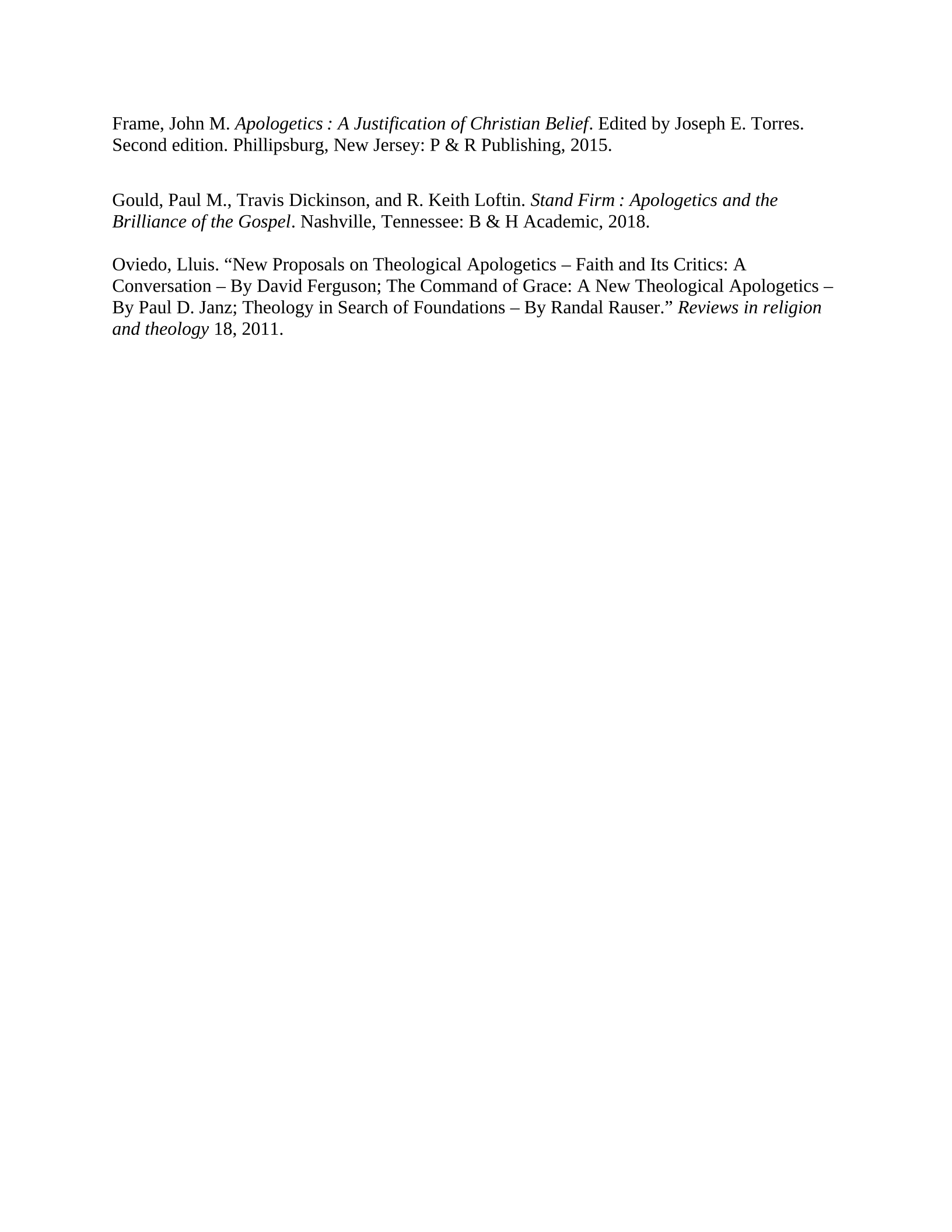
Frame, John M. Apologetics : A Justification of Christian Belief. Edited by Joseph E. Torres.
Second edition. Phillipsburg, New Jersey: P & R Publishing, 2015.
Gould, Paul M., Travis Dickinson, and R. Keith Loftin. Stand Firm : Apologetics and the
Brilliance of the Gospel. Nashville, Tennessee: B & H Academic, 2018.
Oviedo, Lluis. “New Proposals on Theological Apologetics – Faith and Its Critics: A
Conversation – By David Ferguson; The Command of Grace: A New Theological Apologetics –
By Paul D. Janz; Theology in Search of Foundations – By Randal Rauser.” Reviews in religion
and theology 18, 2011.
Powered by TCPDF (www.tcpdf.org)

