


Week 11: Data & Information Architecture
Data Functions
- Gather from consumer/market/firm
- Store
- Retrieve
- Interpret
- EX: amazon gets data, recommends products
Types of data
- Transactional = data describing and event
- Exchange between actors real time
- Transactional database = management of organization structure
- “Database management”
- Analytical = data support analysis and reporting
- Aggregated view with historical data
- From data warehouse
- Support decision-making
- Foundation for business intelligence
-
Relational paradigm
- Transactional data collected and stored
- Goal = minimize redundancy (reduce errors and less space required)
- Reduce errors is more important today
- MySQL, Oracle, Microsoft Access, SQL Server
- Relational database = series of tables with logical associations
between them
- Allow data to be combined
- EX: online retail
- Every review has associated product, products and reviews have
unique ID
- Split details off into separate tables
- Info entered and stored ones - minimize redundancy
Information architecture
- Principles of info science to help organizations present data users in
the best way to complete tasks
- Build data structure to work bes
- Easy to find, fast to scan, develop framework for future additions of
info
- EX: low conversion rate on website
- Find business goal, get metrics for insight, user research to see
behaviors, content analysis, and define data structure
Data architecture
- Models, policies, rules, standards that govern which data is collected,
stored, arranged, integrated, and put in data systems and
organizations
- Information flow and how it’s controlled
- Processes:
- Conceptual = entities (customer, product, semantics)
- Logical = as much detail as possible (relations without
considering how it’s stored/managed)
- Physical = represented and stored (flat file, database,
warehouse)
Database
- Structured collection of info
- Database management system (DBMS) = manipulate content of
database file
- Tasks = structural rules that data adheres to, load data into
framework already established, additional support for database
(tracking users, log-in credentials, maintenance, backups)
Retrieving info
- Highly structured and efficient storage to enter, organize, protect,
retrieve info
- Querying = sort, filter, organize and summarize data
Flat file data
- 2-D tables that are text files (.csv)
- Record = row
- Single entry of group of thing keeping track of
- Field = column
- Different attributes for each record
- Problems = limited info (can’t combine), data redundancy, data
integrity (entry errors), and accessing data can be slow
Relational database
- Data broken down into common themes, one table for describing
records of each theme
- Key fields = unique identifiers for each record, relate one table to
another
- Glue holds entire system together
- Primary key = unique identifier (ex: driver license #)
- Foreign key = primary key used in another table
- Major ventors = DB2, Access, SQL Server, Oracle database
- My SQL = open source, license-free
Fundamentals of Relational database
- Data type = info database will allow in given column
- Constraints = rules data must adhere to before saving to database
- Referential integrity = related data exist in parent table before
allowing entry into child table
- Structured query language = most relational database use to perform
admin task
-
- Database = tables/files+ relationship among rows + metadata
- Metadata = data describes other data
Entity relationship data model
- Entities = something users want to track (ex: flights)
- Attributes = describe characteristics of entity (ex: flight to/from)
- Identifier = attribute uniquely identifies one entity instance from
others (ex: flight #)
- One to many relationship = appearing many times so build
relationships
Limitations to Relational database
- Scalability (complex/expensive), speed (not for real time access), not
ideal for sophisticated analytics
SQL (structured query language)
- Standardized way of asking specific question of database
- SELECT = tell database want some info returned to us
- * = returns all the fields from the table
- WHERE = adds condition to SELECT statement
- Use quotes with correct exact wording
- AND = satisfy both variables
- ORDERBY = info sorted by certain field
- Count (*) = with condition count how many of those entries
- GROUPBY = return select clause against each grouping
- INNER JOIN = look at info from 2 different tables
Big data in action
- More, faster, deeper insight
4 V’s
- Volume = quantity of data generated and stored by bid data system
- Specialized big data processing, storage and analytical tools
- Industry producing big data = education, gov, health, media
- Velocity = analysis of data flow
- Needs to be analyzed in real time
- EX: social media, transactions
- Variety = varies in format, degree which structures and ready for
processing
- Accessed from multiple sources and systems
- Veracity = quality and validity of data
- Checks and balances
NoSQL
- Doesn’t rely on relational mode
- Schemaless (entity relationship data model not required) and Cluster
friendly
- Shared or partitioned or done automatically - open source
- Scale very hugely and hold terabytes with no problem
Cloud computing
- Use of hardware and software to deliver service over a network
- Info and data stored on physical or virtual servers in data center
- Maintained and controlled by cloud computing provider
- EX: Amazon Web Services, Azure, Google cloud, Adobe, VMWare
- End product from cloud EX: Gmail, Dropbox, YouTube, iCloud
Why Use Cloud
- Access data from anywhere, stable and unlimited computing power,
flexibility (any web browser), inexpensive/pay as use, elastic resource
- Elasticity = degree which system able to adapt to workload changes
automatically
- 85% if Fortune 500 don’t reap full benefit of big data due to lack of
accessibility
- Free employees to be chained to local networks
- Help smaller companies compete
Cloud services offered by vendors
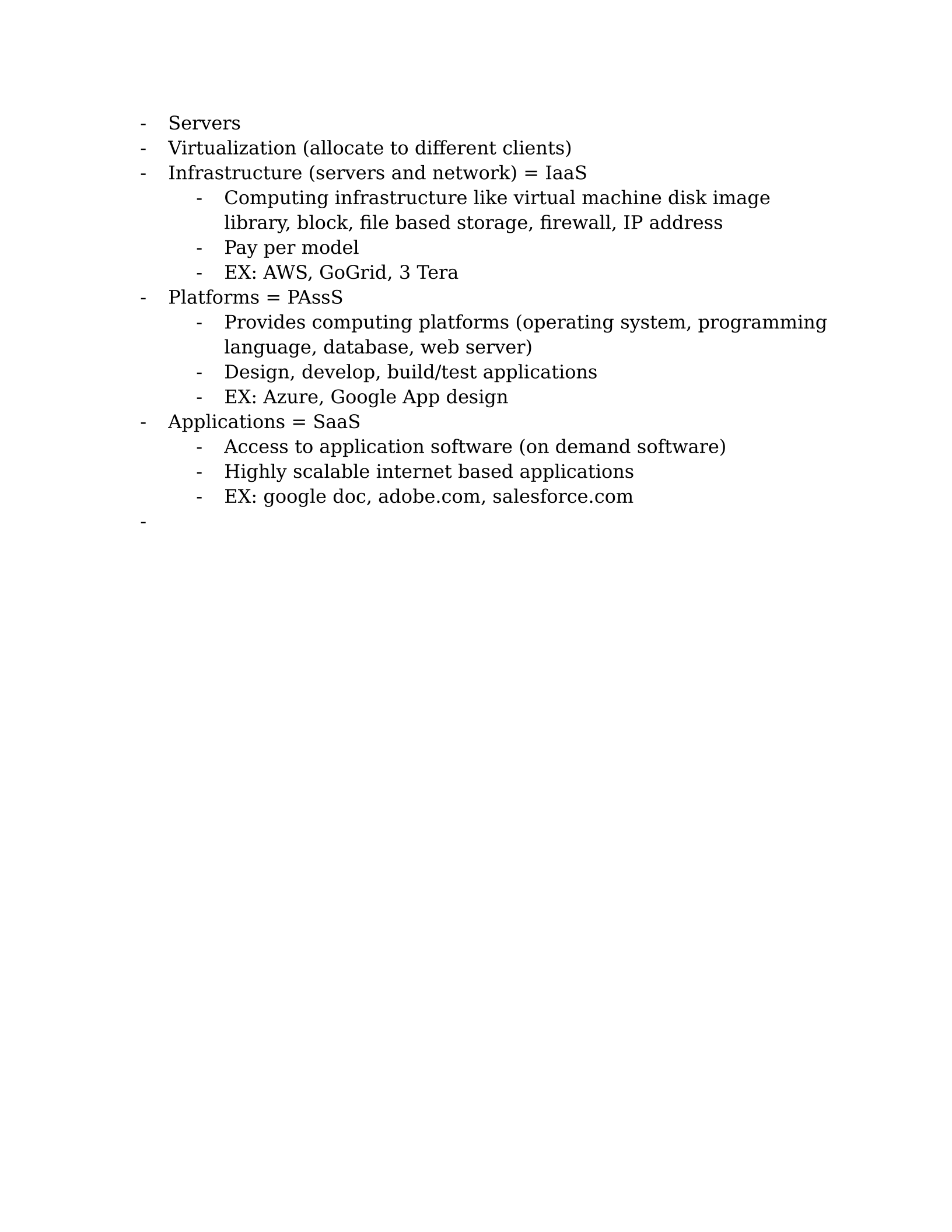
- Servers
- Virtualization (allocate to different clients)
- Infrastructure (servers and network) = IaaS
- Computing infrastructure like virtual machine disk image
library, block, file based storage, firewall, IP address
- Pay per model
- EX: AWS, GoGrid, 3 Tera
- Platforms = PAssS
- Provides computing platforms (operating system, programming
language, database, web server)
- Design, develop, build/test applications
- EX: Azure, Google App design
- Applications = SaaS
- Access to application software (on demand software)
- Highly scalable internet based applications
- EX: google doc, adobe.com, salesforce.com
-
Powered by TCPDF (www.tcpdf.org)

