



MKT Chpt 1.
Marketing
is the activity, set of institutions and processes for creating, communicating, delivering
and exchanging products and services that have value for consumers and customers
Producing
Selling
Goods & services
Producing & Selling Goods & Services?
The essence of Marketing is to develop satisfying exchanges (producing and
selling) between marketers and consumers from which both customers and
marketers benefit.
How do Customers Benefit?
Customer expects to gain a reward or benefit greater than the costs that they’ve
expended
They need to PERCEIVE A VALUE
How do Marketers Benefit?
The essence of Marketing is to develop satisfying exchanges from which both the
customers and the marketers benefit.
Marketers expect to gain a value in return, most of the time its in the form of a
financial benefit from the price a company charges for the product
Companies need to CREATE a value to customers to realize this benefit
The Key Concept in Marketing?
Product – goods, services & ideas, brand name, packaging, customer needs &
wants
Place – how the product gets to where customers buy it (distribution)
Promotion – inform customers about the product and its benefits
Price – companies charge, customers pay
Positioning – where the product exists in the mind of the customer compared
to competitors

Marketing Best Practices:
1. Everything must be based on the customer. (Without a customer there is no
marketing concept)
1. Marketers must satisfy customers’ needs.
2. Marketers must create a real or perceived value for the customer.
3. Marketers must make their product accessible for customers.
4. The positioning of the product or service you’re promoting is a key influence on
how, where and when you market it.
Marketing uses a basic planning formula
Objectives: your goals (WHAT)
Strategies: HOW you will accomplish those goals
oApproaches
oTarget Audience – the primary CUSTOMER
oPositioning
Tactics: the “vehicles” you use to execute the strategy
o The THINGS that reach the CUSTOMER (Marketing Mix)
Advertising
Social Media
Etc.
Marketing – The Definition
Creating, pricing, distributing, and promoting goods, services, and ideas to:
Facilitate satisfying exchange relationships with customers in order to
Develop and maintain favorable relationships with stakeholders in a dynamic
environment
Marketing Focuses on Customers
Customers – the purchasers of organizations’ products;
oThe focal point of all marketing activities
Target market – a specific group of customers on whom an organization focuses
its marketing efforts
The best practice?
oEVERYTHING IN MARKETING MUST BE BASED ON THE CUSTOMER!
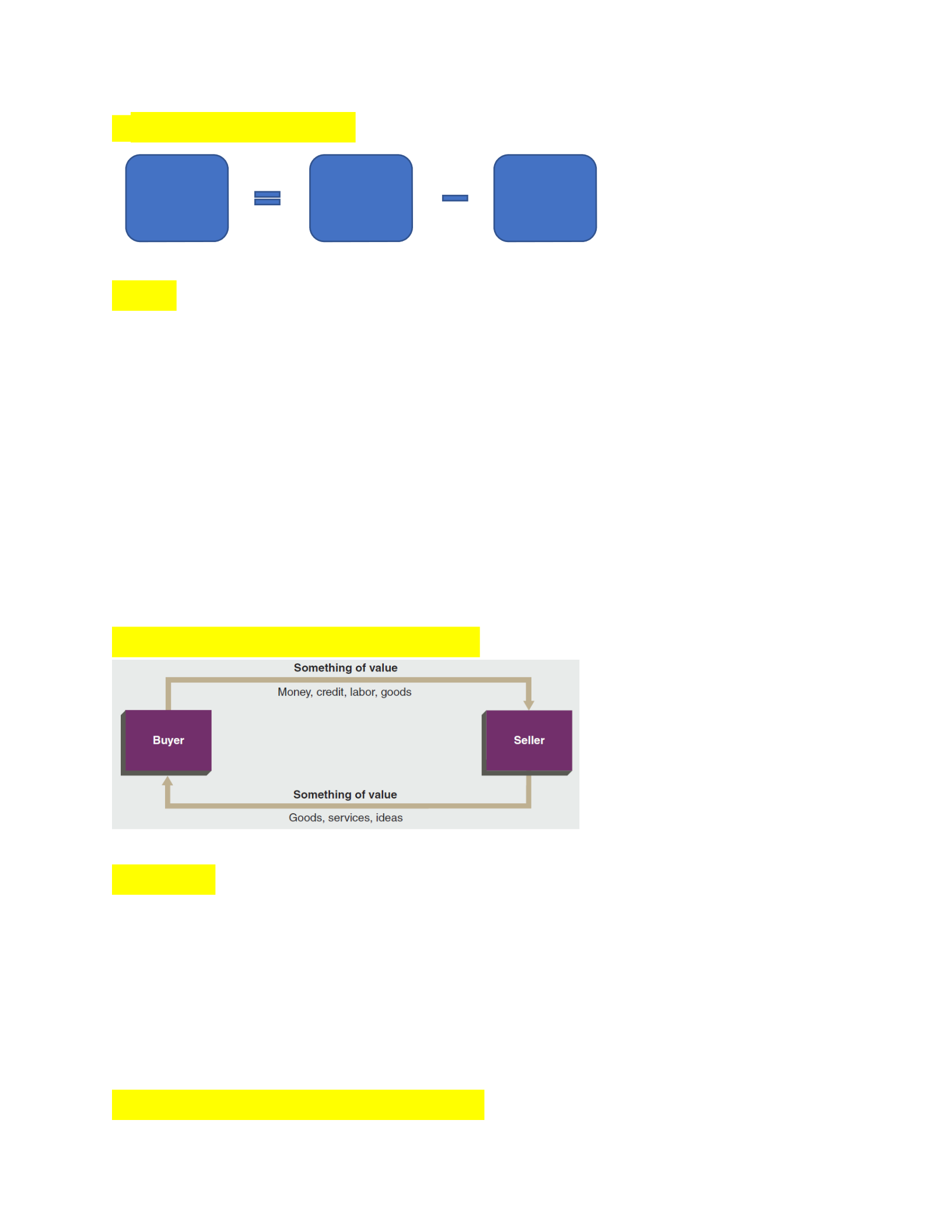
Marketing Creates Value
Value:
The customer’s subjective assessment of benefits relative to costs in determining
the worth of a product
oCustomer benefits - anything a buyer receives in an exchange
oCustomer costs - anything a buyer must give up to obtain the benefits of
the product
oMarketing mix* enhances perceptions of value
*The tactics that a company uses to reach the customer
oAdvertising
oSocial Media
oEtc.
Exchange Between Buyer and Seller
Exchange:
transfer of goods, services, or ideas in return for something of value
•Two or more parties possessing something of value that the other party desires
must participate
•Should provide a benefit
•Each party must have confidence in the other party’s promise, so…
•Parties must meet expectations to build trust
Components of Strategic Marketing:
C
V
C
B
C
C
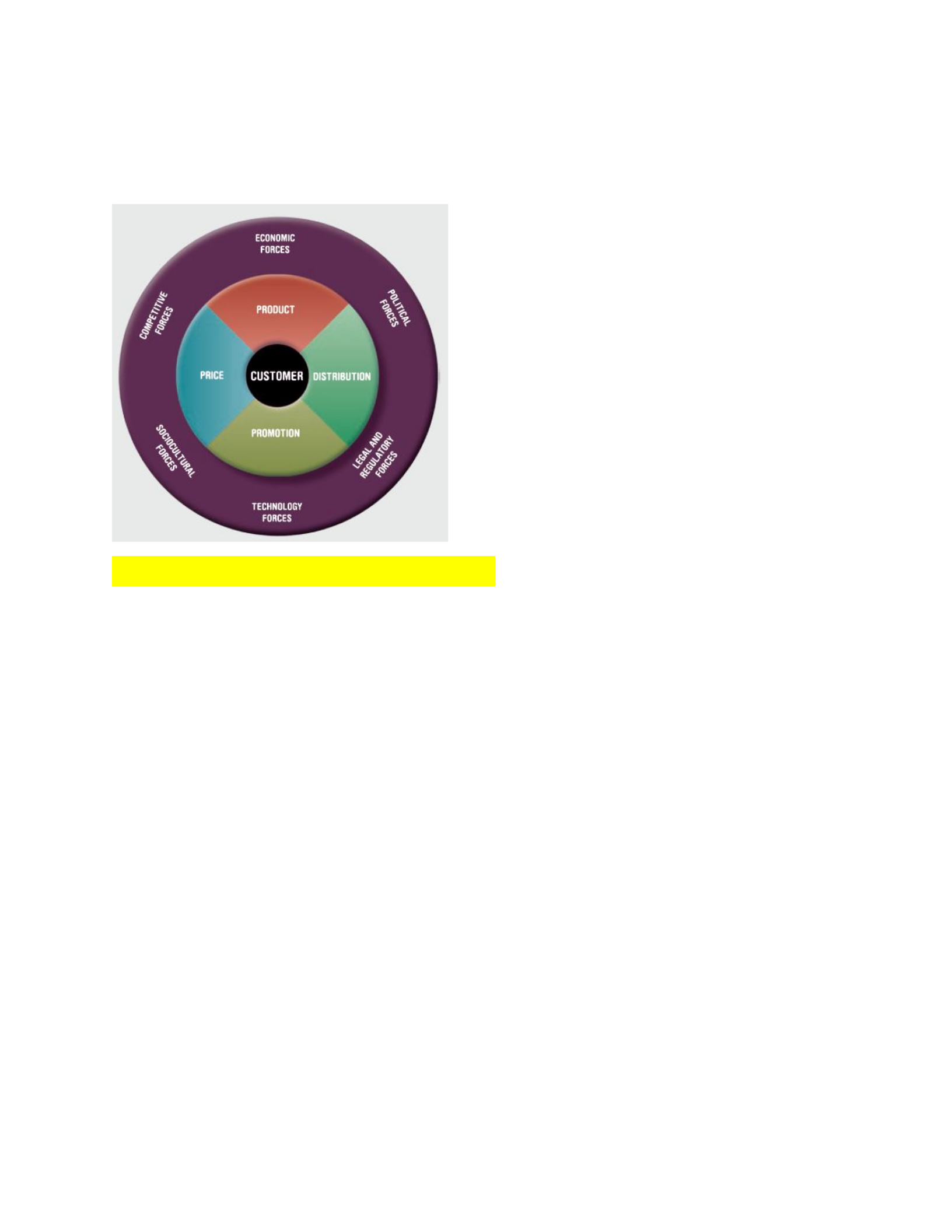
Environmental Forces, influence
Marketer – 5 Ps, influence
Customer
Forces of the Marketing Environment
Competitive
Economic
Political
Legal and regulatory
Technological
Socio-cultural
Surrounds the customer and affects the marketing mix
The marketing environment is “dynamic”
Unlike marketing mix variables, an organization has no control over these forces
Affects both marketers and customers
Affects a marketer’s ability to facilitate value-driven marketing exchanges
Influences customers by affecting their
oLifestyle
oStandards of living
oPreferences and needs for products
oAffects a marketing manager’s decisions and actions
Understanding the Marketing Concept
Marketing concept – a managerial philosophy that an organization should
oTry to satisfy customers’ needs
oThrough a coordinated set of activities that also allows the organization to
achieve its goals
oCustomer satisfaction is the major focus
oGuides an organization’s overall activities
Marketing Concept
From the company’s standpoint:
It is a management philosophy saying that an organization should try to
oprovide products that satisfy customers’ needs
othrough a coordinated set of activities that also allows the organization to
achieve its goals and objectives**
**Key
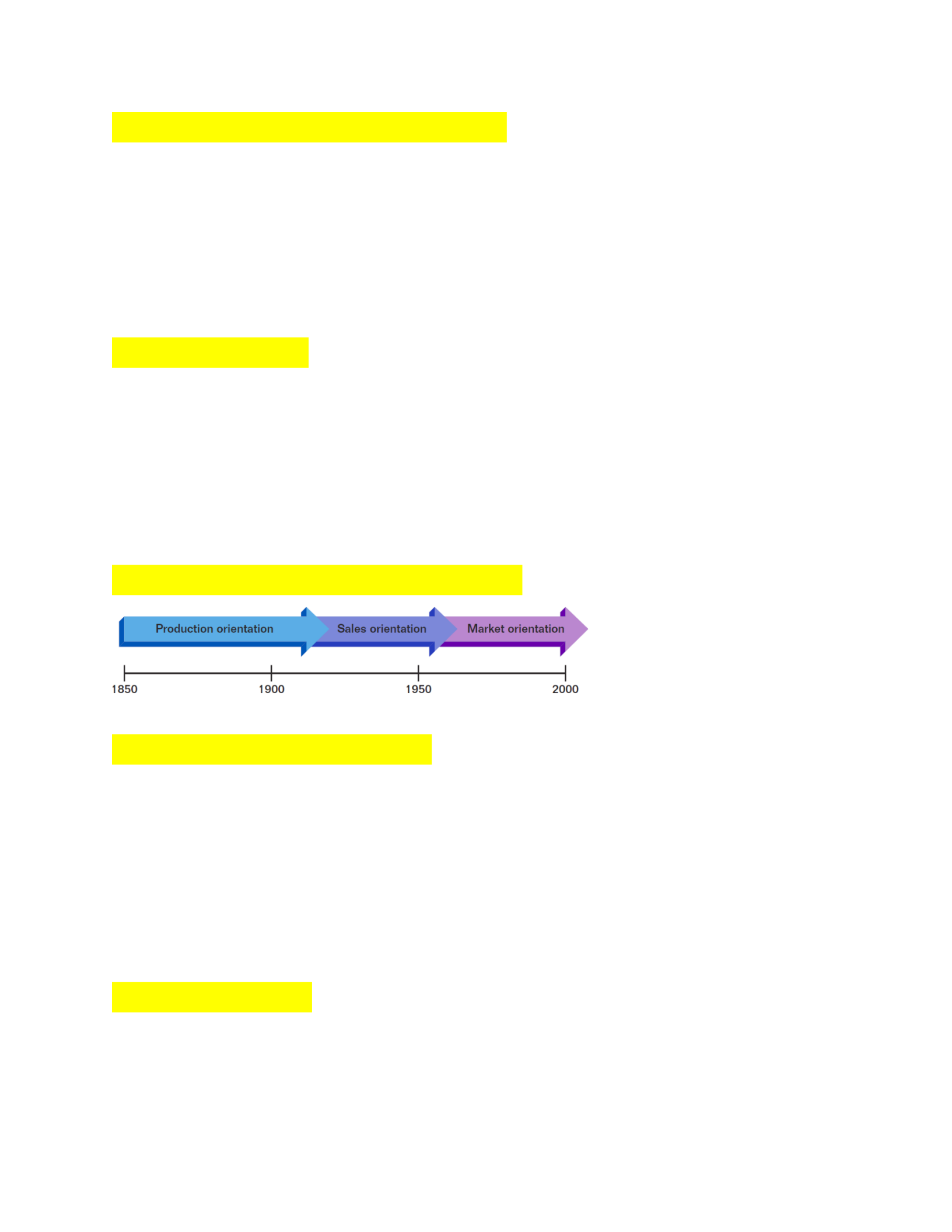
The Evolution of the Marketing Concept
Production & Sales Orientation
Production orientation (manufacturing)
Industrial Revolution improved speed and efficiency
Large increases in available products
Sales orientation (competition)
1920s-1950s
Many products with not enough demand
Businesses viewed sales and selling as the main means of increasing profits
Market Orientation
Market orientation (1950s- ) - requires an organization-wide generation of
market intelligence pertaining to
Current and future customer needs
Dissemination of the intelligence across departments

Organization wide responsiveness
Linked to new-product innovation
oDeveloping a strategic focus
oDeveloping new products to serve target markets
Being responsive to ever-changing customer needs and wants
Implementing the Market Concept
Establish an information system to discover customers’ real needs.
Use the information to create satisfying products.
Coordinate all activities to satisfy customers’ objectives.
oMay require restructuring internal operations
oRequires adapting to a changing external environment
Customer Relationship Management
(CRM) - using information about customers to create marketing strategies that
develop and sustain desirable customer relationships
Acquiring new customers
Enhancing profitability of existing customers
Extending the duration of customer relationships
Relationship marketing – companies try to build long term relationships with
customers
oGather and analyze data
oUse that data to create or change strategies
Chpt 2.
Strategic Marketing Management
Effectively and efficiently planning, implementing and evaluating the performance
of marketing activities and strategies
oEffectiveness - degree to which long-term customer relationships help
achieve an organization’s objectives
oEfficiency - minimizing the resources an organization uses to achieve a
specific level of desired customer relationships
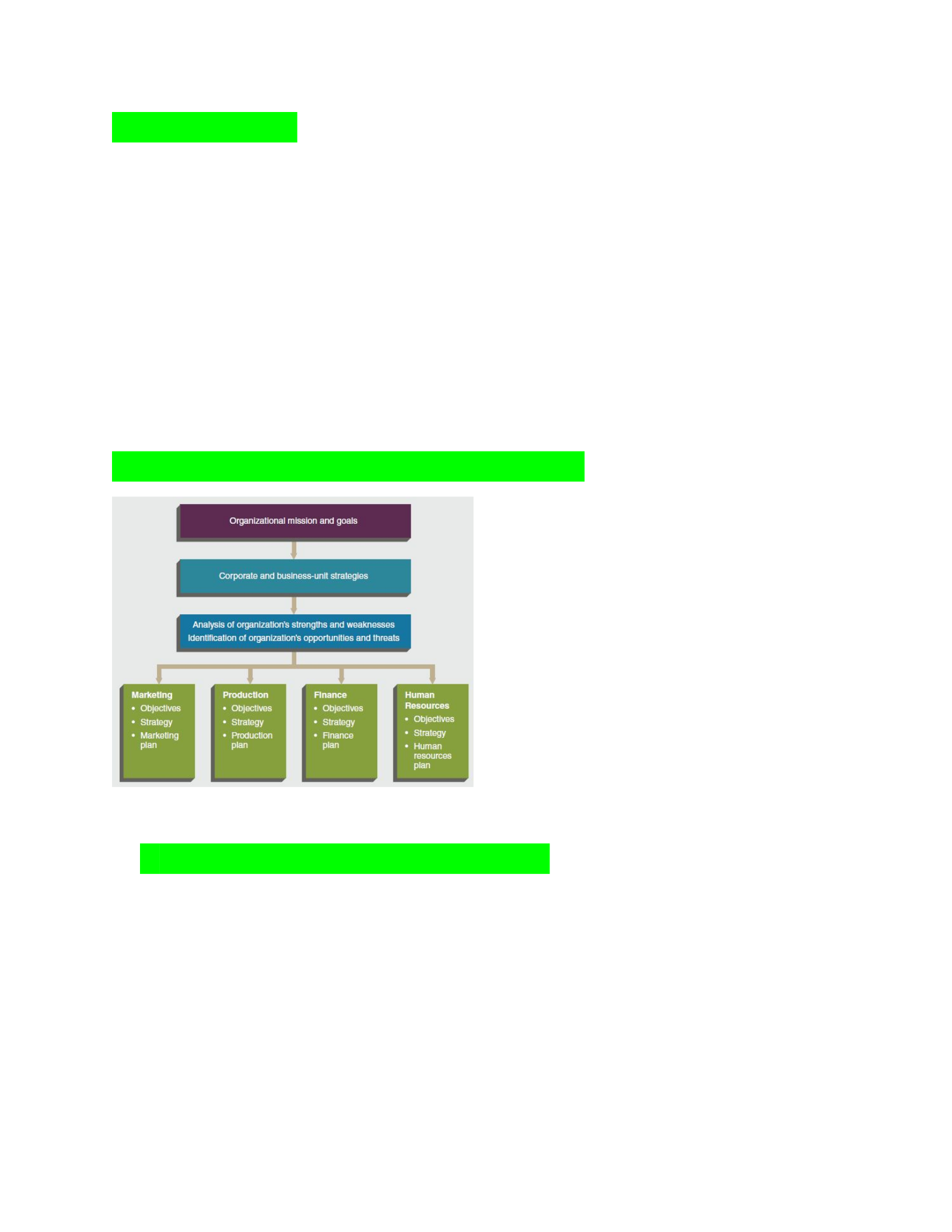
Strategic Planning
Requires establishing an organizational mission and formulating
oOrganizational mission & goals
oA corporate strategy
oMarketing objectives
oA Marketing strategy
oA Marketing plan
Should be guided by market orientation
oTo ensure concern for customer satisfaction
oFor the successful development of marketing strategies and planning
processes
Components of the Strategic Planning Process
1. Characteristics of Core Competencies
Something a corporation or division does exceptionally well (BEST)
A source of competitive advantage
Applications in a wide variety of markets
Difficult to imitate
oStarbuck’s gourmet coffee & ambiance
oBMW’s sporty, luxury automobiles
oApple’s trendy, desirable devices

2. Market Opportunity
A combination of circumstances and timing that permits an organization to
take action to reach a specific target market
a. For example, many tech companies see a market opportunity in China and
India
i. Large potential market of over 2 billion people
ii. Growing middle class
iii. Significant interest in new technological developments
3. Strategic Window
A temporary period of optimal fit between the key requirements of a market and
the particular capabilities of a firm competing in the market
TIMING!
Result: Competitive Advantage
The result of a company’s matching
oA core competency (superior skill or resources – something they do BEST)
oTo opportunities (market window and timing) in the marketplace
oIs a competitive advantage
cheaper, more widely available, stronger support services, higher
quality, clearer/better positioning
Sustainable Competitive Advantage
Sustainable competitive advantage – advantage that competition cannot copy in
the foreseeable future (over time)
•Company over a period of time maintains a sustainable competitive advantage
•An advantage that lasts
•Requires flexibility in the marketing mix
Levels of Strategic Planning

1. Mission Statement
A long-term vision of what the organization wants to become
oWho are our customers?
oWhat is our core competency?
oWhat is our identity as a corporation?
Corporate identity
oShould support all corporate activities
Unique symbols
Personalities
Philosophies
The Corporate Mission Statement
An essential ingredient to the success of a company.
It gives everyone, from top management to the employees who work on the
assembly line, a clear focus of direction.
They know where to focus their attention and thus can help create the desired
outcome.
It states what you do, and who you do it for. It is a concise but accurate
description of your company.
2. Developing Corporate Strategies
Corporate strategy – a strategy that determines the means for utilizing resources
in the various functional areas to reach the organization’s goals
oBroadest level of planning
oShould be developed with overall mission in mind
oOutlines business scope as well as:
Resource deployment
Competitive advantages
Coordination of functional areas
oAddresses two questions:
Who are our customers?
What is our core competency?
3. Developing Business-Unit Strategies

Strategic business unit (SBU) – a division, product line, or other profit center
within the parent company
Market – a group of individuals and/or organizations that have needs for products
in a product class and have the ability, willingness, and authority to purchase
those products
Market share – the percentage of a market that actually buys a specific product
from a particular company
4. Develop Marketing Strategies
Need to know what product category you’re in
oRetail, business products, hard goods, etc.
Some companies market retail products in a category called “CPG”
A key product orientation that determines specific strategies
CPG?
Consumer Packaged Goods
oCPGs are things that get used up and have to be replaced frequently, in
contrast to items that people usually keep for a long time, such as cars and
furniture
oProctor & Gamble
oGeneral Mills
oCoca-Cola
CPG Product Classifications
Stars: Dominant market share and good growth prospects
Cash cows: Dominant market share and low growth prospects
Dogs: Low & maybe declining market share and low growth prospects (ready for
elimination)
Question marks (Problem children):
oSmall market share of a growing market
oRequire significant cash to build market
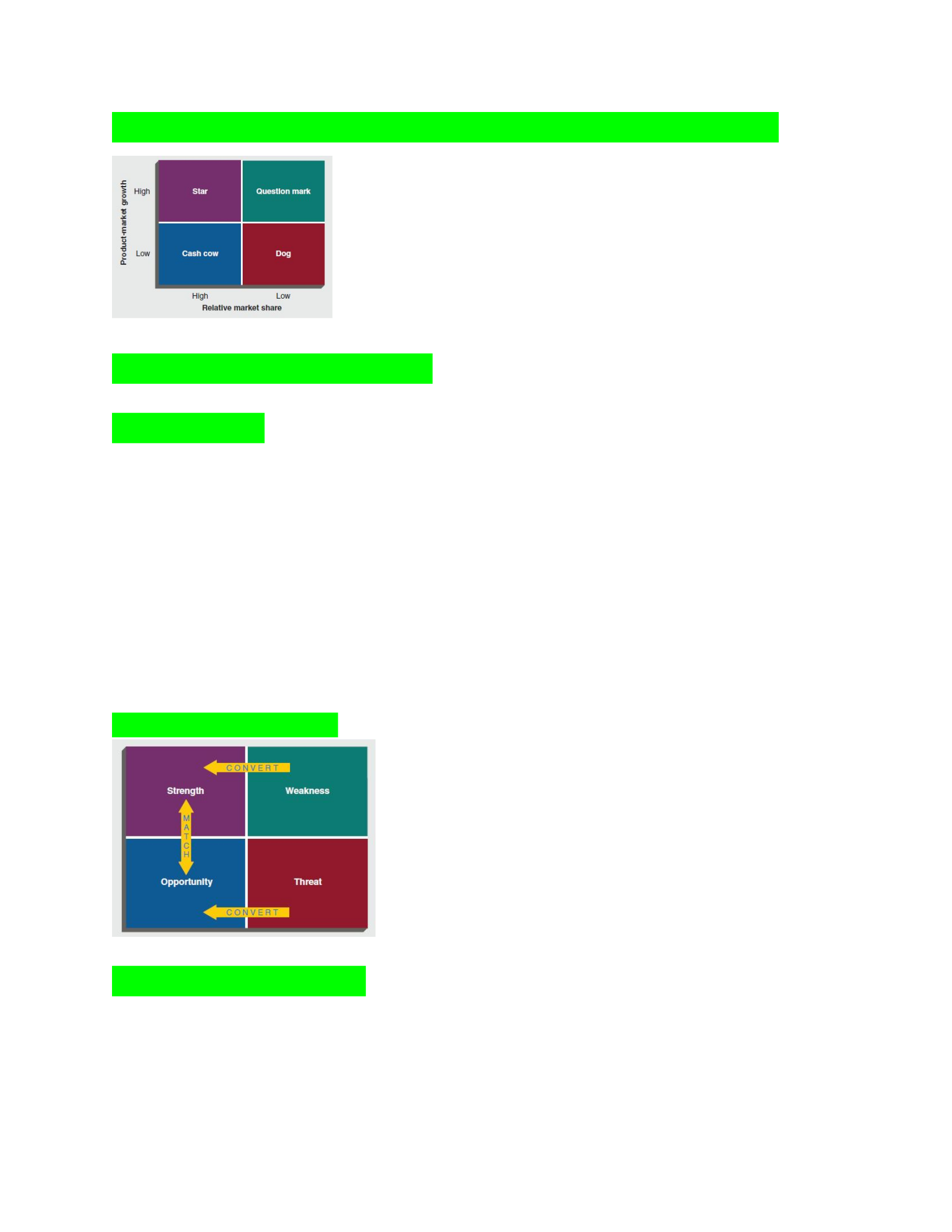
Growth Share Matrix Developed by the Boston Consulting Group
The Basis of Strategic Planning:
SWOT Analysis
Assesses an organization’s
Strengths
Weaknesses
Opportunities
Threats
Marketers must seek to convert weaknesses into strengths and threats into
opportunities
oProvides insight for marketers to match internal strengths with external
opportunities to develop competitive advantages
The Four-Cell SWOT Matrix
Strengths & Weaknesses
Internal
Where the company stands on:
oResources, skills, economics
oStrategic direction & plan

oRanking in industry
oTechnology, operations
oProduction costs
oCompany / product / brand image
oManagement / marketing talent
Opportunities & Threats
External
Where the company stands vs competitors on:
oPosition in the marketplace (market share)
oPower of competitors
oTrends in customer needs, tastes
oQuality of the product
oCustomer satisfaction
oDistribution
oInfluence of the economy, technology, etc.
Coming up with the Plan
Marketing Objectives - WHAT is to be accomplished through marketing activities
Marketing Strategies – HOW those objectives will be accomplished, and to whom
they will be directed
Marketing Tactics & Implementation – the ACTIVITIES or MARKETING MIX that
will deliver the strategies to the potential customer
Marketing Objective
Marketing objective - states WHAT is to be accomplished through marketing activities,
given in terms of
Product introduction
Product improvement or innovation
Sales volume
Profitability and market share
Pricing, distribution and advertising
Marketing Objective Characteristics
Marketing objectives should be based on a careful study of the SWOT analysis.
Must have specific characteristics:

oBe expressed in clear, simple terms
oBe measurable to track progress and compare outcomes against beginning
benchmarks
oSpecify a time frame for its accomplishment
oBe consistent with both business-unit and corporate strategies
Marketing Strategy
Marketing strategy – HOW to accomplish the objectives, with the selection of a target
market and the creation of a marketing mix to satisfy the needs of target market
members
Articulates the best use of the company’s resources to accomplish its marketing
objectives
Directs resource deployment to boost competitive advantage
Identifies the appropriate target market
Selecting the Target Market
Provides a foundation on which the company can develop its marketing mix
Marketing information focuses on the chosen target customers.
oDetermine whether selected target market aligns with the company’s
mission and objectives.
oAssess resources needed to develop the marketing mix for the target
market.
oConsider the competition.
oEvaluate product demand by the target market.
5. The Marketing Mix
A combination of activities that can be controlled by a company to influence
consumers to purchase its products
Tactics that are part of the 5 Ps
oThe product itself
oThe product’s
Position
Price
oWhere & How the product is distributed (place)
oWhere & How the product is promoted

Creating the Marketing Mix
Satisfying the needs of a market by conducting research to select the most
appropriate target market
Requires analyzing
oDemographic information
oCustomer needs, preferences, and behaviors
Characteristics
oConsistency with the business-unit and corporate strategies
oFlexibility in response to changes in market conditions
Strategic Performance Evaluation
Establishing performance standards
oPerformance standard - expected level of performance against which
actual performance can be compared
oDerived from marketing objectives
oMeasuring actual performance
oSales analysis - uses sales figures to evaluate a firm’s current performance
oMarketing cost analysis - breaks down and classifies costs to determine
which are associated with specific marketing efforts
Comparing actual performance with established standards
Modifying the marketing strategy
Marketing Management
To be a successful company, marketing managers must be effective at
oCommunicating with upper management and corporate departments
(sales, production, research, etc.)
oDirecting and motivating marketing personnel and marketing support
groups (agencies, etc.)
oStaying on top of the competitive marketplace
oDeveloping an effective and efficient marketing plan
Creating the Marketing Plan
Marketing plan – a written document that specifies the activities to be performed to
implement and control the organization’s marketing strategies
Provides a uniform marketing vision for the firm
Forms basis for internal communication
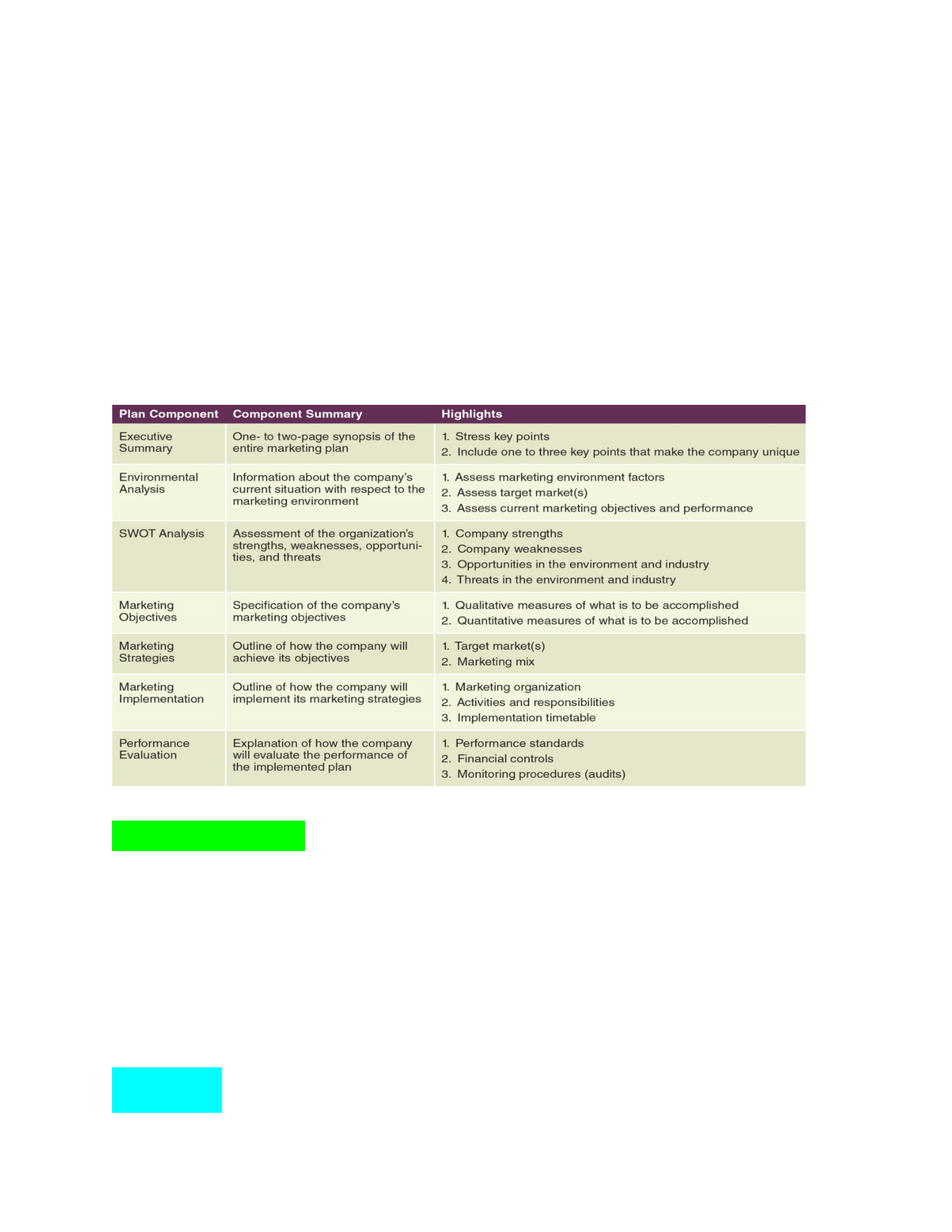
Delineates marketing responsibilities and tasks
Outlines schedules for implementation
Presents objectives
Specifies resource allocation
Helps managers monitor and evaluate performance of marketing strategy
Marketing plans should be developed for specific brands or products
Key is to make sure plan aligns with corporate and business-unit strategies
Must be based on current, accurate and high-quality information and data
(research)
Must be shared with and promoted to the entire organization
Internal Marketing
External customers: The individuals who patronize a business
Internal customers: The company’s employees
Internal marketing: A management philosophy that coordinates internal
exchanges to achieve success
oMay involve all elements of the marketing mix
For implementation to succeed, the needs of both groups of customers
must be met
Chpt 3.

Marketing’s Effectiveness is Influenced by External Situations
External influences are called Environmental Forces
Forces occurring in society that the company cannot control
But companies need to base their marketing strategies on the trends and
directions of these forces
Environmental Forces
Economic
Competitive
Political
Technological
Sociocultural
Legal and Regulatory
The Marketing Environment
Environmental forces are always dynamic.
Changes in the marketing environment create:
oUncertainty
oThreats
oOpportunities
Monitoring the environment is crucial to achieve long-term goals of the
organization
Changes in the marketing environment are monitored by
oEnvironmental scanning
oEnvironmental analysis
The Marketing Environment
Environmental scanning – the process of collecting information about forces in
the marketing environment
Observation
Secondary sources such as business, trade, government, and
Internet sources
Marketing research

Environmental analysis – the process of assessing and interpreting information
gathered through environmental scanning
Responding to the Marketing Environment
Environmental forces are uncontrollable.
oPassive or reactive – companies accept that they can’t control the
environment.
oAdjust strategies based on conditions.
oDiscover opportunities through environmental scanning and analysis.
Environmental forces can be shaped.
oProactive – companies try to influence the environment and shape
external forces
oVERY hard to do – any companies who have done this?
1. Competition
Competition – other firms that market products similar to or can be substituted
for a firm’s products in the same geographic area
oFew firms are free of competition.
oCompetitors compete with one another for customers’ dollars.
Competitive Forces
Brand competitors — firms that market products with similar features and
benefits to the same customers at similar prices
Product competitors — compete in the same product class but market products
with different features, benefits, and prices
Generic competitors – provide non-branded products that solve the same
problem or satisfy the same basic customer need as branded products
Total budget competitors — compete for the limited financial resources of the
same customers
Competitive Structures
Monopoly – a competitive structure in which an organization offers a product
that has no close substitutes, making that organization the sole source of supply
Oligopoly – a competitive structure in which a few sellers control the supply of a
large proportion of a product
Monopolistic competition – a competitive structure in which a firm has many
potential competitors and tries to develop a marketing strategy to differentiate its
product
Pure competition – a market structure characterized by an extremely large
number of sellers, none strong enough to significantly influence price or supply
Type of Structure
Number of
Competitors
Ease of
Entry into
Market Product Example
Monopoly One Many
barriers
Almost no
substitutes
Water utilities
Oligopoly Few Some
barriers
Homogeneous
or
differentiated
(with real or
perceived
differences)
UPS, FedEx, United States Postal Service
(package delivery)
Monopolistic
competition
Many Few
barriers
Product
differentiation,
with many
substitutes
Wrangler, Levi Strauss, Diesel, Lee Jeans
(jeans)
Pure competition Unlimited No barriers Homogeneous
products
Vegetable farm (sweet corn)
Monitoring Competition
Helps determine competitor’s strategies and their effects on the firm’s own
strategies
Price is one of the marketing strategy variables that most competitors can
monitor frequently and change almost immediately
Firms must develop a system for gathering ongoing information about
competitors
Allows companies to

oAssess competitive marketing efforts
oRecognize competitors’ strengths and weaknesses
2. Economic Forces
Buying power: Depends on economic conditions and the size of the resources
that enable the individual to make purchases
Types of income
oDisposable income: Amount of money left after payment of taxes
oDiscretionary income: Disposable income that is available for spending
and saving
Business Cycle
oBusiness cycle – a pattern of economic fluctuations that has four stages
oProsperity
Low unemployment
Relatively high total income
High buying power when inflation rate is low
oRecession
Unemployment rises
Total buying power declines
Stifles both consumer and business spending
oDepression
Extremely high unemployment
Very low wages
Total disposable income at a minimum
Consumers lack confidence in the economy.
oRecovery
Economy moves from depression or recession to prosperity.
High unemployment begins to decline.
Total disposable income increases.
Both the ability and willingness to buy increase.
4. Political and Legal/Regulatory Forces
oFederal, state or local actions and regulations that influence a company’s
ability to market
oProduct safety

oAdvertising regulations
oPolitical influences on the economy and business environment
Tariffs
oPricing activities
Regulatory Agencies
Federal Trade Commission (FTC) – an agency that regulates a variety of business
practices
Controls false advertising
Controls misleading product claims
Enforces product quality
Controls misleading pricing
Controls deceptive packaging and labeling
Major Regulatory Agencies
Federal Regulatory Agency Major Areas of Responsibility
Federal Trade Commission
(FTC)
•Regulates a variety of business practices
•Allocates considerable resources to curbing false advertising, misleading
pricing, and deceptive packaging and labeling
Food and Drug Administration
(FDA)
•Enforces regulations prohibiting the sale and distribution of
adulterated, misbranded, or hazardous food and drug products
Consumer Product Safety
Commission (CPSC)
•Ensures compliance with the Consumer Product Safety Act
•Protects the public from unreasonable risk of injury from any consumer
product not covered by other regulatory agencies
5. Technological Forces
Technology – the application of knowledge and tools to solve problems and
perform tasks more efficiently
oDetermines how physiologic needs are satisfied
oHelps reach vast numbers of people more efficiently through a variety of
media
Effects of technology:
oDynamics

Involve constant change that challenges structures of social
institutions
oReach
Broad nature of technology as it moves through society
oSelf-sustaining nature
Acts as a catalyst to spur even faster development
Importance of Technological Forces
Important to:
oDetermine when a technology is changing an industry
oDefine the strategic influence of the new technology
Technology assessment
oUsed to foresee the effects of new products and processes on operations
of the firm
oUsed to determine if benefits of adopting a specific technology outweigh
costs to the firm and the society at large
6. Sociocultural Forces
Sociocultural forces – the influences in a society and its culture(s) that change
people’s attitudes, beliefs, norms, customs, and lifestyles
oHelp to determine what, where, how, and when people buy products
Changes in a population’s demographic characteristics:
oAffect relationships and individual behavior
oLead to changes in how people live and ultimately in their consumption
Monitoring value changes helps marketers to predict changes in consumers’
needs for products.
Socially Responsible Organizations
Socially responsible organizations strive for marketing citizenship by adopting a
strategic focus for fulfilling the stakeholders’ expectations
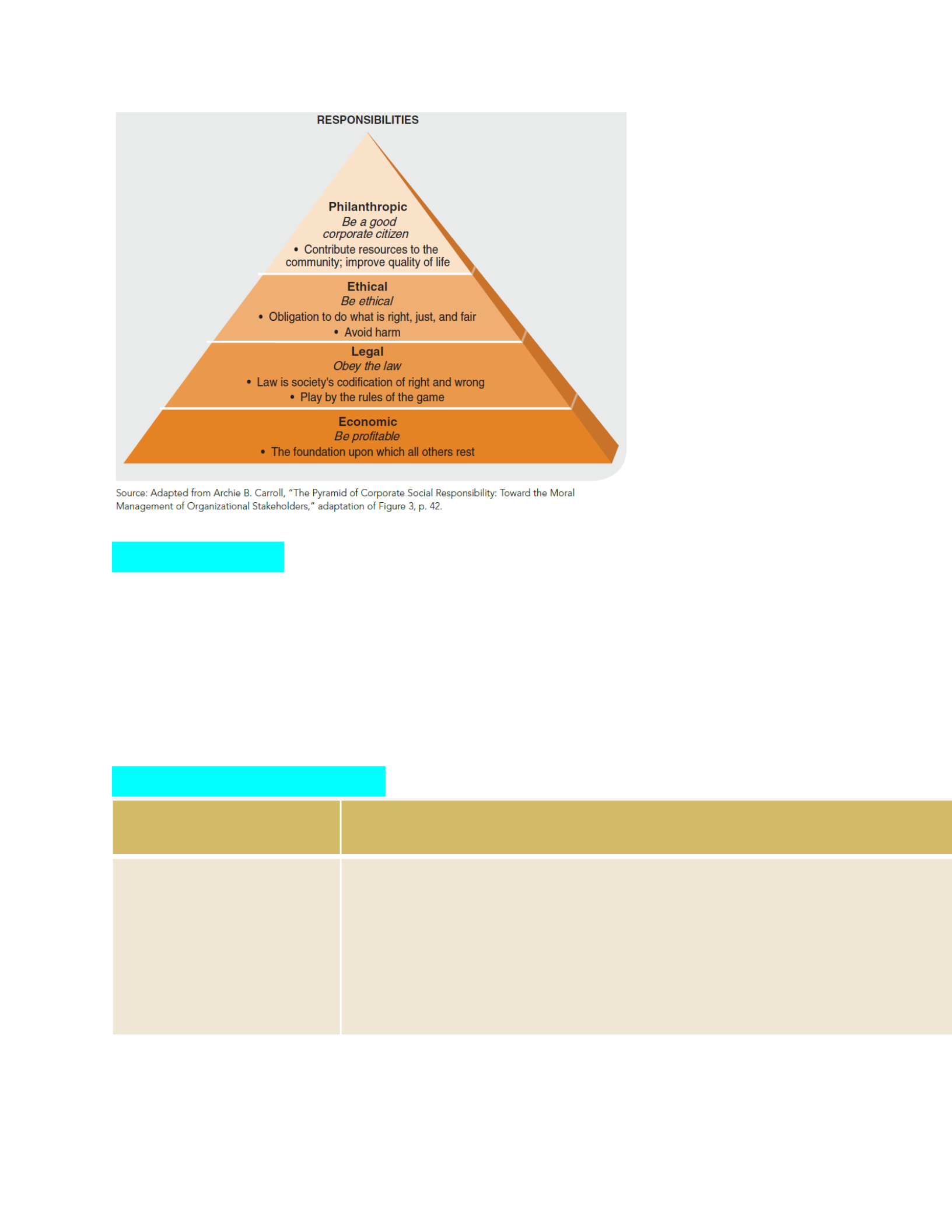
Marketing citizenship - adoption of a strategic focus for fulfilling the economic,
legal, ethical, and philanthropic social responsibilities expected by stakeholders
oThe company is a “good citizen” in the market and in the community
oPhilanthropic efforts are included in being a good citizen
The Pyramid of Corporate Social Responsibility
Marketing Ethics
Principles and standards that define acceptable marketing conduct
oAs determined by various stakeholders
oGoes beyond legal issues
oFoster trust, which helps to build long-term marketing relationships
Break down in exchange process can result in
oCustomer dissatisfaction and lack of trust
oLawsuit
Ethical Issues in Marketing
Issue Category Examples
Product •Failing to disclose risks associated with a product
•Failing to disclose information about a product’s function, value, or use
•Failing to disclose information about changes in the nature, quality, or size of a product

Pricing •Price fixing
•Predatory pricing
•Failing to disclose the full price of a purchase
Distribution •Failing to live up to the rights and responsibilities associated with supply-chain member
roles (e.g., manufacturers, wholesalers, distributors, retailers)
•Manipulating product availability
•Using coercion to force other intermediaries to behave in a certain way
Promotion •False or misleading advertising
•Using manipulative or deceptive sales promotions, tactics, and publicity
•Offering or accepting bribes in personal selling situations
Philanthropic Responsibilities
Promote human welfare or goodwill
Cause-related marketing - practice of linking a firm’s products to a particular
social cause on an ongoing or short-term basis
Strategic philanthropy approach - synergistic use of organizational core
competencies and resources
oTo address key stakeholders’ interests
oAchieve both organizational and social benefits
Sustainability
Social responsibility is demonstrated through programs designed to protect
and preserve the natural environment such as aims to reduce, reuse, and
recycle
Green marketing - stakeholder assessment creating long-term relationships
with customers while maintaining, supporting, and enhancing the natural
environment
Incorporating Social Responsibility and Ethics into Strategic Planning

Difference between ethics and social responsibility
oEthics – judgments about what is right or wrong in a particular decision-
making situation
oSocial responsibility – deals with the total effect of marketing decisions on
society
Both concepts are interrelated and can be profitable as well, leading to their
adoption by companies in strategic planning.
Chpt 5
What Are Markets?
Groups of individuals and/or organizations that have:
oDesire or needs for products in a product class
oAbility, willingness, and authority to purchase such products
Consumer & Business Markets
Consumer market – purchasers and household members who intend to consume
or benefit from the purchased products and do not buy products to make profits
or serve an organizational need
Business market – individuals or groups that purchase a specific kind of product
for resale, direct use in producing other products, or use in general daily
operations
oProducer
oReseller
oGovernment
oInstitutional markets
Target Markets (Audiences)
The specific group (or groups) to whom a marketing positioning or message is
directed, within a larger total market
The “Market” to which you are trying to sell your product
How to define whom you want to reach:
oMarketing plan
oSyndicated research
oCompetition
oTrade magazines
oYour own research
oThe product itself
Target Market Selection Process
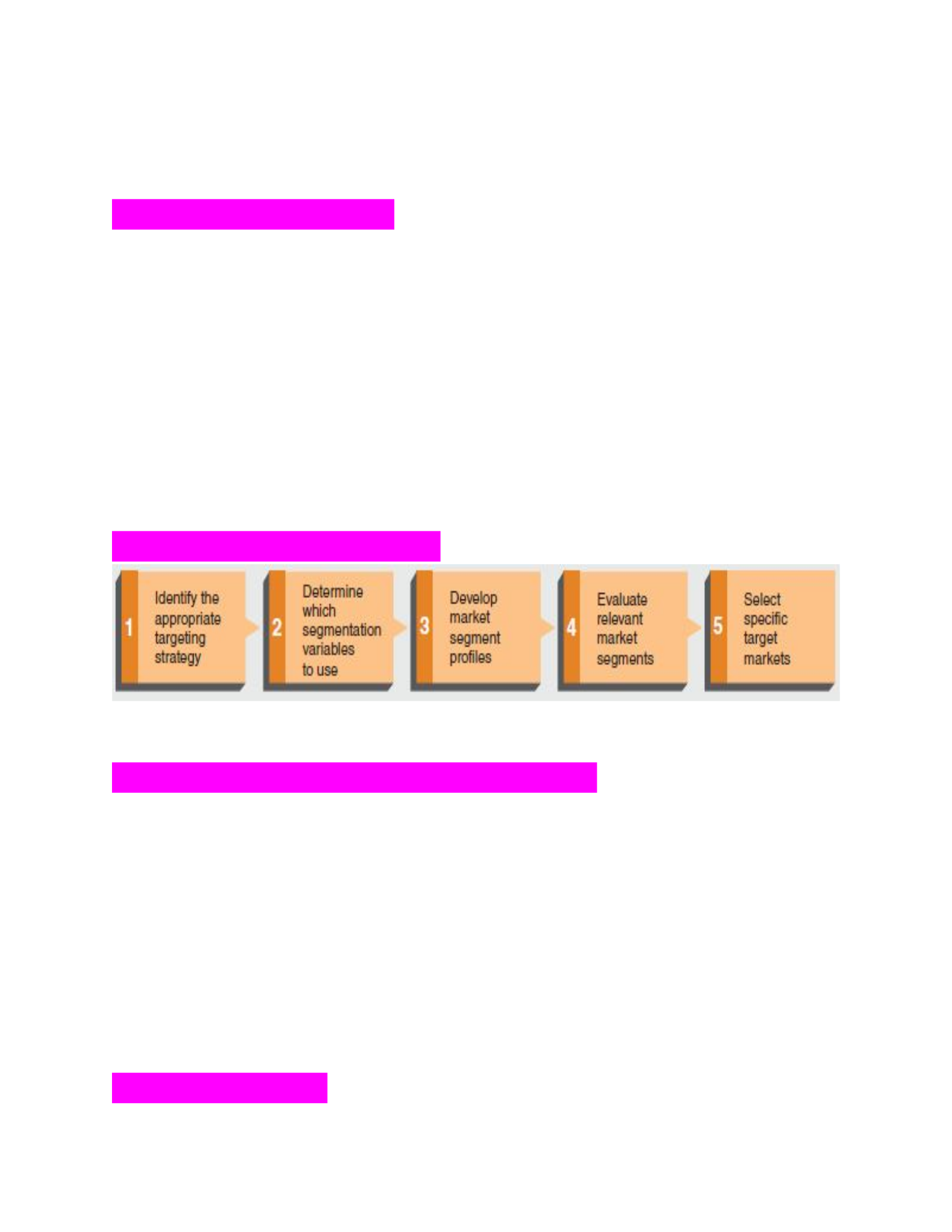
Step 1 - Identify Appropriate Targeting Strategy
Target market -
oThe people who have the MOST likelihood of being interested in your
product
oThe people to whom you direct your Marketing Mix
Strategy selection for target market is affected by
oTarget market characteristics
oProduct attributes
oOrganization’s objectives and resources
To find the right target, you need the right “segment” – so you do “segmentation”
Segmentation is First

Market segmentation: The process of dividing a total market into groups with
relatively similar product needs in order to design a marketing mix that matches
those needs
Market segment: Individuals or groups with one or more similar characteristics
that cause them to have similar product needs
Conditions for Market Segmentation to Succeed
Customers’ needs must be ‘heterogeneous’
oHeterogeneous means?
Conditions for Market Segmentation to Succeed
Customers’ needs must be ‘heterogeneous’
oHeterogeneous means something (a group for example) that has dissimilar
entities or elements
Customers in a larger population have diverse (differing) needs
Allows a marketer to segment by dividing the larger group into
smaller target groups
oEx: “The party was attended by a heterogeneous group of artists,
politicians, sports figures and social climbers”
The opposite of heterogeneous?
Conditions for Market Segmentation to Succeed
Customers’ needs must be ‘heterogeneous’
oHeterogeneous means something (a group for example) that is composed
of completely dissimilar entities or elements
The opposite of heterogeneous?
“Homogenous”
oUniform in substance or character; comprised of very similar elements
oLarge proportion of customers have similar needs for a product – so one
specific segment
Conditions for Market Segmentation to Succeed
Customers’ needs in the total market must be ‘heterogeneous’
Segments must be identifiable and divisible
Marketer must be able to compare the different market segments in terms of
sales potential, costs, and profits

One segment must have enough profit potential to justify developing a special
marketing mix
Company must be able to reach the chosen segment with a particular marketing
mix
Types of Targeting Strategies
Undifferentiated targeting strategy - designs a single marketing mix and directs it
at the entire market for a particular product; effective for homogenous markets.
One mix, one market.
Concentrated targeting strategy – targets multiple market segments using one
marketing mix. One mix, multiple segments.
Differentiated targeting strategy - targets two or more segments by developing a
marketing mix for each segment (multiple marketing mixes)
Undifferentiated Targeting Strategy
One Marketing Mix for one target
Seems to fit CPG products
oCommodities
oStaple food items
Step 2 – Determine Which Segmentation Variables to Use
Segmentation variables – characteristics of individuals, groups, or organizations
used to divide a market into segments
Should relate to the customers’ needs for, uses of, or behavior toward the product
Must be measurable
Number and size of variables affected by:
oCompany resources and capabilities
oProduct type and degree of variation in customer needs
Segmentation Variables for Consumer Markets
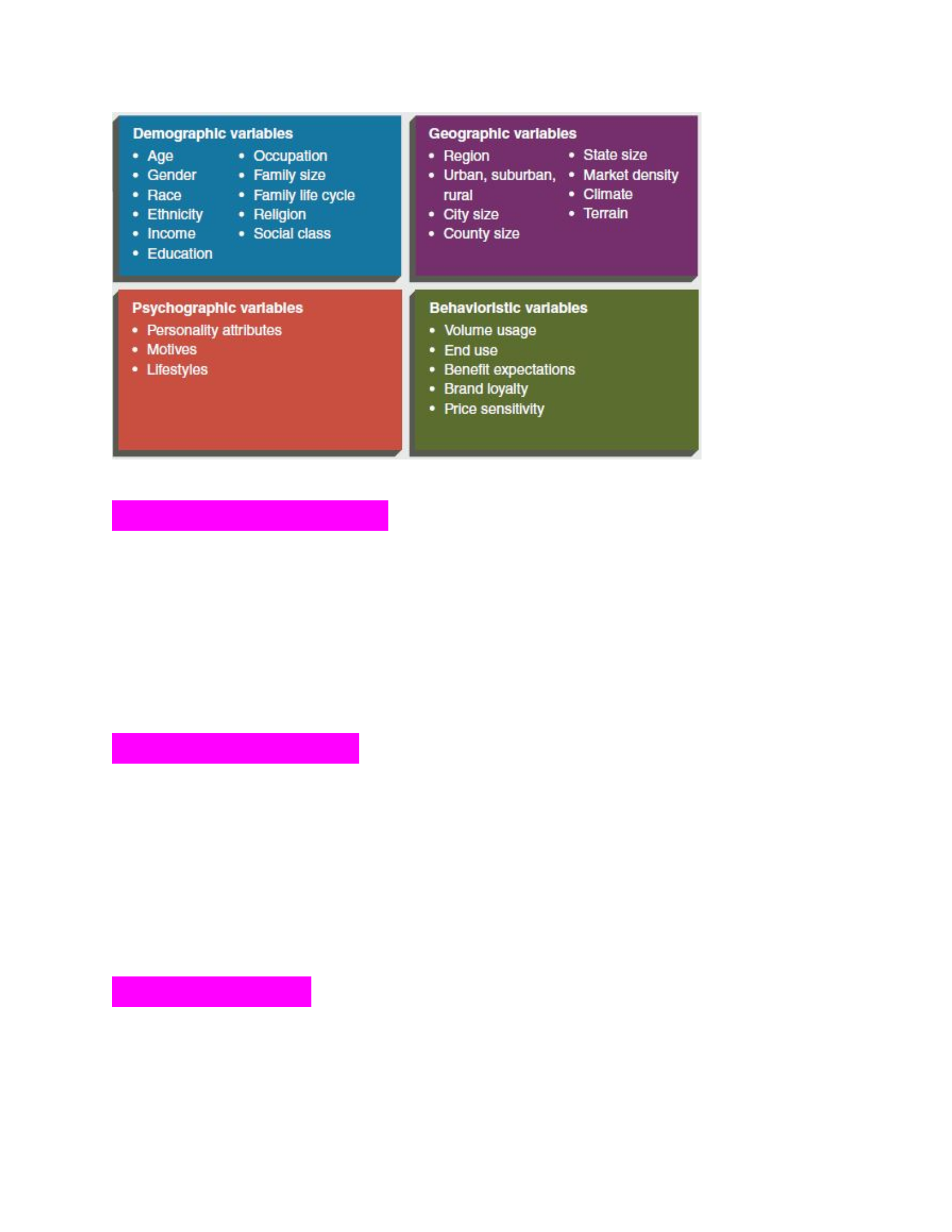
2c. Psychographic Variables
Personality characteristics
oProduct resembles many competing products.
oConsumers’ needs are not significantly related to other segmentation
variables.
Motives
oDivide the market according to consumers’ reasons for making a purchase
Psychographic Variables
Lifestyle
oSegment by:
How consumers spend their time
Importance of things in their surroundings (e.g., homes or jobs)
Beliefs about themselves and broad issues
Opinions on what’s going on
Life Stage Targeting
Baby Boomers – born 1946-1964
Gen-X – born 1964-1981
Gen-Y – born mid-1970’s to early 2000’s - MILLENNIALS
Gen-Z – Today’s children

Premise is that each of these groups has different
Needs
Wants
Opinions
Habits
Purchasing power
2d. Behavioristic Variables
Dividing a market according to consumer behavior toward a product in terms of
its usage
Used by marketers to satisfy customers who use a product in a certain way
Involves designing certain product features in such a way that makes it easier to
use, safer or more convenient
Can sometimes be directed at people who do not make the purchase themselves
Purchase Influencers
Do not physically make the purchase
Do not make the purchase decision
Children
Significant others
Peers
Friends
Icons
Benefit Segmentation
Benefit segmentation - division of a market according to benefits consumers want
from the product (part of their behavior)
Effectiveness depends on certain conditions
oBenefits sought must be identifiable
oUsing the benefits, marketers must be able to divide people into
recognizable segments
oOne or more of the resulting segments must be accessible to the firm’s
marketing efforts
Step 3 – Develop Market Segment Profiles
Market segment profile:

Describes similarities of potential customers within a segment
Explains differences among people and organizations in different segments
Various aspects covered:
oDemographic and geographic factors
oProduct benefits sought and lifestyles
oBrand preferences and usage rates
Uses of Market Segment Profile
Assess the degree to which products fit potential customers’ product needs
Help marketers understand how a business can use its capabilities to serve
potential customer groups
Determine which segments are most attractive relative to the firm’s strengths,
weaknesses, objectives, and resources
Help a firm make marketing decisions relating to a specific market segment
One way is to profile based on people’s values and life styles (from
psychographics)
Values & Life Styles Classification
“VALS” – Syndicated research
Classifies consumers based on psychological characteristics correlated with
oPurchase behavior
oKey demographics & psychographics
Based on lifestyle choices
Used to create new products as well as segment existing markets
VALS Segmentation System
Major tendencies of the four groups with higher income:
1. Innovators – successful, sophisticated, active “take charge” people with high self-
esteem. Purchases reflect cultivated tastes, upscale, niche oriented.
2. Thinkers – mature, satisfied, and reflective people motivated by ideals and value
order, knowledge and responsibility. Favor durability, functionality and value in
products.
3. Achievers – successful goal oriented people who focus on career and family. Favor
premium products that demonstrate success.
4. Experiencers – young, enthusiastic, impulsive people who seek variety and
excitement. Spend high proportion of income on fashion, entertainment, and
socializing.
Major tendencies of the four groups with lower resources
1. Believers – conservative, conventional and traditional people with concrete
beliefs. Favor familiar, American products and are loyal to established brands.
2. Strivers – trendy and fun loving people who are resource constrained. Favor
stylish products that emulate the purchases of those with greater wealth (knock-
offs).
3. Makers – practical, down-to-earth, self-sufficient people who like to work with
their hands. Favor American-made products with a practical or functional
purpose.
4. Survivors – elderly, passive people who are concerned about change. Loyal to
their favorite brands.
Step 4 - Evaluate Relevant Market Segments
4a. Sales Estimates: Market Potential
Total amount of a product category or market (total market sales) customers will
purchase within a specified period
Stated in terms of dollars and units
Affected by economic, sociocultural and other environmental forces
The total sales in a product category
4b. Sales Estimates: Product Potential
Product potential - maximum percentage share of a specific market that an
individual firm within a specific industry can expect to capture for a specific
product
oMARKET SHARE
Market Segment
Aspects to be
Evaluated
Sales
Estimates Competition Estimated
Costs

Influencing factors
oMarket potential - limits the size of the company’s sales potential – total
available sales
oMagnitude of industry-wide marketing activities
4c. Assess competition and estimate costs
Competition –
oWhat are their marketing strategies?
oHow do we relate to them (SWOT)?
Estimated Costs -
oDo we have the resources (and the vehicles) to reach the targets we’re
considering?
oWill those resources be effective?
Step 5 - Select Specific Target Markets
Investigate if the organization has sufficient…
oFinancial resources
oManagerial skills
oEmployee expertise
oFacilities to compete effectively in the selected segments
Consider long-term versus short-term growth
Conduct appropriate target market analysis
Develop forecasts to determine which segments have the most potential
5a. Developing Sales Forecasts
Sales forecast - amount of a product a company expects to sell during a specific
period at a specified level of marketing activity
Important because it effects:
oPlanning (strategic options)
oOrganizing (staffing, production)
oImplementing (activities, the extent/scope of the marketing mix)
Forecasting Techniques
Customer forecasting survey - asking customers what types and quantities of
products they intend to buy during a specific period
Sales force forecasting survey - firm’s salespeople estimate anticipated sales in
their territories for a specified period
Expert forecasting survey - hiring professionals to help with sales forecast

Time series analysis - uses firm’s historical sales data to discover a pattern, or
patterns, in sales over time (daily, weekly, annual, 3-5 years, etc.)
Executive judgment - intuition of one or more
5b. Test Market
Test Market – making a product available to buyers in one or more test areas and
measuring purchases and consumer responses to marketing efforts
Advantages:
oEffective for forecasting sales of new products in new geographic areas
oGives marketer an opportunity to test the success of various elements of
the marketing mix
Disadvantages:
oTime consuming and expensive
oMarketer cannot be certain that consumer response represents the total
market response or that the same response will continue in the future

