


1
Sustainability and Responsible Business Case Studies
Arizona State University-Tempe Campus
SOS 385 - Business and Sustainability I
Date

2
Table of Contents
Sustainability and Responsible Business ........................................................................................ 1
List of Figures ................................................................................................................................. 3
Introduction ..................................................................................................................................... 4
Overview ......................................................................................................................................... 5
Sustainable Development Goals (SDGs) .................................................................................... 5
Corporate Social Responsibility (CSR)..................................................................................... 12
Globalization ............................................................................................................................. 19
Diversity and Inclusion ............................................................................................................. 25
Stakeholder Theory ................................................................................................................... 33
Practice .......................................................................................................................................... 39
Case 1 - Unilever ....................................................................................................................... 39
How it unfolded, with a focus on ethical dimensions............................................................ 39
Analysis in terms of theories of ethics and/or business ethics .............................................. 42
A broader lesson for other practitioners ................................................................................ 47
Case 2 - Apple Inc. .................................................................................................................... 51
Ethical Issue Faced by Apple on CSR and Addressing Ethical Dimensions ........................ 51
Analyzing in Terms of Ethical Theories ................................................................................ 53
Wider Lessons for Practitioners ............................................................................................ 56
Case 3 - Nike ............................................................................................................................. 59
Ethical Issues Faced by Nike in CSR .................................................................................... 59
Analysis through Ethical Theories ........................................................................................ 60
Wider Lessons for Practitioners ............................................................................................ 63
Conclusion .................................................................................................................................... 67
References ..................................................................................................................................... 68

3
List of Figures
Figure 1: An illustration of the 17 Sustainable Development Goals .............................................. 6
Figure 2: Illustration of the CSR Pyramid by (Field, 2022) ......................................................... 13
Figure 3: Unilever's Super CSR Stretch Goal for 2020 (Unilever 2020) ..................................... 47
Figure 4: Apple's CSR Policy Explained (Apple, 2023) ............................................................... 52
Figure 5: Nike 2022 Impact Report Data ..................................................................................... 60

4
Sustainability and Responsible Business
Introduction
Sustainability and business theory and practice are based on an elaborate ethic that guides
firms and companies in making decisions. According to Fallah et al. (2022), this complex
framework is based on stakeholder theory, globalization, diversity, sustainable development
objectives, CSR, and ethically appropriate corporate structures. et al. (2022) add that it highlights
the relationship between morality and economic decisions, serving like an illuminating torch
through the arduous landscape of contemporary commerce.
Hence, this paper is a crucial examination of how moral mandates are converted in the
present-day workplace. The paper also examines in depth the intricacies regarding the use of
these frameworks in the actual world so that one may fully understand the matter. The third
chapter also has three case studies which are interesting and practical but not theoretical theories.
The mentioned case studies are strong illustrations of how ethics influences organizational
culture, how the social environment is affected by the behavior of organizations, and how ethics
determines decisions. This study seeks to refine our grasp of the complex interrelation between
ethical values and business practices.
The analysis will help organizational function ethically by embracing ethical and
sustainable operations. This will entail examining sustainability, ethical responsibility, inclusion,
world view, stakeholder approach, and morality in business frameworks. The ethics in the
investigations of Nike, Unilever, and Apple Inc. take cognizance of the industry and are aligned
with theory. These companies should see them as case studies showing the direction in which the
world is moving regarding sustainability, ethics, and diversity. This analysis centers on how

5
ethics can become revolutionary. It involves workplace safety, fair wages, and emissions cuts.
The summary will include a summate of ethics on business strategy, the social implications, and
the environmentally sustainable issues. Thus, it finally reveals the significance of ethical
business toward a sustainable future through its strength and power.
Overview
Sustainable Development Goals (SDGs)
The UN, in 2015, established the SDGs, which are made up of seventeen global
objectives. The stated objectives will be directed towards a worldwide condition where people
can live productive and satisfying lives and preserve nature (United Nations, 2019). United
Nations (2019) states that the goals aim to provide solutions for global challenges such as
poverty alleviation, healthcare, women empowerment, the impacts of climate change, and well-
being promotion. United Nations (2019) adds that enterprises need to be ready for change if they
want to achieve this objective, as they should benefit society. Such adjustments could include
pollution control, investment in green energy, and active policies on social justice. Below is a
figure illustrating all the 17 SDGs set out by the United Nations.

6
Figure 1: An illustration of the 17 Sustainable Development Goals
An article by LEGO (2021) points out that corporate organizations must actively
participate in achieving the SDGs. Setting up a business culture where sustainability activities
are given much importance is important. United Nations (2019) states that SDGs can be
integrated into the core strategy and operations of business enterprises as they possess the
capacity to make tremendous contributions. This research by Sachs and Sachs (2021) highlights
the importance of activities in the field of CSR. This paper underscores the fact that
organizations have both the capabilities and the ability to address the social problems spelled out
in the Sustainable Development Goals (SDGs) through their resources, creativity, and talents.
Sustainable practices improve a company's reputation and increase shareholder value. Corporate
executives and politicians should work closely together to devise complete systems that promote
and control firm behavior corresponding to the SDGs. This collaborative effort will facilitate the
establishment of a mutually beneficial link between economic advancement and well-being.

7
Adapting SDG goals to fit into a country's measurable strategies is an ongoing process
that has areas of both progress as well as disparity. Allen, Metternicht, and Wiedmann (2018)
determined that despite the fact that the majority of countries work to align their national policies
to the SDGs, the extent to which policies are embedded in the planning and budgetary
frameworks is shallow. This gap illustrates a fundamental governance problem – the SDGs are
global in nature, but their achievement is local, which means that the institutions will need to be
tailored to the circumstances. Countries with good data and inclusive policy systems are able to
adapt faster, confirming that the administrative capacity of a country determines the success of
its SDGs. Allen et al. (2018) analyses suggest that the very act of defining what needs to be
measured is an accountability mechanism that drives the countries to be more transparent in the
prioritization of their socio-economic and environmental goals. This creates a paradox of a
different nature, suggesting fairness among the global community is not a uniform standard.
Countries with a lower resource base will not be able to compete, not because of lack of effort,
but lack of institutions. Hence, the governance of resource inequity and the quality of institutions
is an inescapable part of the conversation about sustainable development.
Sachs (2020) posits the SDGs as the social contract between humankind and the planet
which interlinks wellness as both a driver and a beneficiary of health. He reframes the goals as
targets, systemic vision intertwining climate, health and economics. Sachs, (2020) states: “when
nations regard health as a part of global planetary stewardship” they create feedback loops which
support productivity and resilience. Then, the concept of planetary health adds a new ethical
aspect: any society, which destroys their ecosystems, is also undermining their own existence.
This means the world cannot operate and administer in isolation from human welfare. Closer
Sachs (2020) works health policy in greater isolation, weaving together with governance of

8
agriculture, energy, and cities. The SDGs become, not merely aspirational rhetoric, but a
practical and achievable framework for coexistence.
Assuming SDGs are universally accepted, putting them into action reveals
incompatibility in short-term financial gain with prolonged sustainability. In Pedersen’s view,
SDGs offer a competitive advantage strategy, shifting the sustainability obligation from a much-
needed moral obligation to a competitive gain. This shows how business people regard the SDGs
as stimulus to innovation, welcoming new business models driven by circular economies and
renewable resources (Pedersen, 2018). This sustainability case, however, risks ethical
commodification, especially if the societal contribution is only a mask for other ulterior motives.
Herein lies the paradox: how to make a real change without sacrificing very real instrumental
dividends? The SDGs must be reworked in organizational thinking as ethical pillars holistically
integrated into organizational strategy, and not as a checklist of compliance. From this
perspective, the ability of the private sector to advance SDGs is fundamentally a question of
business integrity, coupled with the visionary leadership and sound scrutiny procedures to ensure
accountability that provides more than just a veneer of symbolic marketing.
The SDG's gender perspective underscores how equity and empowerment are both
instrumental and constitutive of sustainable development. Dhar (2018) argues that gender
inequality affects most of the SDGs, including education, health, and poverty. Her analysis
suggests that countries that support women’s participation in decision-making processes tend to
perform better on several targets at a faster pace, because the added inclusivity enhances
resource distribution and innovation (Dhar, 2018). However, deeply rooted patriarchal norms and
unpaid labor continue to limit women’s empowerment, particularly in low-income countries.
Such an observation reinforces the fact that closing gender gaps goes beyond a question of

9
rights; it is an effective approach to the attainment of all the SDGs. Dhar (2018) argues that
closing the gender gap should now be a primary consideration in all matters of development,
since gender equity is a fundamental condition for sustainable development. It is, for this reason,
that gender responsive budgeting and data systems should be designed to transform development
by embedding the equality, as the framework’s primary foundational value, rather than as an
afterthought.
Another critical frontier where ambition meets practical constraint is access to energy.
According to the United Nations’ Energy Progress Report (Sdg, 2019), global electrification has
advanced swiftly, yet 789 million people still remain disconnected from the power grid. This
gap is a paradox of modern progress: energy poverty still exists despite the modern technological
infrastructure. As the report points out, energy is the “golden thread” of the economy, climate,
and social welfare (Sdg, 2019). Increased investment in renewable energy infrastructure
generates both emission-free job opportunities and rural empowerment. However, these
investment transitions need new, long-term de-risk financing models. Sdg (2019) articulates this
paradox as the need to provide equitable energy access, without universal energy, the SDGs
stand unfinished. Therefore, global sustainability must integrate the elements of energy as a
physical construct and the principles of compassion as a social construct.
In his essay from 2017, Swain scrutinizes the SDGs and posits the SDGs could be ‘high
risk, low reward’ if not treated with caution. He elaborates that the wider the goals, the greater
the targets’ a motivation level. This appears to be a quandary of global governance, where
inclusiveness and attention to detail are at odds with each other. When targets and aims are
defined in vague terms, the result tends to be more as a worthless political statement than a
tangible result (Swain, 2017). This lack of clarity, however, could be a significant advantage by

10
providing more contextual flexibility. The SDGs provide the contours within which countries
can geospatially ascribe local targets and objectives in a coherent framework that aligns with the
global vision. These geographically defined SDGs, together with Swain’s (2017) critique,
transform the SDGs into fertile ground for dialectical thinking: where the guiding principle is the
overarching framework, it is the specific details that give direction to the action. It becomes
imperative for the SDGs to be the ontological starting point which political leaders shape their
ideas with, and in this case, the balance is somewhere between the ambition and the operational
clarity, the SDGs. As long as it concerns conviction concerning the moral implications in the
results of the plan, the SDGs will remain as such.
In the context of the fundamental rights of individuals and the governance of the
environment, Katila et al (2019) under the SDG (Sustainable Development Goals) framework
presents intangible social and biophysical linkages of sustainable forest management. The study
advanced by Katila et al (2019) shows the forests render ecological, cultural and climatic
services which, when preserved, enable sustainable livelihoods. It argued, when the forests get
deforested, the social justice dimension gets violated because the biodiversity gets eroded, which
at the same time serves for the fundamental rights of the Indigenous Peoples which get violated.
This view furthers the social dimension of sustainability, which transcends the carbon emission
ideal, to include the ethical and cultural aspects of governing resources. Katila et al (201)
therefore proposes the ethical and social aspects of success SDG implementation involve the
recognition of nature as a resource, and a moral subject, alongside other economic resources.
Recognizing the economic resources, the forests and ecosystems get envisioned as partners and
not as mere products, which shifts the human environment relationship to one of custodianship

11
instead of exploitation. This stewardship, which serves the moral dimension of ecology, provides
the framework of enduring sustainability.
As stated in Trends (2017), one of the major challenges related to the implementation of
SDGs is the lack of coherence in the policies at national and global levels. There is often a
contradiction in the policies pursued by governments, for example, while promoting economic
growth, governments also and at the same time pledge to reduce the level of emissions.
According to Trends (2017), this is a structural contradiction in modern governance: the pursuit
of prosperity and the simultaneous preservation of the environment. Reconciling this paradox
may require a level of institutional innovation which embeds environmental concerns in
economic and trade policies, rather than treating them as externalities. This report also highlights
the value of multi-stakeholder panels, where civil society, businesses, and academia jointly
design and implement responses. By embedding environmental policy in economic policy, the
practitioners may minimize the gap between aspiration and reality. Therefore, Trends (2017)
redefines the implementation of SDGs as a negotiation of competing timeframes – the current
development needs of society and the necessity for sustainable development in the future.
The lack of dis-aggregated reliable data able to monitor inequality is a neglected
disguised progress of Allen, Metternicht, and Wiedmann. Allen et al. (2018) show how lack of
data to cover certain groups reinforces inequality, not progress. These omissions make
measurement not neutral, but a politically charged reality. This lack of measurement includes
data on rural and informal economise, which is a dangerous, regressive gap. Support to
developing countries is not merely financial, but includes the development of statistical tools in
analyzing data gaps. Transparency in data fosters the visibility of inequities for policy action.
Allen et al. (2018) extend the argument for data ethics to say that disaggregated data is needed

12
for actionable equity. Sustainable development, particularly the development that is just and
equitable, needs to do more to make the scarce data actionable.
Corporate Social Responsibility (CSR)
CSR refers to the voluntary actions of firms intended to admit and mitigate their effects
on society and the environment. According to Milton (1970), corporations must ensure that they
combine social and environmental responsibility with providing safe, ethical, and quality
standards for their products and services. Examples of CSR efforts include reducing carbon
footprint and energy consumption, investing in renewable energy sources, and offering
employees fair wages and safe workspaces.
The proper evaluation and assessment of the CSR program's effectiveness need multi-
dimensional measuring models. As proposed by Fatima and Elbanna (2023), CSR can be viewed
as a pyramid as illustrated in the figure below. Field (2022), in the figure below explains that the
pyramid has four levels that refer to four different obligations: legal, ethical, economic
obligations, and charitable. A lot of ways have been identified for measuring the CSR effect. As
defined by Crane et al. (2019), Social Return on Investment (SROI) is a way of expressing the
economic value of corporate social responsibility (CSR) programs in financial terms. Crane et al.
(2019) state that this method helps companies evaluate the tangible benefits of their social
responsibilities. Furthermore, Milton (1970) claims that a global reporting initiative (GRI)
guideline gives a systematic guideline for organizations to report on social, natural, and financial
impact. These frameworks provide detailed analysis of CSR performance and facilitate
transparency in communication and responsibility among other stakeholders on society and
environment questions.

13
Figure 2: Illustration of the CSR Pyramid by (Field, 2022)
It is a great advancement in governance when CSR evolved from volunteer charity work
to a strategic part of a business model. According to Porter & Kramer (2011), social value
creation positioned CSR as a factor in competitiveness. Meaning societies do not view social
investment as an afterthought charity but as an innovative market differentiator. Moon (2014)
argues that other countries are starting to support this that by providing guidelines that reward
this type of behavior. However, that type of profit-driven CSR practices raises red flags around
intention. As Aguinis & Glavas (2012) put it, organizations that adopt CSR as part of their core
identity, demonstrate a bigger disparity when it comes to stakeholder trust than those that take it
on as a reactive measure. The shift from obligation to opportunity explains why this type of CSR
behavior differs from mere symbolism. in this case, trustworthiness is a new form of currency in
responsible business practice.

14
Transparency has emerged as a key measure of successful CSR activities; especially now,
when there is a heightened digital vigilance. As Hess (2019) points out, stakeholders want
supporting evidence on the social and environmental ramifications of a company, not self-
serving stories. This shift demonstrates a movement from vague reporting to reporting on
genuinely measurable sustainability metrics. Bebbington and Unerman (2018) highlight the point
that, reasonable and genuine CSR reporting must address material concerns aligned with the
primary functions of the company, not generalized statements of philanthropy. This precision
adds to the sustainability claims legitimacy and decreases the chances of being accused of
“greenwashing.” Companies that on the other hand, hide or choose to selectively report
information stand to lose their reputation and the confidence of their investors. This is the
argument of Christensen, Hail, and Leuz (2021), open and transparent ESG disclosures help
lower information asymmetry, and therefore, improve bottom-line and ethical outcomes
simultaneously. The evidence that links transparency to the open creation of corporate value
shows that accountability is not a box-ticking exercise; it is a sophisticated display of the firm’s
strategic fundamental.
The scope of Corporate Social Responsibility (CSR) has developed regionally distinct
meanings that stem from different cultures, politics, and institutions. In their 2008 paper on CSR
the European Way, Matten and Moon highlighted “explicit” CSR and social initiatives taken by
corporations in the Anglo American settings and “implicit” CSR that is more predominant at the
European region where social obligations are legislated. This model, although simplistic,
illustrates the variable contours of local governance in shaping international corporate moral
responsibility. In the context of emerging economies, Jamali and Karam (2018) has noted the
tendency to hybridize global CSR standards with socially reciprocal and community-centered

15
practices. This elasticity of Jamali and Karam’s model still supports the argument that CSR is not
ever and universally applicable. In developing countries, however, Visser (2008) explains the
phenomenon of CSR as a substitute for public governance as a dominant form of public
governance, which in turn illustrates the compensatory form of CSR that is often ignored in the
Western world. This growing plurality of responses advances the rejection of ethnocentric
interpretations and instead pushes for the acknowledgment of culturally appropriate CSR for the
purposes of global sustainability.
The ethical of internal CSR emphasizes on employee engagement as the essence and the
bond between employee well-being and the resilience of the organization. According to Turker
(2009), internal CSR practices such as, fair wages, career advancement, and flexible schedules
improve the employee’s affiliation with the corporation’s goals. Perception of employees on
equity fuels their active participation to social responsibility other than being mere passive
beneficiaries. The authenticity of CSR is likely to strengthen the commitment and the attachment
of employees to the organization and lower their turnover intentions while enhancing innovation
(Farooq, Payaud, Merunka, and Valette-Florence, 2014). The social contract between the
employees and the organization becomes a moral basis for uninterrupted productivity. Glavas
(2016) notes that practicing CSR which fosters social aims of the organization leads to
enhancement of intrinsic motivation and improvement of creative thinking. The link between
ethics and engagement is the reason why the human capital is both a stakeholder and a moral
constituent. This is why, internal CSR with a focus on social and economic equity is
compassionate and also a CSR best practice, aligning moral purpose with business discipline.
The removal and maintenance of glaciers and ice sheets, which hold the tundra, the major
supply of fresh water and the cloud reactor of the northern hemisphere, sit with grave concern

16
misses the abs selenium of public and administrative concern. Murphy puts it best: There is NO'
target set for open and deep sea mining so it is a totally unregulated industry, and it’s a real target
for civil disobedience and opposing blind reliance on colonial rubber. It is untamed, it is a part of
the earth's crust' Working with the mining sector means much undercover. For geologists used to
working with formal mining sector, it is a new ball with the arbitrary boundaries of rules,
strategic thinking. All participants on the table have the same fundamental interests with
profound differences. It is beneficial to shift the border lines of open and deep sea mining for a
border of to earn a permit for deep sea mining. It is logistically better to integrate from the
untamed of open and deep sea mining.
The moral complexity of globalization is relevant to CSR’s role in supply chain ethics.
According to Blowfield and Murray (2019), multinational companies are under increased
scrutiny regarding their labor rights practices, supply chain transparency, and compliance down-
stream in their supply chains. Consequently, CSR in supply chains exercises ethics, not only at
the corporate head office, but at all levels of production. According to Locke (2013), the mere
act of monitoring does not ensure ethical performance; rather, suppliers must be trained and
incentivized. This reinforces the need for relational governance which combines enforcement
and partnership. Crinis (2019) contends that supply chain ethics does not only concern avoiding
harm, but promoting equity and dignity in labor on a global scale. Companies that jointly
develop and implement standards with their suppliers foster mutual trust and resilience. Hence,
the moral geography of CSR stretches across multiple continents, attesting to the fact that ethical
responsibility follows the brand, no matter where the brand is produced.
The growing concern for the quantification of moral capital in the context of market
logics and CSR is evident in the works of both Ioannou and Serafeim (2015). The authors

17
highlight that investors include CSR performance in their valuation models, equating
responsibility at the social level as a proxy for a form of risk management across the long term.
The investors’ view signals a move towards a subtle amalgamation of the moral and the
monetary. Firms with a strong sustainability culture tend to financially outperform their peers
over longer periods of time, especially with respect to innovation and resilience to shocks, as
argued in works by Heinze et al (2015). While there is such alignment, CSR as an investment
criterion comes with the risk of the ethical dimension becoming a victim of strategic
simplification. Gond and Crane (2010) caution that paradoxically, over quantification is the
obliteration of the moral essence of CSR , substituting moral virtue for undue scrutiny of
measurement. The authors contend that there is an inherent tension in the attempts to integrate
CSR into financial performance. While accountability and responsibility are emphasized, the
challenge also lies in ensuring the protective measures that maintain the instrumental and the
more normative elements.
Active participation in philanthropy and engagement at a local level is the social
dimension of CSR described by McWilliams and Siegel (2011) as the community engagement
strategy of the firm. In their siloed approach, businesses treat the community as a development
beneficiary. However, as per, progressive firms treat the community as a sustainable
development partner. Unlike publicity driven corporate social responsibility, community based
CSR facilitates the building of relational trust, as pointed out by Jamali and Mirshak (2007).
Legitimacy and long-term social cohesion are reinforced when firms and community members
join together to design social projects. Carroll and Shabana (2010) emphasize the moral
reciprocity generated in such relationships: societies thrive when businesses flourish.
Community oriented CSR goes beyond philanthropy to participatory development, placing the

18
corporation as a social construct where its hands are intertwined in responsive and socially
responsible ways.
The incorporation of new technology in CSR brings new opportunities as well as
challenges in the areas of transparency and stakeholder engagement. Real-time reporting and
blockchain-enabled accountability in global operations as noted by Caplan (2020) are possible
because of technology. On the downside, the technology also increases the reputational risk of
global operations since discrepancies can be pointed out in real-time. Social media has
influenced CSR communication in such a way that, as noted by Schultz, Castello, and Morsing
(2013), it has become more of a conversation than a speech, requiring more genuine interactions
and an engagement of CSR dialogues rather than monologues. This evolution of CSR
communication forces companies to behave ethically as the stakeholders assume the role of
auditors. However, as pointed out by Crane and Matten (2020), CSR in the digital era runs the
risk of becoming performative signaling in absence of genuine responsive action. The
incorporation of technology into ethical behavior therefore has a two-fold effect, hence it makes
the scrutiny more democratic, but also more challenging in terms of testing sincerity. Digital
CSR emerges as the latest form of CSR by integrating swift ethical action with the transparency
that characterizes the current era of information.
The parallel development of CSR and global crises poses a challenge to ethical
capitalism. Bansal et al. (2018) contend that the climate emergency, inequality, and pandemics
require corporations to embrace systemic CSR that focuses on social risk anticipation instead of
reactionary approaches. Shifting from responsibility to responsiveness is an advancement of
moral foresight. Recovery post a pandemic has prompted a change in the corporate purpose to
instead center it on societal healing. This has led George et al. (2021) to argue that corporations

19
must now redefine growth in terms of inclusivity and resilience. Furthermore, Aguinis et al.
(2020) argue that in crisis situations, CSR serves as a moral axiom that dictates actions in the
absence of rational frameworks. The future of CSR lies not in rigid, predetermined policies but
rather in the flexible ethics of CSR, in which compassion, agility, and empathy are integrated
within the logic of self-preservation for the corporation and for the world.
Globalization
The highly complicated concept termed globalization is about bringing together
economies, cultures, industries, markets, and technology internationally. However, the United
Nations (2022) says globalization is perceived by many not as a negative thing but as a good
phenomenon because it enables companies to expand into new markets with consumer pools
while simultaneously encouraging the free-trade exchange of goods and services among
countries. Even though this is the case, LEGO (2021) states that such a phenomenon could also
lead to environmental degradation, exploitation of labor, and growing socioeconomic problems.
Given its complex and comprehensive nature, globalization creates myriad impacts in
different sectors, giving rise to sophisticated problems and opportunities. Purvis, Mao, and
Robinson (2019) note that scholars believe globalization fosters innovation and efficiency
through competition and access to more significant markets. As emphasized by the World
Economic Forum (2020), it is worth noticing that globalization can only deepen social and
economic disparities. This process of economic integration tends to over-benefit developed
countries, further strengthening them economically and marginalizing developing countries, thus
widening the gap in world wealth (World Economic Forum, 2020). Purvis, Mao, and Robinson
(2019) are scholars who also highlight the harmful effects of globalization on the earth.
Globalization has facilitated greater resource exploitation, increased pollution levels, and

20
environmental disequilibria due to intensified transportation and industries. This only
compounds the questions of ethics in low-waged nations working for global demand and the
dangers of globalization itself.
Through new means of communication, exchange of values, and changes in lifestyle,
Globalization has profoundly changed and simplified the concept of cultural identity. This
cultural change has been referred to as the interplay of Appadurai’s “scape” which leads to new
forms of identity and belonging at the expense of the traditional, fixed national identity.
Globalization, in Appadurai’s sense, is the result of a culture whose geometry is determined by
technology and migration rather than by geography. This cultural change is also supported by
Tomlinson’s (1999) assertion that cultural homogenization, even when potentially damaging to
local and indigenous cultural system, also encourages new forms of association and structures
that assist in the creation of new cultural systems. Nederveen Pieterse (2019) has hybridization
as a culture of negotiation, not as a culture of a dominance, and so suggests that negotiation is the
primary model of the emergence of a global culture. This cultural interplay is what profoundly
nuances often polarized perspectives that see globalization as cultural imperialism or liberation.
Rather, the result of cultural interaction is both loss and renewal, which makes it imperative to
consider how the societies that integrate lose new forms of cultural expression. This explains the
loss and renewal being the result of the tension which means the lack of resolution between stasis
and change, and so defines what outdated moral framework has to offer in terms of globalization.
Adaptation of diversity is the most important one to make, isolation is not an option.
Globalization has been heightened by the capacity of instantaneous data flows to reshape
production, consumption and surveillance. In his discussion on Castells (2010) he depicts the
transition as the emergence of a “network society” where an information based layer replaces the

21
physical trade routes. While communication may be more democratized and easier to access,
Baldwin (2016) argues that the centralization of digital globalization in more advanced
economies tech advantages leads to greater inequality. The imbalance has been termed “data
colonialism” by Couldry and Mejias (2019) who argue that global corporations treat the
extraction of personal data as a new raw material. The insights that they provide shows how
older systems of dependency are reconfigured in the form of relational capitalism. The
transformation of users into data as commodities shifts the users into unpaid workers and raises
concerns over the ethical boundaries of participation and exploitation. As a result, digital
globalization presents new challenges in terms of governance where privacy risks and equitable
access to digital infrastructure. The age of data presents is an opportunity for innovation over
justice comes from the lack of colonial approaches in connectivity.
While Stiglitz (2002) advocates that liberalized capital flows can potentially stimulate
investment and support growth in depressed economies, in practice, implementing such policies
can cause significant and far-reaching economic shocks in developing nations that, as Stiglitz
argues, will face “capital market failures,” stagnation and domestic institutional quagmires where
market forces race ahead of regulatory and institutional development. Stiglitz cautions that
‘interdependence without protective measures is interdependence without prosperity’ and that
fostering such arrangements is akin to willfully nurturing economic fragility. Obstfeld and
Taylor (2017) focus on how in the current phase of global financial integration, domestic policies
of laissez-faire and economic centrism become the policy slaves of the global market and
increasingly offer bilateral arrangements with other states to surrender their ‘stabilization tools’
in the face of economic shocks. Rodrik (2011) simplistically puts the “safe economic world”
vision within the confines of the ‘globalization trilemma’ to highlight the cultural constructs that

22
states can “deeply integrate” with other economies, along with embracing the idea of democracy,
but have to render their sovereignty to the other integration partners. These competing constructs
also highlight the financial paradox of globalization of finance where we can be in the “profit
circulating” zone but paradoxically, accountability is not “internationally distributed.” The social
costs in finance globalization proportions that case are borne largely and disproportionately by
the global poor as “crises” become the ‘uncompensated shocks’ to which they have to adapt to.
Socially Responsible Financial Globalization is thus the absence of spendable currency deeply
bound with transparent social policies, international regulatory synchronisation, and social
policies that mitigate social debt and permeate international funds of compensatory systemic
finance. Global finance, in the absence of such integration, becomes the case where global
efficiency is together with non-exculpatory negligence.
International rivalry has altered workplace relations while changing work dignity and
security. Employment analysis by Standing (2011) illustrates the defining characteristic of the
sub-class “precariat” as the fragmentation of rights and instability. Standing’s analysis illustrates
that “flexibility”, or what is often described as ‘efficiency’, hides layers of increasing
vulnerability. Harvey (2010) furthers the argument that the neo-liberal form of globalization
which focuses on the free movement of capital as cross-border investments intensely globalized,
globalization of precarity becomes normalized. Gereffi (2018) emphasizes the fact that global
value chains lithify the balkanized circuitry of production and, therefore, dissociate workforce
from corporate accountability and profit. Such evidences offer a moral anathema between the act
of production and the act of consumption as consumers enjoy the gratifications of lower prices
which are made available by exploited loose work. Hence, ethical globalization mandates the
recognition of all reasonable, unified, internationally applicable labor clauses which give rights

23
to workers in transnational supply chains. The goal is to socio-economically and socio-politically
integrate the hyper-globalized world by removing and re-embedding inequitable global relations.
The goal is to labor globalisation to investments and shared wealth rather than deepening
inequity, which is the bottom of the pyramid.
Globalization’s ecological impact moves beyond the boundaries of each nation, thus
requiring collaborative management and protection of the environment. According to Held, Hale
and Young (2013), crises of the environment like climate change illustrate what they refer to as
“governance gridlock”, which describes the inability to manage global cooperation relative to the
ecological time urgency. Similar to Gupta and Mason (2014), the lack of enforcement of
fragmented treaties and pledges of global emissions control that allows emissions to increase
make global treaties weak and ineffective. Newell (2012) makes a vigorous critique of corporate
environmentalism as lacking the necessary depth and change, to which the world often responds
in branding and marketing rather than true environmental action. Put together, the analyses show
that structural determinants of degradation cannot be nullified by voluntary action. The
institutions that Newell describes as the ones in charge of globalization’s sustainability, must be
able to calculate economic and planetary boundaries. Governance of a huge cross border
investment like Newell’s must change from passive response to corrective action through
proactive primary regulation that treats ecological balance as a global common. By embedding
responsibility for the environment within trade, finance, and industry, humanity can change
globalization from a global ecological danger to a system for planetary renewal.
Trade captures the two sides of globalization, efficient yet inequitable. As Bhagwati
(2004) points out, poverty could be alleviated by developing deficits, integrating developing
economies into global markets. Meanwhile, Wade (2004) argues the ability to dictate the terms

24
of trade is asymmetric in which richer countries set the rules in which less developed countries
perpetually depend on. Concentration in value in captured design and branding and out-sourced
manufacturing (Oatley, 2019) points to the view that trade is exploitative. These examples
indicate that formal liberalization is often accompanied by structural asymmetry. Inclusive
globalization, that builds local value along global value chains through value redistribution,
requires equitable trade policy. Trade as competition, rather than a partnership, is a barrier to
economic and social justice. Only by internalizing equity into interdependent commerce, the
rhetoric of interdependence can be transformed to its reality, shared prosperity among nations.
The social aspects of globalisation deal with health, inequality, and mobility. Labonté and
Schrecker (2007) show that neoliberal integration has intensified global health inequities by
advancing austerity and privatization. Capital accumulation, as Piketty (2014) shows, intensively
outstrages wage increase, thus by concentrating wealth in the hands of transnational elites,
leading to increased socio-economic injustices. Sassen (2014) explains that global cities
simultaneously generate opportunity and exclusion. These cities are the very cores of modern
socio-technical innovations, yet they are also the regions of large-scale social and economic
dislocation. All four authors characterise globalisation as a process that connects and, at the same
time, stratifies. Globalisation, within ethical boundaries, demands redistribution through
progressive taxation and global public health financing to counteract the inequitable, cascading,
cross-border effects of globalisation. Still, global immigration policy has to change from a theory
of containment to a theory of cooperation, viewing cross-border movement as a human right and
an economic necessity. Globalisation inequality broadens the scope of social justice and
relocates them from charity to the sphere of justice, in order to preserve global balance and moral
ground.

25
The use of soft power has a profound changing effect on culture systems and identities
across boundaries. Nye (2004) argues that the use of soft power, changing goals of foreign
culture systems and making them somehow attractive, has emerged in prominence in world
politics. Beck (2000) considers the customization of world culture in this way as
“cosmopolitanization” because of the added globalized empathy and responsibility. However,
Barber (1995) cautions that homogenous consumer culture may replace political diversity and
civic engagement with a form of passivity as markets. These extreme viewpoints indicate the
ethical ambiguity of globalization: the ability to either amplify understanding or deepen
subjugation. The desire to build ethical cosmopolitanism based on culture of dialogue as opposed
to persuasion poses a paradox. Global mutual learning on culture power reconciles global
citizenship education, intercultural literacy, and plural media systems. The ethical history of
globalization, in contrast to the pace of integration, will ascribe distinction to the diversity that is
preserved.
Diversity and Inclusion
Diversity recognizes professionals' different points of view, cultural backgrounds, and
ideologies. According to Filatotchev, Ireland, and Stahl (2022), creating a mixed-up and tolerant
workplace leads to improved imagination, better-resolving issues, and enhanced worker moods.
Filatotchev, Ireland, and Stahl (2022) assert that companies must be out there for equal
opportunity opportunities to be provided in all matters for males and females, people of different
races, people of different religious beliefs, or gays in the marketplace.
Current discussions on inclusiveness and diversification within organizational settings
have been at the forefront more than ever. Fallah et al. (2022) state that diversity includes not
only visible characteristics such as race, gender, and age but also invisible dimensions such as

26
history of experience, life style, and others. This perception of diversity conforms to the position
advanced by Thomas and Ely (1996) that diverse perspectives lead to more significant
innovation in creativity. Moreover, a meta-analysis by the World Economic Forum supports the
claim that different groups that are managed inclusively have higher problem-solving skills
because they combine different perspectives and experiences. (2020). Additionally, fostering
fairness and equality among employees is believed to lead to increased morale, greater job
satisfaction, and higher commitment to organization goals. However, the World Economic
Forum (2020) concludes that it is necessary to note that just having diversity does not guarantee
positive outcomes. Conversely, it is through embracing this diversity that benefits are created for
both business and its workforce.
Diversity has shifted from a societal expectation to a question of ethics and strategy that
profoundly influences corporate legitimacy. Without an understanding of how ethics shape
organizational behavior, genuine inclusion becomes impossible. Diversity begets formality,
claims Turker 2009. This awareness of equity places the practice of governance as the lived
experience of daily rituals rather than compliance exercises. Schultz et al. 2013 argue that
inclusivity only works when employees are co-creators of the company’s ethical identity and,
thus, corporate identity. This argument highlights that the measure of belongingness is shared
ownership of values. In addition, restricted social responsibility has to pay attention to the
cultural context so as not to engage in tokenism. Inclusivity, as Visser 2008 suggests, should not
adapt to the culture of the place from Western-dominated corporate models because social
responsibility is not universal. Collectively, these perspectives suggest that inclusion is more
developed when the principles are translated into lived, context-determined systems. Only then

27
does inclusion as structural and not symbolic, change from representation to ethical collective
behavior.
The newer level of digital globalization has resulted in the increased need of participation
in the virtual and tech areas. The concept of participation has changed in organizations more than
in the past. As Castells (2010) states, the digital age has made the world a network society in
which digital connections determine power and influence, and which one has access to
opportunities. This perspective highlights the fact that exclusion nowadays is not only social, but
also social. While information democratization is a fact, Baldwin (2016) argues that digital
interdependence tend to worsen the disparity of the technologically more sophisticated and the
less developed economies. His position denotes that exclusion is not only unfair, but digital
access is also an illusion. The use of data has created a peculiar form of dependence which is
interdependence within the systems. Couldry and Mejias (2019) expands this critique to atlas
form of data colonialism for data systems that extract value through monetary strokes, rather
than value sharing, from personal data. The meaning is straightforward. Digital exclusion
economically participation is also equally to engagement exclusion. Digital engagement and
active participation goes hand in hand. The norms and values of engagement and participation in
the virtual world should be shaped and regulated by social justice, not exploitation. Social justice
is the practice of integrating missing factors such as inclusion and participation to the exclusion
of control of data, automated systems, and geo-clamp. Exclusion is the least form that one can be
subjected to, as it beats the essence of being present within the social system, or society as a
whole.
Global organizations are evolving with cultural diversity, which in itself transforms
identity, cooperation, and innovation. Inclusion is contingent on the ability to mediate local

28
meaning and global systems. Appadurai (1996) views globalization as a cultural phenomenon
comprising different “scapes” in which hybrid identities are formed at the intersection of various
local and global influences. This explains how appreciating difference rather than attempting to
erase it is essential for true inclusivity. In the global workplace, cross-border engagement
becomes a question of moral obligation. Beck (2000) contends that cosmopolitan engagement
turns ethics into a matter of obligation, compelling practitioners to bridge the divides of
difference. He shifts the focus to dialogue, which establishes the basis for both respect and
cooperation. However, the commodification of diversity may result in cultural inauthenticity.
Barber (1995) cautions that global consumerism stops cultural practices developing freely, and
diffuses democratic diversity and, in extreme cases, may lead to the ‘McDonaldization’ of the
world, which erodes real diversity. His argument suggests a need for the vigilance of inclusion
which excludes cultural erasure. This knowledge suggests the basis for success is the ability to
withstand pressures for uniformity to global standards. Success rests on the ability to integrate
respect for differences across borders, which erodes the inflexible boundaries of cultural
pluralism. Organizations that recognize and appreciate cultural pluralism as a source of creativity
and as an ethical concern as part of the moral complexity of the interconnected world are able to
improve collaboration.
Another aspect of diversity is that it can facilitate innovation and fit within a complex
business ecosystem. Recognizing the economic and ethical aspects of diversity is beneficial for
myriad reasons. Gereffi (2018) demonstrates that value chains in the global economy thrive
when companies rely on the advantages of diversity in order to deal with disparate markets and
countervailing demands. Difference is nurtured and it is then that innovation blossoms.
Transformation is driven by the exchange of ideas across boundaries. Bhagwati (2004) explains

29
that the system of boundaries within which ideas, economic resources, and a variety of entities
are exchanged invites the circulation of concepts which works in favor of advancement. His
observation assigns an active purpose to flow of ideas and behavior which is fundamental for the
sustenance of an organization. Innovation must also engage with all possible express onboard in
order to counter the systemic reinforcing of the value of value. Harvey (2010) refers to the theory
in which the existence of inequality is often upheld in the case of age of instrumentalized
diversity lacking equity in the distribution of rewards. Remarks such as these remind us of the
importance of equity in dishing out rewards for the contribution towards collective gain as it
enhances the whole process. The combination of inclusion and creativity results in emancipatory
innovation: innovation where progress and justice grow hand in hand. Hence, the ethical basis
for perpetually sustaining diversity is the latter in all its forms which is, a fundamental,
nonnegotiable requisite for innovation.
Engaging ethics inclusively in global businesses requires reconciling global principles
with local realities. The difficulty is on attributing moral anchors on differently structured
systems of governance. According to Held, Hale, and Young (2013), in a globalized world,
cooperation is a necessity, and this interdependence goes beyond geographical borders. This
realization means that inclusion is both ethical and diplomacy. Inclusionary governance,
therefore, must go beyond state-centered policies. Gupta and Mason (2014) argue that
responsible governance is possible when institutions with cultural difference uphold common
ethical principles. This conclusion implies that flexible governance secures ethical diversity
without ethical absolutism. Social justice must also be a foundation in establishing global
corporate responsibility. Visser (2008) points out that inclusion within developing economies
involves tackling inequality, and this requires aligning business social responsibility with social

30
development objectives. His case places inclusion as an ethical response to global imbalance.
Only true inclusion appreciates that justice is not divisible, and that the flourishing of one
community is dependent on the flourishing of others. Through this global moral perspective,
diversity becomes a matter of collective stewardship and not simply a management obligation.
The importance of organizational functions is divided. Communication focuses on the
ethics of the organizational culture that is considered. Schultz, Castello, and Morsing (2013)
identify language and its use as an evaluative criterion of authenticity on the range of
performative exercises that attend the issue of inclusion and diversity. Their analysis sheds light
on the fact that participation is the due process to the construction of languaging.
Communication is the conduit of measure and meaning. Turker (2009) emphasizes that
measurement in CSR is ethical only if inclusion is transformed from non-exclusionary rhetoric to
reality. This integration of communication, trust and transparency establishes the basis of moral
legitimacy. Reflexivity, in turn, is the measure of virtue of contemporary organizations. Beck
(2000) interprets this relational structure as a requirement of a system that upholds openness and
learning from each other. This way, communication is put to use in a productive rather than a
decisive way. Compassionate dialogue is used instead of hierarchy which results in a unitive
trust culture that is sustained over a long time. This unrestricted communication allows
organizations to turn diversity from an end point to a process of narratives that emphasize the
oneness of people.
The moral dimension of inclusion also concerns the distribution of power and resources.
An inclusive economy should not only be inclusive but also just. Harvey (2010) critiques
capitalism for its tendency to commodify difference. This transformation of diversity from an
ethical commitment to a marketing tool illustrates the moral intent that remains critical for the

31
functioning of any economy. In a globalized world, reflexivity remains a driver for ethical
change. Beck (2000) argues that globalization's reflexivity urges firms to deal with moral issues
more squarely and head-on. His position argues that ethical progress rests upon self-
consciousness. Access, not just representation, must be the primary focus. It is the case of
Bhagwati (2004) who argues that globalization is inequitable if it does not enable disadvantaged
people to benefit from cross-border economic activities and trade. To be more precise, it
connects fairness and global prosperity. Once fairness is internalized as a strategic norm,
corporates redefine success to be more than just profit maximization. Economics, when the
principles of inclusion are applied, is used to ethical for human flourishing, making equity an
economic advantage and a moral imperative in the world.
One of the primary issues of concern with regards to inclusivity is the intersection on
power and representation. The fight for representation spans social and digital spheres. In
Castells’ (2010) opinion, power in the network society pivots on the fabrication of information
and the construction of identity, gatekeeping information and determining identity visibility. This
account highlights the technological hierarchies which restrict inclusion. Contemporary data
systems worsen these inequities, bias and exclusion. Couldry and Mejias (2019) explain that
digital systems, under social structures, do rest on an arbitrary foundation of justice, that’s
favorable to the ruling class. It indicates that the absence of equity in the design of the inclusion
systems sustains inequality. The construction of identity is to be treated as fluid and contextual.
Appadurai (1996) argues that global structures ought to embrace the dual aspects of agency and
vulnerability in identity construction in order to not fall into the trap of systemic exclusion. His
perspective is that organizations should embrace participatory ethics. The moment inclusion is
redefined to center on the co-creation of new ideas, organizations begin to shift towards

32
participatory democracy. It is at that point that diversity becomes a form of foundational to a
sense of belonging, whereby every individual has the same power to contribute to the unified
narrative.
Organizations become more resilient when they harness the collective insights of their
members. Adaptation is learning through difference. As Gereffi (2018) points out, global
networks succeed through the drawing of different forms of expertise and cultural insights,
which enhance adaptability in unclear markets. This suggests that inclusion goes beyond equity,
but also strategic foresight. Technological change deepens this capsule of need for flexibility. As
Baldwin (2016) contends, “the technological interdependence augments the need for flexibility
as digital disruptions change the economies.” He connects flexibility with diversity and
innovation during periods of instability. Progress changing uncertainty into a productive factor is
reflective adaptation. Beck (2000) calls this “reflexive modernization”, the ability to learn from
uncertainty in order to create social and structural resilience. This means learning is social and
structural. Because inclusive organizations integrate the different perspectives of their members
to offer novel responses, they flourish during crises. By redefining difference as shared
knowledge, they reframe obstacles as opportunities for advancement.
With globalization comes the need for inclusion to be integrated into an ethical system
that shapes civilization’s corporate and social dynamics. It is smoothened the ethical principles
regarding inclusion be integrated into systems of exchange and governance. Harvey (2010)
echoes that unregulated capitalism fosters cycles of exclusion unless grounded in fairness. This
assertion demonstrates that ethical reasoning is key to ungovernable advancement. Diversity is
therefore the ethical lens through which globalization can be debated. Beck (2000) pictures a
cosmopolitan disposition from which diversity is not simply tolerated but rather, embraced, for it

33
is the fabric of our humanity. This displaces inclusion from mere compliance to culture. In the
same vein, the social future of corporate social responsibility (CSR) is intricately woven to
omnipresent inclusion. Visser (2008) foresees the future of CSR as more inclined toward
inclusion, integration of parity with ecological and digital sustainability. This continuum
entwines social ethics to ecological ethics. In this context the social articulation of inclusion as
vertical participation is the measure of legitimacy. Schultz, Castello, and Morsing (2013) suggest
that moral legitimacy in the age of networks is more a function of participation, where the most
impacted by the choices also shape them. All these ideas come together to form inclusion as the
ethical framework of global society. Through an ethic of accountability and empathetic shared
learning, diversity shifts from an organizational rhetoric to a transformative ethic of the human
community.
Stakeholder Theory
According to stakeholder theory, organizations should endeavor to safeguard the interests
of all stakeholders in decision-making. reeman, Dmytriyev, and Phillips (2021) state that
stakeholders may be categorized into two distinct groups: external and internal. External
stakeholders consist of entities such as consumers, suppliers, regulators, and the local
community. However, external stakeholders include suppliers, customers, and the local public
(Freeman, Dmytriyev & Phillips, 2021). Companies must emphasize enhancing the process of
their operations to gain maximum benefits for all parties at stake.
Stakeholder theory is considered a cornerstone framework for business organization
governance by considering other stakeholders' interests. Freeman, Dmytriyev, and Phillips
(2021) introduce an innovative viewpoint that challenges organizations' focus on the interests of
shareholders only. On the contrary, these issues must be recognized, and the organization must

34
Freeman (2023) suggests that stakeholders may be classified into various categories, enabling us
to understand the intricate web of individuals and groups interested in the firm's activities. The
outside parties interested in the organization's affairs are known as external stakeholders.
Freeman (2023) explains that the latter refers to consumers, business partners, law enforcement
agencies, and the public. However, internal stakeholders refer to people and groups within a
company. These are the shareholders, workers, and directors. Freeman (2023) emphasizes the
necessity of a stakeholder-centric strategy for long-term organizational development.
Moreover, treating all stakeholders equally ensures that long-term trust in the
organization is developed, promotes valuable relationships, and raises organizational legitimacy
(Freeman, 2023). This entails the development of new ethical structures that provide frameworks
to enforce ethical guidelines. According to Freeman, Dmytriyev, and Phillips (2021), this may
encompass the inclusion of codes of conduct, whistleblower procedures, and measures geared
toward achieving gender and racial equality, among others. Companies must focus on developing
an ethical supply chain and providing safe and suitable quality commodities or services
(Freeman, Dmytriyev & Phillips, 2021). Several measures have been put in place to construct
ethical corporate structures. These include the introduction of an organization's code of conduct,
effective whistleblowing systems, and policies on gender and equal race. Freeman (2023) states
that firms focus on developing ethical supply chains, proper labor procedures, and green supply
chains. Finally, product quality and safety are highly emphasized by Freeman (2023). These
strategies foster a culture that focuses on ethical decision-making, social concerns, and
obligations to clients and stockholders. It entails an overall framework for ethical business
practices.

35
Stakeholder theory has intersected with the broad agenda of sustainability and corporate
responsibility while also correlating the stakeholder's well-being with the goals of global
development. Scholars assert that businesses are at the core of achieving sustainable
development, which requires the integration of stakeholder interest with social and
environmental issues. Pedersen (2018) outlines the SDGs provide a blueprint for firms to embed
social value creation in their primary objectives. This connection shows that considering
stakeholders’ issues goes beyond the organizational issues to global stewardship. Bebbington and
Unerman (2018) strengthen this view by demonstrating that accounting and reporting systems
can operationalize SDGs Stakeholder engagement and reporting systems to strengthen
transparency and accountability. Building ethical stakeholder engagement systems enhances and
legitimizes stakeholder trust. Sachs (2020) also mentions that the sustainability of long-term
stakeholder value depends on the structured cooperation of businesses, governments, and the
society in order to preserve social order. All these arguments show that contemporary
stakeholder theory embraces sustainability: corporate responsibility is framed as a partnership for
common prosperity rather than a unilateral interest.
Stakeholder theory also suggests the necessity for an organization’s adaptive capacity and
resilience during disturbances. Volatile environments where Constancy and Learning are gained
through Stakeholder relationships. Aguinis and Glavas (2012) point out that stakeholder
engagement helps firms address the social and environmental complexities by strategically
sequenced steps that incorporate moral consciousness. Their results support that stakeholders are
responsible for directing organizations toward moral action. Trends (2017) also says that the
multi-sector collaboration, which is the integration of public, private and civil spheres is vital in
achieving the SDGs and managing stakeholder relationships. This excerpt reinforces the

36
inclusion and communication are necessary for resilience in uncertain systems. Allen,
Metternicht, and Wiedmann (2018) similarly demonstrate that countries and firms with
participatory governance structures tend to perform better in sustainable goal implementation
because of better coordinated transparent stakeholder systems. These insights illustrate adaptive
Stakeholder theory serves as a risk management mechanism to provide organizations certainty in
an uncertain world.
Equity and inclusion are critical issues in stakeholder relations, especially concerning
representation and justice. Gender inclusion, according to Dhar (2018) should be treated as a
core issue of sustainable development, not as an afterthought. This is similar to the corporate
stakeholder inclusiveness approach, where justice and equity circle beyond tokenism. Employee-
centered stakeholder practices, especially during crises, create psychological safety and trust in
the organization, as noted by Aguinis, Villamor, and Gabriel (2020). Their analysis reveals that
stakeholders respond favorably when organizations show empathy and equity. Empathy, equity,
and fairness to the point of being unqualified are dangerous, as warned by Swain (2017). This is
the inclusivity that lacks accountability. Swain warns that it dilutes ethical behavior to a
performative semblance of compliance. All these ideas form a robust moral logic in stakeholder
theory: it is a moral and strategic imperative that stakeholders are treated fairly. Organizations
strengthen stakeholder loyalty by intertwining equity and justice to their decisions, proving that
stakeholder inclusivity is an enduring source of shared value and legitimacy.
In today’s world, stakeholder commitment relies trait on technological trust and
transparency. Corporate systems digitizing means ethical obligations must change data
stewardship and accountability. As Caplan (2020) illustrates, stakeholder communication can be
improved during the process of digitalization by utilizing transparency tools that share and

37
broadcast corporate activities in real-time. This transparency cultivates trust, but it also creates
unethical dilemmas in the domain of privacy and social manipulation. According to Blowfield
and Murray (2019), to act responsibly a corporation must achieve equilibrium between
technological and moral efficiency by ensuring that automation and data analytics do not further
ostracize human stakeholders. This is in tandem with Bansal, Kim, and Wood (2018) who
emphasize that organizations have to pay attention to scale, global and local, when addressing
stakeholder concerns because digital systems can broadcast the repercussions across and beyond
borders. These works help clarify that stakeholder theory in the digital age requires nurturing
ethical visibility, in which visibility is determined by inclusion, accountability, and
empowerment, not control.
In the work of Katila et al (2019) concern for sustainable forest management, the focal
goal of one of the SDGs, is achieved when all impacted communities, indigenous people,
government, and business, function as co-equal stakeholders and partners in governance. This
model of governance echoes corporate governance in which unilateral decision-making is
supplanted by active participation. In the same context, Sdg (2019) identifies inclusive energy
transitions as a global concern, which compels actionable commitments by businesses to find a
balance between profit and social value. These illustrations demonstrate that the inclusion of
stakeholders must be real and practical, and not simply rhetoric. Bebbington and Unerman
(2018) capture the transformative potential of accounting by arguing that accounting for
corporate actions and their material consequences can quantitatively ascertain the performance of
ethical actions. Such moral telescoping is what we refer to as evidentiary transparency, which
fulfills operational accountability. These intersections of thought endorse stakeholder theory as

38
one of the few models of governance that is alive and functioning in participatory democracy,
and in which ethics, evidence, and equity harmonize to steer sustainable business practice.
The nexus of stakeholder theory with the objectives of the Sustainable Development
Goals advances the capacity of moral imagination in leadership. Global challenges require
ethical vision, the ability of connecting organizational action with planetary well-being, as Sachs
(2020) pointed out. Stakeholders cease to be beneficiaries and become co-creators of solutions to
global problems. Pedersen (2018) describing SDGs as an ‘’invitation to innovation’’
corroborates this, calling upon businesses to adopt imaginative approaches to inclusive shared
value creation. Stakeholders relations shift from being reactive to collaborative creation. Moral
imagination urges organizations to go beyond self-serving short-term goals, which is a core
argument of Aguinis and Glavas (2012) underscoring the value of ethics as a strategic resource.
All these arguments indicate the need to center stakeholder theory on the training of leaders with
the unique capacity to combine empathy, imagination, and social responsibility. Ethically driven
corporate purpose is no longer to minimize harm, but to build supervised self-sustaining
ecosystems that trigger collective flourishing.
The remaining evolution of stakeholder theory involves its integration with systems
thinking and prolonged sustainability. Most notably, interdependence among stakeholders as
discussed by Swain (2017) parallels the connections within social and ecological systems,
requiring more integrated strategies and less siloed approaches. His reasoning indicates that the
actions of a corporation have to be evaluated in terms of their net effect, not their individual
consequences. Allen, Metternicht, and Wiedmann (2018) provide empirical evidence when they
demonstrate that social, environmental, and economic policy integration reach higher levels of
alignment with the SDGs. Their work suggests that sustainability is a process of relationships

39
and not a target. According to Bansal, Kim and Wood (2018), in stakeholder theory
organizations have to demonstrate an understanding of the multiple levels of impact, local,
regional, and global, when engaging in stakeholder elicit engagement processes. All these
aspects, Bansal 2019 and others have discussed, emphasize stakeholder theory as an intertwined
framework that focuses on the interconnections of corporate affairs with social, ecological, and
economic dimensions.
Practice
Case 1 - Unilever
How it unfolded, with a focus on ethical dimensions
Unilever's ethical trajectory was a planned process enshrined in the Unilever corporation.
According to Unilever (2023), moral elements were the primary aspect in the equation, and
diversity programs and environmental purposes were more than surface elements but imbibed
habits. The company took a head-on approach to incorporate members of minority races to build
a conducive working environment within the organization (Unilever, 2023). This journey
demonstrated ethics since responsible behaviors reflect one's beliefs and thus were important. An
example of this dedication is that they developed partnerships that ensure fair trade practices in
global supply chains. According to Crane et al. (2019), while deciding to implement living
wages, considerations included ethics and geography. Unilever's transformation was not just a
matter of setting goals but deliberately fostering a culture where corporations always have an
ethical choice in their decision making, and in this way, showing how committed to society they
are.

40
The fascinating case of Unilever shows how a corporation can enjoy ethical evolution
with purpose serving simultaneously as a moral and strategic anchor. This perspective resonates
with that of George, Howard-Grenville, Joshi, and Tihanyi (2021), who argue that purpose-led
firms construct a complex web of consistency between ethical and performance outcomes. Their
argument indicates that the more companies articulate a purpose and internalize it, the more it
evolves into a corporate culture used to inform decision-making and craft identity. The ethical
case purpose-practice and Unilever’s purpose-washed ‘sustainability’ espoused across all
company functions is telling. Unilever’s ethical agenda is certainly practical. Firms that adopt
sustainability principles, as espoused by Eccles, Ioannou, and Serafeim (2014), attain above-
average operational results as a result of enhanced stakeholder constituents and governance
systems. This, in turn, accentuates the practicality of Unilever’s ethical agenda. Genuine business
sustainability, as postulated by Dyllick and Muff (2016), is attained when companies move from
compliance-based behavior to transformative action that benefits the society. From the
perspective of Unilever’s ethical business model, moral commitment translates to performance,
demonstrating that by cultural disposition, the company is able to illustrate there is moral and
commercial responsibility. The case shows there is a positive correlation between moral virtue
and innovation. It is these sustainable ethics, in great part, that underpin long-term value-creating
propositions for business and society.
One of the Unilever's unique features is the ethical practices fostered by the company
which have great value as they are carried out with utmost accountability and transparency
unsparingly. Corporate social responsibilities lose their value and becomes image management
instead of reform if uncontrolled, Hess (2019) posits that transparency and accountability only
works with ethical rationalizations. Unilever responds to this by embedding social and

41
environmental performance indicators into its performance management systems and balances
progress assessments. Christensen, Hail and Leuz (2021) argue that accountability is only
strengthened by sustainability reporting if it is accompanied by governance mechanisms to
ensure self-regulation ethical schisms. It suggests that Unilever's disclosure practices must be
accompanied by substantial ethical undertakings to remain credible. Because social and
environmental issues are taken into account, the phenomena, as Crane and Matten (2020)
explain, ethical management has to go beyond ordinary techniques in global management.
Collectively, these views explain the effectiveness of transparency reporting by Unilever; it
blends openness with ethical accountability. The company, by infusing ethical oversight into its
governance systems, proceduralizes accountability as an integral facet of organizational trust and
transparency.
Unilever’s incorporation of social responsibility into its corporate culture illustrates the
impact of ethics on motivation and self-image. Glavas (2016) notes that CSR activities increase
employee engagement when they are connected to personal convictions and a common cause.
His study shows that employees are catalysts of ethical transformation when they associate
themselves with the organization’s ethical vision. Farooq, Payaud, Merunka, and Valette-
Florence (2014) demonstrate that ethical leadership enhances trust and emotional bonds with the
organization. Their results suggest that ethical conduct in organizations increases employee
engagement and loyalty on a voluntary basis. Carroll and Shabana (2010) maintain that the
business case for CSR goes beyond enhancing reputation to developing moral capital that
deepens the organization’s stakeholder relationships. These perspectives shed light on how
Unilever is able to integrate ethics into the routine work of the organization. The differentiation
of responsibility, leadership, and employee CSR engagement transforms responsibility into a

42
shared identity rather than a mere compliance procedure. Such internal coherence, combined
with ethical commitment, guarantees that Unilever’s social responsibility is a psychological, as
well as a moral, cornerstone for sustained performance.
Reframing CSR as an asset for sustained competitiveness and social advancement, as
McWilliames and Siegel (2011) integrate CSR with strategic resource development and argue
that it can create a sustainable advantage, competitive innovation, and differentiation integration.
This Unlceiver framework reiterates the ability to generate brand value from ethical and
sustainable activities. Matten and Moon (2008) argue that global corporations must reconcile the
social responsibility assignments and their implicit cultural obligations across various areas.
Unilever's struggle for global coherence and local ethical diversification captures this
complexity. As Moon (2014) points out, social change is shifting the criteria of responsible
conduct for corporations operating in a global environment. He notes that adaptable and
anticipatory plans are critical to CSR success. Collectively, these works illustrate that strategy
driven by Unilever's ethics born approach turns social responsibility into a dividend of
organizational ingenuity and agility. Unilever integrated corporate purpose and sustainability,
and in doing so, it shows that global companies can reconcile financial profit with wider moral
and social contributions.
Analysis in terms of theories of ethics and/or business ethics
The ethical approach by Unilever entails combining various perspectives of business
ethics. According to Unilever (2023), this shows similarity to utilitarianism since it actively
promotes the best world's goods, including emission reduction and adoption of sustainable
sourcing practices. The company adheres to Kantian ethics and, therefore, pays the workers a fair
wage because of the inherent value of humans as more than instruments (Sachs & Sachs, 2021).

43
The organization's ethos rests on the foundation of virtue ethics; this is evident in their
responsibility, integrity, and the inclusion of sustainable practices, among other operational
attributes. Sachs and Sachs (2021) state that this affirms their honesty, transparency, and
integrity for offering items that don't contain palm oil. These behaviors combined lead to a total
ethics framework in Unilever's business model, illustrating the harmonious existence of many
ethical systems (Sachs & Sachs, 2021). Unilever has integrated several elements, making a
complete and balanced approach to corporate ethics. In support of the assertions above, the
figure below illustrates that Unilever puts its CSR initiatives at the core of all its activities.
The ethical approach of Unilever has espoused the idea of creating shared value by
integrating an approach to corporate purpose with societal advancement. As articulated by Porter
and Kramer (2011), the intersection of business with certain social problems offers an
opportunity to improve the business’s competitive position. Within this model, ethics and the
bottom line are not opposing objectives that need to compromise, but rather reinforcing. An
example of these logic is Unilever’s sustainable sourcing and fair trade initiatives, which
disproves the assumption that ethical involvement has no correlation to innovation and market
differentiation. Schaltegger, Burritt, and Petersen (2017), argue that legitimacy and operational
resilience are earned by firms that implement environmental management as part of their
strategy. The research shows that the ethics in question operate not purely as a moral compass,
but as a dynamic systemic consideration. Furthermore, Visser (2008) points out that firms in the
developing world need to localize their approach to CSR in order to make real change. This has a
strong connection to Unilever’s value chains in developing economies. Collectively, these points
indicate that Unilever’s ethics operate on the shared value paradigm, an approach in which social

44
progress and business development are intertwined. This approach fosters a new definition of
success as enduring mutual benefit rather than short-term profit.
The company’s ethical posture is indicative of a more nuanced and expansive
communication culture that is a product of globalization and the social web. Schultz, Castello,
and Morsing (2013) note that within network societies, ethics are documents of dialogue and
conversation among stakeholders and not merely decisions of policy. Their study suggests that
there is a need for proactive outreach and interaction, a philosophy which they argue is pivotal
for continuous ethical legitimacy. Unilever’s business ethics associated with stakeholder
partnerships exemplify this relational and contextual approach towards ethics. Turker (2009)
argues that CSR should be analyzed on the basis of several factors that are ethical and socially
impactful. This position reiterates the perspective that real responsibility demands the
organization to answer to how ethical obligations are honored. In the same way, Appadurai
(1996) observes that cultures are repositioned due to globalization, and corporations are therefore
expected to integrate global and local values. His position brings to the fore issues of ethical and
cultural literacy. Together, these perspectives argue that Unilever’s ethical infrastructure is
dialogical; that is, it expands with conversation, inclusion, and responsiveness which
demonstrates that ethical achievement in the world today is a result of cooperation among many
different global stakeholders.
Changes brought by globalization and modernity have also affected the moral obligations
tied to multinational corporations. Baldwin (2016) characterizes this epoch in terms of
“technological convergence,” where global firms gain as much as they lose due to the increased
interactivity and openness of the digital ecosystem. Accordingly, ethical accountability and
responsibility are, in some sense, determined by the velocity of digital exposure. Barber (1995) is

45
worried that letting corporations pursue ethically unqualified global standards will result in the
loss of moral subtleties within the process of cultural homogenization. His criticism suggests that
moral pluralism is, in fact, a necessary condition for ethical universalism. Visser (2008) further
tempers this by emphasizing that in the Global South, CSR is expected to divest from
reproducing structures of the West. Rational unilateralism, which Unilever’s model epitomizes
through its regional and local partnership and self-empowerment, is a practical manifestation of
the balance between cultural realism and universalism. These are not trivial because they indicate
that the ethics of corporations transcend globalization and require deliberate meshing of global
governance and local genuineness. Unilever’s advocacy shows that complacent legitimacy is a
result of eloquently fostering moral diversity within the culturally opposing frameworks of basic
fairness and respect.
Unilever’s ethical strategy serves as an example of the changes in the governance of the
environment within the business world. Schaltegger, Burritt, and Petersen (2017) suggest that in
order to use an internalized accounts system within an organization, the economic and ecological
objectives of the business must be merged. Their model emphasizes that resource use and
sustainability is either a cost or a business imperative. Porter and Kramer (2011) uniquely
broaden this integration of sustainability and business by arguing that ecological innovation
creates additional avenues for shared value by providing new environmental avenues for
competitive advantage. This integration of ethical responsibility and business is important.
Turker (2009) underscores that using standardized metrics to measure the performance of
corporate social responsibility fosters transparency and accountability in environmental impact
assessment reporting. His reporting demonstrates that an ethical responsibility is something that
must be measurable and able to be communicated. The transformation of environmental ethical

46
action into strategy governance is what these studies show in the case of Unilever. The reputation
of unconventional responsibility that the company has comes from the fact that these decisions
absorb ethical ecological concern. This results in environmental preservation and economic
embrace to become socially accepted corporate functionality.
The evolution of ethical modernity continues to push corporations to understand the
technology-related moral issues concerning global commerce. Baldwin (2016) notes that digital
globalization increases the global interdependence of nations, and changes the domain of
corporate social and economic activity. His position illustrates the paradox of technological
advancement, empowerment with ethical complication. Schultz, Castello, and Morsing (2013)
assert that communication technologies fragment the central power of the ethical community
and, as a consequence, the moral power of the firm. Their stance indicates that a firm must adopt
participatory ethics for it to be considered legitimate. Appadurai (1996) further argues that the
global exchange of information is a basis for the reconfiguration of cultural identity, and thus it
places a corporate moral responsibility to engage with digital diversity. This is the same position
of Unilever ethical marketing which is sensitive to data inclusion and diversity. These comments
show that ethical leadership today is no longer a compliance posture. It is a stance which
demands continuous review of the ways technology reconfigures trust, equity, and relationships.
Through this, Unilever demonstrates the ways in which the evolution of business ethics in
relation to culture and technology changes moral responsibility in an integrated setting.

47
Figure 3: Unilever's Super CSR Stretch Goal for 2020 (Unilever 2020)
A broader lesson for other practitioners
The journey that took place for Unilever is essential in numerous ways. Practical
approaches should be developed to maintain ethical obligations. This means coming up with
specific targets that can be measurable and designing detailed strategies for implementation.
Unilever (2023) reports that collaboration is as valuable as it encourages a ripple effect for
ethical business involving stakeholders, partners, and communities. This is why one should be
strategic and keep pushing. Sachs and Sachs (2021) affirm that to ensure sustainability, there is a
need to build patience and commitment towards the core values. Practitioners should take a
balanced and determined view and be aware that ethics in business evolve gradually and
persistently. For instance, Unilever provides a good illustration of how ethical activities can be

48
successful and profitable. As such, this motivates other organizations to be responsible in their
operations for the greater good.
Unilever’s experience shows that global ethical standards have to be shaped by the
systems that interconnect modern capitalism. Gereffi (2018) asserts that global value chains
resonate with the borders-crossing production and labor networks and shared responsibility that
define the capitalism of the twenty-first century. In his view, any supply chain management by a
multinational corporation is an ethical ecosystem which is more than just an economic system. In
his view, “globalization has produced a World Risk Society” (Beck, 2000) where business
decisions have social and environmental ramifications. He is arguing that businesses, in as much
as they have interests to defend, need to be accountable beyond the borders of a nation. Gupta
and Mason (2014) emphasize that global environmental governance entails cooperative
responsibility among states, businesses, and the public for the common good. This is in line with
the sustainability programs of partnership Unilever cultivates. These concepts indicate that
global economic behavior is ethical only if based on system rationalities, and interdependent
behavior is not a substitute for global shackles. True responsibility is there business and
ecosystem harmony.
One lesson from Unilever’s evolution is that financial power should be complemented
with moral purpose to maintain social trust. Harvey (2010) argues that economic instability is the
result of capital concentration that disregards social and ecological boundaries. His argument
suggests that businesses need values that constitute boundaries for ethical treatment of people
and the biosphere. Piketty (2014) illustrates that inequality becomes more pronounced when
wealth increases disproportionate to productivity, lowering equity and democracy. This suggests
that corporations have an obligation to curb inequalities through promoting inclusive growth and

49
fair wages. Rodrik (2011) argues that globalization is only valid when open markets are balanced
with democratic control. This means that responsible corporations are able to enhance global
stability by embedding economic ethical governance in their operations. All these arguments
underline a different twist to Unilever’s model as an antidote to exploitative capitalism. The
company’s model of integrating equity, transparency, and sustainability proves that profit and
purpose can reinforce each other to create shared value.
The digital transformation of commerce has given rise to new expectations for social
responsibility. According to Castells (2010), contemporary firms function within networked
societies where communication and data streams dictate power relations. These shifts necess new
frameworks for ethical accountability and governance of social and technological systems. Data
colonialism, as explained by Couldry and Mejias (2019), turns personal experience into
underpinning raw material for digital capitalism, often in the absence of consent and reciprocity.
Their critique emphasizes the need data ethics and governance to center on accountability and
justice. Nye (2004) expands on this by explaining the nature of soft power as reputation,
credibility and trust, which has become necessary for leveraging influence in contemporary
systems. His reasoning suggests ethical reputation has value as a moral. Unilever exemplifies the
ethical use of technology to promote ‘openness’ and inclusion. The Unilever case illustrates how
other practitioners should focus on the dignity of the human person as the primary consideration
for responsible innovation to build social trust and promote global cooperation.
The experience of Unilever also sheds light on the management of inequalities and the
protection of employees in the global domain. Wade (2004) notes the paradox of globalization,
where, apart from driving growth, it paradoxically exacerbates inequality across space and strata.
His insight underscores the responsibility of firms to wield their power in the interest of justice,

50
however, resource scarce. Standing (2011) depicts the precariat as a class of workers in a chronic
state of insecurity, a phenomenon arising from the deepening of flexible labor regimes. His
argument suggests that such corporations as would wish to carry a social responsibility must do
so by formulating employment frameworks that guarantee stability and defend, rather, protect
dignity. Sassen (2014) demonstrates the phenomenon of modern capitalism which he refers to as
expulsions, where entire populations are, in the context of finances and environmental forces,
brutally displaced. This illustrates that the ‘relevant’ aspect of the business with a positive social
impact is the incorporation of social justice, rather than, as is commonly the case, some altruistic
gesture. These views revolve around a single argument: the primary focus of social responsibility
is justice.
Another lesson learned from Unilever’s success is the role of an international perspective
in promoting the ethical side of business. Held, Hale, and Young (2013) insist that international
collaboration tends to lag because countries and firms engage in governance gridlock due to
pursuing self-interested, short time horizons. Blockage according to them, suggests that there is
no agreement or confidence between different industries. Stiglitz (2002) asserts that the current
state of globalization is beneficial to markets, and there lies a need to reorient it towards people,
which means that there is a need for ethical responsibility from the multinational enterprises to
facilitate a fair international order. Labonté and Schrecker (2007) illustrate the relationship
between economic globalization and the health of the population, and show that socially
responsible international business behaviors and trade can result in positive social health. What
these means is that socially responsible firms still have the capacity to act as diplomatic agents in
the international system. By creating and maintaining relationships built on honesty and justice,
firms can add to the ethical commons of globalization. This is what practitioners need to

51
understand that ethical behavior should not be restricted to the firm but should be extended to
international relations that drive collective value creation.
Unilever's case identifies an element of cultural appreciation that strengthens ethical
leadership of a global nature. Tomlinson (1999) discusses globalization as not only an economic
activity, but also a cultural one that transcends border(s) by constructing shared identities and
values. His comment appears to suggest that ethical practice must observe principles of cultural
pluralism and universalism simultaneously. According to Nederveen Pieterse (2019), is
characterized globalization as a global mélange, a situation whereby the interplay of cultures
results in the emergence of new social and ethical values. This characterization suggests that the
ethics of change is a product of cross-cultural dialogue and learning. Bhagwati (2004) contends
that the tendency of globalization to be properly managed is that it will be a source of prosperity
and understanding, not disunity. His positivity adds to the fact that corporations have a role to
play in harmony of the world if they practice cultural appreciation. These points indicate that
ethical achievement is a product of interdependence and innovation. Unilever Provides a case of
how business practitioners should understand ethical pluralism.
Case 2 - Apple Inc.
Ethical Issue Faced by Apple on CSR and Addressing Ethical Dimensions
Apple had significant ethical challenges in supply chain management as some pieces of
evidence pointed out labor violations, unsatisfactory working conditions, and low pay within the
suppliers' factories. According to Apple (2022), this aspect led to various ethical concerns
touching Apple's moral side and demonstrated that it was duty-bound beyond profit-making.
Apple (2022) asserts that this mistake revealed how Apple should treat its employees ethically
and ensure an excellent ethical relationship in its supplier chain. This company has laid a clear

52
policy as illustrated in the figure below. It shows that it has been increasing its spending on CSR
initiatives, which means it is on a healthy course regarding CSR matters.
Figure 4: Apple's CSR Policy Explained (Apple, 2023)
Apple (2022) said this ethical dilemma pushed the company to realign itself toward social
corporate responsibility and responsible business practices. Through these disclosures, a glaring
difference was revealed between the espoused ethics of the firm and the actual working
conditions observed within its supply network. United Nations (2022) adds that ethical issues in
managing principles through a global network have shown the existing complexities. Upon
realization of the said fact, Apple conducted an exhaustive review of the ethics challenges within
the organization to ensure that the practices followed align with the espoused principles.
According to the United Nations (2022), it became a significant milestone in the history of
Apple, forcing the organization to correct such a big gap between said principles and

53
fundamental practices. It brought into more excellent light the importance of enforcing and
observing ethics throughout its sophisticated supply process.
Analyzing in Terms of Ethical Theories
The utilitarian approach to the problems of Apple's Supply Chain is to resolve the issues
within its suppliers to help affected workers and the community associated with those suppliers.
According to Tseng and Wang (2021), to improve working conditions and boost salaries in the
neighboring industrial environment, Apple aimed to create a ripple effect of goodwill. Tseng and
Wang (2021) suggest that this endeavor would also lead to more tremendous change in social
well-being. Apple should treat them as equal human beings and not just as work tools. United
Nations (2022) claims that the firm should adhere to Kantian ethical principles that call on
upholding the inherent worth of its workers, whose dignity, respect, and fair treatment are
essential. According to Apple (2022), the ethics behind this pushed Apple to put humans before
profit since each supplier was guaranteed safety and a good reputation. Moreover, Apple's
adherence to ethical values, including integrity and responsibility, while dealing with the matter
is a vivid enough indication of virtuous ethics. Seng and Wang (2021) indicate that in line with
virtue ethics, the organization's commitments to the fundamental elements of ethics, such as
truthfulness, fairness, and accountability, should incorporate all these virtues in all its ethical
frameworks and practices.
The ethical examination of Apple’s supply chain stretches beyond the utilitarian benefits
to the alignment with international sustainability frameworks. According to Sachs (2020), the
Sustainable Development Goals (SDGs) provide an ethical map that connects economic activity
with the well-being of people and the safeguarding of nature. This perspective underlines that
business ethics should not only focus on profit maximization, but on social progress. Katila et al.

54
(2019) claim that the SDGs provide a moral obligation for businesses to observe human dignity
and sustainability in their practices. Their analysis implies that business ethics have to recalibrate
to the international standard that favors restorative justice over punitive maximization. Pedersen
(2018) argues that the SDGs, when incorporated in business plans, let companies turn ethical
aspirations into concrete and quantifiable results that enhance social trust. These analyses
indicate that Apple’s ethical obligation ought to extend beyond the legal minimum and be
exemplary of a corporation’s responsibility to the world’s economy. To view its supply chain in
this sense would reconstruct moral intention with the global sustainability track, which would
ensure ethical actions result in both affirmative individual and social liabilities.
Another perspective addresses the divergent social aspects of the innovation that needs to
be equity-oriented. Metternicht Wiedmann and Allen 2018 sustain that sustainable development
relies on inclusivity innovation and fairness. Their remark affirms that the efficiency that Apple
seeks should not violate the workers’ rights. Businesses support sustainable development when
they practice equitable economic growth and uphold energy and labor protective responsibilities.
U. SDG 2019. This underlines the point that ethical management theory and practice should seek
to eliminate structural production network inequities. Trends 2017 elaborates that the gap is
between the normative and the real practice of accountability to the affected communities. These
suggest that Apple needs to work on the structural and the moral aspects of ethics beyond the
humanitarian and the innovation paradox. Corporate development is only ethical when the
structural violence embedded in the community is removed rather than maintained. This is in
order to ensure optimum balance between productivity and humanity.
Using virtue ethics extends the particular vision of Apple s ethical responsibilities. As
Dhar 2018 points out, ethical responsibilities emerge from the cultivation of virtues of fairness,

55
empathy, and respect within the fabric of the institution. From this perspective, nurturing one’s
ethical compassion and integrity becomes vital to the employment Apple s business. Sachs 2020
relates this cultivation of virtue to the national and global social justice within the SDGs,
stressing s that moral virtue must be both compassionate and operationalized. Likewise, Katila et
al. 2019 argue that ethical leadership is the ability to positively value, sustained, and protected
workers and the society. Their reasoning suggests the need to apply virtue ethics through
patterned actions that affirm human value and dignity in everyday life. In Apple s case, a
properly passing moral behavior would derive from ethical character actions, not merely
standards, that foster trust and moral identity throughout its supply chain.
Another lens through which evaluation can be undertaken about Apple’s actions is the
deontological approach which emphasizes duty and universal moral law. Pederson (2018)
articulates that corporations have an inherent duty to observe ethical standards that do not exploit
people, even for profit. This is a Kantian interpretation of ethics which emphasizes that
obligations toward the welfare of people should be considered selfless. Global development
ethics have proponents who, like Sachs (2020), argue for people and the planet-centered ethics of
obligation. This view underscores the fact that protection of human dignity is the cornerstone of
responsible entrepreneurship. U.SDG (2019) argues that ethical duty compliance enhances social
legitimacy and fosters business relationship resilience. Such reflections show that the ethical
duty within the Apple supply chain goes beyond compliance; it is appreciating every worker as
an end in themselves that is necessary. Supporting these claims, it can be said that Apple’s
ethical actions have a sizeable positive impact on the local and global contexts.
At last, examination of Apple through the ethical lens of justice equally sheds light of the
need for equity development. Trends (2017) argues that progress for purposes of sustainability

56
rests on redistributive justice of the benefits of globalization at the globalization nexus. This
means that companies need to take positive action to close the gaps in their supply ecosystems.
According to Allen, Metternicht, and Wiedmann (2018), equity-oriented corporate policies
fueled social cohesion by redistributes labor and wage inequality. Their work underscores the
point that ethical conduct in business must be rooted in equity of the opportunity and outcome.
Addressing the link of gender and social equity to sustainability, Dhar (2018) shows that
inclusiveness is essential for ethical advancement. Her thesis strengthens the case that justice
must be inter-class, intra-class, and global in the supply chains of multinational corporations. In
the case of Apple, this means that ethical behavior demands a greater balance in the
redistribution of value across the supply chain. In this sense, corporate ethics, social equilibrium,
and redistributive equity must coexist in harmony, and will therefore, define the moral tenets of
corporate sustainability on justice.
Wider Lessons for Practitioners
Therefore, Apple's experience gives excellent insights into ethical supply chain
management. Transparency mattered because it was relevant to the circumstances. Apple (2022)
points out that a sense of accountability was created by airing and handling fears openly to
encourage a responsible culture. Scholars such as Fatima and Elbanna (2023) make it clear that it
has been demonstrated that the two processes of screening and continuous monitoring of
suppliers are necessary continuing processes. This event highlighted the essentiality of constant
evaluation and strengthening of ethics codes, with intermittent audits being inadequate. Fatima
and Elbanna (2023) believe that the firm must foster a widespread culture of ethical
responsibility across the firm as well the firm's Many stakeholders were involved in sharing good
strategies and high-performance standards that led to improvements across the board in ethical

57
SCM (Fatima & Elbanna, 2023). In brief, Apple's path constitutes an excellent case showing that
dilemmas in supply chains are complex and continuous attention to ethical aspects is required.
Apple’s dealings show how crucial transparency is in modern businesses in regards to
ethics and sustainability. As emphasized by Caplan (2020), digital transparency augments
accountability by providing avenues for stakeholders to validate assertions, assess the impact,
and engender trust in the corporate conduct. This idea illustrates how procedural openness cannot
suffice in matters such as safeguarding the ethics of the supply chain. Christensen, Hail, and
Leuz (2021) argue that the practice of reporting CSR and sustainability that is compulsory
enhances both financial and ethical performance. Their studies show that a company’s
highlighting certain verifiable information is a way in which the company demonstrates its moral
responsibility. Furthermore, Bebbington and Unerman (2018) argue that fulfilling the United
Nations Sustainable Development Goals is a product of responsible accounting because it offers
quantifiable measures of advancement. These studies show that, in modern ethics, transparency
provides a way for making certain ethical ideals actionable. As for practitioners, Apple's case
illustrates how the next phase in ethical business practices will rely on radical transparency,
where visibility in oneself provides accountability on every decision made in the operational
processes.
An additional lesson pertains to internal motivations and organizational learning as
opposed to external compliance as the underpinnings of any ethical approach to supply chain
management. Aguinis and Glavas (2012) articulate that values underlying corporate social
responsibility must be internalized social and eco-strategic identity value constituents. Such a
finding suggests Apple and similar corporations maintain ethicalities when organizational
responsibility becomes part of the identity. Blowfield and Murray (2019) clarify that the

58
emergence of ethical cultures results from self-reflection and a responsive appropriation to
shifting societal difficulties rather than adherence to a rulebook. All of these argue that the more
responsible a corporation is, the more its ethical frameworks will continuously shift to
accommodate the novel realties of a globalized world. Ethicist Bansal, Kim, and Wood (2018)
maintain that moral vigilance within a large corporation is as vital during periods of sustained
success as it is during periods of pronounced struggle. The cumulative weight of these
observations strongly suggests that responsible ethical stewardship is a product not of external
regulations, but internal conscious institutional learning and a nurtured commitment to reflection
and moral growth.
An additional significant lesson from Apple is the bond between ethics and sustainability.
The case for social responsibility is the enduring value created for the company and the society.
Conducting business in a moral way enhances the stability and confidence of the investors in
uncertain times. True business sustainability, according to Dyllick and Muff (2016), is attained
when the firm moves from mere compliance to business transformative practices by embedding
ethics to purpose and strategy. This again shows how profit and principle are not opposing sides
but are a resilient circle. Ethical leadership, according to Crane and Matten (2020), directs the
strategy of decision taking in uncertain situations, assisting companies in resolving social and
ecological problems. All these works demonstrate the ability to Apple’s changes to withstand
outside shocks and keep some legitimacy. Apple’s ethical business model is a lot more resilient
than others of its kind. Practitioners can thus define ethics as a strategic resource to be used for a
competitive and moral advantage that is enduring.
Apple’s case reveals fairness and accountability from an embedded global production
system perspective. Crinis (2019) stresses the need ethical supply chain governance regarding

59
the labor inequity and the influence-microstructures residing in global production networks. This
constructs an ethical value chain. As noted by Swain (2017), attaining sustainability has spelling
proportions with center to the need for losing rest to how companies measure and reward fairness
across operations. His position suggests that in any case, fairness and ethics require some level of
distortion in approaches to evaluation and payment systems. Evidence from Aguinis et al.
(2019), in which ethical behaviors in crises, such as those witnessed during the COVID-19
pandemic, show how a firm’s ethics is revealed and, in turn, how human welfare is viewed in the
firm’s value system, demonstrates the value of the mask. It is an affirmation that responsibility is
greatest during the moments of disruption. Crises, and how the firm navigates through them, is
the locus that tests ethics. All together, these perspectives highlight that fairness is not an
optional principle of ethical business practice but rather a cornerstone in preserving moral
reputation in a globalized context. Aguinis et al. (2019) practitioners should understand that
fairness is the bedrock upon which trust and resilience are built.
Case 3 - Nike
Ethical Issues Faced by Nike in CSR
Nike is considered a company that has worked smartly to meet its CSR responsibilities.
However, Nike (2017) faced this ethical challenge with Nike trying to do some sustainable work
in the frame of ethical principles. Many of the company's international facilities have recently
been reported as violating the law (Nike, 2017). They also involve a poor working environment
and salaries that are less than the national average living wages per ILO standards. Nike (2023)
found that it created controversy by showing that its high claims of being an advocator for good
governance practices contradicted its position. This has created an ethical conundrum for its
established code of conduct, somewhat different from the practical situations in its supply chain

60
(Nike, 2017). The issue of labor exploitation is highly delicate as it involves an extensive global
supply chain that goes beyond the scope of Nike's focus on promoting sustainability and good
business practices. The figure below exemplifies how Nike’s CSR initiatives have impacted the
society so far.
Figure 5: Nike 2022 Impact Report Data
Analysis through Ethical Theories
An ethics of Nike's of Nike's situation shows the hurdles in converting ethics into
meaningful actions. This reflects the primary dilemma between deontological ethics, focused on
fair payment and a safe environment, and consequentialist ethics looking at the outcome of an act
and how it was performed. The difference between what should have been, according to planned

61
ethical standards discussed by Tseng and Wang (2021), for the workers and the natural
consequences of these standards can easily be explained from both sides. On the deontological
side, Tseng and Wang (2021) explain that it can easily be shown that Nike is firmly positioned
towards ethical principles. However, a consequentialist, virtuosic ethics assessment could
highlight Nike's motives and determine how great its efforts were toward solving such concerns
(Nike, 2023). The firm is trying to demonstrate that it has an excellent ethical standpoint in all
the actions it undertakes within its business operations, and this should be sustained firmly
throughout these practices.
Nike case study illustrates the moral issues in business when value is created by the
social and competitive worth of ethics. According to Porter and Kramer (2011), defining value
for the society permits businesses to fuse profits and social progress which turns ethical
obligations into modifications of the innovation paradigm. This grasp confirms that ethical
behavior is not necessarily in opposition to business interest but instead can reinforce business
competitive advantage for a sustained period. Siegel and McWilliams (2011) broaden this case
by arguing that strategically formulated corporate social responsibility yields competitive
advantage when ethical actions are woven into the business strategy. This shows that companies
attain social and competitive legitimacy when ethics are integrated into the operational
framework. According to Lozano (2018), to survive, a sustainable business model ought to align
environmental, social and economic components of the business. Combining all these viewpoints
suggest that in addition to reducing negative outcomes, Nike should build a system optimally
designed for ethical reciprocity. This allows Nike to operationalize ethical framework and
enhance value from social responsibilities, thereby making it a deep ethical ecological capitalist.

62
Looking at Nike’s experience through the prism of corporate social responsibility
frameworks highlights the subtle balance between implicit and explicit ethics. Matten and Moon
(2008) describe implicit CSR as arising from social customs and cultural expectations, while
explicit CSR entails strategy documents or formalized strategy that outline their social
responsibility. This distinction suggests that Nike’s ethical transformation required both an
internal moral culture as well as internal structural systems of accountability. Moon (2014) takes
the position that CSR shifts from reactive compliance to proactive moral leadership as firms
transform, which means that there is an understanding of global interconnectedness. His position
indicates that moral maturity is likely to be present when responsibility is internalized and blame
is not externalized. Schultz, Castello and Morsing (2013) claim that ethical behavior of firms in
networked societies is reliant on the construction of narratives as well as the interaction of
stakeholders, which suggests that there is public discourse that can be used in defense of moral
credibility. All these perspectives strengthen the assertion that Nike’s corporate ethics evolution
entails alignment of the corporate story to reality which is woven into the lived experiences of
the people, making the ethics not only real, but also visible.
Because of deontological ethics, Nike’s duty for observance of moral principles is
applicable for all activities performed globally. Locke (2013) states that even in areas of sparse
regulation, it is the obligation of firms to enhance the preservation of human dignity in the
prevailing labor practices. This is the Kantian view that every person must be treated as an end in
themselves and not as a means of generating revenue. Turker (2009) has developed an empirical
scale on corporate social responsibility and argues that firms need to analyze unethical behavior
in the context of social responsibility. This type of calculus aids in the conversion of abstract
responsibilities into tangible ethical duties. According to Schaltegger, Burritt, and Peterson

63
(2017), moral responsibility in the context of business assumes the integration of harm
preventive environmental management with moral responsibility whereby an ethical obligation is
to foresee and avert injuries before they occur. These illustrations indicate that business ethical
reasoning must fulfill the claims from which it derives its deontological principles. In other
words, for Nike, a moral obligation is to not only comply but also to internationally and actively
ensure the preservation of worker rights and environmental protection as fundamental ethical
principles.
Lozano (2018) views moral excellence as the development of certain practices developed
over time rather than constructing choice dilemmas, and emphasizes character-based reasoning
in the formulation of sustainable leadership. For Matten and Moon (2008), moral action is the
extension of a corporation's social responsibility, and as such, the reputation gained is the result
of a corporation's reputation and continued ethical behavior. McWilliams and Siegel (2011) go a
step further by proposing the notion of embedded CSR, which ensures that ethical virtues are
optimally and strategically spread across transnational networks. Such ethical coherence, in turn,
ensures the enhancement of intersystem trust among the constituents, pedestrians, and
shareholders over time. The case of Nike demonstrates a willingness to extend virtue ethics by
going beyond the parameters of mere rule-following and consequence consideration. Such firms
are the exemplars of virtue, for their identity guarantees unfettered sustained action of
responsible behavior, even amidst confronting volatile market conditions.
Wider Lessons for Practitioners
Nike's experience can be informative to companies trying to adequately handle ethical
challenges in their worldwide supply system. According to the United Nations (2023), it should
be reiterated that it is vital and meaningful for proper monitoring and supervisory practices to be

64
applied as a whole. While supporting the argument above, Tseng and Wang (2021) indicate that
there is a need to develop continuous monitoring and evaluation systems to ensure ethics are
upheld throughout the supply chain. Other authors, including Crane et al. (2019), suggest that
transparency is essential in all aspects of organizational operations. Working closely with
stakeholders like unions and community members is also important. A good example is the case
of Nike during its "journey." Nevertheless, Crane et al. (2019) say that the success of this
initiative would require an extra commitment to embracing change alongside a willingness to
deal with the issues as they arise. This method creates a sense of responsibility and opportunity.
Nike’s transformation exemplifies the need to integrate the culture of sustainability
within the organizatuon rather than as a burden. As demonstrated by Eccles, Ioannou, and
Serafeim (2014), the long-term performance of, and stakeholder trust in, a firm that has
embedded sustainability as a core tenet within its management framework is more favorable than
its peers. This observation affirms that ethics should govern decision-making within the firm as a
boundary framework. George, Howard-Grenville, Joshi, and Tihanyi (2021) argue that having an
organizational purpose enables the organization to integrate its social responsibilities within its
goals. Their research suggests that moral responsibility works when it is tied to the corporate
identity. Glavas (2016), for instance, suggests that a psychologically engaged workforce
enhances the credibility of the firm’s CSR activities, thereby increasing the sustainability of
proper ethical conduct. Firms that combine organizational purpose and open communication
create spaces in which ethical conduct is common to the members. Nike’s case demonstrates that
a shift in corporate responsibility that is socially construed does not arise from outside invasive
inspections; instead, it comes from deeply held internal beliefs where culture and behavioral
patterns are aligned to the values.

65
An additional lesson is that ethical credibility is not dependent on reporting or public
disclosure. Hess (2019) argues that focusing too much on transparency in CSR may result in
what could be termed a transparency trap, in which firms reveal information yet fail to address
the underlying factors which give rise to unethical conduct. His position is that accountability for
real and substantive matters needs more than surface level communication. Gond and Crane
(2010) stress that a disconnection between social corporate performance and its moral purpose is
problematic. Their contention is that the volume of corporate social responsibility reports
produced should not determine accountability, but rather the ethical outcomes that result should
be more of a priority. Ioannou and Serafeim (2015) note that investors increase their confidence
in firms that engage in corporate social responsibility (CSR) activities of a genuine nature, as
there is growing demand in the market for authenticity and impact that can be measured. These
findings suggest that for Nike, recovering from an ethical scrutiny was possible because the
company went well beyond disclosure and made real operational changes. What practitioners
should note is that transparency, even though it is necessary, is not enough, unless it leads to
tangible ethical improvements which put systemic integrity and accountability at the forefront.
Along with other considerations and implementations concerning the broader social
context, Nike’s business practices illustrate the significance of cultural and economic contexts on
ethical practice. As Jamali and Mirshak (2007) highlight, the CSR paradigm in developing
nations needs to be tailored to unique contextual conditions, like the prevalence of informality
and social disparities. This suggests that multinational corporations should formulate ethical
policies which are adaptable to local pragmatic needs without eroding cross-border ethical
standards. As Jamali and Karam (2018) further argue, social responsibility toward businesses in
emerging economies develops along hybridizations which integrate cross-border parameters and

66
local attributes. This illustrates that ethical globalization needs reciprocal education, not
unilateral compliance. Farooq, Payaud, Merunka, and Valette-Florence (2014) argue that
employees’ perceptions of the integrity of their corporation have a direct effect on their level of
commitment to the organization. It indicates that ethical convergence across the globe and within
diverse contexts increases loyalty and legitimacy at the same time. Nike illustrates that
contextualized ethical globalization should be socially pluralistic, with undifferentiated ethical
coherence across global supply chains.
Nike’s experience shows that continued ethical growth relies on learning and adaptable
leadership. Organizational learning through ethical iterations, according to George et al. (2021),
entails strategizing to address emerging issues with creativity and modesty. This suggests that
ethical leadership is a process. Eccles et al. (2014) connect better governance innovation and
resilience to the sustainability criterion, which demonstrates that ethics can be a source of
competitive advantage. Supporting this, Glavas (2016) emphasizes that organizational
psychology is critical to the sustained motivation to improve ethics. All these arguments point to
the need for ethics to be flexible and governed by a degree of empathy. It is clear that Nike’s
evolution demonstrates that corporate ethics entails more than a single reparation; it is the
constant undertaking to balance responsibility and positive performance. Therefore, practitioners
should think of ethics as the process of constant change and evolution, and as the Edited
responsibility that one sets for oneself to change.

67
Conclusion
Moral Dilemmas in modern workplaces, focusing on corporate sustainability and
responsible business, are some of the crucial factors companies consider in their businesses.
Some of these examples are Unilever, Apple Inc., and Nike analyzed in this paper. Some
examples of this are Unilever, Apple Inc., and Nike during the examination. Firstly, every
organization can be a prime example of integrating corporate social responsibility, good business
practices, and promoting workforce diversity. Unilever, Apple Inc., and Nike have demonstrated
high incorporation of social and environmental considerations in business operations with
stringent ethics codes. This emphasizes the role played by ethics in the making of contemporary
corporate culture due to the input of individuals involved. The presentation of these case studies
is undoubtedly proof that a transformation in the socio-environmental area can be made possible
and actual through acts of change. Unilever's commitment to sustainable practices, measures
taken by Apple corporation in ethically sourcing and employee treatment, and efforts of Nike
company towards promoting workplace diversity point out the significance role ethical
frameworks play today in the business world. These cases demonstrate that firms can be forced
for good if they ensure. This is an illustration of how much power companies can have if they
incorporate ethics right in the roots of their activities and make it a matter of their strategy for
development.

68
References
Aguinis, H., & Glavas, A. (2012). What we know and don’t know about corporate social
responsibility: A review and research agenda. Journal of Management, 38(4), 932–968.
Aguinis, H., Villamor, I., & Gabriel, K. P. (2020). Understanding employee responses to
COVID-19: A behavioral corporate social responsibility perspective. Management
Research: Journal of the Iberoamerican Academy of Management, 18(4), 421–438.
Allen, C., Metternicht, G., & Wiedmann, T. (2018). Initial progress in implementing the
Sustainable Development Goals (SDGs): A review of evidence from
countries. Sustainability science, 13(5), 1453-1467.
Appadurai, A. (1996). Modernity at large: Cultural dimensions of globalization. University of
Minnesota Press.
Apple. (2022). Apple Supplier Code of Conduct. https://www.apple.com/supplier-
responsibility/pdf/Apple-Supplier-Code-of-Conduct-and-Supplier-Responsibility-
Standards.pdf
Baldwin, R. (2016). The great convergence: Information technology and the new globalization.
Harvard University Press.
Bansal, P., Kim, A., & Wood, M. O. (2018). Hidden in plain sight: The importance of scale in
organizations’ attention to issues. Academy of Management Review, 43(2), 217–241.
Barber, B. R. (1995). Jihad vs. McWorld. Times Books.

69
Bebbington, J., & Unerman, J. (2018). Achieving the United Nations Sustainable Development
Goals: An enabling role for accounting research. Accounting, Auditing & Accountability
Journal, 31(1), 2–24.
Beck, U. (2000). What is globalization? Polity Press.
Bhagwati, J. (2004). In defense of globalization. Oxford University Press.
Castells, M. (2010). The rise of the network society (2nd ed.). Wiley-Blackwell.
Blowfield, M., & Murray, A. (2019). Corporate responsibility. Oxford University Press.
Caplan, L. (2020). CSR in the digital age: Transparency, technology and trust. Journal of
Business Ethics, 164(2), 215–232.
Carroll, A. B., & Shabana, K. M. (2010). The business case for corporate social responsibility: A
review of concepts, research and practice. International Journal of Management Reviews,
12(1), 85–105.
Christensen, H. B., Hail, L., & Leuz, C. (2021). Mandatory CSR and sustainability reporting:
Economic analysis and literature review. Review of Accounting Studies, 26(3), 1176–
1248.
Couldry, N., & Mejias, U. A. (2019). The costs of connection: How data is colonizing human life
and appropriating it for capitalism.
Crane, A., & Matten, D. (2020). Business ethics: Managing corporate citizenship and
sustainability in the age of globalization (5th ed.). Oxford University Press.

70
Crane, A., Matten, D., Glozer, S., & Spence, L. J. (2019). Business ethics: Managing corporate
citizenship and sustainability in the age of globalization. Oxford University Press, USA.
Crinis, V. (2019). The social life of corporate social responsibility: Global production,
governance and labor. Journal of Business Ethics, 160(3), 783–796.
Dhar, S. (2018). Gender and sustainable development goals (SDGs). Indian Journal of Gender
Studies, 25(1), 47-78.
Dyllick, T., & Muff, K. (2016). Clarifying the meaning of sustainable business: Introducing a
typology from business-as-usual to true business sustainability. Organization &
Environment, 29(2), 156–174.
Eccles, R. G., Ioannou, I., & Serafeim, G. (2014). The impact of corporate sustainability on
organizational processes and performance. Management Science, 60(11), 2835–2857.
Fallah Shayan, N., Mohabbati-Kalejahi, N., Alavi, S., & Zahed, M. A. (2022). Sustainable
development goals (SDGs) as a framework for corporate social responsibility
(CSR). Sustainability, 14(3), 1222.
Farooq, O., Payaud, M., Merunka, D., & Valette-Florence, P. (2014). The impact of corporate
social responsibility on organizational commitment: Exploring multiple mediation
mechanisms. Journal of Business Ethics, 125(4), 563–580.
Fatima, T., & Elbanna, S. (2023). Corporate social responsibility (CSR) implementation: A
review and a research agenda towards an integrative framework. Journal of Business
Ethics, 183(1), 105-121.

71
Filatotchev, I., Ireland, R. D., & Stahl, G. K. (2022). Contextualizing management research: An
open systems perspective. Journal of Management Studies, 59(4), 1036-1056.
Freeman, R. E. (2023). The politics of stakeholder theory: Some future directions. In R. Edward
Freeman’s Selected Works on Stakeholder Theory and Business Ethics (pp. 119-132).
Cham: Springer International Publishing.
Freeman, R. E., Dmytriyev, S. D., & Phillips, R. A. (2021). Stakeholder theory and the resource-
based view of the firm. Journal of Management, 47(7), 1757-1770.
George, G., Howard-Grenville, J., Joshi, A., & Tihanyi, L. (2021). Understanding the context,
process, and consequences of organizational purpose. Academy of Management Journal,
64(1), 1–10.
Glavas, A. (2016). Corporate social responsibility and organizational psychology: An integrative
review. Frontiers in Psychology, 7, 144.
Gond, J.-P., & Crane, A. (2010). Corporate social performance disoriented: Saving the lost
paradigm? Business & Society, 49(4), 677–703.
Gupta, J., & Mason, M. (2014). Global environmental governance revisited. MIT Press.
Harvey, D. (2010). The enigma of capital and the crises of capitalism. Oxford University Press.
Held, D., Hale, T., & Young, K. (2013). Gridlock: Why global cooperation is failing when we
need it most. Polity Press.
Hess, D. (2019). The transparency trap: Re-examining CSR disclosure and accountability.
Business Ethics Quarterly, 29(1), 55–76.

72
Ioannou, I., & Serafeim, G. (2015). The impact of corporate social responsibility on investment
recommendations. Financial Analysts Journal, 71(4), 1–26.
Jamali, D., & Karam, C. (2018). Corporate social responsibility in developing countries as an
emerging field of study. International Journal of Management Reviews, 20(1), 32–61.
Jamali, D., & Mirshak, R. (2007). Corporate social responsibility (CSR): Theory and practice in
a developing country context. Journal of Business Ethics, 72(3), 243–262.
Katila, P., Colfer, C. J. P., De Jong, W., Galloway, G., Pacheco, P., & Winkel, G. (Eds.).
(2019). Sustainable development goals. Cambridge University Press.
Labonté, R., & Schrecker, T. (2007). Globalization and social determinants of health: The role of
the global marketplace. Globalization and Health, 3(1), 1–17.
LEGO. (2021). Sustainability Progress 2022.
https://www.lego.com/cdn/cs/aboutus/assets/blt15f6010332752196/The_LEGO_Group_
SustainabilityProgressReport2021.pdf
Locke, R. M. (2013). The promise and limits of private power: Promoting labor standards in a
global economy. Cambridge University Press.
Lozano, R. (2018). Sustainable business models: Providing a more holistic perspective. Business
Strategy and the Environment, 27(8), 1159–1170.
Matten, D., & Moon, J. (2008). “Implicit” and “explicit” CSR: A conceptual framework for
understanding CSR in Europe. Academy of Management Review, 33(2), 404–424.

73
McWilliams, A., & Siegel, D. (2011). Creating and capturing value: Strategic corporate social
responsibility, resource-based theory, and sustainable competitive advantage. Journal of
Management, 37(5), 1480–1495.
Milton, F. (1970). The social responsibility of business is to increase its profits. New York times
magazine, 13.
Moon, J. (2014). Corporate social responsibility: A very short introduction. Oxford University
Press.
Nederveen Pieterse, J. (2019). Globalization and culture: Global mélange (4th ed.). Rowman &
Littlefield.
Newell, P. (2012). Globalization and the environment: Capitalism, ecology and power. Polity
Press.
Nike. (2017). NIKE, Inc. - Investor Relations - Investors - Corporate Governance - Board
Charters - Corporate Responsibility & Sustainability Committee. Nike.com.
https://investors.nike.com/investors/corporate-governance/board-committee-
charters/corporate-responsibility-and-sustainability-committee/default.aspx
Nike. (2023). How NIKE, Inc.’s Commitment to Progress Champions Women and Girls.
Nike.com. https://about.nike.com/en/newsroom/reports/fy22-nike-inc-impact-report
Nye, J. S. (2004). Soft power: The means to success in world politics. PublicAffairs.
Oatley, T. (2019). International political economy (6th ed.). Routledge.
Obstfeld, M., & Taylor, A. M. (2017). International monetary relations: Taking finance
seriously. Journal of Economic Perspectives, 31(3), 3–28.

74
Pedersen, C. S. (2018). The UN sustainable development goals (SDGs) are a great gift to
business!. Procedia Cirp, 69, 21-24.
Piketty, T. (2014). Capital in the twenty-first century. Harvard University Press.
Porter, M. E., & Kramer, M. R. (2011). Creating shared value. Harvard Business Review,
89(1/2), 62–77.
Purvis, B., Mao, Y., & Robinson, D. (2019). Three pillars of sustainability: in search of
conceptual origins. Sustainability science, 14, 681-695.
Rodrik, D. (2011). The globalization paradox: Democracy and the future of the world economy.
W. W. Norton & Company.
Sachs, J. D. (2020). Sustainable development goals. Health of People, Health of Planet and Our
Responsibility: Climate Change, Air Pollution and Health, 391.
Sachs, J. D., & Sachs, L. E. (2021). Business alignment for the “Decade of Action”. Journal of
International Business Policy, 4, 22-27.
Sassen, S. (2014). Expulsions: Brutality and complexity in the global economy. Harvard
University Press.
Schaltegger, S., Burritt, R., & Petersen, H. (2017). An introduction to corporate environmental
management. Routledge.
Schultz, F., Castello, I., & Morsing, M. (2013). The construction of corporate social
responsibility in network societies. Journal of Business Ethics, 115(4), 681–692.

75
Sdg, U. (2019). Sustainable development goals. The energy progress report. Tracking
SDG, 7(3), 2-6.
Standing, G. (2011). The precariat: The new dangerous class. Bloomsbury Academic.
Stanford University Press., G. (2018). Global value chains and development: Redefining the
contours of 21st-century capitalism. Cambridge University Press.
Stiglitz, J. E. (2002). Globalization and its discontents. W. W. Norton & Company.
Swain, R. B. (2017). A critical analysis of the sustainable development goals. In Handbook of
sustainability science and research (pp. 341-355). Cham: Springer International
Publishing.
Tomlinson, J. (1999). Globalization and culture. University of Chicago Press.
Trends, G. (2017). Challenges and opportunities in the implementation of the Sustainable
Development Goals. United Nations Development Programme& United Nations
Research Institute for Social Development, 0-3.
Tseng, P. E., & Wang, Y. H. (2021). Deontological or utilitarian? An eternal ethical dilemma in
outbreak. International journal of environmental research and public health, 18(16),
8565.
Turker, D. (2009). Measuring corporate social responsibility: A scale development study.
Journal of Business Ethics, 85(4), 411–427.
Unilever. (2023). Business integrity. Unilever; www.unilever.com.
https://www.unilever.com/planet-and-society/responsible-business/business-integrity/

76
United Nations. (2019). The Sustainable Development Goals Report.
https://unstats.un.org/sdgs/report/2019/The-Sustainable-Development-Goals-Report-
2019.pdf
United Nations. (2022). The Sustainable Development Goals Report 2022. Unstats.un.org;
United Nations. https://unstats.un.org/sdgs/report/2022/
Visser, W. (2008). Corporate social responsibility in developing countries. In The Oxford
handbook of corporate social responsibility (pp. 473–479). Oxford University Press.
Wade, R. (2004). Is globalization reducing poverty and inequality? World Development, 32(4),
567–589.
World Economic Forum. (2020). As part of Frontier 2030: Fourth Industrial Revolution for
Global Goals Platform Unlocking Technology for the Global Goals In collaboration
with PwC.
https://www3.weforum.org/docs/Unlocking_Technology_for_the_Global_Goals.pdf
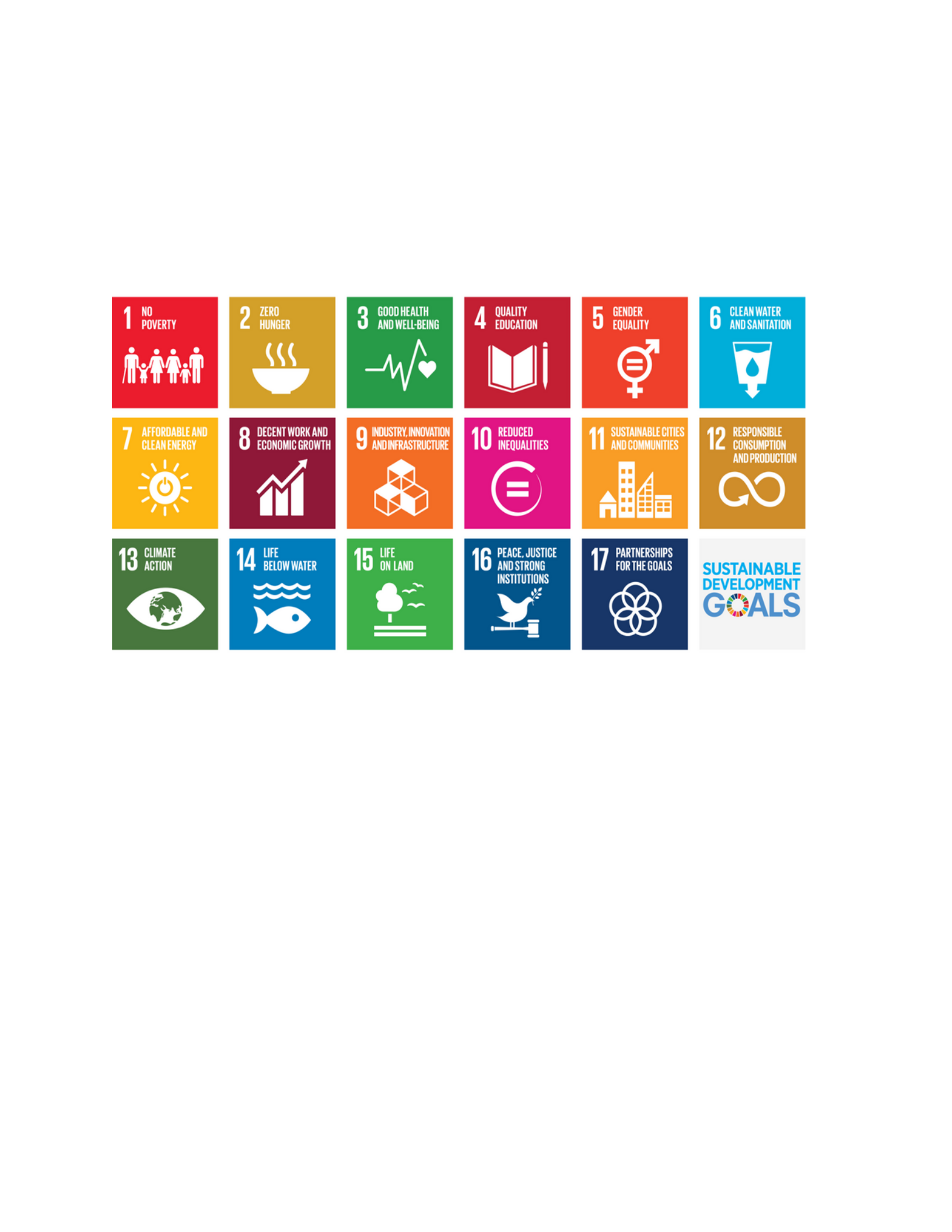
77
Appendix
1. The figure below is an illustration showing the 17 Sustainable Development Goals as
discussed in the paper above.
2. Below is a figure showing the CSR’s pyramid. It explains all the four levels of CSR as
discussed by Field (2022) in the paper.

78
3. The image below illustrates how important Unilever places its CSR goals. It places it at
the center of its core activities.

79
4. The figure below exemplifies how Nike’s CSR initiatives have impacted the society so
far.

80
5. This company has laid a clear policy as illustrated in the figure below. It shows that it has
been increasing its spending on CSR initiatives, which means it is on a healthy course
regarding CSR matters.

