


1
Section 1: Foundation of the Study
Background of the Problem
As technology changes and develops, opportunities for cost savings occur.
Companies find these cost savings desirable but can overlook critical steps when
implementing new technologies. In the technology niche of telephony, particular purpose
circuits known as primary rate interface (PRI) circuits were used to transport voice traffic
to the public switched telephone network (PSTN), where calls can be connected to other
telephones worldwide. In recent years, session initiation protocol (SIP) trunks have been
used to connect voice systems rather than these PRI circuits. This technology has greater
call throughput as well as a lower cost (An et al., 2024). However, the technology
changed from time division multiplexing (TDM) to internet protocol (IP), similar to
internet trunks. These new connection types require different skill sets to establish,
configure, and secure these connections that telephony engineers typically have. Due to
this skill gap, SIP trunks are commonly vulnerable to security breaches, with over 502
reported SIP vulnerabilities to potentially be exploited (Biondi et al., 2020). To properly
secure SIP trunks, I explored the particular skill sets and strategies used by
telecommunications engineers.
Problem Statement
Implementing SIP trunks for voice over internet protocol (VoIP) communications
opens unique security vulnerabilities not encountered with traditionally used TDM
circuits (Koilada, 2019). Successful hacking attempts on VoIP systems have increased by
60%, with losses valued at over $7 billion (McInnes, Zaluska, et al., 2019). The general

2
information technology (IT) problem is that organizations transitioning to SIP trunks for
voice need more critical skill sets and processes to secure network infrastructure related
to the SIP connection type properly. The specific IT problem is that some
telecommunications engineers lack the strategies to implement successful security
practices for SIP trunk security properly.
Purpose Statement
The purpose of this qualitative multiple case study was explore the strategies
telecommunications engineers utilized to implement successful security practices for SIP
trunk security. The targeted population consisted of telecommunications engineers in the
United States, as they are the technical experts charged with implementing and securing
the SIP trunks. As more telecommunications engineers employ better security for VoIP
systems, the potential social change may include better communications and data
protection for individuals’ personal and sensitive information.
Nature of the Study
Researchers use the qualitative method when the intent is to focus on human
behavior and motivations (Bleiker et al., 2019). I explored migration strategies of
telecommunications engineers who have migrated their organizations to SIP for voice
trunking with successful security postures. As such, I chose the qualitative method for
this research.
When numerical and statistical data are necessary to test a hypothesis, the
quantitative method is the appropriate method type to use in a research study (Given,
2008). As such, a quantitative study was not a suitable choice for this research. The

3
mixed-method approach is best used when both qualitative and quantitative analysis are
required (DeCuir-Gunby & Schutz, 2016). As this study did not include any quantitative
analysis, the mixed-method approach was not applicable to this study.
I used a multiple case study design for this research. Researchers that use a
multiple case design investigate a circumstance in detail within a specific scope to
address a specific research question (Bleiker et al., 2019). For this study, I interviewed
telecommunications engineers that have securely implemented SIP trunks. As the
researcher, I was the primary data collection tool, using devised interview questions to
explore successful SIP trunk implementation strategies in the United States.
Ethnographic design is similar to how anthropologists study culture by immersing
them within for their observations (Hamel et al., 1993). As I did not immerse myself in a
culture, ethnographic design was inappropriate for this study. Narrative design is useful
for studies with extended periods, collecting and forming a story of the obstacles
encountered and decisions made to understand behavior (Hamel et al., 1993). As this
research focused on the skillsets and knowledge of telecommunications engineers to
understand requirements to implement effective security practices, narrative design was
not applicable.
Research Question
What are the strategies that telecommunications engineers utilize to properly
implement successful security practices for SIP trunk security?
Interview/Survey Questions
1. How long have you been a telecommunications engineer?

4
2. Tell me a bit about your career history with regard to telecommunications.
3. What specific voice training and courses have you taken with your history as a
telecommunications engineer?
4. Please describe your depth of networking and IP fundamentals.
5. What part do you play with regard to voice circuit implementation at your
organization?
6. What role do you have in securing voice communications circuits and trunks?
7. What is your reaction to the following statement: “TDM circuits are more secure
than SIP trunks for voice communications”?
8. How would you describe the challenges of securely implementing SIP trunks?
9. What resources did you use to ensure your SIP implementation was as secure as
possible?
10. When you implemented SIP trunks, what steps did you take to secure your
implementation?
11. How do you monitor and verify the SIP trunk security as an ongoing operational
concern?
12. How would networking and IP fundamentals assist you in your job implementing
SIP trunks?
13. Now that your implementation is complete, what lessons learned do you have?
14. Imagine you are mentoring a telecommunications engineer about to implement
SIP trunks for his or her organization. What advice would you impart with regard
to securing the trunks?

5
Theoretical or Conceptual Framework
The theoretical framework that I used to ground this study was the knowledge-
based view of the firm (KBV). The resource-based view (RBV) framework is used to
look at all resources a business possesses, knowledge being one of many; however KBV
focuses specifically on knowledge as the most valuable resource with characteristics that
distinguish it from other business resources (Grant, 1996). RBV serves as the root theory,
but the works of Jay Barney, Robert Grant, Bruce Kogut, Udo Zander, and Ikujiro
Nonaka are credited to the expansion justifying its own framework, Knowledge-based
Theory of the Firm (Curado & Bontis, 2006). RBV combines strategy and resources to
posit the competitive advantage of the firm. These resources are both tangible and
intangible. However, KBV singles out knowledge as one of these key resources that leads
to a competitive business advantage. The purpose of this study was to explore strategies
and knowledge that telecommunications engineers employ for successful, secure SIP
trunk implementation for voice, so a theoretical framework that focuses on knowledge
and its value in relation to business success was appropriate.
Definition of Terms
Common, foundational terms are defined here to assist readers unfamiliar with
operational terminology in telephone services.
Integrated Services Digital Network (ISDN). The communications standard using
digital transmissions for telephony was introduced in 1986 as an alternative to analog
phone lines (Claxson, 2018).

6
Session Border Controller (SBC). A hardware or software device used with SIP
trunks to provide security for SIP infrastructures (German, 2017).
Session Initiation Protocol (SIP). Signaling and control protocol that has become
the industry-recommended protocol for VoIP (Hsieh & Leu, 2018).
Public Switched Telephone Network (PSTN). A circuit-based network providing
global connections for phone calling worldwide (Sadiwala, 2018).
Voice over Internet Protocol (VoIP). A technology enabling voice calling using
internet connections rather than phone lines (Mcinnes & Wills, 2021).
Assumptions, Limitations, and Delimitations
Assumptions
When conducting a research study, as a starting point, the researcher must make
some assumptions that are believed to be true (Hong & Cross Francis, 2020). Identifying
these assumptions is a vital part of framing the study. As a qualitative study using
interviews as the data collection method, I assumed that the interviewees would be
truthful in their responses. The interview questions were not personal in nature, which
may have improved the honesty of their responses.
Limitations
The credibility and validity of the research study are essential. Limitations are any
potential negative impacts on the study that are out of the researcher’s control (Munthe-
Kaas et al., 2019). As a qualitative study, research occurred in the interviewees’ natural,
unique business settings, which means this study will be challenging to replicate. This

7
study was also a case study in which I focused on specific companies, meaning it may not
reflect all companies.
Delimitations
Delimitations outline the boundaries and scope of the study (Theofanidis &
Fountouki, 2018). In this study, I focused on the specific vulnerabilities implicit in the
SIP circuit connection type to the PSTN; this does not indicate that these are the only
security concerns. I also explored strategies for securing SIP trunks but did not intend to
compile a complete list.
Significance of the Study
Contribution to Information Technology Practice
As telecommunication providers are reducing their TDM circuit offerings,
businesses are transitioning to SIP trunks for their VoIP/PBX system connectivity to the
PSTN (McInnes, Wills, et al., 2019). While telecommunications engineers have
experience and understanding of the TDM circuits, SIP trunks are distinctly different,
bringing a host of security concerns and vulnerabilities not encountered with TDM.
Telecommunications engineers without the proper skillsets and knowledge to implement
best security practices will leave their systems open for data breaches, toll fraud, and
even infiltration into the business network beyond the VoIP system. By studying the
knowledge and skill sets of telecommunications engineers who have successfully
implemented security practices, recommendations were created for telecommunications
engineers and their organizations to consider when implementing SIP trunks for VoIP.

8
Implications for Social Change
The implications for positive social change may include the growth and creation
of more secure voice networks. As telecommunications engineers secure the networks
they are responsible for and share knowledge with peers, the spread of hardened voice
data and the business networks using SIP trunks may occur. With more secure networks,
private and personal data about citizens will be protected, making it more difficult for bad
actors to attain personally identifiable information (PII), potentially reducing identity
theft.
A Review of the Professional and Academic Literature
In this qualitative case study, I focused on exploring the strategies that
traditionally trained telecommunications engineers may use to securely implement SIP
trunks for voice. I used a case study design to analyze secure implementations
successfully completed by telecommunications engineers in the United States. Peer-
reviewed sources and scholarly journal articles for the literature review were found using
Emerald Management Journals, Google Scholar, Pro Quest, and Walden University
Library. Conference papers, books, magazine articles, and websites comprise the non-
peer-reviewed sources. Keywords used to guide the research were session initiation
protocol, voice over internet protocol, voice security, telecommunications security,
session border controller, toll fraud, and security vulnerabilities, resource-based theory
of the firm, RBV, knowledge-based theory of the firm, and KVB. One hundred and thirty-
three peer-reviewed references were cited, 85% of which were published within the last 5
years.

9
Table 1
Details of Literature Review Sources by Year of Publication
Older
than 5
Years
2018
2019
2020
2021
2022
2023
Total
Peer-reviewed
articles
15
12
27
32
19
25
3
133
Non-peer-
reviewed
articles
3
3
3
3
3
0
0
15
Books
4
2
0
0
0
0
0
6
Web Pages
0
0
0
0
1
0
1
2
Total
22
17
30
35
23
25
4
157
First, I chose a conceptual framework to guide the study with known structures
used to understand the target phenomenon and used as a roadmap for the study. In this
case, I posited that there exists a knowledge gap in telecommunications engineers’
training and knowledge that leads to insecure SIP trunk implementations. Knowledge
being a key potential gap area, a theoretical framework focused on knowledge was the
most appropriate. Research was done into the framework, its origins, its growth changes
and refinements, and its future implications.
Second, I completed library and internet searches to establish an impact scope for
the research area. Analysis was compiled on various SIP vulnerabilities that, when
exploited, contribute to the global losses of an estimated $7 billion annually (McInnes,
Zaluska, et al., 2019). With the aim of evaluating the strategies that can be employed to

10
implement SIP trunks securely, these vulnerabilities could be mitigated to establish voice
services security and overall reduction of losses.
Knowledge-Based View of the Firm
Researchers, based on their subject and study design, will choose a theoretical or
conceptual framework as the lens through which they analyze the phenomenon that is
their research topic. Theoretical frameworks are more typically seen in quantitative
studies, where the researcher creates test conditions to test their theory (Kivunja, 2018).
Conceptual frameworks, used for the most part in qualitative studies, are used when there
are gaps in understanding phenomena, and these frameworks develop and evolve as
knowledge is gained in their focus areas (Mphahlele & Mbati, 2023; Varpio et al., 2020).
In this qualitative study, I focused on gaps in strategies and knowledge in
telecommunications engineers; a conceptual framework focused on knowledge would be
best suited. More specifically, because I focused on the strategies telecommunications
engineers employ to securely implement SIP trunks for voice, the KBV framework is
appropriate as knowledge, and the use of specialized knowledge is the basis for the
strategies used. KBV is an extension of RBV, so this literature review includes an
analysis of both frameworks to provide a full understanding.
Resource-based View of the Firm Background
Theories and frameworks, such as RBV, were conceived to understand an
organization’s behavior and predict success. RBV’s roots stem from Edith Penrose’s
1995 book titled The Theory of the Growth of the Firm (Lazonick, 2022; Nair &
Trendowski, 2008). This seminal work shifted focus from the value of a firm being

11
supply, demand, and price to actually defining the components of an organization and
their strategic value to market success (Grant, 1996). Dissecting the components of a
business/firm/organization expanded the agreed-upon formula for success from the view
of examining profit margin growth to a formula that looks at the organization’s resources
for growth rate. Penrose’s research question differentiated her work from others in the
field by not asking if a particular firm can grow but instead focusing on what governs
their growth (Davis & DeWitt, 2021; Nair & Trendowski, 2008). While Penrose’s work
was the first seminal work, other scholars added to the theory.
Penrose began by defining two categories of factors that contribute to a firm’s
growth; resources, defined as things purchased or paid for that make up the firm, and
services provided by those resources to make revenue (Chatterjee et al., 2021; Penrose,
1995). Staff, due to being paid for, were included as a resource, as well as buildings,
equipment, and materials (Narayanan & Nadarajah, 2022). Jay Barney is credited with
furthering Penrose’s work on the growth of the firm into what is widely recognized today
as the resource-based theory of the firm in his 1991 work (Ployhart, 2021). Barney linked
Penrose’s firm definition categories deeper into a sustainable competitive advantage for
firms by clarifying the types of resources and the qualities of them that provide the
competitive advantage. These are (a) tangible resources, (b) intangible resources, and (c)
the heterogeneous nature of the resources (Barney, 1991; Jancenelle, 2021). Tangible
resources are physical things such as buildings, leases, machinery, materials, land, and
capital (Alvarez-Melgarejo & Torres-Barreto, 2022; Hamilton & Philbin, 2020).
Intangible resources include intellectual property, brand recognition, trademarks, and the

12
knowledge of employees (Novianti, 2019; Oprean-Stan et al., 2020). These resources also
need to be heterogeneous in nature, meaning different firms have different combinations
of these tangible and intangible resources (Barney, 1991). However, these resources
alone do not bring a sustainable competitive advantage to a firm. What sets these
resources apart to gain that advantage are the criteria of valuable, rare, and costly to
imitate (Barney, 1991; Hamilton & Philbin, 2020; Novianti, 2019). The strategic
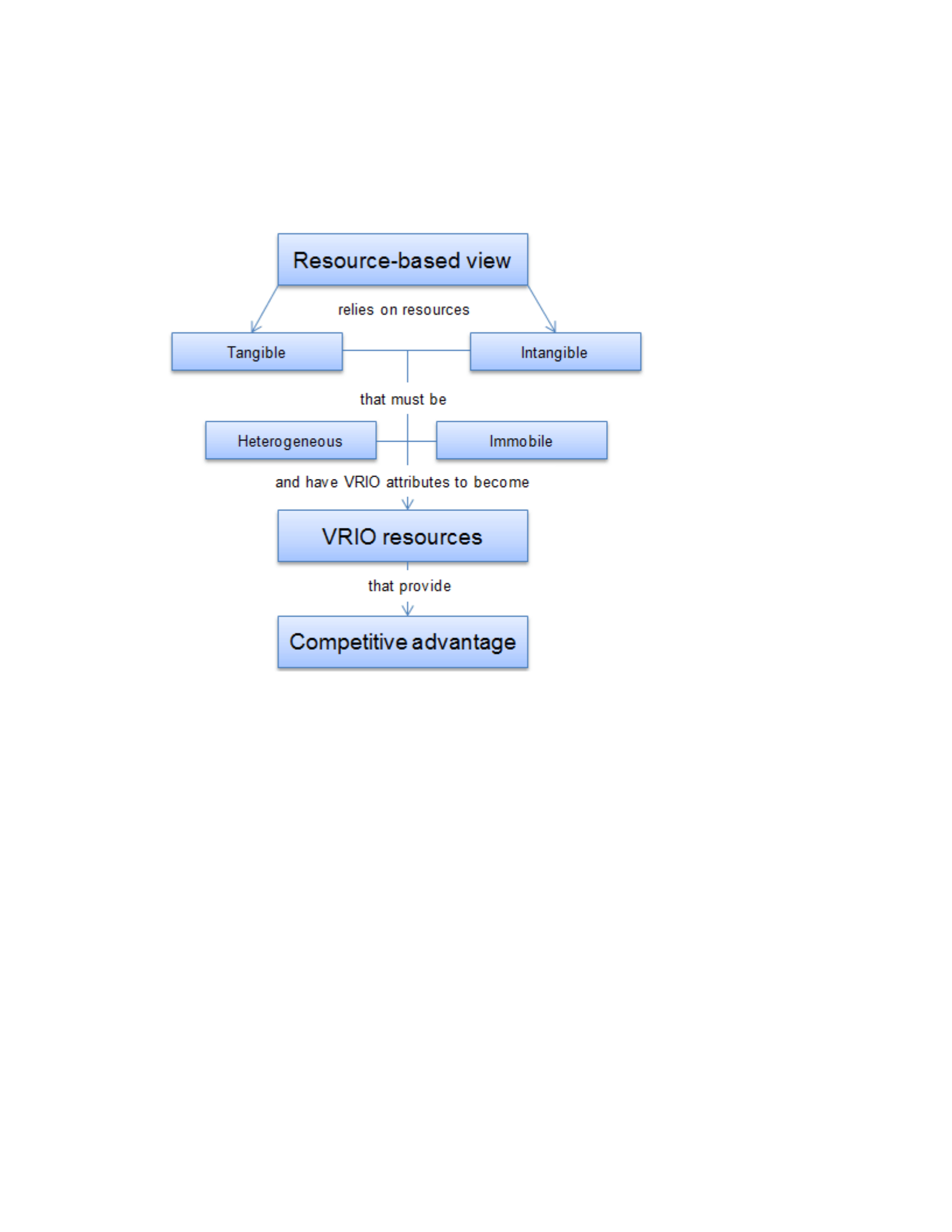
advantage of a firm is derived from the utilization of its resources in a unique way, as
depicted by the diagram below in Figure 1.
13
Figure 1
Resource-Based View of the Firm Diagram
Note. The basic tenants of the resource-based view of the firm are diagrammed. From A
systematic review of resource-based view and dynamic capabilities of firms and Future
Research Avenues by Kero, C. A., & Bogale, A. T. (2023). International Journal of
Sustainable Development and Planning, 18(10), 3137–3154.
Knowledge-based View of the Firm - A Separate Theory
RBV focuses on difficult-to-copy attributes of an organization (both tangible and
intangible assets) as foundations for strategic success with no distinguishing between the
value of attributes, while KBV singles out knowledge as the single most important
attribute (Curado, 2006; Novianti, 2019). In its initial stages, KBV was considered a

14
subfocus area of RBV; it was not recognized as a true theory of the firm; however,
knowledge management and information technologies surrounding knowledge as a
significant resource solidified KBV as a concrete theory (Curado & Bontis, 2006). KBV,
as a management concept, centers on an organization’s ability to create, capture, and
apply knowledge toward a strategic market advantage. This breakout of KBV from RBV
came at an economic shift from production companies to service companies and the
distinction between them as related to their profit centers being in intellectual capital
(Hesniati et al., 2019; Kengatharan, 2019).
Types of knowledge within an organization can be collected into categories at
different levels, from individual staff abilities, to group wisdom, to organizational-level
culture (Abdi et al., 2018). Seeking to hire staff members with problem-solving skills, the
ability to recognize the importance of and assimilating information, and a talent for
appropriate knowledge application both create new knowledge and apply knowledge to
contribute to success (Cooper et al., 2023). After the team building stage of a team or
workgroup, group wisdom builds as another type of knowledge as a resource for an
organization. The true synergy of a well-bonded but diverse team is the grown knowledge
these teams create.
Knowledge must also meet criteria to make it relevant for a strategic advantage.
First, it must be transferrable, especially within the organization (Duarte Alonso et al.,
2022). Vu et al. (2023) defined transferability as the crucial difference between
employees knowing about the knowledge and knowing how to apply the knowledge.
Documenting knowledge in a way that makes it transferrable across the organization

15
makes it useful in a long-term perspective related to sustainable advantage (Arsawan et
al., 2020). Second, the knowledge must have the capacity to be aggregated or built upon
(Arsawan et al., 2020; Duarte Alonso et al., 2022). Innovations that arise from knowledge
aggregation directly relate to competitive advantage (Vu et al., 2023).
Appropriability refers to the ability to take ownership and generate the same value
the resource generated before ownership; in other words, once a firm gains knowledge,
the ability to the knowledge work for them to the same level of returns (Bressan et al.,
2022; Duarte Alonso et al., 2022). In the context of KBV, as organization-specific
knowledge is grown and created, its ability to be appropriated by other firms decreases its
value. As firms grow and knowledge related to their business is created and cemented for
value, the generality or ability to be adopted by other firms for the same returns makes
the knowledge less valuable. This is an expansion of the RBV tenants of heterogeneity
and immobility. The more specialized the knowledge and the less transferrable it is, the
more strategic value that knowledge provides for that organization (Park et al., 2020;
Stadler et al., 2022).
Specific to KBV, knowledge must also meet the specialization in knowledge
acquisition criteria. This criterion holds that the knowledge must be specialized in the
business value areas, not just general informational knowledge (Duarte Alonso et al.,
2022). This is also related to the idea of innovation. Acquiring all the specific knowledge
in an area brings value, but applying that knowledge in innovative and new ways to bring
further value stems from these criteria (Malik et al., 2022).

16
Finally, the knowledge requirements of production refer to the input of specific
knowledge to the creation of the product or service at the profit centers of the
organization (Duarte Alonso et al., 2022). This knowledge is valuable and essential to an
organization's strategic advantage in its market space (Grant, 1996). Taking the
knowledge and applying it to the production process to generate profitable and valuable
goods or services is the essence of this criterion; the actual ability to acquire value from
the knowledge.
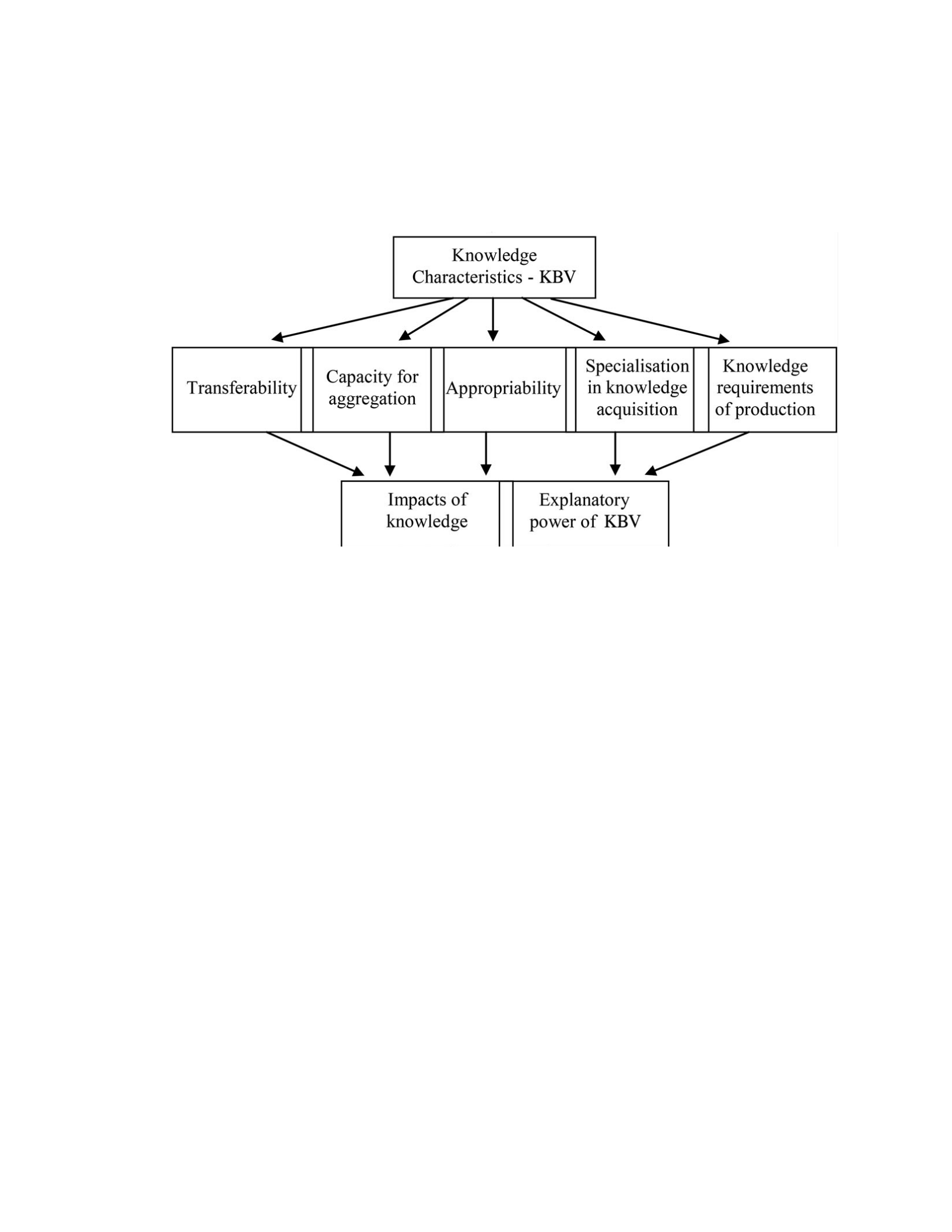
While knowledge is a recognized resource of a firm, these qualities of knowledge
separate out the theory from RBV to its own, KBV, positing that knowledge is as useful
or more useful than other tangible and intangible resources a company has in its unique
configuration as an organization with strategic market advantage and growth potential
(Curado, 2006). These qualities are depicted in Figure 2.
17
Figure 2
Knowledge-Based View of the Firm Diagram
Note. The characteristics of knowledge that make it a significant strategic resource; the
fundamental premise of the KBV theory diagramed. From Managing knowledge in the
context of gastronomy and culinary tourism: A knowledge-based view by Duarte Alonso
et al. (2022). Tourism Recreation Research, 47(2), 145–159. Supplemental Index.
Knowledge-Based View of the Firm – Recent Expansions
In more recent years, parallels have been drawn from KBV to current IT systems
recognized as essential enterprise business systems (Chen, J. et al., 2020; Irwin et al.,
2018). Knowledge management and talent management are now related to KBV as they
focus on keeping and gaining more knowledge through documenting current staff
knowledge. Critical strategic knowledge cannot stay within the minds of the staff
members or groups alone to continue to be a resource of an organization, making

18
management of knowledge pertinent to the utilization of knowledge within a firm to
create value.
Organizations can use social ties and networking to retain current knowledge and
foster the growth of new knowledge (Curado, 2006; Hamilton & Philbin, 2020). Ge &
Liu (2022) provide some data suggesting that the cost of gaining external knowledge is
much lower than investing in ground-up learning, also indicating that social ties and
networking are of value when it relates to knowledge as a resource. This highlights the
importance of talent management in addition to knowledge management. An
organization's ability to retain and bring in new skillsets and knowledge to maintain or
gain its marketplace advantage becomes critical (Irwin et al., 2018).
Supporting and Opposing Theories
Theories of the firm are born out of abstractions of businesses to understand and
predict phenomena and behaviors, and all are aimed at a business’s sustained market
advantage (Grant, 1996). These theories grow and change as organizations morph due to
economic climate and goods or services offered evolve, observing new phenomena.
Depending on market segments and business focus, sustained market advantage can come
about in different ways as well. Natural-resource-based theory is a complementary
framework credited to Stewart Hart, distinguished by the firm’s relationship and
advantage born of relation to the natural environment around it (Hart, 1995). As different
nations and political agendas are focused on pollution and sustainment, this theory
observed the phenomenon of success and advantage with those factors impacting a
business or market segment (Caputo et al., 2019).

19
Behavioral theory of the firm (BTF) would be an example of a competing theory
of the firm. BTF’s foundation is in organizational behaviors that a firm exhibits when
entering a new market space to gain a strategic advantage. This theory posits that
advantage is not gained through the unique formula of various resources a firm has, as
RBV and KBV suggest, but the behaviors of the individuals, teams, and the whole of the
business that make successful and sustainable market advantages (Greve & Zhang, 2022).
An interesting expansion on BTF is the Theory on Firm Risk Taking, which specifically
targets the phenomenon of an organization’s approach to risk management and the
statistical criteria that factor into risk-taking behavior (Yung & Chen, 2018).
There are many ways to analyze a firm and to describe the many phenomena that
exist concerning business success, failure, growth, strategic advantage, and ability to
evolve amid internal or external pressures or driving forces. A newly emerged theory of
the firm that looks at future survival is tied to the ability to innovate. Innovation Theory
of the Firm, presented first at a conference in 2011, focuses on the changes information
technology has on businesses and the impact they have on the market advantage and
strategic value of a firm (G. Costello et al., 2011; G. J. Costello, 2018).
Knowledge as Strategy
RBV generally cites three categories of resources for firm advantage: physical
capital resources, human capital resources, and organizational capital resources (Pereira
& Bamel, 2021). Considering these categories, the resources must also meet the criteria
of adding value, being rare, being difficult to imitate, and the resource’s ability to be
organized (Chen, J. et al., 2020). The knowledge staff members have and contribute to an

20
organization can be included within the human capital resources category; however, RBV
doesn’t truly acknowledge the phenomenon of the role of knowledge itself as a strategic
resource. KBV adds knowledge-based resources to the listing of resource categories for
firm advantage, along with the qualifications that the knowledge should have
transferability, capacity for aggregation, and appropriability (Duarte Alonso et al., 2022;
Park et al., 2020; Pereira & Bamel, 2021). While there are many ways to look at
companies from a value perspective as theoretical frameworks for academic research,
KBV is the most appropriate for this particular study. Considering the billions of dollars
lost each year through vulnerabilities present when organizations implement the newer
voice technologies, the knowledge of the human capital resources, the knowledge-based
resources of an organization, is a critical component. The question that both RBV and
KBV try to answer is why some firms outperform others, and part of business
performance and success is minimizing losses (Cuthbertson & Furseth, 2022). When
considering minimizing losses and the knowledge required to maintain that advantage,
KBV was again confirmed as an appropriate theoretical framework for this study.
Knowledge and Organizational Learning
A relationship between knowledge and learning plays a part in an organization’s
ability to create, maintain, and grow organizational knowledge. This study, in particular,
posited that there is a gap in knowledge and strategy employed by telecommunications
engineers when transitioning their organizations from TDM circuits to the newer SIP
technology that directly correlates to the exploitation of SIP vulnerabilities equating to
billions in global losses per year (Koilada, 2019; McInnes, Zaluska, et al., 2019). To

21
deeper understand how this circumstance is created, in addition to the RBV and KBV
theories, we can also use the Organizational Learning Theory (OLT), as learning and
knowledge are primary components of this study’s exploration focus. Organizational
Learning Theory focuses on the process of individual knowledge as it becomes
organizational knowledge (Abdi et al., 2018). This is relevant to firms as a competitive
advantage, technological alliances, and the telecommunications industry as a whole. With
only one or two telecommunications engineers per organization, there may exist
institutional knowledge to draw from for legacy systems, but when facing innovative and
technology evolutions, individuals need to turn to educational materials, peer
professionals, and industry resources (Fernandes et al., 2022; Novianti, 2019). Through
these external sources, information is gained that, in turn, relates to a competitive
advantage. While it seems at odds with the basic tenants of both RBV and KBV, OLT
and Innovation Theory are opening the view to assert that sharing information, especially
through technological alliances, does not negatively affect a firm’s strategic advantages
(Abdi et al., 2018).
Knowledge and Innovation
With regard to the implementation of the newer SIP trunk technology, the strategies
used by the telecommunications engineers typically charged with this operational change
are mainly based on the knowledge they have or gain to complete secure implementations
successfully (Fernandes et al., 2022). These secure implementations are necessary due to
the numerous security vulnerabilities intrinsic to the SIP protocol and SIP trunks as

22
transport for voice communications. These vulnerabilities will be further detailed to fully
explore the risks faced by companies that have insecure SIP trunks implementations.
Not related to the Innovation Theory of the Firm framework that studies the
relationship between adopting new technology and its impact on market advantage, there
is a different but valuable relationship between innovative technologies and the
knowledge of a firm (Fernandes et al., 2022). The KBV tenant of appropriability, which
focuses on the ability to incorporate knowledge into processes to take full advantage of
the market advantage, applies to the realm of innovation (Park et al., 2020).
Appropriability can also be defined as the ability of the resource owner to benefit from
the resource (Pereira & Bamel, 2021). When companies adopt new technologies and
incorporate innovation into their operations, it is imperative that they also gain and adopt
the encompassing knowledge into their processes. The full and total knowledge of the
newly adopted technology, including proper information security practices, needs to be
assimilated into the firm's institutional knowledge.
SIP Literature and Vulnerabilities
As SIP trunks traverse the internet, there are many security vulnerabilities related
to SIP. To adequately secure these SIP trunks, engineers need to understand the
differences between the TDM and SIP connection types. TDM circuits, being sole-
purpose voice connections, were not connected to packet-switched networks, meaning the
security risk exposure was low (Sadiwala, 2018). SIP being an IP-based protocol, these
previously isolated communication channels have moved to the internet, becoming
vulnerable to attack vectors that plague internet trunks (Claxson, 2018; Sadiwala, 2018).

23
Annual loss figures expressed in dollars are presented to quantify losses through breaches
that use SIP as an entry point (Claxson, 2018). Claxson (2018) does not present any
technical solutions but does suggest that businesses that are more aware of the cyber risks
and train staff to be aware as well stand a better chance of protecting their data. Likewise,
Suthar and Rughani (2020) delve into the IP packet structure and specifically dissect
VoIP packets. Suthar and Rughani (2020) explore different VoIP protocols in their study:
H.323, SIP, Media Gateway Control Protocol (MGCP), and Real-time Protocol (RTP).
Background data about the advantages and disadvantages of VoIP are relevant, as well as
a security vulnerability assessment, with the intent of understanding the business drivers
for this TDM to SIP move (Kumar & Roy, 2021). Khan et al. (2021) went so far as to
identify installation and implementation errors that contribute to these SIP vulnerability
exploits, pointing to insufficient knowledge by the implementers. Additionally, since the
COVID-19 global pandemic, many companies opened their network perimeters to allow
for remote access for employees to work, expanding the attack surface for hackers has
grown allowing for even more SIP security gaps to be exploited (de Neira et al., 2023).
The types of vulnerabilities related to SIP trunks for telecommunications are toll fraud,
denial of service attacks (including distributed denial of service attacks), caller ID
spoofing, and system administration failures. Each of these will be discussed in more
detail in the following professional literature review.
Toll Fraud
Toll fraud, also known as toll evasion, is a vulnerability that causes financial
losses to organizations not protected against the risk. With Toll Fraud, PBX systems are

24
hacked, and long-distance calls are made through the hacked system. The owner of the
system receives a larger than expected telephone bill due to the calls made by the hacker
(McInnes, Zaluska, et al., 2019; Mcinnes & Wills, 2021). While this vulnerability does
not cause harm to the system or the data, nor does it disrupt phone services, it comes with
high financial costs, which contribute to global annual fraud losses. Sahin et al. (2017)
presents data from 2015 showing $38.1 billion in losses from telecom service providers
due to fraud. McInnes, Zaluska, et al. (2019) cited published figures from the
Communications Fraud Control Association (CFCA), validating the breadth of the losses
realized annually from toll fraud and PBX hacking through SIP trunks. McInnes (2019)
used a honeypot to quantify breach frequency due to improperly secured SIP trunks for
voice and discussed their findings in this work. The transition from legacy voice (TDM)
circuits is a factor in non-secure SIP implementations (Koilada, 2019; Mcinnes & Wills,
2021). Connections to VoIP and the new SIP trunk transport method further enabling this
type of fraud have been made (Carrillo-Mondéjar et al., 2022). Further, toll fraud is one
of the two most common types of fraud on VoIP systems (Carrillo-Mondéjar et al.,
2022). Commonly this type of vulnerability is exploited when poor security leads to
compromised extensions on the PBX and manipulates the SIP packet through tools
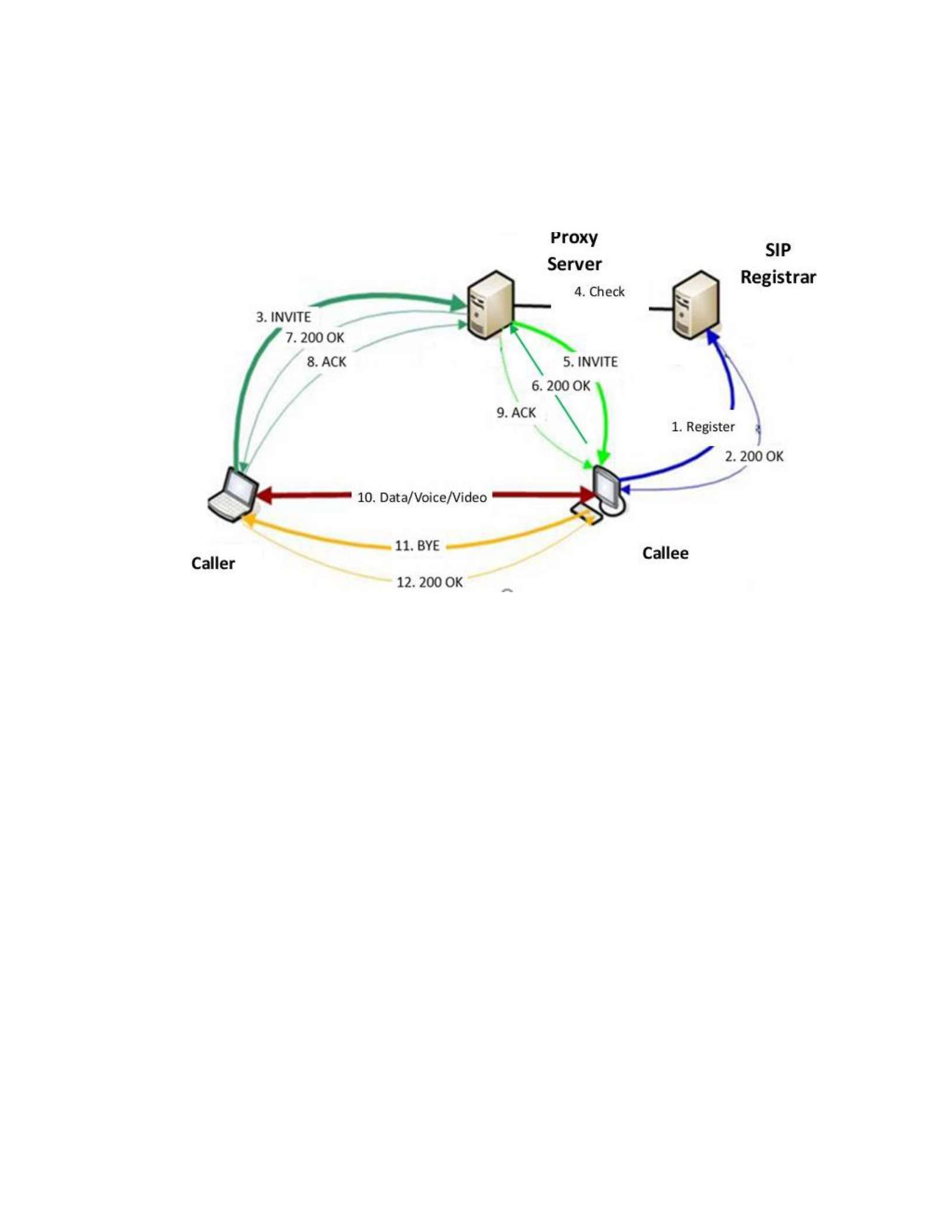
openly available on the internet (Volodina et al., 2018). The fraudster first sends the
register command (number 1 in the figure below) with the correct password for the
compromised extension. Once the system returns the OK command (number 2 in the
figure below), the connection is made, and the fraudster can send Invite commands to any

25
recipient caller of their choosing. The charges for the calls then belong to the
compromised extension for payment by the true number owner rather than the fraudster.
26
Figure 3
VoIP Flow Diagram
Note: The signal flow of VoIP calls. From Penetration testing for VoIP by Sanlioz et al.,
2021, Computers and Informatics.
This again links the exploitation of this vulnerability to poor security implementation.
Caller ID Spoofing
Callers using Caller ID spoofing appear to be calling from a phone number they
do not own (Chaudhry et al., 2017; Kumar & Roy, 2021). Caller ID spoofing’s purpose is
to “pretend” to be a legitimate business-related call with the intent of scamming the
answerer. This is not a difficult task for determined individuals; tutorials on the internet
are easily available with walkthroughs and links to download the necessary software

27
(Sahin et al., 2017). However, this activity, when done with fraudulent intent, is illegal
under the Truth in Caller ID Act, which became law in 2010 (Senator Nelson, 2010).
While Caller ID spoofing as a security risk is not solely SIP trunk related, the
ability to exploit this vulnerability exponentially increases with SIP trunks. To protect
against Caller ID spoofing, the caller number needs to be authenticated in some way to
validate that the caller ID matches the actual caller (Chaudhry et al., 2017). Researchers
and practitioners, through literature, present their own schemes designed to make SIP for
VoIP more secure through authentication to address this security issue (Suthar &
Rughani, 2020).
Authentication mechanisms to validate the calling number are proposed with
technologies from blockchain to custom-coded security packages (Dhillon & Kalra,
2019; Hsieh & Leu, 2018). Hsieh and Leu (2018) also discuss the use of SIP for VoIP,
the trend in voice to move from TDM circuits to SIP trunks, and the vulnerabilities this
technology brings. Hsieh and Leu (2018) take their experiment further; by using a
certificate authority and database server through a proxy and RTP relay server, the SIP
protocol can be further secured. Dhillon and Kalra (2019) propose a security scheme with
biometrics to tighten security for calling. Dhillon and Kalra’s (2019) study details their
biometric SIP authentication proposal and tests its effectiveness. The data presented
shows that this authentication scheme only adds 295 ms to the call initiation.
Spam and fraud on VoIP calling cause billions of dollars in losses per year
(Koilada, 2019). With this real threat of spam and fraud related to VoIP calling, the
Federal Communications Commission (FCC) is requiring communications providers to

28
implement Secure Telephone Identity Revisited (STIR) and Signature-based Handling of
Asserted Information Using Tokens (SHAKEN). STIR/SHAKEN authentication will
decrease spoofed robocalls (Sherman et al., 2021). Koilada (2019) explored recent
security technology trends for IP PBX systems for VoIP, adding depth to the toll fraud
problem and examined frameworks to address it.
The breadth and depth of attacks on SIP trunks through toll fraud, DoS attacks,
and other SIP vulnerability exploits fully define the security risks of using SIP for voice
(Suthar & Rughani, 2020). Volodina et al. (2018) dissected historical attacks, utilizing
traffic visualization to gain insights into indicators of an attack. The data presented
outlines the use of the SIP INVITE packet as a common theme in multiple attacks
(Volodina et al., 2018). Volodina, Suthar and Rughani, and others contribute to the field
by deepening the understanding of how adversaries manipulate SIP.
Denial of Service
SIP trunks are open to similar attacks that plague any company open to the
internet as an internet connection type. A common attack type on internet trunks is Denial
of Service (DoS) attacks. The internet-facing servers are flooded with so many requests
that they cannot process any legitimate requests, effectively stopping all operations
(Tripathi & Hubballi, 2021; Yu, 2016). Attacks perpetrating from a single source are
termed DoS attacks; however, they can come from multiple sources in a coordinated
attack, termed Distributed Denial of Service (DDoS) attacks. These DoS and DDoS
attacks can happen with voice communications as well, flooding PBX systems and
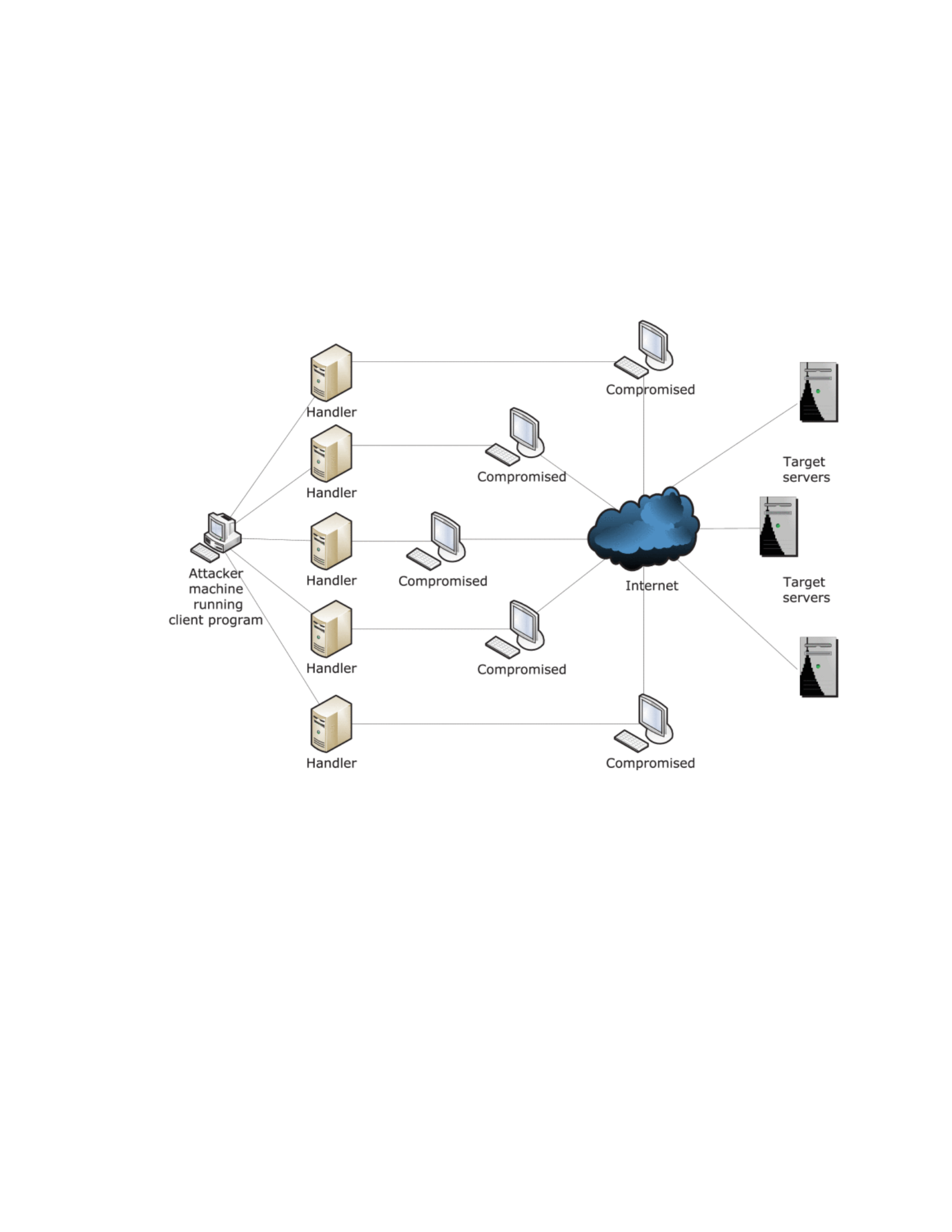
29
crippling a company’s ability to make and receive phone calls, and can be especially
detrimental in the event of an emergency (Safoine et al., 2018; Tas et al., 2020).
Figure 4
Simple Diagram of a DDoS Attack
Note: A DDoS attack diagram showing one attacker using distributed computers to attack
from several vectors rather than just one. From A Survey of Denial-of-Service Attacks and
Solutions in the Smart Grid by Huseinović et al., 2020, IEEE Access.
Currently, there are no effective methods that can be implemented to prevent
these types of attacks, however identifying the patterns that lead to identifying these
attacks, determining the source, and blocking the traffic to allow legitimate traffic again
is the best protection (Avila Pesantez et al., 2018). As DoS attacks were not a risk to PRI

30
circuits, telecommunications engineers may not be prepared to mitigate these risks when
transitioning to SIP trunks for telecommunications systems (Biondi et al., 2020).
In-depth investigations into DoS attacks on PBX systems aim to identify what to
look for to detect a DoS attack (Yu, 2016). The Invite and Register message flooding are
of particular focus of this study. Yu (2016) proposed security protections, although the
proposed methods do not seem novel. Potential further research in this area would be
beneficial to the industry. Nazih, W. et al. (2020) also studied DoS/DDoS attacks on
VoIP networks. Nazih et al. (2020) categorized the currently accepted approaches for
protecting VoIP against such attacks, evaluated these approaches and their published
tested scenarios, and presented findings on effectiveness. Not all the proposed defense
mechanisms work in all cases, but organizations can apply the best system for their risk
profiles by understanding the attack vectors and protections available (Avila Pesantez et
al., 2018).
Novel approaches have been researched and presented using detection algorithms
designed to monitor network traffic changes indicative of a DoS or DDoS attack
(Semerci et al., 2018). Semerci et al. (2018) expand their research into architecture
decisions that affect SIP trunks’ security and add strategies to implement SIP trunks
securely. The University of Zilina had a case study written as the university chose its
VoIP solution, one section devoted explicitly to VoIP security (Moravcik & Kontsek,
2019). Shortly after implementing the SIP trunks, there were approximately 500 SIP
attacks (Moravcik & Kontsek, 2019). The scope of the security defined for this case was

31
protection against DoS/DDoS attacks. The telecommunications engineers at the
University of Zilina utilized IP tables to combat these attacks.
Server-based performance models for detecting SIP-based DoS attacks have been
researched for use in the industry (Abualhaj et al., 2019; Febro et al., 2022). An
experiment presented by Tas et al. (2020) used legitimate traffic and eluded normal DoS
protections like rate-limiting and black-listing. However, the server-based performance
model uses CPU load on the SIP servers as the basis for the detection methods, which
were triggered by the traffic load, detecting the DoS attack. Significant work is presented
on SIP vulnerabilities and existing protections, but Tas et al. (2020) contribute to the field
by introducing their own protection method.
System Administration Failures
A study published by Carrillo-Mondéjar et al. (2022) focused on malicious calling
on VoIP systems, cited vulnerabilities listed on the Common Vulnerabilities and
Exposures (CVE) public database going back ten years as evidence of consistent attack
vectors for telephony systems in which system administrators play an integral role. This
public database, sponsored by the U.S. Department of Homeland Security (DHS)
Cybersecurity and Infrastructure Security Agency (CISA), and maintained by the MITER
corporation CVE project team, is the authoritative source of vulnerabilities for IT systems
and software (Bahaa et al., 2022). It is typical practice for system administrators to
consult this resource in order to keep their systems at the highest security posture
possible. Vulnerabilities discovered, along with a category classification denoting the
impact of the vulnerability in affected systems, are posted to this resource website. In

32
2020, 107 different vulnerabilities were listed for VoIP alone in the CVR database
(Biondi et al., 2020). Until telephony moved from time-division multiplexed circuits to
IP-based trunks, telecommunications engineers worried little about the security of
systems connected to the internet.
Configurations for Security
Not only does the literature discuss the types and prevalence of attack vectors for
SIP trunking for voice services, but other research studies also focus on the ways security
should be implemented (Saidat, 2019). Konshin et al. (2020) utilized an Asterisk IP PBX
system, a competitor of larger, more costly systems such as the Cisco Unified Call
Manager system, for their study on security. The low cost of the Asterisk IP PBS system
makes it an attractive option for organizations looking to lower telephony costs (Konshin
et al., 2020). Konshin et al. (2020) experimented with a test system made of an IP PBX, a
SIP server, and Cisco networking equipment, completing analyses on network
performance to find optimal settings. The relevance of this study is the SIP server
configurations tested. Security should not be risked for performance; a balance should be
achieved.
The device that SIP trunks connect to inside the implementing organization’s
network is called a Session Border Controller (SBC) (Praveen, 2022). These SBCs are
central to securing the SIP trunks to protect against incoming attacks (Kaul & Jain, 2019).
German (2017) posits that companies put too much reliance on this device alone to secure
the SIP trunks and omit other standard protection methods, such as anti-virus and
33
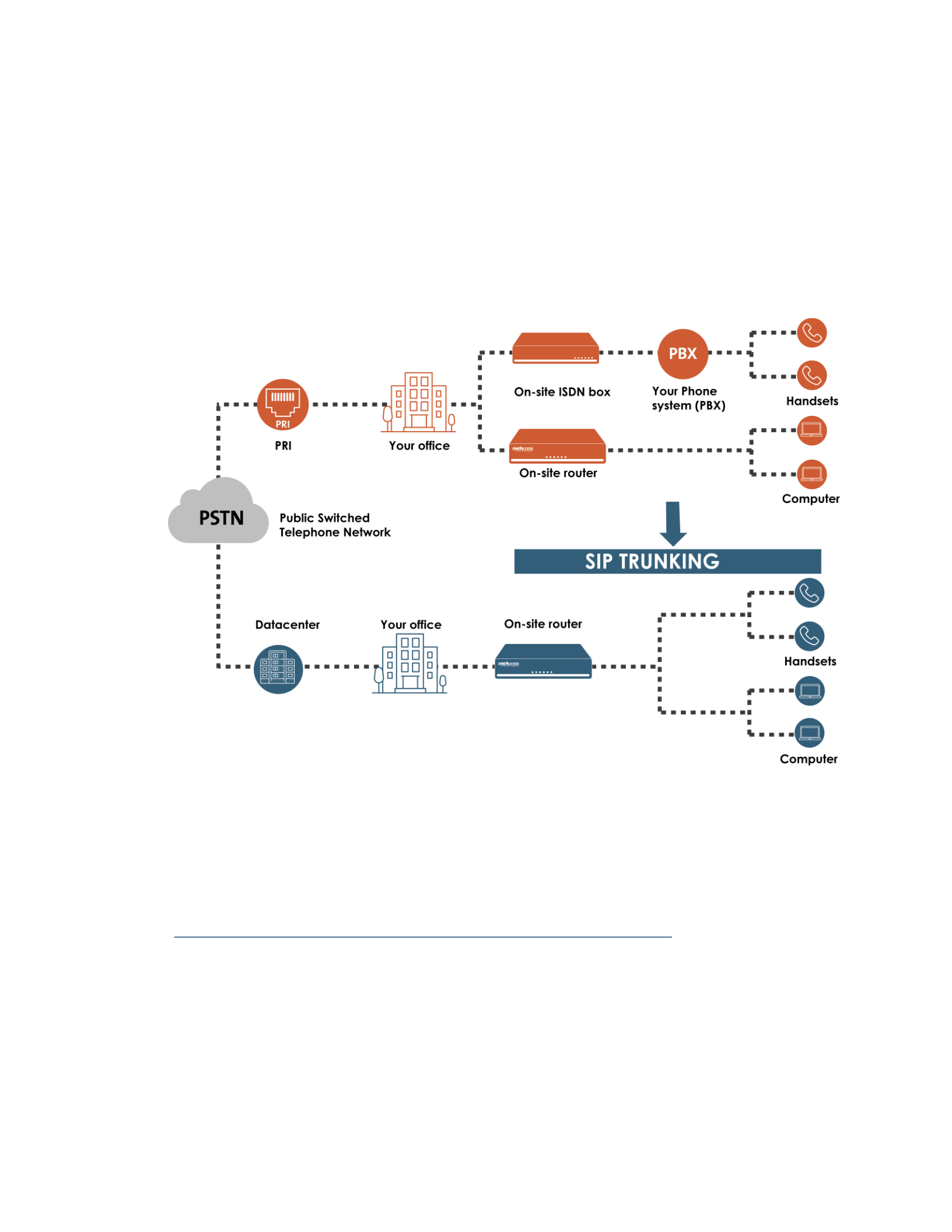
intrusion detection. Companies need to think of SBCs as one of many protection methods
rather than the sole point of protection.
Figure 5
SIP trunks and PRI Circuits in Telephony
Note: Denoted in orange is the PRI circuit path to the PSTN from a PBX, while blue
denotes the SIP trunk path. The data center is where the SBC is located, connecting the
corporate network to the PSTN. From SIP Trunking by Ekinops, 2023,
(https://www.ekinops.com/solutions/voice-data-access/sip-trunking).
Another gap in the literature that Saidat (2019) addressed is a model created that
organizations can quickly implement. The model proposed is called the enhanced
redundant session initiation protocol model. Saidat (2019) implemented this model at an

34
actual SIP provider, and testing showed the model decreased session initiation protocol
attempts. Performance data of SBCs was even presented, although cost data would have
been beneficial if this model was intended to be adopted widely (Grant, 1996; Saidat,
2019).
With the growing trend of cloud-based SaaS, VoIP implementation complexities
are added when the implementation includes virtual systems (Abualhaj et al., 2019).
Kolhar et al. (2018) explore performance testing for VoIP infrastructures on virtual
machines and suggest infrastructure design to build in securities while maintaining
performance. Kolhar et al. (2018) expand security concerns of SIP trunks for VoIP to
virtualized environments.
Transition and Summary
Section 1 of this study presents a thorough background of the problem, with a
clearly stated problem statement and purpose statement defining the qualitative multiple
case study nature of this study. The study was presented as a qualitative multiple case
study consisting of participants in the United States who have successfully completed SIP
trunk implementations for their corporate voice networks. The research question was
defined as what are the strategies that telecommunications engineers utilize to properly
implement successful security practices for SIP trunk security? Through the literature
review, both the foundational theoretical framework used and the technology basis for the
research question are discussed at a deep level, formed the platform for this study.
Section 2 follows and defines the qualitative study mechanics and components,
such as the role of the researcher, the participants, the research method, the research

35
design, and the sampling. Important to any study involving human subjects, the ethics of
the study will be discussed. Details of data collection for the study are outlined, including
the study instrument and data collection methods and techniques. Through the data
collection, an analysis must be completed, so the methods of analysis are outlined with an
intentional focus on the reliability and validity of the data, analysis, and therefore, the
results.
Section 3 presents the study findings, with themes that emerged and how they
could be applied to industry to bring about positive change in individual businesses and
society.

36
Section 2: The Project
This section of this doctoral study includes details of the role of the researcher and
the participant pool.
Purpose Statement
The purpose of this qualitative multiple case study was to explore the strategies
telecommunications engineers utilize to implement successful security practices for SIP
trunk security. The targeted population consisted of telecommunications engineers in the
United States, who are the technical experts charged with implementing and securing the
SIP trunks. As more telecommunications engineers employ better security for VoIP
systems, the potential social change may include better communications and data
protection for individuals’ personal and sensitive information.
Role of the Researcher
In qualitative research, the researchers themselves are the primary data collection
instrument (Fusch & Ness, 2015). As such, I was the primary instrument for data
collection in this study. The researcher has several tasks related to interview preparation
and completion: (a) locate and recruit interview subjects, (b) motivate subjects to fully
engage in the interview, (c) address any subjects’ concerns or confusion, (d) monitor
responses for quality, and (e) manage the interview process to be a positive experience
(Trochim et al., 2016).
However, in order to ensure an impartial study, it was important to clarify my
own experiences with the research topic. I am a telecommunications engineer by
profession and have 14 years of work experience. More specifically, I have managed and

37
operated TDM circuits and have transitioned to SIP trunks for my current employer.
Educated in the traditional technologies for voice communications, there were several
aspects of the SIP connection type that were foreign to me as they are based on
networking principles that are not included in traditional telecommunications training.
My own knowledge gaps through the transition process highlighted areas of need for my
industry. Scholarly research further revealed that this research area has been unexplored.
My intention was to use peers in my industry as my research participants with the goal of
qualifying a typical SIP transition process in order to determine knowledge and strategies
that would be useful to employ as others embark on SIP transitions.
One of the critical considerations for research projects that involve human
subjects is research ethics. Following the National Research Act of 1974, a national
commission was established to create ethical research recommendations, the outcome of
which was titled the Belmont Report and is still the standard for any biomedical or
behavioral research using humans as research participants (Trochim et al., 2016). Three
principles were outlined in the study for future researchers to bear in mind: Respect for
persons, beneficence, and justice (Brothers et al., 2019). I adhered to these principles in
my research. Respect for persons speaks to minimizing my research’s impact on the
subjects’ lives. While I did not use any vulnerable groups such as minors, prisoners, or
individuals with mental or physical disabilities, it was still important to do this
assessment for any human-focused research. The participants provided their own consent
to be participants and not be coerced in any real or perceived way (see Earl, 2020).

38
Another area of concern for qualitative studies is bias. Researchers must do their
utmost to identify their personal biases and mitigate them as much as possible in their
data collection and analysis (Yin, 2018). I have seen secure and insecure SIP
implementations. I know what knowledge I do and do not have that prepared me for the
transition from PRI circuits to SIP trunks in my professional experience. Fusch and Ness
(2015) stated that the danger of new researchers is that they are not aware of their
personal lens and bias. As the data collection instrument, being aware of my potential
bias was an important step to eliminating its effects in my study. Due to my professional
experience, I was conscious of not having written the interview questions to shape the
answers I get to what I think the answers to my study are. The potential exists to shape
the interview atmosphere and questions to draw the conclusions the researcher expects
(Yin, 2018). Being conscious of this potential, I was able to avoid it and let the interviews
lead me to the true conclusions.
With my professional history with the subject matter, my own biases, and the
ethical considerations in mind, I devised an interview protocol to conduct the interviews
for data collection in a method to gain the most information pertaining to my research
matter. Interview protocols are used by researchers to navigate the interviews with pre-
drafted scripts to open and close the interviews, a refined list of open-ended questions,
prompts to gain further information when necessary, and a process to refine the interview
protocol (Creswell & Poth, 2018). Interview protocols are useful in creating a consistent
environment across participant interviews, including the recording and note-taking for
later analysis of the interviews (Jacob & Furgerson, 2015).

39
Participants
For the participant pool, three qualifications must be met. I sought participants
who were (a) professionals in the telecommunications field, (b) who had completed a SIP
trunk migration or implementation will be sought out, and (c) who worked now or had
worked for companies based in the United States. This aligned with the research question
by exploring the strategies they employed for a secure SIP implementation. After that
broad pool of participants was identified, I eliminated subjects that were not eligible,
such as any professional that I could apply pressure or influence on in their life or career.
Any perception of influence has the potential to skew responses, and those results should
not be used (Brothers et al., 2019; Earl, 2020).
There are several methods to gain participants for research. When the study is
focused on a phenomenon that affects a wide variety of people belonging to a certain
category, like architects, health conditions, or mothers, for example, the participants can
come from all over the world. Social media campaigns are common in these large studies,
as well as social networks, to gain access to relevant participant pools for volunteers (Ali
et al., 2020). These enable researchers to cast a wider net than the potential pools that are
readily available to them through their personal and professional connections (Sauter et
al., 2020). However, this study was narrower and more particular, requiring a more
targeted approach to find participants. Also, due to the limited amount of time for the
study, I needed to focus on access to participant pools more available to me through my
personal and professional networks. In order to gain access to potential participants, I
leveraged professional relationships and partnerships held by my current employer. Being

40
an insider to the culture or groups a researcher is studying can be advantageous, bringing
benefits such as access, comfortability with participants, and more transparency in
interview answers (Creswell & Poth, 2018; Holmes & Gary, 2020). The organization I
am employed by belongs to two larger groups of companies for peer networking. One is
called University Affiliated Research Centers (UARC), and the other is Federally Funded
Research Development Centers (FFRDC). Through these two group affiliations, I could
connect to telecommunications engineers in similar positions to mine. Working
relationships and rapport had already been created with some of these work peers and
could be generated with others to gain enough participants to reach data saturation. Data
saturation is when enough participants and data are collected that no new themes emerge
for analysis (Farrugia, 2019; Sebele-Mpofu, 2020). I had no influence over their
employment status, standing in their companies, or any other position that could be used
to influence these participants’ responses or participation in my study.
Research Method and Design
The purpose of this study was to examine the strategies used by
telecommunications engineers to securely implement SIP trunks for voice services. To
accomplish this purpose, I collected data and presented credible and valid findings to
address the research question devised for the purpose of the study (see Johnson et al.,
2020). To structure the study, an appropriate research method and design were chosen
that best aligned with my goal.

41
Method
Trochim et al. (2016) defined research as a contribution to general understanding
by conducting investigations that follow an empirical and systematic structure (p. 5). To
adhere to the empirical nature of research, methodologies were created to guide and
understand how research is completed based on the intention of the research study.
Research methodology refers to the way the researcher intends to examine the subject
matter (Vaughn & Jacquez, 2020). This includes how the data sources chosen will be
analyzed (Bleiker et al., 2019). The commonly recognized research methods are
qualitative, quantitative, and mixed-method (Strijker et al., 2020; Vaughn & Jacquez,
2020). Quantitative studies typically involve a hypothesis, which is a prediction of
results, and an experiment or test to validate or invalidate the hypothesis (Given, 2008;
Trochim et al., 2016; Vaughn & Jacquez, 2020). Quantitative studies can also be
descriptive, where the researcher is predicting relationships between variables, such as
causality (Mehrad & Zangeneh, 2019). This study was an exploration of human behaviors
and knowledge application rather than data that could be quantified or variable
relationships, and therefore, I rejected the quantitative method.
Mixed-method is a combination of qualitative and quantitative are required to
fully answer the research question, or when combinations of qualitative and quantitative
data collection methods are used (Mikalef et al., 2018). In mixed-method studies, the
qualitative and quantitative designs can be applied sequentially or in combination in an
attempt to gain a better understanding of the topic than one design alone could provide
(Trochim et al., 2016). For instance, surveys as a data collection method requiring

42
participants to rate items on a numeric scale would require quantitative analysis, and
additional interviews to gather additional data to understand the survey responses would
be an application of mixed-method design (Mikalef et al., 2018). This study did not
include any quantitative design or data collection, so a mixed-method design was also
rejected for this study.
Qualitative studies are a way by which a researcher explores a phenomenon to
gain an understanding of their research question. The qualitative method is best used
when there is no direct causation link between variables or when there is no hypothesis to
test but an attempt to understand human situations (Bleiker et al., 2019). Rather than a
hypothesis, qualitative studies use research questions, outlining the goal of the research,
the target of the data collection, analysis, and the findings to be published (Farrugia,
2019). In this study, I explored implementations of SIP trunks to understand the
successful strategies that result in secure implementations. With this research goal in
mind, the qualitative method was the most appropriate and chosen research method.
Research Design
Within qualitative research methodologies, there are different designs that can be
applied. Because qualitative research is often used for human behavioral studies, a
number of the design types are focused on studying human culture, stories, or history,
often over time (Creswell & Poth, 2018). Understanding research intentions and
population is necessary when choosing the appropriate design.
Phenomenology is used most often when researchers are seeking to explore and
understand someone’s experience (Nigar, 2019). Understanding someone else’s

43
experience requires a suspension of the things the researcher takes for granted from their
own life experience. For instance, Gunawan et al. (2021) used the phenomenology design
in their research on the experience of nurses through the COVID-19 pandemic. In order
to gain the necessary insight into the nurses, the researchers spent 3 months formally
interviewing and informally chatting in order to gain an understanding that interviews
alone could not provide (Gunawan et al., 2021). With the intention of sharing the themes
resulting from this research with government and healthcare entities, the researchers
needed the over-time, deep analysis of the nurse’s experience that the phenomenology
design is typically used for. The point of interest of my study was the implementation of
SIP trunks and the strategies employed for security and success in that activity;
phenomenology did not align well with the research question and, therefore, I did not use
it.
Ethnography is another design where the researcher studies a social or behavioral
phenomenon using interviews and observation, often over time (Given, 2008).
Researchers using this design need to be able to observe the phenomenon as part of the
research to draw their conclusions. Leverton et al. (2021) used ethnographic design in
their research on dementia patients' living situations by spending 100 hours of
observation across various living settings, combined with 82 interviews. This design was
used by the researchers to gain a deep understanding and the breadth of information
necessary to reach saturation for their data analysis and conclusion for their research
(Leverton et al., 2021; Sebele-Mpofu, 2020). While useful and appropriate for studies

44
where observation of the phenomenon is important, ethnography was also not chosen for
this study.
Case study design was the most appropriate research design for this study. To
gather the data required to explore the strategies used for successful and secure SIP trunk
implementation, my intention was to interview individuals who have completed
implementations, as well as review any documentation on the implementation they
created or used. Case study design is used when researchers need to investigate
circumstances within the scope of their research question, which is applicable to this
study (Bleiker et al., 2019). In order to understand how online learning impacted student
motivation, Mese and Sevilen (2021) used a case study design in which they used student
writing samples and interviews. Their intention was not to observe motivation over time
but a cross-section view of motivation at a time of online learning. Similarly, in this
study, observation over time was not necessary, and documents and interviews were the
data collected for analysis. As such, I chose a case study design.
One of the critical pieces of qualitative method studies is to collect and analyze
enough data to reach what is known as data saturation. Data saturation is the point where
no new data is found across the research categories, regardless of additional inputs
(Creswell & Poth, 2018, p. 218). Data saturation is especially important for the study’s
validity. In order to be valid and considered a true and correct source of research, the
study should be replicable, which is the link between data saturation and validity (Fusch
& Ness, 2015; Sebele-Mpofu, 2020). Should someone else recreate the study, similar
results should be achieved, demonstrating that proper method, design, data collection,

45
and population were used. One issue with data saturation is that it is difficult to define
and varies across different studies. When answering the question of how many samples
are needed, Marshall is quoted as saying, “An appropriate sample size for a qualitative
study is one that adequately answers the research question” (Marshall, 1996, p. 523). For
this study, interviews and data collection were continued until the data analysis revealed
no new insights.
Population and Sampling
This study targeted professionals who successfully implemented SIP trunks for
telecommunications. During the interviews, the participants must work in voice services
and have migrated their employer from the older PRI circuits to SIP trunks or have
worked in this role and completed a SIP implementation. Ideally, the participants have
had formal telephony training and education, although on-the-job professional training is
also appropriate if no formal education was completed. The location of the educational
background was not relevant as a factor in population sampling; however, the company
where the SIP migration occurred must have taken place in the United States. This will
ensure the participants had similar technology tools and resources as they performed the
implementations. Any company that manages their corporate telephony services in-house
rather than an outsourced service and any company that is not a telephony service
provider were also an applicable source for participants. Participants were selected from
this population and interviewed until data saturation was reached. There is no specific
number of participants designated as the required number to reach data saturation, but

46
instead, researchers review the data collected and determine it is appropriate when
saturation is reached (Guest et al., 2020; Johnson et al., 2020).
It was impractical to interview every qualified potential participant who meets all
of the criteria, so sampling was used to narrow the pool, mitigate bias, and still attain
representative data for the population (Ames et al., 2019; Campbell et al., 2020).
Researchers can choose between sampling methods such as random sampling and
purposeful sampling. Random sampling is an option where the population is broad
enough that participants chosen at random can ensure that all sub-populations have an
equal chance to be represented (Marshall, 1996). While the potential population that
meets the criteria for this study is a large number, the researcher must also have
reasonable access to the population (Riese, 2019). Due to the access factor and the niche
nature of the research question, purposeful sampling was used for this study rather than
random sampling. Purposeful sampling is used by researchers when specialized
information is required in their exploration of understanding phenomena (Hong & Cross
Francis, 2020). This study sought participants who have worked through implementing
SIP trunks with appropriate security measures for their organization; thus, purposeful
sampling is appropriate.
Qualitative study canonical books and resources do not specify the appropriate
number of participants but instead guide researchers to continue to sample with
participants until sufficient evidence to fully understand the phenomenon (Braun &
Clarke, 2021; Farrugia, 2019; Marshall, 1996; Peterson, 2019). With that goal in mind,
this study used at least four participants. I added participants until the information

47
collected was repetitive, offering no additional insights into the research question.
Although some scholars do not point to repetition solely as the mark of data saturation,
they instead refer to three points. In addition to repetition, Fusch and Ness (2015) add
that data saturation is reached when the study can be repeated, the same results are
attained, and no new codes or themes emerge from the additional data.
The participants were interviewed with semistructured questions to gather the
necessary data to analyze my research question. With the population geography of
participants spanning the United States, it was impractical to plan for in-person
interviews. As such, the interviews were conducted remotely, using the internet-based
meeting platform Zoom. The interviews were also recorded, with permission granted by
the participant which provided a transcription. This provided a record useful for recalling
both verbal and non-verbal details from the interview. The transcriptions, recordings, and
notes taken assisted in the data analysis of that theme construction.
Ethical Research
Once participants who met the eligibility criteria defined in the Participants
section (2.3) were identified, the informed consent process to invite them to participate as
a subject in my study and gain their consent began. To give consent, these participants
must fully understand what the researcher is asking, the scope of their participation, and
other participant rights (Hariri et al., 2022). At a minimum, the informed consent process
requires the information must be presented to the subject in a way that they can
comprehend; their consent must be freely given and must be able to be rescinded at any
time (Fons‐Martinez et al., 2022; O’Sullivan et al., 2021). For documentation purposes of

48
the informed consent, an informed consent form was used, signed by both the participant
and the researcher, and copies are provided to both for their records. As an alternative to
paper consent forms, consent could also be given via email.
The informed consent form included the nature of the research topic and the
criteria they meet to participate. Further, it included time estimates and the type of
activities they would participate in if they volunteered. It is important to clarify exactly
what the researcher is asking from the participant in order for their consent to be
informed, and as people receive information in different ways, researchers need to be
prepared to alter their communication method for the benefit of the participant (Fons‐
Martinez et al., 2022). To meet this potential need, the informed consent form was the
primary and formal method to gain consent; however, phone calls, online, or in-person
meetings were also offered.
In order to certify that this study meets ethical standards and that the participants
will be treated ethically, this study was submitted for an ethics review through Walden
University’s Institutional Review Board (IRB) process. The independent board reviews
the relative data sources (including participants) to ensure proper documentation and
standards are met in relation to ethical research (Lynch et al., 2022; Zimmerman et al.,
2022). The IRB approved this study, and the assigned approval number provided was 12-
04-23-1009720. This IRB approval number was added to the Informed Consent Form and
provided to the participants as validation.
Participants also have the right to data and identification protection (Brothers et
al., 2019; Earl, 2020). The informed consent form notes that the participant’s identity will

49
be separated from all data used in the study using a coded key, stored securely, and will
be destroyed after the 5-year mandatory retention period. This was accomplished by
removing all personal identification data from the data collected and replaced by a
participant ID number. The key correlating the participant ID number to the individual
participant was stored separately in a password-protected file. Participants also have the
right to rescind their consent for any reason at any point during the study by emailing me
or calling me at the contact information provided on the informed consent form (see
Appendix A). For any participant who rescinds consent, the data collected from their
participation will be removed from the data pool, not included in the study and results,
and it will be destroyed. No participants rescinded their consent for this study.
Regarding compensation or incentives for participation in research studies, there
is mixed research on whether it should be offered and its effectiveness in gaining
participants. For COVID-19 research, researchers had an abundance of volunteers at the
beginning of the pandemic that required no compensation (“Incentives for Online
Surveys Boost Research Participation, but Fraud Remains a Concern,” 2022). This is
likely due to the global impact of the pandemic and the world’s combined goal of
understanding and fighting the virus. As the pandemic subsided, researchers witnessed
volunteers for studies on COVID-19 research dwindle. Compensations were used and
effective to attract general population volunteers (“Incentives for Online Surveys Boost
Research Participation, but Fraud Remains a Concern,” 2022). Other research suggests
that compensation is not as effective as researchers might assume. In a study to test the
effectiveness of compensation in a smoking cessation study, the participation population

50
was divided into three groups and provided $0, $200, and $500 to test the hypothesis
(Halpern et al., 2021). The study's results showed very little variance in the consent
gained, regardless of the compensation level offered. For this particular study, as it was
not a random sampling study from a wide populace where participants may be more
inclined to help with a compensation offer, no compensation was offered. This
information is included on the Informed Consent Form.
Data Collection
Instruments
Various instruments are used in research to collect the data to be analyzed.
Quantitative studies and qualitative studies use very different data collection instruments,
although there can be overlaps. For qualitative studies, the researchers are typically the
primary data collection instrument (Fusch & Ness, 2015). As such, I was the primary data
collection instrument in this study. This role requires me to have a process to follow so
that I minimize my effect and influence on the data collected due to the fact that in
interviews, the researcher can actually be seen as a co-creator of the data with the
participant (McGrath et al., 2019; Roberts, 2020). The researcher must take care and
practice when cultivating the environment where the data will be collected, including the
technologies used to record the data (Namey et al., 2020). Time must be invested in the
rapport and relationship with the participants so comfort and trust can be built, and this
should start to happen during the recruitment phase with participants (McGrath et al.,
2019).

51
I am seeking to explore the strategies used by telecommunication engineers for
secure SIP implementation. Those strategies are in the minds of those professionals who
have successfully done that work. When a researcher needs to understand the individual’s
experience with regard to the target phenomenon, interviews are the preferred method
used (McGrath et al., 2019). I used semistructured interviews as the primary means of
collecting data. As opposed to an informal interview, a semistructured interview is pre-
written open-ended questions designed to engage the participant on the research topic
with room for in-depth answers and expansion by the participant into the phenomenon
being studied (Husband, 2020). These semistructured interviews are conducted in the
same manner with the same question list with each participant to assist with the
consistency of data collection, adding to the validity of the data (Bearman, 2019; Roberts,
2020).
To ensure each semistructured interview was conducted in the same manner, an
interview protocol was used. An interview protocol also gives structure to the interview
questions with the target of gaining the information that pertains to the research question,
as well as how the data is collected, retained, and analyzed (Hunter, 2012; Roberts,
2020). A well-defined interview protocol can also increase the reliability of the study and
the data collected (Yin, 2018). Reliability refers to the appropriateness of the methods
used for data collection, analysis, and integrity of the study results (Braun & Clarke,
2021; Coleman & Ed, 2022). The interviews were conducted via the online meeting
platform Zoom, where the interviews were recorded and transcription was done. The
recording of the interviews adds to the validity of the study by retaining the raw data for

52
verification (Coleman & Ed, 2022). The Informed Consent Form, in the scope of the
request of the participant, asked that participants agree to a review of the transcript for
accuracy. This additional step, to ensure that what was recorded is what the participant
intended to say, adds to the study’s validity. While some researchers state that in-person
interviews are better than virtual interviews for rapport building, the recording and
automatic transcription benefits save time for the researcher and participants (Keen et al.,
2022). As the researcher, I tested my interview questions and my recording and meeting
platform with a mock participant to pilot test the process. This test, combined with a
review of my interview questions and protocols by the doctoral committee, ensured my
questions aligned with my research goal, my methodology, and the research method. The
interview questions can be found in the Interview Questions section of Part 1 of this
study and in the appendix (see Appendix B).
Data Collection Technique
Once the participants had been contacted and provided consent to be included in
this study, I reached out to every individual to set meeting times. My primary tool was
the online meeting platform Zoom. If participants were uncomfortable or unfamiliar with
Zoom, other platforms like Webex, Google Meet, or GoTo Meeting were viable options
available to me for the ease of the participant’s interview experience, although Zoom was
chosen by all participants. Interviews in qualitative research are valuable when they
enable the researcher to elicit truthful and rich responses from participants (Keen et al.,
2022; Mirick & Wladkowski, 2019). This is accomplished best when the participants are
comfortable with and trust the researcher, and that rapport is built from initial contact to

53
request participation through the interviews and reviews to the conclusion of the study
(Brothers et al., 2019; Saarijärvi & Bratt, 2021). This trust is valuable not only to the
individual study but to the field of research as a whole for continued human participants
(White, 2020). Traditional data collection techniques suggest that interviews should be
conducted in person for the best results; however, video, telephone calls, emails, and chat
tools can also be used to conduct interviews (Irani, 2019; Keen et al., 2022; Novick,
2008). The skepticism of interview methods other than in-person interviews is directly
related to the rapport impact potential, avoiding potential technology barriers, and the
additional non-verbal details from observing a participant that can be valuable to the
interview (Keen et al., 2022; Mirick & Wladkowski, 2019; Saarijärvi & Bratt, 2021). In
this particular study, with the participant pool being from the Information Technology
industry, I assumed a basic level of computer savvy that mitigated the concern of
technology barriers for the participants. The online meeting platforms, by utilizing video
and audio as the basic functionality of the technology, mitigate other typical concerns of
lack of non-verbal cues and missing essential nuances of interview responses that may
benefit from additional questioning for details (Saarijärvi & Bratt, 2021). The additional
benefits of using online meeting platforms include time savings for both the researcher
and participants, recording for additional viewing to capture details, and transcription of
the interview being more accurate than the interviewer’s notes (Irani, 2019).
Once IRB approval of this study was obtained, a pilot test was conducted. Pilot
tests are also referred to as small-version tests or feasibility studies (Malmqvist et al.,
2019). The value of pilot studies is often overlooked in qualitative research and omitted

54
as a step in research studies (Shakir & Rahman, 2022). This pilot test was aimed at
testing the interview method, interview questions, and data collection techniques more so
than actual data gathering for the study. This process allowed refinement of any area of
the study methods prior to the full study and also increased my confidence as a novice
researcher. During the pilot study, member checking was also trialed. Member checking
is the process of validating the data collected by returning it to the participant to check for
accuracy (Zairul, 2021). With the combination of the transcription from the online
meeting platform, the member checking focus was more on ensuring the participants said
what they intended to say than the accuracy of what the researcher recorded. The member
checking process also worked to build trust and confidence with the participants by
allowing them to modify, explain, or correct what the researcher captured, ensuring they
feel accurately represented (Candela, 2019).
Data Organization Techniques
Upon completion of the interviews, the video recording and the audio transcript
were the digital artifacts retained, in addition to reflection journal entries, which were
digitally captured in Microsoft Word. There are no handwritten or hard copies of the
study data. One ethical guideline for studies involving human subjects is to provide
confidentiality and maintain anonymity (Farrugia, 2019; O’Sullivan et al., 2021). As
outlined in the Informed Consent Form for this study, I protected the information shared
with me by the participants by separating any identifiable information from the data used
in the study. To accomplish this, I used a coding system to assign numbers to the
participants’ interviews and transcripts so their names are separated from the data to

55
maintain their anonymity. An Excel spreadsheet was maintained as the code key in the
event I needed to re-contact participants on data already collected. There was no other
need to retain which participant provided which data for the study. Also, as outlined in
the Informed Consent Form, digital copies will be retained for five years and then will be
destroyed.
Data Analysis Technique
For this qualitative multiple case study, I used thematic analysis. There are six
types of data analysis techniques to understand before determining the most appropriate
type for each study. Narrative analysis is a method by which researchers use the entire
narrative of the story being told by the research participants so their frame of mind and
behavior is included in the data collected (Held et al., 2019; Nigar, 2019). This aspect is
not within the scope of exploring skills and knowledge used in job functions, so narrative
analysis is not appropriate for this study. Another data analysis technique is Interpretive
Phenomenological Analysis (IPA). IPA focuses on life experiences and the phenomenon
of human experience (Gunawan et al., 2021; Rajasinghe, 2020). There are many types of
research studies, most using a Phenomenological design, where IPA will be very
appropriate, but for this study, Thematic analysis is the most appropriate. Thematic
analysis is the process of codifying data for themes that emerge that relate to research
questions (Braun & Clarke, 2021; Soratto et al., 2020; Williams & Moser, 2019).
I used the qualitative data analysis software Atlas.ti for my thematic analysis. All
the digital artifacts were imported into the software, which uses artificial intelligence to
find patterns and gain insights (Soratto et al., 2020). Reviewing the interview transcripts,

56
I began by applying deductive coding and finding words, phrases, and categories of data
that fit my research question. Deductive coding flows from the research design and
framework, a top-down approach (Proudfoot, 2023). With the aid of Atlas.ti, inductive
coding also emerged, finding themes and repeated phrases that I may not have expected
or looked for. Inductive coding is the bottom-up approach, letting the data lead the
themes rather than the framework of the study and research methods (Robinson, 2022).
Together, these approaches to the thematic data analysis produced the themes that
resulted from the data collection, rendering the study findings.
To validate the data, researchers use one of four triangulation methods. These are
method triangulation, investigator triangulation, theory triangulation, and data source
triangulation (Bans-Akutey & Tiimub, 2021; Carter et al., 2014; Jentoft & Olsen, 2019;
Lemon & Hayes, 2020). Method triangulation is done by researchers using multiple
methodologies on the same subject matter to approach the research question or
hypothesis from multiple research angles (Dzwigol, 2020; Strijker et al., 2020). Pairing
methodologies like qualitative and quantitative can be used for method triangulation or
using multiple designs in the same method (Bans-Akutey & Tiimub, 2021). This study is
qualitative only and case study only, making method triangulation not a feasible option.
Investigator triangulation is accomplished by more than one researcher analyzing the data
independently (Stahl & King, 2020). Where both researchers or investigators come to the
same conclusion, validity is given to the study results (Hamilton, 2020; Natow, 2020).
While I conducted both member checking and pilot testing to add validity and reliability
to my study, I did not have an independent researcher to collaborate with in this study, so

57
investigator triangulation was not a valid option. The third triangulation method is theory
triangulation (Carter et al., 2014; Tungka, 2016). With this method, researchers apply
more than one theory (research question or hypothesis) to their research to examine the
research findings from potential other theories or explanations of the data (Nha, 2021).
Theory triangulation was not appropriate for this study, as I used a single research
question. Data triangulation uses multiple sources of data to achieve rich and varied
information about the phenomenon being studied (Carter et al., 2014; Lemon & Hayes,
2020; Tungka, 2016). Without multiple methods, independent researchers, or multiple
theories in this study, the most appropriate type of triangulation for this study was data
source triangulation. In the search for valid data that will result in credible study results,
multiple participants, which are the data sources, were interviewed until data saturation
was reached (Fusch & Ness, 2015; Lemon & Hayes, 2020).
Reliability and Validity
Reliability
A research study is worthless if it is not trustworthy and reliable (McGinley et al.,
2021). Researchers must spend time ensuring in every way possible that their research
and analysis meet reliability and validity standards (Coleman & Ed, 2022; Peterson,
2019; Rose & Johnson, 2020). These are measured through every stage of the study on
four criteria: dependability, credibility, transferability, and confirmability. Dependability
specifically refers to the consistency of the instrument used and the study itself, meaning
other researchers performing the same study would come to similar conclusions (Hunter,
2012; Janis, 2022). Dependability in this study was verified throughout the study by

58
means of transcript reviews with the participants. This provided the validation of the data
in each interview by the participants themselves, being provided an opportunity for
clarification, correction, or addition of relevant details. This prevented the researcher
from concluding on misinterpreted data (Keen et al., 2022). Instrument reliability is also
important as a marker of the quality of the study results (Ganesha & Aithal, 2022). The
interview protocol will be the dependability check on the data collection instrument
(Lynch et al., 2022; Roberts, 2020). The final reliability check was the pilot test of the
study, completed after IRB approval was gained.
Validity
Credibility, transferability, and confirmability speak to the validity of a study.
Credibility means the trustworthiness of the body of work the researcher has presented
(McGinley et al., 2021). There are multiple ways a researcher can verify the credibility of
their study, but the most prominent is the external audit. A researcher who was not
involved in the study or data collection processes would review the entire process
through to the conclusions and final paper, checking for agreeance on the research and
findings (Rose & Johnson, 2020). I used peers for this review process to check my
study’s credibility.
Transferability refers to the applicability to other works and the intended audience
(Campbell et al., 2020; McGinley et al., 2021). As a professional in the voice
communications technology field, my intention is that this study can improve the security
surrounding voice communications by finding details from successfully secure
implementations that other professionals can learn from. Additionally, by clearly listing

59
the research population, other researchers can identify if the study results are applicable
to other demographics and populations (Campbell et al., 2020).
Confirmability points to the neutrality of the body of work. Ensuring the
researcher has not contorted the data gathered through their biased lens (Johnson et al.,
2020; McGinley et al., 2021; Peterson, 2019). The first step to reaching confirmability is,
in the role of the researcher, to identify any relevant biases that could affect the research
(Shufutinsky, 2020). By being aware of one’s own biases, a researcher can guard against
their effects on the research and add mitigation methods like member checking and
triangulation (Natow, 2020).
While not outlined as specific reliability or validity criteria, data saturation is a
measure researchers aim for to assist in ensuring the quality of their work (Braun &
Clarke, 2021; Fusch & Ness, 2015; Sebele-Mpofu, 2020). Data saturation speaks to the
point of data collection where increasing the number of samples collected does not reveal
any new results (Braun & Clarke, 2021; Farrugia, 2019; Sebele-Mpofu, 2020). Reaching
data saturation in qualitative research shows reliability, as other researchers conducting
the study would gather the same data (Fusch & Ness, 2015). For this study, data
saturation was reached when coding the interviews reveals no new themes for further
research and analysis.
Transition and Summary
Section II of this study reasserted the purpose, defined the role of the researcher,
and scoped the participant population and qualifications. Important details were provided
on the research method and design to be used. Discussion was provided on how this study

60
met the ethical considerations required by the IRB and how reliability and validity were
achieved. This section also provided the details of how the data was collected, protected,
and analyzed, with a thematic approach to present the study findings.
Section 3 was completed upon approval from the IRB to conduct the study
outlined in Sections 1 and 2. The findings will be presented in a way that also
demonstrates reliability and validity. Section 3 will tie the research completed back to the
societal and professional implications that were desired potential outcomes of the study.
Recommendations will also be made for future research.

61
Section 3: Application to Professional Practice and Implications for Change
Overview of Study
The purpose of this qualitative multiple case study was to explore the strategies
telecommunications engineers utilize to implement successful security practices for SIP
trunk security. By identifying appropriate volunteer participants and interviewing them
following my approved interview protocol to collect their experiences, I assessed
strategies for future use in the IT field of telephony to increase security and decrease
vulnerability exploitation.
The interview questions are categorized into career history, training and
education, implementation experience, security considerations, monitoring and
verification, challenges and lessons learned, resources and support, and advice for future
implementations. I used these questions to collect the experiences of the participants so
themes could emerge that directly correlate to strategies that can be used for secure SIP
implementations. Three overarching themes emerged: (a) training and education either
taken or needed, (b) resources and support, and (c) secure configurations. Together, these
themes were important in the successful and secure SIP implementations.
Presentation of the Findings
The research question for this study was: what are the strategies that
telecommunications engineers utilize to implement successful security practices for SIP
trunk security properly? Semistructured interviews conducted with telecommunication
engineers that have successfully implemented SIP trunks securely for voice brought
themes of their success to light.

62
The participants for the study were all current or previous telecommunication
engineers, and all that have completed a secure SIP implementation for their companies.
These telecommunication engineers have the responsibility of implementing and
managing the voice communications within their organization. I reached data saturation
after the fifth participant when I received no new information or experiences. One
participant had over 30 years of experience, three had 12 to 17 years of experience, and
one had 10 years of experience. All the participants have a background in legacy
telecommunications, using PRI technology and TDM switches prior to transitioning to
SIP. Two of the participants had no formal networking training, while the other three did
have networking fundamentals in their background education. While there was no gender
bias noted in the findings, all the participants were male.
I used data source triangulation to analyze the interview data collected along with
other documents collected. Participants provided organizational network diagrams and
configuration guides from vendors as documentation that assisted in their
implementations. Other documentation that I used included my reflective journal and
interview notes. I conducted member checking shortly after the interviews to ensure the
participants agreed the responses captured were the responses they intended to provide.
Data source triangulation is one method to add validity to a research study and to ensure
data saturation (Bans-Akutey & Tiimub, 2021; Lemon & Hayes, 2020).
Theme 1: Training and Experience
The first theme that emerged from the interviews was the training and work
experience the participants had specifically related to IP knowledge. When reviewing the

63
interviews, I saw that participants belonged to two overarching categories that were
relevant to the research question and themes. Some were traditional telecommunication
engineers who had little to no IP networking education or experience, and the others were
hybrid telecommunication and networking engineers who had formal education and work
experience with IP networking. This distinction significantly shaped the strategies used
by the individuals in their SIP trunk implementation work. All participants noted that the
most critical piece of their successful implementation was understanding the IP and
networking aspects of the SIP trunks. The interviewees generally had one of two types of
education. Either they had formal education in networking and IP fundamentals that
benefitted them in their SIP trunk implementation, or their education was mostly TDM-
based and not particularly relevant for SIP trunks, learning their networking skills on the
job. The traditional voice engineers had formal education in TDM circuits and the
equipment used for their PBX service where they worked prior to the prevalence of VoIP.
Table 2
Frequency of First Major Theme
Source
Legacy
Experience
Networking
Experience
Formal
Training
On the Job
Training
Interviews
34
30
22
20
Documents
2
4
0
0
Participant 5 (P5) listed several TDM platform classes that are now rendered
irrelevant while also listing informal IP training arrangements that were significantly

64
beneficial. Conversely, Participant 4 (P4) outlined several IP trainings and formal courses
that benefitted the SIP implementation process. Both participants were successful in their
implementations, but both highlighted the specific need for IP networking fundamental
knowledge. Participant 1 (P1) had no formal training or voice education at all but solely
learned on the job.
With or without formal training, the voice engineers interviewed recognized the
importance of IP and networking knowledge for their implementations and sought the
proper knowledge through different strategies. P1 and P5 both had extensive informal
education from trusted peer resources. Informal training is just as valuable as formal
training and can even accelerate the education experience as it can be targeted and
personalized (De Grip & Andries, 2024). Participant 2 (P2) took online courses to close
self-identified knowledge gaps and prepare for the SIP implementation at their
organization.
IP and networking fundamentals are pivotal pieces of the strategy for a successful
SIP implementation, as shown by this theme. This essential knowledge that an
organization has to have ties to the conceptual framework of this study, KBV. This
framework puts forth that knowledge stands on its own as an important intangible
resource for the success of a company (Chung, 2022). Without the required formal or
informal education, all the participants agreed that the security of the SIP implementation
would be at risk.
KBV suggests that a firm’s competitive advantage comes from the ability to
create, integrate, and apply knowledge (Ge & Liu, 2022; Malik et al., 2022). The

65
education staff members seek, either formal or informal, is that knowledge creation. The
knowledge created by the training, education, and experience of these
telecommunications have assisted the firm in maintaining a competitive advantage
through secure SIP implementation by minimizing losses and data breaches. This
knowledge created will continue to benefit the organization through vulnerability
monitoring and mitigating through the life of the SIP trunks.
Additionally, participants spoke of trusted knowledgeable peers that they used to
close knowledge gaps. Knowledge assimilation is another aspect of KBV that is relevant
to this study (Malik et al., 2022; Wang et al., 2024). Understanding the necessary
knowledge had already been assimilated into the organization through other
professionals, able to be drawn upon by the individuals that required it was a strength of
these organizations and a strategy used by these professionals.
Theme 2: Resources and Support
Another theme that emerged from the interviews as a factor in secure SIP
implementations is resources and support. While the telecommunications engineers are
critical point people in the implementations, the interviews revealed they were not
performed alone in a silo. Other resources identified were peers, vendors, documentation,
and third-party implementors. The self-awareness of the skills required, willingness to
admit assistance was needed, and access to additional resources was shown to be
important in these implementation cases.

66
Table 3
Frequency of Second Major Theme
Source
Contractors
Documentation
Networking
Professionals
Security
Professionals
Interviews
37
10
18
11
Documents
0
5
2
1
All participants spoke of the relationship with the SIP circuit vendor as an
important factor in their implementation’s success. This outside contractor was used as an
advisor, a configuration partner, and as a source for best practices. Some vendors also
provided supporting documentation to assist in the configuration of the customer-side
equipment. P2, P3, and P5 mentioned specifically that the vendor chosen is of particular
importance with regard to successful secure implementation.
In addition to knowledge and skills discussed in the previous theme, participants
used support from other teams within their organizations for their specialties to fill in
knowledge gaps. P1, P2, and P5, who are traditionally trained telecommunications
engineers, mentioned using their internal networking teams to review planned
architecture and firewall access lists to ensure security. All participants listed their
organization’s cyber or security teams as important resources to utilize when it comes to
the security of the SIP trunk connection and monitoring for security breaches.
Documentation was also mentioned several times by participants as a necessary
resource. SIP circuit vendors provided some documentation, as well as the manufacturers

67
of the equipment specific to SIP implementations. Session Border Controllers especially
need a secure configuration as they act as both a firewall and a call session connection
and monitor. The documentation provided to the participants was detailed, informative,
and helpful to the participants. The documentation participants had from their
implementations was shared with me as further references for the case studies. These
documents included configuration guides from Cisco, Avaya, and Oracle, networking
diagrams from their SIP circuit vendors, and best practice guides.
While the knowledge and experience of the telecommunications engineers were
crucial for successful implementations, the ability to identify knowledge gaps and seek
the information and skillsets needed was also shown to be an important strategy.
Knowledge acquisition and gaining new knowledge is another facet of KBV that is
relevant with regard to this study (Ge & Liu, 2022; Wang et al., 2024). The ability to
acquire new knowledge from external sources contributes to the success of an
organization (Barba-Aragón & Jiménez-Jiménez, 2023). This aligns with the theme of
resources and support.
External sources, the extent to the knowledge they share, and a firm’s ability to
internalize that information speaks to KBV’s tenant of knowledge creation through
integration (Saarenketo et al., 2004). The vendors of the SIP trunks are experts, and
internalizing the information they can share is of specific value to telecommunications
professionals migrating to SIP trunks. The participants of this study gave examples of the
beneficial knowledge these vendors relayed to them that assisted in the secure

68
implementation. That knowledge can now be shared for further implementations at other
organizations or shared with industry peers for extended benefits.
Documentation is another source of knowledge to be acquired and integrated into
institutional knowledge. The documents shared during the interviews were reference
materials of significance, part of the strategies used for successful secure implementation.
These artifacts are the initial steps of personalized documentation for knowledge
management. The ability to create and store knowledge as a resource for an organization
is an expansion on KBV’s view that knowledge is one of the most important resources a
firm can have (Chen, J. et al., 2020; Olivera Marjanovic, 2021).
Theme 3: Secure Configurations
The final theme that emerged from the data was the importance of secure
configurations in the new equipment for the SIP trunks and the path to the vendor
equipment. All of the strategies and knowledge put forth in an effort to secure the SIP
trunks culminate in the configuration and monitoring of the equipment that enables those
trunks.
Table 4
Frequency of Third Major Theme
Source
Equipment
Configurations
Vulnerabilities
Interviews
25
46
28
Documents
5
5
3

69
P4 spoke at length of the importance of networking fundamentals to assist with
the proper configuration of the internal voice network itself, in addition to the
configuration of the SIP trunk specific equipment. Isolating the networks, the voice
traffic from the data traffic, is a strategy used to segment IP traffic and minimize any
losses should the voice network be breached. P2 also spoke of the importance of a voice
subnet in the context of securing voice communications. As networking and subnetting
are not typical knowledge traditionally trained telecommunications engineers have, this
theme is also supported by Theme 1 and Theme 2. If the engineer does not know these
steps are important, or how to do them correctly, the implementation of the SIP trunks
will not be secure.
Configuration of the SIP equipment is also important. P1 recounted the critical
nature of getting the configuration right on both sides. As the telecommunication
engineers are only responsible for their side of the SIP circuit connection and service, this
ties in with Theme 2 through the use of external vendors. Additionally, security and
stability are brought about by redundant circuits and diverse paths. P2 shared networking
diagrams and spoke about the whole service configuration from the PSTN to the vendor
through the SIP trunks to his equipment. The vendor’s standard practices were applied to
provide the specific configurations used.
Once the configuration is completed successfully, it is important to continue to
monitor the traffic and equipment to keep them secure. P1 discussed their vulnerability
scanning, continually looking for reported vulnerabilities that are present in their voice

70
system. This practice is common for IP networks; P3 explained and expanded into the
types of packet inspection his organization does. P3 also talked about using a tool called
Splunk for capturing and sifting through various equipment logs as another monitoring
tactic to ensure the security of the SIP implementation. It is important to watch the SIP
trunks to ensure they are not being exploited by bad actors.
The strategies employed in the theme of secure configuration are still knowledge-
based, linking back to the framework of this study. Knowledge acquisition comes in
many forms, as already discussed, and these are additional forms and methods to acquire
knowledge and assimilate it into organizational knowledge. As staff and knowledge
management systems are the holders of organizational knowledge, they are as important
as any other tangible or intangible resource a company can have (Curado & Bontis, 2006;
Kraus et al., 2022). Knowledge can be expressed in two major categories: explicit, which
is knowledge that can be depicted, explained, and taught, and tacit knowledge, which is
held in individuals and difficult to articulate (Gubbins & Dooley, 2021).
Telecommunications engineers, through the process of implementing SIP trunks,
have the opportunity to gain explicit knowledge if they are knowledge seekers.
Knowledge seeking is the process by which individuals decide to attempt to gain
knowledge through interactions with others (Caputo et al., 2019; Gubbins & Dooley,
2021). As the themes have highlighted, being a knowledge seeker was a critical success
factor across all the strategies employed. Seeking knowledge from networking
professionals and vendors provided the best chance for secure configurations. Without

71
the knowledge-seeking shown by the participants, important details could be overlooked
in the configurations.
The final theme aspect is common practices of networking and cybersecurity
teams that telecommunications engineers are not typically familiar with, in the form of
monitoring network traffic and equipment logs. This, again, is knowledge-seeking and
knowledge-sharing behaviors that improve the knowledge of the organization
(Zámborský et al., 2023). Organizations that support and engage in these types of
behaviors have more strategic advantages (Barney, 1991; Chen, J. et al., 2020; Grant,
1996; Wang et al., 2024).
Applications to Professional Practice
The general IT problem this study focused on is that organizations transitioning to
SIP trunks for voice need more critical skill sets and processes to secure network
infrastructure related to the SIP connection type properly. The results of this study show
3 themes of valuable focus areas that organizations can use to improve their
telecommunications engineers' skillsets and knowledge. Organizations can ensure that
training classes and network fundamentals are available for staff to upskill their abilities.
Organizations can also create a culture of information sharing between teams and
departments, so telecommunications engineers are inclined to leverage their work peers
in teamwork towards secure implementations, like the cyber team and networking team.
Resources should also be encouraged within organizations. The ability to admit a gap in
knowledge should not be met with fear or discouragement but a sharing of knowledge the

72
institution has for the good of the project. Organizations can self-assess their corporate
culture to ensure the environment supports cross-team collaboration.
The specific IT problem is that some telecommunications engineers lack the
strategies to implement successful security practices for SIP trunk security properly. With
the present impact of exploitations of SIP trunks for voice communications in both data
risk and financial losses, it is important to educate the industry on properly securing these
trunks. While this study will not be of particular use to the companies whose
implementations were used as the case studies, it would be useful to companies with
multi-line telephone systems that have not yet transitioned from PRI circuits to SIP
trunks. It would also be useful for the individual telecommunications engineers who will
take on the task of implementing SIP trunks for their organization. The results of this
study provide key areas that telecommunications engineers can utilize for their
implementations.
Implications for Social Change
As a result of this study and the presented results, it is the hope of this researcher
that there can be positive social changes as a benefit of the work. An implication for
positive social change may include more companies taking advantage of the benefits of
SIP trunks for voice communications due to their increased confidence in making the
transition. With more companies utilizing the newer technology, vendors can reduce their
footprint by removing the legacy services. Less footprint means less power, cooling, and
space which has environmental impacts.

73
Another implication for social change is the increased number of more secure
voice networks. With the themes for successful implementations shown in this study,
telecommunications engineers will better secure the networks they are responsible for
and share their knowledge with peers. This will reduce toll fraud and other vulnerability
exploits, resulting in less financial losses for companies. More secure networks will also
result in better data protection. This means that private and personal data about citizens
will be protected, making it more difficult for bad actors to attain identity and financial
data, potentially even reducing identity theft.
Recommendations for Action
The findings in this study show that traditionally trained telecommunication
engineers do not receive IP networking fundamentals as a part of their training. The first
recommendation is for training and education institutions to change their courses to
include IP fundamentals. The historical distinction between network engineers and
telecommunication engineers is reduced significantly with the adoption of SIP trunks for
voice communications. Education in the voice technology field should be modified to
reflect that.
Another recommendation for organizations would be to cross-train their
networking teams with their voice teams. This would enable both teams to be familiar
with the other’s technology to see how they complement each other and to widen the
scope of knowledge pools so they can evaluate the implementation plan for the SIP
trunks. The networking team can become familiar with the specific IP needs for a voice
network, and the voice team can become more exposed to networking and network

74
security. This recommendation could improve company operations for both networking
and voice.
There are several ways these study results could be disseminated. Voice
technology courses, at either universities or at technology training providers like INE,
could be updated to include networking fundamentals and even could include course
segments specifically regarding securing SIP trunks for voice. Conferences for voice
communications, like Enterprise Connect by Informa Tech, could include talks on these
strategies to share knowledge with other voice professionals. Conferences like Enterprise
Connect exist for the express purpose of enriching the education of voice professionals,
so this information would fit their mission.
Recommendations for Further Study
For further study, researchers could delve deeper into the specific vulnerabilities
for SIP trunks with the intention of identifying ways to mitigate each one. While this
study discusses SIP vulnerabilities and general vulnerabilities of IP networking as
background research, there could be time spent analyzing each type of vulnerability and
how they tie to specific financial and data losses. With over 502 vulnerabilities, several
studies could be done.
Additionally, understanding the knowledge and strategies used for successful
work would be beneficial to any professional area that a researcher should choose to
explore. The framework and model set out in this study could be used as a base for
learning key strategies in many industries and professions. Studying the phenomenon of

75
doing work successfully has many implications that could have positive impacts more
broadly than just voice communications.
A limitation of this study is the limited number of companies and professionals
able to be interviewed. While data saturation was reached, all participants came from
Federally Funded Research & Development Centers (FFRDCs), which obligates them all
to conform to government IT policies. Other studies could be done on
telecommunications engineers in other industries. Those results will either lend
credibility and validity to this study, or expose that different industries have different
strategies employed.
Reflections
I knew this would be a difficult journey when I set out to undertake a research
project. However, the difficulties I experienced were different than I had predicted, and a
number of them were internal challenges. As a telecommunications engineer, I had to
challenge my biases and ensure they did not influence this study. The exercise to identify
my own biases was a valuable challenge, both for this work and for my own professional
growth. I am pleased with my ability to let the study speak for itself, and I will share
these results with my peers and industry to improve the security surrounding voice
communications.
I want to see how this study can impact my professional field. While I cannot
affect how the participants in my study migrate to SIP trunks, as their migrations are
already complete, there are other FFRDC companies that did not participate in my study.
Sharing the results of my study could further prepare those telecommunications

76
engineers. It could also shape how the FFRDC companies encourage teamwork in their
IT teams to engage in knowledge sharing.
Summary and Study Conclusions
The strategies for secure implementations of SIP trunks that surfaced in this study
were education and experience, resources and support, and secure configurations.
Professionals preparing to implement SIP trunks for their organization’s voice
communications can learn lessons here that will result in more secure implementations.
Recognizing their own knowledge gaps, telecommunications engineers can endeavor to
attend training and lean on other professionals to assist them. Using additional resources
in the form of vendors, third-party integrators, and networking professionals can also aid
in the education gaps to result in more secure implementations. Focusing on the overall
network configuration that expands beyond the SIP trunks, as well as continuing to
monitor the whole network, are also strategies that can be learned here. Learning from
and sharing this information can result in more secure voice networks all over the world.

77
References
Abdi, K., Mardani, A., Senin, A. A., Tupenaite, L., Naimaviciene, J., Kanapeckiene, L.,
& Kutut, V. (2018). The effect of knowledge management, organizational culture
and organizational learning on innovation in automotive industry. Journal of
Business Economics and Management, 19(1), 1-19.
https://doi.org/10.3846/jbem.2018.1477
Abualhaj, M. M., Al-Tahrawi, M. M., & Al-Khatib, S. N. (2019). Performance evaluation
of VoIP systems in cloud computing. Journal of Engineering Science and
Technology, 14(3), 1398-1405.
Ali, S. H., Foreman, J., Capasso, A., Jones, A. M., Tozan, Y., & DiClemente, R. J.
(2020). Social media as a recruitment platform for a nationwide online survey of
COVID-19 knowledge, beliefs, and practices in the United States: Methodology
and feasibility analysis. BMC Medical Research Methodology, 20(1), 116.
https://doi.org/10.1186/s12874-020-01011-0
Alvarez-Melgarejo, M., & Torres-Barreto, M. L. (2022). Tangible Resources and
Integration Capabilities as Determinants of Knowledge Creation
Capabilities. Revista EAN, 92, 1–39.
Ames, H., Glenton, C., & Lewin, S. (2019). Purposive sampling in a qualitative evidence
synthesis: A worked example from a synthesis on parental perceptions of
vaccination communication. BMC Medical Research Methodology, 19(1), 26.
https://doi.org/10.1186/s12874-019-0665-4

78
An, Y., Li, H., Zhang, Y., & Xu, L. (2024). Evaluating sip-based VoIP communication
quality and network security. Second International Conference on Physics,
Photonics, and Optical Engineering (ICPPOE 2023).
https://doi.org/10.1117/12.302630
Arsawan, I. W. E., Koval, V., Rajiani, I., Rustiarini, N. W., Supartha, W. G., &
Suryantini, N. P. S. (2020). Leveraging knowledge sharing and innovation culture
into SMEs sustainable competitive advantage. International Journal of
Productivity and Performance Management, 71(2), 405–428.
https://doi.org/10.1108/IJPPM-04-2020-0192
Avila Pesantez, D., Arellano, K., Vaca-Cardenas, L., & Arellano, A. (2018). Towards a
security model against denial of service attacks for SIP traffic.
https://doi.org/10.1999/1307-6892/10008431
Bahaa, A., Kamal, A. E.-R., & Ghoneim, A. S. (2022). A Systematic Literature Review on
Software Vulnerability Detection Using Machine Learning Approaches. 4(1).
Bans-Akutey, A., & Tiimub, B. M. (2021). Triangulation in Research. Academia Letters.
https://doi.org/10.20935/AL3392
Barba-Aragón, M. I., & Jiménez-Jiménez, D. (2023). Is training a green innovation
driver? The mediating role of knowledge acquisition. Journal of Knowledge
Management, 28(2), 463–483. https://doi.org/10.1108/JKM-10-2022-0818
Barney, J. (1991). Firm resources and sustained competitive advantage. Journal of
Management, 17(1), 99–120. https://doi.org/10.1177/014920639101700108

79
Barrett, D., & Twycross, A. (2018). Data collection in qualitative research. Evidence
Based Nursing, 21(3), 63-64. https://doi.org/10.1136/eb-2018-102939
Bearman, M. (2019). Focus on Methodology: Eliciting rich data: A practical approach to
writing semi-structured interview schedules. Focus on Health Professional
Education: A Multi-Professional Journal, 20(3), 1-11.
https://doi.org/10.11157/fohpe.v20i3.387
Biondi, P., Bognanni, S., & Bella, G. (2020). VoIP san still be exploited—Badly. 2020
Fifth International Conference on Fog and Mobile Edge Computing (FMEC),
237–243. https://doi.org/10.1109/FMEC49853.2020.9144875
Bleiker, J., Morgan-Trimmer, S., Knapp, K., & Hopkins, S. (2019). Navigating the maze:
Qualitative research methodologies and their philosophical foundations.
Radiography, 25, S4–S8. https://doi.org/10.1016/j.radi.2019.06.008
Braun, V., & Clarke, V. (2021). To saturate or not to saturate? Questioning data
saturation as a useful concept for thematic analysis and sample-size rationales.
Qualitative Research in Sport, Exercise and Health, 13(2), 201–216.
https://doi.org/10.1080/2159676X.2019.1704846
Bressan, A., Duarte Alonso, A., Kim Vu, O. T., Tran, L. N., & Tran, T. D. (2022). The
importance of knowledge management in gastronomy: A chef’s future career, the
next generations of chefs and trends. International Journal of Contemporary
Hospitality Management, 35(3), 1087–1108. https://doi.org/10.1108/IJCHM-03-
2022-0391

80
Brothers, K. B., Rivera, S. M., Cadigan, R. J., Sharp, R. R., & Goldenberg, A. J. (2019).
A Belmont reboot: Building a normative foundation for human research in the
21st century. The Journal of Law, Medicine & Ethics, 47(1), 165–172.
https://doi.org/10.1177/1073110519840497
Campbell, S., Greenwood, M., Prior, S., Shearer, T., Walkem, K., Young, S., Bywaters,
D., & Walker, K. (2020). Purposive sampling: Complex or simple? Research case
examples. Journal of Research in Nursing, 25(8), 652–661.
https://doi.org/10.1177/1744987120927206
Candela, A. (2019). Exploring the function of member checking. The Qualitative Report.
https://doi.org/10.46743/2160-3715/2019.3726
Caputo, F., Garcia-Perez, A., Cillo, V., & Giacosa, E. (2019). A knowledge-based view
of people and technology: Directions for a value co-creation-based learning
organisation. Journal of Knowledge Management, 23(7), 1314–1334.
https://doi.org/10.1108/JKM-10-2018-0645
Carrillo-Mondéjar, J., Martinez, J. L., & Suarez-Tangil, G. (2022). On how VoIP attacks
foster the malicious call ecosystem. Computers & Security, 119, 102758.
https://doi.org/10.1016/j.cose.2022.102758
Carter, N., Bryant-Lukosius, D., DiCenso, A., Blythe, J., & Neville, A. J. (2014). The use
of triangulation in qualitative research. Oncology Nursing Forum, 41(5), 545–
547. https://doi.org/10.1188/14.ONF.545-547
Chatterjee, S., Rana, N. P., & Dwivedi, Y. K. (2021). How does business analytics
contribute to organisational performance and business value? A resource-based

81
view. Information Technology & People, ahead-of-print(ahead-of-print).
https://doi.org/10.1108/ITP-08-2020-0603
Chaudhry, S. A., Naqvi, H., Sher, M., Farash, M. S., & Hassan, M. U. (2017). An
improved and provably secure privacy preserving authentication protocol for SIP.
Peer-To-Peer Networking and Applications, 10(1), 1-15.
http://dx.doi.org.ezp.waldenulibrary.org/10.1007/s12083-015-0400-9
Chen, J., Wang, L., & Qu, G. (2020). Explicating the business model from a knowledge-
based view: Nature, structure, imitability and competitive advantage erosion.
Journal of Knowledge Management, 25(1), 23–47. Emerald Insight.
https://doi.org/10.1108/JKM-02-2020-0159
Chung, H. (2022). Understanding firm-level intangible investment: A resource-based
view on Korean firms: Applied Economics Letters. Applied Economics Letters,
29(19), 1757–1764. https://doi.org/10.1080/13504851.2021.1962502
Claxson, N. (2018). Securing VoIP: Encrypting today’s digital telephony systems.
Network Security, 2018(11), 11-13. https://doi.org/10.1016/S1353-
4858(18)30112-0
Coleman, P., & Ed, M. (2022). Validity and reliability within qualitative research in the
caring sciences. Journal of Caring Sciences, 14(3), 2041–2045.
Cooper, S. C., Pereira, V., Vrontis, D., & Liu, Y. (2023). Extending the resource and
knowledge based view: Insights from new contexts of analysis. Journal of
Business Research, 156, 113523. https://doi.org/10.1016/j.jbusres.2022.113523

82
Costello, G., Conboy, K., Whelan, E., Donnellan, B., & Golden, W. (2011, June 1).
Beyond RBV and KBV to an innovation-based view of the firm.
Costello, G. J. (2018). Proposing an innovation-based view of the firm. The Irish Journal
of Management, 37(1), 65–79. https://doi.org/10.2478/ijm-2018-0006
Creswell, J. W., & Poth, C. (2018). Qualitative Inquiry and Research Design. SAGE
Publications Inc. https://us.sagepub.com/en-us/nam/qualitative-inquiry-and-
research-design/book246896
Curado, C. (2006). The knowledge-based view of the firm: From theoretical origins to the
future implications.
Curado, C., & Bontis, N. (2006). The knowledge-based view of the firm and its
theoretical precursor. Int. J. Learning and Intellectual Capital Int. J. Learning and
Intellectual Capital, 3, 367–381. https://doi.org/10.1504/IJLIC.2006.011747
Cuthbertson, R. W., & Furseth, P. I. (2022). Digital services and competitive advantage:
Strengthening the links between RBV, KBV, and innovation. Journal of Business
Research, 152, 168–176. https://doi.org/10.1016/j.jbusres.2022.07.030
Davis, G. F., & DeWitt, T. (2021). Organization Theory and the Resource-Based View of
the Firm: The Great Divide. Journal of Management, 47(7), 1684–1697.
https://doi.org/10.1177/0149206320982650
De Grip, & Andries. (2024). The importance of informal learning at work. IZA World of
Labor. https://doi.org/10.15185/izawol.162

83
de Neira, A. B., Kantarci, B., & Nogueira, M. (2023). Distributed denial of service attack
prediction: Challenges, open issues and opportunities. Computer Networks, 222,
109553. https://doi.org/10.1016/j.comnet.2022.109553
DeCuir-Gunby, J. T., & Schutz, P. A. (2016). Developing a mixed methods proposal: A
practical guide for beginning researchers. SAGE Publications.
Dhillon, P. K., & Kalra, S. (2019). Secure and efficient ECC based SIP authentication
scheme for VoIP communications in internet of things. Multimedia Tools and
Applications, 78(16), 22199-22222. https://doi.org/10.1007/s11042-019-7466-y
Duarte Alonso, A., O’Shea, M., & Kok, S. K. (2022). Managing knowledge in the
context of gastronomy and culinary tourism: A knowledge-based view. Tourism
Recreation Research, 47(2), 145–159. Supplemental Index.
https://search.ebscohost.com/login.aspx?direct=true&AuthType=shib&db=edo&
AN=155893407&site=eds-live&scope=site&custid=s6527200
Dzwigol, H. (2020). Methodological and empirical platform of triangulation in strategic
management. Academy of Strategic Management Journal, 19(4), 1–8.
https://www.proquest.com/docview/2435127174/abstract/49C2F61F49AC4D17P
Q/1
Earl, J. (2020). The Belmont report and innovative practice. Perspectives in Biology and
Medicine, 63(2), 313–326. ProjectMUSE.
https://search.ebscohost.com/login.aspx?direct=true&AuthType=shib&db=edspm
u&AN=edspmu.S1529879520200051&site=eds-
live&scope=site&custid=s6527200

84
Ekinops. (2023). SIP trunking. Ekinops. https://www.ekinops.com/solutions/voice-data-
access/sip-trunking
Farrugia, B. (2019). WASP (Write a scientific paper): Sampling in qualitative research.
Early Human Development, 133, 69–71.
https://doi.org/10.1016/j.earlhumdev.2019.03.016
Febro, A., Xiao, H., Spring, J., & Christianson, B. (2022). Edge security for SIP-enabled
IoT devices with P4. Computer Networks, 203, 108698.
https://doi.org/10.1016/j.comnet.2021.108698
Fernandes, K. J., Milewski, S., Chaudhuri, A., & Xiong, Y. (2022). Contextualising the
role of external partnerships to innovate the core and enabling processes of an
organisation: A resource and knowledge-based view. Journal of Business
Research, 144, 146–162. ScienceDirect.
https://search.ebscohost.com/login.aspx?direct=true&AuthType=shib&db=edselp
&AN=S0148296322001047&site=eds-live&scope=site&custid=s6527200
Fons‐Martinez, J., Ferrer‐Albero, C., & Diez‐Domingo, J. (2022). Keys to improving the
informed consent process in research: Highlights of the i‐CONSENT project.
Health Expectations, 25(4), 1183–1185. https://doi.org/10.1111/hex.13427
Fusch, P., & Ness, L. (2015). Are we there yet? Data saturation in qualitative research.
The Qualitative Report. https://doi.org/10.46743/2160-3715/2015.2281
Ganesha, H. R., & Aithal, P. S. (2022). Choosing an appropriate data collection
instrument and checking for the calibration, validity, and reliability of data

85
collection instrument before collecting the data during Ph.D. program in India.
https://doi.org/10.2139/ssrn.4275315
Ge, S., & Liu, X. (2022). The role of knowledge creation, absorption and acquisition in
determining national competitive advantage. Technovation, 112. ScienceDirect.
https://search.ebscohost.com/login.aspx?direct=true&AuthType=shib&db=edselp
&AN=S0166497221001772&site=eds-live&scope=site&custid=s6527200
German, P. (2017). Is your session border controller providing a false sense of security?
Network Security, 2017(1), 14-16. https://doi.org/10.1016/S1353-4858(17)30007-
7
Given, L. M. (2008). The Sage encyclopedia of qualitative research methods: A-L ; Vol.
2, M-Z Index. SAGE.
Grant, R. M. (1996). Toward a knowledge-based theory of the firm. Strategic
Management Journal (1986-1998), 17(Winter Special Issue), 109-122.
http://www.proquest.com/docview/231085587/abstract/F7A6B94387554EC2PQ/
1
Greve, H. R., & Zhang, C. M. (2022). Is there a strategic organization in the behavioral
theory of the firm? Looking back and looking forward. Strategic Organization,
14761270221115032. https://doi.org/10.1177/14761270221115032
Gubbins, C., & Dooley, L. (2021). Delineating the tacit knowledge-seeking phase of
knowledge sharing: The influence of relational social capital components. Human
Resource Development Quarterly, 32(3), 319–348.
https://doi.org/10.1002/hrdq.21423

86
Guest, G., Namey, E., & Chen, M. (2020). A simple method to assess and report thematic
saturation in qualitative research. PLOS ONE, 15(5), e0232076.
https://doi.org/10.1371/journal.pone.0232076
Gunawan, J., Aungsuroch, Y., Marzilli, C., Fisher, M. L., Nazliansyah, & Sukarna, A.
(2021). A phenomenological study of the lived experience of nurses in the battle
of COVID-19. Nursing Outlook, 69(4), 652–659.
https://doi.org/10.1016/j.outlook.2021.01.020
Halpern, S. D., Chowdhury, M., Bayes, B., Cooney, E., Hitsman, B. L., Schnoll, R. A.,
Lubitz, S. F., Reyes, C., Patel, M. S., Greysen, S. R., Mercede, A., Reale, C.,
Barg, F. K., Volpp, K. G., Karlawish, J., & Stephens-Shields, A. J. (2021).
Effectiveness and ethics of incentives for research participation: 2 randomized
clinical trials. JAMA Internal Medicine, 181(11), 1479.
https://doi.org/10.1001/jamainternmed.2021.5450
Hamel, J., Dufour, S., & Fortin, D. (1993). Case study methods. SAGE Publications.
Hamilton, J. B. (2020). Rigor in qualitative methods: An evaluation of strategies among
underrepresented rural communities. Qualitative Health Research, 30(2), 196–
204. https://doi.org/10.1177/1049732319860267
Hamilton & Philbin. (2020). Knowledge based view of university tech transfer—A
systematic literature review and meta-analysis. Administrative Sciences, 10(62),
62–62. Directory of Open Access Journals.
https://doi.org/10.3390/admsci10030062

87
Hariri, E., Al Hammoud, M., Donovan, E., Shah, K., & Kittleson, M. M. (2022). The role
of informed consent in clinical and research settings. Medical Clinics of North
America, 106(4), 663–674. https://doi.org/10.1016/j.mcna.2022.01.008
Hart, S. L. (1995). A natural-resource-based view of the firm. The Academy of
Management Review, 20(4), 986–1014. JSTOR. https://doi.org/10.2307/258963
Held, P., Klassen, B. J., Hall, J. M., Friese, T. R., Bertsch-Gout, M. M., Zalta, A. K., &
Pollack, M. H. (2019). “I knew it was wrong the moment I got the order”: A
narrative thematic analysis of moral injury in combat veterans. Psychological
Trauma: Theory, Research, Practice, and Policy, 11(4), 396–405.
https://doi.org/10.1037/tra0000364
Hesniati, H., Margaretha, F., & Kristaung, R. (2019). Intellectual Capital, Knowledge
Management, and Firm Performance in Indonesia. European Journal of Business
and Management Research, 4(6). https://doi.org/10.24018/ejbmr.2019.4.6.133
Holmes, D., & Gary, A. (2020). Researcher positionality—A consideration of its
influence and place in qualitative research—A new researcher guide. Shanlax
International Journal of Education, 8(4), 1–10.
https://doi.org/10.34293/education.v8i4.3232
Hong, J., & Cross Francis, D. (2020). Unpacking complex phenomena through
qualitative inquiry: The case of teacher identity research. Educational
Psychologist, 55(4), 208-219. https://doi.org/10.1080/00461520.2020.1783265

88
Hsieh, W., & Leu, J. (2018). Implementing a secure VoIP communication over SIP-based
networks. Wireless Networks, 24(8), 2915-2926. https://doi.org/10.1007/s11276-
017-1512-3
Hunter, M. (2012). Creating qualitative interview protocols. Internnational Journal of
Sociotechnology and Knowledge Development, 4, 1–16.
https://doi.org/10.4018/jskd.2012070101
Husband, G. (2020). Ethical data collection and recognizing the impact of semi-
structured interviews on research respondents. Education Sciences, 10(8), 206.
https://doi.org/10.3390/educsci10080206
Huseinović, A., Mrdović, S., Bicakci, K., & Uludag, S. (2020). A survey of denial-of-
service attacks and solutions in the smart grid. IEEE Access, 8, 177447–177470.
https://doi.org/10.1109/ACCESS.2020.3026923
Incentives for online surveys boost research participation, but fraud remains a concern.
(2022). Medical Ethics Advisor, 38(2).
https://www.proquest.com/docview/2621572504/abstract/B452547D96941C5PQ/
1
Irani, E. (2019). The use of videoconferencing for qualitative interviewing:
Opportunities, challenges, and considerations. Clinical Nursing Research, 28(1),
3–8. https://doi.org/10.1177/1054773818803170
Irwin, K. C., Landay, K. M., Aaron, J. R., McDowell, W. C., Marino, L. D., & Geho, P.
R. (2018). Entrepreneurial orientation (EO) and human resources outsourcing
(HRO): A “HERO” combination for SME performance. Journal of Business

89
Research, 90, 134–140. ScienceDirect.
https://search.ebscohost.com/login.aspx?direct=true&AuthType=shib&db=edselp
&AN=S0148296318302510&site=eds-live&scope=site&custid=s6527200
Jacob, S., & Furgerson, S. (2015). Writing interview protocols and conducting
interviews: Tips for students new to the field of qualitative research. The
Qualitative Report. https://doi.org/10.46743/2160-3715/2012.1718
Jancenelle, V. E. (2021). Tangible−Intangible resource composition and firm success.
Technovation, 108, 102337. https://doi.org/10.1016/j.technovation.2021.102337
Janis, I. (2022). Strategies for establishing dependability between two qualitative intrinsic
case studies: A reflexive thematic analysis. Field Methods, 34(3), 240–255.
https://doi.org/10.1177/1525822X211069636
Jentoft, N., & Olsen, T. S. (2019). Against the flow in data collection: How data
triangulation combined with a ‘slow’ interview technique enriches data.
Qualitative Social Work, 18(2), 179–193.
https://doi.org/10.1177/1473325017712581
Johnson, J. L., Adkins, D., & Chauvin, S. (2020). A review of the quality indicators of
rigor in qualitative research. American Journal of Pharmaceutical Education,
84(1), 7120. https://doi.org/10.5688/ajpe7120
Kaul, S., & Jain, A. (2019). Opus and session initiation protocol security in voice over IP
(VoIP). European Journal of Engineering and Technology Research, 4(12), 27-
37. https://doi.org/10.24018/ejers.2019.4.12.1625

