



Object Orientation
L E T ’ S TA L K A B O U T T H AT …

Where you are …
•Since you’re in CSE205, you are probably at least familiar with the basic
idea of Object Orientation
•Object Orientation is a method by which we model concepts into classes
•If there’s one word you probably remember about Object Orientation it’s the
word:
–Classes
•But this is just the tip of the iceburg

Where are we going?
•Our goal is to explore OOP in much more depth
•We’re going to establish and understand code, syntax and principles of
good OOP
•We’ll be examining
–The 4 pillars of OOP
•Abstraction
•Encapsulation
•Inheritance
•Polymorphism
–OOP Design and Analysis

What’s the point?
•Aren’t we just going to spend our careers looking up code on Google?
–I mean that’s how I passed CSE110
•Surely all we have to do is make something work and get a paycheck!
•Let me ask answer your question … with another question …

Question – An anecdote from Justin
Selgrad
•So … I was programming a game … well I should say I was leading a team to program
a game
•My particular expertise at the time was more geared towards AI and our project
needed some
•So … when the time came, I coded the A* algorithm myself that would be used in
several parts of the game project
–A* is an informed search that is often used for path-finding to find a really-really good
solution but not necessarily the best
•My lead programmer came back the next day and told me that the game was tanking
performance… and he thinks it’s the AI code …
•I of course decided, “NO! It can’t be, after all, I coded it myself”
•After re-testing it … sure enough … it was the AI…
•OK – so Google lookup coder …
•… What went wrong?!

The answer
•In the A* algorithm we use something called a priority queue
–A data structure which lines things up according a priority value, in the case of A*
the move that “costs the least”
•C# didn’t have a built in priority queue, so I figured I’d use the next best
thing… a Sorted List
–A Sorted List does what it says on the box, you can provide criteria for a sort
function that will sort the list
–I chose to use the priority value, that is the ‘cost of the move’
•C#’s Sorted List uses a Quicksort algorithm
–QuickSort is very fast, but has one incredible Achilles’ Heel … sorted data
•Since I was sorting nearly sorted data with every single decision point, it was
KILLING the performance of the algorithm
•I had to code an entirely new data structure (a Min-Heap) to solve the problem

The answer
•So, you might think that question is unfair … and it probably is … sort of …
•But it should serve to highlight the core of what I’m trying to get at:
•YOU CAN’T ASK GOOGLE ABOUT SOMETHING YOU DON’T KNOW OR
UNDERSTAND IN THE FIRST PLACE
•Particularly skilled Google-fu individuals in the room might have been able
to pick apart my anecdote and stumble on the answer or at least a possible
answer, but would they have been able to fix it?
•That was a problem that you couldn’t just copy-paste yourself out of
•You need to know the algorithms, you need to know the data structures,
you need to know what can go wrong with them

The goal
•Our goal is to build up your skills and to make you better problem solvers
•CSE110 probably felt like it was a constant fight about syntax, but I’m here to tell
you syntax is just that … syntax
•The real core of programming is problem solving
–Syntax issues are fixed by repetition – the more you code in a language the more the
language itself will become automatic
–But can you use it effectively!?
•And the more tools you come to understand the better your problem solving
capabilities become
•In my example … if I didn’t understand the Quicksort algorithm, my ability to debug
and fix the problem would have ended right then and there
–If I didn’t have the data structures knowledge and understanding, I wouldn’t have been
able to learn a new data structure to fix the problem either

Pillar #1 -
Abstraction

Abstraction
•Abstraction is a concept that flows throughout Computer Science
•The idea as a whole is “How do I represent something in code?”
•This enables the user to think about the software from a higher level
•We can also use this to decompose a problem into bite-size chunks
•Different programming paradigms talk about abstraction in different contexts:
–Procedural Programming
•Thinks about abstraction in terms of Functional Decomposition
•Our abstraction unit is the reusable module called a function, which is just a segmented part of an
algorithm
•We decompose the overarching problem into functions allowing us to solve smaller problems to
solve the larger problem
–Functional Programming
•Also uses Functions, but wants to raise the ideal to the point of math
•Functions become first-class and are reduced to the smallest units possible
•Input-Processing-Output
•More about that in CSE240

Abstraction and the Real World
•Think about a car…
–Most of you don’t know how it works
–You have ideas like: Engine, Transmission, Gas Tank, Steering Wheel, Gas Pedal,
Breaks, etc.
•All of these idea are abstractions
–When we think about the car as a collection of abstracts, we can also picture
different configurations of those abstracts that make a different car
–Swap the engine
–Change the controls
–Etc.

OOP and abstraction
•Object Orientation allows us to design our code at a different level
•OOP can sometimes give us a much more “big picture” view of the
problems we are trying to solve
–Kind of like the car – we can think in terms of components and configurations (so
to speak)
•As a paradigm, OOP is focused much more on the “what” of programming
over the “how”
•That is to say we focus on the data more than on the individual steps
–That’s not to say we throw the idea of algorithms out the window, far from it!
–OOP just lets us identify the movers and shakers, then figure out how to make
them dance together to solve a problem

The difference
•Let’s talk about horses …
•In a non object oriented system, how would I code a farm with horses on it?
–Our simulation would become very state driven
–I would probably have variables like:
•Number of Horses
•Pounds of grain
•Bales of hay
•Pounds of manure
•Etc.
–The code would update the farm every cycle and “do stuff” to those variables
based on the number of horses

The difference
•Have I actually modelled a horse
though?
•Not really … I’ve more modeled
the affects of a horse
•I’ve coded something that
simulates a farm and what the
horses might do to it
•The horses themselves have no
identity, no agency, etc.

The object oriented approach
•In OOP we would look at the problem we are trying to solve and then begin modeling
the concepts of data into individual modules
•These modules are called Classes
•A class tries to fully describe a concept in the context of our software and provide
means for objects to interact and communicate with eachother
•A class is built of two things:
–Properties – What describes that thing?
•What does it mean to be that thing?
–How big is it?
–What’s its name?
–Etc.
–Methods – What can that thing do?
•What are the behaviors of the class?
–Can it eat?
–Can it speak?
–Etc.

Horses
•Once I’ve described my Horse as a class, I can begin to make Objects
–Objects are instances of a class
–Each object is unique and has its own set of the properties and methods that the
class describes
•Each individual horse is now an object
•Each horse can and will perform the behaviors of a horse
•Now, I can move my software beyond a simple simulation of the affects of a
horse and into simulating the horse itself
•Each horse does its actions, each horse has its own level of agency and if I
want to, I can provide new functionality and make the simulation grow!
•OR I can take that horse class and add it to my Farmer Simulator game and
expand on it

Abstraction
•In OOP abstraction allows me to think about our software in terms of the
interplay of the classes involved
•I can think is terms like:
–To make this game, I need:
•Player
•Enemy
•Collision Boxes
•A factory to provide collision boxes
•Something to manage collision boxes
–And more…
•Each of those ideas can then become a class which has a role in my
software

Proper Isolation of Responsibility & Knowledge
•A class should be self-governing and rely on other classes a little as possible
•In OOP we have a principle called Coupling
–Loose Coupling – Two classes are not reliant on each-other to exist & function
–Tight Coupling – Two classes ARE reliant on each-other to exist & function
•Generally we strive for Loose Coupling because that gives us more of the
“ables” we like in OOP
–Extensible – we can grow our software while minimizing impact on existing code
–Maintainable – Isolated classes are easier to fix and refactor
–Reusable – A loosely coupled class can be brought into other projects easily
•Tight coupling gives us some advantages sometimes as well
–Game Infrastructure – can be very tightly coupled … but when the “machine” runs
well it can be powerful!
–BUT all gamers know how hard it can be for developers to patch/fix game code

Proper Isolation of Responsibility & Knowledge
•Another idea here is that a class should have a Single Responsibility
–AKA the Single Responsibility Principle
–AKA “A function should do one thing well … classes edition”
•I like to refer to this as “Proper Isolation of Responsibility/Knowledge”
–I tend to anthropomorphize my code a little and talk about what a class “knows”
•The idea here is that a class should be responsible for itself and its small part of the
overall whole in the software and should not take on responsibilities that exist
elsewhere
•Does a Deck of Cards know what game its being used in?
–Does an individual card know it’s in a deck?
•Does an Ace Know it’s worth 1 or 11 in Black Jack?
•The answer to all of these is NO!
–I can take a deck of cards and play any number of games and even invent new ones
–The Ace should not have rules for Blackjack embedded in it

Ace & Blackjack
•If the Ace doesn’t know the rules of Blackjack … then … who does?
•Classes of Blackjack (classes with ? might not be needed):
–Card
–Deck
–Hand?
–Player
–Dealer?
–Game
•The Game class!
–The Game class would have the rules of blackjack

Let’s talk about
how we talk
about OOP
Part 1 -
Abstraction
T I M E T O S T A R T T H I N K I N G L I K E P R O G R A M M E R S

UML - Unified Modeling Language
•It has been said, “A picture is worth a
thousand words”
•So to make our communication better,
programmers/software engineers have
embraced several visual methods of
communicating about or programs
•One of the major ways we communicate
about OOP and software design is
through UML (Unified Modeling
Language)
•UML makes use of specifically design
charts to illustrate the parts of the
program being coded
–Once you master the technique, you can
get a LOT of information very quickly from
UML documentation
UML - Unified Modeling Language
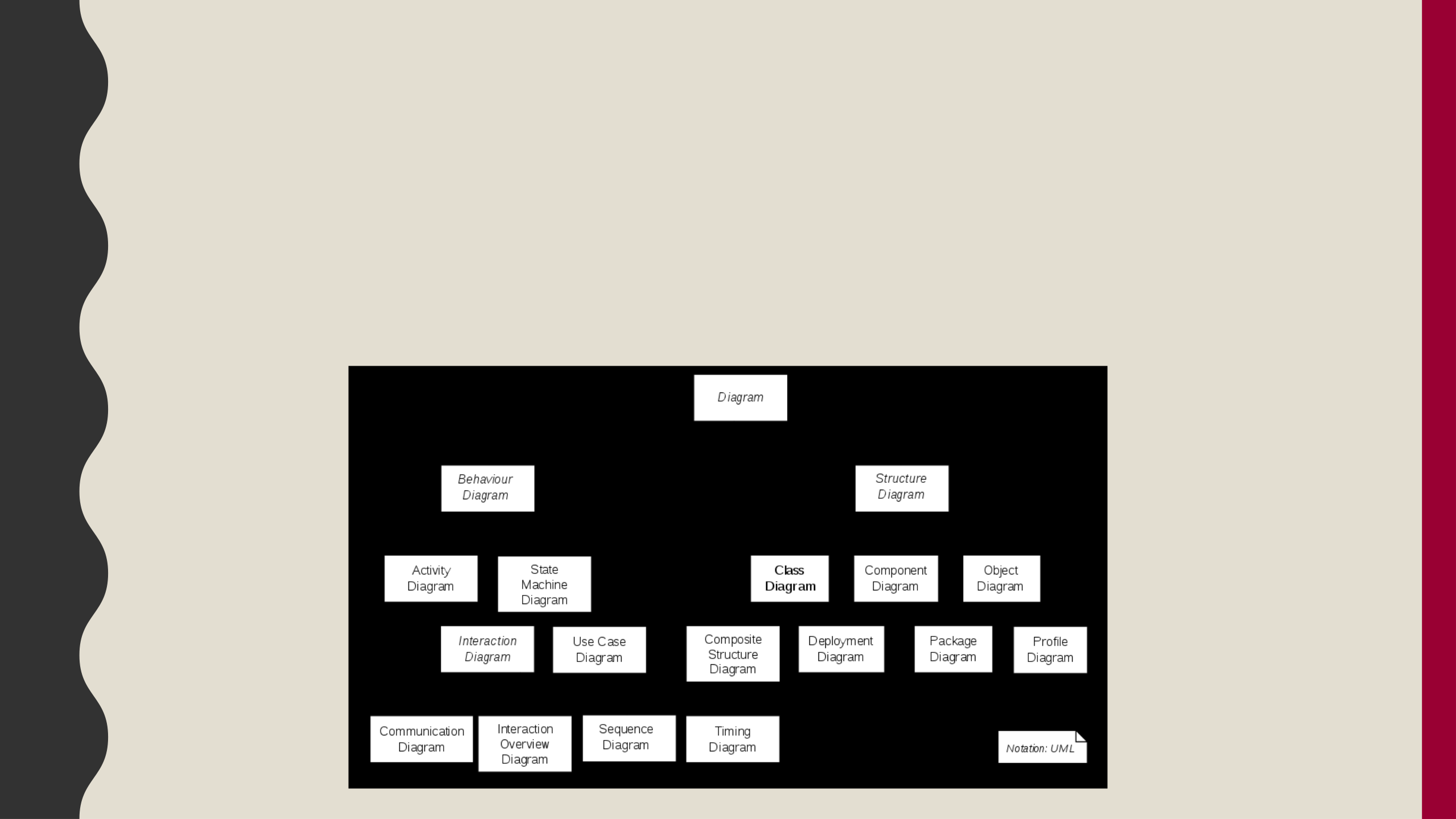
•UML is a standardized form of communication about software
•Consequentially, there is a LOT of different types of diagrams in the full
specification
•We’re going to focus on a smaller subset

Basic Class Diagram
WHAT IT IS
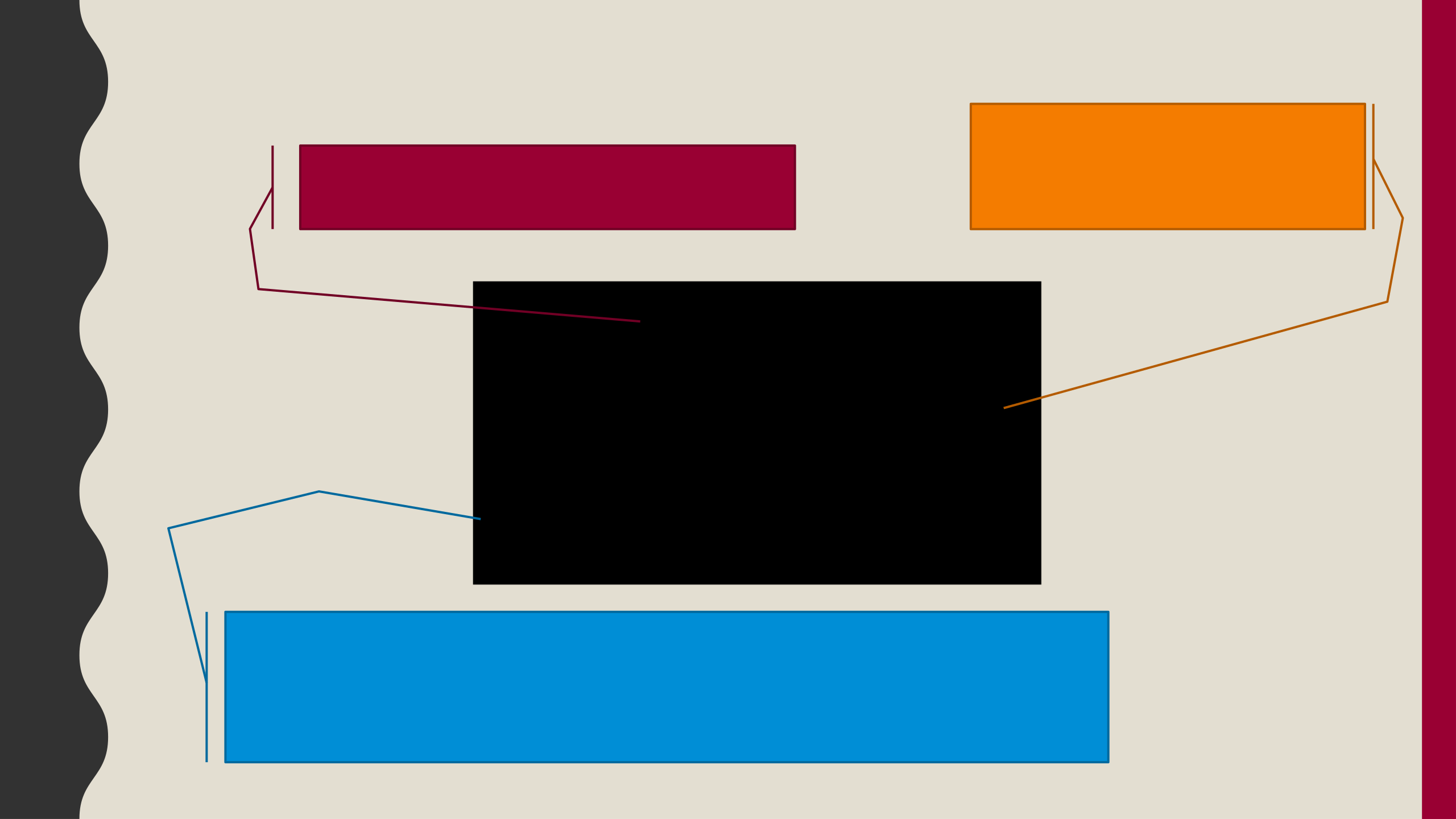
•Our first important diagram is the
basic Class Diagram
•The Class Diagram tells us all
about a single class
•It gives information about
properties and methods
SIMPLE EXAMPLE
Basic Class Diagram
C name – a at the top,
bolded
P :
S up as pairs of
data types
M :
E has a name, the parameters a then the r type (if
is listed, it’s void). P , lik pr are
: name a data type

Basic Class Diagram
•Understanding the UML allows us
to translate it into code
•Even if we don’t know what the
code specifically needs to do, we
can at least build the class
structure from the information:
•What are Dollars?
–Who knows at the moment, but
we do know we need them
class BankAccount
{
private String owner;
private Dollars balance;
public void deposit(Dollars amount)
{
}
public void withdrawal(Dollars amount)
{
}
}

Basic Class Diagram
•There’s a few assumptions in my
class code here aren’t there?
–All my properties are private
•Why? Because “Data Hiding”
–All my methods are public
•Why? Because “Interface”
•So let’s move on to the next
pillar…
class BankAccount
{
private String owner;
private Dollars balance;
public void deposit(Dollars amount)
{
}
public void withdrawal(Dollars amount)
{
}
}

Pillar #2 -
Encapsulation
W H E R E W E T A L K A B O U T T H E 3 P ’ S

Cars … again…
•Most people who drive have no real knowledge of how a car actually works
•However, everyone who knows how to drive a car can, generally speaking, sit
down and drive just about any car
–Truck, SUV, Go-Kart, etc.
•Why is that?
–It’s because of the idea of an Interface
–Each automobile tends to have the same interface:
•Steering wheel
•Shifter
•Make go fast pedal
•Make go slow pedal
•Emergency break
–These pieces might not be in the same place, but ultimately drivers understand
what they do and can use them

Encapsulation
•The idea of encapsulation is often tied to the idea of “Black Box
Programming”
•You might have heard of that in previous experiences
•The idea of a black box is that the user of a module has a strong
understanding of what the black box can do for us
–If I put this kind of input in
–I get this kind of thing out
•The user doesn’t need to know the details of how things work to make use
of them if they are well coded

Thought exercise
•I have created a most wondrous of inventions!
•If you put a piece of paper on this glass tray and close the lid
•Then you push that green button
•You can get a nearly perfect duplicate of the piece of paper!
•How does it work?!
–Well you see, I paid a person of short stature with high artistic skills to get into
the box.
–When you put the piece of paper on the glass and press the button a bell is rung
–The person in the box shines a light so they can see the document and then
draws a perfect replica as fast as they can!
–Then they put the copy in output tray!

Thought exercise
•Well … paying the person of small stature got too expensive
•And mass production was met with union demands, so I’ve automated the
process!
•The person has been replaced with several pieces of equipment that
automate the art making process!
•Does the user of this copy machine have to change any of their behaviors?
•NO!
•The INTERFACE hasn’t changed… the guts of the machine did
•The back-end was completely gutted and replaced, but the user making use
of this copy-machine didn’t have to change their process one bit!

Encapsulation
•One of the key properties of an object-oriented programming language.
•Two views of an object
–internal - the details of the variables and methods of the class that defines it
–external - the services that an object provides and how the object interacts
with the rest of the system
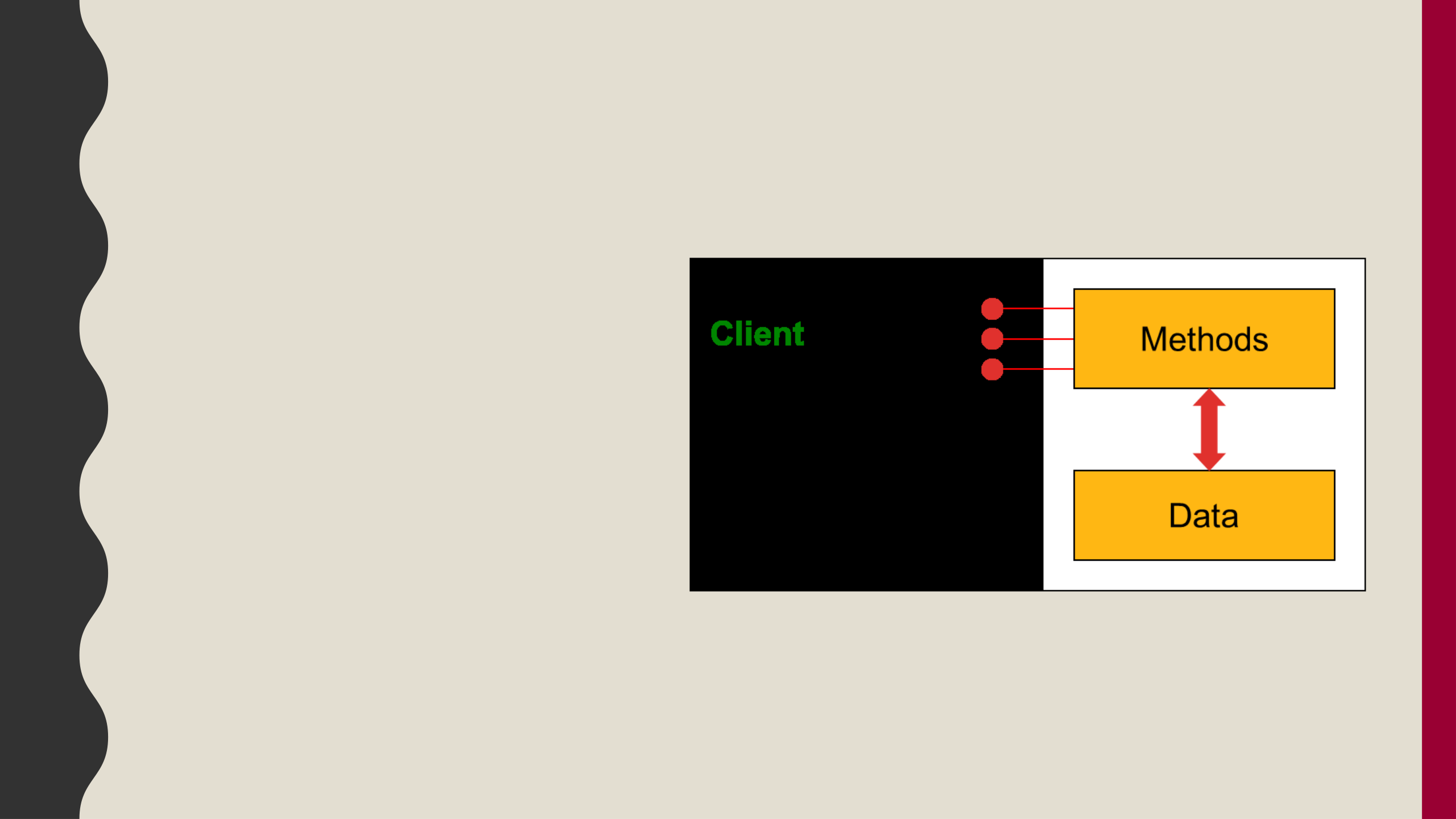
•From the external view, an object is an encapsulated entity, providing a set
of specific services
•These services define the interface to the object
1-33
Goals of Encapsulation
•That becomes the primary goal of
encapsulation
•A class is broken into two major
components:
–The Public Interface
•The part of the object that a user can
interact with
•A series of commands that allows another
programmer to code with and around
objects of the class
–The Back-End
•The parts of the class that are HIDDEN
from other programmers
•When done correctly, the back-end of a
class could theoretically be completely
recoded without introducing errors into
any code making use of the Interface

Encapsulation
•One object (called the client) may use another object for the services it
provides
–We communicate via the Front End / Public Interface methods
–Those methods will return meaningful data/results
•The client of an object may request its services (call its methods), but it
should not have to be aware of how those services are accomplished
–Classes/methods as “black boxes”
•Any changes to the object's state (its variables) should be made by that
object's methods
•We should make it difficult, if not impossible, for a client to access an
object’s variables directly
–Data hiding
•That is, an object should be self-governing
–Proper isolation of responsibility and Knowledge 1-35

Visibility
•We control all of this with 3 visibility modifiers
–Public
–Private
–Protected
•Each of these change how a method or property can be accessed
•Sometimes these modifiers have slightly different meanings in different
languages
•Technically Java has a 4th visibility modifier, but we’re going to ignore it for
now … it muddles the conversation

Public
•When something is public that means it is accessible directly whenever you
have an object of that class
•For properties, this means that a property can be directly changed via
outside code (as long as you have access to that object)
•For methods, this means that with/through an object you can call that
method and make things happen
•The public methods of a class define the Public Interface of that class which
determines how a program can interact with an object
•Most of the time we don’t want properties to be accessible, more on that
later

Private
•Private means that a property or method is accessible ONLY in the class that
DEFINES the property or method
–The emphasis is because this intersects with Pillar #3 – Inheritance
–In inheritance – if something is private in a parent class, then it will exist in the
child, but it will not be directly accessible
•More on this later…
•Private properties and methods are not part of the Public Interface and
therefore cannot be directly invoked or interacted with by the ‘outside’ even
with an object

Information/Data hiding
•Sometimes this is put with the abstraction pillar
•Data hiding is the base assumption that every piece of data in the class is
to be protected/hidden from the outside
•A programmer should rarely just make a property public
•Public properties (like global variables) can become unreliable in code.
Since anything can access them
•Sometimes the idea of Data Hiding is taken to another extreme in
programming languages that support it by hiding even the data type of a
variable through things like void-pointers and such, leaving the idea of
Information Hiding as described above

Seriously, but why though?
•Public properties are
soOoooOoooooo much easier …
why bother with all this
information hiding business?
•The short answer:
–Because you won’t be coding by
yourself for the rest of your life
and you have to take other
programmers into account
–Because it’s GOOD code, not just
working code
This Photo by Unknown Author is licensed under CC BY-NC-ND

The long answer … an anecdote…
•Imagine I want you to sort a deck of cards
•You can only handle and sort “size” number of cards though
•When you start the process “size” is set to 52 … that is the size of a
standard playing card deck
•As you go to process the cards and sort them – I suddenly announce that
“size” is now 30!
•How does this affect your ability to sort the 52 card deck?
–Wooops, now Size is -2!!
–So you can’t sort at all now!
•But we’re humans, we can ignore someone at the front of the room
shouting random deck sizes … a computer can’t!
•If you make your properties public, this is a scenario that can literally occur!

Protected
•Protected offers the same level of protection as Private, but is friendlier for
Inheritance
•We will talk more about Protected when we talk about Pillar #3
Chart
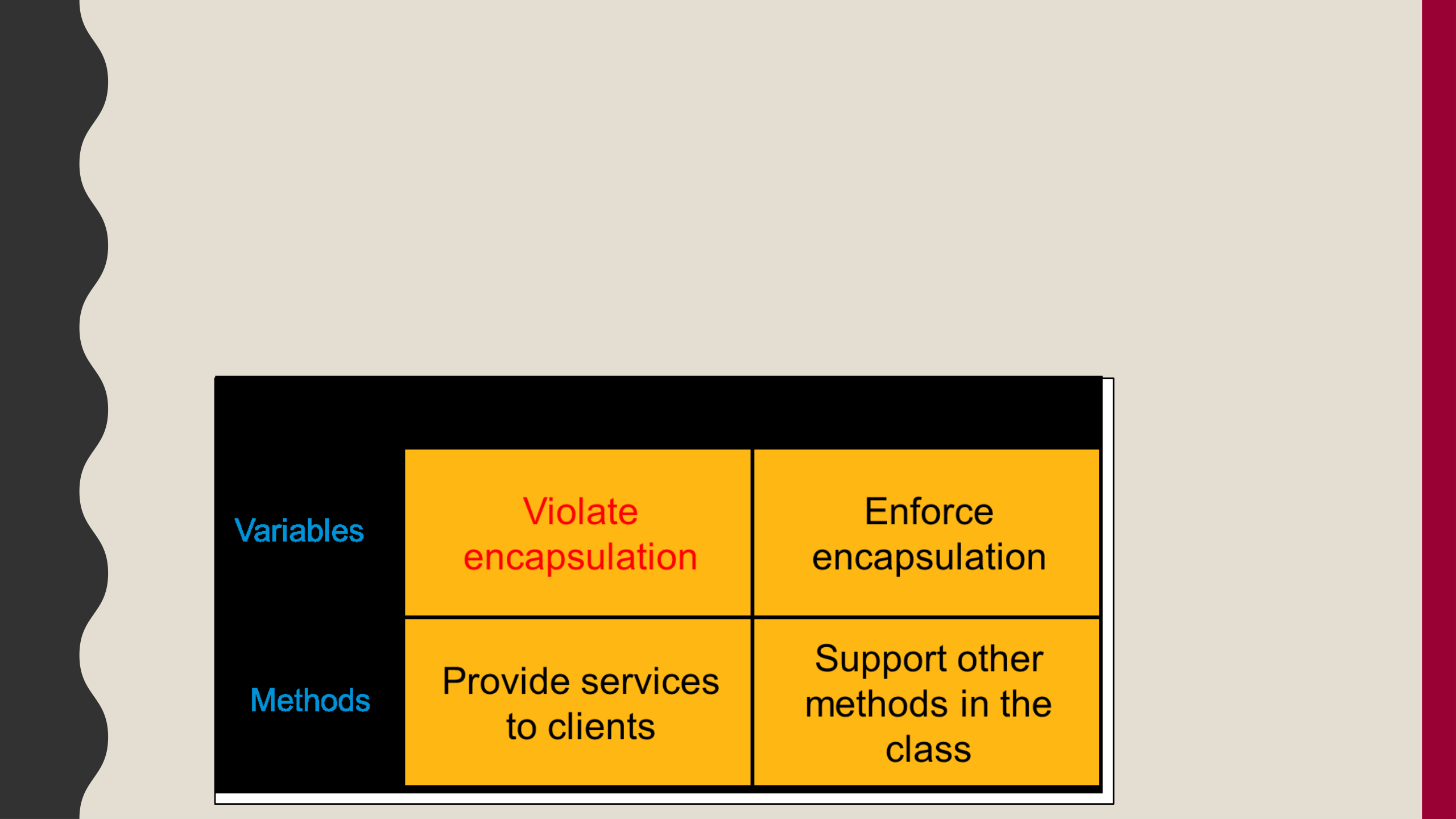
•This chart helps break down how Public and Private intersect our Properties
and Method
•Public variables are unreliable and open ourselves to errors
•Public methods are part of the Interface
•Private methods allow us to modularize work inside the class

Object Oriented
Coding
Techniques
M A K I N G U S E O F P I L L A R # 1 A N D P I L L A R # 2

Classes
•Classes are made of two things
–Properties
–Methods
•They are also structured by two
things
–Front End
•Public interface
–Back End
•Private/protected methods that
help functionality

Constructors
•One of the more important methods to understand is Constructors
•Constructors are the instructions for how to build an object of a class
•Constructors are invoked when the new command is issued
–Item myItem = new Item();
–This calls the constructor
•The constructor is usually public and always has no return type
•The constructor is always named the same as the class
•What does it do for us?
–It lets the programmer specify the initial conditions of that particular object
–We can set up the properties, call methods, etc. to get the object ready for use!
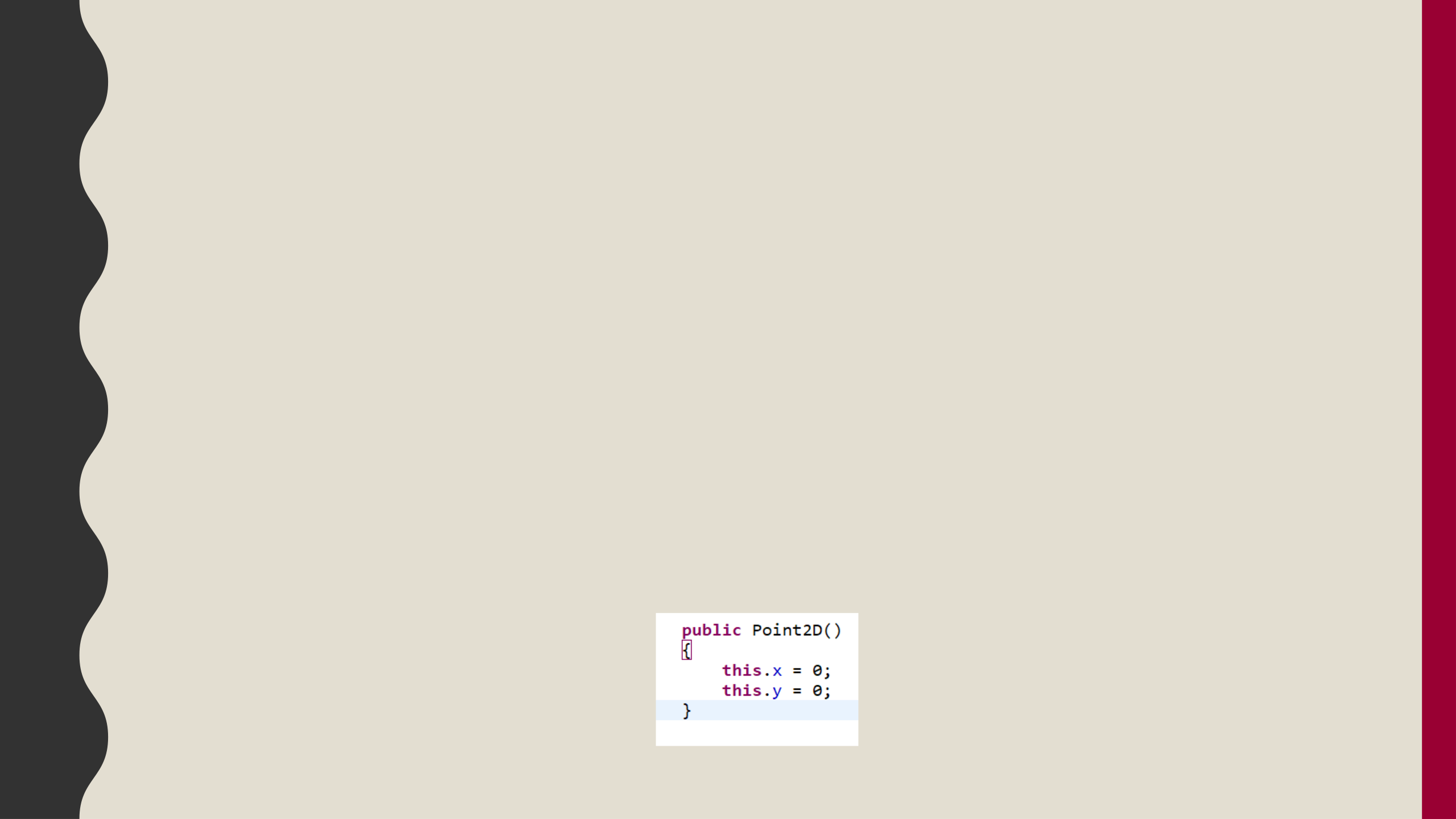
Constructors – Default Constructor
•The Default Constructor does not have any parameters
•Generally this constructor is programmed to build the object with very
simple default values
•If this is not provided, then Java will do a “barebones” default constructor
which sets up the basics of the class and sets properties to the defaults for
those properties
–0 for numbers, null/undefined for object references, etc
•It’s generally not good to rely on the Java Default Constructor
•NOTE: Not every language will do this
–C++ will throw errors if a default constructor is not defined
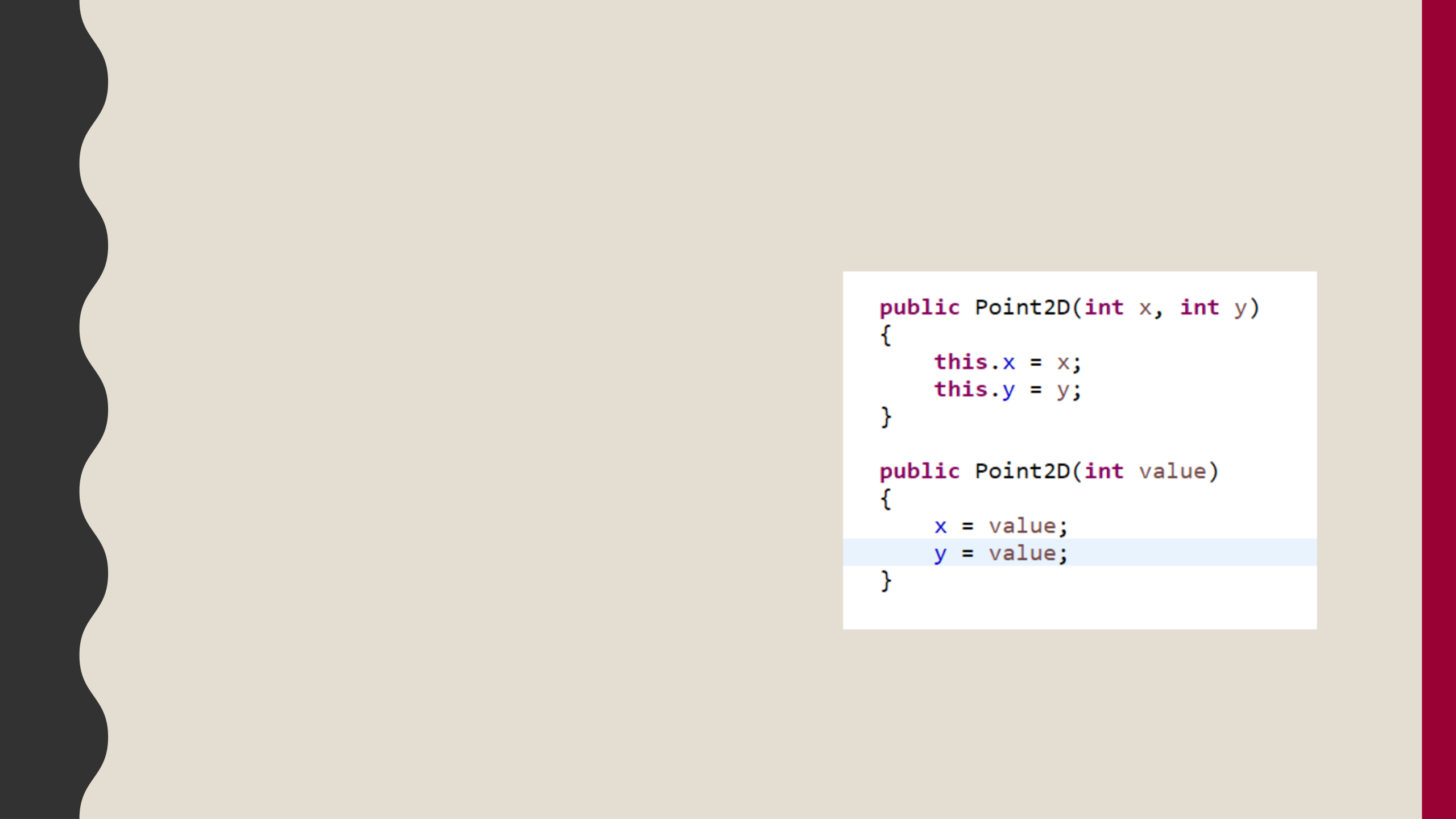
Constructors – Parameterized
Constructors
•Basically this is what it says on
the box: it’s a constructor with
parameters
•These are powerful tools that let
us customize an individual object
on creation!
•Constructors in Java can be
overloaded … so feel free to
make as many as needed to
provide a programmer with all the
options they might want to create
an object!
•Beware – if you name your
parameters the same as your
properties the “this” reference is
required
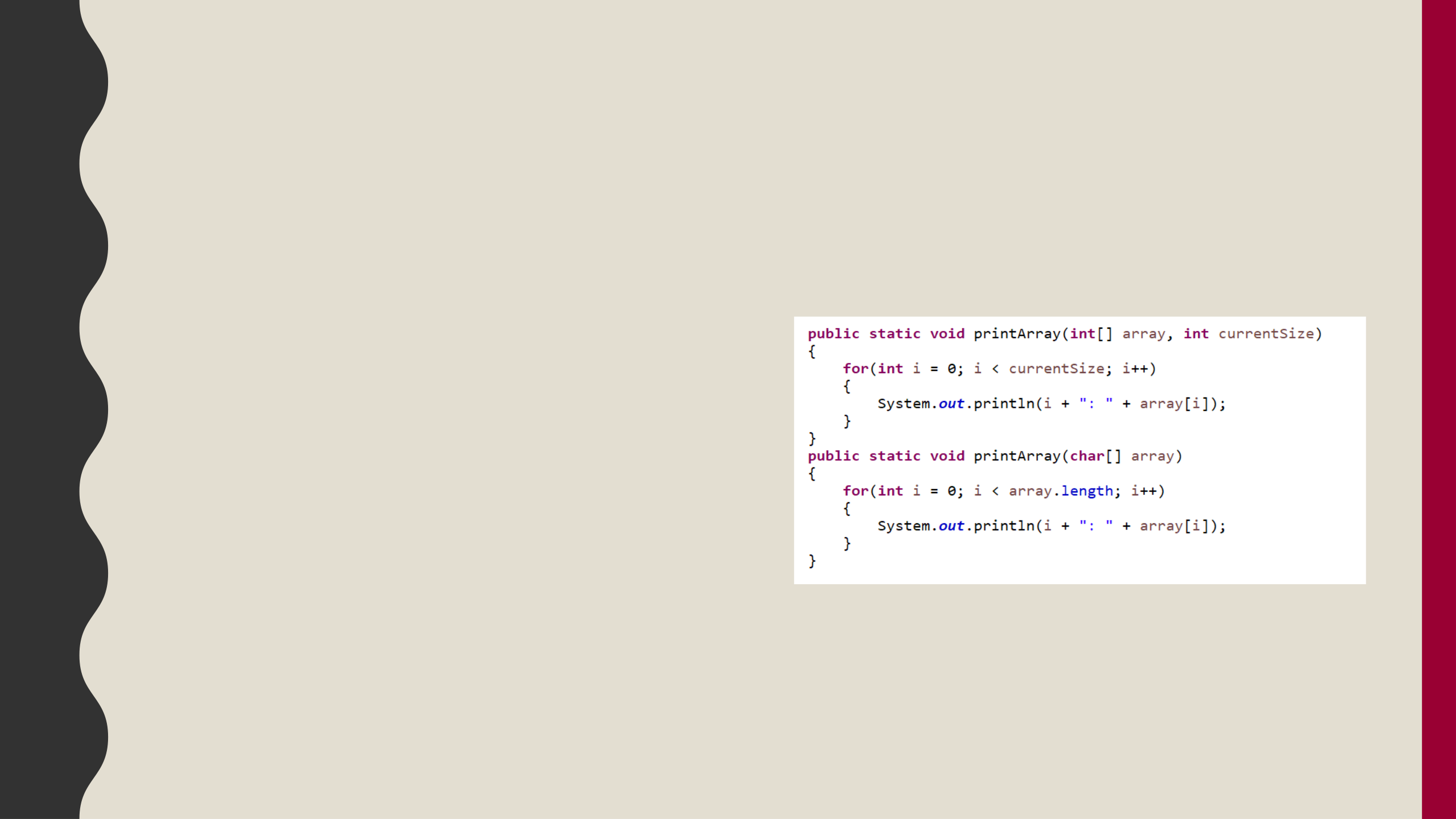
Overloading
•Overloading is when we provide
alternate definitions for a method
•This is accomplished by using the
same method name but providing
different parameterization
•Each of the methods can have a
different method body
•The parameters is what lets the
compiler know the difference
between them
•NOTE – You can only use a particular
set of parameters once
–Otherwise the compiler can’t tell
them apart

Overloading in Java
•Overloading in Java can be a bit confusing because it allows for quite a bit of overloading
•Rules:
–Both methods have the same name
–Both methods have different parameters
•Valid:
–If both methods have the same name and different parameters, they may also have different return types
•However, return type alone is not enough for overloading.
•If they have the same name and same parameters, but different return types… this is an error
–If both methods have the same name and different parameters, they may also have different visibility modifiers
•However, difference in visibility modifier alone is not sufficient for overloading
•Nor is different visibility modifier and return type
•They must have different parameters
–If both methods have the same name and different parameters, they may also have different throws statements
for unchecked exceptions
•But like before … differing throws alone is not sufficient for overload
•Nor is any combination of “different throw”, “different visibility” and “different return type”
•Boils down to:
–The parameterization must be different to “unlock” the other features of Java overloading

Getters and Setters / Accessors and Mutators

