


MANAGERIAL ABILITY AND FIRM PERFORMANCE: EMPIRICAL EVIDENCE
FROM UK’S PUBLIC FIRMS
Student’s Name
Student No.
i

DECLARATION
This dissertation is my original work and has not been submitted for the award of a degree in
another institution.
...................................... ...................................
Signature Date
Student’s Name
Student’s Number
Supervisor
This dissertation has been submitted for assessment with our approval as university supervisor.
Professor’s Name…………….
...................................... ...................................
Signature Date:
ii

iii

ACKNOWLEDGEMENT
I would like to appreciate the help and encouragement that my supervisor and faculty have
accorded me. Their feedback, patience, knowledge, and expertise have been immense. I would
also like to extend gratitude to my peers and family for their moral support and help. They have
kept my motivation and spirits high throughout the dissertation journey.
iv

LIST OF ACRONYMS
COVID-19 – Corona Virus Disease 2019
CSR – Corporate Social Responsibility
GMA – General Managerial Ability
U.K. – United Kingdom
UET – Upper Echelons Theory
R&D – Research and Development
v

ABSTRACT
The focus of this dissertation was to ascertain the relationship between managerial ability and
firm performance. The assumption was that managers with top-notch managerial abilities such as
visionaries, risk-takers, high emotional intelligence, and cognitive abilities can outperform those
that do not have them. The modern view is that managerial ability is a key input, especially
considering the resource-based view of the firm. However, there are many questions that emerge
when tackling this topic. For instance, are highly capable managers more able to ensure that their
companies navigate challenging times compared to their peers? There is a gap in literature when
it comes to linking managerial ability to firm performance. Existing ones do so inadequately.
There are few that look at the nexus between managerial ability and risk-taking, which affects
not only profitability but also managerial abilities. Therefore, this study seeks to fill this gap by
assessing how managerial ability affects firm performance and risk-taking behaviour. More so,
this research sought to fill this gap by looking at how managerial abilities of executives in U.K.
firms influence the performance of their firms. The following hypotheses were met. First, a high
managerial ability is significantly correlated to better firm performance. High managerial
abilities make it easier for firms to raise funds, thus increase firm value. A firm with good
managers can consistently generate cash flow, thus high firm value and consistent operations.
Second, high-ability managers are correlated to increases in firm risk-taking ventures. Highly
capable managers are capable of taking risks and will spend more on R&D and less on capital
expenditures.
vi

Table of Contents
DECLARATION.............................................................................................................................ii
ACKNOWLEDGEMENT..............................................................................................................iii
LIST OF ACRONYMS..................................................................................................................iv
ABSTRACT....................................................................................................................................v
CHAPTER ONE: INTRODUCTION..........................................................................................viii
Background and Research Gap....................................................................................................2
Methodology................................................................................................................................5
Key Findings and Contributions..................................................................................................6
Structure of the Work...................................................................................................................7
CHAPTER TWO: LITERATURE REVIEW AND HYPOTHESES.............................................9
Theory..........................................................................................................................................9
Empirical Research....................................................................................................................13
Hypotheses Development..........................................................................................................21
CHAPTER THREE: DATA AND METHODOLOGY................................................................23
Data & Sample & Datasets........................................................................................................23
Models........................................................................................................................................24
Control Variables.......................................................................................................................26
CHAPTER FOUR: RESULTS AND DISCUSSION....................................................................28
Descriptive Statistics..................................................................................................................28
Main Results..............................................................................................................................32
Additional Analyses...................................................................................................................34
Robustness Tests........................................................................................................................35
CHAPTER FIVE: CONCLUSION...............................................................................................37
Summary of Findings.................................................................................................................37
Concluding Remarks..................................................................................................................38
Research Implications................................................................................................................39
Limitations.................................................................................................................................39
Areas for Future Research..........................................................................................................40
References......................................................................................................................................41
vii

viii

List of Figures
Figure 1: Interrelationships within the Upper Echelon model…………………………………...10
Figure 2: Principal and Agent……………………………………………………………………11
ix

List of Tables
Table 1: Variable definitions…………………………………………………………………….27
Table 2: Descriptive Statistics…………………………………………………………………...28
Table 3: Correlation Coefficient……………………………………………………………..…..29
Table 4: Influence of GMA on Org Performance and Risk-taking……………………………...30
Table 5: GMA and Org Performance and Risk-taking…………………………………………..31
Table 6: Sensitivity Analysis…………………………………………………………………….35
x

1

CHAPTER ONE: INTRODUCTION
The focus of this dissertation is on the nexus between an executive manager’s capability and
organisational performance. The assumption is that managers with top-notch managerial abilities
such as visionaries, risk-takers, high emotional intelligence, and cognitive abilities can
outperform those that do not have them. They are also confident enough to engage in risky
business ventures that will give the company innovative products and a competitive edge. The
introduction section gives a background to the research problem and research gap. It also
outlines the research questions, methodology used, as well as key findings and contributions.
Background and Research Gap
In the world of business, the people who are tasked with making strategic decisions that affect
the performance of a firm are members of the senior management team, including executive
directors, senior executives, middle- and lower-level managers, board directors, as well as
financial directors and many others. These managers have diverse levels of skills, experiences,
competencies, and knowledge. Therefore, managerial ability may bring together knowledge,
experience, and competence. Managers with greater managerial abilities are able to utilize
corporate resources in a more efficient manner and ensure better organizational performance
(Rule and Tskhay, 2014; Ng et al., 2015). As well, companies that have hired more able
managers will most likely generate an above-average return to shareholders.
When it comes to firm performance, some of the factors that impact business performance
include finance, innovation, and research & development. Finance boosts enterprise
development. Indeed, the development of finance has boosted the financial markets, thus
improving enterprise performance and their capital structure (Abernathy, Kubick and Masli,
2

2018; Yung and Chen, 2017). An excellent example is the utilization of digital finance during the
COVID-19 pandemic. Nonetheless, firm value can also be determined by other factors such as
corporate social responsibility and environmental sustainability. CSR carries important non-
financial information, while environmental policies can improve energy efficiency. However, all
of these depend on managerial decision-making.
Traditionally, it was assumed that managers behave rationally and have to ensure firm value
maximization. In view of this, the differences in managerial ability was not thought to play a
significant role in decision-making. However, modern research in behavioural finance has
revealed the significance of managerial attributes towards determining firm behaviour. More so,
managerial ability has an influence diverse aspect of firm performance, including innovative
activity, market entry strategy, bank liquidity creation, and the quality of corporate earnings
(Chen, Podolski and Veeraraghavan, 2015). Therefore, the modern view is that executive
aptitude is a key contribution, especially considering the resource-based view of the firm.
Apart from organisational performance, risk-taking behaviour is also important in the world of
business. Some of the most successful managers and firms are those that take risks that may
propel the company to greater heights (The Wharton School, 2020). Without taking risks,
rewards will not come by. There are three characteristics that define managers or executives who
are risk-takers. First, these individuals do not conform to the business world. In other words, they
do not feel comfortable with their jobs as they constantly seek improvement. Second,
entrepreneurs are problem-solvers. They constantly look for opportunities to improve their
business or create new paths. Third, therefore, entrepreneurs are very optimistic individuals.
They will be constantly looking for ways to make a difference in their lives and business in terms
of ideas, new products, or services. Literature confirms that risk-taking is a prominent behaviour
3

among entrepreneurs despite the fact that profits or positive outcomes are not guaranteed.
However, business persons are okay with uncertainties (The Wharton School, 2020).
Consequently, risk aversion is thought to be a predictor of the difference between
entrepreneurship and the opposite. There are different types of risks such as competitive risk,
financial risks, technology risks, market risks, and much more.
However, there are many questions that emerge when tackling this topic. For instance, are highly
capable managers more able to ensure that their companies navigate challenging times compared
to their peers? (Hettler, Cordeiro and Forst, 2024). This question is relevant considering recent
crises such as the 2007/2008 financial crisis that rocked the financial markets across the world,
as well as the COVID-19 pandemic. The latter was unprecedented, and many firms and their
managers were caught off-guard. Many companies managed to withstand the pandemic, while
others did not. Nonetheless, the impact of managerial ability cannot be measured only by how
companies managed to navigate during difficult unprecedented times. The modern business
climate is nothing short of fast-changing. What is considered fashionable today may not be
fashionable in just a year or so. Therefore, managers have to do everything possible to ensure
their firms attain sustainable competitive advantage.
There is a gap in literature that discerns the impact of managerial ability on organisational
performance. Existing ones do so inadequately. There are few that look at the nexus between
managerial ability and risk-taking behaviour, which affects not only profitability but also
managerial abilities, according to Matemilola et al. (2018). Therefore, this study seeks to fill this
gap by assessing how managerial ability affects a firm's performing while using risk-taking as a
mediator. More so, this research seeks to fill this gap by looking at how managerial abilities of
executives in U.K. firms influence the performance of their firms. The U.K. presents a unique
4

research setting because it is one of the strongest economies in the global community. U.K. is
home to both local and international companies, thus there are many qualified firms with
exemplary managerial capabilities that will contribute to this study.
Objectives:
1. To establish the distinctive role managers play to enable outstanding firm performance.
2. To understand the effect knowledgeable managers have on firm performance.
3. To outline the mitigating measures firm managers can take to elevate the performance of
their firms.
Research Questions
Q1. To what extent does a firm managers’ capabilities affect a firm’s performance?
Q2. What are the impacts of having a knowledgeable versus an incapable manager steer a firm?
Q3. What are the crucial skills that managers should poses in order to adequately manage a firm?
Methodology
The study focused on the performance of selected U.K. firms operating in the London Stock
Exchange (LSE). For empirical analysis, data about the top managers and the companies they
lead came from the Glassdoor, Yahoo Finance, and Forbes websites (between 2019 and 2022).
They are reputable sites that rank CEOs according to their leadership and work environment they
have created. The CEOs come from a wide section of industries including telecoms, tech, travel,
and financial services. A list of 50 CEOs and firms was included in the sample, and information
about company performance came from the websites of each of the firms they lead, as well as
Statista and other reputable sites. Since the managerial ability index (the main variable of
interest) was constructed by Demerjian et al. (2012), which was available up to 2018, the study
utilized the 2018 Managerial Ability ranking to measure the companies’ managerial ability.
5

Key Findings and Contributions
A key finding was that high ability managers increase the performance of the firms that they
lead. They are also adapted to taking high risks because of their high ambitions (Yung & Chen,
2018 & Bonsall et al., 2017). There was a statistically insignificant correlation between the
generalist managers and firm performance (Choi et al., 2015, Nguyen, Mai, & Huynh, 2019 &
Gounopoulos & Pham, 2018). Generalist managers are ready to engage in more risks compared
to specialist managers. Therefore, they are important when a firm is experiencing shocks.
On the one hand, firm performance was higher when generalist manager work for prospector
firms. However, there are risks involved. Prospectors can easily adapt to uncertainties and risks.
On the other hand, firm performance is high when specialist managers work for defender
companies. Prospectors can be looked at as innovative firms that often look for new market
opportunities and new product ventures. As such, they have to ensure they have the right
technologies to achieve a diverse product portfolio. These companies will need managers that
are highly capable. On their part, defenders are companies that put more emphasis on efficiency
when it comes to producing and distributing their goods and services. Another important finding
was that the correlation between managerial ability and organisational output will differ because
of the types of strategies they choose to follow. Therefore, managerial ability contributes to firm
performance can only be positive if it aligns with the strategy pursued by the firm.
The findings herein have implications for both managers and policymakers or regulators.
Theoretically (Upper Echelons Theory), the ability of a manager is important in the world of
business as it determines business strategy. Highly-able managers can make more positive
strategic choices and organisational decisions, all of which affect firm performance.
6

On the topic of managerial ability, this study points out that high managerial ability will lead to
increased investment, innovation, and effective decision-making, all of which lead to good firm
performance and competitive advantage (Custódio, Ferreira, & Matos, 2019, Gan,K2019, Mishra
2019 & Bhutta et al. 2021). Therefore, company owners or shareholders should ensure that they
hire highly able managers and professionals to run their firms. They should consider certain
managerial skills when hiring top-level managers such as CEOs. On their part, managers should
do an audit of their skills and utilize their abilities for the goal of improving performance.
As for policymakers or regulators, the suggestion is that they create policies that will boost
industries, for instance, effective leadership programs that will shape or enhance managerial
skills of industry leaders. There can also be exchange programs so that managers from across
different industries, regions, and firm sizes can learn from one another. This can scale up a
manager’s ability to boost firm performance.
Structure of the Work
The remainder of the work is structured as follows. Chapter Two is the Literature Review. This
section of the theses reviews research that has been conducted in the past in relation to this study.
It begins by outlining three theories that guide the research inquiry and hypothesis development.
Next, the paper then evaluates related empirical research before outlining the hypotheses formed
upon the review of literature. Chapter three is the Data & Methodology section, which gives
detail about data collected and the methodology used. It begins by detailing the data, sample, and
datasets collected. The models utilized are described next, as well as the control variables.
Thereafter is Chapter 4, the Results and Discussion section. This section of the paper outlines the
results of the study before discussing them. It begins with the descriptive statistics and then a
presentation of the main results in accordance with the hypotheses. Additional analyses and
7

robustness tests are also presented. The last is Conclusion. This section of the study offers a
summary of the findings, as well as concluding remarks based upon the findings. The research
implications and limitations are also offered before providing remarks about areas for future
research.
8

CHAPTER TWO: LITERATURE REVIEW & HYPOTHESES
This section of the thesis reviews research that has been conducted in the past in relation to this
study. It begins by outlining three theories that guide the research inquiry and hypothesis
development. Next, the paper then evaluates related empirical research before outlining the
hypotheses formed upon the review of literature.
Theory
The models that underpin this study include the Upper Echelons, Agency, and Principal-Agent
theories.
1. Upper Echelon’s Theory
One of the theories that will underpin this study is Hambrick and Mason’s Upper Echelons
Theory, which postulates that the strategic processes and outcomes of a firm are largely
determined by the managerial capabilities of top management. Hambrick and Mason came up
with this theory because they wanted to answer two important questions: (1) why do firms act as
they do and (2) why do firms perform as they do? The pre-existing view was that managers have
little influence on organisational outcomes because of external forces. The Upper Echelon’s
Theory posited that strategies choices are not a mechanical quest but rather a product of
behavioural factors (Hambrick and Mason). As such, strategies decisions depend on how
managers, who are the major decision-makers, perceive the real situations happening on the
ground. The main premise held by this theory, therefore, is that tactical choices and their results
are determined by the management’s idiosyncrasies. The theory also explains the inter-
relationships among four concepts – (1) the characteristics of upper echelon (top managers), (2)
strategic situations, (3) strategic choices, and (4) organisational performance (Euschen, 2018).
9
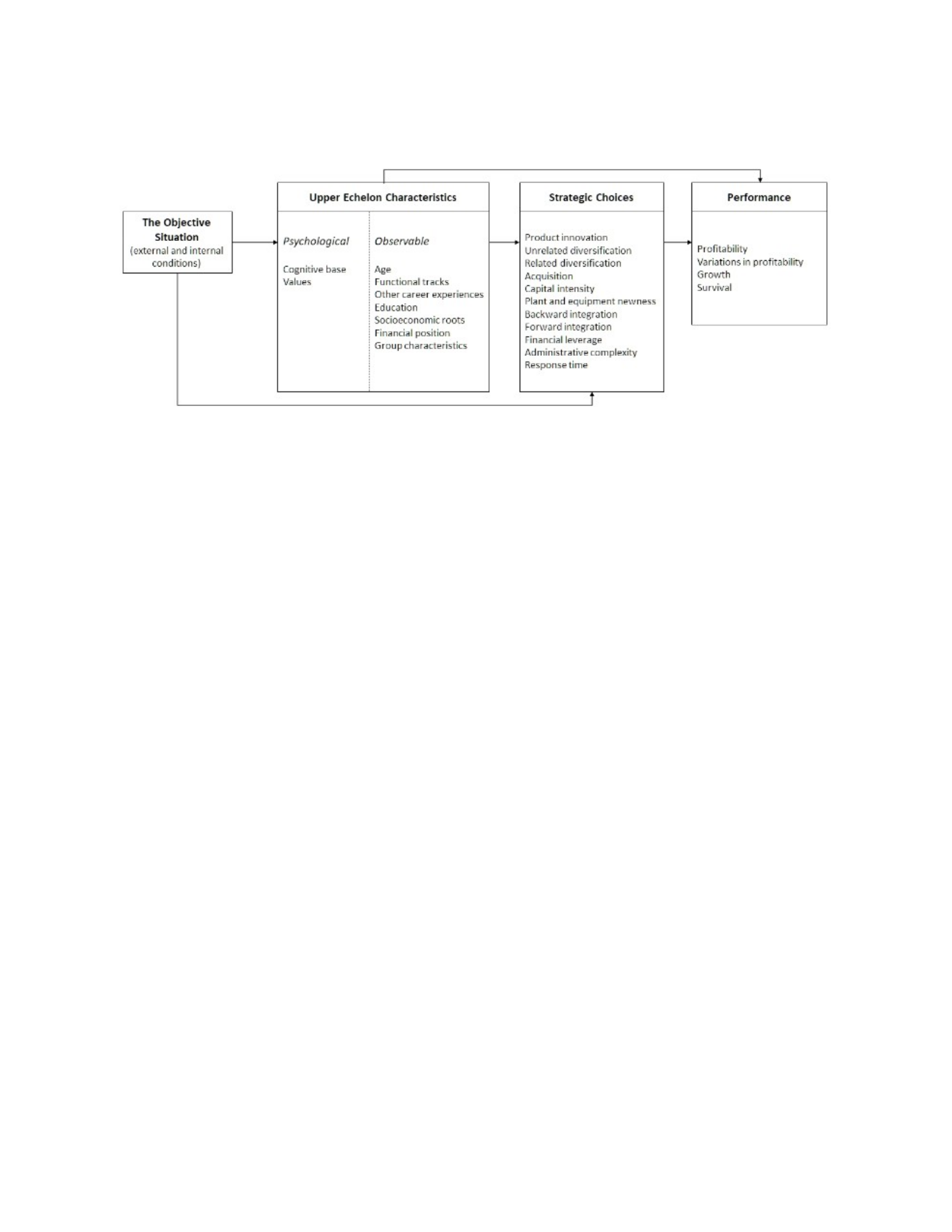
Figure 1: Interrelationships within the Upper Echelon model
Figure adapted from Hambrick and Mason
Overall, according to the Upper Echelons model, cognitive base and values of managers affect
how they interpret and respond to different strategic situations, thus affecting organisational
performance (Kim, 2020). This can be broken down into three ideas. First, a senior manager’s
cognitive base and values can be seen in the organisation’s strategic outcomes. Second, the
managers’ observable demographic characteristics can reliably indicate their cognitive frames,
thus predict strategic outcomes (Euschen, 2018). Third, it helps to study the individualities of a
company’s top management team as a whole and not only the Chief Executive Officer (CEO) to
strongly predict strategic outcomes.
2. Agency Theory
An agency can be broadly defined as a relationship that exists between two parties – the principal
and the agent (Bamberg and Spremann, 2012). The principal hires the agent to perform functions
on their behalf.
Figure 2: Principal and Agent
10

Therefore, in business, while the principals are the owners of the firm, they delegate decision-
making authority to the other party, the agent(s). However, the problem is that there will always
be differences of opinions, interests, and priorities between these two. The main presumption of
agency theory is that the principal may not always be in agreement with the agent, a problem
referred to as the principal-agent problem (Bamberg and Spremann, 2012). The principal has
entrusted money/resources to the agent but has little input in decision-making. As the major
decision-maker in the organisation, the agent has little to no risk because the resources being
utilized belong to the principal. In view of this, agency theory is a model that seeks to explain
issues that arise between business principals and their agents. In this case, the principals are the
firm's shareholders, while the agents are the company's top management.
Disputes can arise in two areas – differences in objectives and risk aversion (Bamberg and
Spremann, 2012). While executives want short-term profits to increase their compensation,
shareholders will be more concerned about long-term appreciation of share prices and growth of
earnings. As such, managers may be willing to expand into high-risk ventures, but this is risky to
shareholders, who may end up losing their investments. The level of risk tolerate is also different
between these two sides. The managers may want to give out a lot of loans, thus setting a low bar
on loan approvals, but shareholders will object to this because of the high risk of defaults. It goes
11

without say that shareholders can pick managers that they believe will best represent their
interests while giving them some level of independence to steer their companies forward. The
level of autonomy may differ from one company to another, thus determining firm performance.
This is how the theory is applied herein. As well, according to Bamberg and Spremann (2012),
an agency contract can be enhanced to define the interest of shareholders and debtholders. If
there is conflict between these two parties, then the level of debt will be high, and this can lead to
higher agency costs, lower equity capital, and lower organisational outcomes. According to this
model, debt negatively affects organisational firm performance.
3. Principal-Agent Theory
The principal agent model, which arose during the 1970s, posits that though agents are
significant and indispensable in certain times, their work or roles can be impacted thanks to the
principal (Bamberg and Spremann, 2012). The theory, therefore, describes the problems that
arise when the agent represents the principal. To begin with, the advantages of hiring an agent
are as follows: (1) an experienced agent will come in handy when the principal is not sure of how
the game works; (2) the agent will be a representative when the principal is too busy with other
things and thus cannot represent themselves well; and (3) the agent helps when the principal has
a poor relationship with other stakeholders (Bamberg and Spremann, 2012). Therefore,
principals need agents. The principal agent theory also points out the following differences
between the agent and the principal: (1) agents have different preferences; (2) agents have
different incentives; and (3) agents have information that the principals do not have and vice
versa. These differences, however, may give rise to problems especially with regards to business
strategy, coordination of activities and processes, incentives, and monitoring performance. As
already mentioned, this theory posits that agents engage in tasks at the request of their principals.
12

Therefore, principals bestow decision-making on the agents. However, problems can arise when
there is a mismatch between the decisions that the agents make and those that would serve the
interests of the principal. When making decisions, some agents may prioritize their personal
goals over those of the principal. Therefore, this theory gives insights into how agents make their
decisions, including when they gauge the risk landscape.
Empirical Research
Defining Managerial Ability
In literature, different researchers define the concept that is managerial ability in a variety of
ways. For instance, it can be viewed from a strategic perspective or from a human capital
perspective (Custódio, Ferreira and Matos, 2013). The strategic perspective looks at managerial
ability from the resource expertise and domain expertise. Resource expertise refers to the
aptitude of a manager to pick and organise a company’s product assortment, combine resources,
and utilize them in was that will exploit specific opportunities. As for the domain proficiency, it
refers to how executives understand the industry and the company’s markets, products,
strategies, routines, and environments (Custódio et al., 2013). More able managers are those with
executive skills and years of experience (Lee et al. 2018 & Ting et al. 2015).
From the human capital perspective, general managerial ability (GMA) comprises the manager’s
knowledge, experience, and skill. According to Andreou et al. (2017), the overall managerial
abilities of a CEO can include skills that one has gained over a lifetime in key areas, positions,
firms, and industries. Therefore, these skills may not be specific to a sector or entity. They can be
transferred from one company to another, one sector to another. These are quite distinct from
specialist managerial abilities that cannot be transferred across different sectors; however, they
are very valuable to an industry or company. It goes without saying that bosses with general
13

managerial abilities will have more leeway and job openings compared to those with specific
managerial abilities.
Dermajian et al. (2013) have also given their own definition of managerial ability. According to
them, more able managers are those that are capable of generating higher revenue for the
company while utilizing the most minimal amount of resources at a given time. Therefore, a
manager’s ability is defined by how efficient he or she uses company resources to generate the
highest possible revenue. Dermajian et al. (2013) also look at the role of managers from different
points of view. The neo-classical view of the firm, for instance, states that it is the role of the
manager to implement the shareholders’ objectives. If this is so, then it means that managers may
not make decisions independently; they have to make decisions that are in line with the goals of
the firms’ investors. However, this does not mean that managers have different styles of
leadership and management of company affairs.
The Concept of Firm Performance
Firm performance is a multi-dimensional concept. It may refer to various aspects including
profitability, market value, organisational growth, customer and employee satisfaction, as well as
environmental and social performances (Harrison and Wicks, 2013). Profitability is the
capability of the firm to gain profit, which is what remains after the firm pays all the expenses
related to the production of that revenue and the conduct of any other business activity.
Researchers have often pointed out that the goal of any business is to exploit shareholder wealth
(Harrison and Wicks, 2013). Therefore, the most obvious way of satisfying investors is to ensure
that the company’s financial performance is superb. A firm with superior financial performance
is profitable, has high market value, and experiences growth.
14

As for market value, it represents the assessment of the firm’s future performance. It is an
external assessment that looks at past growth levels and productivity, as well as future prospects
considering competitive moves and changes in the market. On its part, market value is
considered to be an important gauge of organisational health because it can predict stock trends,
which is important data for the company’s stakeholders.
Organisational growth refers to the company’s capacity to increase in size, even within a similar
profitability level. It is a positive change in size over a period of time or when a company
matures after years in the markets. A company’s growth will increase cash generation and profit.
When a company is huge, it can achieve economies of scale. It can also dominate the markets,
thus guarantee future profitability.
Next is customer satisfaction, which refers to how products and/or services meet or surpass
consumer expectations. Customer satisfaction is a very important performance indicator for a
firm as it determines loyalty and purchase intentions. It is obvious that customers want goods and
services that satisfy their needs and tastes. It is imperative that firms strive to understand
customer needs so as to create products and services that match them and their tastes. They will
be willing to pay even more for exceptional goods and services, thus create value.
Apart from customer satisfaction, there is also employee satisfaction, which refers to how much
employees are satisfied with their work environment, roles and responsibilities, management,
and any other aspects of their work. Employees that are satisfied will do their work diligently
and go beyond their mandate to work for the company. Conversely, those who are satisfied may
fail to hit their targets, sabotage the company, and have a high turnover (Harrison and Wicks,
2013). Therefore, it is up to the company to know what employees want, which is beyond
15

monetary gains. Some employees want recognition, while others want room for individual and
career development.
Another significant tool of measuring firm performance is its environmental performance. This
has become more significant today at a time when the world is grappling with issues of global
warming and climate change. Companies should strive to be sustainable and take care of the
environment. This includes reducing their carbon footprint and destruction of fossil fuels. There
is also social performance, which refers to how the company satisfies communities (Harrison and
Wicks, 2013). These can include satisfying different stakeholder groups such as communities,
high product quality, ethical advertisement, and much more. The more the company gain profit,
the more it can spend toward corporate social activities.
Managerial Ability and Organisational Performance
Phan et al. (2020) argued that executive ability is an important aspect toward establishing and
ensuring organisational success. The success of an organisation in the markets can be measured
using overall firm performance, compensation, productivity, and investment decisions made.
What Phan et al. (2020) established is that managerial abilities and qualities such as skills and
talent can affect how a firm performs financially, accounting-wise, and toward research and
development. These managers are capable of taking the initiative and pioneering actions to
exploit rare resources to ensure the firm is sustainable. Therefore, there is a connection between
optimal resource exploitation and an executive’s personality. Managers with high abilities are
capable of taking risks appropriately, which then increases organisational value. According to
Phan et al. (2020), highly capable executives understand the environment they are operating in,
thus are able to make sound investment decisions that will contribute to improved firm
performance.
16

Chemmanur and Paeglis look at the relationship between quality executives and the reputation of
the organisation’s management and IPO aspects. The finding is that there is a positive correlation
between the volume and quality of the offers, the characteristics of the offers, and long-term
performance of the company. There was a nexus between high quality management and seasoned
equity offerings (SEOs). SEOs are mostly executed by mature, complex firms, where the
management quality is expected to be very high. Findings also show that companies that conduct
SEOs have lower information asymmetry levels compared to those that have IPOs. However,
whether SEO or IPO, a higher management quality level has been connected to less asymmetry.
As for Demerjian et al. (2013), the ability of a manager determines the earnings value of a firm,
as well as other aspects such as investment efficiency, new market entry strategy, innovation
strategy selection, and much more, all of which contribute to the firm’s performance. There is a
correlation between corporate governance mechanisms and how the organisation performs.
There is also a correspondence between corporate governance mechanisms and stakeholders, job
role of independent directors, and how shareholders consider corporate governance, information
transparency. The finding is that companies with better corporate governance structures and
mechanisms in place will outperform their peers without such. Alternatively, the more competent
the management of the corporation, the more improved their corporate governance. If the
managerial ability of the firm’s management is strong, it will be easier for them to improve
corporate governance and internal control mechanisms. Managers with strong abilities can easily
identify internal control problems and rectify accordingly.
According to research by Rego and Wilson (2012), it is the role of managers to strategically
decide and plan for operations for firms they lead. This role is amplified in markets that have
intense competition and experiencing rapid changes. This means that a manager with unique
17

abilities will significantly boost the firm’s value and ensure it has a bright future. To avoid tax,
managers are expected to assign specific resources to the firm. Yet, tax avoidance brings certain
non-tax costs, for instance, agency, financial reporting, direct costs for tax strategies, and stigma-
related costs. In view of this, Rego and Wilson (2012) sought to analyse the nexus between a
manager’s specific characteristics (age, gender, education, tenure) and tax avoidance. The
assumption was that managerial ability can increase the value of a firm because the managers are
capable of utilising limited resources effectively. The finding was that tax avoidance increases
the wealth of shareholders while reducing the value of the firm. Therefore, managers will tend to
scrutinise the outcome of their decisions touching on tax avoidance. Investors and equity owners
look for high-ability managers because they believe they will govern the company well; yet, such
a move plays a vital role in the deployment of tax avoidance and other strategies.
Research also shows the link between an executive’s ability and firm risk-taking. As Upper
Echelons Theory insinuated, managerial skills are important because the decision-making
process in the firm is very complex. The risk appetite of a firm will depend on managerial skills
and abilities. Apart from risk-taking, managerial ability has also been found to be important
towards determining a company’s investment, financing, and other operational activities.
Managerial Ability and Risk-taking Behaviour
Several studies have sought to evaluate the connection between firm performance and risk. For
instance, according to Driouchi et al. (2022), there is a distinction between a manager who is
robustly aware of risks and another who seeks risk. Therefore, there are variations in risk profile
and strategy – between risk-seeking executives who take big bets and risk-aware executives who
take risks because they wish to attain competitive advantage in the long term. Research shows
that firms will be more vulnerable to a risk if the executive or management team talks about the
18

risk more frequently. Also, research shows that a manager’s or firm’s perception of risk
positively contributes to organisational performance (Driouchi et al., 2022). Some researchers
have looked at what can make a company become resilient when there is a crisis such as
financial crisis, market crisis, or COVID-19. Some of the finding is that a company’s risk
mitigation strategy determines how resilient a company can be when they face a crisis.
On this topic, Yung and Chen (2017) did a study to depict the significance of managerial
heterogeneity on the decisions taken by firms. Their belief was that organisational decisions are
determined by the managerial capacity to steer the firm, apart from the fact that it is natural for
executives to maximise organisational value. As such, their finding was that there was a
significant difference between high-value executives and low-value executives when it comes to
risk-taking, firm value, and organisational behaviour. While highly capable executives can easily
engage in risk-taking behaviours, lowly capable ones avoid risky decisions as much as possible.
As well, highly capable bosses are ready to spend on R&D and less on capital expenditures while
their lowly capable counterparts will reduce spending on both R&D and capital expenditures.
Yung and Chen (2017) also find out that there is a link between highly capable managers and
high firm focus compared to their peers. Therefore, they believed that managerial ability does not
correlate with leverage. In essence, highly capable managers will increase the value of their firms
compared to those with low abilities.
International evidence, apparently, does not distinguish between systematic risks and
idiosyncratic risks. The reason for this is that managers are able to control firm-specific risks;
however, they cannot do the same with systematic risks. To adjust strategy, there is a lot that
needs to be done. At the same time, literature points out two different views that explains the
reason behind risk-taking (Abdoh and Varela, 2017). On the one hand, there is the efficient
19

contracting standpoint, which points out that companies that have hired capable executives can
perform well as they reduce idiosyncratic uncertainties. Highly capable managers will often have
superior knowledge, which gives them an upper age to anticipate a company’s prospects. This
way, they can make changes to their operations strategies, thus reduce risk and volatile reported
earnings (Abdoh and Varela, 2017). At the same, research shows that highly capable executives
often expect stable earnings in the future with reduced volatility. The “efficient contracting point
of view” aside, there is the “rent-extraction point of view”, which states that highly capable
company bosses are capable of taking more risk (Abdoh and Varela, 2017). In other words, this
means that highly capable executives are capable of taking idiosyncratic risks. They are under
pressure to increase earnings and current profits, yet this is mostly achieved through risky or
highly uncertain projects. Importantly, however, these managers ensure that the decisions they
make have huge benefits that outweigh the costs of engaging in the said behaviour.
These are the two views that seek to explain why executives engage in risk-taking behaviour. On
the one hand, the efficient contracting standpoint believes that firms often seek to maximise
value, therefore, there is an inverse connection between executives and idiosyncratic risk. On the
other hand, a positive correlation between executives and idiosyncratic risk is because of the
agency problem (Chen and Petkova, 2012). It also goes to show that there is a distortion in the
decisions made by the company with regards to investment. It is imperative to note that
idiosyncratic risk is the type of aggregate risk that is affected by the actions taken by the
company and not due to market conditions.
20

Hypotheses Development
To reiterate, the objectives of this study was to establish the distinctive role managers play to
enable outstanding firm performance; outline the challenges firm managers face while steering
firms and provide a roadmap of overcoming them; understand the effect knowledgeable
managers have on firm performance; and outline the mitigating measures firm managers can take
to elevate the performance of their firms. The following hypotheses emerge from the literature
review conducted above.
H1: A high managerial ability is significantly correlated to better firm performance.
Phan et al. (2020) argued that executive ability is an important aspect toward establishing and
ensuring organisational success. The success of an organisation in the markets can be measured
using overall firm performance, compensation, productivity, and investment decisions made.
High managerial abilities make it easier for firms to raise funds, thus increase firm value. A firm
with good managers can consistently generate cash flow, thus high firm value and consistent
operations.
H2: High-ability managers are correlated to increases in firm risk-taking ventures.
Manager shareholder agency conflicts and managerial transparency have an impact on a
company’s financial policies, which affect capital structure and market value. Highly capable
managers are capable of taking risks and will spend more on R&D while reducing capital
expenditures. The reason for this is that capital structure negatively affects firm value. Debt-to-
equity ratio can enhance management decisions given that high leverage may make a company
go toward bankruptcy, especially those with low market value. According to Driouchi et al.
(2022), there is a distinction between a manager who is robustly aware of risks and another who
21

seeks risk. Therefore, there are variations in risk profile and strategy – between risk-seeking
executives who take big bets and risk-aware executives who take risks because they wish to
attain competitive advantage in the long term. Research shows that firms will be more vulnerable
to a risk if the executive or management team talks about the risk more frequently. Also, research
shows that a manager's or firm's perception of risk positively contributes to organisational
performance (Driouchi et al., 2022). Some researchers have looked at what can make a company
become resilient when there is a crisis such as financial crisis, market crisis, or COVID-19.
22

CHAPTER THREE: DATA AND METHODOLOGY
This section of the dissertation gives detail about data collected and the methodology used. It
begins by detailing the data, sample, and datasets collected. The models utilized are described
next, as well as the control variables.
Data & Sample & Datasets
The main objective herein was to understand how managerial ability determines organisational
performance. For empirical analysis, data about the top managers and the companies they lead
came from the Glassdoor, Yahoo Finance, and Forbes websites (between 2019 and 2022). They
are reputable sites that rank CEOs according to their leadership and work environment they have
created. The CEOs come from a wide section of industries including telecoms, tech, travel, and
financial services. A list of 50 CEOs and firms was included in the sample, and information
about company performance came from the websites of each of the firms they lead, as well as
Statista and other reputable sites. More company data was retrieved from how the companies
have been performing in the last decade within the London Stock Exchange (LSE), which is one
of the biggest stock exchanges in the world where companies operating inside and outside the
U.K. are listed.
The total market value of companies trading in the LSE as of August 2023 was $3.18 trillion.
The two major markets on which trading at LSE occurs include the main market and alternative
investment market. On the one hand, the main market comprises more than 1,300 large firms
from nearly 60 nations. These are included in the sample. There is a main share index comprising
the 100 most capitalised U.K. firms in the main market, and that is the FTSE 100 Index. Smaller
companies trade in the LSE's Alternative Investment Market. There are different kinds of firms
23

trading here, including start-ups and venture capital-backed firms, and more established ones. As
for secondary markets, companies can trade in different securities including common stock,
derivatives, debt securities, structured products, covered warrants, exchange-traded funds, and
bonds.
Since the managerial ability index (the main variable of interest) was constructed by Demerjian
et al. (2012), which was available up to 2018, the study utilized the 2018 Managerial Ability
ranking to measure the companies’ managerial ability.
Models
The model of firm performance is measured by the following quarterly accounting proxies: (1)
Profit margin, (2) Return on assets (ROA), (3) Operating cash flow, and (4) Assets scaled sales.
The study utilized the Managerial Ability Ranking Proxy formed by Demerjian et al. (2012),
which captures certain individual attributes. Basically, Demerjian et al. (2013) pointed out that
managerial ability can be found in the company revenue. A highly able manager should be able
to boost his or her company's revenue in the years they are as the CEO. A reduction in revenue
when all other factors are constant would translate to a lowly able manager. The managerial
ability score is computed as the efficiency of the company to turn resources into earnings in a
way that cannot be explained by its characteristics to generate revenue. The study utilized the
managerial ability rank by Demerjian et al. (2012) in 2018 to calculate the managerial ability
within each firm. A high managerial ability will be equal to 1, while the median will be 0. As for
firm performance, it is indicated by size, growth opportunity, past operating cash flow, prior
sales growth rate, and leverage level. The expectation was that a high managerial ability was
positively correlated to a high firm performance.
24

Given that the second hypotheses is about risk-taking behaviour, the study utilized widely used
measures including capital expenditures on total assets, standard deviation of ROE, standard
deviation of ROA, acquisitions value to total assets, book leverage, and capital expenditures on
total assets. The standard deviation of ROE has often been used to indicate a firm’s riskiness in
previous researches. Mergers and Acquisition also amount to risk-taking behaviour because
acquisitions require vast resources and yet there is a high chance for failure. Capital expenditures
is often regarded as a representative of low-risk activity. Highly focused firms are susceptible to
external shocks because they have not diversified their cash flows.
Another important goal was to examine whether or not companies with diverse strategies and
different performance and risk have specialist managers or generalist managers. To achieve this,
the study utilised the methodology provided by Bentley et al. (2013), as well as by Higgins et al.
(2015). The study utilized the discrete STRATEGY to measure and articulate a firm’s business
strategy. The STRATEGY composite measure had the following ratio characteristics: (1) R&D
to sales; (2) no. of employees to sales; (3) historical growth; (4) marketing to sales; (5) capital
intensity; and (6) employee fluctuations. These variables were ranked according to quintiles. The
variable with the highest quintile scored 5 and the lowest scored 1. The minimum score that a
company would receive was 6, while the most was 30. If a firm scored highly, it meant that it
had a prospector strategy. A low score meant that the company had a defender strategy. The
following regression models, as adopted from the literature review, were employed to study the
link between the ability of executive and organisational performance, as well as risk undertaking.
25

Control Variables
The study also incorporated several executives’ and organisational characteristics that correlated
with the general ability of an executive, and they included their age, tenure in the CEO position,
whether or not they had an MBA, their gender, cash, CEO CHG, B.M., and SGR. They are
defined below according to definitions provided by Higgins et al. (2015), Custódio et al. (2013)
and Bentley et al. (2013).
Table 1: Variable definitions
26

Variable Definition
Age This refers to the age of the manager in terms of years.
Cash This refers to not only cash but also short-term investments then
divided by total assets.
Gender Male or female managers. 1 to mean male and 0 to mean female
Tenure Refers to the years that one has been a manager (CEO)
B.M. Equity (book value)/ equity (market value)
MBA Whether or not a manager has an MBA degree. 1 means the manager
has an MBA, while zero means otherwise.
SGR Refers to annual growth in sales.
ROE Net income/book equity
stdROE Standard deviation of ROE
Strategy Whether firms are prospectors or defenders in their strategies
Leverage Financial leverage. Total debt/total assets
CHG If the companies have changed their managers. If so, then the value is
1. If not, then the value is zero.
27

CHAPTER FOUR: RESULTS AND DISCUSSION
This section outlines the results of the study before discussing them. It begins with the
descriptive statistics and then a presentation of the main results in accordance with the
hypotheses. Additional analyses and robustness tests are also presented.
Descriptive Statistics
To begin with, this report outlines the descriptive statistics for ROE, stdROE, strategy, and
managerial ability ranking (MAR) in Table 2 below. Apart from managerial ability, the study
also measured other executive characteristics such as age, gender, tenure, and MBA. The tests
for other firm characteristics have been controlled as well. The sample for this study comprised
50 top CEOs and companies listed at the Glassdoor, Yahoo Finance, and Forbes websites
(between 2019 and 2022). The CEOs come from a wide section of industries including telecoms,
tech, travel, and financial services. Information about company performance came from the
websites of each of the firms they lead, as well as Statista and other reputable sites. More
company data was retrieved from how the companies have been performing in the last decade
within the London Stock Exchange (LSE). The variables outlined in Table 1 presented at the 1st
as well as 99th % values.
Table 2: Descriptive Statistics
Mea
n
Median Std. Deviation
Age 53.64 54.00 7.59
ROE 28.00 30.30 12.63
stdROE 6.44 7.05 2.49
MAR 2.74 2.59 1.17
Strategy 17.46 17.44 3.86
Tenure 5.03 4.52 2.69
Gender 0.50 0.50 0.51
28

MBA 0.48 0.00 0.51
Cash 0.17 0.18 0.08
CHG 0.52 1.00 0.51
Leverage 0.30 0.29 0.10
BM 0.45 0.45 0.08
SGR 0.12 0.12 0.04
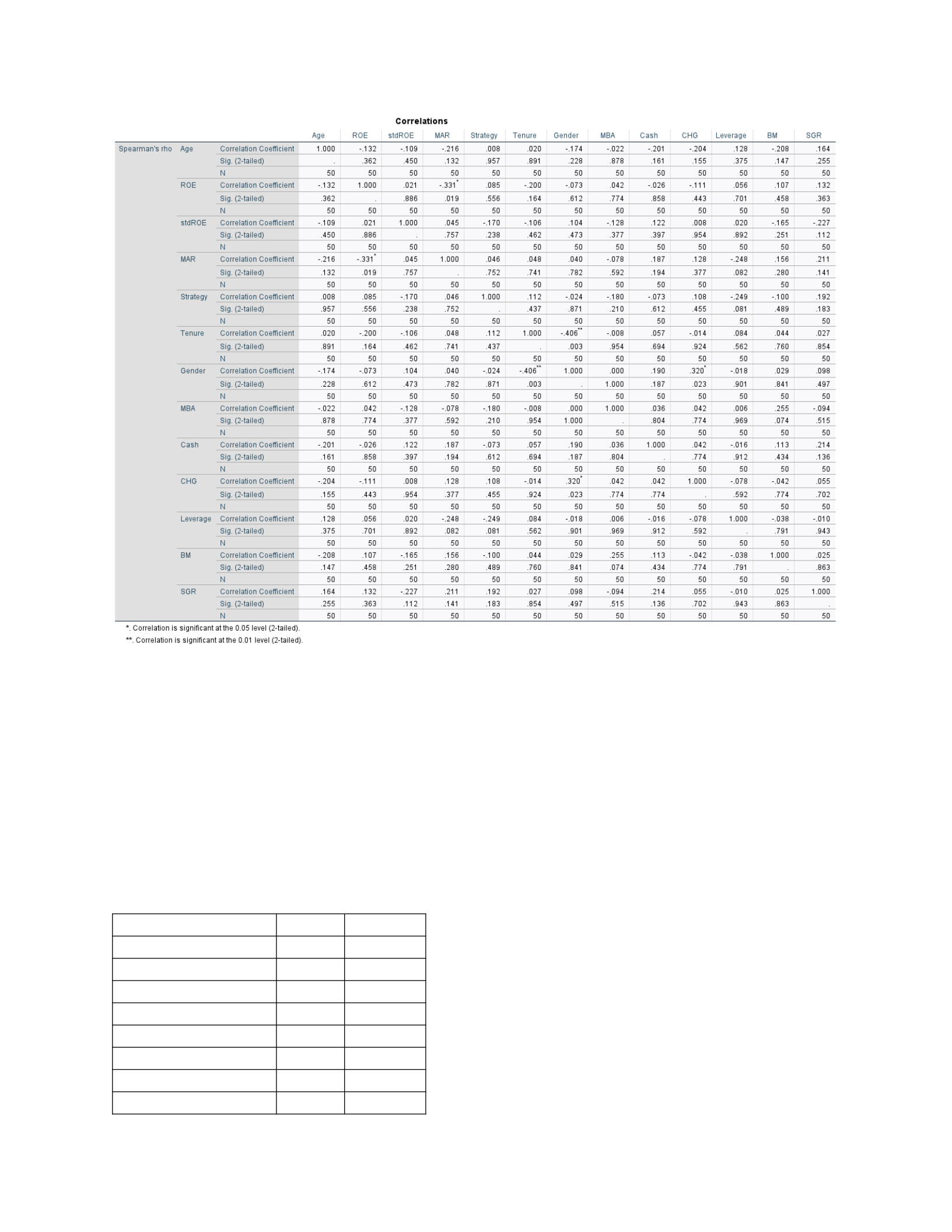
The table below showcases each of the variable’s correlation coefficients. Both Pearson
and Spearman correlations have been presented. They are similar qualitatively. The results depict
a non-significant correlation coefficient for MAR and ROE. However, there is a significant
positive correlation between MAR and stroke. No Pearson correlations went beyond 0.50. These
correlations respond to previous researches conducted on this topic. Standard OLS regression
analysis was run to inspect the link between these variables. As the table below shows, Spearman
correlations are in the upper right, while Pearson correlations are in the lower left.
Table 3: Correlation Coefficient
29
The table 4 below depicts the impact that GMA has on both organisational performance and risk-
taking ventures. Performance is computed by multiplying ROE with 100.
Table 4: Influence of GAM on Org Performance and Risk-taking
Variable ROE stdROE
Age -0.554 -0.009
MAR -4.707 0.224
Strategy 0.315 -0.087
Tenure -1.416 -0.058
Gender -6.408 0.485
MBA 0.680 -0.603
Cash -1.611 4.310
CHG -2.226 -0.153
30

Leverage 1.926 1.177
BM 16.624 -5.030
SGR 68.665 -17.323
Adjusted R squared 11.9% -5.8%
N 50 50
Intercept 60.375 11.463
The figures depicted in the table above show that there is a statistically insignificant correlation
between the generalist managers and firm performance. Another finding is that generalist
managers are ready to engage in more risks compared to specialist managers. Therefore,
generalist managers can come in handy when a firm is experiencing shocks. Such managers are
good at undertaking hard tasks such as mergers and acquisitions, as well as restructuring.
The table below shows the result of testing the ability of general managers against firm
performance and risk undertaking. On the one hand, it goes to show that firm performance is
higher when generalist manager work for prospector firms. However, there are risks involved.
Prospectors can easily adapt to uncertainties and risks. On the other hand, firm performance is
high when specialist managers work for defender companies. Prospectors can be looked at as
innovative firms that often look for new market opportunities and new product ventures. As
such, they have to ensure they have the right technologies to achieve a diverse product portfolio.
These companies will need managers that are highly capable. On their part, defenders are
companies that put more emphasis on efficiency when it comes to producing and distributing
their goods and services. As such, instead of investing towards new markets and new product
opportunities, they will develop similar products and services. Such companies can thrive under
specialist managers.
31

It is imperative to point out that the connexion between managerial ability and positive
organisational outcomes will differ because of the types of strategies they choose to follow. A
positive performance can only be guaranteed if it aligns with the strategy pursued by the firm.
Differences in performance is also explained by the fact that companies endure different
conditions. Therefore, performance will differ according to these conditions. Defenders will tend
to grow in an incremental manner because they are cautions. Their growth will be steady as
opposed to prospectors that might grow in leaps and bounds because they focus on market and
product development. According to Custódio et al. (2013), the impact of managerial ability on
organisational outcomes depends on the corporate governance mechanisms put in place.
Main Results
This study sought to establish the distinctive role managers play to enable outstanding firm
performance; outline the challenges firm managers face while steering firms and provide a
roadmap of overcoming them; understand the effect knowledgeable managers have on firm
performance; and outline the mitigating measures firm managers can take to elevate the
performance of their firms. Two hypotheses emerged from the literature review conducted
above. The first hypothesis was that a high managerial ability is significantly correlated to better
firm performance. The understanding was that high managerial abilities make it easier for firms
to raise funds, thus increase firm value. A firm with good managers can consistently generate
cash flow, thus high firm value and consistent operations. This hypothesis was confirmed, taking
the results above into consideration. A high managerial ability will positively contribute to firm
performance.
32

The second hypothesis was that High-ability managers are correlated to increases in firm risk-
taking ventures. Manager shareholder agency conflicts and managerial transparency have an
impact on a company’s financial policies, which affect capital structure and market value. Highly
capable managers are capable of taking risks and see no problem allocating more resources
toward R&D but not capital expenditures (Gan, 2019). The reason for this is that capital structure
is negatively correlated to firm value. On its part, debt-to-equity ratio can enhance managerial
decision-making given that high leverage can increase the risk of low market value firms having
to file for bankruptcy.
Overall, this study found a significant positive correlation between MAR and stroke. There was
a statistically insignificant correlation between the generalist managers and firm performance.
Another finding is that generalist managers are ready to engage in more risks compared to
specialist managers. Therefore, generalist managers can come in handy when a firm is
experiencing shocks. Such managers are good at undertaking hard tasks such as mergers and
acquisitions, as well as restructuring. Upon testing the ability of general managers against firm
performance and risk undertaking, the research arrived at the following findings. First, firm
performance was higher when generalist manager work for prospector firms. However, there are
risks involved. Prospectors can easily adapt to uncertainties and risks. Second, firm performance
is high when specialist managers work for defender companies. Prospectors can be looked at as
innovative firms that often look for new market opportunities and new product ventures. As
such, they have to ensure they have the right technologies to achieve a diverse product portfolio.
These companies will need managers that are highly capable. On their part, defenders are
companies that put more emphasis on efficiency when it comes to producing and distributing
their goods and services. As such, instead of investing towards new markets and new product
33

opportunities, they will develop similar products and services. Such companies can thrive under
specialist managers.
Another important finding was that the impact that managerial ability has on organisational
outcomes will differ because of the types of strategies they choose to follow. Therefore, the
impact of managerial ability on performance can only be positive if it aligns with the strategy
pursued by the firm. Differences in performance is also explained by the fact that companies
endure different conditions. Therefore, performance will differ according to these conditions.
Defenders will tend to grow in an incremental manner because they are cautions. Their growth
will be steady as opposed to prospectors that might grow in leaps and bounds because they focus
on market and product development.
Additional Analyses
Herein, the study explored the robustness of the findings presented above against alternative
measures of the main concept, which is managerial ability. The sensitivity of the results ae also
investigated when new control variables are introduced. The managerial ability measure that was
adapted for this study came from that which Demerjian et al. (2012) posited. Other managerial
ability measures are discussed herein.
When it comes to risk-taking behaviour, researchers believe that executives prefer less risk
compared to outside shareholders (Mukherjee and Nguyen, 2018). More so, some managers
avoid risks because they wish to play it safe or want to lead a quiet life. Evidence also shows that
some want to avoid potential legal liabilities. However, shareholders may miss out on gaining
from their investments if the executives are risk-averse. To solve this, Guo et al. (2012)
established that some companies give compensation incentives, for instance, option-based
34

compensation incentives, which can encourage them to take risks. The two measures of
incentives are compensation delta and compensation vega. From a theoretical standpoint, a high
delta is supposed to help managerial behaviour align with shareholder interests. Managers will
get the motivation to take up risky projects to cater to aligned interests. Yet, from empirical
findings, the impact that delta has on managerial risk-taking is not clear. While the interests of
executives will align with shareholders’, high deltas will not go down well with risk-averse
managers because it puts them to greater risk and pressure. This, according to Brick et al. (2021),
will deter them from increasing their risk-taking preference.
There is evidence to show a positive correlation between vega and risk-taking among managers.
The understanding is that convex payoffs are incentives to managers as they will be induced to
maximize expected wealth, thus ready to engage in risks. However, this remains to be unclear.
This study examined the robustness of the results by controlling the impact of managerial
incentives. Other executive characteristics, including age, turnover, cash compensation, and
tenure, were also incorporated.
Robustness Tests
This paper explored the impact that managerial ability has on not only firm performance but risk-
taking as well when firms face dissimilar growth opportunities. This was measured using Tobin’s
Q. The sample for this study comprised organisations with Tobin’s Q over 1. Therefore, those
with Tobin’s Q higher than the median were incorporated into the test. The finding was that
managerial ability can affect risk and firm performance if there is a strategy misfit. The firm will
perform in a better manner if generalists work for prospectors and specialists for defenders. As
such, companies should develop a good understanding of the business strategy they have if they
35

wish to augment their performance. The results from the test reveal that business strategy cannot
be considered to be a representation of growth opportunities.
Table 6: Sensitivity Analysis
ROE stdROE
Age 16.050 -16.640
MAR -5.850 -3.835
Strategy -1.428 -0.340
Tenure -0.934 2.151
Gender -4.786 4.330
MBA 0.835 -4.452
Cash -37.974 8.118
CHG -2.251 0.557
Leverage 49.162 26.842
BM -141.074 -26.522
SGR -7.901 -2.624
Adjust R squared 46.95% 9.92%
N 6406 2743
Intercept 36.860 67.230
36

CHAPTER FIVE: CONCLUSION
This section of the study offers a summary of the findings, as well as concluding remarks based
upon the findings. The research implications and limitations are also offered before providing
remarks about areas for future research. The objectives of this study were to establish the
distinctive role managers play to enable outstanding firm performance; outline the challenges
firm managers face while steering firms and provide a roadmap of overcoming them; understand
the effect knowledgeable managers have on firm performance; and outline the mitigating
measures firm managers can take to elevate the performance of their firms. Two hypotheses
emerged: (1) a high managerial ability is significantly correlated to better firm performance; (2)
High-ability managers are correlated to augmented firm risk-taking ventures.
Summary of Findings
The two hypotheses were confirmed. First, highly able managers positively contribute to the
performance of the firms that they lead. They are also adapted to taking high risks because of
their high ambitions. Different types of managers were discussed – generalist and specialist
managers. From the findings, there was a statistically insignificant correlation between the
generalist managers and firm performance. Generalist managers are ready to engage in more
risks compared to specialist managers. Therefore, they are important when a firm is experiencing
shocks. Such managers are good at undertaking hard tasks such as mergers and acquisitions, and
restructuring.
Upon testing the ability of general managers against firm performance and risk undertaking, the
research arrived at the following findings. First, firm performance was higher when generalist
manager work for prospector firms. However, there are risks involved. Prospectors can easily
37

adapt to uncertainties and risks. Second, firm performance is high when specialist managers
work for defender companies. Prospectors can be looked at as innovative firms that often look
for new market opportunities and new product ventures. As such, they have to ensure they have
the right technologies to achieve a diverse product portfolio. These companies will need
managers that are highly capable. On their part, defenders are companies that put more emphasis
on efficiency when it comes to producing and distributing their goods and services. As such,
instead of investing towards new markets and new product opportunities, they will develop
similar products and services. Such companies can thrive under specialist managers.
Another important finding was that the impact that able executives have on firm performance
will differ because of the types of strategies they choose to follow. Therefore, the impact can
only be positive if it aligns with the strategy pursued by the firm. Differences in performance is
also explained by the fact that companies endure different conditions. Performance will differ
according to these conditions. Defenders will tend to grow in an incremental manner because
they are cautions. Their growth will be steady as opposed to prospectors that might grow in leaps
and bounds because they focus on market and product development.
Concluding Remarks
Many business practitioners and researchers, of late, have sought to understand how the ability of
executives affects firm performance. The findings from this study and other similar ones have
showed that the quality of firm management will have an impact on investment decisions. So far,
the findings have supported the hypothesis that highly able executives such as CEOs and CFOs
can positively contribute to a firm’s performance.
38

Research Implications
Theoretically (Upper Echelons Theory), the ability of a manager is important in the world of
business as it determines business strategy. Highly-able managers can make more positive
strategic choices and organisational decisions, all of which affect firm performance.
On the topic of managerial ability, this study points out that high managerial ability will lead to
increased investment, innovation, and effective decision-making, all of which lead to good firm
performance and competitive advantage. Therefore, company owners or shareholders should
ensure that they hire highly able managers and professionals to run their firms. They should
consider certain managerial skills when hiring top-level managers such as CEOs. On their part,
managers should do an audit of their skills and utilize their abilities for the goal of improving
performance.
As for policymakers or regulators, the suggestion is that they create policies that will boost
industries, for instance, effective leadership programs that will shape or enhance managerial
skills of industry leaders. There can also be exchange programs so that managers from across
different industries, regions, and firm sizes can learn from one another. This can scale up a
manager’s ability to boost firm performance.
Limitations
This study had the following limitations. First, it utilised companies that were listed in the LSE
as the sample. This means that it locked out companies that were operating in other regions.
Another limitation is that companies in financial and utilities sectors were left out because of
their unique nature.
39

Areas for Future Research
There is room for further research in other topics, such as how managerial ability impacts stock
price or financial sustainability and not just firm performance. Studies could also utilize capital
structure or other mediating effect. Notably as well, this study focused on the London Stock
Exchange. Therefore, future research can be conducted using companies in other stock
exchanges in different regions or parts of the world.
40

References
Abernathy, J.L., Kubick, T.R. and Masli, A. (2018) “Evidence on the relation between
managerial ability and financial reporting timeliness”, International Journal of Auditing,
22, pp. 185–196.
Abdoh, H. and Varela, O. (2017) “Product market competition, idiosyncratic and systematic
volatility”, Journal of Corporate Finance, 43, pp. 500-513.
Andreou, P. C., Karasamani, I., Louca, C. and Ehrlich, D. (2017) “The impact of managerial
ability on crisis-period corporate investment. Journal of Business Research”, 79(19), pp.
107- 122. https://doi.org/10.1016/j.jbusres.2017.05.022
Bamberg, G. and Spremann, K. (2012) Agency theory, information, and incentives. Springer
Berlin.
Bentley, K. A., Sharp, N. Y. and Omer, T. C. (2013) “Business strategy, financial reporting
irregularities, and audit effort”, Contemporary Accounting Research, 30(2), pp. 780-817.
Bhutta, A.I., Sheikh, M.F., Munir, A., Naz, A. and Saif, I. (2021) “Managerial ability and firm
performance: Evidence from an emerging market”, Cogent Business and Management, 8
(1), pp. 1–22.
Brick, I.E., Palmon, O. and Wald, J.K. (2012) “Too much pay-performance sensitivity?” Rev
Econ Stat, 94, pp. 287–303.
Chemmanur, T. and Paeglis, I. (2005) “Management quality, certification, and initial public
offerings”, Journal of Financial Economics, 76, pp. 331-368.
41

Chen, Z. and Petkova, R. (2012) “Does idiosyncratic volatility proxy for risk exposure?” The
Review of Financial Studies, 25(9), pp. 2745-2787.
Chen, Y., Podolski, E.J. and Veeraraghavan, M. (2015) ‘Does managerial ability facilitate
corporate innovative success?’ Journal of Empirical Finance, 34, pp. 313–326.
doi:10.1016/j.jempfin.2015.08.002.
Choi, W., Han, S., Jung, S. H. and Kang, T. (2015) “CEO‟s operating ability and the association
between accruals and future cash flows|, Journal of Business Finance & Accounting,
42(5-6), pp. 619-634.
Custódio, C. Ferreira, M. A. and Matos, P. (2013) “Generalists versus specialists: Lifetime work
experience and chief executive officer pay”, Journal of Financial Economics, 108(2), pp.
471-492. https://doi.org/10.1016/j.jfineco.2013.01.001
Custódio, C., Ferreira, M. and Matos, P. (2019) “Do general managerial skills spur innovation?”
Management Science, 65(2), pp. 459-476.
Demerjian, P.R., Fay, L.M., Itamar, L.B. and Mcvay, S.E. (2013) “Managerial ability and
earnings quality”, Accounting Review, 88(2), pp. 463–498. doi:10.2308/accr-50318
Driouchi, T., Chen, M., Lyu,
Z., Bennett, D. J., & So, R.
H. (2022). Ambiguity,
Managerial
Ability, and Growth Options.
British Journal of
42

Management, 33(3), 1323-
1345.
doi:10.1111/1467-8551.12534
Driouchi, T., Chen, M., Lyu,
Z., Bennett, D. J., & So, R.
H. (2022). Ambiguity,
Managerial
Ability, and Growth Options.
British Journal of
Management, 33(3), 1323-
1345.
doi:10.1111/1467-8551.12534
Driouchi, T., Chen, M., Lyu, Z., Bennett, D.J. and So, R.H. (2022) “Ambiguity, managerial
ability, and growth options”, British Journal of Management, 33(3), pp. 1323-1345.
Euschen, A. (2018) Upper echelons and their impact on internationalisation processes. Bod
Third Party Titles.
Gan, H. (2019) “Does CEO managerial ability matter? Evidence from corporate investment
efficiency”,KReview of Quantitative Finance and Accounting,K52(4), pp.1085-1118.
Gounopoulos, D. and Pham, H. (2018) “Specialist CEOs and IPO survival”, Journal of Corporate
Finance, 48, pp. 217-243.
43

Harrison, J. S. and Wicks, A. C. (2013) “Stakeholder theory, value, and firm performance”,
Business ethics quarterly, 23(01), pp. 97-124.
Hettler, B., Cordeiro, J. and Forst, A. (2024) “Proving their mettle: Managerial ability and firm
performance in trying times”, Journal of Contemporary Accounting & Economics, 20(1),
pp. 100393.
Higgins, D., Omer, T. C. and Phillips, J. D. (2015) “The influence of a firm’s business strategy
on its tax aggressiveness”, Contemporary Accounting Research, 32(2), pp. 674-702.
Kim, H. T. (2020) “Linking managers’ emotional intelligence, cognitive ability and firm
performance: Insights from Vietnamese firms”,KCogent Business & Management,K7(1),
1829272.Khttps://doi.org/https://doi.org/10.1080/23311975.2020.1829272
Lee, W.S., Sun, K.A. and Moon, J. (2018) “Application of upper echelon theory for corporate
social responsibility dimensions: Evidence from the restaurant industry”,KJournal of
Quality Assurance in Hospitality & Tourism,K19(3), pp.387-414.
London Stock Exchange. https://www.londonstockexchange.com/
Matemilola, B., Bany-Ariffin, A., Azman-Saini, W. and Nassir, A.M. (2018) “Does top
managers’ experience affect firms’ capital structure?” Res Int Bus Financ, 45, pp. 488–
498.
Mishra, C.S. (2019) “Does managerial ability drive firm innovativeness?”KIEEE Transactions on
Engineering Management,K68(4), pp.1139-1154.
Mukherjee, T. and Nguyen, H. (2018) “CEO ability and firm performance: Stock market and job
market reactions”, Journal of Economics and Finance, 42(1), pp. 138-154.
44

Ng, S., Pahlevi, C. and Habbe, A.H. (2015) “Managerial ability and monitoring structure as a
mechanism for improving the quality of earnings and the value of the firms listed in
Indonesia stock exchange”,KSci Res J (SCIRJ),K3, pp.25-39.
Nguyen, H. M., Mai, L. T. and Huynh, T. L. (2019) “The role of transformational leadership
toward work performance through intrinsic motivation: A Study in the pharmaceutical
field in Vietnam”, Journal of Asian Finance, Economics and Business, 6(4), 201-212.
https://doi.org/10.13106/jafeb.2019.vol6.no4.201
Phan, D.H.B., Tran, V.T., Nguyen, D.T. and Le, A. (2020) “The importance of managerial
ability on crude oil price uncertainty-firm performance relationship”, Energy Economics,
88, pp. 104778.
Rego, S.O. and Wilson, R. (2012) “Equity risk incentives and corporate tax
aggressiveness”,KJournal of Accounting Research, 50, pp. 775–810.
Rule, N.O. and Tskhay, K.O. (2014) “The influence of economic context on the relationship
between chief executive officer facial appearance and company profits”, Leadership
Quarterly, 25(5), pp. 846–854.6–854.
The Wharton School. (2020) “Is risk-taking behaviour key to entrepreneurial spirit? Wharton
Online. https://online.wharton.upenn.edu/blog/is-risk-taking-behavior-key-to-
entrepreneurial-spirit/
Ting, I.W.K., Azizan, N.A.B. and Kweh, Q.L. (2015) “Upper echelon theory revisited: The
relationship between CEO personal characteristics and financial leverage
decision”,KProcedia-Social and Behavioral Sciences,K195, pp.686-694.
45

Wang, W.K., Lu, W.M., Kweh, Q.L. and Lee, J.J. (2021) “Management characteristics and
corporate performance of Chinese chemical companies: the moderating effect of
managerial ability”, Int Trans Oper Res 28(2), pp. 976–996.
Yung, K. and Chen, C. (2017) “Managerial ability and firm risk-taking behaviour”, Review of
Quantitative Finance and Accounting, 51(4), pp. 1–28. doi:10.1007/s11156-017-0695-0.
Yung, K. and Chen, C. (2018) “Managerial ability and firm risk-taking behavior”, Review of
Quantitative Finance and Accounting, 51(4), pp. 1005-1032.
46

