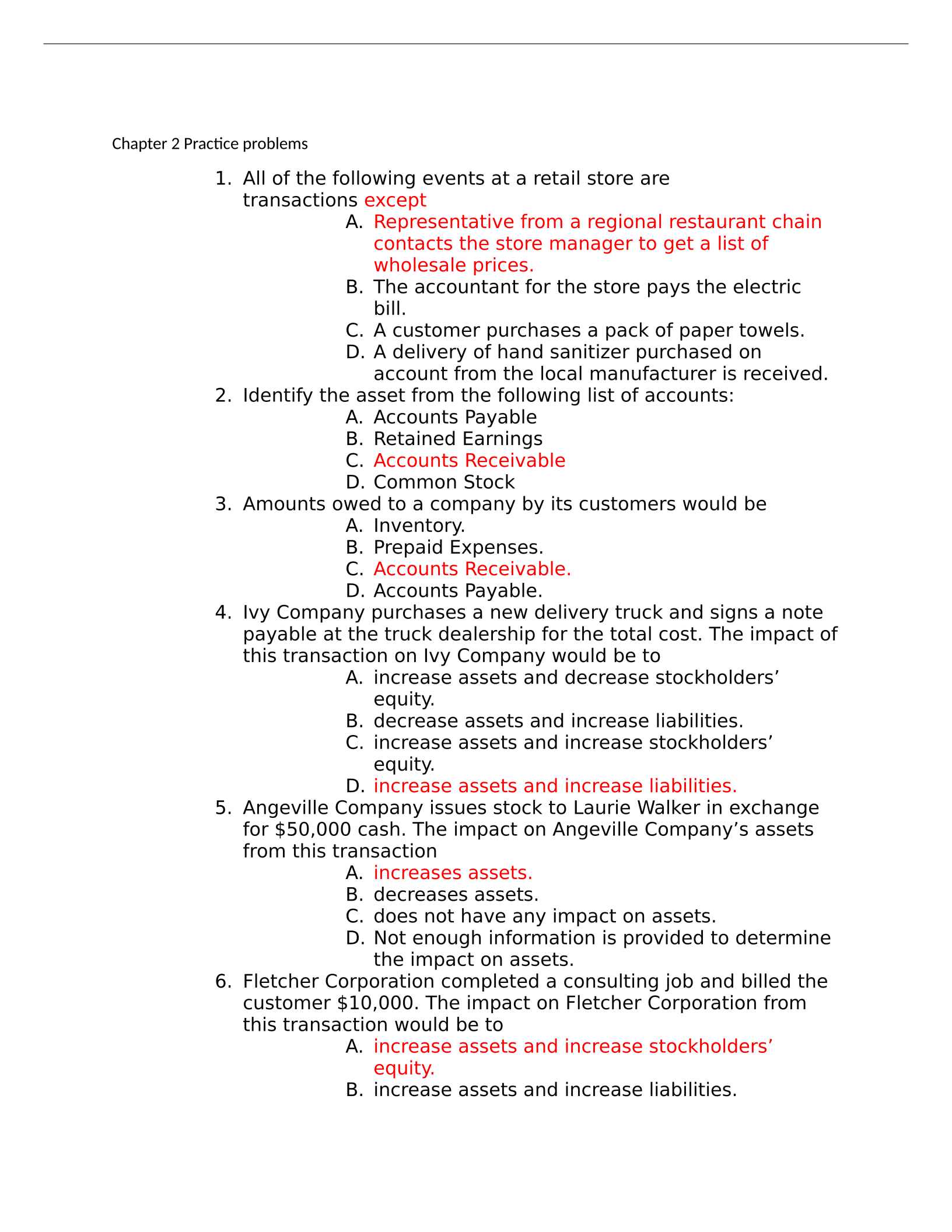
Chapter 2 Practice problems
1. All of the following events at a retail store are
transactions except
A. Representative from a regional restaurant chain
contacts the store manager to get a list of
wholesale prices.
B. The accountant for the store pays the electric
bill.
C. A customer purchases a pack of paper towels.
D. A delivery of hand sanitizer purchased on
account from the local manufacturer is received.
2. Identify the asset from the following list of accounts:
A. Accounts Payable
B. Retained Earnings
C. Accounts Receivable
D. Common Stock
3. Amounts owed to a company by its customers would be
A. Inventory.
B. Prepaid Expenses.
C. Accounts Receivable.
D. Accounts Payable.
4. Ivy Company purchases a new delivery truck and signs a note
payable at the truck dealership for the total cost. The impact of
this transaction on Ivy Company would be to
A. increase assets and decrease stockholders’
equity.
B. decrease assets and increase liabilities.
C. increase assets and increase stockholders’
equity.
D. increase assets and increase liabilities.
5. Angeville Company issues stock to Laurie Walker in exchange
for $50,000 cash. The impact on Angeville Company’s assets
from this transaction
A. increases assets.
B. decreases assets.
C. does not have any impact on assets.
D. Not enough information is provided to determine
the impact on assets.
6. Fletcher Corporation completed a consulting job and billed the
customer $10,000. The impact on Fletcher Corporation from
this transaction would be to
A. increase assets and increase stockholders’
equity.
B. increase assets and increase liabilities.
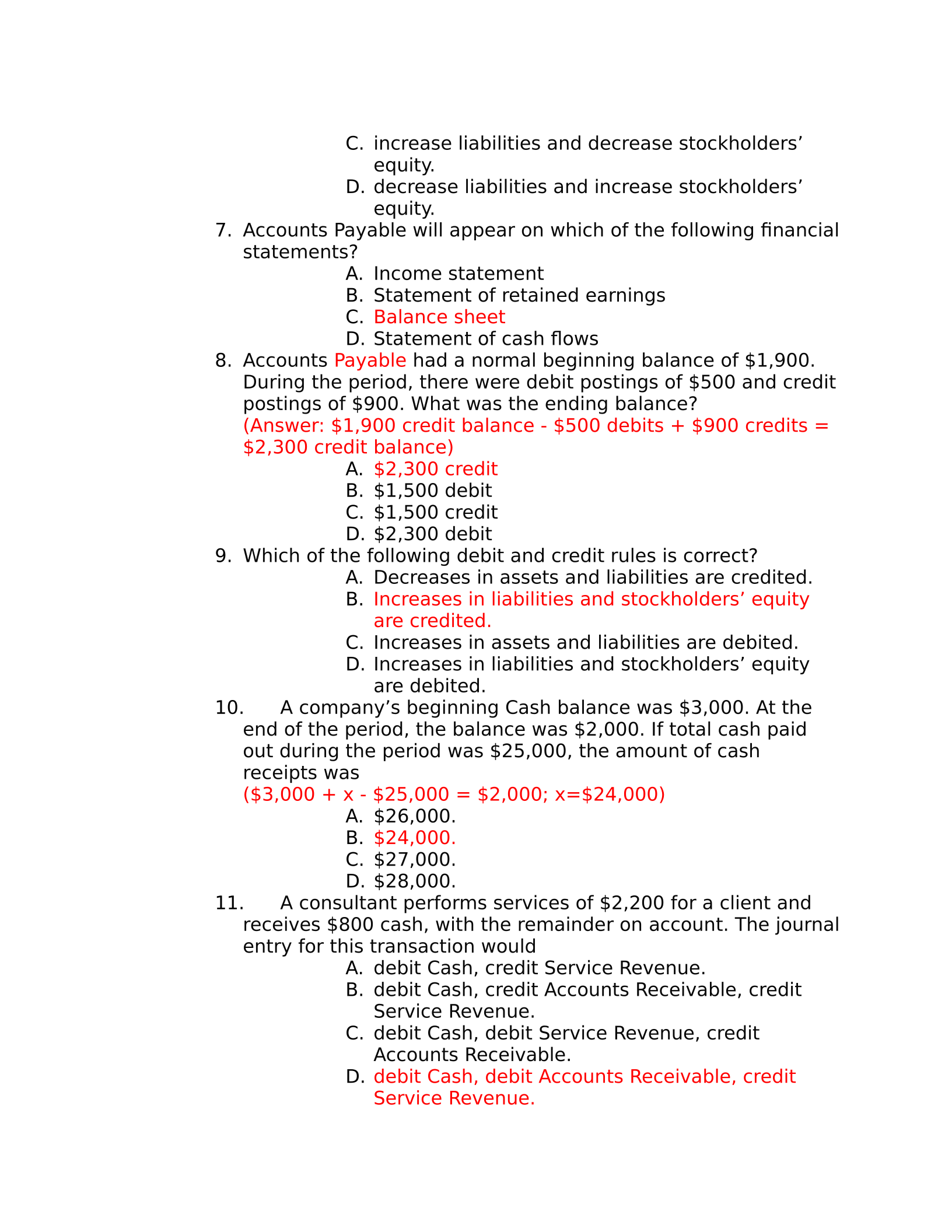
C. increase liabilities and decrease stockholders’
equity.
D. decrease liabilities and increase stockholders’
equity.
7. Accounts Payable will appear on which of the following financial
statements?
A. Income statement
B. Statement of retained earnings
C. Balance sheet
D. Statement of cash flows
8. Accounts Payable had a normal beginning balance of $1,900.
During the period, there were debit postings of $500 and credit
postings of $900. What was the ending balance?
(Answer: $1,900 credit balance - $500 debits + $900 credits =
$2,300 credit balance)
A. $2,300 credit
B. $1,500 debit
C. $1,500 credit
D. $2,300 debit
9. Which of the following debit and credit rules is correct?
A. Decreases in assets and liabilities are credited.
B. Increases in liabilities and stockholders’ equity
are credited.
C. Increases in assets and liabilities are debited.
D. Increases in liabilities and stockholders’ equity
are debited.
10. A company’s beginning Cash balance was $3,000. At the
end of the period, the balance was $2,000. If total cash paid
out during the period was $25,000, the amount of cash
receipts was
($3,000 + x - $25,000 = $2,000; x=$24,000)
A. $26,000.
B. $24,000.
C. $27,000.
D. $28,000.
11. A consultant performs services of $2,200 for a client and
receives $800 cash, with the remainder on account. The journal
entry for this transaction would
A. debit Cash, credit Service Revenue.
B. debit Cash, credit Accounts Receivable, credit
Service Revenue.
C. debit Cash, debit Service Revenue, credit
Accounts Receivable.
D. debit Cash, debit Accounts Receivable, credit
Service Revenue.
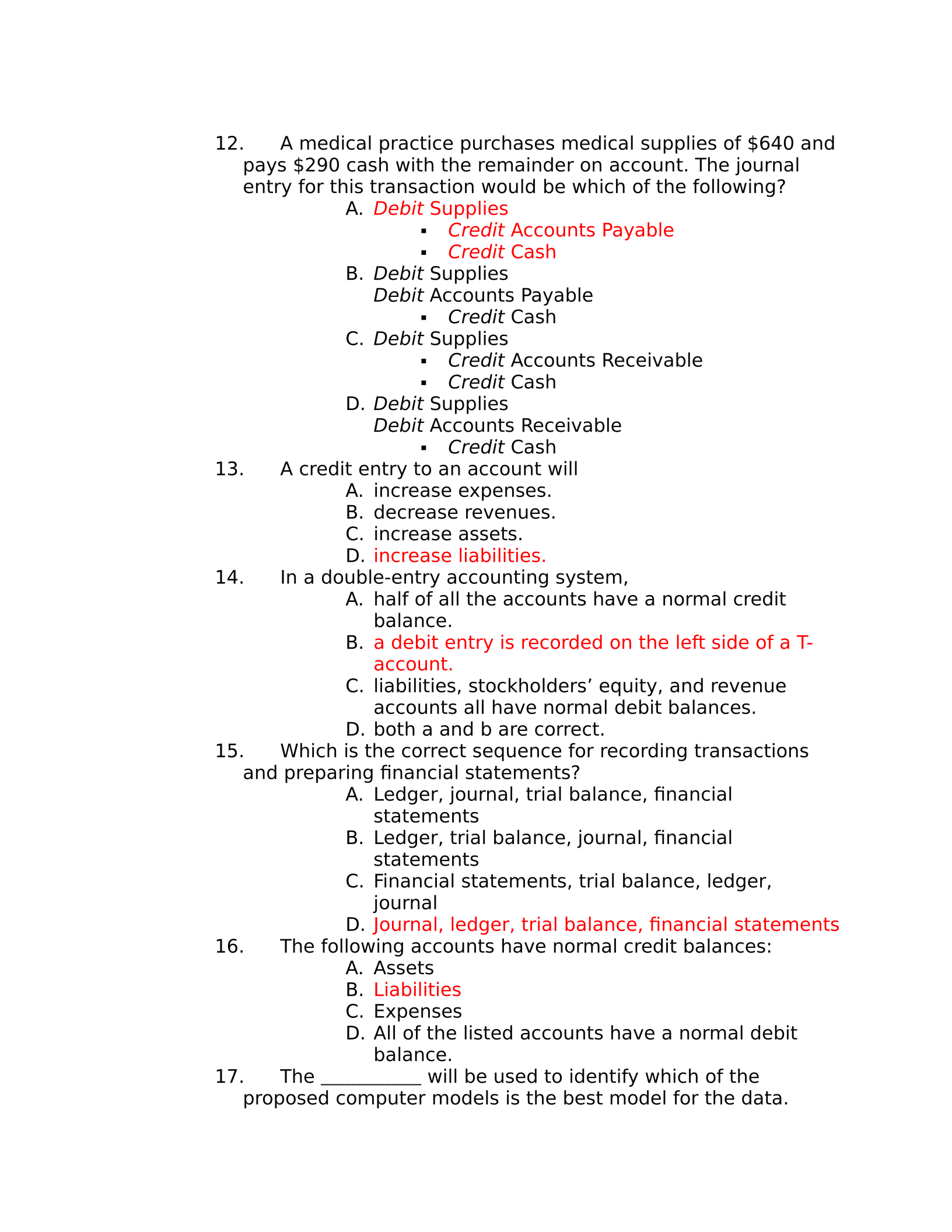
12. A medical practice purchases medical supplies of $640 and
pays $290 cash with the remainder on account. The journal
entry for this transaction would be which of the following?
A. Debit Supplies
Credit Accounts Payable
Credit Cash
B. Debit Supplies
Debit Accounts Payable
Credit Cash
C. Debit Supplies
Credit Accounts Receivable
Credit Cash
D. Debit Supplies
Debit Accounts Receivable
Credit Cash
13. A credit entry to an account will
A. increase expenses.
B. decrease revenues.
C. increase assets.
D. increase liabilities.
14. In a double-entry accounting system,
A. half of all the accounts have a normal credit
balance.
B. a debit entry is recorded on the left side of a T-
account.
C. liabilities, stockholders’ equity, and revenue
accounts all have normal debit balances.
D. both a and b are correct.
15. Which is the correct sequence for recording transactions
and preparing financial statements?
A. Ledger, journal, trial balance, financial
statements
B. Ledger, trial balance, journal, financial
statements
C. Financial statements, trial balance, ledger,
journal
D. Journal, ledger, trial balance, financial statements
16. The following accounts have normal credit balances:
A. Assets
B. Liabilities
C. Expenses
D. All of the listed accounts have a normal debit
balance.
17. The will be used to identify which of the
proposed computer models is the best model for the data.