



THE EFFECTIVENESS OF THE SECURITY MANAGEMENT PRACTICES FOE
RECORDS AT SIMBA CHAI SACCO
DATA ANALYSIS, PRESENTATION AND INTERPRETATION
4.0 Introduction
This chapter will discuss the analysis of the data collected and presented in forms of graphs and
tables. The information presented will be interpreted and discussed to evaluate security measures
put in place to enhance secure storage of records, the effectiveness of the security management
practices foe records at Simba Chai SACCO, to asses the challenges facing recording and storage
of records of Simba Chai SACCO and to propose suitable strategies that would enhance records
management at Simba chai
4.1 Background Information
The study sought to establish the background of the respondents participating in the study with
an aim of ensuring that the population of the respondents was well represented in the study.
4.1.1 Gender of the respondents
The researcher sought to establish the gender of the respondents with an aim of ensuring the
respondents were well represented for whole period of the research. The research findings were
recorded and tabulated in the table below for interpretation purposes.
Table 4.1 gender of the respondents
frequency percentage
Male 14 67
Female 7 33
Total 21 100
The study revealed that 67% of the respondents were male while 33% were female.
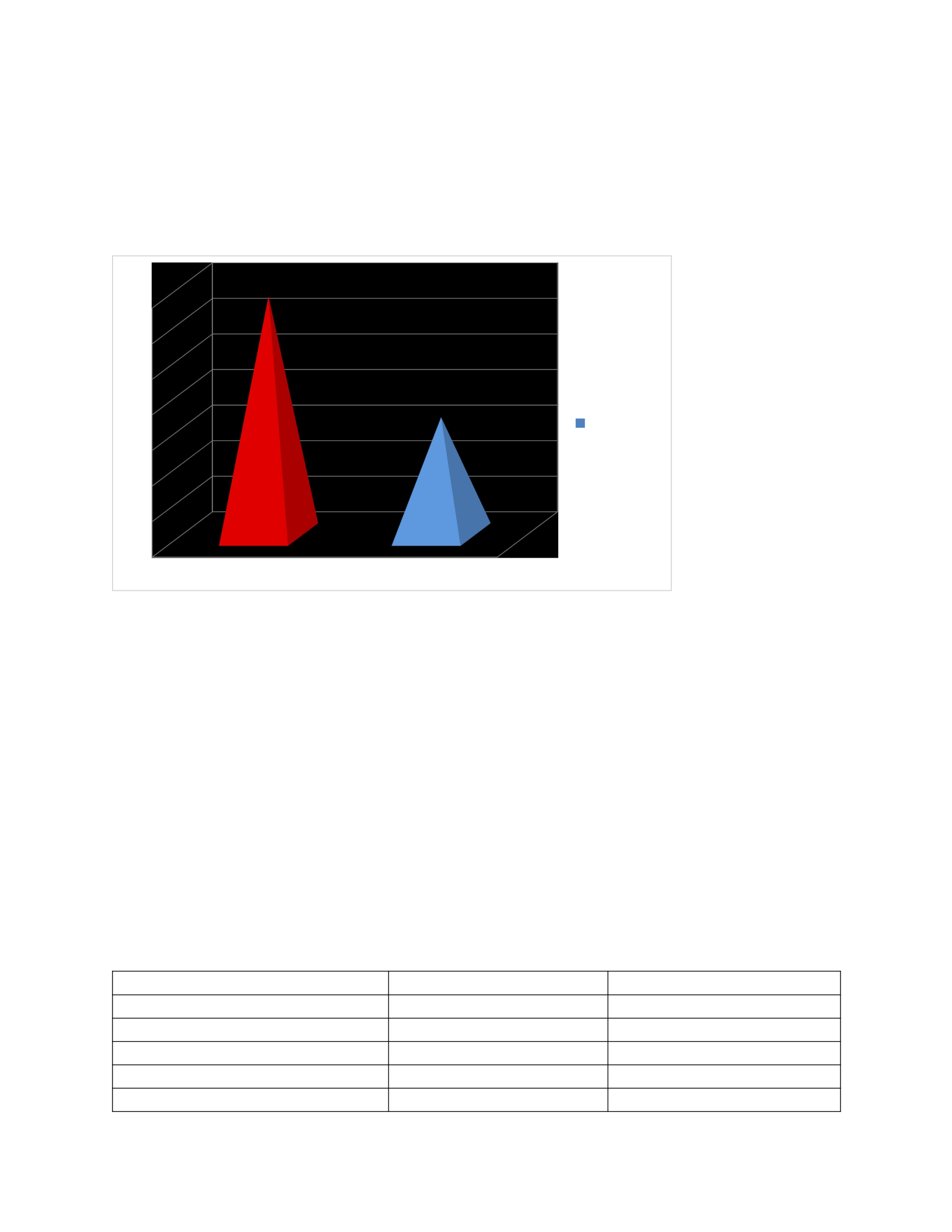
Figure 4.1 genders of the respondents
male female
0
10
20
30
40
50
60
70
67
33
percentage
The researches revealed that majority of the respondents were male having 67% of the entire
population as compared to 33% of the female respondents. This could be attributed to the idea
that the bulkiness of work to done required high level of attentiveness and consistency which
could be disrupted by maternity leaves offered to female workers hence the firm opted to employ
more men to fill the gaps left by their female counterparts.
4.1.2 Age of the respondents
The researcher sought to establish the age of the respondents participating in the study with an
aim of ensuring the respondents were well distributed with relation to their age. The research
findings were tabulated as indicated in the table below for interpretation purposes.
frequency percentage
18-30 years 5 24
31-40 years 10 48
41-50 years 5 24
over 50 years 1 5
Total 21 100

Table 4.2 Age of the respondent
The research findings indicated that majority of the respondents were aged between 31-40 years
as indicated by 48%,the study further revealed that 24% were aged between 18-30 years,24%
aged between 41-50 years and 5% aged over 50 years.
18-30 years 31-40 years 41-50 years over 50 years
0
5
10
15
20
25
30
35
40
45
50
24
48
24
5
percentage
Figure 4.2 Age of the respondents
The research findings were interpreted to mean that the respondents were well distributed in
relation to their ages. The employees of the facility were mostly young people between the age
of 31-40 years which implies that the facility prefers a young and energetic staff to carry out its
activities. Those aged between 41-50 years had enough experience at work and could pass the
same to those aged between 18-30 who were perceived as very young and inexperienced at work.
4.1.3 Education level of the respondents
The researcher sought to establish the education levels of the respondents participating in the
study with an aim of ensuring the respondents were well distributed with relation to their
education levels. The research findings were tabulated as indicated in the table below for
interpretation purposes.
4.3 Table education level of respondents
frequency percentage
Secondary 4 19
Tertiary level 7 33
University 8 38
Post graduate 2 10
The research established that 38% of the respondents had a university degree, 33% had tertiary
level of education, and 19% had secondary education while 10% had post graduate level of
education.
secondary tertiary level university post graduate
0
5
10
15
20
25
30
35
40
19
33
38
10
percentage
Figure 4.3 education levels of the respondents
The findings indicated that majority of the respondents had a university degree as shown 38% of
the same. This level of education was ideal and advantageous to the study because the
respondents could read, interpret and answer the questionnaire appropriately.
4.1.4 Departments of the respondents
The researcher sought to establish the departments of the respondents. The results were recorded
and tabulated as indicated in the table below for interpretation purposes.
Table 4.4 departments of respondents
frequency percentage
Finance 2 10
Human resource 5 24
Records 9 43

Information technology 4 15
Operations 2 10
Total 21 100
From the above analysis, 43% of the respondents were from the records department, 24% were
from the human resource department, 14% were from information technology department, 10%
from the finance department and another 10% from the operations department.
finance human resource records information
technology
operations
0
5
10
15
20
25
30
35
40
45
12
24
43
15
10
percentage
From the above analysis the highest numbers of respondents were from records department as
shown by 43%. This is the department that majorly deals with recording and storage of records at
Simba Chai SACCO and therefore they were willing to contribute immensely on issues
concerning this particular department.

4.2 Specific information
4.2.1 Security measures
The researcher sought to establish if there were security measures employed at Simba Chai to
protect its records. The results were tabulated and recorded in the table below for interpretation
purposes.
Table .4.4 security measures
frequency percentage
yes 13 62
no 8 38
total 21 100
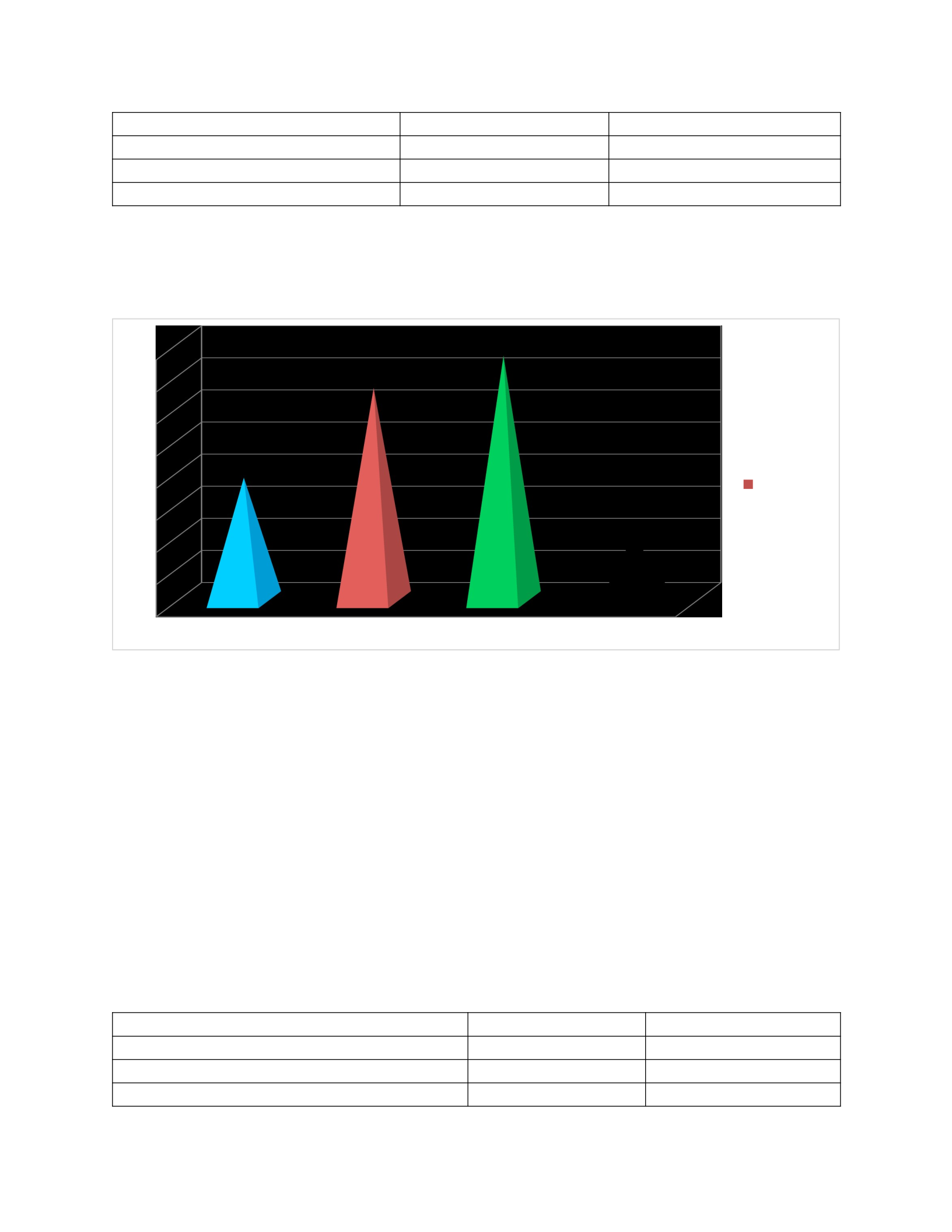
The findings indicated that 62% said yes while 38% said no.
62
38
percentage
Yes
No
]
Figure 4.4 security measures
From the above study majority of the respondents agreed to the idea that there were security

measures employed by this organization as indicated by 62% of the respondents.
4.2.2 Security measures put in place by the organization
The study indicated that there was security measures put in place therefore the researcher wanted
to have an idea of the type of security measures used by Simba Chai SACCO. The findings of
the types of security measures put in place in this organization were recorded in the table below.
Table 4.5 security measures put in place
frequency percentage
Use of lock and key cabinets 8 38
Use of automated password and protected systems
2 10
Use of security officers to protect record room 5 24
Having record management dept to protect records 4 19
Employing access policies 2 10
Total 21 100
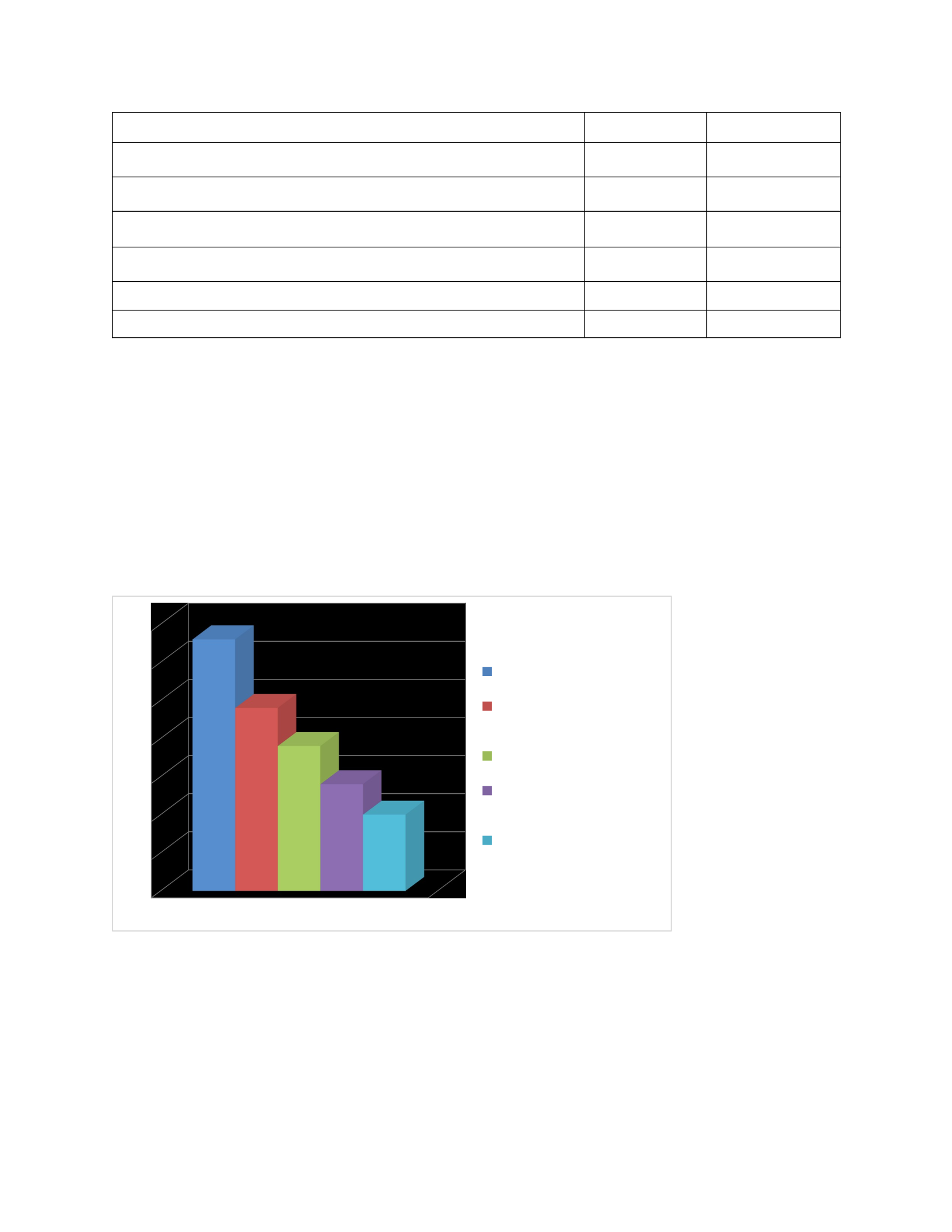
The study revealed that 38% of the respondents ascertained that the organization use lock and
key cabinets, 24% agreed that it uses security officers to protect its records, 19% were for the
idea that the organization uses management department to protect records, 10% agreed that the
organization had employed access policies while another 10% were for the idea that there were
use of automated passwords and protected systems.

0
5
10
15
20
25
30
35
40 38
10
24
19
10
percentage
Figure 4.5 security measures put in place
The above result indicates that the organization majorly makes use of lock and key cabinets as
indicated by 38%.this method is commonly used by most organizations and its because they are
the cheapest way of securing records and keys can only be handed to authorized persons only.
Use of security officers to protect records is quite expensive and therefore this organization has
employed very few officers to overlook the record room. From the above analysis, this
organization has established a record management department as indicated by 19% of the
respondents. This is because having such a department ensures coherent and organized records
system. As the study indicates access policies are minimal simply because the keys to cabinets
are handed to people concerned only and that the few guards are not supposed to allow anyone in
the records rooms without permission. Use of automated password is minimal and could be
attributed to the idea that one can forget access password and lead to loss of records.
4.2.3 Indicators that shows the effectiveness of measures employed
The researcher wanted to establish the effectiveness of the security measures employed by the
organization. The findings were recorded in the table below for interpretation purposes.
Table 4.6 indicators that shows the effectiveness of measures employed
Indicators frequency percentage
Records are never stolen /missing 7 33
The records are never modified without permission 5 24
Sacco members are confident of records security 4 19
The Sacco has backup system incase of security breeches 3 14
The Sacco has been recognized for effective security of records 2 10
Total 21 100
From results above, 33% of the respondents were for the opinion that records are never stolen
nor missing, 24% said that records are never modified without permission, 19% defended that
Sacco members are confident of records security, 14% were for opinion that the Sacco has
backup system incase of security breeches while 10% said that the Sacco has been recognized for
effective security of records
percentage
0
5
10
15
20
25
30
35 33
24
19
14
10
Records are never
stolen /missing
The records are never
modified without per-
mission
Sacco members are con-
fident of records security
The Sacco has backup sys-
tem incase of security
breeches
The Sacco has been rec-
ognized for effective secu-
rity of records
Figure 4.6 indicators of the effectiveness of measures employed
The above study indicates that the measures employed are effective since records are never
stolen/missing as indicated by majority of the respondents. This implies that the cabinet method
of keeping records has assisted this organization to securely keep its records. Since the keys are

handed only to people allowed in these record rooms, the records are never modified without
permission as indicated by 24% of the respondents. Sacco members are confident of record
security as shown by 19% of the respondents this may be attributed to the idea that there are
security guards employed to man the record rooms. The Sacco has minimal backup system
incase of security breeches and this may be caused by the perception that records can rarely get
lost because of the measures put in place.
4.2.4 Some of the challenges that have affected the security of records
The study also realized the significance of establishing the challenges that have affected the
security of records. The results were tabulated in the table below for simpler interpretation.
Table 4.7 challenges that have affected security of records
Challenges that have affected security of records frequency percentage
Lack of funds for effective security systems
8 38
The luck of properly skilled personnel 2 10
There is luck of proper security technologies 8 38
Lack of management support 3 14
Total 21 100
From the above results it’s clear that 38% concurred with the idea that there’s lack of funds for
effective security systems, another 38% were for the idea that there’s luck of proper security
personnel, 14% supported the idea that there’s lack of management support while 10% agreed
that there’s lack of properly skilled personnel.

percentage
0
5
10
15
20
25
30
35
40
38
10
38
14
Lack of funds for effective
security systems
The luck of properly skilled
personnel
There is luck of proper
security personnel
Lack of management
support
Figure 4.7 challenges that have affected security of records
From the above findings the researcher deduced that lack of funds greatly affect effective
security systems as indicated 38% of the respondents this might be attributed by mismanagement
or the organization is simply unable to raise funds required for effective security systems. The
study also indicated that there’s lack of proper security personnel and this might be due poor
training services offered to security personnel and recruitment of personnel who doesn’t meant
required standards, this attribute leads having unskilled security personnel in the organization.
The researcher also thought that the management does not support this department because it
concentrates on other departments denying it special financial and human attention.
4.2.5 Strategies that would ensure systems are very effective
The researcher sought to establish the strategies that would ensure systems are very effective at
Simba Chai SACCO. The findings were recorded in the table below
Table 4.8 strategies that would ensure systems are very effective
Strategies that would ensure system are very effective frequency percentage
Development of records security procedures 4 19
Adoption of latest technology to protect automated records 6 29
Undertaking training to equip records staff on the right
Records procedures
5 24
Creating records management department 0 0
Funding security procedures at Simba Chai 6 28
Total 21 100
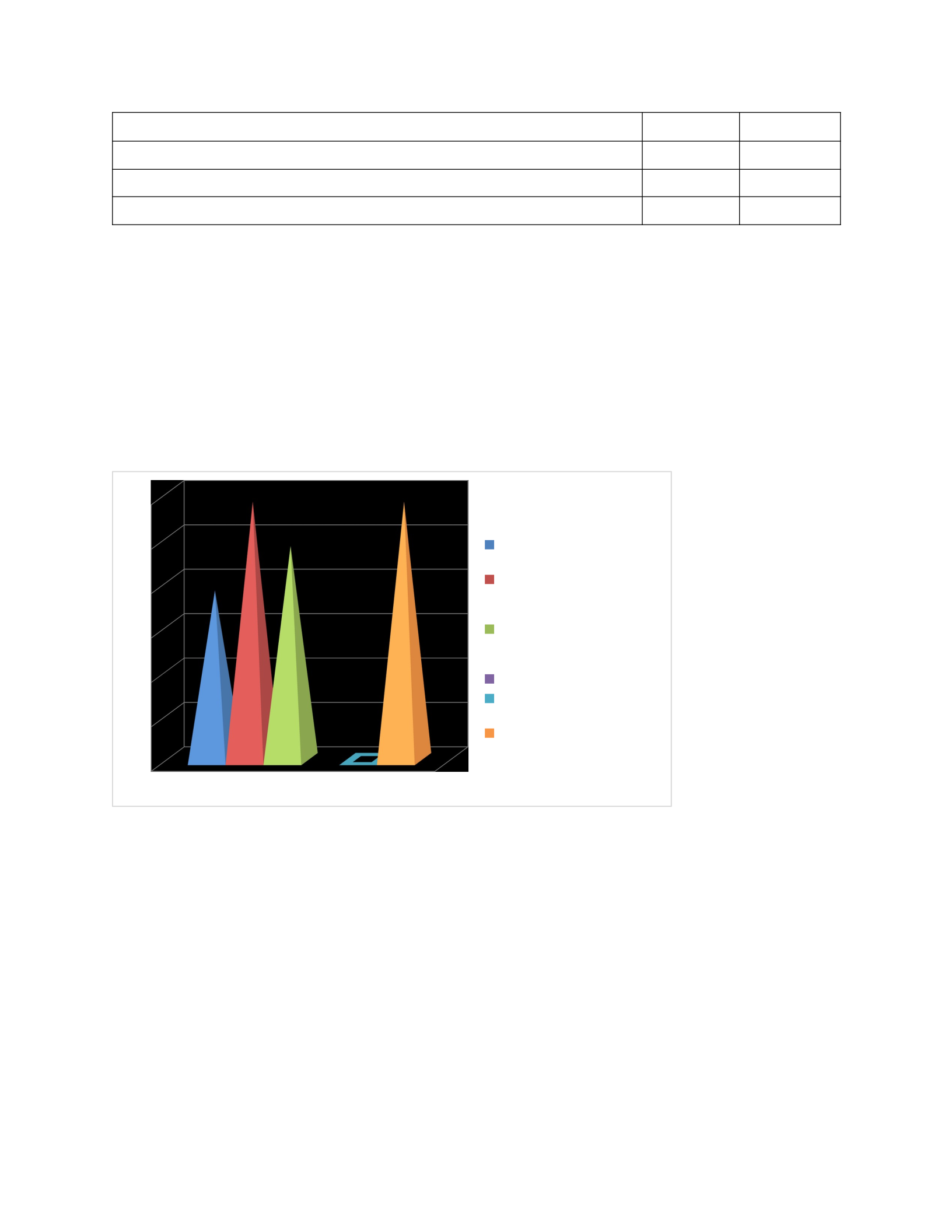
From findings it’s apparent that 29% were for the strategy that adoption of latest technology to
protect automated records would ensure systems are very effective, 29% were for the idea that
funding security procedures at Simba Chai, 24% agreed that undertaking training to equip
records staff on the right records security procedures while 19% supported that development of
records security procedures could ensure systems are very effective.
percentage
0
5
10
15
20
25
30
19
29
24
0
29
Development of records
security procedures
Adoption of latest
technology to protect
automated records
Undertaking training to
equip records staff on the
right
Records procedures
Creating records man-
agement department
Funding security pro-
cedures at simba chai
Figure 4.8 strategies that would ensure system are very effective
The study vividly indicates that adoption of latest technology to protect automated records would
be the best method that would ensure system is very effective. This could be attributed to the
idea that retrieving of records could be so easy since the records could be sorted and classified
for simplicity. Undertaking training to equip records staff on the right records security
procedures could as well be effective and would be because time wasted on slow working on
records could be saved. Also funding security procedures could ensure the staff is well
remunerated to effectively carry out these recording activities. The response was null on creating

a record department and this was attributed to the idea that t6hre already exists the same
department.
CHAPTER FIVE
5.0 SUMMARY OF FINDINGS, CONCLUSIONS AND RECOMMENDATIONS
5.1 Introduction
This chapter seeks to summarize the findings of the research, give a conclusion and
recommendation for the research, and further research suggestions.
5.1.1 Summary of the findings
CHAPTER FIVE
5.0 SUMMARY OF FINDINGS, CONCLUSIONS AND RECOMMENDATIONS
5.1 Introduction
This chapter seeks to summarize the findings of the research, give a conclusion and
recommendation for the research, and further research suggestions.
5.1.1 Summary of the findings
5.1.2 Specific information

The study revealed that there was security measures employed at Simba Chai SACCO to protect
its records as indicated by 62% of the respondents. The researcher to establish the exact security
measures put in place.38% of the respondents agreed that the organization made use of lock and
key cabinets. It was clear this was the method that was highly in use in this organization the
same could be compared with most of the Kenyan offices that ha largely adopted the use of lock
and key cabinets. This organization has also employed the use of security officers to protect
record room as indicated by 24% of the respondents the researcher deduced that, the organization
had an aim of strengthening its security systems as to avoid any breech of information. Very
minimal percentage of respondents agreed that there was use of automated passwords and
protected systems and this could attribute to the fact that there was lack of funds to sufficiently
update these departments with these systems. This too applied on employing access policies as
indicated by 10% of the respondents.19% of the respondents agreed that there was a
management department to protect records. This department is vital to ensure there’s coherent
and systematic preservation of records in an organization.
Further study revealed that indicators that shows effectiveness of measures employed were
apparent with 33% agreeing that records were never stolen nor missing.24% were for the idea
that records are never modified without permission,19% supported that members are confident of
records security,14% concurred with the idea that the SACCO has backup system incase of
security breech. Since records were never stolen or gone missing as indicated by majority of
respondents, the method used is quite effective and the SACOO should improve on it to totally
security of records. The SACCO should also put in place back up system to guard against
records losses incase of breech of security system.
38% of respondents were for the idea that the organization lack funds to effectively run its
activities in the record department, this could attributed by slow carrying out of activities and
constant complains from workers as the researcher established. The study also noted that the
cabinets were of poor quality with dire need to be repaired. The respondents also noted that there
was lack of proper security technologies as indicated by another 38%, there was very minimal
use of security passwords. The SACCO should put in place this type of technology as it will
records are well secured deny unauthorized access.14% were for the idea that the management
does not support this department financially and that it neglects it so much with the idea that the

cabinets are enough to secure its records.10% were for idea that theres lack of properly skilled
personnel to properly carry out the recording activities. This was evident when the researcher
found out that the records were not properly sorted and classified for easy retrieval.
29% were for the strategies that adoption of latest technology to protect automated records could
ensure the Simba Chai SACCO systems are very effective.28% were for the idea that funding the
records departments and security procedures could ensure effective working of this
department.24% agreed that undertaking records to equip records staff on the right records
security procedures none of the respondents were for the idea that creating record management
department was right this could be attributed to the fact there already exists such a department.
5.2 conclusions
The researcher found out that improved security systems especially use of latest technology
could highly lead to secure of records and could largely reduce security breech of information to
other departments or the public. The researcher also found out that well remunerated staff could
effectively carry out their activities without sleeping on the job and complaining always about
poor working conditions. The researcher also deduced that record departments should be the first
priority on the managements list since it carries the records of so many departments including
financial statements, organizational progressive records and employees’ details.
5.3 recommendations
Managing of records in an organization since most of the operations s run in the organization
depends on the records in order to improve organization efficiency and effectiveness. To
improve managing of records in Simba Chai SACCO, the management must follow some
considerations and mechanisms, which include;
i. The management putting of passwords on the systems used to store the records.
ii. Using o f proper systems in storing and recording of information.
iii. Employing qualified personnel in the records management departments
iv. Training of employees the importance of records in an organization.
v. Ensuring the management of records is made simpler and easier to those personnel
dealing with the same.

5.4 suggestions for further study
Having concluded that modern use of information technology is appropriate in managing
information records, the researcher suggest that studies to be done on the following areas;
i. Effects of technology on the management of records.
ii. An assessment of the challenges faced in the managing of records in Simba Chai.

