


This week I also used the Language Translator service within Watson,
in oder to practice using APIs and to contribute to classroom
discussions. This service allows users to translate free text and
documents (e.g. markup files that use XML or HTML, or Microsoft)
from one language to another. The Language Translator has many
useful features including but not limited to features including (but not
limited to):
• Neural Machine Translation, a technique that leverages deep
learning to provide better accuracy and speeds
• Language Identification, with the ability to identify up to 62
languages for free using the Language Identification API
endpoint, including:Arabic, Catalan, Chinese (Simplified &
Traditional), Czech, Danish, Dutch, English, Finnish, French,
German, Hindi, Hungarian, Italian, Japanese, Korean, Norwegian,
Polish, Portuguese (Brazil), Russian, Spanish, Swedish, and
Turkish
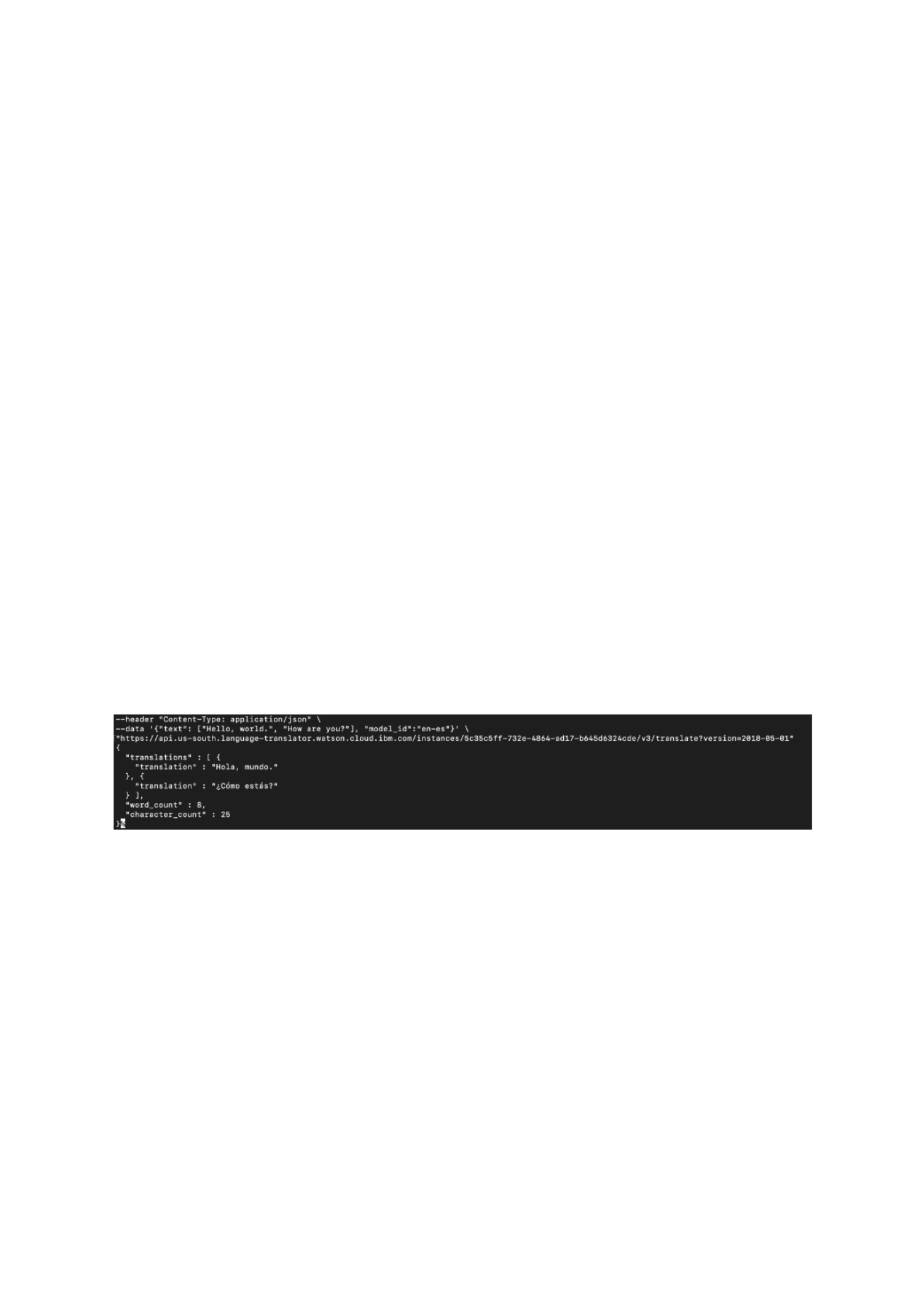
Figure 1 shows the successful API call using language translator to
translate "hello, world" and "how are you?" from English to Spanish.
You can also see word and character counts for the translated
documents.
Figure 1
This exercise taught me that when can leverage a lot of different tools
that have already been built and integrate them to achieve impressive
and powerful applications in many different fields. One feature of the
service that I thought was neat is the language identification
component. I see value in simply identifying languages using unfamiliar
text or speech. Even though the translation aspect seems more
needed, enabling Applications and chat to not just translate but also
take input and identify them for the user is a cool bonus feature that
could come in handy. I used to travel a lot for work and now I'm

thinking I could've used some sort of tool that could take speech as an
input and identify the language being spoken.

