


The integrative approach to data analysis provides insight about the
selected predictive models for development. This development
creates a connection to present a section associated with the model
description for interpretation of each ensemble node with
combinations. j The ensemble node with combination includes the
investigation of j average, maximum, and voting methods in SAS
Enterprise Miner. The combining methods using a decision tree,
logistic regression, and neural network models can be introduce for
predictive models with comparison. These modeling results creates a
comparison of heterogeneous practices to train an interval target and
class target for evaluation. These methods are designed to determine
the interval targets and to describe the predicted values of averages
and maximum conditions with the ensemble nodes.
The data analysis and the relationships between data tools can address
features and the target variables as this section will provide in detail.
The target variable with visualization and predictive models of R
Language, SAS Enterprise Miner, and j Weka, and AutoML software
can influence the prediction of types. j The outcome of the overall
findings according to target and types are features that will provide
additional insight related to the evidence and observation of the
training results. The implemented predictive modeling approach using
these tools includes but not limited to the fit model, target correlation,
ROC curve, correlation matrix and other modeling outputs. j These
modeling outputs are used for evaluation to assess the parameters
designed as features for comparison and data investigation. j The
comparison of the data set with an introduction of various data
analysis tools can aid with the data findings by obtaining drivers to
determine desired factors for an investigative process. j The results can
also rank with comparison of the visualization and predictive models
of the tools identified for validation purposes.
The data analysis tools that are being considered will allow for the
evaluation details to develop a predictive analytics design. These
details to develop a predictive model approach with the combination
of the ensemble nodes can be applied for interpretation using the
investigation of interaction between flight maneuvers. The data
analysis tools will be applied to assess the ability to perform flight
maneuvers and pilot data of steep, normal, and swallow performances
of rotorcraft systems. j These environments will be addressing the
transitional phases of rotorcraft systems and the flight data with
performance of the pilot’s ability to execute the maneuver. The data
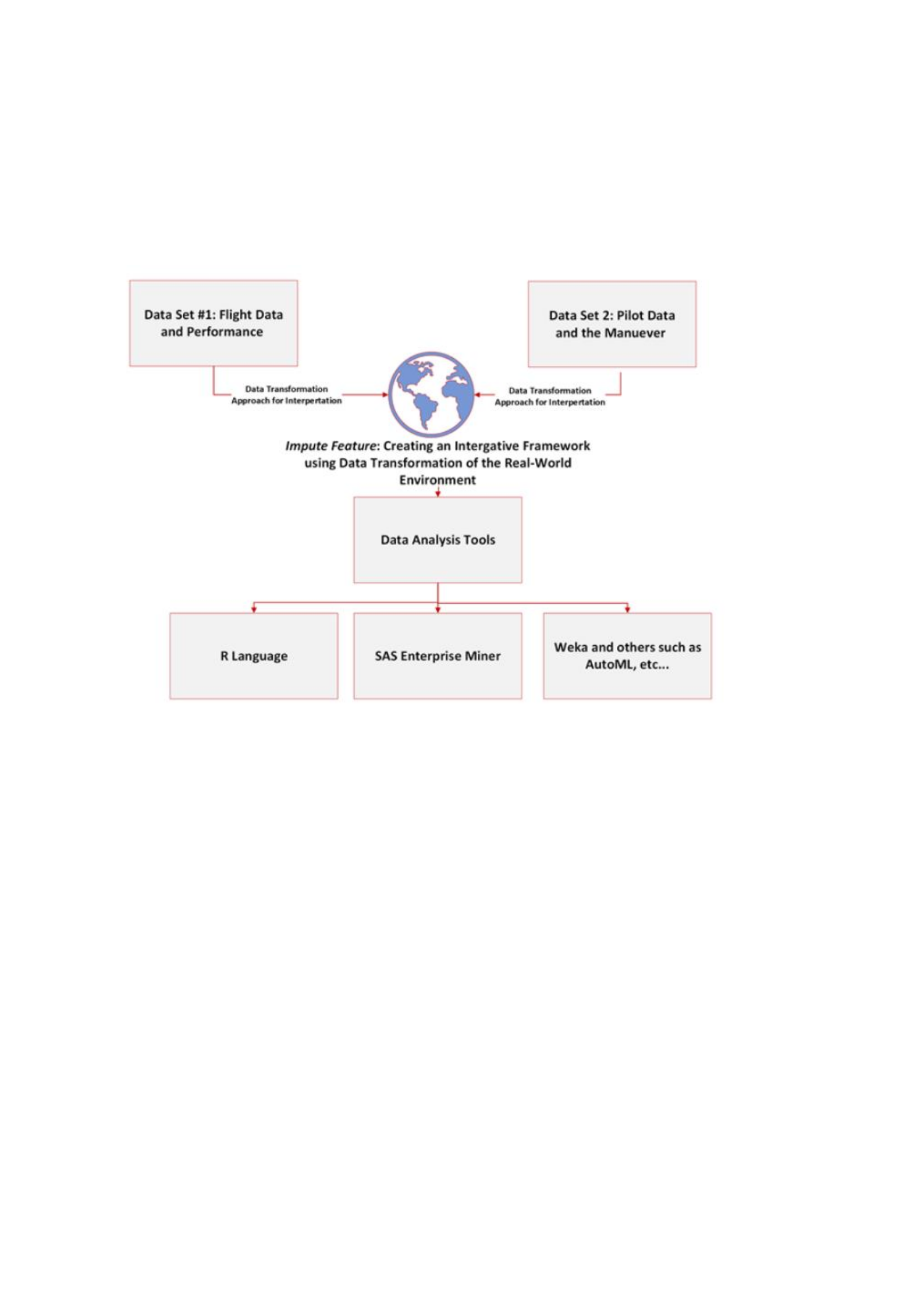
analysis tools are mentioned according to the investigative framework
using R Language, SAS Enterprise Miner, Weka, and others such as
AutoML (see figure below on the environment interaction).
Figure
. Data analysis designed for DATA 670 Project with the Federal
Aviation Administration (FAA) of tools for evaluation purposes.
The data analysis visualization offers how the data analysis tool can
serve the interpretation of the study findings. However, the need to
identify a class target in this study will be vital to the data solution and
to the investigative framework. The FAA data in creating an
integrative approach also presents the need to address the
performance maneuvers according to flight characterization for
classification (e.g., steep, normal, and swallow). From the class target,
the association of each predicted value can be used to reveal the
method of performance using ensemble models. j For example, the use
of class targets findings with the methods of average, maximum, and
voting (with the voting posterior probabilities results to the average
for each approach). j In consideration, this approach highlights the

ability to deploy the necessary data analysis visualization and
predictive models to improve performance and to build on the pilot
experience for an integrative approach that is better suited for
complex environments with the use of datasets.

