


CVS Health Corporation (NYSE: CVS) is a U.S.-based chain of retail pharmacy stores,
headquartered in Woonsocket, Rhode Island. CVS opened its first store in 1964 and in 1968,
pharmacies departments were added to the stores-- paving the way for the company to
become the largest drugstore chain in the United States (Pederson, 2002). CVS Corporation
became a public company in 1996. In 2007, CVS Corporation merged with Caremark Rx, Inc. to
became CVS Caremark Corporation. In September 2014, the name was changed to CVS Health
Corporation to better align with the company’s “health care commitment to patients, payors,
and providers.” (CVS Health, 2022) Today, CVS Health Corporation is divided into four
segments-- Health Care Benefits, Pharmacy Services, Retail/ Long Term Care,
Corporate/Other—that run multiple subsidiaries, most notably CVS Pharmacy, MinuteClinic,
Navarro Discount Pharmacies, Omnicare, and Aetna (CVS Health, 2022; SEC, 2018).
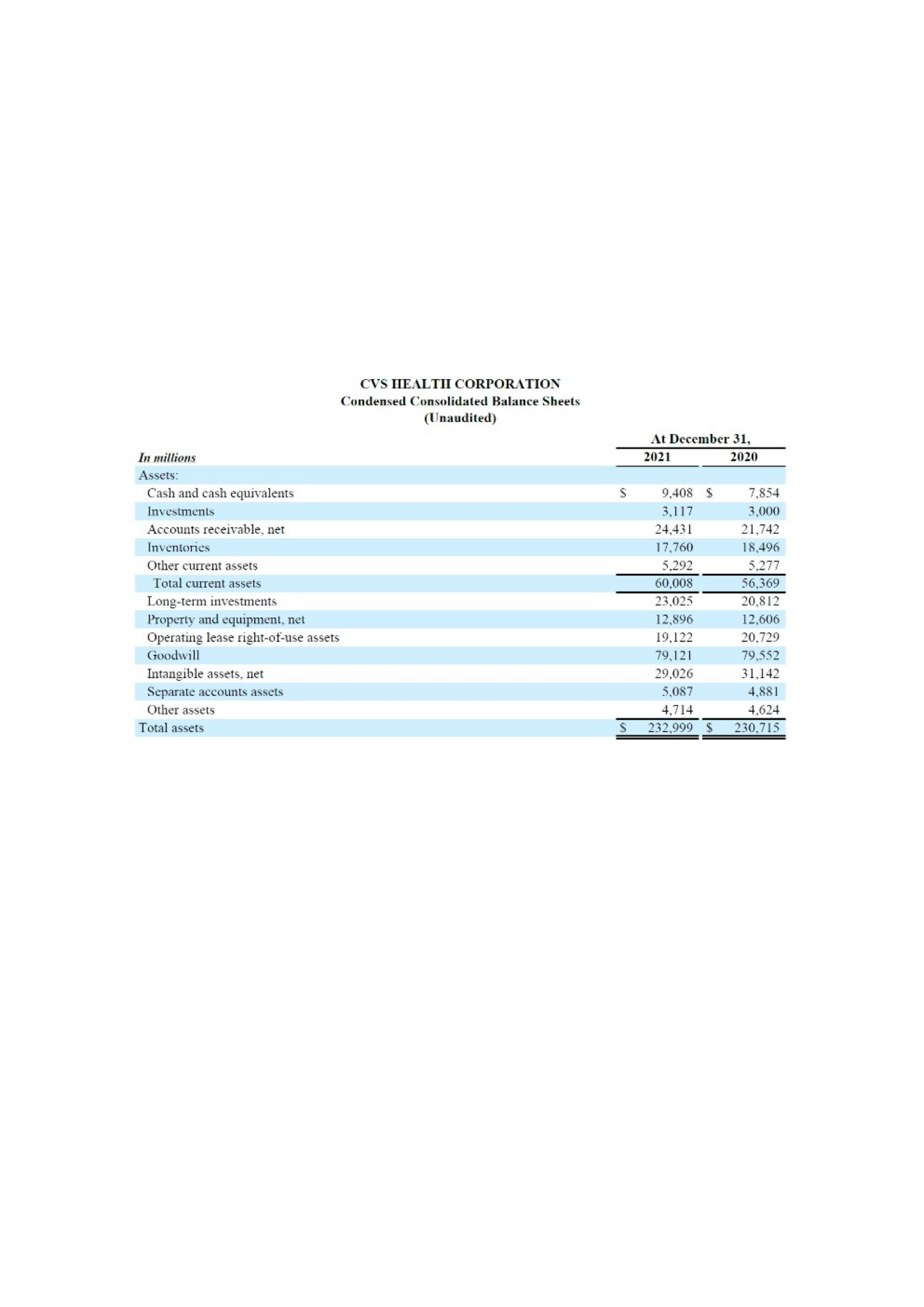
CVS has over 9,800 retail locations, many of which are leased. The company lists these assets
as “Operating lease right-of-use assets” on the balance sheet. The company determines if the
contract they enter into contains a lease and, if so, the right-of-use and lease liabilities are
recognized at the commencement date of the lease. In instances where significant remodeling
is done to the leased space, the present value of the remaining future minimum lease
payments is used. CVS uses operating leases as the criteria for capital leases are, in general,
not met. CVS does not lease the building for more than 75% of its useful life, ownership does
not transfer at the end of the lease term, CVS will not purchase the building under a bargain
purchase option, and the lease payments do not equal at least 90% of the fair market value of
the asset.
Using a “right-of-use” operating lease for the retail spaces seems to be the correct option for
CVS. A retail store’s success can be highly dependent on the area it is in—good foot traffic,
parking, safety, etc. By not purchasing over 9,000 individual buildings, CVS has allowed
themselves the mobility to close stores when needed. While they are still required to meet
their lease obligations, the company does not then have to attempt to sell a building in a less
desirable area. From the accounting side, CVS cannot claim these building as capital leases and
must use operating leases. While this can be a benefit as some of the risk is removed, there are
also drawbacks. Once the lease is entered into, CVS becomes obligated to pay for the use of
the building, regardless of the store’s productivity. Also, the company cannot take advantage

of depreciation—the lease amount stays the same even as the building ages. CVS has chosen
the correct accounting policy for claiming its retail spaces.
References
CVS Health. (2022, February 9). 2021 Annual Report. Retrieved from
https://s2.q4cdn.com/447711729/files/doc_financials/2021/ar/CVS2021_Annual-Report.pdf
Pederson, J. P. (2002). International Directory of Company Histories (Vol. 45). St. James Press.
SEC. (2018). Subsidiaries of CVS Health Corporation. SEC. Retrieved from
https://www.sec.gov/Archives/edgar/data/64803/000006480319000013/subsidiariesofcvsh
ealthcor.htm
image_31492223521657145899229.png
(129.66 KB)
image_65663460731657145974899.png
(129.66 KB)

