


1
Chapter One: Introduction
The district under study was a large urban school district. It was located in a state
with 73 school districts serving nearly four-million students and was one of the largest
districts in the state. There were 1,194 Title I eligible schools in the state and 62 Title I
elementary schools in the district under study. The district under study served a diverse
population of students from 209 countries speaking 168 different languages and dialects
(citation withheld to maintain anonymity).
The district under study provided parent and family engagement (PFE) support to
eligible schools as part of Title I, Part A. The Parent and Family Engagement Department
“strives to lead students to success with the support and engagement of families in the
community” (citation withheld to maintain anonymity). This statement was in line with
the school district’s mission statement of creating diverse and enriching pathways to lead
students to success. The district vision, which guided all operations in the district, was “to
ensure every student has a successful and promising future” (citation withheld to
maintain anonymity).
Title I elementary schools in the district under study received PFE support by
employing Parent Engagement Liaisons (PEL). Each Title I elementary school was
allotted funding for this position. District personnel described the PEL’s duties in part as:
To perform school-based duties associated with program coordination of parent
engagement activities. Duties will be associated with conducting home visits,
delivering parent workshops, gathering and presenting detailed data pertaining to
parent engagement activities, attending and communicating with parent/school
leadership councils, establishing communication with all parents, and creating

2
engagement opportunities for all parents. (citation withheld to maintain
anonymity)
In the five Title I schools within my study, student racial demographics were
majority-minority. According to Pollard (1999), minority racial and ethnic groups usually
refer to African Americans, American Indians and Alaskan Natives, Asians and Pacific
Islanders, and Hispanics. In the 2021-2022 school year, each of the five participating
schools within the study had a student population of 89% to 95% of a combination of the
four minority groups identified above. The schools’ student enrollment ranged from
under 300 students to over 700. The average student enrollment of the five schools was
466 from prekindergarten to grade five (citation withheld to maintain anonymity).
Purpose of the Program Evaluation
The district under study operated a Parent and Family Engagement Department to
service its Title I schools. This department provided support and resources to Title I
schools to ensure that students were successful by engaging families and the community.
School district personnel allotted each elementary school a Parent Engagement Liaison
(PEL) to support the facilitation of these efforts (citation withheld to maintain
anonymity). Each Title I school must facilitate a variety of activities to engage parents
and families. The purpose of my program evaluation was to measure the perceived
impact of the PFE program to inform improvement cycles. According to Patton (2002),
“Program evaluation is the systematic collection of information about the activities,
characteristics, and outcomes of programs to make judgments about the program,
improve program effectiveness, or inform decisions about future programming” (p. 10).

3
In conversation with school principals, I became aware of the differences in
program implementation at various elementary schools. Some principals placed priority
on activities that engaged parents in student academic and behavioral information.
Activities such as parent conferences, workshops, and academic nights occured regularly
for that purpose. Other principals engaged their families more in showcasing student
talents in the arts and sports. It occurred to me that some principals were experiencing
different results with student assessment data and parent participation at events. I
considered that this might be in part because of the way they engaged parents and
families. According to Mapp et al. (2017), “creating meaningful partnerships with parents
will help your students succeed both academically and socially.” I was curious to know
what my colleagues’ thoughts might be on this subject of different types of engagement
impacting achievement.
The focus of my evaluation was to determine the effects of parent and family
engagement (PFE), with the support of a Parent Engagement Liaison (PEL), on the
reading achievement of fourth-grade students in Title I elementary schools in the district
under study. Additionally, I wanted to learn how the district’s program was implemented
at various schools, what types of PFE were most effective, and what other areas were
affected by PFE. Answering these questions helped me to measure the impact of the PFE
department’s program and recommend improvements by creating a plan for change in the
district under study.
I used a mixed-methods research design using both qualitative and quantitative
data collection. Evaluations using this combination of methods are common (Patton,
2002). To collect qualitative data, I conducted interviews with administrators, teachers,

4
and PELs and collected quantitative data through extant data from the State Standards
Assessment (SSA). The interviews allowed me to collect information directly from
stakeholders. According to Patton (2002), qualitative methods such as interviews “yield
direct quotations from people about their experiences, opinions, feelings, and knowledge”
(p. 4). Additionally, Patton (2008) asserts that to be responsive to evaluation questions
and the characteristics of stakeholder needs, evaluators need to know and use a variety of
methods.
Rationale
My experience as an administrator included being part of a pilot school for the
implementation of intentional PFE at Title I elementary schools in the district of study.
Through this experience, I learned about the importance of PFE in schools with
underserved populations. Historically, underserved student populations include children
with special needs from low-income homes, immigrants, or English language learners
(Kelty & Wakabayashi, 2020). I chose to evaluate the effects of parent and family
engagement programs on the academic achievement of students at Title I elementary
schools in the district under study to determine which programs stakeholders thought had
the most impact on student achievement. In the state under study, student achievement is
content mastery on the statewide standardized assessment (citation withheld to maintain
anonymity). Additionally, I wanted to evaluate the implementation of the PFE program
across various schools in the district under study.
A critical issue for this program evaluation was the inconsistencies in the
implementation of the district’s PFE program. Title I elementary schools were
experiencing different levels of academic success. In addition, PELs performed different

5
duties and abided by different expectations depending on their administrator. The
district’s PFE department aimed to focus these efforts through guidance and support.
“For schools and districts across the U.S., family engagement is rapidly shifting
from a low-priority recommendation to an integral part of education reform efforts”
(Mapp et al., 2013, p. 5). According to Mapp et al. (2013), there are over 50 years of
research on the topic of parent and family engagement and its impact on overall student
achievement. This topic is important to educators and all educational stakeholders
because it directly applies to student outcomes.
Goals
The intended goal of my program evaluation was to study the district’s
implementation of parent and family engagement at schools and how stakeholders
thought this implementation affected the achievement of fourth-grade students.
According to Dunlop (2012, p. 34), “parent and family engagement is a critical
component in ensuring student achievement and success in school.” This goal was
directly related to improved student learning. There is research that shows impact of
effective PFE on student achievement. Students achieve more when parents participate in
their education (Hughes & Kwok, 2007).
Research Questions
To determine the effects of parent and family engagement on student achievement
in the district under study, I formulated a primary research question and two sub-
questions to guide my study. My primary research question was: How is the school
district’s parent and family engagement program being implemented at selected Title I
schools?

6
My sub-questions were:
• What type of parent and family engagement activities have the most
impact on student achievement data?
• What other student data is affected by parent and family engagement at
Title I schools?
I used these research questions to formulate my interview questions for
administrators, teachers, and Parent Engagement Liaisons (PEL). I analyzed these data,
along with extant data, to complete my program evaluation.
Conclusion
I completed this program evaluation by collecting qualitative data and reviewing
extant data and relevant research on the topic. I aimed to determine the implementation of
the district’s parent and family engagement program at Title I elementary schools. I used
my findings to make recommendations for program improvement.

7
Chapter Two: Review of the Literature
Parent and family engagement in public school settings remains a relevant topic in
the analysis of student achievement. While some researchers focus on the types of parent
and family engagement, others explore the need for such involvement in schools with
significant minority and immigrant student enrollment. Of high importance is the need
for such engagement in historically underserved student populations where there are
often barriers between the home and school (Horsford & Holmes-Sutton, 2012). Children
in Title I-funded schools and who lack family support at home are often the subject of
research on parent and family engagement.
To better understand the effects of the efforts of parent and family engagement on
student achievement, in this literature review, I will discuss Title I funding and how
allocations are determined. Additionally, I will define parent and family engagement and
its measurement within school settings. I will also explore the impact and outcomes of
parent and family engagement. Finally, I will report on the barriers to achieving effective
parent and family engagement in schools.
When searching the literature, I used scholarly database searches using key words
and phrases such as: parent and family engagement and Title I funding. In addition to
database searches, I used printed text by leading parent and family engagement
researcher Dr. Karen Mapp and others. The researched literature spanned from 1999 to
2023.

8
Title I Funding
Title I is part of the Elementary and Secondary Education Act (1965) and
provides financial assistance to schools with high numbers of low-income students
(ESSA Legislation, Title I of 1965, Pub. L. 89-10 § H.R. 2362, 1965). This civil rights
law provided funding, including grants to districts servicing low-income students and
scholarships for low-income students. The law also made provisions on a federal level for
text- and library books. The federal government granted state educational agencies funds
to improve the quality of education in elementary and middle schools. Title I funds layer
or supplement on top of equitable distribution of services. The Federal government
intended to increase services for economically disadvantaged students to overcome the
disadvantages of poverty (Roza, 2010). Since 1965, the law changed several times. The
government updated the law once in 2002 with the No Child Left Behind Act and then
again in 2015 with the Every Student Succeeds Act.
Title I consists of two parts. Part A focuses on improving the academic
achievement of the economically disadvantaged, and Part C focuses on the education of
migratory children. The specific indicators for schools to receive funds are determined on
a federal level and are applied consistently across all states. Title I, Part A funds can only
be received by local educational agencies (LEA) if their services receive state and local
funds (citation withheld to maintain anonymity). According to the department of
education of the state under study, a school is considered eligible to receive Title I
funding if the percentage of children from low-income families is at least as high as the
percentage of children from low-income families in the LEA as a whole or if it has a 35
percent poverty rate.” (citation withheld to maintain anonymity).

9
According to Gordon and Reber (2023), the amount of funds per formula child
received by districts varies widely based on the four Title I grant formulas. The term
formula child refers to a child living in a household with income below the poverty line.
This also includes children whose families participate in Temporary Assistance for
Needy Families (TANF), children living in state-operated institutions, foster children,
and those who are in schools under the Bureau of Indian Affairs. The four Title I grant
formulas use the percentage or count of formula children. The formula child percentage
for each district is the number of formula children divided by the number of 5- to 17-
year-old children who live in that district multiplied by 100 (Gordon & Reber, 2023).
The four Title I funds are:
1. Basic Grant – This is incremental funding received per formula child and does not
depend on a district’s poverty rate. Almost all districts are eligible for this grant.
Eligibility for this grant requires a minimum of 10 formula children and a formula
child percentage of at least 2%.
2. Concentration Grants – This sets a threshold for eligibility based on the number or
percentage of formula children. About half of school districts are eligible for this
grant. Eligibility for this grant requires more than 6,500 or 15% formula children.
3. Targeted Grants – This uses weighting systems to increase funding with the
number and percentage of formula children. This grant allows for more funding
per formula child when districts have a large number or higher percentage of
formula children. Eligibility for this grant requires a minimum of 10 formula
children and at least 5% formula children within the district.

10
4. Education Finance Incentive Grant (EFIG) – This allocates funds to states and is
meant to reward states with higher spending on per-pupil education to state per-
capita. This is known as the Effort Factor. In addition to this, an Equity Factor is
part of this formula that provides for a more equitable distribution of funds across
the school districts within the state.
The Title I fund allocation process is complex (Gordon & Weber, 2023) and
determines the amount of funds received by each school district. The law also outlines
that local educational agencies (LEA) that receive these funds must have a policy that
establishes “the agency’s expectations and objectives for meaningful parent and family
involvement” (Every Student Succeeds Act, 2015, p. 68). Within this policy, LEAs must
describe how they will involve parents and families in developing its plan and in the
development of support and improvement plans. Additionally, the policy must include
how the LEA will provide coordination, technical assistance, and support to build
participating schools’ capacity in planning and implementing effective parent and family
involvement to improve student academic achievement. The fund receiving LEA must
also describe within their plan how they will coordinate parent and family involvement
efforts with other laws and programs and annual evaluation of the effectiveness of the
policy in improving the academic quality of schools serviced by these funds (Every
Student Succeeds Act, 2015).
Parent and Family Engagement
Definition
Researchers and practitioners define parent and family engagement in a variety of
ways. For this study, I will use related terms such as parent involvement. According to

11
McKenna and Millen (2013), parent and family engagement is parent voice and parent
presence. Ogg et al. (2021) define parent involvement as “a multidimensional construct,
including involvement at home and school, as well as beliefs and attitudes.” Kelty and
Wakabayashi (2020) site the National Association of Family, School, and Community
Engagement in their definition of parent and family engagement as “shared responsibility
in which schools and other community agencies and organizations are committed to
reaching out to engage families in meaningful ways and which families are committed to
actively support their children’s learning and development.”
Overall, the definitions are similar, and all refer to the involvement of parents
with schools. Horsford and Holmes-Sutton (2012) sum up the varying definitions and
assert that both parent involvement and parent engagement are interchangeable terms and
are used to describe collaboration and cooperation between parents and schools.
Measurement and Types
The measurement of parent and family engagement vary. According to Sabol et
al. (2018), Quality Rating and Improvement Systems (QRIS) used in early childhood
education programs assess family engagement based on participation in volunteerism,
attendance at parent-teacher conferences, fundraising, or involvement in community
activities. They proposed a different set of parameters to gauge parent involvement,
including parenting classes, family support services, social capital activities, and human
capital services. In their study, the authors used focus groups to determine the alignment
of parent needs with offered services at each center. The findings were that there is a
need for additional components to the state’s QRIS to impact the outcomes of parental
involvement better.

12
Some researchers focused on other components of parent and family engagement.
Clarke et al. (2015) report that most studies found that higher parent and family
attendance predicts improved parenting in parent and family engagement. In their study,
they also found that the quality of the involvement is a better predictor of child outcomes
than the quantity of events attended. In their research study, Garbacz et al. (2016) found
one-directional communication, curriculum of the home, and volunteering as common
facets of parent and family engagement.
One -directional communication is defined as a structural strategy used by schools
to communicate with parents and families to provide information and essentially keep
them connected (Garbacz et al., 2016). Garbacz et al. (2016) define the curriculum of the
home, on the other hand, as activities facilitated at home by families that support a
student’s development by preparing them for school. This occurs when families
emphasize behaviors and attitudes to prepare for the academic demands of schools. Some
examples of this type of home support include reading for leisure and homework support.
Similar to Garbacz et al. (2016), parental involvement (PI), according to Hornby
and Blackwell (2018), includes both home-based and school-based PI. Home-based PI
are activities such as listening to children read, while school-based PI requires
participation at the school level. Hornby and Blackwell identify activities such as
attending parent-teacher conferences as school-based PI. Research on the topic conducted
by Ogg et al. (2021) supports the duality of home-based involvement and school-based
involvement. Additionally, they assert the importance of home-school communication
and trust between parents and teachers in establishing a parent-teacher partnership.

13
Horsford and Holmes-Sutton (2012) conducted research that supports the
effectiveness of home-school connections. Their main finding was that research
supported a focus on home-school connections to improve student achievement in urban
school districts. Kocyigit (2015) reported six categories of family involvement that
supported student achievement, including parenthood, communication, volunteering,
learning at home, decision-making, and cooperation with society. Similarly, Sheldon and
Epstein (2005) suggested that one type of parent involvement will not affect student
achievement results in all subjects. This reinforces the idea that there are a variety of
ways for parents and families to engage in student academics.
According to Kelty and Wakabayashi (2020), conventional parent-involvement
activities do not necessarily engage families. They assert that schools must actively aim
to engage parents or caregivers in ways that are effective and comfortable. Additionally,
they contend parent involvement implies an effort, or responsibility, on the parent.
However, engagement implies a joint effort between home and school. In their research
study, Reinke et al. (2019) reported that family engagement becomes more challenging as
children get older. They also noted that engagement practices took on varying forms at
different levels of a child’s development. Their research study focused on the importance
of understanding family school engagement across stages of a child’s development.
A traditional parent involvement activity cited by Kelty and Wakabayashi (2020)
is checking homework. Walker (2016) cited multiple studies in his assertion that parental
involvement in the form of homework help was the weakest predictor of academic
success. He reported that parental expectations of academic success were the most vital
type of parental involvement. Understanding the tone of a parent’s engagement and not

14
necessarily their knowledge and use of academic skills should be of utmost importance to
schools. Walker suggested that increasing these forms of parental engagement among
low-income and marginalized families should be a focus for student achievement.
Impact and Outcomes
Garbacz et al. (2016) found that parent practices impacted student behavior and
attendance in schools. In their research study, they proposed a framework to integrate
family engagement into schoolwide Positive Behavior Intervention Systems (BPIS).
Their framework aimed to focus on universal planning and problem-solving to affect
practices across systems for enhanced outcomes for students, families, and educators. The
authors concluded that the development of this framework was a vital first step and that
future research is needed to, among other things, complete a pilot test of their framework
on student outcomes.
Hughes and Kwok (2007) found that parent-teacher relationships contributed to
increased student achievement and motivation to achieve. These parent-teacher
relationships also positively contribute to students’ social, emotional, and behavioral
adjustments. Reinke et al. (2019) also attributed parent engagement in children’s
education to decreased alcohol and drug use, lower rates of suspension, and a reduced
rate of dropout. Additionally, parent involvement was a predictor of early reading
readiness as well as school readiness. The findings of this study were of particular
interest to me because it included findings from many researchers from my study.
When researching the impact of a parent education program aimed at increasing
Latino family engagement in children’s education, Walker (2016) noted that interactions
with teachers are one way that parents can make a difference. Walker also reported that

15
parent interactions with students support academic outcomes. Parent expectations for
their child’s academic success are also a predictor of mathematical skills and
postsecondary education enrollment.
Dunlop (2012) wrote that “parent and family engagement is a critical component
in ensuring student achievement and success in school” (p. 34). Similarly, Geller (2016)
reported family engagement is integral to instruction and curriculum. She asserted that
family engagement is a slow process that is intensely relational. Therefore, it is a process
and not a program. Geller argued the impact of family engagement is about “eroding
racism, classism, sexism, and xenophobia and tinkering toward relationships that are
rooted in trust and respect for human dignity” (p.3). I would argue that authentically
engaging in this process will garner relationships of trust and could lead to the outcomes
identified by Geller.
Epstein and Sheldon (2002) conducted research specific to improving student
attendance through parent and family engagement. They found that family practices such
as monitoring, parent-child discussions, participation at school, and PTA membership
impact student attendance. Additionally, better student attendance is associated with
higher scores on achievement tests. In another research study, Sheldon and Epstein
(2005) explored the impact of family involvement on mathematics achievement. In this
study, they acknowledged that although parents and families did not have input on the
planning of new mathematics education and reform, research supports a positive
relationship between parent involvement and positive outcomes in mathematics
education.
Barriers

16
Many researchers have identified barriers to effective parent and family
engagement. Hornby and Blackwell (2018) identified four types of barriers. Parent and
family factors such as their own negative experiences with school and personal barriers
have affected parents’ ability to engage with the school. Parent-teacher factors such as
time, reluctance to collaborate, and miscommunication between students and parents are
barriers to parent and family engagement. Societal factors such as work schedules and
mental health issues are also barriers. Hornby and Blackwell (2018) cited school
operating hours and lack of confidence in interacting with school staff as practical
barriers to parent engagement.
A research study conducted by Posey-Maddox and Haley-Lock (2016) reported
similar barriers to parent and family engagement. Working mothers’ job demands,
coupled with household responsibilities, educational histories, and economic and social
circumstances, are all potential barriers to home-school engagement. Family-school
relations can also be affected by the influence of the family’s race, ethnicity, and social
class. They also reported parents’ beliefs about their role in their child’s education can
serve as a barrier, or motivator, to their involvement.
Horsford and Holmes-Sutton (2012) found that a barrier to effective parent and
family engagement is the perceptions of some educators. They reported that the
perception is historically underserved populations such as Black, Latino, immigrant, and
low-income families do not value education. Additionally, these groups often lack trust in
public institutions. This causes a barrier to the home-school connection necessary for
parent and family engagement. In their study of Latino family engagement, McWayne

17
and Melzi (2014) found some barriers to school participation, such as monetary resources
and educational attainment for low-income families.
In addition to the barriers reported above, Mapp and Kuttner (2013) reported that
a “lack of sustained, accessible, and effective opportunities to build capacity among local
education agency (LEA) staff and families” is a barrier to effective parent and family
engagement. In their publication of the Dual Capacity-Building Framework for Family-
School Partnerships, Mapp and Kuttner argue that developing adult capacity is vital to
ensuring sustainable parent-school partnerships.
Conclusion
The research on the topic of parent and family engagement in schools is
extensive. The literature reports on the types of parent and family engagement, the impact
on student achievement, and the associated barriers for families and schools. I researched
scholarly articles, case law, studies, and publications on the topic. I found that many
researchers and authors agreed on most points regarding parent and family engagement.
Although the purpose of some of the literature varied, the overarching themes were the
same or similar. Most of the literature on the topic echoed a version of the idea that
“powerful partnerships are the foundation of successful family engagement in your
classroom and your school” (Mapp et al., 2017, p. 37).
Through my study, I sought to determine the effects of parent and family
engagement on student achievement in Title I elementary schools. I wanted to know the
implementation of the district’s parent and family engagement program at various
elementary schools. I conducted interviews with principals, teachers, and Parent

18
Engagement Liaisons. I used the literature to help guide the development of my interview
questions and develop strategies from my findings.

19
Chapter Three: Methodology
There is a need to build the capacity of parents and families to improve their own
“capacities, skills, and human capital…leading to better outcomes for children” (Sabol et
al., 2018, p.3). The context of this inquiry is a large urban American public school district
representing over 150 countries and languages. Parent Engagement Liaisons (PEL) are
placed in Title I elementary schools to support the coordination of the district-directed
Parent and Family Engagement (PFE) program. The goal of my evaluation was to study
how implementing specific parent and family engagement activities at Title I schools
affects the achievement of fourth-grade students.
Research Design Overview
According to Patton (2008), program evaluation is “the systemic collection of
information about the activities, characteristics, and results of programs to make
judgments about the program, improve or further develop program effectiveness,
inform decisions about future programming, and/or increase understanding” (p. 39).
Program evaluations can require different ways of asking questions and having
different purposes. For my program evaluation, I primarily used an implementation
focus. In this type of evaluation, the focus is on the extent the program implementation
and issues that have surfaced (Patton, 2008, p. 303). I also used both formative and
goal-based evaluation types as a secondary focus. In these models, the focus is on how
to improve the program and determining to what extent the goals and outcomes of the
program have been met (Patton, 2008, 302).
I implemented a mixed-methods design by collecting data from student testing
on the State Standards Assessment (SSA) for 4th graders and semi-structured

20
interviews of members of identified stakeholder groups. I did not reveal the
participants’ identities. These reported data were anonymous and beared no identifiers
that could connect data to individual participants. I assigned alpha-numerical
identifiers to participants to maintain the confidentiality of their identity in any
reporting. To ensure confidentiality, I secured recordings, transcripts, and field notes in
a locked cabinet and on a secured hard drive in my home office. Only I had access to
these data, and I will destroy all data three years after the conclusion of this study.
According to Patton (2008), the combination of qualitative and quantitative data
is part of all mixed-method designs. For this study, I used a mixed-method design that
was “primarily qualitative with quantitative data as ancillary” (p.438). This
methodology helped me answer the following research questions:
• How is the school district’s parent and family engagement program being
implemented at selected Title I schools?
• What type of parent and family engagement activities have the most impact on
student achievement data?
• What other student data is affected by parent and family engagement at Title I
schools?
Members of the identified stakeholder groups answered a series of
predetermined questions that addressed my research questions in more detail. I
interviewed the stakeholders using open-ended questions, evaluated their responses
separately, and analyzed their responses for commonalities.

21
Participants
There were three stakeholder groups from the district under study in this program
evaluation: Parent Engagement Liaisons (PEL) who service and support Title I
elementary schools, school administrators of Title I elementary schools where there is a
PEL, and teachers who teach fourth grade at a Title I elementary school where there is a
PEL. There were 12 participants from five schools who engaged in interviews to
determine what, if any, effect their implementation of parent and family engagement
activities has had on the academic achievement of their fourth-grade students on the 2022
State Standards Assessment (SSA). I selected these three specific stakeholder groups
because they have first-hand knowledge of the implementation and effectiveness of
parent and family engagement programs.
I invited the participants from the three stakeholder groups to participate in this
study via email. Their participation included a 30-minute interview to discuss their
thoughts on parent and family engagement at their respective schools and the effects on
the academic achievement of their fourth-grade students. Participation in this study was
voluntary and did not have an impact on participants’ employment.
Data Gathering Techniques
Quantitative Data
I analyzed fourth-grade student reading achievement data from the fourth-grade
State Standards Assessment (SSA) in 2021 and 2022. I collected the data from the
Department of Education of the state under study to determine if there were any
improvements or declines as a result of effective parent and family engagement. These
data are public records, and I accessed them through the DOE website.

22
Qualitative Data
I conducted 30-minute interviews with Parent Engagement Liaisons (PEL),
administrators, and teachers. They answered seven open-ended questions about parent
and family engagement during a face-to-face or virtual semi-structured interview. I
conducted one face-to-face interview in a private office with the door closed, and 11
virtual interviews in a private room with the door closed.
Data Analysis Techniques
To analyze the data, I looked for common themes across question types by
stakeholder groups. I compared each stakeholder group within their groups and then
across all groups. Within my analysis, I looked for commonalities in responses. I also
made note of abnormalities where answers were unique to just one or two participants.
The seven questions I asked each stakeholder were designed to determine the
implementation of the district’s parent and family engagement (PFE) program. These
questions were also designed to determine their perception of how PFE affected their
students’ academic performance. I used these data points when reviewing the State
Standards Assessment (SSA) results to determine the progress, if any, on the 2022 4th-
grade English Language Arts assessment compared to the previous year’s 4th-grade
assessment.
According to Patton (2008), mixed-methods evaluation using qualitative and
quantitative methods can contribute in meaningful ways to understanding a program.
Patton also asserts that one type of data in a mixed-method evaluation is often valued
over the other (p.435). In my program evaluation, the qualitative data from stakeholder

23
interviews was the focus as that is how my questions about implementation will be
answered.
Ethical Considerations
There were no anticipated risks to participants in this program evaluation beyond
that of everyday life. Participants taking part in this study may benefit by having a better
understanding of which parent and family engagement events are the most effective
towards increasing student academic success.
I received approval from the Institutional Review Board (IRB) and applied for
consent from the district under study to conduct my program evaluation. I received
approval from the district under study and a list of six Title I elementary schools to solicit
participation. I explained the need for consent in the initial appeal to the Parent
Engagement Liaisons (PELs), administrators, and teachers at each school via invitation
email (see Appendix D) with a copy of the informed consent attached. Once participants
gave consent, I collected their preference for the interview date, time, and method. If I
did not receive consent, I ended communication.
Limitations
A limitation of this study was the small sample size. The district under study
received principal approval from six Title I elementary schools to participate in my study.
I requested interviews from an administrator, a Parent Engagement Liaison (PEL), and
two fourth-grade teachers from each school. Ultimately, I interviewed participants from
five schools, including five administrators, five teachers, and two PELs.

24
Conclusion
I completed this program evaluation by conducting interviews with
administrators, teachers, and Parent Engagement Liaisons (PEL) and reviewing extant
data. I analyzed the qualitative data to determine the stakeholders’ perceptions on the
impact of parent and family engagement (PFE) on student achievement and to determine
the implementation of the district’s PFE program at schools. I reported the findings of my
study in Chapter 4.

25
Chapter 4: Results
The results of my research provided an overall picture of the perceptions of three
stakeholder groups on the effects of parent and family engagement (PFE) on student
achievement in Title I elementary schools. This study included five Title I elementary
schools in a large urban school district. I focused the administrator and Parent
Engagement Liaison interviews on school-wide achievement in all areas, while I focused
teacher interviews on the achievement of fourth-grade students in English Language Arts.
Administrators in this study were the principal or an assistant principal at the respective
schools. I reviewed participant responses and analyzed them for commonalities. I used
extant data to determine improvements in achievement levels of fourth-grade students on
the end-of-the-year state test for those five schools from 2021 to 2022.
Findings
Administrators
I asked seven questions to school administrators during scheduled interviews. I
formulated these semi-structured questions to determine the administrators’ level of
experience, their definition of PFE, the number of events they hosted per year and how
they determined the types of events, the responsibilities of their Parent Engagement
Liaisons (PEL), expectations for their teachers regarding parent and family engagement,
the effects of PFE on student academic performance, and which programs/activities were
most impactful on student achievement.
The participants represented a range of school administration experiences. The
five administrators had between five and twenty-two years of experience at various
levels, including elementary and middle school. Three of the five (60%) of the

26
administrators
had
more
than
ten
years
of
experience.
According
to
the
National
Center
for
Education
Statistics
(National
Center
for Education
Statistics,
n.d.),
the
average
total
years
of
experience
for
an
elementary
school
principal
is
6.9
years.
I
interpreted
this
to
mean
that
the
administrator
participants
have
more
than
the
average
years
of
experience
of
most
elementary
school
principals.
Two
of
the
five
(40%)
administrators
were
serving
in
their
first
year
at
their
current
school,
while
the
others
were
there
for
two
or
more
years.
One
of
the
five
(20%)
participants
was
an
administrator
at
their
current
school
for
seven
years.
The
average
number
of
years
that
principals
spend
at
the
same
elementary
school
is
4.3
(nces.ed.gov).
[interpreted
this
to
mean
that
the
administrator
participants’
time
at
their
respective
schools
is
in
line
with
the
nation’s
average.
Table
1
shows
the
years
and
levels
of
experience
of each
administrator.
Table
1
Administrator
Question
1:
How
Long Have
You Been
an
Administrator,
and
at
What
Levels?
Respondent
Response
Administrator
A
5
years
at
the
elementary
school
level
Administrator
B
16
years
at
the
elementary
and
middle
school
level
Administrator
C
13
years
at
the
elementary
and
middle
school
level
Administrator
D
22
years
at
the
elementary
school
level
Administrator
E
6
years
at
the
elementary
level
Administrators
at
the
five
schools
defined
PFE
in
a
variety
of
ways,
with
every
administrator
making
mention
of
communication
as
a
critical
factor.
Active
and
informed
involvement
was
a
recurring
theme
with
every
administrator.
Other
recurring
themes
included
collaboration
between
the
school
and
parents.
Two
of
the
five
(40%)
27
administrators
included
in
the
definition
of
parent
“extended
family”
and
“anyone
who
is
invested
in
the
student’s
success.”
One
(20%)
administrator
identified
the
need
to
support
parents
and
families
in
adapting
to
modem
education.
Every
administrator
included
in
their
definition
of
parent
and
family
engagement
the
importance
of
parents
and
families
actively
participating
in
academic
decision-making.
[interpreted
this
to
mean
that
while
administrators’
definitions
of
parent
and
family
engagement
were
similar,
each
definition
was
specific
to
the
individual
and
the
needs
of
the
school.
According
to
McKenna
and
Millen
(2013),
recent
research
on
the
perspectives
of
school
administrators
on
family
engagement
supports
the
definition
of
parent
engagement
that
includes
parent
voice
and
parent
presence.
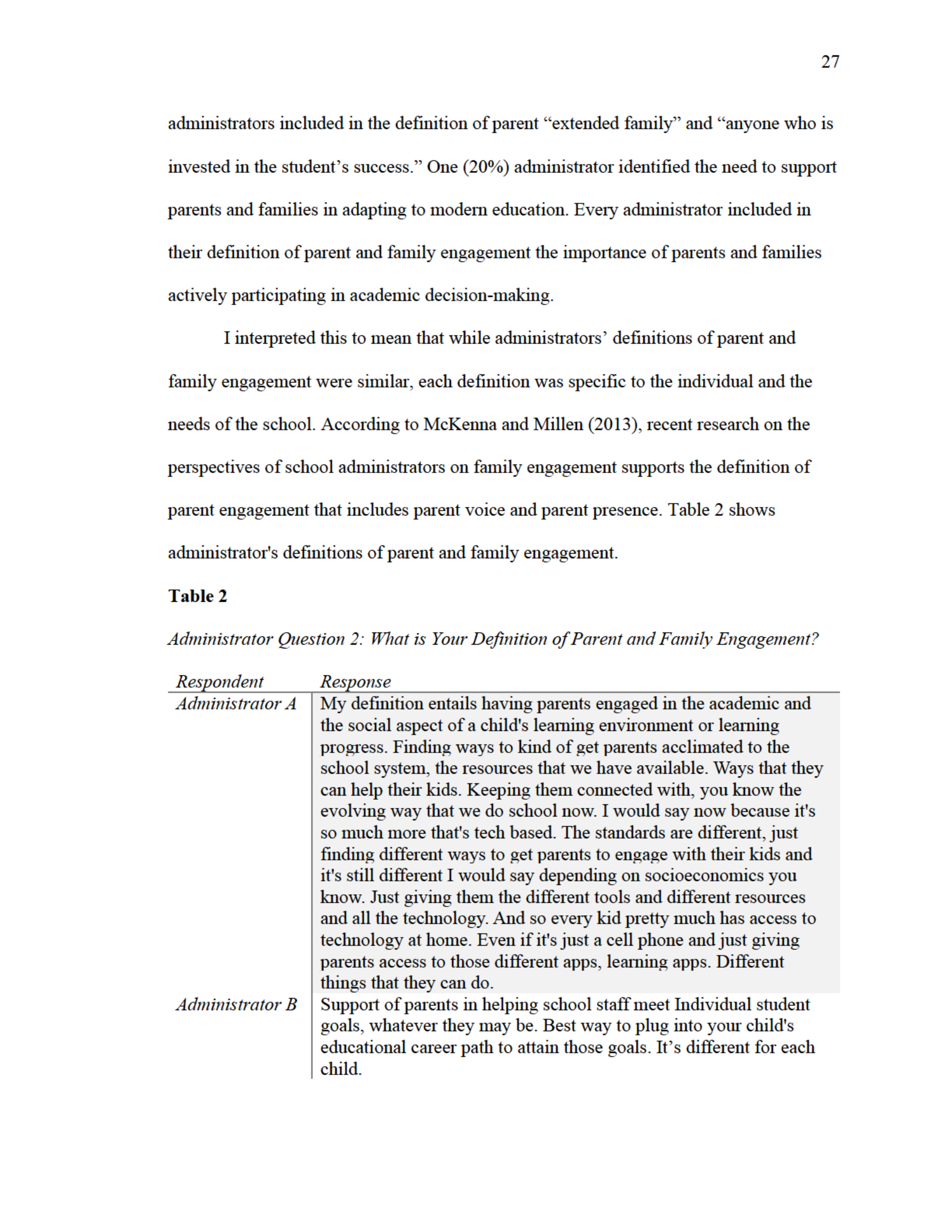
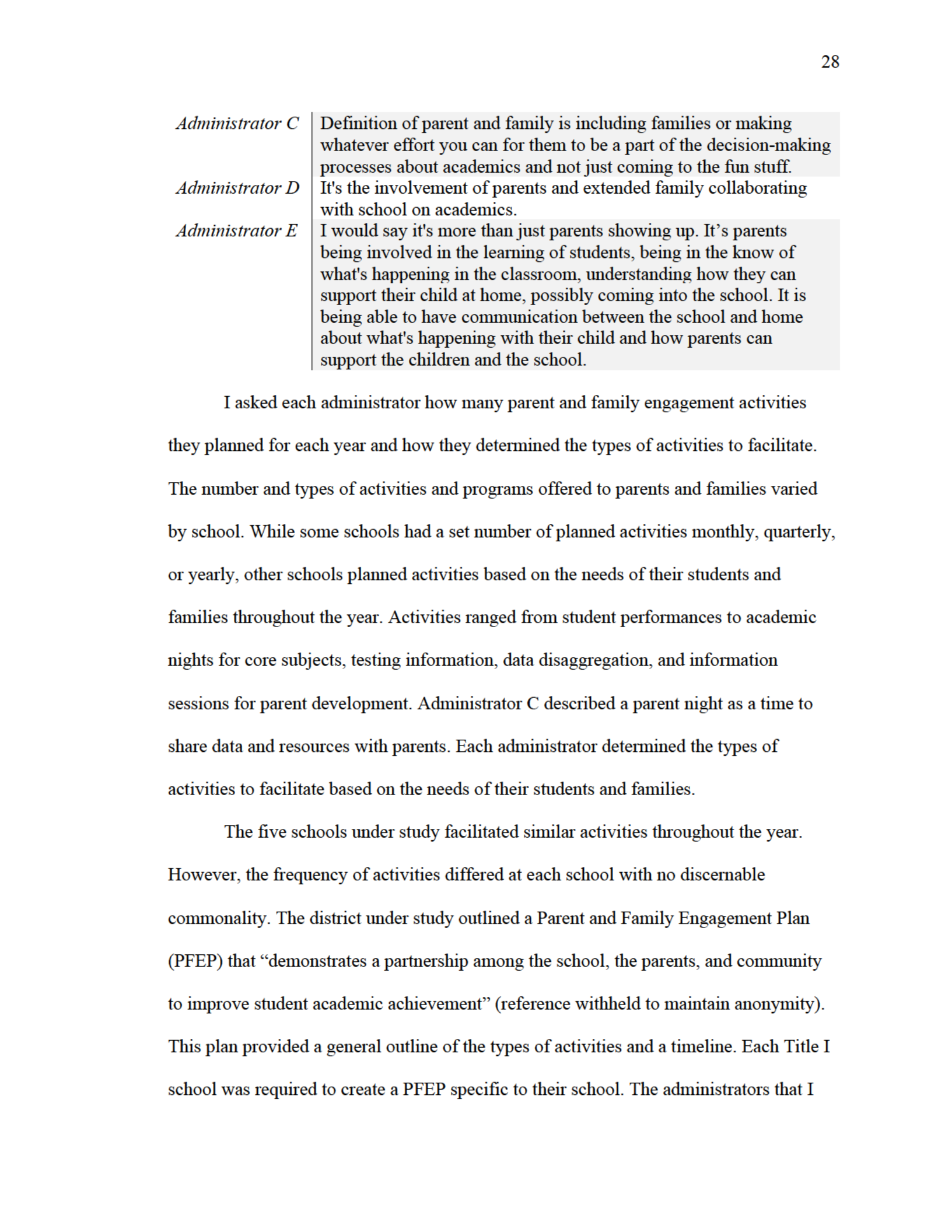
Table
2
shows
administrator's
definitions
of
parent
and
family
engagement.
Table
2
Administrator
Question
2:
What
is
Your
Definition
of
Parent
and
Family
Engagement?
Respondent
Response
Administrator
A
My
definition
entails
having
parents
engaged
in
the
academic
and
the
social
aspect
of
a
child's
leaming
environment
or
learning
progress.
Finding
ways
to
kind
of
get
parents
acclimated
to
the
school
system,
the
resources
that
we
have
available.
Ways
that
they
can
help
their kids.
Keeping
them
connected
with,
you
know
the
evolving
way
that
we
do
school
now.
I
would
say
now
because
it's
so
much
more
that's
tech based.
The
standards
are
different,
just
finding
different
ways
to
get
parents
to
engage
with
their
kids
and
it's
still
different
I
would
say
depending
on
socioeconomics
you
know.
Just
giving
them
the
different
tools
and
different
resources
and
all
the
technology.
And
so
every
kid
pretty
much
has
access
to
technology
at
home.
Even
if
it's
just
a
cell
phone
and
just
giving
parents
access
to
those
different
apps,
learning
apps.
Different
things
that
they
can
do.
Administrator
B
Support
of
parents
in
helping
school
staff
meet
Individual
student
goals,
whatever
they
may
be.
Best
way
to
plug
into
your
child's
educational
career
path
to
attain
those
goals.
It’s
different
for
each
child.
28
Administrator
C
Definition
of
parent
and
family
is
including
families
or
making
whatever
effort
you
can
for
them
to
be
a
part
of
the
decision-making
processes
about
academics
and
not
just
coming
to
the
fun
stuff.
Administrator
D
It's
the
involvement
of
parents
and
extended
family
collaborating
with
school
on
academics.
Administrator
E_ I
would
say
it's
more
than
just
parents
showing
up.
It’s
parents
being
involved
in
the
learning
of
students,
being
in
the
know
of
what's
happening
in
the
classroom,
understanding
how
they
can
support
their
child
at
home,
possibly
coming
into
the
school.
It
is
being
able
to
have
communication
between
the
school
and
home
about
what's
happening
with
their
child
and
how
parents
can
support
the
children
and
the
school.
Tasked
each
administrator
how
many
parent
and
family
engagement
activities
they
planned
for
each
year
and
how
they
determined
the
types
of
activities
to
facilitate.
The number
and
types
of
activities
and
programs
offered
to
parents
and
families
varied
by
school.
While
some
schools
had
a
set
number
of
planned
activities
monthly,
quarterly,
or
yearly,
other schools
planned
activities
based
on
the
needs
of
their
students
and
families
throughout
the
year.
Activities
ranged
from
student
performances
to
academic
nights
for
core
subjects,
testing
information,
data
disaggregation,
and
information
sessions
for
parent
development.
Administrator
C
described
a
parent
night
as
a
time
to
share
data
and
resources
with
parents.
Each
administrator
determined
the
types
of
activities
to
facilitate
based
on
the
needs
of
their
students
and
families.
The
five
schools
under
study
facilitated
similar
activities
throughout
the
year.
However,
the
frequency
of
activities
differed
at
each
school
with
no
discernable
commonality.
The
district
under
study
outlined
a
Parent
and
Family
Engagement
Plan
(PFEP)
that
“demonstrates
a
partnership
among
the
school,
the
parents,
and
community
to
improve
student
academic
achievement”
(reference
withheld
to
maintain
anonymity).
This plan
provided
a
general
outline
of
the
types
of
activities
and
a
timeline.
Each
Title
I
school
was
required
to
create
a
PFEP
specific
to their
school.
The
administrators
that
I
29
interviewed
did
not
refer
to
this
document.
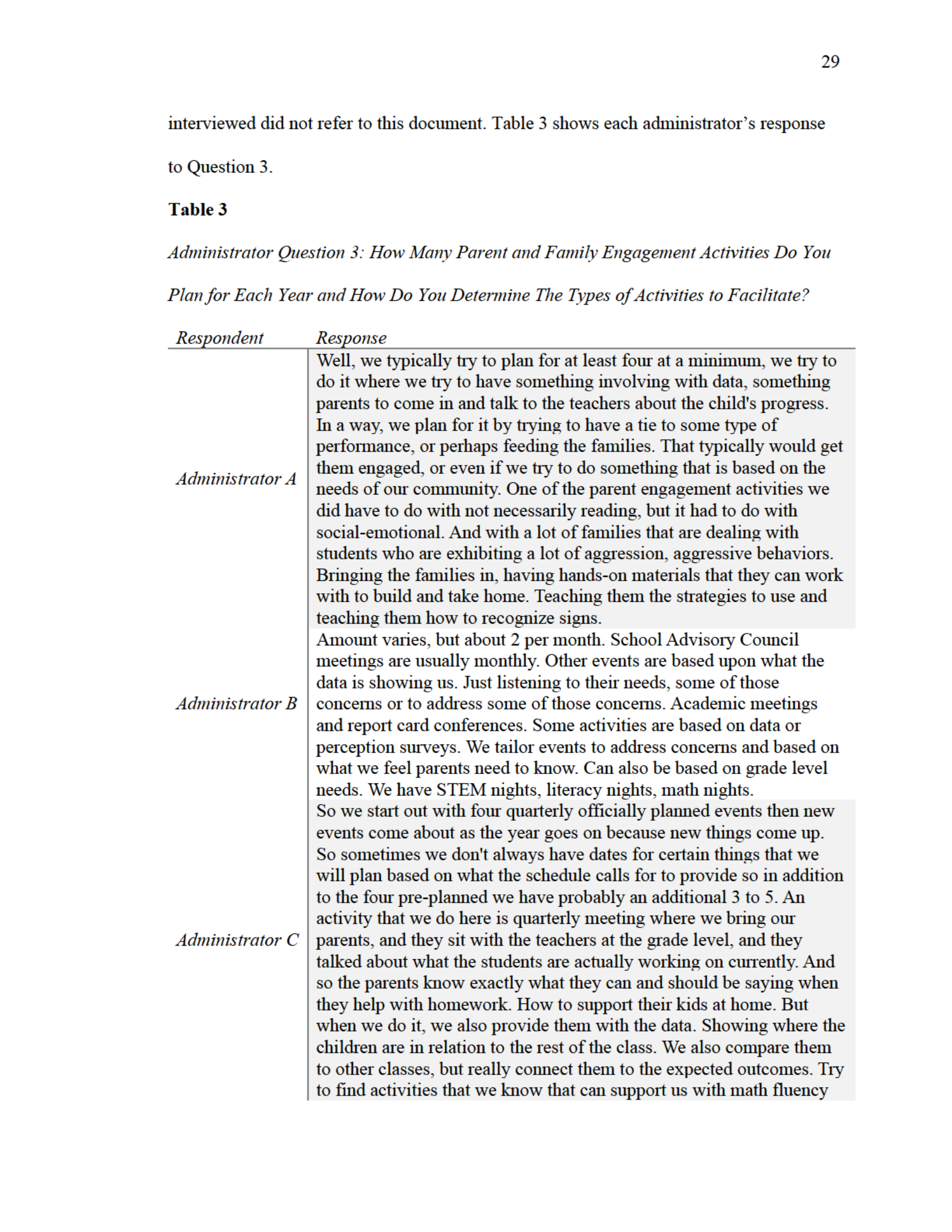
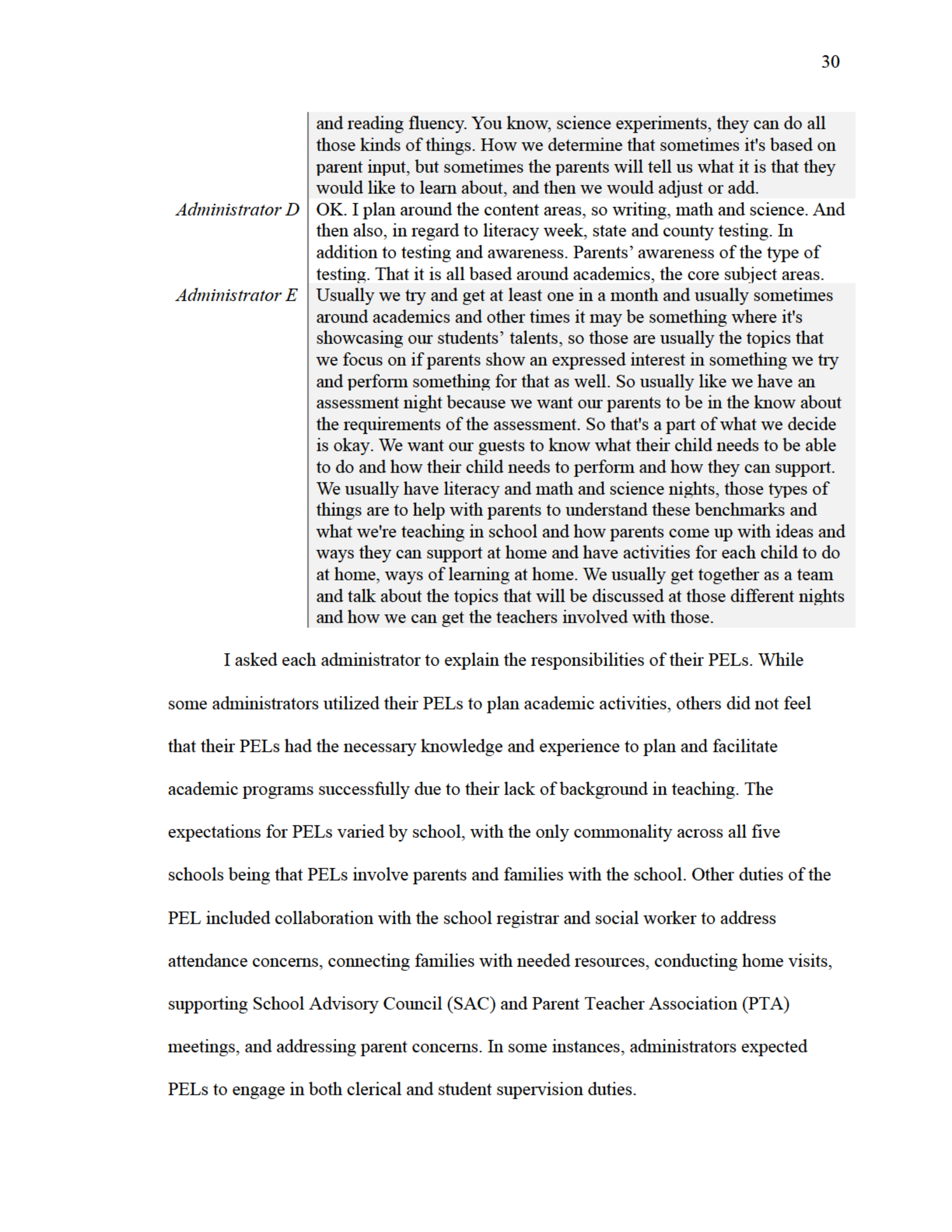
Table
3
shows
each
administrator’s
response
to
Question
3.
Table
3
Administrator
Question
3:
How
Many
Parent
and
Family
Engagement
Activities
Do
You
Plan
for
Each
Year
and
How
Do
You
Determine The
Types
of
Activities
to
Facilitate?
Respondent
Response
Administrator
A
Administrator
B
Administrator
C
Well,
we
typically
try to
plan
for
at
least
four
at
a
minimum,
we
try
to
do
it
where
we
try
to
have
something
involving
with
data,
something
parents
to
come
in
and
talk
to
the
teachers
about
the
child's
progress.
Ina
way,
weplan
for
it
by
trying
to
have
a
tie
to
some
type
of
performance,
or
perhaps
feeding
the
families.
That
typically
would
get
them
engaged,
or
even
if
we
try
to
do
something
that
is
based
on
the
needs
of
our
community.
One
of
the
parent
engagement
activities
we
did
have
to
do
with
not
necessarily
reading,
but
it
had
to
do
with
social-emotional.
And
with
a
lot
of
families
that
are
dealing
with
students
who
are
exhibiting
a
lot
of
aggression,
aggressive
behaviors.
Bringing
the
families
in,
having
hands-on
materials
that
they
can
work
with
to
build
and
take
home.
Teaching
them
the
strategies to
use
and
teaching
them
how
to
recognize
signs.
Amount
varies,
but
about
2
per
month.
School
Advisory
Council
meetings
are
usually
monthly.
Other
events
are
based
upon
what
the
data
is
showing
us.
Just
listening
to
their
needs,
some
of
those
concems
or
to
address
some
of
those
concems.
Academic
meetings
and
report
card
conferences.
Some
activities
are
based
on
data or
perception
surveys.
We
tailor
events
to
address
concerns
and
based
on
what
we
feel
parents
need
to
know.
Can
also
be
based
on
grade
level
needs.
We
have
STEM
nights,
literacy
nights,
math
nights.
So
we
start
out
with
four
quarterly
officially
planned
events
then
new
events
come
about
as
the
year
goes
on
because
new
things
come
up.
So
sometimes
we
don't
always
have
dates
for
certain
things
that
we
will
plan
based
on
what
the
schedule
calls
for
to
provide
so
in
addition
to
the
four
pre-planned
we
have
probably
an
additional
3
to
5.
An
activity that
we
do
here
is
quarterly
meeting
where
we
bring
our
parents,
and
they
sit
with
the
teachers
at
the
grade
level,
and
they
talked
about
what
the
students
are
actually
working
on
currently.
And
so
the
parents
know
exactly
what
they
can
and
should
be
saying
when
they help
with
homework.
How
to
support
their
kids
at
home.
But
when
we
do
it,
we
also
provide
them
with
the
data.
Showing
where
the
children
are
in
relation
to
the
rest
of
the
class.
We
also
compare
them
to
other
classes,
but
really
connect
them
to
the
expected
outcomes.
Try
to
find
activities
that
we
know
that
can
support
us
with
math
fluency
30
and
reading
fluency.
You
know,
science
experiments,
they
can
do
all
those
kinds
of
things.
How
we
determine
that
sometimes
it's
based
on
parent
input,
but
sometimes
the
parents
will
tell
us
what
it
is
that
they
would
like
to
learn
about,
and
then
we
would
adjust
or
add.
Administrator
D
OK.
1
plan
around
the
content
areas,
so
writing,
math
and
science.
And
then
also,
in
regard
to literacy
week,
state
and
county
testing.
In
addition
to
testing
and
awareness.
Parents’
awareness
of
the
type
of
testing.
That
it
is
all
based
around
academics,
the
core
subject
areas.
Administrator
E
Usually
we
try
and
get
at
least
one
in
a
month
and
usually
sometimes
around
academics
and
other
times
it
may
be
something
where
it's
showcasing
our
students’
talents,
so
those
are
usually the
topics
that
we
focus
on
if
parents
show
an
expressed
interest
in
something
we
try
and
perform
something
for
that
as
well.
So
usually
like
we
have
an
assessment
night
because
we
want
our
parents
to
be
in
the
know
about
the
requirements
of
the
assessment.
So
that's
a
part
of
what
we
decide
is
okay.
We
want
our
guests
to
know
what
their
child
needs
to
be
able
to
do
and
how
their
child
needs
to
perform
and
how
they
can
support.
We
usually
have
literacy
and
math
and
science
nights,
those
types
of
things
are
to
help
with
parents
to
understand
these
benchmarks
and
what
we're
teaching
in
school
and
how
parents
come
up
with
ideas
and
ways
they
can
support
at
home
and
have
activities
for
each
child
to
do
at
home,
ways
of
learning
at
home.
We
usually
get
together
as
a
team
and
talk
about
the
topics
that
will
be
discussed
at
those
different
nights
and
how
we
can
get
the
teachers
involved
with
those.
Tasked
each
administrator
to
explain
the
responsibilities
of
their
PELs.
While
some
administrators
utilized
their
PELs
to
plan
academic
activities,
others
did
not
feel
that
their
PELs
had
the
necessary
knowledge
and
experience
to
plan
and
facilitate
academic
programs
successfully
due
to
their
lack
of
background
in
teaching.
The
expectations
for
PELs
varied
by
school,
with
the
only
commonality
across
all
five
schools
being
that
PELs
involve
parents
and
families
with
the
school.
Other
duties
of
the
PEL
included
collaboration
with
the
school
registrar
and
social
worker
to
address
attendance
concems,
connecting
families
with
needed
resources,
conducting
home
visits,
supporting
School
Advisory
Council
(SAC)
and
Parent
Teacher
Association
(PTA)
meetings,
and
addressing
parent
concems.
In
some
instances,
administrators
expected
PELs
to
engage
in
both
clerical
and
student
supervision
duties.
31
Across
the
five
schools,
each
administrator
set
their
expectations
for
the
responsibilities
of
the
PEL.
This
variation
in
expectations
makes
the
official
role
of
the
PEL
unclear.
According
to
Kelty
and
Wakabayashi
(2020),
Family
Engagement
Liaisons
can
help
develop
a
positive
climate
and
culture
and
help
families
understand
school-
centric
norms.
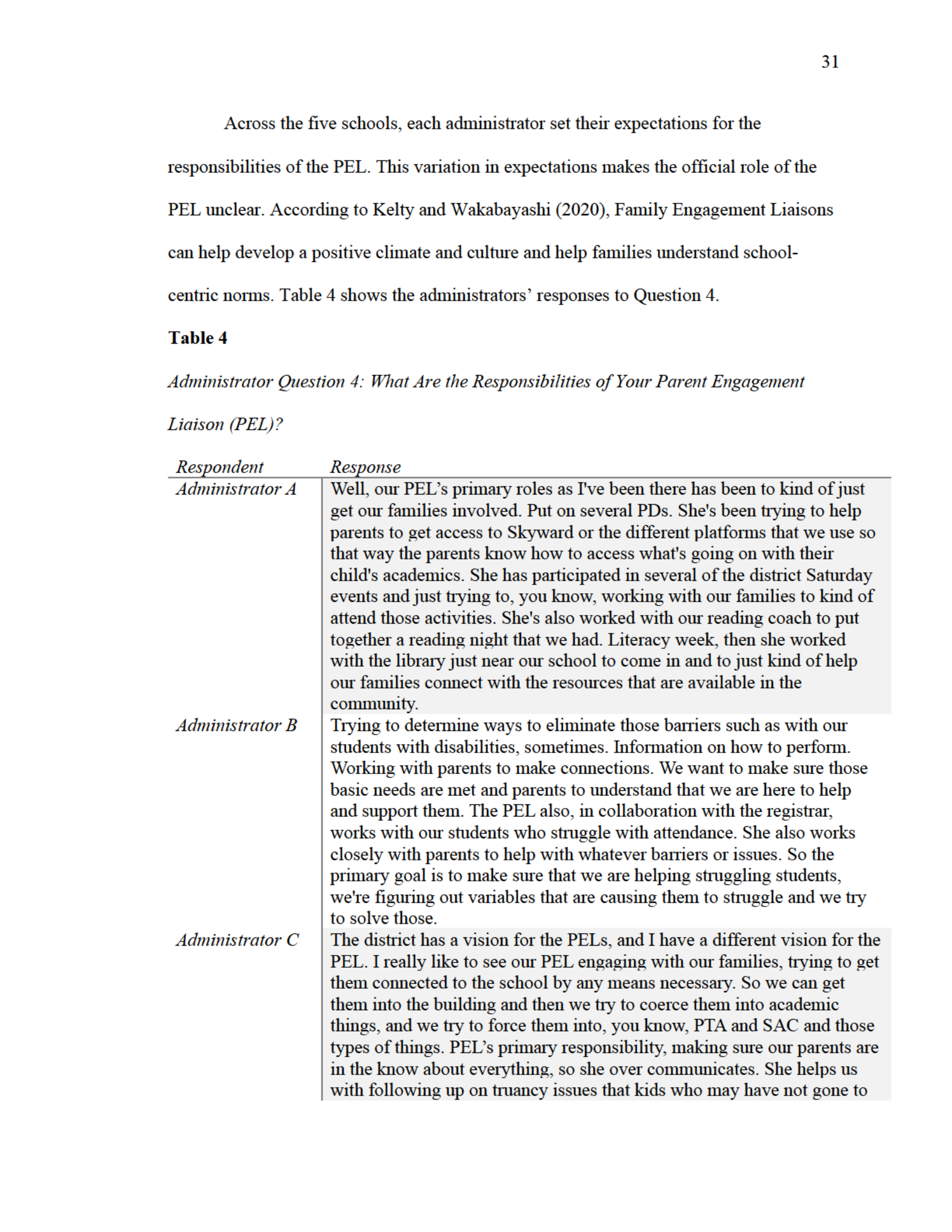
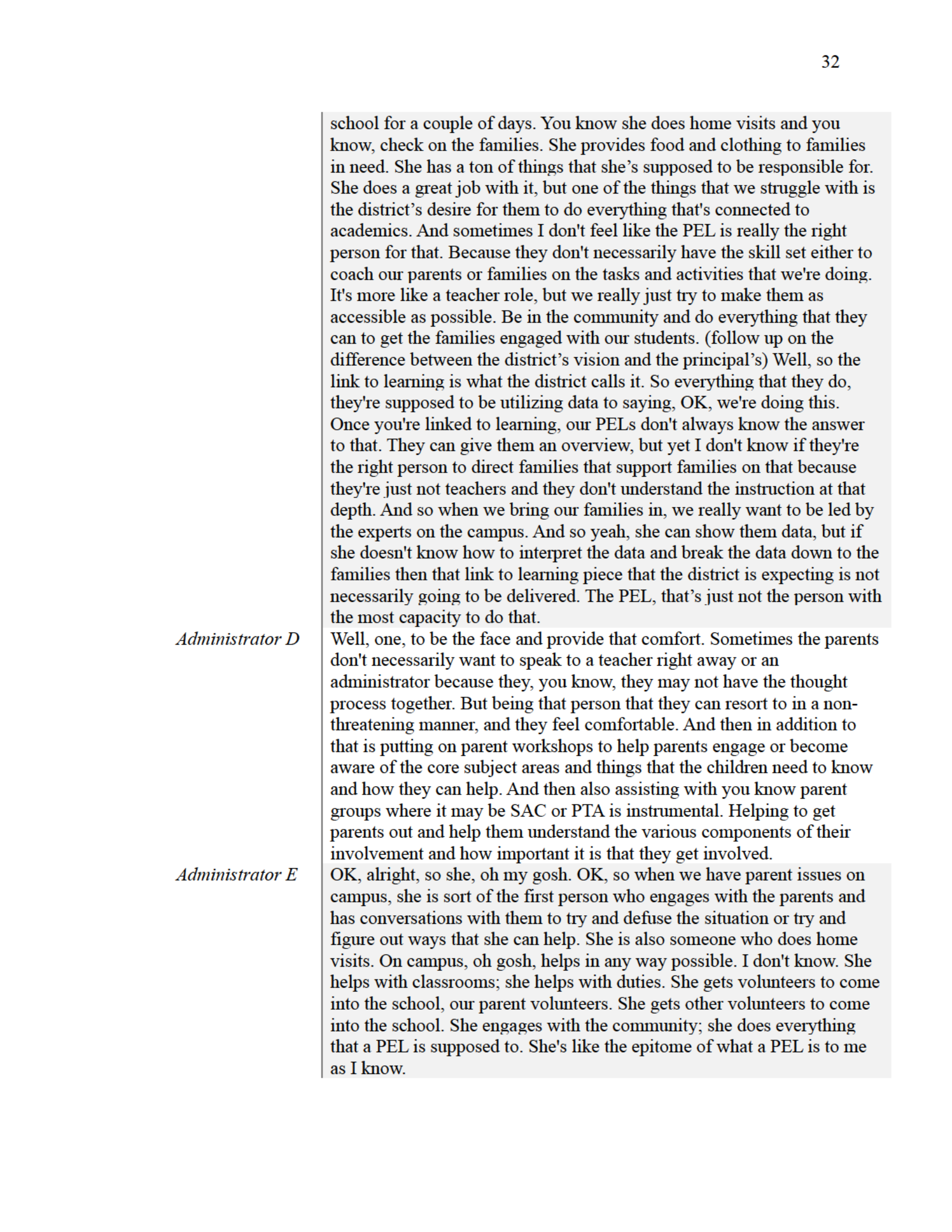
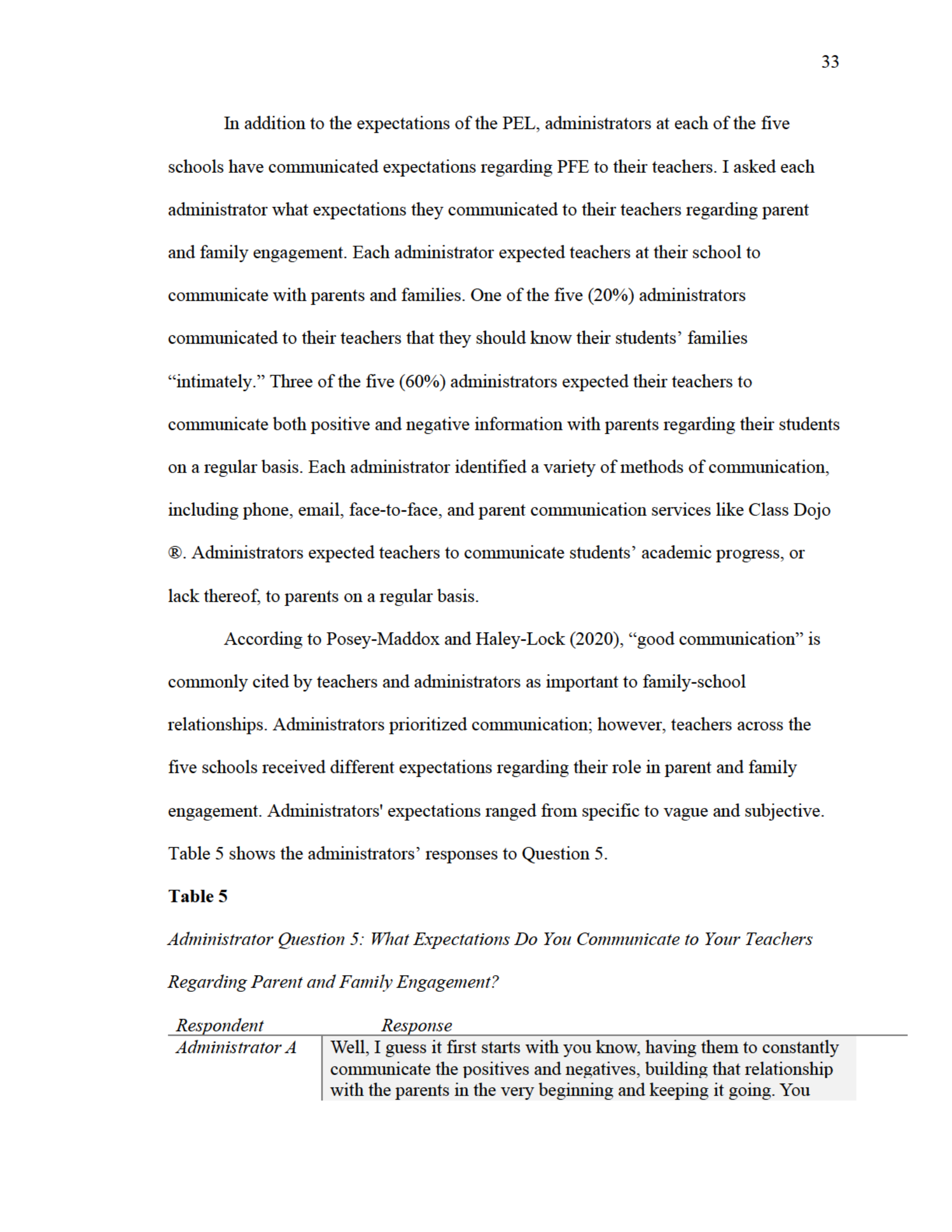
Table 4
shows
the
administrators’
responses
to
Question
4.
Table
4
Administrator
Question
4:
What
Are
the
Responsibilities
of Your
Parent
Engagement
Liaison
(PEL)?
Respondent
Response
Administrator
A
Well,
our
PEL’s
primary
roles
as
I've
been
there
has
been
to
kind
of
just
get
our
families
involved.
Put
on
several
PDs.
She's
been
trying
to
help
parents
to
get
access
to
Skyward
or
thedifferent
platforms
that
we
use
so
that
way
the
parents
know
how
to
access
what's
going
on
with
their
child's
academics.
She
has
participated
in
several
of
the
district
Saturday
events
and
just
trying
to,
you
know,
working
with
our
families
to
kind
of
attend
those
activities.
She's
also
worked
with
our
reading
coach
to
put
together
a
reading
night
that
we
had.
Literacy
week,
then
she
worked
with
the
library
just
near
our
school
to
come
in
and
to
just
kind
of
help
our
families
connect
with
the
resources
that
are
available
in
the
community.
Administrator
B__
Trying
to
determine
ways
to
eliminate
those
barriers
such
as
with
our
students
with
disabilities,
sometimes.
Information
on
how
to
perform.
Working
with
parents
to
make
connections.
We
want
to
make
sure
those
basic
needs
are
met
and
parents
to
understand
that
we
are
here
to
help
and
support
them.
The
PEL
also,
in
collaboration
with
the
registrar,
works
with
our
students
who
struggle
with
attendance.
She
also
works
closely
with
parents
to
help
with
whatever
barriers
or
issues.
So
the
primary
goal
is
to
make
sure
that
we
are
helping
struggling
students,
we're
figuring
out
variables
that
are
causing
them
to
struggle
and
we
try
to
solve
those.
Administrator
C
The
district
has
a
vision
for
the
PELs,
and
I
have
a
different
vision
for
the
PEL.
I
really
like to
see
our
PEL
engaging
with
our
families,
trying to
get
them
connected
to
the
school
by
any
means
necessary.
So
we
can
get
them
into
the
building
and
then
we
try
to
coerce
them
into
academic
things,
and
we
try
to
force
them
into,
you
know,
PTA
and
SAC
and
those
types
of
things.
PEL’s
primary
responsibility,
making
sure
our
parents
are
in
the
know
about
everything,
so
she
over
communicates.
She
helps
us
with
following
up on
truancy
issues
that
kids
who
may
have
not
gone
to
Administrator
D
Administrator
E
32
school
for
a
couple
of
days.
You
know
she
does home
visits
and
you
know,
check
on
the
families.
She
provides
food
and
clothing
to
families
in
need.
She
has
a
ton
of
things
that
she’s
supposed
to
be
responsible
for.
She
does
a
great
job
with
it,
but
one
of
the
things
that
we
struggle
with
is
the
district’s
desire
for
them
to
do
everything
that's
connected
to
academics.
And
sometimes
I
don't
feel like
the
PEL
is
really
the
right
person
for
that.
Because
they
don't
necessarily
have
the
skill
set either to
coach
our
parents or
families
on
the
tasks
and
activities
that
we're
doing.
It's
more
like
a teacher
role,
but
we
really
just
try
to
make
them
as
accessible
as
possible.
Be
in
the
community
and
do
everything
that
they
can
to
get the
families
engaged
with
our
students.
(follow
up on
the
difference
between
the
district’s
vision
and
the
principal’s)
Well,
so
the
link to
learning
is
what
the
district
calls
it.
So
everything
that
they
do,
they're
supposed
to
be
utilizing
data
to
saying,
OK,
we're
doing
this.
Once
you're
linked
to
learning,
our
PELs
don't
always
know
the
answer
to
that.
They
can
give
them
an
overview,
but
yet
I
don't
know
if
they're
the
right
person
to
direct
families
that
support
families
on
that
because
they're
just
not
teachers
and
they
don't
understand
the
instruction
at
that
depth.
And
so
when
we
bring
our
families
in,
we
really
want
to
be
led
by
the
experts
on
the
campus.
And
so
yeah,
she
can
show
them
data,
but
if
she
doesn't
know
how
to
interpret
the
data
and
break
the
data
down
to
the
families
then
that link
to
learning
piece
that
the
district
is
expecting
is
not
necessarily
going
to
be
delivered.
The
PEL,
that’s
just
not
the
person
with
the
most
capacity
to
do
that.
Well,
one,
to
be
the
face
and
provide
that
comfort.
Sometimes
the
parents
don't
necessarily
want
to
speak
to
a
teacher
right
away
or
an
administrator
because
they,
you
know,
they
may
not
have
the
thought
process
together.
But
being
that
person
that
they
can
resort
to
in
a
non-
threatening
manner,
and
they
feel
comfortable.
And
then
in
addition
to
that
is
putting
on
parent
workshops
to
help
parents
engage
or
become
aware
of
the
core
subject
areas
and
things
that
the
children
need
to
know
and
how
they
can
help.
And
then
also
assisting
with
you
know
parent
groups
where
it
may
be
SAC
or
PTA
is
instrumental.
Helping
to
get
parents
out
and
help
them
understand
the
various
components
of
their
involvement
and
how
important
it
is
that
they
get
involved.
OK,
alright,
so
she,
oh
my
gosh.
OK,
so
when
we
have
parent
issues
on
campus,
she
is
sort
of
the
first
person
who
engages
with
the
parents
and
has
conversations
with
them
to
try
and
defuse
the
situation
or
try
and
figure
out
ways
that
she
can
help.
She
is
also
someone
who
does
home
visits.
On
campus,
oh
gosh,
helps
in
any
way
possible.
I
don't
know.
She
helps
with
classrooms;
she
helps
with
duties.
She
gets
volunteers
to
come
into
the
school,
our
parent
volunteers.
She
gets
other
volunteers
to
come
into
the
school.
She
engages
with
the
community;
she
does
everything
that
a
PEL
is
supposed
to.
She's
like
the
epitome of
what
a
PEL
is
to
me
as
I
know.
33
In
addition
to
the
expectations
of
the
PEL,
administrators
at
each
of
the
five
schools
have
communicated
expectations
regarding
PFE
to their
teachers.
I
asked each
administrator
what
expectations
they
communicated
to
their
teachers
regarding
parent
and
family
engagement.
Each
administrator
expected
teachers
at
their
school
to
communicate
with
parents
and
families.
One
of
the
five
(20%)
administrators
communicated
to
their
teachers
that
they
should
know
their
students’
families
““ntimately.”
Three of
the
five
(60%)
administrators
expected
their
teachers
to
communicate
both
positive
and
negative
information
with
parents
regarding
their
students
on
a
regular
basis.
Each
administrator
identified
a
variety
of
methods
of
communication,
including
phone,
email,
face-to-face,
and
parent
communication
services
like
Class
Dojo
®.
Administrators
expected
teachers
to
communicate
students’
academic
progress,
or
lack
thereof,
to
parents
on
a
regular
basis.
According
to
Posey-Maddox
and
Haley-Lock
(2020),
“good
communication”
is
commonly
cited
by
teachers
and
administrators
as
important
to
family-school
relationships.
Administrators
prioritized
communication;
however,
teachers
across
the
five
schools
received
different
expectations
regarding
their
role
in
parent
and
family
engagement.
Administrators'
expectations
ranged
from
specific
to
vague
and
subjective.
Table
5 shows
the
administrators’
responses
to
Question
5.
Table
5
Administrator
Question
5:
What
Expectations
Do
You
Communicate
to
Your
Teachers
Regarding
Parent
and
Family
Engagement?
Respondent
Response
Administrator
A
Well,
I
guess
it
first
starts
with
you
know,
having
them
to
constantly
communicate
the
positives
and
negatives,
building
that
relationship
with
the
parents
in
the
very
beginning
and
keeping
it
going.
You

Administrator
B
Administrator
C
Administrator
D
34
know,
just
constantly
communicating
with
families
through
Dojo,
but
then
also
the
different
events,
you
know,
try
to
get
them
to
come
out.
Find
ways
to
incorporate
community
events
where
parents
can
come.
Share
their
expertise
and
whatever
they
have.
Different
cultural
events
we
try to
bring
them
in
for
like
Hispanic
Heritage
month
or
Thanksgiving
or
Christmas
time
we
try
to
find
different
things.
And
when
they're
in
there,
we
try
to
do
at
least
an
activity
that
would
be
focused
on
academics.
These
expectations
are
not
explicitly
stated,
it's
what's
understood.
The
main
piece
I
try to
communicate
with
this
staff
is
one,
that
we
should
not
solely
dictate
how
we
should
communicate
with
parents.
That
discussion
between
the
parents
on
the
best
way
to
communicate.
So
many
avenues.
Communication
these days,
like
right
now,
we're
speaking
virtually.
Do
you
offer
that virtual
opportunity?
I
would
say
we
have
e-mail;
we
have
telephone,
we
have
face-to-face
conferences,
which
I
think
is
probably
most
impactful.
But
there
are
so
many
models
we
have
out
there
like
Class
Dojo
where
we
can
make
sure
we're
communicating
with
parents.
So
that's
number
one;
For
us
to
communicate.
That's
what
I
expect.
Communication
is
not
a
drive-by
thing.
We
have
students
180
days
and
before
an
issue
or
question
comes
to
me,
especially
some
lower-level
issues,
I
expect
for
them
to
have
communicated
with
parents
before
we
look
into
it.
Because
usually
in
my
experience,
whether
it’s
a
Title
I
school
or
not,
when
parents
are
involved,
about
99%
of
them
want
to
support
the
staff
especially
if
they
know
that
the
teachers
and
staff
has
their
best
interest.
You
know,
we
have
some
teachers
who
do
a
really
great
job,
soliciting
support
from
the
family.
Then
on
the
other
side,
you
can
also
tell
the
teacher
who
haven’t
put
much
effort
so
in
that
case,
there's
the
question
Why?
Why
haven't
we?
We
know
and
understand
that
when
parents
are
engaged,
students
will
learn.
I
want
teachers,first
from
the
very
beginning,
I
want
our
teachers
to
know
their
parents.
I
want
them
to know
their
families
intimately,
not
just
that
they're
the
mom
of
this
child
or
the
dad
of
that
child.
I
want
them
to
know
everything
about them,
learn about
the
family;
what
they're
going
through.
Are
they
in
sports?
Active
in
church?
All
these
different
things
that
build
relationships
with
the
home.
And
so
first
off,
that's
the
1st
jump
point.
After
that,
I
want them
to
keep
their
families
in
the
know
meaning, whatever
is
happening
on
campus,
we
want
teachers
to
share
those
activities
with
the
families.
We
wantthe
teachers
to;
how
do
I
say
this?
Do
everything
they
can
to
engage
them.
We
want
them
to
be
in
touch
with
the
family.
For
one,
engagement.
Building
that
home
to
school
positive
relationship
is
huge.
Keeping
parents
aware
of
how
their
child
is
doing
academically
and
behaviorally.
Good
or
bad.
Building
that
positive
relationship.
(Interviewer
follow-up:
Are
teachers
unclear
of
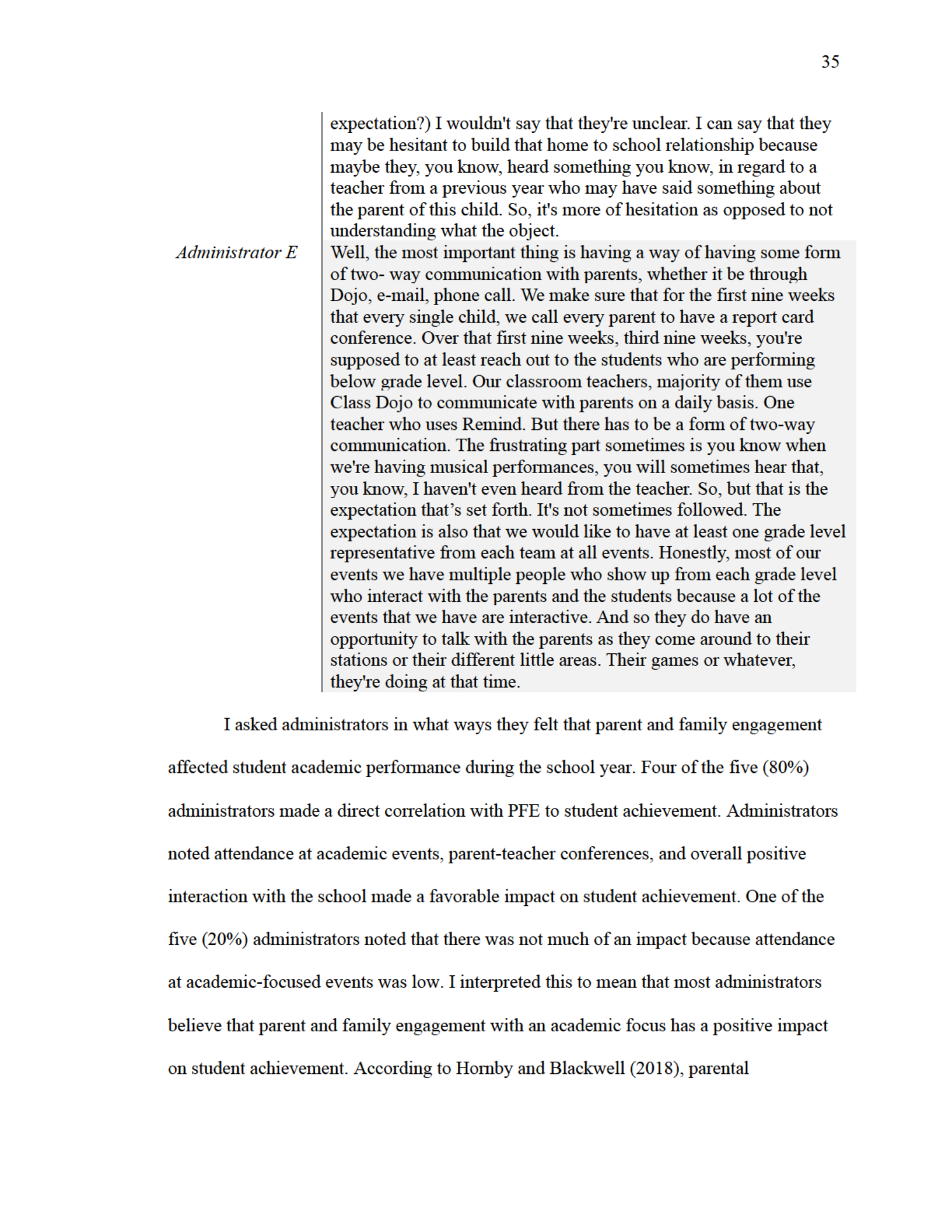
35
expectation?)
I
wouldn't
say
that
they're
unclear.
I
can
say
that
they
may
be
hesitant
to
build
that
home
to
school
relationship
because
maybe
they,
you
know,
heard
something
you
know,
in
regard
to
a
teacher
from
a
previous
year
who
may
have
said
something
about
the
parent
of
this
child.
So,
it's
more
of
hesitation
as
opposed
to
not
understanding
what
the
object.
Administrator
E
Well,
the
most
important
thing
is
having a
way
of
having
some
form
of
two-
way
communication
with
parents,
whether
it
be
through
Dojo,
e-mail,
phone
call.
We
make
sure
that
for
the
first
nine
weeks
that
every
single
child,
we
call
every
parent
to
have
a
report
card
conference.
Over
that
first
nine
weeks,
third
nine
weeks,
you're
supposed
to
at
least
reach
out
to
the
students
who
are
performing
below
grade
level.
Our
classroom
teachers,
majority
of
them
use
Class
Dojo
to
communicate
with
parents
on
a
daily
basis.
One
teacher
who
uses
Remind.
But
there
has
to
be a
form
of
two-way
communication.
The
frustrating
part
sometimes
is
you
know
when
we're
having
musical
performances,
you
will
sometimes
hear
that,
you
know,
I
haven't
even
heard
from
the
teacher.
So,
but
that
is
the
expectation
that’s set
forth.
It's
not
sometimes
followed.
The
expectation
is
also
that
we
would
like to have
at
least
one
grade
level
representative
from
each
team
at
all
events.
Honestly,
most
of
our
events
we
have
multiple
people
who
show
up from
each
grade
level
who
interact
with
the
parents
and
the
students
because
a
lot
of
the
events
that
we
have
are
interactive.
And
so
they
do have an
opportunity
to talk
with
the
parents
as
they
come
around
to
their
stations
or
their
different
little
areas.
Their
games
or
whatever,
they're
doing
at
that
time.
Iasked
administrators
in
what
ways
they
felt
that
parent
and
family
engagement
affected
student
academic
performance
during
the
school
year.
Four
of
the
five
(80%)
administrators
made
a
direct
correlation
with
PFE
to
student
achievement.
Administrators
noted
attendance
at
academic
events,
parent-teacher
conferences,
and
overall
positive
interaction
with
the
school
made
a favorable
impact
on
student
achievement.
One
ofthe
five
(20%)
administrators
noted
that
there
was
not
much
of
an
impact
because
attendance
at
academic-focused
events
was
low.
I
interpreted
this
to
mean
that
most
administrators
believe
that
parent
and
family
engagement
with an
academic
focus
has
a
positive
impact
on
student
achievement.
According
to
Hommby
and
Blackwell
(2018),
parental
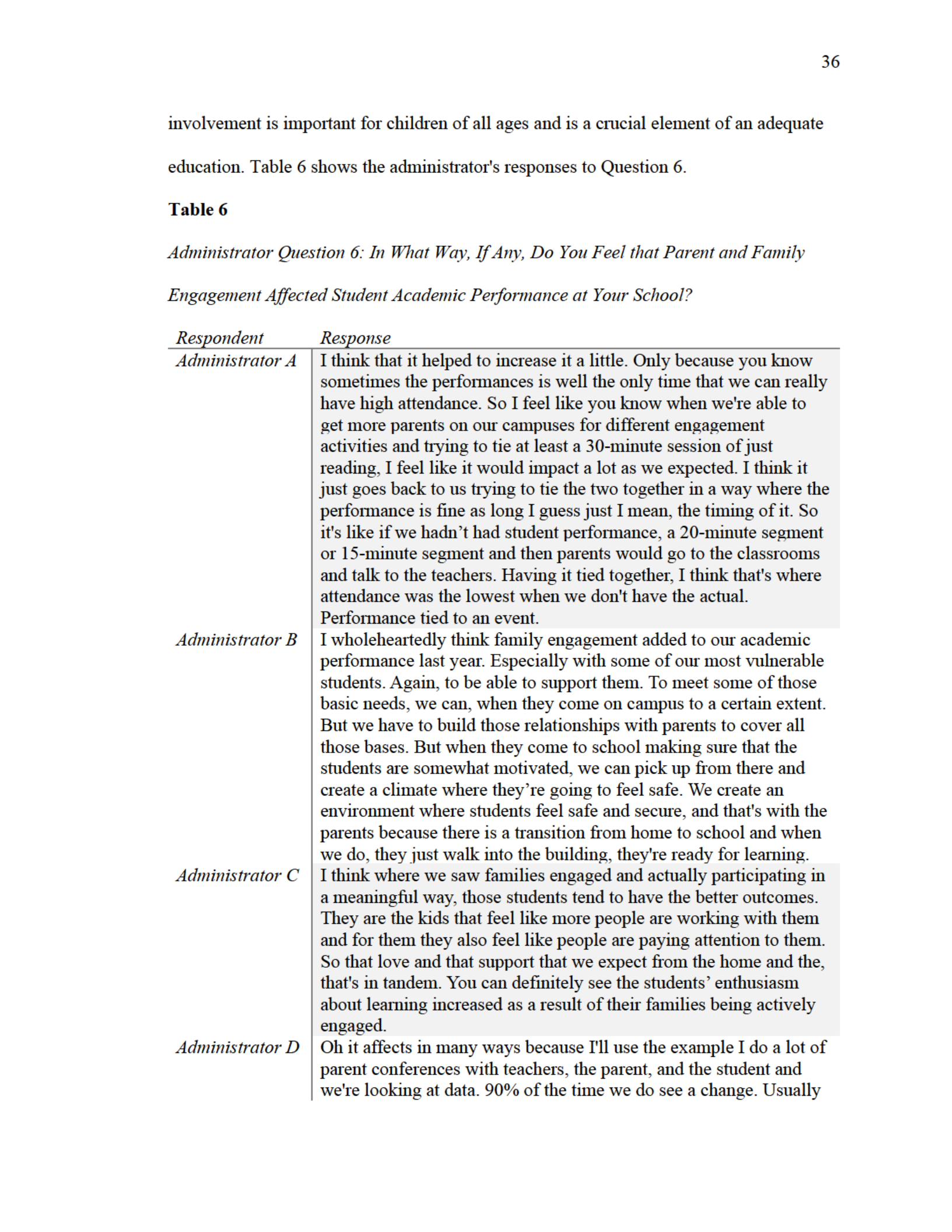
36
involvement
is
important
for
children
of
all
ages
and
is
a
crucial
element
of an
adequate
education.
Table
6
shows
the
administrator's
responses
to
Question
6.
Table
6
Administrator
Question
6:
In
What
Way,
If
Any,
Do
You
Feel
that
Parent
and
Family
Engagement
Affected
Student
Academic
Performance
at
Your
School?
Respondent
Response
Administrator
A
1
think
that
it
helped
to
increase
it
a
little.
Only
because
you
know
sometimes
the
performances
is
well
the
only
time
that
we
can
really
have
high
attendance.
So
I
feel
like
you
know
when
we're
able
to
get
more
parents
on
our
campuses
for
different
engagement
activities
and
trying
to
tie
at
least
a
30-minute
session
of
just
reading,
I
feel like
it
would
impact
a
lot
as
we
expected.
I
think
it
just
goes
back
to
us
trying
to
tie
the
two
together
in
a
way
where
the
performance
is
fine
as
long
I
guess
just
I
mean,
the
timing
of
it.
So
it's
like
if
we
hadn’t
had
student
performance,
a 20-minute
segment
or
15-minute
segment
and
then
parents
would
go
to
the
classrooms
and
talk
to
the
teachers.
Having
it
tied
together,
I
think
that's
where
attendance
was
the
lowest
when
we
don't
have
the
actual.
Performance
tied
to
an
event.
Administrator
B
I
wholeheartedly
think
family
engagement
added
to
our
academic
performance
last
year.
Especially
with
some
of
our
most
vulnerable
students.
Again,
to
be
able
to
support
them.
To
meet
some
of
those
basic
needs,
we
can,
when
they
come
on
campus
to
a
certain
extent.
But
we
have
to
build
those
relationships
with
parents
to cover
all
those
bases.
But
when
they
come
to
school
making
sure
that
the
students
are
somewhat
motivated,
we
can
pick
up
from
there
and
create
a
climate
where
they’re
going
to feel
safe.
We
create
an
environment
where
students
feel
safe
and
secure,
and
that's
with
the
parents
because
there
is
a
transition
from
home
to
school
and
when
we
do,
they
just
walk
into
the
building,
they're
ready
for
learning.
Administrator
C
I
think
where
we
saw
families
engaged
and
actually
participating
in
a meaningful way,
those
students
tend
to
have
the
better
outcomes.
They
are
the
kids
that feel like
more
people
are
working
with
them
and
for
them
they
also
feel
like
people
are
paying
attention
to
them.
So
that
love
and
that
support
that
we
expect
from
the
home
andthe,
that's
in
tandem.
You
can
definitely
see
the
students’
enthusiasm
about
learning
increased
as
a
result of
their
families
being
actively
engaged.
Administrator
D
Oh
it
affects
in
many
ways
because
I'll
use
the
example
I
do
a
lot
of
parent
conferences
with
teachers,
the
parent,
and
the
student
and
we're
looking
at
data.
90%
of
the
time
we
do
see
a
change.
Usually
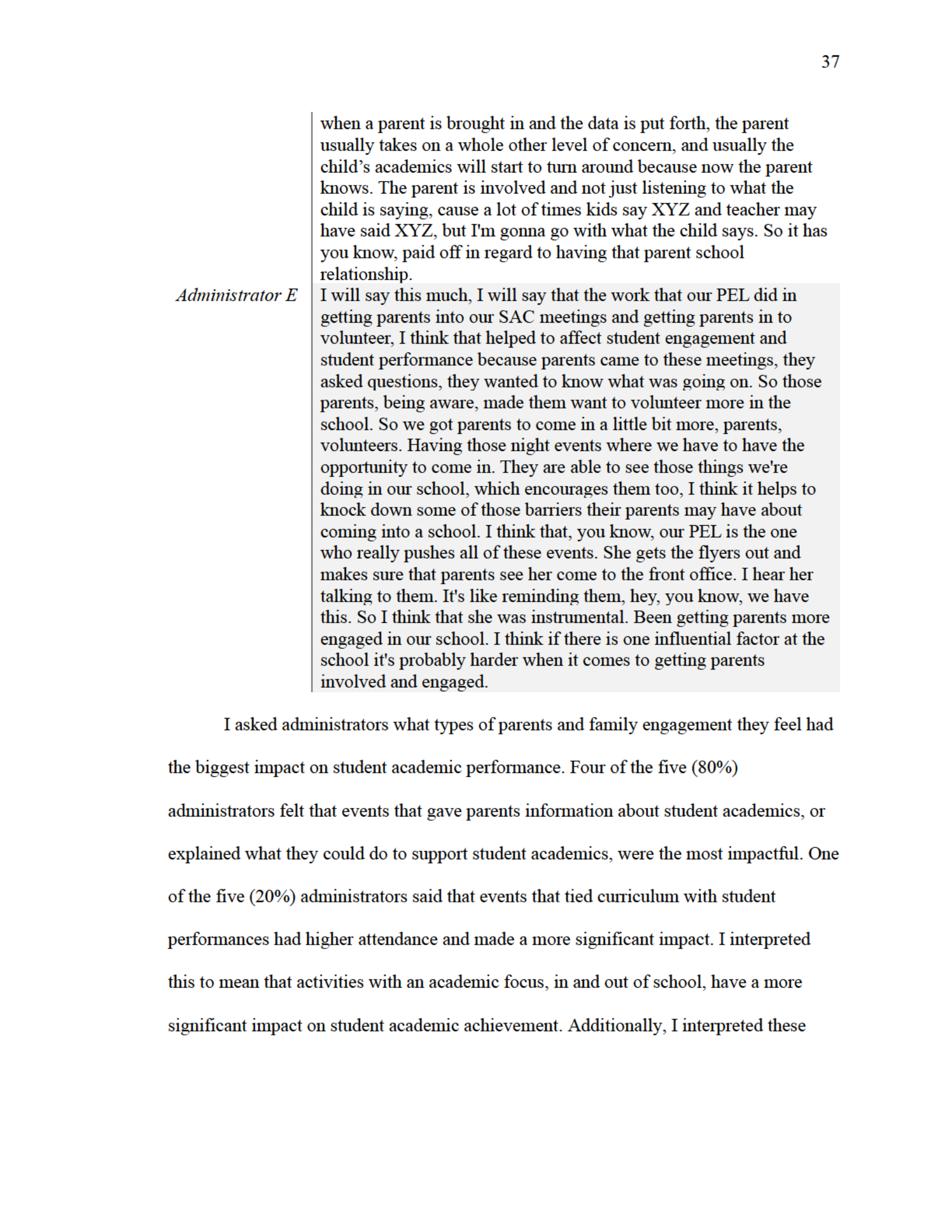
37
when
a
parent
is
brought
in
and
the
data
is
put
forth,
the
parent
usually
takes
on
a
whole
other
level
of
concern,
and
usually
the
child’s
academics
will
start
to
turn
around
because
now
the
parent
knows.
The
parent
is
involved
and
not
just
listening
to
what
the
child
is
saying,
cause
a
lot
of
times
kids
say
XYZ
and
teacher
may
have
said
XYZ,
but
I'm
gonna
go
with
what
the
child
says.
So
it
has
you
know,
paid
off
in
regard
to having
that
parent
school
relationship.
Administrator
E_ I
will
say
this
much,
I
will
say
that
the
work
that
our
PEL
did
in
getting
parents
into
our
SAC
meetings
and
getting
parents
in
to
volunteer,
I
think
that
helped
to affect
student
engagement
and
student
performance
because
parents
came
to
these
meetings,
they
asked
questions,
they
wanted
to
know
what
was
going
on.
So
those
parents,
being
aware,
made
them
want
to
volunteer
more
in
the
school.
So
we
got
parents
to
come
in
little
bit
more,
parents,
volunteers.
Having
those
night events
where
we
have
to
have
the
opportunity
to
come
in.
They
are
able
to
see
those
things
we're
doing
in
our
school,
which
encourages
them
too,
I
think
it
helps
to
knock
down
some
of
those
barriers
their
parents
may
have
about
coming
into
a
school.
I
think
that,
you
know,
our
PEL
is
the
one
who
really
pushes
all
of
these
events.
She
gets
the
flyers
out
and
inakes
sure
that
parents see
her
come
to
the
front
office.
I
hear
her
talking
to
them.
It's
like
reminding
them,
hey,
you
know,
we
have
this.
So
I
think
that
she
was
instrumental.
Been
getting
parents
more
engaged
in
our
school.
I
think
if
there
is
one
influential
factor
at
the
school
it's
probably
harder
when
it
comes
to
getting
parents
involved
and
engaged.
Iasked
administrators
what
types
of
parents
and
family
engagement
they
feel
had
the
biggest
impact
on
student
academic
performance.
Four
of
the
five
(80%)
administrators
felt
that
events
that
gave
parents
information
about
student
academics,
or
explained
what
they
could
do
to
support
student
academics,
were
the
most
impactful.
One
of
the
five
(20%)
administrators
said
that
events
that tied
curriculum
with
student
performances
had
higher
attendance
and
made
a
more
significant
impact.
I
interpreted
this
to
mean
that
activities
with
an
academic
focus,
in
and
out
of
school,
have
a
more
significant
impact
on
student
academic
achievement.
Additionally,
I
interpreted
these
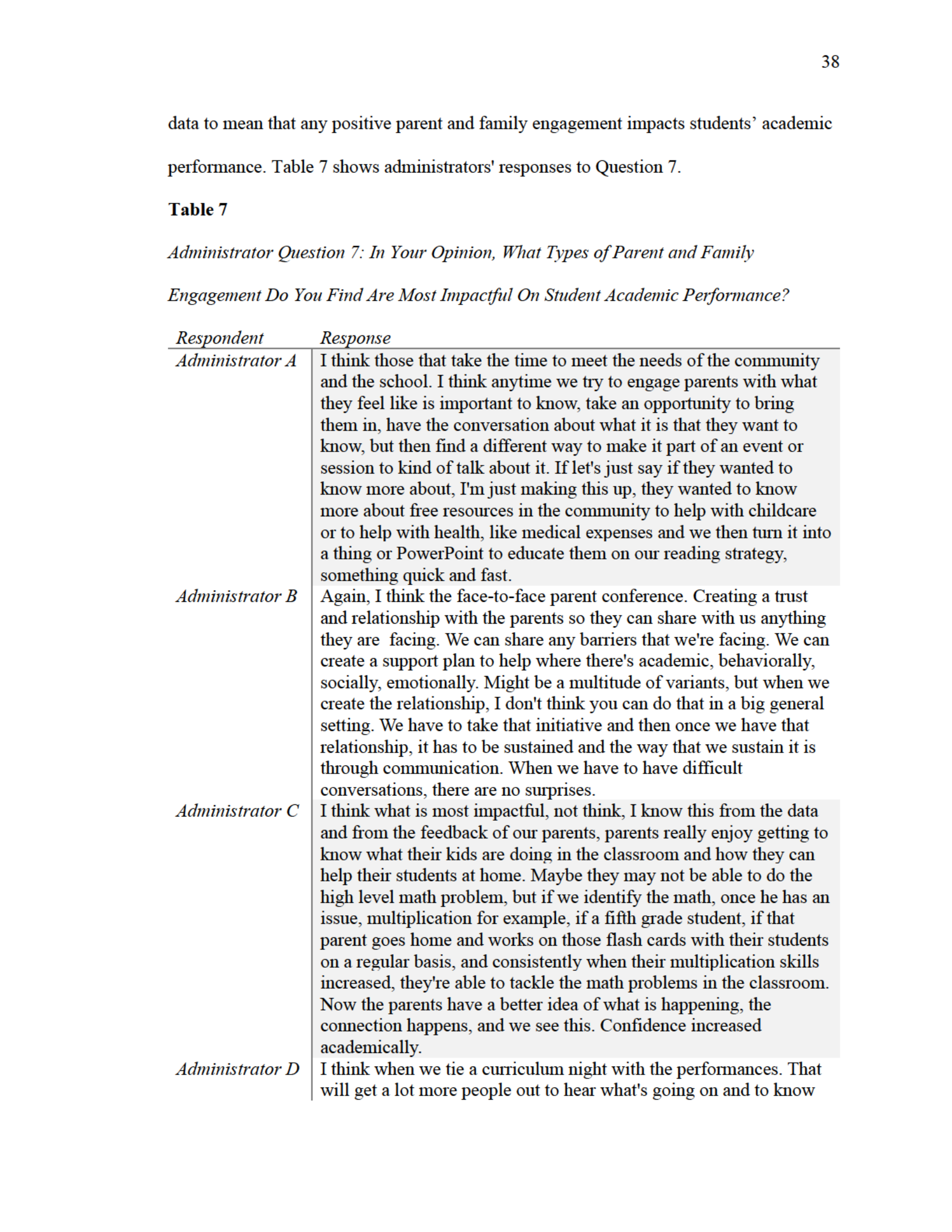
38
data
to
mean
that
any
positive
parent
and
family
engagement
impacts
students’
academic
performance.
Table
7
shows
administrators'
responses
to
Question
7.
Table
7
Administrator
Question
7:
In
Your
Opinion,
What
Types
of
Parent
and
Family
Engagement
Do
You
Find
Are
Most
Impactful
On
Student
Academic
Performance?
Respondent
Response
Administrator
A
Administrator
B
Administrator
C
Administrator
D
I
think
those
that
take
the
time
to
meet
the
needs
of
the
community
and
the
school.
I
think
anytime
we
try
to
engage
parents
with
what
they
feel like
is
important
to
know,
take
an
opportunity
to
bring
them
in,
have
the
conversation
about
what
it
is
that
they
want
to
know,
but
then
find
a
different
way
to
make
it
part
of an
event
or
session
to
kind
of
talk
about
it.
If
let's
just
say
if
they
wanted
to
know
more
about,
I'm
just
making
this
up,
they
wanted
to
know
more
about
free
resources
in
the
community
to
help
with
childcare
or
to
help
with
health,
like
medical
expenses
and
we
then
turn
it
into
a
thing or
PowerPoint
to
educate
them on
our
reading
strategy,
something
quick
and
fast.
Again,
I
think
the
face-to-face
parent
conference.
Creating
a
trust
and
relationship
with
the
parents
so
they
can
share
with
us anything
they
are
facing.
We
can
share
any
barriers
that
we're
facing.
We
can
create
a
support
plan
to
help
where
there's
academic,
behaviorally,
socially,
emotionally.
Might
be
a
multitude
of
variants,
but
when
we
create
the
relationship,
I
don't
think
you
can
do
that in
a
big
general
setting.
We
have
to
take
that
initiative
and
then
once
we
have
that
relationship,
it
has
to
be
sustained
and
the
way
that
we
sustain
it
is
through
communication.
When
we
have
to
have
difficult
conversations,
there
are
no
surprises.
I
think what
is
most
impactful,
not
think,
I
know
this
from
the
data
and
from
the
feedback
of
our
parents,
parents
really
enjoy
getting
to
know
what
their
kids
are
doing
in
the
classroom
and
how
they
can
help
their
students
at
home.
Maybe
they
may
not
be
able
to
do
the
high
level
math
problem,
but
if
we
identify
the
math,
once
he
has
an
issue,
multiplication
for
example,
if
a
fifth
grade
student,
if
that
parent
goes
home
and
works
on
those
flash
cards
with
their
students
on
a
regular
basis,
and
consistently
when
their
multiplication
skills
increased,
they're
able
to tackle
the
math
problems
in
the
classroom.
Now
the
parents
have
a
better
idea
of
what
is
happening,
the
connection happens,
and
we
see
this.
Confidence
increased
academically.
I
think
when
we
tie
a
curriculum
night
with
the
performances.
That
will
get
a
lot
more
people
out
to
hear
what's
going
on
and
to
know
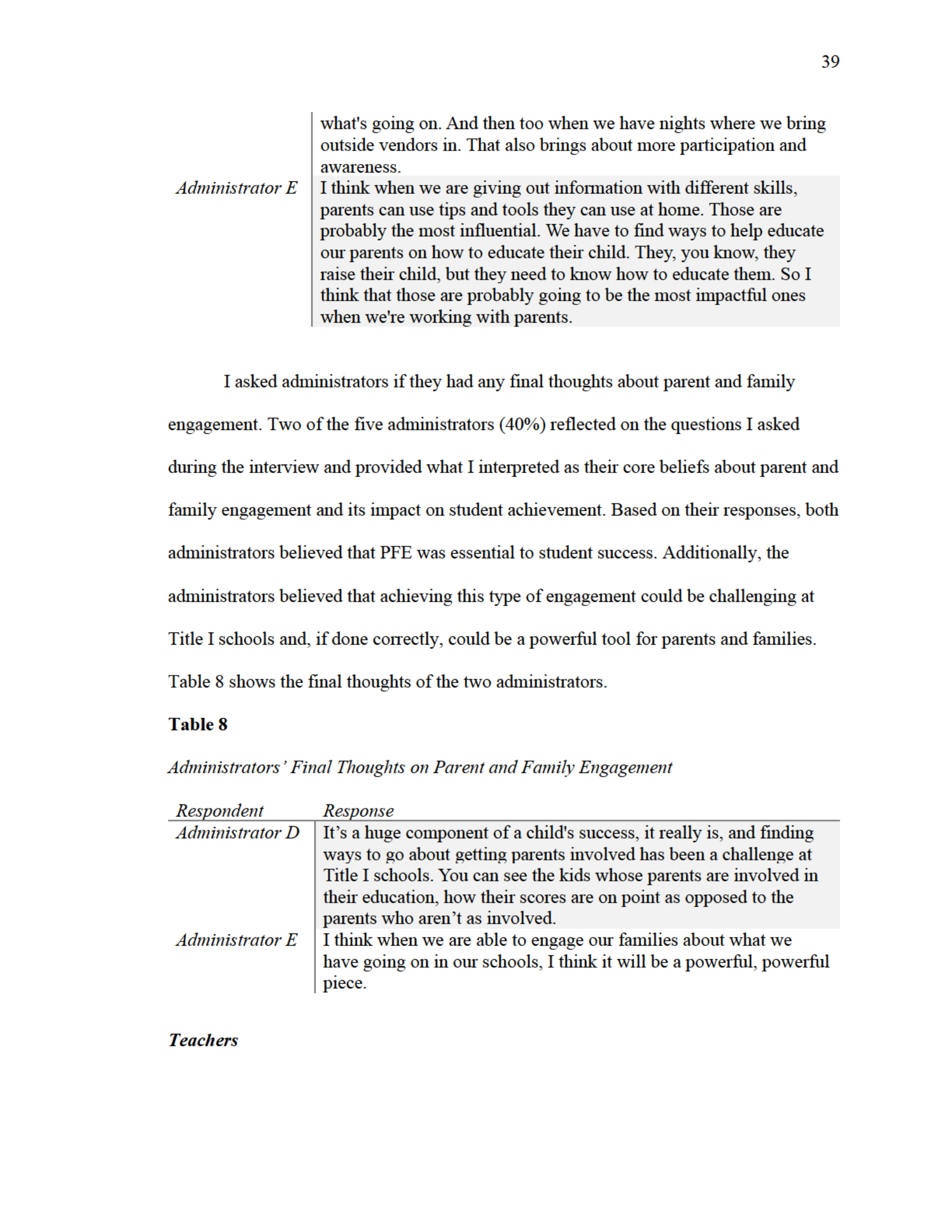
39
what's
going
on.
And
then
too
when
we
have
nights
where
we
bring
outside
vendors
in.
That
also
brings
about
more
participation
and
awareness.
Administrator
E_
think
when
we
are
giving out
information
with
different
skills,
parents
can
use
tips
and
tools
they
can
use
at
home. Those
are
probably
the
most
influential.
We
have
to
find
ways
to
help
educate
our
parents
on
how
to
educate
their
child.
They,
you
know,
they
raise
their
child,
but
they
need
to
know
how
to
educate
them.
So
I
think
that
those
are
probably
going
to
be
the
most
impactful
ones
when
we're
working
with
parents.
I
asked
administrators
if
they
had
any
final
thoughts
about
parent
and
family
engagement.
Two
of
the
five
administrators
(40%)
reflected
on
the
questions
I
asked
during
the
interview
and
provided
what
I
interpreted
as
their
core
beliefs
about
parent
and
family
engagement
and
its
impact
on
student
achievement.
Based
on
their
responses,
both
administrators
believed
that
PFE
was
essential
to
student
success.
Additionally,
the
administrators
believed
that
achieving
this
type
of
engagement
could
be
challenging
at
Title
I
schools
and,
if
done
correctly, could
be
a
powerful
tool
for
parents
and
families.
Table
8 shows
the
final
thoughts
of
the
two
administrators.
Table
8
Administrators’
Final
Thoughts
on
Parent
and
Family
Engagement
Respondent
Response
Administrator
D
It’s
a
huge
component
of
a
child's
success,
it
really
is,
and
finding
ways
to
go
about
getting
parents
involved
has
been
a
challenge
at
Title
I
schools.
You
can
see
the
kids
whose
parents
are
involved
in
their
education,
how
their
scores
are
on
point
as
opposed
to
the
parents
who
aren’t
as
involved.
Administrator
E
1
think
when
we
are
able
to
engage
our
families
about
what
we
have
going
on
in
our
schools,
I
think
it
will
be
a
powerful,
powerful
piece.
Teachers
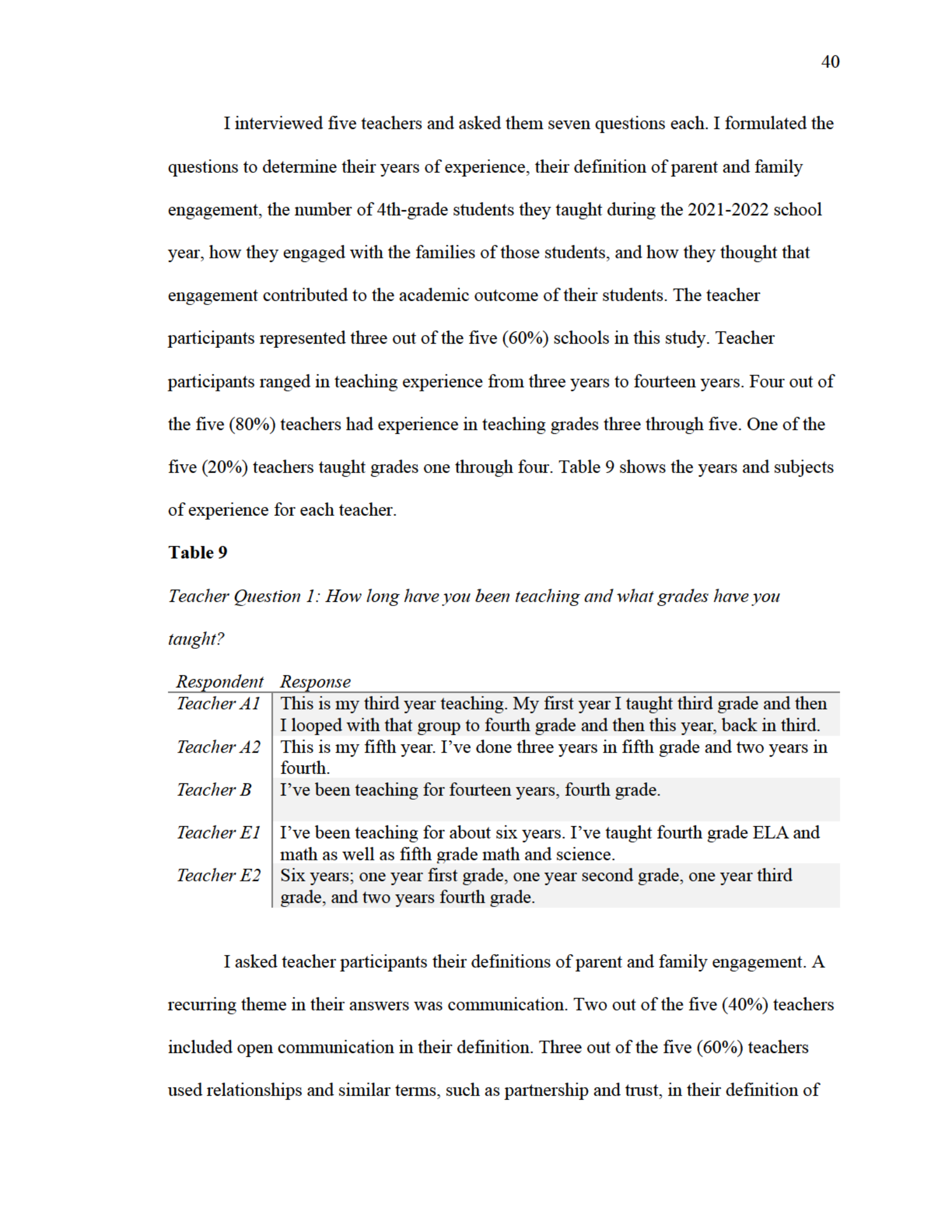
40
l
interviewed
five
teachers
and
asked
them
seven
questions
each.
I
formulated
the
questions
to
determine
their
years
of
experience,
their
definition
of
parent
and
family
engagement,
the
number
of
4th-grade
students
they
taught
during
the
2021-2022
school
year,
how
they
engaged
with
the
families
of
those
students,
and
how
they
thought
that
engagement
contributed
to
the
academic
outcome
of
their
students.
The
teacher
participants
represented
three
out
of
the
five
(60%)
schools
in
this
study.
Teacher
participants
ranged
in
teaching
experience
from
three
years
to
fourteen
years.
Four
out
of
the
five
(80%)
teachers
had
experience
in
teaching
grades
three
through
five.
One
of
the
five
(20%)
teachers
taught
grades
one
through
four.
Table
9
shows
the
years
and
subjects
of
experience
for
each
teacher.
Table
9
Teacher
Question
1:
How
long
have
you
been
teaching
and
what
grades
have
you
taught?
Respondent
Response
Teacher
Al
This
is
my
third
year
teaching.
My
first
year
I
taught
third
grade
and
then
I
looped
with
that
group
to
fourth
grade
and
then
this
year,
back
in
third.
Teacher
A2
This
is
my
fifth
year.
I’ve
done
three
years
in
fifth
grade
and two
years
in
fourth.
Teacher
B
I’ve
been
teaching
for
fourteen
years,
fourth
grade.
Teacher
E1
I’ve
been
teaching
for
about
six
years.
I’ve
taught
fourth
grade
ELA
and
math
as
well
as
fifth
grade
math
and
science.
Teacher
E2
Six
years;
one
year
first
grade,
one
year
second
grade,
one
year
third
grade,
and
two
years
fourth
grade.
Tasked
teacher
participants
their
definitions
of
parent
and
family
engagement.
A
recurring
theme
in
their
answers
was
communication.
Two
out
of
the
five
(40%)
teachers
included
open
communication
in
their
definition.
Three
out
of
the
five
(60%)
teachers
used
relationships
and
similar
terms,
such
as
partnership
and
trust,
in
their
definition
of
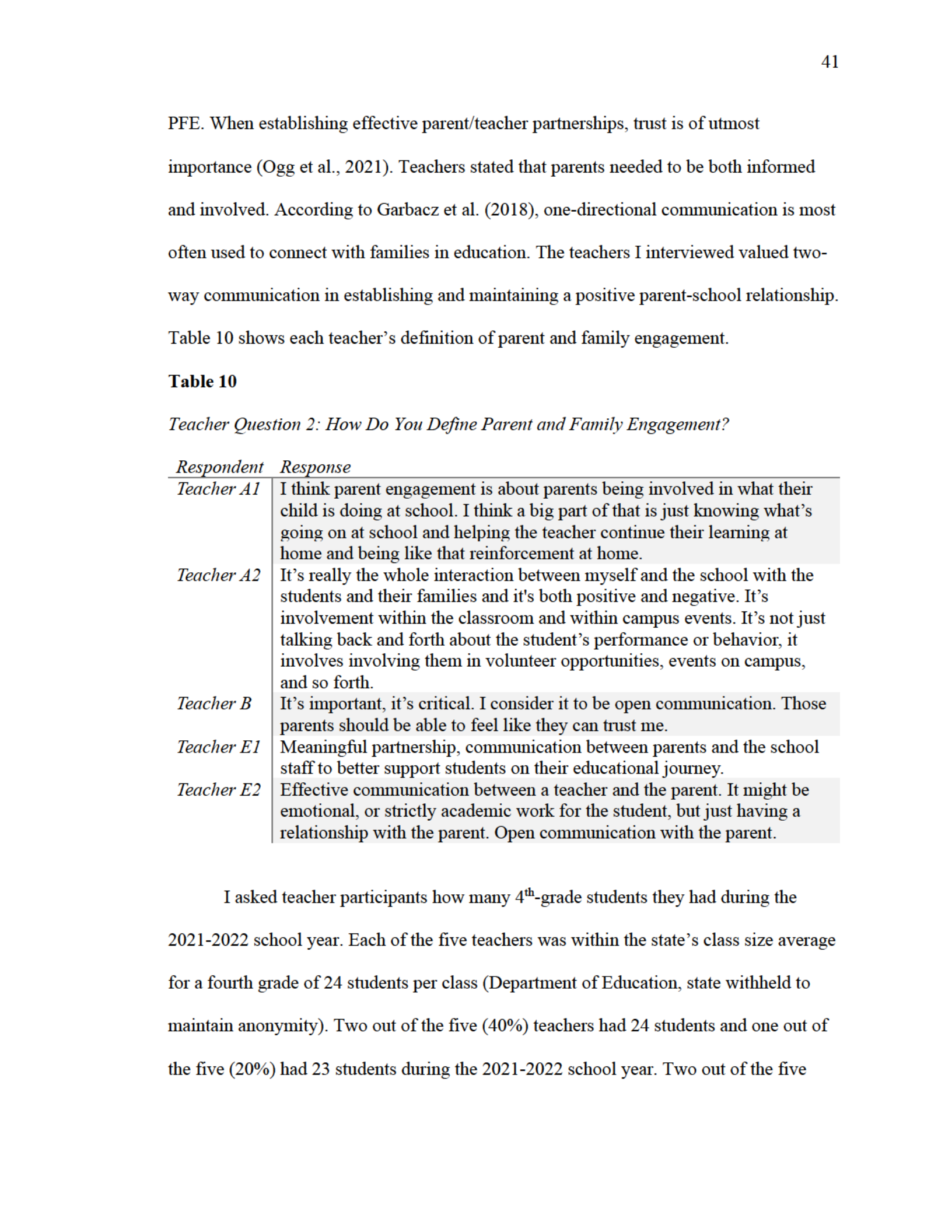
4l
PFE.
When
establishing
effective
parent/teacher
partnerships,
trust
is
of
utmost
importance
(Ogg
et
al.,
2021).
Teachers
stated
that
parents
needed
to
be
both
informed
and
involved.
According
to
Garbacz
et
al.
(2018),
one-directional
communication
is
most
often
used
to
connect
with
families in
education.
The
teachers
I
interviewed
valued
two-
way
communication
in
establishing
and
maintaining
a
positive
parent-school
relationship.
Table
10
shows
each
teacher’s
definition
of
parent
and
family
engagement.
Table
10
Teacher
Question
2:
How
Do
You
Define
Parent
and
Family
Engagement?
Respondent
Response
Teacher
Al
1
think
parent
engagement
is
about
parents
being
involved
in
what
their
child
is
doing
at
school.
I
think
a
big
part
of
that
is
just
knowing
what’s
going
on
at
school
and
helping
the
teacher
continue
their
learning
at
home
and
being
like
that
reinforcement
at
home.
Teacher
A2
It’s
really
the
whole
interaction
between
myself
and
the
school
with
the
students
and
their
families
and
it's
both
positive
and
negative.
It’s
involvement
within
the
classroom
and
within
campus
events.
It’s
not
just
talking
back
and
forth
about
the
student’s
performance
or
behavior,
it
involves
involving
them
in
volunteer
opportunities,
events
on
campus,
and
so
forth.
Teacher
B
It’s
important,
it’s
critical.
I
consider
it
to
be open
communication.
Those
parents
should
be
able
to feel like
they
can
trust
me.
Teacher
E1
Meaningful
partnership,
communication
between
parents
and
the
school
staff
to
better
support
students
on
their
educational
journey.
Teacher
E2
Effective
communication
between
teacher
and
the
parent.
It
might
be
emotional,
or
strictly
academic
work
for
the
student,
but
just
having a
relationship
with
the
parent.
Open
communication
with
the
parent.
asked
teacher
participants
how
many
4"8-grade
students
they
had
during
the
2021-2022
school
year.
Each
of
the
five
teachers
was
within
the
state’s
class size
average
for
a
fourth
grade
of
24
students
per
class
(Department
of
Education,
state
withheld
to
maintain
anonymity).
Two
out
of
the
five
(40%)
teachers
had
24
students
and
one
out
of
the
five
(20%)
had
23
students
during
the
2021-2022
school
year.
Two
out
of
the
five

42
(40%) teachers had 40 total students each between two classes, with an average of 20
students in each class. Those two teachers worked at a school that utilized a
departmentalized model for grades four and five. In this learning model, each teacher is
responsible for a set of subjects (ELA/social studies, math/science), and students rotate
between two teachers. According to Chan et al. (2009), departmentalization in elementary
schools is opposed by many. Still, it is advantageous in bridging student experiences
from elementary to middle school as they learn to transition out of the traditional school
self-contained model. Table 11 shows the number of 4th-grade students each teacher
taught during the 2021-2022 school year.
Table 11
Teacher Question 3: How Many 4th Grade Students Did You Have During the 2021-2022
School Year?
Respondent
Teacher A1
Teacher A2
Teacher B
Teacher E1
Teacher E2
Response
24
24
23
40
40
I asked the teachers of those students how many of their parents they engaged
with (phone, email, F2F) at least once a quarter and what some things they discussed.
Two of the five (40%) teachers attempted to reach every parent every quarter. The
number of actual parents reached by teachers each quarter ranged from 38% to 88%.
Teacher E2 noted that although they were able to reach 35 out of 40 (88%) parents, only
7 (20%) were consistent with communication with two or more connections. This
inability to reach a large percentage of parents is often due to parents who are unable or
unwilling to be involved in their child’s education. According to Garbacz et al. (2016),
despite many ways to establish family-school connections, some parents are just hard to

4B
reach
because
of
a
lack
of
will
or lack
of
want
to
engage
with
the
school.
The
topics
of
discussion
among
all
five
teachers
included
academics,
behavior,
and
upcoming
events.
Teacher
A1
noted
that
21
of 24
(88%)
students
were
not
native
English
speakers
and
that
this
was
a
barrier
to
effective
parent
communication
throughout
the
year.
The
district
under
study
reported
170
different
languages
spoken
by more
than
209,000
students.
The
language
barrier
reported
by
Teacher
Al
was
likely
not
an
anomaly
in
the
district
of
study
or
across
the
United
States.
McKenna
and
Millen
(2013)
wrote
that
the
current
teacher
force
in
the
United
States
does
not
reflect
the
gender,
race,
and
ethnicity
makeup
of
public
schools.
Therefore,
to
successfully
teach
and
develop
student
potential,
teachers
must
have
a
“flexible,
culturally
and
socially
sensitive
framework
for
parent
engagement.”
(p.15,
2013).
Table
12
shows
the
teachers’
responses
to
Question
4.
Table
12
Teacher
Question
4:
Of
Those
Students,
How
Many
of
Their
Parents
Did
You
Engage
With
(Phone,
Email,
F2F)
at
Least
Once
Every
Quarter?
What
Are
Some
of
the
Things
That
You
Talked
About?
Respondent
Response
Teacher
Al
Out
of
24,
maybe
like
18.
A
lot
of
our
conversation
would
be
like
about
student
MTSS
progress
and
a
lot
of
it
too
would
be
about
behavior.
The
majority
of
the
conversations
were
through
Class
Dojo.
For
my
second-
language
learners,
most
of
the
time
I
wanted
to
communicate
with
a
parent
that
was
not
on
Class
Dojo,
because
they
have
the
opportunity
to
do
translate
so
that
eliminates
that
barrier.
But
if
it
was
something
more
urgent,
or
if
the
parent
wasn’t
on
Class
Dojo,
I
would
have
to
find
a
translator.
That
would
be
kind
of
difficult, especially
if
the
student
spoke
Creole,
there
was
only
one
person
who
could
translate
or
if
they
speak
Spanish,
there
were
only
3 options so
that
was
a
big
barrier.
Teacher
A2
I
can’t
really
give
you
an
exact
number
or a
roundabout
number.
I
couldn’t
really
say,
but
definitely
it
would
be
above
70%.
Given
the
dynamic
of
our
student
population,
a
lot
of
parents
if
I
send
a
message
in
Class
Dojo
to
them,
they'll
read
it,
but
they
never
respond
back,
so
I
never
really
count
that
as
engagement
because
it's
really
me
just
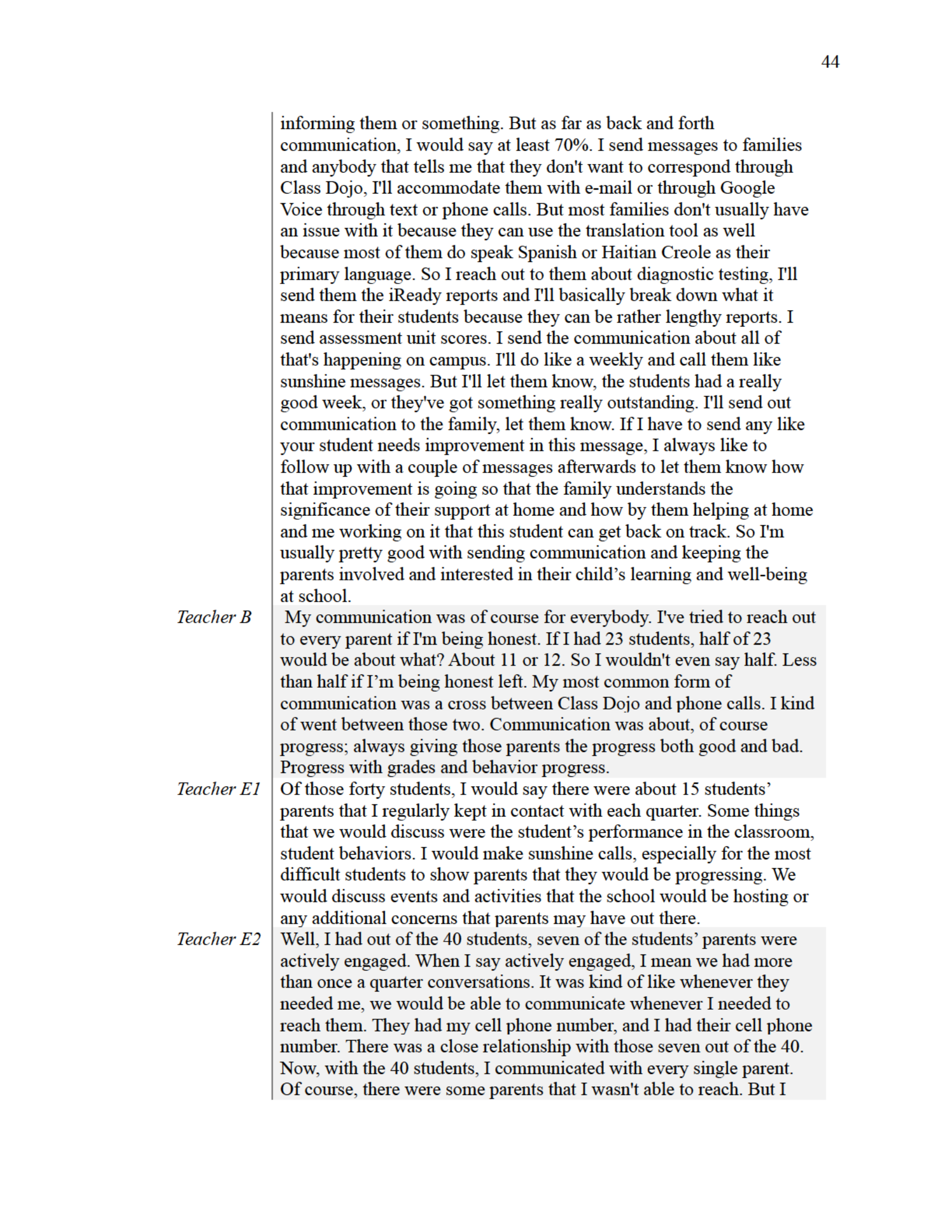
Teacher
B
Teacher
E1
Teacher
E2
informing
them
or
something.
But
as
far
as
back
and
forth
communication,
I
would
say
at
least
70%.
I
send
messages
to
families
and
anybody
that
tells
me
that
they
don't
want
to
correspond
through
Class
Dojo,
I'll
accommodate them
with
e-mail
or
through
Google
Voice
through
text
or
phone
calls.
But
most
families
don't
usually
have
an
issue
with
it
because
they
can
use
the
translation
tool as
well
because
most
of
them
do
speak
Spanish
or Haitian
Creole
as
their
primary
language.
So
I
reach
out
to
them
about
diagnostic
testing,
I'll
send
them
the
iReady
reports
and
I'll
basically
break
down
what
it
means
for
their
students
because
they
can
be
rather
lengthy
reports.
I
send
assessment
unit
scores.
I
send
the
communication
about
all
of
that's
happening
on
campus.
I'll
do
like
a
weekly
and
call
them
like
sunshine
messages.
But
I'll
let
them
know,
the
students
had
a
really
good
week,
or
they've
got
something
really
outstanding.
I'll
send
out
communication
to
the
family,
let
them
know.
IfI
have
to
send
any
like
your
student
needs improvement
in
this
message,
I
always
like
to
follow
up
with
a
couple
of
messages
afterwards
to
let
them
know
how
that
improvement
is
going
so
that
the
family
understands
the
significance
of
their
support
at
home
and
how
by them
helping
at
home
and
me
working
on
it
that
this
student
can
get
back
on
track.
So
I'm
usually
pretty
good
with
sending
communication
and
keeping
the
parents
involved
and
interested
in
their
child’s
learning
and
well-being
at
school.
My
communication
was
of
course
for
everybody.
I've
tried
to
reach
out
to
every
parent
if
I'm
being
honest.
If
I
had
23
students,
half
of 23
would
be
about
what?
About
11
or
12.
So
I
wouldn't
even
say
half.
Less
than
half
if
I’m
being
honest
left.
My
most
common
form
of
communication
was
a
cross
between
Class
Dojo
and
phone
calls.
I
kind
of
went
between
those two.
Communication
was
about,
of
course
progress;
always
giving
those
parents
the
progress
both
good
and
bad.
Progress
with
grades
and
behavior
progress.
Of
those
forty
students,
I
would
say
there
were
about
15
students’
parents
that
I
regularly
kept
in
contact
with
each
quarter.
Some
things
that
we
would
discuss
were
the
student’s
performance
in
the
classroom,
student
behaviors.
I
would
make
sunshine
calls,
especially
for
the
most
difficult
students
to
show
parents
that
they
would
be
progressing.
We
would
discuss
events
and
activities
that
the
school
would
be
hosting
or
any
additional
concerns
that
parents
may
have
out
there.
Well,
I
had
out
of
the
40
students,
seven
of
the
students’
parents
were
actively
engaged.
When
say
actively
engaged,
I
mean
we
had
more
than
once
a
quarter conversations.
It
was
kind
of
like
whenever
they
needed
me,
we
would
be
able
to
communicate
whenever
I
needed
to
reach
them.
They
had
my
cell
phone
number,
and
I
had
their
cell
phone
number. There
was
a
close
relationship
with
those
seven
out
of
the 40.
Now,
with
the
40
students,
I
communicated
with
every
single
parent.
Of
course,
there
were
some
parents
that
I
wasn't
able
to
reach.
But
I

45
still
made
an
effort
to
reach
all
of
my
40
students’
parents
at
least
once
every
four
weeks.
I
would
say
there
were
about
5
that
I
was
never
able
to reach,
not
even
once.
Tasked
teachers
of
those
parents
and
families
if
they
engaged
with
how
many
of
them
attended
school
events
and
which
school
events
they
attended.
Teacher
E2
reported
that
the
seven
parents
who
were
consistent
with
communication
were
also
consistent
in
attendance
at
school
events.
Those
parents
attended
both
academic
events
and
non-
academic
activities,
where
20
out
of
40
(50%)
parents
attended
on
average.
Teacher
El
reported
that
15
(38%)
parents
regularly
attended
academic
events
including
STEM
and
literacy
nights.
Teacher
Al
reported
that six
of
24
(25%)
parents
attended
musical
events,
13-17%
attended
academic
events,
and
about
two
(8%)
parents
attended
virtual
events.
Teachers
reported
that
parents
and
families
attended
school-sponsored
events
at
various
rates.
Teacher
A1
identified
barriers
for
attendance
as
work
schedules,
lack
of
childcare
for
other
children,
and
busy
lives.
In
addition
to
Teacher
A1’s
identified
barriers,
less
engagement
of
underserved
families
is
often
due
to
language
and
cultural
barriers as
perceived
by
the
families
(Kelty
&
Wakabayashi,
2020).
Teacher
A2
saw
50%
of
parents
attend
school
musicals
when
their
student
was
performing
and
10%
of
parents
at
academic
events.
Teacher
B
reported
that parent
participation
increased
towards
the
second
half
of
the
school
year.
Parents
began
engaging
more
in
parent-teacher
conferences
and
other
academic
conversations.
Prior
to
that,
12
out
of
the
24
parents
(50%)
who
maintained
consistent
communication
engaged
in
school-sponsored
activities,
including
field
trips.
[interpreted
these
data
to
mean
that
parents
who
feel
a
connection
to
the
school
attend
events
at
a
more
consistent
rate.
Posey-Maddox
and
Haley-Lock
(2020)
reference
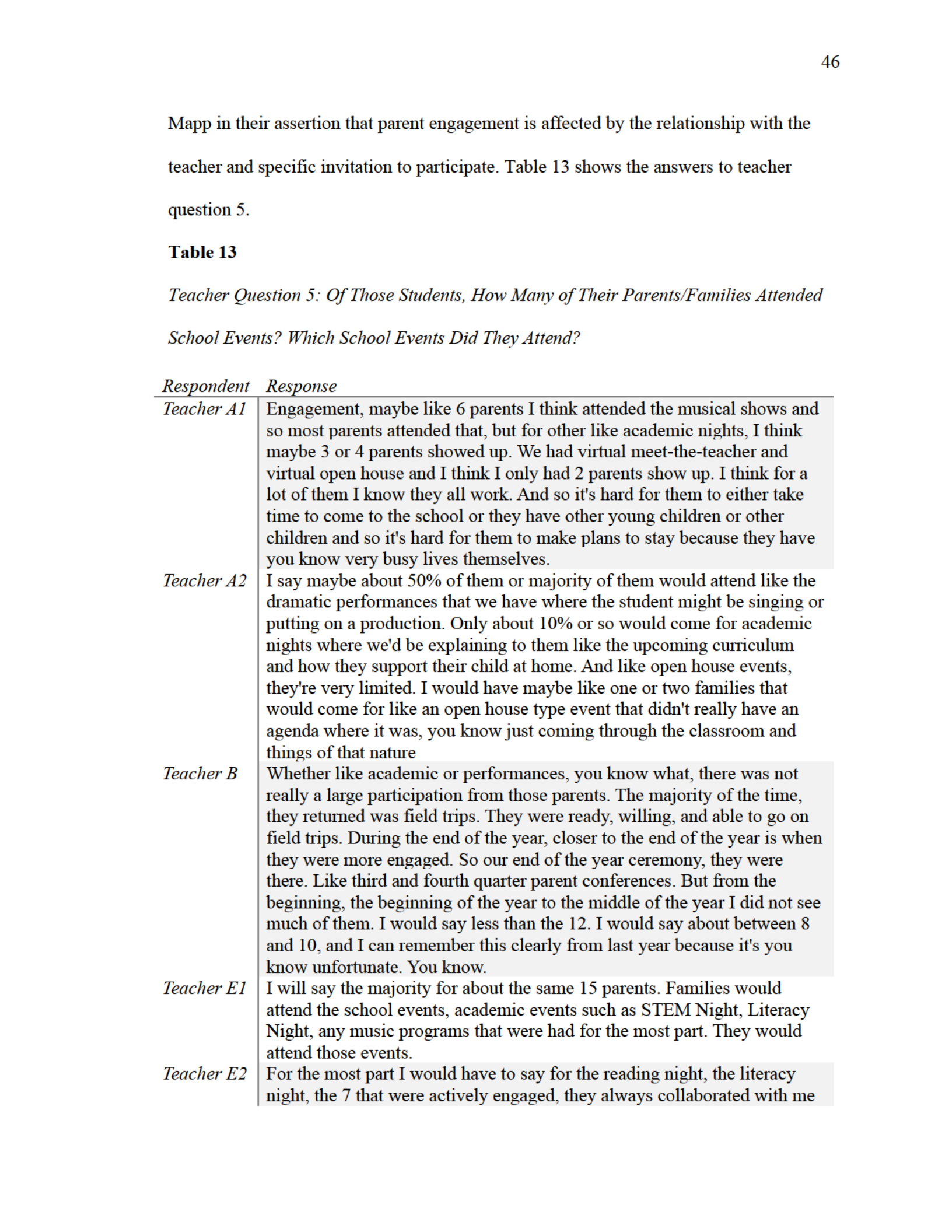
46
Mapp
in
their
assertion
that
parent
engagement
is
affected
by
the
relationship
with
the
teacher
and
specific
invitation
to
participate.
Table
13 shows
the
answers
to
teacher
question
5.
Table
13
Teacher
Question
5:
Of
Those
Students,
How
Many
of
Their
Parents/Families
Attended
School
Events?
Which
School
Events
Did
They
Attend?
Respondent
Teacher
Al
Teacher
A2
Teacher
B
Teacher
E1
Teacher
E2
Response
Engagement,
maybe
like
6
parents
I
think
attended
the
musical
shows
and
so
most
parents
attended
that,
but
for
other
like
academic
nights,
I
think
maybe
3
or
4
parents
showed
up.
We
had
virtual
meet-the-teacher
and
virtual
open
house
and
I
think
I
only
had
2
parents
show
up.
I
think
for
a
lot
of
them
I
know
they
all
work.
And
so
it's
hard
for
them
to either
take
time
to
come
to
the
school
or
they
have
other
young
children
or
other
children
and
so
it's
hard
for
them
to
make
plans
to
stay
because
they
have
you
know
very
busy
lives
themselves.
I
say
maybe
about
50%
of
them
or
majority
of
them
would
attend
like
the
dramatic
performances
that
we
have
where
the
student
might
be
singing or
putting
on
a
production.
Only
about
10%
or so
would
come
for
academic
nights
where
we'd
be
explaining
to
them
like
the
upcoming
curriculum
and
how
they
support
their
child
at
home.
And
like
open
house
events,
they're
very
limited.
I
would
have
maybe
like
one
or
two
families
that
would
come
for
like
an
open
house
type
event
that
didn't
really
have
an
agenda
where
it
was,
you
know
just
coming
through
the
classroom
and
things
of
that
nature
Whether
like
academic
or
performances,
you
know
what,
there
was
not
really
a
large
participation
from
those
parents.
The
majority
of
the
time,
they
returned
was
field
trips.
They
were
ready,
willing,
and
able
to
go on
field
trips.
During
the
end
of
the
year,
closer
to
the
end
of
the
year
is
when
they
were
more
engaged.
So
our
end
of
the
year
ceremony,
they
were
there.
Like
third
and
fourth
quarter
parent
conferences.
But
from
the
beginning,
the
beginning
of
the
year
to
the
middle
of
the
year
I
did not
see
much
of
them.
I
would
say
less
than
the
12.
I
would
say
about
between
8
and
10,
and
I
can
remember
this
clearly
from
last
year
because
it's
you
know
unfortunate.
You
know.
I
will
say
the
majority
for
about
the
same
15
parents.
Families
would
attend the
school
events,
academic
events
such
as
STEM
Night,
Literacy
Night,
any
music
programs
that
were
had
for
the
most
part.
They
would
attend
those
events.
For
the
most
part
I
would
have
to
say
for
the
reading
night,
the
literacy
night,
the
7
that
were
actively
engaged,
they
always
collaborated
with
me
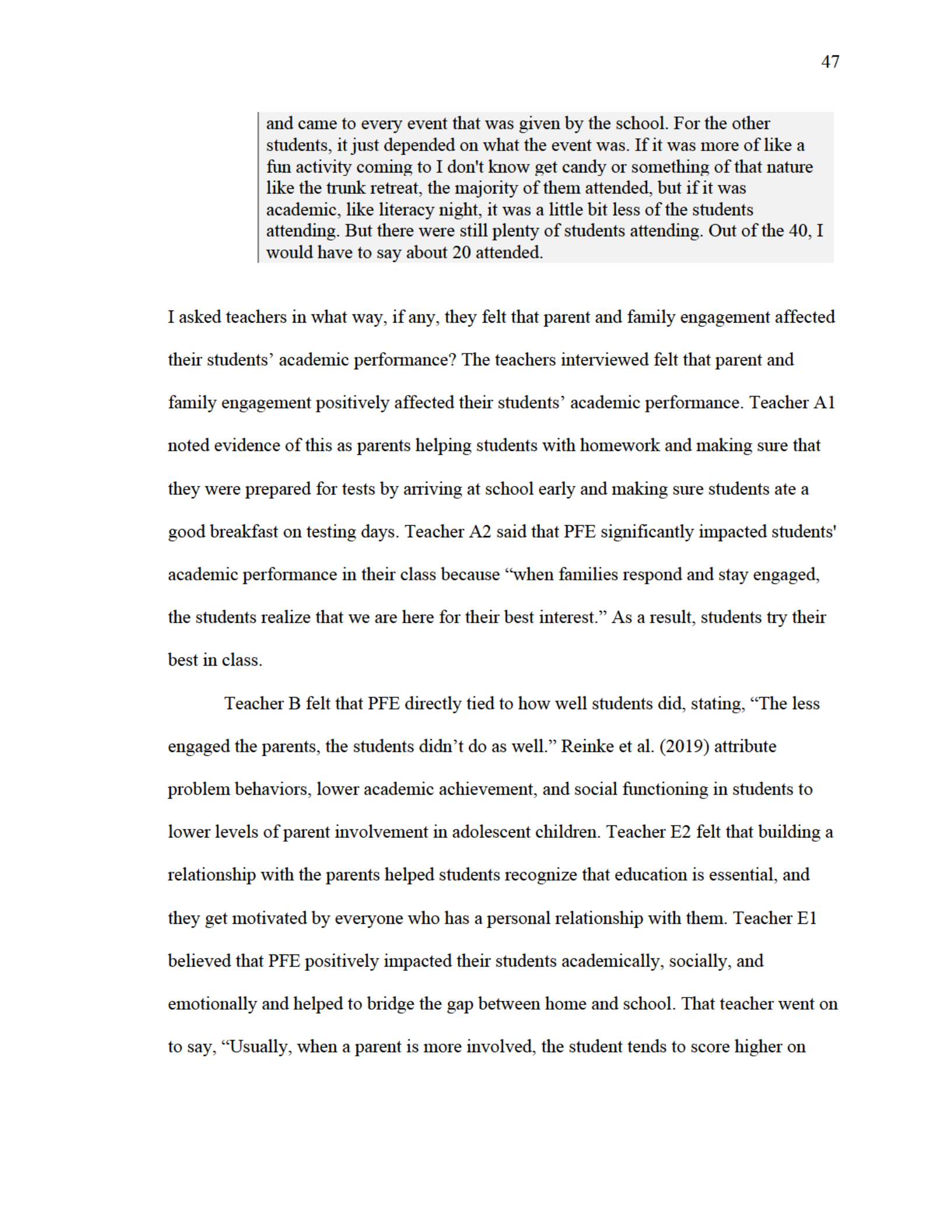
47
and
came
to
every
event
that
was
given
by
the
school.
For
the
other
students,
it
just
depended
on
what
the
event
was.
If
it
was
more
of
like
a
fun
activity
coming
to
I
don't
know
get
candy
or
something
of
that
nature
like
the
trunk
retreat,
the
majority
of
them
attended,
but
if
it
was
academic,
like
literacy
night,
it
was
little
bit
less
of
the
students
attending.
But
there
were
still
plenty
of
students
attending.
Out
of
the
40,
I
would
have
to
say
about
20
attended.
Tasked
teachers
in
what
way,
if
any,
they
felt
that
parent
and
family
engagement
affected
their
students’
academic
performance?
The
teachers
interviewed
felt
that
parent
and
family
engagement
positively
affected
their
students’
academic
performance.
Teacher
Al
noted
evidence
of
this
as
parents
helping
students
with
homework
and
making
sure
that
they
were
prepared
for
tests
by
arriving
at
school
early
and
making
sure
students
ate
a
good
breakfast
on
testing
days.
Teacher
A2
said
that
PFE
significantly
impacted
students'
academic
performance
in
their
class
because
“when
families
respond
and
stay
engaged,
the
students
realize that
we
are
here
for their
best
interest.”
As
a
result,
students
try their
best
in
class.
Teacher
B
felt
that
PFE
directly
tied to
how
well
students
did,
stating,
“The
less
engaged
the
parents,
the
students
didn’t
do
as well.” Reinke
et
al.
(2019)
attribute
problem
behaviors,
lower
academic
achievement,
and
social
functioning
in
students
to
lower
levels
of
parent
involvement
in
adolescent
children.
Teacher
E2
felt
that
building
a
relationship
with
the
parents
helped
students
recognize
that
education
is
essential,
and
they
get
motivated
by
everyone
who
has
a
personal
relationship
with
them.
Teacher
E1
believed
that
PFE
positively
impacted
their
students
academically,
socially,
and
emotionally
and
helped
to
bridge
the
gap
between
home
and
school.
That
teacher
went
on
to
say,
“Usually,
when
a
parent
is
more
involved,
the
student
tends
to
score
higher
on
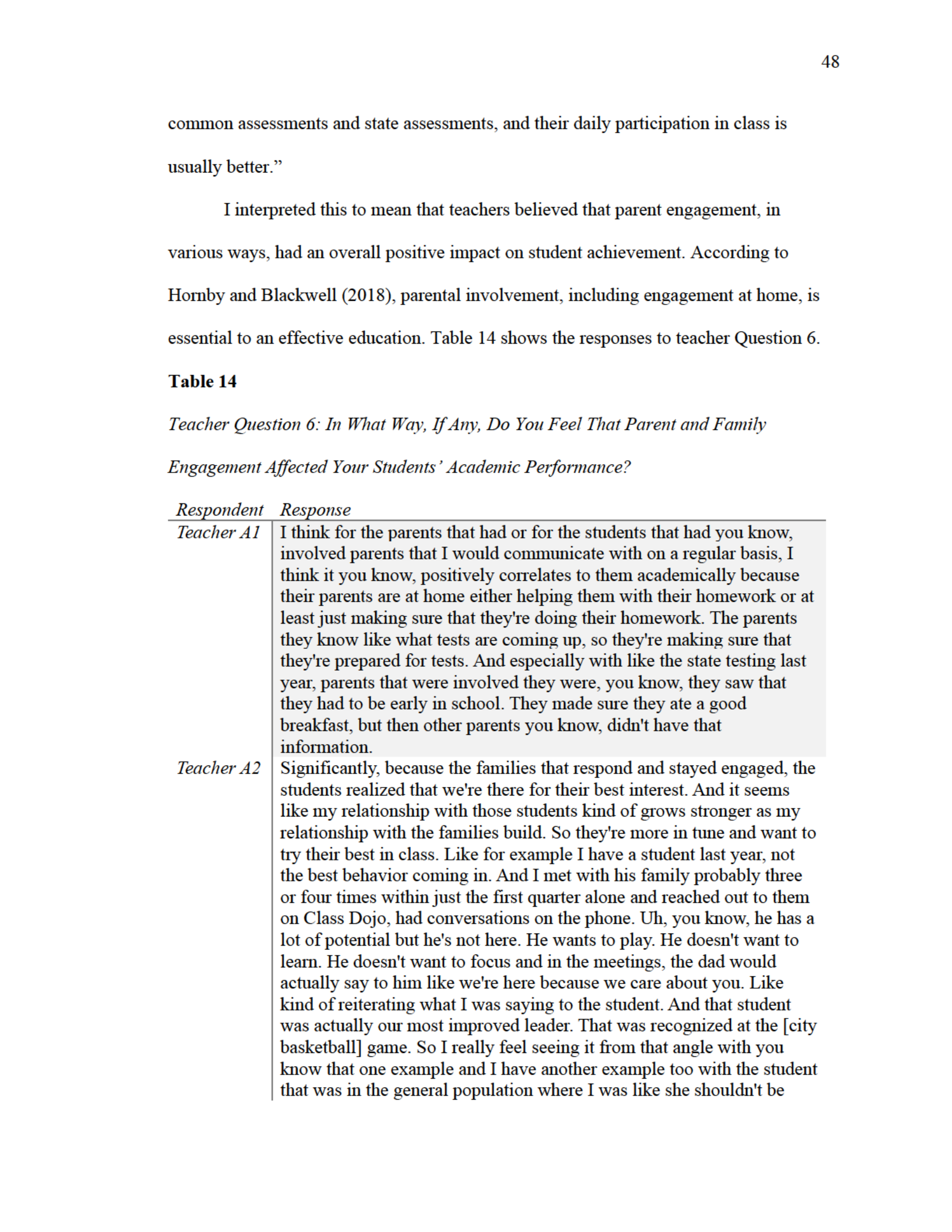
common
assessments
and
state
assessments,
and
their
daily
participation
in
class
is
usually
better.”
I
interpreted
this
to
mean
that
teachers
believed
that
parent
engagement,
in
various
ways,
had
an
overall
positive
impact
on
student
achievement.
According
to
Homby
and
Blackwell
(2018),
parental
involvement,
including
engagement
at
home,
is
essential
to
an
effective
education.
Table
14
shows
the
responses
to
teacher
Question
6.
Table
14
Teacher
Question
6:
In
What
Way,
IfAny,
Do
You
Feel
That
Parent
and
Family
Engagement
Affected Your
Students’
Academic
Performance?
Respondent
Response
Teacher
Al
Teacher
A2
I
think
for
the
parents
that
had
or
for
the
students
that
had
you
know,
involved
parents
that
I
would
communicate
with
on
a
regular
basis,
I
think
it
you
know,
positively
correlates
to
them
academically
because
their
parents
are
at
home
either
helping
them
with
their
homework
or
at
least
just
making
sure
that
they're
doing
their
homework.
The
parents
they
know
like
what
tests
are
coming
up,
so
they're
making
sure
that
they're
prepared
for
tests.
And
especially
with
like
the
state
testing
last
year,
parents
that
were
involved
they
were,
you
know,
they
saw
that
they
had
to
be
early
in
school.
They
made
sure
they
ate
a
good
breakfast,
but
then
other
parents
you
know,
didn't
have
that
information.
Significantly,
because
the
families
that
respond
and
stayed
engaged,
the
students
realized
that
we're
there
for
their
best
interest.
And
it
seems
like
my
relationship
with
those
students
kind of
grows
stronger
as
my
relationship
with
the
families
build.
So
they're
more
in
tune
and
want
to
try
their
best
in
class.
Like
for
example
I
have
a
student
last
year,
not
the
best
behavior
coming
in.
And
I
met
with
his
family
probably
three
or four
times
within
just
the
first
quarter
alone
and
reached
out
to
them
on
Class
Dojo,
had
conversations
on
the
phone.
Uh,
you
know,
he
has
a
lot
of
potential
but
he's
not
here.
He
wants
to
play.
He
doesn't
want
to
learn.
He
doesn't
want
to
focus
and
in
the
meetings,
the
dad
would
actually
say
to
him
like
we're
here
because
we
care
about
you.
Like
kind
of
reiterating
what
I
was
saying
to
the
student.
And
that
student
was
actually
our
most
improved
leader.
That
was
recognized
at
the
[city
basketball]
game.
So
I
really
feel
seeing
it
from
that
angle
with
you
know
that
one
example
and
I
have
another
example
too
with
the
student
that
was
in
the
general
population
where
I
was
like
she
shouldn't
be
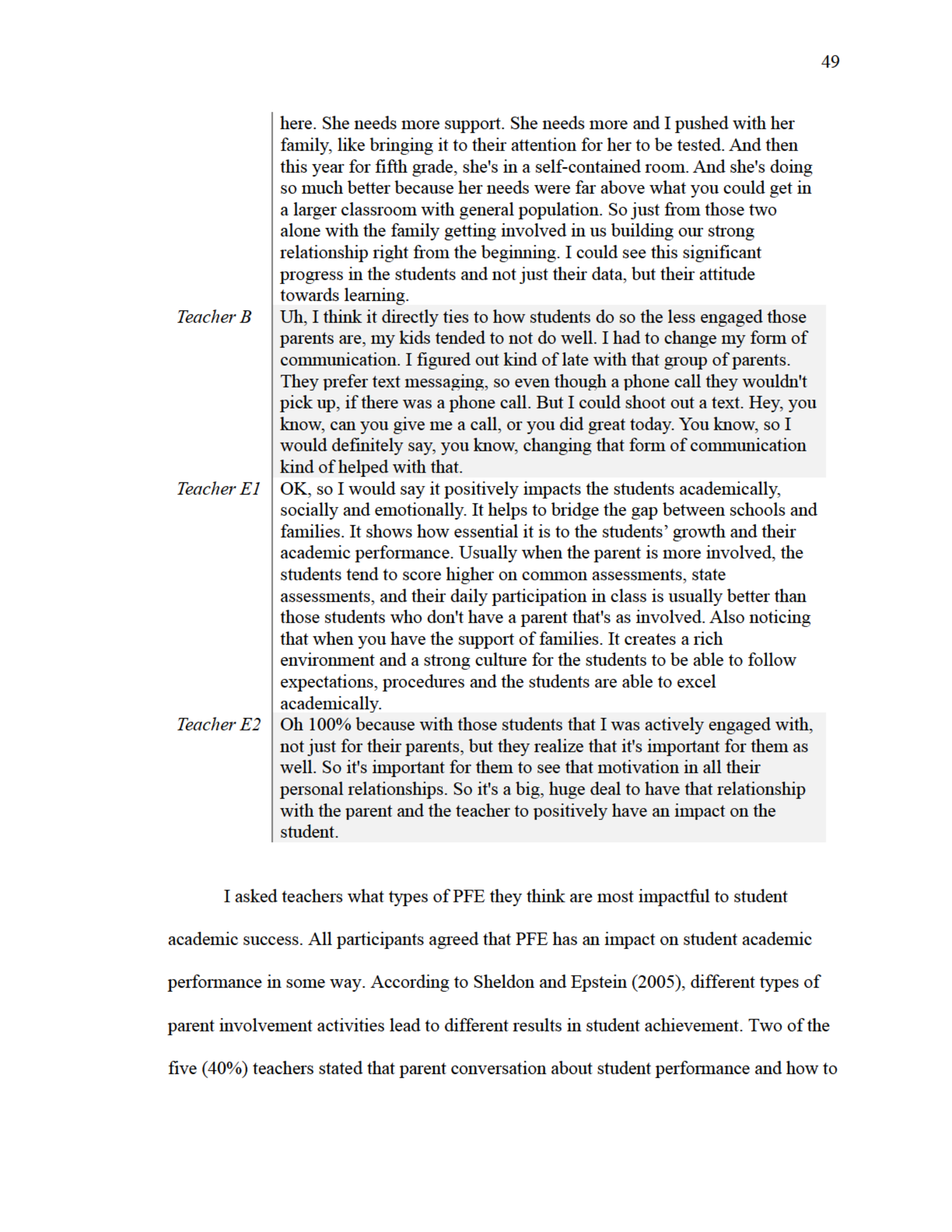
49
here.
She
needs
more
support.
She
needs
more
and
I
pushed
with
her
family,
like bringing
it
to
their
attention
for
her
to
be
tested.
And
then
this
year
for
fifth
grade,
she's
in
a
self-contained
room.
And
she's
doing
so
much
better
because
her
needs
were
far
above
what
you
could
get
in
a
larger
classroom
with
general
population.
So
just
from
those
two
alone
with
the
family
getting
involved
in
us
building
our
strong
relationship
right
from
the
beginning.
I
could
see
this
significant
progress
in
the
students
and
not
just
their data,
but
their
attitude
towards
learning.
Teacher
B_
Uh,
think
it
directly
ties
to
how
students
do
so
the
less
engaged
those
parents
are,
my
kids
tended
to
not
do
well.
I
had
to
change
my
form
of
communication.
I
figured
out
kind
of
late
with
that
group of
parents.
They
prefer
text
messaging,
so
even
though
a
phone
call
they wouldn't
pick
up,
if
there
was
a
phone
call.
But
I
could
shoot
out
a
text.
Hey,
you
know,
can
you
give
mea
call,
or
you
did
great
today.
You
know,
so
I
would
definitely
say,
you
know,
changing
that
form
of
communication
kind
of
helped
with
that.
Teacher
E1 OK,
so
I
would
say
it
positively
impacts
the
students
academically,
socially
and
emotionally.
It
helps
to
bridge
the
gap
between
schools
and
families.
It
shows
how
essential
it
is
to
the
students’
growth
and
their
academic
performance.
Usually
when
the
parent
is
more
involved,
the
students
tend
to
score
higher
on
common
assessments,
state
assessments,
and
their
daily
participation
in
class
is
usually
better
than
those
students
who
don't
have
a
parent
that's
as
involved.
Also
noticing
that
when
you
have
the
support
of
families.
It
creates
a
rich
environment
and
strong
culture
for
the
students
to
be
able
to
follow
expectations,
procedures
and
the
students
are
able
to
excel
academically.
Teacher
E2
Oh
100%
because
with
those
students
that
I
was
actively
engaged
with,
not
just
for
their
parents,
but
they
realize that
it's
important
for
them
as
well.
So
it's
important
for
them
to
see
that
motivation
in
all
their
personal
relationships.
So
it's a
big,
huge
deal
to
have
that
relationship
with
the
parent
and
the
teacher
to positively
have
an impact
on
the
student.
Tasked
teachers
what
types
of
PFE
they
think
are
most
impactful
to
student
academic
success.
All
participants
agreed
that
PFE
has
an
impact
on
student
academic
performance
in
some
way.
According
to
Sheldon
and
Epstein
(2005),
different
types
of
parent
involvement
activities
lead
to
different
results
in
student
achievement.
Two
of
the
five
(40%)
teachers
stated
that
parent
conversation
about
student
performance
and
how
to
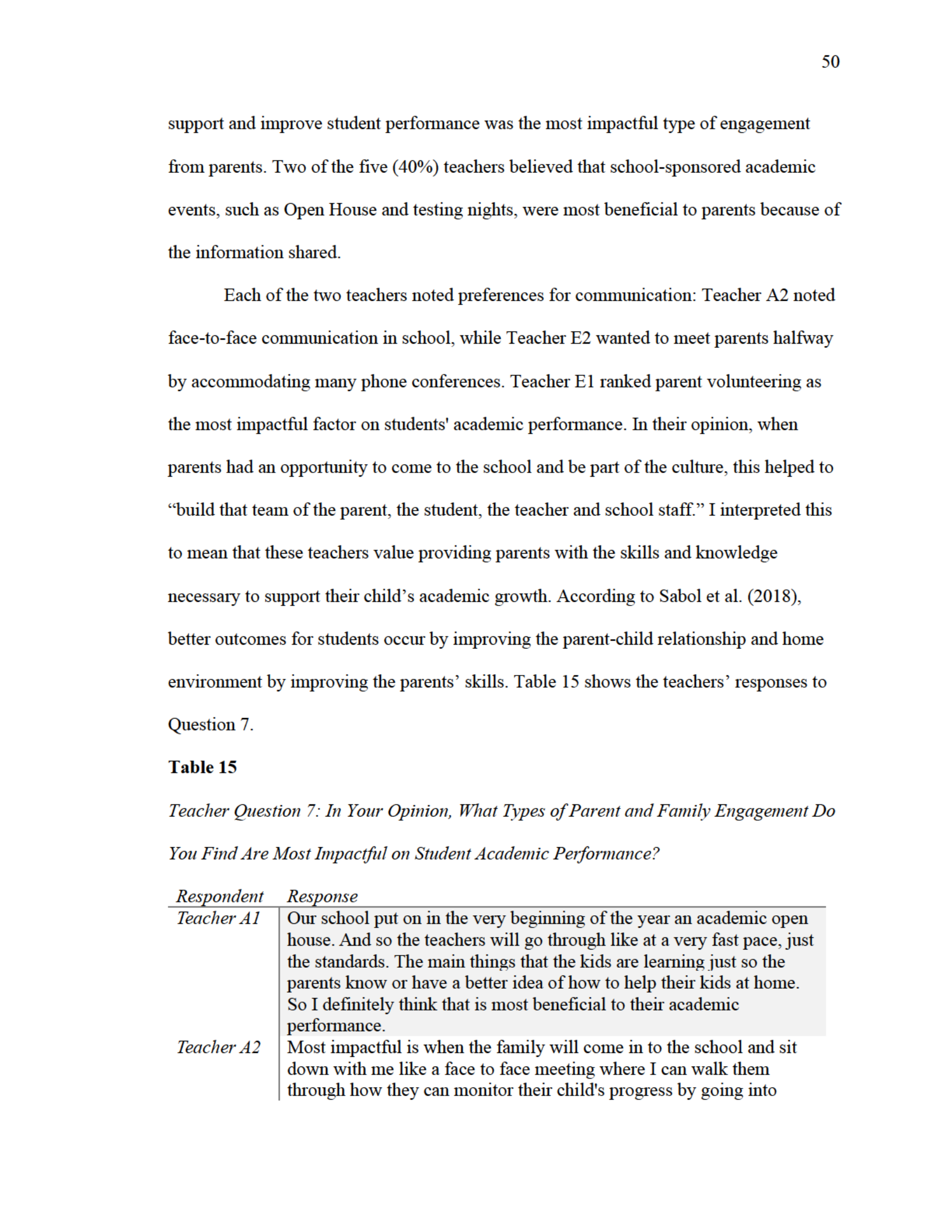
50
support
and
improve
student
performance
was
the
most
impactful
type
of
engagement
from
parents.
Two
of
the
five
(40%)
teachers
believed
that
school-sponsored
academic
events,
such
as
Open
House
and
testing
nights,
were
most
beneficial
to
parents
because
of
the
information
shared.
Each
of
the
two
teachers
noted
preferences
for
communication: Teacher
A2
noted
face-to-face
communication
in
school,
while
Teacher
E2
wanted
to
meet
parents
halfway
by
accommodating
many
phone
conferences.
Teacher
E1
ranked
parent
volunteering
as
the
most
impactful
factor
on
students'
academic
performance.
In
their
opinion,
when
parents
had
an
opportunity
to
come
to
the
school
and
be
part
of
the
culture,
this
helped
to
“build
that
team
of
the
parent,
the
student,
the
teacher
and
school
staff.”
I
interpreted
this
to
mean
that
these
teachers
value
providing
parents
with
the
skills
and
knowledge
necessary
to
support
their
child’s
academic
growth.
According
to
Sabol
et
al.
(2018),
better
outcomes
for
students
occur
by
improving
the
parent-child
relationship
and
home
environment
by
improving
the
parents’
skills.
Table
15 shows
the
teachers’
responses
to
Question
7.
Table
15
Teacher
Question
7:
In
Your
Opinion,
What
Types
of
Parent
and
Family
Engagement
Do
You
Find Are
Most
Impactful
on
Student
Academic
Performance?
Respondent
Response
Teacher
Al
Our
school
put
on
in
the
very
beginning
of
the
year
an
academic
open
house.
And
so
the
teachers
will
go
through
like
at
a
very
fast
pace,
just
the
standards.
The
main
things
that
the
kids
are
learning
just
so
the
parents
know
or
have
a
better
idea
of
how
to
help
their
kids
at
home.
So
I
definitely
think
that
is
most
beneficial
to
their
academic
performance.
Teacher
A2_
Most
impactful
is
when
the
family
will
come
in
to
the
school
and
sit
down
with
me
like
a
face
to
face
meeting
where
I
can
walk
them
through
how
they
can
monitor
their
child's
progress
by
going
into
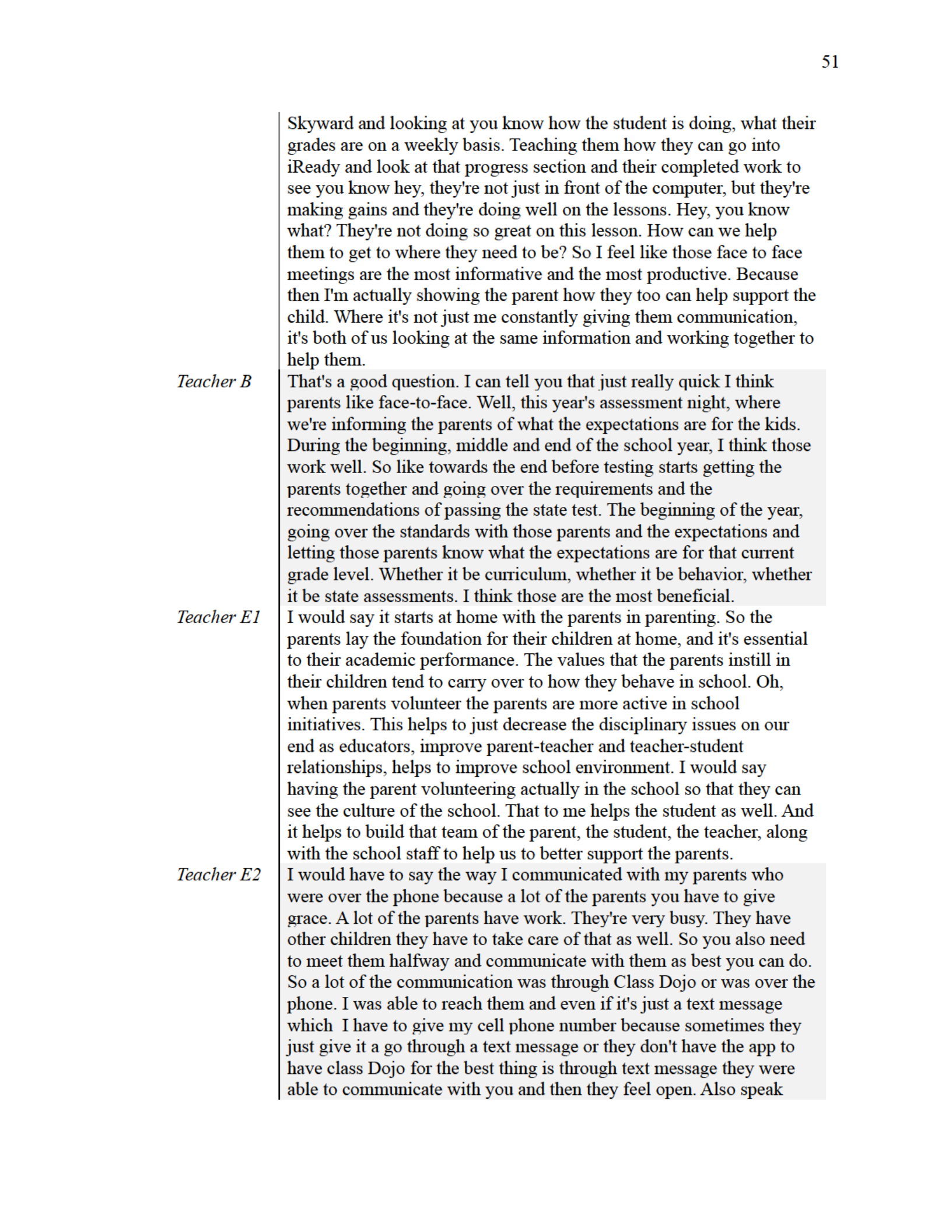
Teacher
B
Teacher
E1
Teacher
E2
Sl
Skyward
and
looking
at
you
know
how
the
student
is
doing,
what
their
grades
are
on
a
weekly
basis.
Teaching
them
how
they
can go
into
iReady
and
look
at
that
progress
section
and
their
completed
work
to
see
you
know
hey,
they're
not
just
in
front
of
the
computer,
but
they're
making
gains
and
they're
doing
well
on
the
lessons.
Hey,
you
know
what?
They're
not
doing
so
great
on
this
lesson.
How
can
we
help
them
to
get
to
where
they
need
to
be?
So
I
feel like
those
face
to
face
meetings
are the
most
informative
and
the
most
productive.
Because
then
I'm
actually
showing
the
parent
how
they
too
can
help
support
the
child.
Where
it's
not
just
me
constantly
giving
them
communication,
it's
both of
us
looking
at
the
same
information
and
working
together
to
help
them.
That's
a
good
question.
I
can
tell
you
that
just
really
quick
I
think
parents
like
face-to-face.
Well,
this
year's
assessment
night,
where
we're
informing
the
parents
of
what
the
expectations
are for the
kids.
During
the
beginning,
middle
and
end
of
the
school
year,
I
think
those
work
well.
So
like
towards
the
end
before
testing
starts
getting
the
parents
together
and
going
over
the
requirements
and
the
recommendations
of
passing
the
state
test.
The
beginning
of
the
year,
going
over
the
standards
with
those
parents
and
the
expectations
and
letting
those
parents
know
what
the
expectations
are
for
that
current
grade
level.
Whether
it
be
curriculum,
whether
it
be
behavior,
whether
it
be
state
assessments.
I
think those
are
the
most
beneficial.
I
would
say
it
starts
at
home
with
the
parents
in
parenting.
So
the
parents
lay the
foundation
for
their
children
at
home,
and
it's
essential
to
their
academic
performance.
The
values
that
the
parents
instill
in
their
children
tend
to
carry
over
to
how
they
behave
in
school.
Oh,
when
parents
volunteer
the
parents
are
more
active in
school
initiatives.
This
helps
to just
decrease
the
disciplinary
issues
on
our
end
as
educators,
improve
parent-teacher
and
teacher-student
relationships,
helps
to
improve
school
environment.
I
would
say
having
the
parent volunteering
actually in
the
school
so
that
they
can
see
the
culture
of
the
school.
That
to
me
helps
the
student
as
well.
And
it
helps
to
build
that
team
of
the
parent,
the
student,
the
teacher,
along
with
the
school
staff
to
help
us
to
better
support
the
parents.
I
would
have
to
say
the
way
I
communicated
with
my
parents
who
were
over
the
phone
because
a
lot
of
the parents
you
have
to
give
grace.
A
lot
of
the
parents
have
work.
They're
very
busy.
They
have
other
children
they
have
to
take care
of
that
as
well.
So
you
also
need
to
meet
them
halfway
and
communicate
with
them
as
best
you
can
do.
So
a
lot
of
the
communication
was
through
Class
Dojo
or
was
over
the
phone.
I
was
able
to
reach
them
and
even
if
it's
just
a
text
message
which
I
have
to
give
my
cell
phone
number
because
sometimes
they
just
give
it
a
go
through
a
text
message
or
they
don't
have
the
app
to
have
class
Dojo
for
the
best thing
is
through
text
message
they
were
able
to
communicate
with
you
and
then they
feel
open.
Also
speak
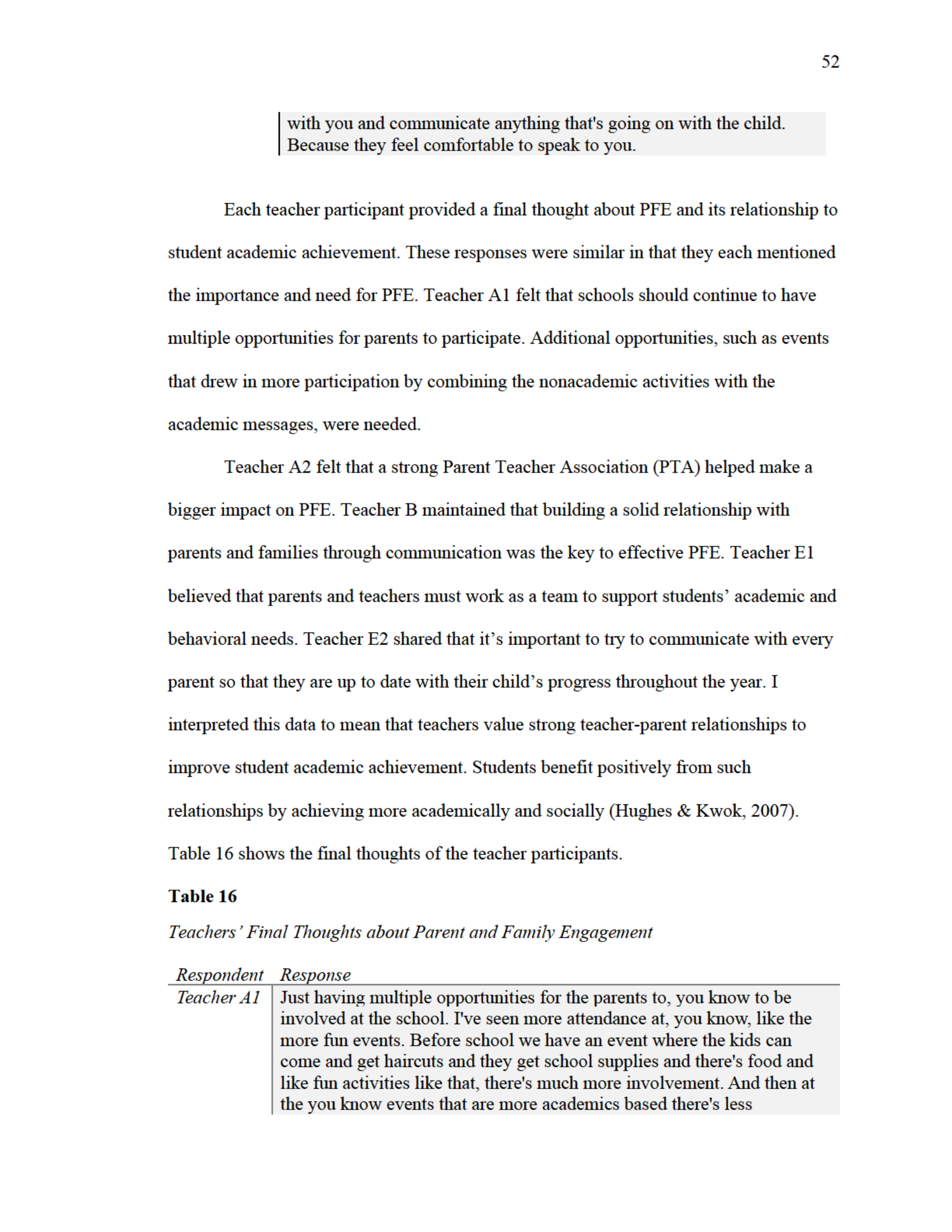
52
with
you
and
communicate
anything
that's
going
on
with
the
child.
Because
they
feel
comfortable
to
speak
to
you.
Each
teacher
participant
provided
a
final
thought
about
PFE
and
its
relationship
to
student
academic
achievement.
These
responses
were
similar
in
that
they
each
mentioned
the
importance
and
need
for
PFE.
Teacher
A1
felt
that
schools
should
continue
to
have
iultiple
opportunities
for
parents
to
participate.
Additional
opportunities,
such
as
events
that
drew
in
more
participation
by
combining
the
nonacademic
activities
with
the
academic
messages,
were
needed.
Teacher
A2
felt
that
a
strong
Parent
Teacher
Association
(PTA)
helped
make
a
bigger
impact
on
PFE.
Teacher
B
maintained
that
building
a
solid
relationship
with
parents
and
families
through
communication
was
the
key
to
effective
PFE.
Teacher
El
believed
that
parents
and
teachers
must
work
as
a
team
to
support
students’
academic
and
behavioral
needs.
Teacher
E2
shared
that
it’s
important
to
try to
communicate
with
every
parent
so
that
they
are
up
to
date
with
their
child’s
progress
throughout
the
year.
I
interpreted
this
data
to
mean
that
teachers
value
strong
teacher-parent
relationships
to
improve
student
academic
achievement.
Students
benefit
positively
from
such
relationships
by
achieving
more
academically
and
socially
(Hughes
&
Kwok,
2007).
Table
16
shows
the
final
thoughts
of
the
teacher
participants.
Table
16
Teachers’
Final
Thoughts
about
Parent
and
Family
Engagement
Respondent
Response
Teacher
Al
Just
having
multiple
opportunities
for
the
parents
to,
you
know
to
be
involved
at
the
school.
I've
seen
more
attendance
at,
you
know,
like
the
more
fun
events.
Before
school
we
have an
event
where
the
kids
can
come
and
get
haircuts
and
they
get
school
supplies
and
there's
food
and
like
fun
activities
like
that,
there's
much
more
involvement.
And
then
at
the
you
know
events
that
are
more
academics
based
there's
less
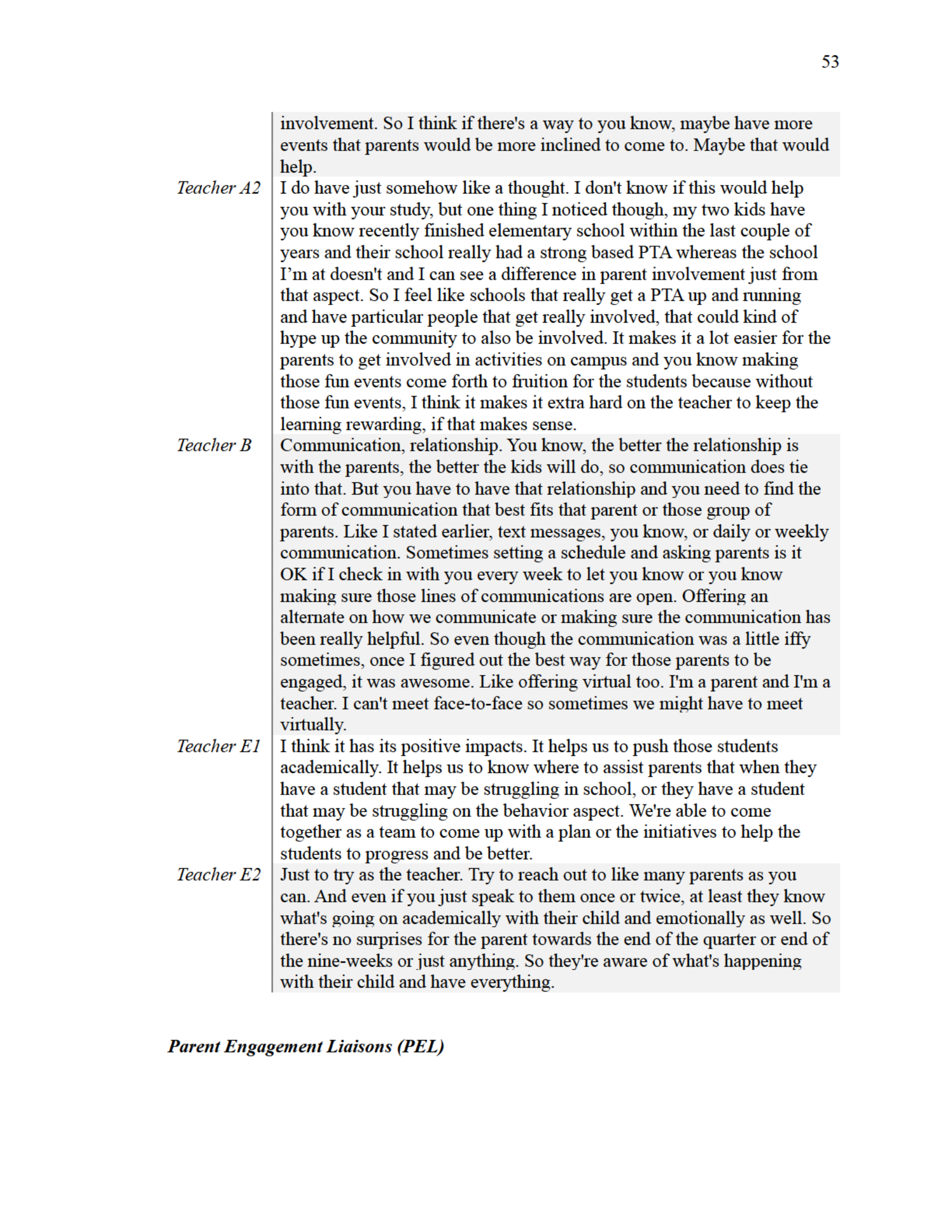
Teacher
A2
Teacher
B
Teacher
E1
Teacher
E2
33
involvement.
So
I
think
if
there's
a
way
to
you
know,
maybe
have
more
events
that
parents
would
be
more
inclined
to
come
to.
Maybe
that
would
help.
I
do
have
just
somehow
like
a
thought.
I
don't
know
if this
would
help
you
with
your
study,
but
one
thing
I
noticed though,
my
two
kids
have
you
know
recently
finished
elementary
school
within
the
last
couple
of
years
and
their
school
really
had
a
strong
based
PTA
whereas
the
school
I’m
at
doesn't
and
I
can
see
a
difference
in
parent
involvement
just
from
that
aspect.
So
I
feel
like
schools
that
really
get
a
PTA
up
and
running
and
have
particular
people
that
get
really
involved,
that
could
kind of
hype
up
the
community
to
also
be
involved.
It
makes
it
a
lot
easier
for
the
parents
to
get
involved
in
activities
on campus
and
you
know
making
those
fun
events
come
forth
to
fruition
for
the
students
because
without
those
fun
events,
I
think
it
makes
it
extra
hard
on
the
teacher
to
keep
the
learning
rewarding,
if that
makes
sense.
Communication,
relationship.
You
know,
the
better
the
relationship
is
with
the
parents,
the
better
the
kids
will
do,
so
communication
does
tie
into
that.
But
you
have
to
have
that
relationship
and
you
need
to
find
the
form
of
communication
that
best
fits
that
parent
or those
group of
parents.
Like
I
stated
earlier,
text
messages,
you
know,
or
daily
or
weekly
communication.
Sometimes
setting
a
schedule
and
asking
parents
is
it
OK
if
I
check
in
with
you
every
week
to
let
you
know
or
you
know
making
sure
those
lines
of
communications
are
open.
Offering
an
alternate
on
how we
communicate
or
making
sure
the
communication
has
been
really
helpful.
So
even
though
the
communication
was
little
iffy
sometimes,
once
I
figured
out
the
best
way
for
those
parents
to
be
engaged,
it
was
awesome.
Like
offering
virtual
too.
I'm
a
parent
and
I'ma
teacher.
I
can't
meet
face-to-face
so
sometimes
we
might
have
to
meet
virtually.
I
think
it
has
its
positive
impacts.
It
helps
us
to
push
those
students
academically.
It
helps
us
to
know
where
toassist
parents
that
when
they
have
a
student
that
may
be
struggling
in
school,
or
they
have
a
student
that
may
be
struggling
on
the
behavior
aspect.
We're
able
to
come
together
as
a
team
to
come
up
with
a
plan
or
the
initiatives
to
help
the
students
to
progress
and
be
better.
Just
to try
as
the
teacher.
Try
to
reach
out
to
like
many
parents as
you
can.
And
even
if
you
just
speak
to
them
once
or
twice,
at
least
they
know
what's
going
on
academically
with
their
child
and
emotionally
as
well.
So
there's
no
surprises for
the
parent
towards
the
end
of
the
quarter
or
end
of
the
nine-weeks
or
just
anything.
So
they're
aware
of
what's
happening
with
their
child
and
have
everything.
Parent
Engagement
Liaisons (PEL)
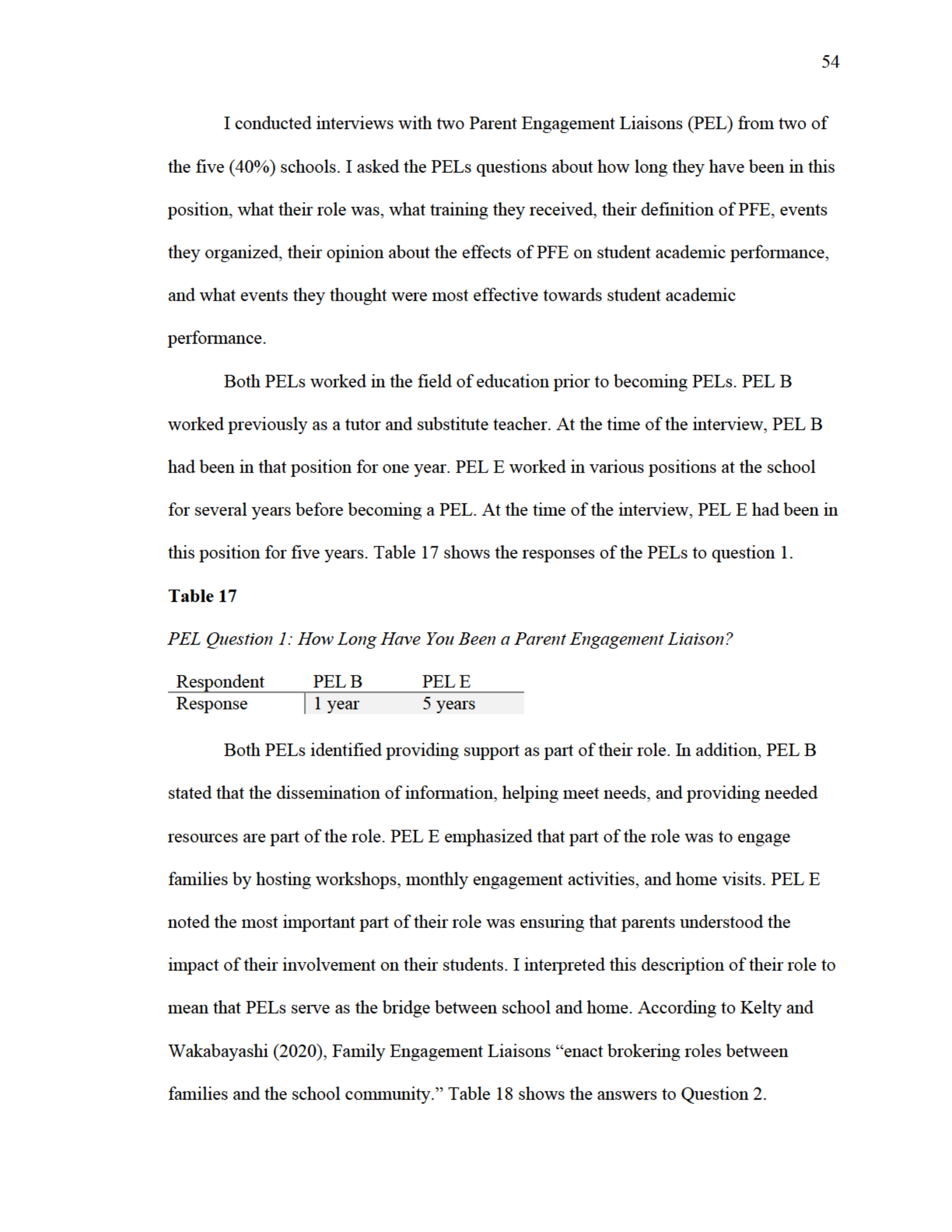
54
I
conducted
interviews
with
two
Parent
Engagement
Liaisons
(PEL)
from
two
of
the
five
(40%)
schools.
I
asked
the
PELs
questions
about
how
long they
have
been
in
this
position,
what
their
role
was,
what
training
they
received,
their
definition
of
PFE,
events
they
organized,
their
opinion
about
the
effects
of
PFE
on
student
academic
performance,
and
what
events
they
thought
were
most
effective
towards
student
academic
performance.
Both
PELs
worked
in
the
field
of
education
prior
to
becoming
PELs.
PEL
B
worked
previously
as
a
tutor
and
substitute
teacher.
At
the
time
of
the
interview,
PEL
B
had
been
in
that
position
for
one
year.
PEL
E
worked
in
various
positions
at
the
school
for
several
years
before
becoming
a
PEL.
Atthe
time
of
the
interview,
PEL
E
had
been
in
this
position
for
five
years.
Table
17
shows
the
responses
of
the
PELs
to
question
1.
Table
17
PEL
Question
1:
How
Long
Have
You Been a
Parent
Engagement
Liaison?
Respondent
PELB
PELE
year
Both
PELs
identified
providing
support
as part
of
their
role.
In
addition,
PEL
B
stated
that
the
dissemination
of
information,
helping
meet
needs,
and
providing
needed
resources
are
part
of
the
role.
PEL E
emphasized
that
part
of
the
role
was
to
engage
families
by
hosting
workshops,
monthly
engagement
activities,
and
home
visits.
PEL E
noted
the
most
important
part
of
their
role
was
ensuring
that
parents
understood
the
impact
of
their
involvement
on
their
students.
I
interpreted
this
description
of
their
role
to
mean
that
PELs
serve
as
the
bridge
between
school
and
home.
According
to
Kelty
and
Wakabayashi
(2020),
Family
Engagement
Liaisons
“enact
brokering
roles
between
families
and
the
school
community.”
Table
18
shows
the
answers
to
Question
2.
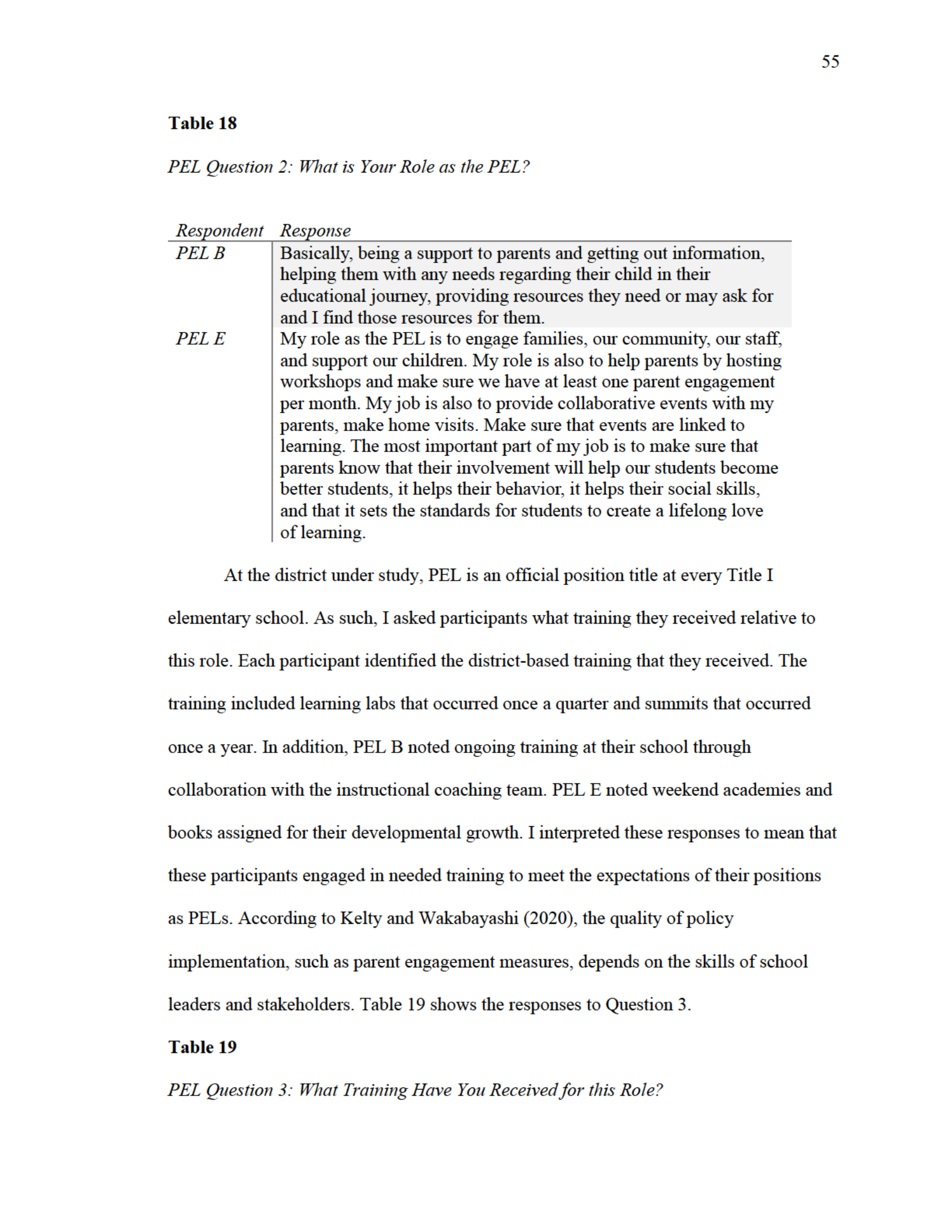
55
Table
18
PEL
Question
2:
What
is
Your Role
as
the
PEL?
Respondent
Response
PELB
Basically,
being
a
support
to
parents
and
getting
out
information,
helping
them
with
any
needs
regarding
their
child
in
their
educational
journey,
providing
resources
they
need
or
may
ask
for
and
I
find
those
resources
for
them.
PELE
My
role
as
the
PEL
is
to
engage
families,
our
community,
our
staff,
and
support
our
children.
My
role
is
also
to
help
parents
by
hosting
workshops
and
make
sure
we
have
at
least
one
parent
engagement
per
month.
My
job
is
also
to
provide
collaborative
events
with
my
parents,
make
home
visits.
Make
sure
that
events
are
linked
to
learning.
The
most
important
part
of
my
job
is
to
make
sure
that
parents
know
that
their
involvement
will
help
our
students
become
better
students,
it
helps
their
behavior,
it
helps
their
social
skills,
and
that
it
sets
the standards
for
students
to
create
a
lifelong
love
of
learning.
At
the
district
under
study,
PEL
is
an
official
position
title
at
every
Title
I
elementary
school.
As
such,
I
asked
participants
what
training
they
received
relative to
this
role.
Each
participant
identified
the
district-based
training
that
they
received.
The
training
included
learning
labs
that
occurred
once a
quarter
and
summits
that
occurred.
once
a
year.
In
addition,
PEL
B
noted
ongoing
training
at
their
school
through
collaboration
with
the
instructional
coaching
team.
PEL E
noted
weekend
academies
and
books
assigned
for
their
developmental
growth.
I
interpreted
these
responses
to
mean
that
these
participants
engaged
in
needed
training
to
meet
the
expectations
of
their
positions
as
PELs.
According
to
Kelty
and
Wakabayashi
(2020),
the
quality
of
policy
implementation,
such
as
parent
engagement
measures,
depends
on
the
skills of
school
leaders
and
stakeholders.
Table
19
shows
the
responses
to
Question
3.
Table
19
PEL
Question
3:
What
Training
Have
You
Received
for
this
Role?
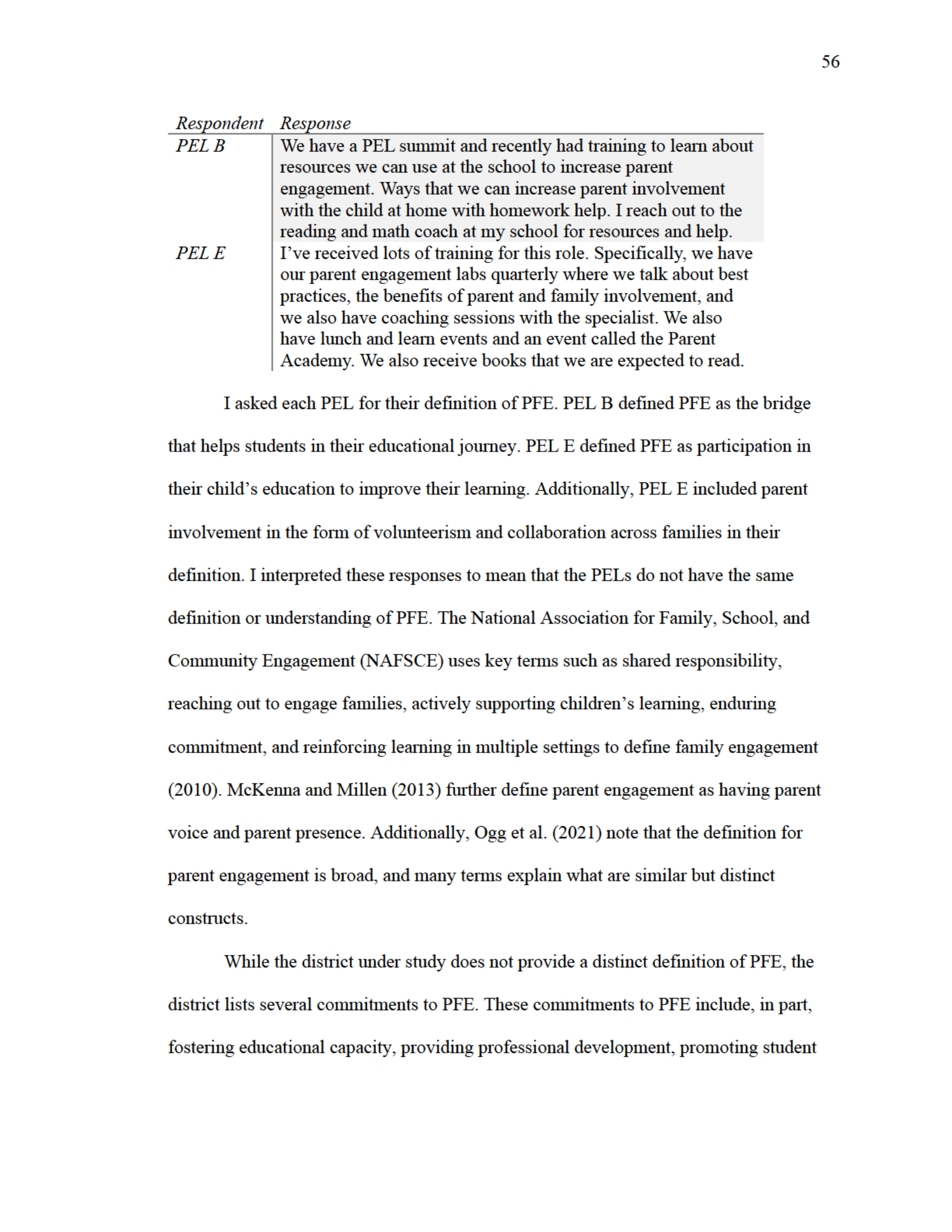
56
Respondent
Response
PELB
We
have
a
PEL
summit
and
recently
had
training
to
learn
about
resources
we
can
use
at
the
school
to
increase
parent
engagement.
Ways
that
we
can
increase
parent
involvement
with
the
child
at
home
with
homework
help.
I
reach
out
to
the
reading
and
math
coach
at
my
school
for
resources
and
help.
PELE
T’ve
received
lots
of
training
for
this
role.
Specifically,
we
have
our
parent
engagement
labs
quarterly
where
we
talk
about
best
practices,
the
benefits
of
parent
and
family
involvement,
and
we
also
have
coaching
sessions
with
the
specialist.
We
also
have
lunch
and
learn
events
and
an
event
called
the
Parent
Academy.
We
also
receive
books
that
we
are
expected
to
read.
Tasked
each
PEL
for
their
definition
of
PFE.
PEL
B
defined
PFE
as
the
bridge
that
helps
students
in
their
educational journey.
PEL E
defined
PFE
as
participation
in
their
child’s
education
to
improve
their
learning.
Additionally,
PEL
E
included
parent
involvement
in
the
form
of
volunteerism
and
collaboration
across
families
in
their
definition.
I
interpreted
these
responses
to
mean
that
the
PELs
do
not
have
the
same
definition
or
understanding
of
PFE.
The
National
Association
for
Family,
School,
and
Community
Engagement
(NAFSCE)
uses
key
terms
such
as
shared
responsibility,
reaching
out
to
engage
families,
actively
supporting
children’s
learning,
enduring
commitment,
and
reinforcing
learning
in
multiple
settings to
define
family
engagement
(2010).
McKenna
and
Millen
(2013)
further
define
parent
engagement
as
having
parent
voice
and
parent
presence.
Additionally,
Ogg
et
al.
(2021)
note
that
the
definition
for
parent
engagement
is
broad,
and
many
terms
explain
what
are
similar
but
distinct
constructs.
While
the
district
under
study
does
not
provide
a
distinct
definition
of PFE,
the
district
lists
several
commitments
to
PFE.
These
commitments
to
PFE
include,
in
part,
fostering
educational
capacity,
providing
professional
development,
promoting
student
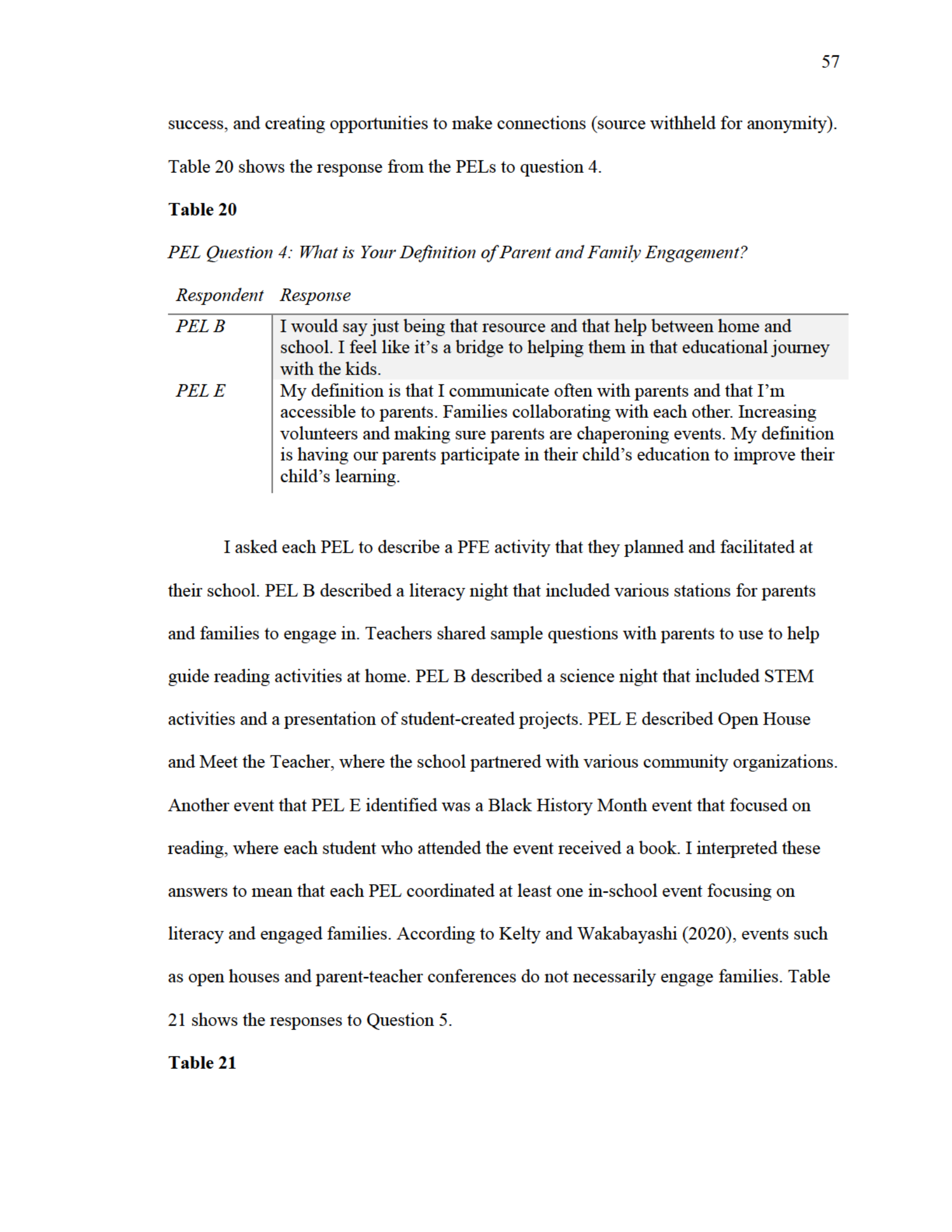
S7
success,
and
creating
opportunities
to
make
connections
(source
withheld
for
anonymity).
Table
20
shows
the
response
from
the
PELs
to
question
4.
Table
20
PEL
Question
4:
What
is
Your
Definition
of
Parent
and
Family
Engagement?
Respondent
Response
PELB
I
would
say
just
being
that
resource
and
that
help
between
home
and
school.
I
feel like
it’s
a
bridge
to
helping
them
in that
educational
journey
with
the
kids.
PELE
My
definition
is
that
I
communicate
often
with
parents
and
that
’m
accessible
to
parents.
Families
collaborating
with
each
other.
Increasing
volunteers
and
making
sure
parents
are
chaperoning
events.
My
definition
is
having
our
parents
participate
in
their
child’s
education
to
improve
their
child’s
learning.
Iasked
each
PEL
to
describe
a
PFE
activity
that
they
planned
and
facilitated
at
their
school.
PEL
B
described
a
literacy
night
that
included
various
stations
for
parents
and
families
to
engage
in.
Teachers
shared
sample
questions
with
parents
to
use
to
help
guide
reading
activities
at
home.
PEL
B
described
science
night
that
included
STEM
activities
and
a
presentation
of
student-created
projects.
PEL
E
described
Open
House
and
Meet
the
Teacher,
where
the
school
partnered
with
various
community
organizations.
Another
event
that
PEL
E
identified
was
a
Black
History
Month
event
that
focused
on
reading,
where
each
student
who
attended
the
event
received
a
book.
I
interpreted
these
answers
to
mean
that
each
PEL
coordinated
at
least
one
in-school
event
focusing
on
literacy
and
engaged
families.
According
to
Kelty
and
Wakabayashi
(2020),
events
such
as
open
houses
and
parent-teacher
conferences
do
not
necessarily
engage
families.
Table
21
shows
the
responses
to
Question
5.
Table
21
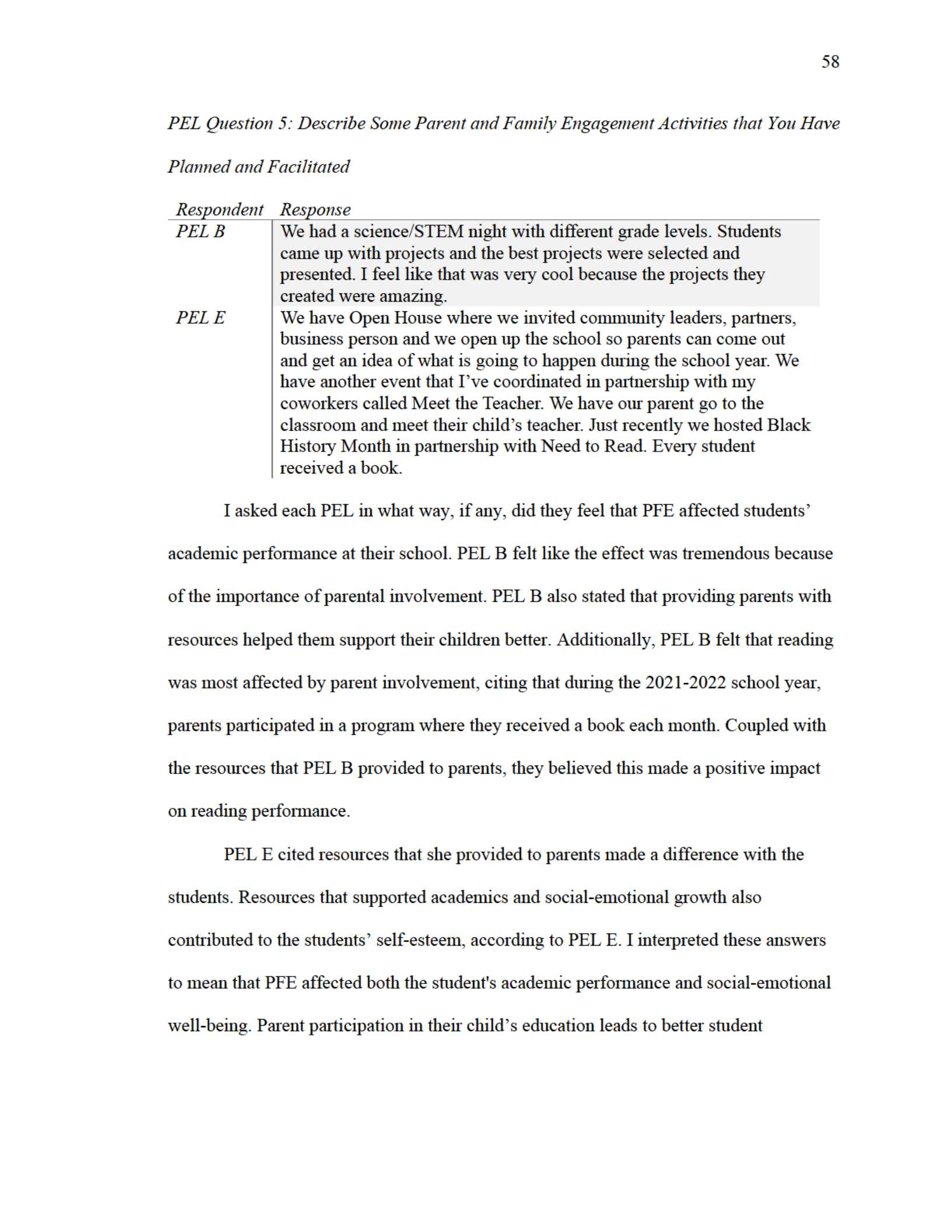
58
PEL
Question
5:
Describe
Some
Parent
and
Family
Engagement
Activities
that
You
Have
Planned
and
Facilitated
Respondent
Response
PELB
We
had
a
science/STEM
night
with
different
grade
levels.
Students
came
up
with
projects
and
the best
projects
were
selected
and
presented.
I
feel like
that
was
very
cool
because
the
projects
they
created
were
amazing.
PELE
‘We
have
Open
House
where
we
invited
community
leaders,
partners,
business
person
and
we
open
up
the
school
so
parents
can
come
out
and
get
an
idea
of
what
is
going
to
happen
during
the
school
year.
We
have
another
event
that
I’ve
coordinated
in
partnership
with
my
coworkers
called
Meet
the
Teacher.
We
have
our
parent
go
to
the
classroom
and
meet
their
child’s teacher.
Just
recently
we
hosted
Black
History
Month
in
partnership
with
Need
to
Read.
Every
student
received
a
book.
Tasked
each
PEL
in
what
way,
if
any,
did
they
feel that
PFE
affected
students’
academic
performance
at
their
school.
PEL
felt
like
the
effect
was
tremendous
because
of
the
importance
of
parental
involvement.
PEL
B
also
stated
that
providing
parents
with
resources
helped
them
support
their
children
better.
Additionally,
PEL
B
felt
that
reading
was
most
affected
by
parent
involvement,
citing
that
during
the
2021-2022
school
year,
parents
participated
in
a
program
where
they received
a
book
each month.
Coupled
with
the
resources
that
PEL
B
provided
to
parents,
they believed
this
made
a
positive
impact
on
reading
performance.
PEL
cited
resources
that
she
provided
to
parents
made
a
difference
with
the
students.
Resources
that
supported
academics
and
social-emotional
growth
also
contributed
to
the
students’
self-esteem,
according
to
PEL
E.
I
interpreted
these
answers
to
mean
that
PFE
affected
both
the
student's
academic
performance
and
social-emotional
well-being.
Parent
participation
in
their
child’s
education
leads
to
better
student
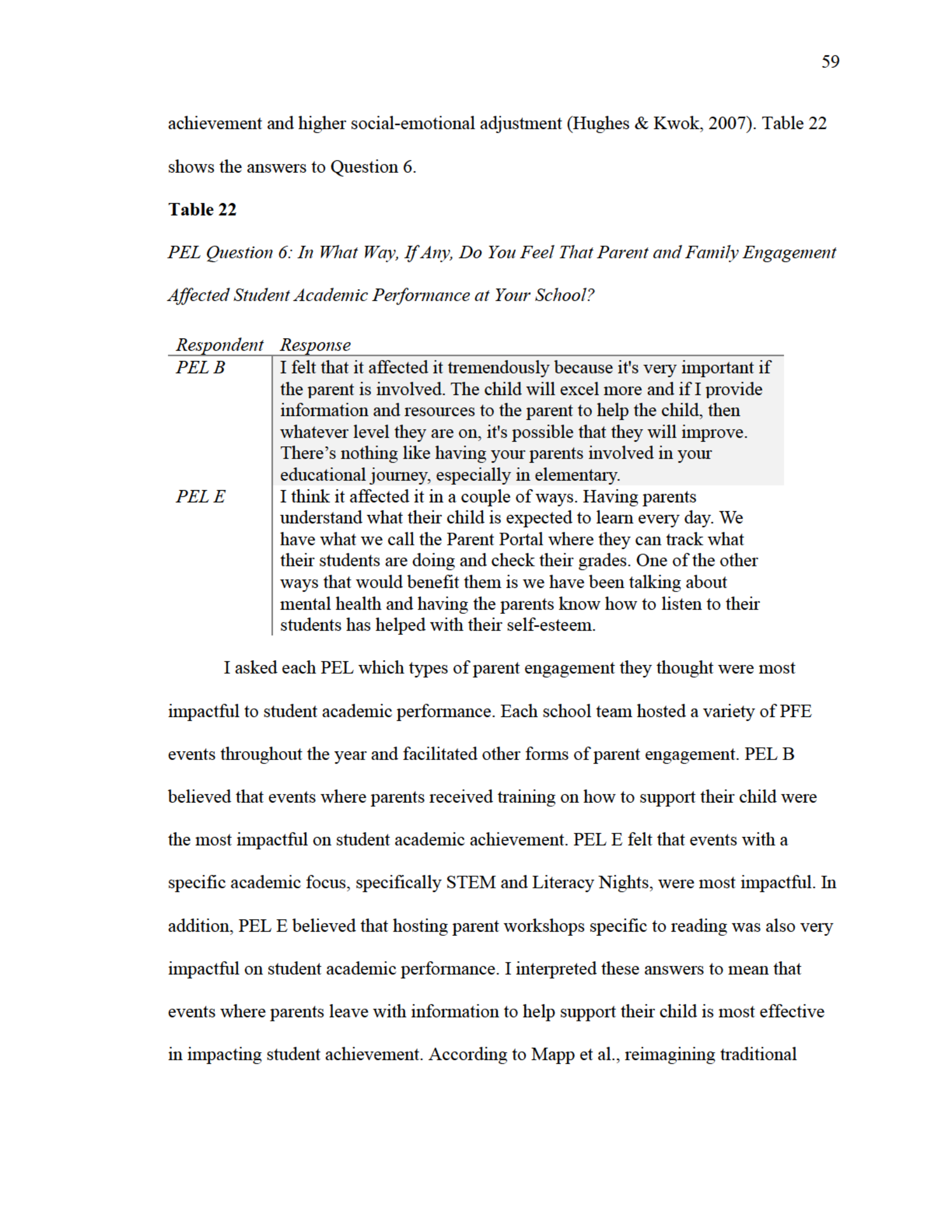
59
achievement
and
higher
social-emotional
adjustment
(Hughes
&
Kwok,
2007).
Table
22
shows
the
answers
to
Question
6.
Table
22
PEL
Question
6:
In
What
Way,
IfAny,
Do
You
Feel
That
Parent
and
Family
Engagement
Affected
Student
Academic
Performance
at
Your
School?
Respondent
Response
PELB
I felt
that
it
affected
it
tremendously
because
it's very
important
if
the
parent
is
involved.
The
child
will
excel
more
and
if
I
provide
information
and
resources
to
the
parent
to
help
the
child,
then
whatever
level
they
are
on,
it's
possible
that
they
will
improve.
There’s
nothing
like
having
your
parents
involved
in
your
educational
journey,
especially
in
elementary.
PELE
I
think
it
affected
it
in
a
couple
of
ways.
Having
parents
understand
what
their
child
is
expected
to
learn
every
day.
We
have
what
we
call
the
Parent
Portal
where
they
can
track
what
their
students
are
doing
and
check
their
grades.
One
of
the
other
ways
that
would
benefit
them
is
we
have
been
talking
about
mental
health
and
having
the
parents
know
how
to
listen
to
their
students
has
helped
with
their
self-esteem.
Tasked
each
PEL
which
types
of
parent
engagement
they
thought
were
most
impactful
to
student
academic
performance.
Each
school
team
hosted
a
variety
of
PFE
events
throughout
the
year
and
facilitated
other
forms
of
parent
engagement.
PEL
B
believed
that
events
where
parents
received
training
on
how
to
support
their
child
were
the
most
impactful
on
student
academic
achievement.
PEL
felt
that
events
with
a
specific
academic
focus,
specifically
STEM
and
Literacy
Nights,
were
most
impactful.
In
addition,
PEL
E
believed
that
hosting
parent
workshops
specific
to
reading
was
also
very
impactful
on
student
academic
performance.
I
interpreted
these
answers
to
mean
that
events
where
parents
leave
with
information
to
help
support
their
child
is
most
effective
in
impacting
student
achievement.
According
to
Mapp
et
al.,
reimagining
traditional
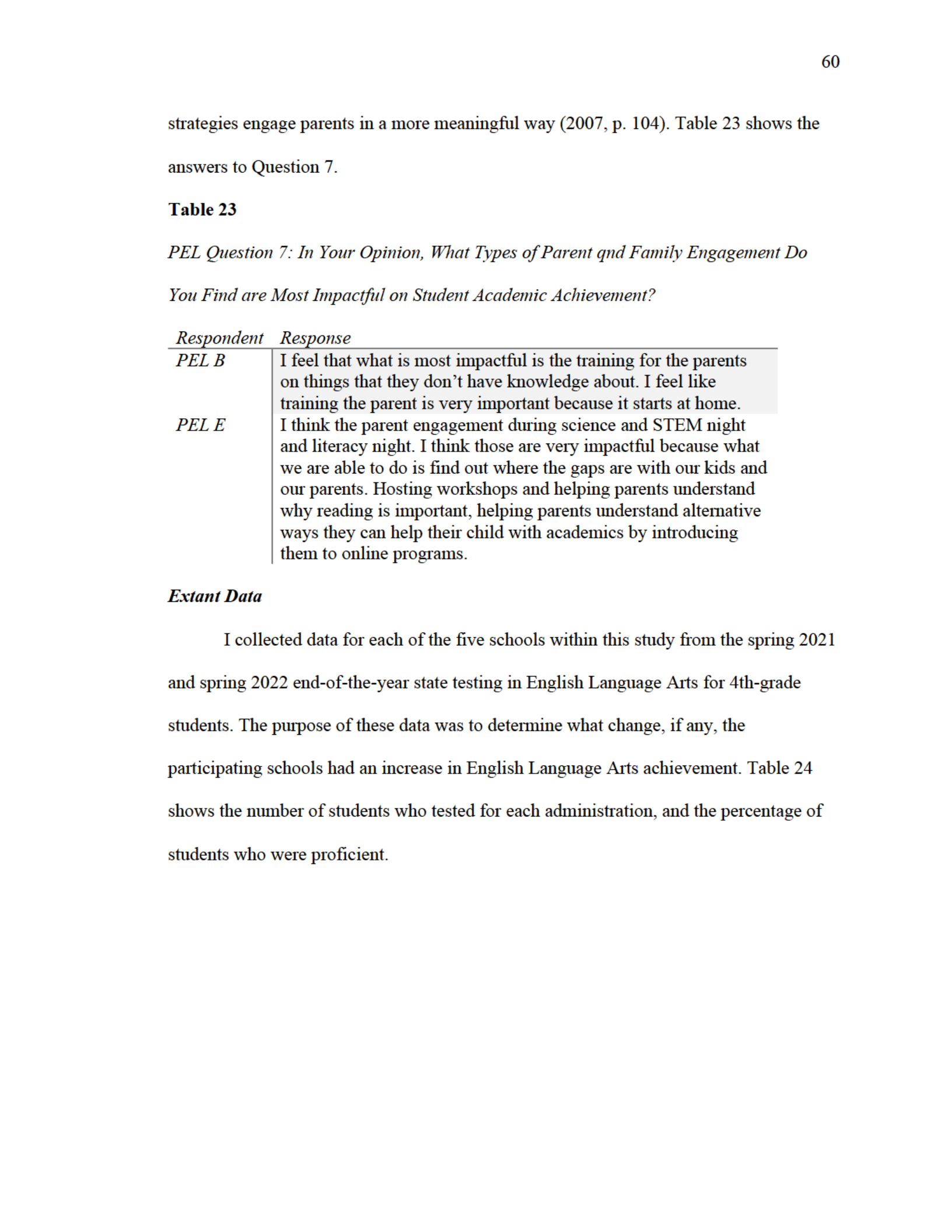
strategies
engage
parents
in
a
more
meaningful
way
(2007,
p.
104).
Table
23
shows
the
answers
to
Question
7.
Table
23
PEL
Question
7:
In
Your
Opinion,
What
Types
of
Parent
gnd
Family
Engagement
Do
You
Find
are
Most
Impactful
on
Student
Academic
Achievement?
Respondent
Response
PELB
I
feel
that
what
is
most
impactful
is
the
training
for
the
parents
on
things
that
they
don’t
have
knowledge
about.
I
feel like
training
the
parent
is
very
important
because
it
starts
at
home.
PELE
I
think
the
parent
engagement
during
science
and
STEM
night
and
literacy
night.
I
think those
are
very
impactful
because
what
we
are
able
to
do
is
find
out
where
the
gaps
are
with
our
kids
and
our
parents.
Hosting
workshops
and
helping
parents
understand
why
reading
is
important,
helping
parents
understand
altemative
ways
they
can
help
their
child
with
academics
by
introducing
them
to
online
programs.
Extant
Data
I
collected
data
for
each of
the
five
schools
within
this
study
from
the
spring
2021
and
spring
2022
end-of-the-year
state
testing
in
English
Language
Arts
for
4th-grade
students.
The
purpose
of
these
data
was
to
determine
what
change,
if
any,
the
participating
schools
had
an
increase
in
English
Language
Arts
achievement.
Table
24
shows
the
number
of
students
who
tested for
each
administration,
and
the
percentage
of
students
who
were
proficient.
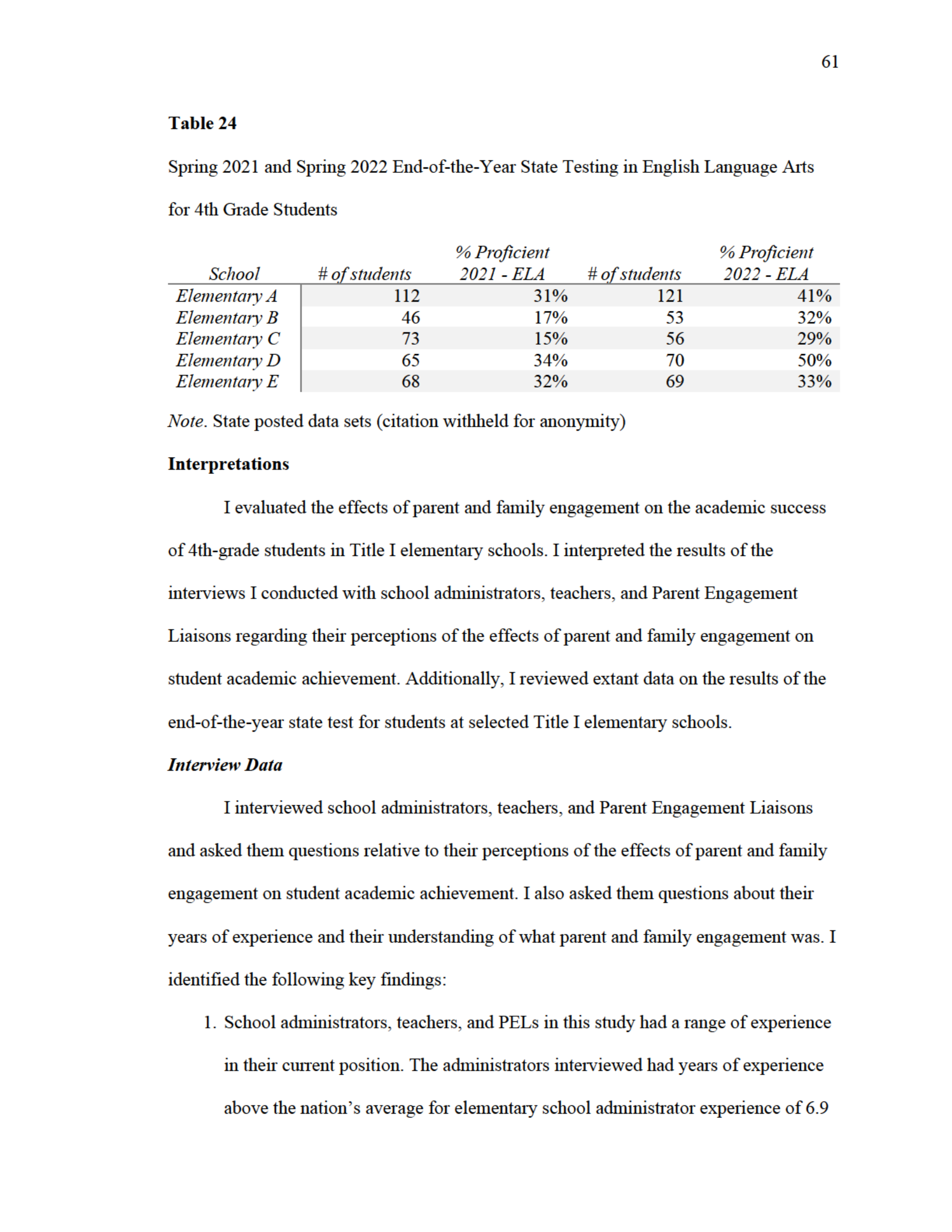
61
Table
24
Spring
2021
and
Spring
2022
End-of-the-Year
State
Testing
in
English
Language
Arts
for
4th
Grade
Students
%
Proficient
%
Proficient
School
#
of
students
2021
-ELA
#
of
students
2022
-
ELA
Elementary
A
112
31%
121
41%
Elementary
B
46
17%
53
32%
Elementary
C
73
15%
56
29%
Elementary
D
65
34%
70
50%
Elementary
E
68
32%
69
33%
Note.
State
posted
data
sets
(citation
withheld
for
anonymity)
Interpretations
I
evaluated
the
effects
of
parent
and
family
engagement
on
the
academic
success
of
4th-grade
students
in
Title
I
elementary
schools.
I
interpreted
the
results
of
the
interviews
I
conducted with
school
administrators,
teachers,
and
Parent
Engagement
Liaisons
regarding
their
perceptions
of
the
effects
of
parent
and
family
engagement
on
student
academic
achievement.
Additionally,
I
reviewed
extant
data
on
the
results
of
the
end-of-the-year
state
test
for
students
at
selected
Title
I
elementary
schools.
Interview
Data
[interviewed
school
administrators,
teachers,
and
Parent
Engagement
Liaisons
and
asked
them
questions
relative to their
perceptions
of
the
effects
of
parent
and
family
engagement
on
student
academic
achievement.
I
also
asked
them
questions
about
their
years
of
experience
and
their
understanding
of
what
parent
and
family
engagement
was.
I
identified
the
following
key
findings:
1.
School
administrators,
teachers,
and
PELs
in
this
study
had
a
range
of
experience
in
their
current
position.
The
administrators
interviewed
had
years
of
experience
above
the
nation’s
average
for
elementary
school
administrator
experience
of
6.9

62
years (nces.ed.gov). There was no clear correlation between their years of
experience and their perceptions on the subject.
2. School administrators, teachers, and PELs stated that communication is a primary
component of parent and family engagement. Beyond just communicating,
making a connection with parents and families that allows them to engage with
the school team is paramount to student success in the classroom and on
assessments. According to Garbacz et al. (2016), there is a positive correlation
between family involvement and class preparation, and Reinke et al. (2019) report
that family involvement is a predictor of reading success. Educators facilitating
two-way communication with parents allow for parents to have a voice, a
component that is central to parent engagement (McKenna & Millen, 2013).
3. School personnel tailored events to meet the needs of what the school staff felt the
community needed most. There was no clear formula, other than ensuring that
academic-focused events were occurring, to determine what events a school
hosted yearly. The number of events that a school chose to host was also
dependent on their needs. Similarly, the frequency and the ways in which a
teacher chose to communicate with parents and families varied by school, and
there was no definitive requirement. In these instances, vertical and horizontal
accountability are unbalanced, and there is, in some instances, not enough
expectation for compliance or mutual agreement (Wagner et al., 2006).
4. Parent and family engagement went beyond attendance at school-sponsored
events. A parent’s ability to engage with students outside of school, including
homework help, also affects academic outcomes. According to Garbacz et al.

63
(2016), both home and school engagement influence a child’s development. The
ability of parents to engage in the curriculum of the home learning activities that
support their child’s development and prepare them for academics at school
affects student outcomes (Garbacz et al., 2016).
5. Events or activities that supported parent learning of what students needed to be
successful were the most effective type of parent and family engagement on
students’ academic performance. These events included parent conferences where
school personnel shared data and made recommendations for student support. The
focus on student data during parent-teacher conferences is a more effective way of
impacting student academic achievement. According to Dunlop (2012),
conventional parent-teacher conferences do not have a major impact on student
academic performance.
Extant Data
I collected end-of-the-year assessment data for the five schools in this study for
the spring 2021 and the spring 2022 administration of the state English Language Arts
test. When reviewing these data for students who were identified as fourth graders each
of those years, I identified the following findings:
1. The results for each school were well below the school district’s average for
fourth graders each of those two years. The spring 2021 administration of the
English Language Arts assessment district average for proficiency was 52%. The
five schools in this study scored between 18-37 percentage points below that
average. The spring 2022 administration saw an increase, with the five schools in
this study scoring between 7-28 percentage points below that average.

64
2. The research on the impact of parent and family engagement on student academic
success says that parent involvement positively affects student academic
achievement. According to Sheldon and Epstein (2005), parent-involvement
activities lead to math and reading achievement. In her interview, Dr. Maria
Paredes asserts that parent and family engagement is a critical component to
student achievement in school (Dunlop, 2012). Reinke et al. (2019) found that
parent involvement is a predictor of early reading success. According to Hughes
& Kwok (2007), when there is a parent-teacher relationship and parent-family
engagement, students achieve more. I could attribute the increase in the state
testing proficiency levels to each school’s efforts to engage parents and families
with a more academic focus. Research participants’ perceptions were that a
relationship existed between PFE and improved student achievement. However,
due to the lack of individual students’ PFE data, there was no clear relationship
between individual students’ PFE and their achievement on the end-of-the-year
state assessment. This could be an area for future research.
My research questions were:
1. How is the school district’s Parent and Family Engagement program being
implemented at selected Title I schools?
2. What types of parent and family engagement activities have the most impact on
student achievement data?
3. What other student data is affected by parent and family engagement at Title I
schools?

65
My interviews revealed that the district’s PFE program was being implemented
differently at various schools. While each school had a Parent Engagement Liaison
(PEL), their roles were inconsistent across the five schools. Additionally, their perceived
capacity to do the role varied. Some PELs worked closely with parents and school
personnel to plan and facilitate academic-focused events, while others worked more to
engage parents and support daily school operations. In either case, the PELs served as
brokers between the families and the school community, as defined by Kelty and
Wakabayashi (2020).
The expectation from the PFE department in the district under study was for PELs
to plan and facilitate academically focused events and parent workshops and engage
parents (reference withheld to maintain anonymity). The number and types of activities
hosted by each school varied. My interviews revealed that this was due to the needs of
the community and, in some instances, the anticipated participation of parents and
families. The expectation from the district’s PFE department was that every school event
had an academic component attached to it and occurred monthly (reference withheld to
maintain anonymity).
These data indicate that school personnel implemented PFE programs at all five
of the Title I schools in this study. However, these data also indicate that there is no
consistency in program implementation across the five schools in this study. While every
school reported academic-focused events, program structures and end goals differed.
Additionally, the number/frequency of events was different at each school. According to
Clarke et al. (2015), the quality of parent engagement, and not the quantity, is what
impacts outcomes.

66
My interviews revealed that participants felt like PFE had a positive impact on
student academic achievement. Specifically, participants felt that activities with an
academic component had the most impact. These data indicated that participants felt that
activities where parents learned about student data, curriculum, and strategies for
improvement, were the most effective. In particular, literacy nights, assessment
information nights, and parent-teacher conferences where they explicitly shared this
information. The research of Kelty and Wakabayashi (2020) supports this assertion, who
found that more conventional parent involvement in the form of checking homework and
open houses do not necessarily engage families.
A limitation of these data was a lack of specific correlation between which
parents attended specific events and how their child performed on the end-of-year
assessment. The teachers interviewed identified a percentage of parents who attended
events but did not have data to support the types of events attended and the specific
correlation to their child's progress or lack thereof. Participants noted an overall
improvement in student achievement because of PFE but did not track specific student
data from PFE.
My interview questions did not directly ask about other areas affected by parent
and family engagement outside of academics. Participants volunteered the information
regarding other areas affected. Administrators, teachers, and PELs referenced student
behavior being affected by PFE. Participants noted improved behavior and in-class
engagement of students whose parents and families were involved with the school.
Additionally, one participant made a correlation to improved self-esteem. According to

67
Reinke et al. (2019), deficiencies in behavior, social functioning, and academic
achievement are all linked to lower levels of parent involvement.
Recommendations
The Title I elementary schools in my study each utilized components of the Parent
and Family Engagement department of the district under study. School administrators
employed a Parent Engagement Liaison at each of the five schools, and PELs conducted
engagement activitie. However, these activities varied in frequency and type. This lack of
coordination in planning and implementing can yield random acts of involvement but not
much-intended support for families as partners (Kelty & Wakabayashi, 2020).
Additionally, the use of the PELs varied at each school. I recommend an accountability
framework for parent and family engagement that includes specific responsibilities for
PELs and specific events during specific time frames.
I also recommend mandatory training on effective PFE for administrators.
According to Kelty and Wakabayashi (2020), quality implementation is dependent on the
skills of stakeholders. While differentiating needs based on each community is important,
I recommend adherence of each administrator to a foundational expectation. As part of
the training, I recommend that practical activities and events, including the planning and
implementation, be shared through an accessible database. I further recommend an
extension of this training for teachers. Specifically, workshops and training on parent
communication and engagement would be impactful in building teacher capacity in
effective parent and family engagement.
Conclusion

68
My program evaluation on the effects of parent and family engagement at Title I schools
on the reading achievement of 4th-grade students analyzed qualitative data through
interviews with administrators, teachers, and parent engagement liaisons. My findings
were that these stakeholder groups felt that PFE had a positive impact on student
achievement during the 2021-2022 school year. I also found that the schools in the study
approached the implementation of PFE at their respective schools differently. My
recommendations included implementing a framework for PFE events and the role of the
PEL. Additionally, I recommended training on PFE for administrators and teachers.

69
Chapter 5: Change Plan
I sought to evaluate the impact of parent and family engagement on student
achievement at Title I schools. Through this program evaluation, I identified
inconsistencies within the schools’ implementations of parent and family engagement. I
used the information gathered from interviews with administrators, teachers, and Parent
Engagement Liaisons (PELs) to complete this program evaluation. I also used extant data
from the 2022 spring administration of the state under study’s end-of-the-year
assessment. I used Wagner et al.’s (2006) 4Cs Framework to analyze context, culture,
conditions, and competencies for the current structure of the organization (As-Is). I
proposed a change leadership plan to address the inconsistencies using the same
framework (To-Be). My As-Is chart is in Appendix E, and my To-Be chart is in
Appendix F.
As-Is
The As-Is protocol represents the current state of an organization by identifying
the 4Cs (Wagner et al., 2006). I will use the As-Is framework to record the current state
of the organization, identify areas of improvement, and make recommendations for
change (Wagner et al., 2006). In the district of study, 62 (48%) elementary schools are
Title I funded out of a total of 130 elementary schools (source withheld for anonymity).
Each of these Title I elementary schools is expected to engage in Parent and Family
Engagement (PFE) and employs a Parent Engagement Liaison (PEL). At the district
level, the PFE department provides guidance to Title I schools on engaging parents and
families in the academic culture of the schools.
Contexts

70
Wagner et al. (2006) define context in part as “the particular aspirations, needs,
and concerns of the families and community that the school or district serves” ( p.104).
Additionally, context is external to the organization, often seems beyond the
organization's control, and profoundly impacts the work of the organization. The context
of my evaluation was the effect of parent and family engagement programs on the
academic success of 4th-grade students in Title I elementary schools. In the district under
study, 41% of its over 203,000 students are economically disadvantaged. Students in this
district attend one of its 274 schools located across multiple cities (citation withheld to
maintain anonymity).
In the district under study, five of the 62 (8%) Title I elementary schools
participated in my evaluation. These five schools are in various areas in the district, in
geographical locations (west, north, east, and southwest). Their student populations
ranged between under 300 to over 700. Each of the five elementary schools has an
enrollment of minority students that exceeds 89%. In four of the five schools (80%),
minority enrollment is a significant majority of African Americans 67% or higher. A fifth
school within this study has a more balanced minority population with a 51% African
American enrollment and a 42% Hispanic enrollment (citation withheld to maintain
anonymity). Each of these schools employed a Parent Engagement Liaison (PEL) and
engaged in parent and family engagement (PFE) as directed by the district’s PFE
department.
Through my research, I sought to answer the question: how is the district’s parent
and family engagement program being implemented at selected Title I schools? I found
that although the schools engaged in some similar PFE, overall, their approaches were

71
different. Additionally, implementation and expectations were not consistent across all
schools. This difference in execution can be to meet the needs of individual school
communities. The inconsistencies in implementation can result from the broad definition
that can be associated with the term parent engagement, which encompasses many terms
to explain similar but distinct constructs (Ogg et al., 2021).
Title I funds are allocated from the state to each district to “layer on top of an
equitable distribution of services” (Roza, 2010, p. 34). These funds in the district of study
provide an additional position, in the form of a PEL, who will ideally support PFE efforts
at each school. I found that the participants that I interviewed supported PFE efforts at
their schools. However, the efforts to support PFE did not occur at the same rate at each
school. The district personnel in the district under study provide training and guidelines
for each PEL to follow. However, administrators ultimately determine the daily function
of the PEL at each school.
Culture
According to Wagner, culture is “the invisible but powerful meanings and
mindsets held individually and collectively throughout the system” (2006, p. 102). The
district under study has a vision and mission that supports both student achievement and
parent, family, and community partnerships. One fundamental commitment of the Parent
and Family Engagement department of the district under study is promoting student
success. To that end, in addition to facilitating PFE, the district under study expects Title
I schools to link each PFE activity to learning in the district under study. The related
research question is: what type of parent and family engagement activities have the most
impact on student achievement data?

72
I conducted interviews with administrators, teachers, and Parent Engagement
Liaisons (PELs) from five Title I elementary schools in the district under study. The
results of my interviews showed that these stakeholders believed that PFE activities with
an academic focus where parents learned about student data, curriculum, or strategies for
improvement were most impactful on student achievement. In essence, these types of
engagement activities afforded parents an opportunity to actively participate in their
child’s education and be a partner with the school (Kelty & Wakabayashi, 2020).
Participants also reported that they perceived a positive relationship between the rate of
engagement and student outcomes both academically and behaviorally. Clarke et al.
(2015), however, argue that parent and family attendance at PFE activities alone does not
improve student outcomes, and quality in PFE is more critical than quantity.
In addition to attendance at PFE activities, participants in this study identified
communication as a key factor in PFE. I asked administrators about their expectations for
teachers relating to PFE. Each administrator listed communication, among other things,
as an expectation. Teachers and PELs also cited communication as being an essential
component of PFE. While one-directional communication is the most common structure
used in education to connect with families (Garbacz et al., 2018), participants in this
study engaged in two-way communication. These types of communication foster
engagement between the school and home (Kelty & Wakabayashi, 2020) which is
necessary to foster trust between parents and teachers for effective partnerships (Ogg et
al., 2021).
Based on the vison and mission of the district under study, the overall perceived
culture focuses on student achievement. The district under study also employs a variety

73
of methods of communication, including a regularly updated website, newsletters, emails,
messages, and announcements via voicemail text and mailouts. These communications
are minimally available in English, Spanish, and Haitian-Creole (citation withheld to
maintain anonymity). I interpret these practices as an indication of interest in building
relationships and trust through communication and as having an impact on the district’s
culture.
Conditions
Wagner et al. (2006) define the conditions of an organization as the tangible
elements that surround and affect student learning, such as time, space, and resources. In
the district under study, the student population consists of students from 209 countries
and 1,678 spoken languages. This range in diversity presents a barrier to PFE. According
to Kelty and Wakabayashi (2020), families engage less when language or culture is
perceived to be a barrier. The district under study’s PFE department provides an
opportunity for schools and families to partner to increase student achievement through
best practices in family engagement (source withheld for anonymity). To that end, each
Title I elementary school is funded by a Parent Engagement Liaison (PEL) as a resource
to aid in the facilitation of such engagement. This funding is part of each school’s overall
yearly Title I fund allotment and is a required position for Title I elementary schools in
the district under study (source withheld for anonymity).
Federally, schools that receive Title I funding are responsible for communicating
with all parents and developing a parent and family engagement policy (ESSA, 2015).
Additionally, Local Educational Agencies (LEA) must reserve at least one percent of
their Title I funding to assist in funding parent and family engagement activities (ESSA,

74
2015). The full one percent of funds must align with activities that fall within the PFE
policy. An example of such activities are support programs that reach parents and family
members at home or in the community (ESSA, 2015).
Nationally, PELs are integrated into schools to promote a positive culture and
climate in schools and to serve as a cultural broker between families and school
communities (Kelty & Wakabayashi, 2020). The PEL position within the district of study
is a full-time and benefitted position. PELs work 12 months a year and are considered
clerical in their work classification. During the summer months, when students are not
present, PELs are expected to perform home visits and develop partnerships with
community organizations for utilization throughout the school year. Additionally, PELs
participate in professional learning by attending district-facilitated summer institutes and
learning labs (citation withheld for anonymity).
My primary research question was: how is the school district’s parent and family
engagement program being implemented at select Title I schools? The five schools in this
study each have a PEL. In their District Parent and Family Engagement Plan (PFEP), the
district under study states that they provide training, guidance, and technical assistance to
each PEL (source withheld for anonymity). The document also states that PELs receive
site visits and coaching from members of the district’s PFE team. I asked each
administrator what responsibilities their PEL had. While each of their answers referred to
some engagement of families, overall, they each had different expectations of their PEL.
Similarly, although schools in this study engaged in some form of parent and family
engagement, the frequency and types of activities were different at each school.
Competencies

75
Competencies within an organization can be described as the skills and
knowledge needed to impact student learning (Wagner et al., 2006). Most teachers have
not received extensive training on how to engage families and have only participated in a
workshop or single session focused on parent-teacher conferences (Mapp et al., 2017).
According to Wagner et al., “teachers and administrators at every level of the system
need to develop their competencies regularly through ongoing development
opportunities” (Wagner et al., 2006, p. 99). In their Parent and Family Engagement Plan
(PFEP) document, the district under study notes yearly training for teachers to conduct
home visits and professional learning for school and district administrators (source
withheld to maintain anonymity). Parent Engagement Liaisons are afforded ongoing
training in the form of workshops and learning labs.
Envisioning the Success To-Be
Meaningful partnerships with parents and families support students' academic and
social success (Mapp et al., 2017). According to Geller (2016), the work of family
engagement is slow, patient, and relational. Although “parent engagement is a broad term
that encompasses a number of terms to explain similar but distinct constructs” (Ogg et al.,
2021), I envision a shared understanding and implementation of Parent and Family
Engagement at Title I elementary schools in the district of study. I created a To-Be chart
(see Appendix F) and conducted a To-Be analysis.
Future Contexts
The district under study established a Parent and Family Engagement (PFE)
department for the purpose of essentially connecting families, schools, and communities

76
to improve student achievement (source withheld to maintain anonymity). This large
urban school district is the fourth largest in the state and home to students from 209
countries. Forty-eight percent of its 130 elementary schools receive Title I funding. Both
these racial/ethnic and socioeconomic factors have an impact on parent and family
engagement (Ogg et al., 2021). According to Reinke et al. (2019), parent involvement is a
predictor of early reading success and, therefore, impacts student academic achievement.
Ideally, I envision a future context of the district under study where the
implementation of PFE at Title I elementary schools is consistent. Administrators would
be required to implement a specific number of activities that follow a predetermined
outline. According to Kocyigit (2015), to ensure the cooperation of stakeholders,
activities must be planned and organized. The PFE department will identify at least four
events, provide a blueprint, and require Title I elementary schools in the district of study
to implement those events yearly.
Additionally, the PFE department will employ the Five Process Conditions within
the Dual Capacity Framework (Mapp & Kuttner, 2013) with fidelity when planning for
these events. These five process conditions outline actions necessary when planning a
program or initiative for success (Mapp et al., 2017).
1. Linked to Learning: This first step aims to ensure that all planning is aligned
with the developmental goals for students. Administrators, teachers, and
Parent Engagement Liaisons (PEL) will receive clear guidelines for each type
of event and its link to learning, directly aligned to the state’s current
standards for instruction.

77
2. Relational: This step refers to the intentionality with which we build
relationships of trust with families. Stakeholders in the district of study would
plan for specific opportunities to build trust with families through two-way
communication. Additionally, more opportunities will be available for parents
to have a voice to express their thinking and understanding about their child’s
educational experiences (McKenna & Millen, 2013).
3. Developmental: This step refers to the tone of the attempt to build
partnerships with parents. Specifically, the tone is one in which we assume the
strengths and knowledge of our families. Schools will be required to survey or
engage in conversations with parents about their strengths and knowledge and
how that can contribute to PFE and student achievement.
4. Collaborative: This step refers to the collaborative nature of PFE, where
families and the school can learn from each other. School personnel will give
families an opportunity to contribute their thoughts through parent surveys
that go beyond gauging how well the schools and district are doing. Families
will engage in thought exchanges during round-table discussions hosted in
various locations in the community.
5. Interactive: This step is a reminder that there should be an interactive
component to PFE events that allows parents and families to practice or
interact with the information shared. The district under study will provide
interactive platforms for parents to utilize both electronic and paper-based
formats for each linked to the learning component of an event.
Future Culture

78
I interviewed administrators, teachers, and PELs who believed that PFE had a
direct impact on student achievement. These stakeholders also noted communication as a
critical component of PFE. Teachers at the five schools under study identified a variety of
ways to communicate with parents and families. Teachers reported that their attempts at
communicating with parents were not always successful. For some teachers, the number
of parents they were able to communicate with during a school year was less than half of
their roster.
Ideally, I envision a future culture that prioritizes two-way communication and
building trust with parents and families. The district under study will provide resources
and training for teachers to communicate with the families of students from 209
countries. Additionally, parents and families will receive a yearly survey to determine
their preferred method and language of communication. Administrators and teacher
volunteers at Title I schools in the district under study will also engage in a minimum of
two events per school year within the community they serve. According to Kelty and
Wakabayashi (2020), perceived language and cultural barriers are often critical factors in
the reduced engagement of underserved families.
Future Conditions
The district under study employs a Parent Engagement Liaison (PEL) at each
Title I elementary school to support parent and family engagement. I conducted
interviews with school administrators and PELs and found that PELs performed a range
of duties and had a range of experience. Some PELs worked with families to help identify
resources, plan and execute school events, and conduct home visits. Others also engaged

79
in general daily operations at the school and mainly facilitated communication between
families and the schools.
Ideally, the district under study will employ PELs who meet a minimum
requirement of prior school-based experience. Applicants who have experience in the
community that the school serves will have priority for employment. These criteria for
employment would be ideal for a PEL to maximize their position as a cultural broker
between home and school. According to Kelty and Wakabayashi (2020), the PEL can
help nondominant families understand school-centric norms and how to advocate for
their children effectively. I interpret this to mean a PEL who has background knowledge
and experience in school settings can theoretically perform these duties better.
PELs would also continue to engage in the coordination of PFE activities at the
school and support parents and families. This support would include home visits,
connection to outside agencies, and coordination of transportation to district family
engagement events. Additionally, the PELs would work collaboratively with the school
social worker or guidance counselor to support families as needed.
According to McKenna and Millen (2013), the American pool of teachers does
not reflect the composition of schools based on gender, race, and ethnicity. Though this
does not determine a teacher’s ability to work together with a community successfully,
there does need to be a deep understanding of the cultural, social, and economic
backgrounds of the families and the community they serve (McKenna & Millen, 2013).
Ideally, teachers in the district under study will be surveyed annually on their ability and
desire to connect effectively with the community. This would aid in teacher placements
that are conducive to effective PFE.

80
Future Competencies
According to Mapp et al. (2017), most teachers have not received extensive
training on how to engage parents and families. Since administrators are former teachers,
I can conclude that they have not had extensive training either. Ideally, the district under
study will provide twice-yearly training for both administrators and teachers. These
trainings would include components of the Dual Capacity Framework for Family-School
Partnerships (Mapp & Kuttner, 2014). Administrators and teachers will receive targeted
training on the five process conditions identified within the framework at their individual
school sites. This targeted training will allow trainers to go beyond theory and delve into
practice by engaging administrators and teachers at their school sites. Additionally, the
PFE department’s support of PELs will extend to teachers to ensure that teacher-parent
relationships are established and maintained.
Conclusion
In this chapter, I utilized Wagner et al.’s (2006) 4Cs to provide a change
leadership plan for the parent and family engagement implementation of the district under
study. I used an As-Is analysis to determine the current state of the district under study. I
used a To-Be analysis to identify areas of improvement in the context, culture,
conditions, and competencies. In the next chapter, I will discuss strategies to improve the
implementation of parent and family engagement in the district under study and propose
a policy for change.

81
Chapter Six: Strategies and Actions, Implications, Policy Recommendations
In the previous chapter, I identified the current state of the district under study and
envisioned an ideal future state. I used the 4 Cs Framework (Wagner et al., 2006) to
analyze the context, culture, conditions, and competencies related to parent and family
engagement at Title I elementary schools and how that affects student achievement.
Using this framework, I identified inconsistencies in the program implementation of the
district’s Parent and Family Engagement (PFE) plan and a need for building capacity in
educators. In this chapter, I use research-based strategies and actions to formulate a plan
to address the inconsistencies and lack of training to achieve the ideal conditions
identified in the previous chapter.
Strategies and Actions
To create lasting change within an organization, Kotter (2012) details an eight-
stage change process. Each stage addresses a common barrier in implementing
organizational change. I used Kotter’s Eight-Stage Process to identify the specific steps
to my change plan.
Step One
The first step in the process is establishing a sense of urgency. According to
Kotter (2012), this is “crucial to gaining needed cooperation” (p.37). The district under
study established a Parent and Family Engagement department to “lead students to
success with the support and engagement of families in the community” (citation
withheld to maintain anonymity). I interpret this to mean that the policymakers at the
district under study understand the impact of parent and family engagement on student
achievement and have some sense of urgency. I will create a greater sense of urgency in

82
the district under study by sharing the findings of my program evaluation with the PFE
department. Specifically, I will meet with the director of PFE to discuss the
inconsistencies in the implementation of PFE at Title I elementary schools in the district
under study. Additionally, I will discuss the need for teacher and administrator training in
effective PFE.
According to Kotter (2012), bold actions are necessary to create a strong sense of
urgency. When sharing the results of my program evaluation, I will urge the PFE
department to take a closer look at consistency in program implementation across the
elementary schools in the district. During this meeting, I will present a recommendation
for bold action that includes an audit of each school and how their implementation of
PFE compares to other schools and the district’s expectations. My recommendation will
include using a survey to conduct an audit of teacher and administrator knowledge and
history of success with effective PFE at Title I elementary schools.
Step Two
The second step in Kotter’s (2012) Eight-Stage Process is Creating a Guiding
Coalition. Kotter asserts that a powerful force is needed to sustain the change process.
This coalition must not only have a shared objective but also a suitable composition and
level of trust. This group of volunteers will lead the change efforts. I will ask the PFE
department to select a minimum of 6 principals and a maximum of 8 from the district’s
62 Title I elementary schools. These principals will come from a pool of volunteers and
will include principals from schools with exemplary PFE based on the district-created
blueprint and one who is still working toward that goal. The same criteria used to select
school principals will be used to select teachers and Parent Engagement Liaisons (PELs).

83
In addition to these criteria, principal recommendations will be a requirement for these
two stakeholder groups.
The guiding coalition of principals, teachers, and PELs will serve as a committee
to make recommendations and impact needed change. To build a coalition that can make
change happen, the PFE department will need to find the right people, create trust, and
develop a common goal (Kotter, 2012). According to Kotter, the right people have strong
position power, broad expertise, and high credibility. Additionally, they possess both
leadership and management skills. This team of volunteers will work with the PFE
department throughout each school year to provide input to create and sustain change.
Step Three
Kotter’s (2012) third step in the Eight-Stage Process is to develop a vision and
strategy. Although the district’s PFE department does not explicitly cite a vision, I view
the assertion that they strive “to lead students to success with the support of parents and
families in the community” (citation withheld to maintain anonymity) as one and aligns
with the district’s vision. According to Kotter (2012), vision helps to align individuals.
The guiding coalition will collaborate to add to this vision an additional detail of how the
PFE department is going to lead students to success. My recommendation for a revised
vision will be “to lead students to success with the support of parents and families in the
community through quality parent and family engagement.” Once created, a
straightforward vision will be the foundation used within the guiding coalition to develop
a strategy.

84
Step Four
An organization’s vision is most potent when most of the stakeholders have a
common understanding of the goals (Kotter, 2012). The fourth step in the eight-stage
process of creating change is communicating the change. According to Kotter (2012),
members of the organization must constantly communicate the vision and strategies, and
the guiding coalition must model the expected behavior. In addition to updating the
vision for the PFE department, the members of the organization will communicate that
vision at every opportunity, including district leadership meetings, parent information
sessions, and school signage. Additionally, members of the guiding coalition will lead by
example and share best practices with Title I elementary schools throughout the district
using a database and at monthly principals’ meetings. My recommendation would be to
use a database like Microsoft SharePoint. Using a database will allow members of the
guiding coalition to individually upload information about their events without having
district personnel assigned to complete the task.
Step Five
The fifth step in Kotter’s (2012) eight-stage process is empowering employees for
broad-based action. In this step, I will answer the question, “What are the biggest
obstacles that often need to be addressed?” (P.106). I reported in Chapter 4 that there
were inconsistencies in the implementation of PFE activities at Title I elementary schools
across the district. Additionally, teachers lacked training in how best to implement PFE in
their role. Both are barriers to the PFE department’s vision. I will work with the PFE
department and the guiding coalition to create a blueprint of PFE activities used at Title I

85
elementary schools. Course offerings on effective PFE will be established for teachers to
complete and earn in-service points toward their teacher certification renewal.
Step Six
Step six in Kotter’s (2012) eight-stage process is generating short-term wins.
According to Kotter, a short-term win that is visible, unambiguous, and is clearly related
to the change efforts is an excellent short-term win. I will work with the PFE department
and the guiding coalition to document and share successes in the consistent
implementation of PFE. This will include sharing achievement data for students whose
parents or families engage in planned school and teacher PFE. PFE department personnel
will share these data quarterly with Title I elementary schools across the district.
According to Murphy (2016), acknowledging small wins is meaningful in school
improvement. Sharing data quarterly and not just at the end of the year is in alignment
with acknowledging small wins.
Step Seven
Kotter (2012) identifies consolidating gains and producing more change is step
seven of the eight-stage process. “Whenever you let up before the job is done, critical
momentum can be lost, and regression may follow” (p. 139). I will work with the PFE
department and the guiding coalition to determine a timeframe to evaluate the success of
the program implementation and make needed adjustments relative to the preestablished
vision. According to Kotter (2012), significant changes take time, and new practices are
fragile until embedded into the culture.
Step Eight

86
The final step in the eight-stage process is anchoring new approaches in the
culture (Kotter, 2012). This includes making a connection between the changes in
practice and successes. The PFE department will continue the work with the guiding
coalition to ensure the embedding of the vision of the department is at every Title I
elementary school in the district. Coalition members will change based on interest and
those who meet the criteria. I will work with the PFE department to implement a
horizontal accountability model to ensure a reciprocal and relational partnership between
the PFE department and the guiding coalition (Wagner et al., 2006, p.135). Horizontal
accountability will allow for the PFE department and the guiding coalition to count on
each other to reach their shared commitments and not be dependent on a leader-
subordinate relationship.
Policy Statement
I propose a four-part policy that will address the context, culture, conditions, and
competencies necessary to achieve needed changes to the implementation of parent and
family engagement in the district of study (Wagner et a., 2006). The policy changes that I
am proposing address the challenges associated with effective and consistent parent and
family engagement that affects student academic achievement.
First, I propose that the district’s Parent and Family Engagement (PFE)
department create a blueprint of influential PFE events for all Title I elementary schools
to follow. This blueprint will detail the planning and execution of specific events for each
quarter. Title I elementary schools will be required to have each event during the
designated time frame each year. I recommend this policy because it will ensure
consistency across Title I elementary schools in how parents and families are engaged.

87
Successful implementation of this policy further ensures quality PFE events that support
student achievement with the use of the Five Process Conditions within the Dual
Capacity Framework (Mapp & Kuttner, 2013).
Second, I propose a policy that requests and records parent and family preferences
regarding communication. As part of the parent registration process, parents will state
their preferred methods of communication. Additionally, schools will include this
questionnaire at the beginning of the year packet to ensure that the information is
updated. I recommend this policy because teachers in this study reported connecting with
numbers as low as 38% of parents throughout the school year. I envision that
implementing this policy will allow teachers to reach more parents for two-way
communication.
Third, I propose a policy that requires that all Parent Engagement Liaisons (PEL)
have prior work experience at a school. I recommend this policy because, according to
Kelty and Wakabayashi (2020), PELs can help families understand school-centric norms.
I interpret this to mean that the PEL is familiar with these norms from experience.
Additionally, at least one administrator in this study reported that they did not feel that
their PEL had the capacity necessary to implement academically focused events. I
envision that this policy would make for more effective PELs, which will positively
impact the implementation of PFE at Title I elementary schools.
Lastly, I propose a policy that requires training for teachers in effective PFE.
Teachers working at Title I elementary schools in the district, will be required to
complete district-facilitated training in various components of PFE. In addition to training
in the Dual Capacity Framework (Mapp & Kuttner, 2013), teachers will also participate

88
in training on cultural diversity and communication. The mandatory training will result in
in-service points toward professional recertification for teachers. I recommend this policy
because PFE training in the district of study is extended only to PELs, and the large urban
district is rich in diversity with families from 209 countries. I envision this policy will
give teachers the knowledge and training that they need to engage with families and
impact student achievement successfully.
In addition to these policy changes, I recommend that the district’s PFE
department engage school administrators in continued training and consider conducting
yearly schoolwide training on effective PFE. This will support the growth and
development of school administrators and their staff members. Though this is not a policy
proposal, this recommendation aligns with my proposals.
Considerations for Decision Makers
In this section, I will analyze four disciplinary areas for the policies that I have
proposed. These analyses will help district decision-makers have a better understanding
of the economic, political, legal, moral, and ethical implications of my policy proposals.
My policy proposals aim to implement changes that will support the consistency of the
district’s Parent and Family Engagement department program implementation at Title I
elementary schools and better prepare teachers to provide quality PFE.
Economic Analysis
The economic impact would not increase current expenditures of Title I funds
already distributed to qualifying schools. The policy proposals for the creation of event
blueprints and the proposal for training will not incur any additional costs. The district’s
PFE department currently employs program specialists who work with PELs and

89
facilitate a variety of training and events. The program specialists will create the
materials on predetermined planning days throughout the year as part of their current job
description, which includes “assisting in the development and implementation of a
research-based family engagement framework to be used districtwide” (source withheld
to maintain anonymity). Additionally, they will be developing “and conducting training
for Parent Engagement Liaisons and district and school staff with particular emphasis on
building capacity in parent-school partnerships.”
Similarly, adding the question on the registration packet asking parents about their
preferred method of communication will not incur a cost. The yearly update will also not
incur a cost. Schools will add the question to their beginning-of-the-year packet and other
communication slated to go out to parents and families. Each school’s registrar will then
enter the preference as a note in the Student Information System (SIS).
Finally, the policy requiring PELs to have school-based experience is already in
their job description. However, the language states, “experience providing support to
parents to enhance student achievement, program management, or the equivalent
combination of related education, training, and experience, which provides the required
knowledge, skills and abilities to perform the essential job functions.” (citation withheld
for anonymity). My policy change proposal would remove the additional language to
read “experience providing support to parents to enhance student achievement.”
Political Analysis
A possible political barrier exists with the implementation of my final policy
proposal. Teachers in the district of study may not be able to engage in diversity training
due to a current state law that prohibits Critical Race Theory (CRT) training (citation

90
withheld for anonymity). Though my proposal does not reference CRT, the implication
that diversity training may constitute CRT may cause a political backlash. I will keep the
inclusion of diversity training in my proposal because, according to McKenna and Millen
(2013), teachers need to have a deep understanding of the cultural, social, and economic
backgrounds of the families and the community they serve.
Legal Analysis
In the state under study, teachers renew their professional teaching certificate
every five years. To achieve recertification, teachers must in part earn in-service points
through various professional development offered at the school or district level. There are
no adverse legal implications for any of my policy proposals other than as part of the
political implications mentioned above.
Moral and Ethical Analysis
My policy proposals are in alignment with the principles of professional conduct
in the state under study. The document states in part, “The educator’s primary
professional concern will always be for the student and the development of the student’s
potential. The educator will therefore strive for professional growth and will seek to
exercise the best professional judgment and integrity” (citation withheld for anonymity).
My policy proposals for better guidance in program implementation, parent and family
input on forms of communication, better qualified PFE support personnel, and teacher
professional learning do not pose a moral or ethical conflict. Each policy helps build a
foundation to achieve the goal of producing successful students through parent and
family engagement.
Conclusion

91
The purpose of my program evaluation was to determine the effects of parent and
family engagement, with the support of a Parent Engagement Liaison (PEL), on the
reading achievement of fourth-grade students in Title I elementary schools. Additionally,
I wanted to know the implementation of the district’s parent and family engagement
program at select Title I elementary schools, what types of PFE had the most impact on
student achievement, and what other student data was affected by PFE at Title I
elementary schools. I conducted interviews with administrators, teachers, and PELs at
five Title I elementary schools in the district under study and reviewed extant data for
those five schools.
The results of my qualitative data revealed that administrators, PELs, and teachers
believed PFE does have a positive impact on student achievement. The extant data
revealed that fourth-grade students at the five schools improved on the end-of-the-year
state assessment in English Language Arts. Although my research participants had the
perception that PFE positively affected student achievement, due to a lack of individual
student PFE data, there was no clear relationship between parent and family engagement
and fourth-grade student reading achievement. The qualitative data also revealed
inconsistencies in the implementation of the district’s PFE program across the various
elementary schools. While every school in the program evaluation conducted PFE
throughout the school year, there was no discernable formula.
When asked about the types of PFE that were most impactful, most participants
referred to activities that involved an academic component where parents learned how to
support their students. Participants also cited improved behavior and overall engagement
because of PFE. I was able to achieve my goal of studying the perception of some

92
stakeholders of how implementing specific parent and family engagement activities at
Title I elementary schools affects the achievement of fourth-grade students.
I created an organizational change plan using Kotter’s (2012) eight-stage process
to address the issues raised by my program evaluation. Through this process, I resolved
the issues of inconsistencies in the implementation of the district’s PFE program and the
need for building capacity in teachers. I proposed a four-part policy that addressed the
need for better guidance in program implementation, parent and family input on forms of
communication, better qualified PFE support personnel, and teacher professional
learning. My program evaluation and policy proposals will help to improve the district’s
PFE program for optimal academic impact in the future. Additionally, my program
evaluation, recommendations, and policy proposal can serve to inform and inspire other
school districts as they work to implement PFE with the support of a Parent Engagement
Liaison (PEL) at Title I schools to impact student academic achievement positively.

