


Abstract
Adolescent sexual abuse and dating violence are serious issues that have life-changing
impacts on victims. Sex education in the United States does place an emphasis on sexual assault
and dating violence prevention curriculum to be provided for students. These programs have the
potential to equip students with the knowledge to lead healthy relationships and prevent violent
acts from happening. This review details 25 studies that provided these prevention programs to
students and the impacts they had. It was found that the programs had positive impacts on
preventing sexual assault and dating violence victimization and perpetration, as well as
promoting healthy relationship behaviors. Some negative impacts were found, such as an
increase in the prevalence of sexual violence perpetration in some studies. With the data in mind,
recommendations were made about what characteristics of each program had the most positive
impact on students and what about these studies and programs still needed improvement. It is
hoped that implementing these changes will positively impact students’ dating relationships and
prevent incidences of sexual and/or dating violence.
Introduction
Sexual assault and dating violence are significant problems that have long term effects on
victims. Unfortunately, high rates of these crimes occur among adolescents. According to the
Rape, Abuse, and Incest National Network (RAINN), a report to child protective services of
child sexual abuse is made every nine minutes and the majority of these reports involved
children between the age of 12 and 17 years old (1). Not only are these heinous crimes occurring
frequently, but the victims often experience traumatic post-abuse health concerns. Victims are
more likely to experience depression, post-traumatic stress disorder (PTSD), and drug use (1). In
addition to these effects, a meta-analytical review conducted in 2019 found that the average

percent of revictimization among child sexual abuse survivors was 47.9% (2). These statistics
support that experiencing these crimes are not only immediately damaging to the victim, but may
have life-long effects that negatively impact the victim’s health and well-being. One of many
reasons to explain why tweens and teens are more vulnerable to experiencing these crimes is
because that is the age most engage in their first intimate relationship. The American Academy of
Pediatrics states that on average, adolescents start dating between the age of 12-14 years old (3).
In order to prevent these attacks and subsequent outcomes from occurring, comprehensive sexual
assault prevention programs should be implemented in school settings for middle schoolers and
high schoolers.
In 2013, the Campus Sexual Violence Elimination (SaVE) Act passed in Congress. This act
requires any college or university abiding by Title IX to provide sexual violence prevention and
education programs to students (4). When I was a freshman in college, I experienced first-hand
what one of these programs included. I remember the program including information on dating
myths, how to properly give consent, and how to ask for help if you were victimized. I found the
module informative, however, upon completion I was made aware of situations in my first
relationship at 16 that I was unaware at the time were not normal. Every once in a while these
situations replay in my head and I wish I was presented with a program similar to the one I took,
as a freshman, when I was younger so I could have possibly avoided them. Middle schools and
high schools should have a comprehensive sexual assault prevention program similar to those
provided in college. If these programs can equip students to potentially prevent dating violence
or sexual assault, then that could not only cause a drop in cases, but also decrease the rate of
revictimization or first-time victimizations later in life.

Right now, the majority of sex education in the United States does not include sexual assault
or dating violence prevention as only 26 states teach some healthy relationship content while 10
teach detailed healthy relationship content (5). Furthermore, only 28 states have mandated
schools to provide information about sexual abuse awareness and prevention while an additional
8 states recommend teaching this. (6). Although many states have adopted law to bring
awareness to the problem of child sexual assault in an effort to prevent it, some states still have
not seen the importance in providing this information to students. An example of sexual assault
prevention legislation passed in states is Erin’s Law. Erin’s Law mandates that all public schools
teach age-appropriate child sexual assault prevention to students, teachers, and parents (7).
Similar to Erin’s Law, other laws exist that have similar requirements for schools. Globally there
are efforts being made. However, more efforts to provide prevention education to students is
needed.
Literature Review
There have been other systematic reviews written on the topic of prevention programs for
adolescents. A systematic review of bystander sexual assault prevention programs was done by
Heather Kettrey. The objective of this review was to teach students how to notice a potentially
concerning event, identify if it warrants intervention, act in a responsible manner, and know
different strategies when offering help (8). Kettrey’s review is different from this review in that
its primary focus is on preventing sexual assault by being a bystander. This is an important
prevention strategy that should be included in programs; however, it is not an effective strategy if
the assault does not occur in a setting that would allow for anyone to intervene. It is also not
effective for the victim, who will need strategies such as self-defense to escape the perpetration.
Another review, written by De La Rue, is similar to this review in that school-based prevention

interventions were studied to learn their impact on middle schoolers and high schoolers (9).
Rue’s review focused on the prevention program’s impact on dating violence victimization and
perpetration (9). Dating violence is an important topic to include due to its prevalence among
teenagers. This review expands the research more by including dating violence and sexual
violence prevention outcomes while also studying other outcomes students had, such as better
emotional regulation. Also, the above reviews did not mention what aspects of the programs
were effective. This review suggests key characteristics that prevention programs should include
to make them more impactful to their intended audience. Overall, the current review will expand
the current body of research already on prevention programs for middle schoolers and high
schoolers.
Current Study
Here, a literature review about sexual assault prevention programs for middle schoolers
and high schoolers has been conducted to bring awareness to the gaps in the current sex
education program in the United States and to help educators learn what works in a prevention-
based program and what does not, so they can equip their students with useful knowledge that, if
needed, may help them get out of a dangerous situation one day. From this research,
recommendations will be made about what could make these programs more engaging as well as
what can be kept or taken out of the programs already in effect. There are challenges and barriers
that schools are faced with that may be preventing them from providing this kind of education.
Schools are often packed with required curriculum they must teach, so they may not have the
time to add in more. Educators may not have the resources to provide training to staff so they can
present the education in the most effective way to students. Also, requiring sexual assault
prevention education presents challenges such as whether to receive parental consent, how to

present it in an ethical and compassionate way to a diverse group of students, some who may be
a victim of dating violence or sexual violence, and ensuring the program they are providing is
effective and covers the right material. This review is aimed to help answer some of the
challenges teaching sexual assault prevention faces by reviewing what is being done, what
works, and what does not. However, a barrier that faces this review is the suggested
recommendations will still need to be tested to determine the changes in effectiveness of these
programs. Another barrier that faces this review is the suggestions and recommendations made
were gathered from the studies researched. These studies could have left out important
information, such only including positive impacts, that could have changed the recommendations
made.
Methods
Search Strategy
The following research questions were used to help address the type of sources that were
found: What types of sexual assault prevention programs are being taught in middle schools and
high schools?; What are the outcomes and effects of the programs being provided? A
computerized database search was conducted using a Bowling Green State University student
account to access EBSCOhost to search for literature meeting inclusion criteria. The following
databases were chosen due to their relevance to the topic: Academic Search Complete, Academic
Search Planner, APA PsycINFO, APA PsycTherapy, Criminal Justice Abstracts With Full Text,
Education With Full Text, Education Research Complete, ERIC, Gener Studies Database,
Humanities International Complete, LGBTQ+ Source, MEDLINE, MEDLINE With Full Text,
Psychology & Behavioral Sciences Collection, Social Work Abstracts, SocINDEX With Full
Text, Sociological Collection, and Women’s Studies International. The following key words and

Boolean terms were used: “sexual assault” OR “dating violence” AND “prevention” OR
“intervention” OR “program” OR “module” AND “teenagers” OR “middle school.” Figure 1
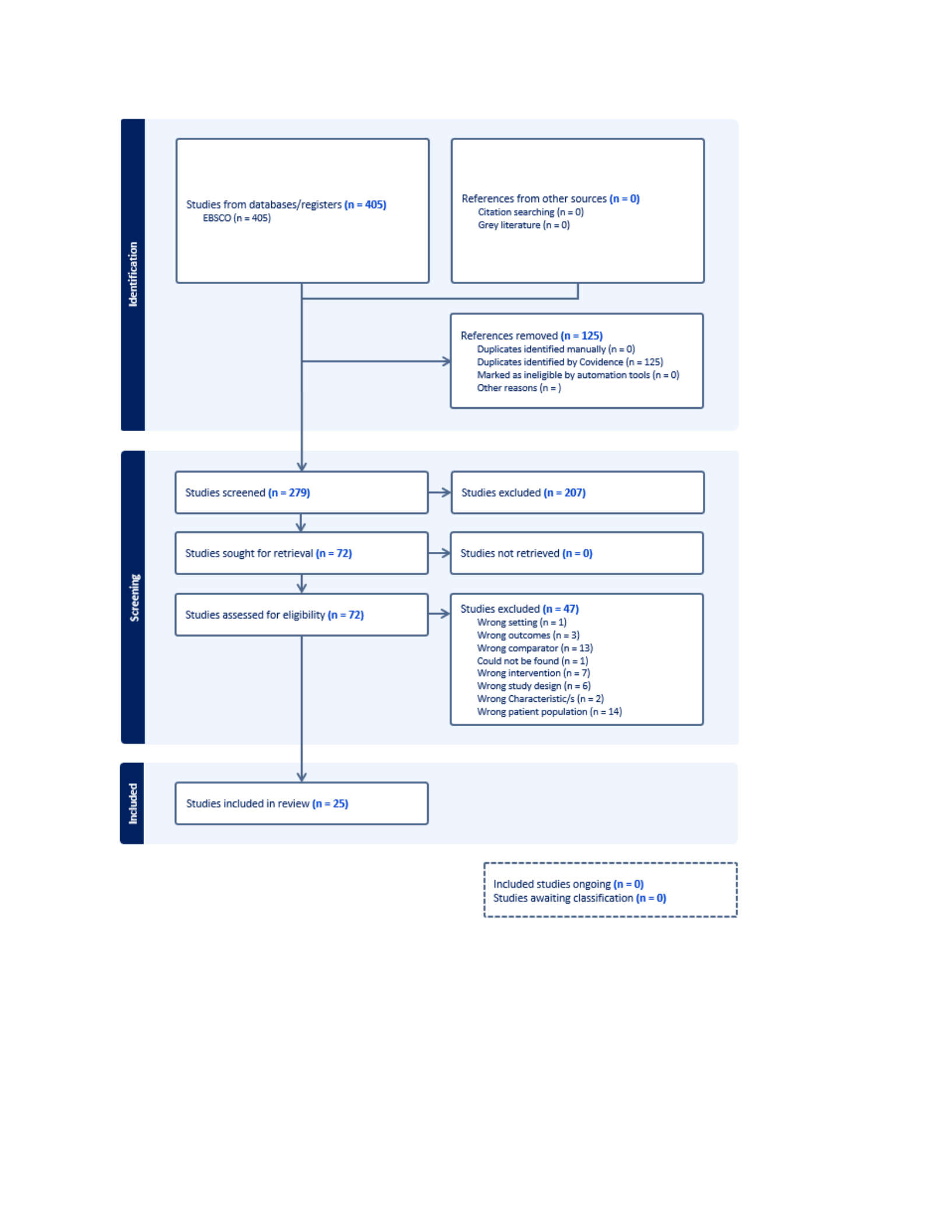
details the elimination process of the literature in a flow diagram.
Inclusion Criteria
Studies were included to continue assessing if they met the following criteria: peer
reviewed; published between January 1, 2000 and December 31, 2023; written in English;
involved an evaluation of a dating violence and/or sexual assault prevention program; study was
conducted in a country that had a Human Development Index (HDI) score greater than or equal
to 0.9 (HDI is a measure of a countries development that considers life expectancy, requirements
for education, and standard of living (10). A score of 0.9 was chosen because this would include
the most likely countries to implement a prevention program. Finally, participants were either all
middle schoolers or middle schoolers and high schoolers combined.
Exclusion Criteria
Studies were excluded from further evaluation if they met one or more of the following
criteria: involved a prevention program that mainly focused on subject material not related to
sexual violence or dating violence, such as bullying; participants were only high schoolers;
included justice involved participants; only included participants who were victims of abuse;
meta-analysis and systematic reviews; did not state outcomes; and outcomes did not measure
effect of prevention program.
Results
Study Characteristics
The characteristics of each study are listed in Appendix A as Table 1. In total, 25 studies
were included, with the aim of most (n = 23) being to evaluate the effectiveness of the
Figure 1
Systematic Review Flow Diagram

implemented programs. The remaining studies (n = 2) focused directly on feedback about the
program from the participants. The studies largely occurred within the United States (n = 23),
and the rest occurred in the Netherlands (n = 1) and Canada (n =1). Of the studies that provided
the age of the participants (n = 17), the average age was 13.15 years. The participants of each
study were either all enrolled in middle school (n = 16) or in both high school and middle school
(n = 9). Several studies in this review involved only male participants (n = 5), others only female
participants (n = 3), and some included both males and females (n = 17). The interventions used
among same-gender groups were designed to be implemented among participants of the same
gender. To account for knowledge students already possessed from experiencing a dating
relationship before, ten studies included whether their participants had been or were currently in
a relationship. Among the studies that reported on this characteristic, 58.5% of those participants
had been in a dating relationship at least once. This calculation is including a study that only
received data from participants who had dated before (26). One study did not report specific
relationship experience, but reported that 40% of participants had some sort of sexual experience
(17). One characteristic that was fairly common for the studies to include (n = 7) was the
percentage of participants on free or reduced school lunch, which averaged 57.5%. A study found
that among the schools that were involved in providing the intervention, the average number of
students enrolled in free or reduced school lunch ranged from 43 to 95% (25). Another frequently
reported characteristic among the participants was their race, which was included because many
studies focused on implementing the intervention among minority groups due to the
disproportionate rate of sexual assault and dating violence that occurs among them. Of the 25
studies included, 18 had a majority of participants that represented a minority group, five did not
state the race of their participants, and two reported the majority of participants were white.

Intervention
Details of the intervention used by each study are described in Appendix A in Table 2.
The intervention programs used in the studies varied drastically. Different programs were used
by 17 studies. While the Dating Violence Prevention Project Curriculum, IMpower, Dating
Matters & Safe Dates, an interaction-based program and a law and justice program were used by
two studies each, some of these studies used the same data (methods, participants, etc. )as each
other, but focused on different outcomes. For the latter, the pre- and post-tests measured many
things and different measurements were reported in separate papers. This review primarily
focuses on sexual assault and dating violence prevention, two topics that were an area of focus
for the majority of the studies (n = 17). Different programs focused on additional topics,
including emotional regulation, communication skills, behavior and attitude changes, physical
resistance skills, self-confidence, healthy versus unhealthy relationship behaviors, and
establishing boundaries. Although these topics are not technically the same as sexual assault and
dating violence prevention, they do help establish skills and increase knowledge that could lead
to prevention. Only two studies directly mentioned including how to find resource information
for victims of sexual assault and dating violence, although other studies could have included this
information but did not state that it was a part of their program. The amount of detail regarding
the content of the intervention varied greatly between studies; some provided the details of each
session, while others included broad themes the sessions covered.
The number of sessions, length of each one, and total length of implementing the
program can have an impact on how the information affects students and for how long those
effects last. The number of sessions for programs in this review varied, but the majority (n = 10)
included five or six. Some programs (n = 6) included between seven and twelve sessions, others

(n = 4) did not state the number of sessions delivered, and the rest ranged from less than five (n =
2), to more than twelve (n = 3) sessions. Most of the sessions were conducted in schools during
instructional time, such as in a health or physical education class (n = 19), some studies delivered
the sessions in other settings, such as at a university, during community events, after school
hours, during clubs or sports practices, even as parent-take-home content. Perhaps not
surprisingly, the studies that implemented the intervention programs after school hours often
reported the most missing data because it was difficult to ensure that participants were
completing the whole intervention. Additionally, afterschool programs had varied attendance,
unless they were delivered during mandated sports practice.
How the intervention programs are conducted is also important because the structure of
sessions may influence how much the participants will remember based on how engaged they
were during delivery. Some studies did not state how the program was delivered (n = 5), but
several studies included using role playing (n = 7), group discussions (n = 11), presentations or
lectures (n = 7), and activities that were done individually (n = 12), such as handouts, self-
reflection opportunities, or independent computer activities. Other notable components of the
intervention included parent-take-home activities, physical activities, videos, games, and dating
violence prevention posters hung around school. One study was delivered with computer
activities and involved participants completing them with their parents (29). Along with the
delivery, another aspect that can impact the student outcomes is whether those teaching the
program are trained. Of the 25 studies evaluated here, 20 involved some training for school staff
or used external resources, such as employees from a local sexual assault center.
The use of control groups can be important in determining if outcomes are related to the
intervention material. The inclusion of control groups was an integral part of the majority of

studies (n = 18) examined here. While, not exactly a control, two other studies split student
participation between male only, female only, and mixed gender groups for comparison. In the
studies with control groups, the control group either received no program (n = 6), a standard
health program but not the same program on sexual assault and dating violence that the test
group received (n = 7), or they received the intervention program later, but after the follow-up
post-tests were administered to the students in the test group (n = 3). Additionally, one study
provided a job-readiness training program for participants in the control group (15). Finally, one
study did not state what intervention program the control group received.
Taking pre- and post-tests provide information about what participants knew previously
and what they learned from the intervention program. Post-tests can also tell researchers about
the long-term impact of the program. All but one study took measurements at baseline before the
program was delivered. After the intervention was given, several studies (n = 11) took
measurements within two weeks of finishing the program. Seventeen studies delivered post-
intervention follow-up tests ranging from 6 months to 4 years.
Outcomes
The outcomes of each study are described in Table 3 of the appendix. To determine
whether the programs were effective at preventing sexual assault/dating violence victimization
and perpetration, 14 studies included questions in their pre-/post-testing that measured how often
these occurred pre- and post-intervention. The participants’ attitudes toward dating violence were
also a common variable assessed (n = 7). Only two studies did not have measures that
determined whether the program was effective at preventing sexual assault or dating violence,
but they did ask participants questions about the program (19, 31). Other notable measures taken
by various studies included gender norms, roles, stereotypes, emotional regulation, knowledge

about the topics pre- and post- intervention, self-esteem, self-efficacy, communication skills, and
myths that perpetrate sexual violence. Overall, the reported outcomes were positive, but several
of the studies that measured sexual assault/dating violence victimization and perpetration found
mixed outcomes. Several studies found no difference in sexual harassment victimization, while
others found drops in both perpetration and victimization. Among the studies measuring attitudes
toward dating violence/sexual assault, all found decreases in positive attitudes toward dating
violence and a decrease in acceptance of teen dating violence. For the two studies that recorded
students’ opinions on the intervention, they reported the following positive feedback: liking the
program content, liking everything about the Impower program, feeling more confident, knowing
what to do in a dangerous situation, liking class activities, and class discussions. Other notable
outcomes include an increase in confidence, higher scores of willingness to report, and better
conflict resolution skills. However, there were few statistically significant changes reported, as
well as some negative and unexpected outcomes. The negative feedback included: did not like
class work, did not like program length, felt the class was boring, did not like missing regular
class, and a smaller percentage reported not liking class discussions, possibly due to low
participation. The following are some unexpected findings post-intervention: an increase in
emotion dysregulation, sexual violence prevalence increased, female victimization and
perpetration increased when comparing 12-month follow-up to baseline, male victimization and
perpetration increased at 1-week follow-up, Hispanic/Latino students had a slight negative score
in prevention of sexual violence, students were more likely to perpetrate violence immediately
following intervention, and there was an increase in the prevalence of sexual harassment
victimization for a school wide intervention. Many factors could have contributed to the mixed
results.

Discussion
Summary of Findings
The results of this systematic review indicated several significant findings. First, the
prevention programs provided to students were generally effective at preventing incidences of
sexual assault and dating violence perpetration/victimization. The studies varied in what program
was implemented, location, length of intervention, and participants; however, findings showed
increases in behaviors such as self-confidence, emotion regulation, willingness to report dating
violence/sexual harassment, and willingness to intervene as a bystander. Two studies gathered
student feedback, which could be helpful in making changes to increase effectiveness.
Unexpected outcomes included six studies reporting increases in sexual violence
victimization/perpetration or insignificant changes in these measures. Because the aim of this
review was to determine if these programs are a useful tool to decrease sexual assault and dating
violence perpetration and victimization, the contradictory findings from those six studies were
not encouraging. Perhaps the findings may not be a true rise in sexual assault dating violence
perpetration and victimization. Rather, prior to the intervention, sexual assault and dating
violence perpetration and victimization may have gone unreported because students were not
aware of what were considered acts of dating violence or sexual harassment. Therefore post-
intervention, after gaining the knowledge from the program, they were more likely to recognize
and report sexual assault and dating violence perpetration and victimization. This theory may not
account for all instances that reported rise in sexual assault and dating violence perpetration and
victimization post-intervention. However, despite some unfavorable outcomes and insignificant
findings, the programs appeared to accomplish the goal of equipping students with knowledge
and skills to have healthy relationships and recognize unhealthy behaviors.

Quality of Evidence
There are concerns regarding the quality of the evidence in this review, but the data is
overall promising. There may be bias, including not reporting negative or insignificant findings
in some studies. Most of these studies were implemented in a classroom setting, and there was
missing data due to situations like absences. Typically, studies excluded data that was missing or
impartial, such as taking the pre- but not post-test, which could have affected the overall
findings. Studies also had trouble measuring the fidelity of the program, meaning ensuring that
the program is delivered the same throughout the participating schools. If one school finished
more lessons, delivered the program over a different period of time, or excluded information,
then this could have also impacted the overall findings. The biggest concern regarding these
studies, however, was that the only data that was collected was self-reported information from
student participants. This may be the only way to receive feedback, yet it does not eliminate the
possibility of students leaving out details in their responses. Taken together, these factors
contribute to the potential for missing data, which could have possibly limited the extent of this
review.
What Worked The Best
This review found that dating violence and sexual assault prevention programs show
promising effects in reducing these crimes. These intervention programs also had additional
positive outcomes that led to participants being able to recognize healthy and unhealthy
relationships, and feel more prepared if a dangerous situation were to occur. Several studies
reported unlikely findings that could question the program’s effect on students. Additionally,
almost half of the studies did not take measurements beyond two weeks of the program, so it is
unknown if the effects persisted past two weeks. However, these findings could lead to future

studies making changes to improve the outcomes and bridge gaps. Future programs should focus
on what aspects of the program had the most positive impacts. The following list includes
recommendations for what aspects of the intervention program worked the best based to include
in a future intervention program:
• Conducting the intervention program during classroom instruction over a period of time
(weeks, months, years). It was evident among the studies that the greatest amount of
participation occurred during school hours. Implementing this criterion would ensure that
the intervention is reaching the greatest number of students, that the curriculum is taught
by someone who was trained, that the curriculum is being taught the same throughout
different classes or schools, and that the information would stay with the students longer
if they were exposed to it over a greater period of time.
• Based on the two studies with student feedback and the methods a majority of studies
used to provide the materials, the best way to implement the curriculum would be
through role playing, group discussions, demonstrations, and activities for personal
reflection or independent work. Teaching the material in these ways encourages
participation, allows students to visualize the material, and provides students with an
opportunity to self-reflect. One common complaint about group activities was the lack of
participation from students. Potential ways to mitigate this would be to offer a fun
incentive, like candy or a raffle ticket for a prize, to encourage participation, or to have
students anonymously write down their questions, and then they could be answered by
the administrator. The latter method would allow students to participate if they did not
want to verbally ask their question(s).

• The most important topics to include in an intervention program are: emotional
regulation, communication skills, unhealthy vs. healthy dating behaviors, sexual violence
prevention (including harassment and assault), dating violence prevention, setting
boundaries, physical resistance, and resources for help-seeking. These topics represented
the majority of what the studies included. Sexual violence prevention was typically
taught to older students (eighth grade and above), while dating violence and relationship
characteristics in general were taught to younger students. It is important to include
physical resistance if students are put in a place where using force may prevent harm
from occurring. Only two studies directly mentioned resources for victims to seek help.
This is critical to include because students may not know what they can do or who to go
to if they are a victim of sexual or dating violence.
Future Recommendations
One motivation of this study was to raise awareness about what traditional sex education
could include. These studies provide key topics that could directly result in less dating violence
and sexual crimes being committed. Something that may have been helpful to include would be
what the comparison group’s intervention consisted of. Of the studies with a comparison group,
seven implemented the “usual health program”. Some of the studies reported favorable results
within the comparison group. It would have been helpful to know what information the control
group received to cross-reference and see if there were any overlapping themes in the material.
Then any outcomes that seemed to occur only within the intervention group could be added to
the “usual health program”. Similarly, other than the two studies that collected students’ opinions
on the program, there was no mention of what part(s) of the program may have worked or not
worked, which is a severe limitation of the studies. A recommendation would be to include

questions on pre- and post-tests to measure what part of the program students liked or disliked
and what they would recommend. Linking unfavorable results directly to a part of the program
would be difficult, but student feedback may help. Additional recommendation for future studies
would include:
• It was prevalent that studies thought students were recognizing past behaviors and
answering accordingly in post-tests. Future studies should ensure that students do not
include pre-intervention behaviors in the surveys, possibly by adding a disclaimer or a
time stamp e.g. Have you done this in the past three months?
• Only two studies explicitly stated their intervention included help-seeking advice for
victims. The majority of sexual assaults are unreported, so including who victims could
go to for help and what resources are available to them would be beneficial and
hopefully reduce unreported crimes.
• It seemed these studies focused on sexual crimes being committed by dating partners.
However, it is known that anyone could commit these crimes, such as family members,
friends, or random people. It is recommended that future studies take this into
consideration and include material, such as “red flags” that could be seen out in public or
whom to seek help from if a family member is the abuser.
• Another recommendation would be to provide additional post-tests to participants over
six months post-intervention. These post-tests could provide researchers with helpful
information regarding if participants are retaining the knowledge learned from the
program.
• If these programs start at the beginning of sixth grade, additional material catering to
when they reach seventh and eighth grade could be given to maintain effects for longer.

Conclusion
This review determined whether the literature on sexual assault/dating violence programs
had favorable effects on preventing these sexual and/or dating violence from occurring. Overall,
studies reported participants were involved in less victimization and perpetration than pre-
intervention and other favorable outcomes occurred as well. The current sex education program
in the United States and around the world needs to be reconfigured to include the characteristics
of these studies that were found the most impactful. Not only could it decrease the rate of sexual
assault and dating violence occurring among adolescents, but it could then further lead to these
incidents occurring less in college, prevent revictimization, and decrease the diagnosis of
depression and abuse of drugs that could result in being a victim of these crimes. Further
research is necessary to determine whether aspects of the current health education program are
helping decrease the rate of these crimes. Also, future research should gather student feedback to
better tailer the curriculum to the target audience, eliminate the possibility of past behaviors
negatively affecting results, provide more information regarding resource seeking for victims,
and measure the effects over a longer period of time to see if they persist. If a study implemented
these changes, the findings could be more favorable and liked among participants. Overall,
sexual assault and dating violence prevention programs have shown to positively impact
students’ knowledge regarding these topics and can better equip them to lead healthier
relationships, and prevent harmful situations.

