Behavior Modification Project: Baseline Phase Report
Target Behavior
The behavior being observed is praying. Caaps (2002) defines prayer as a verbal act of
request, praise, and thanks to a being called God, and at the end, saying “Amen.” Praying may
include a distinct set of body postures, such as being seated, head bowed, and eyes being closed
(Luhrmann, 2012). Another description of praying includes speaking softly and having a quiet
behavior while praying (Luhrmann, 2012). For this study, praying will be defined as expressing
gratitude, asking for guidance and reassurance, and expressing repentance. They will be broken
up into three prayers throughout the day.
The morning prayer before getting out of bed will happen after the participant’s eyes
open for the first time that day. The morning prayer will be expressing gratitude, an example of
what the first prayer will say is along the lines of thanking God for allowing me to wake up this
morning. A second prayer will be conducted around lunchtime; the prayer will be praying for
guidance and reassurance. For example, if the day is not going as planned, pray for Him to guide
you through the rest of the day and provide a sense of peace and strength to push forward. A third
prayer, before going to bed for the night, is to express gratitude, ask for guidance, and express
repentance. An example of the final prayer is thanking God for another day, please continue to
reassure the path You are guiding me down, and please provide me with the strength to continue
to live my life through You, God.
Observation Period & Dimensions
This experiment’s structured observation was regularly recorded in a journal three times a
day: in the morning, at lunchtime, and right before turning off the lights to go to sleep at the end
of the night. A quantifiable system to track each prayer includes a journal to record the number
2
and duration after each prayer. The measurements were recorded seven days a week. Journaling
will take place after each prayer, therefore, taking the journal throughout to include the second
journal is required for this study. Once the observation period was complete, the data was
translated into a graph showing the dimensions of three prayers measured throughout the day
over seven days, from March 31, 2025, to April 6, 2025.
Results
The first prayer was finished around 6:45 am, and the participant would wake up each
morning at 6:30 am. The stimuli that kept this target behavior consistent was followed up with a
coffee. Lunch hour at the participant’s work led to the success of their second prayer at 1:00 pm,
the stimuli being a sweet dessert. The final prayer concluded the participants day at 10:00 pm,
leading to the final stimuli using lavender oil to bring peace into their night. No disturbances
needed to be noted due to the success of this observation. The data indicated that each of the
three prayers with conducted, each of the seven days between March 31, 2025, to April 6, 2025.
3
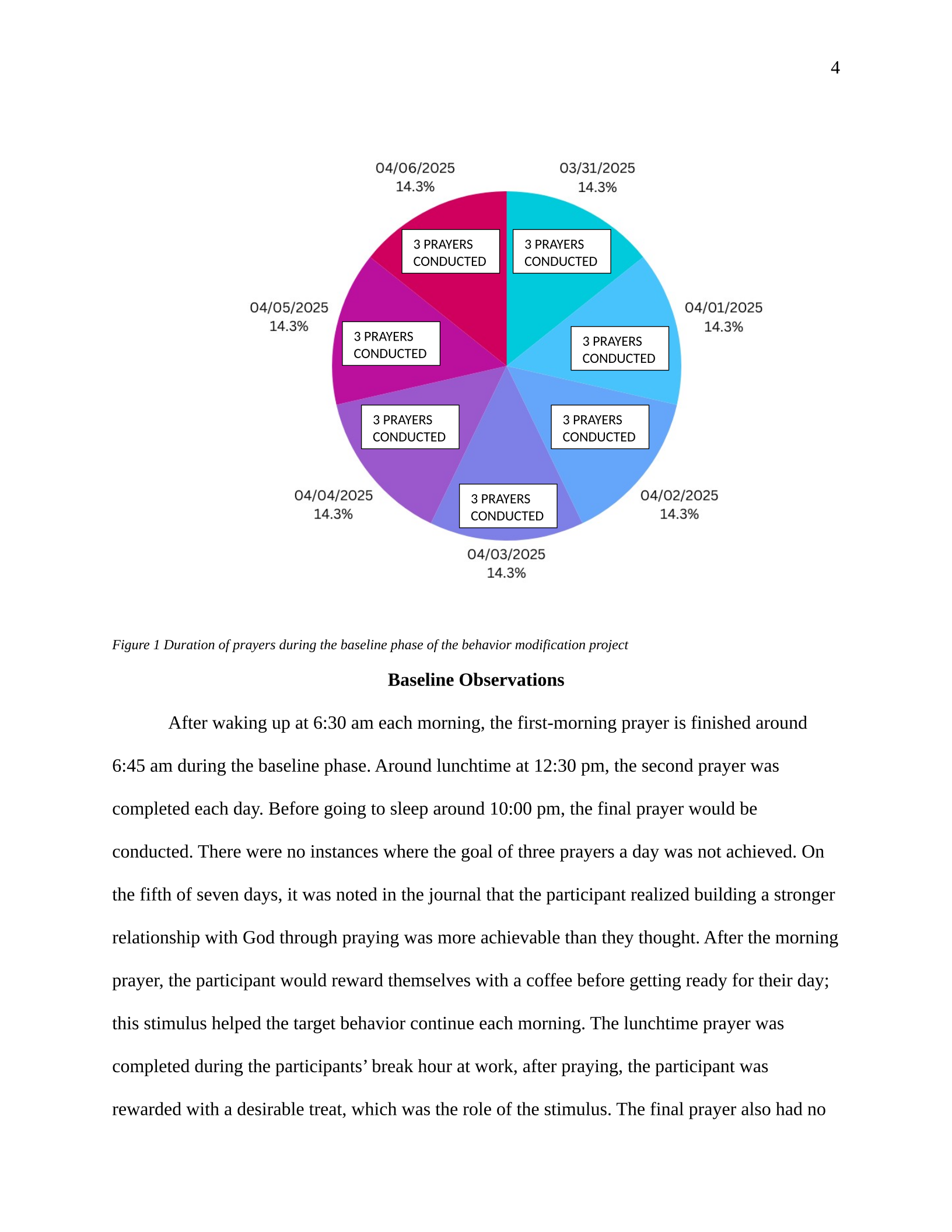
Figure 1 Duration of prayers during the baseline phase of the behavior modification project
Baseline Observations
After waking up at 6:30 am each morning, the first-morning prayer is finished around
6:45 am during the baseline phase. Around lunchtime at 12:30 pm, the second prayer was
completed each day. Before going to sleep around 10:00 pm, the final prayer would be
conducted. There were no instances where the goal of three prayers a day was not achieved. On
the fifth of seven days, it was noted in the journal that the participant realized building a stronger
relationship with God through praying was more achievable than they thought. After the morning
prayer, the participant would reward themselves with a coffee before getting ready for their day;
this stimulus helped the target behavior continue each morning. The lunchtime prayer was
completed during the participants’ break hour at work, after praying, the participant was
rewarded with a desirable treat, which was the role of the stimulus. The final prayer also had no
3 PRAYERS
CONDUCTED
3 PRAYERS
CONDUCTED
3 PRAYERS
CONDUCTED
3 PRAYERS
CONDUCTED
3 PRAYERS
CONDUCTED
3 PRAYERS
CONDUCTED
3 PRAYERS
CONDUCTED
4