EXCEPTIONALITY CHART
Exceptionality Chart
Liberty University
Melanie Flynn
1
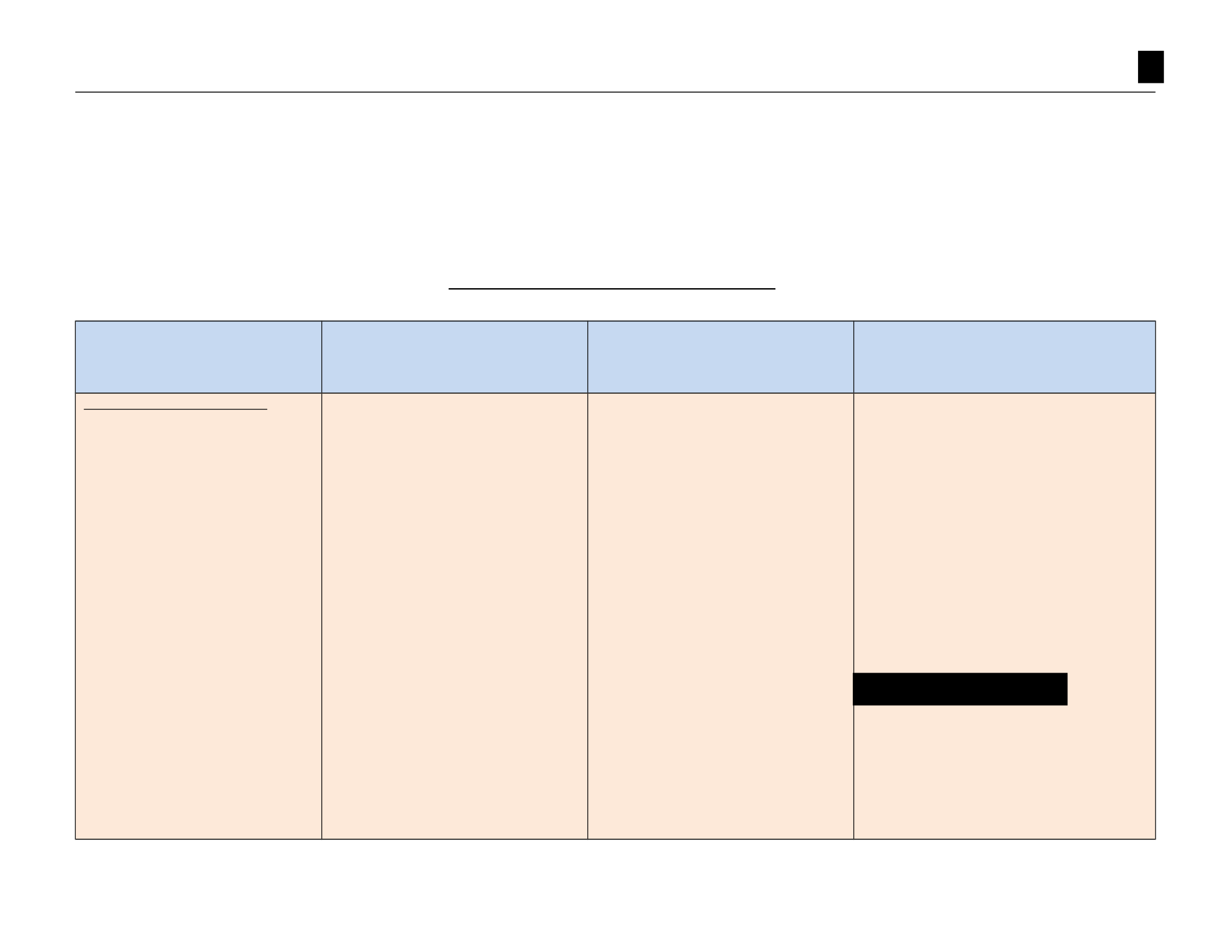
EXCEPTIONALITY CHART
EXCEPTIONALITY CHART
EXCEPTIONALITY
&
DEFINITION
CRITERIA FOR
SERVICES
CHARACTERISTICS GENERAL TEACHING METHODS/
INSTRUCTIONAL STRATEGIES/
TECHNOLOGY
Autism Spectrum Disorder
“A variety (or ) of related spectrum
disorders that affect a child’s social
development and ability to
communicate and that include
unusual behavioral manifestations
such as repetitive motor
movements” (Kirk, et al, 2015,
p.143).
DSM-5
An individual must meet criteria A, B,
C, and D:
A. Persistent deficits in social
communication and social
interaction across contexts, not
accounted for by general
developmental delays.
B. Restrictive, repetitive patterns
of behaviors, interests, or
activities.
C. Symptoms must be present in
early childhood (but may not
become fully manifest until
social demands exceed limited
capacities).
D. Symptoms together limit and
impair everyday functioning.
(Kirk, et al, 2015, p146)
Lack of Theory of the Mind
(the ability of human beings to
understand the thinking and
feelings of other people that’s
necessary for understanding,
predicting, and shaping the
behavior of others).
Acting out or aggressive
behavior due to limited ability
to communicate.
Hypersensitivity to sensory
stimuli
Trouble with important
thinking skills like decision-
making, problem solving,
executive function, and the
more complex mental
processes of reasoning and
evaluation.
Difficulty with a range of
motor skills such as gross
motor, fine motor, and motor
planning.
(Kirk, et al, 2015, pp. 148-150)
Early intervention and early
diagnosis
Naturalistic intervention Peer-
mediated instruction and
intervention
Social narratives of social stories;
Comic strip conversations
Prompting; visual supports
Creating Structure
Improving Social Skills
Functional Behavior Assessment
Assistive Technology (voice output
communication aids)
Focused Intervention Practice
Comprehensive Treatment Models
(TEACCH, EIBI)