


Balancing Moments

moments = turning effect of a force.
(teacher said “like torque” but we’re not
using that word here).
formula →
Moment = Force × distance (⊥ to pivot).
pivot = the point thing spins about.
hinge, seesaw middle, spanner nut, etc.
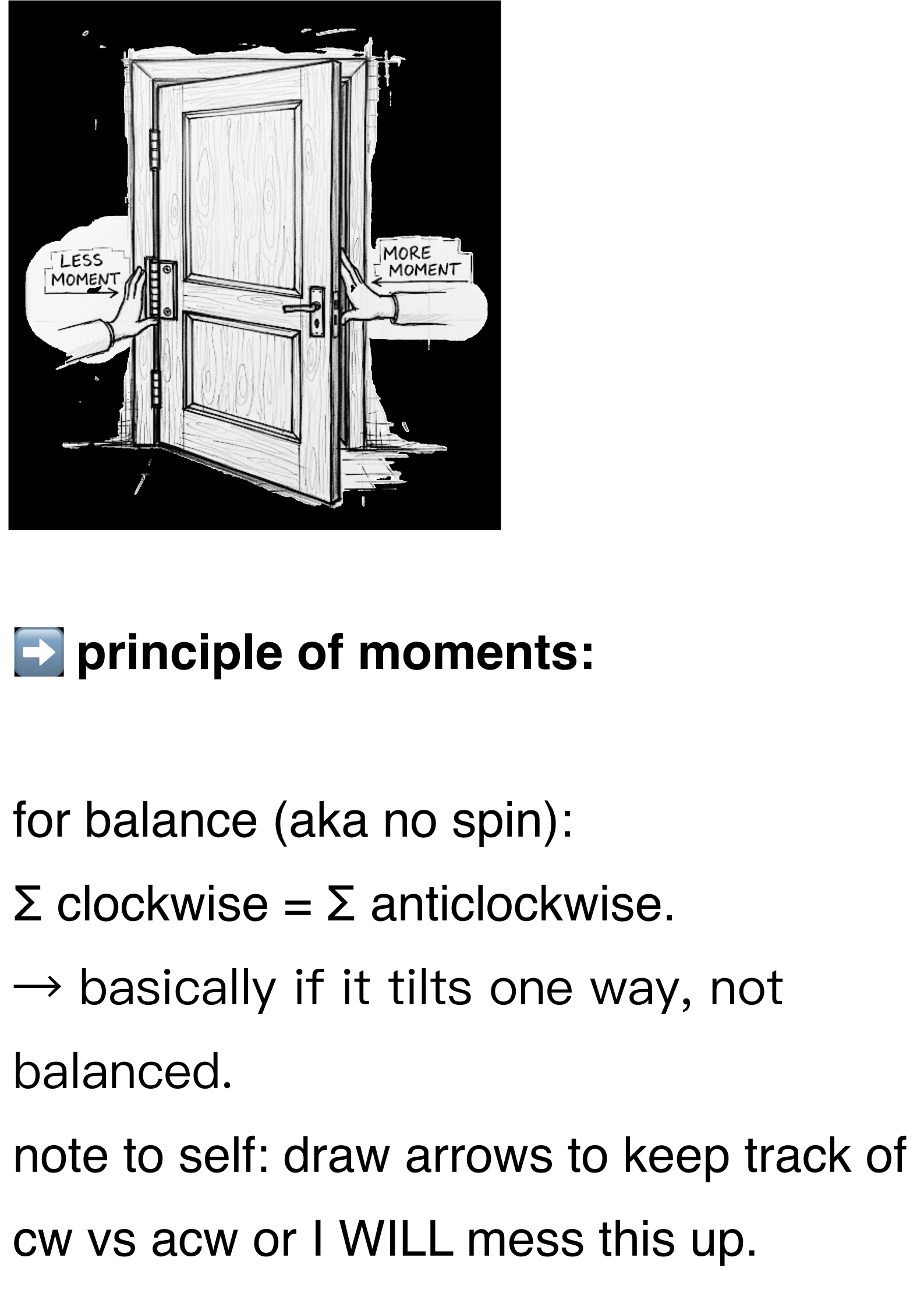
door example → push near hinge =
dumb, doesn’t open. push far out at
handle = works. why? lever arm bigger
→ more moment.
➡
principle of moments:
for balance (aka no spin):
Σ clockwise = Σ anticlockwise.
→ basically if it tilts one way, not
balanced.
note to self: draw arrows to keep track of
cw vs acw or I WILL mess this up.

➡
example 1 (easy one, like seesaw
kids):
child A = 300 N @ 2 m.
child B = 400 N @ ???
cw = 300×2 = 600 Nm.
balance → acw also = 600.
so 400×d = 600 → d = 1.5 m.
so heavy kid sits closer in (yep, like real
life when we played seesaw).

➡
things I keep screwing up:
forgetting “⊥” → if force at angle,
only ⊥ part counts.
wrong pivot → gotta pick correct
axis.
cw vs acw (sometimes flip them lol).
units → Nm (Newton metre). looks like
energy (also Nm) but diff thing!! →
context matters.
➡
example 2 (beam problem)
beam length 5 m, uniform, w = 200 N.
⁃
⁃
⁃

pivot at end. add 300 N at 4 m. support
force?
calc:
beam’s weight acts at middle = 2.5 m.
so cw = (200×2.5) + (300×4).
= 500 + 1200 = 1700 Nm.
acw must = 1700. if support force = 500
N → dist = 1700/500 = 3.4 m.
so support placed 3.4 m from pivot.

➡
real life vibes:
spanner = longer handle = less
muscle needed.
rowing oar pivot @ oarlock, rower
pulls far away.
ladder against wall → if forces don’t
balance, slip. scary.
⁃
⁃
⁃

