



Capstone Design Paper: Management of Weight Gain in Adults with Schizophrenia on Second-
Generation Antipsychotic
Weight gain and obesity are problems prevalent in patients with schizophrenia compared
to the general population. The prevalence of obesity in people with schizophrenia has been
reported to be anywhere from 1.5 to 4 times higher than in the general population (Faulkner,
2010). Even though weight gain and obesity may be a problem for individuals with
schizophrenia before the start of treatment with antipsychotics, studies indicate that use of
second-generation antipsychotics (SGA) leads to significant weight gain in this population
(Manu et al., 2015; Panariello, De Luca, & de Bartolomeis, 2010; Vieweg, & Hasnain, 2012).
The SGA-induced weight gain and obesity in patients with schizophrenia has become a
nationwide epidemic that lurks in the American population and a global problem as well.
Therefore, the purpose of this change project is to delineate the exercise program and education
on dietary strategies as evidence-based practice interventions which will address the weight and
obesity problem in patients with schizophrenia on SGA.
Problem of Interest
The use of SGAs has revolutionized the treatment of patients with psychotic features,
particularly in those with schizophrenia. With advancement in scientific research on
psychopharmacology, SGAs have become the first line of treatment for mood disorders and
psychosis in patients with schizophrenia, and other related disorders, such as Bipolar (Vieweg, &
Hasnain, 2012). Although excess body weight in patients on antipsychotics has been
documented for over 40 years, with 40-80% of such individuals experiencing weight (Maayan, &

Corell, 2012), this side effect is especially problematic in patients with schizophrenia who are
taking SGA.
While SGAs were initially thought to have fewer side effects than the first-generation
(Vieweg, & Hasnain, 2012), it quickly became evident that these medications were associated
with rapid increase in weight in the first few months, and was the major cause of obesity for
patients with schizophrenia ((Fenton & Chavez,2006; Keltner, 2006). The increase in weight for
a patient with schizophrenia is due in part to SGA's induced-hypermetabolic state that may have
an adjuvant role in increased appetite, which causes an increase in caloric intake due to
frequently eating at night (Manu et al., 2015). This behavior greatly contributes to the weight
gain.
Panariello, De Luca, and de Bartolomeis, (2010) reported that significant weight gain
related to the use of SGAs may affect the compliance of pharmacotherapy in patients with
schizophrenia because of the stigma associated with obesity and negative body image. Vieweg
and Hasnain, (2012) and Weiden, Mackell, and McDonnell, (2004) also posit that there is a
significant, positive association between obesity and subjective distress from weight gain and
medication noncompliance. Maayan and Corell, (2012) and Joe and Lee, (2016) indicated that
medication noncompliance is a major barrier to better health outcomes for people with
schizophrenia, and is a major risk factor for relapse. Relapse often leads to the reoccurrence of
psychotic symptoms. This eventually may lead to hospitalization, which further complicates the
treatment of patients with schizophrenia. Weight gain and obesity also increase the risk of onset
of type 2 diabetes mellitus and cardiovascular disorders, which affect the quality of life in this
population (Manu et al., (2015).

Studies also indicated that the medical service utilization by patients with schizophrenia
who were non-adherent to medication, was related to a higher number of medical comorbidities,
and was found to be responsible for 60% of premature deaths in patients with schizophrenia (Joe
and Lee, 2016; Manu et al., (2015). The chronic medical conditions related to weight gain and
obesity such as diabetes mellitus, hypertension, and hyperlipidemia in patients with
schizophrenia on SGA have also been associated with an increased annual health care costs for
their treatment and management (Chwastiak et al., 2009). Therefore, weight gain and obesity in
patients with schizophrenia is a significant clinical problem that warrants the need for an
evidence-based practice (EBP) intervention.
Review of the Literature
In order to guarantee that the uppermost quality of healthcare is being provided along
with producing best patient outcomes, EBP is the most relied delivery care system (Melnyk and
Fineout-Overholt, 2015). Patients with schizophrenia have a higher propensity for weight gain
and obesity compared to the general population (Vella and Pai, 2011). Weight gain and obesity
have been associated with increased risk of health-related complications, which contribute
significantly to the poor quality of life and increased risk of death in patients with schizophrenia
on SGAs (Vandyk & Baker, 2012). Based on the identified clinical problem of weight gain in
patients with schizophrenia on SGAs, a literature review identified strong evidence that supports
healthy lifestyles changes in weight management.
Findings from several studies indicate that healthy lifestyle change through exercise and
dietary strategies are the interventions of choice to help with weight management in patients
with schizophrenia on SGAs (Faulkner, Cohn, and Remington, 2010; Manu et al., 2015; Poulin

et al., 2007; Usher, Park, Foster, and Buettner, 2013). Faulkner, Cohn, and Remington (2010)
conducted a systematic review of randomized controlled trials (RTCs) to determine the effects
of both pharmacological (excluding medication switching) and non-pharmacological strategies
for reducing weight gain in patients with schizophrenia. The authors reported that there was
significantly greater weight reduction in the cognitive behavioral interventions group involving
lifestyle changes (n=129, 3RCTs, weighted mean difference (WMD) -1.69kg, fixed 95% CI[ -
2.8 TO -0.6]) compared with standard care, while no significant change in weight reduction
was found with pharmacological intervention(n=112, WMD, -0.27, fixed 95% CI [-2.2 to
1.6]). Faulkner, Cohn, and Remington (2010) concluded that initiating and maintaining a low-
cost exercise program and discussions on healthy eating as a healthy lifestyle change had a
better outcome in weight management compared to pharmacological interventions for patients
with schizophrenia on SGAs.
Manu et al. (2015) conducted a meta-analysis of RCTs published between 2005 and 2014. The
authors reported that following behavioral interventions of exercise and dietary management in
810 patients in the meta-analysis, the results indicated a significant reduction in weight (-3.13kg;
BMI (-0.94kg/m²), waist circumference (-3,6cm) and body fat (-2.82%). The authors concluded
that intensive lifestyle interventions with increased physical activity involving walking 2-3 times
per week for 30minutes, with endurance activities and, adherence to diet management of reduced
caloric intake, the amount of weight loss was enhanced and maintained.
Usher, Park, Foster, and Buettner, (2013) conducted an experimental randomized control
trial on 104 participants (mean BMI of 33.71kg/m²) with schizophrenia (84.2%) and other mental
disorders (15.8%), to measure weight loss and medication compliance. The authors concluded
that multi-modal approaches which include a combination of education, healthy lifestyle,

behavioral, and exercise intervention with diet strategies are more likely to be effective in
reducing weight in the longer term than any of the interventions on their own.
In another study by Poulin et al. (2007), the authors conducted a prospective,
comparative, open and naturalistic; a descriptive and qualitative study and concluded that body
weight and metabolic risk profile in patients with schizophrenia receiving SGAs can be managed
with a weight control program including physical activity. Dietary strategies were not included in
this study. Therefore, these studies indicate that there is a strong EBP research to support healthy
lifestyle changes through exercise program and education on dietary strategies as an efficacious
intervention to manage weight gain in patients with schizophrenia on SGA.
Based on the rigorous review of the literature, the EBP interventions of an exercise program
and education on dietary strategies will be implemented for the practice change project in a six
weeks periods to address the weight gain and obesity problem at the clinical site for patients with
schizophrenia treated with SGA.
Purpose of Project
This is an evidence-based practice (EBP) change project that is based on research
findings that strongly support the use of an exercise program and education on dietary strategies
to manage weight gain problem in patients with schizophrenia on SGAs, with the ultimate goal
of improving medication adherence and overall treatment goals in this population. The practice
change project will involve providing education on the modalities of engaging in an exercise
program and dietary strategies as an EBP intervention to improve weight management and
enhance body image in patients with schizophrenia treated with SGAs.

In the practice change project the shorter version of the Body Shape Questionnaire (BSQ-
14) (Dowson and Henderson, 2001) and Body Mass Index (BMI) (Arterburn et al. 2010) tools
will be used as pre-intervention measures used to evaluate the perception of body shape which
greatly affects the body image in relation to weight. The focus will be to measure the effect of
weight gain and obesity on the body image as a subjective parameter in relation to weight pre-
intervention, followed by EBP implementation of an exercise program and education on dietary
strategies for the purpose of weight management. The intended outcomes of the intervention will
be the following: 1) weight loss; 2) and enhanced body image, which will lead to improved
medication adherence, all of which will contribute to improved overall treatment outcomes.
There will be other benefits tied to these outcomes, such as increased knowledge for weight
management, improved mental well-being, improved sleep, and decreased risks for chronic
diseases, such as diabetes type 2, hypertension and dyslipidemia which contribute to
cardiovascular-related deaths.
Project Management
Readiness for change.
The leadership in the organization where the change project will be implemented has
been very supportive to the project manager's ideas from the initial phase since this will be the
first change project of its kind in this organization to address the problem of weight gain and
obesity in patients with schizophrenia. All of the stakeholders; the top management, chief
psychiatrist, the director of the program, and also two other psychiatric nurse practitioners in the
clinical site were on board and approved the suggested interventions to the change project to
address the clinical problem. The organization is ready for the change because the top

management have fully embraced the change project and is willing to apportion resources
towards the success of this change project since its goal and outcomes will not only help the
clients stay healthy and reduce medical conditions related to weight gain and obesity but also
will eventually be cost-effective in treating patient with schizophrenia and other patients
psychotics treated with second-generation antipsychotics. The director of the chief operation
officer agreed to equip the gym and provide all of the necessary materials and any official
guidance needed for implementation of the intervention.
Interdisciplinary Collaboration.
Successful implementation of a change project is based on the collaboration between a
project manager/implementer and a team of inter-professional who will work together to ensure
that the goals set at the beginning of the project are achieved with best outcomes (Harris,
Roussel, Dearman and Thomas,2016). Harris et al. (2016) also posit that “a team is formed based
on the needs of the project to be completed” (p.148). According to Ogrinc et al. (2012), "a team
is not just a group of individuals assembled; teams require proper formation and management”
(p.30). Therefore, to form an inter-professional team required the project implementer to create
an executable work plan which delineates the goals of the project, taking into consideration of
the stakeholders, and defines what role each of the team members will play for the success of the
project. The team formed for the practice change project includes the Project Implementer (PI),
the Director of the Program, the Chief Psychiatrist of the facility, a Doctor of Nurse Practice
Psychiatric Nurse Practitioner (NP), the facility dietician, the facility Information Technology
(IT) personnel coordinator, the units’ therapists and the gym attendant who is in charge of the
facility gym. The gym attendant is a licensed and certified trainer and will be coordinating all the
exercise programs within the gym during the implementation phase.

The program director will be the point person for the execution of various administrative
issues and also liaise with the facility's top management for any direction on the change project.
The chief psychiatrist and the DNP NP will be in charge of checking the progress of the project
and contributing to the ongoing planning and ultimate execution of the project. The dietician will
be the point person who will be involved in dietary strategies education and planning, and also
ensure that the client's participating in the change project receive right portions during the meal
time for dietary management portion of the intervention. The units' therapists will organize and
guide the selected clients during the educational sessions and exercise program and will keep the
record of the participants once they are out of the unit and liaise with project implementer to
confirm such records. The IT personnel will be involved in coordination of data management;
storage and retrieval of protected patients' information after the consent of the patient. The PI
will be the project manager who is involved in the planning and execution of the project. The
plan for collaboration will include ongoing meetings as needed and when scheduled by the team,
conference call and staff updates as the implementation process is being executed.
Risk assessment.
For a successful implementation of a practice change project, it is critical to conduct a risk
assessment in order to provide context and direction for the project. Identifying “strengths,
weaknesses, opportunities and threats” (SWOT analysis) (Harris et al. 2016, p.149) will be used
in collaboration with the team members, taking into consideration all of the stakeholders.
Strengths. The strength of this practice change project is the formation of a motivated
team of inter-professional, who are highly trained and knowledgeable in providing care to
individuals with psychiatric and mental illness in the clinical site. The task of ensuring that this

team works cohesively for the success of the project is through the project implementer (PI)
providing succinct goals and objectives and strategies with a clear timeline, and matching project
tasks to available resources (Harris et al. 2016). A good communication skill is a great asset and
strength of the PI in managing the project process by involving all the stakeholders. The
willingness by the stakeholders particularly, the facility’s director, the agency’s chief executive
officer, the chief psychiatrists and the PI’s preceptor to work closely with the PI for the success
of this project is a great strength and an asset.
Weaknesses.
The weaknesses identified in this practice change project include the challenge of
motivating participants to engage in exercise and dietary strategies to manage weight. Studies
indicate that one of the greatest challenges with weight management in patients with mental
illness, particularly those with schizophrenia, is a lack of motivation to engage in meaningful
physical activities (Manu et al., 2015; Poulin et al., 2007). This is one weakness which will need
to be addressed before and during the implementation process. Another weakness is limited
space in the facility where the participants can engage in warm-up exercises involving walking
and stretching. The space can only accommodate ten participants; therefore, the PI will have to
divide the participants into three groups, which will be time-consuming.
Opportunities.
One opportunity that this practice change project will avail to patients with schizophrenia
is the time to engage in meaning physical activities which will also increase their socialization
skills as well as enhance their moods, thereby improving their effect. Engaging in physical
exercise and dietary strategies will help alter and improve participants' lifestyle from sedentary

status to a more active lifestyle. This is different from the traditional encouragement by the
providers to engage in physical activities, without a follow up of whether such activities are
carried out after the patients leave the program by the end of the day. The positive outcomes
from the change project can be disseminated to other facilities under the umbrella of this agency.
This will be a great opportunity to apply the EBP interventions to help other clients/patients with
the same problem. Another opportunity will be the chance to utilize the facility gym which has
not been utilized in the past and only very few patients use it. This will avail more hours for the
certified gym attendant who is currently underutilized in the facility since not many patients use
the gym.
Threats.
Time management is another weakness which might impact on this project. Working in
this facility, it is evident that clients take their time to move from one task to another and some
may not even follow the instruction due to the disease process. It may, therefore, take time to
mobilize the participants during the changing time from one group to another. Some participants
may want to extend more than the apportioned time, and thus interfere with the time
management during the different shifts of the exercise program. Other weaknesses identified in
the project is the possibility of the participants dropping from the intervention process due to
inability to endure the exercise program, and also some patients choosing dietary strategies and
not exercise. This will be a barrier as well as a treat to the intended outcomes.
Another threat is in the area of funding the upgrade of the gym with additional equipment
and paying the gym attendant for additional hours for the supervision and training of the
participants. Even though the director was promised the funds would be made available, the

timing of the funds may be a threat to the project. Teamwork is vital to the success of change
project implementation. If the goals of the team are not met, this can be another threat which can
adversely affect the outcome of the project.
Strategies to overcome barriers.
Collaboration and proper communication with the stakeholders and all of the team
members (Harris et al. 2016) will be critical in order to minimize any threat of team
cohesiveness. The PI will have to plan and involve all the stakeholders of the timeline of the
implementation and provide clear goals and objective, and strategies for achieving them in the
time allocated for the practice change project. The PI will also have to have regular meetings
with the director of the facility to ensure that all the required funding for the upgrade is done
before the project implementation. For the participants not following instructions, and the
possibility of sustaining injuries, a close supervision by both the PI and the gym certified
attendant will be maintained. Providing bi-weekly reviews and celebrations will encourage the
participants to continue as they share and learn from other participants the success and benefits
of the exercise program and dietary strategies.
Organizational Approval.
The approval process in the organization will involve and include a general consensus of
all of the stakeholders being in agreement with all the major decisions being made for the
purpose of project implementation. Before the implementation, all the team members and
stakeholders will need to compromise on ideas and strategies used in the planning of the project
prior to the start. The project manager will present a detailed planning and implementation
strategies; "considering all the overall aims, goals, outcomes, costs and budgets simultaneously"

(p.148) (Harris et al. 2016). This will help in brainstorming on any issues which may arise as a
barrier or a threat. The site where the change project will be implemented has a director who is
in-charge of the facility. The PI will liaise with the facility director for the organizational
approval.
Information Technology
According to Hebda and Czar (2013), for healthcare professionals to “provide safe,
efficient, quality care,” (p.5), good information technology management will be required in order
to provide necessary resources for the providers to use. Therefore, the information technology
will play a key role in the practice change project in the formation, gathering data, analysis, and
synthesis of the outcomes to determine the success of the project. The information technology
will be used to download important documents, such as informed consent forms to be signed by
the participants, waiver forms, medical clearance forms and fliers to sensitize patients and staff
within the facility about the project goals and objectives. The PI will work in collaboration with
IT personnel to coordinate the safety of data handling and management. The IT personnel will be
in-charge as an honest broker to work on de-identification of participants’ identity in order to
ensure privacy and confidentiality (Hebda & Czar 2013). This process will be important during
the data analysis where the participants’ identity will not be disclosed.
Plans for Institutional Review Board Approval
An expedited type review proposal will be requested from Institutional Review Board
(IRB). The IRB approval will be sought from Chatham University. The project implementation
date will be from May 2018 (See Appendix: A) for IRB proposal.
Materials Needed for Project

The materials needed to implement this project will include the printed shorter version of
Body Shape Questionnaires (BSQ-14) tool, papers, and pencils/pens to conduct the survey. 8X10
sheets of paper will be required to print the BSQ-14 tool, a minimum of 30 copies and a
maximum of 40 depending on the number of participants anticipated based on the census of
patients with schizophrenia on SGAs. Also, approximately 60 handouts will need to be included
to explain the BSQ-14, and its guideline and purposes. In order to recruit candidates for the
practice change project flyers will need to be printed and made available. Approximately 60
flyers will be printed for distribution to patients and staff. Other materials needed are printed
handouts of an educational PowerPoint presentation which will be used to disseminate
information on exercise program and education on dietary strategies. These handouts will be
used in conjunction with PowerPoint presentation in the recreational room where the participants
will be meeting for briefing and educational sessions. About 40 printed copies of the PowerPoint
presentation will be required. Also after the six weeks of the implementation, each participant
will need one self-appraisal form (See Appendix: I), which will assess participants’ motivation
and satisfaction in the exercise program and dietary strategies. A laptop computer with office
2010 program will be needed for the data collection, data storage, preparation for PowerPoints,
preparation of flyers, analysis of data, and computation of the results and expected outcomes. An
external hard drive and or flash drive will be needed to store data and only available to the PI. A
lockable file cabinet will also be needed to store all the surveys collected and only PI will have
access to the key. Finally, a gym equipped with necessary exercise equipment such as five
stationary bicycles, five treadmills, and five stretching mats for warm up before exercise and
warm down at the end of the exercise program. A digital weighing scale will also be part of
equipment needed for weighing participants pre and post-intervention.

Plan for Project Evaluation
Outcomes Measurement.
Harris et al. (2016) described project evaluation as the “effort made to measure the
impact of project-based change” (p.216) and may involve constant evaluation during the
implementation process in order to provide feedback to the stakeholders on how the project is
progressing. For this practice change project there will be two measurable outcomes which will
be evaluated for the success of the project; 1) Weight loss, and 2) enhanced body image
measured through the BSQ-14, which will lead to improved medication adherence, all of which
will contribute to improved overall treatment outcomes.
Weight.
Participants will be weighed during the first week following recruitment to participate in
the practice change project. A digital weighing scale will be used. The weight will be recorded
pre-intervention as (Pre Weight) prior to implementation of the exercise program. At the end of
the sixth week, the participants will be weighed again and weight recorded post intervention as
(Post Weight).
Body Image.
Body image will be measured by the Body Shape Questionnaire-14(BSQ-14). The BSQ-
14 was developed as a modification of the original Body Shape Questionnaire which was 34
items (Dowson and Henderson, 2001). The BSQ-14 has been shown to have a high construct and
convergent validity and also has demonstrated a high reliability with an internal consistency
(Cronbach’s Alpha 0.93) and also high test-retest reliability (Dowson and Henderson, 2001;

Kapstad, Nelson, Overas, and Ro, 2015). The survey has 14 items, which use 1-6-Likert scale:
Never, rarely, sometimes, often, very often and always, and takes about 15minutes to complete
using a pencil/pen. The perception of the body shape which affects the body image will be
compared pre and post intervention (See Appendix: H)
Data Management.
The PI will be responsible for data management and safety in collaboration with IT
personnel. An external hard drive and or flash drive will be needed to store data and only
available to the PI and may be made accessible to IT for the de-identification process during the
data analysis. A lockable file cabinet will also be needed to store all the surveys collected and
only PI will have access to the key.
Data Analysis.
The results from both outcomes pre and post will be reported and analyzed using
descriptive statistics, such as mean and standard deviations. Using the t-test will further look at
the differences between the two groups of means from the two samples. To compare the two pre
and post data, a benchmark score of 30 % decrease in the BSQ-14 (which will assess the body
image outcome), and also 20 % decrease in weight will be set by the PI. If a patient achieves
either of these or both of these benchmarks, the intended outcome(s) will have been met and will
show a positive direction into the weight management or enhancement of body image, with the
eventual improvement in medication adherence as a long-term goal.
Planned implementation steps
Setting.

The practice change project will be implemented in a facility with a population of about
150 patients with varied mental and psychiatric illness. This an outpatient partial day program in
a suburban area of Newark, New Jersey which is partially funded by the state and also a private
agency whose services are for profit. The agency has several other facilities in the northern part
of New Jersey which serve a similar population. This facility will act as the prototype whose
implementation steps will be disseminated to these other facilities as EBP protocols for weight
management.
Population.
For this project, the population will include adults either male or female. The age will be
18 years and older since, in the clinical site where the practice change project will be
implemented, the majority of the patients' ages are in the range of 19 to 65, with less than 20
patients in the senior unit with ages 65 and above. Three patients in the senior unit are above 75
years old. The participating population in this EBP will be individuals whose weight falls within
the BMI > 25 and are patients with schizophrenia being treated with SGAs. Patients with
BMI>25 which falls within overweight range have a higher propensity of becoming obese which
predispose them to increased risks for chronic diseases associated with weight gain and obesity
(Panariello, De Luca, & de Bartolomeis, 2010).
Recruitment.
The individuals will be recruited within the facility. There will be an announcement
being made by units’ leaders to patients regarding the project for those interested. This will be
done after all the units' leaders have been briefed by the PI about the change project, its goals,
and objectives. Flyers will also be distributed explaining the purpose of the practice change

project. The flyers will container a telephone number which the patients can call and get more
information about the specific details on how to proceed with EBP project participation. All
those interested will be given identifier numbers unique to each person for identification to
ensure privacy and confidentiality of the participants. Patients will be selected once they meet
inclusion criteria for weight based on (Body Mass Index) BMI range, and also having
schizophrenia and treated with SGA. The selected patients will also be required to get medical
clearance to participate in physical exercise. Other criteria will be that patient must be free from
other medical problems, such as hypertension, diabetes Mellitus and heart diseases which may be
compromised by physical exercise. This is where the medical clearance will be needed besides
being medically certified to participate in physical exercise. The facility has a medical section
which has a medical doctor and two family nurse practitioners. The PI will provide a medical
clearance form to the medical section of the facility which will be used by the examining medical
doctor or Advanced Practicing Nurse to clear the participants to engage in physical activities
(See Appendix E).
Once an individual is selected, an information letter and a consent form will be provided
to each participant as soon as they meet with the project manager. The units' therapists will assist
in ensuring that the consent forms are duly completed and signed before the patients can
participate in the implementation on May 14th, 2018. Once the implementation starts, there will
be no other participants who will be entering the EBP project.
Implementation Steps
Week one.

The selected participants will sign in on a sheet of paper which will be provided and will
select their three preferred days depending on their schedules on the selected days of the week,
Mondays, Tuesdays, and Thursdays. The participants will have approximately 30 minutes during
the week one in the recreational room to complete pre-intervention survey of BSQ-14 using a
pencil/pen. The participants will also be weighed using an electronic weighing scale for the
baseline weight. The participants will meet between the hours of 11:00 am and 12:00 pm for the
first day. After completing BSQ-14 and also having their weight taken, the subsequent meetings
will be from 10.30am to 12 pm for the second and third day of week one. The BSQ-14 survey
will only be completed during the week one and also in week six. The second day, the
participants will meet in the recreational room and educational sessions on an exercise program
and dietary strategies will be provided for one hour with a fifteen minutes questions and answers
(Q&A) session. This time will be from 10.30am to 11.45am. Participants will then tour the gym
and have a brief introduction by the gym attendant. During the third day, the participants will
have another educational session on exercise and dietary management followed by a Q&A
session for a total of forty-five minutes. During remaining forty-five minutes, the participants
will be introduced to the usage of the equipment in the gym, rules, and regulations, and protocols
of using the gym the gym attendant and the PI.
Week two.
During the second week, the participants will meet three days per week for an hour each
of the days selected. The hour will be divided into 15minutes-30minutes-15 minutes sessions.
The first 15 minutes will be for the warm-up exercise and stretch. This will involve walking on a
specified hallway within the facility for approximately 10 minutes and stretching on training
mats for 5 minutes. This will be followed by 30 minutes of an exercise program in the gym using

a combination of treadmills, stationary bicycles and simple weight lifting using dumbbells under
the direction and supervision of the gym attendant and the PI. The last 15 minutes will be for
cooling down and sharing feedback. At the end of week two, there will be celebration time after
the exercise program where the participants will enjoy a one-hour lunchtime session to share a
bowl of fruits and vegetables as they interact and share their experiences about the change
project progress.
Week 3.
The participants will meet three days of the week for an hour on each of the days
selected. The hour will be divided into 15mins of warm up by walking along the hallways,
followed by half hour of exercise program and 15mins of cooling during which they will receive
a pep talk on dietary strategies and also share feedback about the project goals and objectives for
the week.
Week 4.
The participants will meet three days of the week for an hour each of the days selected.
The hour will be divided into 15minutes-30minutes-15 minutes session similar to weeks two and
three. During the third day of week four, there will be another celebration time after the exercise
program where the participants will enjoy a one-hour lunchtime session to share a bowl of fruits
and vegetables as they interact and share their experiences about the change project progress.
Week 5.
The participants will meet three days of the week for an hour each of the days selected.
The hour will be divided into 15minutes of warm up by walking along the hallway and stretching

on training mats in the gym, followed by 30 minutes of exercise program in the gym, and 15mins
of cooling during which they will receive a pep talk on dietary strategies and also share feedback
about the project goals and objectives for the week.
Week 6.
The participants will meet two days of the week for an hour on each of the days selected.
The hour will be divided into 15minutes of warm up by walking along the hallways, followed by
30minutes of an exercise program in the gym, and 15minutes of cooling down during which they
will receive a pep talk on dietary strategies and also share feedback. During the third day, the
participants will have approximately 30 minutes in the recreational room to complete the post-
intervention survey of BSQ-14 using a pencil/pen. The participants will also be weighed using an
electronic weighing scale for the post-intervention weight. After completing the BSQ-14 survey,
the participants will also complete a self-appraisal form to self-evaluate the exercise program and
the dietary strategies (See Appendix: I). The items in the self-appraisal form will seek to
encourage the client to continue participating in an exercise program and dietary management
post-project time. There will be Q&A session. The team members will also be invited to attend
the session to hear the feedback from the participants as of periodical feedbacks. This will be
followed by celebration time with a healthy lunch for the participants and all the team members
who will be in attendance. The total time commitment requested for the participants in this
change project is approximately 3 hours 45 minutes per week, which will be a total of 22 hours
and 30 minutes for the period of six weeks.
Conclusion

Weight gain and obesity in the United State have become an epidemic. SGA-induced
weight gain and obesity in patients with schizophrenia have become a nationwide epidemic that
lurks in the American population, and also a global problem as well. This leads to other medical
problems such as diabetes mellitus, hypertension, and hyperlipidemia, as well as nonadherence
to medications. In this practice change project, an exercise program and dietary strategies will
be implemented to help patients with schizophrenia manage weight related to SGA.
The facility where the practice change project will be implemented has a high number of
patients with schizophrenia on second-generation antipsychotics. Most of these patients live
alone or with families in the community within a short radius of this facility. The major problem
cited by providers treating these patients is the medication adherence. At the beginning of the
treatment, the patients adhere to the medication regimen and improve greatly within a short
period of time. Consequently, as the patient's cognitive functions improve, the patients become
aware of the serious side effects associated with the use of SGA, which is rapid weight gain and
increasing shift towards obesity (Nielsen et al., 2016; Panariello, De Luca, and de Bartolomeis,
2010). About 75% of these patients often come back to the provider with complaints of
increased weight and a subjective feeling of “being fat.”
Through the implementation of the exercise program and dietary strategies, the expected
outcome will be a decrease in weight for the period of six weeks. This will help to enhance body,
with a resultant increase in medication adherence. A Body Image Questionnaire (BIQ) tool will
be used pre and post-intervention. Participants will also manage a dietary log indicating the type
of foods and portions for the period of six weeks. There will also be biweekly celebrations to
review the progress and also share a simple healthy diet of fruits and vegetables. The post-

intervention weight and results from BSQ-14 will be analyzed using statistical measures in order
to help interpret the outcome of the implementation of the intervention.
References
Arterburn, D. E., Alexander, G. L., Calvi, J., Coleman, L. A., Gillman, M. W., Novotny, R., and ...
Sherwood, N. E. (2010). Body mass index measurement and obesity prevalence in ten U.S.
health plans.RClinical Medicine & Research,R8(3-4), 126-130. doi:10.3121/cmr.2010.880
Chwastiak, L., Rosenheck, R., McEvoy, J., Stroup, T., Swartz, M., Davis, S., and Lieberman, J.
(2009). The impact of obesity on health care cost among persons with schizophrenia.
General Health Psychiatry, 31 (1), 1-7. Doi:10.1016/j.genhosppsych.2008.09.012
Dowson, J., and Henderson, L. (2001). The validity of a short version of the Body Shape
Questionnaire. Psychiatry Research, 102(1), 263-271. Retrieved from
http://ezproxy.chatham.edu:2127/science/article/pii/S0165178101002542
Faulkner, G. (2010). Interventions to reduce weight gain in schizophrenia. Cochrane Database of
Systemic Reviews, (3), doi:10.1002/14651858.CD005148.pub2
Fenton, W., and Chavez, M. (2006). Medication-induced weight gain and dyslipidemia in a
patient with schizophrenia. American Journal of Psychiatry, 163(10), 169-1704).
Harris, J.L., Roussel, L., Dearman, C.,& Thomas, P.L. (2016). Project planning and management:
A guide for nurses and interprofessional teams (2nd.ed.). Burrling, MA: Jones and Bartlett.
Hebda, T. & Czar, P. (2013). Handbook of information for nurses & healthcare professionals (5th
ed.). Upper Saddle River, NJ: Pearson.

Joe, S., & Lee, J. S. (2016). Association between non-compliance with psychiatric treatment and
non-psychiatric service utilization and costs in patients with schizophrenia and related
disorders.RBMC Psychiatry,RVol 16:444. Retrieved from
http://ezproxy.chatham.edu:2107/ehost/detail/detail?sid=c86389e2-f44d-479f-b3ad-
28cc4b9056ae
%40sessionmgr104&vid=0&hid=125&bdata=JnNpdGU9ZWhvc3QtbGl2ZQ%3d
%3d#AN=2016-60461-001&db=psyh
Kapstad, H., Nelson, M., Overas, M., & Ro, O. (2015). Body Shape Questionnaire-14-
Norwegian short Version. Psych tests doi: 10.1037/t51028-000
Keltner, N.L. (2006): Biological perspectives. Metabolic syndrome: Schizophrenia and atypical
antipsychotics. Perspective in Psychiatric Care. 42(3), 204-207
Leatherdale, S.C., & Laxer, R.E. (2013). Reliability and validity of the weight status and dietary
intake measures in the COMPASS questionnaire: Are the self-reported measure of body
mass index (BMI) and Canada’s food guide serving robust? International Journal of
Behavioral Nutrition and Physical Activity, 10: 42. Retrieved from
Maayan, L., & Corell, C.U. (2012). Management of antipsychotic-related weight gain. Expert
Review of Neurotherapeutics,10(7): 1175-1200. Retrieved from
https://www.ncbi.nlm.nih.gov/pmc/articles/PMC3501406/
Manu, P., Dima, L., Shulman, M., Vancampfort, D., De Hert, M., & Corell, C.U. (2015). Weight
gain and obesity in schizophrenia: epidemiology, pathology, and management. Acta
Psychiatric Scandinavica. 132 : 97-108. Doi:10.1111/acps.12445

Melnyk, B.M., & Fineout-Overholt, E. (2015). Evidence-based practice in nursing& healthcare.
A Guide to best practice (3rd ed.). Philadelphia. Wolters Kluwer.
Nielsen, R.E., Lavender, S., Telleus, G. K., Jensen, S.W., Christensen, T.O., & Leucht, S. (2015).
Second-generation antipsychotic effect on cognition in patients with schizophrenia-a meta-
analysis of randomized clinical trials. Acta Psychiatrica Scandinavica, 131(3), 185-196.
Doi:10.111/acps.12374
Ocker, L.B., & Melrose, D.R. (2008). Examining the validity of the body mass index cut-off scores
for obesity of different ethnicities. Journal of Multicultural, Gender and Minority Studies,
Volume 2, issues 1, 1-7. Retrieved from
http://www.scientificjournals.org/journals2008/articles/1390.pdf
Ogrinc.G.S., Headrick, L.A., Moore, S.M., Barton, A.J., Dolansky, M.A.,&Madigosky, W.S.
(2012). Fundamentals of healthcare improvement: A Guide to Improving Your Patients'
Care (2nd.). The Joint Commission Resources, Inc
Panariello, F., De Luca, V., and de Bartolomeis, A. (2010). Weight gain, schizophrenia, and
antipsychotics: New findings from animal model and pharmacogenomic studies.
Schizophrenia Research and Treatment, Vol (2011): Article ID 459284.
Poulin, M., Chaput, J., Simard, V., Vincent, P., Bernier, J., Gauthier, Y., & ... Tremblay, A.
(2007). Management of antipsychotic-induced weight gain: prospective naturalistic
study of the effectiveness of a supervised exercise programme.RAustralian & New
Zealand Journal Of Psychiatry,R41(12), 980-989. Retrieved from
vhttp://ezproxy.chatham.edu:2116/ehost/pdfviewer/pdfviewer?sid=d8db4bdf-bd69-
42ba-ad10-301ec1adfca9%40sessionmgr4008&vid=1&hid=4206

Sharpe, J., & Hills, A. P. (2003). Atypical antipsychotic weight gain: A major clinical challenge.
Australian and New Zealand Journal of Psychiatry,R37(6), 705-709. Retrieved from
http://ezproxy.chatham.edu:2107/ehost/detail/detail?sid=a19be4c6-8b33-4e81-95b3-
59e808df5371%40sessionmgr104&vid=0&hid=125&bdata=JnNpdGU9ZWhvc3QtbGl2Z
Q%3d%3d#AN=2004-13144-011&db=psyh
Usher, K., Park, T., Foster, K., & Buettner, P. (2013). A randomized controlled trial undertaken to
test a nurse-led weight management and exercise intervention designed for people with
serious mental illness who take second-generation antipsychotics.RJournal of Advanced
Nursing,R69(7), 1539-1548. Retrieved from
http://ezproxy.chatham.edu:2116/ehost/pdfviewer/pdfviewer?sid=1f57cee6-4a53-4b7c-
833d-cc893bbde336%40sessionmgr4009&vid=1&hid=4206
Vieweg, V., & Hasnain, M. (2012). Schizophrenia, antipsychotic drugs, and drug-induced weight
gain and obesity. Focal point: Youth, young adults, & mental health. Health Body-
Healthy Mind. 26(1), 18-22.
Weiden, J.P., Mackell, A.J., & McDonnell, D.D. (2004). Obesity as a risk factor for
antipsychotic noncompliance. Schizophrenia Research, 66(1), 55-57. Retrieved from
http://ezproxy.chatham.edu:2127/science/article/pii/S092099640200498X
Appendix: A
Expedited IRB Proposal
Principal Investigator: Kimani, Joseph, DNP, [email protected]
Faculty EBP project advisor: Dr. Susan Sterrett, EdD, MSN, MBA

Title of Evidence-Based Practice Project: Weight Management for Patients with Schizophrenia
on Second-Generation-Antipsychotic
Funding: Self: $1000 and also funds through the Director of the program at the Clinical Site
Type of research: Evidence-based Practice
Previous or similar IRB project: No
Description of the proposal: Independent Study/Tutorial
Project Narratives
1. The purpose of the proposed project including specific objectives:
This is an evidence-based practice (EBP) change project that is based on the literature
review that strongly supports the use of exercise program and education on dietary strategies to
manage weight gain problem in patients with schizophrenia on SGAs, with the ultimate goal of
improving medication adherence and overall treatment goals in this population. The practice
change project will involve providing education on the modalities of engaging in an exercise
program and dietary strategies as an EBP intervention to improve weight management and
enhance body image in patients with schizophrenia treated with SGAs. Evidenced-based
practice (EBP) need to be the primary method of delivering care in order to guarantee that
uppermost quality of healthcare is provided, while producing the best patient outcomes Melnyk
and Fineout-Overholt, 2015).
Weight gain and obesity are problems prevalent in patients with schizophrenia compared
to the general population. The prevalence of weight gain and obesity in people with
schizophrenia has been reported to be anywhere from 1.5 to 4 times higher than in the general

population (Faulkner, 2010). Even though weight gain and obesity may be a problem for
individuals with schizophrenia before the start of treatment with antipsychotics, studies indicate
that use of second-generation antipsychotics (SGA) leads to significant weight gain in this
population (Manu et al., 2015; Panariello, De Luca, and de Bartolomeis, 2010; Vieweg, and
Hasnain, 2012). Although excess body weight in patients on antipsychotics has been
documented for over 40 years, with 40-80% of such individuals experiencing weight gain
(Maayan, and Corell, 2012), this significant side effect of SGA is particularly problematic in
patients with schizophrenia. Therefore, there is a need to address this problem due to its negative
health implications, such as increased risks for the onset of chronic diseases such as type 2
diabetes mellitus, hypertension and dyslipidemia, which are risk factors for cardiovascular
disorders which affect the quality of life in this population including premature death (Manu et
al., (2015).
In the practice change project the shorter version of Body Shape Questionnaire (BSQ-14)
(Dowson and Henderson, 2001) tool will be used as pre-intervention and post-intervention to
measure the perception of body shape which greatly affects the body image in relation to
weight, followed by EBP implementation of an exercise program and education on dietary
strategies for the purpose of weight management. Findings from several studies indicate that
healthy lifestyle change through exercise and dietary strategies are the interventions of choice
to help with weight management in patients with schizophrenia on SGAs (Faulkner, Cohn, and
Remington, 2010; Manu et al., 2015; Poulin et al., 2007; Usher, Park, Foster, and Buettner,
2013). Faulkner, Cohn, and Remington (2010) conducted a systematic review of randomized
controlled trials (RTCs) to determine the effects of both pharmacological (excluding
medication switching) and non-pharmacological strategies for reducing weight gain in patients

with schizophrenia. The authors reported that there was significantly greater weight reduction
in the cognitive behavioral interventions group involving lifestyle changes (n=129, 3RCTs,
weighted mean difference (WMD) -1.69kg, fixed 95% CI[ -2.8 TO -0.6]) compared with
standard care, while no significant change in weight reduction was found with pharmacological
intervention(n=112, WMD, -0.27, fixed 95% CI [-2.2 to 1.6]). Faulkner, Cohn, and
Remington (2010) concluded that initiating and maintaining a low-cost exercise program and
discussions on healthy eating as a healthy lifestyle change had a better outcome in weight
management compared to pharmacological interventions for patients with schizophrenia on
SGAs.
Manu et al. (2015) conducted a meta-analysis of RCTs published between 2005 and
2014. The authors reported that following behavioral interventions of exercise and dietary
management in 810 patients in the meta-analysis, the results indicated a significant reduction in
weight (-3.13kg; BMI (-0.94kg/m²), waist circumference (-3,6cm) and body fat (-2.82%). The
authors concluded that intensive lifestyle interventions with increased physical activity involving
walking 2-3 times per week for 30minutes, with endurance activities and, adherence to diet
management of reduced caloric intake, the amount of weight loss was enhanced and maintained.
Usher, Park, Foster, and Buettner, (2013) conducted an experimental randomized control
trial on 104 participants (mean BMI of 33.71kg/m²) with schizophrenia (84.2%) and other mental
disorders (15.8%), to measure weight loss and medication compliance. The authors concluded
that multi-modal approaches which include a combination of education, healthy lifestyle,
behavioral, and exercise intervention with diet strategies are more likely to be effective in
reducing weight in the longer term than any of the interventions on their own.

In another study by Poulin et al. (2007), the authors conducted a prospective,
comparative, open and naturalistic; a descriptive and qualitative study and concluded that body
weight and metabolic risk profile in patients with schizophrenia receiving SGAs can be managed
with a weight control program including physical activity. Dietary strategies were not included in
this study. Therefore, these studies indicate that there is a strong EBP research to support healthy
lifestyle changes through exercise program and education on dietary strategies as an efficacious
intervention to manage weight gain in patients with schizophrenia on SGA.
These outcomes will contribute to improved overall treatment outcomes, with other
benefits tied to these outcomes, such as increased knowledge for weight management, improved
mental well-being, improved sleep, and decreased risks for the chronic diseases. The outcome
measures with BSQ-14 will display an improvement in body image which has a direct
relationship to decreased weight. Therefore, the purpose of this change project is to delineate the
exercise program and education on dietary strategies as evidence-based practice interventions
which will address the weight and obesity problem in patients with schizophrenia on SGA. This
EBP change project is to help patients with schizophrenia on second-generation antipsychotics
(SGA) manage weight, leading to weight loss, which will enhance their body image, and
ultimately lead to an improved medication adherence.
References
Dowson, J., and Henderson, L. (2001). The validity of a short version of the Body Shape
Questionnaire. Psychiatry Research, 102(1), 263-271. Retrieved from
http://ezproxy.chatham.edu:2127/science/article/pii/S0165178101002542

Faulkner, G. (2010). Interventions to reduce weight gain in schizophrenia. Cochrane Database of
Systemic Reviews, (3), doi:10.1002/14651858.CD005148.pub2
Maayan, L., & Corell, C.U. (2012). Management of antipsychotic-related weight gain. Expert
Review of Neurotherapeutics,10(7): 1175-1200. Retrieved from
https://www.ncbi.nlm.nih.gov/pmc/articles/PMC3501406/
Manu, P., Dima, L., Shulman, M., Vancampfort, D., De Hert, M., & Corell, C.U. (2015). Weight
gain and obesity in schizophrenia: epidemiology, pathology, and management. Acta
Psychiatric Scandinavica. 132 : 97-108. Doi:10.1111/acps.12445
Melnyk, B.M., & Fineout-Overholt, E. (2015). Evidence-based practice in nursing& healthcare.
A Guide to best practice (3rd ed.). Philadelphia. Wolters Kluwer.
Panariello, F., De Luca, V., and de Bartolomeis, A. (2010). Weight gain, schizophrenia, and
antipsychotics: New findings from animal model and pharmacogenomic studies.
Schizophrenia Research and Treatment, Vol (2011): Article ID 459284.
Vieweg, V., & Hasnain, M. (2012). Schizophrenia, antipsychotic drugs, and drug-induced weight
gain and obesity. Focal point: Youth, young adults, & mental health. Health Body-
Healthy Mind. 26(1), 18-22.
2. Subject Population:
For this project, the population will include adults either male or female. The age will be
18 years and older since, in the clinical site where the practice change project will be
implemented, the majority of the patients' ages are in the range of 19 to 65, with less 20 patients

in the senior unit with ages 65 and above. Three patients in the senior unit are above 75 years
old. The participating population in this EBP will be individuals whose weight falls within the
BMI > 25 and are patients with schizophrenia being treated with SGAs. Patients with BMI>25
which falls within overweight range have a higher propensity of becoming obese which
predispose them to increased risks for chronic diseases associated with weight gain and obesity
(Panariello, De Luca, and de Bartolomeis, 2010).
Recruitment
The individuals will be recruited within the facility. At the beginning of my taking NUR
799, there will be announcement being made by units’ leaders in regards to project for those
interested. This will be done after all the units leaders have been briefed by the PI about the
practice change project, its goals, and objectives. Flyers will also be distributed to all patients in
the facility explaining the purpose of the practice change project. The flyers (See Appendix: C)
will contain a telephone number which the patients can call and get more information about the
specific details on how to proceed with EBP project participation. The selected patients will also
be required to get medical clearance to participate in physical exercise. Other criteria will be that
patient must be free from other medical problems, such as hypertension, diabetes Mellitus and
heart diseases which may be compromised by physical exercise. This is where the medical
clearance will be needed besides being medically certified to participate in physical exercise
Once an individual is selected, an information letter and a consent form will be provided
to each participant as soon as they meet with the project manager. This will be scheduled by the
PI for each unit in liaison with units’ leaders. Individuals will be assured that they can quit the
program at any time and participation will not impact their status as patients at the facility.

The participants will meet during the days they are scheduled to attend the program at
the facility where the change project will be implemented. They will meet in a
conference/activity room where the project will be explained by the PI and consent signed. All
those interested will be given identifier numbers unique to each person for identification to
ensure privacy and confidentiality of the participants. Participants will be selected once they
meet inclusion criteria for weight based on Body Mass Index (BMI) range, and also having
schizophrenia and treated with SGAs. The participants interested, and who falls into the
category classified as schizophrenia on SGA will be weighed. The weight will be used to
calculate the BMI, and the information will be communicated back to the volunteers. The units’
therapists will assist in ensuring that the consent forms are duly completed and signed before the
patients can participate in the implementation on May 28th, 2018.
3. Evidenced-Based Practice Project Procedures:
Once the implementation starts on May 28th, 2018, the selected participants will be
provided with information sessions which will be held by the projector leader. Units’ therapists
and leaders will make announcements in the units Mondays Tuesdays and Thursdays when the
sessions will be taking place. On the first day following the consent forms will be handed to the
patients to show interest. Individuals will also be provided with a telephone number to call for
any clarification about the project and set the initial appointment for start of implementation. All
interested patients will be chosen to participate in the project based on the criteria for inclusion.
The participants must also be medically cleared to participate in physical exercise.
Implementation Steps
Week one.

The selected participants will sign in on a sheet of paper which will be provided and will
select their three preferred days depending on their schedules on the selected days of the week,
Mondays, Tuesdays, and Thursdays. The participants will have approximately 30 minutes during
the week one in the recreational room to complete pre-intervention survey of BSQ-14 using a
pencil/pen. The participants will also be weighed using an electronic weighing scale for the
baseline weight. The participants will meet between the hours of 11:00 am and 12:00 pm for the
first day. After completing BSQ-14 and also having their weight taken, the subsequent meetings
will be from 10.30am to 12 pm for the second and third day of week one. The BSQ-14 survey
will only be completed during the week one and also in week six. The second day, the
participants will meet in the recreational room and educational sessions on an exercise program
and dietary strategies will be provided for one hour with a fifteen minutes questions and answers
(Q&A) session. This time will be from 10.30am to 11.45am. Participants will then tour the gym
and have a brief introduction by the gym attendant. During the third day, the participants will
have another educational session on exercise and dietary management followed by a Q&A
session for a total of forty-five minutes. During remaining forty-five minutes, the participants
will be introduced to the usage of the equipment in the gym, rules, and regulations, and protocols
of using the gym the gym attendant and the PI.
Week two.
During the second week, the participants will meet three days per week for an hour each
of the days selected. The hour will be divided into 15minutes-30minutes-15 minutes sessions.
The first 15 minutes will be for the warm-up exercise and stretch. This will involve walking on a
specified hallway within the facility for approximately 10 minutes and stretching on training
mats for 5 minutes. This will be followed by 30 minutes of an exercise program in the gym using

a combination of treadmills, stationary bicycles and simple weight lifting using dumbbells under
the direction and supervision of the gym attendant and the PI. The last 15 minutes will be for
cooling down and sharing feedback. At the end of week two, there will be celebration time after
the exercise program where the participants will enjoy a one-hour lunchtime session to share a
bowl of fruits and vegetables as they interact and share their experiences about the change
project progress.
Week 3.
The participants will meet three days of the week for an hour on each of the days
selected. The hour will be divided into 15mins of warm up by walking along the hallways,
followed by half hour of exercise program and 15mins of cooling during which they will receive
a pep talk on dietary strategies and also share feedback about the project goals and objectives for
the week.
Week 4.
The participants will meet three days of the week for an hour each of the days selected.
The hour will be divided into 15minutes-30minutes-15 minutes session similar to weeks two and
three. During the third day of week four, there will be another celebration time after the exercise
program where the participants will enjoy a one-hour lunchtime session to share a bowl of fruits
and vegetables as they interact and share their experiences about the change project progress.
Week 5.
The participants will meet three days of the week for an hour each of the days selected.
The hour will be divided into 15minutes of warm up by walking along the hallway and stretching

on training mats in the gym, followed by 30 minutes of exercise program in the gym, and 15mins
of cooling during which they will receive a pep talk on dietary strategies and also share feedback
about the project goals and objectives for the week.
Week 6.
The participants will meet two days of the week for an hour on each of the days selected.
The hour will be divided into 15minutes of warm up by walking along the hallways, followed by
30minutes of an exercise program in the gym, and 15minutes of cooling down during which they
will receive a pep talk on dietary strategies and also share feedback. During the third day, the
participants will have approximately 30 minutes in the recreational room to complete the post-
intervention survey of BSQ-14 using a pencil/pen. The participants will also be weighed using an
electronic weighing scale for the post-intervention weight. After completing the BSQ-14 survey,
the participants will also complete a self-appraisal form to self-evaluate the exercise program and
the dietary strategies (See Appendix: I). The items in the self-appraisal form will seek to
encourage the client to continue participating in an exercise program and dietary management
post-project time. There will be Q&A session. The team members will also be invited to attend
the session to hear the feedback from the participants as of periodical feedbacks. This will be
followed by celebration time with a healthy lunch for the participants and all the team members
who will be in attendance. The total time commitment requested for the participants in this
change project is approximately 3 hours 45 minutes per week, which will be a total of 22 hours
and 30 minutes for the period of six weeks.
4. Materials or equipment used:
The materials used to implement this project will include:

The BSQ-14 tool
Plain papers, and pencils/pens to conduct the survey
Cover letter
Consent forms and HIPPA waiver will be included as part of the project
A computer with office 2010 will be used for data collection and storage, and
Microsoft Excel program will be used to manage and analyze data.
An office with a lockable cabinet will be used by project leader to store important
data and patients’ file
The recreational room will be the place where the participants will meet for
educational sessions and also for the celebration times biweekly.
A gym with warm-up mats, treadmills and also stationary bicycles, and also
other simple equipment which the licensed gym trainer/attendant will explain the
usage to the participants.
5. How anonymity or confidentiality will be maintained:
During the data collection, individuals will be assigned number codes to ensure
confidentiality of their participation. No names or date of birth will be used as an identifier for
the participating individuals. The assigned codes will only be linked to sex and age as identifiers.
There will be master sheet kept by the PI which will indicate the corresponding code for the
participants. Each participant will be weighed alone in the PI's office where the records will be
kept under lock and key cabinet. The same code will be used as an identifier for both pre and
post data.
6. The plans for securely storing data records during the research:

The collected data for the project implementation will be securely stored in a locked
cabinet and the project implementer will be the one with access to the key. The information
stored on the laptop can only be accessed by the project manager and encrypted passwords.
However, upon the request of the faculty advisor, such information will be shared for the
purpose of scholarly clinical use.
7. Who will be given access to the stored data:
The project implementer and leader, the DNP NP preceptor and the faculty advisor will
be given access to the stored data. The project coordinator/manager will be the only one with the
key to the locked cabinet, and will also have access to all the data files stored on the computer.
8. Does the study potentially place the participant at minimal level of
inconvenience? If so describe the anticipated inconvenience and how it
will be minimized:
For participating in this project, the participants will be placed at minimal inconvenience.
The project will take place during the time when the clients are still in the program and no
exercise outside the program required unless under the clients’ volition. Completing the BSQ-14,
and taking time during the program hours is also inconveniencing and may pose a minimal risk
before and after implementation.
9. Does the study potentially place participants at minimal levels of
discomfort? If so describe the anticipated discomforts and how will be
minimized:

Participants may be placed at risk of discomfort the physical exercise. To minimize this
discomfort, there will warm up and warm down sessions to lessen any discomfort related to
exercise.
10. Does the study potentially place participants at minimal levels of risk? If
so describe the anticipated risks and how will be minimized:
Participants will be placed at no level of risks by participating in this project. However, the only
risk possible is the failure to follow instructions while using equipment at the gym. Proper
education
sessions will be provided by the gym attendant and all the safety concerns explained with the
demonstration on the proper use of the machines, such as a treadmill.
Appendix B
Project Cover Letter
Hello all! My name is Joseph Kimani. I am currently pursuing a doctoral degree at Chatham University,
in Pittsburgh, Pennsylvania. I have chosen as my doctoral project weight management for clients with
schizophrenia on second-generation antipsychotics through use of an exercise program and education on
dietary strategies. This facility has agreed to allow me to present my project to clients with schizophrenia
who are treated with these medications in order to help manage weight gain and obesity problem related
to the use of these types of antipsychotics. You are eligible to participate in my project if you are 18
years of age and older and currently on any type of second-generation antipsychotics.
If you decide to participate in this project, you will be asked to complete the following activities.
First, you will be scheduled thirty (30) minutes time period to complete the BSQ-14 questionnaire. The
responses from this questionnaire will provide information regarding the effects of weight on the body
shape in relation to body image. Also, you will be weighed for a baseline weight prior to the exercise
program during week one and also at the end of week six. After you complete the questionnaire you will
be scheduled for three (3) one hour and fifteen (15) minutes sessions of the week with me and dietician.
The time will be divided into fifteen (15) minutes of the dietary educational session with
collaboration with facility’s dietician and the PI during which you will receive a pep talk on
dietary strategies. This will be followed by fifteen (15) minutes of warm up by walking along the

hallways, followed by thirty (30) minutes of exercise program and 15minutes of cooling down.
Every two weeks, there will be about one hour of celebration time and sharing of progress in the third day
of scheduled days of the week. After you complete six weeks’ of the scheduled sessions, you will be
scheduled a thirty (30) minutes time period to complete another BSQ-14 questionnaire post-intervention.
The response from this second-time questionnaire will again provide information regarding the effects of
weight on the body shape in relation to body image. Also, weight at the end of six weeks will be
measured and recorded. The total time commitment requested for your participation in this project is
approximately three (3) hours and forty-five (45) minutes per week, which will be a total of twenty-two
(22) hours and thirty (30) minutes for the six weeks. In addition to completing the activities associated
with this project, you will be expected to engage in the regular activities associated with the standard of
care. Once you meet the criteria set, including medical clearance you will sign up with me.
Your participation in this project is completely voluntary. If so desired, you may choose not to participate
at all. You may withdraw from the project at any time for any reason. Also, you may refuse to answer
any questions that you do not feel comfortable answering. The results of this project may be published or
presented at a professional conference. All of the collected information will be analyzed and reported as
aggregate data, meaning your results will be combined with the results of other participants.
I am asking you to consider participating in this educational program. If you are interested in
participating, or have any questions or concerns the best way to reach me is by phone at 732-322-1807.
Thank you for your time and consideration.
____________________________ ___________________________
Project Coordinator Faculty Advisor
Joseph Kimani, APN Dr. Susan Sterrett, EdD, MSN, MBA
732-322-1807 412-398-3498

Appendix: C

Appendix: D
Consent Form
INVESTIGATOR(S) NAME: Joseph Kimani
EVIDENCE-BASED PRACTICE PROJECT TITLE: Implementation of an exercise program
and education on dietary strategies: An Evidence-Based Practice Change Project for weight
management for patients with schizophrenia on second-generation antipsychotics (SGAs).
PURPOSE OF THE EVIDENCE-BASED PRACTICE PROJECT:
The purpose of this project is to use an exercise program and education on dietary strategies to
manage weight gain problem in patients with schizophrenia on SGAs, with the ultimate goal of
improving medication adherence and overall treatment goals. Participants will be offered the
opportunity to take part in the project to assist in the collections of data through completion of a
short revised version of Body Shape Questionnaire (BSQ-14) in order to assess the effects of weight
on body image and assess the effects of the exercise program and education on dietary strategies
results on the project’s outcomes. The total time commitment requested for the participation in this
project is approximately three hours and forty-five minutes per week, which will add up to a total of
twenty-two hours and thirty minutes for the six weeks.
DESCRIPTION OF THE EVIDENCE-BASED PRACTICE PROJECT:
The purpose of this EBP change project is to help with weight management and enhance a positive
body image for patients with schizophrenia on SGAs attending the program at the clinical site.
With the practice change project, an exercise program and education on dietary strategies will be
implemented for the purpose of weight management. Outcome measures will display an
improvement in body image as demonstrated by the results of BSQ-14 and also a decrease in
weight.
RISKS AND DISCOMFORTS:
The exercise program and education on dietary strategies will be implemented in such a way that
there will be no risk involved because the exercise will be under the supervision of a qualified gym

attendance and also will follow a warm-up walk. There is no part of the project that would cause
overt risk or discomfort, besides the obvious tiredness at the end of the exercise, but clients will
engage in exercises as tolerated to ensure no risk or discomfort experienced.
BENEFITS:
Participants will have an increased knowledge of how to further manage their weight and enhance a
positive body image and improved medication adherence. Quality of life may be further enhanced.
ALTERNATIVE PROCEDURES: There are no alternative procedures. Those not wanting to
participate in the exercise program and education on dietary strategies sessions will have to drop out
of the project and will use usual care at the center.
CONFIDENTIALITY:
The confidentiality of the data collected from each participant will be protected by assigning codes
for each participant when collecting and storing data in software which only the projector
investigator will have access to. There will be no participant identifiers collected such as your name
or address. Codes assigned to each participant will be used only for the purpose of data collection;
the only identifiers linked to the code are the participant's sex and age. Data collected during the
project implementation phase will be secured in a locked cabinet safe in the coordinator's home
office. Only upon request from the faculty advisor, will this information be disclosed? Data will be
kept for a period of five years post-implementation, after which all data will be destroyed via
shredding. Also, the electronic files will be deleted.
TERMINATION OF PARTICIPATION:
Participation is strictly voluntary. The participant can withdraw participation at any time. The
decision to withdraw will not have any negative consequences for the participant.
COMPENSATION:
There will be no costs incurred by participants during the project. No compensation will be given
for participation.

INJURY COMPENSATION
Neither Chatham University nor any government or other agency funding this evidence-based
practice project will provide special services, free care, or compensation for any injuries resulting
from this project. I understand that treatment for such injuries will be at my expense and/or paid
through my medical plan.
QUESTIONS
All of my questions have been answered to my satisfaction and if I have further questions about this
project, I may contact Joseph Kimani at Joseph.Kimani@Chatham.edu. If I have any questions
about the rights of evidence-based practice participation, I may call the Chairperson of the
Chatham University Institutional Review Board at 412-365-2726.
VOLUNTARY PARTICIPATION
I understand that my participation in this evidence-based practice project is entirely voluntary, and
that refusal to participate will involve no penalty or loss of benefits to me. I am free to withdraw or
refuse consent or to discontinue my participation in this project at any time without penalty or
consequence.
I voluntarily give my consent to participate in this evidence-based practice project. I understand
that I will be given a copy of this consent form.
Signatures:
________________________
Participant’s Name (Print)
________________________ ____________
Participant’s Signature Date
I, the undersigned, certify that to the best of my knowledge, the subject signing this consent form
has had the study fully and carefully explained by me and have been given an opportunity to ask

any questions regarding the nature, risks, and benefits of participation in this evidence-based
practice project.
_____________________
Investigator’s Name (Print)
________________________ _____________
Investigator’s Signature Date
_____________________
Faculty Advisor Name (Print)
________________________ _____________
Faculty Advisor Signature Date
The Chatham University IRB has approved the solicitation of participants
for this study until (one year from approval date) (NB: At this point, I am assuming I will get the
approval from the IRB prior to dissemination of this consent to the patients.)

Appendix: E
Medical Clearance to Participate in Exercise Program
___________________________________ has been examined and is cleared to participate
in physical exercise programs as tolerated.
Examining MD/APN Name & Title ___________________________________
Signature _________________________
Date ___/___/___
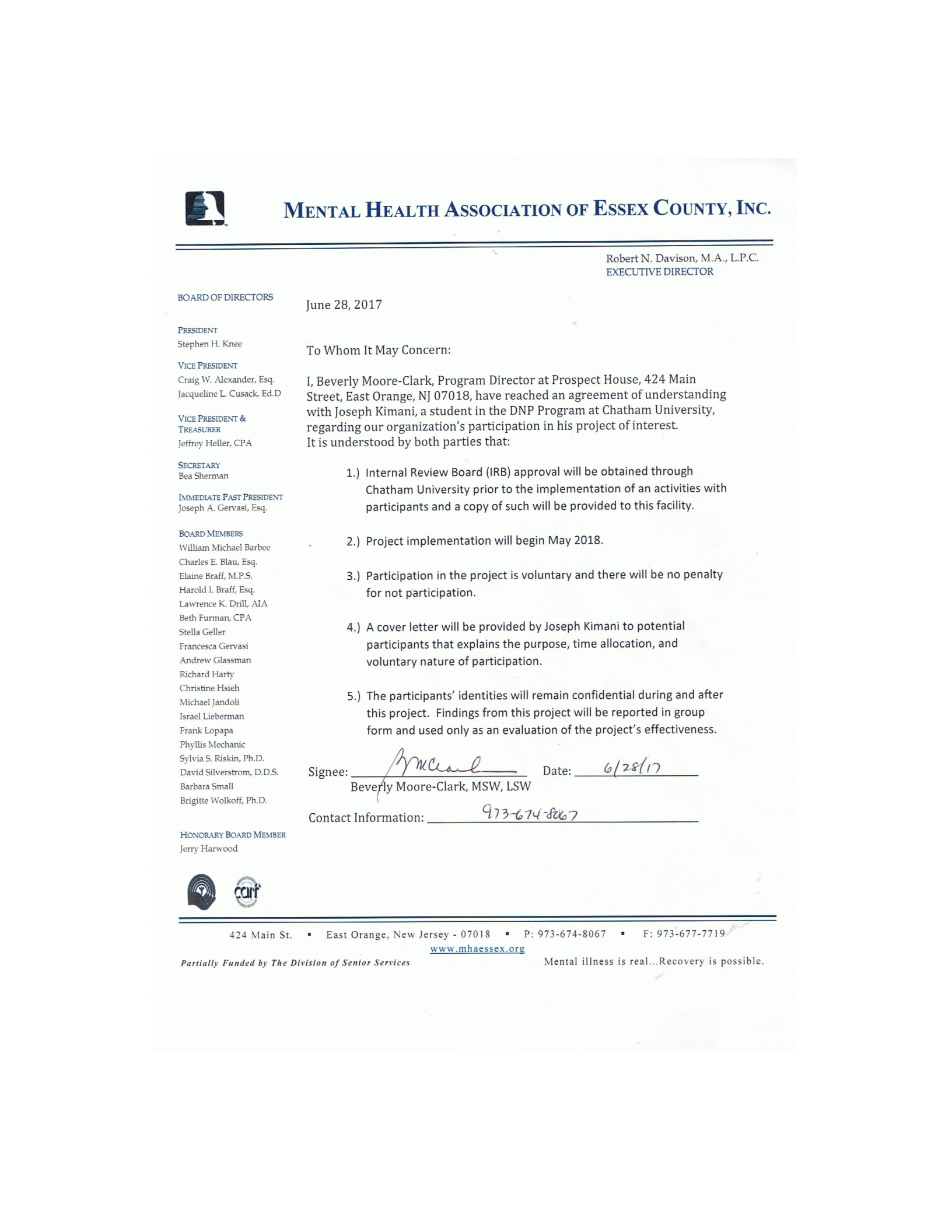
Appendix: F

Appendix: G
Institutional Review Board
IRB Submission and HIPAA Waiver Request
This form must be completed for every medical record chart review or clinical
database review that will be conducted for evidence-based practice purposes.
This includes the review of office or clinic charts and retrospective or
prospective chart and database reviews. This form serves as a HIPAA waiver
request for evidence-based practice.
1. Principal Investigator
Name: Joseph Kimani
Academic Program or Department: Nursing
Electronic Mail Address:[email protected]
Signature:
Date:
2. Faculty Research Advisor (if applicable):
Name Dr.Diane Hunker
Highest Degree: PhD
Discipline of Highest Degree: Nursing
Signature:
Date
3. Other Investigators (include names, degrees, and programs or departments)
Yong Suk, APN, DNP; Nursing (Principal Investigator’s Preceptor)
4. Title of evidence-based practice project: Implementation of an Exercise
program and education on dietary strategies: An Evidence-Based Practice Change
Project for weight management for patients with schizophrenia treated with
second-generation antipsychotics (SGAs).
5. Is this a federally funded grant? If so, and if this protocol is or will
be used to certify human subjects in any federally funded grant, please submit
the entire grant application as appendix materials along with this form. NO
6. Check the type of record/chart/database that will be reviewed for evidence-
based practice purposes.
__*_Medical Records or Chart Reviews
___Films/X-rays
___Computer Database(s)
___Hospital administrative or billing records
___Quality Improvement Records
___Pathology or Laboratory Reports
___Other types of record, specifically:
7. For individual(s) who will be responsible for querying medical
records/charts/database(s), give
Name: Joseph Kimani

Affiliation: Mental Health Association of Essex County, NJ: Prospect House
Precise Role on Project: Project Implementer
8. For additional individuals who will be given access to the data, give
Name: Yong Suk, DNP
Affiliation: Psychiatric Nurse Practitioner/ Mental Health Association of
Essex County, NJ: Prospect House
Precise Role on Project: Project Implementer’s Preceptor
9. Brief description of the purpose of the evidence-based practice project:
The purpose of this evidence-based project is to implement an exercise program
and education on dietary strategies as a way of managing weight gain and
obesity and enhance a positive body image in patients with schizophrenia on
SGAs.
10. Number of subjects that will be involved or number of database records
that will be reviewed: Approximately 35
11. The time period over which data is to be obtained: 2 months; May 14th,
2018 to July 22nd, 2018.
12. Data is to be used for:
__*_Publication
_*__Oral Presentation
___Subsequent specified evidence-based practice project, specifically:
___Possible future research (e.g. database creation that may suggest research
lines not presently anticipated) for which IRB approval will be needed.
___Other, specifically:
13. Categories of data that will be obtained during the review:
___Diagnosis
___Lab values
__*_Demographics (age, sex, address)
___Radiology testing
_*__Length of stay
___Drug/Device utilization
___Procedure/Treatment
___Clinic Notes
___Location of Service (OR, ER, In/Out, PT)
___Billing/Charges
___Provider of Record
___Confirmative Lab Value
_*__Other, specifically:
Medical Status; any co-morbid medical conditions
Weight and Body Mass Index for the past three months
Drug/Alcohol Use
Family/Social Relationships
Psychiatric Status
14. The following information is considered identifiable under the HIPAA
Privacy Rule regulations. Please check off whether any of the following will
be obtained:
___Participant Name

___Participant Street Address
___Participant town or city
___Participant State Address
___Participant Zip code Address
___Dates of treatment that are more specific than the year.
___Participant telephone number
___Participant fax number
___Participant electronic mail (email) address
___Participant Social Security Number
___Participant medical record number
___Participant health plan number
___Participant account numbers
___Certificate or license numbers
___Vehicle identification numbers
___Medical Device Identifiers
___Internet Protocol (IP) address
___Web URLs
___Biometric identifiers3
___Full face photographs
_*__A unique identifying number, characteristic or code, specifically: An
identifying number will be administered to each participant with no link to
identifiers
If none of the above items will be recorded, please check the following line:
___
15. If links to identifiers are used, please describe the coding mechanism. No
links will be used
16. Investigators are required to obtain only the minimum data necessary in
order to achieve the goals of the evidence-based practice project. Please
justify why the data you are obtaining is the minimum necessary to achieve the
goals of the evidence-based practice project.
The data is obtained will identify the most current weight and Body Mass Index
(BMI) status each participant and will also track each participant's program
attendance and participation in the intervention. This data is necessary to
evaluate the outcomes each participant's weight management and effects on body
image.
17. Federal regulations require that all human research subjects provide
informed consent and authorization to use protected health information,
including medical records and chart and database reviews. The IRB is allowed
to waive this requirement for subject consent and authorization. If you wish
to request a waiver of informed consent and/or a waiver of HIPAA
authorization, please provide the following justifications.
a. The proposed use of these data/documents/records presents no more than
minimal risk to the privacy of the individual because No identifiable
information will be obtained.

b. The evidence-based practice project could not practicably be conducted
without the waiver of consent and authorization because Not Applicable
c. The evidence-based practice project could not practicably be conducted
without access to and use of protected health information because: There
will need to review medical records in order to collect information on
previous weight and BMI, also any non-adherence to second-generation
antipsychotics.
18. Please describe the steps taken to assure privacy, confidentiality, and
security of subject data. The confidentiality of the data collected from each
participant will be protected by assigning codes for each participant while
collecting and storing data in software. There will be no participant
identifiers collected such as their name. Codes assigned to each participant
will be used only for the purpose of data collecting, the only identifiers
linked to the code are the participant's sex and age. Data collected during
the project implementation phase will be secured in a locked cabinet safe in
the coordinator's home office.
19. Will data be sent outside Chatham University? _*__Yes ___No
If yes:
(a) Why is it necessary to send data outside? For publication and
dissemination of the project
(b) Where will the data be sent?
To professional journals for publication and professional organizations
for poster/podium presentations.
(c) What is the nature of the data to be disclosed? The final project
evaluation/outcomes will be shared and disseminated for publication for
purpose of knowledge development and replication.
20. You are required to destroy identifiers (or links) at the earliest
possible time. Please describe your plans and specify when this will occur.
(If there is a justification for retaining the identifiers, please provide
this information.) There will be no identifiers collected within this
evidence-based practice change project.

Appendix: H
A 14-item version of the Body Shape Questionnaire (BSQ-14)
We would like to know how you have been feeling about your appearance over the past two
weeks. Please read each question and circle the appropriate number. Please answer all the
questions.

Never Rarely Some- Often Very often Always
times
R1 Have you been so worried about 1 2 3 4 5 6
your shape that you have been
feeling that you ought to diet?
R2 Has been with thin people made 1 2 3 4 5 6
you feel self-conscious about
your shape?
R3 Have you ever noticed the shape 1 2 3 4 5 6
of other people and felt that your
own shape compared unfavorably?
R4 Has being undressed, such as 1 2 3 4 5 6
when taking a bath, made you
feel fat?
R5 Has eating sweets, cakes or other 1 2 3 4 5 6
high-calorie food made you feel fat?
R6 Have you felt excessively 1 2 3 4 5 6
large and rounded?
R7 Have you felt ashamed 1 2 3 4 5 6
of your body?
R8 Has worry about your shape 1 2 3 4 5 6
made your diet?
R9 Have you thought that you are 1 2 3 4 5 6
the shape you are because you
lack self-control?
10 Have you worried about other 1 2 3 4 5 6
people seeing rolls of fat around
your waist and stomach?
11 Have you felt that it is not fair 1 2 3 4 5 6
that other people are thinner
than you?
12 Has seeing your reflection 1 2 3 4 5 6
(e.g. in a mirror or shop window)
made you feel bad about your shape?
13 Have you been particularly 1 2 3 4 5 6
self-conscious about your shape
when in the company
of other people?
14 Has worry about your shape 1 2 3 4 5 6
made you feel you ought to exercise?

Equivalent cutting points for 14 item short forms
less than 38 no concern with shape
38 to 51 mild concern with shape
52 to 66 moderate concern with shape
over 66 marked concern with shape
No permission required to use this tool for a survey on body shape.


