HOW DOES EPIDEMIOLOGY AND RISK FACTORS
How Does Epidemiology and Risk Factors of Clostridium Difficile Differ in Patient Setting:
Community Acquired Versus Hospital Acquired?
Corine K. Domingo
NURS 500, Liberty University
Fall 2019
2
HOW DOES EPIDEMIOLOGY AND RISK FACTORS
How Does Epidemiology and Risk Factors of Clostridium Difficile Differ in Patient Setting:
Community Acquired Versus Hospital Acquired?
Clostridium difficile infection (C. difficile/CDI) is known to be a common hospital-
acquired infection. According to the Infectious Disease Society of America, “CDI is defined as
“community-acquired if symptom onset occurs in the community or within 48 hours of
admission to a hospital, after no hospitalization in the past 12 weeks; hospital-acquired if onset
of symptoms occurs more than 48 hours after admission to or less than 4 weeks after discharge
from a health care facility; or indeterminate if symptom onset occurs in the community between
4 and 12 weeks after discharge from a hospital” (Gupta & Khanna, 2014).
Clostridium difficile is responsible for 15% to 25% of antibiotic-associated diarrhea in
hospitalized patients, however recent studies have indicated dramatic changes in the
epidemiology of C. difficile (Khanna, et al., 2012) over the last decade. Population(s) that were
previously known to be at low risk, such as healthy peripartum women, children and young
adults, patients with no antibiotic history in a 90-day period and lacking the traditional risk
factors for C. difficile are now showing increased incidences of this infection in the community
setting.
Many evidence-base studies reviewed indicated that exposure to C. difficile in the
outpatient setting such as physician offices, dialysis clinics, ER, etc. might have preceded
community- acquired C. difficile. In addition, food-borne exposure might also serve as a means
of transmission at the community level. As mentioned before, historically known exposure to
antimicrobial agents is the most important risk factor for C. difficile. However, research showed
that patients with community-acquired C. difficile were less likely to have been exposed to
antibiotics when compared to hospital-acquired C. difficile patients.
3
HOW DOES EPIDEMIOLOGY AND RISK FACTORS
Furthermore, C. difficile is seen in the elderly population with higher comorbidities,
however studies showed that patients with community-acquired C. difficile were younger
(median age 50 years vs 72 years) and less to no comorbidities when compared to patients with
hospital-acquired C. difficile.
“The majority of CDI epidemiological data is derived from hospital-based reports and
administrative databases, such as the US National inpatient sample data and the national
mortality data for CDI surveillance. There have been relatively few studies describing the
epidemiology and characteristics of community-acquired CDI. Most of the CDI studies use
hospital discharge data and laboratory data as the primary source of case identification. The use
of hospital discharge data has the potential to miss community-acquired cases, and laboratory
databases have the potential to include false positive CDI as these patients might be colonized
with Clostridium difficile but not have symptomatic infection” (Khanna, et al., 2012).
Per evidence-based studies it is determined that community-acquired C. difficile has
increased drastically over the past decade; the epidemiology and characteristics of community-
acquired CDI are not quite well-defined. Nevertheless, there is a lack of knowledge and
surveillance guides available to the community.
One of the interventions noted in the articles reviewed stated just since the diagnosis and
treatment of C. difficile is the same regardless of where it is acquired “primary care physicians
need to maintain a high index of suspicion in patients with diarrhea lasting longer than 24 hours,
even in the absence of classic risk factors that are in hospital- acquired cases” (Kim & Zhu,
2017). In addition, studies may be of value where patients in the community are tested and
followed over time in a prospective fashion and compared to cases/outcomes of hospital-
acquired cases.
4
HOW DOES EPIDEMIOLOGY AND RISK FACTORS
References
Gupta, A., & Khanna, S. (2014). Community-acquired Clostridium difficile infection: an increasing
public health threat. Infection and Drug Resistance, (7), 63–72. doi:
http://dx.doi.org/10.2147/IDR.S46780
Khanna, S., Pardi, D. S., Aronson, S. L., Kammer, P. P., Orenstein, R., Sauver, J. L., … Zinsmeister,
A. R. (2012). The Epidemiology of Community-acquired Clostridium difficile infection: A
population-based study. Am J Gastroenterol, 107(1), 89–95. doi: 10.1038/ajg.2011.398
Kim, G., & Zhu, N. A. (2017). Community-acquired Clostridium difficile infection. Canadian
Family Physician, 63, 131–135.
Thornton, C. S., Rubin, J. E., Greninger, A. L., G. P., Chiu, C. Y., & Pillai, D. R. (2018).
Epidemiological and genomic characterization of community-acquired Clostridium difficile
infections. BMC Infectious Diseases, 18(443). doi: 10.1186/s12879-018-3337-9
5
HOW DOES EPIDEMIOLOGY AND RISK FACTORS
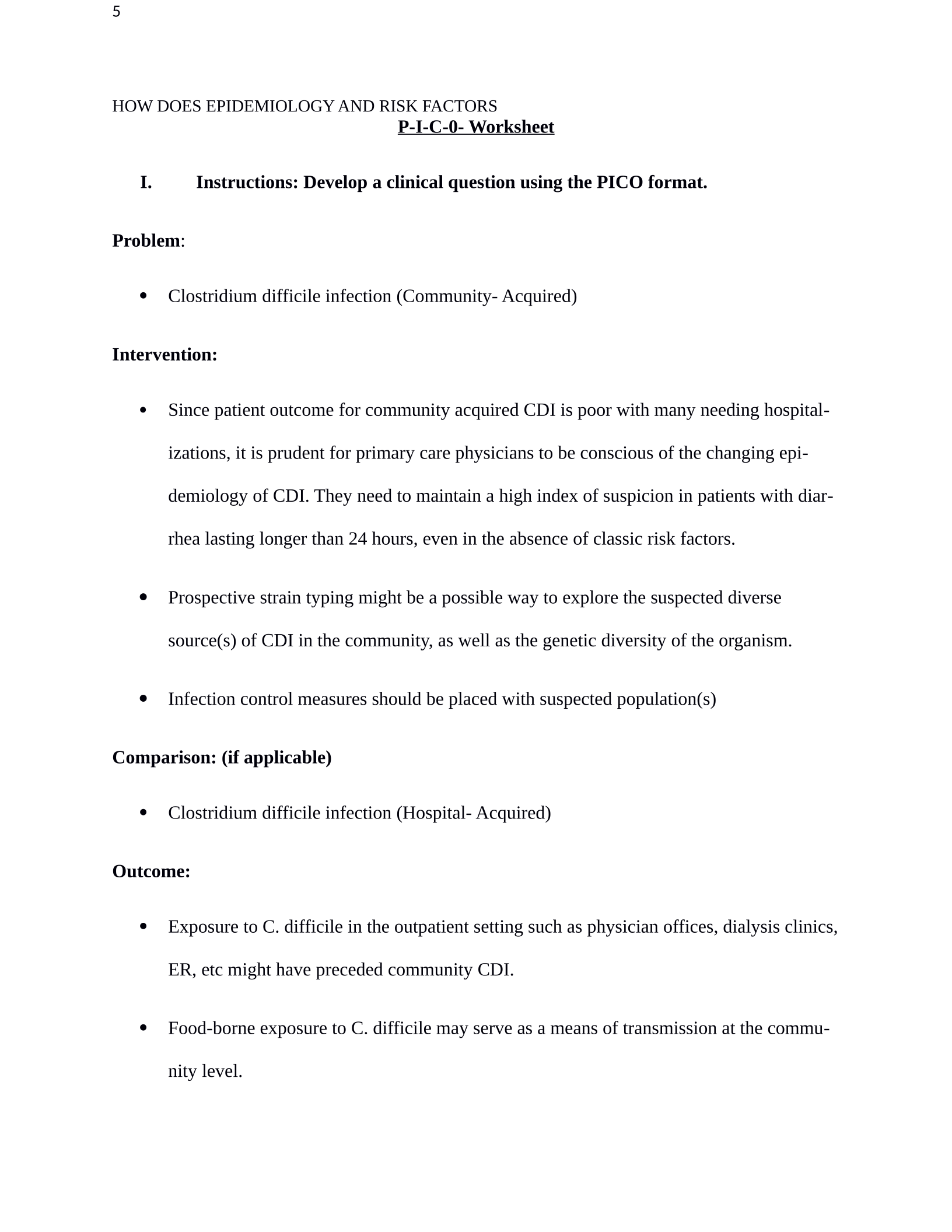
P-I-C-0- Worksheet
I. Instructions: Develop a clinical question using the PICO format.
Problem:
Clostridium difficile infection (Community- Acquired)
Intervention:
Since patient outcome for community acquired CDI is poor with many needing hospital-
izations, it is prudent for primary care physicians to be conscious of the changing epi-
demiology of CDI. They need to maintain a high index of suspicion in patients with diar-
rhea lasting longer than 24 hours, even in the absence of classic risk factors.
Prospective strain typing might be a possible way to explore the suspected diverse
source(s) of CDI in the community, as well as the genetic diversity of the organism.
Infection control measures should be placed with suspected population(s)
Comparison: (if applicable)
Clostridium difficile infection (Hospital- Acquired)
Outcome:
Exposure to C. difficile in the outpatient setting such as physician offices, dialysis clinics,
ER, etc might have preceded community CDI.
Food-borne exposure to C. difficile may serve as a means of transmission at the commu-
nity level.
6
HOW DOES EPIDEMIOLOGY AND RISK FACTORS
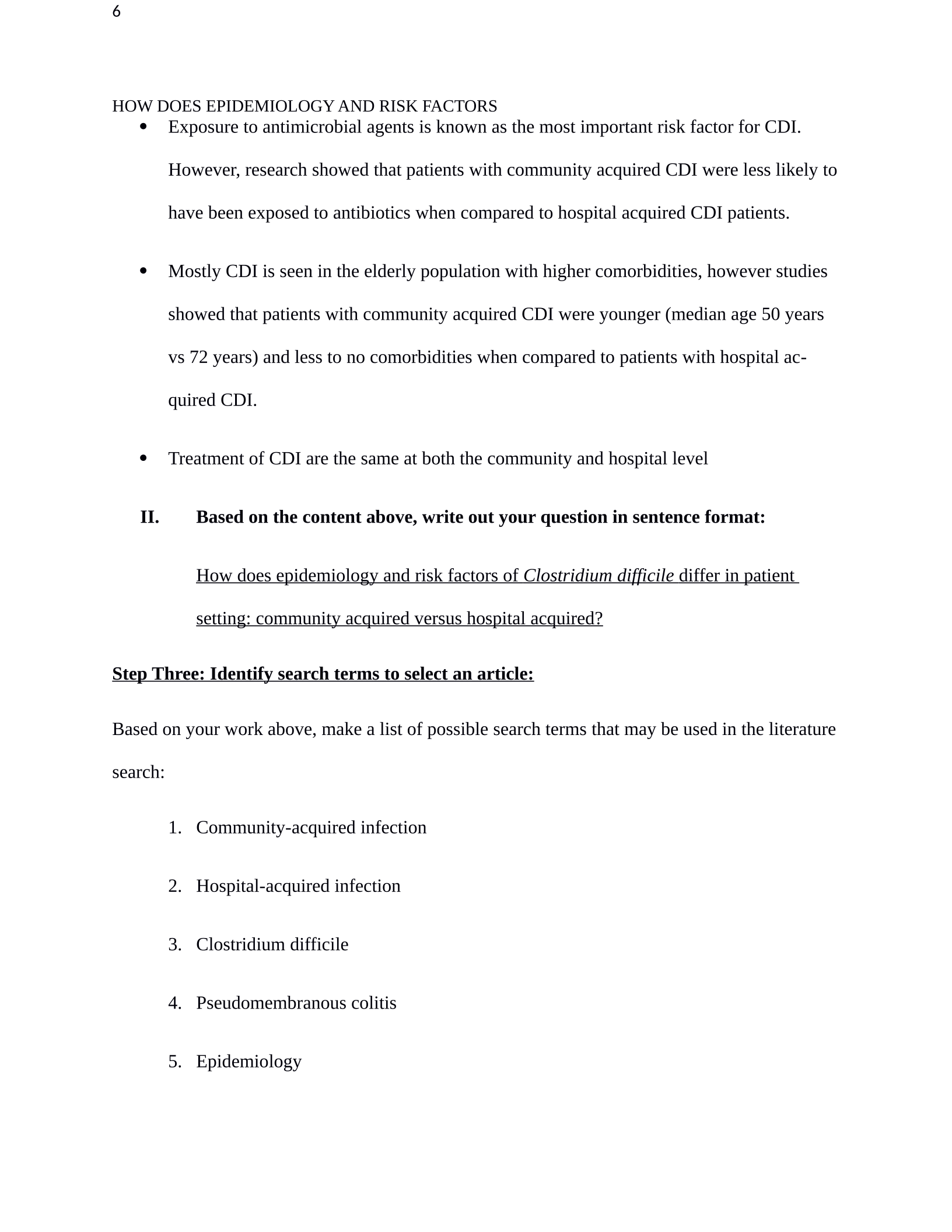
Exposure to antimicrobial agents is known as the most important risk factor for CDI.
However, research showed that patients with community acquired CDI were less likely to
have been exposed to antibiotics when compared to hospital acquired CDI patients.
Mostly CDI is seen in the elderly population with higher comorbidities, however studies
showed that patients with community acquired CDI were younger (median age 50 years
vs 72 years) and less to no comorbidities when compared to patients with hospital ac-
quired CDI.
Treatment of CDI are the same at both the community and hospital level
II. Based on the content above, write out your question in sentence format:
How does epidemiology and risk factors of Clostridium difficile differ in patient
setting: community acquired versus hospital acquired?
Step Three: Identify search terms to select an article:
Based on your work above, make a list of possible search terms that may be used in the literature
search:
1. Community-acquired infection
2. Hospital-acquired infection
3. Clostridium difficile
4. Pseudomembranous colitis
5. Epidemiology