



NURS 225
Concept Map/Study Guide - NURS 225:003 Test 1 - Evidence-Based
Practice
●Evidence-Based Practice (EBP)
○A process of using confirmed evidence to deliver holistic care
■Trigger: NSI
○Using current and well-vetted literature to support a change in nursing
practice
○Driving forces for EBP has increased over recent years:
■Patient satisfaction
■Quality of care
■Patient safety
Steps of Evidence-Based Practice
1. Identify a model
a. Iowa Model of EBP
2. Identify a Trigger
a. Nurse Sensitive Indicator (NSI)
i. Hospital-Acquired Pressure Injuries (HAPIs), Catheter Acquired
Urinary Tract Infections (CAUTIs), falls, etc.
3. Develop a Question
a. Background
i. A component of the methodology providing foundational
information about the issue being considered for the study
1. Textbook
ii. Core knowledge
b. Foreground
i. PICOT (the 5 components of an evidence-based question, used to
“zero in” on what you need to know)
1. P - population/problem
a. Determine specific characteristics about the group
(age, gender, diagnosis, unit, etc.)
2. I - intervention

NURS 225
a. The topic under consideration (intended to be
clarified). Should try to include contact, treatment,
patient, insight, and diagnostic test.
3. C - comparison (*optional*)
a. Comparison of interest
4. O - outcome
a. Should be an anticipated result of the intervention
5. T - timeframe
a. Use if the outcome is influenced by the passage of
time
ii. Clinical Question
1. Too specific can be a problem
iii. EBP directed
4. Determine if the problem is a priority (to the organization)
5. Form a Team
6. Assemble and synthesize the body of knowledge
a. Consult a Librarian
b. Literature Review (aka Literature/Synthesis Matrix)
i. A format for organizing the literature under consideration for
making a practice change (3-5 y/o)
1. Secondary Source
a. An explanation of facts from sources other than the
original/primary researcher
i. Would make you a taker of evidence
(utilization of previous research)
ii. Expert Opinion
1. Information provided by an individual
who is viewed as an authority based
on criteria established applicable to
the designated problem or situation
7. Determine if there is sufficient evidence
a. Yes → then go back to step 2
b. No → conduct further research
i. Gaps in the Literature
NURS 225
1. An opportunity for further research; the information
about the topic seems to be incomplete
ii. Primary Source
1. A report of findings from a research study by the one
conducting the research
a. Would make you a giver of research (filling in a gap
in the literature by doing research)
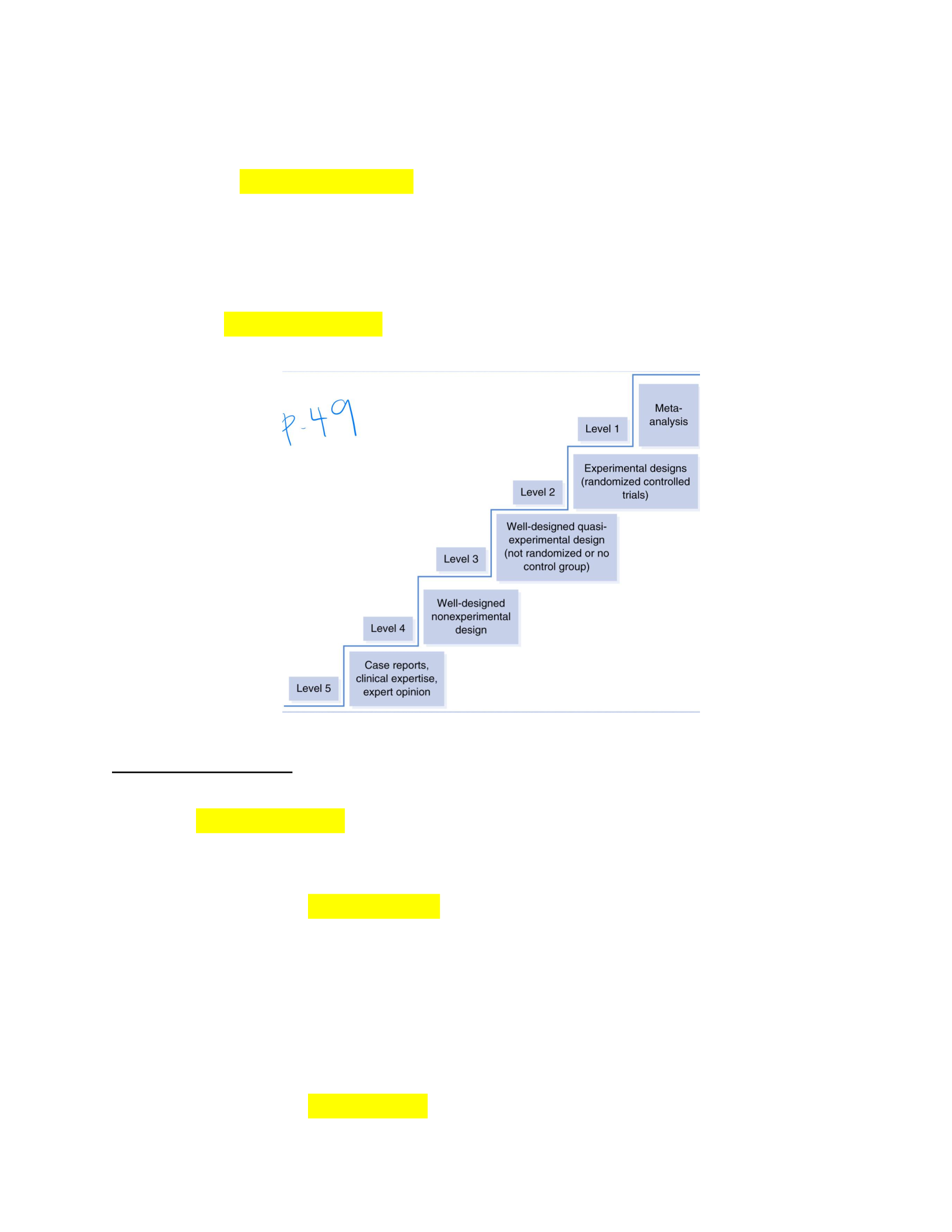
c. Levels of Evidence (p. 49)
i. A hierarchical framework to determine the strength of an article
●
Conducting Research
●Types of Research
○Mixed-Method
■Using both qualitative and quantitative methodologies in a
research study
●Quantitative
○A systematic, empirical investigation of observable
activities using statistical measures to reach a
conclusion
○Focus on “how many” or “how much”
○Use three components: population,
intervention/exposure, and outcome
●Qualitative

NURS 225
○The analysis of a phenomenon through the
compilation of abundant narrative notes through
selected techniques
○Focus on “feel” or “experience”
○Utilize 2 components: population and situation
○Translational Research
■Using both basic and applied research findings to ensure the
best practices are incorporated within a population
●Applied Research
○Patient or population centered research that
attempts to use research results in a practical
approach
○Directly impacts practice
○*most nursing research is applied research*
●Basic Research
○Research for the sake of gaining new knowledge
●Parts of a Research Study
○Methodology
■The planned endeavor as to how a study will be conducted
●Purpose
○A component of the methodology of a study that
defines why the study is being done
●Factors Contributing to Research
○Feasibility
■The consideration of variables that may support or hinder the
successful completion of a study (time, finances, etc.)
●People who have contributed to Research
○Virginia Henderson
■A nurse sage who compiled all of nursing research/resources
over an 18 year period (basis of the CINAHL database); Nursing
and Allied Health Literature
The Healthcare Environment
●Quality Department

NURS 225
○Stores data (typically gives reports quarterly)
○Quality Improvement
■A process used to review policies and areas of practices to
validate current practice
●Process Improvement
○A systematic approach to identify steps are in place
to meet expected outcomes
○Has a local impact (unit, regional, etc.)
●Nursing Research Council
○Examine EBP projects
●IRB
○Review research proposals
●RN Residency Programs
○For new graduates
Nurses’ Role in EBP
●First question: “Is the care I am giving based on the best possible evidence?”
○When considering EBP ask “Am I competent to do a project?”
●Every nurse’s responsibility to be familiar with the most recent research to
assure the safety and quality of patient care (**Most nurses believe it is
outside of their responsibility**)
○Be a part of creating a blame-free environment that is supportive of
EBP
○Be able to pose practice questions
○Collaborate with other nurses
●Best Practice
○Nursing Action that produces the most desirable patient outcome as
determined through scientific data
●Clinical Judgment/Decision Making
○Includes conclusions about a patient’s status and needs with a
determination of a method to implement to best meet patient needs
including an assessment of the patient response
●Bundling
○Multiple identified interventions that, taken together, enhance clinical
outcomes

NURS 225
Organizations
●Academy of Medicine/IOM
○By 2020, 90% of decision making needs to be evidence-based
■2011 IOM and RWJ Foundation report on future of nursing
●Promoted interdisciplinary nursing projects, models of
care, and solutions to improve health and health care
●8 research priorities; Five are:
○Delivery Models
○Reimbursement
○Care trends
○Nurse residencies
○Funding for nurses training
●Affordable Care Act (ACA)
○Expanded nursing roles and responsibilities
○Increased attention to societal needs while maintaining the traditional
nursing focus
○Has an emphasis on research
○Focused on readmissions and hospital-acquired conditions… prompted
innovation and emphasized population health and community based on
primary care
●2010 Carnegie Foundation
○Called for change in nursing education
○Nurses are to have a foundation grounded in inquiry and research to
provide evidence-based care
○EBP is a basis for holistic care
●American Nurses Association (ANA)
○Nurse Sensitive Indicators (NSIs)-measures and indicators that reflect
the structure, processes, and outcomes of nursing care
■Can reflect the impact of nursing care
●Hospital Care Quality Information from the Consumer Perspective (HCAHPS)
○Nationwide, standardized, publicly reported patient satisfaction

