


i
EXPLORING FACTORS INFLUENCING IMPLEMENTATION OF
NURSING PROCESS IN MATHARI NATIONAL TEACHING AND
REFERRAL HOSPITAL.
OPERATIONAL DEFINITIONS
Assessment: This is systematic and continuous data collection process which includes
history taking through interview, physical and mental status examination and
diagnostic tests eg x-rays and laboratory investigations. Assessment aims at getting
information about the patients’ state of health.
Barriers: These refer to something or a situations that makes it difficult or impossible
to achieve a certain level of functioning. Barriers entail the various factors hindering
implementation of nursing process.
Explore: To inquire into or discuss in details a certain phenomenon under study.
Exploring entail discussing factors which influence implementation of nursing
process in management of patient with mental disorders.
Factors: These entail activities, functions or process which actively contributes
towards the accomplishment, result, or a particular process. These factors either
enhance or hinder the implementation of the nursing process and are categorized into
structural and process factors.
Implementation: This is the actualization of the formulated strategies or practices
through allocation of the necessary resources, time, attention and skills. This entail the
extent to which the nursing process is put into practice by the nurses in patient
management through proper interventions and nursing diagnosis.
Influence: To have an effect upon so as to result in a certain desired outcome. It
involves the effect of structural or process factors on implementation of nursing
process.
Management of patients: It includes communication, empathy, examination,
evaluation, diagnosis, prognosis, and intervention. It is the provision of patient care
guided by the nursing process at Mathari National Teaching and Referral Hospital.
Mental disorders: These are syndromes characterized by clinically significant
disturbance in an individual's cognition, emotion regulation, or behavior that reflects a

ii
dysfunction in the psychological, biological, or developmental processes underlying
mental functioning
Nursing process: A systematic rational method of planning and providing
individualized nursing care to individual, family and the community. It’s a problem-
solving approach used to identify, prevent and treat actual or potential health problem
and promote wellness. This process is composed of six steps namely; Assessment,
Diagnosis, Planning, Interventions/Implementation, Evaluation and Documentation.
Practice: The use of one's knowledge in a particular profession. In this study it’s the
utilization of nursing process in management of patient at Mathari National Teaching
and Referral Hospital.

iii
ABSTRACT
Background: Nursing Process is a decision-making approach that promotes critical
thinking towards enhanced patient management and better health outcomes. Its
implementation in most Kenyan hospitals still remain low especially in the mental
health units. Inadequate knowledge, incompetence, high patient turnover, lack of
resources, inadequate administrative support and negative attitude are some of the
factors which undermine the NP implementation.
Objective: To explore factors that influence the implementation of nursing process in
Mathari National Teaching and Referral Hospital.
Material and Methods: MNTRH was purposely selected for the study and mixed
method research design was used. The sample size was 151 nurses selected by simple
random sampling technique while purposive sampling was used to select respondents
for the interviews. Data was collected using questionnaires, interview guides and an
observation checklist and presented in tables, graphs, charts and narrations. The data
was analyzed using thematic analysis and descriptive statistics. Chi-square test of
significance was used to determine the relationships between factors which influence
NP implementation (Level of significance was set at p<0.05). The data was collected
for a period of 4 weeks and study conducted at an estimated cost of Ksh 85,112.50.
Findings: The findings of the study revealed that majority of the respondents
104(93%) were affirmative on their awareness of NP. It was established that
utilization of NP at MNTRH was yet to be successful with the respondents indicating
25-40% success levels. The main utilized phases of NP at MNTRH were; assessment,
diagnosis, implementation/interventions, and documentation but significant gaps
existed in all the phases. Both structural and process factors have positive and
significant influence on NP implementation at MNTRH. The interviewees further
indicated that major barriers affecting NP implementation to be poor nurse-patient
ratio, lack of managerial support and lack of monitoring and follow ups on the NP
implementations.
Conclusion and Recommendations: NP has not yet been fully utilized in patient
care at MNTRH. Structural and process factors significantly influenced the level and
extent of implementation of NP at MNTRH. The management of MNTRH should
highly prioritize implementation of NP in patient care, offer regular in-service training
on NP and monitor its practice. The Ministry of Health, regional health bureau, and
other Non-Governmental partners to ensure that the institution is empowered on
importance of NP and equipped with adequate nursing staffs.

1
CHAPTER ONE: INTRODUCTION
1.1. Background of the study
Nursing Process (NP) is defined as an organized framework of care that provides
guidelines to sequence of reasoning in clinical settings (Stonehouse, 2017; Sendín &
Ceña, 2018). NP is used by professional nurses to ensure provision of high quality
standards of patient care (American Nurses Association, 2017). The Nursing Council of
Kenya recommends that nursing practice in the country should be based on the scientific
approach of this NP. The main aim of the NP is to ensure delivery of holistic and quality
nursing care in an organized manner (Mahmoud & Bayoumy, 2014; Varcarolis, 2016).
Effective implementation of nurse process is critical in the achievement of high quality
health care which translates to better patients’ health outcomes (Ngao, 2015; Wagoro &
Rakuom, 2015). However, despite this perceived importance in patient management,
reports at the Ministry of Health indicate that in most hospitals, the NP framework is not
completely utilized in nursing care provision (MoH, 2010).
Failure to use the NP leads to low Quality Health Care, disorganization of nursing care
and conflicting roles (Mangare, Omondi, Ayieko, Wakasiaka, & Wagoro, 2016). Factors
such as lack of resources, incompetence’s, negative attitudes among nursing staffs and
inadequate staffing have been associated in failure of full implementation of the NP
(Manal, & Hala, 2014).
The implementation of NP thus tend to be more challenging in mental health units where
most nurses are faced with difficulties in identifying psychological problems and stating
diagnostic labels. Sendín & Ceña, (2018) further argue that implementation of NP in the
mental health facilities are lacking in some instances. The barriers mainly originate
internally from the nurses themselves, the health care facilities and even the patients
(Herr, Marie, Gordon, & Young, 2015; Sendín & Ceña, 2018). These factors not only
hinder the proper identification of the patient problems but also result in delayed
diagnosis.

2
Given the benefits of the nursing process to both the nursing care and patient outcomes, it
is important that the underlying factors to its implementation be fully understood
(Wagoro & Rakuom, 2015). Measures to ensure proper implementation of KNP will act
to ensure improvements in the quality of mental health care which will go a long way in
achievement of vision 2030 that aims to promote provision of better health care to all
Kenyan citizens. This is through the promotion of optimal health, the prevention of
illness, and the care and treatment of persons with mental disorders through efficient
nursing diagnosis (Prince, et al 2016).
1.2 Statement of the Problem
Nursing Process acts as a decision-making approach that promotes critical thinking
geared towards enhanced patient management and better health outcomes (Melin-
Johansson et al, 2017). However, most nurses have not been able to fully implement it in
their daily practices (Blais, Hayes, Kozier, & Erb, 2015; Zamanzadeh, et al, 2015). The
use of nursing process in most hospitals is still lagging despite all the efforts that have
been made by the nursing professionals to implement its use (Mwenda, Kangethe, &
Maranga, 2016). In this regard, factors such as inadequate knowledge, incompetence,
high patient turnover, and lack of time undermine the NP implementation process
(Sendín & Ceña, 2018; Herr, et al, 2015).
Mahmoud and Bayoumy (2014) observed that most nurses complained of lack of time
and high patient volume as significant barriers to NP implementation. Mangare, et al,
(2016) further found out that though nurses may have a positive attitude towards the NP,
they experience difficulties performing most of the phases of the NP. Ngao, (2015) noted
that the application of the nursing process in patient care was minimal in most healthcare
facilities in Kenya including Machakos Level 5 Hospital. Agyeman-Yeboah, et al, (2017)
found out that clinical utilization of the Nursing Process at clinical settings was
influenced by lack of clear understanding on the Nursing Process and Care Plans.

3
Ota, (2014) found out that the nurses in Level Five mental health units in Kenya faced
many challenges related to work environment and patient-related factors. Similarly,
Zamanzadeh, et al, (2015) established that most of the mental health institution lacked
well-structured Nursing Processes implementation strategies. Patients with mental health
disorders require individualized and more sensitive care due to their emotional and
mental health concerns which further makes the nursing process implementation more
challenging (Moetsana-Poka, Lehana, Lebaka & McCarthy, 2014; Varcarolis 2016).
Mental Health Disorders account for approximately 16 percent of the burden of disease in
Kenya (MoH, 2010). Therefore understanding the factors influencing implementation of
the nursing process in the care of patients with mental disorders will go a long way in
improving patient outcomes in the mental health sector. Effective implementation of the
NP is essential so as to ensure that all the patient’s needs are met and improving the
quality of patient care.
1.3 Purpose of the Study
The purpose of the study was to explore factors that influence implementation of the
nursing process in the care of patients with mental disorders in Mathari National
Teaching and Referral Hospital.
1.4 Research Questions
The study aimed to address the following research questions;
i. How has nursing process been adopted in management of patients with mental
disorders in Mathari National Teaching and Referral Hospital?
ii. What structural factors influence the implementation of nursing process in
management of patients with mental disorders in Mathari National Teaching and
Referral Hospital?
iii. What process factors influence the implementation of nursing process in
management of patients with mental disorders in Mathari National Teaching and
Referral Hospital?

4
1.5 Specific Objectives
The specific objectives of the study were to;
i. To establish the extent of nursing process utilization in management of patients
with mental disorders in Mathari National Teaching and Referral Hospital.
ii. To determine the structural factors that influence the implementation of nursing
process in management of patients with mental disorders in Mathari National
Teaching and Referral Hospital.
iii. To establish process factors that influence the implementation of nursing process
in management of patients with mental disorders in Mathari National Teaching
and Referral Hospital.
1.6 Justification
Nursing Process provides a framework for facilitating well-coordinated nursing care and
has proved helpful in accessing quality nursing care. It allows the nurse to apply their
knowledge and interventions in an organized manner as well as ensuring high standards
are maintained. However, despite this perceived importance, the implementation of NP
and its practice is not easily achieved (Mahmoud, 2014). Reports from the Ministry of
Health indicated that in Kenya, the NP is either under-utilized or not systematically
followed (MoH, 2010). Barriers relating to the nurses, patients and hospital facilities have
been established by the studies conducted which tend to limit the effectiveness of the
NPs. The barriers tend to be more pronounced in the mental health institution where the
patients require specialized and individualized care. Herr, et al, (2015) established that
inadequate knowledge of the nursing process is thus a key barrier to the implementation
of the NP especially in the management of patient with mental disorders.
Keating, Thompson and Lee (2010) found out that most hospital facilities do not provide
the needed support. Proper application of nursing process requires a clear understanding
of the factors which undermine the implementation process. This therefore necessitated
this study which was conducted at Mathari National Teaching and Referral Hospital. The
study was able to establish the current situation of NP implementation in the facility and
underlying factors.

5
1.7 Significance of the Study
The study will benefit mental health nurses in Kenya, particularly Mathari National
Teaching and Referral Hospital on the national and global standards set for the
implementation of the nursing process in the care of patients. The recommendations
made by the researcher aim at improving utilization of NP which will make the task of
assessing and managing the mental disorders of patients to be systematic and organized.
The management will also therefore be in a better position to formulate better policies
and frameworks which will ensure that the barriers to the NP practice are minimized.
This will act to greatly boost the overall effectiveness of the NP in the institution thus
promoting better patient care. In addition, the research will encourage nurse educators to
reexamine the psychiatric nursing syllabus and course of content. That will give them the
opportunity to identify areas that need assessment to be at par with the current psychiatric
nursing practice trends. The study will also form a basis on which further studies in the
area will be conducted.

6
CHAPTER TWO: LITERATURE REVIEW
2.1 Concept of Nursing Process
Historically, nursing was mainly concentrated on the underlying medical conditions
rather than the person(s) receiving the medical care. The nursing care was therefore
undertaken based on mere intuitions or following the physicians’ instructors. But with the
introduction of the nursing process in the early 60s, in the developed countries, this has
changed drastically (Pokorski, Morae, Chiarelli, Costanzi and Rabelo, 2009). The nursing
process was introduced by North American Nurses Diagnosis Association (NANDA) and
provides a means of not only standardizing nursing care but also the maintenance of the
autonomy of the profession (Ngao, 2015). Nursing Process is a well-structured method
for facilitating rational planning and individualized Quality Nursing Care (QNC)
(Ngao,2015; Magare, et al, 2016; Rakuom & Wagoro, 2016). Similarly, Yildirim and
Ozkahraman, (2013) state that NP is a tool used in planning and offering patient care
which is well organized and tailored to meeting individualized healthcare requirements.
Efficiency in the entire NP practice is evaluated by the nature of approach to patients by
nurses, specific interventions made, documentation quality, increased reflective thinking
and better patient outcomes. Abdelkader and Othman, (2017) further add that the NP may
be assessed by the level of participation in care planning of patients and ensuring that the
provided nursing care is specific to requirements of a patient within the entire group
context. This will ensure patients’ satisfaction, reduced workload as well as improved
communication amongst the nurses.
2.1.1 Global Nursing Process
Nursing process in currently a globally accepted process which represents the
experiences in nurses’ patient care aimed at evaluation of the patient needs, proper
planning, careful interventions and proper documentations (Ledesma-Delgado & Mendes,
2009). NP constitutes a series of steps which assist the nurse to use their theoretical
knowledge in diagnosis and implementing therapeutic actions for attaining, maintaining
and promoting optimal bio psychosocial functioning (Lindberg, 1998). Currently, the
nursing process utilizes the ADPIE acronym which stands for assessment, diagnosis,
planning, implementation, and evaluation. The relevance of the ADPIE is to enhance the

7
mental, emotional and physical health of patients through analysis, diagnosis, and
treatment (Mamseri, 2012). Specifically, Afolayan, Donald, Baldwin, Onasoga, and
Babafemi (2013) argued that international nursing process is made up of seven phases;
assessment, diagnosis, identification of outcome, planning, intervention, implementation,
and evaluation. Regionally, South Africa mental health hospitals use the 2007
international classification of nursing practice to determine the stages of the nursing
process which include, assessment, diagnosis, planning implementation and evaluation
(World Health Organization, 2013). Most hospitals dealing with patients with mental
disorders in South Africa does not focus on problem-solving as a stage of the nursing
process.
2.1.2 Kenya Nursing Process
The Kenya Nursing Process revised is revised to six steps and included documentation as
the last phase due to the observation by nurse administrators that there was a problem
with documentation in Kenya (Ngao, 2015, Rakuom & Wagoro, 2016; Magare et al,
2016). Kenyan nurses realized it’s structural and processes challenges in nursing
practice necessitated the documentation phase of nursing processes therefore it had to be
treated separately. The structural obstacles were limited number of nurses, task shifting,
and changing policies on care delivery system in nursing and inadequate finance.
Conversely, process factors were the development of an interpersonal relationship with
patients and methods of procedure performance to ensure trust and disclosure at the
assessment time. The Kenya-NP is therefore unique due to; outcome identification is
included as an activity within the planning phase, risk nursing diagnosis is revised into
three parts instead of two parts as in the global concept, documentation is adopted as a
last step instead of evaluation as in the global concept and implementation is within the
context of categorisation of patients and team nursing (Wagoro & Rakuom, 2015).
The Nursing Council in Kenya recommends that the practice of nursing should be based
entirely on the systematic application of the nursing process (Mangare, et al, 2016). KNP
has been further emphasized in the current nursing procedure manual which holds that
nursing process procedures should be able to ensure that the nurses deliver patient-
focused care in an organized manner. Training curricula for both midwives and nurses

8
have also incorporanted the NP as a framework in enhancing the nursing care. However,
reports at the Ministry of Health still indicate that in most hospitals this framework is not
used in the provision of nursing care and if used, the phases are not systematically
followed (MoH, 2010). Wagoro and Rakuom (2015) stated that nurse educators should
collaborate with the office of CNO to create a software that has a classification of nursing
process terminologies to aid documentation. The Government’s e-health program will be
fundamental in the documentation process.
2.2 Theoretical Framework
This study was guided by the Nursing Process Theory and the Donabedian’s theory. The
Nursing Process Theory was formulated by Ida Jean Orlando’s (Pelletier). The theory
holds that effective interactions between patients and nurses will lead to effective
interventions which will translate to better health outcomes (Parker & Smith, 2010). The
theory focuses on improving the behavior of the patient based on their needs which are
established through effective interactions with the nurse. Based on this theory, the need
for nursing care is heightened more when one is not able to meet the needs that they have.
Orlando’s theory has been tested in various health care settings and the results support
its’ implementation to practice in various nursing fields (Schmieding, 2006).
Zamanzadeh, et al, (2015) found out that Orlando’s theory promoted stress reduction
during admission to surgery. Peterson & Bredow (2009) argue that there is no simplicity
in undertaking and adhering to the nursing guidelines but following this theory acts as a
guideline. The importance of the theory is that it makes it easier for nurses to see a patient
from a nursing perspective. This helps nurses function in a professional manner by using
an established method and body of knowledge through provision of structured care to
patients.
Donabedian’s Theory on the other hand was introduced by Avedis Donabedian (1966)
who proposed a structure-process-outcome framework used in determining the quality of
health care. Incorporation of all these three components provides the necessary
information for the exploration of quality care. This three-part approach of quality

9
assessment is possible because proper structure increases the probability of good
processes and good processes in turn translate to good outcomes.
2.3 Conceptual Framework
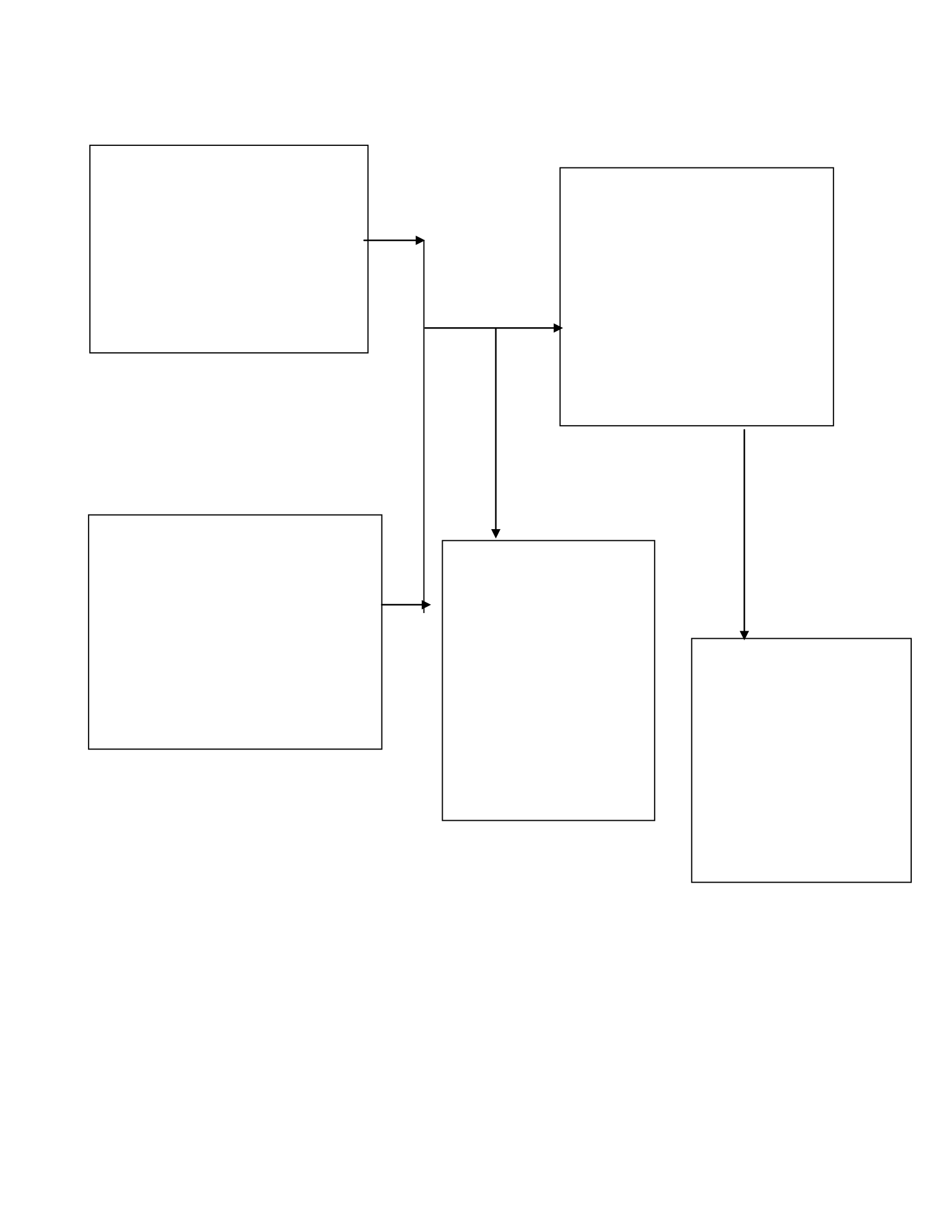
The conceptual framework of the study is adopted from the theoretical framework as
shown by Figure 2.1.The independent variables of the study are the factors influencing
the implementation of the nursing process while the dependent variable is the nursing
process practice and outcomes in Mathari National Teaching and Referral Hospital. The
moderating variables the factors hindering the implementation of NP. The independent
variables are depicted to have a direct influence on the dependent variable.
10
Independent variables Dependent variables
Figure 2.1 Conceptual Framework
Source; Researcher 2018
Structural factors
Organization structure
Support
Policies
Organization culture
Availability of resources
Patient-Nurse Ratio
Intervening/Moder ating
Variables
NP Policy Frameworks
Usability of the NP
Adaptability of the NP
Quality assurance (audit
practice).
Process Factors
Nursing processes
Professional conduct of the nurses
Nurse – patient interaction
Diagnosis
Treatment
Assessment
Specific interventions
Attitude of the nurse
Nursing Process Practice indicators
Documented assessment data
Documentation quality
Increased reflective thinking with
specific interventions
Application of nursing care plans in
patient care
ProperNursingDiagnosis with three
parts
Outcomes
Better Patient Care
Patient Satisfaction
Nurse Satisfaction
Patient participation
Hospital Performance
Increased NP use
Medico-legal issues
reduced

11
CHAPTER THREE: METHODOLOGY
3.1 Research Design
This study adopted the mixed method research design. As explained by Setia, (2016) this
research design incorporates both the qualitative and quantitative approaches. The
qualitative approach was undertaken using the phenomenological research approach. This
aided in the determination of the experiences with NP from the nurses’ perspective. This
research design therefore enabled in depth understanding of the study topic and was
achieved using key informant interviews. Descriptive cross-sectional research design on
the other hand was used in the quantitative approach. The cross-sectional research design
enabled the researcher to measure the outcome of NP implementation and the exposures
in the study participants at the same time. The relationship between the factors that
influence the implementation of nursing process in management of patients with mental
disorders was established.
3.2 Study Setting
The study was conducted at Mathari National Teaching and Referral Hospital which its
primary function is to offer services to individuals with mental disorders. The hospital is
situated on Thika super highway opposite Muthaiga police station, about six Kilometers
north of Nairobi City Centre as per appendix I. The hospital was established in 1910 by
the colonial government. The hospital has several wards which include six male wards,
four female wards, an amenity ward, infirmary ward and a drug rehabilitation center. Its
core services include giving pharmacological, psychological and electroconvulsive
treatment. The services are either on outpatient or inpatient basis. The outpatient services
cater for the patients with mental disorders requiring review and/or have a mild illness.
The inpatient service caters for the seriously sick patients, patients dangerous to self or to
others or patients who lack insight and hence require hospital supervision in taking of
medications. The facility has a bed capacity of seven hundred (700) yet the inpatient
population is at nine hundred and ninety seven (997), indicating some patients shared a
single bed. Due to the high population of patient, one nurse takes care of approximately
90 patients at night a ratio way above global standards of one nurse to six patients which
necessitated the study

12
3.3 Study Population
The study population comprised of nurses involved in the management of in-patients with
mental disorders. All the nurses who are in direct care of patients with mental disorders
were legible for the study. The key informants for the interview were nurse managers and
departmental heads at the facility.
3.3.1 Inclusion Criteria
All nurses working as clinical nurse practitioners, managers or nurse educators in the
mental health units/institutions, or nursing services unit/ward managers at the time of
study who consented to participate in the study.
3.3.2 Exclusion Criteria
Nurses working in the outpatient clinics were excluded from the study as they do not
spend adequate time with the patients to completely undertake the nursing process
implementation. The nurses on study or annual leave and those who did not consent were
excluded from the study as well. Also, the post basic students of RN/MH were excluded
in the study.
3.4 Sample Size Determination
The sample size for the study was determined using the Fisher et al (1999) formula. This
Sample Size Determination technique is termed to be the most appropriate for the study
as it yields a representative sample for proportions (Chow, et al, 2017).
Whereby n is the sample size desired, z entails the normal standard deviation based at the
95% confidence interval (1.6), whereas p entails the prevalence of those with knowledge
of NP who have the desired characters in the study and d is the standard error at 95%
confidence interval while p was assumed to be 50% since the prevalence is not known.
q is (1-p) which is 1-0.5=0.5
Therefore n= {(3.24) ² 0.05 0.5}/ 0.05²
n= 384
13
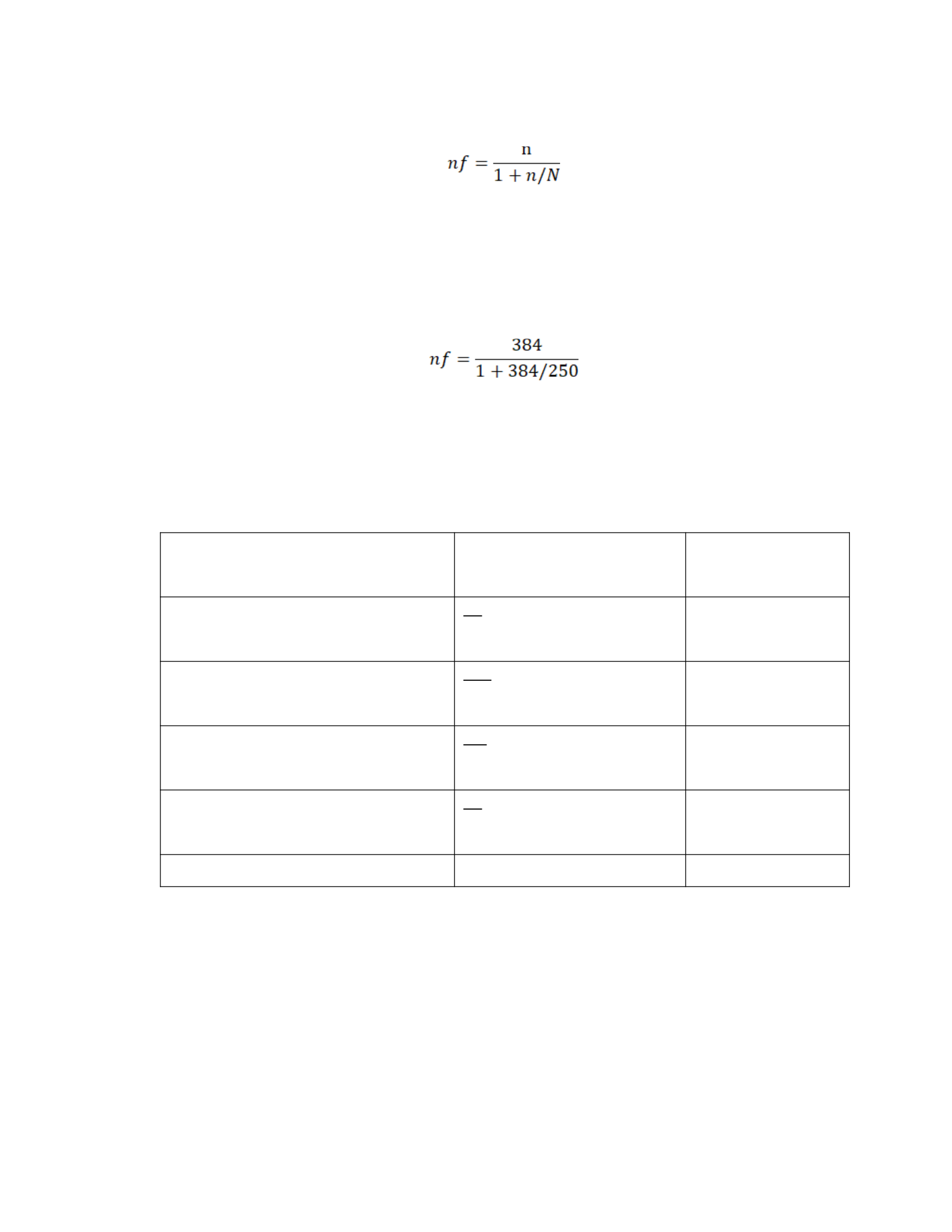
Due to the population being not more than 10,000 the alternative formula was employed;
Whereby nf is the sample size being desired (population not more than10, 000); n is
sample size desired (population exceeding 10,000) and N is the population estimate
which is 250 nurses
Hence;
This translates to 151 respondents who were selected using stratified random sampling as
shown below;
Table 3.1 Sampled Nurses according to Wards
Ward Proportion of
Respondents
Total
Female wards 90 x 151
250
54
Male wards 108 x 151
250
66
Infirmary Ward 22 x 151
250
13
Drug Rehabilitation Center 30 x 151
250
18
TOTAL 151
For the qualitative study, the sample size for the key informants was defined using data
saturation where by approximately 12 to 30 respondents are involved (Polit and Beck,
2012). This involved concurrent sampling, data collection and data analysis until no new
themes on Nursing Process emerged. The saturation thus is used as a criterion through
which data collection/analysis is discontinued whereby failure to attain saturation impacts
on the research conducted. Use of the concept of data saturation is supported by
proponents of qualitative research such as Merriam, (2015) and Cope, (2014).

14
3.5 Sampling Technique
For the quantitative study, simple random sampling technique was used. The random
sampling technique ensured every subject meeting the inclusion criteria is randomly
selected until the desired sample of 151 respondents achieved (Mathieson, 2014).
Random sampling is preferred as it minimizes biasness in the responses as it ensures
equal representation of the entire study population. Simple random technique was
undertaken without replacement as each nurse who met the inclusion criteria had the
same probability of being selected.
The researcher wrote Yes and No on small pieces of paper which were then folded,
placed in a basket, shaken and each nurse allowed to pick one. All the nurses on each
working shift were requested to pick a paper randomly from the basket. Those nurses
who picked Yes were then included as the sample size while those who picked No were
excluded from the study. For qualitative study, purposively sampling was used whereby
the nursing service unit managers were selected. The main goal of purposive sampling
was to focus on particular characteristics of a population of interest, which was best
enabled to answer the research questions. As such, total of 12 respondents were
purposively selected to participate in qualitative study.
3.6 Data Collection Instruments
3.6.1 Questionnaires
The questionnaire was structured into sections; each section addressing a specific
research objective as per appendix IV. The questionnaire contained both open ended and
close ended questions to ensure comprehensive data collection. The questionnaire was
preferred as it is the most widely used data collection method and was the most efficient
way of collecting responses from a large sample prior to analysis. The questionnaire was
developed after the researcher reviewed the relevant literature pertaining to the study.

15
3.6.2 Interview Guide
The interviews aided in the collection of qualitative data. The interview was structured
using leading questions directed towards each of the specific objectives of the study as
per appendix V. The use of interview was preferred as it enabled the respondents to
express in detail the study phenomena. The key informants for the interview were nurse
managers and departmental heads at the facility. This enabled the study to be subjective
to obtain institution’s perspective concerning the study topic. Interview responses were
audio recorded.
3.6.3 Checklist
The researcher used a checklist with indicators of nursing process to extract data from the
patient’s files. The checklist had items on work environment, comprehensive assessment,
completion of patient charts and utilization of the nursing care plan as per appendix VI.
The information was extracted from patient’s files and only for the files of patients who
have been in the hospital for a period of not less than 48 hours. This was enough time to
have allowed interaction of the nurse and patient thus enabling utilization of nursing
process in patient care. The Importance of the observation checklist was to enable capture
information on the phenomenon understudy from the researcher’s point of view as well
as complementing the interviews and questionnaires. This is essential in any particular
research as the respondents may not be able to fully indicate all aspects of the study. The
files were protected from unauthorized personnel and locked up in a cabinet for security
purpose.
3.7 Data Collection Procedure
The questionnaires were administered directly to the respondents with the aid of two
research assistants. The research assistants underwent training to be well equipped with
adequate knowledge on how to approach and handle the respondents and to ensure
comprehensive data collection. The researcher and research assistants distributed the
copies of questionnaire for nurses. The respondents were asked to complete and return
the questionnaire to the researcher or the research assistants. The questionnaire copies
were serialized to ensure respondent anonymity.

16
Qualitative data on the other hand was collected using interviews which enabled the
researcher to acquire information on perspectives of the nurses. The interviews on the
other hand were conducted by the researcher and took approximately 20-30 minutes per
interviewee. This enables the researcher to acquire in depth information which would not
be possible if a questionnaire alone was used (Polit and Beck, 2012). The data collected
was audio recorded using tape recorders which was then transcribed. Privacy was ensured
by conducting the interview in an enclosed place or in any other place the respondent felt
comfortable with. Once this process was complete, the original tape-recording and the
transcribed interview were stored in a secure place and only accessible to the researcher.
3.8 Data Quality Management
Quality research refers to the scientific process encompassing all aspects of study design
and protection against systematic bias, non-systematic bias, and inferential error (Patten
& Mildred, 2016). To assure data quality, training and orientation were given to the
research assistants by the principal researcher. The data collection instruments were
pretested on 5% of the participants one week prior to the actual data collection in
MNTRH. These respondents selected for the study however were not part of the actual
study. The importance of the pre-test is to enable the researcher to familiarise themselves
with the study and access the efficiency of the data collection instruments (Mugenda &
Mugenda, 2012). The outcomes of the pre-test were used in assessing the reliability and
validity of the data collection instruments. Necessary corrections and adjustments were
then considered. During data collection, the data was checked for completeness and
missing information at each point. Data was also checked during entry and compilation
before commencement of analysis. The results of the reliability test obtained as shown by
Table 3.2 implies that all the variables had Cronbach Alpha of greater than 0.7 hence
implying that the research instruments were reliable in carrying out the study.

17
Table 3.2 Reliability Analysis
Variable
Cronbach's
Alpha
No
Items
of
Decision
Nurse-Related Factors Cronbach Alpha>0.7,
0.754 8 acceptable
Cronbach Alpha>0.7,
Patient-Related Factors 0.776 7 acceptable
Cronbach Alpha>0.7,
Hospital-Related Factors 0.702 4 acceptable
Nursing Process Cronbach Alpha>0.7,
Implementation 0.706 4 acceptable
3.9 Data management and analysis
3.9.1 Data Management
Data sources for the study included questionnaires, interview transcripts and checklist
notes. All the collected data were stored in a research file in the computer for data storage
purposes and access only restricted to the principal researcher. To protect the
respondents' confidentiality, all the identifying information were removed and replaced
with a text identification label which was used to represent individual participant. The
collected data will be securely stored for a period of 5 years before being permanently
destroyed.
3.9.2 Data Analysis
The data collection instruments yielded both quantitative and qualitative data.
Quantitative data were analysed using descriptive statistics which included measures of
central tendency such as frequencies, percentages, means and standard deviations. After
the completion of the data collection process, the collected questionnaires were first
examined for completeness. The questionnaires were then coded. Categorical data were
then subject to inferential statistics using Pearson’s’ Chi Square test to determine possible
relationships between the factors influencing NP implementation and the predicted
estimates and P values of 0.05 or less were considered significant.

18
The data were then presented in tables, graphs, and charts. Quantitative data from the
observation checklist on the other hand were analysed through noting of similar trends
and presented in summary form. Qualitative data were from the recorded information
from interview sessions. The recorded audio tapes were listened to several times,
transcribed and then interpreted independently. This was followed by thematic analysis.
The qualitative data were presented in narrations. Discussion were then done which
integrated both the qualitative and quantitative data which enabled valid conclusions to
be made thereafter.
3.10 Operationalization of Variables
Operationalization involves finding measurable, quantifiable, and valid indent for the
entire research variable and the independent and dependent variables that will aid in the
analysis of study findings. The operationalization of the study variables is shown by
Table 3.3

19
Table 3.3: Operationalization of Variables
Variable Indicator Measuring of
Indicators
Tools of
analysis
Type of
analysis
Independent Structural •Organization Percentages Descriptive
Factors structure
• Support
Frequencies statistics
• Policies
• Resources
Independent Process Factors •Nurses’ Percentages Descriptive
Competencies
• Nurses’ Experience
Mean score statistics
•Attitude
• Perceptions
• Nursing processes
Independent Factors •Policy Frameworks Percentages Descriptive
hindering
NP
Dependent Nursing
Process
Practice
• Usability of
the NPs
• Adaptability of NPs
• Acceptability of NP
•Patient Compliance
•Approach to patients
including assessment
data(history taking.
p/e, and
investigations done)
•Documentation
quality
• Increased reflective
thinking with
appropriate specific
interventions
• Formulation of
care plans with
seven components
•Proper Nursing
Diagnosis with
minimum of three
cues and three parts
Mean score
Percentages
Mean score
statistics
Descriptive
statistics

20
3.11 Ethical Considerations
The researcher ensured that participant's autonomy was maintained. To protect the
rights and welfare of participants and minimize risk of discomfort, harm or dangers
from research procedures, ethical clearance was sought from KNH and UoN Research
Ethics Committee. The researcher also obtained permission from the management of
the MNTRH. Consent form was explained and signed prior to the collection of data.
Subjects were allowed to leave the study at any point or not to participate at all if they
so wish. Absolute confidentiality and anonymity of the participants was maintained
throughout the study. Participants did not require to indicate their names or any other
identifying details.
The researcher ensured that participant’s autonomy was maintained. Information was
not obtained through coercion, deception or use of incentives. The study sought
consent for voice recording and make the respondents fully aware of its relevance.
Since the study was aimed at getting insight about a given phenomenon, there was
neither anticipated nor actual risks of harm to the study participants. The rights and
concerns of the subjects were given priority and confidentiality was maintained
during the research. Neither incentives nor compensation were given the nurses
participating in the study as it was conducted based on their normal routines. All
information obtained during the study was treated with outmost confidentiality.
3.12 Study Limitations
The major limitation in the study was the sample size as the entire population was not
used for the study. The responses obtained were limited to only the opinion of a
proportion of the participants. The study was only able to describe the selected factors
influencing NP implementation which may not be an exhaustive list of the available
factors. The researcher however ensured that the data collection instruments were
reliable and valid in collecting all the required information. Additionally, the study
was only conducted at Mathari Teaching and Referral Hospital thus giving a picture
of only one Hospital. Despite this limitations, the researcher ensured comprehensive
data collection through ensuring that the data collection instruments were both valid
and accurate which enabled generalizability of the findings of the study.

21
3.13 Dissemination Plan
The result will be disseminated to the University of Nairobi, mental health unit of
MTRH and the Ministry of health. Further dissemination shall be through publications
and report prints.
22
CHAPTER FOUR: RESULTS
4.1 Introduction
This chapter presents the results of the data collected, analysed and interpreted by the
researcher organized by specific research objectives. The aim of the research was to
establish the factors that influence implementation of the nursing process in the
management of patients with mental disorders in Mathari National Teaching and
Referral Hospital. It comprises of the socio-demographic characteristics of the
respondents, utilization of NP at MNTRH and finalizes with the structural and process
factors influencing the implementation of NP at MNTRH. Out of the 151
questionnaires that were issued out, 112 questionnaires were duly filled and returned
translating to a response rate of 74%.
4.2 Socio-Demographic Characteristics
4.2.1 Gender of Respondents
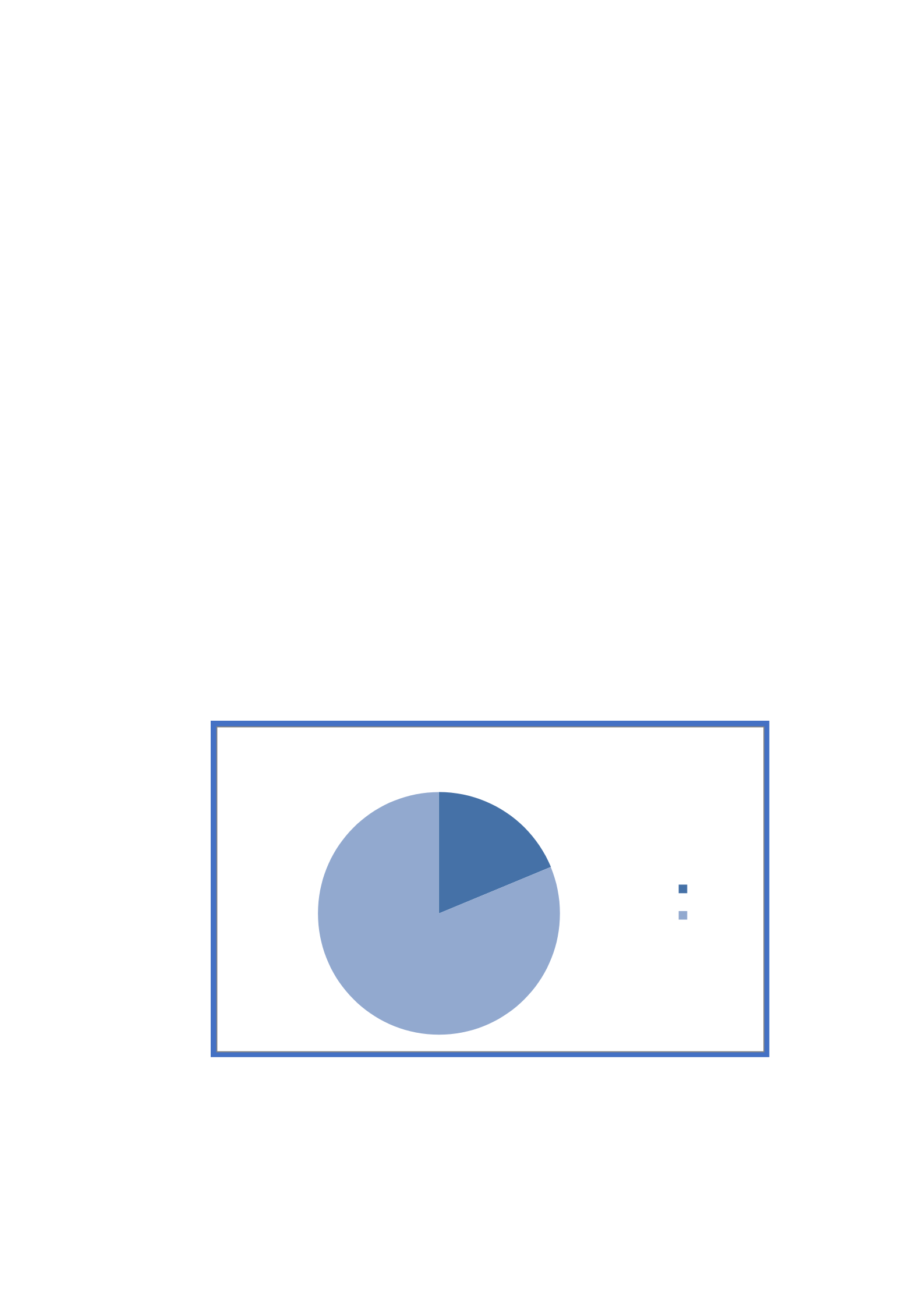
As shown by Figure 4.1, 81% (n=91) were female while 19% (n=21) were male. This
implies that there was a higher female dominance among the nurse’s respondents that
took part in the study. However, there were responses from both genders hence no
biasness in the findings obtained.
Figure 4.1 Gender of Respondent
Gender of Respondents
19%
Male Female
81%
23
4.2.2 Age of Respondents
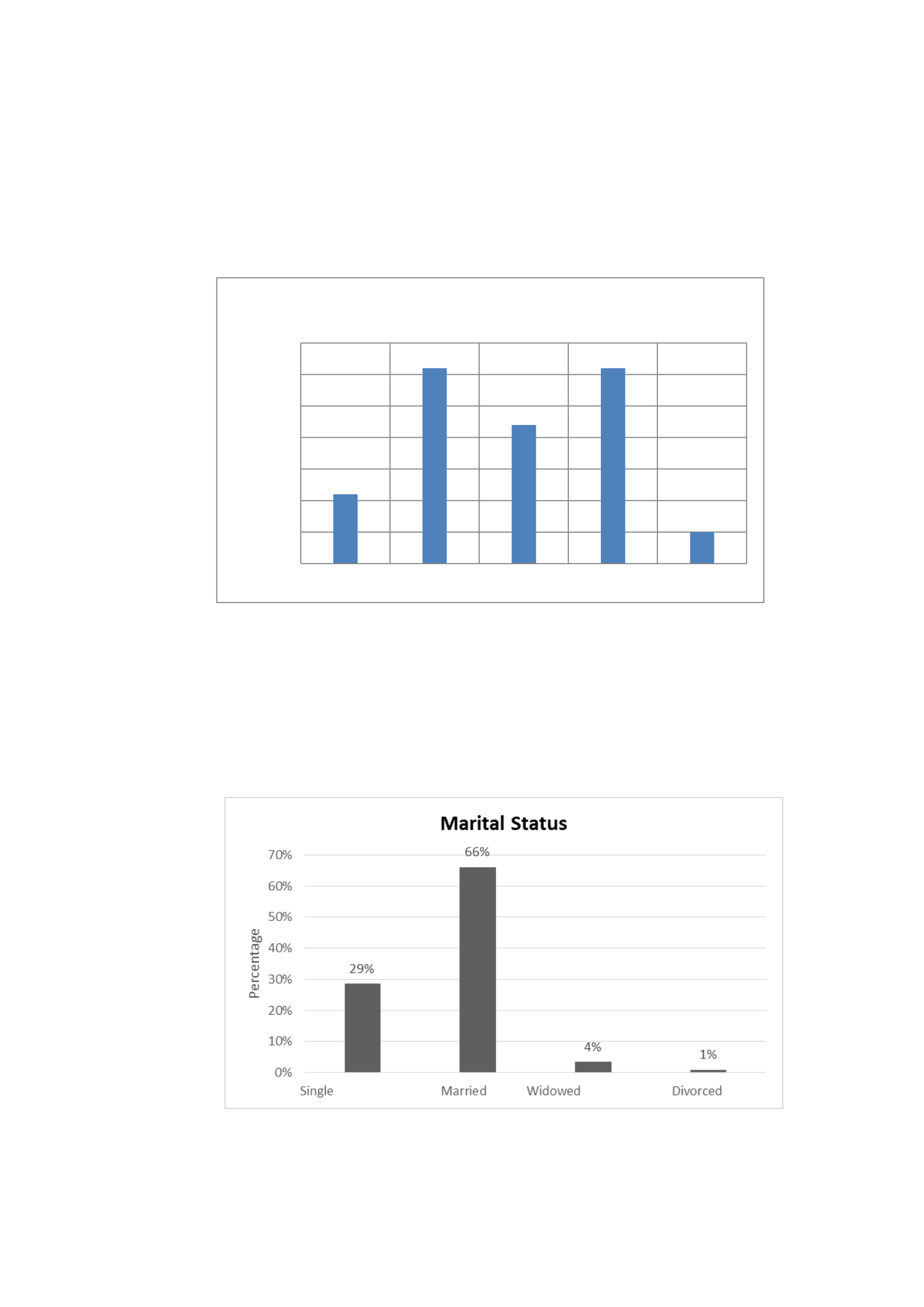
Most the respondents 31% (n=34) were between the ages of 51-60 and only 11%
(n=12) were less than 30 years as shown in Figure 4.2. This implies that majority of
the respondents 58% (n=65) were above 40 years indicating that they were mature
hence provided reliable information.
Figure 4.2 Respondents Age
4.2.3 Marital status of Respondents
As shown by Figure 4.3 indicated that majority of the respondents 66% (n=74) were
married with only 5% (n=6) either widowed or divorced.
Figure 4. 3 Marital Status of Respondents
35%
Respondents Age
31%31%
30%
25% 22%
20%
15% 11%
10%
5%
5%
0%
21-30 31-40 41-50 51-60 more than 60
Percentage

24
4.2.4 Academic qualification(s) of Respondents
The academic qualification of the respondents was measured by the highest education
levels attained. As shown by Table 4.1, most of the respondents 50% (n=56) had
Bachelor degree in Nursing and only 10% (n=11) had Diploma in Community Health
nursing. This implies that majority of the respondents 78% (n=87) had either bachelor
degree or higher diplomas in mental health and psychiatric Nursing hence well
qualified for their respective positions at MNTRH.
Table 4. 1 Education Level of Respondents
Highest Education Level Frequency Percentage
Bsc Nursing 56 50%
Diploma in Community Health Nursing 11 10%
Diploma in Mental Health /Psychiatric Nursing
Higher Diploma in Mental health/Psychiatric
Nursing
14
31
13%
28%
Total 112 100%
4.2.5 Work experience of Respondents
As shown by Table 4.2, majority of the respondents 55% (n=61) had work experience
of over 15 years while only 27% (n=30) had under 10 years’ experience as per Table
4.2. This implies that the respondents had worked for a considerable length of time
hence well conversant with the study topic on Nursing Process implementation.
Table 4.2 Work experience of Respondents
Years Worked Frequency Percentage
Below 5 years 22 20%
5-10 years 8 7%
11-15 years 21 19%
16-20 years 29 26%
21-25 years 10 9%
26-30 years 13 12%
Above 30 years 9 8%
Total 112 100%

25
4.2.6 Designation(s) of Respondents
As shown by Table 4.3, most of the respondent 49% (n=55) were registered nurses
while 13% (n=14) were principal nursing officers. This implies that there majority of
the respondents were registered nurses and senior registered nurses 61% (n=69) hence
affirming the respondents’ appropriateness for taking part in the study.
Table 4. 3 Designation(s) of Respondents
Designation Frequency Percentage
Registered Nurse 55 49%
KRCHN 24 21%
Senior Registered Nurse 19 17%
Principal Nursing Officer 14 13%
Total 112 100%
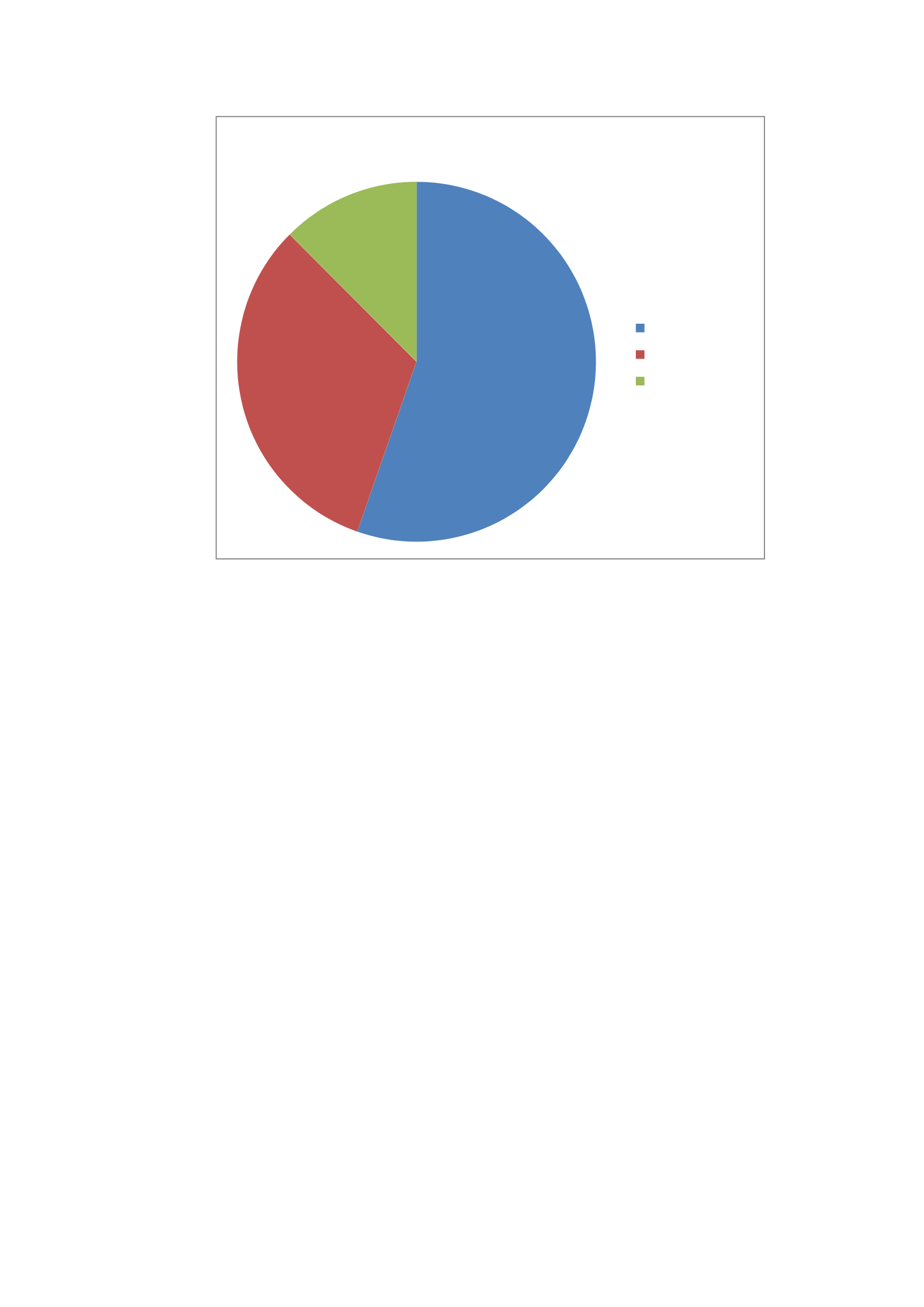
4.2.7 Respondents Duties
This section aimed at determining the respective duties in which the respondents were
involved in. As shown by Figure 4.4, majority of the 55% (n=62) took part in patient
care and only 13% (n=14) took part in administration activities. This indicates that
there was representation of respondents involved in patient care, care planning and
also administration hence facilitating comprehensive data collection on the nursing
process implementation phenomenon at MNTRH.
26
Figure 4.4 Respondents Duties
4.3 Utilization of nursing process in management of patients
The study sought to determine the level of utilization of nursing process in
management of patients with mental disorders in Mathari National Teaching and
Referral Hospital. This was undertaken by observing the patient files on whether NP
had been utilized in delivery of patient care. From the interview responses, the NP
stages followed at MNTRH were indicated to be assessment, formulation of nursing
diagnosis, planning, implementation, evaluation and documentation. However, other
respondents argued that they can’t remember the exact systematic sequence of NP
which indicated low knowledge levels of NP stages. While others argued that not all
the stages of NP were fully completed with stages such as interventions,
documentation and evaluation not being comprehensively done
The observation checklist was further utilized in determining utilization of NP in
management of patients having mental disorders at MNTRH. Specifically, three
aspects were used in determination of NP utilization namely; patient assessment,
availability of a nursing care plan and proper documentation. Presence of 50% and
above of the items in the checklist was indicative of NP utilization. The main
Respondent Duties
13%
32% 55%
Patient care
Care planning
Administration

27
indicators of assessment investigated by the study included identification and
demographic data, history taking, presenting complaints and duration, history of
present illness, past psychiatric history, family history, personal history and premorbid
personality. Out of the 30 patient files examined, only 18 had at least 50% of the
assessment measures investigated. This translate to a 60% assessment level which
implies an above average extent of utilization as shown by Table 4.4.
Availability of a nurse care plan (NCP) was used in assessing the utilization of the
other phases of NP. A nurse care plan describes the nursing diagnoses listed in order
of priority, goals and outcome criteria, plan of action /intervention, implemented
action and evaluation. Out of the 30 patient files examined only 12 of them had
complete nursing care plans translating to 40% which is a very low extent of
utilization of nurse care plans as shown by Table 4.4. The interviewees further pointed
out NP implementation at MNTRH was not fully successful with the only
approximately 25-40% success levels.
Documentation on the other hand was measured using appropriate completion of
patient charts, fluid flow sheets, nurse’s cardex and NCP for inclusion of all relevant
information stated as implemented in the NCP. Out of the 30 patient files investigated
only 16 of them were found out to have proper and complete documentation. This
translates to a frequency percentage of 53% implying a moderate extent of
documentation of the NP as shown by Table 4.4. Most the constructs were observed
to be missing and only present in few files showing that completion of NP
documentation by the nurses at MNTRH was still relatively low.
Table 4. 4 Utilization of nursing process in management of patients
Nursing Process Phase Utilization Number of files
Examined
Frequency Percentage
Availability of Patient Assessment 30 18 60%
Availability of a nurse care plan 30 12 40%
(NCP)
Proper Documentation 30 16 53%
28
4.4 Structural factors influencing the implementation of nursing process in
management of patients with mental disorders in Mathari National Teaching
and Referral Hospital
The study aimed in establishing the structural factors influencing the implementation
of nursing process in management of patients with mental disorders in Mathari
National Teaching and Referral Hospital. The study found two main structural factors
influencing nursing process implementation namely patient-related factors and
hospital-related factors.
4.4.1 Hospital-related determinants to NP implementation
Four measures of hospital related factors were investigated by the study this included;
recognition of the NP framework by the hospitals, support of NP implementation,
monitoring of the NP process and monitoring of the NP process. On recognition of
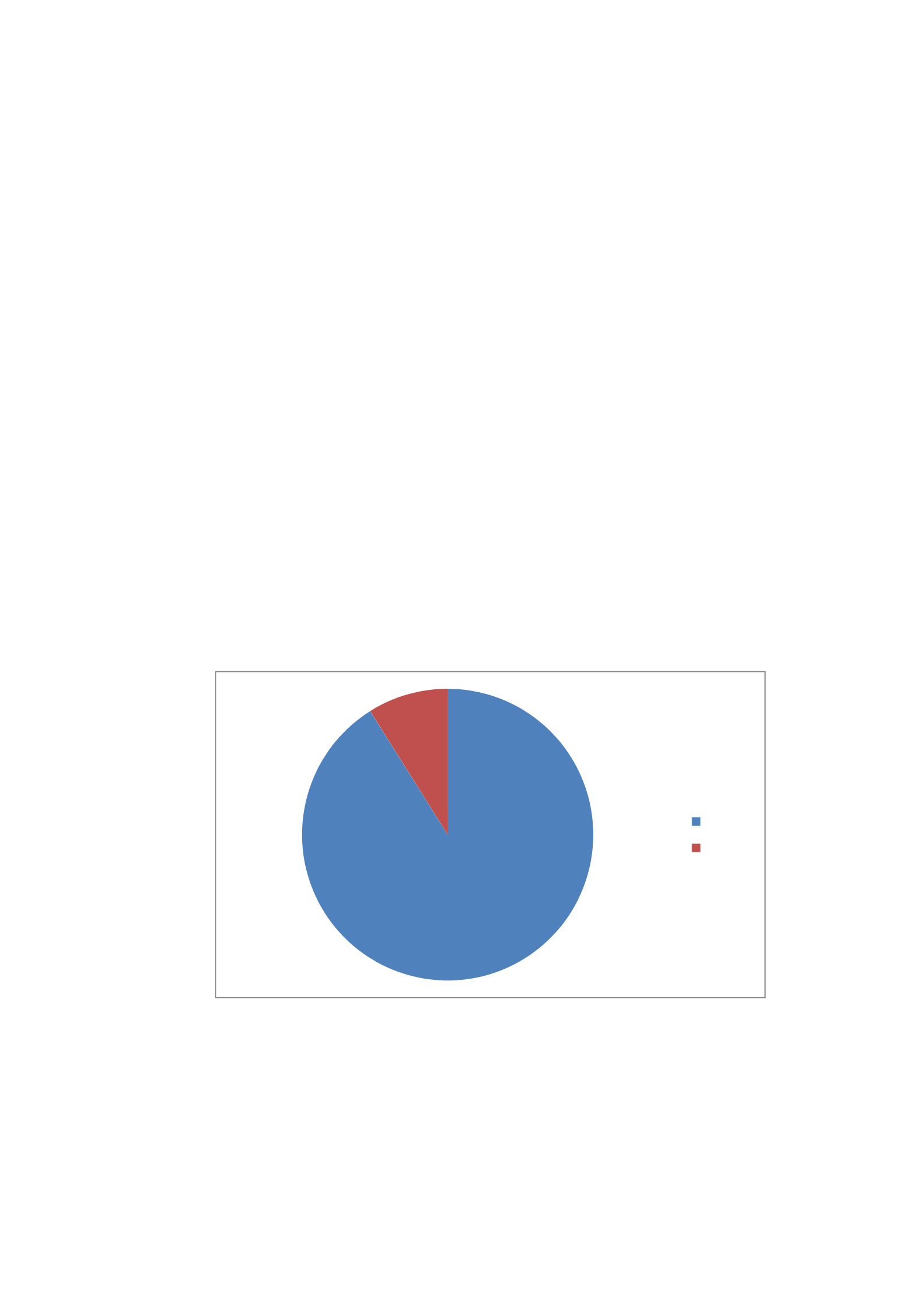
nursing process as a framework of nursing care delivery by the hospital, majority of
the respondents 91% (n=102) agreed while only 9% (n=10) disagreed as shown by
Figure 4.5. This is an indication that the hospital was aware of the need and
importance of nursing process in delivery of good patient care.
Figure 4. 5 Recognition of NP by Hospital Management
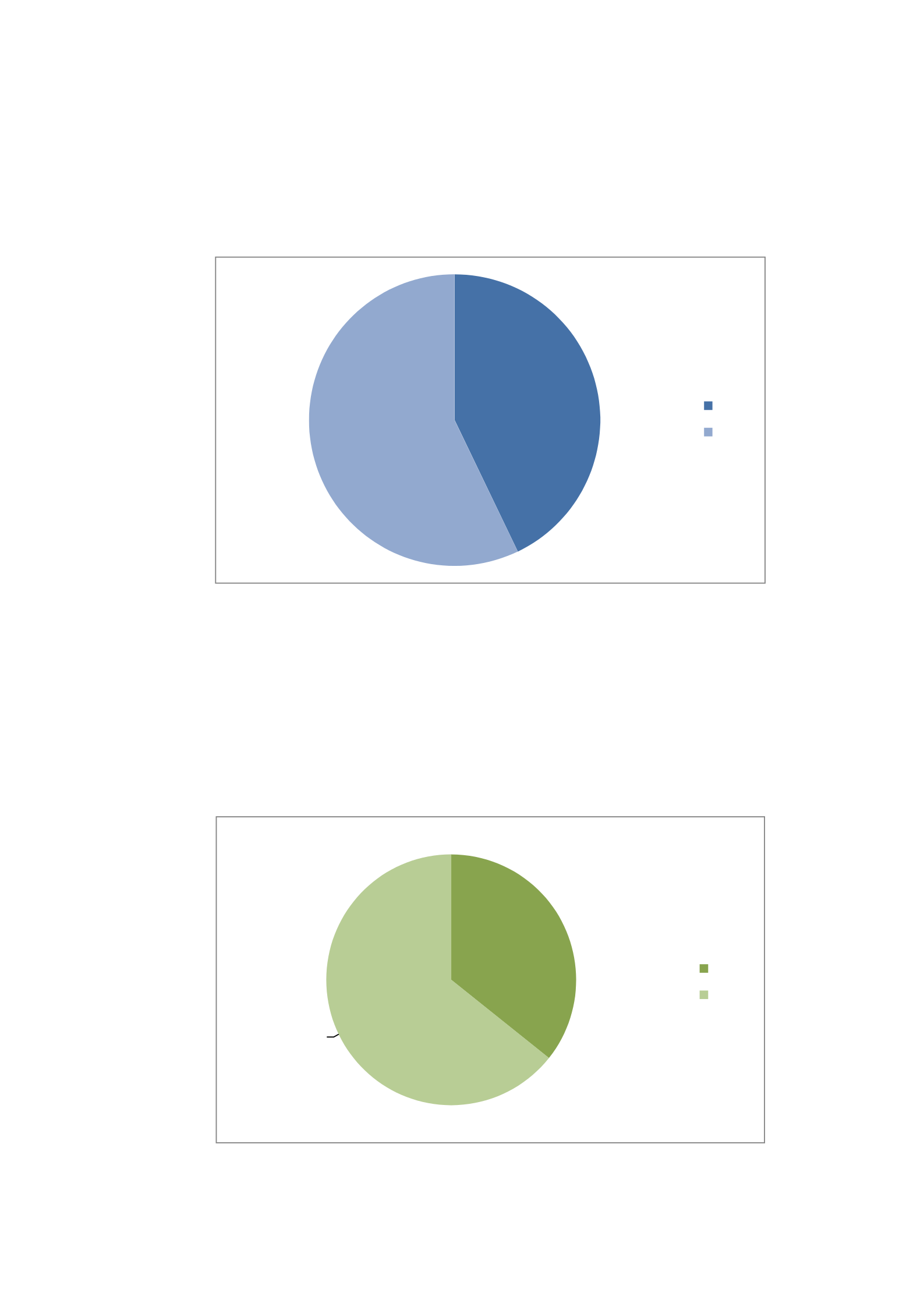
On the Hospital administration support towards the implementation of NP, 57%
(n=64) of the respondents disagreed while 43% (n=48) agreed as shown by Figure
4.6. This means that there was minimal support provided by the hospital
administration towards the implementation of NP at MNTRH. The interviewees
9%
Yes No
91%
29
unanimously agreed that the hospital administration provided minimal to no support
at all to the implementation of NP. This was indicated to result in no motivation
among the nurses to continuously implement NP in the daily routines in the patient
management care.
Figure 4. 6 Support of NP Implementation by Hospital Administration
On monitoring of implementation of nursing process by hospital administration, the
findings obtained as shown by Figure 4.7 indicated that 64% (n=72) of the
respondents disagreed with 36% (n=40) negating the statement. This implies that
there was low monitoring geared towards ensuring effective implementation of NP at
MNTRH.
Figure 4. 7 Monitoring of NP Implementation by Hospital Administration
36%
Yes No
64%
43%
57%
Yes
No

30
A Likert Scale was further employed in establishing the extent hospital-related factors
that influence NP implementations at MNTRH. The findings obtained as presented by
Table 4.8 indicate that majority of the respondents 77% (n=86) agreed on no follow
up by the authorities, having a mean of 4.02. On failure of the hospital administration
to prioritize the NP formulation and implementation plans, majority of the
respondents 77% (n=86) also agreed with a mean of 4.17. Majority of the respondents
86% (n=96) also agreed on there is no adequate budgetary and financial allocation
towards the NP implementations with a mean of 4.37. The respondents 48% were
neutral on the nurses not being well trained and developed with a mean of 3.54.
However, majority of the respondents disagreed 59% (n=66) on neglect being given
towards the psychiatric nurses as compared to the general nurses having a mean of
2.49. The respondents also disagreed 47% (n=53) on the hospital ruling on non-
implementation of NP with a mean of 3.18.
Overall, Hospital-related factors of NP implementation had an average mean score of
3.79 and standard deviation of 0.8463 which implied a large extent (mean>3.75) of
influence on NP implementation at MNTRH. The results of the Chi square test of
significance as shown by Appendix VII further indicated that hospital-related factors
had a p-value of 0.000<0.05 which implies it had a positive and significant influence
on implementation of Nursing Process at MNTRH as the p-value was less than 0.05.
Therefore a unit change in these hospital-related factors will translate in a unit change
in the level of NP implementation at MNTRH.

31
Table 4. 5 Hospital-related determinants to NP implementation
Hospital related Factors S
D
D N A
S
A
M
ea
n
Std.
Dev
No follow up by the authorities 4 7 13 34 42 4.0 0.89
% % % % %
2 14
Hospital rules in non-implementation of NP 1 47 16 30 5 3.1 0.97
% % % % %
8 78
Failure to priorities the NP formulation and 4 7 11 22 55 4.1 1.12
implementation plans
% % % % %
7 99
The nurses are not well trained and developed 4 7 48 24 16 3.5 0.62
% % % % %
4 24
Neglect is given towards the psychiatric nurses 30 29 20 13 8 2.4 0.24
as compared to the general nurses
% % % % %
9 11
There is no adequate budgetary and financial 1 5 8 28 58 4.3 1.21
allocation towards the NP implementations
% % % % %
7 48
Mean Score 3.7 0.84
9 63
SD=Strongly Disagree, D=Disagree, N=Neutral, A=Agree and SA=Strongly Agree
4.4.2 Patient-related determinants to NP implementation
The study investigated the various patient-related factors which influenced NP
implementation including the patient-nurse ratio, patient compliance and variation of
NP outcomes amongst patients. From the interviews, it was found out that the patient-
nurse ratio ranged from 1 nurse: 20 patients to 1 nurse to 30 patients with the number
increasing at night. This shows a high workload regarding the number patients to be
attended to. The interviewees stated that patient-nurse ratio is a huge determinant on
the amount of time spent per patient as well as the extent of individualized treatment

32
provided. It was also noted that patient compliance was one of the major factors
determining the implementation efficiency of NP at MNTRH. Patient compliance
refers to the willingness and corporation of the patient towards assistance or medical
intervention by the nurses. Without patient compliance, the respondents unanimously
agreed that NP implementation was not possible. It was therefore indicated that prior
to the start of the NP it was essential for the nurse to establish a rapport with the
patient and gain their trust failure to which they would experience difficulties in
executing all the phases of the nursing process.
On the variations of NP outcomes amongst patients, 27% (n=30) stated an above
moderate extent, 33% (n=37) stated a moderate extent while 40% (n=45) stated a
below average extent as shown by Table 4.6. This shows that there was still
inconclusiveness on the exact extent of NP outcomes amongst patients from the
respondent’s perspective.
Table 4. 6 Variation of NP outcomes amongst patients
Extent Frequency Percentage
Very great extent 12 11%
Great extent 18 16%
Moderate extent 37 33%
Small extent 16 14%
Very small extent 29 26%
Total 112 100%
A Likert Scale was further employed in establishing the extent patient-related factors
that influence NP implementations at MNTRH. The findings obtained as presented by
Table 4.7 indicate that majority of the respondents 53% (n=59) strongly agreed on
evaluation of the patient could be difficult to perform if the steps of the nursing
process are not well followed with a mean of 4.35. On a high number of patient
causing a challenge in ensuring adequate time allocation for the NP implementation,
42% (n=47) of the respondents agreed and 35% (n=39) strongly agreed having a mean
of 4.12. On every patient being unique and needing an individualized care plan thus
causing problems in the NP implementation, 29% (n=32) of the respondents agreed
and 43% (n=48) strongly agreed having a mean of 4.04. On difficulties in collecting
and recording all the patient’s information 30% (n=33.6) of the respondents agreed
and 31% (n=34) strongly agreed having a mean of 3.77.

33
On barriers in evaluating progress towards goals, 32% (n=35) of the respondents
agreed having a mean of 3.25. On patients do not make progress because NPs are not
well implemented, 32% (n=35) of the respondents agreed and 16% strongly agreed
having a mean of 3.51. However, on patient refusal to cooperate, 46% (n=51) of the
respondents were neutral. Overall, the patient related factors were established to have
a large extent of influence (mean >3.75) on the implementation of nursing process at
Mathari National Teaching and Referral Hospital having a mean of 3.76 and standard
deviation of 0.7271. The results of the Chi square test of significance as shown by
Appendix VII further indicate that patient-related factors had a p-value of 0.000<0.05
which implies it had a positive and significant influence on implementation of
Nursing Process at MNTRH as the p-value was less than 0.05.
Table 4. 7 Patient-related determinants influencing NP implementation
Patient Related S
D
DNAS
A
M
ea
n
Std.
Dev
Difficulties in collecting and recording all the 6 4 2 3 3 3. 0.67
patient’s information % % 9
%
0
%
1
%
77 46
Every patient is unique and will need an 1 8 2 2 4 4. 0.86
individualized care plan, causing problems in the NP
implementation
% % 0
%
9
%
3
%
04 59
Patients do not make progress because NPs are not 2 1 4 3 1 3. 0.57
well implemented. % 0
%
0
%
2
%
6
%
51 62
High number of patient causes a challenge in 0 0 2 4 3 4. 0.85
ensuring adequate time allocation for the NP
implementation
% % 3
%
2
%
5
%
12 81
Patient refusal to cooperate 5 1 4 2 1 3. 0.53
% 2
%
6
%
3
%
4
%
29 02
Evaluation of the patient could be difficult to 0 0 1 2 5 4. 1.09
perform if the steps of the nursing process are not
well followed
% % 8
%
9
%
3
%
35 91
Barriers in evaluating progress towards goals 1 1 3 3 1 3. 0.48
1
%
3
%
1
%
2
%
3
%
25 52
Mean Score 3. 0.72
76 71
SD=Strongly Disagree, D=Disagree, N=Neutral, A=Agree and SA=Strongly Agree

34
Theme: Structural factors influencing NP implementation
Based on the responses from the interview, the main structural related factors that
influenced NP implementation at MNTRH were grouped into the following sub-
thematic areas which included patient-nurse ration, patient compliance, varying
patient needs and corporation with the patient family members, hospital
administration, under staffing of the nurses, inadequate resources and lack of
appropriate frameworks for monitoring and evaluation of NP implementation.
Sub-theme: Patent-Nurse Ratio
From the interviews, it was found out that the patient-nurse ratio ranged from 1 nurse:
20 patients to 1 nurse to 30 patients with the number increasing at night. This shows a
high workload regarding the number patients to be attended to. The interviewees
stated that patient-nurse ratio is a huge determinant on the amount of time spent per
patient as well as the extent of individualized treatment provided. An interviewee
further added that;
“The high patient-nurse ratio at MNTRH tends to discourage most of the
nurse from utilizing the NP in patient care. This is attributed to the fact that
the large number of patients required to be attended to make it impossible to
follow all the steps of NP at all the times. Though the number reduces
substantially when there are RN/MH students around, the number is still high.
This results in only the steps of NP which are perceived to be most
„beneficial‟ being followed by the nurses.” (Respondent 2)
Sub-theme: Patient Compliance
It was noted that patient compliance was one of the major factors determining the
implementation efficiency of NP at MNTRH. Patient compliance refers to the
willingness and corporation of the patient towards assistance or medical intervention
by the nurses. Without patient compliance, the respondents unanimously agreed that
NP implementation was not possible. It was therefore indicated that prior to the start
of the NP it was essential for the nurse to establish a rapport with the patient and gain
their trust failure to which they would experience difficulties in executing all the
phases of the nursing process.

35
Sub-theme: Varying Patient Needs
From the interviews, it was established that the patient have varying medical needs
based on the degree and severity of the medical conditions. An interviewee indicated
that;
“Some patients require very minimal medical interventions due to their
medical conditions being less severe. They therefore tend to be less demanding
medical wise which makes it easier for the nurses to extensively utilize the NP
in coming up with the appropriate medical diagnosis. However, others may
have complicated or more demanding medical condition which require prompt
interventions with the NP not being able to provide any fast assistance. ”
(Respondent, 10)
Sub-theme: Corporation with the Patient Family Members
The respondents further argued that some of the family members of the patients may
not be willing to cooperate with the nurses in ensuring prompt recovery of the
patients. As such, it was noted that;
“Family members of some patients may tend not to provide no additional
support to the family members. They see the role of patient management to be
the sole responsibility and do not perceive any relevance in providing
assistance. In this regard, they do not offer to do basic activities such as
advising the patient to be compliant to the nurse‟s interventions, bringing the
patient to the facility in time and ensuring completing of the recommended
treatment which tends to be a huge drawback towards NP implementation.”
(Respondent, 7).
Hospital Administration Support
The interviewees unanimously agreed that the hospital administration provided
minimal to no support at all to the implementation of NP. This was indicated to result
in no motivation among the nurses to continuously implement NP in the daily routines
in the patient management care. Specifically, an interviewee noted;
“When Nursing Process was first introduced at MNTRH, the management was willing
to fully support its implementation in whichever way possible. However, as the time
progresses the support given towards NP has diminished substantially which acts a

36
discouraging factor for both the nurses and the nursing officers as its relevance in
improving patient care is not fully appreciated.”(Respondent, 6)
Sub-theme: Staffing of Nurses
The respondents all agreed that the number of nurses recruited and deployed into the
wards for patient management and care was a huge contributing factor for the success
of NP implementation. This was argued to be largely because it determines not only
the attention given to each patient but also the nurses’ output and burnout. Low
staffing was therefore established from the interviews to be a great barrier but yet a
common occurrence at MNTRH which acts to reduce effectiveness of NP
implementation. An interviewee indicated that;
“The number of nurses employed by the national government is really small
compared to the huge patient number. This has been going on for several years now
(since when I joined the hospital in 2010) with most of the nurses constantly
complaining. Due to the low number of nurses present, most of the nurses tend to
forego the NP and adopt „shortcuts‟ which enable them serve more patients within a
shorter time. Also others practice the NP minimally so as not to tire out faster and
prevent themselves from being overwhelmed by their duties.”(Respondent, 2)
Sub-theme: Resources Provided
From the interview responses it was revealed that the amount of resources provided or
channeled towards the nursing process implementation is a huge contributor towards
the extent of implementation. An interviewee explained that;
“Equipment such as stationary for the documentation process and adequate drugs for
patient treatment are one of the most basic requirements for NP implementation to
take place. However, in most cases, these resources are not always provided by the
hospital administration. Even in instances when they are provided, it‟s in only limited
quantities and only for a short period of time. The question then that rises among us
nurses is that if the hospital is really interested in achieving high and effective
implementation of the nursing process, why is there no adequate provision of
resources despite funds being allocated by the Ministry of Health?”(Respondent, 1)

37
Sub-theme: Monitoring and Evaluation of NP
The researcher also found out from the interviews that the extent of monitoring and
evaluation of NP was also another main factor influencing the implementation of the
process. Monitoring and evaluation entail the process of not only ensuring that the NP
was implemented but also accessing whether the intended outcomes of NP are
attained. An interviewee argued that;
“Regarding Monitoring and Evaluation of NP, there is minimal monitoring and
supervision towards the process. Even if happens, it is always periodically after a
very long time. This results in reluctance among the nursing staff to always adhere to
the NP as they perceive to face no dire consequences if they don‟t strictly follow it.
Without proper monitoring and evaluation it is hard to tell whether Np has been
comprehensively implemented at MNTRH and whether it has had any positive
significance to patient care and outcomes.”(Respondent, 5).
4.5 Process factors influencing the implementation of nursing process in
management of patients with mental disorders in Mathari National Teaching
and Referral Hospital
The study sought to determine the process factors influencing the implementation of
nursing process in management of patients with mental disorders in Mathari National
Teaching and Referral Hospital. Specifically, the study investigated nurse related
factors which included the respondents’ understanding of NP, training on NP and
general attitude of the staff on NP.
4.5.1 Respondents understanding of NP
On the respondents’ understanding of NP, the findings obtained indicated that only
minority of the respondents 28% (n=31) indicated an above average extent of
understanding of NP with 46%(n=52) stated a below average extent of understanding
as shown by Table 4.8 This implies that most of the respondents at MNTRH were yet
to fully understand the relevance and application of NP in patient management and
care.
38
Table 4. 8 Respondents understanding of NP
Extent of understanding Frequency Percentage
Very good 12 11%
Good 19 17%
Average 29 26%
Poor 37 33%
Very poor 15 13%
Total 112 100%
4.5.2 Respondents training on NP
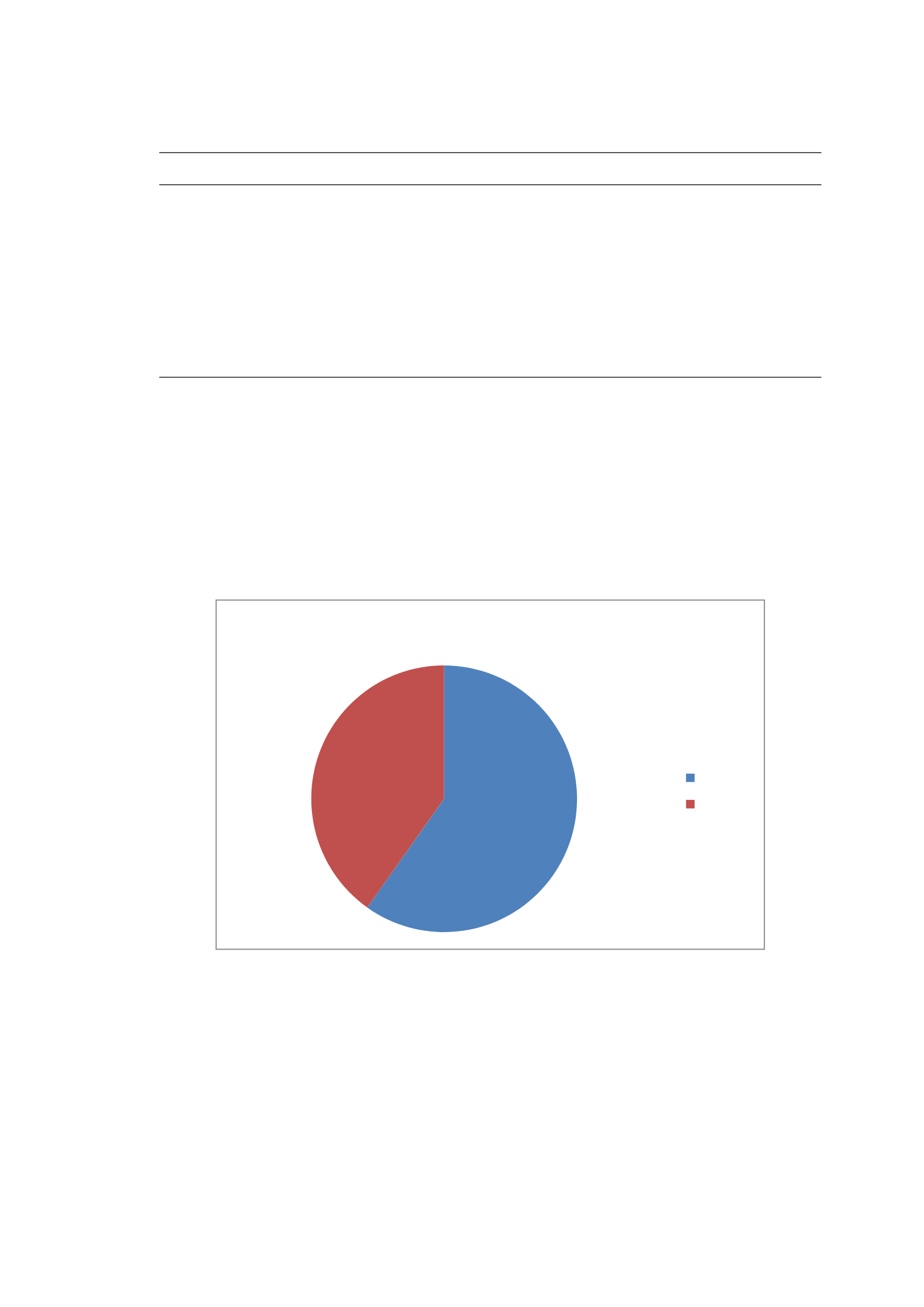
On whether the respondents had undergone trainings on nursing process, majority of
the respondents 60% (n=67) were affirmative while only 40% (n=45) negated as
shown by Figure 4.8. This shows that a considerable number of the respondents were
well equipped in NP training. The trainings were stated by the respondents to be
undertaken during their course work studies, on job trainings, and workshops.
Figure 4. 8 Nursing Process Training
4.5.3 General attitude of the nurse staffs towards NP
Regarding the general attitude of the nurse staffs towards NP the results obtained
revealed that only a small proportion of the respondents 33% (n=34) had a good and
very good attitude towards the NP while 47% (n=53) had poor and very poor attitude
towards NP as shown by Table 4.9. From the responses from the interviews, it was
Nursing Process
Training
40% Yes
No
60%

39
revealed that majority of the nurses at MNTRH portrayed negligence towards NP
implementation which had a negative adverse effect.
Table 4. 9 Attitude of the nurse staffs towards NP
Frequency Percentage
Very good 12 11%
Good 22 20%
Average 25 22%
Poor 33 29%
Very poor 20 18%
112 100%
4.5.4 Nurse-related Factors that influence NP implementations
This section sought at determining the nurse-related factors that influence NP
implementations at MNTRH. To achieve this, a Likert Scale analysis of 1-5 was
employed in rating the responses whereby; 1=Strongly Disagree, 2=Disagree,
3=Neutral, 4=Agree and 5=Strongly Agree. The findings obtained are presented by
Table 4.10.

40
Table 4. 10 Nurse-related Factors influencing NP implementation
Nurse Related SD
D N A
SA Mea
n
Std.
Dev
Care plans are not usually discussed 6% 9% 6% 36 43 4.00 0.935
with the patient
% %
9
Formulating nursing diagnosis 9% 20 45 18 9% 2.98 0.470
should not be mandatory
% % %
9
In patient care there should be less 45 11 7% 25 13 2.50 0.328
writing and more action.
% % % %
5
Nursing care plan should be drawn 29 19 23 17 12 2.63 0.181
for the very sick patients only
% % % % %
4
Nursing instructions on a care plan 15 29 21 19 17 2.94 0.267
often bear very little relation to what
the nurse actually does
% % % % %
1
Nursing process is cumber some 8% 11 6% 21 54 4.02 1.091
% % %
8
Nursing process is not be applied to 20 9% 14 21 36 3.45 0.671
all patients
% % % %
2
The care plan plays no significant 30 29 11 21 9% 2.50 0.226
part in the provision and evaluation
of care.
% % % %
9
The nurses have adequate expertise 3% 30 38 19 10 3.03 0.408
to undertake the NP
% % % %
4
There has been well acceptance of 6% 10 53 29 2% 3.11 0.708
the NP practices
% % %
2
Use of nursing care plans enables a 7% 11 7% 28 47 3.97 0.970
nurse to establish priorities of care
% % %
0
Writing a care plan is a burden 4% 9% 20 30 38 3.87 0.755
% % %
9
Mean Score 3.25 0.548
7
SD=Strongly Disagree, D=Disagree, N=Neutral, A=Agree and SA=Strongly Agree
As shown by Table 4.10, majority of the respondents 54% (n=60) strongly agreed on
the nursing process being cumbersome with a mean of 4.02. On Care plans not
usually being discussed with the patient, 36% (n=40) of the respondents agreed while
43% (n=48) strongly agreed with a mean of 4.00. On use of nursing care plans
enables a nurse to establish priorities of care, 28% (n=31) of the respondents agreed

41
while 47% (n=53) strongly agreed with a mean of 3.97. On writing care being a
burden, 30% (n=33) of the respondents agreed while 38% (n=42) strongly agreed
having a mean of 3.87. On the Nursing process not being applied to all patients, 21%
(n=24) of the respondents agreed and 36% (n=40) strongly agreed having a mean of
3.45.
The respondents were neutral on nurses having adequate expertise to undertake the
NP, there has been well acceptance of the NP practices, nursing instructions on a care
plan often bear very little relation to what the nurse actually does and formulating
nursing diagnosis should not be mandatory having means of 3.03, 3.11, 2.94, and 2.98
respectively. On in patient care there should be less writing and more action, 45%
(n=50) of the respondents strongly disagreed, On Nursing care plan should be drawn
for the very sick patients only, 29% (n=32) of the respondents strongly disagreed and
19% (n=21) agreed with a mean of 2.63.
While on care plan plays no significant part in the provision and evaluation of care
30% (n=33) of the respondents strongly disagreed and 29% (n=32) disagreed with a
mean of 2.50. Overall, nurse-related factors were established to have a moderate
effect (mean>3.0) on nursing process implementation at MNTRH having a mean of
3.25 and standard deviation of 0.5487. The results of the Chi square test of
significance as shown by Appendix VII further indicate that nurse-related factors had
a p-value of 0.035<0.05 which implies it had a positive and significant influence on
implementation of Nursing Process at MNTRH as the p-value was less than 0.05.
Theme: Process factors influencing NP Implementation
Based on the responses from the interview, the main nurse-related factors which
influenced nursing process implementation at MNTRH was organized into four sub-
thematic areas including, experience of the nurses, attitude and perception, negligence
of NP and Nursing Process Training.

42
Sub-theme: working experience of the nurses
The working experience of the nurses was noted to be a main determinant on the
nurses’ knowledge ability, ease of use and applicability of the nursing care in patient
management. It influenced the frequency of use of NP and the patient outcomes
obtained. An interviewee argued;
“The more experienced nurses are more familiar with the NP and therefore will tend
to more frequent utilize it to the latter without the need for any references. As
compared to the less experienced and recently graduated ones who though may have
the NP knowledge in most instances are not able to fully implement it. However, the
experienced nurses due to long durations of practice, may perceive some of the steps
of NP to be more important than others, hence tend to give more priority and time
towards these steps.” (Respondent, 3).
Sub-theme: Attitude and perceptions of Nurses towards NP
According to the respondents, the attitude and perception of the NP was also another
main factor contributed towards implementation of NP. This is attributed to the fact
that a positive perception towards the NP due to the benefits accrued from the process
was indicated to translate to higher levels of NP implementation. On the contrary,
poor attitude and bad perception towards NP was argued to lead in minimal utilization
and avoidance of the NP translating to low implementation levels of the NP at
MNTRH.
Sub-theme: Negligence of NP by Nurses
From the responses from the interviews, it was revealed that majority of the nurses at
MNTRH portrayed negligence towards NP implementation which had a negative
adverse effect. Specifically, an interviewee described;
“Some of the nurses tend to neglect the NP and its importance at MNTRH. This may
occur either intentionally or non-intentionally based on the situation. Intentional
negligence occurs when the nurse refrains from utilizing the NP such as when they
are fatigued while the unintentional negligence mostly occurs when there is a high
number of patients that ought to be attended to hence to save time. Also due to their
minimal support and supervisor on the NP implementation by the hospital
management, the nurses may see an avenue to avoid from using it in patient care.”
(Respondent, 12).

43
Sub-theme: Nursing Process Training
On the influence of nursing process training on nursing process implementation at
MNTRH, it was indicated that;
“The importance of Nursing Process cannot go unnoticed. It not only helps the nurses
understand the relevance of the nursing process in patient management but also be
aware with best ways to execute all the stages of NP. Though majority of the nurses
have undergone training of NP at one point of their careers, others still remain not to
be fully trained especially those who began the practice before the introduction of the
NP in the nursing curriculum. It is therefore important that more additional training,
workshops and seminars on NP to be frequently undertaken.”(Respondents 1, 11, 3
and 8).

44
CHAPTER FIVE: DISCUSSION
5.1 Utilization of nursing process in management of patients
The study sought to determine the utilization of NP in management of patients with
mental disorders in Mathari National Teaching and Referral Hospital. Specifically,
three aspects were used in determination of NP utilization namely; patient assessment,
availability of a nursing care plan and proper documentation. Out of the 30 patient
files examined, only 18 had at least 50% of the assessment measures investigated.
This translate to a 60% assessment level which implies an above average extent of
utilization of NP which tends to contradict Barasa, et al, (2017) who conducted a
study on nursing process in county hospitals in Kenya and established that patient
assessment was very low at less than 40%.
Availability of a nursing care plan (NCP) was used in assessing the utilization of the
other phases of NP including diagnosing, planning, implementing, and evaluation.
The patients had been in the wards for a period of not less than 48 hours. Out of the
30 patient files examined only 12 of them had well completed nursing care plans
translating to 40% which is a very low extent of utilization of nurse care plans.
Information on goal setting/outcome identification, evaluation data and incomplete
assessment cues were missing in most of the patients files. This compares with
Ndambuki, (2015) who studied NP implementation in Msambweni district hospital,
Kwale County and found out that practice of NP was still very low.
The interviewees further pointed out NP implementation at MNTRH was not fully
successful with the only approximately 25-40% success levels. This compares with
Aseratie, Murugan, and Molla, (2014) who assessed the Factors Affecting
Implementation of Nursing Process among Nurses in Selected Governmental
Hospitals, Addis Ababa, Ethiopia. They found out that utilization of NP in patient’s
care using NCP was still low in most of the government hospitals. This confirms that
most public hospitals were still faced with a challenge in NCP use.
Documentation on the other hand was measured using appropriate completion of
patient charts, flow sheets and NCP for inclusion of all relevant information stated as
implements in the NCP. Out of the 30 patient files investigated only 16 of them were
found out to have proper and complete documentation. This translates to a frequency

45
percentage of 53% implying a moderate extent of documentation of the NP. Most the
constructs were observed to be missing and only present in few files showing that
completion of NP documentation by the nurses at MNTRH was still relatively low.
Similarly, Mahmoud and Bayoumy (2014) established that the proper documentation
was a challenge still facing most nurses in implementing NPs in the hospitals.
5.2 Structural factors influencing the implementation of nursing process
The study aimed in establishing the structural factors influencing the implementation
of nursing process in management of patients with mental disorders in Mathari
National Teaching and Referral Hospital. The study found two main structural factors
influencing nursing process implementation namely patient-related factors and
hospital-related factors.
5.2.1 Patient related factors influencing implementation of nursing process
The study found out that high patient-nurse ratio, patient compliance and variation of
outcomes among patients were huge determinant of the utilization and
implementation of NP at MNTRH. Similarly, Mahmoud and Bayoumy (2014) in
their study observed most nurses complained that high patient workload was the most
significant barrier to NP implementation. These patient related factors were
established to have a large extent of influence (mean >3.75) on the implementation of
nursing process at Mathari National Teaching and Referral Hospital having a mean of
3.76 and standard deviation of 0.7271. This was supported by the results of the Chi
square test of significance where patient-related factors had a p-value of 0.000<0.05
was obtained which implies it had a positive and significant influence on
implementation of Nursing Process at MNTRH as the p-value was less than 0.05.
The positive influence is supported by Fisseha, et al, (2014) who indicated that the
patient’s compliance and corporation are the key factors to implementation of NP and
its success. In a similar way, Yeboah, (2017) in his study established that some
patients, may not be completely willing to provide the necessary information
pertaining to their medical condition causing difficulties in the diagnosis. Habermann
and Uys (2006) further established a significant effect and postulates that the NP may
not only be time consuming, due to specialized needs of the patients but also interfere
with the care of the patients’ needs.

46
5.2.2 Hospital-Related Factors influencing implementation of nursing process
The study found out that on the Hospital administration support towards the
implementation of NP, 64(57%) of the respondents disagreed while 48(43%) agreed
implying that there was minimal support provided by the hospital administration
towards the implementation of NP at MNTRH. This concurs with Munroe, Duffy and
Fisher (2010) also identified lack of administrative support as one factor affecting the
NP implementation. The study also found out that there was inadequate monitoring
and resource allocation geared towards NP implementation which was considered as a
huge barrier to the success of the implementation. Prince, Comas-Herrera, and
Karagiannidou (2016), also found out that the shortage of resources, inadequate
support from the hospital management and high workload among nurses are among
the critical obstacles to NP implementation in the management of patients with mental
disorders.
Overall, Hospital-related factors of NP implementation had an average mean score of
3.79 and standard deviation of 0.8463 which implied a large extent (mean>3.75) of
influence on NP implementation at MNTRH. This was supported by the Chi square
test of significance that indicated that hospital-related factors had a p-value of
0.000<0.05 which implies it had a positive and significant influence on
implementation of Nursing Process at MNTRH as the p-value was less than 0.05.
In a similar way, studies conducted have also established a positive effect of hospital
related factors on nursing process implementation. Provi Brown, Wickline, Eccof and
Glaser (2009) in their study discovered that organizational barriers such as lack of
nursing autonomy were top barriers to the use of evidenced base practice while
knowledge factor is a facilitator. This is similar to Schaefer (2010) who studied
nursing process and its determinant factors and established that the number of
workforce dedicated to wards nursing and management of the patients also acts to
greatly affect its level of implementation and sustainability (Marnseri, 2012). While
according to Prince, Coma-Herrera and Karagiannidou (2016), inadequate resources
acts a main determinant to NP implementation especially in the developing states.
These resources are in terms of insufficient finances, high workload, inadequate
workforce and shortage of physical resources.

47
5.3 Process factors influencing implementation of nursing process
The study sought to determine the Process factors influencing implementation of
nursing process in management of patients with mental disorders in Mathari National
Teaching and Referral Hospital. Findings of the study revealed that the main process
factor influencing NP implementation was the nurse related factors. The study found
out that most of the respondents at MNTRH were yet to fully understand the
relevance and application of NP in patient management and care. Regarding the
general attitude of the nurse staffs towards NP the results obtained revealed that only
a small proportion of the respondents 34(33%) had a good and very good attitude
towards the NP while 53(47%) had poor and very poor attitude towards NP. This
indicates that not all the nursing staffs fully accepted and had a positive perception of
NPs at MNTRH.
The experience of the nurses was noted to be a main determinant on the nurses’
knowledge, ease of use and applicability of the nursing care in patient management. It
influenced the frequency of use of NP and the patient outcomes obtained. According
to Alburquerque-Sendín and Palacios-Ceña (2018), the lack of experience tends to
hinder greatly the implementation of the NP especially on management of patients
with mental disorders. This coincides with Agunwah, (2010) who also found out that
lack of experience of practical use of the nursing process tends to negatively affect its
utilization. This tends to limit its feasibility in the daily nursing practice (Baraki, et al,
2017).
The respondents all agreed that the number of nurses recruited and deployed into the
wards for patient management and care was a huge contributing factor for the success
NP implementation. This compares with Agunwah (2006) who concluded that the
shortage of nurses influenced the utilization of the nursing process. In a similar way,
Fernandez-Sola et al. (2012) also reported that the high work overload was recognized
as one of the main obstacles encountered by the nurses, while implementing the
nursing process. The findings from this current study are in line with those of
Bjorvell, Wredling and Thorell-Eksstrand (2008), who reported lack of time as a
major issue in relation to documenting and updating the nursing-care plan.

48
Overall, nurse-related factors were established to have a moderate effect (mean>3.0)
on nursing process implementation at MNTRH having a mean of 3.25 and standard
deviation of 0.5487.The results of the Chi square test of significance as shown by
indicated that nurse-related factors had a p-value of 0.035<0.05 which implies it had a
positive and significant influence on implementation of Nursing Process at MNTRH
as the p-value was less than 0.05.The positive effect of nurse related factors on
implementation of nursing process concurs with Agyeman-Yeboah, et al, (2017) who
found out that clinical utilization of the Nursing Process at clinical settings was
influenced by lack of clear understanding on the Nursing Process and Care Plans.
Also Huguchi, Dulburgen and Duff (2012) in their study on the factors associated
with the utilisation of nursing diagnoses found that the lack of knowledge on the
nursing diagnosis prevented nurses from effectively using these nursing diagnoses.
While Florance and Adenike, (2013) confirm this by indicating that the nurses
significantly determined the use NP in patient management.

49
CHAPTER SIX: CONCLUSIONS AND RECOMMENDATIONS
6.1 Conclusions
6.1.1 Utilization of nursing process in management of patients with mental
disorders in Mathari National Teaching and Referral Hospital
The study findings revealed that though there was awareness of nursing process
among the nurses and recognition of nursing process as a crucial tool in patient
management, utilization of nursing process in patient assessment, NCP and
documenting in Mathari National Teaching and Referral Hospital was still low. The
study therefore concludes that Mathari National Teaching and Referral Hospital is yet
to fully attain complete implementation of NP in management of patients with
evidence of nursing process implementation gaps in the facility.
6.1.2 Structural factors influencing the implementation of nursing process in
management of patients with mental disorders in Mathari National Teaching
and Referral Hospital
Findings of the study revealed that the main structural factors included the hospital
related factors and the patient-related factors. These hospital related factors were
found out to determine the support offered to NP implementation, resource allocated
and supervision of NP implementation. The patient related factors on the other hand
were found to influence the time spent on each patient and compliance towards NP.
The study thus concludes that structural factors have a positive and significant effect
on NP implementation in MNTRH. These factors are concluded to either enhance or
hinder the NP implementation based on their effectiveness.
6.1.3 Process factors influencing implementation of nursing process in
management of patients with mental disorders in Mathari National Teaching
and Referral Hospital
The study findings revealed out that the main process factors influencing NP
implementation was nurse related factors which included the nurses’ experience,
attributes, perceptions, training and perceptions regarding nursing process. The nurse-
related factors were established to a have a strong positive effect on nursing process
implementation. The study therefore concludes that nurse-related factors influence the
level and extent of implementation of NP at MNTRH. Hence, the perceived benefits
of the NP by the nurse as well as their skills and attributes are concluded to affect NP
utilization and application.

50
6.2 Recommendations
6.2.1 Recommendation for Practice
It is recommended that the management at MNTRH to highly prioritize
implementation of nursing process as a key function of the hospital. The management
should formulate better policies and frameworks which will ensure that the barriers to
the NP are minimized. There should be periodic workshops and seminars on the
nursing process, in order for nursing tutors to equip them with the needed skills and
confidence to value and teach the nursing process. There should also be regular in-
service training on to continually update knowledge and skills on the nursing process.
The nursing process committees and the nurse managers at MNTRH should conduct
routine supportive supervision on NP. This is recommended to be conducted either
after two weeks or monthly so as to provide direction and motivation of the nursing
staff on the utilization of nursing process. This will make the task of assessing and
managing the mental disorders of patients to be systematic and organized. Therefore,
proper implementation of the NP will ensure that the patient needs are all catered for
with a good patient outcome.
6.2.2 Recommendation for Policy
It is also recommends that the National Government to employ more nursing staff so
as to reduce the poor nurse-patient ratio that was established to be present in the
hospital facility.
The Ministry of Health, regional health bureau, zonal health desks and other Non-
Governmental partners should ensure that the institutions are well empowered on
importance of nursing process. The Ministry of Health should also strengthen national
policy frameworks and interventions aimed at improving nursing process training and
implementation at clinical setting in Kenya. This will act to greatly boost the overall
effectiveness of the NP in the institution thus promoting better patient care.
6.3 Suggestion for further research
The study has provided a starting point for further research on the factors influencing
implementation of nursing process in patient management in hospital facilities.
However, there are certain areas which have emerged from the study necessitating
further research to be conducted. The study was limited by the methodology used

51
whereby it was institutionalized focusing entirely on Mathari National Teaching and
Referral Hospital. This may not be actual representation of the nursing process
implementation phenomenon in other hospitals. Further studies are thus suggested on
other hospitals in other regions of the country to enable comparison and
generalizability.
The study also investigated only three factors influencing the implementation of NP
namely patient-related factors, nurse-related factors and hospital related factors which
is not an exhaustive list of the available factors. Its therefore suggested further studies
be conducted on factors other than these so as to enable generalization of the study
findings. In addition, further studies are suggested on the barriers and enhancers of
NP implementation in details to facilitate comprehensiveness of the findings. A
similar study should be also conducted at a different time frame so as to determine
whether there would be any changes on the extent of NP implementation.

52
REFERENCES
Abdelkader, F & Othman, W., (2017). Factors Affecting Implementation of Nursing
Process: Nurses' Perspective. Journal of Nursing and Health Science.6, (3) 76-
82
Accra, Ghana. BMC Nursing Huguchi KAS, Dulburg C, Duff V 1999. Factors
associated with nursing diagnosis utilization in Canada. Nurs Diagn.
10(4):137–47.
Afoi, B.B., Emmanueul, A., Garba, S.N., Gimba, S.M. and Afuwai, V., 2012.
Evaluation of the Implementation of Nursing Process Among Nurse
Clinicians.
Afolayan, J.A., Donald, B., Baldwin, D.M., Onasoga, O. and Babafemi, A., 2013.
Evaluation of the utilization of nursing process and patient outcome in
psychiatric nursing: Case study of psychiatric Hospital Rumuigbo, Port
Harcourt. Advances in Applied Science Research, 4(5), pp.34-43.
Agyeman-Yeboah, J., 2017.Factors that influence the clinical utilization of the
nursing process at a hospital
Alburquerque-Sendín and Palacios-Ceña, D., 2018. The experience of being a
psychiatric nurse in South Africa: a qualitative systematic review. Nursing
Outlook.
Alfaro-LeFevre R (2010) Applying Nursing Process: A Tool For Critical Thinking.
7th ed. Lippincott Williams & Wilkins: Philadelphia.
American Nurses Association. (2017). American Nurses Association 2011 Health &
Safety Survey report.
Aseratie M, Murugan R, Molla M (2014) Assessment of Factors Affecting
Implementation of Nursing Process Among Nurses in Selected Governmental
Hospitals, Addis Ababa, Ethiopia; Cross Sectional Study . J Nurs Care 3: 170.
Barasa,E.W.,Molynx,S.,English,M.,&Cleary,S.(2017).Hospitals as Complex adaptive
systems: a case study of factors influencing priority setting practices at the
hospital level in Kenya social Science and medicine,174,104-112.

53
Blais, K., Hayes, J. S., Kozier, B., & Erb, G. L. (2015). Professional nursing practice:
Concepts and perspectives (p. 530). NJ: Prentice Hall.
Brandalize, D.L. & Kalinowski, E.C. 2005. Nursing process: experience in the
implementation of the diagnostic phase. Cogitare Enferm , 10 (3), 53
Butcher, H. K., Bulechek, G. M., Dochterman, J. M. M., & Wagner, C. (2018).
Nursing Interventions classification (NIC)-E-Book. Elsevier Health Sciences.
Carpenito, LJ., (2015). Nursing Care Plans & Documentation: Nursing Diagnoses and
Collaborative Problems. Lippincott Williams & Wilkins
Chabeli M.M. (2007). Facilitating critical thinking within the nursing process
framework: a literature review. Health SA Gesondheid. 12(4) 69-89.
Clarin, O. A. (2007). Strategies to overcome barriers to effective Nurse Practitioner
and Physician collaboration. The Journal for Nurse Practitioners, 3(8), 538—
548.
Dal Sasso, G.T.M., Barra, D.C.C., Paese, F., de Almeida, S. R. W., Rios, G.C.,
Marinho, M.M. and Debétio, M.G. (2013): Computerized nursing process:
methodology to establish associations between clinical assessment, diagnosis,
interventions, and outcomes Rev Esc Enferm USP., 47(1): 238-45.
Division of Non-communicable Diseases. Kenya national guidelines for the
management of epilepsy: A practical guide for healthcare workers. Nairobi,
Kenya; Ministry of Health: 2014. [August 18, 2015]. http://www
.epilepsykenya.org/downloads/epilepsy%20guidelines%20content%20lite.pdf
Doenges, ME., Moorhouse, MF., & Murr, AC., (2008). Nurses pocket guide
diagnosis, prioritized interventions and rationales. F. A. Davis Company.
Dominguez-Bellido, B., Velázquez-SanFrancisco, I., Maderuelo-Fernandez, J.,
Crespo-
Elsevier Livingstone; 2006.Agunwah E. Evaluation of implementation of nursing
process among nurses in Enugu. West African Journal of Nursing.
2010;21(2):8–14.

54
Fisseha, H., Fessehaye, A., Fikadu, B., Semarya, B., &Alemseged, A. (2014).
Application of Nursing Process and its Affecting Factors among
Nurses Working in Mekelle Zone Hospitals, Northern Ethiopia. Retrieved
May 12, 2018 from http://dx.doi.org/10.1155/2014/675212
Florance, O.A. and Adenike A.E.O (2013): Factors affecting the use of nursing
process in health institutions in Ogbomoso Town, Oyo State. Intern J Med.
Pharm Sc., 3(1): 91-98.
Galderisi, S., Heinz, A., & Kastrup, M. Julian Beezhold, J., Norman Sartorius, N.
(2015). Toward A New Definition of Mental Health. World Psychiatry, 14(2),
231-233.
Habermann M, Uys LR 2006. The nursing process: a global concept. Edinburgh:
Habermann, M., & Uys, L. R. (2005). The nursing process: A global concept. China:
Elsevier Churchill Livingstone.
Hale CA, Thomas LH, Bond S, Todd C (1997) The nursing record as a research tool
to identify nursing interventions. J Clin Nurs 6: 207-214.
Hamilton P & Price T (2013). The Nursing Process, Holistic Assessment and Baseline
Observations. In: Brooker C, Waugh A (eds) Nursing Practice: Fundamentals
of Holistic Care. Mosby Elsevier, London. 303-336.
Hermida, P.M.V. and Araújo, I.E.M. (2006): Sistematização da assistência de
enfermagem: subsídios para implantação. Rev Bras Enfermagem., 59(5): 675-
9.
Herr, K., St Marie, B., Gordon, D. and Young, H.M., (2015). An interprofessional
consensus of core competencies for pre-licensure education in pain
management: curriculum application for nursing. Journal of Nursing
Education, 54(6), pp.317-327.
Hogston R (2011). Managing Nursing: Care Foundations of Nursing Practice:
Themes, Concepts and Frameworks. 4th ed. Palgrave Mcmillan: London. pp.
2-21.

55
Jenkins R, Kiima D, Njenga F, Okonji M, Kingora J, Kathuku D, Lock S. Integration
of mental health into primary care in Kenya. World Psychiatry.
2010;9(2):118– 120.
Jooste, K., Van der Vyfer, M. and Van dyk, A. (2010): Implementing the nursing
process in gynaecology wards in Namibia. Africa Journal of Nursing and
Midwifery., 12(1): 87-99.
Keating, S. F. J., Thompson, J. P., & Lee, G. A. (2010). Perceived barriers to the
sustainability and progression of Nurse Practitioners.International Emergency
Nursing, 18(3), 147—153.
Kiima, D. and Jenkins, R., 2010. Mental health policy in Kenya-an integrated
approach to scaling up equitable care for poor populations. International
Journal of Mental Health Systems, 4(1), p.19.
Kozier B., Erb G., Berman A., Snyder s., Lake R & Harvey S (2008) Fundamentals of
Nursing: Concept, Process and Practice. Pearson Education: London.
Leach. (2008). Planning: a necessary step in clinical care. Journal of Clinical Nursing
Vol. 17. p. 1728–1734
Ledesma-Delgado., E and Mendes, M.R. (2009): The nursing process presented as
routine care actions: building its meaning in clinical nurses' perspective. Rev.
Latino-Am. Enfermagem., 17 (3).
Lewin. K. (1938).The Conceptual Representation and the Measure of Psychological
Forces. Durham.NC:Duke Univ.press
Lima, A.F.C. and Kurcgan,t P.O. (2006): Processo de implementação do diagnóstico
de enfermagem no Hospital Universitário da Universidade de São Paulo. Rev
Esc Enfermagem USP., 40(1):111-6.
Lincoln, A.K., Borg R. and Delman, J., 2015. Developing a community-based
participatory research model to engage transition age youth using mental
health service in research. Family & community health, 38(1), p.87.
Lindberg J (1998). Introduction to Nursing. MCN: The American Journal of
Maternal/Child Nursing, 28(3), 199-204.

56
LoBiondo-Wood, G & Haber, J. 2006. Nursing research methods and critical
appraisal for evidence-based practice. 6th edition. St Louis: Mosby/Elsevier.
Mahmoud, M.H. And Bayoumy, H.M., 2014. Barriers and Facilitators for Execution
of Nursing Process From Nurses'perspective. International Journal of
Advanced Research, 2(2), Pp.300-315.
Mamseri, R.A. (2012): The nursing process as a means of improving patient care.
Unpublished Master thesis. University of South Africa.
Manal, H.M., & Hala, M.B. (2014). Barriers and facilitators for execution of nursing
process from nurses’ perspective International Journal of Advanced Research,
2(2), 300-315.
Mangare N. L., Omondi A. L., Ayieko O. A., Wakasiaka S., Wagoro M. C. A.
Implementation of the Nursing Process in Naivasha District Hospital, Kenya.
American Journal of Nursing Science. Vol. 5, No. 4, 2016, pp. 152-157. doi:
10.11648/j.ajns.20160504.15
Meyer, A. C., & Ndetei, D. (2016). Providing Sustainable Mental Health Care in
Kenya: A Demonstration Project.
Ministry of Health (MoH) (2010). Kenya’s Health sector satisfaction survey report,
Nairobi, Kenya.
Ministry of Health Saudi Arabia. (2012). Statistics Year book. Ministry of Health –
Kingdom of Saudi Arabia. Retrieved April,28,2018 from
www.moh.gov.sa/en/Ministry/Statistics/Book/Pages/default.aspx
Momoh, M. A. and Chukwu, D.O. (2010): Factors that militate against the use of
nursing process: a hospital based study. Continental J. Pharmaceutical
Sciences., 4:6-9.
Mutunga-Mwenda, C., Kangethe, A. and Maranga, A.K., 2016. The nurses’
knowledge on psychiatric patient admission procedures at the National
Teaching and Referral mental health Hospital in Kenya. EPH-International
Journal of Medical and Health Science (ISSN: 2456-6063), 2(11), pp.15-30.

57
Ndambuki,P.I.(2015).Nurses perception on factors hindering implementation of the
nursing process among nurses in Msambweni District Hospital, Kwale County
(Doctoral dissertation,KeMU)
Ndetei, D.M, Pizzo M, Maru H, Ongecha F.A, Khasakhala L.I, Mutiso V &Kokonya
D.A, (2008). Burnout in staff working at Mathari Psychiatric Hospital, Nairobi
Kenya, Afr. J. of Psych.11: 199-203.
Newfield, SA. Hinz, M. D. Scott Tilley, D. Sridaromont, K. L. & Joy Maramba, P.,
(2007).Cox's clinical applications of nursing diagnosis Adult, Child,
Women’s, Mental Health, Gerontic, and Home Health Considerations. F. A.
Davis Company.
Ota,P., (2014).Challenges Facing Health Workers In Psychiatric Units In Level Five
Hospitals In Western Kenya Region. Unpublished Thesis, Moi Univeristy.
Peterson, S. J., & Bredow, T. S. (Eds.). (2009). Middle range theories: application to
nursing research. Wolters Kluwer, 2, 82-98.
Pokorski, S., Moraes, M.A., Chiarelli, R., Costanzi, A.P. and Rabelo, E. R. (2009):
Nursing process: From literature to practice. What are we actually doing? Rev
Latino-am Enfermagem, maio-junho; 17(3): 302-307.
Polit, DF & Beck, CT. 2008. Nursing research, generating and assessing evidence for
nursing practice. Research in nursing & health, 31(5), 417-427.
Potter, P. A., & Perry, A. G. (2007). Basic nursing (6th ed.). St. Louis: Mosby.
Prince, M., Comas-Herrera, A., and Karagiannidou, M., 2016. World Alzheimer
report 2016: improving healthcare for people living with dementia: coverage,
quality and costs now and in the future.
Queiroz, O.C.A., Sant'Ana, R.S.E., Oliveira, S.C., Moinhos, A.S. and Santos, L.S.
(2012): Nurse's perception in front of the implementation of nursing diagnosis
and prescription. Nursing Journal. UFPE on line, 6(7), 1347-51.
R Sreevani (2016).A guide to Mental Health and Psychiatric Nursing, 4th edition,
Jaypee brothers:Bangladesh

58
Rakuom, C. P., Wagoro, M. C., Mirereh, J. O., & Galo, S. (2016). Returning Nursing
to Nightingale: The Bigger Picture of Mainstreaming Kenya-Nursing Process.
Reppetto, M. A. and Souza, M. F. (2005): Evaluation of nursing care systematization
through the phases of nursing process performance and registration in a
teaching hospital. Revista Brasileira de Enfermagem., 58(3): 325–329.
Republic of Kenya National Assembly. Mental health bill 2014. 2014.
Sabona EA. The perception on, and use of, the nursing process in four African
Countries. Afr J Nurs Midwifery. 2005;6(1):67–77.
Savett, L.A. & Good, K. 2005.Continuing education for nurses: problem-orientated
system for nurses. Creative Nursing, 11(1):5-9.
Schmieding, N. J. (2006). Ida Jean Orlando (Pelletier): Nursing process theory. A.
Marriner Tomey & MR Alligood, Nursing theorists and their work, 4311-451.
Searle, J. (2008). Nurse practitioner candidates: Shifting professional boundaries.
Australasian Emergency Nursing Journal, 11(1), 20—27.
Smith, M. C., & Parker, M. E. (2010). Nursing theory and the discipline of nursing.
Nursing theories & nursing practice, 3-15.
Stonehouse, D. (2017). Understanding the nursing process. British Journal of
Healthcare Assistants, 11(8), 388-391.
Varcarolis, E.M., 2016. Essentials of Psychiatric Mental Health Nursing-E-Book: A
Communication Approach to Evidence-Based Care. Elsevier Health
Sciences.
Wagoro, M.C.A. and Rakuom, C.P., 2015. Mainstreaming Kenya-Nursing Process in
clinical settings: The case of Kenya. International Journal of Africa Nursing
Sciences, 3, pp.31-39.
Wiscombe, S. (2001). Nursing process. University of Glasgow Nursing & Midwifery
School.
World Health Organization, 2013. WHO nursing and midwifery progress report 2008-
2012.

59
Yildirim, B., Özkahraman, S., Critical Thinking in Nursing Process and Education,
International Journal of Humanities and Social Science, 1(13), 2013, 257-262.
Zamanzadeh, V., Valizadeh, L., Tabrizi, F. J., Behshid, M., & Lotfi, M. (2015).
Challenges associated with the implementation of the nursing process: A
systematic review.
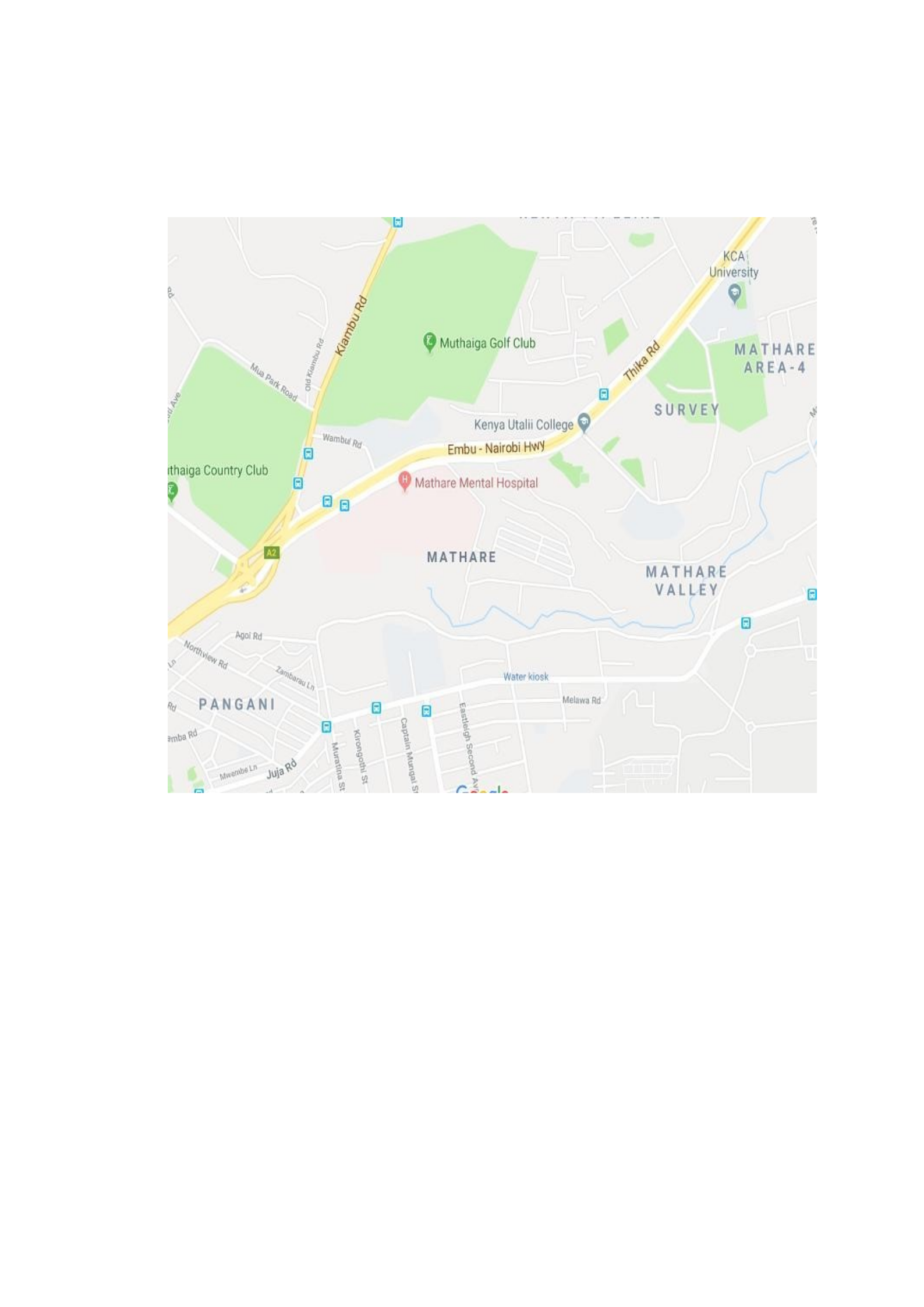
60
APPENDICES
APPENDIX I: MATHARI TEACHING AND REFERRAL HOSPITAL MAP
Source; Google Maps 2018

61
APPENDIX II: TIME FRAME (GANTT CHART)
Duration in Months May
2018
Jun
2018
July
2018
Aug
2018
Sep
2018
Oct
2018
Nov
2018
Problem Identification
Proposal Writing
Seeking consent from
Ethical committees
Recruitment and
training of research
assistants
Pre-testing and
administration of tools
Data cleaning and
analysis
Report writing and
presentation,
Compilation of final
report and
dissemination

62
APPENDIX III: BUDGET
Item Unit cost Quantity Cost Total cost
HUMAN RESOURCE
Training of research assistants 1000 2 2,000
(a)Pre-testing of questionnaire
Principal researcher 2,000 1 2,000
Research assistants(2) 1,000 2 2,000
(b)Data collection
Principal researcher 20,000 1 20,000
Research assistants(2) 10,000 2 20,000
Data analysis and production 25,000
Sub-total 71,000
MATERIALS AND SUPPLIES
Biro pens(1 dozen) 180 1 180
Field books 65 3 195
Folders 100 3 300
Sub-total 675
PROPOSAL AND THESIS
Photocopying final report (5 copies) 3 250 750
Proposal typing and printing (50
pages)
35 50 1750
Research result book binding
(5copies)
600 5 3000
Sub-total 5500
Total 77375
Contingency 10% of total 7737.50
Grand TOTAL 85,112.50

63
APPENDIX IV: PARTICIPANT INFORMATION SHEET AND CONSENT
FORM
Introduction:
This study is a Master’s thesis by Mary Mueni Isika, a mental health and psychiatric
nursing student under the supervision of Dr. Irene Mageto and Dr. Mirriam C.A
Wagoro of Nairobi University.
The purpose of this information is to give you details about the study that will enable
you to make an informed decision regarding your participation. You may ask
questions to clarify any doubt about what we will discuss in this information and
consent form. I will also ask you questions regarding the study before you sign the
consent form to ascertain your understanding of the information provided.
Background and objective: The purpose of this study is to “Explore factors
influencing implementation of nursing process in Mathari National Teaching and
Referral Hospital.”
Significance: Findings from this study could be used for furthering knowledge about
how implementation of the nursing process could be utilized in improving patient care
and management among patients with mental disorders.
Participation: The participation in the study will involve answering of questions
which will be administered through a semi-structured questionnaire.
Benefits: There is no direct monetary benefit in participating in this study. However,
the results of the study will be useful in facilitating the understanding of the
importance of nursing process and underlying factors to its implementation.
Risks: The study poses no physical or economic risks. You may skip any questions
which you may not be in a position to provide answers to. The researcher will also be
present for approximately 20-30 minutes to enable the data collection process to
proceed.

64
Confidentiality: The study will maintain outmost confidentiality with the information
provided to be used solely for academic purposes. Additionally, anonymity of the
respondents will be maintained with no form of name or identification required.
Voluntary participation: Participation in the study is entirely voluntary and refusal
to participate will not attract any negative consequences. In case you may not be
comfortable in providing answers to any particular question, feel free not to answer.
Compensation: The study provides no form of compensation for participation in the
study.
Conflict of interest: The researcher and the supervisors confirm that there is no
conflict of interest amongst them.

65
CONSENT FORM
If you agree and fully consent to participate in this study, please sign below;
I hereby offer my consent to undertake this study. The nature of the study, potential
risks and benefits have been fully explained to me. I am also aware that my
participation is on voluntary basis and may choose to withdraw from the study at any
particular time without any consequences or explanations. I have also been assured
that anonymity will be maintained and all the information provided will be strictly
confidential. I confirm that all my concerns pertaining to the study have been
adequately addressed and understood.
Participants Signature………………………………………………………
Date…………………
I consent that have fully explained the nature and contents of the study in details and
the participant has voluntarily agreed to participate without any form of pressure or
coercion.
Investigator Signature……………………………Date.……………………………...
For any Clarification, please contact

66
APPENDIX V: RESPONDENTS’ QUESTIONNAIRE
Questionnaire Serial Number Questionnaire Status (1=complete; 2=
partially complete)
Interviewer ID Date of Interview / /2018
Introduction
You are hereby invited to participate in a questionnaire for a study on ‘Explore
Factors Influencing the Implementation of Nursing Process (NP) In Management
of Patients with Mental Disorders in Mathari National Teaching and Referral
Hospital’. Be honest, free and active in your participation in responding to the
questions given. Please tick or write in the spaces provided.
SECTION A: SOCIO-DEMOGRAPHIC CHARACTERISTICS
1. Please indicate your gender
Male [ ] Female [ ]
2. Please indicate your age bracket
Less than 20 [ ] 21-30 [ ] 31-40 [ ]
41-50 [ ] 51-60 [ ] more than 60 [ ]
3. Please indicate your marital status
Single [ ] Married [ ]
Widowed [ ] Divorced [ ]
Others [ ] Specify………………………………………………………….
4. Please list your academic qualification(s)
………………………………………………………………………………………
………………………………………………………………………………………
………………………………………………………………………………………
………
5. How many years of work experience do you have?
Below 5 [ ] 5-10 [ ] 11-15 [ ] 16-20 [ ]
21-25 [ ] 26-30 [ ] Above 30 [ ]
6. Please indicate your designation(s)
…………………………………………………………………………………………
…………………………………………………………………………………………
…………………………………………………………………………………………

67
7. Which activity are you mainly involved in?
Patient care [ ] Care planning [ ] Administration [ ]
Others [ ]
Specify………………………………………………………………
8. Are you aware of Nursing Process (NP) initiatives in the
hospital? Yes [ ] No [ ]
PART B: PROCESS FACTORS INFLUENCING NP IMPLEMENTATIONS
a) Nurse-related Factors
9. How do you rate your understanding of NP?
Very good [ ] Good [ ] Average [ ] Poor [ ] Very poor [ ]
10. Have you ever been trained on NP?
Yes [ ] No [ ]
If yes where? Please specify ……………………………………………….
11. How do you rate the general attitude of the nurse staffs towards NP?
Very good [ ] Good [ ] Average [ ] Poor [ ] Very poor [ ]
12. Using a scale of 1-5, where 1 is strongly agree, 2 is agree, 3 is neutral, 4 is
disagree and 5 is to a strongly disagree, please rate the following in relation to
Nurse-related Factors that influence NP implementations.
Statement 1 2 3 4 5
Care plans are not usually discussed with the patient
Formulating nursing diagnosis should not be mandatory
In patient care there should be less writing and more action.
Nursing care plan should be drawn for the very sick
patients only
Nursing instructions on a care plan often bear very little
relation to what the nurse actually does.
Nursing process is cumber some
Nursing process is not be applied to all patients

68
Statement 1 2 3 4 5
The care plan plays no significant part in the provision and
evaluation of care.
The nurses have adequate expertise to undertake the NP
There has been well acceptance of the NP practices
Use of nursing care plans enables a nurse to establish
priorities of care
Writing a care plan is a burden
b) Patient-Related Factors
13. What is general effectiveness of NP towards patients’
outcomes? Very effective [ ] Effective [ ]
Moderate [ ] Minimal effect [ ] Not effective [ ]
14. To what extent is the variation of NP outcomes amongst patients?
Very great extent [ ] Great extent [ ] Moderate extent [ ]
Small extent [ ] Very small extent [ ]
15. Please rate the following statement that relate to the patient-related factors to NP
implementation using a scale of 1-5, where 1 is strongly agree, 2 is agree, 3 is
neutral, 4 is disagree and 5 is to a strongly disagree.
Statement 1 2 3 4 5
Difficulties in collecting and recording all the patient’s
information
Every patient is unique and will need an individualized
care plan, causing problems in the NP implementation
Patients do not make progress because NPs are not well
implemented.
High number of patient causes a challenge in ensuring
adequate time allocation for the NP implementation
Patient refusal to cooperate

69
Statement 1 2 3 4 5
Evaluation of the patient could be difficult to perform if the
steps of the nursing process are not well followed
Barriers in evaluating progress towards goals
PART C: STRUCTURAL FACTORS INFLUENCING NP
IMPLEMENTATION
16. What is the ratio of nurse to patients in your ward?
……………………………………………………..………………………………
……
17. Does the hospital administration recognize nursing process as a framework of
nursing care delivery?
Yes [ ] No [ ]
18. Does the hospital administration support the implementation of
NP? Yes [ ]No [ ]
If yes what form of support is given to you by hospital administration?
…………………………………………………………………………………………
…………………………………………………………………………………………
…………………………………………………………………………………………
……………
19. Does the management monitor implementation of nursing
process? Yes [ ] No [ ]
If yes how does the administration monitor the implementation of NP?
…………………………………………………………………………………………
…………………………………………………………………………………………
…………………………………………………………………………………………

70
20. Please rate the following statement that relate to the hospital-related factors to NP
implementation using a scale of 1-5, where 1 is strongly agree, 2 is agree, 3 is
neutral, 4 is disagree and 5 is to a strongly disagree.
Statement 1 2 3 4 5
No follow up by the authorities
Hospital rules in non-implementation of it
Failure to priorities the NP formulation and implementation
plans
The nurses are not well trained and developed
Neglect is given towards the psychiatric nurses as
compared to the general nurses
There is no adequate budgetary and financial allocation
towards the NP implementations
21. To what extent would you rate the level of implementation of NP in the
institution?
Very great extent [ ] Great extent [ ] Moderate extent [ ]
Small extent [ ] Very small extent [ ]
22. Please rate the following statement that influence the implementation of NP
negatively using a scale of 1-5, where 1 is strongly agree, 2 is agree, 3 is neutral, 4
is disagree and 5 is to a strongly disagree.
Statement 1 2 3 4 5
Lack of proper NP Policy Frameworks
Inadequate hospital guidelines on NP use
Poor perception on the usability of the NPs
There is minimal monitoring and follow ups towards NP
implementation
Some nurses experience problems in adaptability of NP
There is low acceptance of NP by the nurses

71
23. Are there any other factors that negatively influence implementation of nursing
process in the Hospital?
………………………………………………………………………………………
………………………………………………………………………………………
………………………………………………………………………………………
………………………………………………………………………………………
………………………………
24. In your opinion, which measures should be put in place so as to mitigate these
factors that negatively influence implementation of nursing process?
………………………………………………………………………………………
………………………………………………………………………………………
………………………………………………………………………………………
End
Thank you for your cooperation

72
APPENDIX VI: KEY INFORMANT INTERVIEWS GUIDE
Dear participant,
You are hereby invited to participate in a Key Informant Interview for a study on
Factors Influencing Implementation of Nursing Process (NP) In Management of
Patients with Mental Disorders in Mathari National Teaching and Referral
Hospital. Be honest, free and active in your participation in responding to the
questions given for due response. Participation will be guided by use of Key
Informant Interviews Guide. There will be an observer, moderator and note taker for
your Key Informant Interview information. Recordings will also be made by use of
tape recorders to store information as presented. All information gathered will be held
under strict confidentiality and will be used only for purposes of the research.
Questions
1. Are you aware of NP in Mathari National Teaching and Referral Hospital?
2. Briefly describe the stages adopted in the NP used
3. What are the benefits accrued in the utilization of NP?
4. In your opinion, has the NP implementation in Mathari National Teaching and
Referral Hospital been successful?
5. Which factors have hindered/facilitated NP implementation in Mathari
National Teaching and Referral Hospital
6. What measures should be undertaken so as to ensure successful
implementation of NP in Mathari National Teaching and Referral Hospital?
7. Do you have additional regards as pertains to the entire NP at Mathari
National Teaching and Referral Hospital?

73
APPENDIX VII: OBSERVATION CHECKLIST
Comments
Work environment
Floors cleanliness
Patient hygiene
Hygiene of patient lockers/ incubators
Availability of patient linen
Presence of caretakers
Comprehensive assessment
Identification data
History of presenting illness
Current health state/treatments
Data on physical examination
Summary of investigations ordered
and done
Appropriate nursing diagnosis with
three parts
Appropriate completion of patient
charts/records
Identification data
TPR & BP charts
Fluid charts
Nurses cardex
Nursing care plans
Others

74
APPENDIX VIII: TEST STATISTICS FOR STUDY VARIABLES
NP
Implementation
Nurse
Related
Det.
Patient
Related
Det.
Hospital-Related
Det.
Chi- 7.288a45.469b61.937c57.469d
Square
df 54 30 25 22
Asymp. 1.000 .035 .000 .000
Sig.
a. 55 cells (100.0%) have expected frequencies less than 5. The minimum
expected cell frequency is 1.2.
b. 31 cells (100.0%) have expected frequencies less than 5. The minimum
expected cell frequency is 2.1.
c. 26 cells (100.0%) have expected frequencies less than 5. The minimum
expected cell frequency is 2.5.
d. 23 cells (100.0%) have expected frequencies less than 5. The minimum expected
cell frequency is 2.8.
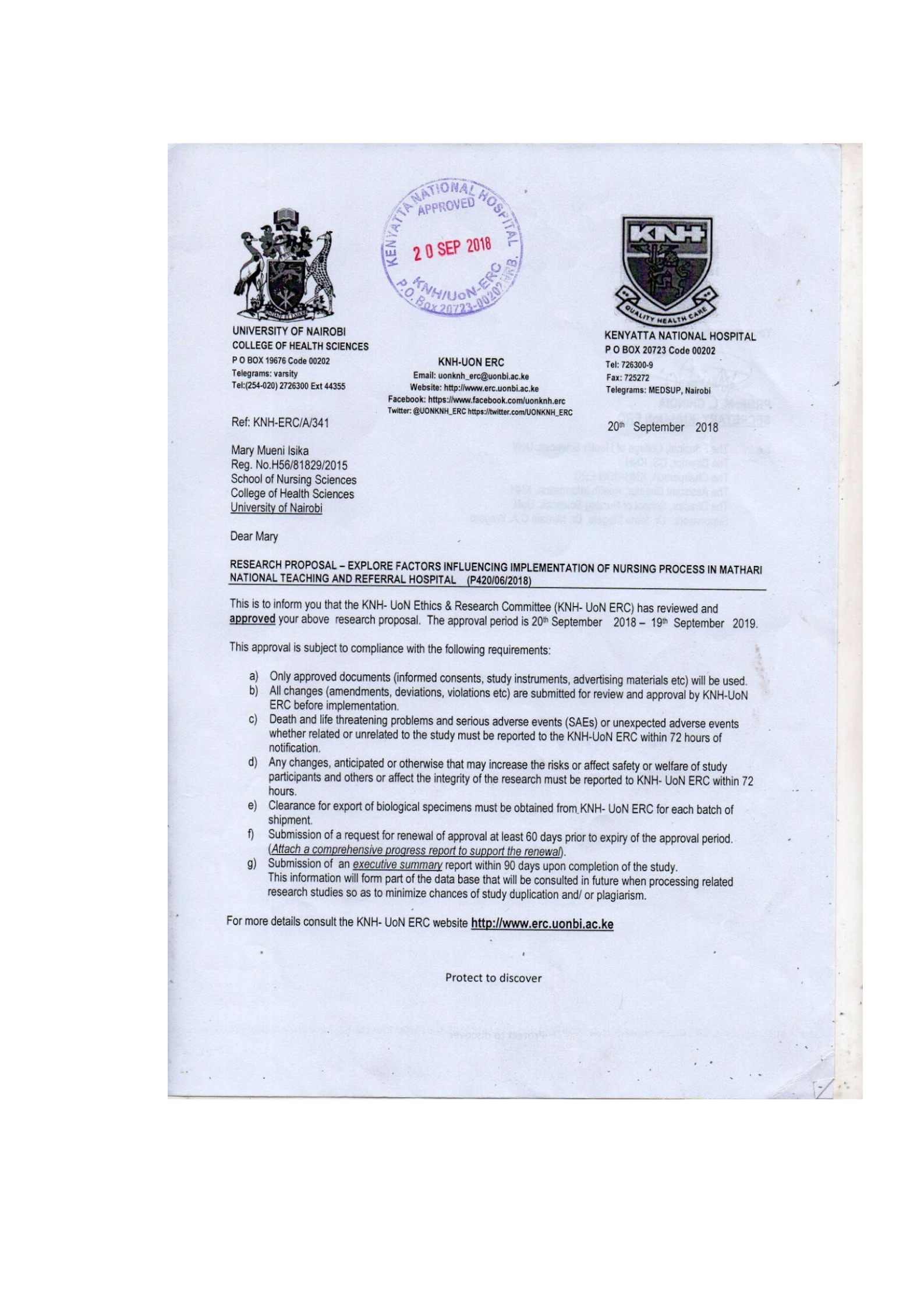
75
APPENDIX IX: KNH-UON ERC APPROVAL LETTER
76
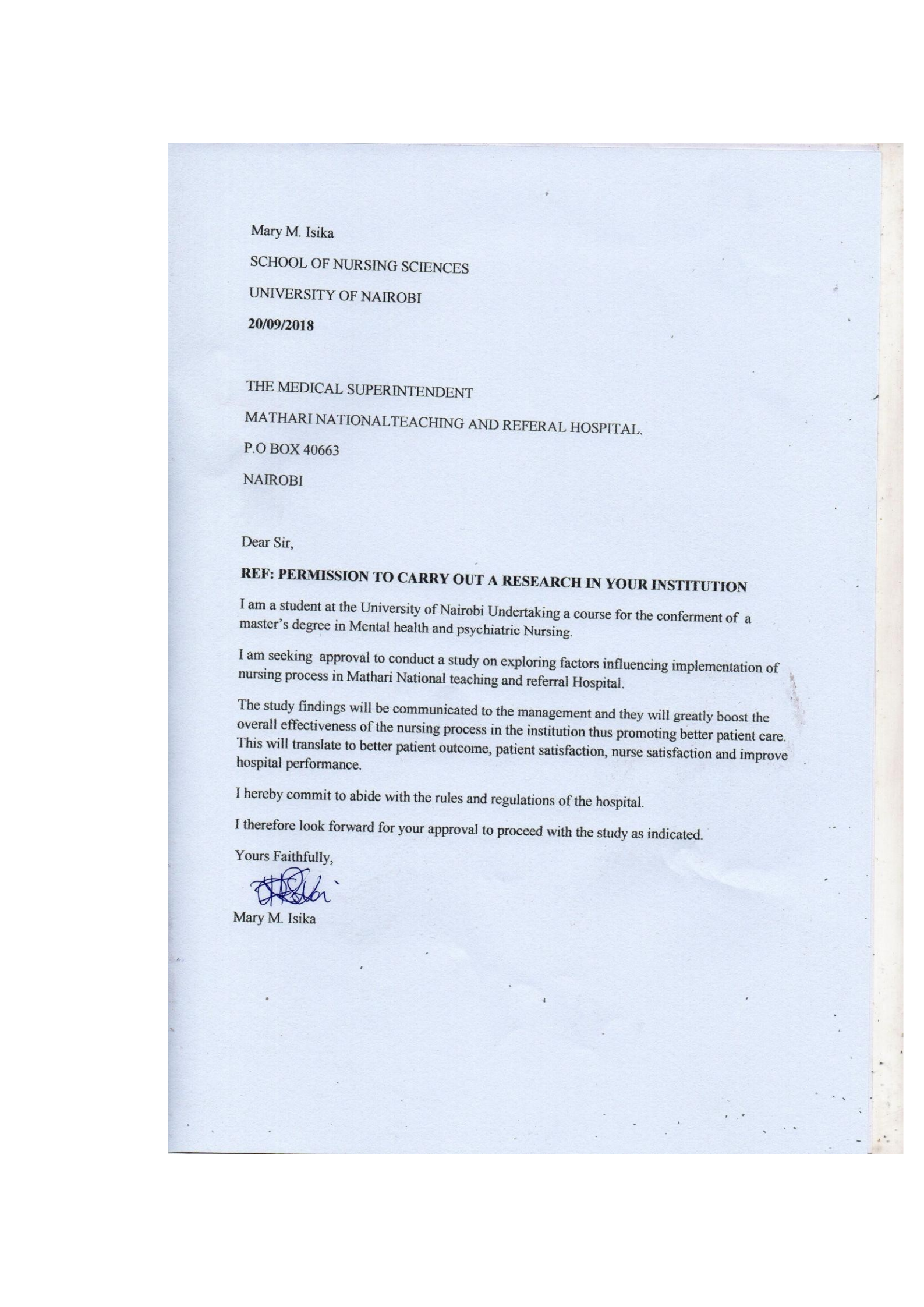
77
APPENDIX X: REQUEST FOR APPROVAL TO CONDUCT A STUDY
78
APPENDIX XI: MATHARI HOSPITAL APPROVAL LETTER

