


Espinel 1
Camilo Espinel
Professor David Benoit
INQR 101
6 December 2021
Final Essay Assignment
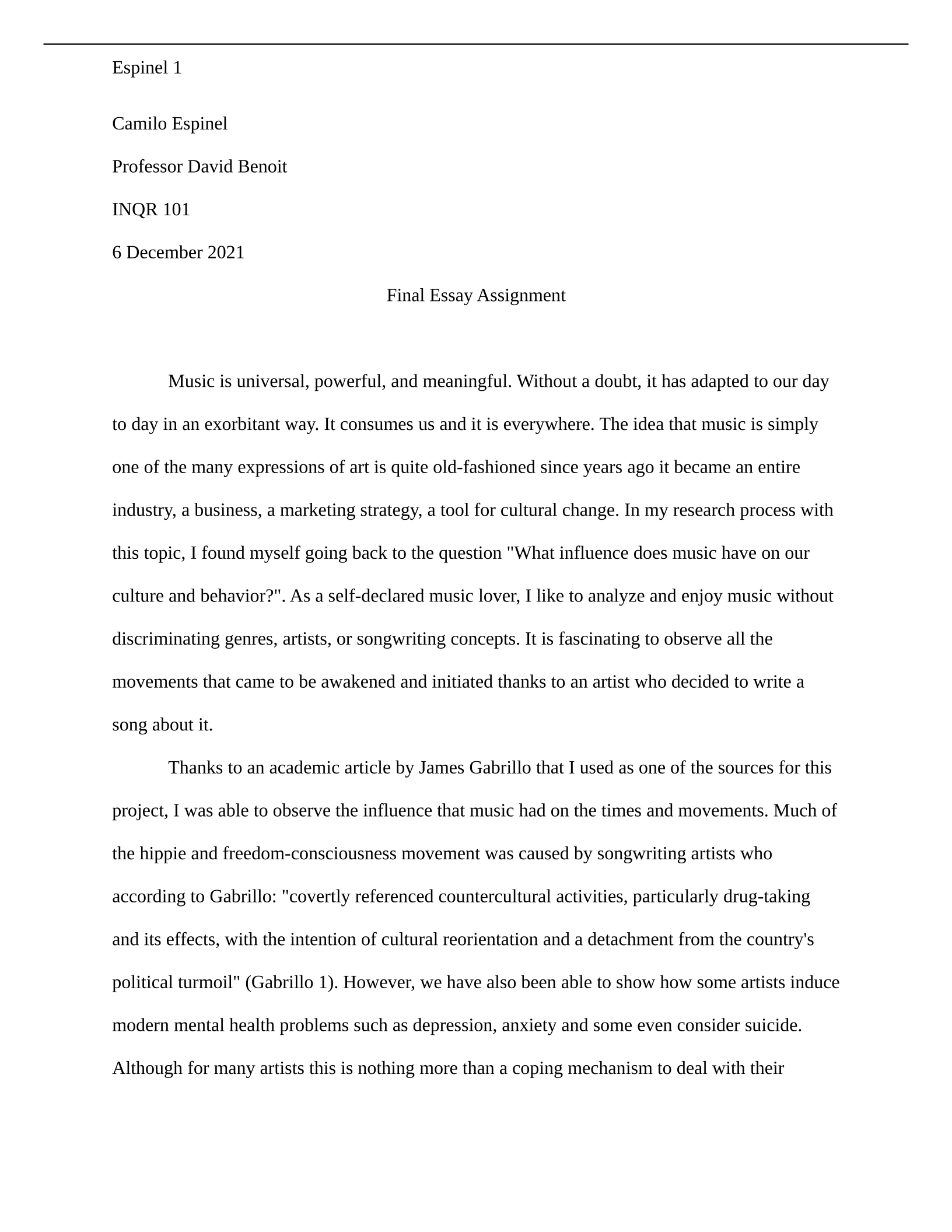
Music is universal, powerful, and meaningful. Without a doubt, it has adapted to our day
to day in an exorbitant way. It consumes us and it is everywhere. The idea that music is simply
one of the many expressions of art is quite old-fashioned since years ago it became an entire
industry, a business, a marketing strategy, a tool for cultural change. In my research process with
this topic, I found myself going back to the question "What influence does music have on our
culture and behavior?". As a self-declared music lover, I like to analyze and enjoy music without
discriminating genres, artists, or songwriting concepts. It is fascinating to observe all the
movements that came to be awakened and initiated thanks to an artist who decided to write a
song about it.
Thanks to an academic article by James Gabrillo that I used as one of the sources for this
project, I was able to observe the influence that music had on the times and movements. Much of
the hippie and freedom-consciousness movement was caused by songwriting artists who
according to Gabrillo: "covertly referenced countercultural activities, particularly drug-taking
and its effects, with the intention of cultural reorientation and a detachment from the country's
political turmoil" (Gabrillo 1). However, we have also been able to show how some artists induce
modern mental health problems such as depression, anxiety and some even consider suicide.
Although for many artists this is nothing more than a coping mechanism to deal with their
Espinel 2
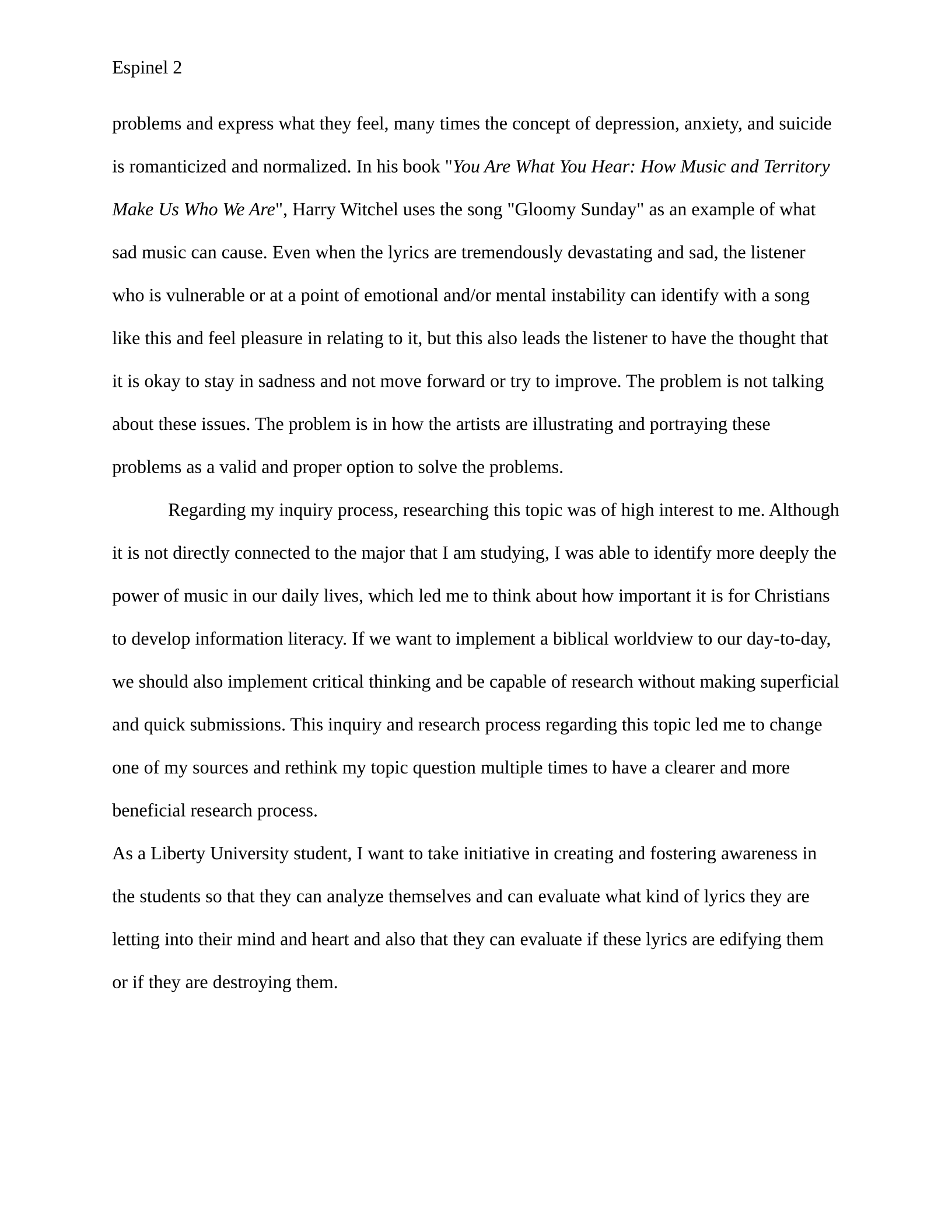
problems and express what they feel, many times the concept of depression, anxiety, and suicide
is romanticized and normalized. In his book "You Are What You Hear: How Music and Territory
Make Us Who We Are", Harry Witchel uses the song "Gloomy Sunday" as an example of what
sad music can cause. Even when the lyrics are tremendously devastating and sad, the listener
who is vulnerable or at a point of emotional and/or mental instability can identify with a song
like this and feel pleasure in relating to it, but this also leads the listener to have the thought that
it is okay to stay in sadness and not move forward or try to improve. The problem is not talking
about these issues. The problem is in how the artists are illustrating and portraying these
problems as a valid and proper option to solve the problems.
Regarding my inquiry process, researching this topic was of high interest to me. Although
it is not directly connected to the major that I am studying, I was able to identify more deeply the
power of music in our daily lives, which led me to think about how important it is for Christians
to develop information literacy. If we want to implement a biblical worldview to our day-to-day,
we should also implement critical thinking and be capable of research without making superficial
and quick submissions. This inquiry and research process regarding this topic led me to change
one of my sources and rethink my topic question multiple times to have a clearer and more
beneficial research process.
As a Liberty University student, I want to take initiative in creating and fostering awareness in
the students so that they can analyze themselves and can evaluate what kind of lyrics they are
letting into their mind and heart and also that they can evaluate if these lyrics are edifying them
or if they are destroying them.
Espinel 3
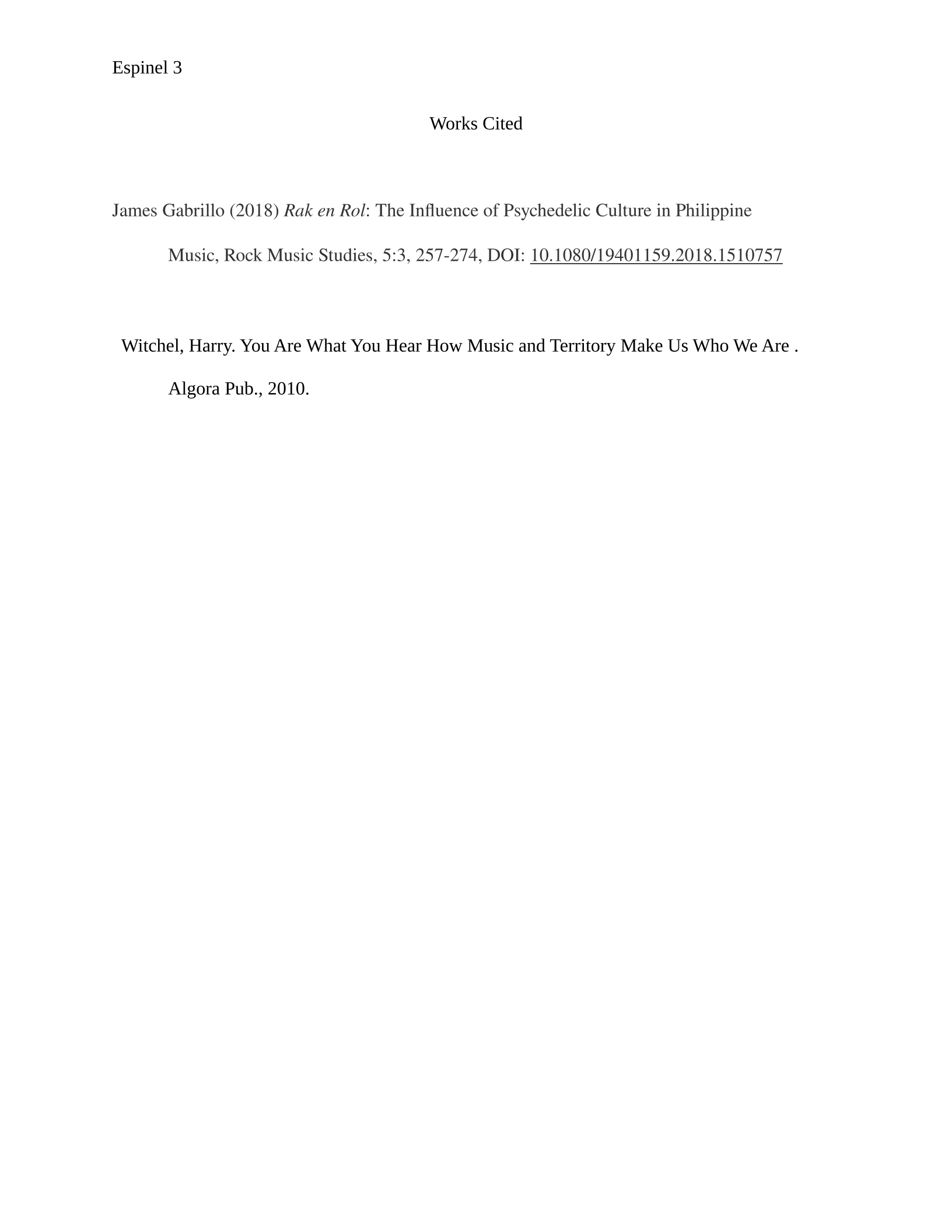
Works Cited
James Gabrillo (2018) Rak en Rol: The Influence of Psychedelic Culture in Philippine
Music, Rock Music Studies, 5:3, 257-274, DOI: 10.1080/19401159.2018.1510757
Witchel, Harry. You Are What You Hear How Music and Territory Make Us Who We Are .
Algora Pub., 2010.
Powered by TCPDF (www.tcpdf.org)

