


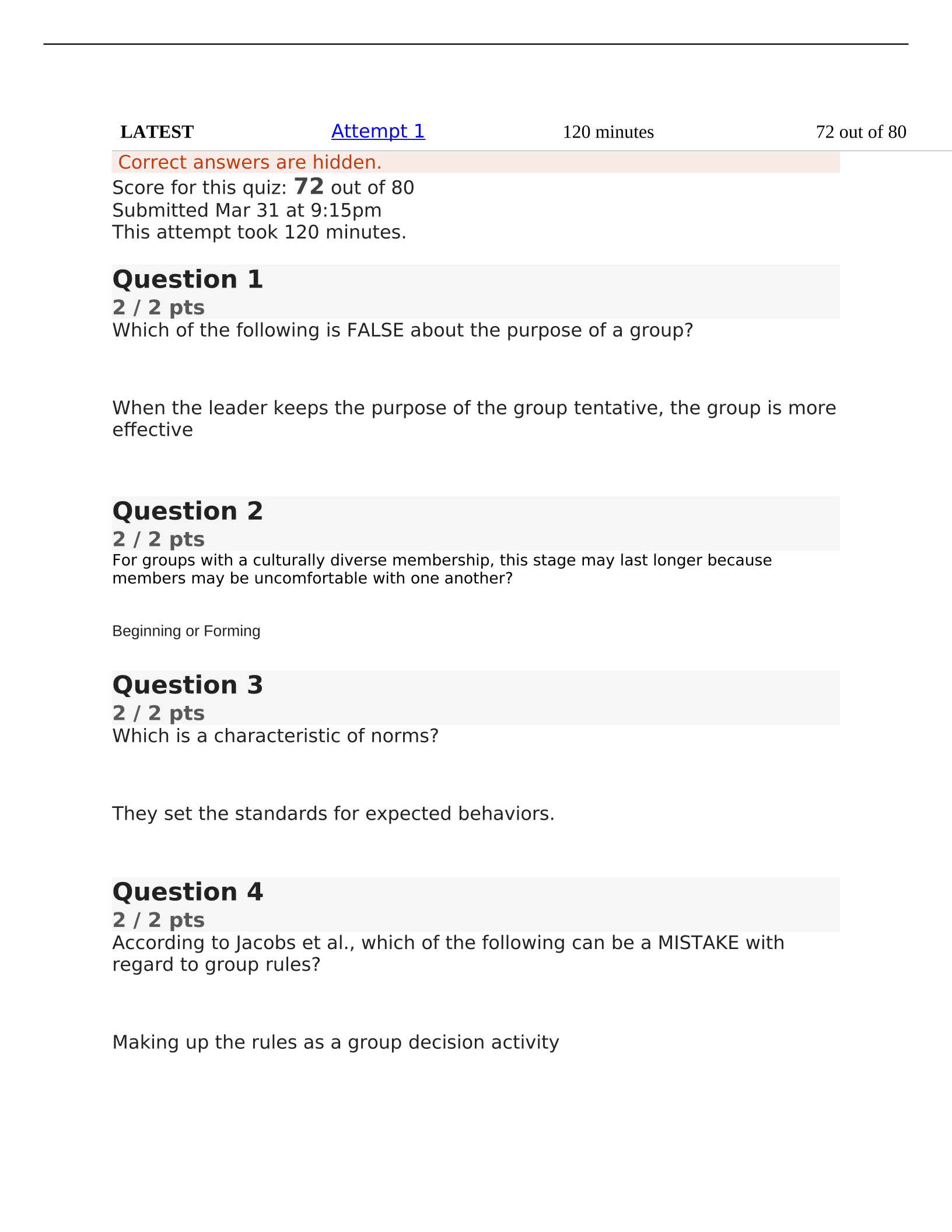
LATEST Attempt 1 120 minutes 72 out of 80
Correct answers are hidden.
Score for this quiz:72out of 80
Submitted Mar 31 at 9:15pm
This attempt took 120 minutes.
Question 1
2/ 2pts
Which of the following is FALSE about the purpose of a group?
When the leader keeps the purpose of the group tentative, the group is more
effective
Question 2
2/ 2pts
For groups with a culturally diverse membership, this stage may last longer because
members may be uncomfortable with one another?
Beginning or Forming
Question 3
2/ 2pts
Which is a characteristic of norms?
They set the standards for expected behaviors.
Question 4
2/ 2pts
According to Jacobs et al., which of the following can be a MISTAKE with
regard to group rules?
Making up the rules as a group decision activity
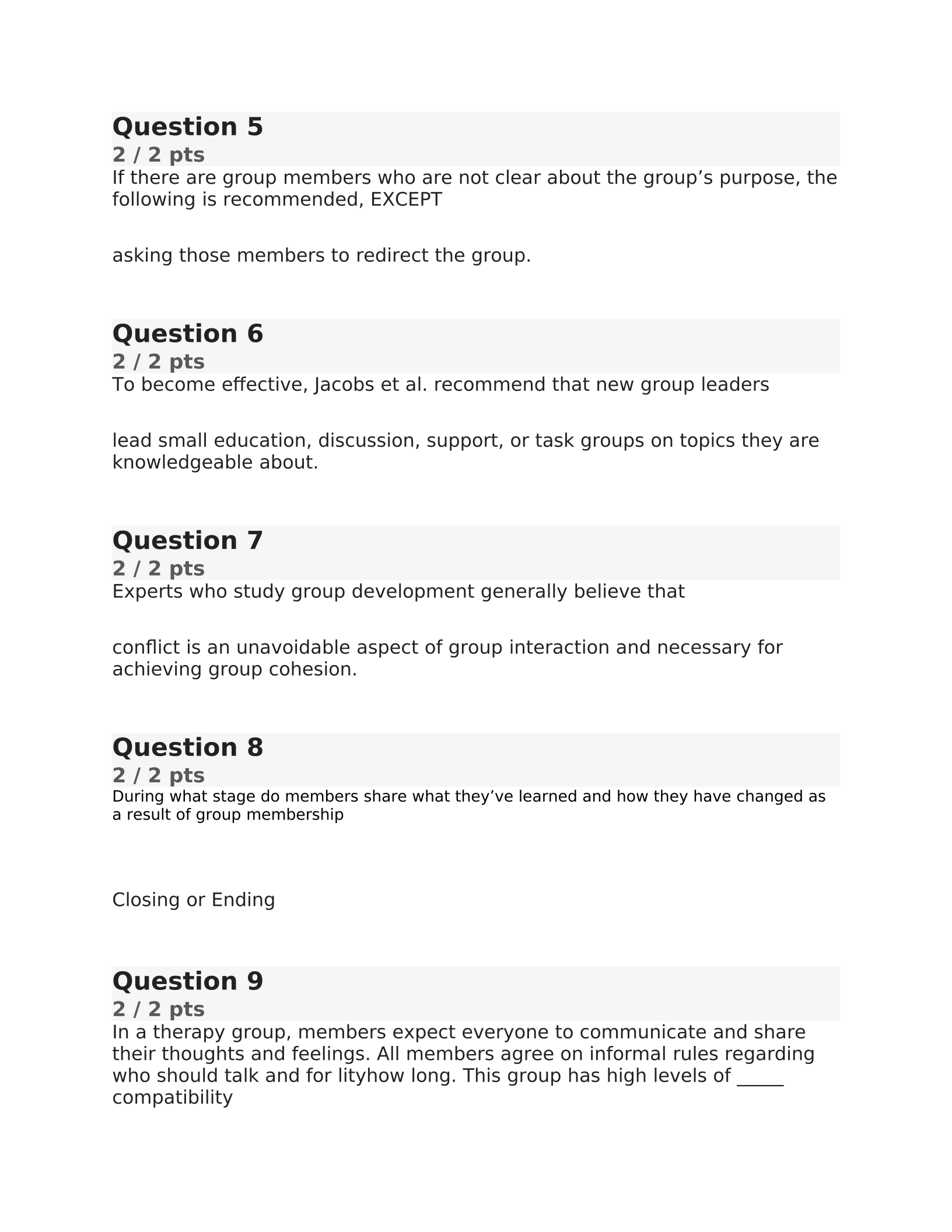
Question 5
2/ 2pts
If there are group members who are not clear about the group’s purpose, the
following is recommended, EXCEPT
asking those members toredirect the group.
Question 6
2/ 2pts
To become effective, Jacobs et al. recommend that new group leaders
lead small education, discussion, support, or task groups on topics they are
knowledgeable about.
Question 7
2/ 2pts
Experts who study group development generally believe that
conflict is an unavoidable aspect of group interaction and necessary for
achieving group cohesion.
Question 8
2/ 2pts
During what stage do members share what they’ve learned and how they have changed as
a result of group membership
Closing or Ending
Question 9
2/ 2pts
In a therapy group, members expect everyone to communicate and share
their thoughts and feelings. All members agree on informal rules regarding
who should talk and for lityhow long. This group has high levels of _____
compatibility
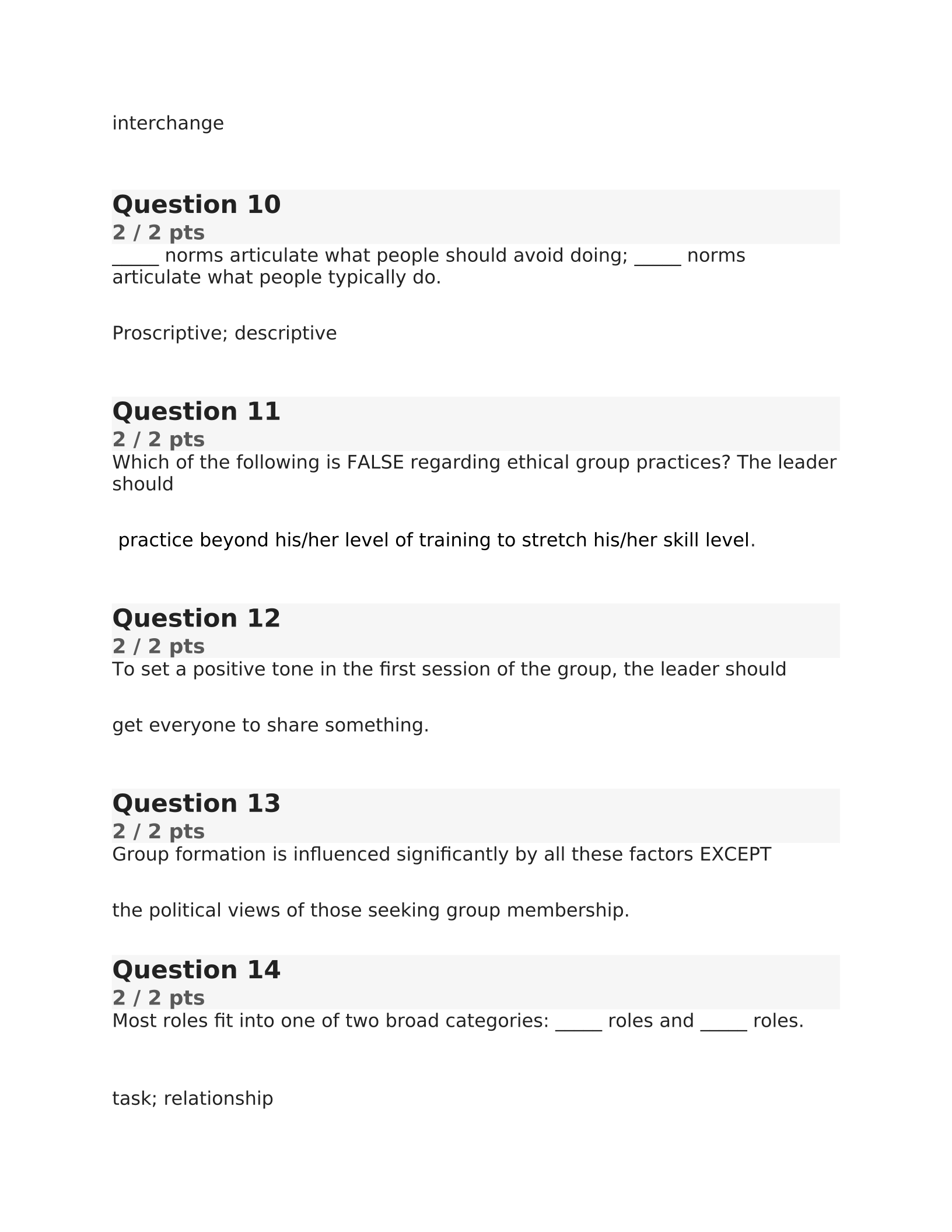
interchange
Question 10
2/ 2pts
_____ norms articulate what people should avoid doing; _____ norms
articulate what people typically do.
Proscriptive; descriptive
Question 11
2/ 2pts
Which of the following is FALSE regarding ethical group practices? The leader
should
practice beyond his/her level of training to stretch his/her skill level.
Question 12
2/ 2pts
To set a positive tone in the first session of the group, the leader should
get everyone to share something.
Question 13
2/ 2pts
Group formation is influenced significantly by all these factors EXCEPT
the politicalviews of those seeking group membership.
Question 14
2/ 2pts
Most roles fit into one of two broad categories: _____ roles and _____ roles.
task; relationship
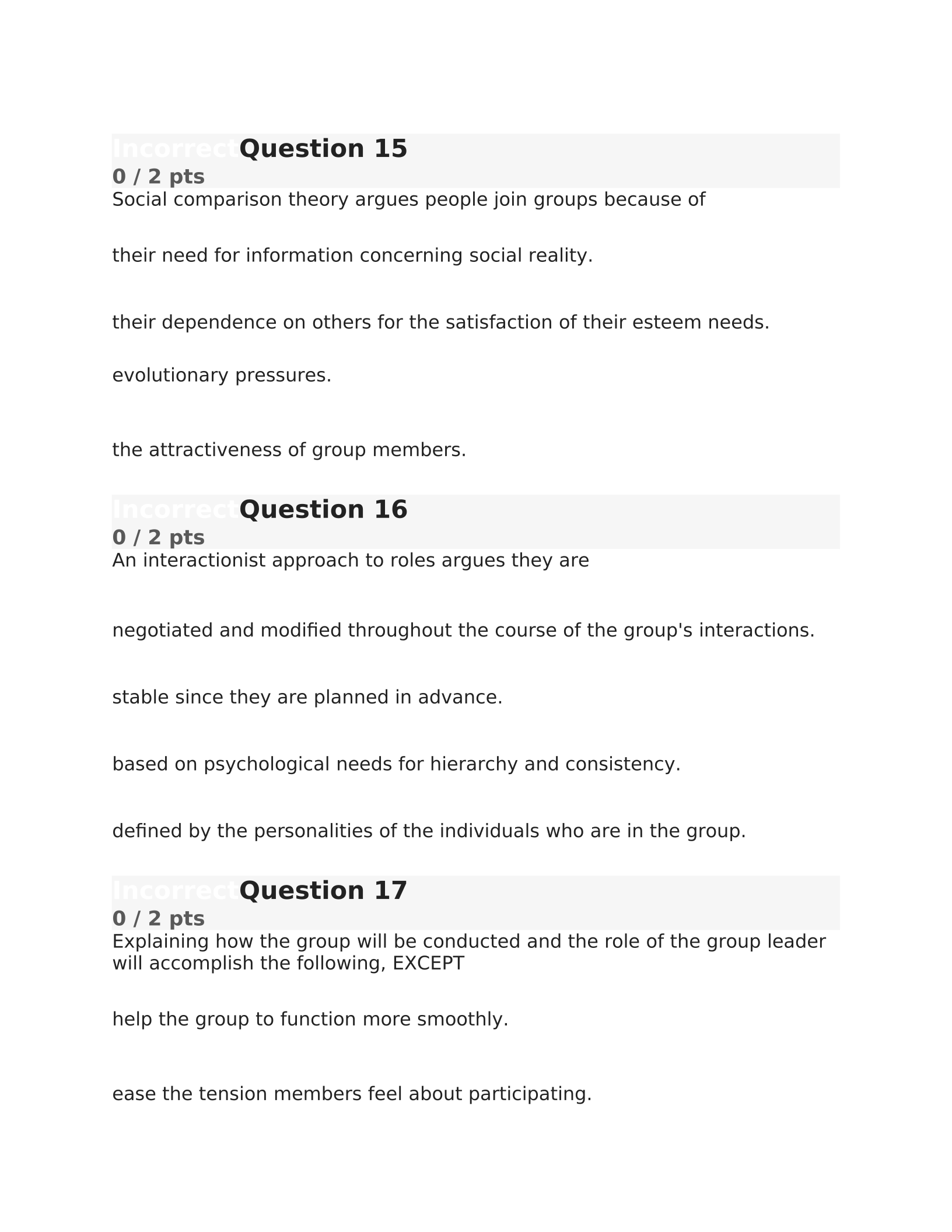
IncorrectQuestion 15
0/ 2pts
Social comparison theory argues people join groups because of
their need for information concerning social reality.
their dependence on others for the satisfaction of their esteem needs.
evolutionary pressures.
the attractiveness of group members.
IncorrectQuestion 16
0/ 2pts
An interactionist approach to roles argues they are
negotiated and modified throughout the course of the group's interactions.
stable since they are planned in advance.
based on psychological needs for hierarchy and consistency.
defined by the personalities of the individuals who are in the group.
IncorrectQuestion 17
0/ 2pts
Explaining how the group will be conducted and the role of the group leader
will accomplish the following, EXCEPT
help the group to function more smoothly.
ease the tension members feel about participating.
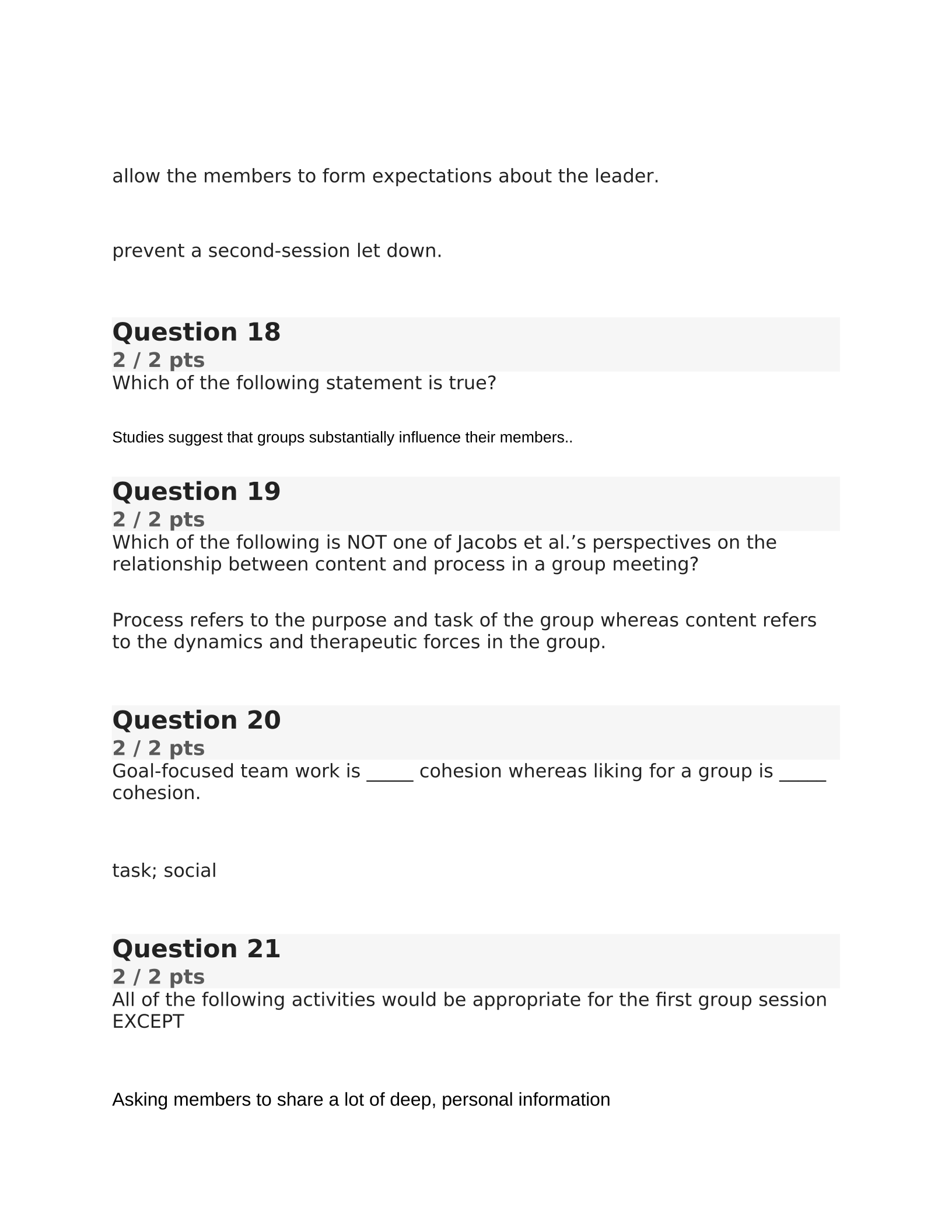
allow the members to form expectations about the leader.
prevent a second-session let down.
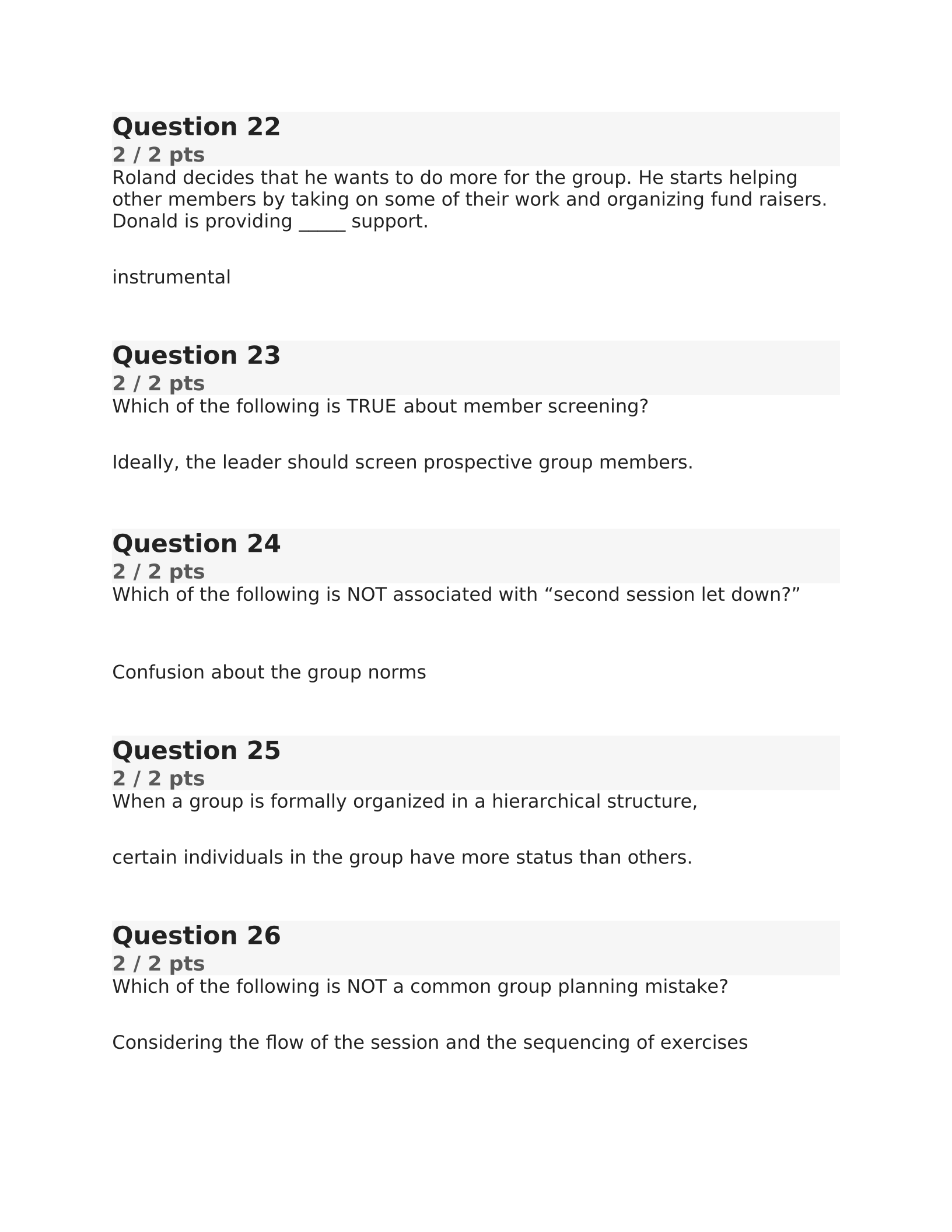
Question 18
2/ 2pts
Which of the following statement is true?
Studies suggest that groups substantially influence their members..
Question 19
2/ 2pts
Which of the following is NOT one of Jacobs et al.’s perspectives on the
relationship between content and process in a group meeting?
Process refers to the purpose and task of the group whereas content refers
to the dynamics and therapeutic forces in the group.
Question 20
2/ 2pts
Goal-focused team work is _____ cohesion whereas liking for a group is _____
cohesion.
task; social
Question 21
2/ 2pts
All of the following activities would be appropriate for the first group session
EXCEPT
Asking members to share a lot of deep, personal information
Question 22
2/ 2pts
Roland decides that he wants to do more for the group. He starts helping
other members by taking on some of their work and organizing fund raisers.
Donald is providing _____ support.
instrumental
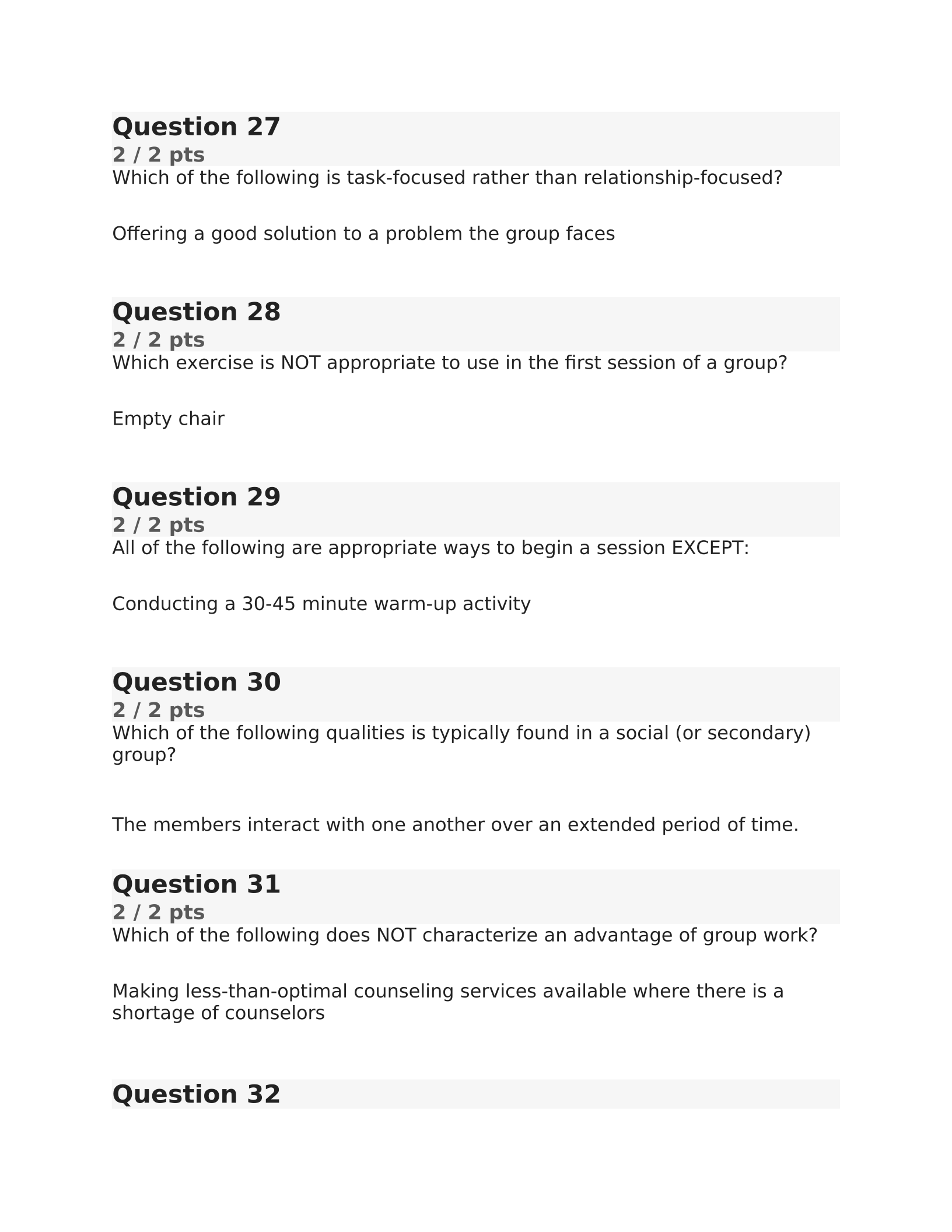
Question 23
2/ 2pts
Which of the following is TRUEabout member screening?
Ideally, the leader should screen prospective group members.
Question 24
2/ 2pts
Which of the following is NOT associated with “second session let down?”
Confusion about the group norms
Question 25
2/ 2pts
When a group is formally organized in a hierarchical structure,
certain individuals in the group have more status than others.
Question 26
2/ 2pts
Which of the following is NOT a common group planning mistake?
Considering the flow of the session and the sequencing of exercises
Question 27
2/ 2pts
Which of the following is task-focused rather than relationship-focused?
Offering a good solution to a problem the group faces
Question 28
2/ 2pts
Which exercise is NOT appropriate to use in the first session of a group?
Empty chair
Question 29
2/ 2pts
All of the following are appropriate ways to begin a session EXCEPT:
Conducting a 30-45 minute warm-up activity
Question 30
2/ 2pts
Which of the following qualities is typically found in a social (or secondary)
group?
The members interact with one another over an extended period of time.
Question 31
2/ 2pts
Which of the following does NOT characterize an advantage of group work?
Making less-than-optimal counseling services available where there is a
shortage of counselors
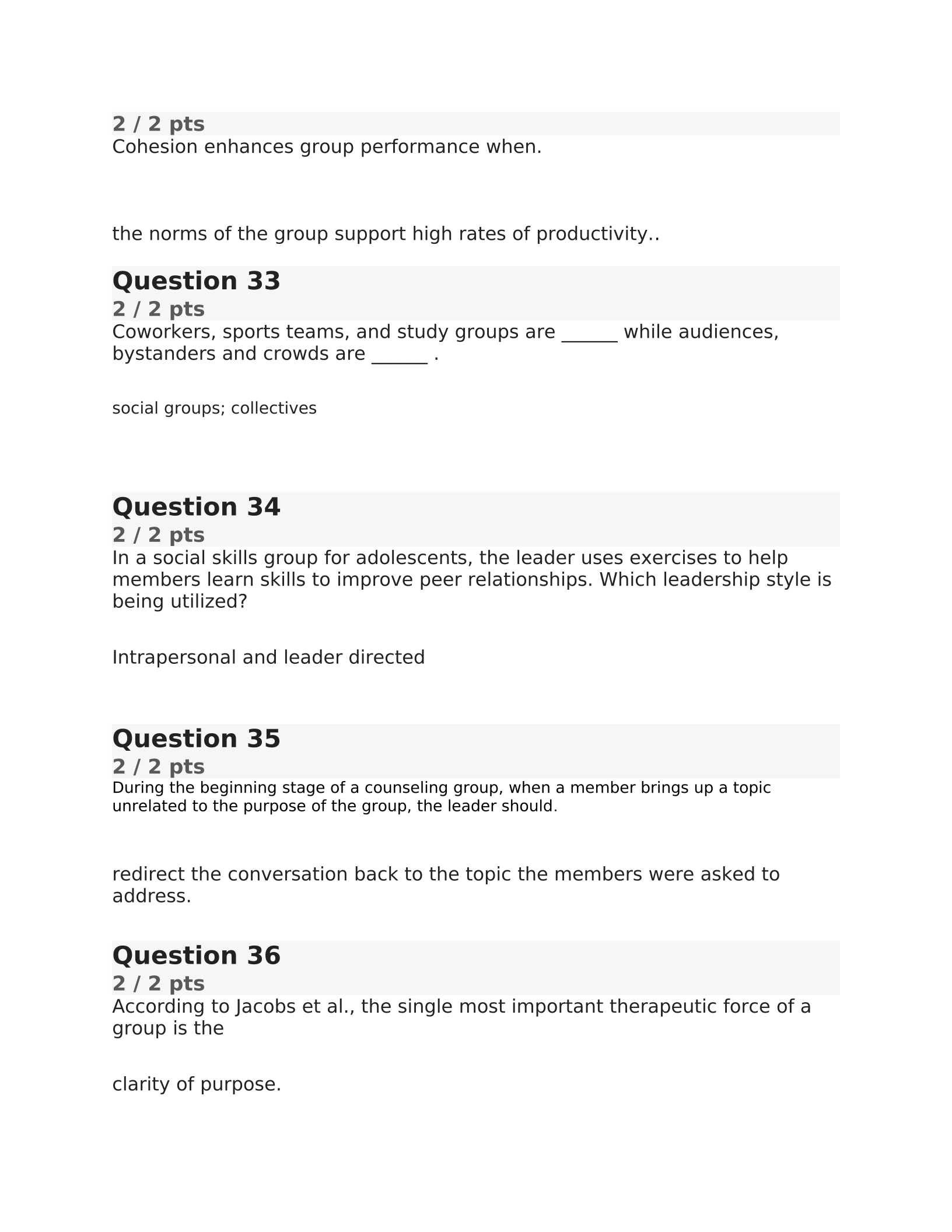
Question 32
2/ 2pts
Cohesion enhances group performance when.
the norms of the group support high rates of productivity..
Question 33
2/ 2pts
Coworkers, sports teams, and study groups are ______ while audiences,
bystanders and crowds are ______ .
social groups; collectives
Question 34
2/ 2pts
In a social skills group for adolescents, the leader uses exercises to help
members learn skills to improve peer relationships. Which leadership style is
being utilized?
Intrapersonal and leader directed
Question 35
2/ 2pts
During the beginning stage of a counseling group, when a member brings up a topic
unrelated to the purpose of the group, the leader should.
redirect the conversation back to the topic the members were asked to
address.
Question 36
2/ 2pts
According to Jacobs et al., the single most important therapeutic force of a
group is the
clarity of purpose.
Question 37
2/ 2pts
Which of the following is NOT identified by Jacobs et al. as a potential
problem for a group?
Members expressing their feelings
Question 38
2/ 2pts
If the leader sees that a change of purpose is needed, he or she should
discuss with the group why the change might be helpful.
Question 39
2/ 2pts
Which of the following is NOT essential to pre-group planning?
Determining who should choose the rules for the group
IncorrectQuestion 40
0/ 2pts
Which one illustrates the multilevel nature of cohesion?
When members no longer feel emotionally connected to one another, the group
is not cohesive.
A highly productive group marked by low levels of integrated teamwork does
not qualify as being cohesive.
Cohesion is based on attraction and teamwork.
The members of a cohesive group like each other as individuals, but they
also express liking for the group as a whole.
Powered by TCPDF (www.tcpdf.org)

