


Discussion 5 Vulnerability Assessment and Impact Analysis
Hazard Analysis
This week, our textbook discusses hazard analysis and the many methods and instruments
available to conduct one. “Hazard analysis involves identifying and investigating both the hazard
location and its geographical extent” (Islam and Ryan, 2015, p. 228). Other important factors to
understand are how strong a hazard can be, it’s strength in terms of scale (magnitude and
intensity) and the likelihood or probability of the hazard occurring.
There are numerous resources available to conduct a hazard analysis and newspapers and
other historical records are a great place to start. By studying previous natural disasters that have
occurred in a particular geographical area, it becomes clearer how the area can be affected. Any
plans that are in place should also be studied to better understand what other local hazards should
be considered. There are numerous local managers and representatives of various public works
departments that may have been involved with previous hazard events and can share their
insight. Of course, the internet can be a valuable tool as well to collect information on local
hazards. After completing all the abovementioned research, a thorough analysis of the hazards
posed to the community can be completed and a vulnerability assessment can be started. This is
“where assets at risk are pitted against the hazards, the probability that they will occur, and the
magnitude that one might expect” (Islam and Ryan, 2015, p. 228). Once this step is complete, an
impact analysis can be conducted to consider the how hazards affect the community and what
happens when a particular hazard occurs. By knowing the hazards that are possible and their
profile, emergency managers can effectively understand the hazards a community could face
Impact Analysis
An impact analysis “is done by estimating losses in terms of the expected losses from
hazard events to people, buildings, and other important assets that are compiled during inventory
assets” (Islam and Ryan, 2015, p. 236). Structures that are vulnerable should be assessed for not
only the estimated level of damage possible, but also the contents as well and what functions
they are used for. It is essential to understand what happens when an important structure or
facility is not able to function as a part of the analysis. There are many methods for determining
structural and content loss but most commonly replacement value is multiplied by the percent
damage expected from each hazard. Other important factors to consider are the downtime
associated with the loss of building or structure and costs associated with operating from a
temporary location during reconstruction. While difficult to calculate, loss of life is another
major factor that must also be considered in the process. The overall goal of course is to
minimize how future hazard events threaten the actual citizens in the community.
The most vulnerable critical infrastructure in my opinion is the electric grid. So much
relies upon electricity from our hospitals, water treatment, grocery stores and many things we
take for granted. Many people are vulnerable when there is a major power disruption and that
can be made worse when there are extreme temperatures involved. Many homes depend on
electricity to provide heating, and loss of electricity during a major winter storm. People often
succumb to the cold temperatures and the disabled and elderly are particularly vulnerable. This
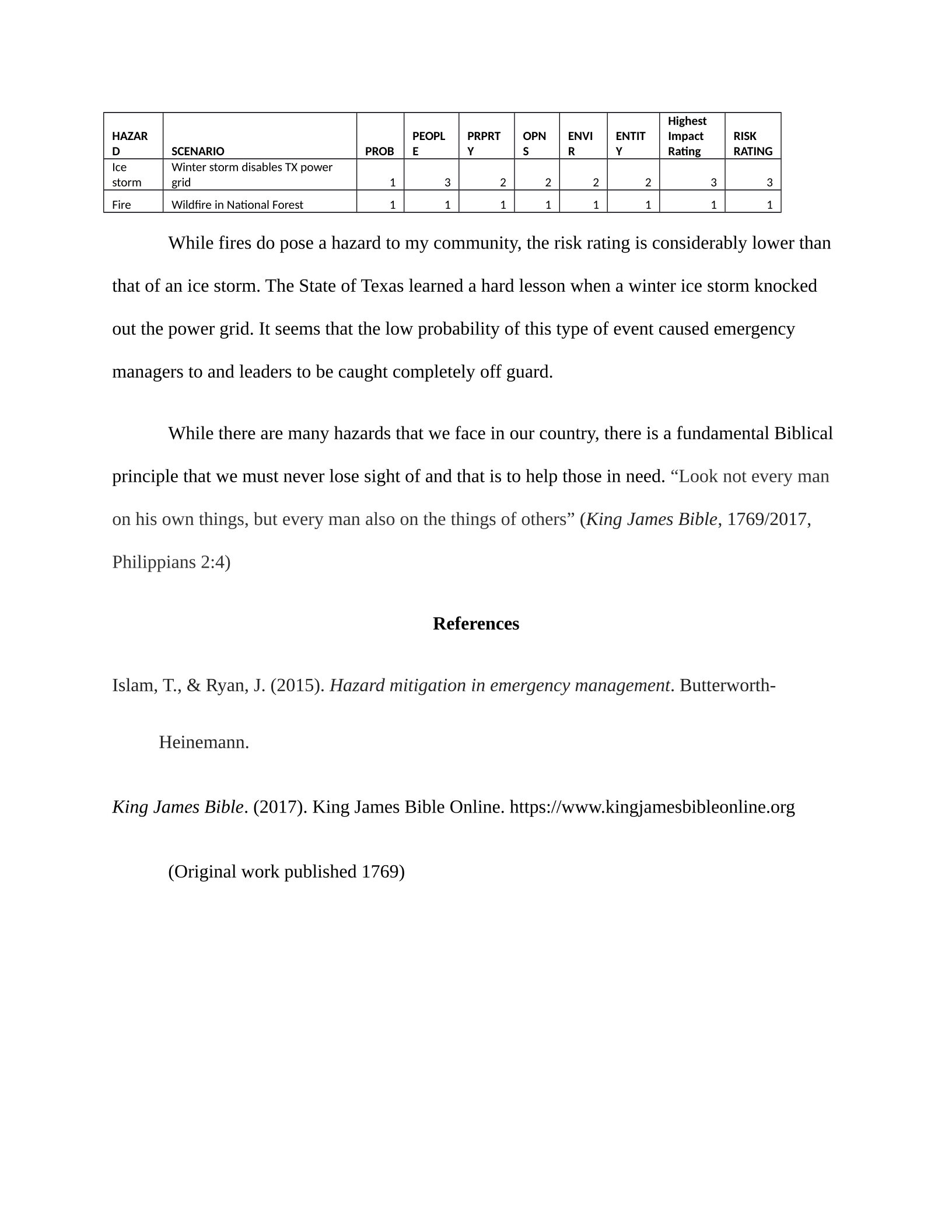
natural hazard is included in the following hazard vulnerability analysis (HVA) matrix utilizing
the example from our textbook for the community I live in (Islam & Ryan, 2015, p. 251).
HAZAR
D SCENARIO PROB
PEOPL
E
PRPRT
Y
OPN
S
ENVI
R
ENTIT
Y
Highest
Impact
Rating
RISK
RATING
Ice
storm
Winter storm disables TX power
grid 1 3 2 2 2 2 3 3
Fire Wildfire in National Forest 1 1 1 1 1 1 1 1
While fires do pose a hazard to my community, the risk rating is considerably lower than
that of an ice storm. The State of Texas learned a hard lesson when a winter ice storm knocked
out the power grid. It seems that the low probability of this type of event caused emergency
managers to and leaders to be caught completely off guard.
While there are many hazards that we face in our country, there is a fundamental Biblical
principle that we must never lose sight of and that is to help those in need. “Look not every man
on his own things, but every man also on the things of others” (King James Bible, 1769/2017,
Philippians 2:4)
References
Islam, T., & Ryan, J. (2015). Hazard mitigation in emergency management. Butterworth-
Heinemann.
King James Bible. (2017). King James Bible Online. https://www.kingjamesbibleonline.org
(Original work published 1769)
Powered by TCPDF (www.tcpdf.org)

