


There is a stark contrast between early American education and modern American
education. When reviewing the two types of educational systems, there appear to be more
differences than similarities. For example, public schools are abundant and widespread in
modern America whereas in early America they were not as prominent (Burke 2009). In fact,
one-fourth of the Founding Fathers were homeschooled or self-taught (Barton 2012).
Homeschooling has gone from a matter of course in early America, to a significant decrease, to
now being on a continuous significant rise (Gaither 2008, 226).
One of the Founders, Benjamin Rush, stated the primary purpose of public schools has a
three-fold objective: love and serve God, love and serve the country, and love and serve family
(Barton 2012). Looking at public schools today, these three primary objectives are almost
extinct. There is an embarrassing number of students who do not even know the three branches
of government or know the U.S. Constitution is the supreme law of the land, and this is because
public school systems have almost depleted any type of civics curriculum (Barton 2012). If the
school system is supposed to create students to be an active and informed citizenry, there needs
to be a change.
Early American schools focused on the virtues of family, religion, and community (The
American Board 2015). Modern schools do not have this same focus. The Bible is not taught in
public schools. Even coming from a secular standpoint, to restrict the Bible from school
teachings, is restricting history. History cannot be understood apart from the Bible nor can the
Bible be studied apart from history (White 1928, 168). In recent years, homeschooling has
become a political movement in response to mainstream society (Gaither 2008, 226). There are
many reasons homeschooling happened but the majority overall reason is because of the change
in public schooling and families during the second half of the twentieth century (Gaither 2008,
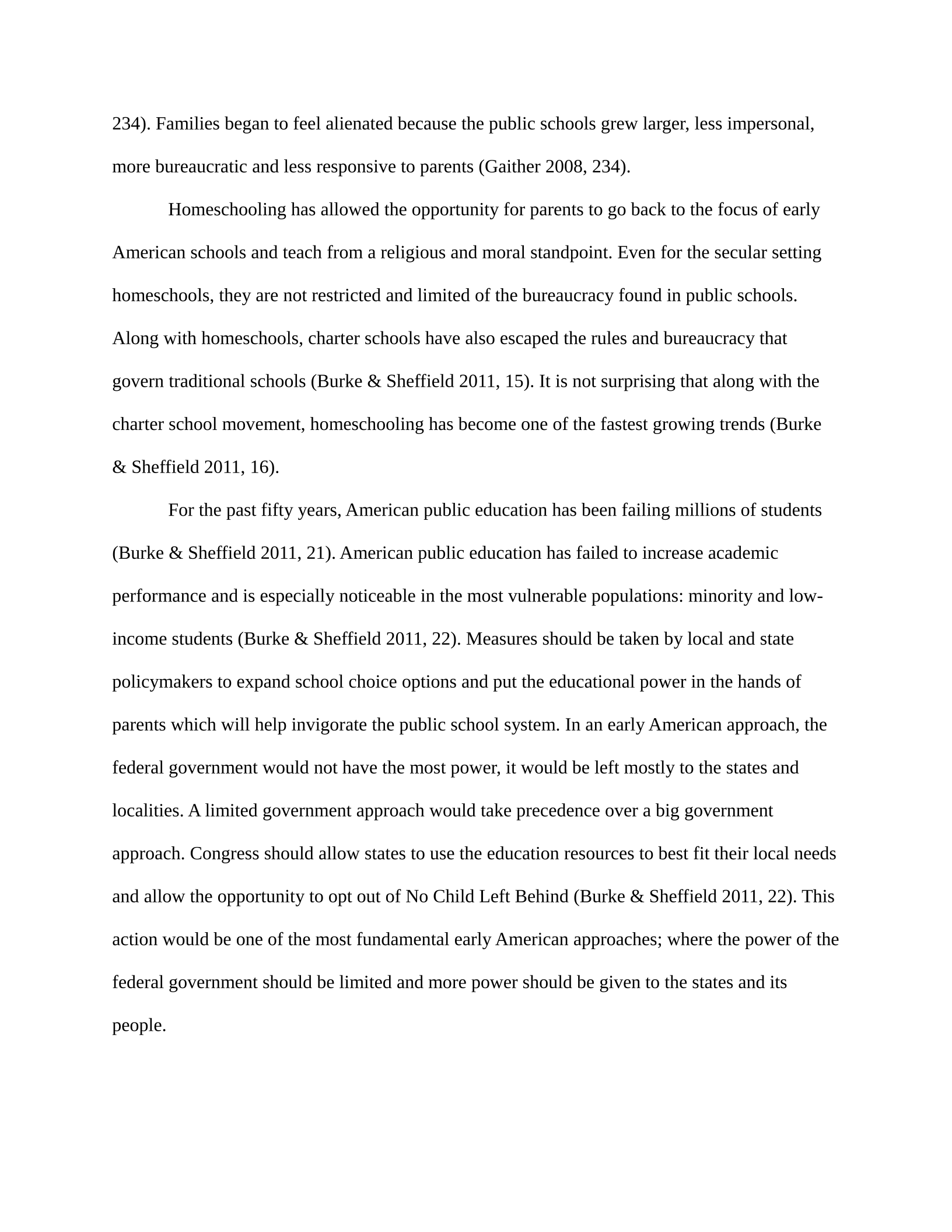
234). Families began to feel alienated because the public schools grew larger, less impersonal,
more bureaucratic and less responsive to parents (Gaither 2008, 234).
Homeschooling has allowed the opportunity for parents to go back to the focus of early
American schools and teach from a religious and moral standpoint. Even for the secular setting
homeschools, they are not restricted and limited of the bureaucracy found in public schools.
Along with homeschools, charter schools have also escaped the rules and bureaucracy that
govern traditional schools (Burke & Sheffield 2011, 15). It is not surprising that along with the
charter school movement, homeschooling has become one of the fastest growing trends (Burke
& Sheffield 2011, 16).
For the past fifty years, American public education has been failing millions of students
(Burke & Sheffield 2011, 21). American public education has failed to increase academic
performance and is especially noticeable in the most vulnerable populations: minority and low-
income students (Burke & Sheffield 2011, 22). Measures should be taken by local and state
policymakers to expand school choice options and put the educational power in the hands of
parents which will help invigorate the public school system. In an early American approach, the
federal government would not have the most power, it would be left mostly to the states and
localities. A limited government approach would take precedence over a big government
approach. Congress should allow states to use the education resources to best fit their local needs
and allow the opportunity to opt out of No Child Left Behind (Burke & Sheffield 2011, 22). This
action would be one of the most fundamental early American approaches; where the power of the
federal government should be limited and more power should be given to the states and its
people.
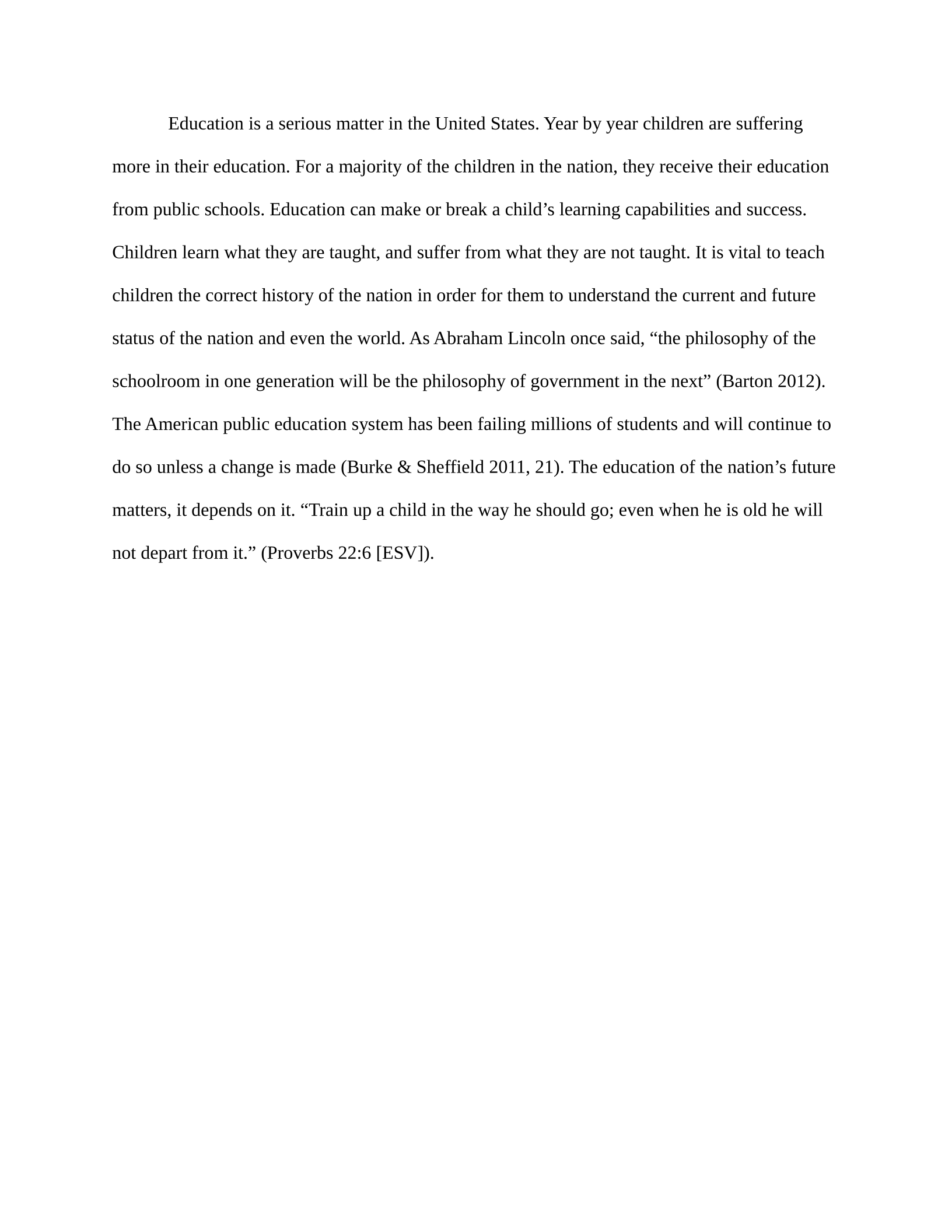
Education is a serious matter in the United States. Year by year children are suffering
more in their education. For a majority of the children in the nation, they receive their education
from public schools. Education can make or break a child’s learning capabilities and success.
Children learn what they are taught, and suffer from what they are not taught. It is vital to teach
children the correct history of the nation in order for them to understand the current and future
status of the nation and even the world. As Abraham Lincoln once said, “the philosophy of the
schoolroom in one generation will be the philosophy of government in the next” (Barton 2012).
The American public education system has been failing millions of students and will continue to
do so unless a change is made (Burke & Sheffield 2011, 21). The education of the nation’s future
matters, it depends on it. “Train up a child in the way he should go; even when he is old he will
not depart from it.” (Proverbs 22:6 [ESV]).
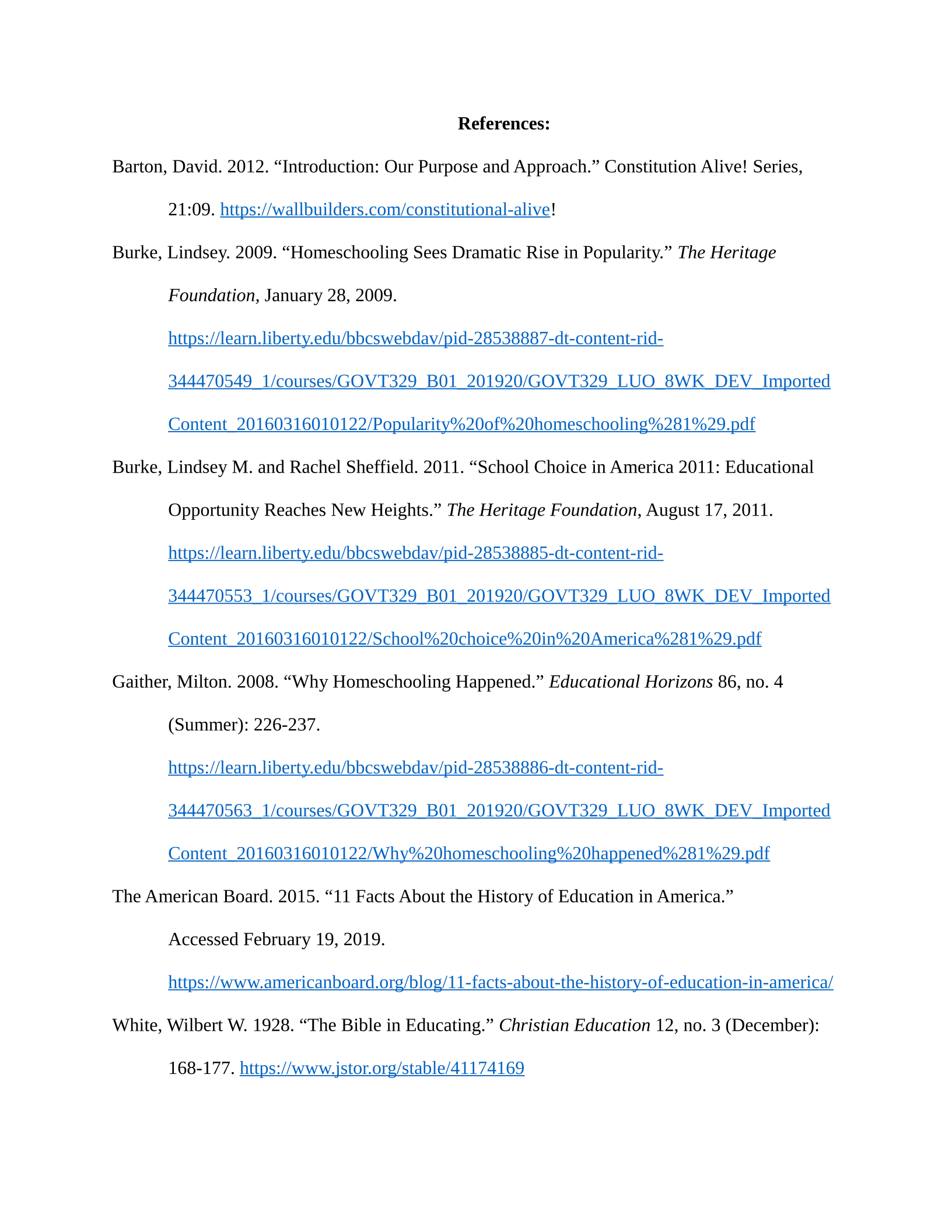
References:
Barton, David. 2012. “Introduction: Our Purpose and Approach.” Constitution Alive! Series,
21:09. https://wallbuilders.com/constitutional-alive!
Burke, Lindsey. 2009. “Homeschooling Sees Dramatic Rise in Popularity.” The Heritage
Foundation, January 28, 2009.
https://learn.liberty.edu/bbcswebdav/pid-28538887-dt-content-rid-
344470549_1/courses/GOVT329_B01_201920/GOVT329_LUO_8WK_DEV_Imported
Content_20160316010122/Popularity%20of%20homeschooling%281%29.pdf
Burke, Lindsey M. and Rachel Sheffield. 2011. “School Choice in America 2011: Educational
Opportunity Reaches New Heights.” The Heritage Foundation, August 17, 2011.
https://learn.liberty.edu/bbcswebdav/pid-28538885-dt-content-rid-
344470553_1/courses/GOVT329_B01_201920/GOVT329_LUO_8WK_DEV_Imported
Content_20160316010122/School%20choice%20in%20America%281%29.pdf
Gaither, Milton. 2008. “Why Homeschooling Happened.” Educational Horizons 86, no. 4
(Summer): 226-237.
https://learn.liberty.edu/bbcswebdav/pid-28538886-dt-content-rid-
344470563_1/courses/GOVT329_B01_201920/GOVT329_LUO_8WK_DEV_Imported
Content_20160316010122/Why%20homeschooling%20happened%281%29.pdf
The American Board. 2015. “11 Facts About the History of Education in America.”
Accessed February 19, 2019.
https://www.americanboard.org/blog/11-facts-about-the-history-of-education-in-america/
White, Wilbert W. 1928. “The Bible in Educating.” Christian Education 12, no. 3 (December):
168-177. https://www.jstor.org/stable/41174169
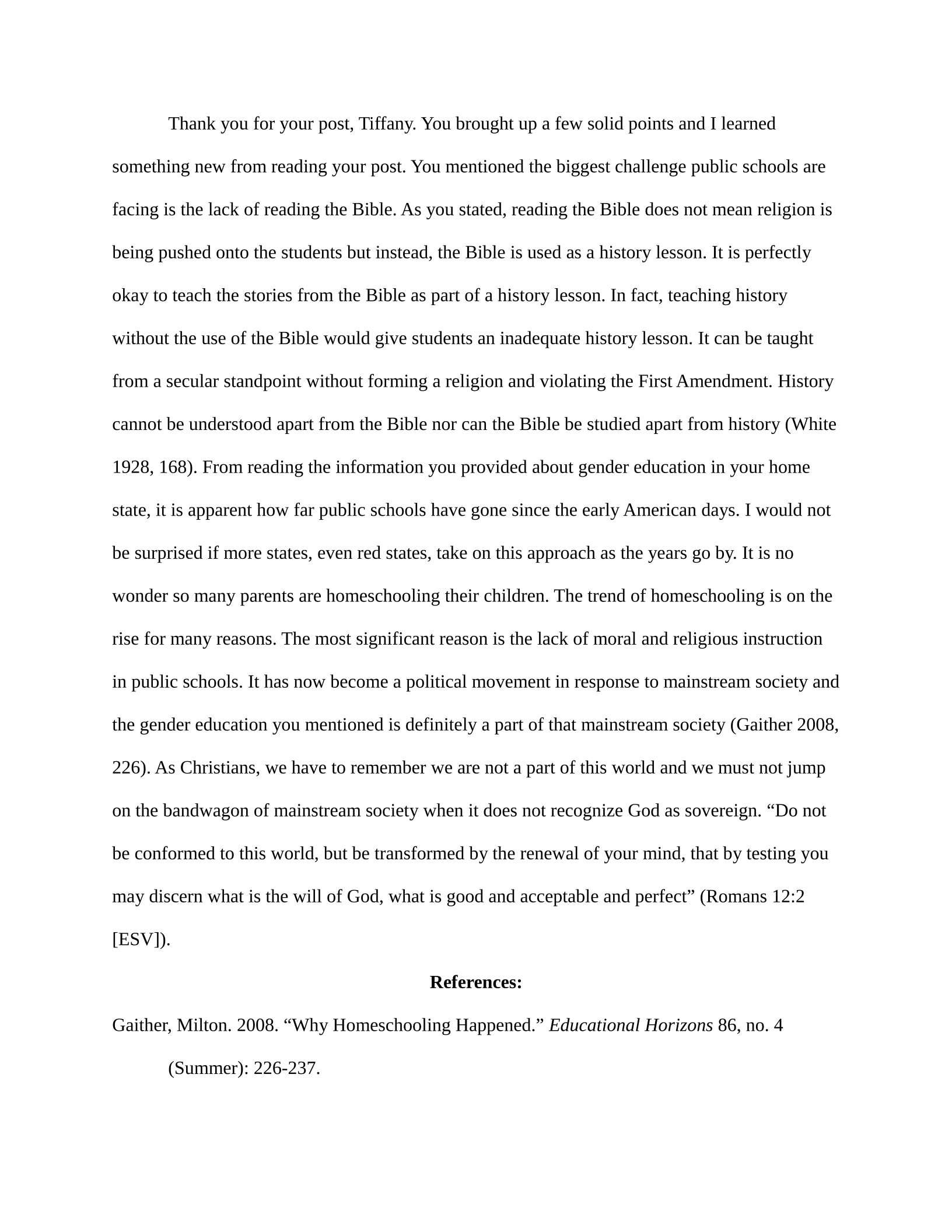
Thank you for your post, Tiffany. You brought up a few solid points and I learned
something new from reading your post. You mentioned the biggest challenge public schools are
facing is the lack of reading the Bible. As you stated, reading the Bible does not mean religion is
being pushed onto the students but instead, the Bible is used as a history lesson. It is perfectly
okay to teach the stories from the Bible as part of a history lesson. In fact, teaching history
without the use of the Bible would give students an inadequate history lesson. It can be taught
from a secular standpoint without forming a religion and violating the First Amendment. History
cannot be understood apart from the Bible nor can the Bible be studied apart from history (White
1928, 168). From reading the information you provided about gender education in your home
state, it is apparent how far public schools have gone since the early American days. I would not
be surprised if more states, even red states, take on this approach as the years go by. It is no
wonder so many parents are homeschooling their children. The trend of homeschooling is on the
rise for many reasons. The most significant reason is the lack of moral and religious instruction
in public schools. It has now become a political movement in response to mainstream society and
the gender education you mentioned is definitely a part of that mainstream society (Gaither 2008,
226). As Christians, we have to remember we are not a part of this world and we must not jump
on the bandwagon of mainstream society when it does not recognize God as sovereign. “Do not
be conformed to this world, but be transformed by the renewal of your mind, that by testing you
may discern what is the will of God, what is good and acceptable and perfect” (Romans 12:2
[ESV]).
References:
Gaither, Milton. 2008. “Why Homeschooling Happened.” Educational Horizons 86, no. 4
(Summer): 226-237.
https://learn.liberty.edu/bbcswebdav/pid-28538886-dt-content-rid-
344470563_1/courses/GOVT329_B01_201920/GOVT329_LUO_8WK_DEV_Imported
Content_20160316010122/Why%20homeschooling%20happened%281%29.pdf
White, Wilbert W. 1928. “The Bible in Educating.” Christian Education 12, no. 3 (December):
168-177. https://www.jstor.org/stable/41174169
Matthew, thank you for your post. I thought you did an excellent job pointing out the
challenges of the modern public school system. You are right, progressivism has certainly made
an impact on the education system and it is not for the best. I like that you mentioned the
involvement of the federal government in the public education system because it is definitely a
factor in why the system is failing so many students. So many people look to the federal
government to "fix" things. The federal government is not the one to fix such fundamental things
such as family and education. In reality, the federal government’s significant involvement in the
education system has harmed more than what most realize. The damaging impact is already
showing but I fear the worse has yet to come. In early America, a limited government was the
best approach to governing issues. The states should have more involvement and power in their
education system, not a one size fits all big government approach. More state and local
policymakers need to be involved in school choice options. Starting small, such as state and local
policymakers, is the most solvable approach in educational issues. Congress should allow states
to use the educational resources to best fit their local needs and allow the opportunity to opt out
of No Child Left Behind (Burke & Sheffield 2011, 22). It seems the states and its people have
forgotten how much power they truly have in proposing solutions to solvable issues, without the
having federal government hands in it.
Reference:
Burke, Lindsey M. and Rachel Sheffield. 2011. “School Choice in America 2011: Educational
Opportunity Reaches New Heights.” The Heritage Foundation, August 17, 2011.
https://learn.liberty.edu/bbcswebdav/pid-28538885-dt-content-rid-
344470553_1/courses/GOVT329_B01_201920/GOVT329_LUO_8WK_DEV_Imported
Content_20160316010122/School%20choice%20in%20America%281%29.pdf
Powered by TCPDF (www.tcpdf.org)

