EDUC 812
WRITE-UP: ONE-SAMPLE T-TEST TEMPLATE
Username: Peter James Balibay
Instructions: For this graded assignment, you will complete the write-up below after completing
the corresponding tutorial for this assignment. You will then delete the graphs and tables where
appropriate and then replace them with the correct graphs and tables. Also, delete and insert
correct answers where there is underlined text.
To begin, cut and paste the data set below into SPSS (or you can type in the data manually). Do
not copy the header row when you paste it into SPSS. Before carrying out the analysis in+SPSS,
you need to+set up+your data file correctly using the “Variable View” tab.
Scenario: The purpose of this study was to see if there was a difference between the intelligence
of Oak City Elementary School chess club members and the average intelligence of students
(100 IQ) in the United States.
Code Name IQ
1 Jay 110
2 Kylie 102
3 Maddie 110
4 Katie 101
5 Lil 110
6 Jake 102
7 Mary 112
8 Joy 105
9 Addison 104
10 Ayden 114
11 Amelia 107
12 Amanda 114
13 Ethan+ 109

EDUC 812
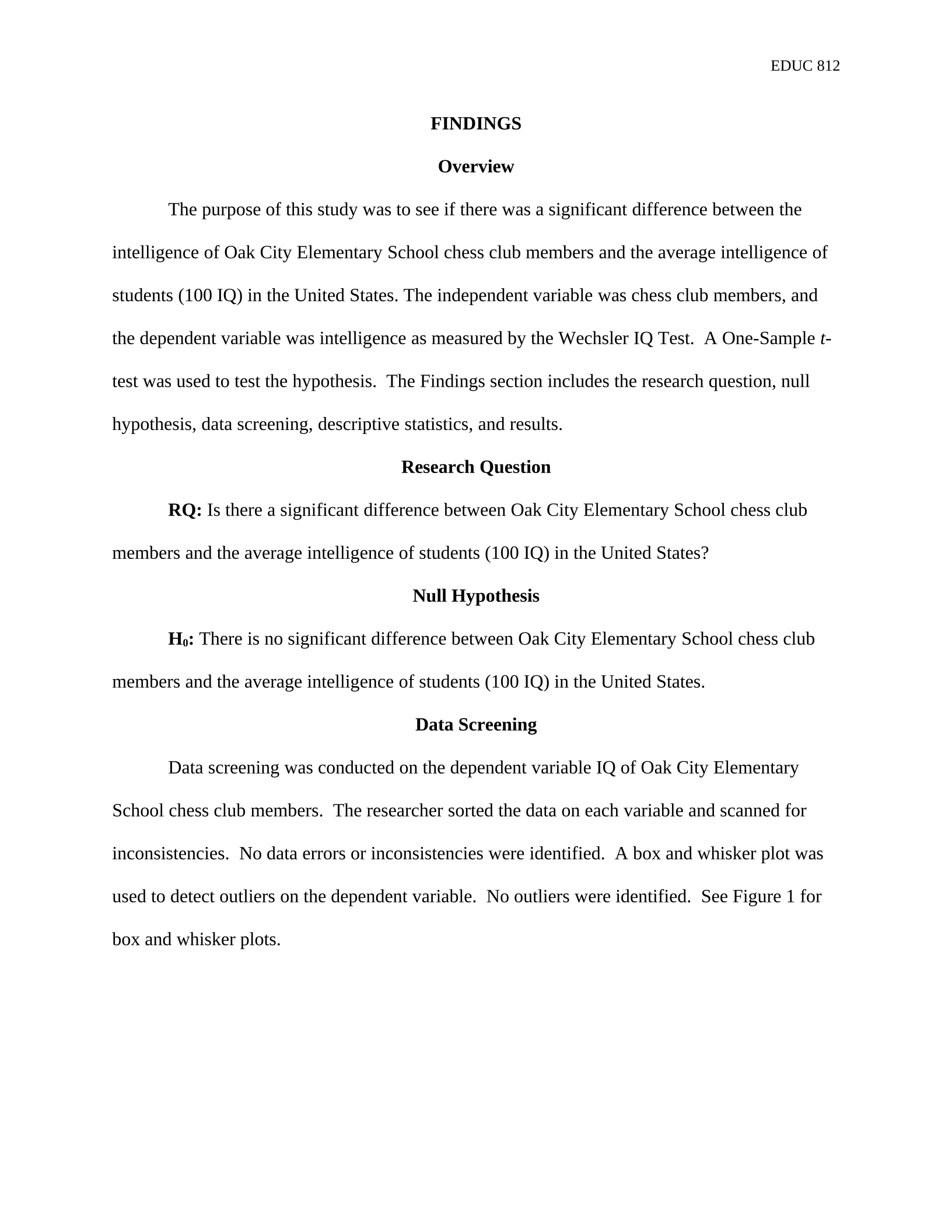
FINDINGS
Overview
The purpose of this study was to see if there was a significant difference between the
intelligence of Oak City Elementary School chess club members and the average intelligence of
students (100 IQ) in the United States. The independent variable was chess club members, and
the dependent variable was intelligence as measured by the Wechsler IQ Test. A One-Sample t-
test was used to test the hypothesis. The Findings section includes the research question, null
hypothesis, data screening, descriptive statistics, and results.
Research Question
RQ: Is there a significant difference between Oak City Elementary School chess club
members and the average intelligence of students (100 IQ) in the United States?
Null Hypothesis
H0: There is no significant difference between Oak City Elementary School chess club
members and the average intelligence of students (100 IQ) in the United States.
Data Screening
Data screening was conducted on the dependent variable IQ of Oak City Elementary
School chess club members. The researcher sorted the data on each variable and scanned for
inconsistencies. No data errors or inconsistencies were identified. A box and whisker plot was
used to detect outliers on the dependent variable. No outliers were identified. See Figure 1 for
box and whisker plots.

EDUC 812
Figure 1
Box and Whisker Plot
Descriptive Statistics
Descriptive statistics were obtained on the dependent variable. The sample consisted of
participants. Descriptive statistics can be found in Table 1.
Table 1
Descriptive Statistics
N Minimum
Maximu
m Mean
Std.
Deviation
IQ 15 101 114 108.20 4.443
Valid N
(listwise)
15

EDUC 812
Assumption Testing
Assumption of Normality
The One-Sample t-test requires that the assumption of normality be met. Normality was
examined using the Shapiro-Wilks Test. The assumption of normality was met. See Table 2 for
Tests of Normality.
Table 2
Tests of Normality
Kolmogorov-SmirnovaShapiro-Wilk
Statistic df Sig. Statistic df Sig.
IQ .191 15 .147 .914 15 .155
a. Lilliefors Significance Correction
Results
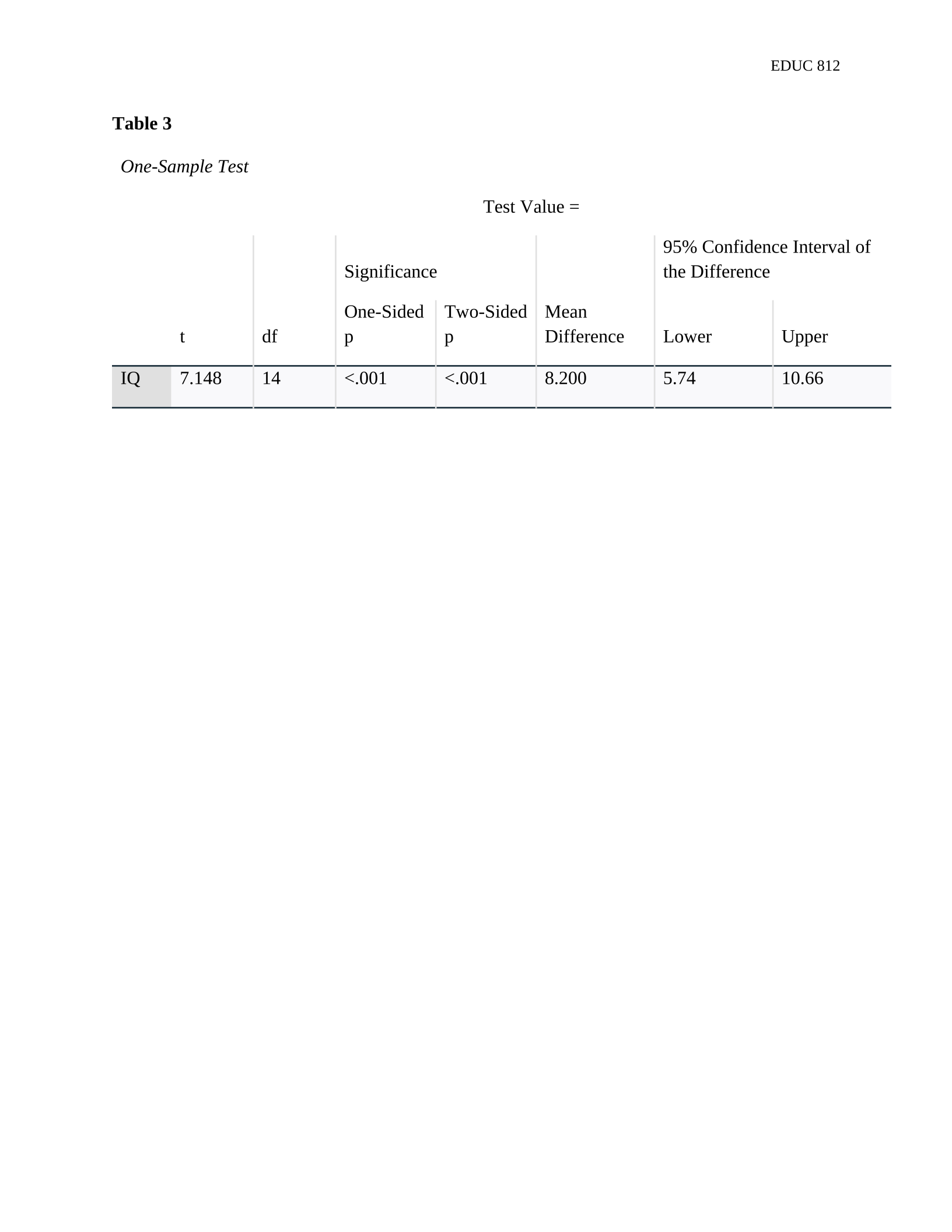
A One-sample t-test was conducted to see if there was a difference between Oak City
Elementary School chess club members and the average intelligence of students (100 IQ) in the
United States. The researcher failed to reject the null hypothesis at the 95% confidence level
where t(14) = 7.148, p = .155. Eta square equaled (h2 = .000). The effect size was extremely
large/ very large/ large/ medium/ small. Eta square was calculated using the formula h2 = t2/(t2 +
df). There was no statistical difference between Oak City Elementary School chess club
members (M = 108.20, SD = 4.443) and the average intelligence of students (100 IQ) in the
United States. See Table 3 for One Sample t-test results.