


CONFLICT STYLES ASSESSMENT 2
Conflict Styles Assessment and Reflection
Part One
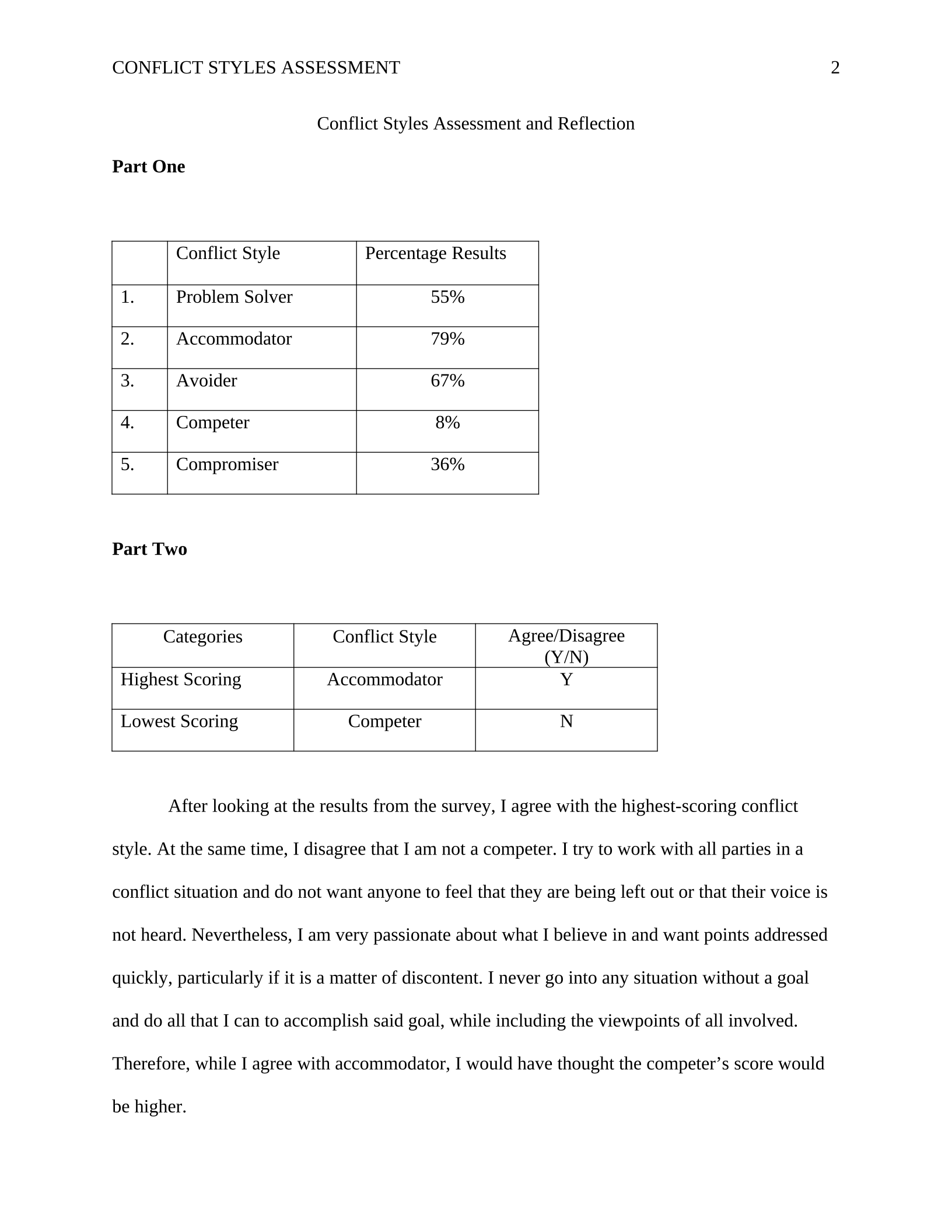
Conflict Style Percentage Results
1. Problem Solver 55%
2. Accommodator 79%
3. Avoider 67%
4. Competer 8%
5. Compromiser 36%
Part Two
Categories Conflict Style Agree/Disagree
(Y/N)
Highest Scoring Accommodator Y
Lowest Scoring Competer N
After looking at the results from the survey, I agree with the highest-scoring conflict
style. At the same time, I disagree that I am not a competer. I try to work with all parties in a
conflict situation and do not want anyone to feel that they are being left out or that their voice is
not heard. Nevertheless, I am very passionate about what I believe in and want points addressed
quickly, particularly if it is a matter of discontent. I never go into any situation without a goal
and do all that I can to accomplish said goal, while including the viewpoints of all involved.
Therefore, while I agree with accommodator, I would have thought the competer’s score would
be higher.

CONFLICT STYLES ASSESSMENT 3
Categories Conflict Style
Most Surprising Competer
Least Surprising Accommodator
I found scoring lowest as a competer the most surprising because I have always had a
competitive nature. Regardless of the circumstance, I always have a goal and want to do
everything I can to achieve that goal. I am least surprised, by the accommodator result in that
while I always work to get what I want, I want to include all parties involved. I do not want
anyone to feel slighted or that they are not included. It is possible to be accommodating without
giving up what one is working toward. Other parties just need to feel that they have a voice in the
negotiation.
Part Three – Academic Reflection
Accommodating is frequently used in conflict resolution. In the accommodating strategy,
individuals typically work to satisfy others, sometimes at the expense of their goals.
Occasionally, accommodators acquiesce to others out of respect for their knowledge or position
of authority (Barsky, 2017). Concern for others is a positive thing that drives accommodators.
However, they may become bitter over time as their concerns may be swept aside for the good of
the group (Akhtar & Hassan, 2021). Accommodation is a style I utilize, combined with others, in
that I want to include everyone in the decision-making but achieve my own goals as well.
A conflict avoider is one who would rather keep his or her opinions to themselves and
avoid the situation altogether. They simply deny that a conflict exists (Barsky, 2017). Avoiders
do not work toward achieving their goals, and, likewise, do nothing to help the other party
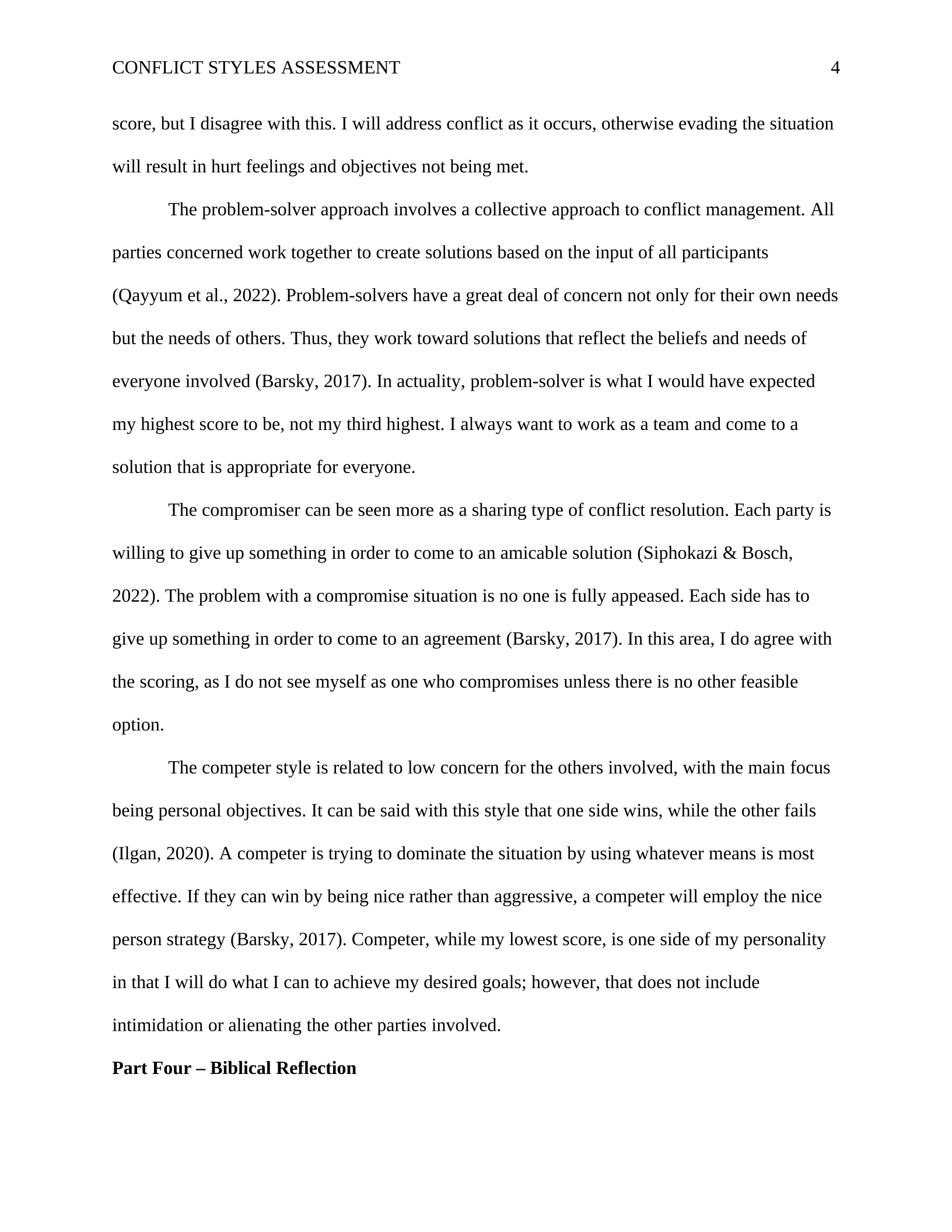
achieve their goals (Wang et al., 2022). The survey results show avoider as my second-highest
CONFLICT STYLES ASSESSMENT 4
score, but I disagree with this. I will address conflict as it occurs, otherwise evading the situation
will result in hurt feelings and objectives not being met.
The problem-solver approach involves a collective approach to conflict management. All
parties concerned work together to create solutions based on the input of all participants
(Qayyum et al., 2022). Problem-solvers have a great deal of concern not only for their own needs
but the needs of others. Thus, they work toward solutions that reflect the beliefs and needs of
everyone involved (Barsky, 2017). In actuality, problem-solver is what I would have expected
my highest score to be, not my third highest. I always want to work as a team and come to a
solution that is appropriate for everyone.
The compromiser can be seen more as a sharing type of conflict resolution. Each party is
willing to give up something in order to come to an amicable solution (Siphokazi & Bosch,
2022). The problem with a compromise situation is no one is fully appeased. Each side has to
give up something in order to come to an agreement (Barsky, 2017). In this area, I do agree with
the scoring, as I do not see myself as one who compromises unless there is no other feasible
option.
The competer style is related to low concern for the others involved, with the main focus
being personal objectives. It can be said with this style that one side wins, while the other fails
(Ilgan, 2020). A competer is trying to dominate the situation by using whatever means is most
effective. If they can win by being nice rather than aggressive, a competer will employ the nice
person strategy (Barsky, 2017). Competer, while my lowest score, is one side of my personality
in that I will do what I can to achieve my desired goals; however, that does not include
intimidation or alienating the other parties involved.
Part Four – Biblical Reflection
CONFLICT STYLES ASSESSMENT 5
The Bible always encourages agreement among one another. As stated in Philippians
2:14, “Do everything without complaining and arguing” (New Living Translation, 1996). This
one statement encourages all to work together without disagreements. Thus, if a person feels that
they have been slighted by another, they should forgive and move on without engaging in
conflict. “Make allowance for each other’s faults, and forgive anyone who offends you” is
argued in Colossians 4:13. This teaches mankind to forgive, as all are to lead a peaceful
existence. In this regard, the Bible teaches avoidance in conflict management.
Nevertheless, if one is to become involved in conflict, the Bible advises to take it to the
Lord. “I cry out to the Lord; I plead for the Lord’s mercy. I pour out my complaints before him
and tell him all my troubles” (New Living Translation, 1996, Psalm 142:1-2). The Lord will
provide guidance on the best means to alleviate a problem or reach a solution. Matthew 6:24
does advise against compromise as it is argued that “no one can serve two masters. For you will
hate one and love the other” (New Living Translation, 1996). This quote can easily be applied to
compromise in conflict management as each party is giving up something of themselves in the
final solution, and no one will be completely happy.
In the process of conflict, the Bible does advise on peace and making peace with others.
“How wonderful and pleasant it is when brothers live together in harmony” (New Living
Translation, 1996, Psalm 133:1). This indicates that the ultimate goal in any situation should be a
peaceful reconciliation. Everyone will be faced with conflict. It is inevitable, whether in one’s
personal or professional life. The most important thing to consider is how to respond to the
situation. Turning to God and the Bible before reacting can help temper a suitable response. “A
gentle answer deflects anger, but harsh words make tempers flare” (New Living Testament, 1996,
Proverbs 15:1).
CONFLICT STYLES ASSESSMENT 6
References
Akhtar, N. & Hassan, S. S. (2021). Conflict management styles as predictors of organizational
commitment in university teachers. Journal of Behavioural Sciences, 31(1), 98-123.
Barsky, A. (2017). Conflict resolution for the helping professions: Negotiation, mediation,
advocacy, facilitation, and restorative justice. Oxford University Press, Incorporated.
Holy Bible: New Living Translation. (1996). Tyndale House Publishers.
Ilgan, A. (2020). Examining principals’ conflict management styles: A study of Turkish
administrators. Bulletin of Education and Research, 42(1), 1-16.
Qayyum, S., Younas, F., & Tariq, S. (2022). Construction and validation of organizational
conflict types and conflict management styles inventories. Pakistan Journal of
Psychological Research, 37(4), 735-760. https://doi.org/10.33824/PJPR.2022.37.4.44
Siphokazi, Kwatubana & Bosch, M. (2022). The conflict management styles adopted by
managers in an fet college in South Africa. E-BANGI Journal, 19(2), 222-237.
Wang, Z., Zhu, Q., & Dong, K. (2022). Conflict resolution skills of Chinese international
students in the United States. Journal of International Students, 12(4), 995-1018.
https://link.gale.com/apps/doc/A714193677/GIC?
u=carr32198&sid=ebsco&xid=e9e2d1dc.
Powered by TCPDF (www.tcpdf.org)

