


2
[Perimeter and Area]
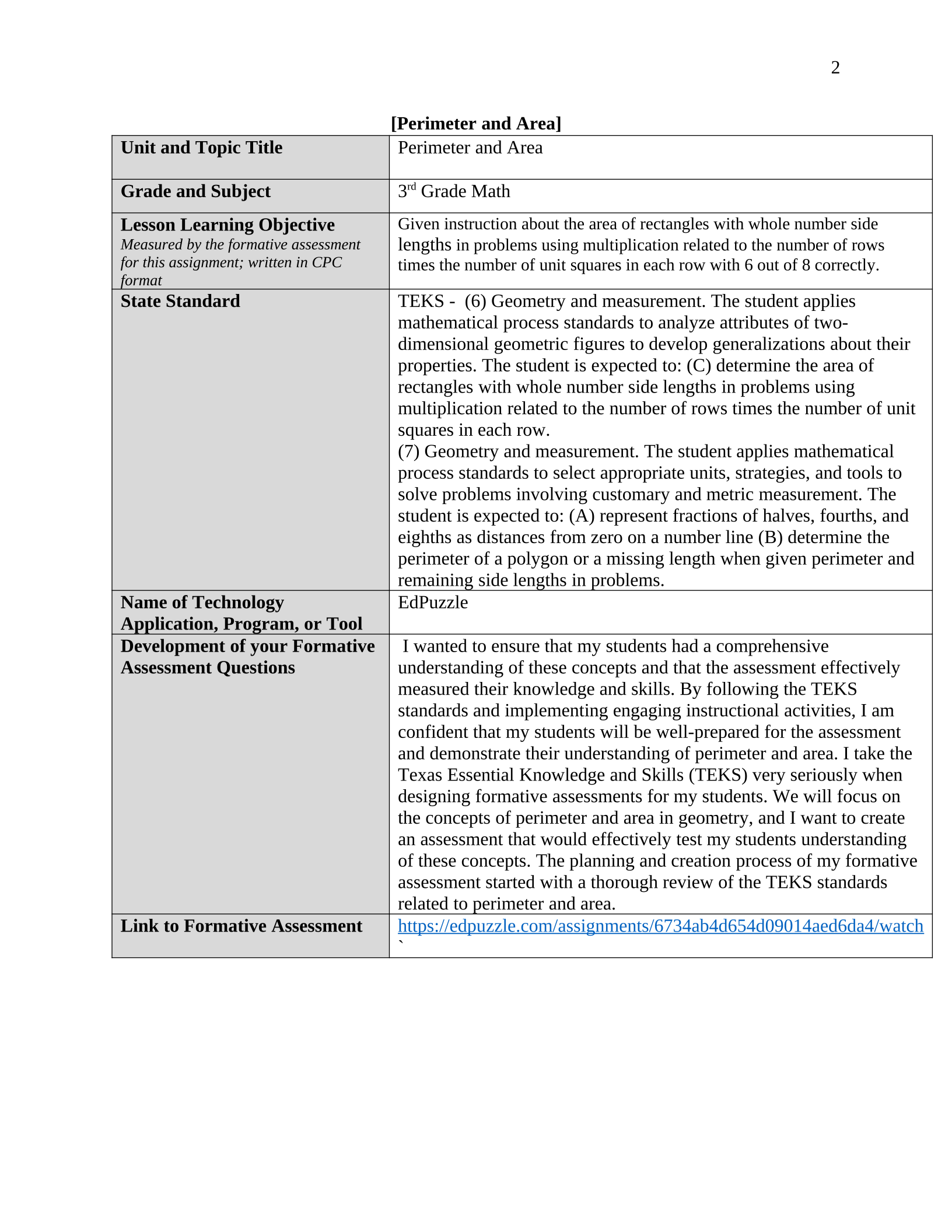
Unit and Topic Title Perimeter and Area
Grade and Subject 3rd Grade Math
Lesson Learning Objective
Measured by the formative assessment
for this assignment; written in CPC
format
Given instruction about the area of rectangles with whole number side
lengths in problems using multiplication related to the number of rows
times the number of unit squares in each row with 6 out of 8 correctly.
State Standard TEKS - (6) Geometry and measurement. The student applies
mathematical process standards to analyze attributes of two-
dimensional geometric figures to develop generalizations about their
properties. The student is expected to: (C) determine the area of
rectangles with whole number side lengths in problems using
multiplication related to the number of rows times the number of unit
squares in each row.
(7) Geometry and measurement. The student applies mathematical
process standards to select appropriate units, strategies, and tools to
solve problems involving customary and metric measurement. The
student is expected to: (A) represent fractions of halves, fourths, and
eighths as distances from zero on a number line (B) determine the
perimeter of a polygon or a missing length when given perimeter and
remaining side lengths in problems.
Name of Technology
Application, Program, or Tool
EdPuzzle
Development of your Formative
Assessment Questions
7I wanted to ensure that my students had a comprehensive
understanding of these concepts and that the assessment effectively
measured their knowledge and skills. By following the TEKS
standards and implementing engaging instructional activities, I am
confident that my students will be well-prepared for the assessment
and demonstrate their understanding of perimeter and area. I take the
Texas Essential Knowledge and Skills (TEKS) very seriously when
designing formative assessments for my students. We will focus on
the concepts of perimeter and area in geometry, and I want to create
an assessment that would effectively test my students understanding
of these concepts. The planning and creation process of my formative
assessment started with a thorough review of the TEKS standards
related to perimeter and area.
Link to Formative Assessment https://edpuzzle.com/assignments/6734ab4d654d09014aed6da4/watch
`

3
Screenshots of the Digital
Formative Assessment You
Created
Point Value and Answer Key This assessment is worth [24] points. (3 pts each)
Answer key:
1. The purple 12 square units
2. 12
3. 12 units2
4. The green 8 square unit
5. 9
6. 9 square units
7. 15 square units
8. 16 units2
Directions for Students 1. Get out Chromebooks
2. Go to EdPuzzale on the internet
3. Look under My Classes click on Newman Math
4. Under Assignments click on Finding Aea of Rectangles
5. Once everyone is on task students may start assessment
Data Collection I would first distribute the assessment to all students and allow them a
set amount of time to complete it. Once all the students have finished,
I would collect the assessments and review them for accuracy and
completion. I would then grade each question, assigning 3 points for
each correct answer. Students need to get 6 out of 8 questions correct
to meet the target goal for success. After grading the assessments, I
would track and document each student's progress and results in a
spreadsheet or database. This would allow me to review individual
student’s performance and compare whole-class results. I will decide
on the next steps for instruction. By tracking, reviewing, and
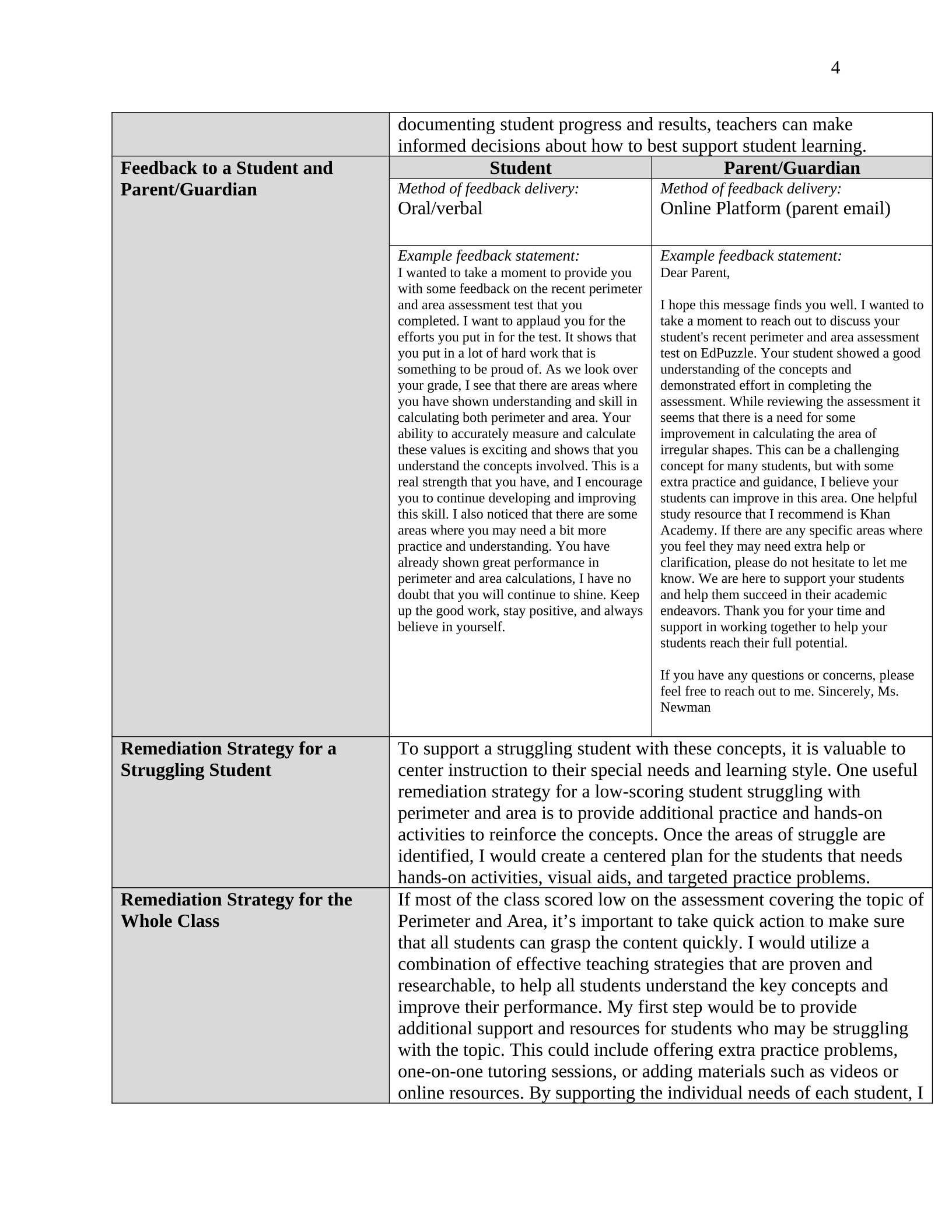
4
documenting student progress and results, teachers can make
informed decisions about how to best support student learning.
Feedback to a Student and
Parent/Guardian
Student Parent/Guardian
Method of feedback delivery:
Oral/verbal
Method of feedback delivery:
Online Platform (parent email)
Example feedback statement:
I wanted to take a moment to provide you
with some feedback on the recent perimeter
and area assessment test that you
completed. I want to applaud you for the
efforts you put in for the test. It shows that
you put in a lot of hard work that is
something to be proud of. As we look over
your grade, I see that there are areas where
you have shown understanding and skill in
calculating both perimeter and area. Your
ability to accurately measure and calculate
these values is exciting and shows that you
understand the concepts involved. This is a
real strength that you have, and I encourage
you to continue developing and improving
this skill. I also noticed that there are some
areas where you may need a bit more
practice and understanding.7You have
already shown great performance in
perimeter and area calculations, I have no
doubt that you will continue to shine. Keep
up the good work, stay positive, and always
believe in yourself.
Example feedback statement:
Dear Parent,7
I hope this message finds you well. I wanted to
take a moment to reach out to discuss your
student's recent perimeter and area assessment
test on EdPuzzle. Your student showed a good
understanding of the concepts and
demonstrated effort in completing the
assessment. While reviewing the assessment it
seems that there is a need for some
improvement in calculating the area of
irregular shapes. This can be a challenging
concept for many students, but with some
extra practice and guidance, I believe your
students can improve in this area. One helpful
study resource that I recommend is Khan
Academy. If there are any specific areas where
you feel they may need extra help or
clarification, please do not hesitate to let me
know. We are here to support your students
and help them succeed in their academic
endeavors. Thank you for your time and
support in working together to help your
students reach their full potential.
If you have any questions or concerns, please
feel free to reach out to me. Sincerely, Ms.
Newman
Remediation Strategy for a
Struggling Student
To support a struggling student with these concepts, it is valuable to
center instruction to their special needs and learning style. One useful
remediation strategy for a low-scoring student struggling with
perimeter and area is to provide additional practice and hands-on
activities to reinforce the concepts. Once the areas of struggle are
identified, I would create a centered plan for the students that needs
hands-on activities, visual aids, and targeted practice problems.
Remediation Strategy for the
Whole Class
If most of the class scored low on the assessment covering the topic of
Perimeter and Area, it’s important to take quick action to make sure
that all students can grasp the content quickly. I would utilize a
combination of effective teaching strategies that are proven and
researchable, to help all students understand the key concepts and
improve their performance. My first step would be to provide
additional support and resources for students who may be struggling
with the topic.7This could include offering extra practice problems,
one-on-one tutoring sessions, or adding materials such as videos or
online resources. By supporting the individual needs of each student, I
5
can help them better understand the content and improve their
performance on future assessments.
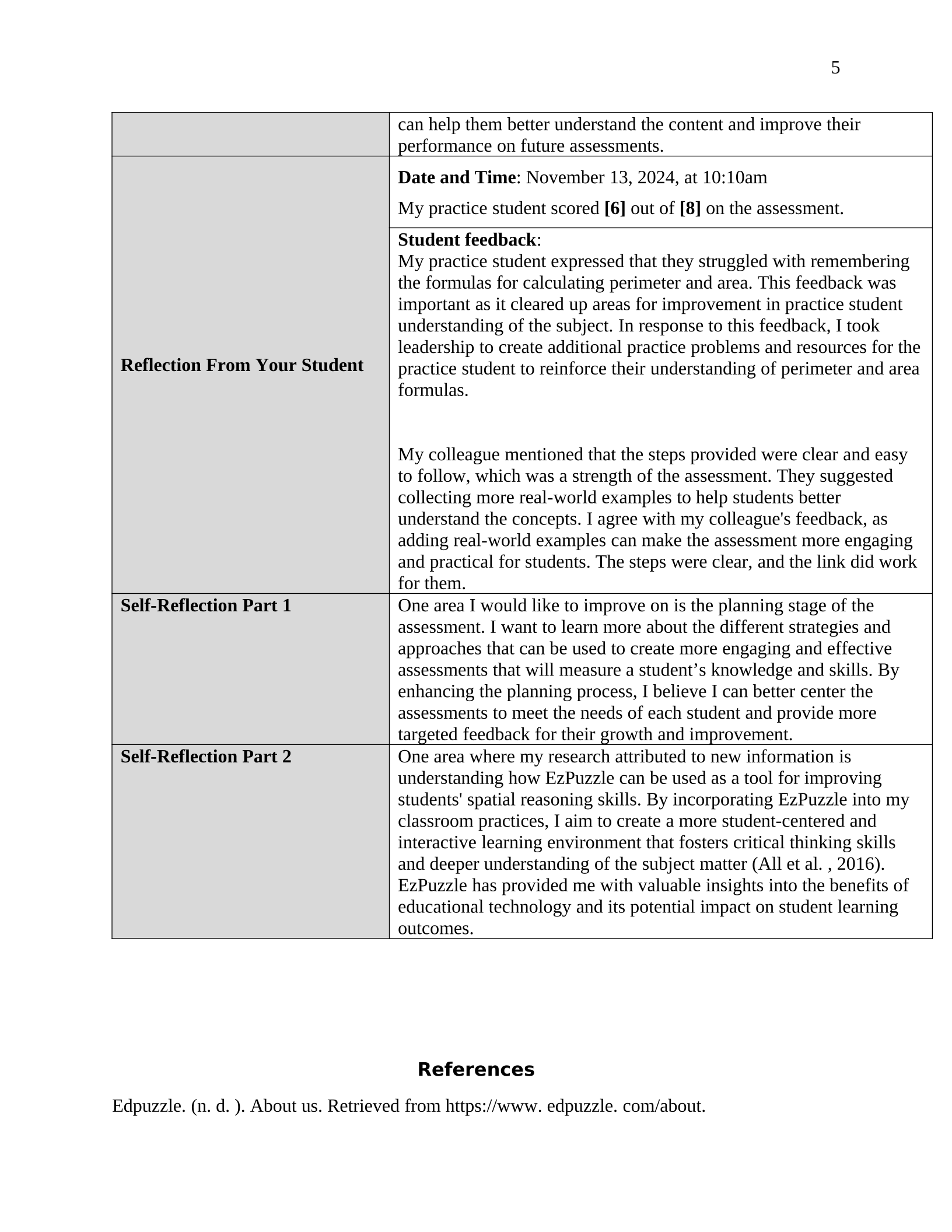
Reflection From Your Student
Date and Time: November 13, 2024, at 10:10am
My practice student scored [6] out of [8] on the assessment.
Student feedback:
My practice student expressed that they struggled with remembering
the formulas for calculating perimeter and area. This feedback was
important as it cleared up areas for improvement in practice student
understanding of the subject. In response to this feedback, I took
leadership to create additional practice problems and resources for the
practice student to reinforce their understanding of perimeter and area
formulas.
My colleague mentioned that the steps provided were clear and easy
to follow, which was a strength of the assessment. They suggested
collecting more real-world examples to help students better
understand the concepts. I agree with my colleague's feedback, as
adding real-world examples can make the assessment more engaging
and practical for students. The steps were clear, and the link did work
for them.
Self-Reflection Part 1 One area I would like to improve on is the planning stage of the
assessment. I want to learn more about the different strategies and
approaches that can be used to create more engaging and effective
assessments that will measure a student’s knowledge and skills. By
enhancing the planning process, I believe I can better center the
assessments to meet the needs of each student and provide more
targeted feedback for their growth and improvement.
Self-Reflection Part 2 One area where my research attributed to new information is
understanding how EzPuzzle can be used as a tool for improving
students' spatial reasoning skills. By incorporating EzPuzzle into my
classroom practices, I aim to create a more student-centered and
interactive learning environment that fosters critical thinking skills
and deeper understanding of the subject matter (All et al. , 2016).
EzPuzzle has provided me with valuable insights into the benefits of
educational technology and its potential impact on student learning
outcomes.
References
Edpuzzle. (n. d. ). About us. Retrieved from https://www. edpuzzle. com/about.
6
https://edpuzzle.com/assignments/6734ab4d654d09014aed6da4/watch
"Texas Essential Knowledge and Skills (TEKS)", Texas Education Agency,
https://tea.texas.gov/academics/curriculum-standards
Fennema, E., & Franke, M. L. (1992). Teachers' knowledge and its impact. Review of research
on teachers' knowledge. In Handbook of research on teaching (pp. 510-542)
Powered by TCPDF (www.tcpdf.org)

