


Language Arts Project Assignment
Language Arts Virginia Standard of Learning:
1.9 The student will read and demonstrate comprehension of a variety of fictional texts.
e) Ask and answer who, what, when, where, why, and how questions about what is
read.
f) Identify characters, setting, and important events.
The Common Core State Standard
CCSS.ELA-LITERACY.RL.1.5. Explain major differences between books that tell stories
and books that give information, drawing on a wide reading of a range of text types.
Text Set:
Grade level- Kindergarten and 1st Grade
Author- Betsy Franco
Guided Reading Level- C
Grade level- 1st Grade
Author- Alyssa Satin Capucilli
Guided Reading Level- F
Grade Level- 1st Grade
Author- Mo Williams
Guided Reading Level- G
Grade Level-1st Grade and Second Grade
Author- Mercer Mayer
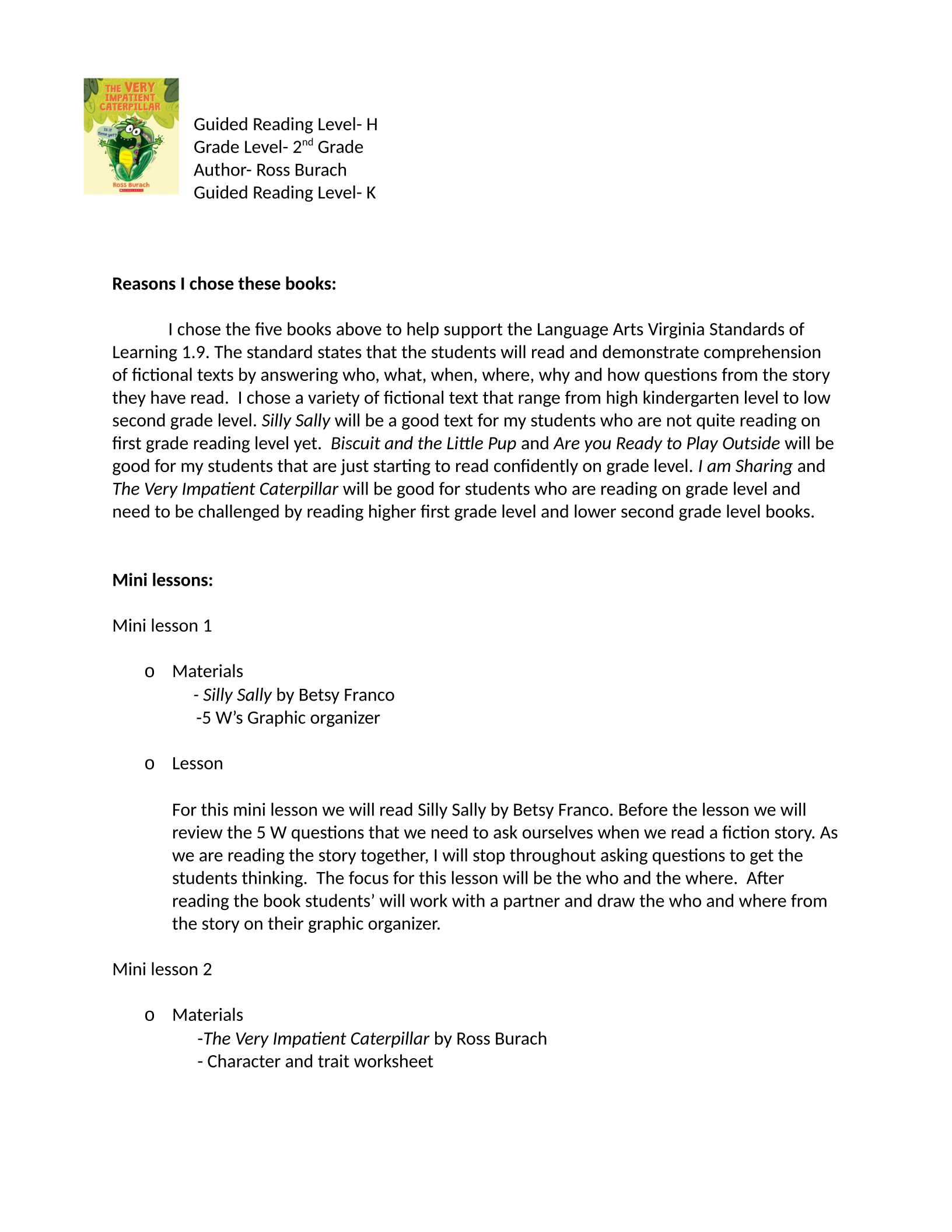
Guided Reading Level- H
Grade Level- 2nd Grade
Author- Ross Burach
Guided Reading Level- K
Reasons I chose these books:
I chose the five books above to help support the Language Arts Virginia Standards of
Learning 1.9. The standard states that the students will read and demonstrate comprehension
of fictional texts by answering who, what, when, where, why and how questions from the story
they have read. I chose a variety of fictional text that range from high kindergarten level to low
second grade level. Silly Sally will be a good text for my students who are not quite reading on
first grade reading level yet. Biscuit and the Little Pup and Are you Ready to Play Outside will be
good for my students that are just starting to read confidently on grade level. I am Sharing and
The Very Impatient Caterpillar will be good for students who are reading on grade level and
need to be challenged by reading higher first grade level and lower second grade level books.
Mini lessons:
Mini lesson 1
oMaterials
- Silly Sally by Betsy Franco
-5 W’s Graphic organizer
oLesson
For this mini lesson we will read Silly Sally by Betsy Franco. Before the lesson we will
review the 5 W questions that we need to ask ourselves when we read a fiction story. As
we are reading the story together, I will stop throughout asking questions to get the
students thinking. The focus for this lesson will be the who and the where. After
reading the book students’ will work with a partner and draw the who and where from
the story on their graphic organizer.
Mini lesson 2
oMaterials
-The Very Impatient Caterpillar by Ross Burach
- Character and trait worksheet

oLesson
For this mini lesson we will focus on characters and character traits. Before we read the
story, we will discuss what character traits are. Then we will read the book, stopping
throughout to discuss the characters thoughts, sayings, and actions. After reading the
book we will identify the characters and their character traits on our worksheet.
Mini lesson 3
oMaterials
-Are You Ready to Play Outside by Mo Willams
-Character comparison worksheet
oLesson
This mini lesson will focus on character comparison. We will read the story, stopping
throughout discussing the characters and what makes them the same or different.
When we have read the story, students will partner up and do a worksheet where they
are comparing Piggy and Gerald. We will go over the worksheet together when all
groups are finished.
Tiered Groups
oGroup 1
-Below grade level
Group one consist of students who are below grade level. For this group we will
focus on comprehension questions. The dynamics of this group are a few ELL students
as well as a few students with IEP’s. We will read Silly Sally together. Each student will
read one sentence in rotations. After we read the story. I will ask true or false questions
about the 5 w’s. If the question is true, students will hold their thumb up. If the
question is false, students will hold their thumb down. By asking students the question
and having them respond with their thumb, it allows them to focus on what I am asking
and not having to process reading and writing the questions and answers.
oGroup 2
-On grade level
Group two consists of students who are reading on grade level. For this group,
students will be focusing on character comparison. Students will read Are You Ready to
go Outside by Mo Willams. Students will read the story independently at their seats.
When they are finished reading the story, students will make a Venn Diagram with a
partner, comparing Piggy and Gerald from the story. By reading Are You Ready to go
Outside independently and then working with a partner, students will be able to
collaborate with each other and check for their understanding of the characters in the
book.
oGroup 3
-Above grade level
Group three consist of students reading above grade level. This group will be
reading a second-grade level book called The Very Impatient Caterpillar. Their focus will
be character traits. Students will pick a partner to read the story with. After reading
students will work with their partner and pick three-character traits that the caterpillar
has. Then they must provide text evidence to support why they chose the trait that they
did. They will need to write the trait and evidence in complete sentences, making sure
to capitalize and end their sentence with a period. Once they complete this assignment,
they can choose a book to read independently at their seats, independently.
Formative Assessments
oMini lesson 1 formative Assessment
-For this assessment, I will read a short story. After I have read the story, student will
need to draw a picture of the character and setting, making sure they label which is
which on their paper. In the lesson we focused on the who and where part of the story.
By having them listen to the text selection and drawing the character and setting
following the reading, I can assess the students understanding of the who and where
part of the 5 w’s. I will use the assessments to determine what I need to focus on in RTI
groups for better understanding of the concept.
oMini lesson 2 Formative Assessment
-After hearing a short story, students will need to choose the correct character trait to
describe the character two characters from the text. I will have multiple traits listed
that they can choose from for both characters. By choosing this activity for a formative
assessment, students will show their understanding of characters in a story as well as
the characters traits. For students who are not quite grasping the concept of the
characters and their traits, I will pull them into a small group and reteach the concept.
After reteaching, I will have the students redo the assessment with a different short
story.
Summative Assessment
oMini lesson 3 Summative Assessment

-Students will choose two books they have read. They will choose one character form
each story. On a graphic organizer they will need to list 2 ways the characters are the
same and 2 ways they are different. This summative assessment will close out the
lesson and show students understanding of comparing and contrasting different
characters from different stories.
References
Elephant & Piggie: Are you ready to play outside? (#7). (n.d.-c).
https://shop.scholastic.com/teachers-ecommerce/teacher/books/elephant-piggie-are-you-
ready-to-play-outside-9781338805703.html
Little Critter: I am sharing | the scholastic teacher store. (n.d.-d).
https://shop.scholastic.com/teachers-ecommerce/teacher/books/little-critter-i-am-sharing-
9780545525954.html
Product-detail-page - scholastic. (n.d.-f).
https://shop.scholastic.com/teachers-ecommerce/teacher/books/rookie-reader-gr-level-b-
silly-sally-9780516273433.html
The very impatient caterpillar | the scholastic teacher store. (n.d.-g).
https://shop.scholastic.com/teachers-ecommerce/teacher/books/the-very-impatient-
caterpillar-9781338532234.html

