


EDCO 815 Chapter Readings Outline (Reading Report 4)
Diverse Family Arrangements & Theories
(Modules 6-8)
Divorce, Single-Parenting, and Remarriage Within Families
(Module 6)
Balswick & Balswick
Chapters 17-18
• 17: Divorce and Single-Parent Families
o Divorce
§ Demographics
§ Causes
§ The Process
§ The Effect on Children
§ Long- and Short-Term Divorce Adjustment
§ Best Case Scenarios
o A Christian Approach to Divorce
o Single-Parent Families
§ Not enough time
§ Noncustodial Parents
§ Not enough money: The link between single parenthood and poverty
§ Is Workfare the Answer?
o Family Values and Valuing Families: A Christian Response
• 18: Complex Families in Contemporary Society
o A View from Trinitarian Theology
o Newly Formed Couple
§ Dealing with loss and grief
o Second-marriage dynamics
o Newly Formed Family
§ Ideas for newly formed families
o Unrealistic Expectations
§ Unrealistic Expectations about Stepfamilies and Foster Families
o Parents Taking Leadership
§ Guidelines for leadership
o Stepparents / Stepchildren
o Stepfathers / Stepchildren
o Marital Tension over stepchildren
o Summary
§ Routines, Rituals, Traditions
Carter and McGoldrick
Chapters 20-22
o 20: Divorce: An Unscheduled Family Transition
o INTRO

o The Context of Divorce: Historical and Legal Perspectives
o Demographics and the Probability of Divorce
o Ethnic, Gender, and Life Cycle Variations
o The Social Context
o Divorce as a multidimensional Process
o The Binuclear Family
§ Dual-household binuclear families
o Transitions of the Divorce Process
o The Transitions Framework
o Individual Cognition: The decision
o Family Metacognition: The announcement
§ Betrayal and blame
§ Loss
o Systemic Separation: Dismantling the nuclear family
§ Orderly and disorderly separations
§ Legal issues
o Systemic Reorganization: The Binuclear Family
§ The former spouse relationship
§ Co-Parenting relationships
§ Establishing boundaries
o Family Redefinition: The aftermath
o Clinical Overview
o 21: Single-Parent Families: Strengths, Vulnerabilities, and Interventions
o INTRO
o Singe Parents and the Family Life Cycle
§ New single-parent families with young children
§ Single-parent families with older children and adolescents
§ Single parenting in the post-childrearing years
o When Single-Parent families Seek help
o Angela: Balancing the Need for Independence and the Need for Support
o Daniel: A Committed Single Father against All Odds
o Mary: Divorced, Overwhelmed and in Crisis
o Kathleen: Independent with a Vengeance
o CONCLUSION
o 22: The Remarriage Cycle: Divorce, Multi-Nuclear and Recoupled Families
o INTRO
o The Divorce-Remarriage Cycle
o Predictable Issues in Remarriage
§ Adjustment and family integration issues with stepparents and
stepchildren
§ the stress of money
§ gays and lesbians in stepfamilies
§ emotional issues: anger, grief, pseudo-mutuality, loyalty conflicts, conflict
and cutoff
o Remarriage at Various Phases of the Family Life Cycle
§ Spouses at the same life cycle phase

§ Stepfamilies and young children
§ Stepfamilies with adolescents
§ The impact of remarriage in later life cycle phases
o Clinical intervention with remarried families
§ Triangle between the new spouses and an ex-spouse
§ Triangle involving a pseudo-mutual remarried couple, an ex-spouse, and a
child or children
§ Triangle involving a remarried couple in conflict over the child/children of
one of them
§ Triangle involving a pseudo-mutual remarried couple, his children, and
her children
§ Triangle involving a parent, the biological children, and the stepchildren
§ Triangle involving remarried spouses and the parents of either
o Clinical guidelines
o CONCLUSION
Kostenberger
Chapter 11
§ 11: Separating What God Has Joined Together: Divorce and Remarriage
o Divorce and Remarriage in the Old Testament
§ Deuteronomy 24:1-4
§ Other Old Testament Reference to Divorce and Remarriage
o Divorce and Remarriage in the New Testament
§ Jesus’ Teaching on divorce and remarriage
• The disciples’ reaction
• The “exception Clause”
• “Except for Porneia”
• Competing Views
• Suggested parameters
§ Paul’s Teaching on divorce and Remarriage
• Romans 7:1-4
• I Corinthians 7:10-16, 39
• Competing Views
• Suggested parameters
o Conclusion
§ The Contemporary Debate
Theories for Working With Families (Module 7)
Yarhouse and Sells
Chapters 11-12
§ 11: Narrative Family Therapy
o Introduction to narrative family
o Theoretical and Philosophical Assumptions of Narrative family therapy

§ Postmodern influence
§ Constructive influence
§ Assumptions about healthy family functioning, healthy behavior
o When families seek help
§ The approach to family therapy
o Christian Perspective on Narrative family therapy
§ Philosophical and theoretical assumptions
§ Model of family dysfunction and family functioning
§ Techniques in family therapy
o Conclusion
§ 12: Toward An Integrative Christian Family Therapy
o Casting a Vision: Can there be a distinctive Christian Family Therapy
o First generation approaches revisited
o Approaches to Eclecticism
§ Chaotic eclecticism
§ Pragmatic eclecticism
§ Metatheoretical or transtheoretical eclecticism
§ Theoretical integrationism
o Casting a Vision: The Christian Family Therapy Image for Family and Family
Therapy
§ Purpose one: Marriage and family development and the Christian family
therapist
§ Purpose two: The Christian counselor assists families in curtailing
destructive behaviors
§ Purpose three: To facilitate the restoration or reconciliation of family in
relationship
o Integrative Christian Family Therapy in Practice
§ Case example of a blended family
• Family functioning
• Family relationships
• Family Identity
§ What does therapy look like?
• Hypothesizing
• Planning
• Conversing
• Reading feedback
§ Techniques in integrative Christian family therapy
Later in Life in the Family Cycle (Module 8)
Balswick & Balswick
Chapter 10
• 10: The Joys and Challenges of Family in Later Life
o The Launching Stage
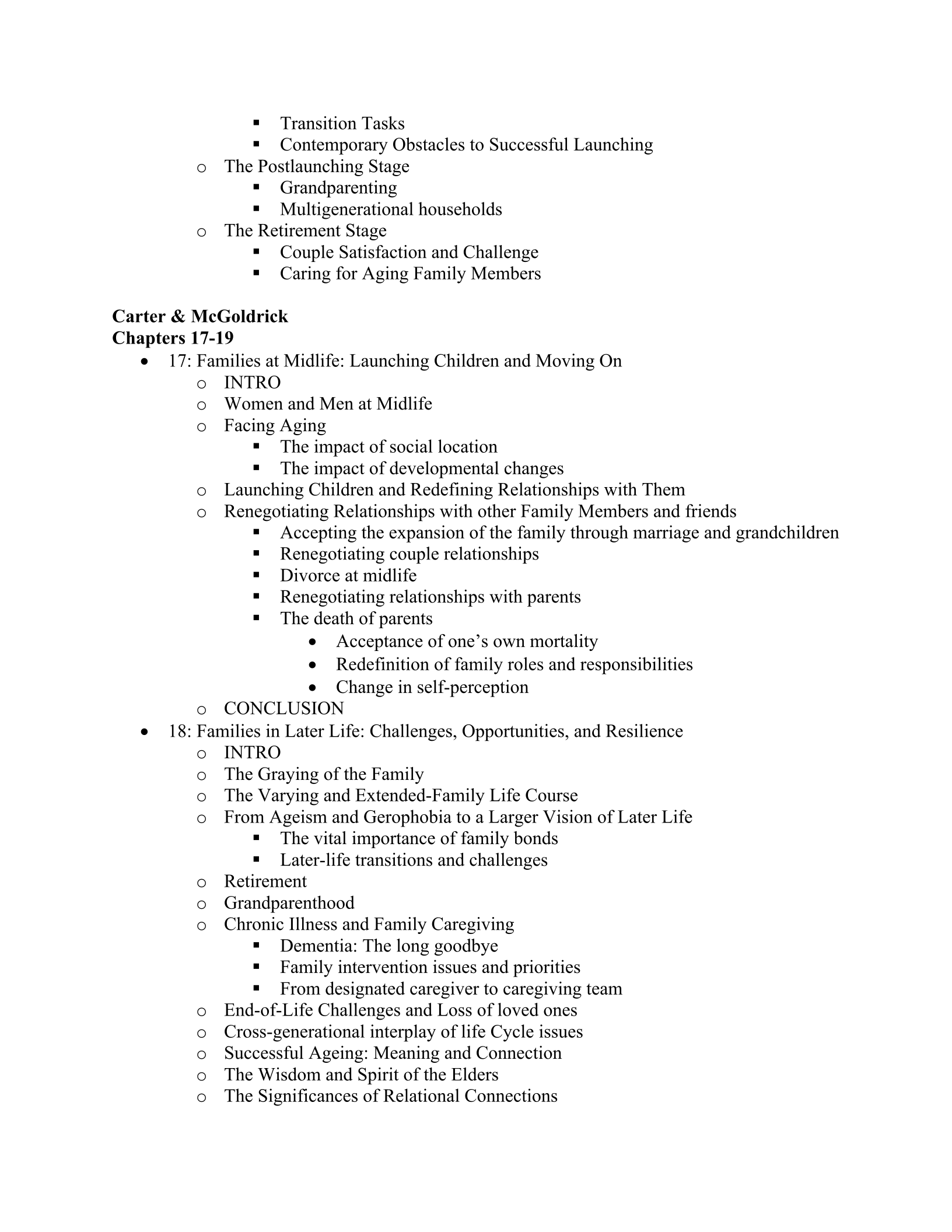
§ Transition Tasks
§ Contemporary Obstacles to Successful Launching
o The Postlaunching Stage
§ Grandparenting
§ Multigenerational households
o The Retirement Stage
§ Couple Satisfaction and Challenge
§ Caring for Aging Family Members
Carter & McGoldrick
Chapters 17-19
• 17: Families at Midlife: Launching Children and Moving On
o INTRO
o Women and Men at Midlife
o Facing Aging
§ The impact of social location
§ The impact of developmental changes
o Launching Children and Redefining Relationships with Them
o Renegotiating Relationships with other Family Members and friends
§ Accepting the expansion of the family through marriage and grandchildren
§ Renegotiating couple relationships
§ Divorce at midlife
§ Renegotiating relationships with parents
§ The death of parents
• Acceptance of one’s own mortality
• Redefinition of family roles and responsibilities
• Change in self-perception
o CONCLUSION
• 18: Families in Later Life: Challenges, Opportunities, and Resilience
o INTRO
o The Graying of the Family
o The Varying and Extended-Family Life Course
o From Ageism and Gerophobia to a Larger Vision of Later Life
§ The vital importance of family bonds
§ Later-life transitions and challenges
o Retirement
o Grandparenthood
o Chronic Illness and Family Caregiving
§ Dementia: The long goodbye
§ Family intervention issues and priorities
§ From designated caregiver to caregiving team
o End-of-Life Challenges and Loss of loved ones
o Cross-generational interplay of life Cycle issues
o Successful Ageing: Meaning and Connection
o The Wisdom and Spirit of the Elders
o The Significances of Relational Connections

o Clinical Challenges and opportunities: A Resilience-oriented approach
§ Looking ahead
o Expanding Our Development Lens
• 19: Death, Loss, and the Family Life Cycle
o INTRO
o Family Adaptation to Loss
§ Shared acknowledgement of the death and loss.
§ Shared experience of loss.
§ Reorganization of family system.
§ Reinvestment in other relationships and life.
o Assessing Loss in Life Cycle Perspective
§ Timing: When in the family’s life cycle the death occurred
§ Role and relationships with the deceased
§ The socioeconomic, ethnic, gender, religious, political, and historical
context of death
§ The manner of death
§ The family’s history of loss
§ Family’s relationships and resources at the time of death
o Loss at Various Family Life Cycle Stages
§ New couples
§ Families with young children
§ Launching and moving on: Young adults and parents at midlife
§ Families in later life
§ Death in divorced and remarried families
o Varied Life Course Challenges: Hidden and Stigmatized Losses
o Diverse Cultural and Spiritual Beliefs and Practices
o CONCLUSION
Powered by TCPDF (www.tcpdf.org)

