




COMMUNITY RESOURCES ALIGNMENT 2
Abstract
This study compiles and analyzes the data for Navarro Independent School District (ISD) to
prepare a needs assessment and advocacy plan. The data compiled covered demographics as well
as the needs of the community of Seguin, Texas which Navarro ISD serves. The analysis
provided shows how community demographics impact the learning that takes place. This begins
the process of analyzing the needs of the students, parents, and community partners to make the
community and school successful. The project makes suggestions about how to meet a selected
need of the school and the parents of the community. It provides a plan to carry out the
suggestions to meet the needs of Navarro ISD.
Keywords: economically disadvantaged, demographics, Title I, limited English proficient,
education attained, community, mental health, mental illness, resources, partnership, needs
assessment, Elementary and Secondary Education Act of 1965 (ESEA), at-risk, emergent
bilingual, district, community, low-income, English as a Second Language (ESL), curriculum
COMMUNITY RESOURCES ALIGNMENT 3
Community Resources Alignment: Demographic Study
The community of Seguin, Texas houses two school districts, Navarro Independent
School District (ISD) and Seguin ISD. Navarro Independent School district serves students from
pre-kindergarten through twelfth grade and students are spread out from the surrounding areas of
New Braunfels, San Marcos, and Seguin, Texas. The community and district are in a rural area
with a mixed population being considered economically disadvantaged. This study of
demographics focuses specifically on Navarro ISD and the community which it is housed in,
Seguin, Texas. This data was collected to analyze it to find any implications it may have on
insights to student learning and district data. Data collections like this aid districts in better
understanding the communities they serve and to find better ways to help students achieve
success.
Demographic Data Report
Community Demographic Data Report
COMMUNITY RESOURCES ALIGNMENT 4
(United States Census Bureau, n.d.)
(Seguin, Texas Population 2023, n.d.)
(Community Demographics, n.d.)
COMMUNITY RESOURCES ALIGNMENT 5
(Seguin, Texas Population 2023, n.d.)
District Demographic Data Report
(Navarro ISD School District (2023) - Seguin, TX, 2023)
COMMUNITY RESOURCES ALIGNMENT 6
(Navarro Independent School District, n.d.)
(Navarro ISD School District (2023) - Seguin, TX, 2023)
Demographic Data Analysis
Navarro Independent School District is located between the city lines of Geronimo and
Seguin, Texas. The data presented above is used in this analysis to compare demographic
information of Navarro ISD and the community of Seguin, Texas. In the 2022-2023 school year,
there were 1,791 students enrolled in grades Pre-Kindergarten 3 through 12th grade. The student
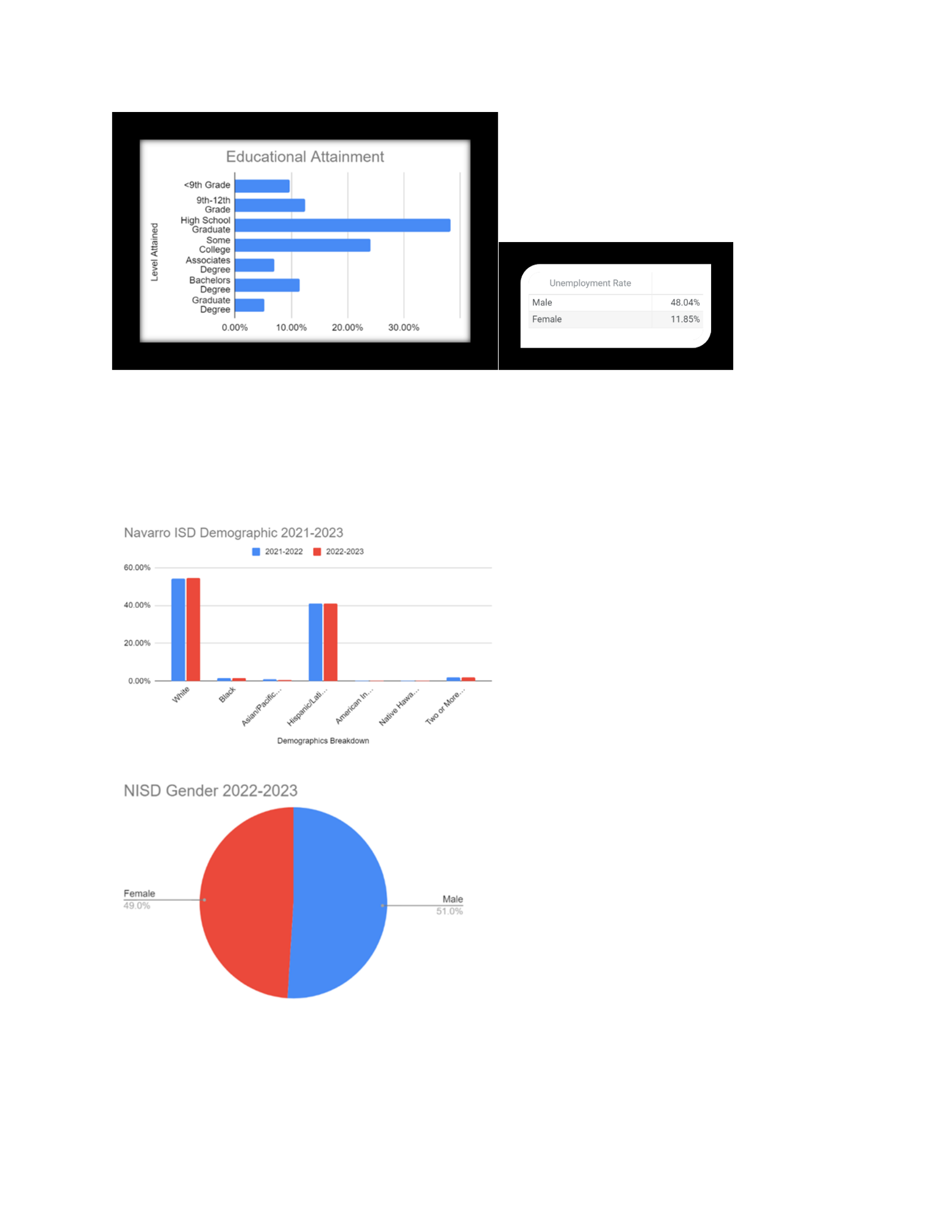
body is mostly white, totaling 1,070 students or 54.3% (Navarro ISD School District (2023) -
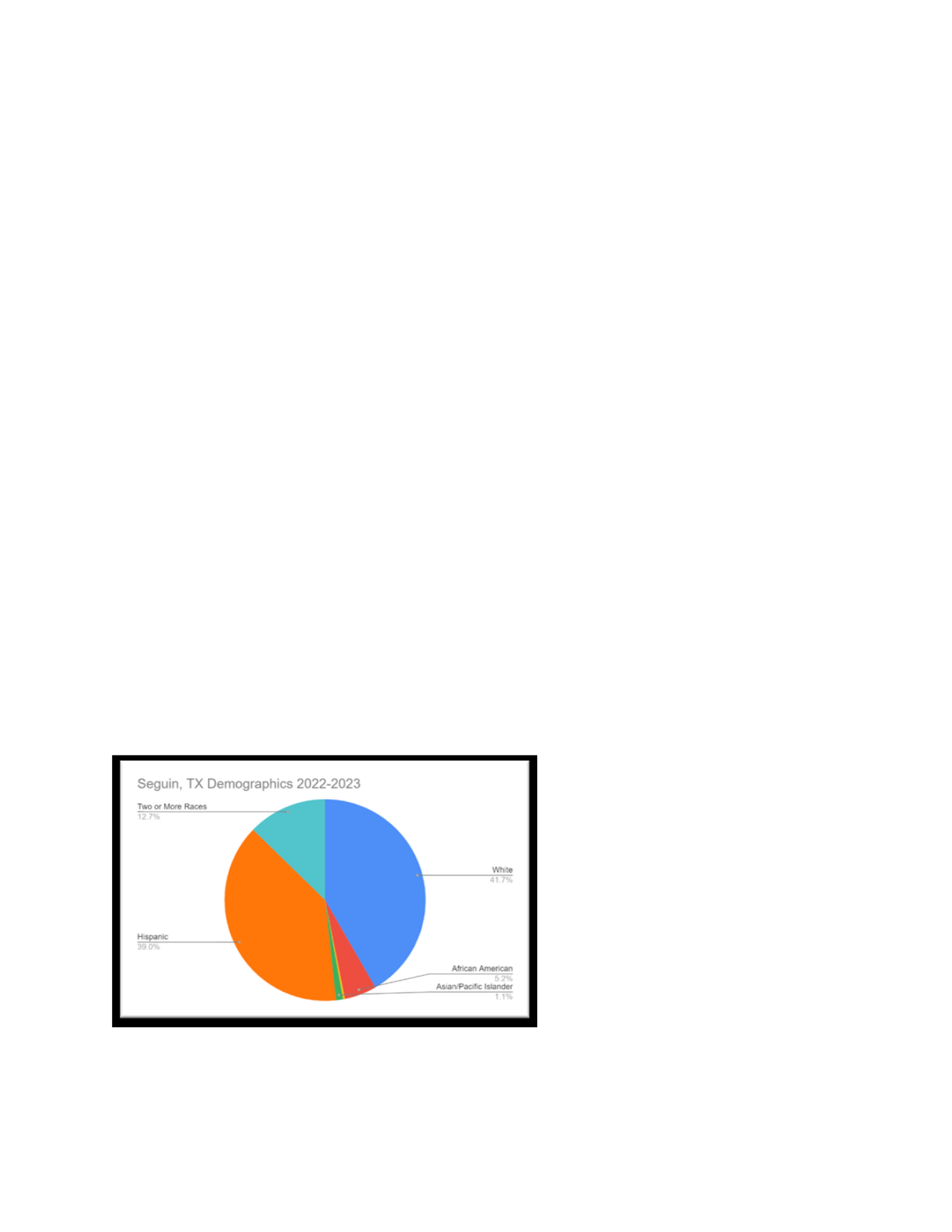
Seguin, TX, 2023). This percentage is more than that of the white population in Seguin, which
comes out to roughly 41% (United States Census Bureau, n.d.). In terms of other demographics
represented in the district and community, people of Hispanic ethnicity have a similar percentage

COMMUNITY RESOURCES ALIGNMENT 7
of close to 40% make up. Navarro’s population is 1.5% African American whereas Seguin is
5.1%. Both the district and the community have less than one percent ethnic representation for
Pacific Islanders and Native Americans. Navarro ISD has similar ethnic population percentages
to that of the community it serves. Although there is about a 4% difference in the African
American population, this is not too far off to be of a concern currently.
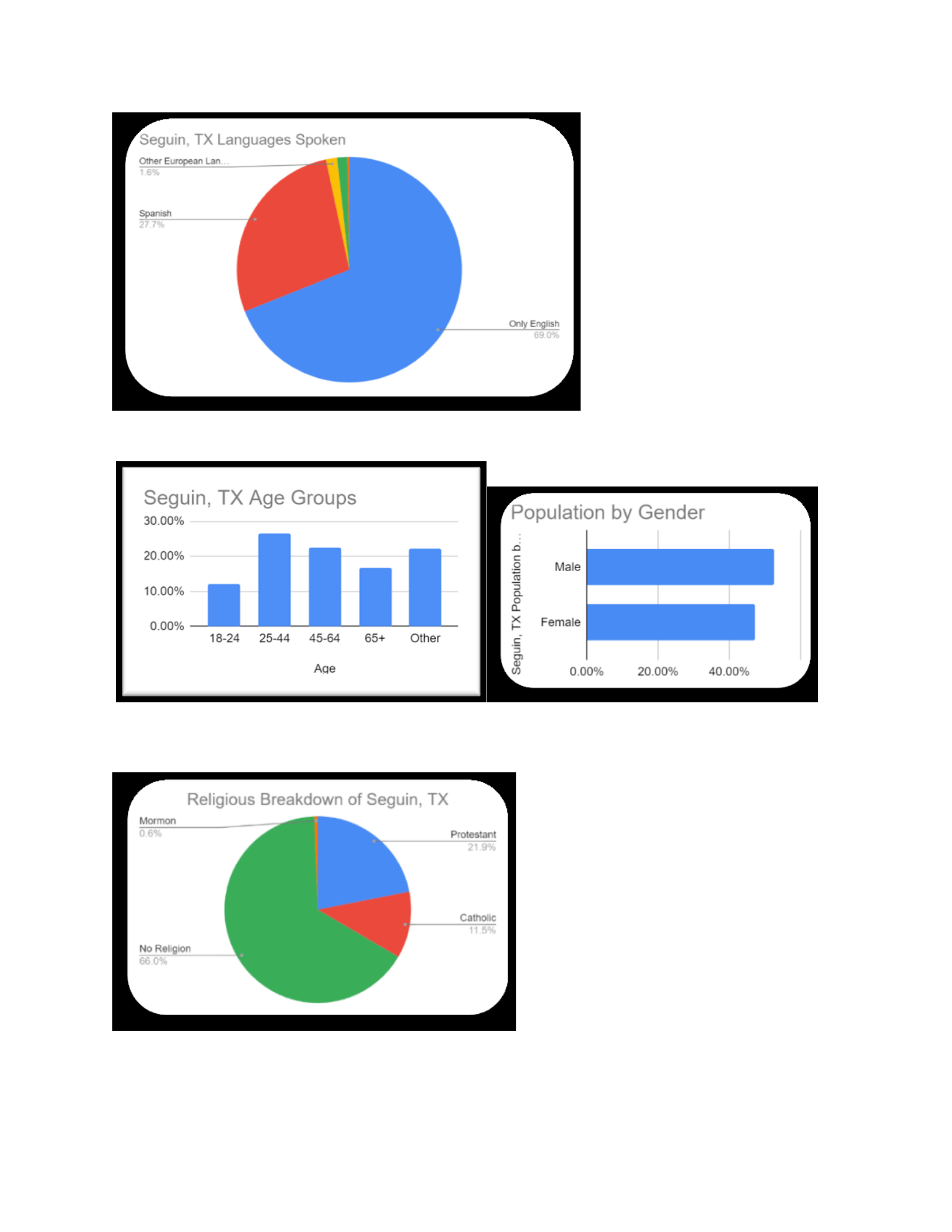
The predominant language in both Seguin, Texas and Navarro ISD is English. Seguin
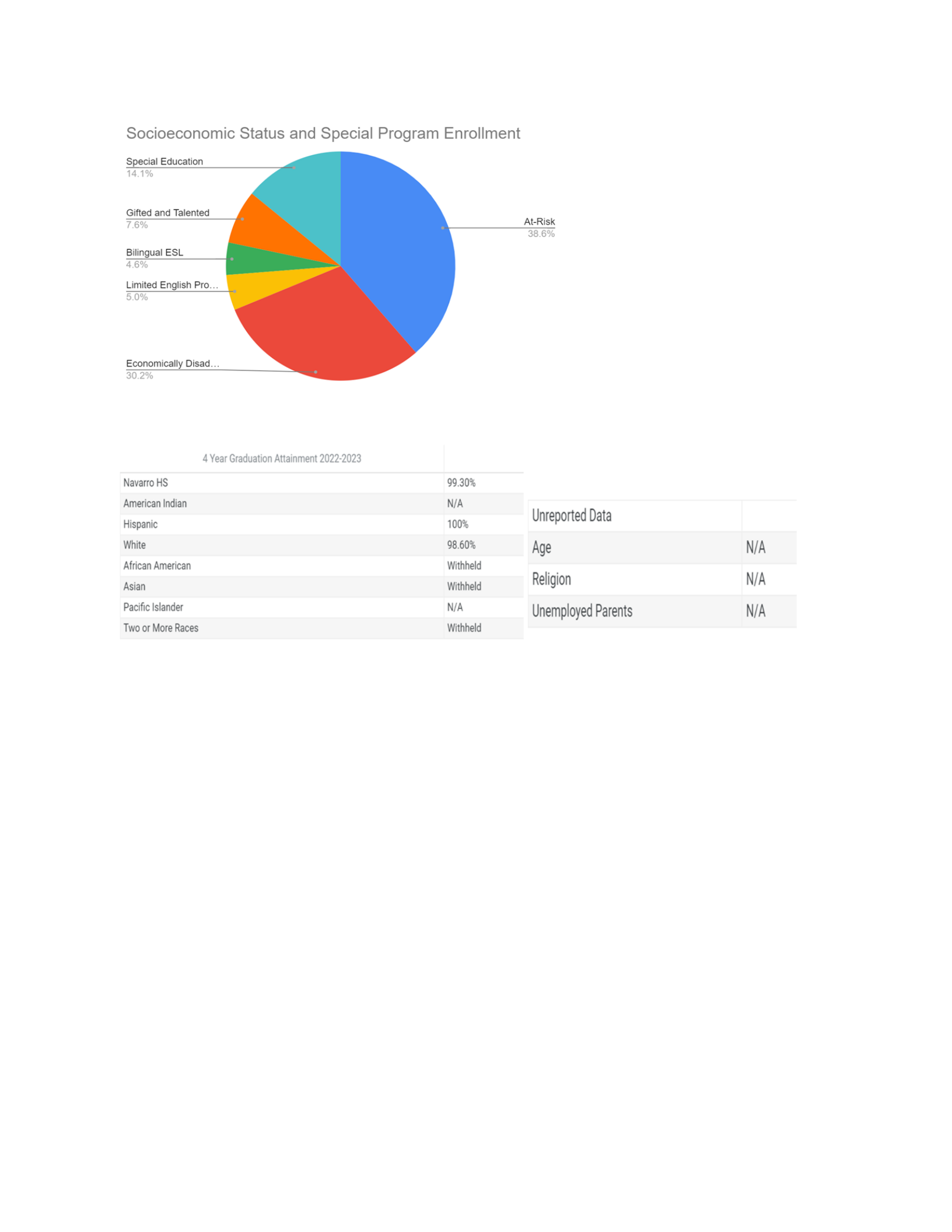
statistics show that nearly 70% of the population speak English. Although Navarro ISD did not
report that data, they did report that 9% of their student population were either Bilingual or
Limited English Proficient meaning that another language other than English is spoken and an
appropriate language acquisition program is used for academics (Navarro Independent School
District, n.d.). The surrounding area of Seguin reported that close to 30% of its population speaks
Spanish. The gender statistics are similar between Seguin and Navarro ISD with both reporting
about a 2% difference in male to female numbers with males making up the majority with a little
over 50% of the total populations. The district did not report on religious data, but Seguin cited
that majority of the city is Protestant with Catholicism as the second most popular religion
(Community Demographics, n.d.). This data is concurrent with the data showing language and
ethnic make-up of Seguin. Most of Seguin’s population holds at least a high school diploma
while Navarro ISD shows that nearly 100% of its students graduate (Navarro ISD School
District (2023) - Seguin, TX, 2023). The unemployment rate of Seguin is shocking with 59% of
its total population filing for unemployment with 48% being men (Seguin, Texas Population
2023, n.d.). This percentage shows a correlation with Navarro ISD’s high economically
disadvantaged population reported at 30%.
Implications

COMMUNITY RESOURCES ALIGNMENT 8
Through data analysis of demographics for the city of Seguin and Navarro ISD one can
gain a better understanding of how to better serve the students within the district’s population.
Studying the demographic breakdown provides vital information for district needs and can
inform upcoming bond decisions. Previous research has shown that districts with high
economically disadvantaged populations tend to have high dropout rates and lower graduation
rates (Pensiero & Schoon, 2019). However, this does not seem to be the case with Navarro ISD
as it boasts almost a 100% graduation rate. What is implicated through the analyzed data is that
although the students are graduating, a significant percentage are not continuing their education
to improve their overall income and socioeconomic status. This in turn, could continue the cycle
of more households becoming impoverished and students becoming economically disadvantaged
and at-risk of dropping out (Pensiero & Schoon, 2019).
Another implication that can be gleaned from the data analysis is that funding per pupil
should increase for Navarro ISD given its student makeup. Research has found that less than
adequate expenditure per student leads to an unsuccessful or weakened level of instruction
(Weiss, 2020). In the case of Navarro ISD, the student population is 30% economically
disadvantaged, 38% at-risk, 14% special education, and 4% ESL/Bilingual which qualify for
these programs (Navarro Independent School District, n.d.). The district receives additional
funding for each student coded into these programs, which positively impacts it through high
graduation and low dropout rates. The district ensures it provides a high-quality education
through the materials that are purchased and the teachers they choose to hire. As evidenced by
the data, the families of this district need more resources when it comes to continuing their
education after graduation. Providing these learning opportunities or additional resources for
families would increase the median salary of the community in the future. The Chief Academic

COMMUNITY RESOURCES ALIGNMENT 9
Officer, Wendy McMullen, helped me compare data and answer any questions about how the
data from the community informs the decisions of the district. Wendy informed me that the
Board of Trustees and the community are presented with district and community demographic
data to help draft future bonds and to justify past, current, and future expenditures. This
collaboration also informed me that the growing Bilingual program and overall population are
going to require that a dual language program be put in place in the next academic school year
and will be necessary to better serve the students in Navarro ISD (W. McMullen, personal
communication, September 7, 2023). Understanding the demographic data of Seguin and
Navarro ISD is crucial for the positive impact that Navarro ISD can make on its students'
academic achievements to positive effect the financial future of the community and students
overall.
Community Resources Alignment: Needs Assessment
The Navarro Independent School District (NISD) Board of Trustees meets with the
Superintendent and community members formally twice a year to conduct and evaluate a needs
assessment. This does not account for any ongoing meetings throughout the year to ensure the
district is on track to meet the goals of the needs assessment. NISD enables community
members, staff, and students to voice their opinion as to how to better serve the district and
discover how resources can best be utilized to meet the needs of the community it serves. This
assessment keeps the district in compliance with the Elementary and Secondary Education Act of
1965 (ESEA) and helps the district identify what it needs to help students be successful. This
assessment was conducted with key members of the school community.
Collaboration and Communication

COMMUNITY RESOURCES ALIGNMENT 10
I had the opportunity to speak with Lily Benavidez, a member of the Parent-Teacher
Organization (PTO), and Mandy Epley, the Superintendent about collaboration strategies and
current needs for the district. It was important to speak with Lily because she is involved with so
many aspects of the district and could offer the perspective of a parent in the district. Since
Mandy is involved in every aspect of the decision making in the district, it was important to ask
her perspective on the current needs.
This is Mandy Epley’s (2023) second year as the NISD Superintendent. She hit the
ground running with a thorough needs assessment that involved looking at curriculum, program,
student, and community needs. According to the ESEA, districts must conduct a needs
assessment at least once a year and be held accountable to those needs assessments (Atchison,
2019). However, Mandy finds it important to conduct a needs assessment at the beginning and a
follow up at the year’s midpoint. This year, the goal was to strengthen the English Language Arts
and Reading (ELAR) curriculum to account for the new addition of the writing portion to the
state assessment, State of Texas Assessments of Academic Readiness (STAAR). To do this,
Mandy collaborated with the Chief Academic Officer and ELAR representatives from each grade
level. They viewed and tested different curricula to adopt and then finally voted, which resulted
in the district choosing Amplify, to meet the needs of the students and new writing standards.
Mandy explained that the adoption of this curriculum also provided a tie-in to the English
Language Proficiency Standards (ELPS), which emergent bilinguals are assessed on in the Texas
English Language Proficiency Assessment System (TELPAS).
She communicated this adoption through the Board Meeting. She is also intentional with
the way she communicates with parents. She holds separate monthly meetings held with
community members to update them on all aspects of the SWOT analysis used when determining

COMMUNITY RESOURCES ALIGNMENT 11
district needs. She also communicates any changes through her monthly Superintendent
newsletter, the Remind app, and Parent Square. These attempts at parent engagement are critical
to the success of district initiatives since engaged parents can strengthen the learning links and
connectivity to a child’s education (Kelty & Wakabayashi, 2020).
The Parent-Teacher Organization (PTO) is a committed group of parents and guardians
who have students currently enrolled within the district that help coordinate events, fundraisers,
and parent engagement within the district (Navarro Elementary School, n.d.). I met with Lily
Benavidez (2023) who is a member of the PTO and has a child currently enrolled in both the
Special Education and English as a Second Language (ESL) program in the district. She
communicated that more resources were needed for the ESL program across the district to update
teachers on best practices to ensure they were ready for TELPAS. Also, there is a great need for
more special education teachers within the district. She communicated that students are
complaining about Wi-Fi and out of date technology. The PTO met with administration and Mrs.
Epley to determine what could be done about these issues and determined that they could help
with technology issues by holding a fundraiser for the district to purchase new Chromebooks.
Lily said that immediately after the decision was made, the PTO met and brainstormed
the type of fundraiser they would hold and how they would communicate it to the community.
They decided on a raffle and have used newsletters, e-blasts, and the community Facebook page
to communicate so far. This engagement with the PTO and the community is important since
they have such a direct role with students and the district. PTO engagement with school staff and
the surrounding community can ensure the development of effective partnerships to spur on
student achievement (Kelty & Wakabayashi, 2020). This relationship between the community,
district, and parents will lead to success in meeting the district's needs.

COMMUNITY RESOURCES ALIGNMENT 12
Interview
I had the privilege of interviewing Wendy McMullen, the Chief Academic Officer of
NISD. Wendy McMullen (2023) noted that it has been her initiative to improve curriculum and
special programs within the district over the past five years. She works very closely with the
Superintendent and Board of Trustees to ensure that needs are met quarterly. She works with
school principals to keep schools on track and to readjust goals, as necessary.
When asked about community involvement in making decisions about needs for the
district she advised that parents are kept informed through school newsletters weekly and have
access to all Board Meeting notes through the district website (Navarro Independent School
District, n.d.-b). She communicated that to meet the curriculum needs, teachers and students are
held to high expectations which has a high correspondence with increased success on state exams
and student performance (Anderson-Butcher et al., 2020). Wendy (2023) spoke about the
adoption of Amplify and how teachers and students have adjusted to this new curriculum and the
impact is already being seen across classrooms in the district with students speaking and writing
with more academic language.
When asked about the parents' concerns for more technology, Wendy admitted that this is
a high need in this district. She mentioned that there are currently only two hot spot internet
connections for families who do not have internet access and that the district is currently
collaborating with the Board to remedy this with their available funding. As far as the lack of up-
to-date technology in the classroom, Wendy is hopeful that the fundraiser the PTO is planning
will account for most of the money necessary to update Chromebooks. However, she is already
working with the Superintendent on securing a grant since the population in Navarro is changing
and growing at a rapid pace. Through outsourcing in the community and working hard on the

COMMUNITY RESOURCES ALIGNMENT 13
district’s end, the community and district should be able to pull together to secure at least six
more class sets of updated technology and Smartboards for classrooms. She expressed that this
active search for engagement from the district to the community and parents is pivotal in the
effective implementation of all the new district initiatives and accounting for the current
demographics and school makeup (Kelty & Wakabayashi, 2020).
After the interview meetings and interviews conducted, it is apparent that a shift needs to
happen in terms of how learning is taking place. The district is moving in the right direction in
terms of curriculum adoption, but there is still a lack of technology that they are currently trying
to address. The first and most important initiative should be to supply families with the necessary
technology and internet access to help make learning accessible while at home. The district is
doing the right thing in terms of communication frequency and parental involvement. This is
crucial to the success of these initiatives moving forward since supportive networks at home and
in schools show positive correlation to student academic long-term success (Kelty &
Wakabayashi, 2020). I do believe technology should be the top priority for NISD since there are
so many ways to attain it. This is critical to keep students up to date with their learning and to
access the Amplify curriculum at school and at home. I would continue to investigate special
programs success with the new curriculum and monitor this in the future as the ESL program
continues to grow.
Identified Needs
Navarro ISD is on the right track with their needs assessment and how they are going to
provide the necessary means to make this district successful. However, to keep the district on
track it is important to identify the main needs as of right now. The district needs to target a
specific aspect of their programs they want to focus on. Through the interviews conducted and

COMMUNITY RESOURCES ALIGNMENT 14
the demographics study, the ESL and Special Education program are growing at a rapid rate and
need to be accounted for when purchasing assistive technology and curriculum. The school-
related needs identified are professional development should be provided for teachers on the use
of the new curriculum, Amplify. It is a high expectation curriculum that is very scripted, and
teachers need to be one hundred percent confident that they know how to use it and develop
lesson plans with it appropriately, especially as it pertains to modifying and accommodating for
special education and ESL. This will ensure that a high level of student learning is taking place
and will help address student learning needs as they pertain to academic success and state testing
performance.
A definite need within the district is related to the technological needs. Classrooms and
teachers need better technology. Although this has been identified as a need by the district, it is
important for members to act quickly on this to meet it before the semester ends. There are many
ways this can be done that do not have to be directly outsourced from the school budget. Another
financial need is the connectivity of low-income families with technology at home to be able to
access and complete the work required of them in school. Wendy (2023) mentioned there are
only two hot spots available in the district and this is not enough considering much of the
population in the district is at-risk or low-income. There is a high need for technological help at
home so this must be addressed quickly as well. Especially since technology for ESL families
can be purchased through Title III funds. Although the Superintendent meets with parents
regularly, Mandy did mention that the attendance at these meetings is low. More should be done
to connect parents with the district and its initiatives. Increasing parental engagement is
important in helping students in special populations and programs to be successful in their
academic careers.

COMMUNITY RESOURCES ALIGNMENT 15
A community need that remains unaddressed is the high percentage of unemployed males
in the community. The district should do what they can to help by offering their facilities and
services to connect them with jobs. They could potentially host a job fair. They could set up a
time where counselors could help with resumes or hold workshops to help parents be more
marketable in the work force. Making unemployment a priority in the district will reassure
parents that the community has the support of the district and will truly meet the needs of the
community. Addressing these needs will lead to increased student success and community
involvement in the long term.
Community Resources Alignment Project: Resource Report
Navarro Independent School District (ISD) is a rural district outside of two larger
districts and larger towns. Navarro ISD services a little over 2,000 very diverse students. The
opportunities for partnership within the district and surrounding communities are public social
services, counseling, non-profit organizations, faith based, and additional educational and
business opportunities. The ability of schools to connect families with important resources in
terms of mental health, academics, and social services is positively correlated with academic
achievement and graduation rates (Olson et al., 2021). With the current inflation status of the
United States and high unemployment rates in Navarro ISD (Population in Seguin, Texas
(Community Demographics), n.d.), there is a high need for mental health and food resources to
support the high percentage of food insecurity experienced by the community. To supplement the
needs of the community, Navarro ISD has made some key community partnerships for families
to take advantage of.
Annotated Directory

COMMUNITY RESOURCES ALIGNMENT 16
R C N A W
Guadalupe
County
Children’s
Advocacy
Center –
Social
Services/
Counseling
Michelle
Merduke
(830) 303-
4760
265 Wetz St,
Seguin, TX
78155
https://gccac.
net/
Bluebonnet
Trails –
Social
Services/
Counseling
Shirley
Hester
1 (844) 309-
6385
1104
Jefferson
Ave., Seguin,
TX 78155
https://bbtrail
s.org/seguin/
New
Braunfels
Food Bank –
Social
Services
Jennifer Huff (830) 327-
6000
1620 S
Seguin Ave,
New
Braunfels,
TX 78130
https://nbfoo
dbank.org/
Aetna –
Social
Services
Edmundo
Cardoza
210-823-
1498
No physical
location. He
meets clients
where they
are.
Cardozae@ae
tna.com
St. Andrews
Church –
Non-Profit/
Religious
Anthony
Argueta
(830) 372-
4330
201 E Nolte
St, Seguin,
TX 78155
https://www.s
tandrewsegui
n.org/
Guadalupe
Valley
Habitat for
Humanity –
Non-Profit/
Religious
No specific
contact
(830) 386-
3047
256 W Court
St, Seguin,
TX 78155
https://habitat
gv.org/
Equessence,
Therapeutic
Horse Play –
Non-Profit/
Counseling
Vicky
Carregal
(361) 658-
7003
6062
Youngsford
Rd, Marion,
TX, United
States, Texas
https://www.f
acebook.com/
equessense.th
erapeutic/
YMCA of
Comal
County –
Non-Profit
Suzanna
Mucezygamb
a
(830)606-
9622
545
Creekside
Crossing,
New
Braunfels,
TX, 78130
https://www.
ymca.org/loc
ations/new-
braunfels-
family-ymca

COMMUNITY RESOURCES ALIGNMENT 17
Westside
Community
Center –
Educational
Institution/
Non-profit/
Social
Services
Jennifer
Hernandez
(830)629-
2011
2932 S
Interstate 35
New
Braunfels,
TX 78130
https://www.f
acebook.com/
NBWestside
CommunityC
enter/
Westside
Community
Library –
Non-
Profit/Educa
tional
Institution
Pamela
Carlile
(830)221-
4301
2932 S
Interstate 35
New
Braunfels,
TX 78130
https://newbr
aunfels.libgui
des.com/west
side
Guadalupe County Children’s Advocacy Center
This center provides children who have been neglected or abused with an advocate and a
safe place to go and call home. This benefits the community in a positive way by providing
children with the services they need to get out of a negative situation, but also connects families
to the resources they need to be reunited.
Bluebonnet Trails
Bluebonnet Trails is committed to providing students and families with resources for
mental health and addiction.
New Braunfels Food Bank
New Braunfels Food Bank partners directly with Navarro ISD to find families that need
the backpack service that provides additional food to families on the weekends in addition to
what they regularly receive.
St. Andrew’s Church

COMMUNITY RESOURCES ALIGNMENT 18
St. Andrew’s Church is directly partnered with Navarro ISD by donating food and
clothing to the Navarro program called Panthers Feeding Panthers. They also offer free student
and family counseling services in a faith-based program. They also provide teens with a youth
program at the school to connect with other teens and families. They provide mental health
services as well.
Aetna
Navarro ISD has a direct partnership with Edmundo Cardoza, an Aetna rep, to provide
Medicaid and Chip services to qualifying families.
Guadalupe Valley Habitat for Humanity
Partners with families experiencing hardship or homelessness and builds them homes or
provides them with resources to have shelter.
Equessence, Therapeutic Horse Play
This non-profit group offers therapy and different services for a plethora of needs.
YMCA of Comal County
This group offers after school programs, health and fitness services, as well as
employment connections for parents.
Westside Community Center
This space holds functions for the community including classes to meet their needs and
community events.
Westside Community Library

COMMUNITY RESOURCES ALIGNMENT 19
This space offers tutoring and adult education classes.
Analysis of Community Resources & Advocacy
Navarro ISD offers a wide variety of resources for students and families. However, there
are areas that they could address that would continue to help the low income or at-risk families.
Specifically, they could address a huge gap with their emergent bilingual families who need
access to family education and language services (Seguin, Texas Population 2023, n.d.). A study
by Durán et al. (2020) found that there is a huge disconnect with families that speak other
languages and their connectivity to the community, resources for education, and the basic ability
to be able to understand the communication from schools and the resources they provide.
Navarro could bridge this gap by partnering with the New Braunfels and Seguin Libraries which
offer GED courses in Spanish as well as adult English as a Second Language (ESL) classes. This
in turn could help the unemployment rate and advanced education rate of Seguin, Texas. By
connecting ESL families with these resources, they would put an end to the cycle of at-risk
students dropping out or not continuing their education to earn higher salaries.
Developing this relationship is imperative as most of Seguin, Texas is Hispanic/Latin and
they also make up the largest portion of unemployed people in the city (Population in Seguin,
Texas (Community Demographics), n.d.). To change this statistic, Navarro ISD must act as the
catalyst to change. They must have some type of outreach to connect these families with those
services to change the education and unemployment rate of the families they serve. Districts that
do not try to engage multi-lingual families in education and school policy end up suffering in the
end and have higher dropout rates (Durán et al., 2020). This would make a positive impact on the
community and district combined.

COMMUNITY RESOURCES ALIGNMENT 20
As an advocate for students in Navarro ISD and the surrounding community, these
partnerships are necessary to the success of both. Positive partnerships show an increase in
attendance rates as well as less crime in the surrounding community (Duran et al., 2020). When
students and families feel connected to the community around them, the businesses in the
community flourish as well as the families involved. By providing the resources they are already
partnered with and branching out to fill the gaps, Navarro ISD could potentially change the
amount of education received by adults in the community and create a positive environment for
the students who are attending school there.
Overall, these partnerships have many benefits for students, families, and the surrounding
community. As advocates for the students and families within the district, it is our responsibility
to provide the resources necessary to ensure the success and health of the community it serves.
Partnerships provide the opportunity to improve the community and the lives of those who live
there which is why it is important to have positive partnerships since they have the opportunity to
change the lives of the families the district serves. Through providing food, mental health, church
connections, and mental illness aid, Navarro ISD and the surrounding community are committed
to serving the families and students within in a united way. As school and community partners,
everyone works together for the betterment of society. This is reflected through 1 Corinthians 3:9
which states, “For we are God’s fellow workers; you are God’s field, God’s building,” (New
International Version, 2011). We are all working together toward a common goal in God’s name
and through faith and His guidance, these positive partnerships will become fruitful.
Community Resource Alignment: Advocacy Plan
After multiple meetings and an official district needs assessment, the community, and
Navarro Independent School District (ISD) came to an agreement on the main needs to better

COMMUNITY RESOURCES ALIGNMENT 21
serve the community. The needs within the district and community that will strengthen the
partnership include providing professional development to better implement the new curriculum
and providing education opportunities for families on how to increase their employment
opportunities as well as a job fair. Building the relationships between communities and districts
is imperative when trying to create an inclusive learning environment and provides opportunities
to strengthen the community altogether (Castillo, 2022). Navarro ISD will use community
partnerships it has discovered to help meet the needs of the people in the community and
research further important partnerships to maintain the district's success. Through continued
communication with key stakeholders, developing and following through with a plan, and
meeting the needs identified in the needs assessment Navarro ISD and the surrounding
community are sure to be successful.
Advocacy for Meeting School-Community Needs
Navarro ISD first identified the crucial need for professional development for the correct
implementation of the newly adopted curriculum: Amplify. The first step in developing this plan
is meeting with the Chief Academic Officer, superintendent, principals, and the instructional
planning team to map out how much professional development will be provided and when
throughout the year. While meeting as a planning team, it would be necessary to determine the
professional development types provided, whether face-to-face or online. This professional
development is important since it will support the skills necessary to properly implement
Amplify and encourage teachers to utilize innovative practices that apply to the new curriculum
(Nese et al., 2020). The next step for the planning team would be to decide what aspects of
Amplify teachers would need to be trained in and how they would like those sessions divided.
Realistically, it would be good for five professional development opportunities to be provided

COMMUNITY RESOURCES ALIGNMENT 22
throughout the year that were mandatory and three more that were optional as a refresher for the
skills necessary for the implementation of the curriculum. From there, the Chief Academic
Officer should outline the calendar of events and designate the instructional planning teammate
who would be responsible for which training throughout the year. Having regular professional
development throughout the year will keep teachers up to date and continue them in growing and
perfecting their skills (Nese et al., 2020).
At this point in the year, the action plan should have the first training start date in the
spring semester and have one mandatory training per month. This would allow for proper
coordination, resource allotment, and the time for the district to plan with the Amplify team if
they were able to provide any staff training. By beginning the planning stage in October, the
instructional planning team could have the trainings ready to go by January. These trainings
would cover topics like the platform, unit coverage, how to plan, appropriate instructional
strategies, and an opportunity to retouch on any topics teachers felt the need to cover again. By
offering three optional trainings in between the five mandatory ones, the instructional planning
team is offering adaptive training and working with the Amplify partners to make this a smooth
transition to the new curriculum (Castillo, 2022). Although the curriculum was adopted and
teachers began implementing it this fall, this will serve teachers in a positive manner as they will
be familiar with the platform and curriculum when the trainings begin. It will also be important
for the stakeholders to keep the planning team on a period of check-ins for the structure and
completion of the trainings in the fall before implementing them in the spring.
The need identified by the community was the fact that over half the men in Seguin,
Texas was unemployed. Navarro ISD would really need to lean on their community partners, the
Westside Community Center, YMCA, and St. Andrew’s Church to bring this plan to life. The

COMMUNITY RESOURCES ALIGNMENT 23
stakeholders here would be the PTO (Parent Teacher Organization), ESL Program,
superintendent, school counselors, collaborative vision committee, Anthony Argueta, Suzanna
Mucezygamba, and Jennifer Hernandez. These stakeholders would make up the planning
committee that would need to meet to plan and implement the plan. By planning to provide job
opportunities and education to the community, it meets the needs of the community and the
district in which they support the students they serve and the community. It also meets the needs
of the community stakeholders as it strengthens the community and will have an overall positive
impact on the community despite the difficulties that may arise as implementation occurs
(Castillo, 2022).
The action steps necessary would be for the planning to meet and decide how many
meetings they would have per year to help the community. It would be healthy to have three
different meetings to provide employment and education opportunities for the community
members. The PTO and community partners would need to coordinate with each other on three
dates in the year that would work to host these events. They would need to designate where the
events could be held. One event should be held in the district, one at the community center, and
one at the YMCA. This would allow for a neutral meeting space and provide parents with the
opportunity to attend a meeting that is close to their home. This provides for an equal opportunity
and creates a positive relationship between the community partners and the parents within the
community (Castillo, 2022).
A good period for this would be to hold the first meeting by the end of October or
beginning of November. This would be a great idea since this could help parents find
employment before the holidays. The PTO and the ESL Program would be responsible for
planning and coordinating with the community partners. The community partners would be

COMMUNITY RESOURCES ALIGNMENT 24
responsible for bringing in the resources they have available to help with adult education and
employment opportunities. The action steps would look like planning, sending out
communication for the events, and then asking for feedback on the events. This plan would be
repeated until the need is no longer necessary. The time from planning to the first event would be
short, but it would not be impossible with all the people on the planning team working together.
Community Advocacy for Communication & Distribution
To better serve the community and effectively communicate the resources that are
available for community members, the district would need to fully implement a communications
plan that would be reused every year. Firstly, the district needs to communicate these resources
in a variety of ways. A wonderful way to make this information available to parents would be to
create a digital pamphlet that could be advertised on the school website. This pamphlet could be
advertised for a full month before being moved to the Parent Resources tab as a permanent link
(Navarro Independent School District, n.d.-b). Adding this pamphlet online would provide the
resource all year to families that may need it. It is particularly important that this pamphlet be
translated to Spanish since majority of the parents that are falling into this demographic are
Spanish speakers who can only read in Spanish. This would provide them with the opportunity to
better their lives and meet their needs.
Aside from providing this resource online, the district will need to print these pamphlets
and keep them in each office as a resource when parents come in. There are so many families
that do not have access to the internet that a physical pamphlet could be the only way they
receive this information. If it is printed and online, the district is offering multiple means of
exposure to the material. Another fantastic way to get this information in the hands of the
community is to advertise it at every parent event the district holds. Whether it is a board

COMMUNITY RESOURCES ALIGNMENT 25
meeting, ESL Parent Meeting, PTO meeting or collaborative vision meeting, the information in
the pamphlet could be there at the sign-in table and be in the presentation for the speakers to
mention briefly. To maintain access to the resources on a yearly basis, it will be the job of the
superintendent, Chief Academic Officer, ESL program specialist, and PTO to keep the contacts.
These partnerships are free, so it will be necessary to keep up with the communication needed to
uphold these partnerships. It will also take the district maintaining the communication and
updated information to stay current with these partnerships.
Advocacy for Sustained Access
To maintain prolonged access to these services it is crucial that there be an outline and
framework checklist for the person whose responsibility it is to maintain communication with
these community partners yearly. Navarro ISD will need to create a communication spreadsheet
with the dates, no later than mid-August, that people in communication and partnership roles
should reach out and confirm their continued partnership for the year and any updated
communication information. By having a liaison responsible for maintaining communication it
ensures that the partnership will remain intact, and parents can receive the right information if
they need to reach out for specific resources.
For continued access to the community partners, they should be present at different
parent events throughout the year. Being physically present at the parent meetings will help
reinforce that the partnership is real and that families truly can reach out for their needs (Castillo,
2022). For a positive partnership to be maintained, the community partners should continue to be
involved with the planning and implementation of the plans to get the community involved and
informed about the resources available to them. Intentionally involving the community partners
keeps them invested in the original mission and helps better meet the needs of the community

COMMUNITY RESOURCES ALIGNMENT 26
they serve. It will also keep the district and the community aligned on the goals they set to help
the families in the community.
Through developing a specific communication plan, dispersal of information, and clear
strategies to enhance partnerships, Navarro ISD should be able to meet the community's needs. It
will be crucial for the district to reassess and ask for frequent feedback from parents and
community stakeholders to ensure that their plans and implementation are accurately and
efficiently addressing the needs of all parties involved. Implementing a professional development
plan for the new curriculum will positively impact student learning and appropriate teaching
strategies. This will increase student success if teachers are successful with this implementation.
Providing parents and families with the information and resources necessary to better their
education and employment opportunities will feed back into the community and address the
needs of the families within. If Navarro ISD enacts the plans set forth, they will be able to
positively impact the district and community.

COMMUNITY RESOURCES ALIGNMENT 27
References
Anderson-Butcher, D., Amorose, A. J., Bates, S., Iachini, A. L., Ball, A., & Henderson, T. (2020).
Driving School Improvement Planning with Community and Youth Collaborative
Institute School Experience Surveys (CAYCI-SES). Children & Schools, 42(1), 7–17.
https://doi.org/10.1093/cs/cdz028
Atchison, D. (2019). The impact of priority school designation under ESEA flexibility in New
York State. Journal of Research on Educational Effectiveness, 13(1), 121–146.
https://doi.org/10.1080/19345747.2019.1679930
Benavidez, L., (2023). Personal Communication.
Castillo, B. M. (2023). “Equity work is messy”: exploring a family and community
partnership in one school district. Education and Urban Society., 55(2), 201-221.
https://doi.org/10.1177/00131245221076074
Durán, R. P., Carruba-Rogel, Z., & Solis, B. (2020). Latinx Immigrant Parents’ Cultural
Communicative Resources: Bridging the worlds of home, community, and School policy.
Equity & Excellence in Education, 53(1–2), 89–104.
https://doi.org/10.1080/10665684.2020.1756535
Epley, M., (2023). Personal Communication.
Kelty, N. E., & Wakabayashi, T. (2020). Family engagement in schools: parent, educator, and
community perspectives. SAGE Open, 10(4), 215824402097302.
https://doi.org/10.1177/2158244020973024
McMullen, W., (2023). Personal Communication.

COMMUNITY RESOURCES ALIGNMENT 28
Navarro Independent School District. (n.d.). U.S. News Education.
https://www.usnews.com/education/k12/texas/districts/navarro-isd-
101443#:~:text=Students%20at%20Navarro%20Independent%20School,Hawaiian%20or
%20other%20Pacific%20Islander.
Navarro ISD School District (2023) - Seguin, TX. (2023, August 4).
https://www.publicschoolreview.com/texas/navarro-isd-school-district/4832160-school-
district
Nese, R. N. T., Meng, P., Breiner, S., Chaparro, E., & Algozzine, R. (2020). Using stakeholder
feedback to improve online professional development opportunities. Journal of Research
on Technology in Education, 52(2), 148-
162. https://doi.org/10.1080/15391523.2020.1726233
Olson, T. M., Hegbloom, C., & Egan, C. A. (2021). Whole School Approach: Connecting schools
to community resources to enhance school health. Journal of Physical Education,
Recreation & Dance. https://doi.org/10.1080/07303084.2020.1866721
Pensiero, N., & Schoon, I. (2019). Social inequalities in educational attainment: The changing
impact of parents’ social class, social status, education and family income, England 1986
and 2010. Longitudinal and Life Course Studies, 10(1), 87–108.
https://doi.org/10.1332/175795919x15468755933380
Population In Seguin, Texas (Community Demographics). (n.d.). Dwellics.
https://dwellics.com/texas/community-in-seguin

COMMUNITY RESOURCES ALIGNMENT 29
Seguin, Texas population 2023. (n.d.). https://worldpopulationreview.com/us-cities/seguin-tx-
population
United States Census Bureau QuickFacts. (n.d.). U.S. Census Bureau QuickFacts: Seguin city,
Texas. Census Bureau QuickFacts.
https://www.census.gov/quickfacts/fact/table/seguincitytexas/PST045222
Weiss, A. H. (2020). School Funding Inequalities in the Texas Panhandle Related to the Racial,
Socio-economic, and Linguistic Composition of School Districts. Journal of Education
Finance, 46(1), 20+. https://link.gale.com/apps/doc/A668945968/LT?
u=vic_liberty&sid=summon&xid=2b5c2b66
Zondervan. (2011). NIV, Holy Bible. Zondervan.

