


Company Analysis and Evaluation Project
Company Analysis and Evaluation Project
Grey Madrid
Liberty University
Author Note
Grey Madrid
I have no known conflict of interest to disclose.
Correspondence concerning this article should be addressed to Grey Madrid
Email: gmadrid1@liberty.edu
Company Analysis and Evaluation Project
Company Analysis and Evaluation Project
The Home Depot is considered the U.S. largest home improvement retailer based in Atlanta. The
retail giant supplies home improvement enthusiasts with various construction products, tools,
accessories, and electronics and services. For this paper, this researcher will focus on the Pro-
Desk department within the firm. The pro-desk department is Home depot's program for
professionals and customers whom thru membership as pro-desk members, receive benefits for
purchasing items in bulk. "The Pro Initiative program started back in 1998 with the introduction
of special contractor services in select markets. Today, there are pro desks at 1,400 Home Depot
stores and tool-rental services in 925 locations" (Girard, 2004, p. 70). Catering to a demographic
of professional home improvement product consumers has increased The Home Depot's revenue
by offering higher quality products and finishing project assistance. The firm credits 53% of its
sales from the Pro-desk sector (Girard, 2004, p. 70).
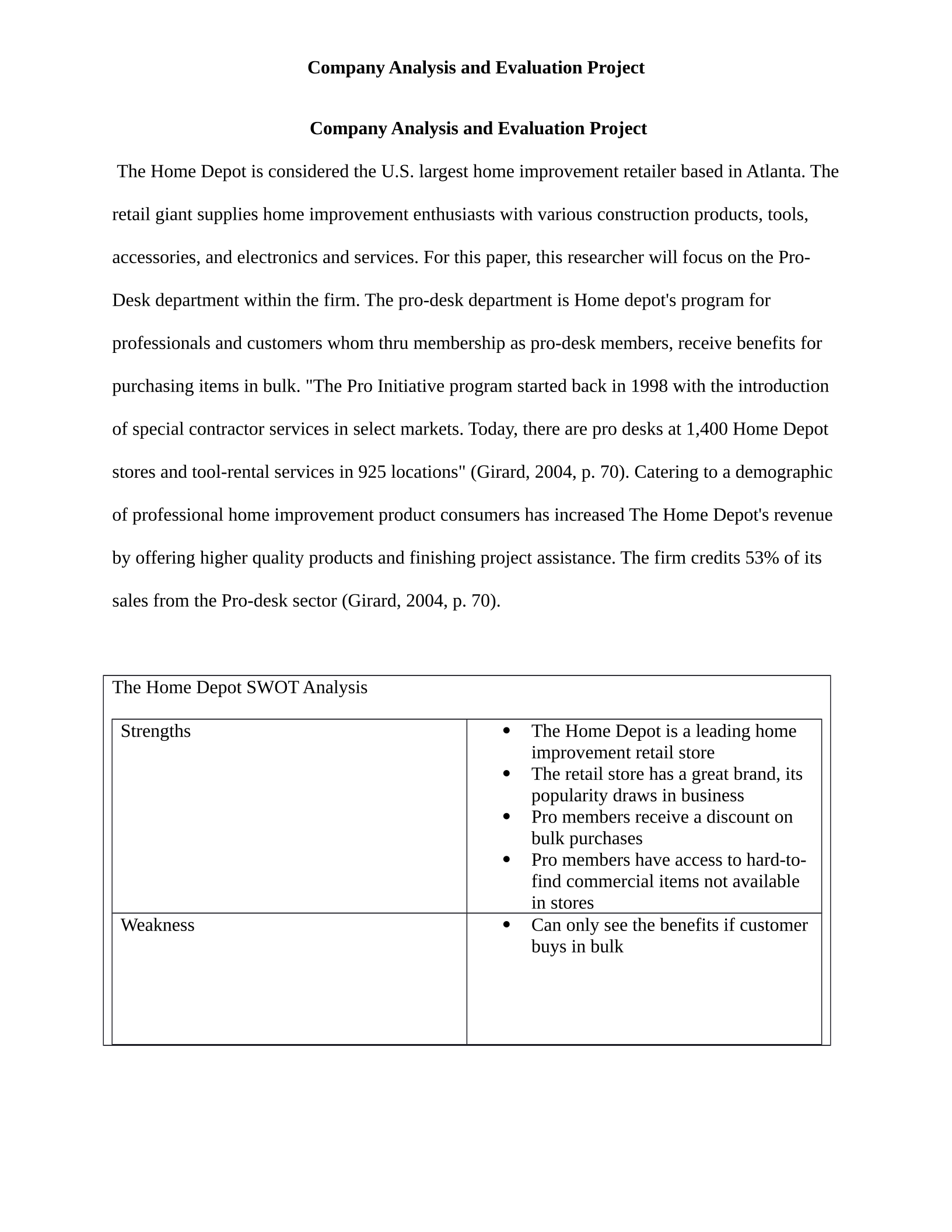
The Home Depot SWOT Analysis
Strengths The Home Depot is a leading home
improvement retail store
The retail store has a great brand, its
popularity draws in business
Pro members receive a discount on
bulk purchases
Pro members have access to hard-to-
find commercial items not available
in stores
Weakness Can only see the benefits if customer
buys in bulk

Company Analysis and Evaluation Project
Opportunity Can benefit from specialized
customer service training for pro-
desk emplyees
Expand into a user friendly online
platform
Threats Lowes
Amazon
The Home Depot (Pro-Desk) Critical
Success Factors
How to measure the CSF's
Financial Performance
Profitability
Sales
Market Value
The number of sales and credit card
memberships sold over a given period.
The company's trend in earnings
Share price
Customer Factors
Customer satisfaction
Quality
VOC- voice of the customer
Surveys conducted on customers to determine
their view of The Home Dept pro desk overall
service.
Customer complaints
Internal Processes
Productivity
Flexibility
Committies are assigned to monitor different
aspects of safety, productivity and procedures
as stated in the SOP (standard operating
procedures) guidelines.
Set up time, order time, project cycle
Company Analysis and Evaluation Project
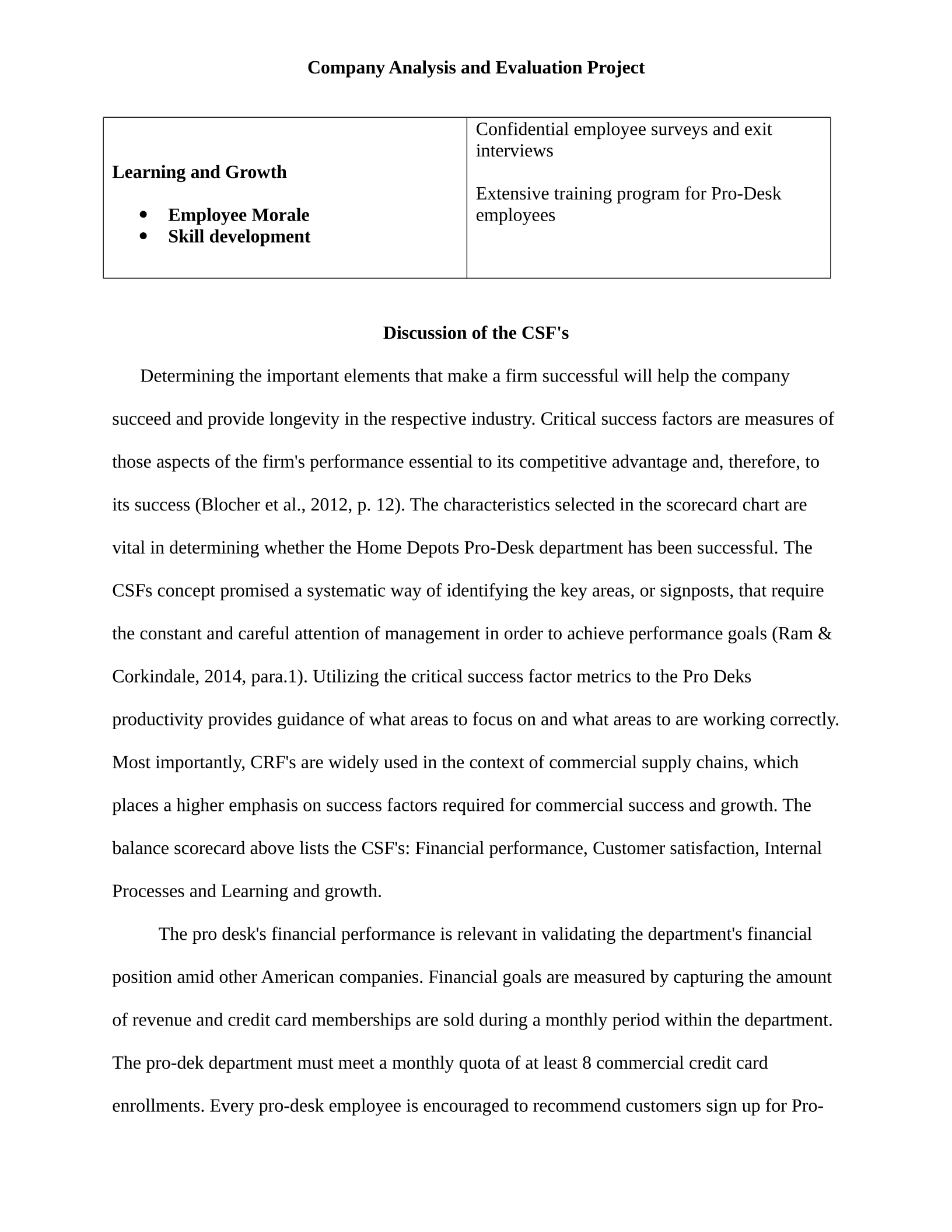
Learning and Growth
Employee Morale
Skill development
Confidential employee surveys and exit
interviews
Extensive training program for Pro-Desk
employees
Discussion of the CSF's
Determining the important elements that make a firm successful will help the company
succeed and provide longevity in the respective industry. Critical success factors are measures of
those aspects of the firm's performance essential to its competitive advantage and, therefore, to
its success (Blocher et al., 2012, p. 12). The characteristics selected in the scorecard chart are
vital in determining whether the Home Depots Pro-Desk department has been successful. The
CSFs concept promised a systematic way of identifying the key areas, or signposts, that require
the constant and careful attention of management in order to achieve performance goals (Ram &
Corkindale, 2014, para.1). Utilizing the critical success factor metrics to the Pro Deks
productivity provides guidance of what areas to focus on and what areas to are working correctly.
Most importantly, CRF's are widely used in the context of commercial supply chains, which
places a higher emphasis on success factors required for commercial success and growth. The
balance scorecard above lists the CSF's: Financial performance, Customer satisfaction, Internal
Processes and Learning and growth.
The pro desk's financial performance is relevant in validating the department's financial
position amid other American companies. Financial goals are measured by capturing the amount
of revenue and credit card memberships are sold during a monthly period within the department.
The pro-dek department must meet a monthly quota of at least 8 commercial credit card
enrollments. Every pro-desk employee is encouraged to recommend customers sign up for Pro-
Company Analysis and Evaluation Project
Desk credit card as well as discuss its many benefits. The commercial credit cards offer no
interest if paid in full within a 6-month offer.
Customer satisfaction is composed of customer contentment, quality of products purchased,
and repeat customers. In order to gauge customer satisfaction in a concrete manner, the pro-desk
department solicits surveys to their customers. After every purchase the pro-desk customer
receives a receipt with survey information below. The receipt provides survey website and log-in
credentials for the customer to utilize. Every month a random drawing for participating customer
wins $5000. "…customer involvement in CSR has a more beneficial effect in terms of
strengthening customer outcomes in CSR domains that directly affect external stakeholders of
the company…" (Schons et al., 2018, para 1). The voice of the customer (VOC) is a metric
utilized by the department to adequately and accurately determine how the customer feels about
the overall services provided.
Internal processes are critical to the success of a company. Blocher et al. explain great
performance in the internal processes perspective drive performance in the customer perspective;
better operations mean more satisfied customers (2012, p. 49). The pro-desk has established
internal committees tasked with monitoring different aspects of safety, productivity, and
procedures as stated in the SOP (standard operating procedures) guidelines. SOPs are a vital
component assuring consistency in the pro-desks ability to perform duties effectively. Safety is
important in accessing success and an important factor for a firm's continued success. In
handling dangerous equipment and machinery, pro-desk employees are trained in managing and
appropriate handling to ensure safety for employees and customers.
Company Analysis and Evaluation Project
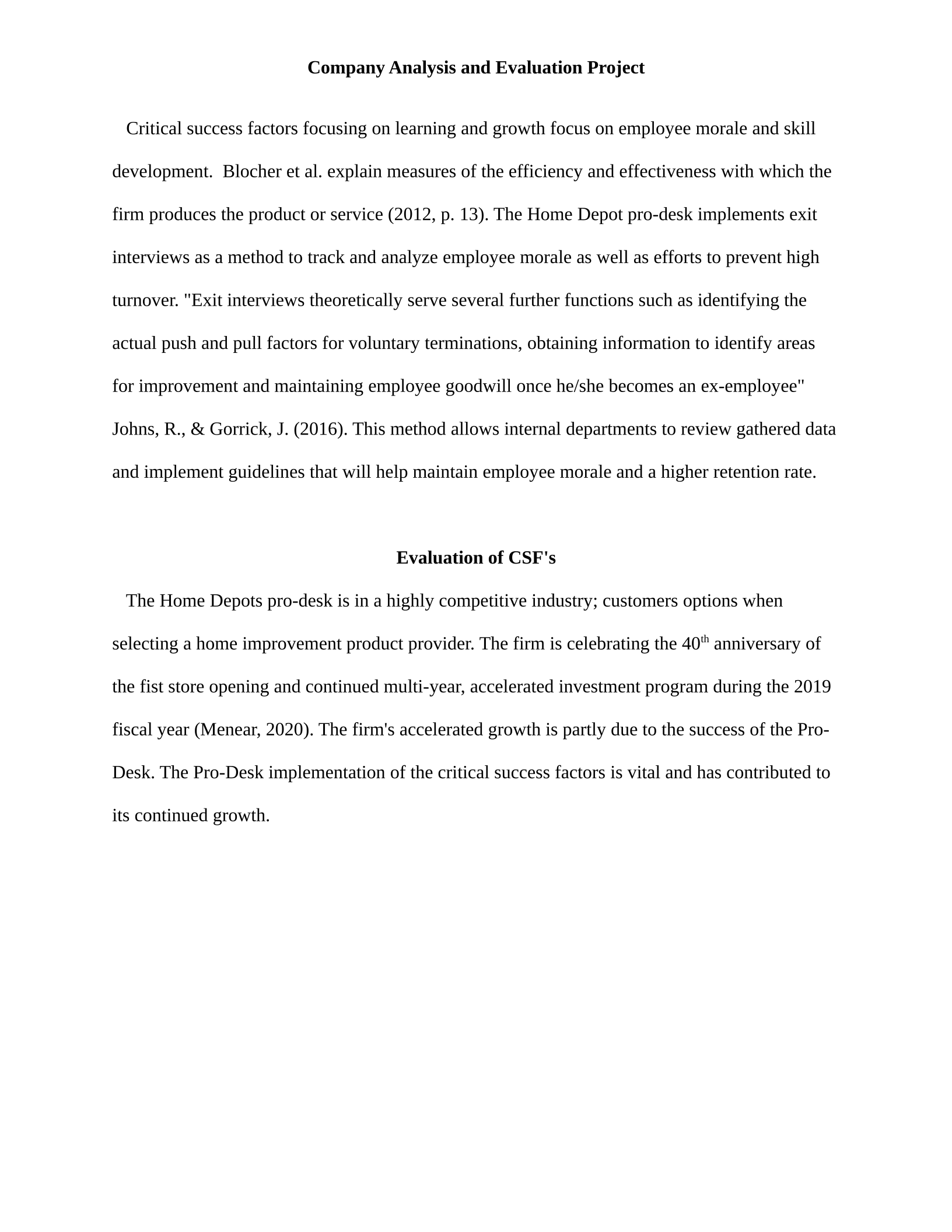
Critical success factors focusing on learning and growth focus on employee morale and skill
development. Blocher et al. explain measures of the efficiency and effectiveness with which the
firm produces the product or service (2012, p. 13). The Home Depot pro-desk implements exit
interviews as a method to track and analyze employee morale as well as efforts to prevent high
turnover. "Exit interviews theoretically serve several further functions such as identifying the
actual push and pull factors for voluntary terminations, obtaining information to identify areas
for improvement and maintaining employee goodwill once he/she becomes an ex-employee"
Johns, R., & Gorrick, J. (2016). This method allows internal departments to review gathered data
and implement guidelines that will help maintain employee morale and a higher retention rate.
Evaluation of CSF's
The Home Depots pro-desk is in a highly competitive industry; customers options when
selecting a home improvement product provider. The firm is celebrating the 40th anniversary of
the fist store opening and continued multi-year, accelerated investment program during the 2019
fiscal year (Menear, 2020). The firm's accelerated growth is partly due to the success of the Pro-
Desk. The Pro-Desk implementation of the critical success factors is vital and has contributed to
its continued growth.

Company Analysis and Evaluation Project
References
Girard, L. (2004). Pushing Pro. Chain Store Age, 80(10), 70-71. https://search-proquest-
com.ezproxy.liberty.edu/docview/222073083?pq-origsite=summon
Blocher, E., Stout, D. E., Juras, P., & Cockins, G. (2012). Cost management: A strategic
emphasis (8th ed.). McGraw-Hill Higher Education.
Ram, J., & Corkindale, D. (2014). How "critical" are the critical success factors (CSFs)?
Business Process Management Journal, 20(1), 151-174. https://doi.org/10.1108/bpmj-11-
2012-0127
Schons, L. M., Lengler-Graiff, L., Scheidler, S., Mende, G., & Wieseke, J. (2018). Listen to the
voice of the customer -first steps towards stakeholder democracy. Academy of
Management Proceedings, 2018(1), 13503.
https://doi.org/10.5465/ambpp.2018.13503abstract
Johns, R., & Gorrick, J. (2016). Exploring the behavioural options of exit and voice in the exit
interview process. International Journal of Employment Studies, 24(1), 25+. Retrieved
from https://bi-gale-com.ezproxy.liberty.edu/global/article/GALE|A460061013?
u=vic_liberty&sid=summon
Menear, C. (2020, February 25). Annual Report 2019. The Home Depot.
https://ir.homedepot.com/~/media/Files/H/HomeDepot-
IR/2020/2019_THD_AnnualReport_vf.pdf
Powered by TCPDF (www.tcpdf.org)

