


OPEN DOORS CASE STUDY ASSIGNMENT
Open Doors Case Study Assignment
Chelsea Curry
BUSI 600: Business Research Methods
Liberty University

OPEN DOORS CASE STUDY ASSIGNMENT
How did ODO operationalize the definition of an adult with a disability?
The Open Doors Organization (ODO) successfully operationalized the very broad
definition of an adult with a disability by using a trusted source (the US Census) to define the
parameters of the research design. They used the US Census definition from the year 2000
(keeping in mind this study was conducted in 2004), which defined disability in adults in a very
narrow sense of physical limitations only, like the inability to walk up the stairs.
What arguments could you make that the definition was too inclusive or too narrow?
I would say that as our understanding of disabilities has broadened, that this definition,
while it served its purpose at the time to make travel more inclusive, is now too narrow. For
comparison, the government now defines adult disability as “the inability to engage in any
substantial gainful activity (SGA) by reason of any medically determinable physical or mental
impairment(s) which can be expected to result in death or which has lasted or can be expected to
last for a continuous period of not less than 12 months.” (www.ssa.gov) This definition is a very
wide-sweeping definition, and it is the foundation which I am arguing that the definition used for
disability used in this research design is highly faulty, there are many limitations that are
unobservable, such as autism, that would make travel a difficulty for the person and require
education and accommodation from hotels, restaurants, and car rentals.
Specifically, mental illnesses that are medically diagnosable and very real, serious, and
debilitating, should be counted among the definition provided here. Even a general
understanding of mental illnesses, much like that of physical limitations, would improve the
status of these disabled people greatly.
OPEN DOORS CASE STUDY ASSIGNMENT
Analyze the research design’s various components. Identify any potential problems and
explain the ramifications of these design issues. Identify the potential strengths of the
design.
Upon analyzing the design’s various components, I have concluded that a potential
problem in the research design is the framework that they are operating from, the accessibility of
the interview questions (from the point of view of ability to answer) and possibly the
actionability of the recommendations that they are going to make for the restaurants, hotels, and
car rental places that are their target.
Firstly, as a concern that was raised before in the prior question, I find the definition that
they are using for what a disabled adult is to be shockingly narrow. While it’s often true that
mental disabilities accompany physical ones, it is becoming increasingly obvious in phycology
research that mental disabilities also manifest themselves on their own, and when severe enough,
will debilitate the individual so much so that activities such as travel are restricted. It may be
hard for someone with, for example, autism, to board a plane because, according to
autismspeaks.org, “The changes in routine, unpredictability, crowds, new noises and sights” are
all things that can overwhelm someone on the autism spectrum. And here’s the challenge: autism
is not primarily a physical disability, it is a mental one and may not fit into the narrow definition
that this study is working with.
When you then expand the definition of disabilities, you run into another problem: will
the new more inclusive framework still support the kind of interview questions being posed? To
a certain extent I believe that the interview questions will still work, however, a mix of the
questions proposed and a few more open-ended questions might expand the findings and create
more accurate data to base recommendations off of.
OPEN DOORS CASE STUDY ASSIGNMENT
Lastly, I see potential problems with the actionability of recommendations made. Unless
these recommendations come with a solid implementation plan, it might be suggested that to
avoid extra cost these service providers may not be willing to extend anything more than cursory
education and what is required by law of them. Maybe that’s a tad pessimistic, but without
certain actionable steps provided most service providers and unlikely to change or adapt.
What is the hybrid (dual-modality) methodology? What are the pros and cons of the hybrid
methodology used in this study?
The hybrid or dual-modality methodology of research is a strategic combination of two or
more research methods. The pros of this approach are it gives the research a more dynamic,
flexible approach that can better adapt to challenges in the research process and can cross-
examine data mined from each source to properly check the accuracy of collected data. The cons
are inversely related where it may create a more complicated research design and thus increasing
the cost of research when different methodologies are employed.
Francie Turk had no prior experience with researching Americans with disabilities. Assume
you have a similar background: what would you have done in the exploratory phase of this
project to become familiar with the frustrations and hurdles that adults with disabilities
face when travelling? Compare your research process with what ODO did. What could
ODO have gained from incorporating your methods?
In the exploratory phase of this project I would have done as much reading as possible,
especially on the resources and archives of various disability websites that are well-trusted such
as autismspeaks.org.
OPEN DOORS CASE STUDY ASSIGNMENT
Brainstorm lists of potential hotel, restaurant, and car rental accommodations to be
evaluated for adults with disabilities and create your own paired-comparison question.
During a phone interview, how quickly could you cover this question?
Possible accommodations:
a) Education for all staff and service employees who might be interacting with a disabled
adult on the basic disabilities and how to handle situations where they require assistance
(Assistance Education)
b) Availability of accessible hotel rooms, service desks and amenities, restaurant seating and
accessible menus, and accessible transportation. (Access availability)
c) Offer training to all staff on how to handle emergency situations with disabled adults
(Emergency training)
d) Automated door opening in hotels and restaurants (Assessible entrances)
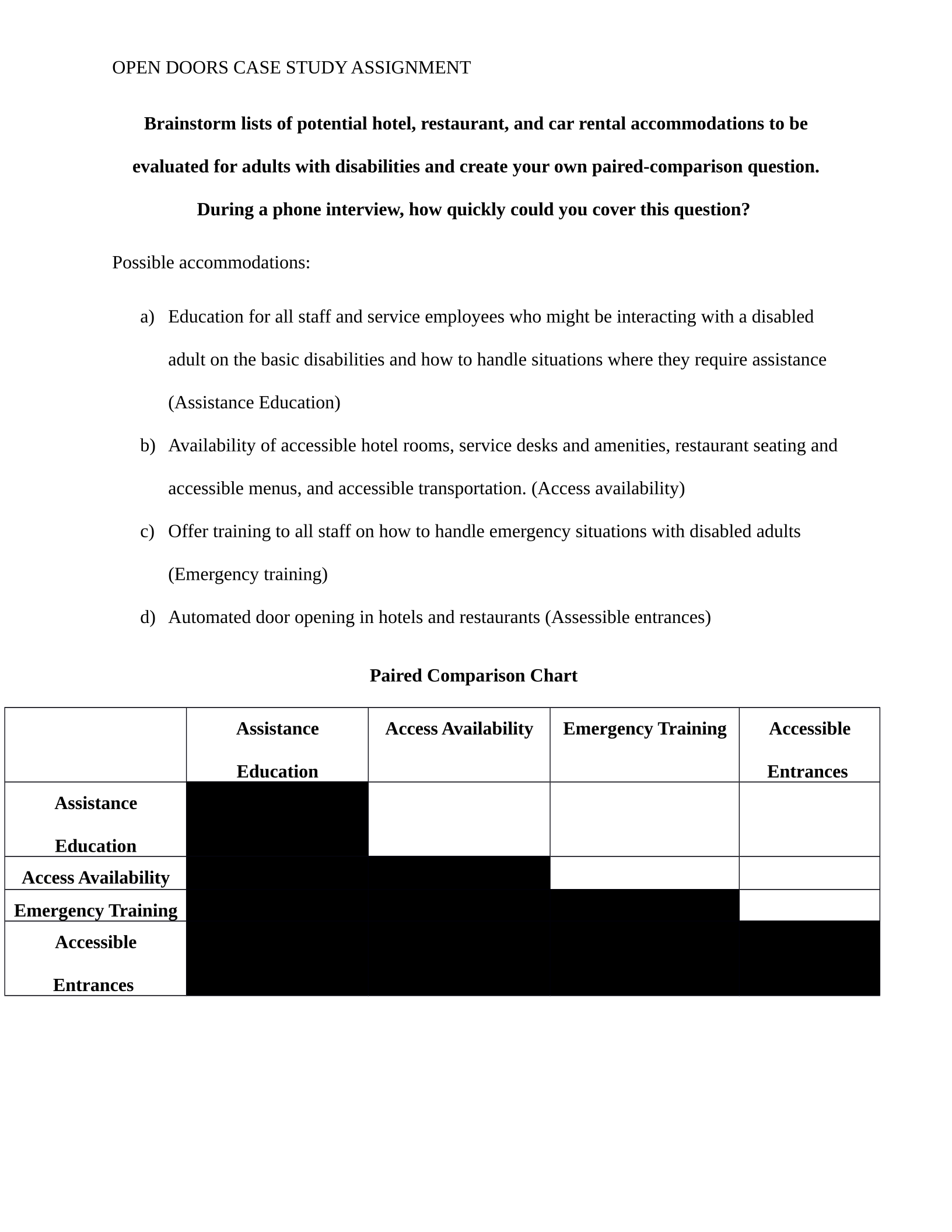
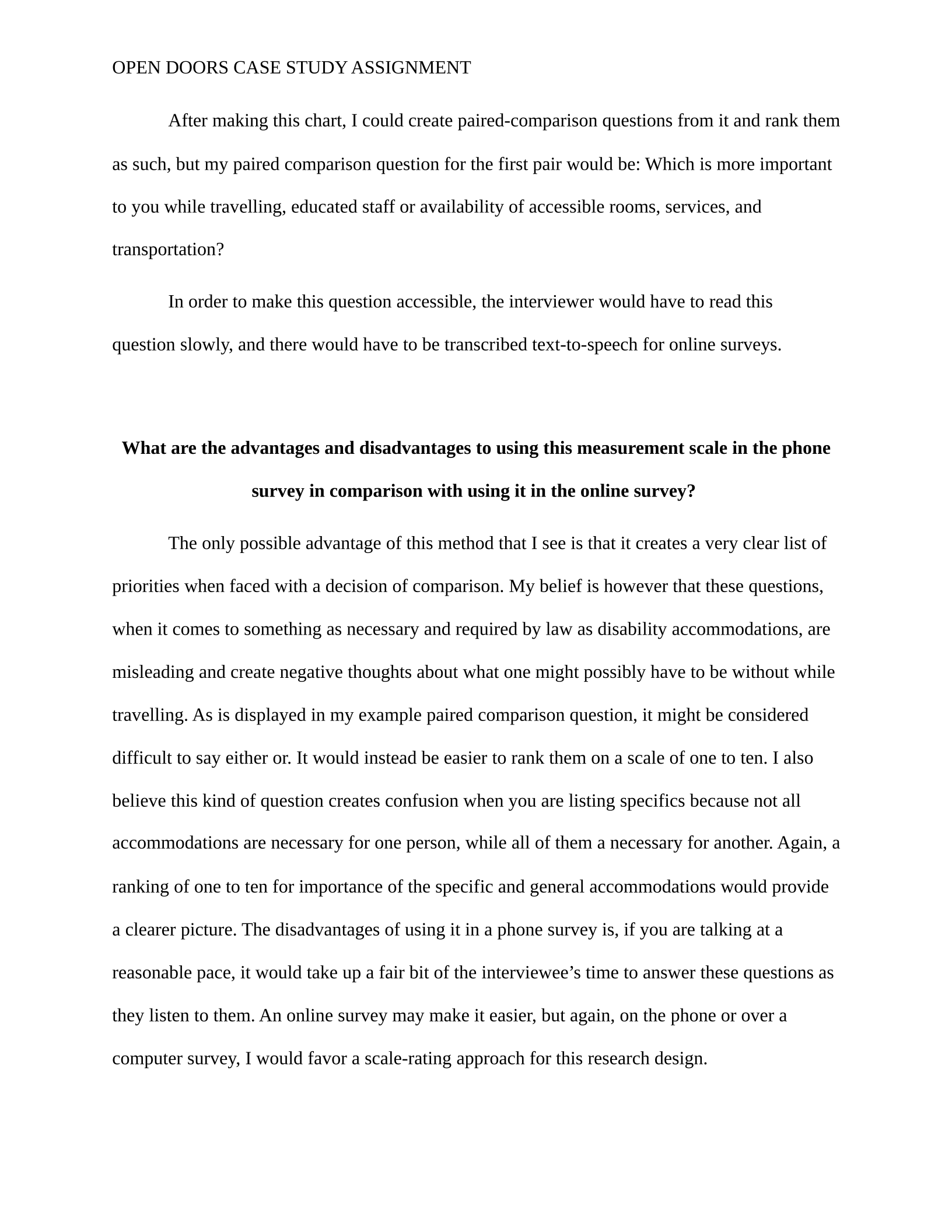
Paired Comparison Chart
Assistance
Education
Access Availability Emergency Training Accessible
Entrances
Assistance
Education
Access Availability
Emergency Training
Accessible
Entrances
OPEN DOORS CASE STUDY ASSIGNMENT
After making this chart, I could create paired-comparison questions from it and rank them
as such, but my paired comparison question for the first pair would be: Which is more important
to you while travelling, educated staff or availability of accessible rooms, services, and
transportation?
In order to make this question accessible, the interviewer would have to read this
question slowly, and there would have to be transcribed text-to-speech for online surveys.
What are the advantages and disadvantages to using this measurement scale in the phone
survey in comparison with using it in the online survey?
The only possible advantage of this method that I see is that it creates a very clear list of
priorities when faced with a decision of comparison. My belief is however that these questions,
when it comes to something as necessary and required by law as disability accommodations, are
misleading and create negative thoughts about what one might possibly have to be without while
travelling. As is displayed in my example paired comparison question, it might be considered
difficult to say either or. It would instead be easier to rank them on a scale of one to ten. I also
believe this kind of question creates confusion when you are listing specifics because not all
accommodations are necessary for one person, while all of them a necessary for another. Again, a
ranking of one to ten for importance of the specific and general accommodations would provide
a clearer picture. The disadvantages of using it in a phone survey is, if you are talking at a
reasonable pace, it would take up a fair bit of the interviewee’s time to answer these questions as
they listen to them. An online survey may make it easier, but again, on the phone or over a
computer survey, I would favor a scale-rating approach for this research design.
OPEN DOORS CASE STUDY ASSIGNMENT
Bibliography
Disability Evaluation Under Social Security. (n.d.). Retrieved April 8, 21, from
https://www.ssa.gov/disability/professionals/bluebook/general-info.htm#:~:text=The law
defines disability as, not less than 12 months.
Lang, S., & Baehr, C. (2012). Data Mining: A Hybrid Methodology for Complex and Dynamic
Research. College Composition and Communication, 64(1), 172-194.
http://ezproxy.liberty.edu/login?qurl=https%3A%2F%2Fwww.proquest.com
%2Fscholarly-journals%2Fdata-mining-hybrid-methodology-complex-dynamic
%2Fdocview%2F1081831142%2Fse-2%3Faccountid%3D12085
Traveling with Autism. (n.d.). Retrieved from https://www.autismspeaks.org/traveling-
autism#:~:text=Traveling can be challenging for, the spectrum and their families.
Powered by TCPDF (www.tcpdf.org)

