



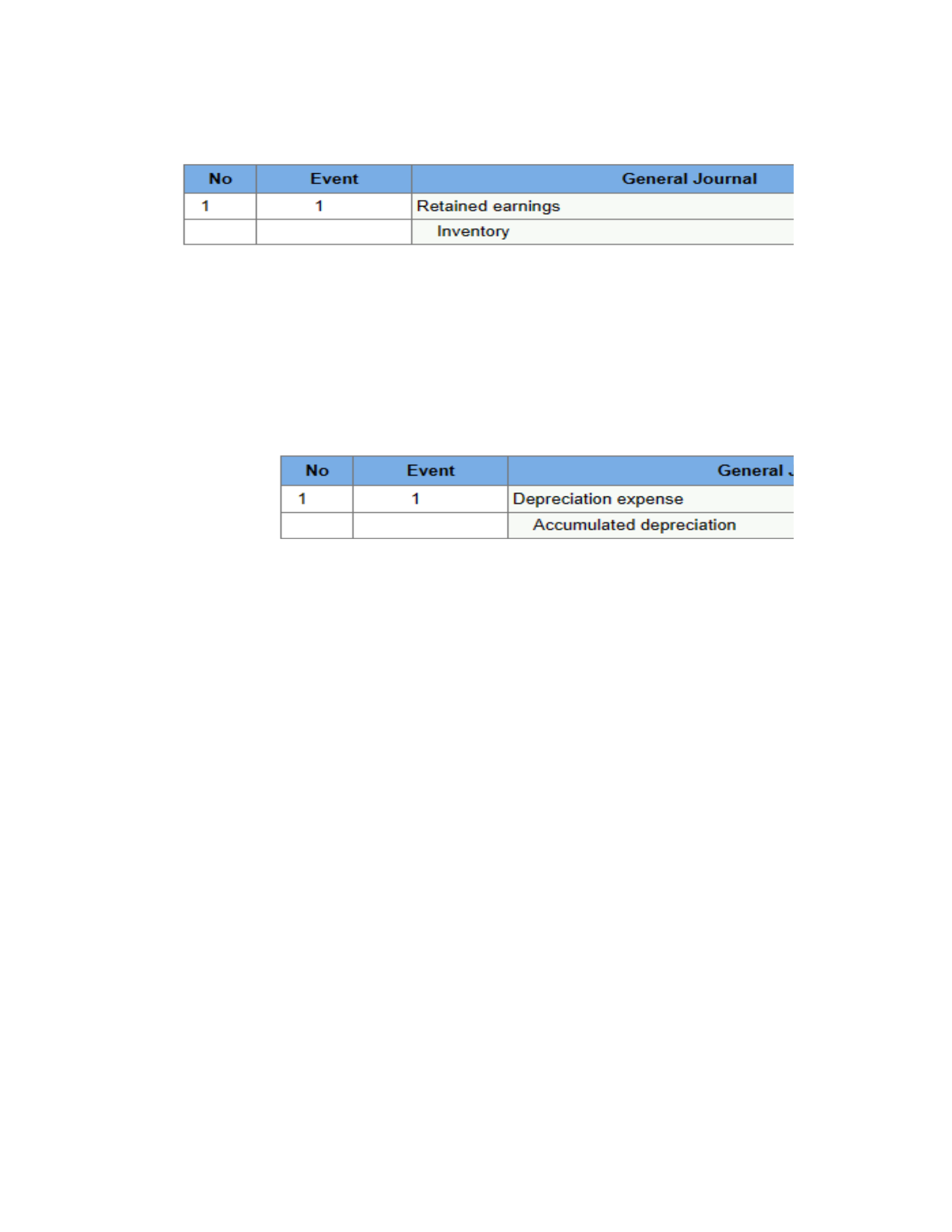
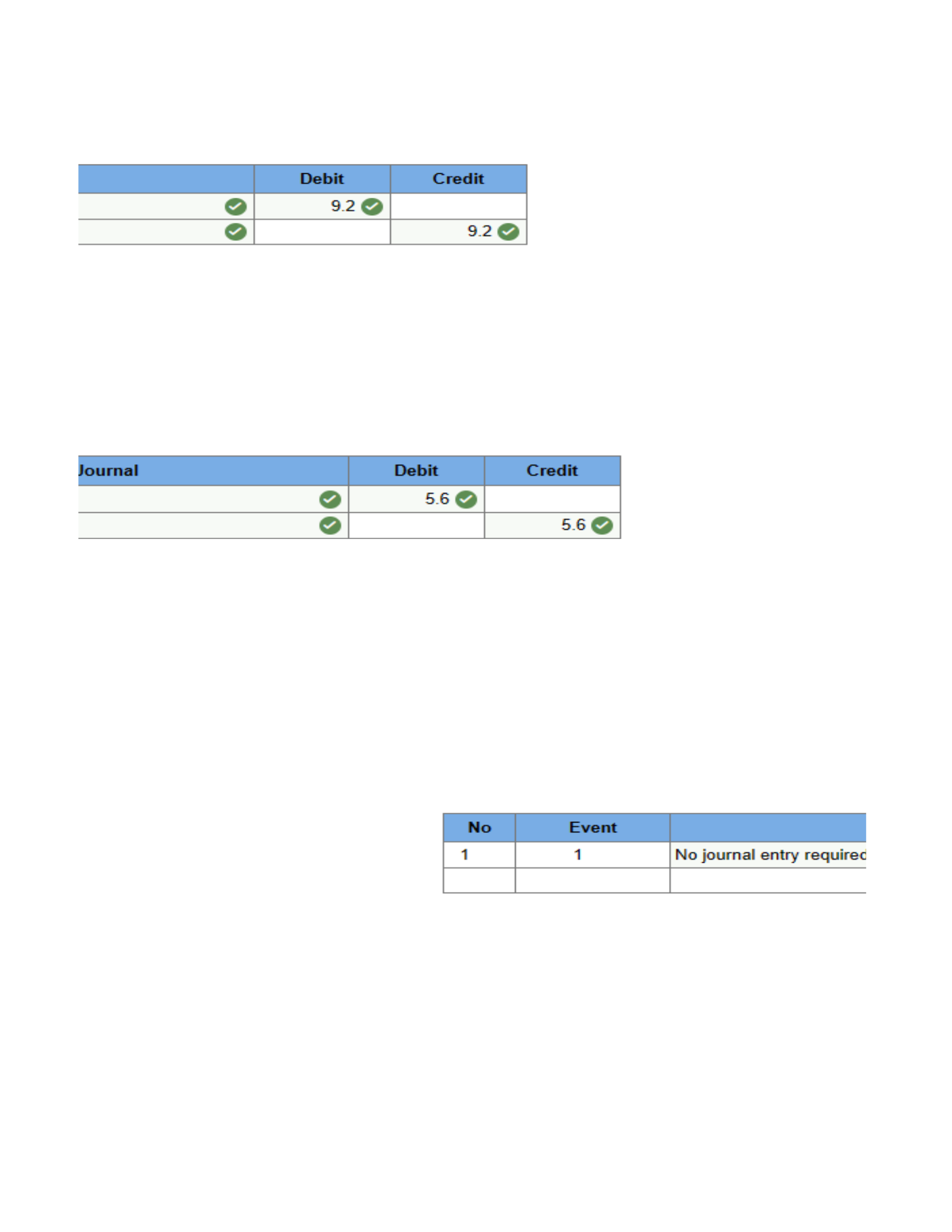
In 2024, the Barton and Barton Company changed its method of valuing inventory from the FIFO method to the average cost method. At December 31, 2023, B & B’s inventories were $34.0 million (FIFO). B & B’s records indicated that the inventories would have totaled $24.8 million at December 31, 2023, if determined on an average cost basis.
Ignoring income taxes, what journal entry will B & B use to record the adjustment in 2024?
Note: If no entry is required for a transaction/event, select "No journal entry required" in the first account field. Enter your answers in millions rounded to 1 decimal place (i.e., 5,500,000 should be entered as 5.5).
Explanation
Inventory ($34.0 million − $24.8 million) = $9.2 million
Irwin, Incorporated constructed a machine at a total cost of $79 million. Construction was completed at the end of 2020 and the machine was placed in service at the beginning of 2021. The machine was being depreciated over a 10-year life using the sum-of-the-years’-digits method. The residual value is expected to be $2 million. At the beginning of 2024, Irwin decided to change to the straight-line method.
Ignoring income taxes, prepare the journal entry relating to the machine for 2024.
Note: If no entry is required for a transaction/event, select "No journal entry required" in the first account field. Do not round intermediate calculations. Enter your answers in millions rounded to 1 decimal place (i.e., 5,500,000 should be entered as 5.5).
Explanation
A change in depreciation method is considered a change in accounting estimate resulting from a change in accounting principle. In other words, a change in the depreciation method is similar to changing the economic useful life of a depreciable asset, and therefore the two events should be reported the same way. Accordingly, Irwin reports the change prospectively; previous financial statements are not revised. Instead, the company simply employs the straight-line method from then on. The undepreciated cost remaining at the time of the change would be depreciated straight-line over the remaining useful life.
($ in millions)
Asset’s cost
$79.00
Accumulated depreciation to date (calculated below)
-37.8
Undepreciated cost, January 1, 2024
$41.20
Estimated residual value
-2
To be depreciated over remaining 7 years
$39.20
÷ 7 years
Annual straight-line depreciation 2024-2030
$5.60
Calculation of SYD depreciation
((10 + 9 + 8) ÷ 55*Footnote asterisk) × [$79.0 − $2.0] million = $37.8 million
*Footnote asterisk n (n + 1) ÷ 2 = [10 (11)] ÷ 2 = 55
Three programmers at Feenix Computer Storage, Incorporated, write an operating systems control manual for Hill-McGraw Publishing, Incorporated, for which Feenix receives royalties equal to 12% of net sales. Royalties are payable annually on February 1 for sales the previous year. The editor indicated to Feenix on December 31, 2024, that book sales subject to royalties for the year just ended are expected to be $380,000. Accordingly, Feenix accrued royalty revenue of $45,600 at December 31 and received royalties of $46,180 on February 1, 2025.
What adjustments, if any, should be made to retained earnings or to the 2024 financial statements?
Note: If no entry is required for a transaction/event, select "No journal entry required" in the first account field.
Explanation
The fact that more royalty revenue was received in February than anticipated in December represents a change in estimate. No adjustments are made to any 2024 financial statements.
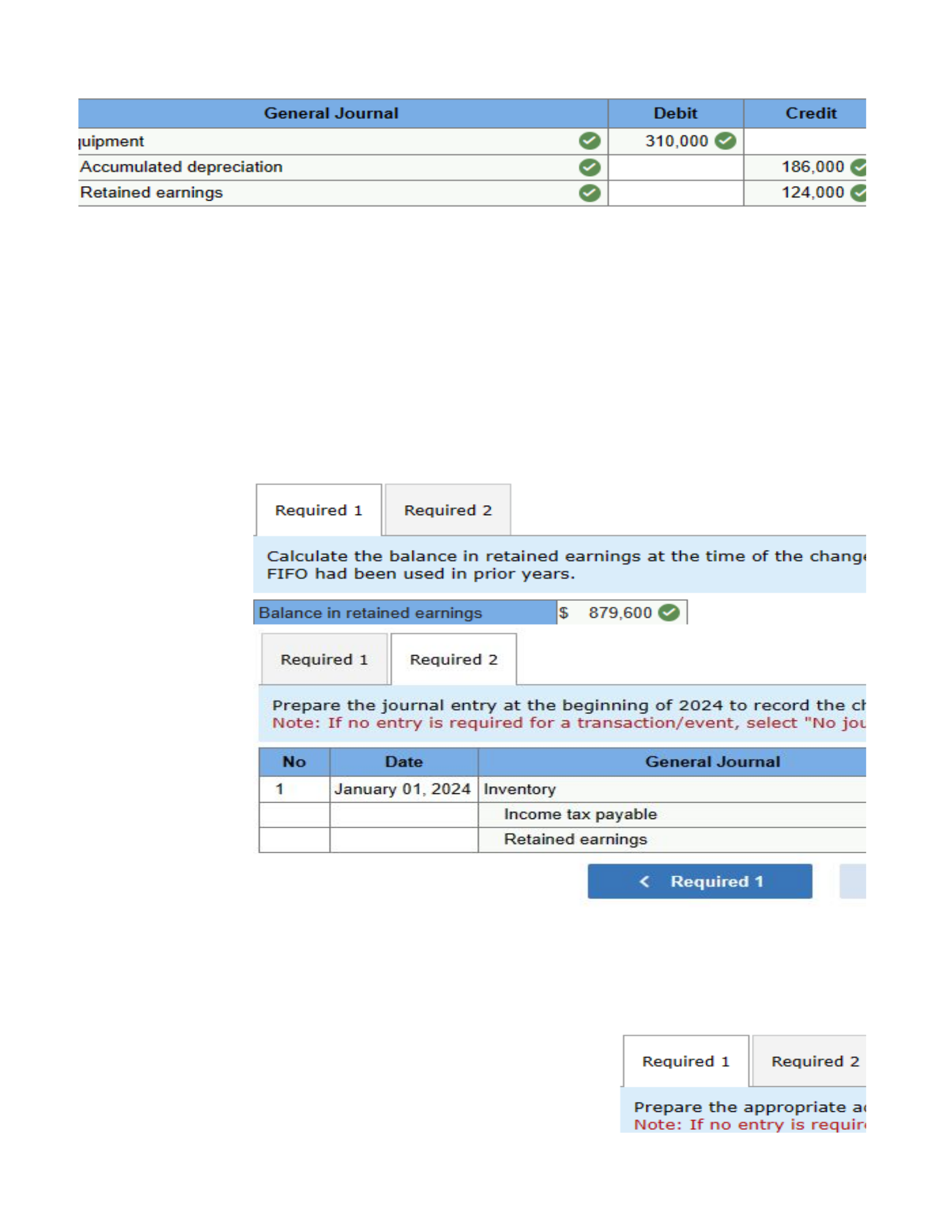
In 2024, internal auditors discovered that PKE Displays, Incorporated, had debited an expense account for the $310,000 cost of a machine purchased on January 1, 2021. The machine’s useful life was expected to be five years with no residual value. Straight-line depreciation is used by PKE.
Ignoring income taxes, prepare the journal entry PKE will use to correct the error (before adjusting and closing entries).
Note: If no entry is required for a transaction/event, select "No journal entry required" in the first account field.
Explanation
Analysis:

Correct (Should Have Been Recorded)
Incorrect (As Recorded)
Date General Journal Debit Credit
General Journal
2021 Equipment 310,000 Expense
2021 Cash 310,000 Cash
2021 Expense 62,000
depreciation entry omitted
2021 Accumulated depreciation 62,000
depreciation entry omitted
2022 Expense 62,000
depreciation entry omitted
2022 Accumulated depreciation 62,000
depreciation entry omitted
2023 Expense 62,000
depreciation entry omitted
2023 Accumulated depreciation 62,000
depreciation entry omitted
During the three-year period, depreciation expense was understated
by $186,000, but other expenses were
During the three-year period, accumulated depreciation was understated, and continues to be understated by $186,000.
Accumulated depreciation ($62,000 × 3 years) = $186,000
Retained earnings ($310,000 − $186,000) = $124,000
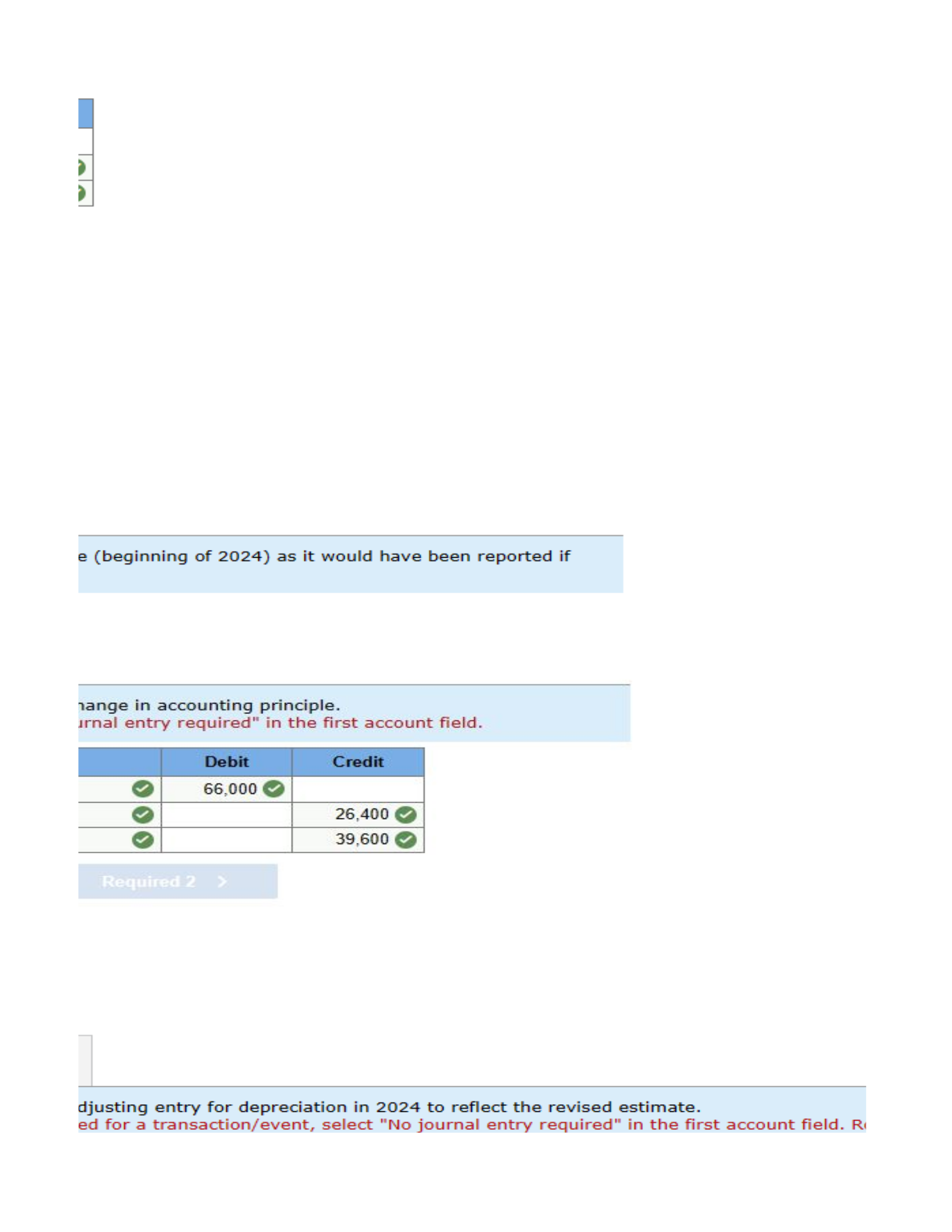
Aquatic Equipment Corporation decided to switch from the LIFO method of costing inventories to the FIFO method at the beginning of 2024. The inventory as reported at the end of 2023 using LIFO would have been $66,000 higher using FIFO. Retained earnings at the end of 2023 was reported as $840,000 (reflecting the LIFO method). The tax rate is 40%.
Required:
1. Calculate the balance in retained earnings at the time of the change (beginning of 2024) as it would have been reported if FIFO had been used in prior years.
2. Prepare the journal entry at the beginning of 2024 to record the change in accounting principle.
Explanation
1. Balance at January 1, 2024, using LIFO
$840,000
Prior to 2024, using FIFO:
Inventory would have been
$66,000
Less: income tax at 40%
-26,400
Cumulative net income and thus retained earnings would have been
39,600
Balance at January 1, 2024, using FIFO
$879,600
2. January 1, 2024
Income tax payable (40% × $66,000) = $26,400
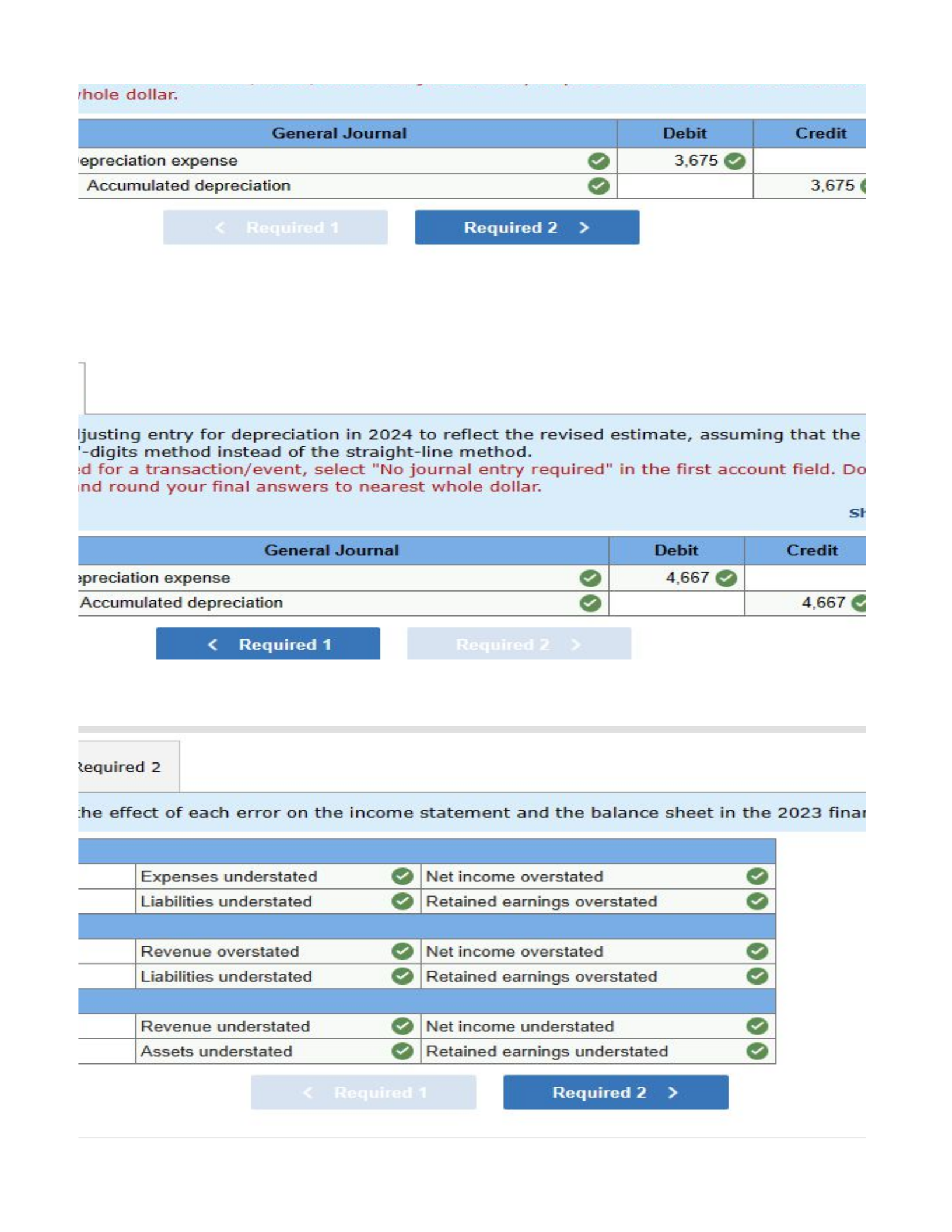
Wardell Company purchased a mini computer on January 1, 2022, at a cost of $46,800. The computer has been depreciated using the straight-line method over an estimated five-year useful life with an estimated residual value of $4,800. On January 1, 2024, the estimate of useful life was changed to a total of 10 years, and the estimate of residual value was changed to $600.
Required:
1. Prepare the appropriate adjusting entry for depreciation in 2024 to reflect the revised estimate.
2. Prepare the appropriate adjusting entry for depreciation in 2024 to reflect the revised estimate, assuming that the company uses the sum-of-the-years'-digits method instead of the straight-line method.
Explanation

1. Calculation of annual depreciation after the estimate change:
Cost $46,800
Old annual depreciation ($42,000 ÷ 5 years)
$8,400
Depreciation to date (2022
× 2 years 16,800
Book value $30,000
Revised residual value -600
Revised depreciable base $29,400
Estimated remaining life (10 years
÷ 8
New annual depreciation $3,675
2. Calculation of annual depreciation after the estimate change:
Cost $46,800
Previous depreciation:
2022: ($42,000 × 5 ÷ 15)
$14,000
2023: ($42,000 × 4 ÷ 15)
11,200
Depreciation to date (2022
−2023)
25,200
Book value $21,600
Revised residual value -600
Revised depreciable base $21,000
Estimated remaining life: 8 years
× 836*/836*
2024 depreciation $4,667
*Footnote asteriskn (n + 1) ÷ 2 = 8 (9) ÷ 2 = 36
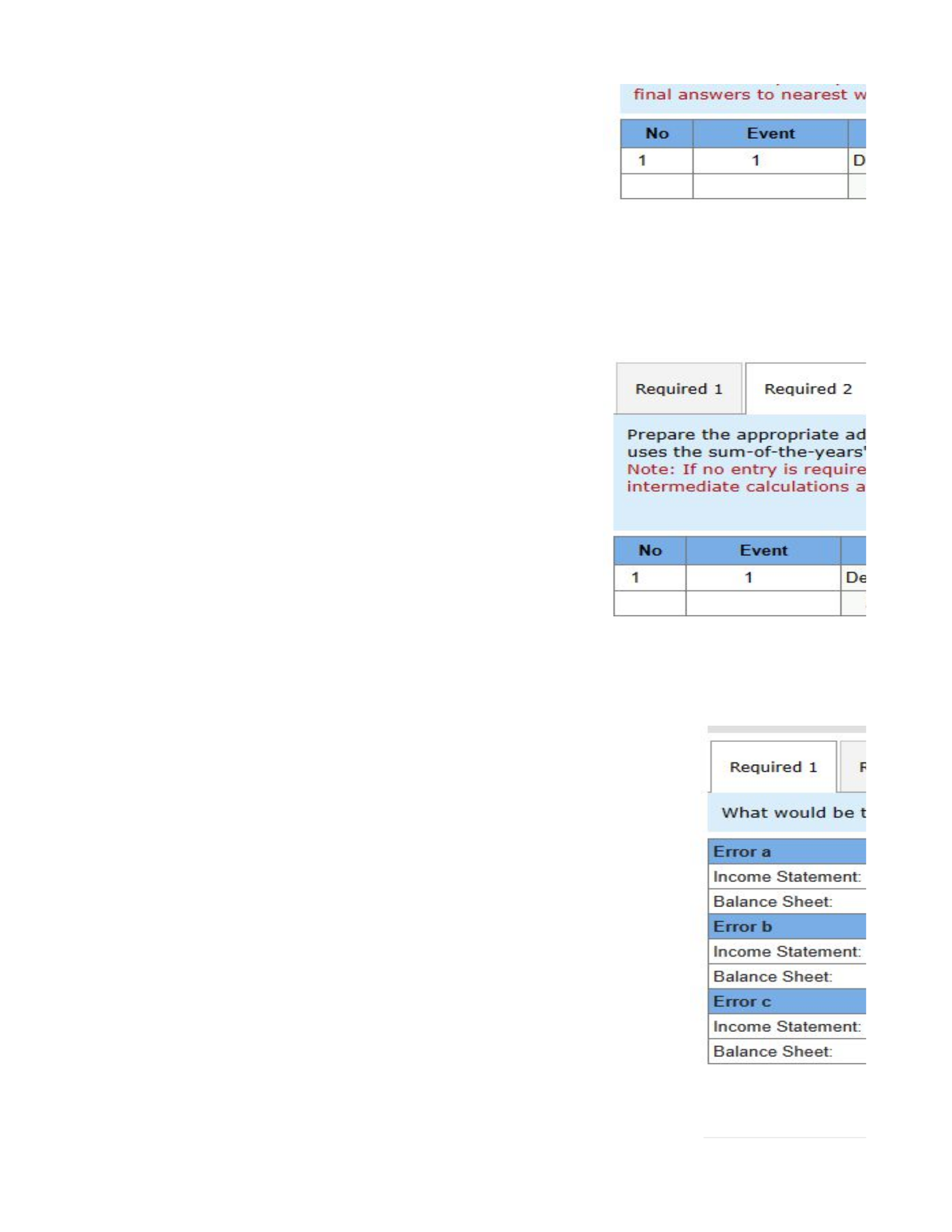
Below are three independent and unrelated errors.
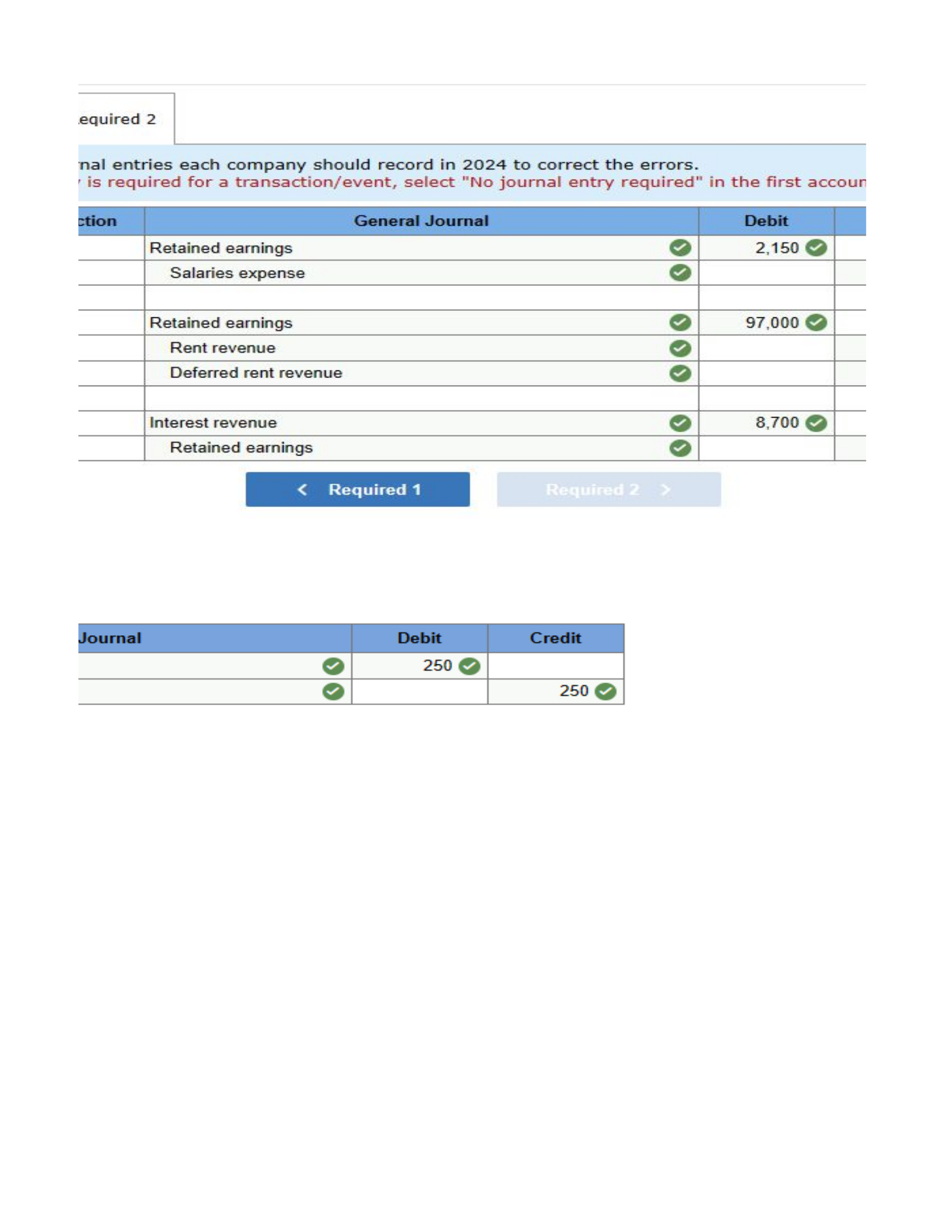
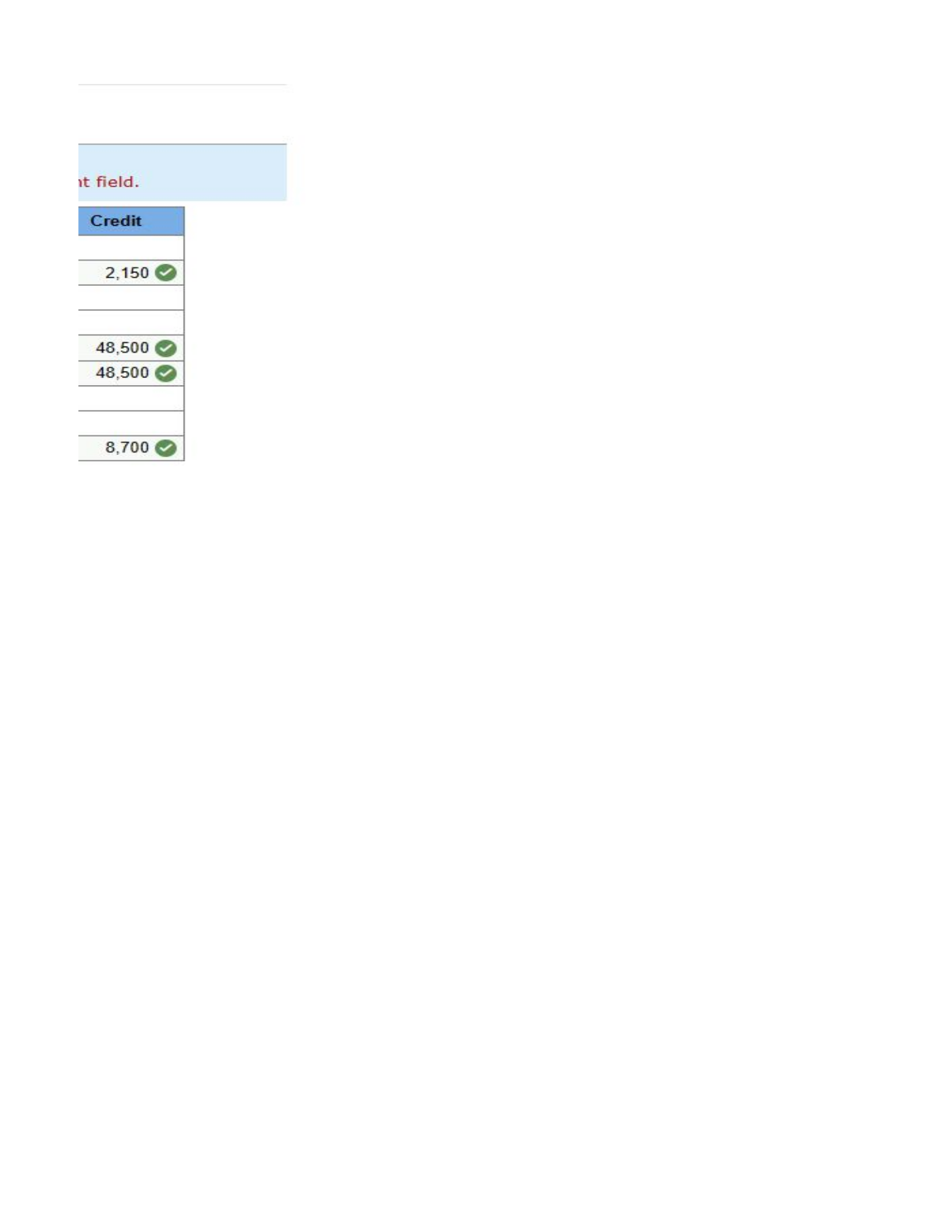
1. On December 31, 2023, Wolfe-Bache Corporation failed to accrue salaries expense of $2,150. In January 2024, when it paid employees for the December 27–January 2 workweek, Wolfe-Bache made the following entry:
General Journal
Debit Credit
Salaries expense
2,150
Cash 2,150
2. On the last day of 2023, Midwest Importers received a $97,000 prepayment from a tenant for 2024 rent of a building. Midwest recorded the receipt as rent revenue. The error was discovered midway through 2024.
3. At the end of 2023, Dinkins-Lowery Corporation failed to accrue interest of $8,700 on a note receivable. At the beginning of 2024, when the company received the cash, it was recorded as interest revenue.
Required:
For each error:
1. What would be the effect of each error on the income statement and the balance sheet in the 2023 financial statements?
2. Prepare any journal entries each company should record in 2024 to correct the errors.
Explanation
No further explanation details are available for this problem.

Required information
Skip to question
[The following information applies to the questions displayed below.]
Shown below are net income amounts as they would be determined by Roberti Steel Company by each of three different inventory costing methods ($ in thousands).
FIFO Average Cost LIFO
Pre-2023 $2,640 $2,380 $2,120
2023 670 680 500
$3,310 $3,060 $2,620
Required:
1.
Assume that Roberti Steel Company used FIFO before 2024, and then in 2024 decided to switch to average cost. Prepare the journal entry to record the change in accounting principle. (Ignore income tax effects.)
Note: If no entry is required for a transaction/event, select "No journal entry required" in the first account field. Enter your answers in thousands (i.e., 10,000 should be entered as 10.
Explanation
1
This is a change in accounting principle to be recorded retrospectively.
Retained earnings = $3,310 − $3,060 = $250 ($ in thousands)
Roberti Steel Company will recast its financial statements to appear as if the average cost method always had been used. The FIFO method has a higher ending inventory and a lower cost of goods sold so net income under the FIFO method is higher than other methods. Thus, switching from FIFO to average cost will reduce retained earnings to the balance it would have had if the average method had been used previously; that is, by the cumulative income difference between the average and FIFO methods. Simultaneously, inventory is reduced to the balance it would have been if the average method had always been used. A disclosure note should justify that the change is preferable and describe the effect of the change on any financial statement line items and per share amounts affected for all periods reported.
Required information
Skip to question
[The following information applies to the questions displayed below.]
Shown below are net income amounts as they would be determined by Roberti Steel Company by each of three different inventory costing methods ($ in thousands).

FIFO Average Cost LIFO
Pre-2023 $2,640 $2,380 $2,120
2023 670 680 500
$3,310 $3,060 $2,620
2.
Assume that Roberti Steel Company used FIFO before 2024, and then in 2024 decided to switch to LIFO. Assume accounting records are inadequate to determine LIFO information prior to 2024. Therefore, the 2023 ($500) and pre-2023 ($2,120) data are not available. Prepare the journal entry to record the change in accounting principle. (Ignore income tax effects.)
Note: If no entry is required for a transaction/event, select "No journal entry required" in the first account field. Enter your answers in thousands (i.e., 10,000 should be entered as 10).
Explanation
2
This is a change in accounting principle that usually is reported prospectively .
No entry is needed to record the change.
When a company changes to the LIFO inventory method
from another inventory method, it usually does not report the change retrospectively. Instead, the base year inventory for all future LIFO calculations is the beginning inventory in the year the LIFO method is adopted. A disclosure note should describe the nature of and justification for the change as well as an explanation of why retrospective application was impracticable.
Required information
Skip to question
[The following information applies to the questions displayed below.]
Shown below are net income amounts as they would be determined by Roberti Steel Company by each of three different inventory costing methods ($ in thousands).
FIFO Average Cost LIFO
Pre-2023 $2,640 $2,380 $2,120
2023 670 680 500
$3,310 $3,060 $2,620
3.
Assume that Roberti Steel Company used FIFO before 2024, and then in 2024 decided to switch to LIFO cost. Roberti Steel Company's records of inventory purchases and sales are not available for several previous years. Therefore, the pre-2023 LIFO information ($2,120) is not available. However, Roberti Steel Company does have the information needed to apply LIFO on a prospective basis beginning in 2023. Prepare the journal entry to record the change in accounting principle. (Ignore income tax effects.)
Note: If no entry is required for a transaction/event, select "No journal entry required" in the first account field. Enter your answers in thousands (i.e., 10,000 should be entered as 10).
Explanation
3
This is a change in accounting principle to be partially recorded retrospectively .
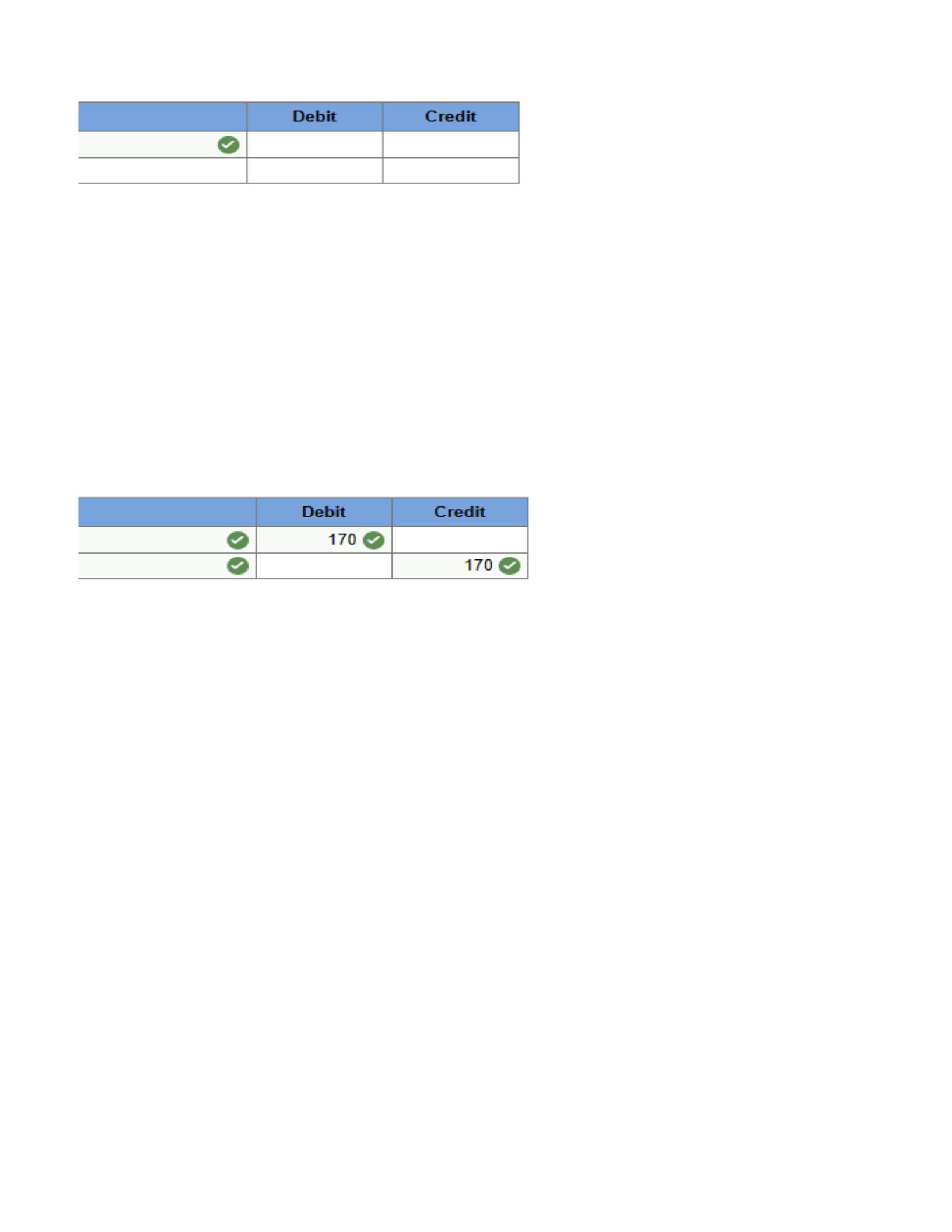
Retained earnings = $670 − $500 = $170 ($ in thousands)
In its comparative 2024–2023 financial statements, Roberti should report numbers for 2023 as if it had carried forward the 2022 ending balance in inventory (measured on the previous FIFO inventory costing basis) and then had begun applying LIFO as of January 1, 2023. There would be no adjustment to accounts for the cumulative income effect of not using LIFO prior to that.
During 2022 and 2023, Faulkner Manufacturing used the sum-of-the-years’-digits (SYD) method of depreciation for its depreciable assets, for both financial reporting and tax purposes. At the beginning of 2024, Faulkner decided to change to the straight-line method for both financial reporting and tax purposes. A tax rate of 25% is in effect for all years.
For an asset that cost $23,200 with an estimated residual value of $1,200 and an estimated useful life of 10 years, the depreciation under different methods is as follows:
Year Straight Line SYD Difference
2022 $2,200 $4,000 $1,800
2023 2,200 3,600 1,400
$4,400 $7,600 $3,200
Required:
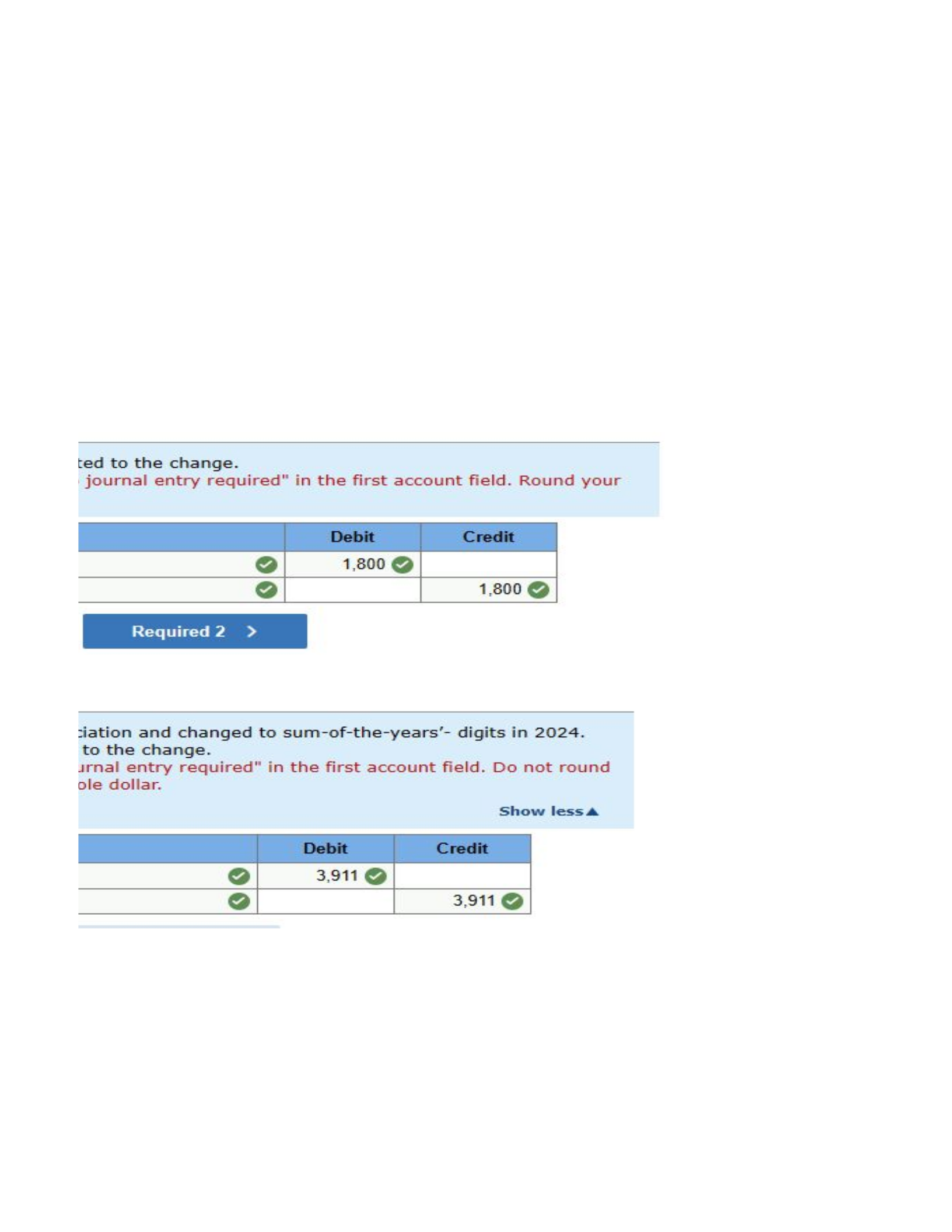
1. Prepare the journal entry that Faulkner will record in 2024 related to the change.
2. Suppose instead that Faulkner previously used straight-line depreciation and changed to sum-of-the-years’- digits in 2024. Prepare the journal entry that Faulkner will record in 2024 related to the change.

Explanation
1. A change in depreciation method is considered a change in accounting estimate resulting from a change in accounting principle. In other words, a change in the depreciation method is similar to changing the economic useful life of a depreciable asset, and therefore the two events should be reported the same way. Accordingly, Faulkner reports the change prospectively; previous financial statements are not revised. Instead, the company simply employs the straight-line method from then on. The undepreciated cost remaining at the time of the change would be depreciated straight-line over the remaining useful life.
Asset's cost
$23,200
Accumulated depreciation (SYD) to date (given)
-7,600
Undepreciated cost, January 1, 2024
$15,600
Estimated residual value
-1,200
To be depreciated over remaining 8 years
$14,400
÷ 8 years
Annual straight-line depreciation 2024-2031
$1,800
A disclosure note should justify that the change is preferable and describe the effect of a change on any financial statement line items and per share amounts affected for all periods reported.
2. If Faulkner switched to sum-of-the-years’ digits with eight years remaining, it reports the change prospectively; previous financial statements are not revised. Instead, the company employs the SYD method from then on. The undepreciated cost remaining at the time of the change would be depreciated by the SYD method over the remaining useful life.
Asset's cost
$23,200
Accumulated depreciation (S-L) to date (given)
-4,400
Undepreciated cost, January 1, 2024
$18,800
Estimated residual value
-1,200
To be depreciated over remaining 8 years
$17,600
× 836*/836*Footnote asterisk
SYD depreciation 2024
$3,911
*Footnote asterisk n (n + 1) ÷ 2 = 8 (9) ÷ 2 = 36
A disclosure note should justify that the change is preferable and describe the effect of the change on any financial statement line items and per share amounts affected for all periods reported.
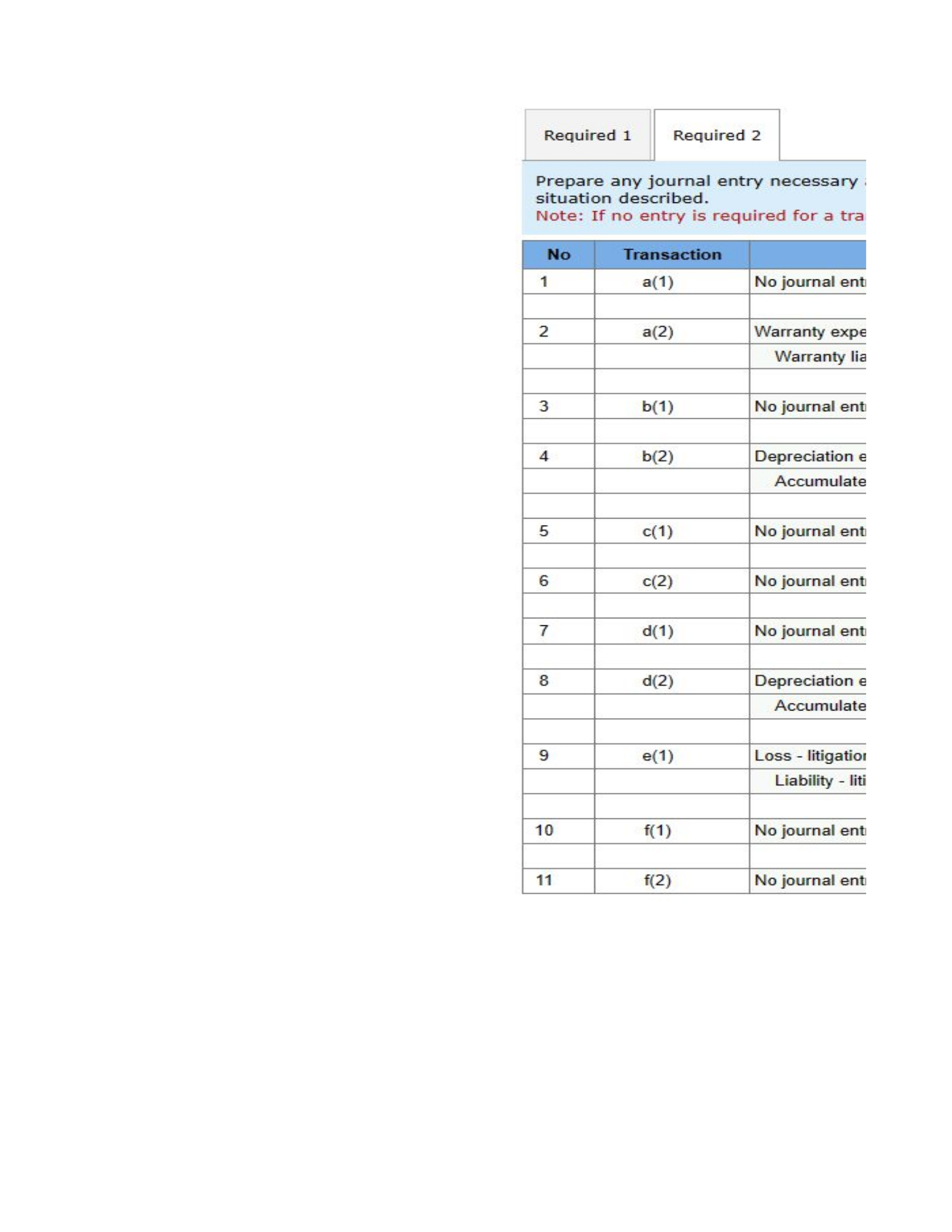
Described below are six independent and unrelated situations involving accounting changes. Each change occurs during 2024 before any adjusting entries or closing entries were prepared. Assume the tax rate for each company is 25% in all years. Any tax effects should be adjusted through the deferred tax liability account.
a. Fleming Home Products introduced a new line of commercial awnings in 2023 that carry a one-year warranty against manufacturer’s defects. Based on industry experience, warranty costs were expected to approximate 2% of sales. Sales of the awnings in 2023 were $3,200,000. Accordingly, warranty expense and a warranty liability of $64,000 were recorded in 2023. In late 2024, the company’s claims experience was evaluated, and it was determined that claims were far fewer than expected: 1% of sales rather than 2%. Sales of the awnings in 2024 were $3,700,000, and warranty expenditures in 2024 totaled $84,175.
b. On December 30, 2020, Rival Industries acquired its office building at a cost of $940,000. It was depreciated on a straight-line basis assuming a useful life of 40 years and no salvage value. However, plans were finalized in 2024 to relocate the company headquarters at the end of 2028. The vacated office building will have a salvage value at that time of $670,000.
c. Hobbs-Barto Merchandising, Incorporated, changed inventory cost methods to LIFO from FIFO at the end of 2024 for both financial statement and income tax purposes. Under FIFO, the inventory at January 1, 2024, is $660,000.
d. At the beginning of 2021, the Hoffman Group purchased office equipment at a cost of $297,000. Its useful life was estimated to be 10 years with no salvage value. The equipment was depreciated by the sum-of-the-years’-digits method. On January 1, 2024, the company changed to the straight-line method.
e. In November 2022, the State of Minnesota filed suit against Huggins Manufacturing Company, seeking penalties for violations of clean air laws. When the financial statements were issued in 2023, Huggins had not reached a settlement with state authorities, but legal counsel advised Huggins that it was probable the company would have to pay $170,000 in penalties. Accordingly, the following entry was recorded:
Account Name
Debit Credit

Loss—litigation
170,000
Liability—litigation 170,000
Late in 2024, a settlement was reached with state authorities to pay a total of $317,000 in penalties.
f. At the beginning of 2024, Jantzen Specialties, which uses the sum-of-the-years’-digits method, changed to the straight-line method for newly acquired buildings and equipment. The change increased current year net earnings by $412,000.
Required:
For each situation:
1. Identify the type of change.
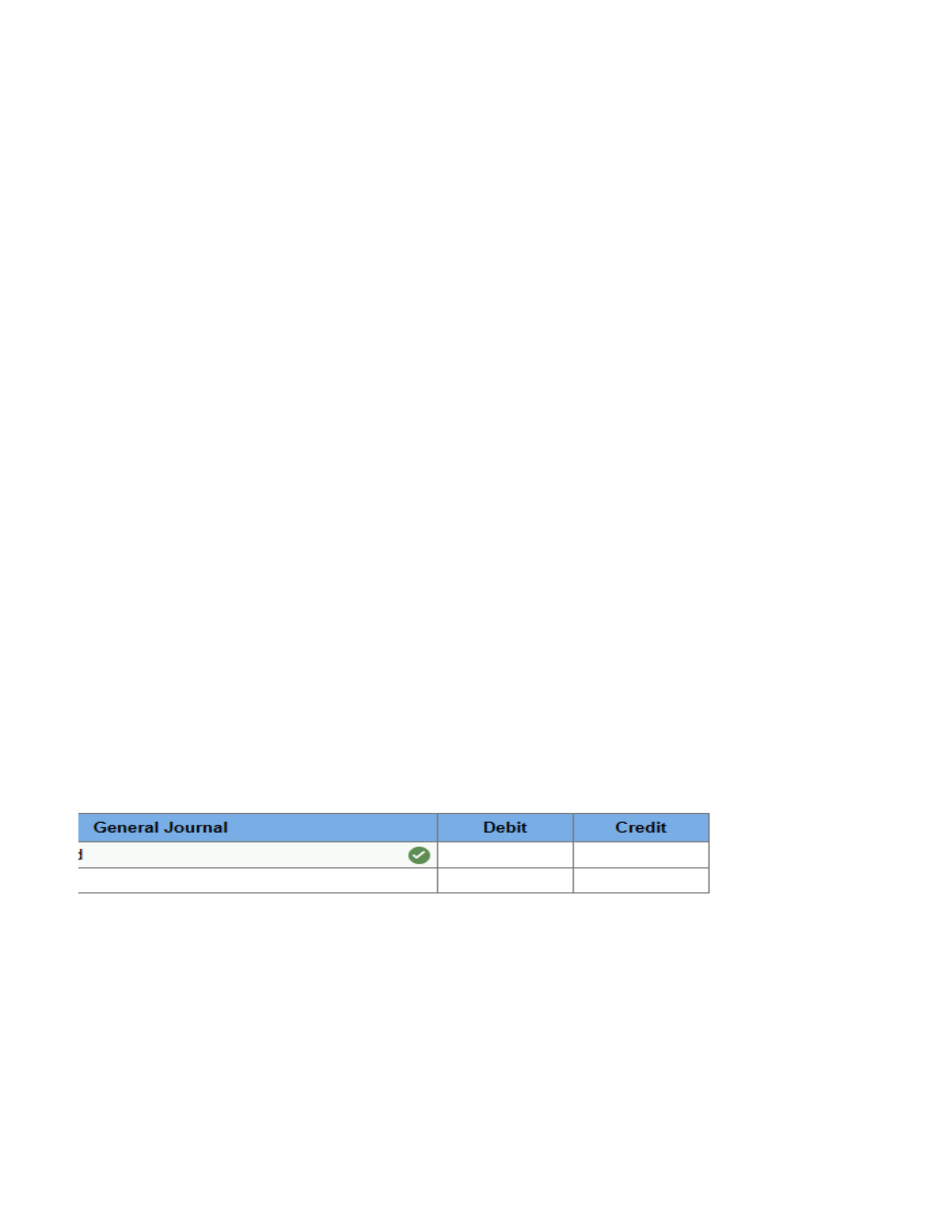
2. Prepare any journal entry necessary as a direct result of the change, as well as any adjusting entry for 2024 related to the situation described.
Explanation
1. and 2.
a. 2024 adjusting entry:
Warranty expense (1% × $3,700,000) = $37,000
If the effect is material, a disclosure note should describe the effect of a change in estimate on income from continuing operations, net income, and related per share amounts for the current period.
b. Calculation of annual depreciation after the estimate change:
Cost $940,000
Old depreciation ($940,000 ÷ 40 years)
$23,500
Depreciation to date (2021-2023)
-70,500 × 3 years
Undepreciated cost
$869,500
New estimated salvage value
-670,000
To be depreciated
$869,500
Estimated remaining life (5 years: 2024-2028)
÷ 5
New annual depreciation
$39,900
A disclosure note should describe the effect of a change in estimate on income from continuing operations, net income, and related per share amounts for the current period.
c. This is a change in accounting principle that usually is reported prospectively .
When a company changes to the LIFO inventory method
from another inventory method, accounting records usually are insufficient to determine the cumulative income effect of the change necessary to retrospectively revise accounts. So, a company changing to LIFO usually reports the beginning inventory in the year the LIFO method is adopted ($660,000 in this case) as the base year inventory for all future LIFO calculations. The disclosure required is a note to the financial statements describing the nature of and justification for the change as well as an explanation as to why the retrospective application was impracticable.
d. This is a change in accounting estimate resulting from a change in accounting principle.
A change in depreciation method is considered a change in accounting estimate resulting from a change in accounting principle. Accordingly, the Hoffman Group reports the change prospectively; previous financial statements are not revised. Instead, the company simply employs the straight-line method from now on. The undepreciated cost remaining at the time of the change is depreciated straight line over the remaining useful life.
2024 adjusting entry:
Depreciation expense (determined below) = $21,600
($ in thousands)
Asset's cost
$297
Accumulated depreciation to date (calculated below)
-145.8
Undepreciated cost, January 1, 2024
$151.20
Estimated residual value
0
To be depreciated over remaining 7 years
$151.20
÷ 7 years
Annual straight-line depreciation 2024-2030
$21.60
Calculation of SYD depreciation:
((10 + 9 + 8) ÷ 55) × $297,000 = $145,800
e. To revise the liability on the basis of the new estimate:
Liability—litigation ($317,000 − $170,000) = $147,000
A disclosure note should describe the effect of a change in estimate on income from continuing operations, net income, and related per share amounts for the current period.
f. This is a change in accounting principle accounted for prospectively .
Because the change will be effective only for assets placed in service after the date of change, the change doesn’t affect assets depreciated in prior periods. The nature of and justification for the change should be described in the disclosure notes. Also, the effect of the change on the current period’s financial statements should be disclosed.
In 2024, the Barton and Barton Company changed its method of valuing inventory from the FIFO method to the average cost method. At December 31, 2023, B & B’s inventories were $34.0 million (FIFO). B & B’s records indicated that the inventories would have totaled $24.8 million at December 31, 2023, if determined on an average cost basis.
Note: If no entry is required for a transaction/event, select "No journal entry required" in the first account field. Enter your answers in millions rounded to 1 decimal place (i.e., 5,500,000 should be entered as 5.5).
Irwin, Incorporated constructed a machine at a total cost of $79 million. Construction was completed at the end of 2020 and the machine was placed in service at the beginning of 2021. The machine was being depreciated over a 10-year life using the sum-of-the-years’-digits method. The residual value is expected to be $2 million. At the beginning of 2024, Irwin decided to change to the straight-line method.
Note: If no entry is required for a transaction/event, select "No journal entry required" in the first account field. Do not round intermediate calculations. Enter your answers in millions rounded to 1 decimal place (i.e., 5,500,000 should be entered as 5.5).
A change in depreciation method is considered a change in accounting estimate resulting from a change in accounting principle. In other words, a change in the depreciation method is similar to changing the economic useful life of a depreciable asset, and therefore the two events should be reported the same way. Accordingly, Irwin reports the change prospectively; previous financial statements are not revised. Instead, the company simply employs the straight-line method from then on. The undepreciated cost remaining at the time of the change would be depreciated straight-line over the remaining useful life.
Three programmers at Feenix Computer Storage, Incorporated, write an operating systems control manual for Hill-McGraw Publishing, Incorporated, for which Feenix receives royalties equal to 12% of net sales. Royalties are payable annually on February 1 for sales the previous year. The editor indicated to Feenix on December 31, 2024, that book sales subject to royalties for the year just ended are expected to be $380,000. Accordingly, Feenix accrued royalty revenue of $45,600 at December 31 and received royalties of $46,180 on February 1, 2025.
Note: If no entry is required for a transaction/event, select "No journal entry required" in the first account field.
The fact that more royalty revenue was received in February than anticipated in December represents a change in estimate. No adjustments are made to any 2024 financial statements.
In 2024, internal auditors discovered that PKE Displays, Incorporated, had debited an expense account for the $310,000 cost of a machine purchased on January 1, 2021. The machine’s useful life was expected to be five years with no residual value. Straight-line depreciation is used by PKE.
Ignoring income taxes, prepare the journal entry PKE will use to correct the error (before adjusting and closing entries).
Note: If no entry is required for a transaction/event, select "No journal entry required" in the first account field.

Incorrect (As Recorded)
Debit Credit
310,000
310,000
depreciation entry omitted
depreciation entry omitted
depreciation entry omitted
depreciation entry omitted
depreciation entry omitted
depreciation entry omitted
by $186,000, but other expenses were
overstated by $310,000, so net income during the period was understated
by $124,000, which means retained earnings is currently
During the three-year period, accumulated depreciation was understated, and continues to be understated by $186,000.
Aquatic Equipment Corporation decided to switch from the LIFO method of costing inventories to the FIFO method at the beginning of 2024. The inventory as reported at the end of 2023 using LIFO would have been $66,000 higher using FIFO. Retained earnings at the end of 2023 was reported as $840,000 (reflecting the LIFO method). The tax rate is 40%.
1. Calculate the balance in retained earnings at the time of the change (beginning of 2024) as it would have been reported if FIFO had been used in prior years.
Wardell Company purchased a mini computer on January 1, 2022, at a cost of $46,800. The computer has been depreciated using the straight-line method over an estimated five-year useful life with an estimated residual value of $4,800. On January 1, 2024, the estimate of useful life was changed to a total of 10 years, and the estimate of residual value was changed to $600.
2. Prepare the appropriate adjusting entry for depreciation in 2024 to reflect the revised estimate, assuming that the company uses the sum-of-the-years'-digits method instead of the straight-line method.

1. On December 31, 2023, Wolfe-Bache Corporation failed to accrue salaries expense of $2,150. In January 2024, when it paid employees for the December 27–January 2 workweek, Wolfe-Bache made the following entry:
2. On the last day of 2023, Midwest Importers received a $97,000 prepayment from a tenant for 2024 rent of a building. Midwest recorded the receipt as rent revenue. The error was discovered midway through 2024.
3. At the end of 2023, Dinkins-Lowery Corporation failed to accrue interest of $8,700 on a note receivable. At the beginning of 2024, when the company received the cash, it was recorded as interest revenue.
1. What would be the effect of each error on the income statement and the balance sheet in the 2023 financial statements?

Shown below are net income amounts as they would be determined by Roberti Steel Company by each of three different inventory costing methods ($ in thousands).
Assume that Roberti Steel Company used FIFO before 2024, and then in 2024 decided to switch to average cost. Prepare the journal entry to record the change in accounting principle. (Ignore income tax effects.)
Note: If no entry is required for a transaction/event, select "No journal entry required" in the first account field. Enter your answers in thousands (i.e., 10,000 should be entered as 10.
Roberti Steel Company will recast its financial statements to appear as if the average cost method always had been used. The FIFO method has a higher ending inventory and a lower cost of goods sold so net income under the FIFO method is higher than other methods. Thus, switching from FIFO to average cost will reduce retained earnings to the balance it would have had if the average method had been used previously; that is, by the cumulative income difference between the average and FIFO methods. Simultaneously, inventory is reduced to the balance it would have been if the average method had always been used. A disclosure note should justify that the change is preferable and describe the effect of the change on any financial statement line items and per share amounts affected for all periods reported.
Shown below are net income amounts as they would be determined by Roberti Steel Company by each of three different inventory costing methods ($ in thousands).

Assume that Roberti Steel Company used FIFO before 2024, and then in 2024 decided to switch to LIFO. Assume accounting records are inadequate to determine LIFO information prior to 2024. Therefore, the 2023 ($500) and pre-2023 ($2,120) data are not available. Prepare the journal entry to record the change in accounting principle. (Ignore income tax effects.)
Note: If no entry is required for a transaction/event, select "No journal entry required" in the first account field. Enter your answers in thousands (i.e., 10,000 should be entered as 10).
from another inventory method, it usually does not report the change retrospectively. Instead, the base year inventory for all future LIFO calculations is the beginning inventory in the year the LIFO method is adopted. A disclosure note should describe the nature of and justification for the change as well as an explanation of why retrospective application was impracticable.
Shown below are net income amounts as they would be determined by Roberti Steel Company by each of three different inventory costing methods ($ in thousands).
Assume that Roberti Steel Company used FIFO before 2024, and then in 2024 decided to switch to LIFO cost. Roberti Steel Company's records of inventory purchases and sales are not available for several previous years. Therefore, the pre-2023 LIFO information ($2,120) is not available. However, Roberti Steel Company does have the information needed to apply LIFO on a prospective basis beginning in 2023. Prepare the journal entry to record the change in accounting principle. (Ignore income tax effects.)
Note: If no entry is required for a transaction/event, select "No journal entry required" in the first account field. Enter your answers in thousands (i.e., 10,000 should be entered as 10).
In its comparative 2024–2023 financial statements, Roberti should report numbers for 2023 as if it had carried forward the 2022 ending balance in inventory (measured on the previous FIFO inventory costing basis) and then had begun applying LIFO as of January 1, 2023. There would be no adjustment to accounts for the cumulative income effect of not using LIFO prior to that.
During 2022 and 2023, Faulkner Manufacturing used the sum-of-the-years’-digits (SYD) method of depreciation for its depreciable assets, for both financial reporting and tax purposes. At the beginning of 2024, Faulkner decided to change to the straight-line method for both financial reporting and tax purposes. A tax rate of 25% is in effect for all years.
For an asset that cost $23,200 with an estimated residual value of $1,200 and an estimated useful life of 10 years, the depreciation under different methods is as follows:
2. Suppose instead that Faulkner previously used straight-line depreciation and changed to sum-of-the-years’- digits in 2024. Prepare the journal entry that Faulkner will record in 2024 related to the change.

1. A change in depreciation method is considered a change in accounting estimate resulting from a change in accounting principle. In other words, a change in the depreciation method is similar to changing the economic useful life of a depreciable asset, and therefore the two events should be reported the same way. Accordingly, Faulkner reports the change prospectively; previous financial statements are not revised. Instead, the company simply employs the straight-line method from then on. The undepreciated cost remaining at the time of the change would be depreciated straight-line over the remaining useful life.
A disclosure note should justify that the change is preferable and describe the effect of a change on any financial statement line items and per share amounts affected for all periods reported.
2. If Faulkner switched to sum-of-the-years’ digits with eight years remaining, it reports the change prospectively; previous financial statements are not revised. Instead, the company employs the SYD method from then on. The undepreciated cost remaining at the time of the change would be depreciated by the SYD method over the remaining useful life.
A disclosure note should justify that the change is preferable and describe the effect of the change on any financial statement line items and per share amounts affected for all periods reported.
Described below are six independent and unrelated situations involving accounting changes. Each change occurs during 2024 before any adjusting entries or closing entries were prepared. Assume the tax rate for each company is 25% in all years. Any tax effects should be adjusted through the deferred tax liability account.
a. Fleming Home Products introduced a new line of commercial awnings in 2023 that carry a one-year warranty against manufacturer’s defects. Based on industry experience, warranty costs were expected to approximate 2% of sales. Sales of the awnings in 2023 were $3,200,000. Accordingly, warranty expense and a warranty liability of $64,000 were recorded in 2023. In late 2024, the company’s claims experience was evaluated, and it was determined that claims were far fewer than expected: 1% of sales rather than 2%. Sales of the awnings in 2024 were $3,700,000, and warranty expenditures in 2024 totaled $84,175.
b. On December 30, 2020, Rival Industries acquired its office building at a cost of $940,000. It was depreciated on a straight-line basis assuming a useful life of 40 years and no salvage value. However, plans were finalized in 2024 to relocate the company headquarters at the end of 2028. The vacated office building will have a salvage value at that time of $670,000.
c. Hobbs-Barto Merchandising, Incorporated, changed inventory cost methods to LIFO from FIFO at the end of 2024 for both financial statement and income tax purposes. Under FIFO, the inventory at January 1, 2024, is $660,000.
d. At the beginning of 2021, the Hoffman Group purchased office equipment at a cost of $297,000. Its useful life was estimated to be 10 years with no salvage value. The equipment was depreciated by the sum-of-the-years’-digits method. On January 1, 2024, the company changed to the straight-line method.
e. In November 2022, the State of Minnesota filed suit against Huggins Manufacturing Company, seeking penalties for violations of clean air laws. When the financial statements were issued in 2023, Huggins had not reached a settlement with state authorities, but legal counsel advised Huggins that it was probable the company would have to pay $170,000 in penalties. Accordingly, the following entry was recorded:

f. At the beginning of 2024, Jantzen Specialties, which uses the sum-of-the-years’-digits method, changed to the straight-line method for newly acquired buildings and equipment. The change increased current year net earnings by $412,000.
2. Prepare any journal entry necessary as a direct result of the change, as well as any adjusting entry for 2024 related to the situation described.
If the effect is material, a disclosure note should describe the effect of a change in estimate on income from continuing operations, net income, and related per share amounts for the current period.
A disclosure note should describe the effect of a change in estimate on income from continuing operations, net income, and related per share amounts for the current period.
from another inventory method, accounting records usually are insufficient to determine the cumulative income effect of the change necessary to retrospectively revise accounts. So, a company changing to LIFO usually reports the beginning inventory in the year the LIFO method is adopted ($660,000 in this case) as the base year inventory for all future LIFO calculations. The disclosure required is a note to the financial statements describing the nature of and justification for the change as well as an explanation as to why the retrospective application was impracticable.
A change in depreciation method is considered a change in accounting estimate resulting from a change in accounting principle. Accordingly, the Hoffman Group reports the change prospectively; previous financial statements are not revised. Instead, the company simply employs the straight-line method from now on. The undepreciated cost remaining at the time of the change is depreciated straight line over the remaining useful life.
A disclosure note should describe the effect of a change in estimate on income from continuing operations, net income, and related per share amounts for the current period.
Because the change will be effective only for assets placed in service after the date of change, the change doesn’t affect assets depreciated in prior periods. The nature of and justification for the change should be described in the disclosure notes. Also, the effect of the change on the current period’s financial statements should be disclosed.
In 2024, the Barton and Barton Company changed its method of valuing inventory from the FIFO method to the average cost method. At December 31, 2023, B & B’s inventories were $34.0 million (FIFO). B & B’s records indicated that the inventories would have totaled $24.8 million at December 31, 2023, if determined on an average cost basis.
Note: If no entry is required for a transaction/event, select "No journal entry required" in the first account field. Enter your answers in millions rounded to 1 decimal place (i.e., 5,500,000 should be entered as 5.5).
Irwin, Incorporated constructed a machine at a total cost of $79 million. Construction was completed at the end of 2020 and the machine was placed in service at the beginning of 2021. The machine was being depreciated over a 10-year life using the sum-of-the-years’-digits method. The residual value is expected to be $2 million. At the beginning of 2024, Irwin decided to change to the straight-line method.
Note: If no entry is required for a transaction/event, select "No journal entry required" in the first account field. Do not round intermediate calculations. Enter your answers in millions rounded to 1 decimal place (i.e., 5,500,000 should be entered as 5.5).
A change in depreciation method is considered a change in accounting estimate resulting from a change in accounting principle. In other words, a change in the depreciation method is similar to changing the economic useful life of a depreciable asset, and therefore the two events should be reported the same way. Accordingly, Irwin reports the change prospectively; previous financial statements are not revised. Instead, the company simply employs the straight-line method from then on. The undepreciated cost remaining at the time of the change would be depreciated straight-line over the remaining useful life.
Three programmers at Feenix Computer Storage, Incorporated, write an operating systems control manual for Hill-McGraw Publishing, Incorporated, for which Feenix receives royalties equal to 12% of net sales. Royalties are payable annually on February 1 for sales the previous year. The editor indicated to Feenix on December 31, 2024, that book sales subject to royalties for the year just ended are expected to be $380,000. Accordingly, Feenix accrued royalty revenue of $45,600 at December 31 and received royalties of $46,180 on February 1, 2025.
In 2024, internal auditors discovered that PKE Displays, Incorporated, had debited an expense account for the $310,000 cost of a machine purchased on January 1, 2021. The machine’s useful life was expected to be five years with no residual value. Straight-line depreciation is used by PKE.
by $124,000, which means retained earnings is currently
understated by that amount.
Aquatic Equipment Corporation decided to switch from the LIFO method of costing inventories to the FIFO method at the beginning of 2024. The inventory as reported at the end of 2023 using LIFO would have been $66,000 higher using FIFO. Retained earnings at the end of 2023 was reported as $840,000 (reflecting the LIFO method). The tax rate is 40%.
Wardell Company purchased a mini computer on January 1, 2022, at a cost of $46,800. The computer has been depreciated using the straight-line method over an estimated five-year useful life with an estimated residual value of $4,800. On January 1, 2024, the estimate of useful life was changed to a total of 10 years, and the estimate of residual value was changed to $600.
1. On December 31, 2023, Wolfe-Bache Corporation failed to accrue salaries expense of $2,150. In January 2024, when it paid employees for the December 27–January 2 workweek, Wolfe-Bache made the following entry:
2. On the last day of 2023, Midwest Importers received a $97,000 prepayment from a tenant for 2024 rent of a building. Midwest recorded the receipt as rent revenue. The error was discovered midway through 2024.
3. At the end of 2023, Dinkins-Lowery Corporation failed to accrue interest of $8,700 on a note receivable. At the beginning of 2024, when the company received the cash, it was recorded as interest revenue.
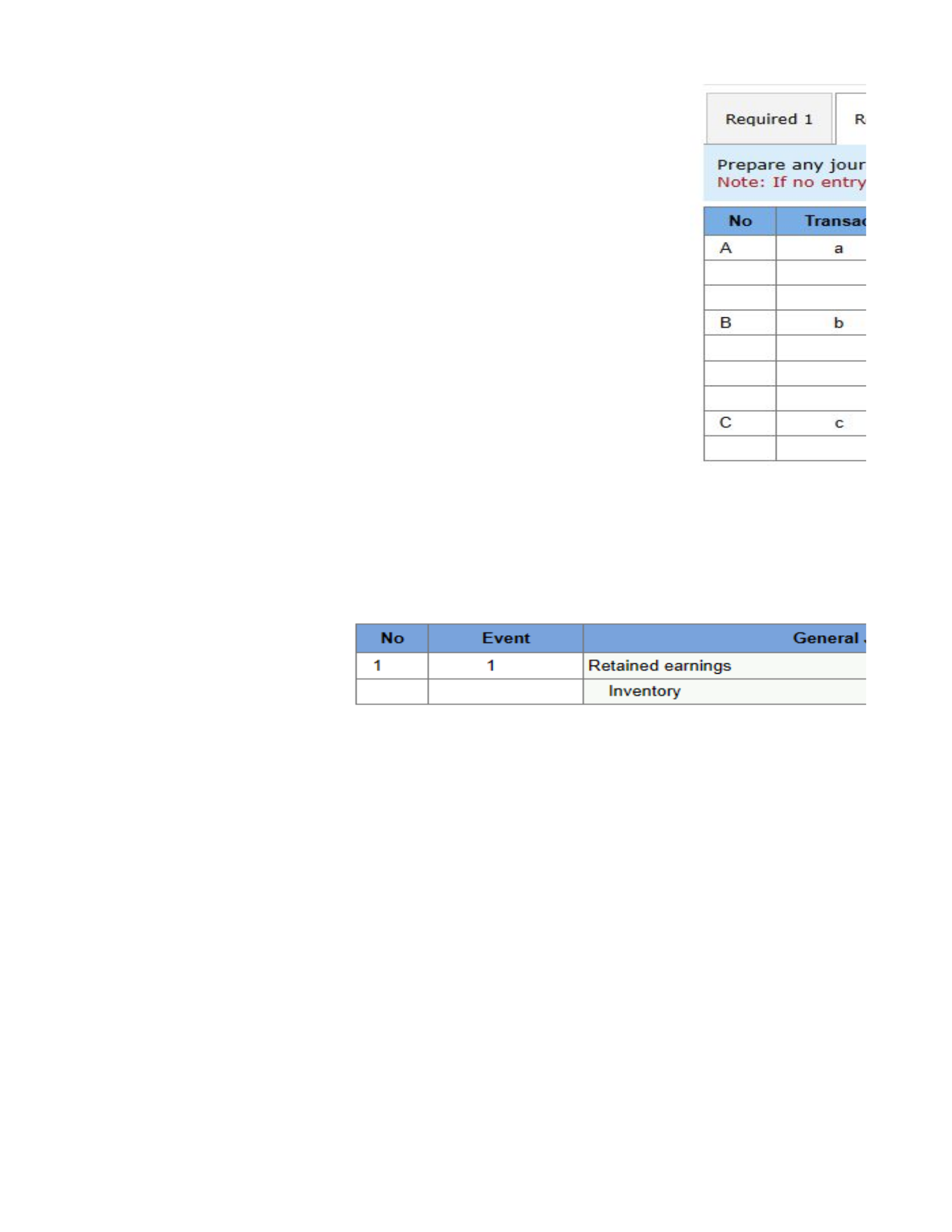
Assume that Roberti Steel Company used FIFO before 2024, and then in 2024 decided to switch to average cost. Prepare the journal entry to record the change in accounting principle. (Ignore income tax effects.)
Roberti Steel Company will recast its financial statements to appear as if the average cost method always had been used. The FIFO method has a higher ending inventory and a lower cost of goods sold so net income under the FIFO method is higher than other methods. Thus, switching from FIFO to average cost will reduce retained earnings to the balance it would have had if the average method had been used previously; that is, by the cumulative income difference between the average and FIFO methods. Simultaneously, inventory is reduced to the balance it would have been if the average method had always been used. A disclosure note should justify that the change is preferable and describe the effect of the change on any financial statement line items and per share amounts affected for all periods reported.
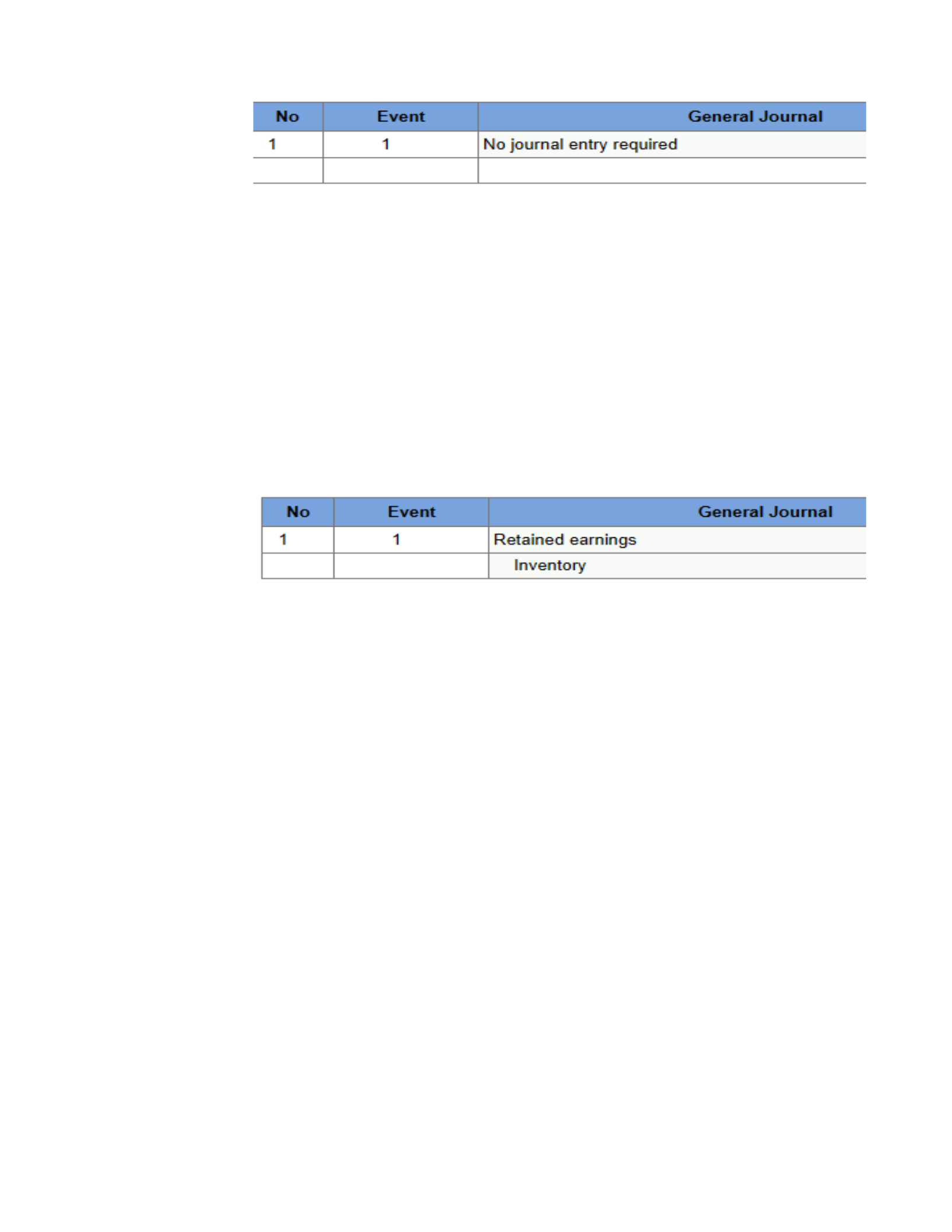
Assume that Roberti Steel Company used FIFO before 2024, and then in 2024 decided to switch to LIFO. Assume accounting records are inadequate to determine LIFO information prior to 2024. Therefore, the 2023 ($500) and pre-2023 ($2,120) data are not available. Prepare the journal entry to record the change in accounting principle. (Ignore income tax effects.)
from another inventory method, it usually does not report the change retrospectively. Instead, the base year inventory for all future LIFO calculations is the beginning inventory in the year the LIFO method is adopted. A disclosure note should describe the nature of and justification for the change as well as an explanation of why retrospective application was impracticable.
Assume that Roberti Steel Company used FIFO before 2024, and then in 2024 decided to switch to LIFO cost. Roberti Steel Company's records of inventory purchases and sales are not available for several previous years. Therefore, the pre-2023 LIFO information ($2,120) is not available. However, Roberti Steel Company does have the information needed to apply LIFO on a prospective basis beginning in 2023. Prepare the journal entry to record the change in accounting principle. (Ignore income tax effects.)
In its comparative 2024–2023 financial statements, Roberti should report numbers for 2023 as if it had carried forward the 2022 ending balance in inventory (measured on the previous FIFO inventory costing basis) and then had begun applying LIFO as of January 1, 2023. There would be no adjustment to accounts for the cumulative income effect of not using LIFO prior to that.
During 2022 and 2023, Faulkner Manufacturing used the sum-of-the-years’-digits (SYD) method of depreciation for its depreciable assets, for both financial reporting and tax purposes. At the beginning of 2024, Faulkner decided to change to the straight-line method for both financial reporting and tax purposes. A tax rate of 25% is in effect for all years.
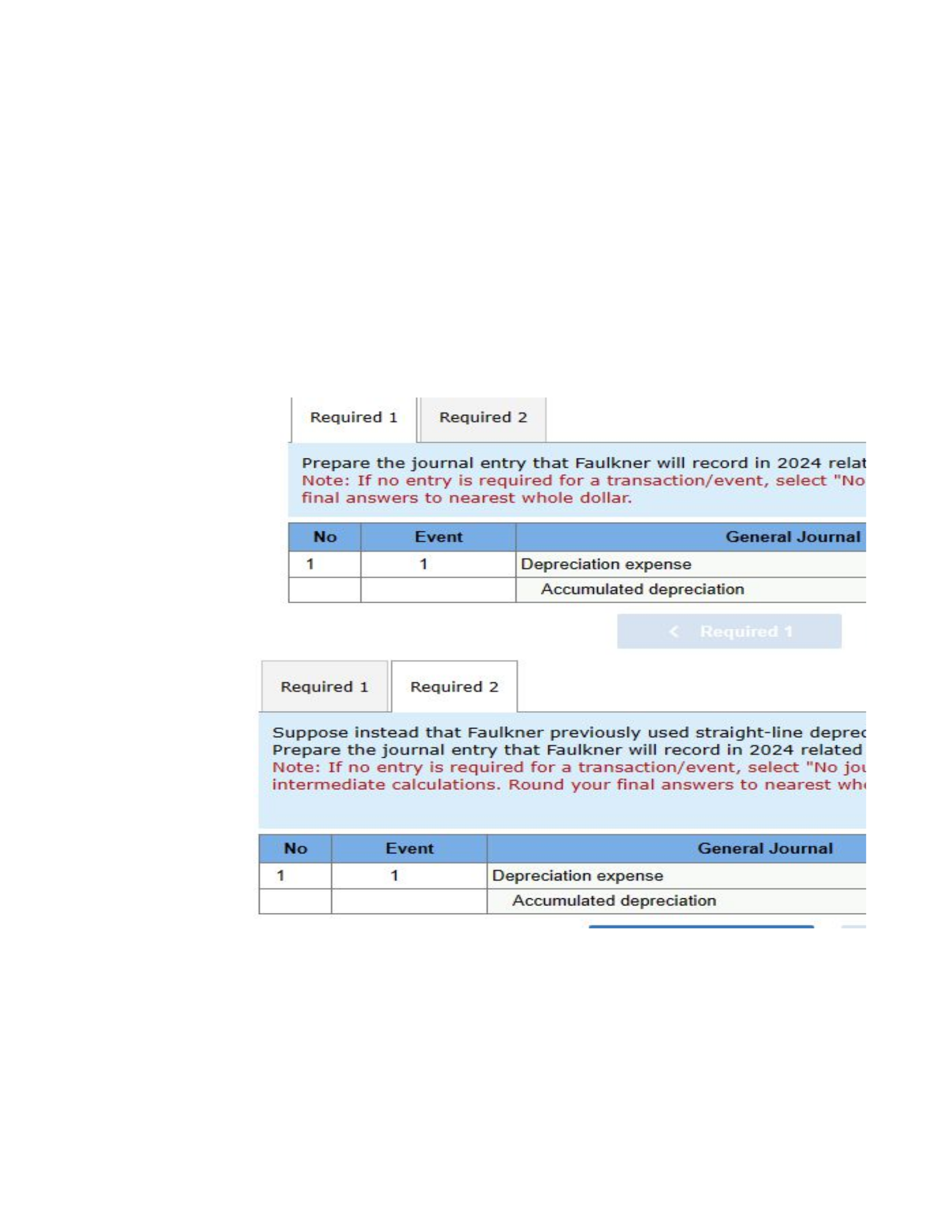
1. A change in depreciation method is considered a change in accounting estimate resulting from a change in accounting principle. In other words, a change in the depreciation method is similar to changing the economic useful life of a depreciable asset, and therefore the two events should be reported the same way. Accordingly, Faulkner reports the change prospectively; previous financial statements are not revised. Instead, the company simply employs the straight-line method from then on. The undepreciated cost remaining at the time of the change would be depreciated straight-line over the remaining useful life.
2. If Faulkner switched to sum-of-the-years’ digits with eight years remaining, it reports the change prospectively; previous financial statements are not revised. Instead, the company employs the SYD method from then on. The undepreciated cost remaining at the time of the change would be depreciated by the SYD method over the remaining useful life.
Described below are six independent and unrelated situations involving accounting changes. Each change occurs during 2024 before any adjusting entries or closing entries were prepared. Assume the tax rate for each company is 25% in all years. Any tax effects should be adjusted through the deferred tax liability account.
a. Fleming Home Products introduced a new line of commercial awnings in 2023 that carry a one-year warranty against manufacturer’s defects. Based on industry experience, warranty costs were expected to approximate 2% of sales. Sales of the awnings in 2023 were $3,200,000. Accordingly, warranty expense and a warranty liability of $64,000 were recorded in 2023. In late 2024, the company’s claims experience was evaluated, and it was determined that claims were far fewer than expected: 1% of sales rather than 2%. Sales of the awnings in 2024 were $3,700,000, and warranty expenditures in 2024 totaled $84,175.
b. On December 30, 2020, Rival Industries acquired its office building at a cost of $940,000. It was depreciated on a straight-line basis assuming a useful life of 40 years and no salvage value. However, plans were finalized in 2024 to relocate the company headquarters at the end of 2028. The vacated office building will have a salvage value at that time of $670,000.
c. Hobbs-Barto Merchandising, Incorporated, changed inventory cost methods to LIFO from FIFO at the end of 2024 for both financial statement and income tax purposes. Under FIFO, the inventory at January 1, 2024, is $660,000.
d. At the beginning of 2021, the Hoffman Group purchased office equipment at a cost of $297,000. Its useful life was estimated to be 10 years with no salvage value. The equipment was depreciated by the sum-of-the-years’-digits method. On January 1, 2024, the company changed to the straight-line method.
e. In November 2022, the State of Minnesota filed suit against Huggins Manufacturing Company, seeking penalties for violations of clean air laws. When the financial statements were issued in 2023, Huggins had not reached a settlement with state authorities, but legal counsel advised Huggins that it was probable the company would have to pay $170,000 in penalties. Accordingly, the following entry was recorded:
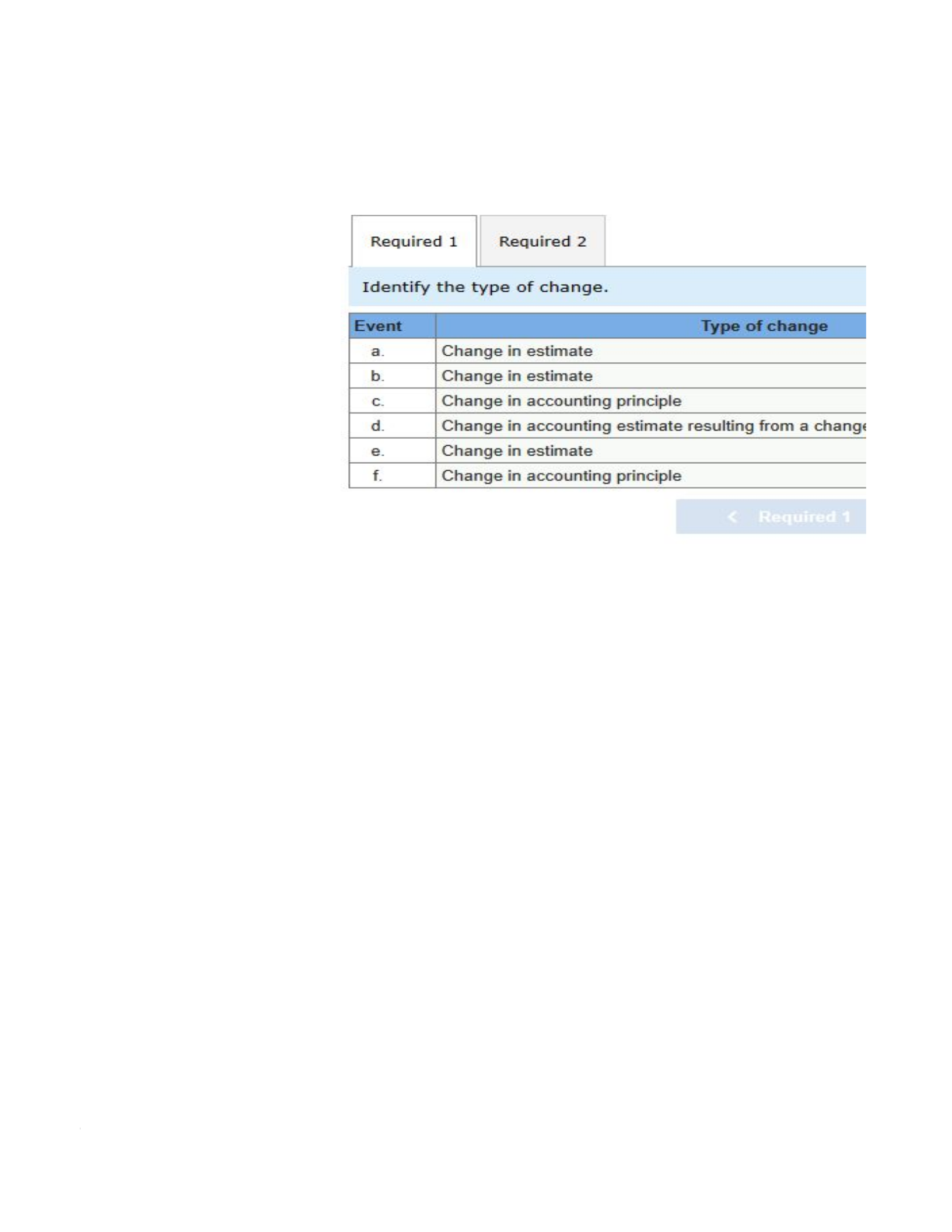
f. At the beginning of 2024, Jantzen Specialties, which uses the sum-of-the-years’-digits method, changed to the straight-line method for newly acquired buildings and equipment. The change increased current year net earnings by $412,000.
from another inventory method, accounting records usually are insufficient to determine the cumulative income effect of the change necessary to retrospectively revise accounts. So, a company changing to LIFO usually reports the beginning inventory in the year the LIFO method is adopted ($660,000 in this case) as the base year inventory for all future LIFO calculations. The disclosure required is a note to the financial statements describing the nature of and justification for the change as well as an explanation as to why the retrospective application was impracticable.
A change in depreciation method is considered a change in accounting estimate resulting from a change in accounting principle. Accordingly, the Hoffman Group reports the change prospectively; previous financial statements are not revised. Instead, the company simply employs the straight-line method from now on. The undepreciated cost remaining at the time of the change is depreciated straight line over the remaining useful life.
Because the change will be effective only for assets placed in service after the date of change, the change doesn’t affect assets depreciated in prior periods. The nature of and justification for the change should be described in the disclosure notes. Also, the effect of the change on the current period’s financial statements should be disclosed.
Required
1
Required
2
Prepare
any
journal
entry
necessary
i
situation
described.
Note:
If
no
entry
is
required
for
a
tra’
1
a(t)
No
journal
enti
2
a(2)
Warranty
expe
Warranty
lia
3
bay
No
journal
enti
4
be)
Depreciation
e
Accumulate
5
(1)
No
journal
enti
6
(2)
No
journal
enti
7
aay
No
journal
enti
8
a2)
Depreciation
e
Accumulate
3
e(t)
Loss
-
litigatior
Liability
- Iti
10
fa)
No
journal
enti
1
2)
No
journal
enti
In 2024, the Barton and Barton Company changed its method of valuing inventory from the FIFO method to the average cost method. At December 31, 2023, B & B’s inventories were $34.0 million (FIFO). B & B’s records indicated that the inventories would have totaled $24.8 million at December 31, 2023, if determined on an average cost basis.
Irwin, Incorporated constructed a machine at a total cost of $79 million. Construction was completed at the end of 2020 and the machine was placed in service at the beginning of 2021. The machine was being depreciated over a 10-year life using the sum-of-the-years’-digits method. The residual value is expected to be $2 million. At the beginning of 2024, Irwin decided to change to the straight-line method.
A change in depreciation method is considered a change in accounting estimate resulting from a change in accounting principle. In other words, a change in the depreciation method is similar to changing the economic useful life of a depreciable asset, and therefore the two events should be reported the same way. Accordingly, Irwin reports the change prospectively; previous financial statements are not revised. Instead, the company simply employs the straight-line method from then on. The undepreciated cost remaining at the time of the change would be depreciated straight-line over the remaining useful life.
Three programmers at Feenix Computer Storage, Incorporated, write an operating systems control manual for Hill-McGraw Publishing, Incorporated, for which Feenix receives royalties equal to 12% of net sales. Royalties are payable annually on February 1 for sales the previous year. The editor indicated to Feenix on December 31, 2024, that book sales subject to royalties for the year just ended are expected to be $380,000. Accordingly, Feenix accrued royalty revenue of $45,600 at December 31 and received royalties of $46,180 on February 1, 2025.
Aquatic Equipment Corporation decided to switch from the LIFO method of costing inventories to the FIFO method at the beginning of 2024. The inventory as reported at the end of 2023 using LIFO would have been $66,000 higher using FIFO. Retained earnings at the end of 2023 was reported as $840,000 (reflecting the LIFO method). The tax rate is 40%.
Wardell Company purchased a mini computer on January 1, 2022, at a cost of $46,800. The computer has been depreciated using the straight-line method over an estimated five-year useful life with an estimated residual value of $4,800. On January 1, 2024, the estimate of useful life was changed to a total of 10 years, and the estimate of residual value was changed to $600.
thole
dollar.
'epreciation
expense
3675
@
Accumulated
depreciation
3.675
¢
o
@
Peres
Be)
J
entry
for
depreciation
in
2024
to
reflect
the
revised
estimate,
assuming
that
the
-digits
method
instead
of
the
straight-line
method.
id
for a
transaction/event,
select
"No
journal
entry
required"
nd
round
your
final
answers
to
nearest
whole
dollar.
in
the
first
account
field.
Do
st
»preciation
expense
Cr)
4.667
@
Accumulated
depreciation
oe
4.667
@
Req
Required
2
he
effect
of
each
error
on
the
income
statement
and
the
balance
sheet
in
the
2023
finar
Expenses
understated
Net
income
overstated
Liabilities
understated
Retained
earings
overstated
Revenue
overstated
Net
income
overstated
Liabilities
understated
Retained
earnings
overstated
Revenue
understated
Assets
understated
Net
income
understated
Retained
earnings
understated
Roberti Steel Company will recast its financial statements to appear as if the average cost method always had been used. The FIFO method has a higher ending inventory and a lower cost of goods sold so net income under the FIFO method is higher than other methods. Thus, switching from FIFO to average cost will reduce retained earnings to the balance it would have had if the average method had been used previously; that is, by the cumulative income difference between the average and FIFO methods. Simultaneously, inventory is reduced to the balance it would have been if the average method had always been used. A disclosure note should justify that the change is preferable and describe the effect of the change on any financial statement line items and per share amounts affected for all periods reported.
Assume that Roberti Steel Company used FIFO before 2024, and then in 2024 decided to switch to LIFO. Assume accounting records are inadequate to determine LIFO information prior to 2024. Therefore, the 2023 ($500) and pre-2023 ($2,120) data are not available. Prepare the journal entry to record the change in accounting principle. (Ignore income tax effects.)
from another inventory method, it usually does not report the change retrospectively. Instead, the base year inventory for all future LIFO calculations is the beginning inventory in the year the LIFO method is adopted. A disclosure note should describe the nature of and justification for the change as well as an explanation of why retrospective application was impracticable.
Assume that Roberti Steel Company used FIFO before 2024, and then in 2024 decided to switch to LIFO cost. Roberti Steel Company's records of inventory purchases and sales are not available for several previous years. Therefore, the pre-2023 LIFO information ($2,120) is not available. However, Roberti Steel Company does have the information needed to apply LIFO on a prospective basis beginning in 2023. Prepare the journal entry to record the change in accounting principle. (Ignore income tax effects.)
In its comparative 2024–2023 financial statements, Roberti should report numbers for 2023 as if it had carried forward the 2022 ending balance in inventory (measured on the previous FIFO inventory costing basis) and then had begun applying LIFO as of January 1, 2023. There would be no adjustment to accounts for the cumulative income effect of not using LIFO prior to that.
During 2022 and 2023, Faulkner Manufacturing used the sum-of-the-years’-digits (SYD) method of depreciation for its depreciable assets, for both financial reporting and tax purposes. At the beginning of 2024, Faulkner decided to change to the straight-line method for both financial reporting and tax purposes. A tax rate of 25% is in effect for all years.
1. A change in depreciation method is considered a change in accounting estimate resulting from a change in accounting principle. In other words, a change in the depreciation method is similar to changing the economic useful life of a depreciable asset, and therefore the two events should be reported the same way. Accordingly, Faulkner reports the change prospectively; previous financial statements are not revised. Instead, the company simply employs the straight-line method from then on. The undepreciated cost remaining at the time of the change would be depreciated straight-line over the remaining useful life.
2. If Faulkner switched to sum-of-the-years’ digits with eight years remaining, it reports the change prospectively; previous financial statements are not revised. Instead, the company employs the SYD method from then on. The undepreciated cost remaining at the time of the change would be depreciated by the SYD method over the remaining useful life.
Described below are six independent and unrelated situations involving accounting changes. Each change occurs during 2024 before any adjusting entries or closing entries were prepared. Assume the tax rate for each company is 25% in all years. Any tax effects should be adjusted through the deferred tax liability account.
a. Fleming Home Products introduced a new line of commercial awnings in 2023 that carry a one-year warranty against manufacturer’s defects. Based on industry experience, warranty costs were expected to approximate 2% of sales. Sales of the awnings in 2023 were $3,200,000. Accordingly, warranty expense and a warranty liability of $64,000 were recorded in 2023. In late 2024, the company’s claims experience was evaluated, and it was determined that claims were far fewer than expected: 1% of sales rather than 2%. Sales of the awnings in 2024 were $3,700,000, and warranty expenditures in 2024 totaled $84,175.
b. On December 30, 2020, Rival Industries acquired its office building at a cost of $940,000. It was depreciated on a straight-line basis assuming a useful life of 40 years and no salvage value. However, plans were finalized in 2024 to relocate the company headquarters at the end of 2028. The vacated office building will have a salvage value at that time of $670,000.
e. In November 2022, the State of Minnesota filed suit against Huggins Manufacturing Company, seeking penalties for violations of clean air laws. When the financial statements were issued in 2023, Huggins had not reached a settlement with state authorities, but legal counsel advised Huggins that it was probable the company would have to pay $170,000 in penalties. Accordingly, the following entry was recorded:
from another inventory method, accounting records usually are insufficient to determine the cumulative income effect of the change necessary to retrospectively revise accounts. So, a company changing to LIFO usually reports the beginning inventory in the year the LIFO method is adopted ($660,000 in this case) as the base year inventory for all future LIFO calculations. The disclosure required is a note to the financial statements describing the nature of and justification for the change as well as an explanation as to why the retrospective application was impracticable.
A change in depreciation method is considered a change in accounting estimate resulting from a change in accounting principle. Accordingly, the Hoffman Group reports the change prospectively; previous financial statements are not revised. Instead, the company simply employs the straight-line method from now on. The undepreciated cost remaining at the time of the change is depreciated straight line over the remaining useful life.
Because the change will be effective only for assets placed in service after the date of change, the change doesn’t affect assets depreciated in prior periods. The nature of and justification for the change should be described in the disclosure notes. Also, the effect of the change on the current period’s financial statements should be disclosed.

as a
direct
result
of
the
change,
as
well
as
any
adjusting
entry
for
2024
related
to
the
nsaction/event,
select
"No
journal
entry
required"
in
the
first
account
field.
ry
required
anse
ability
ty
required
expense,
sd
depreciation
ty
required
ry
required
ry
required
21,600
@
2xpense
|
+d
depreciation
21,600
@
1
147.000
@
igation
147,000
@
ty
required
ry
required

A change in depreciation method is considered a change in accounting estimate resulting from a change in accounting principle. In other words, a change in the depreciation method is similar to changing the economic useful life of a depreciable asset, and therefore the two events should be reported the same way. Accordingly, Irwin reports the change prospectively; previous financial statements are not revised. Instead, the company simply employs the straight-line method from then on. The undepreciated cost remaining at the time of the change would be depreciated straight-line over the remaining useful life.
Three programmers at Feenix Computer Storage, Incorporated, write an operating systems control manual for Hill-McGraw Publishing, Incorporated, for which Feenix receives royalties equal to 12% of net sales. Royalties are payable annually on February 1 for sales the previous year. The editor indicated to Feenix on December 31, 2024, that book sales subject to royalties for the year just ended are expected to be $380,000. Accordingly, Feenix accrued royalty revenue of $45,600 at December 31 and received royalties of $46,180 on February 1, 2025.

company
‘not
round
row
less.
ncial
statements?
Roberti Steel Company will recast its financial statements to appear as if the average cost method always had been used. The FIFO method has a higher ending inventory and a lower cost of goods sold so net income under the FIFO method is higher than other methods. Thus, switching from FIFO to average cost will reduce retained earnings to the balance it would have had if the average method had been used previously; that is, by the cumulative income difference between the average and FIFO methods. Simultaneously, inventory is reduced to the balance it would have been if the average method had always been used. A disclosure note should justify that the change is preferable and describe the effect of the change on any financial statement line items and per share amounts affected for all periods reported.

Assume that Roberti Steel Company used FIFO before 2024, and then in 2024 decided to switch to LIFO cost. Roberti Steel Company's records of inventory purchases and sales are not available for several previous years. Therefore, the pre-2023 LIFO information ($2,120) is not available. However, Roberti Steel Company does have the information needed to apply LIFO on a prospective basis beginning in 2023. Prepare the journal entry to record the change in accounting principle. (Ignore income tax effects.)

1. A change in depreciation method is considered a change in accounting estimate resulting from a change in accounting principle. In other words, a change in the depreciation method is similar to changing the economic useful life of a depreciable asset, and therefore the two events should be reported the same way. Accordingly, Faulkner reports the change prospectively; previous financial statements are not revised. Instead, the company simply employs the straight-line method from then on. The undepreciated cost remaining at the time of the change would be depreciated straight-line over the remaining useful life.
a. Fleming Home Products introduced a new line of commercial awnings in 2023 that carry a one-year warranty against manufacturer’s defects. Based on industry experience, warranty costs were expected to approximate 2% of sales. Sales of the awnings in 2023 were $3,200,000. Accordingly, warranty expense and a warranty liability of $64,000 were recorded in 2023. In late 2024, the company’s claims experience was evaluated, and it was determined that claims were far fewer than expected: 1% of sales rather than 2%. Sales of the awnings in 2024 were $3,700,000, and warranty expenditures in 2024 totaled $84,175.

from another inventory method, accounting records usually are insufficient to determine the cumulative income effect of the change necessary to retrospectively revise accounts. So, a company changing to LIFO usually reports the beginning inventory in the year the LIFO method is adopted ($660,000 in this case) as the base year inventory for all future LIFO calculations. The disclosure required is a note to the financial statements describing the nature of and justification for the change as well as an explanation as to why the retrospective application was impracticable.
A change in depreciation method is considered a change in accounting estimate resulting from a change in accounting principle. Accordingly, the Hoffman Group reports the change prospectively; previous financial statements are not revised. Instead, the company simply employs the straight-line method from now on. The undepreciated cost remaining at the time of the change is depreciated straight line over the remaining useful life.

A change in depreciation method is considered a change in accounting estimate resulting from a change in accounting principle. In other words, a change in the depreciation method is similar to changing the economic useful life of a depreciable asset, and therefore the two events should be reported the same way. Accordingly, Irwin reports the change prospectively; previous financial statements are not revised. Instead, the company simply employs the straight-line method from then on. The undepreciated cost remaining at the time of the change would be depreciated straight-line over the remaining useful life.
Three programmers at Feenix Computer Storage, Incorporated, write an operating systems control manual for Hill-McGraw Publishing, Incorporated, for which Feenix receives royalties equal to 12% of net sales. Royalties are payable annually on February 1 for sales the previous year. The editor indicated to Feenix on December 31, 2024, that book sales subject to royalties for the year just ended are expected to be $380,000. Accordingly, Feenix accrued royalty revenue of $45,600 at December 31 and received royalties of $46,180 on February 1, 2025.

Roberti Steel Company will recast its financial statements to appear as if the average cost method always had been used. The FIFO method has a higher ending inventory and a lower cost of goods sold so net income under the FIFO method is higher than other methods. Thus, switching from FIFO to average cost will reduce retained earnings to the balance it would have had if the average method had been used previously; that is, by the cumulative income difference between the average and FIFO methods. Simultaneously, inventory is reduced to the balance it would have been if the average method had always been used. A disclosure note should justify that the change is preferable and describe the effect of the change on any financial statement line items and per share amounts affected for all periods reported.

1. A change in depreciation method is considered a change in accounting estimate resulting from a change in accounting principle. In other words, a change in the depreciation method is similar to changing the economic useful life of a depreciable asset, and therefore the two events should be reported the same way. Accordingly, Faulkner reports the change prospectively; previous financial statements are not revised. Instead, the company simply employs the straight-line method from then on. The undepreciated cost remaining at the time of the change would be depreciated straight-line over the remaining useful life.
a. Fleming Home Products introduced a new line of commercial awnings in 2023 that carry a one-year warranty against manufacturer’s defects. Based on industry experience, warranty costs were expected to approximate 2% of sales. Sales of the awnings in 2023 were $3,200,000. Accordingly, warranty expense and a warranty liability of $64,000 were recorded in 2023. In late 2024, the company’s claims experience was evaluated, and it was determined that claims were far fewer than expected: 1% of sales rather than 2%. Sales of the awnings in 2024 were $3,700,000, and warranty expenditures in 2024 totaled $84,175.

from another inventory method, accounting records usually are insufficient to determine the cumulative income effect of the change necessary to retrospectively revise accounts. So, a company changing to LIFO usually reports the beginning inventory in the year the LIFO method is adopted ($660,000 in this case) as the base year inventory for all future LIFO calculations. The disclosure required is a note to the financial statements describing the nature of and justification for the change as well as an explanation as to why the retrospective application was impracticable.

Roberti Steel Company will recast its financial statements to appear as if the average cost method always had been used. The FIFO method has a higher ending inventory and a lower cost of goods sold so net income under the FIFO method is higher than other methods. Thus, switching from FIFO to average cost will reduce retained earnings to the balance it would have had if the average method had been used previously; that is, by the cumulative income difference between the average and FIFO methods. Simultaneously, inventory is reduced to the balance it would have been if the average method had always been used. A disclosure note should justify that the change is preferable and describe the effect of the change on any financial statement line items and per share amounts affected for all periods reported.

Roberti Steel Company will recast its financial statements to appear as if the average cost method always had been used. The FIFO method has a higher ending inventory and a lower cost of goods sold so net income under the FIFO method is higher than other methods. Thus, switching from FIFO to average cost will reduce retained earnings to the balance it would have had if the average method had been used previously; that is, by the cumulative income difference between the average and FIFO methods. Simultaneously, inventory is reduced to the balance it would have been if the average method had always been used. A disclosure note should justify that the change is preferable and describe the effect of the change on any financial statement line items and per share amounts affected for all periods reported.

