


Abstract
Good decisions are derived from the analysis of good data. Data visualization improves
analysis by making the data more understandable, so that we can transform it into meaningful
insights and make good decisions. These concepts apply obviously to business, but also to every
aspect of life in every stage of life. In this paper, we explore what the Bible has to say about data
analysis, truth, and how we can grow in our decision-making abilities. In Scripture, we find that
it is crucial to know God’s truth, “count the costs,” and be diligent and steadfast to make and
carry our wise decisions.
2

Although the Bible is written as a narrative of the redemption of humanity to God, it also
contains lots of raw data and business principles such as budgeting, research, and documentation.
The Israelite people revered their history and kept extensive record of quantitative data through
scrolls. This is evidenced by large sections of the book of Numbers and chapters such as Judges
20, 1 Chronicles 7 & 8, 2 Chronicles 9, and many others that record the counts of families,
warriors, casualties, measurements, populations, and riches. Not only does the Bible contain
data, but principles from Jesus on how to approach decisions and “count the costs.” Luke 14: 25-
33 is an excellent example of Jesus teaching these concepts in the context of the cost of being a
disciple. In Luke 14:26, Jesus states, “if anyone comes to me and does not hate father and
mother, wife and children, brothers and sisters—yes, even their own life—such a person cannot
be my disciple.” This is a difficult passage to understand. In this context, the word “hate” is a
“hyperbolic usage [that] relies on a cause for effect (emotion for emotional response)” and is
used as “an instance of exaggeration” (Llewelyn & Robinson, 2023). Simply put, Jesus claims
that being His disciple and having a relationship with Him is of even greater value than yourself
or your relationship with family. Jesus continues explaining in verse 28-30 saying, “Suppose one
of you wants to build a tower. Won’t you first sit down and estimate the cost to see if you have
enough money to complete it? For if you lay the foundation and are not able to finish it,
everyone who sees it will ridicule you,Dsaying, ‘This person began to build and wasn’t able to
finish.’” The tower is desirable and valuable but should not be pursued unless the builder is both
willing and able to construct it completely, based on the cost. Jesus wants us to make wise
decisions, but also diligently see them through to the end.
Our textbook defines data analytics as “the scientific process of transforming data into
insights for making better decisions” (Camm, Cochran, Fry, & Ohlmann, 2022). Similarly,
3
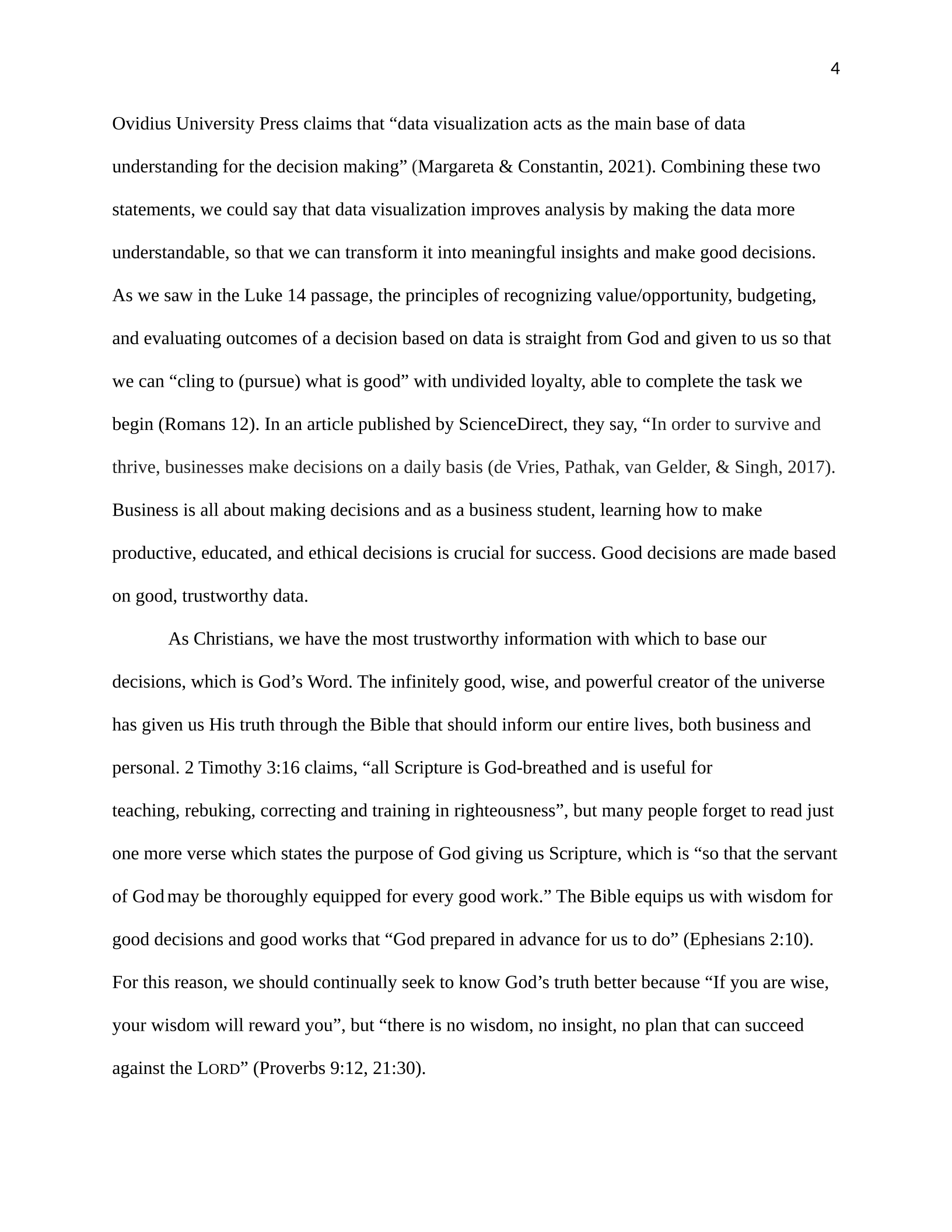
Ovidius University Press claims that “data visualization acts as the main base of data
understanding for the decision making” (Margareta & Constantin, 2021). Combining these two
statements, we could say that data visualization improves analysis by making the data more
understandable, so that we can transform it into meaningful insights and make good decisions.
As we saw in the Luke 14 passage, the principles of recognizing value/opportunity, budgeting,
and evaluating outcomes of a decision based on data is straight from God and given to us so that
we can “cling to (pursue) what is good” with undivided loyalty, able to complete the task we
begin (Romans 12). In an article published by ScienceDirect, they say, “In order to survive and
thrive, businesses make decisions on a daily basis (de Vries, Pathak, van Gelder, & Singh, 2017).
Business is all about making decisions and as a business student, learning how to make
productive, educated, and ethical decisions is crucial for success. Good decisions are made based
on good, trustworthy data.
As Christians, we have the most trustworthy information with which to base our
decisions, which is God’s Word. The infinitely good, wise, and powerful creator of the universe
has given us His truth through the Bible that should inform our entire lives, both business and
personal. 2 Timothy 3:16 claims, “all Scripture is God-breathedDand is useful for
teaching,Drebuking, correcting and training in righteousness”, but many people forget to read just
one more verse which states the purpose of God giving us Scripture, which is “so that the servant
of God may be thoroughly equipped for every good work.” The Bible equips us with wisdom for
good decisions and good works that “God prepared in advance for us to do” (Ephesians 2:10).
For this reason, we should continually seek to know God’s truth better because “If you are wise,
yourDwisdomDwill reward you”, but “there is noDwisdom, no insight, no plan that can succeed
against theDLORD” (Proverbs 9:12, 21:30).
4
References
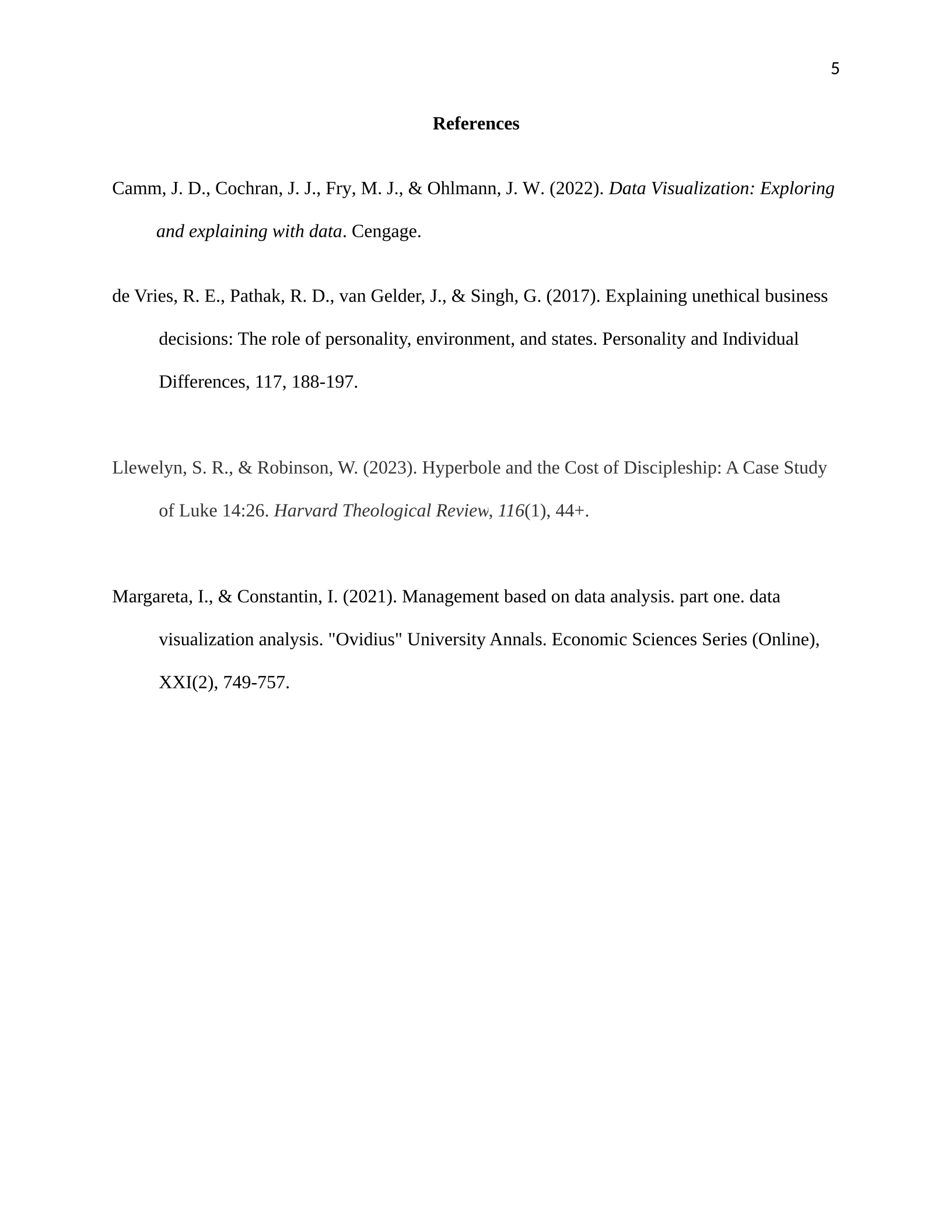
Camm, J. D., Cochran, J. J., Fry, M. J., & Ohlmann, J. W. (2022). Data Visualization: Exploring
and explaining with data. Cengage.
de Vries, R. E., Pathak, R. D., van Gelder, J., & Singh, G. (2017). Explaining unethical business
gggggdecisions: The role of personality, environment, and states. Personality and Individual
gggggDifferences, 117, 188-197.
Llewelyn, S. R., & Robinson, W. (2023). Hyperbole and the Cost of Discipleship: A Case Study
gggggof Luke 14:26. Harvard Theological Review, 116(1), 44+.
Margareta, I., & Constantin, I. (2021). Management based on data analysis. part one. data
gggggvisualization analysis. "Ovidius" University Annals. Economic Sciences Series (Online),
gggggXXI(2), 749-757.
5
Powered by TCPDF (www.tcpdf.org)

